~/sacred-texts/amarna-hymns-to-the-aten
Huya’s Hymn to the Aten: Sunrise and a Meal for the Dead
- Date
- Carved in the reign of Akhenaten, 18th Dynasty (c. 1345–1336 BC), on the east wall of the tomb of Huya at Akhetaten (Amarna)
- Found
- Tomb of Huya (Amarna Tomb 1), North Tombs, Tell el-Amarna, Egypt; still in place
- Language
- Egyptian · Hieroglyphic
- 1
𓇼𓀢 𓋹
dwꜣ Rꜥw-ḥqꜣ-ꜣḫ,tj-ḥꜥi̯-m-⸢ꜣḫ,t⸣ [M-rn≡f]-m-[Rꜥw]-⸢jtj-jy⸣-m-Jtn ⸢ḏi̯⸣ ꜥnḫ ḏ,t [nḥḥ]
Adoration of Ra, ruler of the two horizons, who rejoices in the horizon in his name of Ra the Father, who has come as the Aten, who gives life for ever and ever.
Note · Line 1
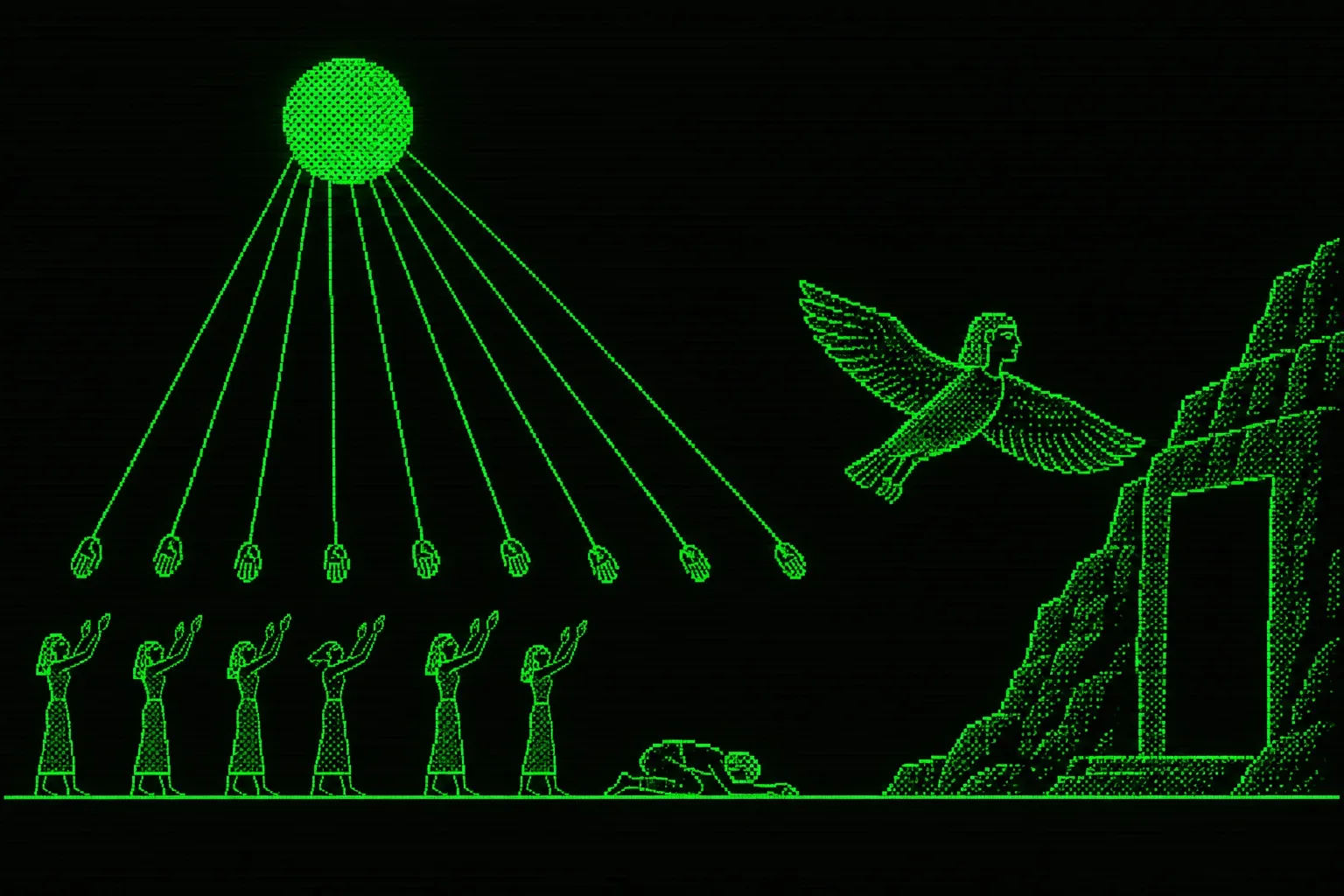
This long name is the full title of the Aten, the sun-disk worshipped as sole god under Akhenaten. - 2
𓅱𓃀𓈖𓇶 𓐝 𓁷𓂋𓏏 𓇼𓄿𓅱𓇳 𓐝 𓈌𓏏𓉐 𓈖 𓊪𓏏𓇯
[jnḏ] [ḥr] =⸢k⸣ wbn m ḥr,t psd dwꜣ,w m ⸢ꜣḫ,t⸣ ⸢n⸣ p,t
Hail to you, who rise in the sky, who shine at dawn in the horizon of heaven!
- 3
[jy.,tj] [m-ḥtp] [nb-ḥtp,w]
Welcome in peace, lord of offerings!
- 4
𓇿𓏤𓈅 𓏏𓅱𓀾 𓈖 𓎡 𓂝𓂝 𓈖 𓃀𓅱𓈖𓇶 𓎡 𓊃𓈖𓂉𓏛 𓇿
tꜣ r-[ḏr] =[f] twti̯ ⸢n⸣ ⸢ḫꜥꜥ⸣ =k ꜥ.du =⸢sn⸣ [m] [jꜣ,w] n wbn =k sn =sn ⸢tꜣ⸣
The whole land is gathered at your appearing, their arms raised in praise at your rising, and they kiss the ground.
Note · Line 4
“Kissing the ground” means lying face down before a god or king. - 5
𓎡 𓈖 𓊃𓈖𓏥 𓍿𓎛𓎛𓅱𓀀𓏥
⸢psd⸣ =k n =sn ⸢nhm⸣ =[sn] [r] [qꜣ] [n] [p,t] [šzp] =[sn] ⸢rš,wt⸣ ṯḥḥw,t
When you shine for them, they shout to the height of heaven and take in joy and jubilation.
- 6
𓎛𓂝𓂝𓀢 𓋴𓈖𓏥 𓁹𓌳𓄿𓄿 𓊃𓈖𓏥 𓍛𓀭 𓎡
ḥꜥꜥ =sn mꜣꜣ =sn ḥm =k
They rejoice as they behold your Majesty.
- 7
𓂞 𓎡 𓋋𓏏𓅱𓏏𓇶 𓎡 𓈖 𓏙 𓊏𓈖 𓎡 𓁶𓏤 𓈐𓏏𓏤 𓄤𓆑𓂋𓏏
ḏi̯ =k stw,t =k n [ḥr]-nb ḏi̯ sn [r-ḥꜣ] [ẖnm] =[k] ⸢ḥr,t⸣ šzp.n =k tp wꜣ,t nfr.t
You give your rays to all who go out of doors, when you join the sky, having set out upon the fair road.
Note · Line 7
The “fair road” is the sun’s daily course across the sky. - 8
𓂞 𓎡 𓅱𓀀 𓂋 𓈖𓎛𓇳𓎛 𓐝 𓊨𓏏𓉐 𓎿𓅱𓏥 𓐝 𓉗𓏏𓉐 𓀀 𓈖𓏏 𓐙𓊤
ḏi̯ =k wj r nḥḥ m s,t ḥzw m ḥw,t =j n.t mꜣꜥ-ḫrw
May you set me for ever in the place of favour, in my house of being true of voice.
Note · Line 8
The speaker is Huya, the tomb owner, named at the end. - 9
𓅡𓏤 𓀀 𓎡 𓂋 𓐝 𓊵𓏏𓊪𓏏𓈀𓏥 𓆑
bꜣ =⸢j⸣ pri̯ =[f] [r] [mꜣꜣ] ⸢stw,t⸣ =k r snm m ḥtp,t =f
My ba — may it come forth to see your rays, to eat of its offerings.
Note · Line 9
The ba is the part of a person that could leave the tomb after death and move about in the daylight. It is often shown as a bird with a human head. - 10
𓅱𓏏 𓁷𓏤 𓇋𓅱𓏏
njs =tw ḥr rn jwi̯.t =tw ḥr ḫrw
May there be calling upon the name, and coming at the voice.
Note · Line 10
Saying the dead person’s name aloud over the offerings was believed to summon him to receive them. - 11
𓉐𓂋𓂻
smꜣ =j jḫ,t pri̯.t [m-bꜣḥ]
May I receive the offerings that come forth in the Presence.
Note · Line 11
At Amarna, food was first presented to the Aten in his temple, then passed on to supply the dead. - 12
𓄿𓈙𓂋𓏏𓄹 𓈙𓄿𓂻𓊮 𓃀𓎛𓏁𓈗 𓇋𓂋𓊪𓏋𓏥 𓇋𓁹𓂋𓏈𓏥 𓉐𓂋𓂻 𓎟
[wnm] =[j] [šns] [bj,t] [sn,w] [ds] ꜣšr,t š{ꜣ}〈m〉.(t) qbḥ jrp jrt,t pri̯ nb [m] [tꜣ] [ḥw,t] [pꜣ] [Jtn] [m] [Ꜣḫ,t-Jtn]
May I eat cakes, loaves, offering-bread and jugs of beer, roast meat hot from the fire, cool water, wine, milk and everything that comes forth from the Temple of the Aten in Akhetaten.
Note · Line 12
Akhetaten, “Horizon of the Aten,” is the new capital Akhenaten founded, modern Amarna. - 13
n kꜣ n ḥz,y-n-nb-tꜣ.du jm,j-rʾ-jp,t-nzw jm,j-rʾ-pr-ḥḏ jm,j-rʾ-pr-m-pr-tꜣ-[ḥm,t]-⸢nzw-wr,t-Tjy⸣ [Ḥyꜣ] [mꜣꜥ-ḫrw]
For the ka of the one praised by the Lord of the Two Lands, Overseer of the King's Private Apartments, Overseer of the Treasury, Steward in the house of the King's Great Wife Tiye, Huya, true of voice.
Note · Line 13
The ka is a person’s life-force, the part of him that received offerings after death.