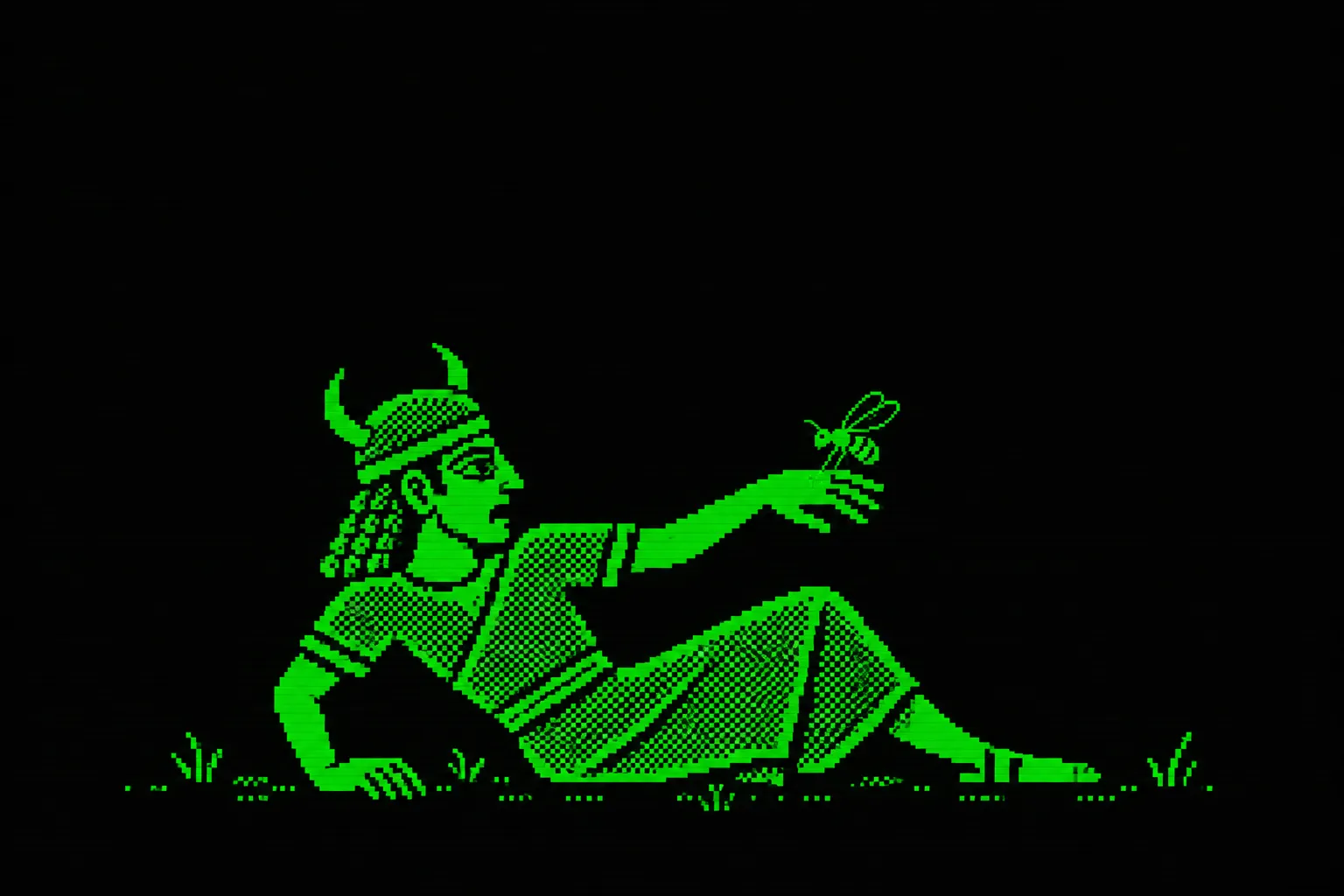
~/sacred-texts/hittite-myths
Telipinu Myth: The Vanishing God, Famine and the Bee
- Text
- Hittite myths, CTH 324, KBo 55.8+, KUB 33.5, KUB 33.10, KUB 33.11, KUB 33.14, KUB 33.8, KBo 32.7, IBoT 4.8
- Date
- Old Hittite composition (c. 16th century BC); main copy of the first version in Middle Hittite script, other versions and duplicates in Middle and New Hittite script (c. 14th-13th century BC)
- Found
- Hattusa
- Language
- Hittite · Cuneiform
The Telipinu myth is the best-known Hittite story of a vanishing god, a narrative embedded in the ritual that brings him back. It was composed in the Old Hittite period and survives in several versions on tablets from Hattusa. The main copy of the first version, KBo 55.8+, is in Middle Hittite script. A second version (KUB 33.5 with duplicates), a third (KUB 33.10 with duplicates), a fourth (KUB 33.11), and smaller fragments (KUB 33.14, KUB 33.8, KBo 32.7, IBoT 4.8) carry parallel or variant tellings, mostly in later script.
Telipinu becomes angry. He puts the right with the left and the left with the right, probably his shoes, and walks out. He carries off grain, fertility and satiety, goes into the marsh, hides himself, and duckweed grows over him. Mist seizes the windows, the hearth fire chokes, and mothers reject their young. Cattle, sheep and humans no longer become pregnant, and those already pregnant do not give birth. The mountains, trees and springs dry up, and gods and humans perish of hunger. The Sun-god holds a feast where no one is sated. The eagle searches and fails. The Storm-god breaks his hammer on his son’s locked gate. The Mother-goddess then sends the bee, over the Storm-god’s scorn for its small wings. In the third version the bee finds Telipinu in a meadow at Lihzina and stings his hands and feet. He wakes in fury, floods the rivers and destroys cities, mankind and cattle, until humans and the eagle burn and quench him.
The ritual half is spoken in the first person by the magician-goddess Kamrušepa and a human practitioner. Fig, honey, ghee, malt and oil are laid out so that the god’s soul may become sweet and soft. Twelve rams are cut, and fire is set on either side of the god. His anger, wrath, sin and fury are pulled from his body like fleece from a sheep. They are then sent down the road of the dark earth into bronze vessels with lead lids that let nothing come back up. Telipinu returns, the mist and smoke let go, mothers accept their young, and a fleece hung from the eya-tree holds fat, grain, cattle, long years and offspring for the king. Every version is broken. The opening, the first version’s bee episode, the eagle-and-fire scene and the ends of the tablets survive only in pieces.
The page gives 510 tablet lines, 26 restored from a duplicate. Square brackets mark breaks in the clay and restorations; ... is a lost stretch. Hover over or tap a Hittite word for its meaning and the English words it becomes.
First version
- 1Rs.? lk. Kol. 1′–4′
▒▒𒁕 𒉺𒀉 ▒▒▒𒀉𒂉𒀉▒▒
[ ]x-⸢da pāi- to go [ ]x-⸢ḫu?-u?-wa-an⸣ [ ] Telipinu Telipinu [ ] [ -i]t? kuit because x x
[...] ... went [...] ... [...] and Telipinu [...] go(?) because ...
Note · Line 1
Telipinu is a Hittite god of farming and growth and a son of the Storm-god. When he goes missing, the land falls into famine. - 2Rs.? lk. Kol. 5′–6′
▒𒊭𒊍 𒌷𒋗 𒂥𒀉
[ ] Telipinu Telipinu [ ]-⸢ša-az URU-ŠU city BÀD wall
[...] and Telipinu [...] ... his city (with) the wall(?)
- 3Rs.? lk. Kol. 7′–9′
▒▒▒▒𒄑𒂉𒊏𒀝𒆠𒅔 𒁉𒂊𒌍𒅆𒂊𒀉 ▒▒𒋫 𒆠𒂊𒀉𒋫 ▒𒀀𒀊𒉺 𒄿𒅀𒀭𒉌𒅖
[ kurakki- pillar peššiya- to throw [ ]x-ta ket here [ appa back; again iyanna- to go
[... the] pillar he threw [...] ... here [...] went back
- 4Rs.? lk. Kol. 10′–12′
▒▒ 𒌑𒌌 𒂉𒀉𒆠 ▒▒▒▒ 𒈾𒀝𒆠𒄿𒅖 𒀭𒋼𒇷𒁉𒉡𒍑 ▒𒅖 𒁉𒂗𒉌𒅖𒋼𒂗𒉿
[ ] UL not kuiški anything [ ] [ ] nakki- important Telipinu Telipinu [ ]-iš penna- to drive away
[...] not anything [...] [...] important (one) Telipinu [...]: "Drive away!
- 5Vs. I 2′/Rs.? lk. Kol. 13′–15′
𒇷𒂊𒉿 𒆳𒂉𒊑𒅖𒃰𒌈𒈠𒈾𒀸𒊭𒀀𒄿𒀉 𒉡𒍝 𒂉𒌦𒈾 𒆏𒇷𒀉 𒄷𒄿𒉡𒌓 𒆏𒆷𒈠𒍠𒉌𒀉 𒄷𒄿𒉡𒌓 𒂍𒅕𒍝𒀸𒃷
lē do not kurkuriške- to keep being afraid nu=aš and he šāi- to become angry nu=za and; then kunna- right GÙB left ḫuinu- to make run GÙB left ZAG right ḫuinu- to make run É house pāi- to go
Do not keep being afraid(?)!" [Then he] became angry, and the right (one) he made run with the left, [but] the left [with the right] he made run. From the house he w[en]t.
Note · Line 5
The god sulks (šai-) and storms out of his house in a rage. He mixes up right and left as he goes, most likely putting his shoes on the wrong feet. - 6Vs. I 5′/Rs.? lk. Kol. 16′
𒄑𒇻𒌓𒋫𒀀𒍑 𒄰𒈠𒊏𒀀𒀸 𒄑𒁁 𒂍𒅕 𒈭𒄷𒅖 𒌑𒄿𒋗𒊑𒅀𒋫𒋾
lutta- window kammara- mist; cloud ṢABĀTU to seize É house tuḫḫui- smoke uišuriya- to stifle
It seized the windows, mist did; in the house smoke [was sti]fled.
Note · Line 6
With the god gone, life in the house stops: mist blocks the windows, the hearth fire chokes, and even the animals in their pens are stifled. Mother animals then reject their own young. - 7Vs. I 6′–9′
𒄿𒈾 𒆠𒉈𒈠𒆗𒈪𒄿𒊺𒉌𒅖𒌑𒄿𒋗𒌋𒊑𒅀𒀭𒋫𒋾▒▒ 𒀭𒈨 𒌍𒌑𒄿𒋗𒌋𒊑𒅀𒀭𒋫𒋾𒄿𒈾𒉣 𒇬 𒀭𒁕 𒇻𒄭𒀀 𒆠𒈫 𒄿𒈾 𒂍𒄞 𒀭𒁕𒀭 𒄞𒄭𒀀 𒌑𒄿𒋗𒌋𒊑𒅀𒀭𒋫𒋾 𒇻𒍑𒍝 𒃢𒍪 𒈪𒅎𒈠𒀸 𒄞𒈠 𒀫𒋗 𒈪𒅎𒈠𒀸
INA in; on GUNNI hearth kalmišana- log uišuriya- to stifle [ ] DINGIR god uišuriya- to stifle INA in; on TÙR sheepfold anda in; inside UDU sheep KI.MIN likewise INA in; on É.GU₄ cattle barn andan inside GU₄ cattle uišuriya- to stifle UDU sheep SILA₄ lamb mimma- to reject GU₄ cattle AMAR calf mimma- to reject
But on the hearth the logs were stifled ... The gods were stifled; in the sheepfold the sheep likewise; in the cattle barn the cattle were stifled. The sheep rejected its lamb, but the cow rejected its calf.
- 8Vs. I 10′–13′
𒀭𒋼𒇷𒁉𒉡𒊭 𒅈𒄩 𒄿𒅀𒀭𒉌𒅖 𒄬𒆠𒅔 𒀭𒅎𒈥𒉌𒅔 𒊭𒀠𒄭𒀭𒋾𒂗 𒈠𒀭𒉌𒀉𒋾𒂗 𒅖𒁉𒅀𒋻𒊏 𒁉𒂊𒁕𒀸 𒄀𒅎𒊑 𒌑𒂊𒂖𒇻𒄿 𒈥𒈥𒀸 𒀭𒁕𒀭 𒀭𒋼𒇷𒁉𒉡𒊭 𒉺𒀉 𒈥𒈥𒊑 𒀭𒁕𒀭 𒌑𒇷𒅖𒋫 𒊺𒂊𒊏𒀸𒊺𒅖𒊭𒀭 𒄩𒇷𒂗𒍪 𒄷𒉿𒄿𒅖 𒉡 𒉆𒈠
Telipinu Telipinu arḫa away iyanna- to go ḫalki- grain Immarni fertility šalḫiyanti- growth mannitti- thriving išpiyatar satiety peda- to carry off gimra- field wellu- meadow marmarra- marsh andan inside Telipinu Telipinu pāi- to go marmarra- marsh andan inside ulišš- to wrap oneself šēr over; above ḫalenzu- duckweed? ḫuwai- to run nu and; then namma further; anymore
But Telipinu went away; grain, Immarni (fertility), growth, mannitti- (thriving) and satiety he carried off to the field, to the meadow, into the marshes. And Telipinu went into the marsh; he hid himself. Over him the ḫalenzu ran (grew). And no longer
Note · Line 8
Telipinu takes grain, fertility and satiety with him and hides in the marsh, where duckweed (ḫalenzu) grows over him so no one can find him. As a result, crops stop growing and neither animals nor humans can get pregnant or give birth. - 9Vs. I 14′–15′
𒄬𒆠𒅖 𒀾𒋻 𒌑𒌌 𒈠𒀀𒄿 𒉡𒍝 𒉆𒈠 𒄞𒄭𒀀 𒇻𒄭𒀀 𒌉𒇽𒌷𒇻𒈨 𒌍 𒌑𒌌 𒅈𒈠𒄴𒄩𒀭𒍣 𒅈𒈠𒌋𒉿𒀭𒋼𒊭 𒂉𒄿𒌍 𒉡𒍝 𒀀𒁉𒅀 𒌑𒌌 𒄩𒀸𒊭𒀭𒍣
ḫalki- grain ZÍZ emmer UL not māi- to grow nu=za and; then namma further; anymore GU₄ cattle UDU sheep DUMU.LÚ.U₁₉.LU human UL not armaḫḫ- to become pregnant armawant- pregnant kui- who; which nu=za and; then apiya there; then UL not ḫašš- to give birth
does grain (or) emmer grow. And no longer do cattle, sheep (and) humans become pregnant, and those who are pregnant, they do not give birth then.
- 10Vs. I 16′–18′
𒄯𒊕𒐀𒄭𒀀 𒄩𒀀𒋼𒅕 𒄑𒄭𒀀𒊒 𒄩𒀀𒊍𒋫 𒈾𒀸𒋫 𒁇𒀸𒁺𒍑 𒌑𒌌 𒌑𒂊𒄑𒍣 𒌑𒂊𒊭𒂊𒌍 𒄩𒀀𒋼𒅕 𒇥𒄭𒀀 𒄩𒀀𒊍𒋫 𒉡 𒆳𒅀 𒀭𒁕𒀭 𒅗𒀀𒀸𒍝𒆠𒄿𒊭𒋾𒌉𒇽𒌷𒇻𒈨𒌍𒀭𒈨𒌍𒌍𒊭 𒆠𒅖𒋫𒀭𒋾𒀉 𒄯𒆠𒅀𒀭𒍣
[ ḪUR.SAG mountain ḫat- to dry up GIŠ tree; wood ḫat- to dry up nu=ašta and; then parašdu- shoot; sprout UL not uwā- to come weša- pasture ḫat- to dry up PÚ spring ḫat- to dry up nu and; then KUR land andan inside kāšt- hunger kiš- to become; arise DUMU.LÚ.U₁₉.LU human DINGIR god kištant- hunger ḫarkiya- to perish
[The] mountains dried up, the trees dried up, and shoots do not come forth. The pastures dried up, the springs dried up, and in the land [h]unger arose. Humans and gods are perishing of hunger.
- 11Vs. I 19′–20′
𒃲𒅖𒍝 𒀭𒌓𒍑 ⬚𒀭 𒄿𒂊𒀉 𒉡𒍝 𒁹 𒇷𒅎 𒀭𒈨 𒌍 𒄬𒍝𒄿𒅖 𒂊𒋼𒅕 𒉈 𒌑𒌌 𒅖𒁉𒄿𒂊𒅕 𒂊𒂉𒄿𒂊𒅕𒈠 𒉈𒍝 𒌑𒌌 𒄩𒀸𒅆𒅅𒆠𒅕
GAL great UTU Sun-god EZEN₄ festival iye/a- to make nu=za and; then 1 one LĪM thousand DINGIR god ḫalzai- to call ēd-/ad- to eat nu=e and they UL not išpai- to become sated eku-/aku- to drink nu=e=za and they UL not ḫaššik- to quench thirst
The great Sun-god made a festival for himself and called a thousand gods. They ate, but they were not sated; they drank, but they did not quench their thirst.
- 12Vs. I 21′–22′
𒉡𒍝 𒀭𒅎𒀸 𒀭𒋼𒇷𒁉𒉡𒌦 𒌉𒋗 𒆏𒁍𒌋𒂊𒀉 𒀭𒋼𒇷𒁉𒉡𒍑𒉿 𒌉𒅀 𒀭𒁕𒀭 𒉡𒅅 𒊭𒀀𒄿𒀉𒉿𒊏𒀸𒍝 𒉡𒉿𒊍 𒄷𒌋𒈠𒀭 𒀀𒀸𒋗 𒁉𒂊𒋫𒀸
nu=za and; then IŠKUR Storm-god Telipinu Telipinu DUMU-ŠU his son kappuwa- to count; notice Telipinu Telipinu DUMU-IA my son andan inside NU.GÁL is absent šāi- to become angry nu=wa=za and; then ḫumant- all; whole aššu- good pēda- to carry away
And the Storm-god missed Telipinu, his son: "Telipinu, my son, is not inside (here). He became angry, and all (that is) good he carried away."
- 13Vs. I 23′–25′
𒀭𒈨𒌍𒃲𒃲𒀭𒈨𒌍 𒌉 𒀭𒋼𒇷𒁉𒉡𒌦 𒊭𒀭𒄭𒅖𒆠𒌋𒉿𒀭 𒁕𒄿𒅕 𒀭𒌓𒍑 𒄩𒀀𒊏𒈾𒀭𒄷 𒇷𒂊𒇷𒉿𒀭𒁕𒀭 𒅖𒁓 𒄿𒀉𒉿𒊏𒀸𒋫 𒁇𒂵𒈬𒍑 𒄯𒊕𒐀𒄭𒀀 𒊭𒀀𒄴
DINGIR god GAL.GAL great DINGIR god TUR small Telipinu Telipinu šanḫ- to search for dai- to put; begin UTU Sun-god ḫaran- eagle leliwant- swift ŠAPĀRU to send pai-/pā- to go parku- high ḪUR.SAG mountain šanḫ- to search for
[The gods], the great ones, (and) the small gods began to search for Telipinu. The Sun-god sent the swift eagle: "Go, the high mountains search!"
- 14Vs. I 26′
𒄩𒀀𒊑𒄿𒍑𒃷 𒄬𒇻𒉿𒈬𒍑 𒊭𒀀𒄴 𒄷𒉿𒀭𒄷𒌍𒊬𒃷 𒂉𒉿𒀀𒇷𒌑 𒊭𒀀𒄴
ḫari- valley ḫalluwa- deep šanḫ- to search for ḫuwanḫueššar flood kuwaliu- calm šanḫ- to search for
Search the deep valleys! Search the calm floods!"
- 15Vs. I 27′–29′
𒄩𒀀𒊏𒀸𒄷 𒉺𒀉 𒈾𒀭 𒌑𒌌 𒌑𒂊𒈪𒅀𒀜 𒉡 𒂕𒉺 𒀭𒌓𒄿 𒄩𒇻𒃷 𒁉𒂊𒁕𒀸 𒌑𒌌𒉿𒊏𒀭 𒌑𒂊𒈪𒅀𒉡𒌦 𒀭𒋼𒇷𒁉𒉡𒌦 𒈾𒀝𒆠𒅔 𒀭𒇴 𒀭𒅎𒀸 𒀭𒊩𒈠𒌅𒉌 𒋼𒂊𒀉 𒈠𒀀𒄴𒄩𒀭 𒄿𒅀𒌋𒂊𒉌
ḫaran- eagle pai-/pā- to go nu=an and him UL not wemiya- to find nu and; then EGIR-pa back; again UTU Sun-god ḫaluga- message peda- to carry off UL=wa=an not; him wemiya- to find Telipinu Telipinu nakki- important DINGIR-LAM god IŠKUR Storm-god NIN.TU Mother-goddess te-/tar- to say maḫḫan how iye/a- to make
The eagle went, but it did not find him, and back to the Sun-god it brought the message: "I did not find him, Telipinu, the honoured god." The Storm-god said to the Mother-goddess: "How shall we act?
Note · Line 15
The Mother-goddess is the goddess of birth and fate, called Hannahanna (“Grandmother”) in other Hittite stories. - 16Vs. I 30′–31′
𒆠𒅖𒋫𒀭𒋾𒀉 𒄯𒂉𒂊𒉌 𒀭𒈤 𒀭𒅎𒉌 𒋼𒀉 𒄿𒅀 𒂉𒀉𒆠 𒀭𒅎𒀸 𒉡 𒄿𒀉 𒀭𒋼𒇷𒁉𒉡𒌦 𒍣𒆠𒆷 𒊭𒀭𒄩
kištant- hunger ḫark- to perish DINGIR.MAḪ Mother-goddess IŠKUR Storm-god te-/tar- to say iye/a- to make kuiški anything IŠKUR Storm-god nu and; then pai-/pā- to go Telipinu Telipinu zikila you yourself šanḫ- to search for
We will perish of hunger." The Mother-goddess said to the Storm-god: "Do something, Storm-god! Go, search for Telipinu yourself!"
- 17Vs. I 32′–33′
𒉺𒀉 𒀭𒅎𒀸 𒀭𒋼𒇷𒁉𒉡𒌦 𒊭𒀭𒄭𒅖𒆠𒌋𒉿𒀭 𒁕𒅖 𒄿𒈾 𒌷𒋗 𒆍𒃲 𒌑𒄑𒍣 𒉡 𒌑𒌌 𒋻𒄷𒊻𒍣 𒄩𒀀𒅆 𒉡 𒄑𒃻𒄢𒋗 𒄑𒆕𒋗 𒁺𒉿𒅈𒉌𒀉
pai-/pā- to go IŠKUR Storm-god Telipinu Telipinu šanḫišk- to keep searching dai- to put; begin INA in; on URU-ŠU city KÁ.GAL city gate wē-/uwa- to come nu and; then UL not tarḫu- to be able ḫeš- to open nu and; then NÍG.GUL-ŠU his hammer GAG-ŠU his peg duwarniya- to break
[He went], the Storm-god, and began to search for Telipinu. To his town’s city gate, he [com]es, and he is not able to open it. He broke his hammer (and) his peg.
Note · Line 17
The Storm-god reaches the locked gate of his son’s town but cannot open it, even after breaking his hammer on it. He then wraps himself in his cloak and sits down, beaten. - 18Vs. I 34′–35′
▒▒▒▒▒▒▒▒▒▒𒀭𒅎𒀸𒉡𒍝𒃷𒀭𒁕𒅗𒊑𒄿𒂊𒀉𒊭𒀸𒂊𒊭𒋾𒀭𒊩𒈠𒌅𒀸 ▒ 𒅖𒁓 𒄿𒀉𒉿 𒀭𒋼𒇷𒁉𒉡𒌦 𒍣𒅅 𒊭𒀭𒄩
[… … … ]x IŠKUR Storm-god nu=za=kan and; oneself anda in; inside kariya- to cover; wrap šu=aš and he eš- to sit down NIN.TU Mother-goddess [ ŠAPĀRU to send pai-/pā-=wa to go Telipinu Telipinu zik you šanḫ- to search for
[...] the Storm-god, and he wrapped himself up, and he sat down. The Mother-goddess [...] sent: "Go, you search for Telipinu!"
- 19Vs. I 36′–37′
▒𒈨𒈪𒅖𒋫𒉡𒉿𒊏𒀭𒀭𒈨𒌍𒃲𒃲𒀭𒈨𒌍 𒌉 𒊭𒀭𒄭𒅖𒆠𒅕 𒉡𒉿𒊏𒀭 ▒▒ 𒉡𒉿𒊏𒀭 𒉺𒄑𒍣 𒅗𒀀𒀸
[ mema- to speak nu=wa=an and him DINGIR god GAL.GAL great DINGIR god TUR small šanḫišk- to keep searching nu=wa=an and him [ ] nu=wa=an and him pai-/pā- to go ka- this one
[...] said: "The great gods (and) the small gods searched for him, and him [...] And will it go and [...] him, this one?
Note · Line 19
The Mother-goddess sends the bee to find Telipinu. The Storm-god scoffs that a creature so small, with such small wings, cannot succeed where all the gods failed, and that it will be cut in two. - 20Vs. I 38′
▒▒𒁇𒋫𒌋𒉿𒀸𒊺𒀉𒉿 𒀀𒈪𒅀𒀭𒋫 𒀀𒉺𒀸𒊭𒌋𒉿 𒀀𒈪𒅀𒀭𒍝
[ ] partawar wing amiant- small apa- that one amiant- small
[...] Its [w]ings are small, and it is small.
- 21Vs. I 39′
▒▒ 𒉆𒈠𒉿𒊏𒀸 𒄩𒀭𒋾 𒈭𒊭𒀭𒍣
[ ] namma further; anymore ḫanti apart tuḫš- to cut off
[...] Moreover, they will cut it apart."
- 22Rs.? r. Kol. 1′–3′
𒉡𒍑 𒉿𒀠𒂵𒉡𒌓▒ 𒌷𒐀𒄭𒀀 𒁉𒅁𒉺𒀸
[ ]x x[ ] nu and; then walganu- to tear down ] URU city pippa- to knock down
[...] ... [...] and [he] tore(?) them d[own] [...] he knocked down the cities
Note · Line 22
This fragment belongs to a later part of the story: in another version the bee finds Telipinu and stings his hands and feet. He wakes in a fury and floods the rivers, destroying cities, people and cattle. - 23Rs.? r. Kol. 4′–6′
𒌉𒇽𒌷𒇻𒈨 𒌍𒄯𒉌𒅅𒋫𒄞𒄭𒀀▒▒▒ 𒀀𒊏𒀀𒄑𒍣 𒀭𒈨𒌍𒊺𒌍𒋫𒁁▒▒ 𒀭𒋼𒇷𒁉𒉡𒍑𒉿 𒇷𒂊𒆷𒉌𒀉𒋫𒀜
DUMU.LÚ.U₁₉.LU human ḫarnink- to destroy GU₄ cattle ] [ ] arāi- to arise DINGIR god píd-x[ ] Telipinu Telipinu lelāniya- to become enraged
he destroyed mankind, cattle ... he arises; the gods ... [...] "Telipinu has [become] enraged.
Note · Line 23
The gods cannot stop Telipinu’s rage themselves, so they call on humans for help. In this scene humans and the eagle set fire to the furious god and then put the fire out to calm him. - 24Rs.? r. Kol. 7′
𒈠𒀀𒀭𒉿 𒄿𒅀𒌋𒂊𒉌 𒂉𒀉𒉿 𒄿𒅀𒌋𒂊𒉌
mān how iya- to do kui- who; which iya- to do
How shall we act, what shall we [do]?"
- 25Rs.? r. Kol. 8′
𒉡 𒀀𒊏𒀀𒄑𒍣
nu and; then arāe- to rise
And he arise[s] ...
- 26Rs.? r. Kol. 9′–12′
𒌉𒇽𒌷𒇻𒈨 𒌍𒄬𒍣𒅖𒋼𒂗𒉡𒉿𒀸𒅆𒀀𒉺𒀀𒀸 𒄯𒊕𒄠𒈬𒉌 𒄑𒄩𒀜𒋫𒊏𒀭 𒄑▒▒ 𒄩𒀀𒊏𒀸𒄷 𒋾𒅀𒀜𒁺 𒈾𒀭 𒉿𒅈𒉡𒌓𒁺▒▒ 𒉿𒅈𒉡𒌓 𒄩𒀀𒊏𒊭𒄷 𒁇𒋫𒌋𒉌𒀉▒
DUMU.LÚ.U₁₉.LU human ḫalzai- to call nu and; then apa- that one Ammuna Mount Ammuna ḫattara- hoe {GIŠ}x[ ] ḫaran- eagle tiya- to step nu and; then warnu- to burn [ ] warnu- to burn ḫaran- eagle partawar wing ]
Call the humans! And for him th[at one ...] on Mount Ammuna the hattara- (hoe?) ... [...] let the eagle step (there), and let him b[urn] it [...] He burned (it). The eagle with (its) wi[ngs ...]
Note · Line 26
Mount Ammuna is a mountain named in Hittite texts. Some tool, perhaps a hoe (ḫattara-), is used here, but the rest of the line is lost. - 27Rs.? r. Kol. 13′–15′
𒊭𒀭 𒄀𒅖𒉡𒅕 𒊭𒀸 ▒▒ 𒋼𒀀𒁉𒅖𒊭𒀭𒁕𒀀𒅕▒▒ 𒁕𒀀𒅕 𒍑𒌅𒌌𒊺𒀉 𒁕𒀀𒅕▒▒▒▒▒
š=a- and it kišnu- to extinguish š=a- and it [ ] karpi- anger dā- to take [ ] dā- to take uštul- sin dā- to take [ …? ]
and they extinguished(?) it, and it [...] they took his anger [...] they took, his sin they t[ook ...]
Note · Line 27
The burning and quenching take the god’s anger (karpi-) and his sin (uštul) away from him, just as the ritual elsewhere pulls them from his body like fleece from a sheep. - 28Rs.? r. Kol. 16′–19′
𒁺𒉿𒀭𒈾 𒉿𒅈𒉡𒌓 ▒▒
duwan hither warnu- to burn [ ] warnu- to burn aššu- good ] [ ]x ša-al-ḫ[i? ] [ ]x x x[ ]
and hither he burned [...] he burned the good (ones) [...] [...] ... [...] [...] ... [...]
Obverse
- 29Vs. II 1′–2′
x[ ] idalu- evil ]
...[...] But the evil [...]
Note · Line 29
The evil is then got rid of for good. Elsewhere in the ritual it is sent down the road of the dark earth into bronze vessels with lead lids, so it can never come back up. - 30Vs. II 3′–6′
𒉡𒍝𒋫 𒀭𒋼𒇷𒁉𒉡▒ 𒉡 𒉽 𒉽𒋋𒂉𒌑𒂉𒍑𒋫▒▒ 𒉺𒊏𒀀𒊑𒀉 𒈾𒀸𒋫 𒀀𒀸𒋗▒▒▒ 𒀀𒀸𒅗 𒋼𒀀𒀸𒋫𒀭𒋼𒇷𒁉𒉡▒▒▒
nu and; then Telipinu Telipinu ] nu and; then DIM₄ malt BAPPIR beer-bread kukuš- to crush [ ] pa-ra-a-ri-it nu and; then aššu- good ] [ ] aška- gate karš- to cut off Telipinu Telipinu ] [ ]
And ... Telipinu [...] and he crushed malt (and) beer-bread [...] ..., and good [...] toward the gate he cut off [...]. Telipinu [...]
- 31Vs. II 7′–10′
𒊭𒉌𒄑𒍣𒅖 𒉿𒅈𒋗𒆷𒀸▒ 𒌑𒄿𒋗𒌋𒊑𒅀𒀭𒍝𒈠 𒂕𒉺 ▒▒ 𒅗𒀀𒊭 𒉿𒀠𒄭𒅖𒈾𒀸 𒉿𒀀𒋻▒ 𒉡 𒊭 𒀭𒋼𒇷𒁉𒉡 𒍣𒅗 ▒▒
šanezzi- fine; pleasant waršula- soothing ] uišuriya- to stifle EGIR-pa back; again [ ] kaša here walḫeššar blow; striking wātar water ] nu and; then ŠA of Telipinu Telipinu ZI-KA your soul x[ ]
The fine soothing [...] But oppressed [...] back [...] Here (is) water of the striking(?) [...] and your soul, Telipinu's, [...]
- 32Vs. II 11′–14′
𒈾𒀸𒋫 𒀀𒈾 𒈗 𒀭𒁕 𒀀𒀸𒋗𒇷▒ 𒅗𒀀𒊭 𒂵𒆷𒀝𒋻 𒆠𒀉𒋫 ▒▒ 𒂵𒆷𒀭𒃷𒍝 𒂊𒌍𒌅 𒅗𒀀𒊭 𒁇𒄷𒂊𒈾𒀸▒ 𒅗𒊏𒀀𒊍𒊭𒀭 𒊑𒇷𒄿𒂊𒀉𒁺
nu=ašta and; then ANA to; for LUGAL king anda in; inside aššuli in good will ] kaša here galaktar soothing substance ki- to lie [ ] galank- to soothe eš- to sit down kaša here parḫuena- type of grain ] karat- innards talliya- to invoke
[turn] to the king in good will [...] Here lies galaktar; let [your soul] be soothed. Here [lies] parḫ[uena]; let [it] invoke [his] innards(?).
Note · Line 32
The ritual speech begins here, with offerings laid out before the god. Galaktar is a soothing substance whose name echoes the word for “soothed” in the next line, so naming it is meant to calm him. - 33Vs. II 15′–16′
𒅗𒀀𒊭 𒄑𒊭𒈠𒄠𒈠 𒆠𒀉𒋫 ▒▒ 𒊭𒂉𒌋𒉿𒀭 𒂊𒌍𒌅 𒅗𒀀𒊭 𒄑𒈠 ▒▒▒▒
kaša here šamamma- sesame ki- to lie [ ] šakuwai- to anoint eš- to sit down kaša here PÈŠ fig [ ] [ ]
Here lies a šamamma(-fruit); let [it] be anointed(?). Here [lies] a fig.
- 34Vs. II 17′–18′
𒈠𒀀𒄴𒄩𒀭 𒈪𒇷𒀉𒁺 𒅇 𒊭 𒀭𒋼𒇷𒁉𒉡▒ 𒋡𒌓𒈠 𒈪𒇷𒋼𒂊𒌍𒌅
maḫḫan how miliddu- sweet Ù and ŠA of Telipinu Telipinu ] QĀTAMMA likewise militešš- to become sweet
As [the fig] is sweet, so [let] Te[lipinu's soul] likewise become sweet.
Note · Line 34
Each offering works by likeness: as the fig is sweet, the god’s soul should turn sweet. The same pattern runs through the oil, malt, honey and ghee that follow. - 35Vs. II 19′–21′
𒄑𒍢𒅕𒌈𒈠𒊍 𒈠𒀀𒄴𒄩𒀭 𒉌𒋗 𒊮𒀉 ▒▒▒▒ 𒃾𒀭 𒊮𒀉 𒄯𒍣 𒍣𒅅𒅗 𒀭𒋼𒇷𒁉𒉡 ▒▒ 𒅖𒋫𒀭𒍝𒉌𒀉 𒊮𒀉 𒋡𒌓𒈠 𒀀𒀸𒋗 𒄯𒀝
SERDU olive tree maḫḫan how Ì oil ŠÀ interior [ ] [ ] GEŠTIN wine ŠÀ interior ḫar(k)- to hold zik you Telipinu Telipinu [ ] ištanzan- soul ŠÀ interior QĀTAMMA likewise aššu- good ḫar(k)- to hold
But just as the olive [holds] its oil for itself in (its) interior, [ ... ] [ ... ] holds the wine in (its) interior, you too, Telipinu, [ ... ] with (your) soul (and) with (your) interior likewise hold [ ... ] in favor!
Note · Line 35
The thing that holds wine inside it is probably a raisin, and what Telipinu is asked to hold kindly inside himself is probably the king. The word for soul here, ištanzan, means the inner self whose mood the ritual is trying to change. - 36Vs. II 22′–25′
𒅗𒀀𒊭 𒄑𒇷𒄿𒋾 𒆠𒀉𒋫 𒉡 𒊭 𒀭𒋼𒇷𒁉𒉡▒ 𒅖𒆠𒀉𒁺 𒉽 𒉽𒋋𒍣𒀉𒈠𒀀𒄴𒄩𒀭𒁖𒊭𒀭𒋫▒▒ 𒍣𒅗 𒊭 𒌉𒇽𒌷𒇻𒈨 𒌍𒌓𒁕𒈾𒀀𒀸𒋡𒌓𒈠𒁖𒊭𒀭𒍝𒂊𒌍𒁺▒▒ 𒁇𒂉𒄿 𒀭𒋼𒇷𒁉𒉡𒍑 𒍣𒋗 𒋡𒌓𒈠 𒁇𒂉𒂊𒌍𒌅 𒋭𒀉▒
kaša here liti- liti plant ki- to lie nu and; then ŠA of Telipinu Telipinu ] išk- to anoint DIM₄ malt BAPPIR beer-bread ZI soul maḫḫan how takš- to join [ ] ZI soul ŠA of DUMU.LÚ.U₁₉.LU human uttar word QĀTAMMA likewise takš- to join eš- to sit down [ ] parkui- pure Telipinu Telipinu ZI soul QĀTAMMA likewise parkueš- to become pure LÀL honey ]
Here lies a liti (oil-producing plant), and of Telipinu [...] let it anoint [...]. As malt (and) beer-wort are joined together in soul, so let your soul likewise b[e] joined with the words of humans. [As ...] is pure, so let Telipinu, his soul, likewise become pure. [As] hone[y]
Note · Line 36
Malt and beer-wort blend together into beer. In the same way, the god’s soul should join itself to the words people speak to him and accept their pleas. - 37Vs. II 26′–27′
𒈠𒇷𒀉𒁺 𒉌𒉣 𒈠𒀀𒄴𒄩𒀭 𒈪𒌑 𒀭𒋼𒇷𒁉𒉡𒉿𒀸𒊭 𒍣𒋗 𒋡𒌓𒈠 𒈪𒇷𒋾𒅖𒁺 𒈾𒀸 𒋡𒌓𒈠 𒈪𒄿𒂊𒌍𒌅
maliddu- sweet Ì.NUN ghee maḫḫan how miu- soft Telipinu Telipinu ZI soul QĀTAMMA likewise militeš- to become sweet nu=aš and he QĀTAMMA likewise mieš- to become soft
is sweet, (and) as ghee is soft, so also of Telipinu his soul let it likewise become sweet, and let it likewise become soft.
- 38Vs. II 28′–31′
𒅗𒀀𒊭 𒅖𒌅 𒉌𒄭𒂵 𒊭 𒀭𒋼𒇷𒁉𒉡 𒆜𒄭𒀀𒅗 𒉺𒉺𒅈𒀸𒄷𒌦 𒉡𒍑𒊭𒀭 𒀭𒋼𒇷𒁉𒉡𒍑 𒉌𒄭𒂵𒀉 𒉺𒀊𒁇𒀸𒊭𒀭𒋫 𒆜𒊭 𒄿𒅀𒀭𒉌 𒄑𒊭𒀀𒄭𒅖 𒄑𒄩𒀊𒁍𒊑𒅀𒊭𒀸 𒄩𒀭𒋾𒅖 𒂊𒌍𒌅 𒄀𒊍 𒆷𒊍𒍝𒅖 𒈠𒀀𒄴𒄩𒀭 𒄩𒀭𒁕𒀀𒀭𒍝
kaša here IŠTU with Ì.DU₁₀.GA fine oil ŠA of Telipinu Telipinu KASKAL road papparš- to sprinkle nu=ššan and then Telipinu Telipinu Ì.DU₁₀.GA fine oil papparš- to sprinkle KASKAL road iyanniya- to go šaḫi- aromatic wood ḫappuriya- bark ḫanti- frontlet eš- to sit down GI reed lazzai- calamus maḫḫan how ḫandā(i)- to arrange
Here, with fine oil of Telipinu, your roads I have sprinkled. Telipinu, on the roads sprinkled with fine oil go! The šaḫi-wood, a frontlet of ḫappuriyaša-wood, let it be! As the lazzai-calamus from the reed is arranged,
Note · Line 38
The šaḫi and ḫappuriyaša are kinds of wood or plants laid out before the god. Their neat arrangement is matched in the next line: Telipinu himself should be put back in order. - 39Vs. II 32′
𒍣𒂵 𒀭𒋼𒇷𒁉𒉡𒍑 𒋡𒌓𒈠 𒄩𒀭𒁕𒄴𒄷𒌓
zik you Telipinu Telipinu QĀTAMMA likewise ḫandā(i)- to arrange
you, Telipinu, be arranged likewise!
- 40Vs. II 33′–34′
𒀭𒋼𒇷𒁉𒉡𒍑 𒇷𒂊𒆷𒉌𒅀𒀭𒍝 𒌑𒀉 𒌑𒉿𒀭𒋾𒉿𒀭𒋫𒊍 𒋾𒀉𒄭𒅖𒆠𒀉𒋫𒃰𒋫𒁕𒀭𒂉𒄿𒋼𒂊𒃷𒍝𒄴𒄭𒅖𒆠𒄑𒍣
Telipinu Telipinu lelaniya- to become enraged uwa- to come wantiwant- lightning titḫišk- to thunder katta below dankui- dark tekan earth zaḫḫišk- to strike repeatedly
Telipinu came enraged; with lightning he thunders; below he strikes the dark earth.
- 41Vs. II 35′–36′
𒀀𒍑𒋫𒋫𒀭 𒀭𒄰𒈠𒊒𒊺𒉺𒀸 𒉡𒍝 𒄩𒊏𒈾𒀸𒄷 𒁇𒋫𒌋𒉿𒅈 ▒▒▒𒅈𒉡𒌓𒈾𒀭𒀀𒊏𒀀𒀉
auš- to see Kamrušepa Kamrušepa nu=za and; then ḫaran- eagle partawar wing x-x-x arnu- to move away nu=an and him arāe- to rise
Kamrušepa saw him, and for herself an eagle's wi[ng] ... she moved, and she st[opped] him.
Note · Line 41
Kamrušepa is the goddess of magic and healing, who performs rituals among the gods. With an eagle’s wing she checks the raging god as he comes in thunder and lightning, and halts his anger one feeling after another. - 42Rs. III 1–2
𒋼𒀀𒁉𒅖𒈾𒀭𒀀𒊏𒀀𒀉𒋼𒀀𒁲𒈪𒅀𒊍▒▒▒ 𒀀𒊏𒀀𒀉 𒊭𒀀𒌋𒅈 𒀀𒊏𒀀𒀉
karpi- anger nu=an and him arāe- to rise kartimiyatt- wrath ] [ ] arāe- to rise šawar rage arāe- to rise
Anger, she stopped it. Wrath ... she stopped. Rage she stopped.
- 43Rs. III 3
𒀭𒄰𒊒𒊺𒉺𒀸 𒀭𒈨𒌍𒈾𒀸𒂕𒉺𒋼𒂊𒄑𒍣𒄿𒀉𒁷𒉿
Kamrušepa Kamrušepa DINGIR god EGIR-pa back; again te- to speak pai- to go
Kamrušepa speaks again to the gods: "Go, [gods!]
- 44Rs. III 4
𒀭𒈨𒌍 𒌍𒅗𒀀𒀸𒈠𒀭𒄩𒉺𒀭𒋫𒇷𒀭𒌓𒀸𒇻𒄭𒀀𒋗𒌑𒂊𒅆𒅀𒀜𒋼𒂗
DINGIR god kašma now Ḫapantali Ḫapantali UTU Sun-god UDU sheep wešiya- to herd
Gods, now for Ḫapantali, the Sun-god's, his sheep h[erd?]!
Note · Line 44
Ḫapantali is a goddess who looks after the Sun-god’s sheep. Kamrušepa has the gods pick out twelve rams from this flock for the healing rite. - 45Rs. III 5–7
𒈾𒀸𒋫 𒌋 𒁹𒁹𒇻𒀴𒄭𒀀𒋼𒀀𒀸𒋼𒂗𒉡𒀭𒋼𒇷𒁉𒉡𒉿𒀸𒉿𒅈𒂉𒍑𒋗𒍑 𒀀𒉌𒅀𒈪 𒁕𒀀𒄴𒄷𒌦𒍝 𒁁𒋻 𒁹 𒇷𒅎 𒅆𒄭𒀀𒉿 𒉡𒍑𒊭𒀭𒋼 𒀀𒀸 𒊭 𒀭𒄰𒊒𒊺𒉺 𒇻𒄭𒀀𒋗 𒅖𒄷𒌋𒄴𒄷𒌦
nu=ašta and; then 12 twelve UDU.NÍTA ram karš- to cut off nu and; then Telipinu Telipinu warkuššu- ritual objects aniya- to treat dā- to take pattar sieve 1 one LĪM thousand IGI eye nu=ššan and then karaš- grain ŠA of Kamrušepa Kamrušepa UDU sheep išḫuwa- to pour
Then cut out 12 rams, and Telipinu's w[ar]kuššuš I treat." I took a sieve (of) one thousand eyes, and on (it) karaš (grain) of Kamrušepa's sheep, I poured.
Note · Line 45
The “sieve of a thousand eyes” is a sieve with a thousand holes. The speaker scatters grain through it for Kamrušepa’s sheep. - 46Rs. III 8–11
𒉡 𒀭𒋼𒇷𒁉𒉡𒄿 𒊺𒂊𒅕 𒅈𒄩 𒁺𒉿𒀀𒀭 𒉿𒅈𒉡𒉡𒌦 𒌅𒉿𒀭𒈾 𒉿𒅈𒉡𒉡𒌦 𒈾𒀸𒋫 𒀭𒋼𒇷𒁉𒉡𒄿 𒌅𒊌𒂵𒊍𒊺𒂊𒀉 𒄿𒁕𒀀𒇻𒍑𒅆𒀉 𒁕𒀀𒄴𒄷𒌦 𒍑𒇥𒌌𒊺𒀉 𒁕𒀀𒄴𒄷𒌦 𒋼𒀀𒁉𒅖𒊭𒀭𒁕𒀀𒄴𒄷𒌦𒋼 𒀀𒁲𒈪𒅀𒀜𒋫𒀸𒊭𒀭
nu and; then Telipinu Telipinu šer above arḫa away duwan hither warnu- to burn duwan hither warnu- to burn nu and; then Telipinu Telipinu tuēkka- body idalu- evil dā- to take waštul- sin dā- to take karpi- anger dā- to take kardimiyatt- anger
And above Telipinu I burned (something) away on this side, and on that side I burned (something). Then from Telipinu, from his body, I took his evil; his sin I took; his wrath I took; his anger
- 47Rs. III 12
𒁕𒀀𒄴𒄷𒌦 ⬚𒅈𒂉𒍑𒊭𒀭 𒁕𒀀𒄴𒄷𒌦 𒊭𒀀𒌋𒉿𒅈 𒁕𒀀𒄴𒄷𒌦
dā- to take warku- anger (uncertain) dā- to take šāwar fury dā- to take
I took; his warku- I took; his fury I [took].
- 48Rs. III 13–16
𒀭𒋼𒇷𒁉𒉡𒍑𒉿 𒋼𒀀𒁲𒈪𒅀𒌋𒉿𒀭𒍝𒍣𒋗𒅗𒊏𒀀𒊍𒅆𒅖 𒄑𒉿𒅈𒊭𒄠𒈠𒀸 𒌑𒄿𒋗𒌋𒊑𒅀𒋫𒋾 𒉡 𒂉𒌋𒍑 𒄑𒉿𒅈𒊭𒈬𒍑 𒈠𒀀𒄴𒄩𒀭 𒉿𒅈𒉡𒌑𒂊𒅕 𒀭𒋼𒇷𒁉𒉡𒉿𒀸𒊭 𒋼𒀀𒁉𒅖 𒋼𒀀𒁲𒈪𒅀𒊍𒉿𒀸𒌅𒌌𒊭𒀀𒌋𒅈𒋡𒌓𒈠𒉿𒊏𒀀𒉡▒▒
Telipinu Telipinu kardimiya- to be angry ZI soul karat- innards waršamma- firewood wišuriya- to stifle nu and; then kā- this waršama- firewood maḫḫan how warnu- to burn Telipinu Telipinu karpi- anger kardimiyatt- anger waštul- sin šāwar fury QĀTAMMA likewise war- to burn [ ]
"Telipinu is angry. His soul (and) [his] innards were stifled in the firewood. And as these firew[oods] they burned, so also Telipinu's ange[r], wrath, sin (and) fury likewise let them bu[rn]!
- 49Rs. III 17–20
𒈠𒀀𒄴𒄩𒀭 𒋼𒅁𒋗𒍑 𒌑𒌌𒀭 𒄀𒅎𒊏 𒁉𒂊𒁕𒀭𒍣 𒈾𒀭 𒆰𒀭 𒄿𒅀𒀭𒍣 𒌑𒌌𒈠𒀭 𒃻𒀭 𒄿𒅀𒀭𒍣 𒂍 𒉌𒌓 𒈩𒋾𒀭𒍣𒀭𒋼𒇷𒁉𒉡𒉿𒀸𒊭𒋼𒀀𒁉𒅖▒ 𒉿𒀸𒁺𒌌 𒊭𒀀𒌋𒉿𒅈 𒋡𒌓𒈠 𒋼𒅁𒊭𒌋𒂊𒌍𒁺
maḫḫan how tepšu- dry UL not gimra- field pēda- to carry away nu and; then NUMUN seed iya- to do UL not NINDA bread iya- to do É house KIŠIB seal dai- to put; begin Telipinu Telipinu karpi- anger ] waštul- sin šawar rage QĀTAMMA likewise tepšaweš- to dry up
As [...] (is) dry, (and) they do not carry it to the field and (do not) make it into seed, but they do not make it into bread (or) put it in the storehouse, so also Telipinu's ange[r], sin (and) fury likewise let them dry [up]!
Note · Line 49
Something dry, probably malt, cannot be sown, baked into bread or stored, so it is useless. The speaker wishes the god’s anger to dry up and become just as barren. - 50Rs. III 21–23
𒀭𒋼𒇷𒁉𒉡𒍑 𒋼𒀀𒁲𒈪𒅀𒌋𒉿𒀭𒍝𒍣𒋗𒅗𒊏𒀀𒊍𒅆𒅖 𒌑𒊑𒉿𒊏𒀭 𒉺𒀀𒄴𒄯 𒉡 𒆠𒄿 𒉺𒀀𒄴𒄯 𒈠𒀀𒄴𒄩𒀭▒ 𒋼𒀀𒁉𒊭𒋼𒀀𒁲𒈪𒅀𒊍𒊭𒀀𒌋𒉿𒅈𒋡𒌓𒈠▒
Telipinu Telipinu kartimiya- to be angry ZI-ŠU his soul karat- innards uriwarant- burning paḫḫur fire nu and; then ka- this one paḫḫur fire maḫḫan how ] karpi- anger kartimiyatt- wrath šawar rage QĀTAMMA likewise ]
Telipinu is angry. His soul (and) [his] in[nards] (are) a burning fire. And as this fire [...], but (so) the anger, wrath (and) fury likewise [...]!
- 51Rs. III 24
𒀭𒋼𒇷𒁉𒉡𒍑 𒋼𒀀𒁉𒅔𒋻𒈾𒋼𒀀𒁲𒈪𒅀𒀜𒋫𒀭▒
Telipinu Telipinu karpi- anger tarna- to release kartimiyatt- wrath ]
Telipinu, release the anger! [Release] the wrath!
- 52Rs. III 25–27
𒊭𒀀𒌋𒉿𒅈 𒋻𒈾 𒉡 𒈠𒀀𒄴𒄩𒀭 𒄑𒊿𒀸 𒀀𒀊𒉺▒ 𒌑𒌌 𒅈𒅆𒂊𒄑𒍣 𒀭𒋼𒇷𒁉𒉡𒉿𒀸𒊭 𒋼𒀀𒁉𒅖𒋼𒀀𒁲𒈪𒅀𒊍 𒊭𒀀𒌋𒉿𒅈 𒀀𒀊𒉺 𒋡𒌓𒈠 𒇷𒂊 𒌑𒄑𒍣
šawar rage tarna- to release nu and; then maḫḫan how ŠEN vessel appa back; again ] UL not aršiya- to flow Telipinu Telipinu karpi- anger kartimiyatt- wrath šawar rage appa back; again QĀTAMMA likewise lē do not uwe- to come
Release the fury! And as of the pipe ba[ck ...] does not flow, so also Telipinu's a[nger, wrath] (and) fury likewise let them not c[ome] back!"
Note · Line 52
Water in a pipe never flows back the way it came. In the same way, Telipinu’s anger should never come back. - 53Rs. III 28
𒀭𒈨𒌍 𒌍𒄑𒄩𒊑𒆠𒅖𒉌𒃰𒋫𒀭𒌅𒇷𒅀𒀸▒
DINGIR god ḫatalkišna- hawthorn kattan under tuliya- assembly ]
The gods (are) under the hawthorn at the assem[bly ...].
- 54Rs. III 29–32
𒄑𒄩𒊑𒆠𒅖𒈾𒊭 𒃰𒋫𒀭 𒋫𒇻𒂵𒅀▒ 𒀭𒋼𒇷𒁉𒉡𒍑 𒀭𒆗 𒀭𒄩𒉺𒀭𒋫𒇷𒅀𒀸▒
ḫatalkišna- hawthorn kattan under daluga- long ] DINGIR god ḫumant- all; whole eš- to sit down {D}[ ] GUL Fate goddesses DINGIR.MAḪ Mother-goddess Ḫalki Grain god Miyatanzipa Miyatanzipa Telipinu Telipinu KAL tutelary deity Ḫapantaliya Ḫapantaliya ]
But under the hawthorn long [...] And all the gods sit: ... [Ishtushtaya], the Gulsha-deities (Fate-goddesses), the Mother-goddesses, Halki (the Grain-god), Miya[tanzipa], Telipinu, the Tutelary deity, Hapantal[iya ...],
Note · Line 54
Ishtushtaya and the Gulsha-deities are goddesses of fate who spin out the years of a person’s life. Halki is the god of grain, and Miyatanzipa is a spirit of growth and plenty. - 55Rs. III 33–34
𒉡 𒀭𒈨𒌍𒀸𒃰𒋫𒋫𒇻𒂵𒀸𒈬𒄰𒄭𒀀𒀸𒄭𒈬𒍑 𒀀𒉌𒅀𒉡𒌦𒈾𒀭𒁇𒂉𒉡𒉡𒌦
nu and; then DINGIR god katta below daluga- long MU year ḫima- substitute aniya- to treat nu=an and him parkunu- to purify
and down among the gods the subst[itutes] of long years I treated, and I purified him.
- 56Rs. III 35–3
𒉡𒍑𒅆𒅖𒋫 𒋗𒊌𒋗𒂵𒀭 𒄷𒂊𒄑𒋫 𒇻𒍑𒁖𒃷 𒃰𒋾𒀉𒋾 𒅈𒄩 𒉺𒄑𒍣𒉡𒍑𒅆𒅖𒋫 𒋠𒂊𒌍𒊑 𒄷𒂊𒄑𒋫 𒀭𒋼𒇷𒁉𒉌𒅀𒃷 𒋼𒀀𒁉𒅔𒋼 𒀀𒁲𒈪𒅀𒀜𒋫𒀭 ⬚⬚𒁺𒌌 𒊭𒀀𒌋𒅈 𒄷𒀉𒋾
[ ]x x x x[ ] nu=šši=šta and from it šukšugan šukšugan ḫue- to pull out UDU sheep katti=ti with you arḫa away pai- to go nu=šši=šta and from it ešri- fleece ḫue- to pull out Telipinu Telipinu karpi- anger kartimiyatt- wrath waštul sin šāwar fury ḫuitt- to pull out
... [And from it] you pull out the šukšugan, and the sheep goes away from you, [goes]. And from it you pull out the fleece. And from Telipinu pull out the [an]ger, the wrath, the sin, the fury!
- 57Rs. IV 4–5
𒀭𒅎𒀸 𒇷𒂊𒆷𒉌𒅀𒀭𒍝 𒌑𒄑𒍣 𒈾𒀭 𒇽𒀭𒅎 𒀀𒊏𒀀𒄑𒍣 𒂁𒄰𒈠𒃷 𒌑𒄑𒍣 𒈾𒀭 𒄑𒋾𒄿𒉺𒀸 𒀀𒊏𒀀𒄑𒍣
IŠKUR Storm-god lelaniya- to become enraged uw(a)- to come nu=an and him LÚ_IŠKUR Storm god’s man arāe- to rise ÚTUL=ma=kán pot; but uw(a)- to come nu=an and him tipa- ladle arāe- to rise
The Storm-god comes enraged, and the man of the Storm-god stops him. But the pot comes, and the ladle stops it.
Note · Line 57
The “man of the Storm-god” is his priest. As he can stop the raging Storm-god and a ladle stops a pot from boiling over, the speaker’s words should stop Telipinu’s anger. - 58Rs. IV 6–7
𒉆𒈠𒅀𒄠𒈨𒂖𒊭𒌉𒇽𒌷𒇻𒈨𒌍 𒌓𒋫𒈾𒀀𒀭𒋼𒌍 𒀭𒋼𒇷𒁉𒉡𒄿 𒋼𒀀𒁉𒅔𒋼 𒀀𒁲𒈪𒅀𒀜𒋫𒀭 𒊭𒀀𒌋𒅈 𒋡𒌓𒈠 𒀀𒊏𒀭𒁺
namma=furthermore furthermore uk I; me ŠA of DUMU.LÚ.U₁₉.LU human uttanant- word Telipinu Telipinu karpi- anger kartimiyatt- wrath šāwar fury QĀTAMMA likewise arāe- to rise
[Fur]thermore, let my words, of mortals, for Telipinu stop the [a]nger, the wrath, the fury likewise.
- 59B Rs. III 9' §202–§203
... Telipinu Telipinu idālu- evil tuekka-=šit body; his ... karpi- anger dā- to take
[I took] ... the evil from Telipinu, from [his] b[ody ...] I took [hi]s [wrath].
- 60B Rs. III 10' §204–§205
kartimiyatt- wrath ... waštul- sin dā- to take
[I took] h[is] fu[ry ...] I took [hi]s [sin].
- 61B Rs. III 11' §206–§207
šawar rage ... ... EME tongue dā- to take
[I took the] rag[e ...] I took the [evil] tongue.
Note · Line 61
The “evil tongue” is the curses and slander spoken against someone, which were thought to harm the body like a disease. The next line probably names another evil, perhaps the “evil sole of the foot.” - 62B Rs. III 12' §208–§210
idalu- evil ... nu=za and; then ŠUM name x[ ...
[I took the] ev[il ...] And ... (for) himself name? ... [...]
- 63Rs. IV 8–9
𒉺𒀉𒁺 𒀭𒋼𒇷𒁉𒉡𒉿𒀸 𒋼𒀀𒁉𒅖𒋼 𒀀𒁲𒈪𒅀𒊍 𒉿𒀸𒁺𒌌 𒊭𒀀𒌋𒉿𒅈 𒁇𒈾𒀭𒍝𒀜 𒋻𒈾𒌑 𒅖𒋻𒉌𒅀𒊭𒀜 𒀭𒈾𒀸𒈾𒀭𒍝
pā- to go Telipinu Telipinu karpi- anger kartimiyatt- wrath waštul- sin šawar rage parnant- house tarna- to release ištarniya- inner annašnant- pillar
Let Telipinu's anger, wrath, sin (and) fury go! Let the house release it! Let the inner pillar(?)
Note · Line 63
The god’s rage is sent out of the house step by step: through its rooms, window, courtyard and gate and onto the road. It must not stray into fields, gardens or forests, where it would ruin the crops again. - 64Rs. IV 10
𒋻𒈾𒌑 𒄑𒇻𒌓𒋫𒀭𒍝𒀜 𒋻𒈾𒌑
tarna- to release lutta- window tarna- to release
[re]lease it! Let the window release it!
- 65Rs. IV 10′–11
𒉿𒉿𒅈𒆠𒈠 𒅖𒋻𒉌𒅀𒊭𒀜 𒄭𒆷𒀸 𒋻𒈾𒌑 𒆍𒃲𒀜 𒋻𒈾𒌑 𒄭𒇴𒈾𒀭𒍝𒀜 𒋻𒈾𒌑
wawarkima- hinge ištarniya- inner ḫila- courtyard tarna- to release KÁ.GAL city gate tarna- to release ḫilamnant- gatehouse tarna- to release
The hinge(s)(?), the inner [c]ourtyard, let it release it! Let the gate release it! Let the gatehouse release it!
- 66Rs. IV 12–13
𒆜𒈗𒀜 𒋻𒈾𒌑 𒈪𒅀𒀭𒋾𒇷 𒀀𒊮𒉌 𒄑𒊬𒉌 𒄑𒌁𒉌 𒇷𒂊 𒉺𒄑𒍣 𒁖𒈾𒊭𒀜 𒀭𒌓𒀸 𒆜𒀭 𒉺𒀉𒁺
KASKAL.LUGAL royal road tarna- to release miyantili- thriving A.ŠÀ field KIRI₆ garden TIR forest lē do not pā- to go tēkan earth UTU Sun-god KASKAL road pā- to go
Let the royal road release it! To the thriving field, to the garden, to the forest let it not go! Let it go the road of the Sun-goddess of the Earth!
Note · Line 66
The Sun-goddess of the Earth rules the world of the dead below ground. Her road leads down to the underworld, where a doorkeeper guards seven doors. - 67Rs. IV 14
𒄩𒀀𒀸𒋫 𒇽𒉌𒂃 𒐌 𒄑𒅅 𒀀𒀊𒉺 𒄷𒀉𒋾𒅀𒀜 𒐌 𒄑𒄩𒀜𒋫𒇻
ḫeš- to open NI.DUḪ doorkeeper 7 seven IG door appa back; again ḫuittiya- to pull 7 seven ḫattalu- bolt
The doorkeeper opened the 7 doors, drew back the 7 bolts.
- 68Rs. IV 15–17
𒃰𒋫𒀭 𒁕𒀭𒂉𒄿 𒁖𒉌𒄿 𒌓 𒅗𒁇 𒁄𒄭 𒅈𒋫 𒅖𒋰𒁍𒌌𒇷𒅖𒈨𒀉 𒀀𒁈𒀸 𒍝𒀝𒆠𒅖𒈨𒅖 𒀭𒁇𒀸 𒂉𒀉 𒀭𒁕𒀭 𒉺𒄑𒍣 𒈾𒀸𒋫 𒉆𒈠 𒊭𒊏𒀀 𒌑𒌌 𒌑𒄑𒍣 𒀭𒁕𒁕𒀭 𒄯𒀝𒍣
kattan under dankui- dark tēkan earth ZABAR bronze palḫi- cauldron ar- to stand ištappulli- lid A.BÁR lead zakki- latch AN.BAR iron kui- who; which andan inside pā- to go nu=ašta and; then namma further; anymore šarā up UL not uwa- to come andan inside ḫark- to perish
Below in the dark earth stand bronze palḫi-vessels; their lids (are) of lead, their latches of iron. What goes inside, then it does not come up again; it perishes inside.
- 69Rs. IV 18–19
𒅇 𒊭 𒀭𒋼𒇷𒁉𒉡 𒋼𒀀𒁉𒅔𒋼 𒀀𒁲𒈪𒅀𒀜𒋫𒀭 𒉿𒀸𒁺𒌌 𒊭𒀀𒌋𒅈 𒀭𒁕 𒂊𒅁𒁺 𒈾𒀜 𒀀𒀊𒉺 𒇷𒂊 𒌑𒄑𒍣
U and ŠA of Telipinu Telipinu karpi- anger kartimiyatt- wrath waštul- sin šawar rage anda in; inside ēp- to hold nu=at and they appa back; again lē do not uwa- to come
And Telipinu's anger, wrath, sin (and) fury let it hold inside, and let them not come back.
- 70Rs. IV 20
𒀭𒋼𒇷𒁉𒉡𒍑 𒀀𒀊𒉺 𒁇𒈾𒀸𒊭 𒌑𒀉 𒉡𒍝 𒆳𒍪 𒆏𒁍𒌋𒂊𒀉
Telipinu Telipinu appa back; again pēr house uwa- to come nu=za and; then KUR-ŠU his land kappue- to account for
Telipinu came back to his house and took care of his land.
- 71Rs. IV 21
𒄑𒇻𒌓𒋫𒄿 𒄰𒈠𒊏𒀸 𒋻𒈾𒀸 𒂍𒅕 𒈭𒄷𒅖 𒋻𒈾𒀸
luttai- window kammara- mist; cloud tarna- to release É house tuḫḫui- smoke tarna- to release
The mist let go of the window; the smoke let go of the house.
- 72Rs. IV 22
𒅖𒋫𒈾𒉌⬚𒊭⬚ 𒀭𒈨𒌍𒈾𒀸𒄩𒀭𒁕𒀭𒋫𒋾𒆠 𒉈 𒆗𒈪𒅔 𒋻𒈾𒀸
ištanana- altar stand DINGIR god ḫandāi- to put in order GUNNI hearth kalmi- log tarna- to release
On the altar-stand the gods were put in order; in the hearth he let go the log.
Note · Line 72
Everything stifled when the god left now comes back to life. The gods are in their proper places again, the hearth fire burns freely, and the flocks and herds are back in their pens. - 73Rs. IV 23–26
𒀀𒈾 𒉣 𒇬𒀭𒁕𒀭 𒇻𒄭𒀀 𒋻𒈾𒀸 𒄿𒈾 𒂍𒄞 𒀭𒁕𒀭 𒄞𒄭𒀀 𒋻𒈾𒀸 𒉡𒍝 𒀭𒈾𒀸 𒌉𒋗 𒁉𒂗𒉌𒅖𒋫 𒇻𒍑 𒃢𒍪 𒁉𒂗𒉌𒅖𒋫 𒄞 𒀫𒋗 𒁉𒂗𒉌𒅖𒋫 𒀭𒋼𒇷𒁉𒉡𒊭 𒈗 𒊩𒈗 ⬚ ⬚ 𒉡𒍑𒍝 𒄷𒅖𒉿𒀭𒉌 𒅔𒈾𒊏𒌋𒉿𒉌 𒂕𒌓𒈪 𒆏𒁍𒌋𒂊𒀉
ANA to; for TÙR sheepfold andan inside UDU sheep tarna- to release INA in; on É.GU₄ cattle barn andan inside GU₄ cattle tarna- to release nu=za and; then anna- mother DUMU-ŠU his son penna- to drive away UDU sheep SILA₄-SÚ its lamb penna- to drive away GU₄ cattle AMAR-ŠU its calf penna- to drive away Telipinu Telipinu LUGAL king MUNUS.LUGAL queen ‹ › nu=uš=za and them ḫuišwatar life innarawatar vigour EGIR.UD-MI future kappuwe- to count; consider
Into the pen he let the sheep; into the cattle-barn the cattle he let. And the mother accepted her child; the sheep accepted its lamb; the cow accepted its calf. But Telipinu ‹accepted› the king and the queen, and them he took care of for life, vigour and the future.
- 74Rs. IV 27–30
𒀭𒋼𒇷𒁉𒉡𒍑𒍝 𒈗𒌦 𒆏𒁍𒌋𒀉 𒀭𒋼𒇷𒁉𒉡𒉿𒀸 𒁉𒊏𒀭 𒄑𒂊𒅀 𒅈𒋫 𒄑𒂊𒅀𒊍𒃷 𒇻𒀸 𒋢𒆳𒊭𒀸 𒃷𒃷𒍝 𒈾𒀸𒋫 𒀭𒁕 𒇻𒀸 𒉌𒀭 𒆠𒀉𒋫 𒈾𒀸𒋫 𒀭𒁕 𒄬𒆠𒀸 𒀭𒄊𒀸 𒃾𒀸 𒆠𒀉𒋫 𒈾𒀸𒋫 𒀭𒁕 𒄞 𒇻 𒆠𒀉𒋫 𒈾𒀸𒋫
Telipinu Telipinu LUGAL king kappuwe- to count; consider Telipinu Telipinu peran in front of eyan- eya-tree ar- to stand eyan- eya-tree UDU sheep kurša- fleece gank- to hang nu=ašta and; then anda in; inside UDU sheep Ì oil ki- to lie nu=ašta and; then anda in; inside ḫalki- grain Šakkan Šakkan GEŠTIN wine ki- to lie nu=ašta and; then anda in; inside GU₄ cattle UDU sheep ki- to lie nu=ašta and; then
Telipinu took care of the king. In front of Telipinu an eya-tree stands. From the eya-tree a sheep's fleece is hung, and in it lies sheep fat, and in it lies (something) of grain, of Šakkan, of wine; and in it lie cattle (and) sheep, and
Note · Line 74
The eya is an evergreen tree, a sign of lasting life. The sheep’s fleece (kurša-) hung on it is a kind of magic bag holding all the good things that Telipinu’s return brings back to the king and the land. Šakkan is the god of wild and herd animals, so his name here stands for the fertility of the herds, alongside grain and wine. - 75Rs. IV 31–34
𒀭𒁕𒈬𒄰𒁍𒁕𒌉𒈨𒌍𒆷𒋻 𒆠𒀉𒋫 𒈾𒀸𒋫 𒀭𒁕 𒃢𒀸 𒈪𒄿𒍑 𒄩𒇻𒂵𒀸 𒆠𒀉𒋫 𒈾𒀸𒋫 𒀭𒁕 𒉡𒌑𒍑𒌅𒌋𒈠𒀭𒋾𒅀𒀸𒆠𒀉𒋫𒈾𒀸𒋫𒀭𒁕𒀭▒▒ 𒆠𒈫 𒈾𒀸𒋫𒀭𒁕𒂉𒌦𒈾𒀸𒉿𒀠𒆷𒀸𒆠𒀉𒋫𒈾𒀸𒋫𒀭𒁕
anda in; inside MU year GÍD.DA long DUMU-latar offspring ki- to lie nu=ašta and; then anda in; inside SILA₄ lamb miu- soft ḫaluga- message ki- to lie nu=ašta and; then anda in; inside nu=uš and them tumantiya- obedience ki- to lie nu=ašta and; then anda in; inside DINGIR god KI.MIN likewise nu=ašta and; then anda in; inside kunna- right walla- thigh ki- to lie nu=ašta and; then anda in; inside
in it lie long years (and) offspring, and in it lies the gentle message of a lamb, and in it lie [assent(?)]... (and) obedience, and in it the god ... ditto, and in it lies the right thigh, and [in] it
- 76Rs. IV 35
šalḫanti- growth mannitti- thriving ]
[grow]th, p[rosperity ...]
Second version
- 77A 2' §2–§5
... DUMU.LÚ.U19.LU human being ... armawant- pregnant ... anda in; inside kāšt- hunger kiš- to become; arise
... human beings ... [preg]nant ... in(to) [the land?] a famine ar[ose].
- 78A 4'-5' §6
... iya- to do
... [he mad]e.
Note · Line 78
The Sun-god holds a feast and invites the great and small gods. With Telipinu gone, no one can eat or drink their fill. - 79A 5' §7–§9
nu and; then DINGIR god GAL great DINGIR god ... ... išpāi- to eat one's fill
And the great gods (and) the god[s ...] ... [but they did not] eat their fill.
- 80A 6' §10–§14
eku- to drink nu and; then ... IM Storm-god ANA to; for DINGIR god mema- to speak šāi- to become angry
[But] they drank and they ... [The Storm-god] sp[oke] to the gods: "He became angry,
- 81A 8' §15–§16
nu and; then ... nu=wa and; reportedly KUR land andan inside kašt- famine ...
and ... and in the land a f[amine arose]."
- 82A 9'-10' §17–§18
... DINGIR god TUR.TUR small Telipinu Telipinu ... n=an and; him UL not ...
... the small gods [began to search for] Telipinu ... And not ... him [they found].
- 83A 12' §19–§20
UTU Sun-god liliwant- swift ... pai- to go Telipinu Telipinu šanḫ- to search for
The Sun-god [sent] the swift [eagle]: "[Go], search for [Tel]ipi[nu]!"
Note · Line 83
The Sun-god, who sees everything from the sky, sends the swift eagle to look for the missing god. The eagle searches the mountains and the rivers but comes back without him. - 84B Vs. I 7' §21
ḫāran- eagle pai- to go
The eagle we[nt].
- 85Vs. II 1′–3′
šanḫ- to search for nu=ašta and; then [ ] nu=an and him UL not wemiya- to find nu and; then ] uda- to bring UL=wa=an not; him wemiya- to find
[he] searched ..., a[nd] [the rivers] ... [and] he did not find him. And [back] ... he brought: "[I did not] find him."
- 86Vs. II 4′–7′
𒀭𒈤𒀸 𒉏𒋭𒀭 𒌑𒄿𒂊𒀉 𒄿𒀉𒍝▒▒ 𒀭𒋼𒇷𒁉𒉡𒌦 𒍣𒅅 𒊭𒀭𒄩 𒈠𒀀𒈾𒀭𒌑𒂊𒈪𒂊𒅆
DINGIR.MAḪ Mother-goddess NIM.LÀL bee uiya- to send pai- to go ]x Telipinu Telipinu zik you šanḫ- to search for mān=an if; him wemiya- to find nu=-an then; him QĀTU hand GÌR foot šiya- to press nu=-aš and; he šarā up tittanu- to set upright nu=-za then; oneself DUḪ.LÀL wax dā- to take nu=-an then; him arḫa away ānš- to wipe
The Mother-goddess sent the bee: "Go [...] ...! You, search for Telipinu! If you [fin]d [him], sting him (on) his hands (and) his feet, and make him stand [up]! Take wax for yourself and [wipe] him off,
Note · Line 86
The bee’s sting is meant to wake Telipinu from his hiding place and get him back on his feet. Wax is the bee’s own product. Rubbing the god down with it cleanses him, so that he can be brought back pure to the Mother-goddess. - 87Vs. II 8′–9′
𒈾𒀭 𒁇𒂉𒉡𒌓 𒈾𒀭 𒋗𒌒𒁉𒅀𒄴 𒈾𒀭 𒄠𒈨𒂖 𒃰𒋫 𒌑𒉿𒋼
nu=an and him parkunu- to purify nu=an and him šuppiyaḫḫ- to make holy nu=an and him uk I; me katta below uwate- to bring
and purify him, make him holy, and him to my (side) bring (him) [t]o (me)!"
- 88Vs. II 10′–11′
𒀭𒅎𒀸 𒀭𒈤 𒈨𒈪𒅖𒋫 𒉡𒉿𒊏𒀭 𒀭𒈨 𒌍 𒃲𒃲𒁴 𒀭𒈨𒌍𒌉𒌉𒁴𒊭𒀭𒄭𒅖𒆠𒅕𒉡𒉿𒊏𒀭𒌑𒌌𒌑𒂊𒈪𒂊𒅕
IŠKUR Storm-god DINGIR.MAḪ Mother-goddess mema- to speak nu=wa=an and him DINGIR god GAL.GAL great DINGIR god TUR.TUR small šanḫišk- to keep searching nu=wa=an and him UL not wemiya- to find
The Storm-god said to the Mother-goddess: "The great gods (and) [the small gods] kept searching for him, and they did not f[in]d him.
- 89Vs. II 12′
𒉡𒉿𒊏𒀭𒉺𒄑𒍣𒅗𒀀𒀸𒉏𒋭𒀸𒌑𒂊𒈪𒅀𒍣
nu=wa=an and him pai- to go kā- this NIM.LÀL bee wemiya- to find
[And] will this bee go (and) fi[nd] him?
- 90Vs. II 13′–14′
𒁇𒋫𒀀𒌋𒉿𒀸𒅆𒀉𒉿𒀀𒈪𒅀𒀭𒁕𒀀𒉺𒀸𒊭𒉿 𒀀𒈪𒅀𒀭𒍝𒉆𒈠𒉿𒊏𒀸𒄩𒀭𒋾𒈭𒄴𒊭𒀭𒍣
partāwar=šit=wa its wings amiyant- small apā-=a=wa and it too amiyant- small namma=wa=aš moreover; it ḫanti apart tuḫš- to cut off
Its [win]gs are small, and it too (is) [sma]ll. Moreover they [cut] it off separately."
- 91Vs. II 15′–18′
𒀭𒈤𒀸𒀭𒅎𒉌𒈨𒈪𒅖𒋫𒁕𒀀𒆷𒉿𒀀𒉺𒀀𒊭𒀭 𒉺𒄑𒍣𒌑𒂊𒈪𒄑𒍣𒉏𒋭𒀸▒▒ 𒊭𒀭𒄭𒅖𒆠𒌋𒉿𒀭𒁕𒅖𒀀𒊏𒈬𒍑▒ 𒊭𒄴𒋫𒈾𒀸𒋫𒀀𒇉𒄭𒀀𒍑▒
DINGIR.MAḪ Mother-goddess IŠKUR Storm-god mema- to speak dāla-=wa to leave apā-=an it; him pai- to go wemiya- to find NIM.LÀL bee [ ] šanḫišk- to keep searching dai- to put; begin aru- high ] šanḫ- to search for nu=ašta and; then ÍD river ]
[The Mother-goddess] spoke to the Storm-god: "Leave (it)! [It ... him] [will go] (and) will find. The bee [...] began [to search]. The high [mountains ...] [it search]ed, and the rivers [...]
Note · Line 91
The bee searches the high mountains, the rivers and the springs, the same places the eagle searched in vain. - 92Vs. II 19′–1′
𒊭𒄴𒋫𒇥𒄭𒀀𒃷𒅆𒅋𒈠▒
šanḫ- to search for PÚ=san spring šil[…] unclear ] [ ]x x[ ] [ arḫa away parḫ- to drive
[it search]ed; the springs ... šil[ma ...] [...] ... [...] [... let it drive] away.
- 93Rs. III 2′–4′
▒𒂃𒋭𒆠𒀉𒋫𒉡▒▒▒▒ ▒𒋼𒀀𒁉𒅔𒋼 𒀀𒁲𒈪𒅀𒀜𒋫𒀭 ▒𒃰𒋾𒀉𒋾 𒅈𒄩 𒁇𒄴𒁺
[ DUḪ.LÀL wax ki- to lie nu and; then x x x[ ]x [ karpi- anger kartimiyatt- wrath [ katti beside arḫa away parḫ- to drive
[...] wax lies [...], and ... [...] ... [... the an]ger, the wrath [... from be]side you let it drive away.
Note · Line 93
The wax laid out before the god is meant to drive his anger and wrath out of him. In the fuller story, his sin and fury are added to the list. - 94Rs. III 5′–7′
▒𒀾𒋻 𒆠𒀉𒋫 𒉡 𒀾𒋻 𒈠𒄴𒄩𒀭 𒁇𒂉𒅖
[ ZÍZ emmer ki- to lie nu and; then ZÍZ emmer maḫḫan how parkui- pure Telipinu Telipinu karat- innards ištanzan- soul [ parkueš- to become pure
[Here for you likewise emm]er lies. And just as the emmer (is) pure, [and Telipinu's] disposition (and) his soul [then likewise let them become] pure.
Note · Line 94
The word for his inner self here, karat-, means literally his innards, which the Hittites took to be the seat of feeling. Emmer, an ancient wheat, is clean grain, so the god’s guts and soul should be made clean of rage in the same way. - 95C Vs. II 1' §53
... ki- to lie
... lie[s].
Note · Line 95
This broken passage from another copy repeats the formula “here lies for you likewise …” with more offerings. Between them the speaker asks the god to turn in goodwill to the king, the queen and the princes and to the land of Hatti. - 96C Vs. II 1'-Vs. II 2' §54
...? ... eš- to sit down
... let them be.
- 97C Vs. II 2'-Vs. II 3' §55–§56
nu and; then ... anda in; inside aššuli in good will ... ... ki- to lie
And ... with goodwill ... ... li]es.
- 98C Vs. II 4'-Vs. II 5' §57–§58
nu and; then ZI soul ... ... ANA to; for LUGAL king MUNUS.LUGAL queen ... eš- to sit down
And the soul ... ... to the king (and) the queen ... b]e!
- 99C Vs. II 7' §59
... ki- to lie
... lies.
- 100C Vs. II 8'-Vs. II 9' §60–§63
... ]x[ ... Ḫatti Hatti maḫḫan how x[ ... [a]r-li-⌈pa-at⌉ ... ]x [] ... KI.MIN likewise PÈŠ fig ... ... maḫḫan how ... ]x x[ ...
... and [Hatt]i, [a]s ... ... they [a]rlipa ... [...] ... d]itto, [a] fi[g?] ... ... a]s ...
- 101C Vs. II 12'-Vs. II 13' §64
Telipinu Telipinu ... ]x x[ ... ]x
[Tel]ipinu ...
- 102Rs. III 8′–11′
▒𒅀𒀸𒅆𒄿𒂊𒌍𒉌𒀉𒋼 𒀀𒁲𒈪𒅀𒌋𒉿𒀭𒁕𒀭
[ BAPPIR beer-bread DIM₄ malt ki- to lie nu and; then BAPPIR beer-bread DIM₄ malt [ ištanzan- soul takš- to join nu=šmaš and to them ištanzan- soul karat- innards 1-iš one kiš- to become; arise [ ]-⸢ia⸣-aš šieššar beer kardimiyawant- angry
[Here for you likewise] beer-wort (and) malt lie, and beer-wort (and) malt, [as] they are joined together in [soul], and to them [their soul] (and) their innards become one, [...] ... With beer an angry
- 103Rs. III 12′–15′
𒀭𒌅𒄴𒊭𒀭𒉌𒅔𒂵𒉡𒉿𒀭𒍣𒉡𒍑𒊺𒌍𒋫𒋼 𒀀𒁲𒈪𒅀𒍝 𒈨𒅕𒍣 𒁁𒌅𒇷𒅀𒀭𒁕𒀭𒈠 𒇽𒀭 𒉌𒅔𒂵𒉡𒉿𒀭𒍣𒉡𒍑⬚⬚𒌍𒋫 𒁁𒌅𒇷𒅀𒀸
antuḫša- person ninganu- to make drunk nu=šše=ašta and to him kartimiyatt- wrath mer- to disappear pittuliya- to constrict LÚ man ninganu- to make drunk nu and; then pittuliya- to constrict [ mer- to disappear
[perso]n they make drunk, and his anger [disappear]s. But an anxious man [they make dru]nk, and his anxiety [disappear]s.
Note · Line 103
Getting drunk on beer makes an angry man forget his anger and an anxious man forget his worry. The ritual uses this everyday fact as its next likeness. - 104Rs. III 16′
▒▒▒▒▒▒▒▒⬚▒▒
[ ]x[ … … (_) ]x[ ]
[gap in the text]
- 105C Rs. III 14'-Rs. III 15' §80
zik you ... ninganu- to make drunk
And you too ... let [it] make [him] drunk.
Note · Line 105
Telipinu himself is now to be made drunk the same way, by the beer brewed from this wort and malt, so that his anger disappears. - 106C Rs. III 16'-Rs. III 17' §81–§82
... kardimiyatt- anger ... ... ḫūmant- all mernu- to make disappear
... anger ... ... let [it] make all [...] disappear.
- 107B Rs. IV 1-Rs. IV 2 §84–§85
ANA to; for Telipinu Telipinu idālu- evil ... ... šāwar fury arḫa away QATAMMA likewise ... Telipinu Telipinu karpi- anger tarna- to release
And to Telipinu likewise the evil ... [rag]e away ... [Telipin]u, release the fury!
Note · Line 107
The speaker now turns to the god directly and orders him to let go of his fury, anger and rage. - 108B Rs. IV 3 §86
kardimiyatt- anger tarna- to release
[Release] the anger!
- 109B Rs. IV 4 §87
... šāwar fury tarna- to release
... release the rage!
- 110B Rs. IV 4-Rs. IV 5 §88–§89
ŠEN vessel ... ... aršiya- to flow Telipinu Telipinu ... ... kardimiyatt- anger waštul sin šāwar fury ... apeniššan in that way lē do not uwa- to come
The vessels ... flow ... And of Telipinu ... the anger, the offence, the r[age] ... let it not come in that way.
- 111B Rs. IV 8 §90
pai- to go idalu- evil karpi- anger kardimiyatt- anger waštul- sin ...
[Let] the evil, the fury, the anger, the o[ffence ...] go!
- 112B Rs. IV 9 §91–§92
miya- to grow A.ŠÀ field KIRI6 garden TIR forest anda in; inside ... dankui- dark tēkan earth KASKAL road pai- to go
And they ... in[to] the [thr]iving field, the garden, the forest ... Let them go the road of the [da]rk earth!
- 113B Rs. IV 11 §93
... GE6 dark tēkan earth AN.BAR iron palḫi- cauldron ki- to lie
[... in the dar]k earth lie iron palhi-vessels.
Note · Line 113
In this copy the vessels waiting in the dark earth are iron cauldrons (palḫi-). Whatever goes into them is destroyed there and never comes back up. - 114B Rs. IV 12 §95–§97
kui- who; which anda in; inside pai- to go =at it, they ... ... anda in; inside ḫark- to perish ¬¬¬?
[Wh]at goes in, it [...] ... it perishes [i]n there.
- 115B Rs. IV 14 §98
Telipinu Telipinu ...
[And of Telipinu ...]
Third version
- 116A Vs. II 1' §1–§3
... ]x tuwaz from afar ... ... ]x-ni-aš-ta-aš d[a- ... ... šanḫ- to search for
... from afar [ ... [...] of your [...] ["... [Seek] (him)!
- 117A Vs. II 3' §4–§8
mān_=an when; him wemiya- to find ... šiya- to press nu_=aš and; them šarā up ... nu and; then IGI_ŠU his eyes QĀTU_ŠU his hands ...
When [you] fi[nd] him, [st]ing [him ...] and [make] them [get] u[p] ... and his eyes, hi[s] hands ...
- 118A Vs. II 6' §9–§10
... parkunu- to purify nu_=an and; him ammuk I; me katta below uwate- to bring
[clea]nse [him], and bring him down to me."
- 119Vs. II 1–4
𒄬𒇻𒉿𒈬𒍑𒊭𒄴𒋫𒄷𒉿𒀭𒄷𒌍𒊬𒃷▒ ▒▒▒⬚𒀉𒍝𒋫𒋭𒀉𒍣𒅔𒉌𒀉▒▒
[ ] NIM.LÀL bee parku- high ḪUR.SAG mountain ] [ ] ḫalluwa- deep šanḫ- to search for ḫuwanḫueššar flood ] [ ] [ _ ]-it-za-ta LÀL honey zinna- to finish [ ] zinna- to finish nu=an and him wellu- meadow Liḫzina Liḫzina ]
[...] the bee [...] the high mountains [she searched] [the dee]p [...] she searched; the floo[d ...] [...] ... with the honey she finish[ed] [...] [...] finished. And him in a meadow in Lihzina [in the forest ...]
Note · Line 119
The bee’s honey and then its wax run out. The search is so long that it uses up everything it carries. Lihzina is a town and cult centre in the north of the Hittite land. There, in a meadow at the edge of a forest, the bee finds the god asleep. - 120Vs. II 5
𒈾𒀭𒃷𒋗𒄭𒀀𒋗𒄊𒄭𒀀𒋗𒅆𒄿𒂊𒀉▒▒
nu=an=kan and him ŠU hand GÌR foot šiya- to press [ ]
[and] his hands (and) his feet she stung [him] [...]
- 121A Vs. II 12' §19
nu=aš and he arai- to rise
And he ro[se].
- 122Vs. II 6
[ ] Telipinu=MA but Telipinu uk I; me šai- to rage
[...] But Telipinu: "I [was furious].
- 123Vs. II 7–10
▒𒌦𒋗𒈨𒊭𒉿𒈬𒊭𒊭𒀭𒁕𒀭▒▒ ▒▒𒊭𒀀𒀭𒋫𒀭𒂉𒉿𒀜𒈨𒈠𒉡𒌓𒋼𒂗▒▒ 𒇷𒂊𒆷𒉌𒂊𒀉𒋫𒀜𒈾𒀸𒋫𒇥𒊒𒅆𒅋𒈠▒ ▒𒋫𒀀𒇉𒄭𒀀𒅈𒊬𒋗𒌋𒊒𒍑𒄷𒀉𒋾𒅀𒀜
[ -u]n šumeš=wa=mu you plural; me šēš- to sleep [ ] [ ] šai- to rage kuwat why memanu- to make speak [ ] lelaniya- to become enraged nu=ašta and; then PÚ spring šilma- meaning uncertain ] [ -t]a? ÍD river aršaršur- current ḫuittiya- to pull
[...] But you [...] me, the sleeping one, [...] [...] why did you make (me), the furious one, speak?" [...] [He became fu]rious, and the spring šilma[...] [...] then? he drew off the rivers, the currents.
Note · Line 123
Woken by the sting, Telipinu is outraged. He went away in anger and was sleeping, and he demands to know why the gods woke him and made him speak while he was still furious. - 124Vs. II 11–13
▒▒𒄴𒋫𒉡𒍑𒉿𒀜𒂵𒉡𒌓𒉿𒀊𒉺𒈬𒍑▒▒ 𒌷𒐀𒄭𒀀𒍑𒁉𒅁𒉺𒀸𒂍𒄭𒀀𒁴𒁉𒅁𒉺𒀸 𒌉𒇽𒌷𒇻𒄯𒉌𒅅𒋫𒄞𒄭𒀀𒇻𒄭𒀀𒄯𒉌𒅅𒋫
[ ]x-aḫ-ta nu=uš and them watkanu- to make leap wappamu- riverbank x[ ] URU city pippa- to knock down É house pippa- to knock down DUMU.LÚ.U₁₉.LU human ḫarnink- to destroy GU₄ cattle UDU sheep ḫarnink- to destroy
[...]-ed [...], and he made them leap; the banks [...] he overthrew [the citie]s, he overth[rew] the houses, he destroyed mankind, he destr[oyed] the cattle (and) sheep.
- 125Vs. II 14–15
▒𒂊𒄑𒍣𒀭𒈨𒌍𒇷𒂊𒅕𒉡𒂉▒▒
[ ]-e-ez-zi DINGIR god -l]e?-e-er nu and; then ku?-x[ ] [ ] Telipinu Telipinu lelaniya- to become enraged
[...] ...-s. The gods [...]-ed, and [...] [...] "Telipinu [became fu]rious.
- 126Vs. II 16
mān how iya- to do kui- who; which iya- to do
[Ho]w shall [we] act? [What] shall we do?"
Note · Line 126
The gods cannot handle the god’s new rampage and have no idea what to do. This sets up their turn to humans for help. - 127Vs. II 17–19
DUMU.LÚ.U₁₉.LU human ḫalzišša- to summon nu=šši and; to him apa- that one …] ḫattara- hoe [ dā- to take nu and; then ] ḫaran- eagle tiya- to step …] nu=an and him warnu- to burn [ … ]
"Summon mankind! [And] that one [shall ... ] to him let him take the [h]attara- (pricking-tool?) [...] and [...] Let the [e]agle step [forth ...], [and let him b]ur[n him ...]."
- 128Vs. II 20–22
𒊭𒀭𒆠𒅖𒉡𒅕▒▒𒋗▒
warnu- to burn ḫaran- eagle partawar wing w[a- ] š=an and him kišnu- to extinguish [ ŠU hand ] [ ]-⸢ti?⸣[ ]
[...] he [b]urned. The eag[le ... with the wing]s ... [And him] they extinguished, [...] his [...] [...] ...
- 129A Rs. III 1' §50–§51
... =ma but x[ ... ... ]x-an pāi- to go
... but ... ... went.
- 130A Rs. III 2'-Rs. III 3' §52
...? ... šarā up uwa- to come []
... came up.
- 131A Rs. III 4'-Rs. III 5' §53–§54
... tuekka-=ša- body; his andan inside ... ... arḫa away parḫ- to drive
... in[side] his body (parts) ... ... chased away.
- 132A Rs. III 5'-Rs. III 8' §55–§56
karpi- anger ... ... EME tongue idālu- evil patalḫa- sole of the foot ... -d]a šāku- eye aršanant- envious ... ... andan inside dāla- to leave
Anger, [wrath, sin, evil] ... the evil [tong]ue, the [evil] sole of the foot ... the envious eyes ... ... he left in[sid]e.
Note · Line 132
The “envious eyes” are the evil eye, the jealous look thought to bring sickness and bad luck. They are removed from the god along with his anger and the other evils. - 133A Rs. III 8' §57
nu_-aš_-kan and he parā forth šarā up we- to come
And he [came] forth up.
- 134E Rs. III 8' §58
... -ma but ... UDUN oven parā forth uda- to bring
... but ... he [brought] forth out of the oven.
- 135E Rs. III 9'-Rs. III 11' §59–§60
ḫalki- grain MiyatanZIPA Miyatanzipa Telipinu Telipinu ... -p]a-aš aššamu- good ḫēu- rain aššamu- good ... ḫuwant- wind KUR land ... ]x tamētar abundance ... nu_-ašta and; then ḫūmant- all parā forth uda- to bring
Grain, Miy[ata]nzipa, Teli[pinu] ... the good rains, the good [winds] ... [the win]ds of the land ... abundance(?) ... He brought everything forth.
- 136A Rs. III 12' §61
... ]x tarranu- to make mighty
... let him make mighty!
- 137A Rs. III 12' §62–§65
ḪAŠḪUR apple tree ŠA of DINGIR god ... ... ]x-⌈an maršigga- maršigga tree ŠA of ... ... ]x-du-uš ZI-ŠU his soul x[ ... Telipinu Telipinu ... anda in; inside pai- to go
The apple tree of the god ...[ ... ... ]... the maršigga-trees of [ ... ... ]... his soul ...[ ... [Telipinu] ... went in.
Note · Line 137
Telipinu comes home, and the story now tells how everything returns to normal. The smoke leaves the house and the logs burn properly in the hearth again. - 138C Rs. IV 3' §67–§71
É house tuḫḫui- smoke ... ... kalmiššana- log ... INA in; on ŠÀ interior TÙR sheepfold ... nu and; then GU4 cattle AMAR-ŠU its calf ...
Smo[ke ...] the house [ ... ... the logs [ ... Inside the pen [ ... And the cattle [...] its calf [ ...
Note · Line 138
The mother animals that had rejected their young when the god left now take back their own calves and lambs. - 139C Rs. IV 8' §72–§75
UDU sheep SILA4-SU its lamb ... Telipinu Telipinu ... Ù and KUR land Ḫatti Hatti ... ... TI life innarawanni- vigor ... Telipinu Telipinu ...
But the sheep [...] its lamb [ ... And Telipinu [...] and the land of Hatti ... ... with life, with vig[or ... Telipinu ...
Note · Line 139
Hatti is the Hittite kingdom. In the same way the animals take back their young, Telipinu accepts the king, the queen, the princes and the land again, and grants them life, strength and a long future. - 140C Rs. IV 12' §76–§77
ANA to; for Telipinu Telipinu ... našta and; then eya- eya-tree ... kank- to hang
To Telipinu [...] And from the eya-tree [...] (is) hung.
Note · Line 140
The scene is set before Telipinu, where an eya-tree stands with a sheep’s fleece hung from it. Each following line names another blessing stored inside the fleece. - 141C Rs. IV 14'-Rs. IV 16' §78
našta and; then ... MU year GÍD.DA long ki- to lie
And [in it] ... long years l[ie].
- 142C Rs. IV 16'-Rs. IV 17' §79–§82
... DUMU-tar progeny DUMU.NITA son DUMU.MUNUS daughter ... našta and; then anda in; inside dandukešna- mortal ... UDU sheep miyata- growth ... ... LÚ-natar manhood tarḫuili- valiant ... nu=ašta and; then anda in; inside ukturi- enduring ...
... progeny: sons (and) dau[ghters ...] And in it [lies] the growth of mor[tals ...] of the sheep ... ... manhood (and) val[or ...] And in it [lies] endu[ring ...]
Note · Line 142
Human beings are called “children of mortality” here. The fleece holds the thriving of people as well as of the cattle and sheep. - 143C Rs. IV 22' §83–§86
nu=ašta and; then anda in; inside šalḫitti- growth ... nu=ašta and; then anda in; inside nu=uš and them ... nu=ašta and; then anda in; inside ... nu=an and him Telipinu Telipinu ...
And in it growt[h ...] And in it ... them ... And in it ... And Telipinu [...] it [...]
Note · Line 143
In the fuller story, Telipinu sends the fleece away to the king, so that all the good things inside it now belong to him. - 144C Rs. IV 26' §87
nu=šši and; to him ḫūmant- all ...
[And] to him all [...]
- 145E Vs. II 1 §89–§90
... DUḪ.LÀL wax ... ... IM Storm-god ...
... wax ... ... the Storm-god ...
Fourth version
- 146Vs. II 1′
[ ] [ iya- to do
... [g]o!
- 147Vs. II 2′–5′
▒▒ 𒁕𒀀𒄿
[ dai- to put; begin [ ] [ dai- to put; begin [ ] dai- to put; begin
... I [pla]ce[d] ... ... I [p]lace[d] ... he places(?)
Note · Line 147
Offerings are being set out before Telipinu. In another copy the speaker says he has placed cheese under the god’s feet. - 148Vs. II 6′–9′
▒ 𒆏𒆷𒍝 ▒▒▒ 𒄭𒀀 𒀀𒁕𒀭𒈾 ▒▒▒ 𒂁𒅗𒆕 𒄢𒊭𒀭𒋫𒀭
[ GÙB-laza on the left [ ] [ ḪI.A plural marker ēd- to eat [ ] [ KA.GAG beer jug gulš- to engrave [ ] [ walḫi- walḫi drink
[...] on the left [...] [...] to eat [...] [...] the engraved [beer-]jug [...] [...] with [walḫ]i-drink [...]
Note · Line 148
Walḫi is a drink poured for the gods in rituals, probably a kind of beer or other fermented drink. - 149Vs. II 10′–11′
▒▒▒▒ 𒋻𒈾𒄴𒄷𒌦 ▒▒▒▒ 𒅖𒉺𒀀𒄿
[ ] [ ] tarna- to release [ ] [ ] išpāi- to eat one's fill
[...] I let [...] [...] eat your fill!
- 150Vs. II 12′
▒▒▒▒ 𒉌𒅔𒂵
[ ] [ ] nink- quench one's thirst
[...] quench your thirst!
Note · Line 150
The god is invited to eat and drink the best of the offerings until his hunger and thirst are gone. A god who is well fed is meant to become calm and friendly again. - 151Vs. II 13′–14′
▒▒ 𒄩𒀭𒁕𒄴𒄷𒌓
[ ] wišuriya- to stifle [ ] wišuriya- to stifle [ ] ḫandāi- to put in order
[...] but the pressed one [...] [...] put yourself in order!
- 152Vs. II 15′–16′
▒𒃷𒂵𒋾𒀭𒁺 𒊭𒉌𒄑𒍣𒅖
[ kankatiya- to calm šanezzi- fine; pleasant [ kalleš- to call
[... let them be kind to you?(and) let them calm you?]; the fine [...] [...] let [it c]all!
- 153Vs. II 17′–18′
▒▒ 𒉌𒉣𒀭𒍝 ▒𒁇𒄷𒌋𒂊𒈾𒀸 𒆠𒀉𒋫
[ ]x Ì.NUN ghee [ parḫuena- type of grain ki- to lie
[...] ... the ghee [here likewise parḫ]uena- lies [for you].
Note · Line 153
Parḫuena is a kind of grain, laid out here alongside the ghee and the other offerings. - 154Vs. II 19′–21′
▒ 𒍣𒅗𒅀 ▒▒▒ 𒈗 𒊩𒈗 ▒𒀭𒁕 𒀀𒀸𒋗𒇷 𒈾𒀀𒅖𒄷𒌓
[ ZI soul [ ] [ LUGAL king MUNUS.LUGAL queen [ anda in; inside aššuli in good will nai- to turn
[...] and your soul [...] [... to the] king, the queen, [...] turn yourself [t]o (them) in goodwill!
- 155Vs. II 22′
▒𒂵𒆷𒀝𒋻 𒆠𒀉𒋫
[ galaktar soothing substance ki- to lie
[... galak]tar lies [here].
Note · Line 155
Galaktar is a soothing substance laid out before the god. Its name goes with the word for “soothe,” so its purpose is to calm him. - 156Vs. II 23′
[ galank- to soothe
[... let them be] soothed!
- 157Vs. II 24′–25′
▒▒▒𒌉𒈨𒌍 𒈗 ▒𒀸𒋗𒇷 𒈾𒀀𒅖⬚𒌓
[ ] [ DUMU child LUGAL king [ aššuli in good will nai- to turn
[... ] [... ] the sons of the king [in goodness] turn!
- 158Rs. III 1′
[ ki- to lie
[... li]es [here].
- 159Rs. III 2′
[ tepšu- dry
[dr]y?
- 160Rs. III 3′–4′
▒𒁉𒂊𒁕𒀭𒍣 𒈾𒀭 𒆰𒀭 ▒▒▒▒ 𒄿𒂗𒍣
[ peda- to carry off nu=-an then; him NUMUN seed [ ] [ ] iye/a- to make
[... they carr]y, and it (as) seed [... ] [... ] they make.
- 161Rs. III 5′
▒▒ 𒋾𒀭𒍣
[ ] dai- to put; begin
[... ] they place.
- 162Rs. III 6′–7′
▒𒋼𒀀𒁉𒅖𒋼 𒀀𒁲𒈪𒅀𒊍 ▒ 𒋡𒌓𒈠 𒋼𒂊𒅁𒊭𒌋𒂊𒌍𒁺
[ karpi- anger kartimiyatt- wrath [ QĀTAMMA likewise tepšaweš- to dry up
[... ang]er, wrath [likewise] let it dry up!
- 163Rs. III 8′–9′
▒𒋼𒀀𒁲𒈪𒅀𒌋𒀭𒁕𒀸 𒍣𒋗 ▒𒄑𒉿𒅈𒊭𒈠𒀸 𒌑𒂊𒋗𒊑𒅀𒀜𒋫𒋾
[ kartimiyawant- angry ZI-ŠU his soul [ waršama- firewood wešuriya- to stifle
[...] the soul of the [ang]ry one was stifled [in the fire]wood.
Note · Line 163
The soul of the angry one is said to have been choked in the firewood, the way smoke smothers a fire that cannot burn. - 164Rs. III 10′–11′
▒𒄬𒄬𒌅𒈠𒊑𒀸 𒆷𒇻𒊌𒆧𒍣
[ maḫḫan how lukk- to set alight [ ḫalḫaltumari- corner lalukkeš- to become bright
[As] they set fire [to ...], it becomes bright [in the corn]ers.
Note · Line 164
The next likeness is fire. Kindled firewood blazes up and lights up the room, and in the same way the god’s anger, wrath and fury are to burn away. - 165Rs. III 12′–13′
▒𒁕𒀭𒁺𒆠𒌍𒈾𒀸 𒌉𒀸 ▒𒌓𒁕𒀀𒅈 𒄿𒅀𒀜
[ tandukeššar mortality DUMU child [ uttar word iya- to do
[...] the child of [m]ortality made [...] the [w]ords.
- 166Rs. III 14′–17′
▒𒀭𒁕 𒋡𒌓𒈠
[ anda in; inside QĀTAMMA likewise [ ] [ karpi- anger [ šawar rage [ warnu- to burn
[...] likewise [in]side [...] and [ang]er [fur]y make [it] burn.
- 167Rs. III 18′–21′
▒𒈾𒀝𒆠𒅖 𒀭𒍑
[ nakki- important DINGIR god [ parai- to blow; fan [ peda- to carry off [ ] išḫuwai- to pour
[...] the [we]ighty god [f]anned [...] [from the pla]ce [...] [...] he poured [...]
Note · Line 167
The last lines are badly broken. A weighty god seems to fan the fire and pour something out as part of the rite. - 168Rs. III 22′–23′
[ šiya- to press [ ]-at
[...] they pressed [...] [...] ...
Fragment (KUB 33.14): obverse
- 169Vs. I 1′–4′
▒▒▒𒄞𒄭𒀀 𒇻𒄭𒀀
[ ] [ ]x-at-w[a?] [ ] [ -m]a-an [ ] [ GU₄ cattle UDU sheep
[...] [...] ... [...] ... [...] cattle, sheep
- 170Vs. I 5′
▒▒▒▒ 𒁇𒄷𒉿𒀭 𒁕𒅖
[ ] [ ]x parḫ- to drive dai- to put; begin
[...] ... began to chase.
- 171Vs. I 6′–9′
▒𒈨𒈪𒅖𒆠𒌋𒉿𒀭 𒁕𒀀𒄿 ▒▒𒋼 𒀀𒀊𒋫 ▒𒀀𒀭 𒂉𒀉𒈠𒀭 ▒▒ 𒀭𒋼𒇷𒁉𒉡𒍑𒊭
[ mema- to speak dai- to put; begin [ ]x karp- to lift [ ]-⸢a⸣-an kuitman while [ ] Telipinu Telipinu
[...] begins to speak: "[...] lifted [...] [...] ... while [...] [...] and Telipinu [...]
- 172Vs. I 10′–11′
▒▒𒈨𒌍𒋗 𒉺𒅖
[ ] [ -ŠU his pai- to go
[...] [...] his [...]s he gave.
- 173Vs. I 12′–15′
▒ 𒈗 ▒▒ 𒉡 𒄀𒅎𒊑
[ LUGAL king [ ] nu and; then gimra- field [ ] [ ]x-i
[... the king? ...] [...] and in the field [...] [...] [...]...
- 174Vs. I 16′–2′
𒉡 ▒▒
[ -z]i x[ ] nu and; then [ ]
[...] ... [...] and [...]
- 175Vs. II 3′–7′
▒𒅗▒𒄀𒀀▒▒▒ 𒉡𒍝 𒂊𒀉 𒊭𒉈𒄑𒍣▒▒▒▒
x x[ ] x x x[ ] x-ka[ ] GI.DUR₅ reed x [ ] nu=za and; then ēd-/ad- to eat šanezzi- fine; pleasant [ ] [ ]
... ... ... reed ... Eat [fine food]! ...
- 176Vs. II 8′–9′
𒉡𒍝 𒉌𒅔𒂵 ▒▒▒▒ 𒂕𒉺 𒄩𒀭𒁕𒄴𒄷𒌓
nu=za and; then nink- quench one's thirst [ ] [ ] EGIR-pa back; again ḫandāi- to put in order
Quench your thirst! ... Get back in order!
Note · Line 176
The speaker calls on the angry god to put himself right again: to give up his rage and return to his proper, friendly self. - 177Vs. II 10′–12′
𒉡𒌓𒋫 ▒▒
nu=ta and to you x[ ] wa-a[r?- ] ⸢{GIŠ}⸣x-[ ]
And to you ... ... ...
Fragment (KUB 33.8)
- 178Vs. II 1–4
[ ]x[ ] [ wemiya- to find ] [ tittanu- to set upright x[ ] [ ]x n=an and; him ]
... [... f]ind[ ...] [... he] placed [...] ... [...] ... and him [...]
- 179Vs. II 5–8
[ ]x tarške- to speak [ ] [ ]x šumeš you (plural) ] [ ]x[ ] [ ]
[ ... ] speaks [ ... ] [ ... ] But you [ ... ] [ ... ] [ ... ]
- 180Vs. II 9–12
▒▒𒀭𒋼𒇷𒁉𒉡𒍑𒇷𒂊𒆷𒉌𒅀𒀜𒋫𒀜
[ ] [ ]x[ ]x[ ] [ ]-zi mān how iye/a- to make [ ] [ ]x Telipinu Telipinu lelaniya- to become enraged
[ ... ] [ ... ] [ ... ] "How [shall] we [act]? [ ... ] [ ... ] Telipinu [became fur]ious.
- 181Vs. II 13–16
𒉡𒉿𒊏𒀭𒀀𒉺𒀀𒀸𒅈𒉡𒌓𒁺𒄩𒊏𒀸𒊭𒀭▒ ▒𒁇𒋫𒌑𒉌𒀉𒅈𒉡𒌓𒁺𒁕𒀭▒
[ tarške- to speak tandukeššar mortality ] [ Ammuna Mount Ammuna ḫattara- hoe ] nu=war=an and; him or it apa- that one arnu- to move away ḫaran- eagle ] [ partawar wing arnu- to move away da-a[n- ]
[... sp]eaks: "To mortality [...] [...] Mount Ammuna, the hattara- (hoe?) [...] [and] let that one bring him away. The eagle [...] [...] let him move (it) with (his) [w]ing. ... [...]
Note · Line 181
Ammuna is a mountain in the Hittite land. The hattara- is some kind of wooden tool, perhaps a hoe or a goad. Telipinu has become furious again, and the gods are planning how to deal with him. Someone, and then the eagle with its wings, is to carry him off and get him back on his feet. - 182Vs. II 17–20
𒀀𒊏𒉡𒌓𒁺 𒄩𒊏𒀸𒊭𒀭 𒁇𒋫𒌑𒉌𒀉▒ 𒋫𒀭 𒀀𒊏𒀀𒅕 𒋫𒀭▒▒▒▒▒▒▒𒉡▒ 𒃰𒋫 𒂊𒊭𒋾 ▒▒▒ 𒈾𒀸 𒅗𒊒𒌑▒
arnu- to move away ḫaran- eagle partawar wing ] ta=an and; him arāi- to arise ta=an and; him … … ]x nu and; then ] katta below eš- to sit down x x[ ] nu=aš and he karū formerly ]
let him make (him) rise; the eagle with (his) wing [...]" Then they raised him. Then [him ... ] ... and [...] he sat down ... [...] And he formerly [...]
Note · Line 182
As the gods planned, Telipinu is raised up with the help of the eagle’s wing, and he then sits down. - 183Vs. II 21–24
𒌋𒄿𒂊𒀉 𒄿𒀉▒
Telipinu Telipinu ] uiya- to send pai- to go ] SAG.DU head ] [ ] ḫarši- loaf of bread išpanduzzi- libation ]
Telipi[nu ...] sent: "Go [...] but of the head [...] with thick bread (and) with liba[tion ...]
- 184Vs. II 25–1′
[ ]x pár-ku-x[ ] [ iya- to do x[ ] [ ]x[ ] karpi- anger kartimmiyatt- anger waštul- sin [ ]
[...] ... [...] [...] you make(?) ... [...] [...] ... [...] [Wrat]h, an[ger(?), s]in(?) [...]
Note · Line 184
At the close of the rite, the speaker asks that the god’s wrath, anger, sin and fury never come back as they did before. - 185Rs. III 2′
𒂕𒉺𒀀𒁉𒂊𒉌𒅖𒊭𒀭𒇷𒂊▒▒
EGIR-pa back; again apeniššan in that way lē do not [ ]
[ag]ain in that way let not [...]
- 186Rs. III 3′–5′
𒉺𒀉𒁺𒄿𒁕𒀀𒇻𒋼𒀀𒁉𒅖𒋼𒀀𒋾𒈪𒅀𒊍 𒉿𒀸𒇥𒊭𒀀𒌋𒉿𒅈𒈪𒅀𒀭𒋼𒅀𒀜▒ 𒄑𒌁 𒄑𒊬 𒀭𒁕 𒇷𒂊 𒉺𒄑𒍣
pai- to go idālu- evil karpi- anger kartimmiyatt- anger waštul sin šāwar fury miya- to grow ] TIR forest KIRI₆ garden anda in; inside lē do not pā- to go
[Let] the evil [go]: anger, wr[ath], [offence], fury. And into the fertile [...] the forest (and) the garden let them not go in.
Note · Line 186
The evils driven out of the god must not settle in the fertile field, the forest or the garden, where they would blight the crops and trees. - 187Rs. III 6′
𒁕𒀭𒂉𒉿𒅀𒊭𒀜 𒁖𒈾𒀸 𒆜𒀭 𒉺𒀉𒁺
dankui- dark tēkan earth KASKAL road pā- to go
Let it go the road of the dark earth.
- 188Rs. III 7′
𒁕𒀭𒂉𒉿𒀀𒄿 𒁖𒉌𒄿 𒀭𒁇𒀸 𒂁𒁄𒄭𒅖 𒆠𒀭𒁕
dankui- dark tēkan earth AN.BAR iron palḫi- cauldron ki- to lie
In the dark earth lie palḫi-vessels of iron.
- 189Rs. III 8′–11′
𒅖𒋰𒁍𒌌𒇷𒅖𒈪𒀉 𒀀𒁈𒀸 𒂉𒀉𒃷 𒀭𒁕 𒉺𒄑𒍣 𒈾𒀜𒃷 𒉆𒈠 𒊭𒊏𒀀 𒌌 𒌑𒄑𒍣 𒀭𒁕𒁁𒃷 𒄯𒀝𒍣𒀭𒋼𒇷𒁉𒉡𒉿𒀸𒊭 𒄿𒁕𒀀𒇻𒍑 𒋼𒀀𒁉𒅖𒋼𒀀𒁴𒈪𒊍𒊭𒀀𒌋𒉿𒅈
ištappulli- lid A.BÁR lead kui- who; which anda in; inside pā- to go nu=at=kan and it namma further; anymore šarā up UL not uwa- to come anda in; inside ḫark- to perish Telipinu Telipinu idālu- evil karpi- anger kartimmiyatt- anger šāwar fury
Their lids are of lead. What goes in does not come up again; it perishes right in there. [And] Telipinu's evil anger, wrath, fury,
- 190Rs. III 12′–14′
𒉿𒀸𒇥 𒄿𒁕𒇻𒍑 𒅴𒀸 𒄿𒁕𒇻𒍑 𒉺𒊑𒄩𒀸 𒀭𒁕 𒉺𒀉𒁺 𒈾𒀜𒃷 𒉆𒈠 𒊭𒊏𒀀 𒇷𒂊 𒌑𒄑𒍣 𒀭𒁕𒀜𒃷 𒄯𒀝𒁺
waštul sin idālu- evil EME tongue idālu- evil patalḫa- sole of the foot anda in; inside pā- to go nu=at=kan and it namma further; anymore šarā up lē do not uwa- to come anda in; inside ḫark- to perish
offence, evil tongue (and) evil sole of the foot let go in. Let it not come up again; let it perish in there.
Note · Line 190
The “evil sole of the foot” is the god’s angry tread, the stamping walk on which he left the land. It goes into the cauldrons along with his evil tongue. - 191Rs. III 15′
𒉡𒍝 𒂊𒀉 𒊭𒉈𒄑𒍣 𒂊𒂉𒈠 𒊭𒉈𒄑𒍣
nu=za and; then ēd- to eat šanezzi- fine; pleasant eku- to drink šanezzi- fine; pleasant
Eat tasty things, drink tasty thing[s]!
- 192Rs. III 16′–17′
𒅗𒀀𒊭 𒉌𒄭𒂵 𒊭 𒀭𒋼𒇷𒁉𒉡 𒆜𒀸 𒅖𒌅 𒉌𒄭𒂵 𒉺𒀊𒁇𒀸𒊭𒀭𒍝 𒂊𒌍𒁺
kaša here Ì.DU₁₀.GA fine oil ŠA of Telipinu Telipinu KASKAL road IŠTU with Ì.DU₁₀.GA fine oil papparašš- to sprinkle eš- to sit down
Here is fine oil. Of Telipinu the path let be sprinkled with fine oil!
Note · Line 192
The god’s road home is sprinkled with fine oil to make it smooth and pleasant, so that he will walk back on it willingly. - 193Rs. III 18′–21′
𒉡𒍑𒊭𒀭 𒄿𒅀𒄴𒄷𒌓 𒄑𒊭𒄭𒅖 𒄑𒄩𒀊𒁍𒊑𒅀𒀸 𒊭𒀸𒍝𒋾𒅖 𒉡𒍝𒃷 𒊺𒂊𒌍𒆠 𒄀𒄭𒂵 𒈠𒄴𒄩𒀭 𒄩𒀭𒁕𒀭𒍝 𒍣𒂵𒀉𒋾𒈗𒊩𒈗 𒀀𒈾 𒆳 𒌷𒄩𒀜𒋾 𒋡𒌓𒈠
nu=ššan and then iya- to do šaḫi- aromatic wood ḫappuriya- bark šašt- bed nu=za=kan and; oneself šeš- to sleep GI.DU₁₀.GA sweet reed maḫḫan how ḫandant- true zik you ITTI with; toward LUGAL king MUNUS.LUGAL queen ANA to; for KUR land ḪATTI Hatti QĀTAMMA likewise
Go on it! The šaḫi- and the ḫapp[uriya-] are your bed: sleep (on it)! Sweet reed, just as (it is) true, y[ou toward the king, the queen,] [and toward the land of Hatti likewise]
Note · Line 193
Šaḫi- and ḫappuriya- are sweet-smelling plant materials (ḫappuriya- is perhaps bark). They make up a fragrant bed, so that the god can rest calmly. - 194Rs. III 22′
𒄩𒀭𒁕𒀭𒍝 𒂊𒌍
ḫandant- true eš- to sit down
b[e] true!
Fragment (KBo 32.7)
- 195B Vs. 2' §2–§3
lakkarwa- lakkarwa plant ... kā- this ...
[the] lakk[arwa-plant(s)] ... on this side, and [...] ...
- 196Vs. 1′–3′
[ ]x[ ] [ ]x x[ ] maršiga- maršiga fruit x[ ]
... ... [the maršiga-fruit] ...
- 197Vs. 4′–7′
▒▒𒉺𒉌𒀭𒅆𒁕𒀀𒄿▒▒ ▒▒▒⬚𒅆𒁕𒀀𒄿𒈥𒉡𒉿𒀭𒉿𒀠𒄭▒
namma further; anymore šaḫi- aromatic wood ḫappuriya- bark ] [ ] PANI before DINGIR-LIM deity dai- to put; begin x[ ] [… SŪTU sūtu measure ZÌ.DA flour ZÍZ emmer IŠTU with ] [… DINGIR-LIM deity dai- to put; begin marnuwan- marnuwan beer walḫi- walḫi drink ]
[Then] šaḫi- (and) ḫappuri[ya- ... he fills] [...] he places before the deity ... [... half] a sūtu-measure of flour of emmer with [...] [... before the] deity he places. marnuwan-beer (and) wal[ḫi-beer ...]
Note · Line 197
These opening lines are a ritual list. Plants, flour, beer, wine, salt and other offerings are set out one after another before the god. - 198Vs. 8′–11′
𒉺𒉌 𒀭𒅆 𒁕𒀀𒄿 𒁹 𒂁𒅗𒆕 𒅘▒ 𒑆 𒄀𒄭𒀀 𒊭𒀀𒄿 𒁹 𒁹𒄀𒄭𒀀𒊭𒉺▒ 𒁹 𒂁𒂉𒂉𒌒 𒃾 𒁹 𒈾𒅈𒋡𒁍 𒁵 𒁹 𒂁▒ 𒋗𒉿𒀀𒊒 𒊭𒄩𒀀𒀭 𒉺𒉌 𒀭𒅆 𒁕𒀀𒄿 ▒▒
PANI before DINGIR-LIM deity dai- to put; begin 1 one KA.GAG beer jug NAG to drink ] 9 nine GI reed šāi- to become angry 2 two GI reed ŠA of pa-[ ] 1 one KUKKUBU jug GEŠTIN wine 1 one NARQABU narqabu measure MUN salt 1 one DUG vessel ] šuaru fully šaḫ- to stuff PANI before DINGIR-LIM deity dai- to put; begin [ ]
he places before the deity. 1 KA.GAG-vessel (of beer) for drinking [...] He shoots nine arrows. Two arrows of pa-[...] 1 kukkubu-jug of wine, 1 narqabu-measure of salt, 1 [...-]vessel Fully stuffed, he places [it] before the deity [...]
- 199Vs. 12′
𒐈 𒋢 𒍚 𒊮𒁀 𒁹 𒌓 𒁹 𒈪 𒁹 𒋛 𒀀𒊭▒
3 three KUŠ hide UZ₆ goat ŠÀ.BA among them 1 one BABBAR white 1 one GE₆ black 1 one SA₅ red ⸢ša⸣-[ ]
3 goat hides, among them 1 white, 1 black, 1 red ša-[...]
- 200Vs. 13′–15′
𒉡 𒄩𒀊𒁍𒊑𒅀𒀭 𒋗𒌒𒁉𒅔𒈾 𒂉𒂉𒍑▒▒▒ 𒍠𒀭 𒆏𒇷 𒊬𒂉𒀉 𒀀𒀊𒁉𒍣𒀭▒ 𒉿𒄴𒉡𒌓 𒈾𒀸𒃷 𒉺𒊏𒀀 𒄿𒅀𒀭𒉌𒅖▒▒
nu and; then Ḫappuriya Ḫappuriya šuppi- ritually pure kukuš- to crush [ ] ZAG right GÙB left šarkuwiya- to put on footwear appezziya- rear ] waḫnu- to turn nu=š=kan and he parā forth iyanna- to go [ ]
And ḫappuriya and a pure (thing) [he] crush[ed] ... The right [shoe] he put on the left [foot]; the rear ... he turned, and he went out.
Note · Line 200
The story proper begins here. In his anger Telipinu puts his right shoe on his left foot and his left shoe on his right, then storms out of the house. - 201Vs. I 15′–18′
𒅖𒋫𒈾𒈾𒀸 𒌑𒄿𒋗𒊑𒅀𒀜𒋫𒋾▒▒ 𒄩𒀀𒀸 𒌑𒄿𒋗𒌋𒊑𒅀𒋫𒋾 𒄩▒ 𒊮 𒉣 𒇬𒀭𒁕𒇻𒄭𒀀𒆠𒈫𒂍𒄞𒀭𒁕▒
[ ] ištanana- altar stand uišuriya- to stifle [ ] ḫašš- to give birth uišuriya- to stifle ⸢ḫa⸣-[ ] ŠÀ interior TÙR sheepfold anda in; inside UDU sheep KI.MIN likewise É.GU₄ cattle barn anda in; inside ]
... The altar was [stifled] ... The ash was stifled; ḫa-[...] ... Inside the pen the sheep ditto; in[side] the cattle barn ...
Note · Line 201
With the god gone, everything is choked as if by smoke: the altar, the ash in the hearth, the sheep in the pen and the cattle in the barn. In the fuller story the gods themselves choke on the altar base. - 202Vs. 19′–22′
𒃲𒅖𒍝𒀭𒌓𒍑⬚𒀭𒄿𒂊𒀉▒▒▒▒ 𒅖𒁉𒄿𒂊𒅕𒌑𒌌𒂊𒂉𒄿𒂊𒅕𒈠▒▒▒▒ 𒀭𒁕𒉡𒅅𒌝𒈠𒀭▒
GAL great UTU Sun-god EZEN₄ festival iye/a- to make [ ] [ ] išpai- to become sated UL not eku- to drink [ ] [ ] anda in; inside NU.GÁL is absent UMMA thus {D}[ ] pai- to go pargamu- high mountain ]
[The grea]t Sun-god made a festival [...] [...] [They ate, but] were not sated; they dr[ank, but ...] [...] [...] is not [i]n (there). Thus (spoke) [...]: "[Go], (search) the high [mountains ...]!"
Note · Line 202
Telipinu is missing from the feast. A god speaks and sends someone out to search the high mountains and the calm waters for him. - 203Vs. 23′
ḫuwanḫueššar flood kuwaliu- calm ]
"[...] the cal[m] [fl]oods [...]!"
- 204Vs. 24′
[ uwe- to come x[ ]
[...] came [...]
- 205B Rs. 2' §43–§46
an-[ ... ar-nu-⌈uš?⌉-[ ... nu and; then 2 two NINDA.GUR4.RA thick bread ... ANA to; for IM Storm-god ...
... ... And 2 thick breads [...] to the Storm-god ...
Note · Line 205
Thick loaves of bread are set out as offerings, here and in the lines that follow. - 206B Rs. 5'-Rs. 6' §47–§50
... maḫḫan how miu- soft kāša_-kan behold NINDA.GUR4.RA thick bread x[ ... ... nai- to turn
... as ... is soft, Behold, the thick bread ... [...] ... turn (yourself)!
Note · Line 206
This is another likeness: something is named for being soft so that the god’s soul may grow soft and gentle in the same way. - 207B Rs. 8' §51–§54
nu_-uš and them ZI soul ... ... šer above puri- rim ... === Ù and 1 one NINDA.GUR4.RA thick bread IM Storm-god ... IM Storm-god DINGIR god LÚ man ...
And them of [their] own accord [...] ... on top with (the) rim ... And 1 thick bread ... the Storm-god ... The male gods of the Storm-god ...
- 208B Rs. 12' §55
nu and; then kā- this maḫḫan how ...
And as this one [...]
- 209B Rs. 13' §56–§57
nu and; then ZI soul anda in; inside ... -kan local particle ⌈an?⌉-[ ...
And your soul in […] ... but ... [...]
Note · Line 209
The speaker now addresses several gods together and speaks of their soul. The aim is probably to turn their inner selves toward goodwill. Fragment (IBoT 4.8)
- 210Vs. 1–2
▒▒𒃰𒋾𒋾𒅈𒄩▒▒ 𒉡𒍑𒊺𒌍𒋫𒂊𒌍𒊑𒄷𒂊𒄑𒋫
[ ] katti beside arḫa away [ ] nu=šše=šta and; to it ešri- fleece ḫuez- to pull
[...] beside you away [...] [And] he pulled its fleece out [from it].
Note · Line 210
A sheep runs past and its fleece is torn out. In the same way the god’s anger, wrath, sin and fury are to be pulled out of his body, like fleece from a sheep. - 211Vs. 3–2′
▒𒂗𒀬𒀬𒀭▒▒
[ EN lord SÍSKUR ritual DINGIR god ] [ ]x x x[ ] [ ]x x[ ] [ ]x parḫa- unclear meaning ]
[...] the lord of the ritual, the god ...[...] [...] ... [...] [...] ... [...] [...] ... parḫa-[...]
Note · Line 211
The “lord of the ritual” is the client, the person on whose behalf the rite is performed and who is meant to receive its blessings. - 212Rs. 3″–5″
[ ] [ ]x ⸢ki?-iš⸣-x[ ] [ MU year x[ ]
[...] [...] ... ... [...] [...] year? ... [...]