~/sacred-texts/hittite-myths
Storm-god of Harapsili: A Hittite Vanishing God Returns
- Text
- Hittite myths, CTH 327.1, KUB 33.19 (+ KUB 33.20, KBo 8.69, KUB 60.32)
- Date
- Composition probably Old Hittite (c. 16th century BC); preserved in New Hittite script copies (13th century BC)
- Found
- Hattusa
- Language
- Hittite · Cuneiform
This is one of the Hittite myths of a vanishing god, a local version of the story told of Telipinu and other deities. Its god is the Storm-god of Ḫarapšili, a storm-god named after a woman, either a goddess or a royal lady, and called by the obscure title tiwaliya, perhaps “heavenly.” The story was probably composed in the Old Hittite period. It survives only in later copies in New Hittite script from Hattusa: the main tablet KUB 33.19, with duplicates KUB 33.20, KBo 8.69 and KUB 60.32, which fill some of its gaps.
The tablets are badly broken. The opening is lost, and with it the cause of the god’s anger and the start of his absence. The surviving fragments show the disaster of his absence. Mist and smoke fill the houses, and the sheep in the courtyard and the cattle in the barn suffocate. Someone speaks to the god, offering him rivers of tawal and walḫi drinks and calling to him Turn back! The speaker begs him to look kindly on your maidservant with good eyes and give her sons (and) daughters, received in consent (and) in obedience.
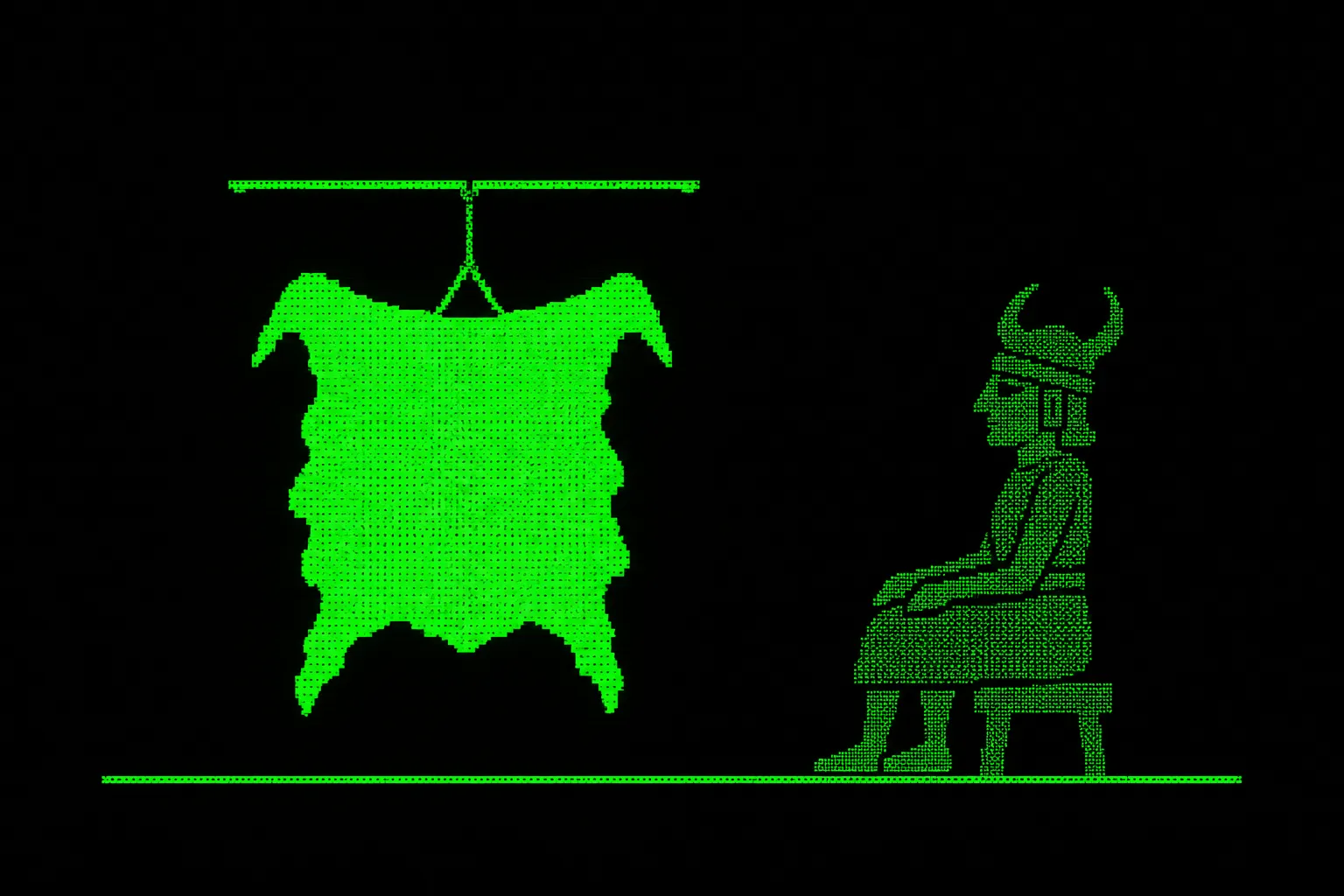
Then the Storm-god of Ḫarapšili came. He takes his seat on the šarpa-stool, the mist releases the windows, and the offering table and the gods are set back in order. The animals eat and drink their fill again. A lamb’s fleece is hung up before the god, with the gentle message of the lamb lying inside it, and the queen is to be a gentle message before him in the same way. The last fragments are scraps about parḫuena-grain, grandchildren, years and a window. The full list of blessings asked for the queen, children down to great-grandchildren and long years, can only partly be read.
The page gives 58 tablet lines, 5 restored from a duplicate. Square brackets mark breaks in the clay and restorations; ... is a lost stretch. Hover over or tap a Hittite word for its meaning and the English words it becomes.
- 1Vs. II 1′–4′
[ ]x-⸢ra?⸣[ ] [ ]x-aš [ ] [ ]x-⸢an⸣[ ] [ ]x[ ]
[gap in the text]
- 2Vs. II 10″–13″
▒ 𒈬𒄭𒀀 𒁍𒁕
[ ]x[ … … … ]x-ni [ ] [ MU year GÍD.DA long [ ]
[...]...[... ... ...]... [...] [...] long years [...]
- 3Vs. II 14″–17″
▒𒄩𒈨𒌍𒄭 𒄯𒆠 ▒▒ 𒇻𒀸𒃷
[ ḫamešḫa- spring ḫarki- white [ ]x UDU sheep [ ] [ ]-x-ri [ ]x[ ]
[... in spr]ing ... white [...] ... a sheep [...] ... [...] ... [...]
- 4Rs. III 1′
▒𒄑𒊬𒉺𒀸 𒂊𒊭𒀜
[ šarpa- seat eš- to sit
[... on the] šarpa-[seat] he sat.
Note · Line 4
A god sits down again on a šarpa, a kind of stool or chair. In Hittite myths about a god who has vanished, his return and taking his seat marks the end of the crisis. - 5Rs. III 2′
▒▒𒄑𒀊𒅀𒄰𒈠𒊏𒀀𒀸𒋻𒈾𒀸
[ ] AB window kammara- mist tarna- to release
[...] and the mist released the windows.
Note · Line 5
In these myths, mist and smoke fill the houses while the god is gone, as signs of his anger. Here they leave, and the temple and the gods are set back in order. - 6Rs. III 3′
[ tarna- to release ZAG.GAR.RA offering table ḫandā(e)- to set in order
[The smoke ... re]leased. The offering table was set in order.
- 7Rs. III 4′
𒊺𒅕𒊏𒀸𒊭𒀭𒀭𒈨𒌍 𒄩𒀭𒋫𒀭𒁕𒋾
šer on top DINGIR god ḫandā(e)- to set in order
[But on top] the gods were set in order.
- 8B Vs. II 1'-Vs. II 2' §14–§18
ḫila- courtyard anda inside ... ... É.GU4 cattle barn anda inside ... ...? ed- to eat ...? eku- to drink
[In the cour]tyard in[side] ... In the cattle-barn ... ... they [e]at ... they [d]rink
Note · Line 8
These lines describe the disaster while the god was away. In the fuller story, the sheep suffocated in the yard and the cattle did the same in the barn. - 9E Vs. 2' §21–§24
... =pat just ... ]x dā- to take ... tawal- tawal-drink ... ištamana- ear ...
... ] ... just ... ] [took] ... ... with [t]awal-drink ... [And the e]a[r] ...
- 10D 4' §25–§29
... ]x-aš šeš- to sleep ... ... ]x tiwaliya- Storm-god epithet {d}10 Storm-god Ḫarapšili Ḫarapšili ... ... tawal- tawal-drink walḫi- walḫi-drink ÍD river x[ ...
... ] ... the sleeping ... ... ] the tiwaliya Storm-god of Ḫara[pšili] ... ... rivers of [t]awal-drink (and) walḫi-drink ...
Note · Line 10
Ḫarapšili is a woman, a goddess or a royal lady, after whom this local Storm-god is named. The word tiwaliya is not understood, though it may mean “heavenly.” - 11D 7' §30
... tiya- to step
... I have ...-ed.
- 12D 7'-8' §31–§32
ki- to lie ša-x[ ... ... ]-_NE{MEŠ} nu and, then EGIR-pa back, again waḫnu- to turn
But it lies for you ... ... ... Turn back!
- 13D 8'-9' §33–§36
nu and, then ... ... ]-e-ši [] ... AN.BAR iron ... ]-ša ... GÉME maidservant aššu- good IGI eye ...
And ... ... you ... ... of iron ... ... ... your [maid]servant with good eyes ...
Note · Line 13
The speaker is pleading with the god to look kindly on his maidservant and to give her sons and daughters. - 14E Rs. 6-Rs. 7 §37–§39
... ḫūmant- whole kēr heart ... ... DUMU son DUMU.MUNUS daughter nūti- consent tumanti- obedience ... uwā- to come DIŠKUR Storm-god Ḫarapšili Ḫarapšili
... with the whole [h]eart ... ... [sons (and) daugh]ters, in consent (and) in obedience ... The Storm-god of Ḫar[ap]šili came.
- 15D 13' §41
... nāi- to turn
... [he] turned [around].
- 16Rs. III 5′–6′
▒𒄩𒀭𒁕𒀉𒋫𒊺𒅕𒊏𒀸𒊭𒀭𒄑𒆗𒈪𒄿𒂊𒈨𒌍
[ ḫandāi- to put in order šer on top kalmi- log ḫandāi- to put in order ḫila- courtyard anda inside UDU sheep ḫandatt- order
[...] [comes into or]der; and on top the logs [came into or]der. In the courtyard the sheep came into order.
- 17Rs. III 7′
▒ 𒂍𒄞𒈠 𒀭𒁕 𒄞𒄭𒀀 𒄩𒀭𒋫𒀭𒋫𒋾
[ É.GU₄ cattle barn anda inside GU₄ cattle ḫandāi- to put in order
[But in] the cattle-barn the cattle came into order.
- 18Rs. III 8′
▒▒𒊍𒍣𒅅𒃷𒍣 𒈾𒀜𒍝 𒅖𒁉𒄿𒂊𒅕 𒉆𒈠
[ ] azzikk- to eat nu and, then išpāi- to eat one's fill namma again
[...] they [ea]t, and they ate their fill again.
- 19Rs. III 9′
𒀝𒂉𒍑𒃷𒍣𒈠𒈾𒀜𒍝𒄩𒀸𒅆𒅅𒆠𒅕 𒉆𒈠
akkušk- to drink nu and, then ḫaššikk- to quench one's thirst namma again
But [they drin]k, and they quench[ed] their thirst again.
- 20Rs. III 10′
▒𒁉𒊏𒀭𒊭𒃢𒋢𒆳𒊭𒀸𒂵𒀭𒃷𒍝
[ peran in front ŠA of SILA₄ lamb kurša- fleece kank- to hang
[...] in front [...] the fleece of the lamb (is) hu[ng].
Note · Line 20
A fleece, kurša-, hung up before the god is a Hittite symbol of plenty and well-being. In these myths, good things are said to lie inside it. - 21Rs. III 11′
▒𒀭𒁕𒃢𒀸𒈪𒄿𒌑𒍑𒄩𒇻𒂵𒀸▒▒
[ anda inside SILA₄ lamb miu- gentle ḫaluga- message [ ]
[...] inside (lies) the gentle message of the lamb [...].
- 22Rs. III 12′–13′
▒▒𒊩𒈗𒉺𒉌𒀭𒅎𒊩𒄩𒊏𒀊𒅆𒇷 𒋡𒌓𒈠 𒈪𒄿𒌑𒍑 𒄩𒇻𒂵𒀸 𒂊𒌍𒁺
[ ]x MUNUS.LUGAL queen PĀNI before IŠKUR Storm-god Ḫarapšili Ḫarapšili QĀTAMMA likewise miu- gentle ḫaluga- message eš- to sit
[...] the queen before the Storm-god of Ḫarapši[li], [likewise] let her be a gentle message.
Note · Line 22
The wish passes the lamb’s mildness on to the queen. She is to stand before the god as pleasing and peaceful as the lamb’s offering. - 23Rs. III 14′
▒𒉿𒀠𒆷𒀸 𒆠𒀉𒋫
[ walla- thigh ki- to lie
[...] the thigh(?) lies.
- 24Rs. III 15′–16′
▒𒁇𒄷𒄿𒈾𒀸𒀭𒁕▒▒
[ parḫuina- a kind of grain anda inside [ ] [ ]x[ ]
[...] the [p]arḫuena-grain inside [...] [...]
- 25D 16'-17' §51
...? ... ḫandāi- to put in order
... ... [they] were put in o[rder].
- 26C 2' §63–§66
parḫuina- a kind of grain ... nu=aš=šši=pa and; he; her ... nu=šši and; to her ... ḫašša- grandchild ... MU year ... GIŠAB=ya window; and EGIR-an behind ...
[par]ḫuena-grain ... [a]nd he to her ... [a]nd to her ... [g]randchildren ... [y]ears ... and behind the [wi]ndow ...
Note · Line 26
In the fuller story, the god is asked to give her sons and daughters, grandchildren and great-grandchildren, and long years. - 27C 8' §67–§68
nu=ššan and, on tar-z[a?- ... IM Storm-god Ḫarapšili Ḫarapšili ...
[a]nd on it ... ... [the Sto]rm-god of Ḫarapšil[i] ...