~/sacred-texts/hittite-myths
Song of Silver: Kumarbi’s Orphan Son Pulls Down Sun and Moon
- Text
- Hittite myths, CTH 364, HFAC 12, KUB 33.115 (+ KUB 36.18, KBo 22.80), KBo 26.107, KUB 17.4 (+ KBo 22.82, KBo 26.146), KUB 36.19 (+ KUB 33.91), Bo 5019
- Date
- Translated into Hittite from a Hurrian song of the Kumarbi cycle, probably in the Middle Hittite period (14th century BC); the surviving tablets are mostly New Hittite script copies (13th century BC)
- Found
- Hattusa
- Language
- Hittite · Cuneiform
The Song of Silver is a Hittite version of a Hurrian song from the cycle of Kumarbi, the father of the gods who was driven from kingship by the Storm-god. Its hero is Silver, the metal made a person: a son of Kumarbi by a mortal woman, raised without his father, who grows up to seize the rule of heaven. The opening announces it in the singer’s own voice, I sing of it, the fine Silver. It praises his understanding, wisdom, word and divine providence against those of the other gods.
The song survives only in pieces. The fragments come from six manuscript groups found at Hattusa: HFAC 12 with the proem; KUB 33.115 with its duplicates KUB 36.18 and KBo 22.80; KBo 26.107; KUB 17.4 with KBo 22.82 and KBo 26.146; KUB 36.19 with KUB 33.91; and Bo 5019. Most are New Hittite copies of the 13th century BC. Their order is partly reconstructed.
The surviving episodes run as follows. A count of months, probably a pregnancy, ends with a birth. Silver beats the children at the gate with a staff, and an orphan child throws the insult back at him: You too … like us are an orphan child. He goes home weeping and turns on his mother, who begs O Silver, do not kill me! She tells him that his father lives in Urkish, that his brother the Storm-god is king, and that his sister Ishtar is queen of Nineveh. Silver hears, travels to Urkish and does not find his father, who is roaming the lands and mountains.
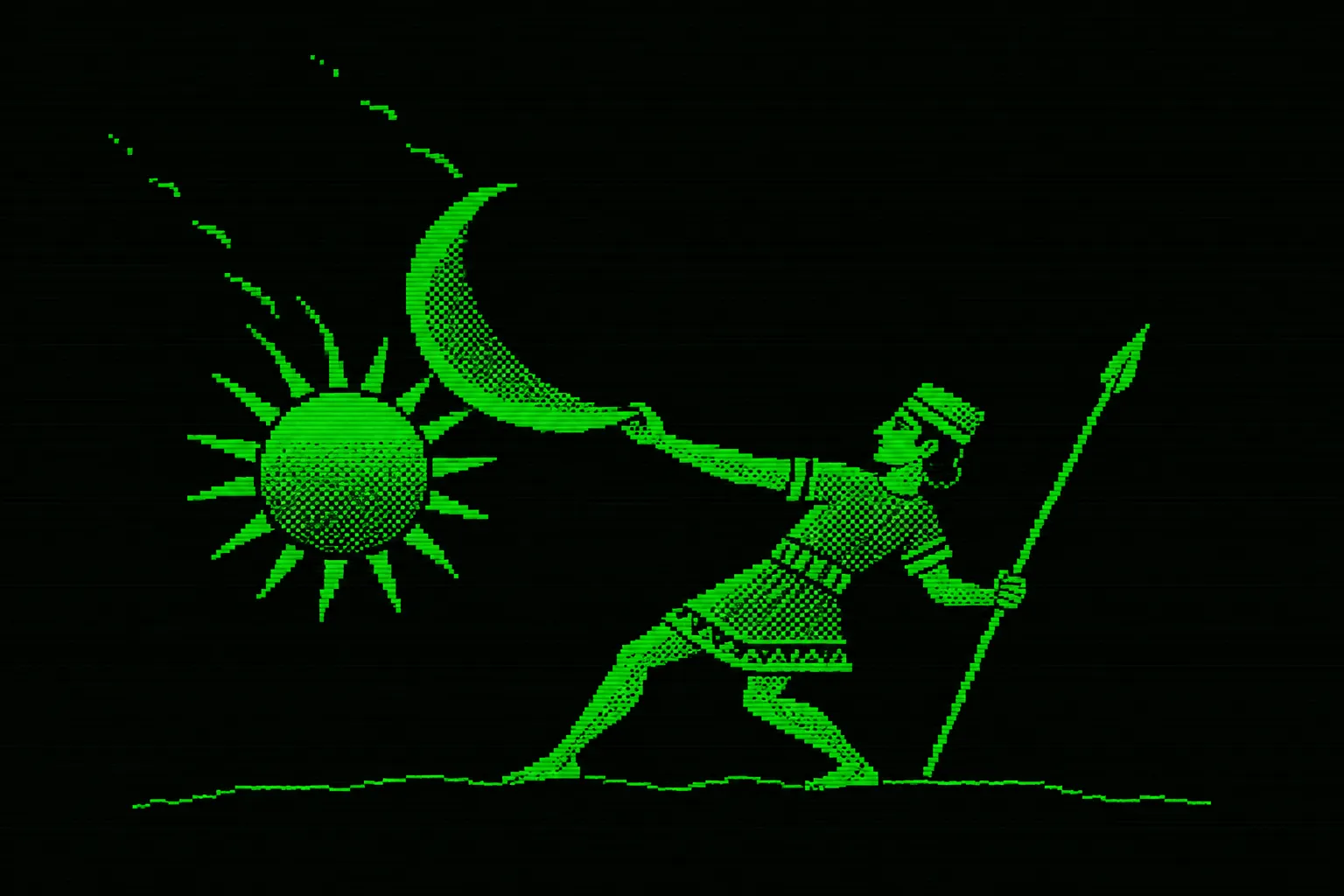
Silver then becomes king and drives all the gods with a foot fetter of pistachio wood, while the Storm-god and his vizier take counsel. In the last large fragment Silver seizes the spear and pulls the Sun-god and the Moon-god down from the sky. They bow and plead that if he kills them he will rule the lands in darkness. The ending is lost: the Storm-god presumably wins back the throne, as he does throughout the cycle, but no tablet preserves his victory. Ishtar appears in a final scrap, Bo 5019, speaking face to face with Silver.
The page gives 167 tablet lines, 15 restored from a duplicate. Square brackets mark breaks in the clay and restorations; ... is a lost stretch. Hover over or tap a Hittite word for its meaning and the English words it becomes.
Proem
- 1Vs. 1–4
▒𒀭𒌓𒀭𒀭▒▒▒▒▒▒▒⬚▒𒌷𒉈𒉡𒉿▒ ▒▒𒌑𒌌𒂉𒅖𒆠𒄿𒅀𒍣𒈠𒀀𒀠𒊺𒀉▒
[ UTU Sun-god DINGIR god … … (_) ] Nenuwa Nenuwa ] [ ] UL not kuiški anyone iye/a- to do mal understanding ] [ ] uttar word uttar word ] ḫattatar wisdom ḫattatar wisdom ]
[...] the Sun-god, the god ...[ ... ] Ninuwa [ ... ] [...] no one celebrates [...]; [his] understanding [ ... ] [...] and his word [ ... (than) their] word[s ... ] his [wis]dom [ ... (than) their] wisdom [ ... ]
Note · Line 1
Ninuwa is the Hittite name of Nineveh, the city on the Tigris whose queen, in this song, is Ishtar, Silver’s sister. The opening seems to say that no one honours the Sun-god and another deity the way they should. These lines praise the hero by setting his word, wisdom, battle and splendour against those of the other gods. The wording of each comparison is broken away. - 2Vs. 5–6
▒▒▒▒▒▒⬚▒𒍝𒄴𒄩𒅖𒅆𒅖𒈪𒅖𒊑𒉿𒋻𒊺𒀉▒
[… … (_) ] zaḫḫai- battle mišriwatar splendour ] ḫandatar divine providence ḫandatar divine providence ]
[ ... ] his battle [ ... his] splendour [ ... ] and for him [than] his [divine] providence [ ... their] divine providence [ ... ]
- 3Vs. 7–10
𒅖𒄩𒈪𒄴𒄭𒅀𒀭𒆬𒌓𒀭𒊭𒉌𒄑𒍣𒅔▒ 𒉡𒈬𒄩𒀜𒁕𒀭𒋼𒌍𒇽𒈨𒌍𒍑𒉿𒀭𒉡𒈪𒀸▒ 𒉡𒅅𒀜𒂊𒌍𒋫𒅗𒊒𒌑𒆬𒌓𒄿▒▒ ▒▒▒𒅖𒋫𒀸𒊭𒀭𒈾𒌑𒌌𒊺𒅅𒃷𒍣▒▒▒▒
išḫamai- to sing KÙ.BABBAR silver šanezzi- pleasant ] nu and; then ḫattant- wise LÚ man wannumiya- orphan ] NU.GÁL not present eš- to be karū formerly KÙ.BABBAR silver [ ] [… -a and UL not šakk- to know …? ]
I sing of [it], the fine Silver [...] [A]nd to me wise men [...] of the or[phan ...] [It] was [not] there. Formerly to Silver [...] [...] and ... they do not kno[w ...]
Note · Line 3
The singer names his subject: Silver, the metal made a person, a son of the god Kumarbi by a mortal woman. šanezzi- means “fine, first-class”, the word for the best quality of a thing. - 4Vs. 11–13
▒𒍑𒈠𒇽𒈨𒌍𒍑𒍝𒄴𒄭𒄿𒁁𒁕𒀀𒅕▒▒▒▒ ▒▒▒▒▒▒▒▒▒▒𒉡𒅅𒂊𒌍𒋫𒉡𒄬𒆠𒅖▒
[ -ma but LÚ man zaḫḫai- battle piddai- to run …? ] [… … …] x NU.GÁL not present eš- to be nu and; then ḫalki- grain ] [ ] x x kiš unclear fragment ]
[...] but the [...] men ra[n] to battle [...] [...] ... was not there, and grai[n ...] [...] ... kiš[...]
The birth of Silver
- 5Vs. I 1′–2′
▒▒𒁺 𒉺𒀀𒅕
[ ]x [ ]x-⸢du⸣ pai- to go
... ... they went
- 6Vs. I 3′–6′
▒▒▒𒊭𒉌 𒌓 𒌷𒄷𒁉𒌍𒈾 ▒▒▒ 𒅎 𒂉𒅖𒊭 ▒▒▒▒ 𒅆𒄭𒀀𒉿𒊺𒀉
[ paḫḫur fire [ ] [ ŠA of NA₄ stone Ḫupešna Hupishna [ ] [ IM clay kuišša each [ ] [ ] IGI eye
[...] fire [...] of the stone of Hupishna [...] clay(?), each [...] [...] his eyes
- 7Vs. I 7′–9′
▒▒▒▒𒈾𒀜 𒋧𒅕 ▒ 𒌗 𒐼𒄰 𒉺𒀀𒅕 𒌗 𒐊𒄰
[ ] [ ]x-na-at SUM to give [ ITU month 4 four pai- to go ITU month 5 fifth [ ] [ tiye/a- to step
[...] [...] ... they gave [...] four months went by. The fifth month [...] [... st]eps in.
Note · Line 7
The months are probably those of a pregnancy. They pass one after another until the tenth month, when the child is born. - 8Vs. I 10′–13′
▒▒𒉡𒍑𒃷▒▒
[ -i]a-⸢an?⸣-ni [ arš- to flow [ ]x nu=uš=kan and them x x [ ]x x[ ]
[...]...-ni [...] they flow [...]... and them ... ... [...]... ...[...]
- 9Vs. II 1′–2′
𒄩𒀭𒉌𒌍𒊬 ▒▒▒▒▒▒
ḫanneššar judgment x x x[ ] [ ] nu=aš=ššan and he nepiš- heaven ] [ ] [ ]
the judgment ... [...] and he [is king] in heaven [... and he is king in the land.]
Note · Line 9
Silver’s mother tells him who his family is. His brother is the Storm-god, king of the gods, who drove their father Kumarbi from the throne of heaven. - 10Vs. II 3′
NIN-KA your sister GAŠAN Ishtar nu=aš and she Nenuwa Nenuwa ] [ ]
Your sister is Ishtar, and she [is queen] of Nineveh. [... any ... fear!]
- 11Vs. II 4′
naḫ- to fear 1-edani=kan one DINGIR-LIM god ]
fear! The one god [fear!]
- 12Vs. II 5′–8′
𒆳𒂊 𒇽𒉽𒍑𒊭 𒄷𒄿𒋫𒅈▒ 𒊭𒊏𒀀 𒄷𒄿𒉡𒍑𒆠𒄑𒍣▒▒
KUR land KÚR=a enemy; and ḫuitar wild animals ] šarazzi(ya)- upper kattera/i- lower ] [ ] šarā up ḫuinu- to make run [ ] naḫ- to fear nu=kan and 1 one Kumarbi Kumarbi ] [ ]
In the land [he stirs up] both the enemies and the wild animals [...] the upper ones down[ward he keeps making run, but the lower ones] up he keeps making run [...] fear! And the one, K[umarbi, fear!] [... the mother's words]
Note · Line 12
The mother tells Silver to fear no god except one: Kumarbi, his father. Kumarbi sets enemies and wild animals loose on the land and turns high and low upside down. - 13Vs. II 9′–12′
𒅖𒋫𒈠𒀸𒋫 𒈾𒀸 𒌷𒊍▒ 𒌑𒌌 𒌑𒂊𒈨𒅀𒀜 𒆳𒂊𒀸𒃷 ▒▒ 𒌑𒂊𒄭𒌍𒆠𒄑𒍣𒄯𒊕𒈨𒌍𒊺𒂊𒅕▒▒▒▒▒▒
ištamašš- to hear n=aš and he URU city ] Urkiš Urkish ar-/er- to arrive nu=ašta and ] UL not wemiya- to find KUR land [ ] weḫ- to turn; roam ḪUR.SAG mountain šer on; above ] [ ] x [ ]
heard, and he [set out] from the city [...] he arrived at Urkish, and [in his house ...] he did not find. In the lands [...] he keeps roaming about; on? the mountains [...] ... [...]
Note · Line 13
Urkish was a real city in northern Mesopotamia and Kumarbi’s home. In the fuller story it is Silver who goes there looking for his father, and he finds Kumarbi gone from his house, roaming the lands and mountains. - 14B Vs. II 1' §15–§18
... mema/i- to speak ... ... =šši to him ... ... ]-⌈i⌉ EGIR-pa back x[ ... ... arḫa away GIDRU staff ME to take
... [began] to spe[ak] ... ... to him ... ... back ... ... [too]k [aw]ay the staff.
Note · Line 14
Silver has come home after beating the children at the gate with a staff. Here someone takes the staff from him, probably his mother. - 15B Vs. II 5' §20–§21
EGIR-pa back neya- to turn ...? ... EGIR-pa back mema- to speak dāi- to put
She turned [ba]ck ... ... began to answer back.
- 16B Vs. II 7' §23
KÙ.BABBAR silver lē do not kuen- to kill
"O Silver, do not kil[l] me!
Note · Line 16
An orphan child has taunted Silver for having no father, and Silver has turned on his mother. She is afraid he will kill her, so she tells him who his father is and where he lives. - 17B Vs. II 8' §24–§25
... URU city ūk I te- to say
... the [ci]ty I tell you.
- 18B Vs. II 9' §26–§28
... URU city Urkiš Urkish atta- father nu=aš and she Urkiš Urkish eš- to be
... the father of the [ci]ty Urkish [a]nd he lives in Urkish."
- 19B Vs. II 12' §31
ŠEŠ brother d10 Storm-god ...
But your brother (is) the Storm-god ...
- 20B Vs. II 13' §33
nu and; then KUR land LUGAL king
and he (is) ki[ng] in the land.
- 21Rs. III 1′–4′
▒▒▒▒▒▒▒▒▒𒀭𒌋𒉌𒈨𒈪𒅖𒆠𒌋𒉿𒀭▒ 𒅮𒀭𒈾𒉿𒀜𒋫 𒌑𒌌 ▒▒▒
[ ]x x[ ] [ ]x-da x[ ] [… … …] {D}10 storm god memišk- to speak ] BÚN=aya=wa=tta thunder UL not ] [ ]
[...] ... [...] [...] ...-da ... [...] [... ... ...] began to speak to the Storm-god: "And thunder [...] to you not [...]
Note · Line 21
The scene moves to the gods. In the fuller story the speaker is the Storm-god’s vizier, his chief minister, who is warning him that Silver has risen to power. - 22Rs. III 5′–6′
𒊭𒀝𒋾 𒈾𒀝𒆠𒄿 𒁕▒ 𒈗𒌋𒄑𒍣𒀉𒋫𒀜 𒈾𒀸𒆠𒉡𒈾▒
šak- to know nakki- important; honored da-[ ] LUGAL-uizziya- to become king nu=aš and she kinun now ]
you know; in honour(?) ... [...] he became king, and h[e now(?)]
- 23Rs. III 7′–8′
𒄷𒌋𒈠𒀭𒋼𒌍 𒀭𒈨𒌍𒈬𒍑𒀭𒁕▒ 𒄑𒇴𒃲𒀸 𒄑𒉺𒊑𒄭𒀉 𒈾𒀭𒈾𒀀𒄿▒▒▒▒
ḫumant- all; whole DINGIR god anda in; into ] LAM.GAL pistachio patalḫa- shoe sole nanna- to drive …? ]
all the gods in[to(?) ...] with a foot fetter of pistachio wood [drives(?) ...]"
Note · Line 23
Silver is now king and drives all the gods before him like captives, with their feet bound in a wooden fetter. - 24Rs. III 9′–12′
𒀭𒌋𒀸 𒀀𒈾 𒇽𒈛𒋗 𒈨𒈪𒅖𒆠𒌋𒉿𒀭▒ 𒂊𒄷𒉿 𒉺𒀀𒄿𒌋𒂊𒉌 𒀀𒁺𒈪𒉌▒▒ 𒌑𒌌 𒋻𒄴𒋫 𒀭𒍣𒂖 𒀜𒋫▒ 𒉡𒉿𒊏𒀭𒍝𒀭 𒆠𒉡𒈾 𒆬𒌓𒀭𒍝 ▒
{D}10 storm god ANA to SUKKAL vizier memišk- to speak ] uwa- to come pai- to go ed- to eat [ ] UL not tarḫu- to conquer weš we atta- father ] nu=wa=an=za and him kinun now KÙ.BABBAR silver ]
The Storm-god [began] to speak to his vizier: "Come, let us go (and) let us ea[t]! [...] [...] did not conquer [...], our f[ather ...] And now him Silver [will ...?]"
Note · Line 24
“Our father” is Kumarbi, father of both the Storm-god and Silver. The Storm-god recalls that even Kumarbi could not defeat him, and asks whether Silver now will. - 25Rs. III 13′–16′
𒋗𒊍𒀜𒃷 𒀊𒉺𒀭𒋫𒀜▒▒ 𒄿𒅀𒀭𒉌𒅕 𒁹𒀭𒆠𒀜 𒊬𒊑𒂊𒅕▒▒ 𒌷𒊑 𒂊𒊑𒅕 𒈾𒀜𒃷▒ 𒈾𒀝𒆠𒈠𒀸𒊭𒀭 𒆬𒌓𒀭𒍝 ▒
ŠU hand appa- to take hold [ ] iyanna- to go 1-anki at once šarra- to cross [ ] URU city ar-/er- to arrive nu=at=kan and they ] nakki- important; honored KÙ.BABBAR silver ]
They took (each other) by the hand [...] (and) they went; at once they cr[ossed] [...] They arrived in the town. And they [...] But in honour(?) Silver [...]
Note · Line 25
The Storm-god and his vizier cross the distance in a single stride, as gods do in these songs. They reach Silver’s town and find him enthroned and honoured, with the mighty ones afraid of him. - 26Rs. III 17′
𒈠𒀀𒀭 𒂊𒌍𒍣 𒈾𒄴𒄩𒀭𒍣𒅀𒀭▒
mān like; as eš- to be naḫḫ- to fear ]
[...] like [...] he sits; [they] fe[ar him?]
- 27Rs. III 18′
walliwalli- mighty ]
the mighty [ones?...]
- 28Rs. III 19′–1′
𒀭𒅎𒀸𒃷 𒀭▒ 𒀀𒍑𒋫𒀭 𒉡𒍝▒
IŠKUR Storm-god {D}[ ] au(š)-=an to see him nu=za and ] x x x[ ] [ ]x-⸢an⸣ x[ ]
The Storm-god [...] the god [...] saw him, and [...] ... [...] ... [...]
- 29Rs. IV 2′–3′
▒▒𒆬𒌓𒀭𒍝𒄩𒀜𒋫𒀭𒍝 ▒ 𒄑𒉺𒊑𒄩𒀭 𒄿𒅀𒀜
[ ] KÙ.BABBAR silver ḫattant- wise [ patalḫa- shoe sole iye/a- to do
[...] the wise Silver [...] made a [wooden] foot fetter(?)
- 30Rs. IV 4′–5′
𒉡𒀭𒈨𒌍𒍑𒄷𒌋𒈠𒀭𒋾𒅖
nu and; then DINGIR god ḫumant- all; whole [ nanna- to drive
[and all] the [gods] [he d]rives [them(?)]
- 31B Rs. III 19' §72–§76
... ... ŠU.GI elder x[ ... ]x x[ ... ]x x[ ... ]x -ma but ? to dāi- to put GIŠ wood kui- who, which karš- to cut off
... ... the elders ... [...] ... ... ... ... but [be]gan to ... The wood that we [c]ut off,
Note · Line 31
A new, badly broken scene with the elders. Someone tells “you” about wood that “we” cut, an ox in a garden and the lord of a meadow; what is happening cannot be recovered. - 32B Rs. III 22'-Rs. III 23' §77
zik you šarā up apadda there -ške- repeatedly
you too ...-ed (repeatedly) up there.
- 33B Rs. III 23'-Rs. III 24' §78–§80
x ŠÀ-BI in the midst MÚ.SAR garden GUD ox kui- who, which zik you x{MEŠ} zīk you AN.x pai- to go ]x-ta kēr heart eš- to be
... [in the mid]st(?) of the garden, the o[x](?) which [y]ou ...s "[Yo]u(?) too ... ... go(?)[...] ...-ed was of the heart.
- 34B Rs. III 27' §82–§85
=za reflexive particle kui- who, which Ú.SAL meadow (_) ]-⌈a?⌉-i ]x Ú.SAL meadow EN lord x[ ... (_) nu=at=ššan and it ... ... ŠU.GI elder ...
... with whose meadow ... ... ... the lord of the meadow ... [...] and it [...] ... the elde[rs] ...
- 35Rs. IV 6′–10′
▒ 𒇽𒈛𒋗 𒊭𒊏𒀀
[ SUKKAL-ŠU his vizier šarā up [ ] [ ḫarnamni- to stir up [ ]x-te-eš [ šiyattal- spear
[...] his vizier up [...] [...] [they] keep [stir]ring up [...] ... [...] spear
Note · Line 35
The spear may belong to the episode in which Silver seizes a spear and pulls the Sun-god and the Moon-god down from the sky. - 36Rs. IV 11′–1″
[ ] [ weḫ- to turn; roam [ ]x [ ]x-ti [ dai- to place
[...] he keeps [tur]ning (around) [...] ... [...] ... [...] he [pla]ced
- 37C 1' §98–§101
... SAG.DU head ... ... kuiški anyone kinuntarral- present ... ... Urkiš Urkish URU city x[ ... ... ]x pāi- to go
... [on the h]ead ... ... [some]one ... present[- ... ... [U]rkish, the city, ... ... we go
Note · Line 37
The scene turns again to Urkish, Kumarbi’s city. Someone speaks of “us” going there and asks “who?”, but the speakers are lost. - 38C 4' §102–§106
kuiš who ... ... Urkiš Urkish URU city x[ ... ... ]-⌈ar?⌉-x ... kattan below ...
Who ... ... [Urki]sh, the city ... ... ... below ...
Fragment (KBo 26.107)
- 39lk. Kol. 1′–3′
[ ]x Kumarbi Kumarbi ] [ ] ḫaink- to bow x[ ] nu and; then … … ]-š[a(-) ]
[ ]... Kumarb[i ... ] [ ] bow[ed] ...[ ] and? [ ... ]...[ ]
Note · Line 39
Someone bows down here, probably Kumarbi, who is named in the line before. Whom he bows to is lost. - 40re. Kol. 4′–7′
𒄑𒇴𒃲𒀸 ▒▒▒▒
x x x x-an(-)[ ] INIM word ] [ ] LAM.GAL pistachio [ ] [ ] patalḫa- shoe sole ]
... ... ... ... [ ] words and? ...[ ] [ ] of pistachio-wood [ ] [ ] from the wooden foot shackle [ ]
- 41re. Kol. 8′–11′
𒈾𒀭 𒄿𒈾 ▒▒▒▒ 𒀭𒌋𒉌 𒈾▒▒▒
nu=an and him INA in [ ] [ ] 10 Storm-god nu and; then ] [ ] memišk- to speak ] [ ] [… ]x[ ]
and him in [ ] [ ] to the Storm-god a[nd ... ] [ ] [began] to spe[ak ... ] [ ] [... ]...[ ]
Note · Line 41
The fetter of pistachio wood appears again, and then someone begins a speech to the Storm-god. What is said is broken away. Fragment (KUB 17.4)
- 421′
[… ]x x-⸢ia-an⸣-n[i? … -i]t? dašk- to keep taking ]
[...] ... [...] ... keep tak[ing(?) ...]
- 432′–4′
▒▒▒𒉿𒀭𒉡𒌝𒈪𒅀𒀭𒌉𒀭𒆬𒌓𒀭𒍝𒄑𒉺𒀉▒ 𒉡 𒉿𒀭𒉡𒈪𒅀𒀸 𒌉𒀸 𒆬𒌓𒄿 𒈨𒈾𒄴𒄩𒀭𒁕 𒅆𒌨𒇻𒌓𒋻𒋼𒀉𒆬𒌓𒅀𒂉𒉿𒀜𒉿𒈾𒀸▒
[…] wannummiya- orphaned DUMU child KÙ.BABBAR silver GIDRU staff ] nu and; then wannummiya- orphaned DUMU child KÙ.BABBAR silver menaḫḫanda opposite ḪUL evil uttar word te- to say KÙ.BABBAR silver kuwat=wa=naš why; us ]
[...] an orphan child Silver with a staff [...] and the orphan child to Silver oppo[site] spoke an evil word: "My Silver, why [... us ...]?
- 445′–8′
𒉡𒉿𒈾𒀸𒃷 𒂉𒉿𒀜 𒂉𒉿𒀸𒆠𒅆 𒍣𒅅𒋡𒉿𒍝 𒆬𒌓𒀭𒍝 𒀭𒁕 𒁇𒈾𒀸𒊭 𒉺𒀉 𒆬𒌓𒀭𒍝 𒅗𒄭𒀀𒅈 ▒
nu=wa=naš=kan and; us kuwat why kuwašk- to keep striking zik=ka=wa=za you too weš we iwar like wannummiya- orphaned DUMU child [ ] nu=aš and she wišk- to weep dai- to place nu=kan and wišk- to weep KÙ.BABBAR silver anda in; into per house pai- to go KÙ.BABBAR silver INIM word ]
And why do you keep striking us? You too [...] like us (are) an orphan child." [... heard] He began to weep, and we[eping] Silver went into his house. Silver words [...]
Note · Line 44
The orphan child throws the insult back at Silver: he has no father at home either, so he is an orphan too. The word wannummiya- means a child left without a parent, here a fatherless child. Stung by the insult, Silver goes home in tears and repeats the children’s words. In another copy he speaks them to his mother, and this is what leads him to demand who his father is. - 459′–10′
memišk- to speak dai- to place peran in front of aška- gate DUMU child ] kattan below ḫazzikk- to keep beating nu=mu and; me terišk- to keep defying
began to speak: "In front of the gate the children [whom] down I kept beating, they keep [defying] me."
- 46B 4'-5' §7
... ištamaš- to hear
... [he hear]d
- 4711′–14′
𒉡𒈬𒉿𒉡𒌝𒈪𒅀𒀸𒌉𒀸𒂉𒂊𒌓𒋻𒋼𒀉 𒈾𒀜𒂼𒅀𒅖𒋫𒈠𒀸𒂉𒉿𒀜𒉿𒈾𒀸
[…] DUMU child GIDRU staff GUL to strike apa-=ma=mu that one; but; me EGIR-pa back ] nu=mu and; me wanummiya- orphan DUMU child kui- who, which uttar word te-/tar- to speak n=at and it; them AMA mother ištamaš- to hear kuwat why GUL-aḫḫ- to strike nu and; then ]
[And] I struck a child with a staff. But that one [...] me back [and] the words which the orphan child spoke [to] me, [the]m, my mother, hear! 'Why [... us] [do you keep str]iking? And [us ...]
Note · Line 47
Silver tells his mother the whole quarrel again, repeating the orphan’s words in full, as these songs often repeat a speech word for word. - 4815′
[ weš we ]
[... o]u[r ...]
Fragment (KUB 36.19)
- 491′–3′
▒𒅖𒁓𒄿𒀉𒃰𒋫𒀭
[ ēp- to seize [ ŠAPĀRU to send pai- to go kattan below [ ] nu_-an_-kan and him patalḫa- shoe sole
[...] seiz[ed ...] [...] he sent[?]: "Go dow[n ...] [...] and him with a fet[ter(?)]
- 504′
[ dai- to place
[...] he placed.
- 515′–8′
▒▒𒊺𒀉 𒅖𒋰𒋫 ▒▒𒉡𒀭𒈨𒌍𒅖𒄷𒌋𒈠𒀭𒋼𒌍 ▒▒𒌑𒉿𒀭𒍣𒈾𒀝𒆠𒅀𒋻𒍝
[ -šet his ištap- to close [ ]x-ti-it ḫanna- to judge ] [ ] nu and; then DINGIR god ḫumant- all; whole [ ] uwa- to come nakkiyatar weight; power
[...] his [...] he closed [...] with [...] judged(?) [...] [...] and all the gods [...] come. Power
- 529′
▒▒𒂊𒅁𒋫 𒄑𒈠𒊑𒅔 𒆬𒌓𒀭𒍝
[ ] ēp- to seize mari- spear KÙ.BABBAR silver
[...] [seiz]ed(?) the spear, Silver did.
- 5310′
[ UTU Sun-god 30 moon-god GAM down ḫuittiya- to pull
[and from the sky] he pulled down [the Sun-god] and the Moon-god.
Note · Line 53
With the spear Silver drags the Sun-god and the Moon-god, the two great lights of the sky, down out of heaven. - 5411′–12′
[ kaniniya- to bow down nu_-at and they KÙ.BABBAR silver [ ] [ ] 30 moon-god KÙ.BABBAR silver memišk- to speak [ ]
[The Sun-god and the Moon-god down] bowed, and they to Silver [bowed down; the Sun-god] and the Moon-god [began] to speak to Silver [...]
- 5513′–16′
▒▒𒇷𒂊𒉿𒀭𒈾𒀸𒃷 𒂉𒂊𒅆 𒌑𒂊𒊭𒉿 ▒𒁖𒈾𒀸𒊭𒆷𒇻𒊌𒆠𒈪𒅖𒍣𒅅𒉿𒂉𒂊▒▒ 𒈠𒉌𒅀𒄴𒄭𒅖𒆠𒅆 𒌑𒂊𒊭𒌋𒉿𒊍 𒄑𒍪𒌒𒉺𒊑 ▒▒▒𒂉𒂊𒅆 𒉡 𒌑𒉿𒅆 𒆳𒂊
[ ] lē do not kuen- to kill weš we [ tēkan earth lalukkima- light source zik you kui- who, which [ ] maniaḫḫišk- to govern weš we zuppari- torch [ ] [ kuen- to kill nu and; then wē-/uwa- to come KUR land
[...] "Do [n]ot kill us! But we [(are) of heaven and of the eart]h the luminaries. The [lands] which you [gover]n, we (are) torch(es) [... If you] kill [us], then you will go on [to rule] the lands
Note · Line 55
The Sun and the Moon bow before Silver and beg for their lives. They are the lights of the world, and if he kills them he will be king only of lands in darkness. - 5617′
[ maniaḫḫišk- to govern
[dark, yourself] you will g[o]vern."
- 5718′
[ ]x x[ ]
[gap in the text]
- 58B 11' §22–§23
nu and; then ZI soul anda in; into aššiyawar love ... ... -wa quotative particle genzu- kindness ...
[And in him] the soul within [was ... with] lo[ve ...] ... ]s ... kindn[ess ...
Note · Line 58
Someone’s heart is moved here, perhaps Silver’s: the soul inside him is filled with love. The Hittite word genzu literally means “lap” or “womb”, and is used for tenderness and compassion, the feeling a mother has for her child. Fragment (Bo 5019)
- 591′–4′
▒𒈠𒀭𒌋𒁯 ▒▒▒▒ 𒇽𒉌𒇷
[ ] x [ ] [ -ma but IŠTAR Ishtar [ ] [ ]x LÚ-nili in a man’s manner [ ] [ ]x kuwai- to fear ]
[...] ... [...] [...] but Ishtar [...] [...] ... in the manner of a man [...] [...] ... fear[...]
Note · Line 59
Ishtar was goddess of both sex and war, and was sometimes said to act or appear like a man. Why the phrase “in the manner of a man” is used here is lost. - 605′
[ ]x
[gap in the text]
- 616′–9′
▒▒▒𒍝𒂊𒂉𒌝▒▒ ▒𒈨𒈪𒅖𒆠𒌋𒉿𒀭𒁕𒀀𒅖𒂉𒀉 ▒▒𒌑𒊌𒋡𒉿𒀀𒌑▒
[ KÙ.BABBAR silver INIM word ] [ ]x x-za eku- to drink um-x[ ] [ memā- to speak dai- to place kui- who, which [ ] uk I auš- to see ]
[... to] Silver the word [...] [...] ... drink! ... [...] [...] began [to spea]k: "What [...] [...] I too ... see? [...]
- 6210′
[ -mu me pēḫute- to bring ]
[...] keeps bringing [...] me [...]."
- 6311′–15′
▒𒌓𒁕𒀀𒅈𒆬𒌓𒄿𒀭𒍝▒▒ ▒▒𒀭𒌋𒁯𒅖𒆬𒌓𒄿𒈨𒈾𒄴𒄩𒀭𒁕 ▒▒𒌑𒊌𒋡𒉿▒▒▒▒▒ ▒▒𒃰𒋫𒄭▒▒
[ uttar word KÙ.BABBAR silver [ ] [ ] IŠTAR Ishtar KÙ.BABBAR silver menaḫḫanda opposite [ ]x uk I x[ ] [ ] katta down ḫi-x[ ]
[...] the [wor]ds Silver [...] [...] Ishtar to Silver fa[cing ...] [...] "I too ... [...] [...] down? ... [...]
Note · Line 63
Silver has heard someone’s words, and Ishtar, his sister, now speaks to him face to face. Beyond her opening “I too”, what she says is broken away.