~/sacred-texts/hittite-rituals
Mastigga Ritual: Hittite Spell Against Family Curses
- Text
- Hittite rituals, CTH 404.1, KBo 2.3+; KBo 9.106+; KBo 44.17; KUB 58.98+; KBo 53.26; KBo 53.23+; KBo 48.91+; Bo 6342
- Date
- Composed in the Middle Hittite period (c. 1400 BC) from a Kizzuwatnean tradition; preserved in a Middle Hittite script version (KBo 9.106+) and in New Hittite script copies of the 13th century BC (KBo 2.3+ and duplicates)
- Found
- Hattusa
- Language
- Hittite · Cuneiform
This is the ritual of Maštigga, a woman of Kizzuwatna (the colophon also calls her a woman of Kummanni), for a father and son, a husband and his wife, or a brother and sister who have quarrelled. An Old Woman performs it for the two “lords of the ritual.” She takes the curses they have spoken, the “mouth and tongue,” off them and destroys them.
The text survives in several versions found at Hattusa. The main copy, KBo 2.3+, is in New Hittite script of the 13th century BC. Its duplicates include KBo 44.17, KUB 58.98+, KBo 53.26, KBo 53.23+, KBo 48.91+ and Bo 6342, and one duplicate carries the colophon “Hand of Ḫanikkuili, the scribe.” A third version, KBo 9.106+, is in older script and differs in detail. In that version a single “sacrificer” takes the place of the two patrons, and its colophon calls the text the ritual of “the lord of the tongue.”
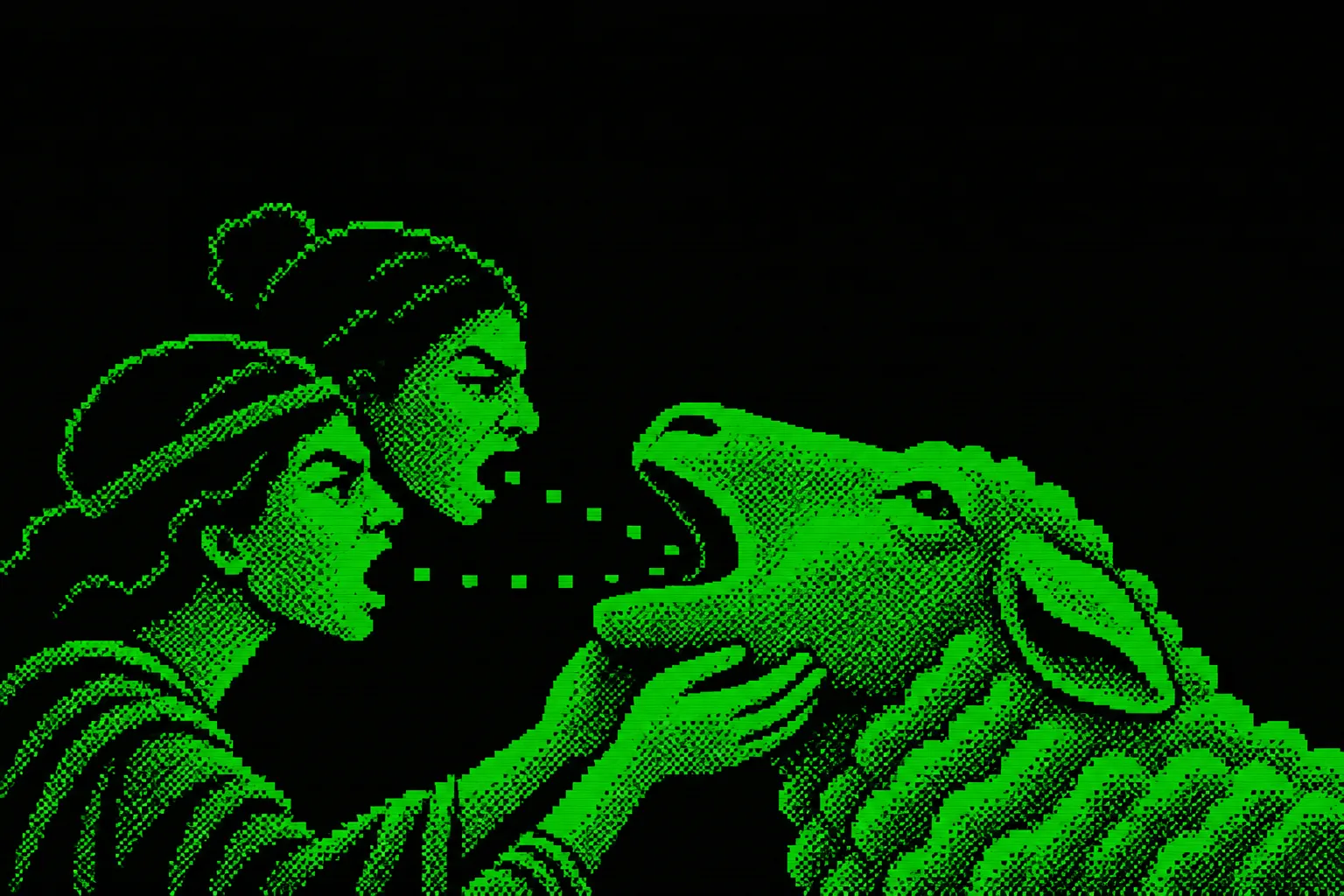
The ritual is a chain of disposals. Dough figurines with dough hands and tongues on their heads are stripped of their wool threads, and the hands and tongues are broken. Wax tongues are waved over the patrons and thrown into the hearth, and the Sun-god is asked to turn the curses to the left and nail them down. A sheep is held over the pair as the substitute for your bodies. They spit the curses into its mouth, and it is slaughtered into a pit and buried with bread and wine. A black sheep is spat into and cut up in the same way. A fattened piglet is killed and buried with the spell that the curses, like the piglet, will not see the patrons again. In the second version a salamander wrapped in red and blue wool carries off the evil tongue on its back, and a puppy is killed as the substitute for all the bodies. After this, vessels of wine, oil and honey are smashed in the hearth, a live sheep is given to the Sun-god as scapegoat and kept by the Old Woman, and seven copper pegs nail the mouth and tongue into the earth. Seven standing stones are set up between two fires, and the patrons kick them over and walk out through the flames. They throw off their festive clothes, break a bowl with their feet, are wiped with grass, and wash. The wash-water is sealed in an ox horn, not to be opened until the former kings return.
The opening of the first tablet is damaged. A long stretch in column ii is lost, including most of an analogy spell about clay, the riverbank and black cumin that does not turn white. The third version is fragmentary throughout.
The page gives 479 tablet lines, 52 restored from a duplicate. Square brackets mark breaks in the clay and restorations; ... is a lost stretch. Hover over or tap a Hittite word for its meaning and the English words it becomes.
First tablet
- 1I 1–4
𒌝𒈠 𒊩𒈠𒀸𒋾𒅅𒂵 𒊩 𒌷𒆠𒄑𒍪𒉿𒀜𒈾 𒈠𒀀𒀭𒃷𒀀𒁍𒌉𒊒𒅀𒈾𒀸𒈠 𒇽𒈬𒁺 𒁮𒍪𒅀 𒈾𒀸𒈠 𒋀 𒊩𒈠𒅀𒄬𒇻𒉿𒀭𒍣 𒉡𒍑 𒁖𒊭𒀭 𒂉𒉿𒁉 𒀭𒁕 𒋾𒀉𒋫𒉡𒈪 𒉡𒍑 ▒▒▒▒▒▒▒▒▒▒▒▒𒀀𒉌𒅀𒈪
UMMA thus says Maštigga Maštigga MUNUS woman Kizzuwatna Kizzuwatna mān if ABU father DUMU son našma or MUDU husband DAM wife našma or ŠEŠ brother NIN sister ḫalluwa- to quarrel nu and, then takšan together kuwapi when anda in tittanu- to put nu and, then [… … … …] aniya- to treat ritually
Thus (says) Maštigga, woman of [Ki]zzuwatna: [I]f a father and son, [or] a husband and his wife, or a brother and sister quarr[el], then when I put them together in, I [...] treat them (ritually):
Note · Line 1
[I 3–4] nu-uš ták-ša-an ku-wa-pí an-da ti-it-ta-nu-mi is read as “when I bring them together.” The earlier edition’s “je les traite de la manière suivante” (I treat them as follows) renders only the a-ni-ia-mi clause. Here “treat” is the ritual sense of aniya- (“perform, treat”). [I 5] ḫulaliyazi is 3rd person singular, so the actor is not the “I” of Maštigga. The subject is lost in the break, so “he/she” is left open. [I 6] EN SISKUR is “the lord of the ritual,” i.e. the client for whom the ritual is performed. Duplicate B continues with a list of offering materials (bread, NAMANDU-vessels of oil), which matches earlier edition §§5–7. That list is not preserved in these lines. - 2I 5–8
▒▒▒▒▒▒▒▒▒▒▒▒▒▒▒▒▒▒▒▒▒▒▒▒▒▒▒▒▒▒▒▒▒▒▒▒𒈾𒀜𒃷 𒂗 𒀬
[… … … … … … … …] [… … … … … … … … … ḫulaliya- to wind around [… … … … … … … … … … … …] nu and, then EN lord SISKUR ritual [… … … … …] [… … … … … … … …] KAxU mouth EME tongue [… … … … … … … …] [… … … … … … … … … … …]
[...] ... he/she winds (it) around [...] and it ... the lord of the ritual [...] with mouth, with tongue [...]
- 3I 9–18
▒▒▒▒▒▒▒▒▒▒▒▒𒆠𒅖𒊭𒀭▒▒▒▒▒▒▒▒▒𒂉𒀉𒉿𒍝𒃷𒂉𒀉𒅖𒋻𒈾 𒄯𒍝𒆠𒀉𒁷𒆠𒉡𒈾𒀀𒁍𒌋𒍑𒄯𒁕𒀀𒍑𒅴𒄭𒀀 𒀭𒌓𒍑
[… … … … … … tuḫš- to cut off [… … … … … … … … … … … … … … …] [… … … …] kiššan thus [… … …] kuit what kuit what ištarna among ḫurza- to curse kinuna now apā- that ḫurtai- curse EME tongue UTU Sun-god
... cut off ... ... thus ... "[What]ever, whatever [amo]ng [yourselves you kept curs]ing, now those [cur]ses (and) tongues the Sun-god
Note · Line 3
[{€2+1} I 17] / [I 18]: [ḫurzaket]tén “you kept cursing” and [ḫurd]āuš “curses” are restorations from the context of cursing. The listed duplicate B (KBo 44.17, a list of a kišri- and copper tools, earlier edition §9) does not cover these lines, so no duplicate text is used. [{€2+1} I 18]: EME{ḪÁ} “tongues” stands beside “curses”, meaning the evil words spoken. [{€2+1} I 19]: waḫnud⟨du⟩ is emended to a 3sg imperative, “let him turn”. [GÙB-la] “to the left” is restored and marks the unfavourable direction. The subject of pešš(iya)- is not named. “She” assumes the female ritual practitioner, and “them” (=at) are the curses and tongues cast into the hearth. - 4I 19 / I 19
𒆏𒆷𒉿𒄴𒉡𒌓𒁺𒈾𒀜𒃷𒄩𒀸𒅆𒄿 𒁉𒌍𒊺𒅀𒍣
GÙB left waḫnu- to turn nu and, then ḫašša- hearth peššiya- to throw
[to the left] let him tur⟨n⟩." Then she throws them [into the hea]rth.
- 5B I 11' §11
ZÌ flour ZÌ.DA flour ZÍZ emmer UPNU handful
[...] of flour, a handful of emmer flour,
Note · Line 5
ZÌ-aš is unanalysed in the glosses. It is read with the earlier edition as “[…] of flour”, a genitive dependent on a measure or item lost in the break at the start of the line. _UP-NU “handful” goes with ZÌ.DA ZÍZ “emmer flour”; the earlier edition’s “épeautre” (spelt) translates the same ZÍZ, rendered here as “emmer”. [B I 11’ §11] The earlier edition renders ZÍZ as “spelt,” but we give “emmer,” the identification now standard for this Sumerogram in Hittite texts. - 6B I 15' §15
2 two ÚTUL pot 2 two DÍLIM.GAL large bowl 2 two GAL cup 1 one GÌR.KIŠ GÌR.KIŠ vessel
2 pots, 2 large bowls, 2 cups, 1 GÌR.KIŠ-vessel
Note · Line 6
The earlier edition lists a water vessel between the cups and the GÌR.KIŠ-vessel, followed by seven [hu]puwai-vessels. This line has neither: it goes straight from 2 {DUG}GAL to 1 {DUG}GÌR.KIŠ, and the list presumably continues on the next line. - 7I 20 / I 20–23
𒉡𒃷𒀀𒈾𒂗𒀬𒂉𒀉𒋠𒋛𒀀𒋠𒍝𒆳𒅎𒋼𒀸𒆠𒀉𒋫 𒅖𒊭𒈾𒀸𒈠𒀸𒈠𒀸𒂉𒂊𒁹𒁹𒀩𒁉𒊏𒀭𒃰𒋫𒆠𒅀𒋫 𒅖𒊭𒈾𒀸𒈠𒀸𒈠𒀸𒋡𒁺𒅴𒄭𒀀𒅀𒂉𒂊𒄿𒈾𒊕𒁺𒍪𒉡 𒆠𒀭𒋫𒈾𒀜𒊭𒈠𒀸𒃷𒊩𒋗𒄀▒▒▒▒▒▒▒▒▒▒▒▒▒▒▒
nu_-kan and ANA to, on EN lord SISKUR ritual kui- which SÍG wool SA₅ red SÍG wool ZA.GÌN blue NÍ.TE body ki- to lie iššana-_-ma_-šmaš dough, but, them kui- which 2 two ALAM figurine peran in front of katta down ki- to lie iššana-_-ma_-šmaš dough, but, them QĀTU hand EME_-ya tongue, and kui- which INA in, on SAG.DU_-ŠUNU head, their ki- to lie nu_-at_-šmaš_-kan and, them ŠU.GI old woman … … … … …]
[And] the [red wool (and) blue wool] which [lie]s on the ritual patron, on (his) body, but the 2 figurines [of dou]gh which lie down in front of them, and the hands and tongues [of] dough which on [their] heads [li]e: them the Old Woman from them ... ...]
Note · Line 7
[I 21]/[I 23]/[I 24] iš-ša-na-aš is read as “of dough” (genitive of iššana-), with =ma “but” and =šmaš “to/from them”, so “them” means the patrons. In [I 24] iš-ša-na-ša is iššanaš=a “and of dough”. [I 24] túḫ-ša-ri is a middle form but is used actively here (“she cuts off”). In [I 27] túḫ-ša-ru is a 3sg middle imperative, “let … be cut off”: the spell severs “the words of that day”. [I 25] The Old Woman breaks the dough hands and tongues of the figurines. This disposes of the tongues (curses or slander) attached to the patrons. Duplicate B (KBo 44.17) gives a different stretch: the treating of the tongues before the Sun-god, the figurines of dough and wood that are clothed with covered heads, and their placing at the feet of the 2 ritual patrons. It does not overlap these broken lines, so nothing here is restored from it. - 8I 24 / I 24–25
𒉡𒍑𒈠𒀸𒃷𒋗𒌑𒅋𒅈𒄩𒈭𒊭𒊑𒅖𒊭𒈾𒊭𒁹𒁹𒋗𒄭𒀀 𒅴𒄭 𒀀𒊩𒋗𒄀𒁺𒉿𒅈𒉌𒄑𒍣
nu_-šmaš_-kan and, them šuil thread arḫa off, away tuḫš- to cut off iššana-_-a dough, and 2 two ŠU hand EME tongue ŠU.GI old woman duwarni- to break
[and] from [th]em she cuts off the thread; and the 2 hands of dough (and) the tongues the Old Woman [br]eaks.
- 9I 26–27
𒉡𒍑𒈠𒀸𒃷 𒊺𒅕▒▒▒▒▒▒𒉿𒄴𒉡𒍣𒉡𒆠𒅖𒊭𒀭𒈨𒈠𒄿 𒈭𒊭𒊒𒀀𒁉𒂖▒▒▒▒▒▒▒▒▒▒▒▒▒▒▒𒈭𒊭𒊒𒀀𒁉𒂖𒌓𒄰𒀸𒌓𒁕𒀀𒅈
nu_-šmaš_-kan and, them šer over … … waḫnu- to turn nu and, then kiššan thus mema- to speak tuḫš- to cut off apā- that [… … … … …] tuḫš- to cut off apā- that U₄ day uttar word
And over them [she] wa[ves ...] and she spea[k]s thus: "Let that one's [...] be [cut] off; [...] let the words of that day be [cut] off!"
- 10I 28
𒈾𒀜𒃷 ▒▒▒▒▒▒▒▒▒𒁉𒌍𒅆𒅀𒍣
nu_-at_-kan and, them [… … … peššiya- to throw
And [she thro]ws them [...]
- 11I 29–32
𒂕𒀭𒁕𒈠 𒊩𒋗𒄀 ▒▒▒▒▒▒▒▒▒ 𒁕𒀀𒄿 𒉡𒍑𒊭𒀭 𒊺𒅕 𒅈𒄩 𒐌 𒅴𒄭 𒀀▒▒▒▒▒▒▒▒▒▒▒▒𒈾𒀸𒃷𒀀𒈾𒁹𒁹𒂗𒀬𒊺𒅕 𒅈𒄩 𒉿𒄴𒉡𒍣 𒉡 𒆠𒅖𒊭𒀭𒈨𒈠𒄿𒄩𒀸𒅆𒅅𒆠𒀉𒋼𒂗𒂉𒂊𒁕𒉌 𒌓𒋾 𒉡𒉿 𒅗𒀀𒊭 ▒▒▒▒▒▒▒▒▒𒌓𒄰𒀸𒅴𒄭𒀀 𒋗𒈠𒀀𒀸
EGIR-anda_-ma afterwards, but ŠU.GI old woman … … …] dā- to take nu_-šan and šer over arḫa off, away 7 seven EME tongue [… … … …] nu_-aš_-kan and, them ANA to, on 2 two EN lord SISKUR ritual šer over arḫa off, away waḫnu- to turn nu and, then kiššan thus memai- to speak ḫaššik- to become sated kui- which U₄ day nu and, then kāša here; now [… … … U₄.KAM day EME tongue šumāš you (plural)
But afterwards the Old Woman [...] takes ..., and over (them) away 7 tongues [...] [and] she [waves] them away over the 2 lords of the ritual and she speaks thus: "On which day you became sated, now here [... of the d]ay, the tongues, you, The draft leaves the second-person plural verb for becoming sated untranslated.
Note · Line 11
[I 29]–[I 31]: the earlier edition (§30–35) and duplicate B (KBo 44.17) cover a different section: placing dough hands and tongues and cutting red wool. Neither aligns with these lines, so no restorations are taken from them. [I 31]: [ḫ]a-aš-ši-ik-ke-e[t-t]e-e[n] is a 2nd person plural verb (imperative or preterite). It may come from ḫaššikk- “to sate oneself”, but it is left untranslated. [I 32]: šu-ma?-a-aš is a doubtful reading of “you (pl.)”. The surrounding break prevents settling whom it addresses or its case. [I 33]: ⸢ad⸣-da-a-aš is read as “father”, standing in apposition to the Sun-god. tar-ma-a-i]t (“nailed down”) is restored in the transliteration and so kept in brackets. [I 33]: n=at=kan is taken as referring to the tongues, which are placed in the hearth. - 12I 33
𒅗𒀀𒊭 𒀜𒁕𒀀𒀸 𒀭𒌓𒍑𒋻𒈠𒀀𒀉 𒈾𒀜𒃷 𒄩𒀸𒅆𒄿 𒁕𒀀𒄿
kāša here; now atta- father UTU Sun-god tarmai- to nail down nu and, then ḫašša- hearth dāi- to put
here the father, the Sun-god, [has nailed (them) down]." And she places them in the hearth.
- 13I 34–36′
𒉡 𒊩𒋗𒄀 𒉿𒀀𒋻𒅖𒈾𒀭𒈾𒁕𒀀𒄿𒉡𒍑𒈠𒀸𒃷𒉿𒀀𒋻𒊭𒊏𒀀 𒉺𒀊𒁇𒀸𒍣𒉡𒍑𒋗𒌒𒁉𒅀𒄴𒄭𒉆𒈠𒀸𒈠𒀸𒃷 𒅖𒊭𒈾𒀭𒈾 𒊺𒅕 𒅈𒄩𒉿𒄴𒉡𒍣
nu and, then MUNUSŠU.GI Old Woman wātar water iššana- dough dā- to take nu and, then wātar water šarā up papparš- to sprinkle nu and, then šuppiyaḫḫ- to purify namma then; again iššana- dough šēr over arḫa off, away waḫnu- to turn
The Old Woman ta[kes] wa[ter (and) dou]gh and [sprinkl]es water up on them and puri[fies] them. Then she [wav]es the dough over th[e]m.
Note · Line 13
[{€1} I 34]: the -šmaš of nušmaškan is “on them”, the two patients being purified. It is not “on you”. [{€1} I 40]–[{€1} I 42]: the sheep stands in for the patients’ bodies. The two patients spit the “curses” (ḫurdauš) into its mouth, and then it is slaughtered down into a pit dug in the earth and buried. [{€1} I 43]: ḫatta- means “stab, cut”. Here it means slaughtering the sheep into the pit. “Dig” is a restoration in brackets. [{€1} I 46]: šer anda ēpp- most likely refers to closing or covering the pit over. The sense is not certain. - 14I 36–37
𒉡 𒆠𒅖𒊭𒀭 𒈨𒈠𒄿 𒁇𒂉𒂊𒌍𒉿𒍝 𒉆𒈠 𒂊𒌍𒁷 𒅗▒𒌋𒀉 𒅴𒀉 𒉡𒃷 𒅖𒊭𒈾𒀭 𒄩𒀸𒅆𒄿 𒁕𒀀𒄿
nu and, then kiššan thus memai- to speak parkui- pure namma then; again eš- to be KAxU mouth EME tongue nu and, then iššana- dough ḫašša- hearth dāi- to put
And she speaks thus: "Be pure again in mouth (and) tongue!" And she puts the dough into the hearth.
- 15I 38–41
𒉡 𒇻 𒌋𒉌𒅀𒀭𒍣 𒈾𒀭𒃷 𒊩𒋗𒄀 𒀀𒈾 𒁹 𒁹𒂗𒀬𒊺𒅕𒂊𒅁𒍣 𒉡 𒆠𒅖𒊭𒀭 𒈨𒈠𒄿 𒅗𒀀𒊭𒉿𒀸𒈠𒀸 𒋻𒉺𒀠𒇷𒅖 𒉡𒉿𒀸𒈠𒀸𒅎𒋼𒀸𒋻𒉺𒀠𒇷𒅖𒂊𒌍𒁺𒅗▒𒌋𒄿𒅴𒄿 𒄯𒁕𒀀𒍑 𒉡𒍑𒅆𒃷𒅗▒ 𒌋𒄿 𒀭𒁕 𒀠𒆷𒉺𒄴𒄩𒀭𒍣
nu and, then UDU sheep uniya- to drive here nu and, then MUNUSŠU.GI Old Woman ANA to, on 2 two EN lord SISKUR ritual šēr over ep- to hold nu and, then kiššan thus memai- to speak kāša here; now tarpalli- substitute nu and, then NÍ.TE body tarpalli- substitute eš- to be KAxU mouth EME tongue ḫurdāi- curse nu and, then KAxU mouth anda in allapaḫḫ- to spit
They drive a sheep here, and the Old Woman holds it over the 2 patients and speaks thus: "Here is your substitute; let it be the substitute for yo[ur] bodies. The curses in the mouth (and) in the tongue..." And they spit them into its mouth.
- 16I 42
𒉡 𒆠𒅖𒊭𒀭𒈨𒈠𒄿𒄿𒁕𒆷𒌋𒂊𒌍𒉿𒃷𒄯𒁕𒀀𒍑𒉺𒊏𒀀𒀠𒆷𒉺𒄴𒁷
nu and, then kiššan thus memai- to speak idālu- evil ḫurtai- curse parā out allapaḫḫ- to spit
And [she speaks] th[us]: "Spit out the evil curses!"
- 17I 43
𒉡 𒋼𒃷 𒁁𒁕𒀭𒍣𒉡𒃷 𒇻 𒃰𒋫𒀭𒋫 𒄩𒀜𒁕𒀭𒍣
nu and, then tēkan earth padda- to dig nu and, then UDU sheep kattanda down into ḫatta- to slaughter
They [dig] the earth, [and] they slaughter the sheep down into it.
- 18I 44
𒉆𒈠𒀭𒃷𒃰𒋫𒀭𒁕 𒋾𒀭𒍣
namma then; again kattanda down into dāi- to put
Then they put it [down into it].
- 19I 45–46
𒉡𒍑𒅆 𒁹 𒃻𒆸𒊏 𒆯 𒀀𒉿𒀭 𒃰𒋫 𒋾𒀭𒍣 𒃾𒅀 𒅆𒉺𒀭𒋾𒉡𒊺𒅕𒀭𒁕𒀊𒉺𒀭𒍣
nu and, then 1 one NINDA.GUR₄.RA thick bread KU₇ sweet awan down katta down dāi- to put GEŠTIN wine šipant- to pour a libation nu and, then šēr over anda in ep- to hold
And they [put] 1 sweet thick bread down beside it, and wine she libates. Then they close it up on top.
- 20I 47–50
𒉡 𒇻 𒈪 𒌋𒌦𒉌𒅀𒀭𒍣𒈾𒀭𒊭𒈠𒀸𒊭𒀭 𒊩𒋗𒄀 𒊺𒅕 𒂊𒅁𒍣 𒉡𒆠𒅖𒊭𒀭𒈨𒈠𒄿𒊕𒁺𒈨𒌍𒉿𒀸𒈠𒀸 𒅎𒋼𒀸 𒄷𒌋𒈠𒀭𒁕𒀸𒋻𒉺𒀠𒇷𒅖𒇻𒈪𒆇𒄿 𒅴𒄿 𒄯𒋾𒅀𒀸𒊭⬚𒀭𒈾𒀭𒊭𒈠𒀸𒊭𒀭𒊺𒅕𒅈𒄩𒉿𒄴𒉡𒍣
nu and, then UDU sheep GE₆ black unniya- to drive here nu and, then MUNUSŠU.GI Old Woman šēr over ep- to hold nu and, then kiššan thus memai- to speak SAG.DU head NÍ.TE body ḫūmant- all tarpalli- substitute UDU sheep GE₆ black KA×U mouth EME tongue ḫurtai- curse EGIR behind nu and, then šēr over arḫa off, away waḫnu- to turn
And they drive up a black sheep, and the Old Woman holds it over them and speaks thus: "For your heads, for the bodies of all (of you), the substitute is the black sheep; for the mouth, for the tongue and behind(?) the curse." And she waves it away over them.
Note · Line 20
[{€1} I 50] EGIR!(EME)-an: the tablet writes EME “tongue”, emended to EGIR-an “behind, after”. The clause “mouth, tongue … of the curse” is therefore uncertain. Read as written, it would be “the tongue of the curse”. [{€1} I 48] SAG.DU{MEŠ}-w]a-aš-ma-aš: the clitic =šmaš is taken as “your” here, because it is in quoted speech addressed to the patients. In na-an-ša-ma-aš-ša-an ([{€1} I 47], [{€1} I 50]) the same clitic is narrative, “over them”. [{€1} I 54] {GIŠ}SERTUM is “olive oil”. pár-š]i-ia “breaks” has lost its object in the break; it is probably the bread, but that is not restored. [{€1} I 52] ḫatta- “stab” is rendered “slaughter”. ḫappeššanai- “cut into limbs” is restored from a break and rendered “cut up”. - 21I 51
𒉡𒍑𒅆𒃷𒁹𒁹𒂗𒀬𒅗▒𒌋𒄿𒀭𒁕𒀠𒆷𒉺𒄴𒄩𒀭𒍣
nu and, then 2 two EN lord SISKUR ritual KA×U mouth anda in allapaḫḫ- to spit
And the two lords of the ritual spit into its mouth.
- 22I 52
𒉡 𒇻 𒄩𒀜𒁕𒀭𒍣𒉆𒈠𒀭𒅈𒄩𒄩𒀊𒁉𒌍𒊭𒈾𒀭𒍣
nu and, then UDU sheep ḫatta- to slaughter namma then; again arḫa off, away ḫappeššana- to cut up
And they slaughter the sheep; then they cut it up.
- 23I 53–55
𒉡 𒆠 𒉈𒄿𒀭𒍣𒈾𒀭𒅈𒄩▒▒▒▒▒▒▒▒▒▒▒▒▒▒▒▒▒▒ 𒋭𒅀𒀸𒅆𒃷 𒉌 𒄑𒍢𒅕𒌈 𒊺𒅕 𒆷𒀀𒄷𒉿𒀭𒍣▒▒▒▒▒▒▒▒▒▒▒▒𒁇𒅆𒅀 𒈾𒀭𒃷 𒄩𒀸𒅆𒄿 𒀭𒁕 𒁉𒌍𒅆𒅀𒍣 𒃾𒅀 𒅆𒉺𒀭𒋾
nu and, then GUNNI hearth iya- to make nu and, then arḫa off, away [… … … … … …] LÀL honey Ì oil ZERTUM olive šer over lāḫu- to pour [… … … … paršiya- to break nu and, then ḫašša- hearth anda in peššiya- to throw GEŠTIN wine šipant- to pour a libation
And they make a hearth, and [...] it away [...] And honey and olive oil they pour over it [...] breaks and she throws it into the hearth and libates wine.
- 24I 56–56′
𒉡 𒊩𒋗𒄀 𒋚𒌉 𒁕𒀀𒄿 𒈾𒀭𒊭𒈠𒀸𒃷 𒊺𒅕 𒂊𒅁𒍣
nu and, then ŠU.GI old woman ŠAḪ.TUR piglet dā- to take nu and, then šer over epp- to hold
The Old Woman takes a piglet and holds it over them.
Note · Line 24
[{€1} I 57] Ú-it is read as the Sumerogram Ú “grass, fodder” with the instrumental ending -it, parallel to ḫal-ki-it “with grain”. Here wa-ar-kán-za “fat” carries over to [{€1} I 58]. [{€1} I 58]–[{€1} I 59] The analogy is that the slaughtered piglet will never again see the sky or its fellow piglets. [{€1} II 1]–[{€1} II 2] ú-wa-an-zi is taken as au-/u- “see” (3pl), because it continues “will not see” from the analogy. The evil curses (ḫurdaēš, nom. pl.) are the subject and the patrons (kuuš, acc. pl.) are the object. Read as “come”, it would give “let the evil curses likewise not come (to) these patrons”. [{€1} II 4]–[{€1} II 6] The piglet is killed and buried in a pit with bread and a wine libation. tekan anda appanzi, literally “they seize the earth in”, is taken as filling or closing up the pit. [{€1} II 8] kap-pa-ni-ia GE₆ is taken as “black cumin”. [IM] “clay” in [{€1} II 7] is a restoration in the edition. The duplicate C does not cover this stretch. - 25I 57–59
𒉡 𒆠𒅖𒊭𒀭 𒈨𒈠𒄿 𒅗𒀀𒊭𒉿𒊏𒀸 𒌑𒀉 𒄬𒆠𒀉 𒉿𒅈𒃷𒍝 𒉡𒉿 𒅗𒀀𒀸 𒂕𒀭 𒌑𒌌 𒉈𒁉𒅖 𒀀𒍑𒍣 𒂕𒉺𒈠𒉿𒍝𒃷 𒋚𒌉𒄭 𒀀 𒌑𒌌 𒀀𒍑𒍣 ⬚ ⬚ 𒄿
nu and, then kiššan thus mema- to speak kāša here; now Ú grass ḫalki- grain warkant- fat nu and, then kā- this EGIR behind UL not nepiš- sky auš- to see EGIR behind ŠAḪ.TUR piglet UL not auš- to see fin col i
And she speaks thus: "Look, it is with grass (and) with grain, fat; and this one will not see the sky afterwards, and it will not see the piglets again.
- 26II 1–2
𒉡 𒂉𒌋𒍑 𒂗𒈨 𒌍 𒀬 𒄿𒁕𒀀𒆷𒌋𒂊𒌍 𒄯𒁕𒀀𒂊𒌍 𒋡𒌓𒈠 𒇷𒂊 𒌑𒉿𒀭𒍣
nu and, then kā- this EN lord SISKUR ritual idālu- evil ḫurtāi- curse QATAMMA likewise lē do not auš- to see
These ritual patrons, the evil curses likewise let them not see!"
- 27II 3
𒉡𒍑𒈠𒀸𒃷 𒋚𒌉 𒊺𒅕 𒅈𒄩 𒉿𒄴𒉡𒍣
nu and, then ŠAḪ.TUR piglet šer over arḫa off, away waḫnu- to turn
And she waves the piglet over them, away.
- 28II 4–6
𒉆𒈠𒀭𒃷 𒂉𒈾𒀭𒍣 𒉡 𒋼𒃷 𒁁𒁕𒀀𒀭𒍣 𒈾𒀭𒃷 𒃰𒋫𒀭𒋫 𒋾𒀭𒍣 𒃻𒆸𒊏𒅀 𒀀𒉿𒀭 𒃰𒋫 𒋾𒀭𒍣𒃾𒅀 𒅆𒉺𒀭𒋾 𒉡 𒋼𒃷 𒀭𒁕 𒀊𒉺𒀭𒍣
namma then; again kuen- to kill nu and, then tēkan earth paddai- to dig nu and, then kattanta down; down into dāi- to put NINDA.GUR₄.RA thick bread awan down katta down dāi- to put GEŠTIN wine šipant- to pour a libation nu and, then tēkan earth anda in ep- to hold
Then they kill it and dig the earth, and they put it down into (it); and a thick bread they put down alongside, and she libates wine; and they close up the earth.
- 29II 7–10
𒉡𒊩𒋗𒄀𒅎 𒂁𒅖𒉡𒌋𒊏𒀭 𒄿𒅀𒄑𒍣 𒉡𒃷 𒅖𒊭𒈾𒀭 𒋼𒁍 𒀭𒁕 𒁕𒀀𒄿 𒆏𒉺𒉌𒅀𒃷 𒈪 𒀭𒁕 𒁉𒌍𒅆𒅀𒍣𒈾𒀜𒃷𒀀𒈾𒁹 𒁹 𒂗 𒀬 𒊺𒅕 ▒▒▒▒▒▒▒▒▒▒▒▒▒▒▒▒▒▒▒▒▒𒆠𒅖𒊭𒀭 𒈨𒈠𒄿
nu and, then MUNUSŠU.GI Old Woman IM clay išnūra- dough bowl iya- to make nu and, then iššana- dough tepu little anda in dāi- to put kappani- cumin GE₆ black anda in peššiya- to throw nu and, then ANA to, on 2 two EN lord SISKUR ritual šēr over [… … … … … …] [… kiššan thus mema- to speak
And the Old Woman makes a [clay] dough-bowl, and she puts a little dough into it, and black cumin she throws in; and it over the 2 ritual patrons [...] ... she speaks thus:
- 30II 11–13
▒▒▒▒▒▒▒▒▒▒▒▒▒▒▒▒▒▒▒▒▒▒▒▒▒▒▒▒▒▒𒉿𒀊𒁍𒌋𒄿 𒂕𒉺 𒌑𒌌 ▒▒▒▒▒▒▒▒▒▒▒▒▒▒▒▒▒▒▒▒▒▒▒▒▒▒▒▒▒▒▒▒▒▒▒▒ 𒆠𒊭𒊑
[… … … … … … … … … … wappu- riverbank EGIR-pa back, again Ú-UL not [… … …] [… … … … … ḫarkešš- to become white Ú-UL not [… … … … … … … … … … … …] kiš- to become
[...] to the riverbank back not [...] [...] ... [becomes whi]te, not [...] [...] becomes.
Note · Line 30
[{€1} II 11] w]a-[a]p-pu-u-i is read as the common noun “riverbank”. A reading as the divine name Wappu is possible but less likely here. This probably refers to the clay of the vessel made in II 7, but the line is broken. [{€1} II 11–13] These lines look like the start of an analogy spell spoken by the Old Woman (“just as X does not go back to the riverbank… does not become white…, so may … become”). Too much is lost to confirm the subject or the outcome. [{€1} II 12] ḫar-ke-e-eš]-zi “becomes white” is largely restored. Only the end of the verb survives. The earlier edition (§§71–75: breaking the dough hands and tongues, “let the tongues/curses of this day be removed”) belongs to a different passage. It does not match these broken lines, so the translation follows the Hittite given. - 31II 14–25′
▒▒▒▒▒▒▒▒▒▒▒▒▒▒▒▒▒▒▒▒▒▒▒▒▒▒▒▒▒▒▒▒▒▒▒▒▒▒▒𒃻𒄯𒅆 𒌑𒌌 𒉡 𒆠𒅖𒊭𒀭▒▒▒▒▒▒▒▒▒▒▒▒▒▒▒▒▒▒▒▒▒▒▒▒▒▒▒▒▒▒▒▒▒▒▒▒▒▒▒▒▒▒▒▒▒▒▒▒
[… … … … … … … … … … … … … ḫarši- bread loaf Ú-UL not [… … …] nu and, then [… … … … … … … … … … … …] nu and, then kiššan thus … … …] [… … … … … … … … … … … … …]
... [brea]d not ... and to him/her ... and thus ...
Note · Line 31
[{€1} II 28′]: the verb after še-er arḫa is broken; the CHD restores (papparašzi) “sprinkles” from the duplicate, so the Old Woman sprinkles water all over the two clients. [{€1+3} II 29′ / Ro 1′]: iš-ša-na-an-na-aš-ma-aš-kán is read as iššanan=a=šmaš=kan, “and the dough … them”. Here =šmaš is “to/over them” (the two patrons), not “you”. [{€1} II 24′]: nu-uš-ši-kán can be split as nu=šši=kan “to him/her” or as nu=uš=šši=kan “them … to him/her”. The context is broken, so it cannot be decided. - 32II 26′–29′
𒀀𒁉𒂊𒂖 ▒▒▒▒▒▒▒▒▒▒▒▒▒▒▒▒▒▒▒▒▒ 𒉡𒃷𒊩𒋗𒄀𒀀𒈾𒁹𒁹𒂗𒀬𒉿𒀀𒋻𒊺𒅕𒅈𒄩▒▒▒▒▒▒▒▒▒▒▒▒▒▒▒ 𒉡𒍑 𒁇𒂉𒉡𒍣
apā- that [… … … … … … …] namma then; again [… … … … …] nu and, then ŠU.GI old woman ANA to, on 2 two EN lord SISKUR ritual wātar water šēr over arḫa off, away [… … … … …] nu and, then parkunu- to purify
of that one ... then [...] him/her ... [And] the Old Woman ... water all over the two ritual patrons ... [and] she purifies [th]em,
- 33II 29′ / Ro 1′
𒅖𒊭𒈾𒀭𒈾𒀸𒈠𒀸𒃷 𒊺𒅕𒅈𒄩𒉿𒄴𒉡𒍣
iššana- dough šēr over arḫa off, away waḫnu- to turn
and she [sw]ings the dough [ov]er them.
- 34II 30′
𒂕𒀭𒁕𒈠 𒅎𒀸𒂁𒅖𒉡𒊏𒀭𒄿𒂊𒄑𒍣
EGIR-anda afterwards IM clay išnura- dough-bowl iya- to make
Afterwards she makes a dough-bowl of clay.
Note · Line 34
[{€1+3} II 32′ / Ro 4″] kar-ša-an-na-kán iš-ḫu-i: kaS-šan(=a) has no analysis; possibly a grain or cut material. I left it untranslated. išḫuwai is read as “heaps, strews”. [{€1+3} II 35′ / Ro 7″] The object of “released” is lost in the break. =šmaš is taken as “for you (pl.)”, meaning the two ritual patrons who are addressed. [{€1+3} II 36′ / Ro 8″] mu-un-na-id-du is read as munnai- “hide, conceal”, 3sg. imperative. The bowl shields the patrons from the “evil word”, i.e. the curse. [{€1} II 38′] {GIŠ}ṢE-ER-TUM with Ì is read as olive oil. {GIŠ}INBI{ḪÁ} is Akkadian for “fruits”. [{€1} II 41′–43′] duwarni(š)ke- / duwarnadu=war=at: the vessels are broken repeatedly, and the speech that follows orders them broken. “Mouth” and “tongue” point to a spell against slander or cursing. - 35II 31′ / Ro 3″–4″
𒈾𒀸𒋫𒉌𒀭𒀭𒁕𒆷𒀀𒄷𒉿𒄿𒋠𒍝𒆳𒅀𒃷 𒁉𒌍𒅆𒅀𒍣 𒋼 𒀀𒊭𒀭𒈾𒃷 𒀭𒁕 𒅖𒄷𒄿
nu and, then Ì oil anda in lāḫu- to pour SÍG wool ZA.GÌN blue anda in peššiya- to throw karšan- a plant anda in išḫu- to scatter
[And] she pours oil into it, and blue wool [in] she throws, and she scatters karšan in as well.
- 36II 33′ / Ro 5″–35′
𒈾𒀜 𒊩𒋗𒄀 𒀀𒈾 𒁹 𒁹𒂗𒀬𒌆𒊺𒅅𒉡𒍑 𒃰𒋫𒀭 𒂊𒅁𒍣 𒉡 𒆠𒅖𒊭𒀭 𒈨𒈠𒄿 𒅗𒀀𒊭𒉿𒊭𒀭𒌋𒁯 𒂁𒅖𒉡𒊏𒀸
nu and, then ŠU.GI old woman ANA to, on 2 two EN lord SISKUR ritual šeknu- cloak kattan beneath ep- to hold nu and, then kiššan thus memai- to speak kāša here; now ŠA of IŠTAR Ishtar išnura- dough-bowl
And the Old Woman holds it beneath the cloaks of the 2 ritual patrons, and she speaks thus: "H[ere] of Ishtar the dough-bowl (is).
- 37II 35′ / Ro 7″–8″
𒉡𒉿𒀸𒈠𒀸▒▒▒▒▒▒▒▒▒▒▒▒𒋾𒀭𒉌𒉺𒊏𒀀𒋻𒈾𒀭 𒄯𒁺 𒄿𒁕𒀀𒆷𒌋𒂊𒈠𒉿𒀸𒈠𒀸𒃷𒌓𒁕𒀀𒉌𒋡𒌓𒈠𒈬𒌦𒈾𒀀𒀉𒁺
nu and, then [… … … … TI life parā out tarna- to release ḫark- to hold; keep idālu- evil uttar word QATAMMA likewise munnāi- to hide
And let it keep [...] released for you into life, and from the evil word let it likewise hide you!"
- 38II 37′–39′
𒂕𒀭𒁕𒈠 𒐌𒂁𒄷𒁍𒉿𒄿𒁕𒀀𒄿𒈾𒀜𒃷𒃾𒀉⬚▒⬚ 𒉌 𒄑𒍢𒅕𒌈 𒋭𒀉 𒋗𒌦𒈾𒄿𒄑𒅔𒁉𒄭𒀀𒅀𒀸𒊭𒀭 𒄑𒈠 𒄑𒃾𒌓𒁺𒀀 𒍜𒊓 𒁵 𒍜𒉌𒇻 𒀭𒁕 𒁕𒀀𒄿
EGIR-anda afterwards 7 seven ḫupuwai- vessel dā- to take nu and, then GEŠTIN wine {x} Ì oil SE₂₀-ER-TUM olive LÀL honey šunna- to fill IN-BI fruit PÈŠ fig GEŠTIN.ḪÁD.DU.A raisin SA sinew MUN salt Ì.UDU tallow anda in dāi- to put
Afterwards she takes [7 ḫupuwai-vessels], and them with wine, olive oil (and) honey she fi[lls]; and fruits [on them]: fig, raisin, sinew, salt, (and) tallow she puts in.
- 39II 40′–41′
▒▒▒▒▒▒▒▒▒▒▒▒▒▒▒𒂁𒄷𒁍𒉿𒄿 𒄩𒀸𒅆𒄿 𒀭𒁕 ▒▒▒▒▒▒▒▒▒▒▒▒▒▒▒▒▒▒𒂁𒄷𒌋𒁍𒉿𒅀𒈠𒁺𒉿𒅈𒉌𒅖𒆠𒄑𒍣
[… … … … … ḫupuwai- vessel ḫašša- hearth anda in [… … … … … …] ḫupuwai- vessel duwarna- to break
[...] the ḫupuwai-vessels in(to) the hearth [...] but the ḫupuwai-vessels she keeps breaking.
- 40II 42′
▒▒▒▒▒▒▒▒▒▒▒▒▒▒▒▒▒▒▒▒▒▒▒▒ 𒁺𒉿𒅈𒈾𒁺𒉿𒊏𒀜
[… … … … … … … …] duwarna- to break
[...] "let him/it break them!"
- 41II 43′
▒▒▒▒▒▒▒▒▒▒▒▒▒▒▒𒅗▒ 𒌋𒀉 𒅴𒀉
[… … … … … KAxU mouth EME tongue
[...] with the mouth, with the tongue
- 42II 44′
▒▒▒▒▒▒▒▒▒▒▒▒▒▒▒𒂁𒄷𒁍𒉿𒄿 𒁺𒉿𒅈𒉌𒄑𒍣
[… … … … … ḫupuwai- vessel duwarna- to break
[... the] hupuwai-[vessel] she breaks.
Note · Line 42
[{€1} II 45′]: paršiyanna- is the imperfective of paršiya- “break”. Following the breaking (duwarnizzi) in II 44′, it is rendered “breaks into pieces”. The pieces (=at) go into the hearth (ḫašši). ḫašš- “ashes” is possible but less likely. [{€1} II 47′]: the verb is restored as u-unna]-anzi, “they drive/send here”. The object driven in is lost; it is presumably an animal. That animal (=an) is then declared the nakkušši-, the ritual “substitute” that carries the impurity away. [{€1} II 47′]: ḫalzeššai with a double accusative means “call X (as) Y”. The =za likely marks the substitute as being for the ritual’s own client or patient, hence the bracketed “(her)”. The subject is taken to be the Old Woman, who is the actor in this ritual. [{€1} II 48′]: da-a-i is read as dā- “take”, supported by the reflexive =za (“takes for herself”). It is not dai- “place”. - 43II 45′–46′
⬚▒▒▒▒▒▒▒▒▒𒁇𒅆𒅀𒀭𒈾𒄿𒈾𒀜𒃷𒄩𒀸𒅆𒄿
[_ … … … paršiya- to break nu and, then ḫašša- hearth [… … peššiya- to throw
[... she] breaks [it] into pieces, and it into the hearth [...] she throws.
- 44II 47′
▒▒▒▒▒▒𒌋𒌦𒈾𒀭𒍣 𒈾𒀭𒍝 𒈾𒀝𒂉𒍑𒅆𒅔
[… … unna- to drive here nu and, then nakkušši- ritual substitute
[... they drive (it) here], and she calls it (her) substitute.
- 45II 48′
𒄬𒍣𒌍𒊭𒄿𒉡𒍝𒊩𒋗𒄀𒁹𒃻𒆸𒊏𒆯𒁹𒂁𒂉𒂉𒌒𒃾𒁕𒀀𒄿
ḫalzāi- to call nu and, then MUNUSŠU.GI Old Woman 1 one NINDA.GUR₄.RA thick bread KU₇ sweet 1 one KU-KU-UB jug GEŠTIN wine dā- to take
Then the Old Woman takes for herself 1 [thick] sweet [bread] (and) 1 jug of wine.
- 46II 49′–52′
𒉡 𒇻 𒀭𒌓𒄿 𒄭𒅅𒍣 𒉡 𒊩𒋗𒄀 𒆠𒅖𒊭𒀭 𒈨𒈠𒄿 𒀭𒌓𒄿 𒅗𒀀𒊭𒉿𒀸𒈠𒀸𒈾𒀝𒂉𒍑𒅆𒅖𒅗▒𒌋𒀉 𒅴𒀉𒋫 𒉡𒃷 𒇻 𒅆𒉺𒀭𒋾𒃻𒆸𒊏𒅀𒁇𒅆𒅀 𒃾𒅀 𒅆𒉺𒀭𒋾𒇻𒈠𒃷𒌑𒌌𒉆𒈠𒂉𒈾𒀭𒍣
nu and, then UDU sheep UTU Sun-god ḫink- to present nu and, then MUNUSŠU.GI Old Woman kīššan thus memā- to speak UTU Sun-god kāša here; now nakkušši- ritual substitute KAxU mouth EME tongue nu and, then UDU sheep šipant- to pour a libation NINDA.GUR₄.RA thick bread paršiya- to break GEŠTIN wine šipant- to pour a libation UDU sheep Ú-UL not namma then; again kuen- to kill
And she presents the sheep to the Sun-god, and [the Old Woman] speaks thus: "O Sun-god, behold, for them (here is) the substitute for mouth and tongue." And she offers the sheep, and breaks the thick bread and libates the wine. But they do not then kill the sheep;
Note · Line 46
[{€1} II 50′] nakkuššiš is the substitute (scapegoat) sheep, which is meant to carry off the evil of “mouth and tongue” (slander, curses) from the patients. =šmaš is taken as “for them”, meaning the two patients, because the Sun-god is addressed in the singular. [{€1} II 49′] ḫikzi is taken as ḫink- “present, offer” rather than “bow”. The sheep is presented to the god and then explicitly not killed; the Old Woman keeps it ([{€1} II 52′–53′]). [{€1} III 2] [tarm]an=war=at e[šdu] means “let it be nailed down”. It goes with the 7 copper pegs in [{€1} II 54′]: the evil of mouth and tongue is fixed in place beneath the Sun-god, perhaps meaning in the earth if [t]e[kan] in [{€1} III 1] is read correctly. [{€1} III 5] GAL GIR₄ is read as a cup of baked clay. The objects are handed to the two ritual patrons (“lords of the ritual”), who lay a hand on them. The duplicate lines provided (C II 16–20) do not overlap this stretch, so all restorations come from the edition at hand. - 47II 53′
𒈾𒀭𒍝 𒊩𒋗𒄀𒁁 𒁕𒀀𒄿
nu and, then MUNUSŠU.GI Old Woman dā- to take
the Old Woman [herself] takes it for herself.
- 48II 54′–56′
𒉡 𒊩𒋗𒄀 𒐌 𒆕 𒍏𒄭𒀀𒁕𒀀𒄿𒃻𒆸𒊏𒆯𒅀𒍝 𒁹 𒂵𒆥𒀝 𒁹 𒂁𒂉𒂉 𒃾 𒁕𒀀𒄿 𒉡 𒃻𒆸𒊏 ▒▒▒▒▒▒▒▒▒▒▒▒ 𒀭𒌓𒄿 𒁇𒅆𒅀 𒃾𒅀 𒅆𒉺𒀭𒋾 ⬚ ⬚ 𒅀
nu and, then MUNUSŠU.GI Old Woman 7 seven GAG peg URUDU copper dā- to take NINDA.GUR₄.RA thick bread KU₇ sweet 1 one GA.KIN.AK cheese 1 one KU-KU-UB jug GEŠTIN wine dā- to take nu and, then NINDA.GUR₄.RA thick bread [… … … …] UTU Sun-god paršiya- to break GEŠTIN wine šipant- to pour a libation fin end colonne column ii two
And the Old Woman takes [7 copper pegs], and [for herself] sweet thick bread, 1 cheese, 1 jug of wine she takes, and the thick bread [...] she breaks for the Sun-god and libates wine. (End of column ii.)
- 49III 1–3
𒉆𒈠 𒊩𒋗𒄀 ▒▒▒▒▒▒▒▒▒▒▒▒𒁕𒀀𒄿𒉡𒋼𒃷▒▒▒▒▒▒▒▒▒▒▒▒▒▒▒ 𒉡 𒆠𒅖𒊭𒀭 ▒▒▒▒▒▒▒▒▒𒋻𒈠𒀭𒉿𒊏𒀜𒂊𒌍𒁺 𒅗▒𒌋𒀸𒅴𒀸𒀭𒌓𒄿𒃰𒋫𒀭
namma then; again MUNUSŠU.GI Old Woman [… … … … dā- to take nu and, then tēkan earth … … … … …] nu and, then kīššan thus [… … …] tarmāi- to nail down eš- to be KAxU mouth EME tongue UTU Sun-god kattan beneath
Then the Old Woman [...] takes, and [the earth? ...] and thus [...]: "Let it be [nailed] down, (the thing) of mouth (and) [of] tongue, [under] the Sun-god."
- 50III 4–6
𒂕𒀭𒁕𒈠𒊩𒋗𒄀𒃻𒆸𒊏 𒂵𒆥𒀝 𒃲 𒌋 𒀜𒃾𒅀𒀀𒈾𒁹𒁹𒂗𒀬𒉺𒊏𒀀 𒂊𒅁𒍣𒉡𒍑𒊭𒀭𒋡𒌓𒋾𒀭𒍣
EGIR-anda afterwards ŠU.GI old woman NINDA.GUR₄.RA thick bread GA.KIN.AK cheese GAL cup GIR₄ clay GEŠTIN wine ANA to, on 2 two EN lord SISKUR ritual parā out ep- to hold nu and, then QĀTU hand dāi- to put
But afterwards the Old Woman [thick bread, cheese, a cup of clay and wine] holds out to the 2 lords [of the ritual], and they place [the hand on it].
- 51III 7–9
𒉡 𒊩𒋗𒄀 𒃻𒆸𒊏 𒂵𒆥𒀝𒅀 𒀭𒌓𒄿 𒁇𒅆𒅀 𒃾𒅀𒅆𒉺𒀭𒋾𒉡𒆠𒅖𒊭𒀭𒋼𒄑𒍣 𒊬𒆷𒀀𒀭𒍝𒉿𒀭𒌓𒄿𒅗▒𒌋𒄿𒅴𒄿𒂕𒋗
nu and, then ŠU.GI old woman NINDA.GUR₄.RA thick bread GA.KIN.AK cheese UTU Sun-god paršiya- to break GEŠTIN wine šipant- to pour a libation nu and, then kiššan thus te- to speak šarla- to exalt UTU Sun-god KAxU mouth EME tongue EGIR-ŠU afterward
And the Old Woman breaks thick bread and cheese for the Sun-god and libates [wine], and she [sp]eaks thus: "[Exal]ted (is it) to the Sun-god; to the mouth (and) to the tongue [afterward ...
Note · Line 51
[{€1} III 7] {D}UTU-i is a dative-locative: the bread and cheese are broken “for/to the Sun-god.” The text does not show whether the Sun-god or the Sun-goddess is meant. [{€1} III 9] The first word is restored as [šar-l]a-a-an-za, a nominative participle of šarlai- “exalt, praise.” Its link to the following datives (“to the Sun-god, to the mouth, to the tongue”) is unclear because the line is broken. The rendering is tentative. [{€1} III 9] [EGIR-ŠU] is restored. It can be either “afterwards” or “behind it/him.” I chose the postpositional sense to go with the datives, but this is uncertain. [{€1} III 9] This line goes back to the “mouth (and) tongue” of [{€1} III 3]. That is the “evil tongue” that the ritual removes from the two patients. Earlier edition: The French §§146–149 (the salamander wrapped in blue and red wool) do not match these lines. The earlier edition is out of alignment here, so it was not used. - 52III 10
▒▒▒𒉺𒄴𒄯𒍠𒊍𒆏𒆷𒊍𒍣𒅀𒉈𒀭𒍣
[… paḫḫur fire ZAG right side GÙB left BIL to burn
[...] they burn a fire on the right and on the left.
Note · Line 52
[{€1} III 11]: {NA₄}ḫuwaši are cult stelae or standing stones. iškar- “stick, pierce” probably means the seven stones are set upright in the ground between the two fires. [{€1} III 12]: tarnaš is read as genitive of tarna-, a half-measure (the glosses’ leading reading), so “bread of a tarna-measure”. The verb for the Old Woman’s action is in the break. The opening of [{€1} III 13] is restored from the line itself: _A-NA] after it is broken. [{€1} III 14]: _QA-TAM is taken as “hand” (QĀTU), with nu=ššan: the two ritual patrons lay a hand on the offering. “Likewise” (QĀTAMMA) is possible but less likely here. The earlier edition passage (§149–158: the puppy as substitute, spitting into its mouth) does not match these lines. The rendering follows the Hittite. The duplicate fragments supplied do not align with this stretch, so none was used. - 53III 11
𒅖𒋻𒈾𒈠𒃷 𒐌 𒉌 𒌓𒄷𒉿𒅆 𒅖𒂵𒊏𒀭𒍣
ištarna among 7 seven ḫuwaši- huwaši stone iškar- to stick in
But in the middle they stick in 7 huwaši-stones.
- 54III 12–14
▒▒▒ 𒊩𒋗𒄀 𒁹 𒃻𒆸𒊏 𒋻𒈾𒀸 𒂵𒆥𒀝𒅀 𒀀𒈾𒁹 𒁹 𒂗 𒀬 𒉺𒊏𒀀 𒂊𒅁𒍣 𒉡𒍑𒊭𒀭 𒋡𒌓 𒋾𒀭𒍣
[… ŠU.GI old woman 1 one NINDA.GUR₄.RA thick bread tarna- to release GA.KIN.AK cheese ANA to, on 2 two EN lord SISKUR ritual parā out ep- to hold nu and, then QĀTU hand dāi- to put
[... the Old Woman ... 1 thick bread of a tarna-measure and cheese to the] 2 lords of the ritual she holds forth, [and] they place a hand [o]n (it).
- 55III 15–16
▒▒▒ 𒊩𒋗𒄀 𒃻𒆸𒊏 𒁇𒅆𒅀 𒃾𒅀 𒅆𒉺𒀭𒋾 𒉡 𒆠𒅖𒊭𒀭 𒈨𒈠𒄿
[…] ŠU.GI old woman NINDA.GUR₄.RA thick bread paršiya- to break GEŠTIN wine šipant- to pour a libation nu and, then kiššan thus memai- to speak
[...] the Old Woman breaks the thick bread and libates wine, [and] she speaks as follows:
- 56III 17–19
𒂉𒅖𒉿𒊏𒀜 𒌑𒂊𒋼𒌍𒆠𒀉 𒉌𒌓𒄷𒉿𒀀𒅆𒄭𒀀𒋫𒀀𒉌𒋫𒆠𒉡𒌦𒈾𒉿𒊏𒀜𒃷
kui- which wete- to build ḫuwaši- huwaši stone tanita tanita kinun now kāša here; now lag- to topple
[Wh]o was building them, [the huwaši-stones], the tanita? And now [they] behold, are toppling.
Note · Line 56
[{€1} III 18]: the huwaši-stones (cult stelae) are restored from the determinative and context. tanita has no analysis and is left untranslated; it may be a second term for the stones or a verb. [{€1} III 19] / [{€1+3} III 22]: lag- (middle) “bend, incline” is taken here as “topple”. The sense is an analogy: as the stones that someone built are falling over, so may the words spoken against the two ritual patrons fall over. [{€1+3} III 20]: KAxU-az EME-az, “from the mouth, from the tongue”, refers to spoken words, probably curses, uttered on that day. The listed duplicate (C) and the earlier edition (§158–162: spitting the curses of that day into the mouth, killing and burying the puppy) do not match this stretch. No duplicate text is used here; the translation follows the manuscript at hand. - 57III 19–5″
𒉡𒉿𒃷 𒀀𒈾 𒁹 𒁹𒂗𒀬▒▒▒▒▒▒▒ 𒂉𒀉𒀀𒁉𒂊𒁕𒉌𒌓𒋾𒅗▒𒌋𒊍𒅴𒊍 𒌑𒀉 𒉡𒉿𒃷 𒀀𒁉𒂊𒅀 𒌓𒁕𒀀𒅈 𒋡𒌓𒈠 𒆷𒂵𒀀𒊒
nu and, then ANA to, on 2 two EN lord SISKUR ritual … … ]x kui- which apā- that U₄ day KAxU mouth EME tongue uwe- to come nu and, then apā- that uttar word QATAMMA likewise lag- to topple
And for the two lords of the ritual … … ]… [w]hat on that day from the mouth, from the tongue] came, may those words too likewise topple.
- 58III 23 / Vo 6″–7″
𒉡𒃷𒁹𒁹𒂗𒀬𒉌𒌓𒄷𒉿𒀀𒅆𒄭𒀀𒄊𒄭𒀀𒊍 𒋗𒂗𒍣 𒈾𒀜𒃷 𒉺𒄴𒄯 𒅖𒋻𒈾
nu and, then 2 two EN lord SISKUR ritual ḫuwaši- huwaši stone GÌR foot šu- to push nu and, then paḫḫur fire ištarna among
[Then] the 2 ritual patrons [push over] the cult stelae with (their) feet and they [go away] through the middle of the fire.
Note · Line 58
[{€1+3} III 24 / Vo 7″]: [šu-en]-zi is restored as šuwe- “push, shove”. The stones are pushed down with the feet. {NA₄}ḫuwaši = cult stelae. [{€1+3} III 25 / Vo 8″]: “go away through the middle of the fire” means the two patrons pass between or through the fire as a purification. [{€1} III 26–27]: the CHD reads n=at=za [arḫa] peššiyanzi, “they take off the festive garb.” I translated “throw off” following the verb’s sense. [{€1} III 27]: the second na-at-za is broken. The earlier edition’s sense, that the Old Woman takes the garments for herself, is only indicated, so I did not translate it as text. Duplicate B (KBo 44.17) does not cover these lines, so no restorations come from it. [{€1} III 27] The earlier edition restores the clause so that the Old Woman takes the garments for herself; only the object and reflexive particles survive, so we leave the subject and verb in the break. - 59III 25 / Vo 8″–27
𒅈𒄩𒉺𒀀𒀭𒍣𒉡𒌆𒃻⬚𒈨𒌍𒂉𒄿𒅀 𒁉𒌍𒅆𒅀𒀭𒍣𒈾𒀜𒍝▒▒▒▒▒▒▒▒▒▒▒▒▒▒▒▒▒▒
arḫa off, away pai- to go nu and, then NÍG.LÀM festive garment kui- which wašš- to put on ḫark- to hold; keep nu_=at_=za and, them, oneself … …] peššiya- to throw nu_=at_=za and, them, oneself [… … … … … …]
And the festive garments which they have [put on], th[em ...] they throw [off]; and [...] them for [herself ...]
- 60III 28–31
𒉡𒍑𒈠𒀸𒃷 𒂁𒄰 𒊺𒅕 𒅈𒄩 𒉿𒄴𒉡𒍣 𒂁𒇺𒃲𒈠𒀸𒈠𒀸▒▒▒▒▒▒▒▒▒▒▒▒▒▒▒▒▒▒ 𒁕𒀀𒄿 𒉡 𒆠𒅖𒊭𒀭 𒈨𒈠𒄿 𒅗𒀀𒊭𒉿𒀸𒈠𒀸𒈠𒀸 𒋗𒈠𒀸
nu_=šmaš_=kan and, to them ÚTUL pot šēr over arḫa off, away waḫnu- to turn DÍLIM.GAL large bowl … … … … … …] dāi- to put nu and, then kiššan thus memai- to speak kāša here; now šumāš you (plural)
And over them she waves the pot [away] but the bowl to them ... she places, and she [speaks] thus: "Here, to you, [you]
Note · Line 60
[{€1} III 29]: the clitic chain after DÍLIM.GAL (-ma-aš-ma-[aš) is probably =ma=šmaš “but … to them”. In [{€1} III 28] =šmaš is likewise read as “them”, the two ritual patrons, because this is narrative. In the spoken words of [{€1} III 31–32] it is “you”, given -KU-NU “your”. [{€1} III 31]: ka-a-ša-wa-aš-ma-aš-ma-aš has no analysis. It is taken as kāša=wa=šmaš=ma=aš(?) “here, to you”. The exact segmentation is uncertain. [{€1} III 40]: tiwariya is left untranslated. It is the name the Old Woman gives to the “grass of the Sun-god”. [{€1} III 41]: wa-ar-ši is taken as warš- “wipe”, 3sg. present (“she wipes”). It is not “rain”, because NÍ.TE{ḪÁ}-uš is accusative plural “bodies”. The earlier edition (§174–190) corresponds to a different part of the composition and was not used for these lines. Duplicate B does not cover this stretch. - 61III 32–35
𒊭 𒊕𒁺𒈨𒌍𒂉𒉡▒▒▒▒▒▒▒▒▒▒▒▒▒▒▒ 𒅗𒀀𒊭𒉿 ▒▒▒▒▒▒▒▒▒▒▒▒▒▒▒▒▒▒▒▒▒▒▒▒▒▒▒▒▒▒▒▒▒▒▒▒▒▒▒ 𒌓𒁕𒀀𒅈 ▒▒▒▒▒▒▒▒▒▒▒▒▒▒▒▒▒▒▒▒▒▒▒▒▒▒▒ 𒉡 𒂁𒄰▒▒▒▒▒▒▒▒▒▒▒▒▒▒▒▒▒▒▒▒▒▒▒▒▒▒▒
ŠA of SAG.DU head … … … … …] kāša here; now [… … …] [… … … … … … … … … …] uttar word [… … … … … … … … …] nu and, then ÚTUL pot … … … … … … … … …]
of your heads ... here ... the words ..." And the [pot] ...
- 62III 36–39
𒂁𒇺𒃲𒈠 𒁹 𒁹𒂗𒀬𒅖𒌅𒄊𒈨𒌍𒋗𒉡 𒁺𒉿𒅈𒈾𒀭𒍣 𒉡 𒆠𒅖𒊭𒀭▒▒▒▒▒▒▒▒▒▒▒▒▒▒▒▒▒▒▒▒▒▒▒▒▒▒▒▒▒▒▒▒▒▒▒▒▒▒▒ 𒄷𒌋𒈠𒀭𒁕 𒌓𒁕𒀀𒅈 ▒▒▒▒▒▒▒▒▒▒▒▒▒▒▒▒▒▒ 𒉡 𒊩𒋗𒄀 𒀭𒌓𒉿𒀸 𒌑𒂖𒂉 𒁕𒀀𒄿
DÍLIM.GAL large bowl 2 two EN lord SISKUR ritual IŠTU with, from GÌR foot duwarnāi- to break nu and, then kiššan thus … … …] [… … … … … … … … … …] ḫūmant- all uttar- word [… … … … … …] nu and, then MUNUSŠU.GI Old Woman UTU Sun-god welku- grass dā- to take
But the bowl the 2 ritual patrons with their feet break, and [she speaks] thus: ... all the words ... And the Old Woman takes grass of the Sun-god
- 63III 40
𒈾𒀜𒍝 𒋾𒉿𒊑𒅀 𒄬𒍣𒅖𒊭𒄿
nu=at=za and it tiwariya grass name ḫalzāi- to call
and she calls it tiwariya.
- 64III 41
𒉡 𒁹 𒁹𒂗𒀬𒅎𒋼𒄭𒀀𒍑 𒉿𒅈𒅆
nu and, then 2 two EN lord SISKUR ritual NÍ.TE body warš- to wipe
And she wipes the bodies of the 2 ritual patrons.
- 65III 42
𒉡 𒆠𒅖𒊭𒀭 𒋼𒄑𒍣 𒃰𒋫𒉿𒊏𒀸𒈠𒀸𒃷
nu and, then kiššan thus tē- to say katta=wa=šmaš=kan down from you
And she speaks thus: "Down from you [(pl.)]
Note · Line 65
[{€1} III 42]: kat-ta-wa-ra-aš-ma-[aš-kán] is read as katta=war=a(t)=šmaš=kan, “down–(quote)–them–from you (pl.)–(local particle)”. The “you” is the two ritual patrons of III 41. The ending -[aš-kán] is restored from the break. [{€1} III 43]: wa-ar-ša-an e-eš-tu is the participle of warš- with ēš- “be”. Here warš- has the sense “wipe (off)”, taking up warši “wipes” in III 41, not “harvest” or “rain”. So it means “let them be wiped off”. [{€1} III 44]: KAxU-aš EME-aš, “of mouth, of tongue”, qualifies the “evil words”, that is, slander and curses. The speech may continue in the next column. The earlier edition (§191–197, the sheep, bread, cheese, nails) does not correspond to these lines. Duplicate B does not cover them either, so the translation follows the Hittite at hand alone. - 66III 43–44
𒉿𒅈𒊭𒀭 𒂊𒌍𒌅 𒄿𒁕𒀀𒆷𒌋𒉿 𒌓𒁕𒀀𒅈 𒅗▒ 𒌋𒀸 𒅴𒀸 ⬚ ⬚ ⬚
warš- to wipe eš- to be idālu- evil uttar- word KAxU mouth EME tongue fin end col column iii three
let them be wiped: the evil wor[ds] of the mouth, of the tongue." (end of column iii)
- 67IV 1–2
𒉡 𒊩𒋗𒄀 𒉿𒀀𒋻 𒅖𒌅 𒃲 𒈾𒀸𒈠 𒄷𒌋𒌒𒉺𒊏𒍝 𒁕𒀀𒄿 𒈾𒀜 𒀀𒈾 𒁹 𒁹𒂗𒀬𒉺𒊏𒀀𒂊𒅁𒍣
nu and, then MUNUSŠU.GI Old Woman wātar water IŠTU with, from GAL cup našma or ḫuppar- huppar vessel dā- to take nu=at and it ANA to, on 2 two EN lord SISKUR ritual parā out epp- to hold
The Old Woman takes water from a cup or from a huppar-vessel and holds it out to the two lords of the ritual.
Note · Line 67
[{€1} IV 1] ḫuppar(a)-: a vessel or bowl, left in transliteration. GAL is read here as “cup”, not “great”, since the clause is about a container. [{€1} IV 3] {NA₄}!nitri-: natron, a cleaning agent. šuḫḫan is the participle of šuḫḫa- “to pour”, not “roof”. [{€1} IV 8] šiyanzi: “they press/seal”, fitting the {NA₄}KIŠIB “seal” in [{€1} IV 12]. The water used for washing is sealed in the horn. [{€1} IV 10–13] karuileš LUGAL{MEŠ}: “former kings”, probably meaning dead ancestors returning. EGIR-an kappuwanzi: “count back / review”. kinuttaru: middle imperative 3sg of kinu- “to open, break open”, so “let it be opened”. - 68IV 3
𒉌 𒌓𒉌𒀉𒊑𒅀𒃷 𒀭𒁕 𒋗𒄴𒄩𒀭
nitriya- natron anda in šuḫḫa- to pour
Natron has been poured into it.
- 69IV 4–6
𒉡𒍝𒃷 𒁹 𒁹𒂗𒀬𒉿𒀀𒋻𒄿𒈾𒊕𒁺𒈨𒌍𒋗𒉡 𒊭𒊏𒀀 𒆷𒄷𒉿𒀭𒍣 𒋡𒋾𒋼𒈨𒌍𒋗𒉡𒅀𒍝𒃷 𒅆𒄭𒀀𒋗𒉡 𒅈𒊏𒀭𒍣
nu=za=kan and 2 two EN lord SISKUR ritual wātar water INA in, on SAG.DU head šarā up lāḫu- to pour QA-TI-TE hand IGI their eyes arr- to wash
The two lords of the ritual pour the water onto their heads upward, and their hands and their eyes they wash.
- 70IV 7–8
𒉆𒈠𒃷 𒀀𒈾 𒋛𒄞 𒀭𒁕 𒆷𒄷𒉿𒀭𒍣 𒈾𒀜 𒁹 𒁹 𒂗 𒀬 𒊺𒅕 𒅆𒅀𒀭𒍣
namma then; again ANA to, on SI.GU₄ cow’s horn anda in laḫu- to pour nu=at and it 2 two EN lord SISKUR ritual šēr over šiya- to seal
Then they pour it into a cow's horn, and the two lords of the ritual seal it on top.
- 71IV 9–12
𒉡 𒊩𒋗𒄀 𒆠𒅖𒊭𒀭 𒈨𒈠𒄿 𒂉𒉿𒁉𒉿 𒅗𒊒𒌑𒇷𒂊𒌍 𒈗𒈨 𒌍 𒂕𒉺 𒌑𒉿𒀭𒍣 𒉡𒉿𒍝 𒆳𒅀𒀸 𒊭𒀝𒆷𒀀𒅔 𒂕𒀭 𒆏𒁍𒉿𒀭𒍣 𒆠𒄿𒅀𒉿 𒉌𒌓 𒈩
nu and, then ŠU.GI old woman kiššan thus memai- to speak kuwapi when karūili- former LUGAL king EGIR-pa back, again uwa- to come nu and, then KUR land šaklai- custom EGIR-an after; behind kappuwai- to count; reckon kā- this KIŠIB seal
The Old Woman speaks thus: "When the former kings come back and the custom of the land they review, then let this seal
- 72IV 13
𒀀𒁉𒅀𒀝𒂉 𒆠𒉡𒌓𒋫𒊒
apiyakku right there kinu- to open
be opened right there."
- 73IV 14
𒁾𒁹𒄰 𒀀𒉿𒀜 𒊩𒈠𒀸𒋾𒅅𒅗 𒊩 𒌷𒄣𒈠𒉌
DUB.1KAM one tablet AWĀTU word Maštigga Maštigga MUNUS woman Kummanni Kummanni
One tablet: word of Mastigga, the woman of Kummanni.
Note · Line 73
[{€1} IV 14–18] is the tablet’s colophon. It names the ritual’s author, Mastigga, a woman of Kummanni, and its purpose: reconciling quarrelling family members. The earlier edition (§234–239) covers ritual action elsewhere in the tablet, not these lines. The duplicate C (III 12’–14’) does not overlap this colophon, so nothing is restored from it. [{€1} IV 16] na-aš-〈ma〉 “or” is an emended reading. The scribe omitted the sign -ma. [{€1} IV 16–17] takšan … anda tittanumi literally means “I set them in together”. It refers to the ritualist bringing the quarrelling parties together for the rite. [{€1} IV 18] _QA-TI “finished, complete” is the standard colophon mark that the composition ends on this tablet. aniyami “I treat (ritually)” is in the first person: the colophon quotes the practitioner herself. - 74IV 15–18
𒈠𒀀𒀭𒃷 𒀀𒁍 𒌉𒊒𒅀 𒇽𒈬𒁺 𒁮𒍪𒅀 𒈾𒀸𒈠 𒋀 𒊩 𒈠𒅀 𒄬𒇻𒌋𒉿𒀭𒍣 𒉡𒍑 𒁖𒊭𒀭 𒂉𒉿𒁉 𒀭𒁕 𒋾𒀉𒋫𒉡𒈪 𒉡𒍑 𒆠𒅖𒊭𒀭 𒀀𒉌𒅀𒈪 𒋡𒋾
mān if ABU father DUMU son MUTU husband DAM wife našma or ŠEŠ brother NIN sister ḫalluwa- to quarrel nu=uš then them takšan together kuwapi when anda in tittanu- to put nu=uš then them kiššan thus aniya- to treat ritually QA-TI finished
If father and son, husband and hi[s] wife or brother and sister quarrel, then them together when I set (them) in, then them in this way I treat. Finished.
Second tablet
- 75I 1–4
𒌝𒈠 𒊩𒈠𒀸𒋾𒅅𒂵 𒊩 𒌷𒆠𒄑𒍪𒉿𒀜𒈾 𒈠𒀀𒀭𒃷𒀀𒁍𒌉𒊒𒅀𒈾𒀸𒈠 𒇽𒈬𒁺 𒁮𒍪𒅀 𒈾𒀸𒈠 𒋀 𒊩𒈠𒅀𒄬𒇻𒉿𒀭𒍣 𒉡𒍑 𒁖𒊭𒀭 𒂉𒉿𒁉
UMMA thus says Mastigga Mastigga MUNUS woman Kizzuwatna Kizzuwatna mān if ABU father DUMU son našma or MUTU husband DAM wife našma or ŠEŠ brother NIN sister ḫalluwa(i)- to quarrel nu and, then takšan together kuwapi when anda in tittanu- to put nu and, then [… … … …] aniya- to treat ritually
Thus (says) Mastigga, woman of [Ki]zzuwatna: [I]f a father and son, [or] a husband and his wife or a brother and sister quar[rel], then when them together I place in(to agreement), then them [thus] I tr[ea]t.
Note · Line 75
[I 2] The text has three quarrelling pairs: father and son, husband and wife, brother and sister. Manuscript C omits “and” (-ia) after “son”. [I 4] The manner word (“thus”) is broken here. It is restored from B (ki-iš-ša-an), and C supports it. [I 5] “With tallow” ({UZU}Ì.UDU-it) and “around” (anda) are restored from B and C. Only the verb ḫulaliyazi “she wraps” survives here. The object “it” is not specified in the surviving text. [I 6–7] The restored phrase from B (na-at-kán EN SISKUR še-er e-ep-zi) can be read two ways: “the ritual patron holds it up” or “she holds it above the ritual patron”. I follow the earlier edition’s reading, with the Old Woman as the actor. [I 7–8] The “mouth (and) tongue” clause opens the spoken incantation. The address “you” and “what you kept saying” (memiškeš) are restored from B. [{€1} I 4] The earlier edition reads “put them together”; we take anda tittanu- here as bringing the quarrelling parties into agreement, which fits the purpose of the ritual. Restored from B and C, a duplicate manuscript; the main tablet is broken here. - 76I 5
[… … … … … … … …] [… … … … … … … … … ḫulāliya- to wrap around
[And it with tallow] she wraps [around].
Note · Line 76
Restored from B and C, a duplicate manuscript; the main tablet is broken here. - 77I 6–8
▒▒▒▒▒▒▒▒▒▒▒▒▒▒▒▒▒▒▒▒▒▒▒▒▒▒▒▒▒▒▒▒▒▒▒▒𒈾𒀜𒃷 𒂗 𒀬
[… … … … … … … … … … … …] nu and, then EN lord SISKUR ritual [… … … … …] [… … … … … … … …] KAxU mouth EME tongue [… … … … … … … …] [… … … … … … … … … … …]
… [an]d it the ritual patron [she holds above (him)]: "[What you kept saying] with mouth (and) tong[ue] …
Note · Line 77
Restored from B and C, a duplicate manuscript; the main tablet is broken here. Restored from B, a duplicate manuscript; the main tablet is broken here. - 78B I 5 §5
nu and, then SÍG wool GE6 black dā- to take
And she takes black wool.
Note · Line 78
The actor is the Old Woman of this ritual, so “she”; da-a-i is read as dā- “take”, following the earlier edition, rather than dai- “put”. - 79B I 6 §7
nu and, then tiššatwa ritual wool ḫalzai- to call
And they call it "tiššatwa."
Note · Line 79
tiššatwa has no analysis and is left in transliteration. “It” (=at, neuter) most likely refers to the black wool taken in [B I 5 §5]. The line is fully preserved in B, so the duplicate C was not needed. - 80B I 7 §9
nu and, then kiššan thus memai- to speak
And she speaks as follows:
Note · Line 80
: The speaker is rendered “she”, as the earlier edition does (“elle”): the actor of this ritual is a woman (the Old Woman). me-ma-i is 3sg present, so it is a ritual instruction in the present. - 81B I 9 §11
kinun now kāša here; now tiššatwa ritual wool
Now, here is the tiššatwa.
Note · Line 81
tiššatwa is untranslated, following the earlier edition (“le tiššatwa”). It has no secure analysis and seems to name a ritual object or substance being presented. kāša is rendered as the presentative “here is.” - 82I 9–10
[… … … … … … tuḫš- to cut off [… … … … … … … … … … … … … … …]
[And let it] be cut off [from the person: the tongues of those days.]
Note · Line 82
[I 9]–[I 10]: Lines 9–10 are almost completely broken. The text is restored from the parallel B wording “nu-wa-at-kan tuḫšan ēštu NÍ.TE-aš apēdaš U4.KAM-aš EME{ḪÁ}”. I read it as “let it be cut off from the person (NÍ.TE, body/self): the tongues of those days”. [I 17]: “ku-it-wa-za-kán ku-it” is a generalising relative, “whatever”. The =za is taken as “among yourselves” with ištarna. ḫurzakettén is restored from B. It is the imperfective 2nd plural past of ḫurt- “to curse”, so “you kept cursing”. [I 18]: In this copy “ki-nu-na” appears without the quotative =wa, while B has “ki-nu-na-wa”. ḫurdāuš (curses) and EME{ḪÁ} (tongues) are juxtaposed without a connective. {D}UTU-uš is the Sun-god, nominative. [I 19]: The scribe omitted the ending of “wa-aḫ-nu-ud-〈du〉”, which is restored as the 3rd singular imperative “let him turn”. “GÙB-la” (to the left) is the unfavourable direction. The “it” (=at) that the Old Woman throws into the hearth is unspecified. It is presumably the ritual material standing for the curses. Restored from B, a duplicate manuscript; the main tablet is broken here. Restored from B, a duplicate manuscript; the main tablet is broken here. - 83I 17 / I 17–19
[… … … …] kiššan thus [… … …] kuit what kuit what ištarna among ḫurzakke- to keep cursing kinun now apa- that ḫurtai- curse EME tongue UTU Sun-god GÙB left waḫnu- to turn nu=at=kan and; them ḫašša- hearth peššiya- to throw
[The Old Woman speaks] thus: ["Wha]tever [you] [amo]ng (yourselves) [kept cursing], now those [cur]ses (and) tongues let the Sun-god [turn to the left!" And she throws] them [into the hea]rth.
Note · Line 83
Restored from B, a duplicate manuscript; the main tablet is broken here. Restored from B, a duplicate manuscript; the main tablet is broken here. Restored from B, a duplicate manuscript; the main tablet is broken here. - 84B I 10 §13
nu=at=kan and; them GUNNI hearth peššiya- to throw
And she throws [them] into the [heart]h.
Note · Line 84
: n=at may be singular “it” or plural “them”. I take “them” because the parallel just before throws the tongues into the fire. Here the receptacle is the GUNNI “hearth”; in the preceding parallel it is ḫašši-. [B I 12 / I 12 §15]: DUḪ.LÀL EME{ḪÁ} could mean either “wax tongues” or “tongues filled with wax”. The wax tongues stand for the evil tongues, the slander, that the Sun-god is asked to turn away in the preceding lines. [B I 12 / I 12-I 13 / I 13 §16]: EN SISKUR is literally “lord of the ritual”, the patient or offerant. I treat it as singular. The earlier edition reads it as plural (“chacun des patients”), and §17 does have =šmaš “them”. [B I 13 / I 13-I 14 / I 14 §17]: MUN-ia-aš-ma-aš-kán is analysed as MUN=ya=šmaš=kan, “and the salt … over them”. [B I 14 / I 14-I 15 / I 15 §19]: anda waḫnuwanzi is literally “they turn/wave in(ward)”. The verb is restored. The left hand (GÙB-laz) matches the left side to which the evil tongues are to be turned in the preceding lines. [B I 12 / I 12-I 13 / I 13 §16] The earlier edition has her circle the wax tongues above the patient’s head; we keep “wave away” as the usual rendering of šer arḫa waḫnu-, and the head is only a restoration there. - 85B I 11 / I 11-I 12 / I 12 §14
nu and, then ŠU.GI old woman EGIR-anda afterwards MUN salt SA sinew Ì.UDU tallow ŠE.LÚ coriander DUḪ.LÀL wax dā- to take
Then the Old Woman takes salt, [sinew, tallow], coriander (and) wax.
- 86B I 12 / I 12 §15
nu and, then DUḪ.LÀL wax EME tongue iya- to make
And she makes tongues of wax.
- 87B I 12 / I 12-I 13 / I 13 §16
EN lord SISKUR ritual šēr over arḫa off, away waḫnu- to turn
She waves (them) away over the lord of the ritual.
- 88B I 13 / I 13-I 14 / I 14 §17
MUN=salt salt Ì.UDU tallow ŠE.LÚ=coriander coriander SA sinew šēr over arḫa off, away waḫnu- to turn
And she waves the salt, [the tallow, the cori]ander and the sinew away over them.
- 89B I 14 / I 14 §18–§19
nu=šmaš=at and; them; to them parā out ep- to hold nu=at and it GÙB left kiššar- hand anda in waḫnu- to turn
And she [hold]s them [out] to them, and they [wave] them in with the left hand.
- 90I 20 / I 20–23
𒉡𒃷𒀀𒈾𒂗𒀬𒂉𒀉𒋠𒋛𒀀𒋠𒍝𒆳𒅎𒋼𒀸𒆠𒀉𒋫 𒅖𒊭𒈾𒀸𒈠𒀸𒈠𒀸𒂉𒂊𒁹𒁹𒀩𒁉𒊏𒀭𒃰𒋫𒆠𒅀𒋫 𒅖𒊭𒈾𒀸𒈠𒀸𒈠𒀸𒋡𒁺𒅴𒄭𒀀𒅀𒂉𒂊𒄿𒈾𒊕𒁺𒍪𒉡
nu=kan and; then ANA to, on EN lord SISKUR ritual kuit what SÍG wool SA₅ red SÍG wool ZA.GÌN blue NÍ.TE body ki- to lie iššana-_-šmaš dough; for them kui- which 2 two ALAM figurine peran in front of katta down ki- to lie iššana-_-šmaš dough; for them QĀTU hand EME_-ya tongue, and kui- which INA in, on SAG.DU_-ŠUNU head, their ki- to lie -at_-šmaš them; from them MUNUS.ŠU.GI Old Woman … … … … …]
And the [red wool (and) blue wool] which lies on the body of the ritual patron, [of do]ugh for them, the 2 figurines which lie down in front, [of d]ough for them, the hands and tongues which [lie] on their heads, [li]e: the Old Woman [takes] them [away] from them.
Note · Line 90
[I 21] and [I 25]: this manuscript reads “the 2 hands (ŠU.ḪÁ), the tongues the Old Woman breaks”. Duplicate B instead reads “she breaks the 2 hands (QA-TÙ) away”. I have translated the manuscript at hand. [I 20]: B begins the clause with nu=ššan; this manuscript begins it with nu=kan. The sense is the same. [I 24]: túḫšari is a mediopassive form of tuḫš- “cut off”. It is taken here as active, “she cuts away”, following the earlier edition’s “elle leur retire”. A passive reading, “the thread is cut away from them”, is also possible. [I 27]: The words that are cut off are the “tongues” and “words” of that day. Most of the first wish is broken and is restored from B. [I 28]: Where she throws it is lost in the break. The earlier edition’s “into the hearth” is not in this manuscript or in B, so it is not supplied. Restored from B, a duplicate manuscript; the main tablet is broken here. - 91I 24 / I 24–25
𒉡𒍑𒈠𒀸𒃷𒋗𒌑𒅋𒅈𒄩𒈭𒊭𒊑𒅖𒊭𒈾𒊭𒁹𒁹𒋗𒄭𒀀 𒅴𒄭 𒀀𒊩𒋗𒄀𒁺𒉿𒅈𒉌𒄑𒍣
nu_-šmaš and; from them šuil- thread arḫa off, away tuḫš- to cut off iššana- dough 2 two ŠU hand EME tongue MUNUS.ŠU.GI Old Woman duwarnai- to break
[And] she cuts the thread away from them. The 2 hands of dough, the tongues, the Old Woman breaks.
- 92I 26–27
nu_-šmaš and; from them šer over … … waḫnu- to turn nu and, then kiššan thus memai- to speak tuḫš- to cut off apā- that [… … … … …] tuḫš- to cut off apā- that U₄ day uttar word
And she [turns them] ab[ove them away] and speaks as follows: "Let [the tongues] of that [day] be cut off! Let the words of that day be cut off!"
Note · Line 92
Restored from B, a duplicate manuscript; the main tablet is broken here. Restored from B, a duplicate manuscript; the main tablet is broken here. - 93I 28
𒈾𒀜𒃷 ▒▒▒▒▒▒▒▒▒𒁉𒌍𒅆𒅀𒍣
nu_-at and; it [… … … peššiya- to throw
And she [thr]ows it/them ...
- 94I 29–32
𒂕𒀭𒁕𒈠 𒊩𒋗𒄀 ▒▒▒▒▒▒▒▒▒ 𒁕𒀀𒄿 𒉡𒍑𒊭𒀭 𒊺𒅕 𒅈𒄩 𒐌 𒅴𒄭 𒀀▒▒▒▒▒▒▒▒▒▒▒▒𒈾𒀸𒃷𒀀𒈾𒁹𒁹𒂗𒀬𒊺𒅕 𒅈𒄩 𒉿𒄴𒉡𒍣 𒉡 𒆠𒅖𒊭𒀭𒈨𒈠𒄿𒄩𒀸𒅆𒅅𒆠𒀉𒋼𒂗𒂉𒂊𒁕𒉌 𒌓𒋾 𒉡𒉿 𒅗𒀀𒊭 ▒▒▒▒▒▒▒▒▒𒌓𒄰𒀸𒅴𒄭𒀀 𒋗𒈠𒀀𒀸
EGIR-anda_-ma afterwards, but MUNUS.ŠU.GI Old Woman … … …] dā- to take nu and, then šer over arḫa off, away 7 seven EME tongue [… … … …] nu_-aš and; them ANA to, on 2 two EN lord SISKUR ritual šer over arḫa off, away waḫnu- to turn nu and, then kiššan thus memai- to speak ḫaššik- to become sated kui- which U₄ day nu_-wa and; quotation particle kāša here; now [… … … U₄ day EME tongue šumeš you
But afterwards the Old Woman ... ... ...] takes, and on (it/them) over away seven tongues [... ... ... ...] [and them] over the two lords of the ritual away she waves. And [she speaks] thus: "[On wh]ich day you [q]uarrelled, behold [... ... ... the tongues of that d]ay (are) for you;
Note · Line 94
[I 29]–[I 30]: še-er ar-ḫa … wa-aḫ-nu-zi is one phrase, “she waves (them) over (and) away”. The šer arḫa at the end of [I 29] probably belongs with the gap, before the tongues are made. The earlier edition restores “clay” in that gap (“prend [de l’argile]”), but the tablet does not preserve it. [I 31]: [ḫ]a-aš-ši-ik-ke-e[t-t]e-e[n] is broken and has no analysis in the glosses. “You quarrelled” follows the earlier edition’s reading. It is a 2nd plural past addressed to the two lords of the ritual. [I 32]: šu-ma?-a-aš has an uncertain sign. It is taken as dative “for you (pl.)”, referring to the two lords of the ritual. [I 33]: tar-ma-a-i]t is restored, and its sense is “fasten, fix (as with a peg)”. The earlier edition renders it “plant (in the ground)”. The tongues stand for the quarrelling words and are put into the hearth. Duplicate B ([I 28]–[I 29] nu-uš-š]a-an še-er ⌈ar⌉-ḫa) matches the text at hand and fills no break. - 95I 33
𒅗𒀀𒊭 𒀜𒁕𒀀𒀸 𒀭𒌓𒍑𒋻𒈠𒀀𒀉 𒈾𒀜𒃷 𒄩𒀸𒅆𒄿 𒁕𒀀𒄿
kāša here; now atta- father UTU Sun-god tarmai- to nail down nu_-at and; it ḫašša- hearth dāi- to put
behold, Father Sun-god [has fasten]ed (them)." And she places them in the hearth.
- 96I 34–36
𒉡 𒊩𒋗𒄀 𒉿𒀀𒋻𒅖𒈾𒀭𒈾𒁕𒀀𒄿𒉡𒍑𒈠𒀸𒃷𒉿𒀀𒋻𒊭𒊏𒀀 𒉺𒀊𒁇𒀸𒍣𒉡𒍑𒋗𒌒𒁉𒅀𒄴𒄭𒉆𒈠𒀸𒈠𒀸𒃷 𒅖𒊭𒈾𒀭𒈾 𒊺𒅕 𒅈𒄩𒉿𒄴𒉡𒍣 𒉡 𒆠𒅖𒊭𒀭 𒈨𒈠𒄿 𒁇𒂉𒂊𒌍𒉿𒍝
nu and, then ŠU.GI old woman wātar water iššana-_-a dough, and dā- to take nu_-šmaš and; from them wātar water šarā up papparš- to sprinkle nu_-uš and them šuppiyaḫḫ- to purify namma_-šmaš then; to them iššana-_-a dough, and šēr over arḫa off, away waḫnu- to turn nu and, then kiššan thus memai- to speak parkui- pure
The Old Woman takes w[ater and dou]gh, and up on them water she sprinkles, and she [pur]ifies them. Then dough too she waves around over them, and she speaks thus: "Pure
Note · Line 96
[{€1} I 36]–[{€1} I 37]: pár-ku-e-eš-wa-za … KAxU-it EME-it: “pure” is plural, addressed to the two ritual patrons; “mouth” and “tongue” are instrumental, i.e. pure as regards (spoken) mouth and tongue, which are the curses’ seat. [{€1} I 40]: ḫurdāuš “curses” has no verb; supply “be”. The earlier edition reads the mouth and tongue as the sheep’s, which fits the spitting that follows. [{€1} I 42]: allapaḫten is 2nd plural. It could also be an imperative, “spit out the evil curses!”. The earlier edition reads it as past tense, and that is followed here. [{€1} I 43]: ḫatta- means “stab, slaughter”. With kattanta it means the sheep is killed down into the dug pit as the patrons’ substitute and then buried with bread and wine. [{€1} I 46]: šer anda appanzi is literally “they seize in on top”. It is taken here as closing or covering the pit. - 97I 37
𒉆𒈠 𒂊𒌍𒁷 𒅗▒𒌋𒀉 𒅴𒀉 𒉡𒃷 𒅖𒊭𒈾𒀭 𒄩𒀸𒅆𒄿 𒁕𒀀𒄿
namma then; again eš- to be KAxU mouth EME tongue nu and, then iššana- dough ḫašša- hearth dāi- to put
be again in [mouth] (and) in tongue!" And she places the dough in the hearth.
- 98I 38–41
𒉡 𒇻 𒌋𒉌𒅀𒀭𒍣 𒈾𒀭𒃷 𒊩𒋗𒄀 𒀀𒈾 𒁹 𒁹𒂗𒀬𒊺𒅕𒂊𒅁𒍣 𒉡 𒆠𒅖𒊭𒀭 𒈨𒈠𒄿 𒅗𒀀𒊭𒉿𒀸𒈠𒀸 𒋻𒉺𒀠𒇷𒅖 𒉡𒉿𒀸𒈠𒀸𒅎𒋼𒀸𒋻𒉺𒀠𒇷𒅖𒂊𒌍𒁺𒅗▒𒌋𒄿𒅴𒄿 𒄯𒁕𒀀𒍑 𒉡𒍑𒅆𒃷𒅗▒ 𒌋𒄿 𒀭𒁕 𒀠𒆷𒉺𒄴𒄩𒀭𒍣
nu and, then UDU sheep uniya- to drive here nu_-an and it ŠU.GI old woman ANA to, on 2 two EN lord SISKUR ritual šēr over ep- to hold nu and, then kiššan thus memai- to speak kāša_-šmaš behold; to you tarpalli- substitute nu_-šmaš and; from them NÍ.TE body tarpalli- substitute eš- to be KAxU mouth EME tongue ḫurtai- curse nu_-šši and; to it KAxU mouth anda in allapaḫḫ- to spit
And they drive up a sheep, and the Old Woman holds it over the two lords of the ritual and speaks thus: "Here is your substitute, and let it be the substitute of your bod[y]! The curses in the mouth (and) tong[ue] …" And they spit into its mouth,
- 99I 42
𒉡 𒆠𒅖𒊭𒀭𒈨𒈠𒄿𒄿𒁕𒆷𒌋𒂊𒌍𒉿𒃷𒄯𒁕𒀀𒍑𒉺𒊏𒀀𒀠𒆷𒉺𒄴𒁷
nu and, then kiššan thus memai- to speak idālu- evil ḫurtai- curse parā out allapaḫḫ- to spit
and [she speaks] th[us]: "You have spat out the evil curses."
- 100I 43
𒉡 𒋼𒃷 𒁁𒁕𒀭𒍣𒉡𒃷 𒇻 𒃰𒋫𒀭𒋫 𒄩𒀜𒁕𒀭𒍣
nu and, then tēkan earth padda- to dig nu and, then UDU sheep kattanta down; down into ḫattā- to slaughter
And [they dig] the earth, [and] they slaughter the sheep down into (it).
- 101I 44–46
𒉆𒈠𒀭𒃷𒃰𒋫𒀭𒁕 𒋾𒀭𒍣 𒉡𒍑𒅆 𒁹 𒃻𒆸𒊏 𒆯 𒀀𒉿𒀭 𒃰𒋫 𒋾𒀭𒍣 𒃾𒅀 𒅆𒉺𒀭𒋾𒉡𒊺𒅕𒀭𒁕𒀊𒉺𒀭𒍣
namma then; again kattanda down into tiya- to place nu and, then 1 one NINDA.GUR₄.RA thick bread KU₇ sweet awan down katta down tiya- to place GEŠTIN wine šipant- to pour a libation nu and, then šer over anda in ep- to hold
Then they place it [down into (it)], and alongside it they [plac]e down 1 thick sweet bread, and wine she libates, and they close (it) up over (it).
- 102I 47–50
𒉡 𒇻 𒈪 𒌋𒌦𒉌𒅀𒀭𒍣𒈾𒀭𒊭𒈠𒀸𒊭𒀭 𒊩𒋗𒄀 𒊺𒅕 𒂊𒅁𒍣 𒉡𒆠𒅖𒊭𒀭𒈨𒈠𒄿𒊕𒁺𒈨𒌍𒉿𒀸𒈠𒀸 𒅎𒋼𒀸 𒄷𒌋𒈠𒀭𒁕𒀸𒋻𒉺𒀠𒇷𒅖𒇻𒈪𒆇𒄿 𒅴𒄿 𒄯𒋾𒅀𒀸𒊭⬚𒀭𒈾𒀭𒊭𒈠𒀸𒊭𒀭𒊺𒅕𒅈𒄩𒉿𒄴𒉡𒍣
nu and, then UDU sheep GE₆ black unniya- to drive here nu and, then MUNUSŠU.GI Old Woman šer over ep- to hold nu and, then kiššan thus mema- to speak SAG.DU head NÍ.TE body ḫūmant- all tarpalli- substitute UDU sheep GE₆ black KA×U mouth EME tongue ḫurtai- curse EGIR-an after; behind nu and, then šer over arḫa off, away waḫnu- to turn
They drive up a black sheep, and the Old Woman holds it over them and speaks thus: "For your heads (and) bodies, all of them, the black sheep (is) the substitute. Behind the mouth, behind the tongue, and behind the curse (it stands)." She waves it away over them.
Note · Line 102
[{€1} I 49–50]: The earlier edition reads KA×U-i EME-i ḫurtiyašša EGIR!(EME)-an as “the curses too (are) behind (its) mouth (and) tongue.” The scribe wrote EME for EGIR, and the syntax is uncertain. Here it is kept literal: “in the mouth, on the tongue, and of the curse, behind.” [{€1} I 50]: šer arḫa waḫnu- is translated “waves away over them.” It describes the substitute sheep being swung over the patients. [{€1} I 51]: EN SISKUR (“offerants”, the patients) is a restoration in the edition and is not taken from a duplicate. Their spitting into the sheep’s mouth transfers the curse to the animal before it is slaughtered. [{€1} I 53]: The verb is lost after arḫa. The earlier edition restores “they burn it completely.” [{€1} I 55]: This manuscript has ḫaššī “into the hearth.” Duplicate D (II 2) has IZI-i “into the fire.” The translation follows the text at hand. - 103I 51
𒉡𒍑𒅆𒃷𒁹𒁹𒂗𒀬𒅗▒𒌋𒄿𒀭𒁕𒀠𒆷𒉺𒄴𒄩𒀭𒍣
nu and, then 2 two EN lord SISKUR ritual KA×U mouth anda in allapaḫḫ- to spit
[And] the two [offerants] spit into its mouth.
- 104I 52
𒉡 𒇻 𒄩𒀜𒁕𒀭𒍣𒉆𒈠𒀭𒅈𒄩𒄩𒀊𒁉𒌍𒊭𒈾𒀭𒍣
nu and, then UDU sheep ḫatta- to slaughter namma then; again arḫa off, away ḫappeššana- to cut up
They stab the sheep, then they [dis]member it.
- 105I 53–55
𒉡 𒆠 𒉈𒄿𒀭𒍣𒈾𒀭𒅈𒄩▒▒▒▒▒▒▒▒▒▒▒▒▒▒▒▒▒▒ 𒋭𒅀𒀸𒅆𒃷 𒉌 𒄑𒍢𒅕𒌈 𒊺𒅕 𒆷𒀀𒄷𒉿𒀭𒍣▒▒▒▒▒▒▒▒▒▒▒▒𒁇𒅆𒅀 𒈾𒀭𒃷 𒄩𒀸𒅆𒄿 𒀭𒁕 𒁉𒌍𒅆𒅀𒍣 𒃾𒅀 𒅆𒉺𒀭𒋾
nu and, then GUNNI hearth iya- to make nu and, then arḫa off, away [… … … … … …] LÀL honey Ì oil ZE₂₀-ER-TUM olive šer over lāḫu- to pour [… … … … paršiya- to break nu and, then ḫašši- hearth anda in peššiya- to throw GEŠTIN wine šipant- to pour a libation
They make a hearth and [...] it completely And on it they pour honey (and) olive oil; [...] she [bre]aks, throws it into the hearth and libates wine.
- 106I 56–56′
𒉡 𒊩𒋗𒄀 𒋚𒌉 𒁕𒀀𒄿 𒈾𒀭𒊭𒈠𒀸𒃷 𒊺𒅕 𒂊𒅁𒍣
nu and, then {MUNUS}ŠU.GI old woman ŠAḪ.TUR piglet dā- to take nu_-an_-šmaš_-kan and it them šer over ep- to hold
And the Old Woman takes a piglet and holds it over them.
Note · Line 106
[{€1} I 57] Ú-it is read as instrumental “with grass/plants”, paired with ḫal-ki-it “with grain” (the earlier edition also has herb and grain). [{€1} II 1–2] ḫur-da-a-e-eš “curses” is the nominative subject, and ku-u-uš EN{MEŠ} SISKUR “these lords of the ritual” is the accusative object. So the curses are the ones that should not “see” (ú-wa-an-zi, from au-) the patients, which matches the piglet that will not see the sky. [{€1} II 6] te-kán an-da ap-pa-an-zi, literally “they seize/close the earth in”, means they fill in the pit over the buried piglet. [{€1} II 8–9] kap-pa-ni-ia GE₆ is “black cumin” (kappani- with =ya “and”), thrown into the clay dough-vessel. The vessel material [IM] and the verb at the end of the clause (šer arḫa waḫnuzi) are restored from B. [{€1} II 6] The earlier edition has them cover everything with earth; we keep the literal “close the earth in,” since tekan is the object of anda appanzi and the sense is the closing up of the pit. - 107I 57–59
𒉡 𒆠𒅖𒊭𒀭 𒈨𒈠𒄿 𒅗𒀀𒊭𒉿𒊏𒀸 𒌑𒀉 𒄬𒆠𒀉 𒉿𒅈𒃷𒍝 𒉡𒉿 𒅗𒀀𒀸 𒂕𒀭 𒌑𒌌 𒉈𒁉𒅖 𒀀𒍑𒍣 𒂕𒉺𒈠𒉿𒍝𒃷 𒋚𒌉𒄭 𒀀 𒌑𒌌 𒀀𒍑𒍣 ⬚ ⬚ 𒄿
nu and, then kiššan thus mem(a)- to speak kāša_-wa_-aš behold, it Ú grass ḫalki- grain wark- to fatten nu_-wa and; quotation particle kā- this EGIR-an after; behind UL not nepiš- sky auš- to see EGIR-pa_-ma_-wa_-za_-kan again, and ŠAḪ.TUR piglet UL not auš- to see fin col i
And she speaks thus: "Behold, it is with grass (and) with grain fattened. And this one will not see the sky afterwards, and it will not see the piglets again.
- 108II 1–2
𒉡 𒂉𒌋𒍑 𒂗𒈨 𒌍 𒀬 𒄿𒁕𒀀𒆷𒌋𒂊𒌍 𒄯𒁕𒀀𒂊𒌍 𒋡𒌓𒈠 𒇷𒂊 𒌑𒉿𒀭𒍣
nu and, then kā- this EN lord SISKUR ritual idālu- evil ḫurtai- curse QATAMMA likewise lē do not auš- to see
And as for these lords of the ritual, the evil curses likewise are not to see them!"
- 109II 3
𒉡𒍑𒈠𒀸𒃷 𒋚𒌉 𒊺𒅕 𒅈𒄩 𒉿𒄴𒉡𒍣
nu_-šmaš_-kan and, them ŠAḪ.TUR piglet šer over arḫa off, away waḫnu- to turn
And she waves the piglet away over them.
- 110II 4–6
𒉆𒈠𒀭𒃷 𒂉𒈾𒀭𒍣 𒉡 𒋼𒃷 𒁁𒁕𒀀𒀭𒍣 𒈾𒀭𒃷 𒃰𒋫𒀭𒋫 𒋾𒀭𒍣 𒃻𒆸𒊏𒅀 𒀀𒉿𒀭 𒃰𒋫 𒋾𒀭𒍣𒃾𒅀 𒅆𒉺𒀭𒋾 𒉡 𒋼𒃷 𒀭𒁕 𒀊𒉺𒀭𒍣
namma_-an_-kan then, it kuen- to kill nu and, then tēkan earth padda- to dig nu_-an_-kan and, it kattanta down; down into dāi- to put NINDA.GUR₄.RA_-ya thick bread, and āwan away katta down dāi- to put GEŠTIN_-ya wine, and šipant- to pour a libation nu and, then tēkan earth anda in ep- to hold
Then they kill it, and they dig the earth, and they place it down into (it), and a thick bread they down beside (it) place, and she libates wine. And they close the earth in.
- 111II 7–10
𒉡𒃷 𒅖𒊭𒈾𒀭 𒋼𒁍 𒀭𒁕 𒁕𒀀𒄿 𒆏𒉺𒉌𒅀𒃷 𒈪 𒀭𒁕 𒁉𒌍𒅆𒅀𒍣𒈾𒀜𒃷𒀀𒈾𒁹 𒁹 𒂗 𒀬 𒊺𒅕
nu and, then {MUNUS}ŠU.GI old woman IM clay išnura- dough-bowl iya- to make nu and, then iššana- dough tepu little anda in dāi- to put kappani-_-ya and cumin GE₆ black anda in peššiya- to throw nu_-a- and it ANA to, on 2 two EN lord SISKUR ritual šer over [… … … … … …] [… kiššan thus memai- to speak
And the Old Woman makes an išnura-vessel [of clay] and she puts a little dough in (it), and black cumin she throws in. And it over the 2 lords of the ritual [she waves away, and] she speaks thus:
Note · Line 111
Restored from B, a duplicate manuscript; the main tablet is broken here. Restored from B, a duplicate manuscript; the main tablet is broken here. - 112II 11–13
[… … … … … … … … … … wappu- riverbank EGIR-pa back, again UL not [… … …] [… … … … … ḫarkešš- to become white UL not [… … … … … … … … … … … …] kiš- to become
["Just as this clay does not go] back to the riverbank, [but (as) the black cumin does not turn white], [and it does not become another seed],
Note · Line 112
[{€1} II 11]–[{€1} II 13] are restored from B (II 15–17): “ka-a-aš-wa IM-aš ma-aḫ-ḫa-an wa-ap-pu-i EGIR-pa Ú-UL pa-iz-zi / kap-pa-ni-ma-wa ḫar-ke-e-eš-zi Ú-UL / nu-wa-ra-at-za ta-ma-i NUMUN-an Ú-UL ki-ša-ri”. C has the same wording. wappui is taken as “riverbank” rather than the deity Wappu, following the simile of the clay and the earlier edition’s “rivage”. kappani (black cumin, named in the previous lines) is the subject of “turn white” in B; =ma “but” is kept. Restored from B, a duplicate manuscript; the main tablet is broken here. Restored from B, a duplicate manuscript; the main tablet is broken here. Restored from B, a duplicate manuscript; the main tablet is broken here. - 113II 14–25′
[… … … … … … … … … … … … … ḫarši- bread loaf UL not [… … …] nu_-ši and to him [… … … … … … … … … … … …] nu and, then kiššan thus … … …] [… … … … … … … … … … … … …]
[… but this dough … of the gods into the brea]d [does] not [go] ... And [they spit into] his [mouth] ... and thus [she speaks]: ...
Note · Line 113
In {€1} II 14 the duplicates [B] and [C] supply the clause “this dough does not go into the bread of the gods.” In {€1} II 24′–{€1} II 26′ people spit into someone’s mouth and say “spit out the curses of that day.” The words come from [D] and [H]. [H] has instead “spit out the tongue of the curses of the day.” I could not tell from this text whose mouth it is. In {€1} II 27′ the thing buried (“him/it”) is probably the spittle-bearing object or the dough. This manuscript does not say which. In {€1} II 28′ this manuscript has šer arḫa “all over”, where [D] and [H] have šarā “up”. The verb “sprinkles” is restored from [D] and [H]. In {€1+3} II 29′ / Ro 1′, iššanann=a=šmaš=kan is read as “dough” + “also” + “over them,” as in [D] and the CHD. Restored from B and C, a duplicate manuscript; the main tablet is broken here. Restored from D and H, a duplicate manuscript; the main tablet is broken here. Restored from D and H, a duplicate manuscript; the main tablet is broken here. - 114II 26′
apā- that [… … … … … … …]
"[Spit out the curses] of that [day]!"
Note · Line 114
Restored from D and H, a duplicate manuscript; the main tablet is broken here. - 115II 27′–1′
𒉡𒍑 𒁇𒂉𒉡𒍣 𒅖𒊭𒈾𒀭𒈾𒀸𒈠𒀸𒃷 𒊺𒅕𒅈𒄩𒉿𒄴𒉡𒍣
namma_-a- then him [… … … … …] nu and, then ŠU.GI old woman ANA to, on 2 two EN lord SISKUR ritual wātar water šer over arḫa off, away [… … … … …] nu and, then parkunu- to purify iššana- dough šēr over arḫa off, away waḫnu- to turn
Then [they bury] him ... The Old Woman [sprinkles] water all over the 2 ritual patrons and she purifies them, and she also swings dough all over them.
Note · Line 115
Restored from D and H, a duplicate manuscript; the main tablet is broken here. Restored from D and H, a duplicate manuscript; the main tablet is broken here. - 116B II 19 / II 19-II 20 / II 20 §103
kā- this ANA to, on 2 two EN lord SÍSKUR ritual offering idālu- evil EME tongue NÍ.TE body QATAMMA likewise lē do not pāi- to go
But to these two ritual patrons may the evil tongue likewise not go, (to) the bodies.
Note · Line 116
[B] ḫarziyalla- is unanalysed; it is a small animal, taken as a salamander or lizard. It is wound with wool and waved over the patrons to carry the evil tongue away. [B] reads EME{ḪÁ}-ŠU “its tongues”. [D] has ZU9-azziya “and with (its) tooth”, and the earlier edition’s “dent(s)” follows that. I translate B. KAxU is read as “mouth”. [D] pittiyali- / [B] pittiyali- “swift, running (one)” is the animal’s own foot, which carries off the evil tongue. [D] writes “the ritual patron” (singular), but [H] and [B] have “2 ritual patrons”. I follow D. The restoration of “over and away” follows the identical formula in B II 23 / II 23 / 3’-II 24 / II 24 / 4’ §106. [D] NÍ.TE{MEŠ}-aš ḫumandaš: the puppy is declared a substitute (tarpalli-) for the patrons’ bodies/persons, completed from [H]. [B II 23 / II 23 / 3’-II 24 / II 24 / 4’ §106] The earlier edition has her circle the animal above the two patients; we keep “over and away from,” since arḫa marks the removal of the evil and not only a circling motion. - 117B II 21 / 1' §104
nu and, then MUNUSŠU.GI Old Woman ḫarziyalla- salamander dā- to take
The Old Woman takes a ḫarziyalla- (salamander?).
- 118B II 22 / 2' §105
nu and, then SÍG wool SA5 red SÍG wool ZA.GÌN blue anda in ḫūlaliya- to wind
and she winds red wool (and) blue wool around it.
- 119B II 23 / II 23 / 3'-II 24 / II 24 / 4' §106
nu and, then ANA to, on 2 two EN lord SÍSKUR ritual offering šēr over arḫa off, away waḫnu- to turn
and she waves it over and away from the two ritual patrons.
- 120B II 24 / II 24 / 4' §107–§109
nu and, then kiššan thus mema- to speak karap- to carry off pittiyali- swift GÌR foot idālu- evil EME tongue nu and, then iškiša- back karap- to carry off
and she speaks thus: "Let the swift (one) of foot carry off the evi[l] tongue, and let it carry it off on (its) back.
- 121B II 27 / II 27-II 28 / II 28 §110
IŠTU with, from EME tongue karap- to carry off idālu- evil KAxU mouth idālu- evil EME tongue
[Wi]th its tongues also let it carry it off: the [evi]l mouth, the evil tongue."
- 122D II 10'-II 11' §111–§112
EGIR-anda afterwards MUNUSŠU.GI Old Woman UR.TUR puppy dā- to take nu and, then ANA to, on EN lord SISKUR ritual šēr over arḫa off, away waḫnu- to turn
Afterwards the O[ld Woman] takes a puppy and she waves it o[ver and away] from the ritual patron.
- 123D II 12' §113–§114
nu and, then kiššan thus memai- to speak tarpalli- substitute NÍ.TE body ḫūmant- all
and she speaks thus: "A substitute for all the bodies [(it is)]."
Note · Line 123
Restored from H, a duplicate manuscript; the main tablet is broken here. - 124D II 17' §118
nu and, then UR.TUR puppy kuen- to kill
And they kill the puppy.
Note · Line 124
The puppy (UR.TUR), which the Old Woman waved over the ritual patron earlier as a substitute, is now killed; H has the same clause. - 125II 30′–4″
𒂕𒀭𒁕𒈠 𒅎𒀸𒂁𒅖𒉡𒊏𒀭𒄿𒂊𒄑𒍣 𒈾𒀸𒋫𒉌𒀭𒀭𒁕𒆷𒀀𒄷𒉿𒄿𒋠𒍝𒆳𒅀𒃷 𒁉𒌍𒅆𒅀𒍣 𒋼 𒀀𒊭𒀭𒈾𒃷 𒀭𒁕 𒅖𒄷𒄿
EGIR-anda afterwards IM clay išnura- dough-bowl iya- to make nu and, then Ì oil anda in lāḫuwai- to pour SÍG wool ZA.GÌN blue anda in peššiya- to throw karšan a ritual substance anda in išḫuwai- to pour
But afterwards she makes an išnura-vessel of clay and she pours oil into it; and blue wool in she throws; and she pours karšan- in.
Note · Line 125
[{€1+3} II 32′]: kar-ša-an-na-kán is unanalysed and is left as karšan-. iš-ḫu-i is taken as išḫuwai- “pour, scatter (dry goods)”. [{€1+3} II 36′]: munnai- is “hide, conceal”; “in the evil word” (D/L) means sheltering the two patrons from evil speech, which fits a ritual against quarrels. [{€1} II 38′]: This manuscript has Akkadian ŠE₂₀-ER-TUM “fine oil” alone, while duplicates C and D add pittalwanit “plain”. I translated the manuscript at hand. [{€1} II 41′]: duwarnišk- is iterative, “breaks one by one”. The restoration “[pours out one by one]” for the break follows C’s [la-ḫu-u]š-ke-ez-zi. [{€1} II 42′–43′]: du-wa-ar-na-du-wa-ra-at is read as duwarnaddu=war=at, an imperative inside a quotation. The object “the ḫupuwai-vessel” is restored from C ({DUG}ḫu-pu-wa-i). [{€1+3} II 34′ / Ro 6″] The earlier edition reads “Šaušga’s,” taking ᵈIŠTAR as the Hurrian goddess of this Kizzuwatnean ritual; we keep the logographic reading “Ishtar.” - 126II 33′ / Ro 5″–35′
𒈾𒀜 𒊩𒋗𒄀 𒀀𒈾 𒁹 𒁹𒂗𒀬𒌆𒊺𒅅𒉡𒍑 𒃰𒋫𒀭 𒂊𒅁𒍣 𒉡 𒆠𒅖𒊭𒀭 𒈨𒈠𒄿 𒅗𒀀𒊭𒉿𒊭𒀭𒌋𒁯 𒂁𒅖𒉡𒊏𒀸
-at it MUNUSŠU.GI Old Woman ANA to, on 2 two EN lord SISKUR ritual šeknu- cloak kattan beneath ep- to hold nu and, then kiššan thus memai- to speak kāša here; now ŠA of IŠTAR Ishtar išnura- dough-bowl
The Old Woman holds it below the cloaks of the two ritual patrons and speaks thus: "H[ere is] Ishtar's išnura-vessel.
- 127II 35′ / Ro 7″
𒉡𒉿𒀸𒈠𒀸▒▒▒▒▒▒▒▒▒▒▒▒𒋾𒀭𒉌𒉺𒊏𒀀𒋻𒈾𒀭 𒄯𒁺
-šmaš you (plural) [… … … … TI life parā out tarna- to release ḫark- to hold; keep
May it keep [...] you released into life!
- 128II 36′ / Ro 8″
𒄿𒁕𒀀𒆷𒌋𒂊𒈠𒉿𒀸𒈠𒀸𒃷𒌓𒁕𒀀𒉌𒋡𒌓𒈠𒈬𒌦𒈾𒀀𒀉𒁺
idālu- evil uttar word QATAMMA likewise munnāi- to hide
But in the evil word may it likewise hide [you]!"
- 129II 37′–39′
𒂕𒀭𒁕𒈠 𒐌𒂁𒄷𒁍𒉿𒄿𒁕𒀀𒄿𒈾𒀜𒃷𒃾𒀉⬚▒⬚ 𒉌 𒄑𒍢𒅕𒌈 𒋭𒀉 𒋗𒌦𒈾𒄿𒄑𒅔𒁉𒄭𒀀𒅀𒀸𒊭𒀭 𒄑𒈠 𒄑𒃾𒌓𒁺𒀀 𒍜𒊓 𒁵 𒍜𒉌𒇻 𒀭𒁕 𒁕𒀀𒄿
EGIR-anda afterwards 7 seven ḫupuwai- vessel dā- to take nu=at=kan and; them GEŠTIN wine {x} Ì oil SE₂₀-ER-TUM olive LÀL honey šunna- to fill IN-BI fruit PÈŠ fig GEŠTIN.ḪÁD.DU.A raisin SA sinew MUN salt Ì.UDU tallow anda in dāi- to put
But afterwards she takes [seven ḫupuwai-vessels] and them with wine, {x} olive oil (and) honey she fi[lls]; and the fruits [in them]: fig, raisins, sinew, salt (and) tallow she puts in.
- 130II 40′–41′
[… … … … … ḫupuwai- vessel ḫašša- hearth anda in [… … … … … …] ḫupuwai- vessel duwarnai- to break
[The Old Woman ... the ḫu]puwai-vessels into the hearth [pours out one by one] but the ḫupuwai-vessels she breaks one by one.
Note · Line 130
Restored from C, a duplicate manuscript; the main tablet is broken here. Restored from C, a duplicate manuscript; the main tablet is broken here. - 131II 42′–43′
▒▒▒▒▒▒▒▒▒▒▒▒▒▒▒▒▒▒▒▒▒▒▒▒ 𒁺𒉿𒅈𒈾𒁺𒉿𒊏𒀜
[… … … … … … … …] duwarnai- to break [… … … … … KAxU mouth EME tongue
[...] "Let it break it, [the ḫupuwai-vessel], with mouth (and) with tongue!"
Note · Line 131
Restored from C, a duplicate manuscript; the main tablet is broken here. - 132C II 52' §137
nu and, then mema(i)- to speak
And she keeps speaking:
Note · Line 132
me-mi-iš-ke-ez-z[i] is the imperfective (-šk-) of mema- “speak”, hence “keeps speaking”. The final sign is broken, but the reading is certain, and D III 7’ confirms it. “She” follows the earlier edition (“Elle”), since a female ritual practitioner is speaking. - 133II 44′–46′
[… … … … … ḫupuwai- vessel duwarnai- to break [_ … … … paršiya- to break nu=at=kan and; them ḫašša- hearth [… … peššiya- to throw
[And when she] breaks [the h]upuwai-vessel, [she breaks up six flat breads,] and them [in]to the hearth she [throw]s, one after another.
Note · Line 133
[€1] II 45′–46′: “six flat breads” (6 NINDA.SIG) is restored from C. D also has NINDA.SIG. The imperfective pár-ši-ia-an-na-i and pé-eš-ši-iš-ke-ez-zi are rendered “breaks up” and “throws, one after another”. [€1] II 45′: this text reads ḫaššī “into the hearth”, as D also does. C has anda “in” instead. [€1] II 47′–48′: the sheep is restored from C (UDU). nakkuššin ḫalzeššai with =za means she names or designates the sheep as her ritual substitute (scapegoat) to carry off the evil. [€1] II 44′: this text has du-wa-ar-ni-iz-zi “breaks”. D has the iterative du-wa-ar-ni-eš-ke-[ez-zi] “keeps breaking (one by one)”, which the earlier edition follows. [€1] II 48′: the reading NINDA.GUR₄.RA KU₇ “sweet thick bread” lies in the break. C has 1 NINDA.GUR₄.[RA] without KU₇ visible, and adds -ia “and” after GEŠTIN. Restored from C, a duplicate manuscript; the main tablet is broken here. Restored from C and D, a duplicate manuscript; the main tablet is broken here. - 134II 47′–48′
𒄬𒍣𒌍𒊭𒄿𒉡𒍝𒊩𒋗𒄀𒁹𒃻𒆸𒊏𒆯𒁹𒂁𒂉𒂉𒌒𒃾𒁕𒀀𒄿
[… … unna- to drive here nu=an=za and; him; her nakkušši- ritual substitute ḫalzešša- to designate nu and, then ŠU.GI old woman 1 one NINDA.GUR₄.RA thick bread KU₇ sweet 1 one KUKUB jug GEŠTIN wine dā- to take
[They dri]ve [a sheep] here, and him (as) a scapegoat she [designates]. And the Old Woman takes for herself 1 [sweet thick bread (and) 1 jug] of wine.
Note · Line 134
Restored from C and D, a duplicate manuscript; the main tablet is broken here. - 135II 49′–52′
𒉡 𒇻 𒀭𒌓𒄿 𒄭𒅅𒍣 𒉡 𒊩𒋗𒄀 𒆠𒅖𒊭𒀭 𒈨𒈠𒄿 𒀭𒌓𒄿 𒅗𒀀𒊭𒉿𒀸𒈠𒀸𒈾𒀝𒂉𒍑𒅆𒅖𒅗▒𒌋𒀉 𒅴𒀉𒋫 𒉡𒃷 𒇻 𒅆𒉺𒀭𒋾𒃻𒆸𒊏𒅀𒁇𒅆𒅀 𒃾𒅀 𒅆𒉺𒀭𒋾𒇻𒈠𒃷𒌑𒌌𒉆𒈠𒂉𒈾𒀭𒍣
nu and, then UDU sheep UTU Sun-god ḫik- to present nu and, then ŠU.GI old woman kiššan thus memai- to speak UTU Sun-god kāša here; now nakkušši- ritual substitute KAxU mouth EME tongue nu and, then UDU sheep šipant- to pour a libation NINDA.GUR₄.RA thick bread paršiya- to break GEŠTIN wine šipant- to pour a libation UDU sheep Ú-UL not namma then; again kuen- to kill
And she presents the sheep to the Sun-god, and [the Old Woman] speaks as follows: "O Sun-god, here, for them, is the scapegoat, with mouth (and) with tongue!" And she offers the sheep, and she breaks a thick bread and libates wine. But they do not then kill the sheep;
Note · Line 135
[{€1} II 50′–51′] The sheep is a nakkušši-, a substitute or scapegoat bearing the patients’ “mouth and tongue”, meaning their evil speech or curse. =šmaš is plural, so it refers to the patients (“for them”), not to the Sun-god. Dupl. D has the plural “mouths, tongues”. [{€1} II 52′–53′] The sheep is explicitly not killed; the Old Woman keeps it for herself. [{€1} III 1–3] The pegs are nailed into the earth to fix the “mouth and tongue” there (C, D: tekan tarmaizzi). This manuscript has -aš forms (KAxU-aš EME-aš); D has the instrumental “with mouth, with tongue”. [{€1} II 54′] Dupl. C adds tarnaš, a measure, after the sweet bread. Dupl. D also has the cheese broken together with the bread. [{€1} III 5] GAL GIR₄ is read as “baked-clay cup”. Dupl. C has only “cup of wine”, and dupl. F has no wine. - 136II 53′
𒈾𒀭𒍝 𒊩𒋗𒄀𒁁 𒁕𒀀𒄿
nu and, then ŠU.GI old woman dā- to take
the Old Woman herself takes it for herself.
- 137II 54′–56′
𒉡 𒊩𒋗𒄀 𒐌 𒆕 𒍏𒄭𒀀𒁕𒀀𒄿𒃻𒆸𒊏𒆯𒅀𒍝 𒀭𒌓𒄿 𒁇𒅆𒅀 𒃾𒅀 𒅆𒉺𒀭𒋾 ⬚ ⬚ 𒅀
nu and, then ŠU.GI old woman 7 seven GAG peg URUDU copper dā- to take NINDA.GUR₄.RA thick bread KU₇ sweet 1 one GA.KIN.AK cheese 1 one KUKUB jug GEŠTIN wine dā- to take nu and, then NINDA.GUR₄.RA thick bread [… … … …] UTU Sun-god paršiya- to break GEŠTIN wine šipant- to pour a libation fin end colonne column II two
And the Old Wo[man] takes [7 copper] pegs; a sweet thick bread [and] 1 cheese (and) 1 jug of wine she takes for herself, and the thick bread [and the cheese] she breaks for the Sun-god, and libates wine. (End of column ii.)
Note · Line 137
Restored from D, a duplicate manuscript; the main tablet is broken here. - 138III 1–3
𒅗▒𒌋𒀸𒅴𒀸𒀭𒌓𒄿𒃰𒋫𒀭
namma then; again ŠU.GI old woman [… … … … dā- to take nu and, then tēkan earth … … … … …] nu and, then kiššan thus [… … …] tarmai- to nail down eš- to be KAxU mouth EME tongue UTU Sun-god kattan beneath
Then the Old Woman [takes the 7 copper pegs] and [nails them into] the earth and [speaks] as follows: "[Let] it [be nailed] down the mouth (and) the tongue, with the Sun-god!"
Note · Line 138
Restored from C and D, a duplicate manuscript; the main tablet is broken here. Restored from C and D, a duplicate manuscript; the main tablet is broken here. - 139III 4–6
𒂕𒀭𒁕𒈠𒊩𒋗𒄀𒃻𒆸𒊏 𒂵𒆥𒀝 𒃲 𒌋 𒀜𒃾𒅀𒀀𒈾𒁹𒁹𒂗𒀬𒉺𒊏𒀀 𒂊𒅁𒍣𒉡𒍑𒊭𒀭𒋡𒌓𒋾𒀭𒍣
EGIR-anda afterwards ŠU.GI old woman NINDA.GUR₄.RA thick bread GA.KIN.AK cheese GAL cup GIR₄ clay GEŠTIN wine ANA to, on 2 two EN lord SISKUR ritual parā out ep- to hold nu and, then QĀTU hand dāi- to put
But afterwards the Old Woman [a thick bread, cheese] [and a baked-clay cup of wine] to the 2 lords of the [ritual] she hold[s] out, [and they pl]ace [a hand on (them)].
- 140B III 3' / III 3'-III 4' / III 4' / III 1' §162
nu and, then ANA to, on 2 two EN lord SISKUR ritual parā out ep- to hold
And she holds (them) out [to] the two lords of the ritual.
Note · Line 140
[B III 3’] The subject is the Old Woman ({MUNUS}ŠU.GI) of the preceding lines. The objects are not expressed but are presumably the [thick bread, cheese, cup of wine] of the preceding lines in €1. The “two lords of the ritual” are the two patients of the ritual. Duplicate D writes EN{MEŠ}, an explicit plural. F lacks parā. Restored from C, a duplicate manuscript; the main tablet is broken here. - 141III 7–9
nu and, then ŠU.GI old woman NINDA.GUR₄.RA thick bread GA.KIN.AK cheese UTU Sun-god paršiya- to break GEŠTIN wine šipant- to pour a libation nu and, then kiššan thus te- to speak šarlāi- to exalt UTU Sun-god KAxU mouth EME tongue EGIR-ŠU afterward
Then the Old Woman breaks thick bread and cheese for [the Sun-god] [and] libates [wine], and she [sp]eaks thus: "[Exal]ted for the Sun-god, to the mouth, to the tongue [behind it]
Note · Line 141
[III 9] has {D}UTU-i, a dative (“for the Sun-god”). Duplicates B and C read {D}UTU-uš, a nominative, which gives the earlier edition’s “the exalted Sun-god (is) behind the mouth (and) the tongue”. I translate the dative of this manuscript, so šarlanza (“exalted”) has no clear subject here. [III 9] EGIR-ŠU can mean “behind it” or “afterwards”. I chose “behind it” to fit the earlier edition’s reading. The restoration [šar-l]a-a-an-za is confirmed by B, C and F. [III 7] The order “bread and cheese” follows this manuscript and C; B and F put the cheese first. [III 8] G writes BAL-anti, the Sumerogram for “libates”, for šipanti. [{€1} III 9] The earlier edition reads “The exalted Sun-god is behind the mouth and tongue,” but {D}UTU-i is dative, so we do not make the Sun-god the subject. Restored from B and C, a duplicate manuscript; the main tablet is broken here. Restored from B and C, a duplicate manuscript; the main tablet is broken here. Restored from B and C, a duplicate manuscript; the main tablet is broken here. - 142III 10
[… paḫḫur fire ZAG right side GÙB left BIL to burn
[And] they burn [a fi]re on the right and on the left.
Note · Line 142
[{€1} III 11] iš-ga-ra-an-zi (iškar-, “stick, pierce”) is read here as setting the huwaši-stones into the ground. Manuscript C has {NA4}ḫu-wa-ši-ia (“and huwaši-stones”). [{€1} III 12] tar-na-aš is the genitive of tarna-, a measure (“half-measure”). The bread is a loaf of that measure. [{€1} III 13] This manuscript has EN SISKUR; manuscript C has EN SISKUR{MEŠ}. The 2 “lords of the ritual” are the two ritual patrons, the earlier edition’s “patients”. [{€1} III 14] _QA-TAM is taken as “hand” (QĀTU), as in the earlier edition. It is not QĀTAMMA “likewise”. [{€1} III 15] Manuscript C reads “1 NINDA.GUR4.RA” (“one thick bread”). This manuscript and B have no numeral. Restored from B and C, a duplicate manuscript; the main tablet is broken here. - 143III 11
𒅖𒋻𒈾𒈠𒃷 𒐌 𒉌 𒌓𒄷𒉿𒅆 𒅖𒂵𒊏𒀭𒍣
ištarna among 7 seven ḫuwaši huwaši stone išgar- to stick in
In the middle they stick 7 huwaši-stones (into the ground).
- 144III 12–13
𒀀𒈾𒁹 𒁹 𒂗 𒀬 𒉺𒊏𒀀 𒂊𒅁𒍣
[… ŠU.GI old woman 1 one NINDA.GUR₄.RA thick bread tarna- to release GA.KIN.AK cheese ANA to, on 2 two EN lord SISKUR ritual parā out ep- to hold
[And] the Old Woman one thick bread of a tarna-measure and cheese [to] the 2 lords of the ritual she holds out.
Note · Line 144
Restored from B and C, a duplicate manuscript; the main tablet is broken here. - 145III 14
𒉡𒍑𒊭𒀭 𒋡𒌓 𒋾𒀭𒍣
nu and, then QĀTU hand dāi- to put
[And] they place (their) hand [on it].
- 146III 15
[…] ŠU.GI old woman NINDA.GUR₄.RA thick bread paršiya- to break GEŠTIN wine šipant- to pour a libation
[And] the Old Woman breaks the thick bread and libates wine.
Note · Line 146
Restored from B and C, a duplicate manuscript; the main tablet is broken here. - 147III 16
𒉡 𒆠𒅖𒊭𒀭 𒈨𒈠𒄿
nu and, then kiššan thus mema- to speak
[And] she speaks as follows:
- 148III 17–19
𒂉𒅖𒉿𒊏𒀜 𒌑𒂊𒋼𒌍𒆠𒀉 𒉌𒌓𒄷𒉿𒀀𒅆𒄭𒀀𒋫𒀀𒉌𒋫𒆠𒉡𒌦𒈾𒉿𒊏𒀜𒃷
kui- which wete- to build ḫuwaši- huwaši stone tāniya- to set up kinun now kāša here; now lak- to fall over
"[Wh]o built them, [the huwaši-stones], (and) set (them) up? [And] now [they] are, behold, falling over.
Note · Line 148
[{€1} III 18] The huwaši- are cult stones (stelae). Duplicates B and C confirm the reading {NA₄}ḫu-wa-a-ši{ḪÁ} ta-a-ni-ta. ta-a-ni-ta is taken as a Luwian preterite, “set up”. The earlier edition reads the same: “érigé et installé”. [{€1} III 19] la-ga-a-ri is the middle of lag-, “to tilt, fall over”. Duplicate C omits ka-a-ša, “behold”. [{€1+3} III 19] The break after EN SISKUR seems to hold no extra text. Duplicate B runs straight from _A-NA 2 EN SISKUR to ku-it a-pé-e-da-ni. The doubled “what” in the English reflects this one clause split across the lines. [{€1+3} III 20–22] The “mouth (and) tongue” are the slander or curses spoken against the two ritual patrons. The analogy asks that these words fall over as the huwaši-stones do. la-ga-a-ru is the 3sg middle imperative, “let it/them fall over”. Restored from B and C, a duplicate manuscript; the main tablet is broken here. - 149III 19–5″
𒉡𒉿𒃷 𒀀𒈾 𒁹 𒁹𒂗𒀬▒▒▒▒▒▒▒ 𒂉𒀉𒀀𒁉𒂊𒁕𒉌𒌓𒋾𒅗▒𒌋𒊍𒅴𒊍 𒌑𒀉 𒉡𒉿𒃷 𒀀𒁉𒂊𒅀 𒌓𒁕𒀀𒅈 𒋡𒌓𒈠 𒆷𒂵𒀀𒊒
nu and, then ANA to, on 2 two EN lord SISKUR ritual … … ]x kui- which apā- that U₄ day KAxU mouth EME tongue uwā- to come nu and, then apā- that uttar word QA-TAM-MA likewise lak- to fall over
And to the two lords of the ritual … [w]hat on that day from the mouth (and) from the tongue came, those words too let them likewise fall over!"
- 150III 23 / Vo 6″–26
𒉡𒃷𒁹𒁹𒂗𒀬𒉌𒌓𒄷𒉿𒀀𒅆𒄭𒀀𒄊𒄭𒀀𒊍 𒋗𒂗𒍣 𒈾𒀜𒃷 𒉺𒄴𒄯 𒅖𒋻𒈾 𒅈𒄩𒉺𒀀𒀭𒍣𒉡𒌆𒃻⬚𒈨𒌍𒂉𒄿𒅀
nu and, then 2 two EN lord SISKUR ritual ḫuwaši- huwaši stone GÌR foot šue- to push nu and, then paḫḫur fire ištarna among arḫa off, away pāi- to go nu and, then NÍG.LÀM festive garment kui- which wašš- to put on ḫark- to hold; keep
And the two ritual patrons, with (their) feet, the huwaši-stones [push over], and they [go away] through the middle of the fire. And the festive garments which they have [put o]n,
Note · Line 150
[{€1+3} III 23 / Vo 6″]–[{€1+3} III 24 / Vo 7″]: {NA₄}ḫu-wa-a-ši{ḪÁ} are upright cult stones (stelae), left untranslated. The verb [šu-en]-zi is restored and read as šuwe- “push (over/away)”. GÌR{ḪÁ}-az is the ablative “with (the) feet”, not “vessel”. [{€1+3} III 24 / Vo 7″]: paḫḫur ištarna is taken as “through the fire”: the patrons pass through the fire. [{€1+3} III 25 / Vo 8″]: ku-i-[i]a = kue=ya “and which”. Manuscript B has ku-e ḫar-kán]-zi without the “and” and possibly without wa-aš-ša-an. I translate the manuscript at hand. {TÚG}NÍG.LÀM{MEŠ} means festive or fine garments. [{€1} III 26]: arḫa “off” is restored from B (na-at-za ar-ḫa) and C (ar-ḫa), in line with the CHD reading “they take off the festive garb”. [{€1} III 27]: “the Old Woman takes for herself” is restored from B (na-at-za {MUNUS}ŠU.GI [d]a-a-i) and C ([na-a]t-za {MUNUS}ŠU.GI da-a-i). - 151III 26–27
nu_-at_-za and; them; self … …] peššiya- to throw nu_-at_-za and; them; self [… … … … … …]
the[m ... off] they throw, and them [the Old Woman takes for herself].
Note · Line 151
Restored from B and C, a duplicate manuscript; the main tablet is broken here. Restored from B and C, a duplicate manuscript; the main tablet is broken here. - 152III 28–31
𒉡𒍑𒈠𒀸𒃷 𒂁𒄰 𒊺𒅕 𒅈𒄩 𒅗𒀀𒊭𒉿𒀸𒈠𒀸𒈠𒀸 𒋗𒈠𒀸
nu_-šmaš_-kan and, them ÚTUL pot šēr over arḫa off, away waḫnu- to turn DÍLIM.GAL_-ma_-šmaš large bowl; but; them … … … … … …] dai- to put nu and, then kiššan thus mema- to speak kāša_-wa_-šmaš_-ma_-aš look; for you šumāš you (plural)
And over them a pot [away] she swings (it) around; but a large bowl for them [... ... ...] she places, and she [speaks] thus: "Look, for you, y[ou]
Note · Line 152
[{€1} III 29]: C has “GÌR-aš kattan dāi”, so the bowl is set “at the feet”, not on the patients. The pot is the substitute (tarpalliš, restored from C) for the patients’ “heads”, meaning their persons. [{€1} III 33–34]: here only “look” and “words” survive. C instead has “nu=wa=ššan ḫūmanda […] IŠTU GÌR-KUNU arteni”, “you stand on all […] with your feet”. The earlier edition takes this as “you will break all the (evil) words with your feet”. This line is not restored because the wording here is uncertain. [{€1} III 38]: the restoration “let them be broken” (duwarnattaru) is from C. E adds “=war=at … ḫurtauš=a”, so in E the curses are also to be broken. [{€1} III 39–40]: the plant is “the grass of the Sun-deity”, and tiwariya is the name the Old Woman gives it. E has a variant, “[n]at=za teššad[u?]”, where C and D have tiwariya ḫalzi(e)ššai. [{€1} III 41]: warši is taken as “wipes”, following the earlier edition’s “essuie”. E reads “[tuekk]uš warši”, “she wipes the bodies”. [{€1} III 32] The earlier edition renders SAG.DU{MEŠ} as “persons,” but we keep the literal “heads” because the idiom is clear enough to the reader in a substitution passage. [{€1} III 39] The earlier edition has “a plant of the Sun-god,” but we keep “grass” because that is the basic sense of welku and this herb is not otherwise identified. Restored from C, a duplicate manuscript; the main tablet is broken here. Restored from C, a duplicate manuscript; the main tablet is broken here. - 153III 32–35
𒌓𒁕𒀀𒅈 ▒▒▒▒▒▒▒▒▒▒▒▒▒▒▒▒▒▒▒▒▒▒▒▒▒▒▒
ŠA of SAG.DU_-KUNU your heads … … … … …] kāša_-wa look [… … …] [… … … … … … … … … …] uttar word [… … … … … … … … …] nu and, then ÚTUL pot … … … … … … … … …]
of your heads [a substitute ... ...] look, [... a large bowl ...] [...] the words [... ... ...] And the [pot the Old Woman breaks ...]
Note · Line 153
Restored from C, a duplicate manuscript; the main tablet is broken here. Restored from C, a duplicate manuscript; the main tablet is broken here. Restored from C, a duplicate manuscript; the main tablet is broken here. - 154III 36–38
𒂁𒇺𒃲𒈠 𒁹 𒁹𒂗𒀬𒅖𒌅𒄊𒈨𒌍𒋗𒉡
DÍLIM.GAL_-ma large bowl; but 2 two EN lord SISKUR ritual IŠTU with, from GÌR_-ŠUNU their feet duwarnāi- to break nu and, then kiššan thus … … …] [… … … … … … … … … …] ḫūmant- all uttar word [… … … … … …]
but the large bowl the two lords of the ritual with their feet break. And [she speaks] t[hus: ...] [...] "all the words [let them be broken!"]
Note · Line 154
Restored from C, a duplicate manuscript; the main tablet is broken here. Restored from C, a duplicate manuscript; the main tablet is broken here. - 155III 39–40
𒉡 𒊩𒋗𒄀 𒀭𒌓𒉿𒀸 𒌑𒂖𒂉 𒁕𒀀𒄿 𒈾𒀜𒍝 𒋾𒉿𒊑𒅀 𒄬𒍣𒅖𒊭𒄿
nu and, then ŠU.GI old woman UTU Sun-god welku- grass dā- to take nu=at=za and it tiwariya grass name ḫalziššāi- to call
And the Old Woman takes grass of the Sun-deity and she calls it tiwariya.
- 156III 41
𒉡 𒁹 𒁹𒂗𒀬𒅎𒋼𒄭𒀀𒍑 𒉿𒅈𒅆
nu and, then 2 two EN lord SISKUR ritual NÍ.TE body warš- to wipe
And she wipes the bodies of the two lords of the ritual.
- 157III 42–44
𒉡 𒆠𒅖𒊭𒀭 𒋼𒄑𒍣 𒃰𒋫𒉿𒊏𒀸𒈠𒀸𒃷 𒅗▒ 𒌋𒀸 𒅴𒀸 ⬚ ⬚ ⬚
nu and, then kiššan thus te- to speak katta=wa=šmaš=kan down from you warš- to wipe eš- to be idālu- evil uttar word KAxU mouth EME tongue fin end col column iii three
And she speaks thus: "Down from [you] let them be wiped: the evil [words] of mouth (and) of tongue." End of column iii.
Note · Line 157
[{€1} III 42]: The chain is katta=war=aš=šmaš=kan. The enclitic =šmaš is read as “you (pl.)”, the two ritual patrons being addressed. The duplicate C is broken at the same place, so the restored ending is a conjecture. [{€1} III 43]: wa-ar-ša-an ēštu is taken as the participle of warš- with the sense “wipe off”. The earlier edition’s “be removed” agrees with this reading. The subject “evil words” is neuter plural and takes a singular verb. [{€1} III 43]: Manuscript E has the variant i-da-lu ud!(NA)-da-a-ar. Restored from C, a duplicate manuscript; the main tablet is broken here. - 158IV 1–2
𒉡 𒊩𒋗𒄀 𒉿𒀀𒋻 𒅖𒌅 𒃲 𒈾𒀸𒈠 𒄷𒌋𒌒𒉺𒊏𒍝 𒁕𒀀𒄿 𒈾𒀜 𒀀𒈾 𒁹 𒁹𒂗𒀬𒉺𒊏𒀀𒂊𒅁𒍣
nu and, then ŠU.GI old woman wātar water IŠTU with, from GAL cup našma or ḫuppar- huppar vessel dā- to take nu=at and it ANA to, on 2 two EN lord SISKUR ritual parā out ep- to hold
And the Old Woman takes water from a cup or from a [ḫ]uppar-vessel and holds it out to the 2 ritual patrons.
Note · Line 158
[{€1} IV 7] has “they pour” (3pl.), but duplicate E has a 3sg. verb, la-a-ḫu-wa-a-i (“she pours”). The pouring may therefore be done by the Old Woman alone. [{€1} IV 11] KUR-ia-aš is genitive, “the custom of the land”. Duplicate E reads KUR-_TUM ša-ak-la-in-na, “the land and the custom”, which matches the earlier edition’s “les pays et les coutumes”. [{€1} IV 13] ki-nu-ut-ta-ru is a 3sg. imperative middle of kinu- “to open, break open”. Duplicate E instead has [ni-ni-i]k-ta-ru, “let it be loosened”. The sense is the same: the seal on the horn may only be broken when the former kings return. [{€1} IV 3] I take šu-uḫ-ḫa-an as the participle of šuḫḫa- “to pour”, not “roof”. The line is a parenthetical clause: natron has been poured into the water. - 159IV 3
𒉌 𒌓𒉌𒀉𒊑𒅀𒃷 𒀭𒁕 𒋗𒄴𒄩𒀭
nitriya- natron anda in šuḫḫāi- to pour
Natron has been poured into it.
- 160IV 4–6
𒉡𒍝𒃷 𒁹 𒁹𒂗𒀬𒉿𒀀𒋻𒄿𒈾𒊕𒁺𒈨𒌍𒋗𒉡 𒊭𒊏𒀀 𒆷𒄷𒉿𒀭𒍣 𒋡𒋾𒋼𒈨𒌍𒋗𒉡𒅀𒍝𒃷 𒅆𒄭𒀀𒋗𒉡 𒅈𒊏𒀭𒍣
nu=za=kan and 2 two EN lord SISKUR ritual wātar water INA in, on SAG.DU=ŠUNU their heads šarā up laḫu- to pour QA-TU hand IGI their eyes arr- to wash
And the 2 ritual patrons the [w]ater onto their heads pour up, and their hands (and) their eyes they wash for themselves.
- 161IV 7–8
𒉆𒈠𒃷 𒀀𒈾 𒋛𒄞 𒀭𒁕 𒆷𒄷𒉿𒀭𒍣 𒈾𒀜 𒁹 𒁹 𒂗 𒀬 𒊺𒅕 𒅆𒅀𒀭𒍣
namma then; again ANA to, on SI.GU₄ cow’s horn anda in laḫu- to pour nu and, then 2 two EN lord SISKUR ritual šer over šiya- to seal
Then they pour (it) into an ox horn, and the 2 ritual patrons seal it on top.
- 162IV 9–12
𒉡 𒊩𒋗𒄀 𒆠𒅖𒊭𒀭 𒈨𒈠𒄿 𒂉𒉿𒁉𒉿 𒅗𒊒𒌑𒇷𒂊𒌍 𒈗𒈨 𒌍 𒂕𒉺 𒌑𒉿𒀭𒍣 𒉡𒉿𒍝 𒆳𒅀𒀸 𒊭𒀝𒆷𒀀𒅔 𒂕𒀭 𒆏𒁍𒉿𒀭𒍣 𒆠𒄿𒅀𒉿 𒉌𒌓 𒈩
nu and, then MUNUSŠU.GI Old Woman kiššan thus mema- to speak kuwapi when karūili- former LUGAL king EGIR-pa back, again uwa- to come nu and, then KUR land šaklai- custom EGIR-an after; behind kappuwai- to count; reckon kā- this NA₄KIŠIB seal
And the Old Woman s[pea]ks thus: "When the former kings come back they come, and the custom of the land they count up afterwards; and this seal
- 163IV 13
𒀀𒁉𒅀𒀝𒂉 𒆠𒉡𒌓𒋫𒊒
apīya then kinu- to open
let it be broken open only then."
- 164IV 14
𒁾𒁹𒄰 𒀀𒉿𒀜 𒊩𒈠𒀸𒋾𒅅𒅗 𒊩 𒌷𒄣𒈠𒉌
DUB tablet A-WA-TU word Maštigga Maštigga MUNUS woman Kummanni Kummanni
Tablet one: Word of Maštigga, woman of Kummanni.
Note · Line 164
[{€1} IV 14] This is the colophon: “Tablet one” is DUB.1{KAM}. B and C spell the town {URU}Kum-ma-an-ni. [{€1} IV 15] The final sign of DAM_-ZU-i[a] is broken, so “and” with “his wife” is restored from B’s DAM-_ZU-ia. [{€1} IV 16] na-aš-〈ma〉 “or” is an emendation of the scribe’s na-aš-. B writes na-aš-ma in full. [{€1} IV 16-17] ták-ša-an … an-da ti-it-ta-nu-mi literally means “I place (them) together inside.” It describes the ritual bringing the quarrelling pair together, which the earlier edition renders “lorsque je les mets ensemble.” [{€1} IV 18] _QA-TI means “complete, finished.” It marks the end of the tablet. - 165IV 15–18
𒈠𒀀𒀭𒃷 𒀀𒁍 𒌉𒊒𒅀 𒇽𒈬𒁺 𒁮𒍪𒅀 𒂉𒉿𒁉 𒀭𒁕 𒋾𒀉𒋫𒉡𒈪 𒉡𒍑 𒆠𒅖𒊭𒀭 𒀀𒉌𒅀𒈪 𒋡𒋾
mān if A-BU father DUMU son MU-TU husband DAM wife našma or ŠEŠ brother NIN sister ḫalluwa- to quarrel nu and, then takšan together kuwapi when anda in tittanu- to put nu_-uš and them kiššan thus aniya- to treat ritually QA-TI finished
If a father and son, a husband [and] his wife or a brother and sister quarrel, then them together, when I place them in (together), then them thus I treat. Finished.
Note · Line 165
Restored from B, a duplicate manuscript; the main tablet is broken here. - 166B IV 6' / IV 6' §214–§215
ŠU hand Ḫanikkuili personal name DUB.SAR scribe DUMU son NU.GIŠKIRI6 gardener
Hand of Ḫa[nikkuili], [the s]cribe, son of NU.[GIŠKIRI6].
Note · Line 166
[B IV 6’ / IV 6’ §214] This is a colophon, not ritual text. ŠU here is “hand (of)”, the scribe’s signature formula. The name is restored as Ḫanikkuili from the earlier edition, since the tablet preserves only Ḫa-n[i-…]. The CHD senses for “fill” and “unbind” do not apply here. [B IV 7’ §215] NU.GIŠKIRI6 (“gardener”) is written as a personal name, the scribe’s father, so it is left in transliteration. The Sumerogram is partly restored. Third tablet
- 167Vs. II 1–3
𒊺𒅕𒅈𒄩 𒉿𒄴𒉡𒍣 𒀀𒁉𒂖𒉿 𒇴𒈾𒀸 𒅴𒄭𒀀𒅗𒀀𒊭 𒀜𒋫𒀸 𒀭𒌓𒍑 𒋻𒈠𒀀𒀉 𒈾𒀜𒃷 𒄿𒈾 𒄯𒊕𒀀𒈠𒈾𒀝𒆠𒉺𒇻 𒋻𒈠𒀀𒀉
šēr over arḫa off, away waḫnu- to turn apā- that lāman name EME tongue kāša here; now atta- father UTU Sun-god tarmāi- to nail down nu=at and it INA in, on Amanakkipalu Mount Amanakkipalu tarmāi- to nail down
[Over (him)] she waves (it) [aw]ay: "Of that one's name [the tongues], see, Father Sun-god has nailed down; [them] he nailed on Mount Amanakkipalu."
Note · Line 167
[Vs. II 1] lamnaš is ambiguous: genitive of laman “name” or of lammar “moment”. With apel “of that” I follow the earlier edition’s “of that moment”, meaning the tongues of the hour of the quarrel or cursing. “Of that name” is also possible. [Vs. II 1] The object being waved and the person it is waved over are not given. They are understood from context. [{€1} Vs. II 1] The earlier edition takes lamnaš as the genitive of lammar “moment” (“of this moment”), but we take it as the genitive of laman “name”, because apēl means “of that one”, not “this”. [Vs. II 2–3] tarmaet is from tarmai- “to nail, fix (with pegs)”. The tongues, meaning the evil words, are pinned down by the Sun-god on a mountain. - 168Vs. II 4
𒈾𒀸𒃷𒅴𒄭𒀀 𒄩𒀸𒅆𒄿 𒀭𒁕 𒁉𒌍𒅆𒅀𒍣
nu=aš and them EME tongue ḫašša- hearth anda in peššiya- to throw
[Them, the tongu]es, she throws into the hearth.
Note · Line 168
EME{ḪI.A} are probably tongue-models, which the TLHdig gloss “Zungenmodell” allows. They are disposed of in the hearth. The actor is taken as the ritual practitioner, “she”. - 169Vs. II 5–8
𒉡 𒊩𒋗𒄀 𒋠 𒈪 𒍜𒉌𒇻𒃷 𒂉𒉿𒁉 𒀭𒁕 ▒▒▒▒▒▒▒▒▒▒▒▒▒▒▒▒▒▒𒃷𒋾𒅖𒊭𒁺𒉿𒁕𒀀𒄿𒈾𒀜𒃷𒊩𒋗𒄀𒀀𒈾 𒂗 𒀬 𒉿𒄴𒉡𒍣 𒉡 𒆠𒅖𒊭𒀭 𒈨𒈠𒄿 ▒▒▒▒▒▒▒▒▒▒▒▒▒𒄭𒀀 𒁇𒂉𒉿𒂊𒌍 𒀀𒊭𒀭𒁺
nu and, then ŠU.GI old woman SÍG wool GE₆ black Ì.UDU tallow kuwapi when anda in [… … … … …] […-ká]n? tiššaduwa ritual item dā- to take nu=at and it ŠU.GI old woman ANA to, on EN lord SISKUR ritual waḫnu- to turn nu and, then kiššan thus mema- to speak [… … … … ]x{ḪI.A} parkui- pure eš- to be
[And when the Old Woman ...] the black wool (and) the tallow in [... ...] ... she takes the tiššaduwa, and the Old Woman [it over] the lord of the ritual [w]aves, and she speaks thus: "[...]s, let them be pure!
Note · Line 169
[Vs. II 5]: The verb is lost in the break. The earlier edition’s “surrounds the black wool with tallow” is a restoration. The Hittite keeps only “black wool, tallow, when … in”. [Vs. II 6]: ti-iš-ša-du-wa is left untranslated. TLHdig parses it as a 3sg imperative of tišša- “model, shape” with quotative -wa. The earlier edition takes it as an object noun (“le tiššaduwa”). I follow the earlier edition’s construction with da-a-i “takes”, though “places” is also possible. [Vs. II 7]: waḫnu- means “turn, wave (around/over)”. The same act appears in the previous lines, where something is waved “over” (šer arḫa), so it is a purificatory swinging over the ritual patron. - 170Vs. II 9
▒▒▒▒▒▒▒▒▒𒅗𒀀𒊭 𒇻 𒌓 𒇻 𒈪 𒀀𒉌𒅀𒉡𒌦
[… … … kāša here; now UDU sheep BABBAR white UDU sheep GE₆ black aniya- to treat ritually
[... Se]e, I have treated a white sheep (and) a black sheep."
Note · Line 170
: aniya- “work, treat, perform (ritually)” is rendered “treated”. It probably means “worked (a ritual) with” the white and black sheep. ka-a-ša is restored. - 171Vs. II 10
𒈾𒀜𒃷𒄩𒀸𒅆𒄿 𒀭𒁕 𒁕𒀀𒄿
nu=at and it ḫašša- hearth anda in dāi- to put
[And it in the hearth] she places.
- 172Vs. II 11
▒▒▒▒▒▒▒▒▒▒▒▒▒▒▒▒▒▒ 𒂁𒅖𒉡𒌋𒊏𒀭 𒄿𒂊𒄑𒍣
[… … … … … …] išnura- dough-bowl iya- to make
[...] makes a {DUG}išnura- (dough) bowl.
- 173Vs. II 12–15
▒▒▒▒▒▒▒▒▒▒▒▒▒▒▒▒▒▒𒋼𒁍𒀭𒁕𒁕𒀀𒄿𒆏𒉺𒉌𒅀𒃷𒈪 ▒▒▒▒▒▒▒▒▒▒▒▒▒▒▒▒▒▒▒▒▒𒈾𒀜𒃷 𒊩𒋗𒄀 𒀀𒈾 𒂗 𒀬 ▒▒▒▒▒▒▒▒▒▒▒▒𒉿𒄴𒉡𒍣 𒉡 𒆠𒅖𒊭𒀭 𒈨𒈠𒄿 ▒▒▒▒▒▒▒▒▒▒▒▒▒▒▒▒▒▒𒈠𒄴𒄩𒀭 𒉿𒀊𒁍𒉿𒄿 𒂕𒉺 𒌑𒌌
[… … … … … … tepu little anda in dāi- to put kappani- cumin GE₆ black [… … … … … … …] nu=at=kan and; them MUNUSŠU.GI Old Woman ANA to, on EN lord SISKUR ritual [… … … … waḫnu- to turn nu and, then kiššan thus memai- to speak [… … … … … … maḫḫan just as wappu- riverbank EGIR-pa back, again UL not
[...] puts a little [dough] in, and black cumin [...]. And the Old Woman [waves] it [over] the ritual patron [...] waves, and speaks thus: "[Just as this clay ...] does not [return] back to the riverbank,
Note · Line 173
[Vs. II 12]: kap-pa-ni-ia-kán is untagged in the glosses. I read it as kappani- “cumin” + =ya “and” + =kan, with GE₆ “black”, following the earlier edition. [Vs. II 13–14]: the verb is waḫnu- “turn, wave”, used for the Old Woman moving the bowl around (over) the ritual patron. [Vs. II 15]: wa-ap-pu-wa-i is untagged. I take it as the dative-locative of wappu- “riverbank”, i.e. “to the riverbank”. The subject (“this clay”) and the verb (“return”) are lost in the break and are restored from the earlier edition. - 174Vs. II 16–19
▒▒▒▒▒▒▒▒▒▒▒▒▒▒▒▒▒▒▒▒▒▒▒▒ 𒄯𒆠𒂊𒌍𒍣 𒌑𒌌 ▒▒▒▒▒▒▒▒▒▒▒▒▒▒▒▒▒▒▒▒▒▒▒▒ 𒆰𒀭 𒌑𒌌 𒆠𒊭𒊑 ▒▒▒▒▒▒▒▒▒▒▒▒▒▒▒▒▒▒▒▒▒▒▒▒▒▒▒𒀭𒈨𒌍𒀸 𒃻𒄯𒅆 𒌑𒌌 𒉺𒄑𒍣 ▒▒▒▒▒▒▒▒▒▒▒▒▒▒▒▒▒▒𒀀𒈾 𒂗 𒀬 𒄿𒁕𒀀𒇻𒍑
[… … …] [… … … … …] ḫarkeš- to become white UL not [… … … … … … … … NUMUN seed UL not kiš- to become [… … … … … … … … … DINGIR god ḫarši- bread loaf UL not pai- to go [… … … … … … ANA to, on EN lord SISKUR ritual idālu- evil
[... and as the cumin ...] does not become white, not [... and does] not become [another] seed, [... as this dough] does not go into the bread loaf of the gods, [... so in(to) the] ritual patron the evil
Note · Line 174
[Vs. II 16]: the final Ú-UL (“not”) belongs with the clause in the next line, “[does] not become [another] seed”. [Vs. II 19–20]: “evil” (i-da-a-lu-uš) is common-gender nominative. The noun it modifies, “[tongue]”, is restored from the earlier edition and is not on the preserved tablet. - 175Vs. II 20
⬚▒▒▒▒▒▒▒▒▒▒▒▒ 𒋡𒌓𒈠 𒇷𒂊 𒉺𒄑𒍣
[_ … … … … QATAMMA likewise lē do not pai- to go
[tongue ...] likewise let it not go!"
- 176Vs. II 21
▒▒▒▒▒▒▒▒▒▒▒▒𒄯𒍣𒅀𒀠𒆷𒀭 𒁕𒀀𒄿
[… … … … ḫarziyalla- salamander dā- to take
[... the Old Woman ... she takes a salam]ander.
Note · Line 176
ḫarziyallan is restored from the earlier edition as “salamander”, a small lizard-like animal. The Old Woman as actor is also from the earlier edition, not the preserved text. The pronoun “she” follows the ritual practitioner. [Vs. II 26]–[Vs. II 27] “evil” (idālu, neuter), “mouth” (KA×U) and “tongue” (EME) probably belong to a formula against the evil mouth and tongue, meaning slander or curse. Here the verb is the restored “let it lift”. The tongue may also be a model tongue (EME “Zungenmodell”). - 177Vs. II 22
▒▒▒▒▒▒▒▒▒▒▒▒▒▒▒▒▒▒▒▒▒▒▒▒𒀭𒁕 𒄷𒌋𒆷𒇷𒄑𒍣
[… … … … … … … … anda in ḫulaliye- to wind
[... and blue wool (and) red wool ...] she winds [aroun]d (it).
Note · Line 177
–[Vs. II 23] The blue and red wool and “over the patient” come only from the earlier edition’s restorations. The tablet preserves only “she winds around” and “she waves away”. - 178Vs. II 23
▒▒▒▒▒▒▒▒▒▒▒▒▒▒▒▒▒▒▒▒▒▒▒▒▒▒▒▒▒▒𒅈𒄩 𒉿𒄴𒉡𒊻𒍣
[… … … … … … … … … … arḫa off, away waḫnu- to turn
[... over the patient ...] she waves (it) [a]way.
- 179Vs. II 24
▒▒▒▒▒▒▒▒▒▒▒▒▒▒▒▒▒▒▒▒▒▒▒▒𒋼𒀀𒀊𒁺 𒁁𒁕𒀠𒇷𒅖
[… … … … … … … …] karap- to carry off piddalli- swift
[...] "[Let] (its) swift [foot] [lif]t [the evil tongue]!
Note · Line 179
píd-da-al-li-iš has no parse in the glosses. Following the earlier edition, it is read as “swift”, qualifying the restored “foot”. The animal is the carrier that takes the evil away. - 180Vs. II 25
▒▒▒▒▒▒▒▒▒▒▒▒▒▒▒▒▒▒▒▒▒▒▒▒▒▒▒𒉡𒉿𒊏𒀭 𒅖𒆠𒊭𒊍
[… … … … … … … … …] nu and, then iškiš- back
[...] [and] (let it carry) [i]t on the back!"
Note · Line 180
iš-ki-ša-az is read as “on the back / from behind” (iškiš- “back”, ablative), following the earlier edition. The verb “carry” is supplied from the earlier edition’s restoration. - 1811′/Vs. II 26–27
▒▒▒▒▒▒▒▒▒▒▒▒▒▒▒▒▒▒▒▒▒▒▒▒𒋼𒀀𒀊𒁺 𒄿𒁕𒀀𒇻
[… … …] [… … … … … karap- to carry off idālu- evil KA×U mouth [… … … … … EME tongue
[...] [... let it lif]t the evil [mou]th [... the tongu]e
- 1823′–6′
𒂕𒀭𒁕𒈠𒍝𒌨𒌉𒁕𒀀𒄿▒▒▒▒▒▒▒▒▒▒▒▒▒▒▒▒▒▒ 𒀬 𒊺𒅕 𒅈𒄩 𒉿𒄴𒉡𒍣▒▒▒▒▒▒▒▒▒▒▒▒▒▒▒▒▒▒▒▒▒▒▒▒ 𒋻𒉺𒀠𒇷𒅖𒉿 𒅎𒋼𒈨𒌍𒀸▒▒▒▒▒▒▒▒▒▒▒▒▒▒▒▒▒▒▒▒▒▒▒▒▒▒▒▒▒▒ 𒀀𒄿𒅖𒅆 𒀭𒁕 𒀠𒆷𒉺𒄴𒄭▒▒▒▒▒▒▒▒▒▒▒▒▒▒▒▒▒▒▒▒▒▒▒▒
EGIR-anda afterwards UR.TUR puppy dā- to take [… … … … … … SISKUR ritual šēr over arḫa off, away waḫnu- to turn [… … … … … … … …] tarpalli- substitute NÍ.TE body … … … … … …] [… … … …] aiš- mouth anda in allapaḫḫ- to spit [… … … … … … … …]
Afterwards she t[akes] a puppy [...] ... offering she waves (it) over (them) and away [...] "(It is) the substitute for the bodies [...] [...] into its mouth [she] sp[its] [...]
Note · Line 182
[{€2} 3′]: da-a-i could be “puts” or “takes”; “takes” fits introducing the puppy as the new ritual object. [{€2} 4′]: the CTH 398 parallel suggests the puppy is waved over the ritual patrons; whom it is waved over is broken here. [{€2} 5′]: tarpalliš “substitute”: the puppy serves as a substitute for the patients’ bodies, a stand-in that takes on the evil. The spitting into its mouth ([{€2} 6′]–[{€2} 7′]) passes the impurity to it. [{€2} 7′]: al-la-pa-[aḫ-tén] is restored as a 2nd-person plural imperative, “spit out!”, addressed to the patrons; “tongue” in [{€2} 8′] may refer to the evil tongue (slander) being spat out. [{€2} 10′]: i[š-na-an-na-aš-ši-kán] “dough to him” is only partly preserved; “him” may be the patron or the puppy. - 1837′–10′
𒉺𒊏𒀀𒉿𒃷 𒀠𒆷𒉺𒄴𒁷▒▒▒▒▒▒▒▒▒▒▒▒▒▒▒ 𒅴𒀭 𒉡𒃷 𒌨𒌉 ▒▒▒▒▒▒▒▒▒▒▒▒▒▒▒▒▒▒▒▒▒▒▒▒▒▒▒▒▒▒▒▒▒▒▒▒ 𒉡𒃷 𒊩𒋗𒄀 𒀀𒈾 ▒▒▒▒▒▒▒▒▒▒▒▒▒▒▒▒▒▒▒▒▒▒▒▒▒▒▒▒▒▒▒▒▒▒▒▒▒▒▒▒▒▒ 𒈾𒀭 𒁇𒂉𒉡𒍣 𒅖𒈾𒀭𒈾𒀸𒅆𒃷▒▒▒▒▒▒▒▒▒▒▒▒▒▒▒▒▒▒▒▒▒▒▒▒
parā out allapaḫḫ- to spit … … … … …] EME tongue nu and, then UR.TUR puppy [… … … …] [… … … … … … … …] nu and, then ŠU.GI old woman ANA to, on … … … … … … … … … … … … … …] nu and, then parkunu- to purify išna- dough … … … … … … … …]
"Sp[it] out [...] tongue." And the puppy [...] [...] And the Old Woman to [...] and she purifies him; [and the] d[ough to him ...]
- 18411′–13′
𒂕𒀭𒁕𒈠𒍝 𒅎𒀸 ▒▒▒▒▒▒▒▒▒▒▒▒▒▒▒▒▒▒▒▒▒▒▒▒▒▒▒ 𒈾𒀸𒋫 𒉌𒀭 𒀭𒁕 ▒▒▒▒▒▒▒▒▒▒▒▒▒▒▒▒▒▒▒▒▒▒▒▒▒▒▒ 𒀭𒁕 𒁉𒌍𒅆𒅀𒍣▒▒▒▒▒▒▒▒▒▒▒▒▒▒▒▒▒▒▒▒▒▒▒▒𒋗𒄴𒄩𒀀𒄿
EGIR-anda afterwards IM clay [… … … … … … … … …] nu and, then Ì oil anda in [… … … …] [… … … … …] anda in peššiya- to throw [… … … … … … … … šuḫḫai- to pour
But afterwards ... of clay [...] Then oil in [...] [...] she throws in [... ... she pou]rs.
Note · Line 184
[{€2} 11′] IM-aš is read as “of clay” (genitive). “Of the wind” is also possible, and the break leaves it open. [{€2} 14′]–[{€2} 15′] kattan ēpzi: the Old Woman “holds (it) below” the lord of the ritual. What she holds is lost. [{€2+1} 16′/Vs. II 41] {DUG}išnuraš is the genitive “of the kneading bowl”, apparently in the phrase “Ishtar’s kneading bowl”. The speech marked by =wa begins with nu=wa=tta “and to you”. [{€1} Vs. II 42]–[{€1} Vs. II 43] parā tarnan ḫardu “let him have released” and munnāeddu “let him hide” are largely restored. The earlier edition renders both lines with “toi” (“you”, singular). The restored =šmaš could be either “you” (plural) or “them”, so I have marked it as ambiguous. [{€2+1} 16′/Vs. II 41] The earlier edition reads “away from you”, taking -tta as marking separation with parā tarna-, but we keep the plainer “to you”, because the clitic alone does not show the direction. - 18514′–15′
𒈾𒀜 𒊩𒋗𒄀 𒀀𒈾 𒂗 𒀬 ▒▒▒▒▒▒▒▒▒▒▒▒▒▒▒ 𒃰𒋫𒀭 𒂊𒅁𒍣
nu=at and it ŠU.GI old woman ANA to, on EN lord SISKUR ritual [… … … … …] kattan beneath ep- to hold
The Old Woman [...] it for the lord of the ritual [...] below holds.
- 18615′/Vs. II 40–43
𒉡 𒆠𒅖𒊭𒀭 ▒▒▒▒▒▒▒▒▒▒▒▒▒▒▒▒▒▒▒▒▒𒊭𒀭𒌋𒁯 𒂁𒅖𒉡𒌋𒊏𒀸 𒉡𒉿𒀜𒋫▒▒▒▒▒▒▒▒▒▒▒▒▒▒▒▒▒▒▒▒▒ 𒉺𒊏𒀀 𒋻𒈾𒀭 𒄯𒁺 𒄿𒁕𒀀𒆷𒌋𒂊𒈠𒉿𒀸𒈠𒀸𒃷𒌓𒁕𒉌𒄿 𒋡𒌓𒈠 𒈬𒌦𒈾𒀀𒀉𒁺
nu and, then kiššan thus [… … …] [… … … … ŠA of IŠTAR Ishtar išnura- dough-bowl nu=wa=tta and to you … … … … … … …] parā out tarna- to release ḫar(k)- to have idālu- evil uttar word QATAMMA likewise munnai- to hide
And thus [she speaks: ...] [... ... of Ishtar's kneading bowl ... "And to you [...] forth let him have released. But [in an] evil [ma]tter [... them/you] likewise let him h[id]e."
- 187Vs. II 44–47
𒂕𒀭𒁕𒈠𒍝 𒐌 𒂁𒄷𒁍𒉿𒄿▒▒▒▒▒▒▒▒▒𒈾𒀜𒃷 𒃾𒀉 𒉌 𒍢𒅕𒌈 𒁁𒊑𒉿𒀭𒉌𒀉▒▒▒▒▒▒▒▒▒▒▒▒▒▒▒ 𒉆𒈠𒃷𒄑𒈠𒄑𒃾𒌓𒁺𒀀𒍜𒊓𒁵𒍜𒉌𒇻▒▒▒▒▒▒▒▒▒▒▒▒▒▒▒ 𒂕𒉺 𒊩𒋗𒄀 𒂁𒄷𒌋𒁍𒉿𒀀𒅀 𒄩𒀸𒅆𒄿 𒀭𒁕
EGIR-anda afterwards 7 seven ḫupuwai- vessel … … …] nu=at=kan and; them GEŠTIN wine Ì oil SERDU olive pittalwant- pure … … … … …] namma then; again PÈŠ fig GEŠTIN.ḪÁD.DU.A raisin SA sinew MUN salt Ì.UDU tallow [… … … … …] EGIR-pa back, again ŠU.GI old woman ḫupuwai- vessel ḫašša- hearth anda in
But afterwards [she ...] 7 hupuwai-vessels [...] [and] them with wine, olive oil, pure [...] [she fills ...] Then figs, raisins, sinew, salt, tallow [...] Again the Old Woman the hupuwai-vessels into the hearth
Note · Line 187
[Vs. II 45] pít-tal-wa-an-n[i-it]: taken as “pure, plain” (earlier edition “vierge”). The rest of the line is broken. The earlier edition’s “honey” and “she fills” are restorations, not in the preserved text. [Vs. II 46]: the verb is lost. The earlier edition’s “she places (them) in” is restored. - 188Vs. II 48–51
𒆷𒄷𒅖𒆠𒄑𒍣 𒂁𒄷𒁍𒌋𒉿𒀀𒅀𒈠 𒁺𒉿𒅈𒉌𒅖𒆠𒄑𒍣 𒁺𒉿𒅈𒉌𒀉𒋫𒊒𒉿𒊏𒀜 𒄷𒁍𒌋𒉿𒅀 ▒▒▒▒▒▒ 𒅴𒀉 𒉡 𒈠𒄴𒄩𒀭 𒂁𒄷𒁍𒌋𒉿𒀀𒅀 𒁺𒉿𒅈𒉌𒅖𒆠𒄑𒍣𒐋𒃻𒋝𒈨𒌍𒅀 𒁇𒅆𒅀𒀭𒈾𒄿
laḫu- to pour ḫupuwai- vessel duwarnai- to break duwarnai- to break ḫupuwai- vessel [… …] EME tongue nu and, then maḫḫan just as ḫupuwai- vessel duwarnai- to break 6 six NINDA.SIG=-ya flatbread; also paršiya- to break
[po]urs out one after another, but the hupuwai-vessels she breaks one after another, (saying): "Let it be [br]oken, the hupuwai-vessel, [... with] the tongue!" And when the hupuwai-vessels she [br]eaks one after another, she also breaks 6 flat breads,
Note · Line 188
[Vs. II 48]/[Vs. II 51]/[Vs. II 52]: the -šk- iterative forms (laḫuiškezzi, duwarniškezzi, pešsiškezzi) and paršiyannai are rendered distributively, “one after another”. [Vs. II 49–50]: the spoken formula [duwa]rnittaru=war=at reads “let it be broken”. In it the instrumental EME-it is “with the tongue”. The earlier edition’s “with the mouth” fills the break and is not preserved. - 189Vs. II 52
▒▒▒▒▒▒▒▒▒ 𒄩𒀸𒅆𒄿 𒀭𒁕 𒁉𒌍𒅆𒅖𒆠𒄑𒍣
[… … …] ḫašša- hearth anda in peššiya- to throw
[and ...] into the hearth she throws (them) one after another.
- 190Vs. II 53–56
▒▒▒▒▒▒𒌋𒌦𒉌𒅀𒀭𒍣 𒈾𒀭𒍝𒀭 𒈾𒀝𒂉𒍑𒅆𒅔 ▒▒▒▒▒▒▒▒▒▒▒▒▒▒▒▒▒▒▒▒▒ 𒊩𒋗𒄀 𒁹 𒃻𒆸𒊏 𒆯 𒁹 𒂁𒂉𒂉𒌒 𒃾𒅀 𒁕𒀀𒄿▒▒▒ 𒇻 𒀭𒌓𒄿 𒄭𒅔𒅅𒍣 𒉡 𒊩𒋗𒄀 𒆠𒅖𒊭𒀭𒈨𒈠𒄿 𒀭𒌓𒄿 𒅗𒀀𒊭𒉿𒀜𒋫
[… … unniya- to drive here nu=-an=-za=-šan and; it; self nakkušši- ritual substitute [… … … … …] [… …] ŠU.GI old woman 1 one NINDA.GUR₄.RA thick bread KU₇ sweet 1 one KU-KU-UB jug GEŠTIN=-ya wine; and dā- to take [… UDU sheep UTU Sun-god ḫink- to present nu and, then ŠU.GI old woman kiššan thus mema- to speak UTU Sun-god kāša=-wa=-tta here is; to you
[... they d]rive [a sheep] here, and ... it a substitute [... ...] the Old Woman 1 sweet thick bread and 1 jug of wine [takes]. [... the] sheep she presents to the Sun-god, and the Old Woman [sp]eaks [thus]: "O Sun-god, here for you is
Note · Line 190
[Vs. II 53]: The verb that governs na-an-za-an … nakkuššin falls in the break. The earlier edition supplies “designates it as scapegoat”. nakkušši- means “substitute / scapegoat” (acc.). The sheep stands in for the patient. [Vs. II 55]: ḫi-in-ik!-zi is an emended sign. Here ḫink- is taken as “present, offer” (to the Sun-god), not “bow”. [Vs. II 56–57]: kāša=wa=tta can be read “here (is) for you” or “here (is) your” (so the earlier edition: “ton bouc-émissaire”). “With mouth (and) tongue” marks the substitute as speaking for the patient. - 191Vs. II 57–59
𒈾𒀝𒂉𒍑𒅆𒅖 𒆇𒀉 𒅴𒀉 𒉡𒃷 𒇻 ▒▒▒▒▒▒▒▒▒▒▒▒𒃻𒆸𒊏𒅀 𒁇𒅆𒅀𒍣 𒇻𒈠𒃷 𒌑𒌌 ▒▒▒▒▒▒▒▒▒▒▒▒▒▒▒▒▒▒ 𒈾𒀭𒍝𒀭 𒊩𒋗𒄀𒁁 𒁕𒀀𒄿
nakkušši- ritual substitute KA×U mouth EME tongue nu=-kan and; then UDU sheep [… … … …] NINDA.GUR₄.RA=-ya thick bread; and paršiya- to break UDU=-ma=-kan sheep; but Ú-UL not [… … … … … …] nu=-an=-za=-šan and; it; self ŠU.GI=-pat Old Woman; herself dā- to take
[the substitut]e, with mouth (and) with tongue." And the sheep [... ... ...] and she breaks the thick bread. But the sheep not [... ... ...], and the Old Woman herself takes it for herself.
Note · Line 191
[Vs. II 58]: The verb after UDU-ma-kán Ú-UL is lost in the break. The earlier edition restores “kill”: the sheep is not killed. The Old Woman keeps it instead (Vs. II 59, =za “for herself”). - 192Vs. II 60
▒▒▒▒▒▒▒▒▒▒▒▒𒂕𒀭𒁕𒐌𒆕𒄭𒀀𒌓𒅗 𒁇 𒁕𒀀𒄿
[… … … …] EGIR-anda afterwards 7 seven GAG peg ZABAR bronze dā- to take
[...] afterwards she takes 7 bronze pegs.
Note · Line 192
[{€1} Vs. II 61] tar-na-aš-ša is read as tarnaš “of a half-measure (tarna-)” plus -a “and”, following the earlier edition’s “(d’un) tarna-”. The object it qualifies, a thick bread, is restored from the earlier edition and lost in the break. [{€1} Vs. II 62] pár-ši-ia is taken as active “she breaks”, as in the earlier edition. The verb “she takes” at the start of the line is restored. [{€1} Rs. III 3] The restoration [tar-ma-an-wa-r]a-at “nailed” follows tar-ma-a-ez-zi “nails” in the line before. The ritual uses pegs hammered into the earth to fix a spell spoken with “mouth and tongue”, which echoes the “tongue” in the previous lines. [{€1} Rs. III 3] {D}UTU-i with [kat-ta-a]n can be read as dative-locative “beside / with the Sun-god” or as vocative “O Sun-god”. The earlier edition supplies “with (your aid)”, but the Hittite here has no “your”. - 193Vs. II 61–63
▒▒▒▒▒▒▒▒▒▒▒▒▒▒▒▒▒▒ 𒋻𒈾𒀸𒊭 𒁹 𒂵𒆥𒀝 𒁹 𒂁𒂉𒂉𒌒 𒃾𒅀 𒁕𒀀𒄿▒▒▒ 𒃻𒆸𒊏 𒂵𒆥𒀝𒅀 𒀭𒌓𒄿 𒁇𒅆𒅀 𒃾𒅀 𒅆𒉺𒀭𒋾 ▒▒▒
[… … … … … …] tarna-=-a tarna measure; and 1 one GA.KIN.AG cheese 1 one KU-KU-UB jug GEŠTIN=-ya wine; and dā- to take […] NINDA.GUR₄.RA thick bread GA.KIN.AG cheese UTU Sun-god paršiya- to break GEŠTIN wine šipant- to pour a libation
[...] and [a thick bread] of a tarna-measure, 1 cheese and 1 kukkubu-jug of wine [she takes]. [...] The thick bread and the cheese she breaks for the Sun-god, and wine she libates.
- 194Rs. III 1–3
▒▒▒▒▒▒▒▒▒▒▒▒▒▒▒𒐌𒆕𒄭𒀀𒌓𒅗 𒁇 𒁕𒀀𒄿 𒉡 𒁕𒂵𒀭𒍣𒉺𒀭 𒋻𒈠𒀀𒄑𒍣 𒉡 𒆠𒅖𒊭𒀭 𒈨𒈠𒄿 𒋻𒈠𒀭𒉿𒊏𒀜𒂊𒌍𒁺𒅖𒅆𒀉𒅴𒀉𒀭𒌓𒄿𒃰𒋫𒀭
[… … … … … 7 seven GAG peg ZABAR bronze dā- to take nu and, then daganzipa- earth tarmāi- to nail down nu and, then kiššan thus mema- to speak tarmāi- to nail down eš- to be aiš mouth EME tongue UTU Sun-god kattan beneath
[...] she takes [the] 7 bronze pegs, and the earth she nails (down), and she speaks thus: "[Let] it be [nailed] with the mouth, with the tongue, [beside] the Sun-god!"
- 1951′/Rs. III 4–7
▒▒▒▒▒▒ 𒊩𒋗𒄀 𒉆𒈠 𒃻𒆸𒊏 𒆯 𒋻𒈾𒀸 ▒▒▒▒▒▒▒▒▒𒃲𒌋𒀜 𒃾𒅀 𒁕𒀀𒄿 𒉡 𒀀𒈾 𒂗 𒀬 ▒▒▒▒▒▒▒▒▒𒂊𒅁𒍣 𒉡𒍑𒊭𒀭 𒂗 𒀬 𒋡𒌓 𒁕𒀀𒄿 ▒▒▒▒▒▒▒▒▒▒▒▒ 𒃻𒆸𒊏 𒆯 𒂵𒆥𒀝𒅀 𒀭𒌓𒄿
[… …] ŠU.GI old woman namma then; again NINDA.GUR₄.RA thick bread KU₇ sweet tarna- to release [… … … GAL.GIR₄ clay cup GEŠTIN wine dā- to take nu and, then ANA to, on EN lord SISKUR ritual [… … … ep- to hold nu and, then EN lord SISKUR ritual QĀTU hand dai- to put [… … … …] NINDA.GUR₄.RA thick bread KU₇ sweet GA.KIN.AG cheese UTU Sun-god
[... ...] the Old Woman then [takes?] a sweet thick bread of a half-measure [... ... ...] she takes a clay cup and wine, and to the offerant [... ... she hold]s, and the offerant places (his) hand on (it) [... ... ... ...] sweet thick bread and cheese to the Sun-god
Note · Line 195
[{€3+1} 1′/Rs. III 4]: tar-na-aš is read as the genitive of tarna- “half-measure” (“bread of a half-measure”), not the verb “let”. The verb of taking is lost in the break. [{€3+1} 3′/Rs. III 6]: The offerant puts his hand on the offering items. This is a touching gesture that links him to the offering. [{€3+1} 6′/Rs. III 9]: [šar-la-a-a]n-za is restored as šarlant- “exalted, praised”, followed by =wa=r=aš “he (quoted speech)”. The direct speech begins here. [{€3+1} 6′/Rs. III 9]: “Mouth” and “tongue” pick up the earlier spell against the tongue (iššit EME-it, “with mouth, with tongue”). The rite seems aimed at evil speech, with the Sun-god standing behind it. - 1965′/Rs. III 8–9
▒▒▒▒▒▒▒▒▒𒃾𒅀 𒅆𒉺𒀭𒋾 𒉡 𒆠𒅖𒊭𒀭 ▒▒▒▒▒▒▒▒▒𒊬𒆷𒀀𒀭𒍝𒉿𒊏𒀸𒀭𒌓𒍑𒆇𒄿𒅴𒄿 𒂕𒀭
[… … …] GEŠTIN wine šipant- to pour a libation nu and, then kiššan thus [… … …] šarlāi- to exalt UTU Sun-god KA×U mouth EME tongue EGIR behind
[... ... ...] [and win]e she libates, and thus [... ... ...] "[Exalt]ed is he, the Sun-god; to the mouth, to the tongue behind
- 1977′/Rs. III 10–11
▒▒▒▒▒▒▒▒▒▒▒▒▒▒▒▒▒▒ 𒆏𒆷𒊍𒍣𒅀 𒉿𒅈𒉡𒀭𒍣 ▒▒▒▒▒▒▒▒▒▒▒▒▒▒▒▒▒▒𒉌 𒌓𒄷𒉿𒅆 𒅖𒂵𒊏𒀭𒍣
[… … … … … … GÙB-lazzi- left warnu- to burn [… … … … … … ḫuwaši- huwaši stone iškar- to stick in
[...] and on the left they burn [...] [...] they stick [...] into the cult stele.
Note · Line 197
[{€1} Rs. III 17!]: ta-a-ni-ta has no analysis and is left untranslated. The restoration k[i-nu-na-wa-ra-at-kán ka-a]-ša (“now, behold, it …”) is itself uncertain. [{€1} Rs. III 18!]–[{€1} Rs. III 19!]: la-ga-a-ri and la-a-ga-a-ru are both forms of the middle lag- “to bend, topple”. The incantation seems to wish that the words “from the mouth (and) tongue” (slander or curses) topple, as the built thing in the previous lines topples. Since the verb is singular, “let the words bend” may be “let it (the matter) likewise bend”. [{€3+1} 9′/Rs. III 12]: tar-na-aš is taken as the genitive of tarna- “half-measure”, describing the quantity of the bread. GAL is read as “cup”. [{€1} Rs. III 21!]: the passage through the fire matches the CHD citation, “He passes through the fire”. The actor is presumably the ritual patron named in the line before. [{€1} Rs. III 22!]: n=at=za arḫa peššiyazi with =za reads as “throws them off (himself)”, probably the festive garments of the preceding line. - 1989′/Rs. III 12–15!
▒▒▒▒▒▒▒▒▒▒▒▒▒▒▒ 𒃻𒆸𒊏 𒆯 𒋻𒈾𒀸 𒃲 𒃾𒅀 ▒▒▒▒▒▒▒▒▒▒▒▒▒▒▒▒▒▒▒▒▒𒂊𒅁𒍣𒉡𒍑𒊭𒀭 𒋡𒌓 𒁕𒀀𒄿 ▒▒▒▒▒▒▒▒▒▒▒▒▒▒▒𒊩𒋗𒄀𒁹𒃻𒆸𒊏𒁇𒅆𒅀
[… … … … … NINDA.GUR₄.RA thick bread KU₇ sweet tarna- to release GAL cup GEŠTIN wine [… … … … … … …] ep- to hold nu and, then QATAM hand dāi- to put [… … … … … ŠU.GI old woman 1 one NINDA.GUR₄.RA thick bread paršiya- to break GEŠTIN wine šipant- to pour a libation [… … … … … … … …]
[...] a sweet thick bread of a half-measure and a cup of wine [...] he takes, and he places (his) hand [on it]. [...] the Old Woman [breaks] 1 thick bread [and] libates [wine]. [...]
- 199Rs. III 16!
kuiš who wete- to build
"[Who] was building it?
- 200Rs. III 17!–19!
𒉡𒉿𒊏𒀜𒋫𒀀𒉌𒋫𒆠𒉡𒈾𒉿𒊏𒀜𒃷𒅗𒀀𒊭 𒆷𒂵𒀀𒊑𒉡𒉿𒃷𒀀𒈾▒▒▒▒▒▒▒▒▒▒▒▒▒▒▒▒▒▒▒▒▒ 𒌓𒋾 𒂉𒀉 𒆇𒊍𒅴𒊍𒌑𒀉▒▒▒▒▒▒▒▒▒▒▒▒▒▒▒▒▒▒𒅗𒈨𒌍 𒋡𒌓𒈠 𒆷𒀀𒂵𒀀𒊒
nu and, then tanita tanita kinun now kāša here; now lāg- to bend nu and, then ANA to, on [… … … … … … …] UD day kui- which KA×U mouth EME tongue uwe- to come [… … … … … … INIM word QATAMMA likewise lāg- to bend
[And] it (is) tanita. [Now], behold, [it] [is bend]ing. And to [...] on the day, what came [from the mouth] (and) the tongue, [...] let the [words] likewise bend (down)."
- 201Rs. III 20!–22!
▒▒▒▒▒▒▒▒▒𒂗𒀬𒉌𒌓𒄷𒉿𒅆𒄊𒄭𒀀𒊍▒▒▒▒▒▒▒ ▒▒▒▒▒▒▒▒▒𒉺𒄴𒄯𒅖𒋻𒈾𒉺𒄑𒍣▒▒▒𒌆𒃻⬚𒈨𒌍 ▒▒▒▒▒▒▒▒▒▒▒▒▒▒▒▒▒▒▒▒▒▒▒▒▒▒▒𒈾𒀜𒍝𒅈𒄩𒁉𒌍𒅆𒅀𒍣
[… … … EN lord SISKUR ritual ḫuwaši- huwaši stone GÌR foot … … ] [… … … paḫḫur fire ištarna among pāi- to go [… NÍG.LÀM festive garment [… … … … … … … … …] nu and, then arḫa off, away peššiya- to throw
[... the ritual patron ... the cult stele with (his) feet ...] [...] he goes through the fire. [...] the festive garments [...] and he throws them off.
Reverse
- 202Rs. III 31′–34′
▒▒▒▒▒▒▒▒▒▒▒▒▒▒▒▒▒▒▒▒▒▒▒▒𒌑𒂖𒂉 𒁕𒀀𒄿 ▒▒▒▒▒▒▒▒▒▒▒▒▒▒▒▒▒▒▒▒▒▒▒▒𒉿𒅈𒅆 𒉡 𒆠𒅖𒊭𒀭 𒈨𒈠𒄿 ▒▒▒▒▒▒▒▒▒▒▒▒▒▒▒▒▒▒▒▒▒▒▒▒▒▒▒▒▒▒▒▒▒▒▒▒▒▒▒▒▒▒▒▒▒ 𒄿𒁕𒀀𒇻 𒌓𒁕𒀀𒅈 𒆇𒀸 𒅴𒀸
[… … … … … … … … welku- grass dāi- to put [… … … … … … … ḫalzāi- to call [… … … … … … … … warš- to wipe nu and, then kiššan thus memai- to speak [… … … … … … … … … … … … … … …] idālu- evil uttar word KA×U mouth EME tongue
[... she] takes [a plan]t [... and] they [ca]ll [it ...] [... she w]ipes [...], and she speaks as follows: [... ...] the evil words of mouth (and) tongue
- 203Rs. III 35′–38′
▒▒▒▒▒▒▒▒▒▒▒▒▒▒▒▒▒▒▒▒▒▒▒▒ 𒃲𒊍 𒈾𒀸𒈠 𒄷𒌋𒌒𒉺𒊏𒊍 ▒▒▒▒▒▒▒▒▒▒▒▒▒▒▒▒▒▒▒▒▒⬚ 𒂗 𒀬 𒉺𒊏𒀀 𒂊𒅁𒍣 ▒▒▒▒▒▒▒▒▒▒▒▒▒▒▒▒▒▒𒀭𒁕 𒅖𒄷𒌋𒉿𒀀𒀭𒍣 ▒▒▒▒▒▒▒▒▒▒▒▒▒▒▒▒▒▒▒▒▒▒▒▒▒▒▒ 𒀀𒈾 𒊕𒁺𒋗 𒊭𒊏𒀀
[… … … … … … … … GAL cup našma or ḫuppar vessel [… … …] [… … … … _] EN lord SISKUR ritual parā out ep- to hold [… … … … … … anda in išḫuwai- to pour [… … … … … … … … …] ANA to, on SAG.DU head šarā up
[... ...] from a cup or from a ḫuppar-vessel [... ...] the lord of the ritual holds out [... ...] they pour in [... ...] to his head, up
Note · Line 203
[Rs. III 35′]: GAL-az is an ablative, “from a cup”. ḫu-u-up-pa-ra-az is the ablative of ḫuppar-, a kind of vessel or bowl, so I left it in transliteration. The earlier edition’s “[the Old Woman takes water]” is restored and is not in the preserved text. [Rs. III 36′]: EN SISKUR is “lord of the ritual”, i.e. the patient. parā ēpzi is “holds out / holds forth”. What he holds out is lost in the break. [Rs. III 37′]: The earlier edition restores natron as what “they pour in”. Only anda išḫuwanzi survives. [Rs. III 38′]: The earlier edition reads “the patient pours the water on his head”. Here only “to his head, up” (ANA SAG.DU-ŠU šarā) is preserved. The subject and verb are lost. - 204Rs. III 39′
▒▒▒▒▒▒▒▒▒▒▒▒▒▒▒𒋗𒄭𒀀𒍑𒊭𒃷 𒅆𒄭𒀀𒉿 𒀀𒅈𒊑
[… … … … …] ŠU hand IGI their eyes arr- to wash
[...] and he washes his [hand]s and eyes.
Note · Line 204
: The =a/=ya on “hands” (ŠU.ḪI.A-uš=a) can mean “also”: “he also washes his hands and eyes”. arri is 3sg present of arr(a)- “wash”. - 205Rs. III 40′
▒▒▒▒▒▒▒▒▒ 𒀀𒈾 𒋛 𒄞 𒀭𒁕 𒆷𒀀𒄷𒄿
[… … …] ANA to, on SI horn GU₄ ox anda in lāḫu- to pour
[...] she pours (it) into the horn of an ox.
Note · Line 205
[{€1} Rs. III 41′] The earlier edition renders šiyezzi as “seals” because the seal is mentioned later, but we keep the basic sense “presses”, since the restored subject and object are uncertain. [{€1} Rs. III 43′] The earlier edition takes the broken [uwanz]i as “they come (back)” and reads “the countries” and “the customs” as separate objects, but we read “see”, which is equally possible for the form, and we keep the singular šaklain with the genitive KUR-eaš as “the land’s custom”. [{€1} Rs. III 46′] The earlier edition reads “first tablet,” but DUB 1{KAM} with KAM marking the numeral can equally mean “one tablet,” and the broken colophon gives no other sign of a tablet series. - 206Rs. III 41′–44′
▒▒▒▒▒▒▒▒▒▒▒▒▒▒▒𒊺𒅕 𒅆𒄿𒂊𒄑𒍣 𒉡 𒆠𒅖𒊭𒀭 ▒▒▒▒▒▒▒▒▒▒▒▒▒▒▒▒▒▒𒅗𒊒𒌑𒄿𒇷𒍑𒈗𒈨𒌍 ▒▒▒▒▒▒𒌑𒉿𒀭𒍣 𒉡𒉿𒍝 𒆳𒂊𒀸 𒊭𒀝𒆷𒅔 ▒▒▒▒▒▒𒆏𒁍𒉿𒀀𒀭𒍣𒆠𒅀𒉿𒉌 𒌓𒈩
[… … … … … šer over šiya- to seal nu and, then kiššan thus [… … …] [… … …] karūili- former LUGAL king [… … auš- to see nu and, then KUR land šaklai- custom [… … kappuwai- to count; reckon kā- this KIŠIB seal
[...] presses (it) on [top], and thus [...] [...] the former kings [... se]e, and the land's custom [... they coun]t, this seal
Note · Line 206
[Rs. III 41′]: šiye/a- “press (on), seal” refers to sealing the horn. The actor is broken away. The earlier edition supplies “the patient”, but the Hittite here does not preserve it. [Rs. III 44′]: kappuwa- “count, reckon, take note of” is restored. The earlier edition reads “examine” the lands and customs. The Hittite has KUR-eaš (genitive), “the land’s custom”. - 207Rs. III 45′
▒▒▒▒▒▒▒▒▒▒▒▒▒▒▒ 𒉌𒉌𒅅𒋫𒊒
[… … … … …] ninik- to lift
[...] let it be lifted (off).
Note · Line 207
: ninik-taru is the 3rd singular medio-passive imperative of ninink- “lift, move”. It means the seal may only be removed when the former kings return, which is a formula for “never”. The earlier edition has “be undone”. - 208Rs. III 46′
▒𒁾𒁹𒄰𒀬𒀸 𒂗 𒅴 𒈠𒄴𒄩𒀭 𒄿𒂊𒄑𒍣
[ DUB tablet 1.KAM first SISKUR ritual EN lord EME tongue maḫḫan just as iya- to make
[One tablet of the ritua]l? of the "lord of the tongue": how she performs (it).
Note · Line 208
: EN EME, “lord of the tongue”, is the slanderer, the person who curses. The ritual counters evil words. - 209Rs. III 47′–48′
▒▒▒▒▒▒▒▒▒▒▒▒▒▒▒▒▒▒𒅀 𒂉𒅔 𒀭𒌅𒄴𒊭𒀭 ▒▒▒▒▒▒▒▒▒▒▒▒▒▒▒▒𒀸𒊭 𒋡𒌓𒈠 𒄿𒂊𒄑𒍣
[… … … … … … -i]a kuiš who antuḫša- person [… … … … … ]x-aš-ša QA-TAM-MA likewise iya- to make
[... ] which person [...] and ... she does likewise.
- 210Rs. III 49′
▒▒▒▒▒▒▒▒▒▒▒▒▒▒▒▒▒▒ 𒋡𒋾
[… … … … … …] QATI finished
[...] Finished.
- 211Rs. III 50′
▒▒▒▒▒▒▒▒▒▒▒▒▒▒▒▒▒▒𒊩𒈠𒀸𒋾𒅅𒂵 𒊩 𒌷𒆠𒄑𒍪𒉿𒀜𒈾
[… … … … … … Maštigga Maštigga MUNUS woman Kizzuwatna Kizzuwatna
[... of M]aštigga, woman of Kizzuwatna.
- 212Rs. III 51′–53′
𒈠𒀀𒈾𒀸𒋫 𒀀𒁍 𒌉𒊒𒅀 𒄬𒇻𒌋𒉿𒀀𒀭𒍣 𒈾𒀸𒋗𒈠𒋀𒊩 𒈠𒍪 𒄬𒇻𒌋𒉿𒀀𒀭𒍣 𒈾𒀸𒋗𒈠 𒇽𒈬𒁺 𒁮𒍪𒅀 𒄬𒇻𒌋𒉿𒀀𒀭𒍣
mān if A-BU father DUMU son ḫalluwāi- to quarrel naššu or ŠEŠ brother NIN sister ḫalluwāi- to quarrel naššu or MU-TÙ husband DAM wife ḫalluwāi- to quarrel
[If] a father and son quarrel, [or] brother (and) his sister quarrel, [or] husband and his wife quarrel.
Note · Line 212
[Rs. III 51′–53′]: ḫallūwanzi means “they quarrel”. This manuscript lists father/son, brother/sister and husband/wife once each. The earlier edition’s §119 adds extra pairs, which I do not follow.