~/sacred-texts/hittite-rituals
Ritual of Ashella: Hittite Plague Scapegoat Rams and Woman
- Text
- Hittite rituals, CTH 394, KUB 9.32+ (duplicates KBo 13.212+, KBo 44.15+)
- Date
- Composed probably in the 14th century BC (Middle Hittite, from the Arzawa lands of western Anatolia); preserved in New Hittite script copies of the 13th century BC
- Found
- Hattusa
- Language
- Hittite · Cuneiform
The ritual of Ashella (Ašḫella), “man of the land of Hapalla”, a western Anatolian land in the Arzawa sphere, is a Hittite rite against plague in the army camp. The main manuscript is KUB 9.32+, a New Hittite copy of the 13th century BC; several duplicates fill its breaks. One of them is a collective tablet whose colophon lists three rituals on a single tablet: those of Zarpiya, Uhhamuwa and Ashella. This manuscript opens with the year is ruined, where the duplicates say the plague strikes “in the land or in the army camp”.
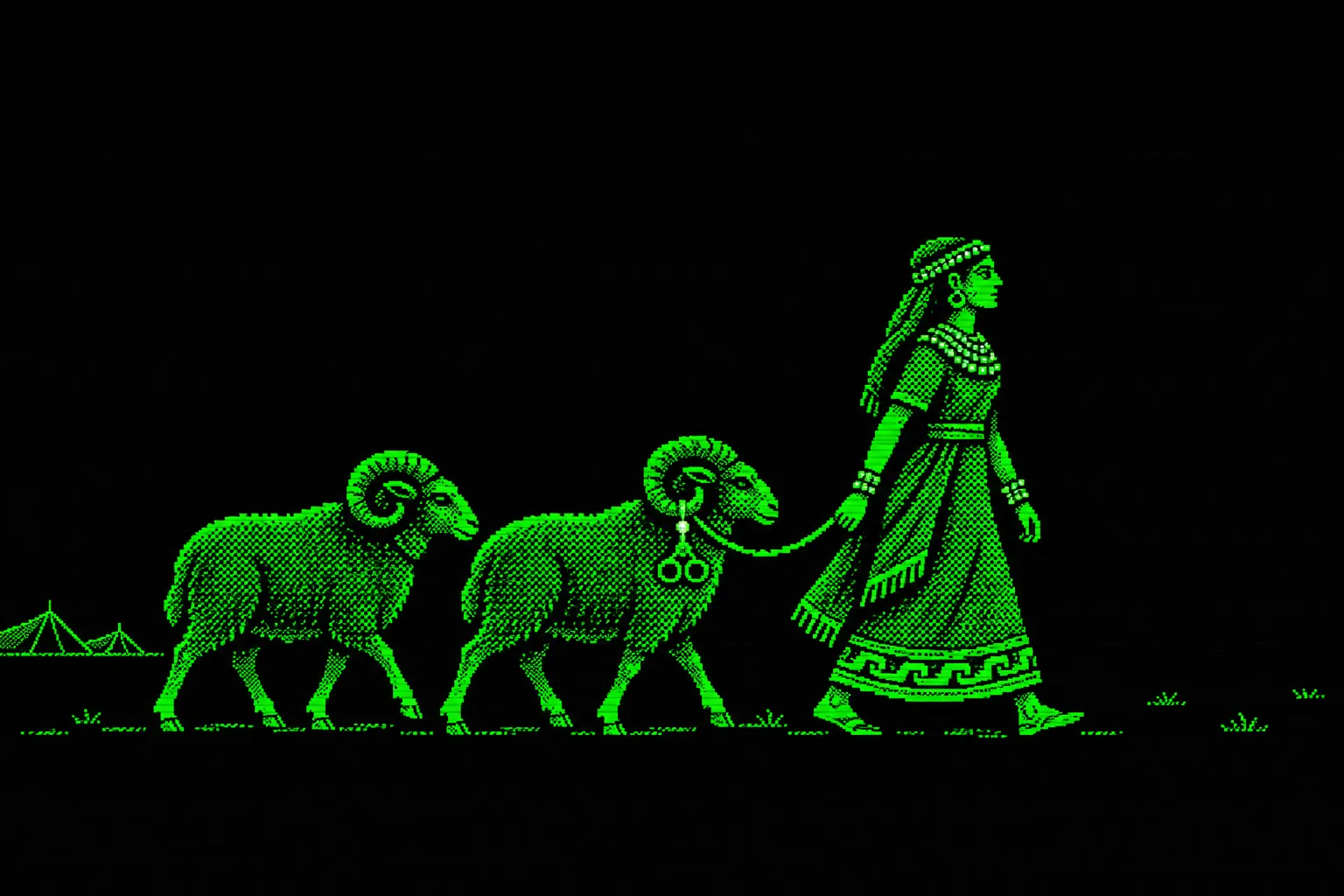
The rite runs for four days. On the first evening every lord of the camp prepares a ram, of any colour. The performer twists white, red and green-yellow wool into one thread, threads a bead and rings of iron and lead onto it, and ties it to the rams’ necks and horns. The rams are tied before the tents overnight as a meal for whichever deity has caused this plague. In the morning an adorned woman is seated before the king’s tent with beer and bread. The lords lay their hands on the rams and declare them fat in liver, heart and limbs, and ask that the god find the flesh of mankind hateful. Then the rams and the woman are led through the middle of the camp and turned loose on the enemy’s border, to a place where ours do not arrive, so that whoever finds them takes the plague.
On the second, third and fourth days animals are driven into open country and slaughtered: rams and billy-goats, then a billy-goat, a ram and a pig for the unnamed plague-god, and finally a bull, three rams and a ewe to which a ram has not yet gone for the Storm-god, the Sun-god and all the gods. The meat is cooked plain and laid on leafy branches with bread and a small dagger, toasts are drunk, and the participants eat and leave. The prayer of the second day is badly broken, and the handwashing and burning that follow survive only in pieces restored from the duplicates.
The page gives 97 tablet lines, 23 restored from a duplicate. Square brackets mark breaks in the clay and restorations; ... is a lost stretch. Hover over or tap a Hittite word for its meaning and the English words it becomes.
- 1Vs. 1–3
𒌝𒈠 𒁹𒀸𒄭𒆷 𒇽 𒆳 𒌷𒄩𒁄𒆷 𒉡 𒆠𒄿 𒀬 𒀬 𒆕𒈪
UMMA thus speaks Ašḫella Ashhella LÚ man KUR land Ḫapalla Hapalla mān if MU year ḫarra- to ruin KARAŠ army camp anda in [ nu and, then kā- this SÍSKUR ritual DÙ to perform
Thus (speaks) Ashhella, man of the land of Hapalla: If the year is ruined, and in(?) the army camp [a plague occurs], then I perform this ritual:
Note · Line 1
[Vs. 1] has “LÚ KUR {URU}ḫa-pal-la”, “man of the land of Hapalla”. A and B have only “LÚ {URU}Ḫa-pa-al-la”, without KUR. [{€1} Vs. 2] The earlier edition renders the line freely as “If an epidemic breaks out in the land or inside the army camp”, but MU.KAM-za ḫarranza literally says the year is ruined, so we keep the literal wording and give the plague only as a restoration. [Vs. 2] departs from A and B. A and B read “if in the land or in the army camp a plague (ÚŠ) occurs”. This manuscript reads “MU{KAM}-za ḫar-ra-an-za”, “the year (is) ruined / bad”, in place of “in the land”. The earlier edition’s “Seuche” (plague) comes from the duplicates. [Vs. 2] “⸢an-da(?)⸣” is damaged and uncertain. The break after it is restored from A and B (ÚŠ-kán kišari / DÙ-ri, “a plague happens”). It is not certain that this manuscript had the same words in the gap. Restored from A and B, a duplicate manuscript; the main tablet is broken here. - 2Vs. 4–7
𒇻𒋓 𒄩𒀭𒁕𒄑𒍣 𒇻𒋓𒈠 𒈠𒀀𒀭 𒄯𒂵𒂊𒌍
DÙ to perform kiššan as follows GIM when, as UD day nekut- evening meḫur time …] nu and, then kui- who, which kui- who, which EN lord KARAŠ army camp ḫūmant- all, every nu and, then …] UDU.ŠIR ram ḫandāi- to prepare UDU.ŠIR ram mān if ḫarki- white mān if dankui- dark UL not kuitki anything, at all dukk- be seen, matter nu and, then šūil- thread …]
But I perform it as follows: when the day [becomes] evening time, and whichever lords of the camp (there are), all, and [each] prepares a ram. But the rams, whether white, whether dark, it is not seen at all (i.e. does not matter). And [a thread]
Note · Line 2
[{€1} Vs. 4–7]: the woman-free ritual of Ašḫella. The 3sg subject in [{€1} Vs. 8] (“he twists”) and [{€1} Vs. 16–17] is taken as the male ritual performer. The verb in [{€1} Vs. 8] is broken here and is restored from A/B da-ru-pa-iz-zi. [{€1} Vs. 13]: ÚŠ-kan is “plague”. The rams are tied up as a substitute offering to whichever deity caused the plague in the camp. [{€1} Vs. 15]: this manuscript has ke-e-da-ni “to this (ram)”. Duplicates A, B and D have ku-e-da-ni-ia “to each (ram)”, the reading the earlier edition follows. [{€1} Vs. 16]: this manuscript has a cup of DUG.GIR₄ (baked clay). D adds a jug “of wine” (GEŠTIN). D, [{€1} Vs. 11]: D reads išpandaz “at night” instead of GE₆-az. [{€1} Vs. 17]: D omits MUNUS-TU₄, so it reads only “he seats an adorned (one)”. The adorned woman, seated before the king’s tent with beer and bread, seems to function as an offering or substitute for the deity. Restored from A, a duplicate manuscript; the main tablet is broken here. Restored from A, a duplicate manuscript; the main tablet is broken here. Restored from A, a duplicate manuscript; the main tablet is broken here. - 3Vs. 8
SÍG wool BABBAR white SÍG wool SA₅ red SÍG wool SIG₇.SIG₇ green-yellow anda in tarna- to let in nu=at and it 1 one anda in dā- to take …]
of white wool, red wool, green-yellow wool I put together, and [I twist] it together into one.
Note · Line 3
Restored from A and B, a duplicate manuscript; the main tablet is broken here. - 4Vs. 9
nu=kan and, then 1 one NUNUZ bead 1 one KAMKAMMATU ring AN.BAR iron ŠA of A.GAR₅ lead anda in nāi- to turn
And one bead, one ring of iron and of lead I tu[rn] into (it).
Note · Line 4
Restored from A, a duplicate manuscript; the main tablet is broken here. - 5Vs. 10
𒈾𒀜𒃷 𒀀𒈾 𒇻𒋓𒀸𒄭𒀀 𒍜𒄘𒋗𒉡 𒋛𒋗𒉡𒅀 𒀭𒁕 𒄩𒈠𒀭𒂵𒈪
nu=at=kan and it ANA to, onto UDU.ŠIR ram GÚ neck SI horn anda in ḫamank- to bind
And I bi[nd] it onto the rams, onto their neck and their horns.
- 6Vs. 11–14
𒈾𒀸 𒈪𒊍 𒀀𒈾𒉺𒉌 𒄑𒍝𒇴𒃻𒄭𒀀 𒄩𒈠𒀭𒂵𒀭𒍣 𒉡𒃷 𒀭𒁕 𒆠𒅖𒊭𒀭 𒈨𒈠𒀭𒍣 𒂉𒅖𒉿 𒀭𒈝 𒃰𒋫𒀭 𒌑𒂊𒄩𒀜𒋫𒊑 𒂉𒅖𒉿 𒀭𒈝 𒆠𒄿 𒁁𒃷 𒄿𒅀𒀜 𒉡𒉿𒀜𒋫 𒅗𒀀𒊭 𒂉𒌋𒍑 𒇻𒋓 ▒▒▒ 𒃰𒋫𒀭 𒅖𒄭𒅀𒉡𒌦 𒉡𒉿𒃷 𒃰𒋫 𒉿𒅈𒅆𒅀𒄴𒄷𒌓
nu=aš and them GE₆ night ANA_PANI before ZA.LAM.GAR tent ḫamank- to bind nu=kan and, then anda in kiššan as follows memā- to speak kui- who, which DINGIR deity kattan down, below weḫ- to turn about kuiš whoever DINGIR deity kā- this ÚŠ plague iya- to make nu and, then kāša look kā- this UDU.ŠIR ram …] kattan down, below išḫiya- to tie nu and, then katta down waršiyaḫḫ- to satisfy oneself
And they tie them up at night before the tents, and they speak as follows: "Whichever deity turns about down here, whichever deity has caused this plague: now see, these rams for you ... I have tied down. Satisfy yourself down (with them)!"
- 7Vs. 15–17
𒇻𒊌𒃰𒋾𒈠𒀸 𒆤𒊑 𒁉𒂗𒈾𒄴𒄭 𒉡 𒆠𒂊𒁕𒉌 𒀀𒈾 𒇻𒋓𒀸 𒃰𒋫𒀭 𒂁𒆸𒆸 𒁹 𒃻𒆸𒊏 𒁹 𒃲 𒂁𒌋 𒀜 𒁁𒁕𒀀𒀭𒍣 𒀀𒈾 𒄑𒍝𒇴𒃻 𒈗𒈠 𒁉𒊏𒀭 𒊩𒌈 𒌑𒉡𒉿𒀭𒋫𒀭 𒀀𒊭𒅆 𒁹 𒂁𒄷𒌒𒁇 𒁉 𒐈 𒃻𒆸𒊏 𒀀𒈾 𒊩𒋾 𒃰𒋫𒀭 𒁕𒀀𒄿
lukkatt- morning LÍL open country penna- to drive nu and, then kā- this ANA to, onto UDU.ŠIR ram kattan down, below ḪAB.ḪAB jug 1 one NINDA.GUR₄.RA thick bread 1 one GAL cup DUG.GIR₄ baked clay pēda- to carry ANA to, onto ZA.LAM.GAR tent LUGAL king pēran in front MUNUS woman unuwai- to adorn ašaš- to seat 1 one ḫuppar bowl KAŠ beer 3 three NINDA.GUR₄.RA thick bread ANA to, onto MUNUS woman kattan down, below dāi- to place
But in the morning I drive them to the open country. And to this ram they bring down beside it a jug, 1 thick bread, 1 cup of baked clay. But before the tent of the king he seats an adorned woman; 1 ḫuppar-bowl of beer (and) 3 thick breads he places down beside the woman.
- 8Vs. 18–21
𒉆𒈠𒃷 𒀀𒈾 𒇻𒋓𒀸𒄭𒀀 𒂗𒈨 𒌍 𒆠𒆗𒁁 𒋡𒋾𒋗𒉡 𒋾𒅀𒀭𒍣 𒉡𒃷 𒀭𒁕 𒆠𒅖𒊭𒀭 𒈨𒈠𒀭𒍣 𒂉𒅖𒉿 𒀭𒅆 𒆠𒄿 𒁁𒀭 𒄿𒅀𒀜 𒆠𒉡𒈾𒉿 𒅗𒀀𒊭 𒇻𒋓𒀸𒄭𒀀 𒀀𒊏𒀭𒋫𒊑 𒉡𒉿𒊏𒀜 𒅖𒌅 𒍜𒃻𒈪 𒉭 𒍜𒊮 𒅇 𒅖𒌅 𒍜𒌫 𒈨𒅅𒆠 𒉿𒅈𒂵𒀭𒋼𒌍
namma then ANA to, onto UDU.ŠIR ram EN lord KARAŠ army camp QĀTU hand tiya- to place nu and, then anda in kiššan as follows mema- to speak kuiš whoever DINGIR deity kā- this ÚŠ plague iya- to make kinuna now kāša look UDU.ŠIR ram ar- to stand nu and, then IŠTU in NÍG.GIG liver ŠÀ heart Ù and IŠTU in ÚR limb mekki very warkant- fat
Then the lords of the army camp place their hands on the rams and they speak thus therein: "Whichever god made this plague, now here the rams stand, and they are in liver, heart and in the limbs very fat.
Note · Line 8
[{€1} Vs. 18]: this manuscript has bare tiyanzi “they place”; A has parā tiyanzi “stretch out (their hands)”. [{€1} Vs. 21]: UZU ÚR “member, limb” (the earlier edition’s “Glied”, possibly the genitals); D has {UZU}Ì “fat” instead of ÚR. warganteš “fat”, D wakkanteš. [{€1} Vs. 22]: puggaru “let it be hateful”. The god, who caused the plague, is to reject human flesh and be satisfied with the rams as a substitute. [{€1+2} Vs. 32/8′]: This manuscript has nu-wa-ra-aš-za “them” (common gender) and ḪUL “evil”; A has =at and idālu. The restoration “that population” (apāš KUR-eanza) is taken from A. The rams and the adorned woman serve as scapegoat carriers of the plague into enemy territory. - 9Vs. 22–24
𒉡𒉿𒀸𒅆𒃷 𒊭 𒀀𒈪𒇽𒌓𒋾 𒍜 𒁍𒊌𒂵𒊒 𒉆𒈠 𒉡𒉿𒀸𒊭𒀭 𒃰𒋫 𒆠𒂊𒁕𒀸 𒇻𒋓𒀸𒄭𒀀 𒉿𒅈𒅆𒅀𒄴𒄷𒌓 𒉡 𒂗𒈨 𒌍 𒆠𒆗𒁁 𒀀𒈾 𒇻𒋓𒀸𒄭𒀀 𒂕𒀭 𒄭𒅔𒂵𒀭𒍣 𒈗𒅀 𒀀𒈾 𒊩𒋾 𒌑𒉡𒉿𒀭𒋾 𒂕𒀭 𒄭𒅔𒂵𒀭𒍣
nu and, then ŠA of AMĪLŪTU mankind UZU flesh pukk- to be hateful namma then nu and, then katta down kā- this UDU.ŠIR ram waršiyaḫḫ- to satisfy oneself nu and, then EN lord KARAŠ army camp ANA to, onto UDU.ŠIR ram EGIR-an behind ḫink- to bow LUGAL king ANA to, onto MUNUS woman unuwai- to adorn EGIR-an behind ḫink- to bow
Let the flesh of mankind be hateful to him again! And with these rams content yourself!" And the lords of the camp, behind the rams, bow; and behind the king and the adorned woman they bow.
- 10Vs. 25/1′–27/3′
𒉆𒈠𒃷 𒇻𒋓𒀸𒄭𒀀 𒊩𒌈𒅀 𒃻𒆸𒊏 𒁉𒅀 𒆠 𒆗𒁁 𒅖𒋻𒈾 𒅈𒄩 𒁉𒁕𒀭𒍣 𒈾𒀸 𒆤𒊑 𒁉𒂗𒈾𒀭𒍣 𒈾𒀸𒃷 𒉺𒀀𒀭𒍣 𒀀𒈾 𒍠 𒇽𒉽 𒀭𒁕 𒅈𒄩 𒁉𒀉𒋫𒆷𒀭𒍣 𒂉𒂊𒁕𒉌 𒁉𒁲 𒀭𒍣𒂖 𒌑𒌌 𒀀𒊏𒀭𒍣
namma then UDU.ŠIR ram MUNUS woman NINDA.GUR₄.RA thick bread KAŠ beer KARAŠ army camp ištarna through the middle arḫa away pēda- to carry nu and, then LÍL open country penna- to drive nu and, then pai- to go ANA to, onto ZAG border territory LÚ.KÚR enemy anda in arḫa away pittala- to release kui- who, which pēdan place anzēl our, ours UL not ar- to stand
Then they carry the rams and the woman, bread and beer away through the middle of the camp, and they drive them to the open country, and they go, and into the border(-territory) of the enemy they let them loose, to a place where ours do not arrive.
- 11Vs. 28/4′–31/7′
𒄿𒁕𒀀𒇻 𒀀𒈾 𒀀𒈪𒇻𒌓𒋾 𒄞𒄭𒀀 𒇻𒄭𒀀 𒀲𒆳𒊏𒈨 𒌍𒀲𒄊𒉣𒈾 𒅇 𒀀𒈾 𒀲𒈨 𒌍𒂉𒀉𒀭𒁕𒂊𒌍𒋫𒆠𒉡𒈾𒉿𒊏𒀜𒃷𒅗𒀀𒊭 𒅖𒌅 𒆠 𒆗𒁁 𒂉𒌋𒍑 𒇻𒋓𒀸𒄭𒀀 𒊩𒌈 𒅈𒄩 𒌑𒋼𒅕
nu and, then anda in QATAMMA in just that way mema- to speak kāša look kuit which, that …] idālu- evil ANA to, onto AMĪLŪTU mankind GU₄ cattle UDU sheep ANŠE.KUR.RA horse ANŠE.GÌR.NUN.NA mule Ù and ANA to, onto ANŠE donkey kuit which, that anda in eš- to be kinun now kāša look IŠTU in KARAŠ army camp kā- this UDU.ŠIR ram MUNUS woman arḫa away uda- to bring
And therein they keep saying just the same: "Behold, the evil that [of this camp] for mankind, cattle, sheep, horses, mules and for donkeys was therein, now it here, these rams (and) the woman have brought away from the camp.
Note · Line 11
Restored from A, a duplicate manuscript; the main tablet is broken here. - 12Vs. 32/8′
nu and, then kui- who, which wemiya- to find nu and, then kā- this ḪUL evil ÚŠ plague apā- that … =za self dā- to take
And whoever finds them, let tha[t population] take this evil plague for itself!"
Note · Line 12
Restored from A, a duplicate manuscript; the main tablet is broken here. - 13Vs. 33/9′–34/10′
INA on, in UD day 2.KAM second mān if luk- to become light kariwariwar at dawn ḫūdak quickly UDU.ŠIR ram 6 six MÁŠ.GAL billy goat 12 twelve GÌR.GÁN jug 12 twelve GAL cup 12 twelve NINDA.GUR₄.RA thick bread 1 one ḫuppar- vessel KAŠ beer 3 three GÍR.TUR small dagger …] ḫandā- to make ready
On the 2nd day, when it becomes light, at dawn, quick[ly 6] rams (and) 6 billy-goats, 12 jugs, 12 cups, 12 thick breads, 1 ḫuppar-vessel of beer (and) 3 small daggers [of bronze] they make ready.
Note · Line 13
[{€1+3} Vs. 37/1′] pittalwant- means “plain, unseasoned”: the animals are boiled without additions. [{€1} Vs. 37] This manuscript has ḫattanzi “they stab, slaughter”. E has katta ḫandanzi “they arrange down” at this point. [{€1+3} Vs. 39/3′] kat!?-ta!?-an is an uncertain reading. It is supported by E kattan ḫantanzi. [{€1} Vs. 43] ḫuišawaz means “from the raw/living (meat)”. B has zeyantaz “from the cooked” instead, and the earlier edition follows B (“vom Gegarten”). I have translated this manuscript. [{€1} Vs. 43] SUM-en is read as “we gave”, matching B piyawen. Restored from A, a duplicate manuscript; the main tablet is broken here. Restored from A, a duplicate manuscript; the main tablet is broken here. - 14Vs. 35–37
𒃰𒋫𒀭 𒁉𒂊𒁕𒀭𒍣 𒈾𒀸 𒈠𒄴𒄩𒀭 𒆤𒊑 𒅈𒉡 ▒▒▒ 𒈾𒀸 𒁕𒂵𒀭 𒄩𒀜𒋫𒀭𒍣
nu and, then LÍL open country namma then dame/i- other, another AŠRU place penna- to drive […] kattan down, below pēda- to carry nu and, then maḫḫan when LÍL open country arnu- to make reach […] -aš them tēkan earth; ground ḫatt- to slaughter
And they then drive them to another place in the open field, [and all this] they carry along. And when they make them reach the open field, [...] they slaughter them to the ground.
Note · Line 14
Restored from A, a duplicate manuscript; the main tablet is broken here. - 15Vs. 37/1′
𒈾𒀸 𒁁𒊑𒉿𒀭𒋼𒌍𒍝𒉡𒉿𒀭𒍣
-aš them pittalwant- plain zanu- to cook
They c[ook] them plain.
- 16Vs. 38/2′–41
nu and, then laḫḫurnuzzi- leafy branches kattan down, below išpar- to spread out nu and, then Ì fat NINDA.GUR₄.RA thick bread GÍR.TUR small dagger kattan down, below ḫandā- to make ready namma then … … … GAL cup GÌR.GÁN jug šunna- to fill namma then anda in kiššan as follows … … … … … -z]i kāša look … ] ḫūdak quickly ḫantezzi- first palša- occasion; turn ú-x[ … ]
And they spread out leafy branches below, and [on (them)] fat, thick breads and a small dagger they arrange down beside (them). Th[en with beer the cups (and) the jug] they fill. Then they [speak] th[us] in addition: "...] Behold [...] quickly, on the first occasion ... [...]
Note · Line 16
Restored from E, a duplicate manuscript; the main tablet is broken here. Restored from E, a duplicate manuscript; the main tablet is broken here. Restored from E, a duplicate manuscript; the main tablet is broken here. - 17Vs. 41–43
𒋻𒉡𒌝𒈨𒂗 𒆠𒉡𒈾𒉿 𒅗𒀀𒊭 ▒▒▒▒ 𒄷𒌋𒄿𒊭𒌋𒉿𒊍▒▒▒▒▒𒂊𒁕𒉌𒋧𒂗𒉡𒉿▒▒▒
[… ] tarna- to let in kinuna now kāša look x[ … ] ḫuišu- raw ]x x-⸢e-da-ni SUM to give nu and, then …]
[...] we released. And now, behold, ... [...] from the raw ... we gave, and [...]
- 18Vs. 44–45
[…] x e x[ …] [… -a]n? lē do not pai- to go nu and, then EGIR-an behind …] x x […] uwa- to come [… ?]
[…] … […] [but to the human] do not give [down]! And they [bow down] afterwards …] … […] [and they] come [away] [… ?]
Note · Line 18
[{€1} Vs. 44]: restored from B “antuḫši=ma=wa=za kattan lē pešti / n=at EGIR-an katta ḫinkanzi”. This is the end of the address to the deity: the human must be left nothing. The earlier edition renders it “überlasse nichts”. [{€1+4+6} Rs. 3/2′/4]: the broken “…]-tar-na arḫa” is read with A and B as “n=at=kan [iš]tarna arḫa [uwanzi]” (“they go through the middle”). Its verb probably stands at the start of the next line as “[…]-zi”. {D}KAL / LAMMA anniyattaš: this is the tutelary deity of the anniyatt-, a word meaning “work” or “(ritual) equipment”. “Drinks the deity three times” means he toasts the deity. Manuscript A adds “ḫalziyaš”. {UZU}NÍG.GIG is the liver. The earlier edition’s “Eingeweide” (“entrails”) is looser than this. Restored from B, a duplicate manuscript; the main tablet is broken here. Restored from B, a duplicate manuscript; the main tablet is broken here. - 19Vs. 46–2/1'/3
▒▒▒𒀜𒃷𒅖𒌅▒▒▒▒▒▒▒ 𒌑𒂊𒋼𒉌 𒀭𒁕 ▒▒▒▒▒▒▒▒▒𒅖𒄷𒉿𒀭𒍣𒉡𒍝𒃷𒋡𒋾𒋗𒉡𒀀𒁉𒂊𒄑 𒅈𒊏𒄿
[… ?] [… ?] […] […] x x x [… -at it; them IŠTU in …] […] x wātar water anda in [… … …] išḫuwa- to pour nu and, then QĀTU hand apā- that arra- to wash
[… ?] [… ?] […] […] … [… th]em … from …] […] … into the water [… … …] they pour, and he washes their hands with th]at.
- 20Rs. 3/2′/4–6/5′
▒▒▒𒁹𒁹𒀸𒊏𒉿𒅈𒉡𒀭𒍣𒈾𒀜▒▒▒▒▒▒𒋻𒈾 𒅈𒄩
[…] 2 two AŠRU place warnu- to burn nu=at and it … … ištarna through the middle arḫa away [… ]-zi nu and, then 2 two MÁŠ.GAL billy goat 1 one ḫuppar- vessel GEŠTIN wine 5 five NINDA.GUR₄.RA thick bread [ ] [… … ḫandāi- to prepare nu=kan and, then 2 two MÁŠ.GAL billy goat ANA to, onto KAL tutelary deity aniyatt- ritual performance [ ] šipand- to offer nu=kan and, then GABA breast ZAG.UDU shoulder … ]-an NÍG.GIG liver ŠÀ heart
[…] they burn (it) in 2 places, and [they … through the mid]dle away [… they go]. And 2 he-goats, 1 ḫuppar-bowl of wine (and) 5 thick breads [in front] [they pre]pare. And 2 he-goats to the [Tutelary Deity] of the anniyatt- [ ] [they offer]. And the breast, the shoulder, [the right] …], the liver, the heart
Note · Line 20
Restored from B, a duplicate manuscript; the main tablet is broken here. Restored from A and B, a duplicate manuscript; the main tablet is broken here. [{€1+4} Rs. 5/4′]–[Rs. 6/5′]: here the verbs are plural, “[ḫa]ndanzi” and “[šipa]nzi” (“they prepare”, “they offer”). B has the singulars “ḫandaizzi” and “šipanti”. I follow the manuscript at hand. Restored from A and B, a duplicate manuscript; the main tablet is broken here. - 21Rs. 7/6′–8/1′/7′
𒐈𒋗 𒂊𒂉𒍣 𒉡𒍝 𒀀𒁕𒀭𒍣 𒈾𒀜𒍝 𒅈𒄩 𒌑𒉿𒀭𒍣
zeya- to cook laḫḫurnuzzi- leafy branches dāi- to place nu and, then KAL tutelary deity aniyatt- ritual performance 3-ŠU three times eku- to drink nu=za and; then ed- to eat nu=at=za and; they arḫa away uwa- to come
[(and) from the co]oked (meat) he p[laces] on the foliage. And the Tutelary Deity of the anniyatt- he drinks three times. And they eat a[nd] they go away.
Note · Line 21
Restored from A and B, a duplicate manuscript; the main tablet is broken here. - 22B Rs. IV 5 §59–§62
kuitman=kan while DINGIR deity aššanu- to provide for nu=za and; then UNŪTU equipment tēkan earth; ground katta down UL not kuiški anyone dāi- to place UL not āra right; proper šarā=at up; it namma then UL not dā- to take
While they provide for the deity, no one puts the implement(s) down on the ground (it is) [no]t right; He does not take it up again.
Note · Line 22
[B Rs. IV 5 §59] aš-ša--uš-kán-zi: the emended sign gives the iterative of aššanu- “provide for, take care of,” with the deity as object: “while they provide for the deity.” [B Rs. IV 6 §60] Ú-NU-TUM is unmarked for number: “implement(s),” the deity’s equipment. kuiški with negation means “no one.” Read ta-ga-a-an as dative-locative “on the ground.” [B Rs. IV 7 §61] a-a-ra with Ú-UL is the formula “it is not right/permitted.” [B Rs. IV 7 §62] Read ša-ra-a-za-at as šarā=z=at, “up + reflexive + it.” The clause has no subject, so the subject carries over from the previous clause. The earlier edition’s “(niemand)” means the sense is “nor does anyone pick it up again.” I render namma as “then … again.” - 23Rs. 9(10)/2′/8′–11(12)/4′/10′
𒁹 𒈧𒃲 𒁹 𒇻𒍑 𒁹 𒋚 𒌋𒌦𒉌𒀭𒍣 𒂕𒀭𒈾 𒐈 𒃻𒆸𒊏
INA on, in UD day 3-KAM third mān if lukk- to grow light karūwar early at dawn … … karūwar early at dawn ḫūdak quickly 1 one MÁŠ.GAL billy goat 1 one UDU.NITA ram 1 one ŠAḪ pig unniya- to drive here EGIR-an=-a and behind 3 three NINDA.GUR₄.RA thick bread 1 one ḫuppar- vessel KAŠ beer ḫandāi- to prepare
On the third day, when it grows light, early [at dawn], promptly they drive here 1 billy-goat, 1 ram, 1 pig, and behind (them) 3 thick loaves (and) 1 ḫuppar-bowl of beer they prepare.
Note · Line 23
[{€1+5+4} Rs. 9(10)/2′/8′]: the broken word is restored from A and B as karūwariwar, “early at dawn”. [{€1+5} Rs. 13(14)/6′]: this manuscript, like B and E, has the loaves placed “back” (EGIR-pa) on the foliage. A has “on the foliage” ({GIŠ}laḫḫurnuzzi šer), which the earlier edition follows. [{€1+5} Rs. 15(16)/8′]: ÚŠ-an is taken as “plague” (literally “death”) that a deity caused in the army camp. The sacrifice is meant to appease that unnamed deity. E omits DINGIR-LUM in the relative clause. [{€1+5} Rs. 16(17)/9′]: here the reading is “to the land(?) of Hatti … army”, with the sign read as KUR after an emended A-NA. A has “to the army of Hatti”, and B and E have ŠA Hatti KARAŠ, “the army of Hatti”. [{€1} Rs. 19]: the quoted speech of the offering ends with nēyaru, “let it turn”. [{€1+5} Rs. 16(17)/9′] The earlier edition takes the second phrase as “the army of Hatti”, joining it with KARAŠ at the start of the next line, but we translate the signs as written in this line and mark the emended KUR as uncertain. Restored from A and B, a duplicate manuscript; the main tablet is broken here. - 24Rs. 11(12)/4′/10′–12(13)/5′
nu=-aš and them LÍL open country namma then damai- other …] penna- to drive
And them to the open country, further to an[other place] they drive.
Note · Line 24
Restored from A and B, a duplicate manuscript; the main tablet is broken here. - 25Rs. 12(13)/5′–15(16)/8′
𒉡 𒆷𒄴𒄯𒉡𒊻𒍣 ▒▒𒅖𒁇𒊏𒀭𒍣▒▒ 𒉡𒍑𒊭𒀭 𒐈 𒃻𒆸𒊏 𒂕𒉺 𒋾𒀭𒍣 𒉡𒃷 𒈧𒃲 𒇻𒍑 𒋚 𒀀𒁉𒁕𒉌𒁁 𒀀𒈾 𒀭𒅆 𒅆𒉺𒀭𒁕𒀭𒍣 𒂉𒅖𒃷 𒀭𒈝 𒆠𒄿 𒁁𒀭 𒊮 𒆠 𒆗𒁁𒄿𒅀𒀜𒉡𒉿𒀀𒉺𒀸𒀭𒈝𒊍𒍣𒅅𒆠𒀉𒁺
nu and, then laḫḫurnuzzi- leafy branches [ ] išpar- to spread out [ ] nu=-šan and; on 3 three NINDA.GUR₄.RA thick bread EGIR-pa back; again dāi- to place nu=-kan and; then MÁŠ.GAL billy goat UDU.NITA ram ŠAḪ pig apā-=-pat that very ANA to, onto DINGIR deity šipand- to offer kuiš=-kan who; which DINGIR deity kā- this ÚŠ plague ŠÀ heart KARAŠ army camp iya- to make nu=-wa and; then apā- that DINGIR deity ed- to eat
And they spread out foliage, and they place the 3 thick loaves back on (it). And the billy-goat, ram, pig they offer to that very deity, the deity who made this plague in the army camp: "Let that deity eat,
- 26Rs. 16(17)/9′–17(18)
𒀝𒂉𒍑𒆠𒀉𒁺 𒉡𒉿𒊏𒀸 𒀀𒈾 𒆳 𒌷𒄩𒀜𒋾 𒅇 𒀀𒈾 𒆳 𒌷𒄩𒀜𒋾 𒆠 𒆗𒁁 𒈨𒈾𒄴𒄩𒀭𒁕 𒁖𒋗𒆷𒀭𒍝 𒂊𒌍𒁺
eku- to drink nu=-wa=-aš and; he; it ANA to, onto KUR land Ḫatti Hatti Ù and ANA to, onto KUR land Ḫatti Hatti KARAŠ army camp menaḫḫanda toward takšulāi- to be at peace eš- to be
let it drink! And to the land of Hatti and to the land(?) of Hatti army let it be peaceful!
- 27Rs. 18–19
𒉡𒉿𒊏𒀸𒃷 𒀭𒁕𒀭 𒀸𒋗𒇷 𒉈𒅀𒊒 𒉡𒍝 𒀀𒁕𒀭𒍣 𒀀𒂉𒀭𒍣 𒈾𒀜𒍝 𒅈𒄩 𒌑𒉿𒀭𒍣
nu=-wa=-aš=-kan and; he; it andan in; into aššul- goodwill nai- to turn nu=-za and; then ed- to eat eku- to drink nu=-at=-za and; they arḫa away uwa- to come
And [let] him [turn] toward [...] in goodwill!" Then they eat (and) drink, and they go away.
- 28Rs. 20–23
𒄿𒈾 𒌓 𒐼𒄰 𒈠𒀀𒀭 𒇻𒊌𒃰𒋫 𒅗𒊒𒌑𒀀𒊑𒉿𒅈 𒄷𒁕𒀝 𒁹 𒄞𒈤 𒁹 𒇻𒋠𒊩 𒁹 𒇻𒍑 𒌋𒌦𒉌𒀭𒍣 𒀀𒈾 𒇻𒋠𒊩𒈠𒀸𒊭𒀭 𒇻𒋓𒀸 𒂉𒂊𒁕𒉌 𒈾𒀀𒃾 𒉺𒀀𒄑𒍣 𒌋 𒃻𒆸𒊏 𒁹 𒂁𒄷𒌒𒁇 𒁉 𒁹 𒂁𒄷𒌒𒁇 𒃾 𒈾𒀜 𒆤𒊑 𒉆𒈠 𒁕𒈨𒂊𒁕𒉌 𒁉𒁲
INA on, in UD day 4-KAM fourth mān if luk- to become light karūariwar early in the morning ḫūdak quickly 1 one GU₄.MAḪ bull 1 one UDU.SÍG+MUNUS ewe 1 one UDU.NITA ram unniya- to drive here ANA to, onto UDU.SÍG+MUNUS ewe UDU.ŠIR ram kui- who, which nāwi not yet pai- to go 10 ten NINDA.GUR₄.RA thick bread 1 one ḫuppar- vessel KAŠ beer 1 one ḫuppar- vessel GEŠTIN wine nu-and-at and; it; them LÍL open country namma then dame/i- other, another peda- place
On the 4th day, when it becomes light, early in the morning, quickly they drive here 1 bull, 1 ewe, 1 ram. But to the ewe to which a ram has not yet gone; 10 thick breads, 1 ḫuppar-bowl of beer, 1 ḫuppar-bowl of wine. And them then to another place in the open country
Note · Line 28
[{€1} Rs. 21] has 1 UDU.NITA “1 ram”, where A and E have 3 UDU.NITA and B has “3 sheep”. The text itself later sacrifices “3 sheep”, so “1” is probably a scribal slip; the line is translated as written. [{€1} Rs. 24] has ši-pa-an-da-an-ti, an aberrant form mixing the 3sg ši-pa-an-ti, which A, B and E read, with the 3pl. It is taken as “he sacrifices”, following A, B and E. [{€1} Rs. 28] has the words “{GIŠ}la-ḫur-nu-zi-aš da-a-i” set between erasure marks 〉〈. They are rendered as deleted text, and no duplicate has them. [{€1} Rs. 31] has e-ku-zi “he drinks”. B has a-ku-wa-an-zi “they drink”. To “drink” a god means to drink a toast to the deity. [{€1} Rs. 33] gives the colophon as “Ritual of the plague (ÚŠ) of Ašḫella, man of Ḫapalla”. A has instead “1 ritual: word of Ašḫella”. - 29Rs. 24–26
𒁉𒂗𒉌𒀭𒍣 𒉡𒃷 𒄞 𒀀𒈾 𒀭𒅎 𒅆𒉺𒀭𒁕𒀭𒋾 𒇻𒋠𒊩𒈠𒃷 𒀀𒈾 𒀭𒌓 𒅆𒉺𒀭𒋾 𒐈 𒇻𒈠𒃷 𒄷𒈠𒀭𒁕𒀸 𒀭𒈨𒌍𒀸 𒅆𒉺𒀭𒁕𒀭𒍣
penniya- to drive away nu and, then GU₄ cattle ANA to, onto IŠKUR Storm-god šipand- to offer UDU.SÍG+MUNUS ewe ANA to, onto UTU Sun-god šipand- to offer 3 three UDU sheep ḫūmant- all, every DINGIR deity šipand- to offer
they drive. And he sacrifices the bovine to the Storm-god, but the ewe he sacrifices to the Sun-god. But the 3 sheep they sacrifice to all the gods.
- 30Rs. 27
𒉡 𒄑𒆷𒄴𒄯𒉡𒊻𒍣 𒁕𒂵𒀀𒀭 𒅖𒁇𒊏𒀭𒍣
nu and, then laḫḫurnuzzi- leafy branches tagan on the ground išparr- to spread
And they spread foliage on the ground.
- 31Rs. 28–29
𒉡 𒍜𒂃 𒍜𒍠𒇻 𒍠𒀭 𒍜𒃻𒈪 𒉭 𒍜𒊮 ⬚𒄑𒆷𒄯𒉡𒍣𒀸 𒁕𒀀⬚ 𒃻𒆸𒊏𒅀 𒍣𒅀𒀭𒁕𒊍 𒂕𒉺 𒁕𒀀𒄿
nu and, then GABA breast ZAG.UDU shoulder ZAG border territory NÍG.GIG liver ŠÀ heart laḫḫurnuzzi- leafy branches dāi- to place NINDA.GUR₄.RA thick bread zeya- to cook EGIR-pa back; again dāi- to place
And the breast, the right shoulder, the liver, the heart, {erased: he places on the foliage} and thick bread, from the cooked (portions), he places back.
- 32Rs. 30–32
𒉡 𒀭𒌓 𒊭𒈨𒂊 𒀭𒅎 𒀭𒈨𒌍𒅀 𒄷𒌋𒈠𒀭𒋼𒌍 𒐈𒋗 𒂊𒂉𒍣 𒉡𒍝 𒀀𒁕𒀭𒍣 𒈾𒀜𒍝 𒅈𒄩 𒌑𒉿𒀭𒍣 ▒▒▒
nu and, then UTU Sun-god ŠAMÊ heaven IŠKUR Storm-god DINGIR deity ḫūmant- all, every 3-ŠU three times eku- to drink nu and, then ed- to eat nu and, then arḫa away uwa- to come
And the Sun-god of Heaven, the Storm-god and all the gods, he drinks to them 3 times. And they eat, and they go away.
- 33Rs. 33
𒀬 𒀬 𒁁𒀸 𒊭 𒁹𒀸𒄭𒂖𒆷 𒇽 𒌷𒄩𒁄𒆷 𒋡𒋾
SÍSKUR ritual ÚŠ plague ŠA of Ašḫella Ashhella LÚ man Ḫapalla Hapalla QATI finished
Plague ritual of Ašḫella, man of Ḫapalla: finished.
- 34A Rs. IV 41 §99
DUB tablet
One tablet.
Note · Line 34
[A Rs. IV 41 §100]: ani(ya)- “work, perform” is used here in the colophon sense “set down, recorded”; the earlier edition reads “aufgeführt” (listed). [A Rs. IV 42-Rs. IV 43 §102]: ḫarranza literally means “ruined, crushed”; it describes a bad year, as in the earlier edition’s “schlecht”. [A Rs. IV 43 §103]: ki-la-a-u-wa-aš is left untranslated as a ritual name, with the reading uncertain; the earlier edition reads “kelu”. GIM-an is taken as “as, in the manner of”. [A Rs. IV 44-Rs. IV 45 §105]: ak-kiš-ki-iz-zi is the iterative of ak- “die”, used impersonally with no subject. It means people keep dying in the land or city. - 35A Rs. IV 41 §100
nu and, then 3 three SISKUR ritual aniya- to prepare
On it three rituals are set down.
- 36A Rs. IV 42 §101–§103
1 one SISKUR ritual INIM word Zarpiya Zarpiya mān if MU.KAM year ḫarra- to ruin nu and, then SISKUR ritual kilawa- kilawa GIM when, as DÙ to perform
One ritual: word of Zarpiya: If a year is ruined, how they perform the ritual of kilawa-.
- 37A Rs. IV 44 §104–§105
1 one SISKUR ritual INIM word Uḫḫamuwa Uḫḫamuwa mān if ŠÀ heart KUR land našma or URU city ak- to die repeatedly
One ritual: word of Uḫḫamuwa: If within the land or the city there is continual dying,
- 38A Rs. IV 46-Rs. IV 47 §107
mān if ŠÀ heart KUR land našma or ŠÀ heart KARAŠ army camp ÚŠ plague kiš- to occur
If in the midst of the land or in the midst of the [army camps] a [plague] occurs,
Note · Line 38
: The broken KARAŠ is read with B, which has ŠÀ KARAŠ. A marks it as plural ({ḪI.A}), so I give “army camps.” The [ÚŠ] “plague, death” is the editor’s restoration in A, supported by the earlier edition’s “[Seu]che”; no duplicate confirms it. Restored from B, a duplicate manuscript; the main tablet is broken here.