~/sacred-texts/hittite-rituals
Ritual of Alli: Hittite Counter-Magic Against Sorcery
- Text
- Hittite rituals, CTH 402, KBo 12.126+ with KUB 24.10, KBo 55.41+, KBo 11.12+, KBo 10.41, IBoT 2.123+, Bo 8752+, KUB 41.1, KBo 21.8
- Date
- Composed probably in the Middle Hittite period (15th-14th century BC); preserved in New Hittite script copies (13th century BC)
- Found
- Hattusa
- Language
- Hittite · Cuneiform
The Ritual of Alli (CTH 402) is a rite against witchcraft taught by a woman of Arzawa, the land in western Anatolia. The speaker’s name is broken away at the start of the main tablet, but the opening follows the usual pattern “Thus says X, the woman of Arzawa”. The text was probably composed in the Middle Hittite period. It survives in New Hittite copies from Hattusa: the main tablet KBo 12.126+ and eight duplicates, among them KUB 24.10, KUB 41.1 and KBo 21.8.
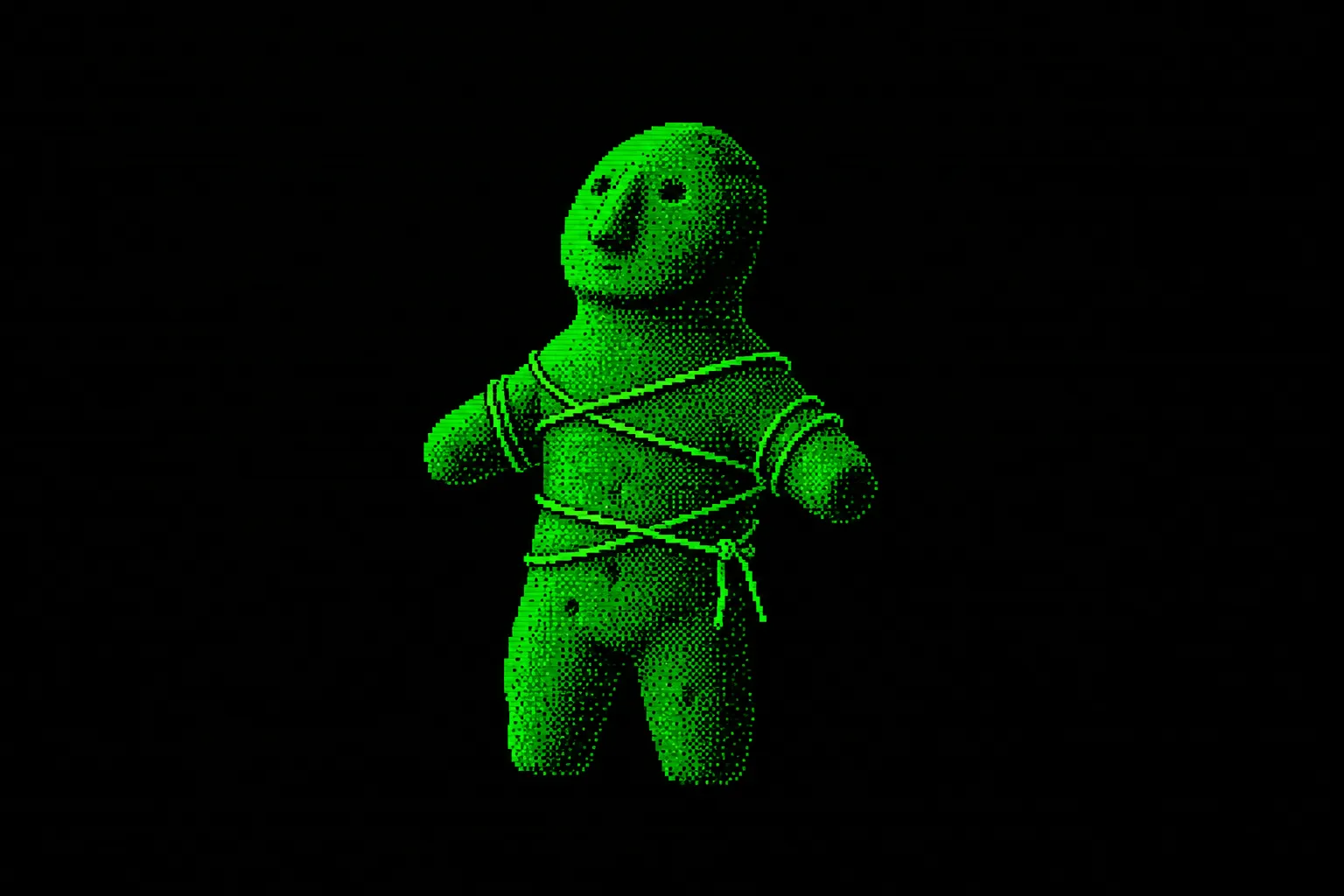
The Old Woman sets out clay figurines, tongues of clay and wax, a little shovel and rake, and bowls. She seats the bewitched person facing the Sun-god. She calls on the sorcerer to take the sorcery back: a male sorcerer carries it on his back, and a female sorcerer wears it as a headcloth, a belt and shoes. The figurines are made to say, “We have become exhausted, and we have caused illness.” She then lays dark, red, green, blue and white wool on the patient. Each colour draws out its own affliction, the darkening, the “making bloody”, the green pallor and the “blue day” of the body. Each thread is wound onto the figurines and given “back to its owner”.
The materials of the ritual are buried in a pit, covered with mud and nailed down with pegs so that “the dark earth” holds them. The Old Woman then breaks bread for the earth, the Sun-deity, the gods of the road and the gate. Offerings lie under the patient’s bed overnight. Over the following days the patient is pressed with earth and dough, washed and bathed. A sheep is cooked and eaten. A night is spent at the river, where offerings go to the Mother-goddess of the riverbank. Much of the reverse is broken, the duplicates preserve scattered sections only, and several key words (kiššeraš, kapina-, warduli) remain unexplained.
The page gives 244 tablet lines, 43 restored from a duplicate. Square brackets mark breaks in the clay and restorations; ... is a lost stretch. Hover over or tap a Hittite word for its meaning and the English words it becomes.
- 1Vs. I 1–3
[… … … … … … …] MUNUS woman Arzawa Arzawa mān if UN person […] […] [… ALAM figurine IM clay ŠÀ.BA among them 2 two LÚ man nu and; then kurša- fleece … … … … … …] [… … … … …] EME tongue ki- to lie
[Thus says Alli,] woman of Arzawa: If a per[son is bewitched] [... I treat him as follows: five] clay figurines, among them two men, and [they hold] [kurša]-fleeces [...] [... and inside, clay] tongues lie.
Note · Line 1
[{€1} Vs. I 1]–[{€1} Vs. I 2]: Duplicates [D] and [G] supply the speaker’s name, the condition “bewitched” (UḪ₇-anza / alwanzaḫḫanza), and the five figurines. [D] also adds the clay donkey and the full basket; the exact distribution of these items across the breaks here is uncertain. [{€1} Vs. I 4]: IM is taken here as “clay” throughout, not as “wind”. The broken “kur!-ta-li” is read as “basket”, following [D] and [F]. [{€1} Vs. I 8]: The sense of iškari is unclear. I translate it as “sets (sticks up) around”, following the earlier edition’s “installe tout autour”. This manuscript has the singular “clay figurine”; [D] has the plural ALAM.ḪI.A. [{€1} Vs. I 10]: [D] has “one lid together with the figurines” and has the Old Woman hold them up, with no separate “takes”. This manuscript has “the lid … the clay figurine” and both “takes” (dāi) and “holds” (ēpzi). I follow the manuscript at hand. [{€1} Vs. I 14]: The text has ta!?-a-ú, and [G] has the same emended sign. I read it as dāu “let him take”, as [D] writes it. The sorcerer is made to carry back the bewitchment, “it/them”, on his own back. [{€1} Vs. I 2] The earlier edition leaves {KUŠ}kurša- untranslated as kurša- objects; we gloss it as “fleeces,” since the leather determinative and the known sense of kurša- as a hide or fleece bag allow that rendering, and “[they hold]” stays bracketed as a restoration. Restored from C and D and G, a duplicate manuscript; the main tablet is broken here. Restored from D and G and F, a duplicate manuscript; the main tablet is broken here. Restored from D, a duplicate manuscript; the main tablet is broken here. - 2Vs. I 4–7
▒▒▒𒉡𒍑𒊭𒀭 𒐈 𒂁𒈾𒀝𒁮𒄭𒀀 𒂉𒉿𒁉𒀉𒋫 𒃰𒋫 𒋡𒌓𒈠
[… … …] [… kurešnai- to wear a headcloth 1 one kurtali- basket IM clay nu=at and it IŠTU with; from EME tongue IM clay [… …] [… … IM clay nu=at and it karp- to lift; carry ḫar(k)- to hold; have intaluzi- shovel ḫaḫḫar rake IM clay […] nu=šan and; then 3 three NAKTAMU lid kuwapi=tta everywhere katta down QATAMMA in the same way ḫandāi- to arrange
[... they are] wearing kureššar-headcloths; one basket of clay, and it [is full] of clay tongues; [... one clay donkey] [...] ... clay, and it carries it; a clay shovel, a clay rake; [three small clay cups] [...] and three lids everywhere down in the same way she [arra]nges.
Note · Line 2
Restored from D and F, a duplicate manuscript; the main tablet is broken here. Restored from D, a duplicate manuscript; the main tablet is broken here. - 3Vs. I 8–11
▒▒▒ 𒀩 𒅎 𒀀𒊏𒄴𒍝𒀭𒁕 𒅖𒅗𒊑 𒆠𒄿𒈠𒀸𒈠𒀸 𒄷𒌋𒈠𒀭 𒁉𒊏𒀸𒈪𒀉 𒄩𒀀𒀭𒁕𒀀𒄑𒍣 𒉡 𒌦𒀸 𒂉𒅖 𒌋 𒆕𒀭𒍝 𒈾𒀸𒍝 𒀭𒌓𒄿 𒈨𒈾𒄴𒄩𒀭𒁕 𒂊𒊭𒊑 𒉡𒍝 𒊩𒋗𒄀 𒂁𒈾𒀝𒋫𒈠 𒋡𒁺 𒀩 𒅎 𒁕𒀀𒄿 𒈾𒀜𒃷 𒀭𒌓𒄿 𒈨𒈾𒄴𒄩𒀭𒁕 𒂊𒅁𒍣
[… ALAM figurine IM clay araḫzanda around the outside iškar- to set; fasten kā-=ma=šmaš this; but; to them ḫūmant- all piran=šmit before them ḫandāi- to arrange nu and; then UN person kui- who; which UḪ₇ bewitched nu=aš=za and he himself UTU Sun-god menaḫḫanda facing eš- to sit nu=za and; for oneself ŠU.GI old woman NAKTAMU lid QADU together with ALAM figurine IM clay dā- to take nu=at=kan and it UTU Sun-god menaḫḫanda facing ep- to hold
[... the] clay figurines she sets around outside, but all this before them she arranges. And the person who is bewitched, facing the Sun-god he sits. And the Old Woman takes for herself the lid together with the clay figurine and holds it facing the Sun-god.
- 4Vs. I 12–14
𒉡 𒊩𒋗𒄀 𒆠𒅖𒊭𒀭 𒈨𒈠𒄿 𒆠𒅖𒊺𒊏𒀸 𒀭𒌓𒍑 𒅗𒀀𒊭 𒀠𒉿𒀭𒍣𒉌𒌍 𒀭𒌅𒄴𒅆𒅖 𒉡 𒂉𒌋𒌦 𒌦𒀭 𒈠𒀀𒀭 𒇽𒅖 𒄿𒅀𒀭 𒄯𒍣 𒈾𒀜𒅗𒀀𒊭𒅖𒆠𒊭𒊍𒋼 𒀀𒉺𒀭 𒄯𒍣 𒉈𒍝 𒂕𒉺 𒋫𒀀𒌑
nu and; then ŠU.GI old woman kiššan as follows mema- to speak kiššar- hand UTU Sun-god kāša here; look alwanzini- sorcerous antuḫša- person nu and; then kā- this UN person mān if LÚ man iya- to do; make ḫar(k)- to hold; have nu=-at and; it kāša here; look iškiša- back karp- to lift; carry ḫar- to have, hold nu=-e=-za and; them; self EGIR-pa back; again dā- to take
And the Old Woman speaks as follows: "O Sun-god of the hand, here (are) sorcerous people. If a man has treated this person (by magic), he here carries it on his back; let him take them back for himself!
- 5Vs. I 15
𒈾𒀜𒅖𒆠𒊭𒊍𒋼 𒀀𒉺𒀭 𒄯𒍣
nu=-at and; it iškiša- back karp- to lift; carry ḫar- to have, hold
He carries it on his back."
- 6C Ro i 2 §3
nu=-an and; him kišan thus aniya- to treat
I treat him thus.
Note · Line 6
=an (common-gender accusative) refers to the patient, “this person” (UN-an) of the preceding lines. The patient’s sex is not stated, so “him” stands for “him/her”. aniya- here means “treat (ritually)”. [D], [F] and [G] give the same clause, so nothing is restored. - 7C Ro i 4 §7
3 three MUNUS woman
Three women
Note · Line 7
The earlier edition reads MUNUS{MEŠ} as female figurines in this ritual context; the line itself has only “three women”. D has the identical text. - 8Vs. I 16–17
𒈠𒀀𒈾𒀭𒊩𒍝𒈠 𒄿𒅀𒀭 𒄯𒍣 𒈾𒀭 𒍣𒅅 𒀭𒌓𒍑 𒊭𒀝𒋾 𒈾𒀭𒅆 𒌆𒂉𒊑𒌍𒊬 𒂊𒌍𒁺 𒈾𒀜𒊭𒀭 𒄿𒈾 𒊕𒁺𒋗 𒅆𒅀𒀭 𒄯𒁺
mān=-an if; him MUNUS=-ma woman; but iya- to do; make ḫar- to have, hold nu=-an and; him zik you UTU Sun-god šāk- to know nu=-an=-ši then; it; for her kureššar headcloth eš- to sit nu=-at=-šan and; it INA in; on SAG.DU-ŠU her head šiya- to fasten ḫar- to have, hold
But if a [woman] has done (it to) him, and you, Sun-god, know her, [then] let it be a kureššar-headcloth for her, and let her keep it fastened on her head.
Note · Line 8
[{€1} Vs. I 16]: The object of “has done” is enclitic =an. the French edition takes it as feminine (“l’a traitée”), but the Hittite marks no gender, so “him” follows the CHD. Here the woman is “known” with =an (n=an); in D it is na-at, “it”. Because of this, D does not show whether the woman or the thing done is meant. [{€1} Vs. I 17]: The scribe omitted -ši (“for her”), which is supplied as an emendation. D instead has [na-at-š]a-an. [{€1} Vs. I 20]: dukanzi is left untranslated. ḫaššannit is the instrumental of an uncertain noun; the earlier edition reads it as “matrix/womb”, which is not certain. [{€1} Vs. I 21]: The sorcery is to “escape from the pig’s peg” and return to its “owner” (BĒLU, i.e. the sorcerer/sorceress). This is the transfer-back of the magic. [{€1} Vs. I 27]: kiššeraš is taken as genitive “of the hand”, following the earlier edition. The {LÚ}UR.GI₇ “dog-man” is rendered “hunter-man” as in the CHD. - 9Vs. I 18
𒉈𒍝 𒂕𒉺 𒁕𒀀𒌑 𒅖𒄷𒍣𒊭𒀜𒅆 𒂊𒌍𒁺
nu=-e=-za and; them; self EGIR-pa back; again dā- to take išḫuzzi-=-at=-ši belt; it; for her eš- to sit
[Let] her take them back. Let it be a belt for her.
- 10Vs. I 19
𒉈𒄑 𒅖𒄷𒍣𒀉𒁺 𒋢𒂊𒋤𒈠𒀜𒅆 𒂊𒌍𒁺 𒈾𒀜𒍝 𒊬𒂉𒌓𒁺
nu=-e=-za and; them; self išḫuzziya- to gird on E.SIR=-ma=-at=-ši shoe; it; for her eš- to sit nu=-at=-za and; it; self šarku- to put shoes on
[Let] her gird them on. Let it be a shoe for her, and let her put it on herself.
- 11Vs. I 20
▒▒▒𒀠𒉿𒀭𒍝𒋫𒁺𒃷𒍣▒▒▒▒ 𒂊𒌍𒁺 𒈾𒀭 𒄩𒀸𒊭𒀭𒉌𒀉 𒁕𒀀𒌑
[… alwanzatar sorcery dukanzi meaning unclear x […] eš- to sit nu=-an and; him ḫaššanni- womb dā- to take
[... let] the sorcery ... dukanzi ... be, and let her take it with (her) ḫaššanni- (womb?).
- 12Vs. I 21
𒋚𒈠𒀸𒃷 𒄑𒆕𒊍 𒅖𒁇𒍝𒀸𒁺 𒈾𒀜 𒂕𒉺 𒁁𒉌𒋗 𒉺𒀉𒁺
ŠAḪ=-ma=-aš=-kan pig; but; it GAG peg išparz- to escape nu=-at and; it EGIR-pa back; again BĒLU-ŠU its owner pai- to go
Let it escape from the peg of the pig, and let it go back to its owner.
- 13Vs. I 22
▒▒▒𒁹 𒁹 𒂁𒈾𒀝𒁮𒈠 𒋡𒌓𒈠 𒄿𒅀𒍣
[…] 2 two NAKTAMTU lid QATAMMA in the same way iya- to do; make
[...] she does the two lids likewise.
- 14Vs. I 23–26
𒉡𒊩𒋗𒄀 𒀀𒈾 𒀩𒄭𒀀 𒋼𒄑𒍣 𒌑𒉿𒀜𒋾𒂗𒉿 𒅖𒋗𒌋𒂗𒉿 𒂉𒂊 𒉡𒉿𒈾𒊭𒀜 𒂕𒉺 𒁉𒌍𒋾𒂗 𒌝𒈠 𒌉𒇽𒌷𒇻𒈠 𒌑𒌌𒉿 𒉆𒈠 𒈠𒊍𒍪𒌋𒂊𒉌 𒃰𒋫𒀭𒉿𒁕𒀀𒊑𒅀𒌋𒂗𒉡𒉿𒄿𒈾𒀭 𒀀𒉌𒅀𒌋𒂊𒂗 𒉡𒉿𒊏𒀜𒍝 𒂕𒉺 𒉆𒈠 𒁕𒀀𒀜𒁷 𒉈𒄑 𒁉𒂊𒁕𒀜𒋼𒂗
nu and; then ŠU.GI old woman ANA to; for ALAM figurine tē- to say uwa-=-wa to come; quotative išša-=-wa to make; quotative kui- who; which nu=-wa=-naš=-at and; them; to us EGIR-pa back; again pai- to go UMMA thus says DUMU.LÚ.U₁₉.LU human being Ú-UL not namma again mazz- to dare kattan down tariya- to become tired nu and; then inan illness aniya- to treat nu and; then EGIR-pa back; again namma again da- to take nu and; then peda- to carry away
[And] the Old Woman says to the figurines: "Come! The things which we made, them to us give [back]!" Thus (says) the human being: "We no longer dare; we have become tired, and we have treated the illness. So take them back again, and carry them away!"
- 15Vs. I 27–28
𒆠𒅖𒊺𒊏𒀸𒀭𒌓𒍑𒇽𒌨𒂠𒀸𒊭𒇽𒀸𒁉𒊏𒀭𒉡𒍑𒅆𒄑𒉼𒋗𒂊𒌍𒍣 𒉡𒍑𒅆𒄑𒄀𒄭𒀀𒋗𒂊𒌍𒍣𒉡𒍑𒅆𒀀𒈾𒌨𒂠𒋗𒐼𒌨𒂠𒋗𒂊𒌍𒍣
keššar hand UTU Sun-god LÚUR.GI₇ hunter LÚ man peran in front nu and; then PAN bow eš- to sit nu and; then GI arrow eš- to sit nu and; then ANA to; for UR.GI₇ dog 4 four UR.GI₇ dog eš- to sit
The Sun-god of the hand and the hunter-man (are) in front, and he has his bow, [and] he has his arrows, and as for his dogs, he has four dogs.
- 16Vs. I 29
𒀀𒈾 𒀲𒆳𒊏𒈨 𒌍𒄿𒈪𒌑𒌌𒂊𒌍𒁺𒉡𒌦𒀸𒀩𒄭𒀀𒅎𒂊𒌍𒁺
ANA to; for ANŠE.KUR.RA horse imiyul fodder eš- to sit nu and; then UN person ALAM figurine IM clay eš- to sit
Let it be fodder for the horses, and let it [be] the person's figurines of clay.
- 17Vs. I 30
𒈾𒀜 𒊩𒋗𒄀 𒃰𒋫 𒁕𒀀𒄿
nu and; then MUNUSŠU.GI Old Woman katta down dai- to put
[And] the Old Woman puts them down.
- 18Vs. I 31
𒉡𒍑𒊭𒀭𒊩𒋗𒄀𒌦𒅆𒄀𒉡𒉿𒀸𒊭𒀸𒋠𒁕𒀭𒂉𒅔 𒁕𒀀𒄿
nu and; then MUNUSŠU.GI Old Woman UN person genu- knee SÍG wool dankui- black dai- to put
[And] the Old Woman places [black] wool on the person's knees.
Note · Line 18
[{€1} Vs. I 33]: “making dark” (dankuyanu-) is a restoration that fits the black wool. The red and yellow-green threads that follow follow the same colour-for-affliction pattern. The verbs are išḫarnu- “make bloody” and ḫaḫlaḫḫ- “make yellow-green, pale”. [{€2} Vs. I 40]: this manuscript has the past-tense ḫa-aḫ-la-aḫ-ḫi-iš-k[e-et] “kept making yellow-green”. Duplicate C appears to have the present [ḫa-aḫ-la-aḫ-ḫi-iš-ke-ez-z]i. I translate the manuscript at hand. ALAM{ḪI.A}: these are the figurines of people made of clay, set down in the preceding lines. The sorcery is wound onto them and returned to its “owner”, meaning the sorcerer who sent it. iš-ḫi-iš-ši: I take this as the dative of išḫa- “lord, owner” with the possessive -ši, “to its owner”. The earlier edition renders it the same way. [{€1+2} Vs. I 38/Vs. I 36] The earlier edition takes išḫarnuške- as “made him blood-red,” a colour term parallel to the wool colours; we keep “made him bloody” because the verb is built on ēšḫar “blood” and the plain sense should not be softened. [{€1+2} Vs. I 39/Vs. I 37] The earlier edition reads išḫarnuwanda as “the blood-red things” in line with the colour sequence; we keep “the bloodied things” because the word is derived from ēšḫar “blood.” - 19Vs. I 32–33
𒈾𒀭𒊩𒋗𒄀𒄿𒈾𒊕𒁺𒋗𒊭𒊏𒀀𒁕𒀀𒄿 𒉡𒆧𒀭𒋼𒄑𒍣𒂉𒅖𒉿𒊏𒀭𒁕𒀭𒂉𒌑𒅀𒉡𒍑𒆠𒄑𒍣 𒁕𒀸𒆠𒈪𒈾𒀜𒂕𒉺𒅖𒄭𒅖𒅆𒁉𒌍𒆠𒈪
nu and; then MUNUSŠU.GI Old Woman INA in; on SAG.DU head šara up dai- to put nu and; then kišan thus te- to say kui- who; which dankuyanu- to blacken alwanzaḫḫ- to bewitch kinuna now alwanzatar sorcery da- to take nu and; then EGIR-pa back; again išḫa- owner pai- to go
The Old Woman [places] it up on his head [and] says [thus]: "Whoever [keeps making] him [black] (and) [keeps bew]itching (him), now [the sorcery] from h[im] I keep [tak]ing, and [I keep] giving it back to its owner."
- 20Vs. I 36/Vs. I 34
𒅗𒀀𒁉𒈾𒀭𒀉𒋾𒀩𒄭𒀀𒄷𒌋𒆷𒇷𒂊𒄑𒍣
kapina- thread ITTI with ALAM figurine ḫulāliya- to wind
She win[ds] the thread around the figurines.
- 21Vs. I 37/Vs. I 35–38
𒂕𒀭𒁕𒈠𒊭𒋠𒋛𒀀𒅗𒀀𒁉𒈾𒀭𒋡𒌓𒈠𒄿𒅀𒍣𒉡𒋼𒄑𒍣 𒂉𒄿𒊭𒀭𒅖𒄯𒉡𒍑𒆠𒀉𒂉𒄿𒊭𒀭𒀠𒉿𒀭𒍝𒄴𒄭𒅖𒆠𒀉 𒅖𒄯𒉡𒉿𒀭𒁕𒀠𒉿𒀭𒍝𒋫𒁕𒀸𒆠𒈪𒈾𒀜𒂕𒉺𒅖𒄭𒅖𒅆 𒁉𒅖𒆠𒈪𒅗𒀀𒁉𒈾𒀭𒀉𒋾𒀩𒄭𒀀𒄷𒌋𒆷𒇷𒂊𒄑𒍣
EGIR-anda afterwards ŠA of SÍG wool SA₅ red kapina- thread QATAMMA in the same way iya- to do; make nu and; then tē- to say kuiš whoever išḫarnu- to make bloody kuiš whoever alwanzaḫḫ- to bewitch išḫarnu- to make bloody alwanzatar sorcery dā- to take nu and; then EGIR-pa back; again išḫā- owner piya- to give kapina- thread ITTI with ALAM figurine ḫulāliya- to wind
[Afterw]ards she [does] likewise with a thread of red wool [and says]: "[Whoev]er kept making him bloody, whoever [kept] bewitching (him), the bloodied things (and) the sorcery I keep taking, and them [back to its owner] I keep giving." She win[ds] the thread around the figurines.
- 22Vs. I 39–42
𒂕𒀭𒁕𒈠𒋠𒅊𒅊𒅗𒀀𒁉𒈾𒀭𒋡𒌓𒈠𒄿𒅀𒍣𒉡𒆧𒀭𒋼𒄑𒍣 𒂉𒄿𒊭𒂉𒌋𒌦𒌦𒀭𒀠𒉿𒀭𒍝𒄴𒄭𒄿𒀉𒂉𒄿𒊭𒄩𒄴𒆷𒄴𒄭𒅖𒆠𒀉 𒆠𒉡𒈾𒀸𒅆𒃷 𒀠𒉿𒀭𒍝𒋫 𒅊𒅊𒋫 𒁕𒀸𒆠𒈪 𒈾𒀜 𒂕𒉺 𒅖𒄭𒅖𒅆𒁉𒌍𒆠𒈪𒅗𒀀𒁉𒈾𒀭𒀉𒋾𒀩𒄭𒀀𒄷𒌋𒆷𒇷𒂊𒄑𒍣
EGIR-anda afterwards SÍG wool SIG₇.SIG₇ yellow-green kapina- thread QATAMMA in the same way iya- to do; make nu and; then kišan thus tē- to say kuiš whoever kā- this UN person alwanzaḫḫ- to bewitch kuiš whoever ḫaḫlaḫḫ- to make yellow-green kinun now alwanzatar sorcery SIG₇.SIG₇ yellow-green dā- to take nu and; then EGIR-pa back; again išḫā- owner piya- to give kapina- thread ITTI with ALAM figurine ḫulāliya- to wind
[Afterwar]ds she does likewise with a thread of yellow-green wool and [says] thus: "[Whoever] bewitched this person, whoever kept making (him) ḫaḫlaḫḫi- (yellow-green), [now] from him I keep taking the sorcery (and) the yellow-greenness, and back to its [own]er I keep giving them." She winds the thread around the figurines.
- 23Vs. I 43–46
𒂕𒀭𒁕𒈠 𒋠 𒀭𒋫𒊏𒀭𒋫𒀭 𒅗𒀀𒁉𒈾𒀭 𒋡𒌓𒈠 𒄿𒅀𒍣 𒉡𒋼𒄑𒍣𒂉𒄿𒊭𒀭𒀭𒋫𒊑𒅖𒆠𒀉𒆠𒉡𒈾𒀸𒅆𒃷𒅗𒀀𒊭 𒀭𒁕𒊏𒀭𒁕𒀭𒌓𒀭𒄷𒌋𒈠𒀭𒁕𒊍𒌅𒅅𒂵𒊍𒁕𒀸𒆠𒈪 𒈾𒀜 𒂕𒉺 𒅖𒄭𒅖𒅆 𒁉𒅖𒆠𒈪 𒋠 𒅗𒀀𒁉𒈾𒀭
EGIR-anda afterwards SÍG wool antarant- blue kapina- thread QATAMMA in the same way iya- to do; make nu and; then tē- to say kuiš whoever antariya- to make blue kinun now kāša here; look antarant- blue UD day ḫūmant- all tuekka- body dā- to take nu=at and it EGIR-pa back; again išḫā- owner pai- to go SÍG wool kāpina- thread
Afterwards she treats a thread of blue wool in the same way [and] says: "Whoever made him blue, now, from him, here, I am taking the blue day from (his) whole body and I am giving it back to its owner." The wool thread
Note · Line 23
[{€2} Vs. I 44]: an!-ta-ri-iš-ke-et is an emended reading for “kept making blue”, from antara- “blue(-green)”. It matches H’s an-da-re-eš-ke-et. H also marks the speech with =wa(r) ([ku-iš-wa]-ra-an). [{€2} Vs. I 45]: “blue day” (antarant- UD-an) seems to name an affliction, perhaps the bluish colour of illness, which is taken off the person’s body. “Body” translates tuekkaz. H has NÍ.TE{MEŠ}-za “body (parts)” and U4.KAM-an for the day. It also has an-da-ra-an without -nt-. I translate €2. [{€2} Vs. I 46]: iš-ḫi-iš-ši is “to its/his owner” (išḫa- with the possessive -ši). The affliction is sent back to whoever caused it. The glossed nom. pl. analysis does not fit here. [{€2} Vs. I 47]: _IT-TI is literally “with”; with ḫulaliya- “wind” it means winding the thread around the figurines (ALAM{ḪI.A}). The chosen sense follows the earlier edition. [{€2} Vs. I 44]: C has [na-aš]-ta kiš-an te-ez-zi “and she speaks thus”, where €2 has [nu t]e-ez-zi. €2’s damaged ka-⸢a⸣-[ša] “here” has no counterpart in H. - 24Vs. I 47
𒀉𒋾 𒀩𒄭𒀀 𒄷𒌋𒆷𒇷𒂊𒄑𒍣
ITTI with ALAM figurine ḫūlāliya- to wind
she winds around the figurines.
- 25Vs. I 48–51
𒂕𒀭𒁕𒈠𒋠𒌓𒅗𒀀𒁉𒈾𒀭𒋡𒌓𒈠𒄿𒅀𒍣𒉡𒋼𒄑𒍣 𒂉𒅖𒊭𒀭𒀠𒉿𒀭𒍝𒄴𒄭𒅖𒆠𒀉𒂉𒄿𒊭𒀭𒀀𒊭𒊑𒌍𒆠𒀉 𒈾𒀜𒂕𒉺 𒅖𒄩𒀸𒅆 𒁉𒅖𒆠𒈪
EGIR-anda afterwards SÍG wool BABBAR white kāpina- thread QATAMMA in the same way iya- to do; make nu and; then tē- to say kuiš=an whoever; him alwanzaḫḫ- to bewitch kuiš=an whoever; him ašareške- to fetter kinun=šši=kan now; him kāša here; look ḫūmant- all ÚR limb …] nu=at and it EGIR-pa back; again išḫā- owner pai- to go
[Afterwards] she treats a white wool thread in the same way and says: "[Whoever] kept bewitching him, whoever kept fettering him, [now] here from all his limbs [I keep taking it] away from him [and it] I am giving [bac]k to its owner."
Note · Line 25
[{€2} Vs. I 49] a-ša-re-eš-k[e-et] has no analysis in the glosses. “Fettered” follows the earlier edition’s “entravé”, so it is a provisional reading. Duplicate H writes the first verb as UH7-he-eš-ke-et, “bewitched”, in place of alwanzaḫḫiške- here. [{€2} Vs. I 50] The verb is broken. “I keep taking” comes from H’s da-aš-ke-mi. H also names the beneficiary, A-NA EN SISKUR (“for the ritual patron”), and writes “limbs” as NÍ.TE{MEŠ}-za, where this manuscript has {UZU}ÚR-naz. [{€2} Vs. I 51] In iš-ḫa-aš-ši the “his/its” comes from the enclitic -ši: “to his/its owner”. The bewitchment is sent back to the one who caused it. [{€2} Vs. I 53] This manuscript has ḫulaliyezzi, “she winds”, for the thread wound around the figurines. Duplicate H instead has ḫa-li-[ya-an-zi], a plural “they …” with a different verb. [{€2} Vs. I 48] ka-a-pí-na-an is taken as “thread”, following the earlier edition. Here it is white wool; the previous line used ordinary wool. Restored from H, a duplicate manuscript; the main tablet is broken here. - 26Vs. I 52–53
𒅗𒀀𒁉𒈾𒀭 𒀉𒋾 𒀩𒈨𒌍
kāpina- thread ITTI with ALAM figurine ḫūlāliya- to wind
The thread with the figurines she [wind]s.
- 27H Ro i 11' §87
EGIR-ŠU afterwards ŠA of GADA linen kāpina- thread QATAMMA in the same way iya- to do; make
[Afterwards] they treat a thread of linen likewise.
Note · Line 27
- [I] (I Ro ii 2-Ro ii 3 §89) “wipes” the person: ānškemi is the iterative of anš- “wipe”. The earlier edition’s §89 (“who made him white”) follows another reading. [I]’s own continuation instead has “you, Sun-god, wiped him with […] and purified him”. 2. [H] (H Ro i 14’ §91) iš-he-eš-ši is the dative of išḫa- “owner, lord”: “to its owner”. The evil is returned to its originator. 3. In H Ro i 17’-Ro i 18’ §96 UH7-aḫḫeškit is the logogram for alwanzaḫḫ- “bewitch”, and UN-an is antuḫšan “person”. [I] writes alwanzaḫḫiškit syllabically. 4. [D] (D Ro ii 5’-’ §98) has the removed blackness and sorcery “given to the figurines”. [I] and [H] instead continue “let it be [black] down on that one”, that is, on the sorcerer, as the earlier edition’s §98 has it. 5. kapinaizzi in [D] (D Ro ii x+1-’ §93, D Ro ii 5’-’ §98) is unanalysed. It seems to be a verb derived from kapina- “thread” (“winds with thread”?). In D Ro ii x+1-’ §93 the object is broken away; the duplicates [H] and [I] have black wool (SÍG ešri) taken or placed there.
- 28H Ro i 12' §88–§89
nu and; then kiššan as follows tē- to say UTU Sun-god kāša here; look kā- this LÚ.U19.LU person [... ...-i]t anš- to wipe
[And] she speaks [thus]: "O Sun-god, here I keep wiping this person [... with ...].
- 29H Ro i 13'-Ro i 14' §90–§91
kinun=šši=kan now; him HUL evil da-[... ...] dā- to take nu and; then EGIR-pa back; again išḫa- owner pai- to go
And now from him the evil [...] I am taking away, and I am giving it back to its owner."
- 30H Ro i 15' §92
nu and; then {MUNUS}ŠU.GI old woman kapina- thread ITTI with ALAM figurine ḫulali- to wind
[And the Old] Woman winds the thread around the figurines.
- 31D Ro ii x+1-’ §93
-an him or it dai- to put [...-y]a-aš kapinai- to wind thread
[...] she puts [...] ...; [...] she kapinaizzi (winds with thread?).
- 32I Ro ii 6-Ro ii 7 §94–§95
nu and; then kiššan as follows te- to say kāša here; look ...]-an SÍG wool dankui- black ḫar(k)- to hold; have
And she [speaks] thus: "[Here,] I hold a black [...] of wool.
- 33H Ro i 17'-Ro i 18' §96–§98
nu and; then kuiš whoever kā- this UN person dankuwanu- to blacken UH7-aḫḫ- to bewitch kinun now dankuttar blackness alwanzatar sorcery dā- to take nu and; then ANA to; for ALAM figurine pai- to go SÍG wool [...] [... kapinai- to wind thread
And whoever kept making this person [black] (and) kept bewitching (him), [now] from him the blackness (and) sorcery [I am taking away], [and] I am giving [it to the] figurines." Wool [...] [...] she kapinaizzi (winds with thread?).
Note · Line 33
Restored from D, a duplicate manuscript; the main tablet is broken here. Restored from I and H, a duplicate manuscript; the main tablet is broken here. - 34D Ro ii 7' §99
[...]x-ša SÍG wool SA5 red kapinai- to wind thread
[...] she twists [into thread] red wool.
Note · Line 34
[D] has the Old Woman twisting red wool into thread (kāpinaizzi), as in the preceding paragraph. The earlier edition’s “she takes wine” matches [I] (“the Old Woman takes wine”) instead. I translate [D] as it stands. In [D], the line beginning ku-i-ša … nu-wa li-iš-x[…] does not match [F] (“whoever this […] bewitched”) or [I] ("[the mortal] made drunk, bewitched"). The verb li-iš-x[…] is broken and left untranslated, so I have not restored this line from the duplicates. [I] arḫa wiyaniškemi is literally “I keep making drunk away (from him)”, i.e. “removing his drunkenness”. In the next clause, wiyaniškemi transfers that drunkenness “onto the figurines”. The object =at “it” there is unspecified; the earlier edition supplies “the bewitching person”, which is not in the text. [I] ap-pa-an-du: I take this as ēpp- “seize” (“let them seize”), following the earlier edition, not app- “be finished”. - 35D Ro ii 8' §100–§103
nu and; then kiššan as follows memai- to speak kuiš whoever [...] [...]{MEŠ} nu and; then liš- meaning unclear kinun now arḫa away uiyani- to intoxicate nu=at=šan and; it [...] ANA to; for ALAM figurine wiyanai- to make drunk
[And] she speaks [th]us: "And whoever [...] [...]s, '... liš-[...]' [now] I keep taking the drunkenness away [from him] and I keep making it drunk [...] onto the figurines.
- 36I Ro ii 15 §104
[... ...]x-e ALAM figurine ep- to hold
[...] let the figurines seize [...]!"
- 37F Ro ii 11'-Ro ii 12' §105
[...]x kā- this SA₅ red ...] [...] [...]
[...] this r[ed ...] [...] [...]
- 38Vs. II 3′–6′
▒▒▒𒋠𒅊𒅊𒁕𒀀𒄿
[… SÍG wool SIG₇.SIG₇ yellow-green dā- to take x […] ḫaḫlaḫḫi- to make yellow-green …] nu=e=za and; them EGIR-pa back; again LÚ man dā- to take […]
[... she takes yellow-green wool] ... [...] keeps making (it) yellow-green [...] and let the man take them back [... but if (it is) a woman,]
Note · Line 38
[{€2} Vs. II 3′]: The whole line is a restoration in the transliteration. The actor is rendered “she” for the ritual practitioner. SÍG SIG₇.SIG₇ means “yellow/green wool”; SIG₇.SIG₇ covers both yellow and green, so the compound is kept. [{€2} Vs. II 5′]: ḫa-aḫ-la-aḫ-ḫi-iš-[ke-] has no TLHdig analysis. It is taken as the iterative of ḫaḫlaḫḫ- “to make yellow-green”, which fits the wool. The earlier edition reads it the same way. The rest of the line is lost. C (KBo 55.41+, Ro ii 2’): Here C has al-wa-an-za-ah-[…], “bewitch”. The earlier edition places this verb (“ensorceler”) in the same spell. In this manuscript it falls in the break at [{€2} Vs. II 4′] and is not restored. [{€2} Vs. II 6′]: The clause “but if (it is) a woman” comes from G ([ma-a-an-na]-aš MUNUS-za-ma). Its position in the break here is uncertain. G also confirms MUNUS-za d[a-a-ú] in [{€2} Vs. II 7′]. Restored from G, a duplicate manuscript; the main tablet is broken here. - 39Vs. II 7′
𒊩𒍝 𒁕𒀀𒌑
MUNUS=za woman dā- to take
let the woman take (them).
- 40G Ro ii x+1 §109
[... mān=aš if she MUNUS=za=ma but; woman
[... But if] she [is] a woman,
Note · Line 40
[G] The restoration of the clause opening as mān “if” rests on [C]’s ma-a-a[n …]. The enclitic -aš “she” is a subject pronoun in a nominal clause, so “is” is supplied. This conditional sets the woman’s case against the man’s case in the preceding lines. Restored from C, a duplicate manuscript; the main tablet is broken here. - 41Vs. II 8′–11′
𒂕𒀭𒁕𒈠 𒋠 𒌓 𒁕𒀀𒄿 𒉡 𒋼𒄑𒍣 𒅗𒀀𒀸𒋠𒌓 𒁶𒀭 𒈾𒀝𒆠 𒂉𒊒𒌨 𒁖𒋗𒆷𒄑𒍣 𒆠𒄿𒅀 𒀠𒉿𒀭𒍝𒋫 𒉺𒀊𒊏𒋫 𒅗𒀀𒀸 𒋠 𒌓 𒋡𒌓𒈠 𒁇𒂉𒉡𒌓𒁺 𒈾𒀸𒋗𒉿𒀭 𒀀𒈾𒉺𒉌𒀭𒈨𒌍
EGIR-anda=ma but afterwards SÍG wool BABBAR white dā- to take nu and; then tar- to say kā- this SÍG wool BABBAR white GIM just as nakki- weighty kurur enmity takšulai- to pacify kā=ya and this alwanzatar sorcery papratar impurity kā- this SÍG wool BABBAR white QATAMMA in the same way parkunu- to purify naššu=wa=an whether ANA_PANI before DINGIR god
But afterwards she takes white wool and says: "T[his white wool] just as it pacifies weighty enmity, and this sorcery (and) impurity let this white wool likewise purify! Whether before [the gods]
Note · Line 41
[€2 Vs. II 8′–9′] The subject of “just as” is broken. G reads ka-a-aš SÍG UDU “this sheep’s wool” here, where €2 apparently has white wool (SÍG BABBAR). The earlier edition follows G’s wording. [€2 Vs. II 10′] al-wa-an-za-ta pa-ap-ra-ta: both are neuter plurals, “sorceries” and “impurities”, without “and”. pa-ap-ra-ta has no analysis in the glosses. I take it as from papratar “impurity”, as the earlier edition does. [€2 Vs. II 11′–13′] The enclitic =an in naššu=an / našma=an and =ši in kinun=aš=ši=kan refer to the ritual patient. Hittite does not mark gender. The previous section deals with the case of a woman (MUNUS-za=ma), so “him” could equally be “her”. For “did evil”, C has [i-da-la-w]a-aḫ-ta “harmed”. [€2 Vs. II 14′] al-wa-ze-ni is the dative of alwanzena- “sorcerous (person)”. The wool is to return the evil to the person who cast the spell. [€2 Vs. II 15′] pé-ra-an “in front” has no stated object. The earlier edition supplies “(tout le monde)”. The parallel in CTH 479.2.1 has “before you”. - 42Vs. II 12′–14′
𒍜𒌫𒄭𒀀𒊍 𒁕𒀀𒌑 𒈾𒀜 𒀠𒉿𒍣𒉌 𒌦𒅆 𒉺𒀀𒌑
kuiški someone idālu- evil iya- to do; make našma_-a- or; him ANA_PANI before DUMU.LÚ.U₁₉.LU human being kuiški someone ḪUL evil iya- to do; make kinuna_-ši_-kan now; to him kā- this SÍG wool BABBAR white ḫūmant- all ÚR limb dā- to take nu_-a- and; it alwanzena- sorcerous UN person pai- to go
someone did evil to him, or before humans [someone] did evil to him, now from him this white wool from al[l] (his) body parts let it take, and let it give it to the sorcerous person!
Note · Line 42
Restored from G, a duplicate manuscript; the main tablet is broken here. Restored from C and G, a duplicate manuscript; the main tablet is broken here. - 43Vs. II 15′
𒅗𒀀𒀸 𒌦𒀸 𒁉𒊏𒀭 𒁇𒂉𒅖 𒂊𒌍𒁺
kā- this UN person peran in front parkui- pure eš- to sit
Let this person be pure in front!"
- 44Vs. II 16′
𒆠𒄿𒈠 𒁕𒁉𒀭 𒀀𒈾 𒀩𒄭𒀀 𒊺𒅕 𒁉𒅖𒅆𒄿𒂊𒄑𒍣
kā-_-ma this; but dapiya- whole ANA to; for ALAM figurine šēr over peššiya- to throw
But this whole (lot) she throws upon the figurines.
Note · Line 44
[€2] Vs. II 21′: duplicate [C] reads “this person” (UN-an) instead of the bare “this one”. The text here follows [€2]. [€2] Vs. II 19′: aniuraš KIN{ḪI.A} is taken as “works (= materials) of the ritual”, in line with the earlier edition. [€2] Vs. II 20′: ištalk- is read as “to level, smooth”. The tool gives no analysis for this word. [€2] Vs. II 23′: tešḫuš literally means “sleeps”, here in the sense of “dreams”. The evil dreams are buried and staked down in the earth together with the sorcery. [€2] Vs. II 25′: dankuiš daganzipaš is “the Dark Earth”, the earth as a power of the underworld, asked to hold the sorcery below. [{€2} Vs. II 25′] The earlier edition reads “may the Dark Earth hold them,” but -at is neuter and need not include the common-gender “evil dreams,” so the singular “it” for the sorcery is as defensible. - 45Vs. II 17′–20′
𒊩𒋗𒄀 𒊭𒊏𒀀 𒁕𒀀𒄿 𒐊 𒃻𒄭𒀀 𒁹 𒂁𒂉𒂉𒌒 𒁉 𒄑𒆕 𒄑𒋼𒀀𒊭𒉌𒅀𒀸 𒈾𒀸 𒀀𒊏𒄴𒍝 𒉺𒄑𒍣 𒈠𒀭𒉌𒅔𒂉𒉿𒄴𒄭 𒋼 𒂊𒃷 𒁁𒁕𒀀𒄿 𒉡𒃷 𒀀𒉌𒌨𒀸 𒆥𒄭𒀀 𒀭𒁕 𒁕𒀀𒄿 𒁍𒌋𒊒𒌓 𒊺𒅕 𒅖𒄷𒉿𒄿 𒉡 𒅖𒊑𒀝𒍣 𒉡𒍝 𒄑𒆕𒄭𒀀 𒉿𒀠𒄴𒍣 𒉡 𒆧𒀭 𒋼𒄑𒍣
MUNUS.ŠU.GI Old Woman šarā up dā- to take 5 five NINDA bread 1 one KUKUB jug KAŠ beer GAG peg karšaniya- karšaniya wood nu_-a- and; it araḫza outside pāi- to go manninkuwaḫḫi nearby 〈〈GIŠ〉〉 tēkan earth padda- to dig nu_-kan and aniur ritual KIN work anda in dāi- to put purut clay šēr over išḫuwai- to pour nu and; then ištalak- to level nu_-za and; then GAG peg walḫ- to strike nu and; then kišan thus tē- to say
The Old Woman takes up 5 breads, 1 jug of beer, pegs of karšaniya-wood and she goes outside. Nearby she digs the earth and puts the works of the ritual in. She pours clay over the top and she levels (it). Then she drives in the pegs and speaks thus:
- 46Vs. II 21′–24′
𒂉𒅖 𒂉𒌋𒌦 𒀠𒉿𒀭𒍝𒄴𒄭𒅖𒆠𒀉 𒆠𒉡𒈾 𒀀𒁉𒂊𒂖 𒀠𒉿𒀭𒍝𒋫 𒂕𒉺 𒁕𒄴𒄷𒌦 𒈾𒀜𒃷 𒁖𒈾𒄿 𒃰𒋫𒀭𒁕 𒋼𒂊𒄷𒌦 𒈾𒀜 𒋻𒈠𒀀𒉡𒌦 𒉡 𒀠𒉿𒀭𒍝𒋫 𒄿𒁕𒆷𒌋𒂊𒌍 𒋼𒌍𒄷𒍑 𒋻𒈠𒀀𒀭𒋼𒌍 𒀀𒊭𒀭𒁺 𒈾𒀜𒃷 𒉆𒈠 𒊭𒊏𒀀 𒇷𒂊 𒌑𒄑𒍣
kui- who; which kā- this alwanzaḫḫ- to bewitch kinuna now apā- that one alwanzatar sorcery EGIR-pa back; again dā- to take nu_-a-_-kan and; it tēkan earth kattanda down into dāi- to put nu_-a- and; it tarmai- to fasten nu and; then alwanzatar sorcery idālu- evil tešḫa- dream tarmai- to fasten aš- to be nu=at=kan and it namma again šarā up lē do not uwā- to come
"Whoever was bewitching this one, now that one's sorcery I have taken back, and I have put it down into the earth and I have hammered it (fast). Let the sorcery (and) the evil dreams be hammered (fast)! Let it not come up again!
- 47Vs. II 25′
𒈾𒀜 𒁕𒀭𒂉𒄿𒅖 𒁕𒂵𒀭𒍣𒉺𒀸 𒄯𒁺
nu=at and it dankui- black dagan-zipa- earth ḫark- to hold
Let the Dark Earth hold it!"
- 48Vs. II 26′–28′
𒈾𒀸𒃷 𒀀𒁉𒂊𒄑 𒅈𒄩 𒋼𒁍 𒌑𒄑𒍣 𒉡 𒁁𒋼𒌍𒉌 𒋫𒁍𒍑𒍝 𒁹 𒃻𒋝 𒀀𒈾 𒀭𒈥𒉿𒅀𒀭 𒁇𒅆𒅀 𒇽𒌨𒂠𒀸 𒇽𒀸 𒂉𒄿𒂊𒌍 𒁉𒊏𒀭 𒌑𒂊𒄩𒀭𒁕 𒁹 𒃻𒋝 𒈪𒅀𒉌𒀉 𒅴 𒁇𒅆𒅀
nu=aš=kan and she apēz from there arḫa away tepu a little uwā- to come nu and; then patteššar hole tapušza beside 1 one NINDA.SIG flatbread ANA to; for Marwayan Marwayan paršiya- to break UR.GI₇ dog LÚ man kui- who; which pēran in front weḫ- to turn about 1 one NINDA.SIG flatbread miyani- miyanit EME tongue paršiya- to break
She goes a little away from there, and beside the hole she breaks one flatbread for Marwayan. Those who, of the man of the dog (= the hunter), turn about in front: she breaks one flatbread with a miyanit tongue.
Note · Line 48
[{€2} Vs. II 27′–28′]: The syntax of “{LÚ}UR.GI₇-aš LÚ-aš kuieš peran wehanda” is unclear. The earlier edition takes it as “the hunter-man breaks a flatbread … for those who are turned toward him”. I give a literal genitive reading, “of the dog-man, of the man”. [{€2} Vs. II 28′]: The ms. has “mi-ia-ni-it EME”, left untranslated as “a miyanit tongue”. Duplicate C reads “mi-ya-na-aš EME” instead. EME may also mean a tongue-shaped model. [{€2} Vs. II 31′–32′]: The ms. has the libation of beer made “before all the flatbreads”. Duplicate C has it poured afterwards “before the gods” (EGIR-ŠU … A-NA DINGIR{MEŠ}). I translate the ms. at hand. [{€2} Vs. II 33′]: I read “tarman ḫarten” as participle + ḫark-, “hold nailed (fixed)”. This continues the earlier wish that the sorcery and evil dreams be “nailed” in the earth. [{€2} Vs. II 28′] The earlier edition makes the hunter the subject who breaks this flatbread; we keep the Old Woman, since paršiya continues her series of bread-breakings and the hunter phrase belongs to the relative clause. - 49Vs. II 29′–32′
𒁹 𒃻𒋝 𒁕𒀭𒂉𒉿𒄿 𒁖𒉌𒄿 𒁇𒅆𒅀 𒁹 𒃻𒋝 𒀭𒌓𒄿 𒁇𒅆𒅀 𒉡 𒋼𒄑𒍣 𒆠𒄿 𒍣𒅅 𒉺𒄴𒅆 𒁹 𒃻𒋝 𒀭𒌓𒄿 𒁇𒅆𒅀 𒈾𒀜 𒁕𒂵𒀭 𒁕𒀀𒄿 𒁉𒅀 𒄷𒌋𒈠𒀭𒋼 𒀀𒈾 𒃻𒋝 𒁉𒊏𒀭 𒅆𒉺𒀭𒋾𒉡𒋼𒄑𒍣𒆠𒄿𒅆 𒌨𒇻 𒀠𒉿𒀭𒍝𒋫
1 one NINDA.SIG flatbread dankui- black tēkan earth paršiya- to break 1 one NINDA.SIG flatbread UTU Sun-god paršiya- to break nu and; then tē- to say kā- this zik you pāḫš- to protect 1 one NINDA.SIG flatbread UTU Sun-god paršiya- to break nu=at and it dagān on the ground dāi- to put KAŠ=ya and beer ḫūmant- all ANA to; for NINDA.SIG flatbread pēran in front šipant- to libate nu and; then tē- to say kā- this ḪUL evil alwanzatar sorcery
She breaks one flatbread for the dark earth; she breaks one flatbread for the Sun-deity and says: "You, protect this!" She breaks one flatbread for the Sun-deity and puts it on the ground. And beer before each flatbread she libates, and says: "This evil sorcery
- 50Vs. II 33′
𒋗𒈨𒌍 𒋻𒈠𒀭 𒄯𒋼𒂗
šumeš you plural tarmai- to fasten ḫark- to hold
you (pl.) hold nailed down!"
- 51Vs. II 34′/Vs. II 1′–3′
𒈾𒀸 𒂕𒉺 𒋼𒁍 𒌑𒄑𒍣𒉡𒁹𒃻𒋝𒀀𒈾𒀭𒀀𒊑𒅀𒁇𒅆𒅀 𒈾𒀜𒃷 𒆜𒅆 𒍠𒈾𒊍𒁕𒀀𒄿𒉡𒁉𒅆𒉺𒀭𒋾𒉡𒋼𒄑𒍣 𒆠𒄿 𒄿𒁕𒇻 𒍣𒅅 𒂊𒅁 𒈾𒀜 𒂕𒉺 𒇷𒂊 𒋻𒈾𒀜𒋾
nu=aš and she EGIR=pa back tepu a little uwā- to come nu and; then 1 one NINDA.SIG flatbread ANA to; for Ariya Ariya paršiya- to break nu=at=kan and it KASKAL road ZAG right side dāi- to put nu and; then KAŠ beer šipant- to libate nu and; then tē- to say kā- this idālu- evil zik you ep- to hold nu=at and it EGIR-pa back; again lē do not tarna- to let go
Then she goes back a little, [and] breaks [1 flat bread] for Ariya, and she places it on the road on the right. She libates beer and s[ays]: "You, seize this evil, and do not let it go back!"
Note · Line 51
[{€2+3} Vs. II 36′/Vs. II 3′]: this manuscript reads ki-i i-da-lu “this evil”. C has only ḪUL-lu “evil”, without “this”. [{€2+3} Vs. II 39′/Vs. II 6′]: this manuscript has le-e ú-ez-zi “let it not come back”. C has le-e tar-na-at-te-ni “do not let it go back”. The Hittite here is followed. The phrasing “keep it” (pa-aḫ-ḫa-aš-ti-en) follows the earlier edition’s “gardez-le”. [{€2+3} Vs. II 42′/Vs. II 9′]: tar-aš-ke-et-tén is taken as iterative “keep saying”. In the parallel clause, J has [i]š-tap-aš-ki-tén “keep shutting/blocking”. The object of the second clause (“the evil things”) and its relation to the GALA-singers are too broken to be sure. [{€2} Vs. II 44′]: C adds te-pu “a little” after ḫal-ki-in, so “a little grain”. This manuscript lacks it. [{€2+4} Vs. II 46′/Rs.? 1′–47′/Rs.? 2′]: the patient sleeps over the objects placed beneath the bed; šeš- here is ordinary sleep, not sex. The sense of {SÍG}e-ša-ra-[…] and RAPŠI is unclear, and ḫa-ma-ak-zi is taken as “ties”. - 52Vs. II 37′/Vs. II 4′
1 one NINDA.SIG flatbread KASKAL road ḫattariššar crossroads paršiya- to break KASKAL road GÙB left dāi- to put
She breaks 1 flat bread at the crossroads and [places it] to the left of the road.
Note · Line 52
Restored from C, a duplicate manuscript; the main tablet is broken here. - 53Vs. II 38′/Vs. II 5′–6′
𒁉 𒅆𒉺𒀭𒋾 𒉡 𒋼𒄑𒍣𒆜𒀸𒀭𒈨𒌍 𒄿𒁕𒇻 𒋗𒈨𒌍
KAŠ beer šipant- to libate nu and; then tē- to say KASKAL road DINGIR god idālu- evil šumeš you plural nu=at and it paḫš- to protect; keep nu=at and it EGIR-pa back; again lē do not uw(a)- to come
She libates beer and says: "[Gods of the ro]ad, the evil, you keep it, and let it not come [back]!"
Note · Line 53
Restored from C, a duplicate manuscript; the main tablet is broken here. - 54Vs. II 40′/Vs. II 7′–43′
𒈾𒀜 𒃰𒋫 𒁕𒀀𒄿 𒉡 𒁉 𒁄𒋾 𒉡 𒋼𒄑𒍣 𒊭𒊏𒀀
nu=aš and she parā forward tepu a little pāi- to go nu and; then 1 one NINDA.SIG flatbread KÁ.GAL city gate Šalawana Šalawana deities paršiya- to break nu=at and it katta down dāi- to put nu and; then KAŠ beer BAL to libate nu and; then tē- to say šarā up šumeš you plural SIG₅ good tarške- to keep saying idālu- evil GALA lamentation priest …] 1 one KUKUBU kukkubu jug arḫa away duwarnāi- to break nu=at and it …]
Then she goes forward a little and [breaks] 1 flat bread for the Šalawana-deities of the city gate, and she places it down, libates beer and says: "Up[...] you keep saying good things, but the evil things [the GALA-men] ...!" She breaks a kukkubu-jug apart, and th[ey come into the city].
Note · Line 54
Restored from C and J, a duplicate manuscript; the main tablet is broken here. Restored from C, a duplicate manuscript; the main tablet is broken here. Restored from C, a duplicate manuscript; the main tablet is broken here. - 55Vs. II 44′–45′
nu=šan and; then karaš karaš grain ḫalki- grain pašša- pašša bread PAN bow 3 three GI arrow paddar basket anda in dāi- to put nu=at and it GIŠ.NÁ bed kattan down dāi- to put
And karaš-grain, grain, pašša-breads, a [bow, 3 arrows] she places in a basket, and [places] it be[neath] the bed.
Note · Line 55
Restored from C, a duplicate manuscript; the main tablet is broken here. Restored from C and B, a duplicate manuscript; the main tablet is broken here. - 56Vs. II 46′/Rs.? 1′–2′
𒈾𒀜𒅆𒃰𒋫𒀭𒊺𒌍𒍣𒄑𒈿𒊭𒀸𒊭𒀭𒋠𒂊𒊭𒊏𒀭▒▒▒ 𒅇 𒄿𒈾 𒊏𒀊𒅆 𒄩𒈠𒀝𒍣
nu=at=ši and; it; him kattan down šeš- to lie down GIŠ.NÁ bed ešara- woolen object …] Ù and INA in; on RAPŠU wide ḫamank- to tie
And it lies beneath him; but on the bed she ... an ešara-[...] of wool and ties (it) in the _RAPŠU_.
- 57Vs. II 48′/Rs.? 3′–4′
𒄿𒈾 𒌓 𒁹𒁹𒄰𒈠𒀀𒀭𒇻𒊌𒃰𒋫𒉡𒁁𒋻𒄑𒈿𒊍𒃰𒋫𒀭 𒅈𒄩 𒁕𒀀𒄿 𒈾𒀜𒃷 𒌦𒅆 𒊺𒅕𒅈𒄩𒉿𒄴𒉡𒊻𒍣
INA in; on UD day 2.KAM second mān if luk- to become light nu and; then pattar tray GIŠ.NÁ bed kattan down arḫa away dā- to take nu_-at_-kán and; it UN person šer over arḫa away waḫnu- to wave
On the second day, when it becomes light, she takes the tray from beneath the bed away, and she waves it over the person.
Note · Line 57
[{€2+4} Vs. II 50′/Rs.? 5′]: {LÚ}UR.GI₇-aš LÚ-aš is unclear. It is taken as “man of the dog-man”, but it could also be a vocative “dog-man, man”. The addressee seems to be the person to whom the sorceries are sent back. [{€2+4} Vs. II 51′/Rs.? 6′]: al-wa-an-ze-ni has no analysis. It is read tentatively as the dative-locative of alwanzena- “sorcerous”, agreeing with UN-ši “to the sorcerous person”. zik pāi is taken as an imperative. [{€2} Vs. II 52′]: the break is restored from C (wa-aš-ši{ḪI.A} e-eš-du, “let them be your remedies”), which matches the earlier edition. E reads na-an (“him/her”) where this manuscript has na-at (“they/it”). [{€4} Vs.? 1′–3′]: ke-e-iš-ši-kán is analysed as kēš=ši=kan, “these (acc. pl. c.) from/for him/her”. The scribe wrote ke-e-〈〈eš〉〉-ma-aš-ši-kán with a superfluous sign. The objects being lifted, apparently from the bed (šaštaza), are lost in the break. - 58Vs. II 50′/Rs.? 5′–6′
𒉡 𒈨𒈠𒄿 𒇽𒌨𒂠𒀸 𒇽𒀸 𒆠𒂊 𒀠𒉿𒀭𒍝𒋫 𒀠𒉿𒀭𒍣𒉌 𒌦𒅆 𒂕𒉺 𒍣𒅅 𒉺𒀀𒄿
nu and; then memai- to speak LÚUR.GI₇ hunter LÚ man kā- this alwanzatar sorcery alwanzena- sorcerous UN person EGIR-pa back; again zik you pai- to go
And she says: "Man of the dog-man(?), these sorceries you give back to the sorcerous person(?)!
- 59Vs. II 52′–3′
𒉡 𒋼𒄑𒍣 𒆠𒂊𒅖𒅆𒃷▒▒▒ 𒆠𒂊𒅖𒅆𒃷 𒆠𒂊𒄑 𒋼𒀀𒀊𒉺𒀭𒁺▒▒▒ 𒋼𒀀𒉺𒀭𒁺𒆠𒂊𒈠𒀸𒅆𒃷𒊭𒀸𒋫𒍝▒▒▒
nu_-at and; they tuel your wašši- remedy nu and; then te- to say kā-_-šši_-kán this; him or her …] kā-_-šši_-kán this; him or her kēz from here karp- to lift; carry […] karp- to lift; carry kā-_-ma_-šši_-kán this; but; him/her šašta- bed …]
And let them be your [remedies] ..." And she says: "These [...] from him/her ... these let [them lift] from him/her from here ... let them lift. But these from him/her [from the bed ...]"
Note · Line 59
Restored from C, a duplicate manuscript; the main tablet is broken here. - 60Vs.? 4′–6′
𒈠𒀀𒀭 𒇻𒊌𒃰𒋫𒈠 𒉡 𒀩𒄭𒀀 𒇺𒃲 𒄷 𒃰𒋫𒀭 𒅈𒄩𒁕𒀀𒄿𒃰𒀸𒋗𒌑𒂖⬚𒊭 𒈾𒀜𒊭𒀭𒀀𒈾𒀩𒄭𒀀𒊺𒅕𒁕𒀀𒄿
mān if luk-_-ma to dawn; but nu and; then ALAM figurine DÍLIM.GAL bowl MUŠEN bird kattan down arḫa away dā- to take GADA linen šuwel thread tuḫš- to cut off nu_-at_-šan and; it ANA to; for ALAM figurine šer over dā- to take
But when it dawns, she takes the statues, the bowl (and) the bird from below [a]way. A linen šuwel (thread) is cut off, [and] she places [i]t upon the statues.
Note · Line 60
[{€4} Vs.? 4′]: ALAM.ḪI.A DÍLIM.GAL MUŠEN kattan arḫa dāi could also mean “takes the statues away from under the bowl (and) the bird”; the relation of bowl and bird to the statues is unclear. [{€4} Vs.? 5′]: šu-ú-el has no analysis; it is taken as šuel “thread”. túḫša is read as a middle “is cut off” and may refer to a tuḫš- rite. [{€4} Vs.? 7′]/[{€2+4} Rs. III 6′/Vs.? 13′]: dāluppa- is a “lump, clod” of earth, then of dough. The earth purifies and the dough “makes alive” (ḫuišnuški-, TI-ddu); these are analogical spells pressed onto the patient’s body. [{€2+4} Rs. III 4′–5′]: DAM-ŠU “his wife” and MUTI-ŠU “her husband” both stand in the list. This seems to be a formula covering a patient of either sex. [{€2+4} Rs. III 6′]: iš-ša!-na-aš is emended; it is read as iššana- “dough” (gen.). - 61Vs.? 7′–10′
𒉡𒍝𒊭𒄑𒇴𒄬𒅖𒄭𒀀𒀸𒁕𒀀𒇻𒌒𒉺𒀭𒁕𒀀𒄿 𒈾𒀜𒅆𒉺𒀭𒁕𒀊𒁉𒅖𒆠𒄑𒍣𒉡𒋼𒄑𒍣 𒅗𒀀𒀸 𒅖𒄭𒀀 𒁶𒀭 𒃰𒋫 𒁇𒂉𒉡𒍣 𒉡𒂉𒌋𒌦𒌦𒀭𒍜𒌫𒄭𒀀𒄷𒌋𒈠𒀭𒁕𒋡𒌓𒈠▒▒▒
nu_-za and; then ŠA of GIŠLAM.ḪAL LAMḪAL tree SAḪAR earth daluppa- lump dā- to take nu=at=ši=pa and it to him anda in ep- to hold nu and; then tar- to say kā- this SAḪAR earth GIM-an as; like katta down parkunu- to purify nu and; then kā- this UN person ÚR limb ḫūmant- all QA-TAM-MA likewise […]
[And] she takes for herself a lump of earth of the LAM.ḪAL (tree) [and] keeps pressing [it] onto him, and she sa[ys]: "Just as this earth purifies downward, [so] likewise [let it ...] this person, all (his) body parts [...]
- 62Rs. III 4′/Vs.? 11′–12′
𒉡𒍑𒅆 𒂍𒍪 𒅖𒋫𒈾𒈾𒀭𒆠𒉈𒋡𒁺𒁮𒋗 𒇽𒈬𒁲𒋗 𒌉𒈨𒌍𒋗𒋡𒌓𒈠 𒁇𒂉𒉡𒌓𒁺
nu=šši and to him É-ZU his house ištanana- altar GUNNI hearth QA-DU together with DAM-ŠU his wife MUTU-ŠU her husband DUMU-ŠU his children QA-TAM-MA likewise parkunu- to purify
and his house, alt[a]r, hearth, together with his wife, her husband, his children likewise let it purify."
- 63Rs. III 6′/Vs.? 13′–16′
𒂕𒀭𒁕 𒅖𒊭𒈾𒀸 𒁕𒀀𒇻𒌒𒁉𒅔𒁕𒀀𒄿𒈾𒀭𒅆𒃷𒀭𒁕 𒀊𒁉𒅖𒆠𒄑𒍣 𒉡 𒋼𒄑𒍣▒▒▒𒁶𒀭▒▒▒▒ 𒄷𒅖𒉡𒍑𒆠𒄑𒍣 𒂉𒌋𒌦▒▒▒▒𒀭▒▒▒▒ 𒍜𒌫𒄭𒀀 𒋡𒌓𒈠 𒋾𒌓𒁺 ▒▒▒𒋡𒌓𒈠𒋾𒌓𒁺
EGIR-anda afterwards iššana- dough daluppi- lump dā- to take nu=an=ši=kan and it to him anda in ep- to hold nu and; then tar- to say […] GIM-an as; like x[…] ḫuišnu- to keep alive kā- this …]x-an x[…] ÚR limb QA-TAM-MA likewise TI to keep alive [… QA-TAM-MA likewise TI to keep alive
Afterwards she takes a l[ump?] of dough and [onto] h[im] she keeps pressing it, and she sa[ys]: "[...] as? ...[...] keeps keeping alive, th[is] ...[...] (his) body parts likewise let it keep alive [... likewise let it keep alive]."
- 64C Ro ii 45'' (=31') §180–§181
nu=ašta and; then NÁ bed ašara- wool band tuḫš- to cut off nu=an=šan and it paddan- basket dai- to put
Then she cuts off the wool band from the bed and [puts] it in the basket.
Note · Line 64
[B] has na-an-ša-an “it” (common gender, the band) in the second clause; duplicates [C] and [E] have na-at-ša-an (neuter “it”). The sense is the same. For túhuh-š[a-i] I read tuḫš- “cut off, sever”. The earlier edition has “détache” (unties). pattar here is the reed tray/basket, not “wing”. DUMU.U19.LU-UTTI is literally “mankind, humanity”. Here it refers to the human patient, who is seated before the Sun-deity. In [B], {KUŠ}kurša- is a leather bag or fleece. The “tongues” are wax models (DUḪ.LÀL) and are part of the ritual against slander. [B] writes EME{MEŠ} where [H] writes EME{HÁ}. Restored from C and E, a duplicate manuscript; the main tablet is broken here. - 65C Ro ii 47'' (=33')-Ro ii 48'' (=34') §182
I-NA in; on U4.2.KAM second day DUMU.U19.LU human being UTU Sun-god {x x} QA-TAM-MA likewise ašaš- to seat
[On] the second day [likewise] she seats the human being before the Sun-deity.
Note · Line 65
Restored from B, a duplicate manuscript; the main tablet is broken here. - 66E Ro ii 13' §183–§186
aniur ritual QATAMMA in the same way ...] [... QATAMMA in the same way pēda- to carry ŠA of U4 second day [...] [... ...]-ha nu and; then 1 one UDU sheep 1 one KUKUB jug KAŠ beer 1 one [...] INA in; on U4 second day nu_-šan and; on NÁ bed [...]
The ritual like[wise ...] [...] likewise she carries. Of the second day [...] [...]-ha and one sheep, one jug of beer, one [...] [On] the third day, on the bed [...]
- 67B Ro ii 16' §187–§189
nu_-šan and; on kuwapitta everywhere ...] 3 three MUNUS woman ar- to stand kurša- fleece karp- to lift; carry ḫark- to hold
and on it every[where ...] three women stand; [they hold] kurša-bags [lifted up].
- 68B Ro ii 18' §190
nu and; then anda in EME tongue DUH.LÀL wax ki- to lie
And in them tongues of wax [lie].
Note · Line 68
Restored from H, a duplicate manuscript; the main tablet is broken here. - 69H Vo iii 2-Vo iii 3 §191
nu_-šmaš and; them peran in front katta down EME tongue ...] [... šuwai- to fill ki- to lie
[And] before them, down below, tongu[es ...] [...] filled lies.
- 70H Vo iii 3-Vo iii 4 §192
ŠA of GIR4 fired clay UNŪTU utensils Ù and ŠA of DUH.LÀL wax QATAMMA in the same way ḫandāi- to arrange
The [utensils] of fired clay and of wax she [prepares?] likewise.
Note · Line 70
[H] reads GIR4 “kiln”, which suggests fired objects. Duplicate [B] reads IM “clay” instead: “utensils of clay”. I translated [H]. The broken plural Ú-NU-UT-TE{MEŠ} “utensils” is restored from [B]. ha-[an-da-a-iz-zi?] “prepares” is a conjectural restoration and stays in brackets. In §193 [H] has d[a-a-i] “places”, but [B] has ME-i “takes”. I translated [H]. “Wax” (DUH.LÀL) and “bed” ({GIŠ}NÁ-aš) are restored from [B]. In [B] §195, na-at may mean “it” or “they”. It refers to the objects that are left overnight under the bed, which points to an incubation-type night setting. Here šeš- means “spend the night” and is not sexual. Restored from B, a duplicate manuscript; the main tablet is broken here. - 71H Vo iii 5-Vo iii 6 §193
1 one DÍLIM.GAL bowl MUŠEN bird QADU together with ALAM figurine ŠA of DUH.LÀL wax NÁ bed kitkarza at the head kā- this kā-_-ya and on this side dāi- to put
One large bowl (with) a bird, together with the figurines of w[ax], at the head [of the bed] on this side and on that side she [places].
Note · Line 71
Restored from B, a duplicate manuscript; the main tablet is broken here. - 72B Ro ii 22'-Ro ii 23' §194
2 two DUG vessel ...] NÁ bed kā- this kā-_-ya and on this side dāi- to put
Two [...] vessels on this side and on that side of the bed [she places?].
- 73B Ro ii 24' §195
nu and; then GE6 night NÁ bed kattan down šeš- to lie down
And they spend the night under the bed.
- 74Rs. III 10′–2′
𒉡 𒈨𒈠𒄿 𒂉𒄿𒂊𒌍 𒂉𒄿𒂊𒌍𒀠𒉿𒀭𒍝𒋫▒▒▒
nu and; then UN person UTU Sun-god IGI-anda facing ašeš- to seat […] ALAM figurine DUḪ.LÀL wax parā forward ep- to hold nu and; then memai- to speak kuiš whoever kuiš whoever alwanzatar sorcery […]
And she [seats] the person facing the Sun-god ... [she keeps] holding out the wax figurines and she speaks: "Whoever, whoever [(made) sor]cery ...
Note · Line 74
[€2+3] has {LÚ}UR.GI₇ “dog-man”, where B and C have LÚ-aš “the man”. The earlier edition renders it as “hunter”. [€2+3] na-an “him/it” (common gender) in {€2+3} Rs. III 17′/Rs. III 7′ differs from na-at “it/them” in B and C. paḫšanu- is taken as “guard”, whereas the earlier edition has “take charge of”. [€2+3] ta-a-r[i-i]a-u-e-ni is present tense (“we are tired”). C has the preterite ta-ri-ya-u-en (“we became tired”). [€2] The restorations ap-[pé-eš-ke-ez-zi] and a-[ša-a-ši] follow C and B. The Hittite does not name the subject; C names the Old Woman. [€2+3] B and C continue beyond {€2+3} Rs. III 19′/Rs. III 9′ with mariḫšiwalit=ma=at SÍG-nit “with marihšiwali-wool (on it)” and “let it be on it”. Here {€3} Rs. III 10′ survives only as …uttar. [{€2+3} Rs. III 19′/Rs. III 9′] The earlier edition has him fill it in with the shovel, but the restored form šu-[wa-a-id-du] belongs to šuwai- “push, shove” rather than šuwa- “fill,” so we keep “shove.” Restored from B, a duplicate manuscript; the main tablet is broken here. Restored from C, a duplicate manuscript; the main tablet is broken here. - 75Rs. III 13′/Rs. III 3′
kinuna now iya- to do; make nu and; then kāša here; look peran in front […]
now they have made it/them, and they, behold, [stand] before you."
Note · Line 75
Restored from C, a duplicate manuscript; the main tablet is broken here. - 76Rs. III 14′/Rs. III 4′–7′
𒌝𒈠 𒌉𒇽𒌷𒇻𒈠 𒋫𒀀𒊑𒅀𒌋𒂊𒉌𒌝𒈠𒀩𒄭𒀀 𒌑𒁕𒀜𒁷 𒁉𒂊𒁺𒈪𒉌 𒅆𒀭𒁕𒈠𒀸𒅆𒇽𒌨𒂠𒀸 𒉿𒀸𒅆𒀉𒁺 𒈾𒀜𒊭𒈠𒊭𒉺𒊬𒂉𒅀𒀜𒁺
UMMA thus says DUMU.LÚ.U₁₉.LU human being tariya- to become tired UMMA thus says ALAM figurine uda- to bring pēda- to carry IGI-anda facing LÚUR.GI₇ hunter waššiya- to clothe nu and; then šarkuiya- to put on shoes nu and; then paḫšanu- to guard nu and; then arḫa away x[…]
Thus the human: "We are tired." Thus the figurines: "Bring (it)! We will carry (it) away. But facing him let the dog-man clothe himself (with it), and let him [put] it [on as shoes] for them, and let him guard it, and [let him carry] it away ...
Note · Line 76
Restored from B and C, a duplicate manuscript; the main tablet is broken here. - 77Rs. III 18′/Rs. III 8′–9′
𒄩𒄴𒄩𒊑𒋫𒀜 𒂕𒀭𒁕𒄩𒄴𒄩𒊑𒅀𒀜𒁺
ḫaḫḫari- rake EGIR-anda afterwards ḫaḫḫariya- to rake intaluzi- shovel EGIR-anda afterwards šuwai- to fill
with a rake let him rake it afterwards, [with a shovel let him] shove [(it)] afterwards!
Note · Line 77
Restored from B and C, a duplicate manuscript; the main tablet is broken here. - 78Rs. III 10′–11′
[…] uttar word; matter …] […]
... ...uttar ... ...
- 79B Vo iii 14' §234–§235
nu=an=šan and it eš- to sit ŠA of SÍG wool [...] [...]x QATAMMA in the same way memai- to speak
[and let it] be [on him] Of wool [...] ... she speaks in the same way.
Note · Line 79
[B] The restoration n=an=ššan follows C. =an may be “him/her/it”. “be on him/it” renders =ššan with eš- “be”; the earlier edition’s “qu’il/elle soit dessus” supports this reading. [I] The line opens with the remains of a 3sg imperative ([…]x-du), which is the end of §234. The subject of memai is taken as “she”, the female ritual practitioner, as in the earlier edition; the wool object is lost in the break. Restored from C, a duplicate manuscript; the main tablet is broken here. - 80Rs. III 22′–25′
[… zinna- to finish nu=šan and; then nu and; then wātar water […] lāḫui- to pour nu=e=ta and; they ŠÀ.BA among them ANA to; for GAL.GIR₄ clay cup tariyattariya- unidentified substance 1 one GAL.GIR₄ clay cup warduli- unidentified substance 1 one GAL.GIR₄ clay cup GEŠTIN wine maḫla- vine branch ḫuelpi- young; fresh 1 one GAL.GIR₄ clay cup
[When she] finishes, and ... water [into five clay cups] she pours. Of them, into one clay cup [tariyattari]ya, one clay cup warduli-, [one clay cup young wine of a vine branch, one clay cup]
Note · Line 80
[€2] Rs. III 22′ has a doubled connective (nu-uš-ša-an nu). It reads wātar “water” where C and I have wašši/wašša{HÁ} “remedies”. I translate the manuscript at hand. ne-ta in [€2] Rs. III 23′ is unclear. It is glossed as a form of nai- “turn”, which does not fit here. It may be a corrupt connective plus pronoun (“them”). B and C open the clause directly with ŠÀ.BA “of them”. The substances tariyattariya-, warduli-, ašḫaiul and irḫaiša are left untranslated. maḫlaš ḫuelpiš is taken as “of a young vine branch”, following the earlier edition. [€2] has šarranzi “they divide” (I has ši-eš-šar-an-zi). B and C have kinaizzi “sorts/sifts” in the singular. [€2] and I have a passive participle “poured” where B and C have laḫuwai “she pours”. NISABA-it is taken as instrumental, “with grain”. [€2] has the plural warpanzi “they bathe”; C and I have the singular warapzi “she bathes”. Restored from C, a duplicate manuscript; the main tablet is broken here. Restored from C and F, a duplicate manuscript; the main tablet is broken here. Restored from B and C, a duplicate manuscript; the main tablet is broken here. Restored from C, a duplicate manuscript; the main tablet is broken here. - 81Rs. III 26′–29′
[…] x x x nu and; then kuiš=ya each arḫa=ya apart; also šarra- to divide [… lāḫui- to pour nu and; then kuiš=ya each [… ki- to lie nu and; then DUMU.LÚ.U₁₉.LU human being […] NISABA grain warp- to bathe
[ašḫaiul, one clay cup irḫaiša] ... and they divide some of each apart [and it into the five clay cups is] poured, and to each [clay cup behind it] lies. And the person [the first time] they bathe with grain.
Note · Line 81
Restored from C and I, a duplicate manuscript; the main tablet is broken here. Restored from C and I, a duplicate manuscript; the main tablet is broken here. Restored from B and C, a duplicate manuscript; the main tablet is broken here. Restored from B and C and I, a duplicate manuscript; the main tablet is broken here. - 82I Vo iii 10'-Vo iii 11' §242
nu and; then LÚ.U₁₉.LU person INA in; on É.DU10.ÚS.SA washhouse pai- to go ␣␣
And the man [goes] into the house of washing.
Note · Line 82
[I] The verb [pa-iz-zi] is restored and goes with LÚ.U₁₉.LU, “the man / human being”, as subject: “he goes”. The earlier edition’s “[On emmène] le mortel” (“they bring the mortal”) reads a transitive, so here we follow the Hittite. Duplicate F has the verb restored too, so it gives no independent support. - 83Rs. III 30′–48″
𒈾𒀸𒍝 ▒▒▒
[… SAG.DU-ŠÚ his head tariyattariya- unidentified substance …] […] nu and; then te- to say te- to say …] nu=-aš=-za and he/she reflexive […]
[Afterwards, sprinkles] tariyattariyan on his head [...] [...] [and she says]: [she] sa[ys? ...] and he/she (reflexive) [...]
Note · Line 83
[€2] Rs. III 30′: tariyattariyan is left in transliteration because its meaning is unknown. The verb “sprinkles” and “Afterwards” come from B (pap-parš-zi). B and I continue with the comb touching the head once on each side, which this manuscript has lost. [€2] Rs. III 51″: kuptar is glossed “residue”. The sense is uncertain and the context is broken. [€2] Rs. IV 1′: the reading an-n]i?-ki-iš-[kán-zi is damaged. “Keep treating” (ritual treatment) is tentative. [€2] Rs. IV 2′: only the ear and liver survive here. The heart and the leg (kudur), and “they take”, are restored from H. In H these come from a lamb the treated person sacrifices to the Sun-god of Heaven in the hilammar. [€2] Rs. IV 4′: this manuscript reads only “Sun-god” (UTU), while H has “Sun-god of Heaven” and asks him to be a witness to this offering. Here only the name survives. Restored from B, a duplicate manuscript; the main tablet is broken here. Restored from B, a duplicate manuscript; the main tablet is broken here. - 84Rs. III 49″–1′
𒁹 𒇽𒌈 𒀭▒▒▒ 𒉡 𒋼𒄑𒍣 ▒▒▒▒▒ 𒂉𒌒𒋻 𒄿𒈾 ▒▒▒▒▒▒▒
1 one LÚ man an-[…] nu and; then te- to say x x […] kuptar residue INA in; on x[…] [… anniya- to treat repeatedly …]
one man an[...] and she says: ... [...] residue in ...[...] [... they] keep treat[ing ...]
- 85Rs. IV 2′–5′
▒▒▒𒃻𒋝𒄭𒀀𒊺𒅕𒁕𒀀𒄿𒉡𒋼𒄑𒍣▒▒▒▒𒀭𒌓▒𒋫▒▒▒ ▒▒▒𒄩𒀊𒁉𒉌𒀉 𒍝𒉡𒉿𒀭𒍣 𒈾𒀜 𒅈𒄩 𒀀𒁕𒀭𒍣
nu=-ašta then GEŠTU ear NÍG.GIG liver …] nu=-at and; it ḫappin- open flame zanu- to cook […] [… NINDA.SIG flatbread šer over dāi- to put nu and; then te- to say […]x UTU Sun-god x-ta(-)[…] [… ḫappin- open flame zanu- to cook nu=-at and; it arḫa away ed- to eat
[Then] the ear, the [liver, the heart, the leg they take ...] [and] they cook [them] over the open flame [...] [... the organs] she places on the flatbreads, and she says: [...] the Sun-god ... [...] [...] they cook over the open flame, and they eat them up.
Note · Line 85
Restored from H, a duplicate manuscript; the main tablet is broken here. - 86I Vo iii 13' §245
[... =ši to him kui- who; which GA.ZUM comb 1-ŠU once šalik- to touch
[...] ...-ši; on each side the comb touches once.
Note · Line 86
[I Vo iii 13’] “…-ši” is the end of a broken word. It may be the enclitic “to him/her”, which would explain the earlier edition’s “la touche” (“touches her”). The person touched is not preserved here. [I Vo iii 13’] kuezziya is read as “on each side (from each side)”, following the earlier edition. 1-ŠU is “once”; the “to fill” sense listed is a mismatch and is not used. [I Vo iii 13’] Manuscript B reads “ANA GIŠ.GA.ZUM šaliga”, “touches (it) to the comb”, where I has “the comb touches”. I is translated as it stands. - 87B Vo iii 25'-iii 27' §247
kāša here; look HUL evil EME tongue ...] HUL evil ḫullanzatar defeat HUL evil UH7 sorcery [...] [...]x kartāi- to cut off
Here, I have cut off from him the evil tongue [...], evil defeat, evil sorcery [...] ... .
Note · Line 87
[B] kartanun is read as “I have cut off” (earlier edition: “enlever”). The parallel passage in [I] has a different wording: kattawa=kan kišaiddu “let it become down(?)” and alwanzatar ḫullatar … idalun EME-an “sorcery, defeat … evil tongue”. It is not used to restore [B]. In [B] “evil tongue” means slander or curse. UH7-tar “sorcery” corresponds to alwanzatar in [I]. In [B] the restorations pa-ah-[ha-aš-ti-en] “protect”, hu-u-la-li-[ya-at-tén] “enfold” and [ha-aš-šu-uš] “descendants” are the edition’s restorations within [B] itself. They are not taken from a duplicate. In [B] a-aš-šu<-la>-an-ni is emended, giving “in goodness/well-being”. In [B] the actor of laḫuwai “pours” is taken as female (the ritual practitioner), following the earlier edition. - 88B Vo iii 27' §248
nu and; then DINGIR god paḫḫaš- to protect
And you gods, pro[tect] him!
- 89B Vo iii 28' §249
nu and; then HUL evil anda in lē do not namma again tarna- to let go
[And] do not let evil into [hi]m any more!
- 90B Vo iii 29' §250
EGIR-anda afterwards warduli- unidentified substance lāḫu- to pour
[Af]terwards she pours warduli-.
- 91B Vo iii 30' §251–§252
nu and; then tē- to say kā- this UN person DINGIR god warduli- unidentified substance [...] [... ...-a]r aššulātar goodness anda in ḫulāliya- to wind
[And] she speaks: "O gods, this person [...] of warduli- [...] [enfold] in goodness!
- 92B Vo iii 32' §253
[...]x TI-nu- to make alive ḫark- to hold
[...] keep alive!
- 93B Vo iii 32'-Vo iii 33' §254
nu and; then anda in DUMU son DUMU.DUMU grandson ḫašša- descendant ḫanzašša- great-grandchild ḫulāliya- to wind ḫark- to hold
And let them keep him enfolded among sons, grandsons, [descendants] (and) [gre]at-grandchildren!"
- 94B Vo iii 34' §255
[...] nu and; then [...]
[...] him(?) [...]
- 95H Vo iv 1'-Vo iv 2' §261–§264
[... ...]-ha ANA to; for x-uš-[... [...]x-zi kā- this [...] -kan local particle ANA to; for GAL cup x[...] [... MUNUSŠU.GI Old Woman [...] dā- to take
[... ...]-ḫa to ...-uš-[...] [...] ...s This [...] [...] in(to) a cup [...] [...] the Old Woman [...] takes
Note · Line 95
[H Vo iv 3’-Vo iv 4’ §264]: da-a-i can be “puts” or “takes”. With the earlier edition, I read “takes”, since the next clause has her carry it away. [H Vo iv 7’ §270]: tar-ma-iz-zi is tarmai- “to fix with a peg or nail”. It refers back to the five wooden pegs in §266, which are driven in over the filled hole. [H Vo iv 8’ §272]: «TI» is an erroneous sign. I have left it untranslated. “beer” is restored from the jug of beer in §266. - 96H Vo iv 4' §265
nu=at and it araḫza outside pēda- to carry
and she carries it out(side).
- 97H Vo iv 4'-Vo iv 5' §266
5 five GAG peg 9 nine NINDA.SIG flatbread [... KUKKUBU jug KAŠ beer ḫar- to have, hold
Five wooden pegs, nine flat breads [... a jug] of beer she holds.
- 98H Vo iv 5' §267–§268
nu and; then tēkan earth paddāi- to dig [...] ḫūmant- all anda in dāi- to put
And she digs the earth [and] puts [...] all in.
- 99H Vo iv 6' §269
nu and; then šer over anda in epp- to seize; hold
And she covers it over on top.
- 100H Vo iv 7' §270
[... EGIR-anda=-kan afterwards tarmai- to fasten
[...] Afterwards she fixes (it) down with pegs.
- 101H Vo iv 7' §271–§272
nu and; then NINDA.SIG flatbread ANA to; for DINGIR god paršiya- to break nu and; then KAŠ beer šipant- to libate <<TI>>
And she breaks the flat breads for the gods [and] libates [beer].
- 102H Vo iv 8' §273
nu=at and it arḫa away uwa- to come
And they come away.
Note · Line 102
[§273] na-at is read as n=at “and they”, with =at as nom. pl. subject. arḫa uwanzi is “come away”, leaving the place of the offering, as the earlier edition’s “on s’en va” has it. [§276] hi-lam-ni is the dative-locative of hilammar “gatehouse, portico”. With anda it means “into the gatehouse”. The earlier edition leaves the word as “hilammar”. - 103H Vo iv 10' §276
nu=at=-kan and they ḫilammar gatehouse anda in uwa- to come
And they come into the gatehouse.
- 104Rs. IV 6′–7′
𒉡𒈠𒄴𒄩𒀭 𒀩𒄭𒀀 𒂃𒋭 𒀀𒉌𒅀𒌋𒉿𒀭𒍣 𒍣𒈾𒀭𒍣
nu and; then maḫḫan when ALAM figurine DUḪ.LÀL wax aniya- to treat zinna- to finish nu and; then UNŪTU utensils 1 one UDU sheep 5 five NINDA.SIG flatbread memal meal KUKKUBU jug KAŠ beer dā- to take
[And whe]n they finish treating the wax figurines, [then] she takes [the implements]: 1 sheep, 5 flatbreads, meal, (and) a jug of beer.
Note · Line 104
[{€2} Rs. IV 9′] The scribe omitted the verb: 〈pár-ši-ia〉 “breaks” is supplied from the parallel clause in the next line. “Riverbank” also rests on an emendation, wa-ap-pu-u-wa-〈aš〉, read with DINGIR.MAḪ as “Mother-goddess of the riverbank.” [{€2} Rs. IV 10′] ú-e-el-ú-i-la-aš (weluila-) are beings of the river who receive bread. The word is left in transliteration. [{€2} Rs. IV 12′] ḫa-an-da-an-da-〈an〉 is emended. I take it, as the earlier edition does, as “prepared” (said of the sheep). šu-up-pa is taken as the sacred meat portions, which are then listed. [H Vo iv 18′] The duplicate H has “1 {DUG}_KU-K[U-UB” with an explicit numeral “1” for the jug. The manuscript at hand has no numeral, and I follow it. “Implements” is restored from H’s [_Ú-NU-UT]-TI. [{€2} Rs. IV 8′] GE₆-an-ti kat-ta še-eš-zi means she spends the night at the river. In this context it is not sexual. [{€2} Rs. IV 9′] The earlier edition places the breaking at the river’s surface, but because kurkišni is uncertain and the offering goes to the Mother-goddess of the riverbank, we read “edge.” Restored from H, a duplicate manuscript; the main tablet is broken here. - 105Rs. IV 8′
nu_-aš and she katta down ÍD river pai- to go nu_-aš_-kan and she GE₆ night katta down šeš- to lie down
[She] goes down to the river, and she sleeps down (there) during the night.
- 106Rs. IV 9′–10′
nu_-aš_-kan and she ÍD river kurkišna- edge 1 one NINDA.SIG flatbread wappu- riverbank DINGIR.MAḪ Mother-goddess paršiya- to break nu_-kan and ÍD river 2 two NINDA.SIG flatbread ÍD river weluila- weluila paršiya- to break
[And] at the river's edge she 〈breaks〉 1 flatbread for the Mother-goddess of the riverbank, [and] in the river she breaks 2 flatbreads for the weluila- of the river.
- 107Rs. IV 11′–13′
nu_-at and; they katta down dai- to put KAŠ beer šipant- to libate nu_-ašta then 1 one UDU sheep kā- this DINGIR god šipant- to libate nu_-an and it ḫandai- to prepare nu_-ašta then šuppa- sacred meat dā- to take NÍG.GIG liver ŠÀ heart maninkuwant- short TI to keep alive nu_-at and; they ḫappina- open flame zanu- to cook
[She] puts [them] down (and) libates beer. Then 1 sheep to these gods [she sacr]ifices. And (when) it (is) prepared, they take the sacred (meat): the liver, [the heart], the short ribs, and they cook them with an open flame.
- 108Rs. IV 14′
nu_-at and; they arḫa away kuer- to cut nu_-at_-šan and; it ANA to; for NINDA.SIG flatbread šer over dai- to put
She cuts [them] up and puts them on the flatbreads.
- 109Rs. IV 7′
𒁾 𒁹𒄰 𒋡𒋾
DUB tablet 1{KAM} first QATI finished
One tablet. Finished.
Note · Line 109
[{€1} Rs. IV 7′] marks the end of tablet 1 (“One tablet. Finished.”). The other manuscript [D] has only _QA-TI here, so it gives nothing to restore. [H] belongs to the preceding section. [{€1} Rs. IV 8′]–[{€1} Rs. IV 15′] begin the list of materials for the third day. The verb is lost. [{€1} Rs. IV 13′]: TLHdig parses ta-r]i-ia-ta-ri-ia-aš as a form of tariya- “to address”, but only with the enclitic stripped. Read here as a genitive noun, tariyatariya-, in a list of goods, as the earlier edition does. It is left untranslated. [{€1} Rs. IV 11′]: pát-tar is taken as “tray” (of reed), not “wing”, since it sits among containers. ka-a-[pí-na-an] “thread” is a restoration in the source. [{€1} Rs. IV 10′]: GI{ḪI.A} is “arrows” because it comes right after the bow. The earlier edition (§312) reads it the same way. - 110Rs. IV 8′–11′
▒▒▒▒▒▒𒇷𒄿𒅖𒄿𒈾𒌓𒐈𒄰𒀀▒▒▒▒ ▒▒▒𒌆𒂉𒊑𒌍𒊬𒐋𒋠𒅗𒀀𒁉𒈾𒀭▒▒▒ 𒁹𒄑𒉼𒐈𒄀𒄭𒀀𒐈𒂁𒈾𒀝𒁮▒▒▒ ▒▒▒𒂃𒋭𒁹𒆳𒋫𒀀𒀠𒁹𒁁𒋻▒▒▒▒
[… -liš unidentified word INA in; on UD day 3{KAM} third a-x[…] [… kureššar headcloth 6 six SÍG wool kapina- thread …] 1 one PAN bow 3 three GI arrow 3 three NAKTAMU lid […] [… DUḪ.LÀL wax 1 one kurtal- container 1 one pattar- basket x[…]
[… …]-liš. On the third day …[…] […] kureššar-cloth, 6 wool thr[eads? …] [1] bow, 3 arrows, 3 lids […] […] wax, 1 kurtal-container, 1 basket …[…]
- 111Rs. IV 12′–15′
▒▒▒▒𒋫𒁹𒌒𒉌𒁹𒁹𒌒𒉌𒈨𒈠𒀠▒▒▒ ▒▒▒𒋫𒊑𒅀𒋫𒊑𒅀𒀸𒄑𒃾𒀸▒▒▒ ▒▒▒𒁹𒇻𒁹𒃢𒌓𒐼𒂁𒂉𒂉𒌒𒁉▒▒▒
[…]x-ta 1 one UPNU handful 2 two UPNU handful memal- meal […] [… tariyatariya- meaning uncertain GEŠTIN wine […] [… wartuli- meaning uncertain ašḫaul- meaning uncertain …] […] 1 one UDU sheep 1 one SILA₄ lamb BABBAR white 4 four KUKKUBU jug KAŠ beer […]
[…]…, 1 handful, 2 handfuls of meal […] [… of ta]riyatariya-, of wine […] [… w]artuliš, ašḫau[l …] […] 1 sheep, 1 white lamb, 4 jugs [of beer …]
- 112Rs. IV 15′–17′
▒▒▒𒈨𒌍𒋗𒈨𒌍𒊍𒍣𒅅𒆠𒁷𒀝𒂉𒍑𒆠𒀉𒁷 𒆠𒂊𒁕𒉌 ▒▒▒▒▒▒▒𒉈𒅀𒀭 𒉿𒀀𒋻 𒁉𒌍𒃰𒁷
MUNUS.ŠU.GI Old Woman memai- to speak wappu- riverbank DINGIR.MAḪ Mother-goddess ÍD river ŠUMU name te- to say ÍD river MEŠ plural marker šumeš you plural ed- to eat eku- to drink ka- this […] x […]-ne-ia-an wātar water pai- to go
[The Old Woman speak]s: "O Mother-goddess of the riverbank" (she speaks the river's name) "of the river, [...]s, you (pl.) eat (and) drink! To this [...] ... [...] water give (pl.)!"
Note · Line 112
[{€2} Rs. IV 15′]: ŠUM-ŠU “its name” most likely refers to the river. The Old Woman pronounces the river’s actual name at this point in the invocation. [{€2} Rs. IV 16′]: The plural addressees are lost in the break. The earlier edition restores weluila- “of the river”; the tablet gives only the plural determinative. [{€2} Rs. IV 17′]: […]-ne-ia-an is read as the participle “turned” of nai-, but this reading is uncertain because the word is broken. [{€1+2} Rs. IV 5′/Rs. IV 19′]: na-at … ú-et has a neuter or plural subject (=at) with a 3sg verb. Literally it means “it came into the town”. The earlier edition renders “she went to town”, which does not match the pronoun. [{€1+2} Rs. IV 6′/Rs. IV 20′]: The subject of the reflexive warp- “bathe oneself” is not stated. It could be the Old Woman or the ritual patron. [{€2} Rs. IV 15′] The earlier edition takes ŠUM-ŠU as the Mother-goddess’s name, but the genitive ÍD-aš directly before ŠUM-ŠU makes it “the river’s name,” so she names the river. [{€1+2} Rs. IV 5′/Rs. IV 19′] The earlier edition has wine drawn from two cups and the Old Woman going into town, but we read two cups of wine as the amount drawn and take neuter -at as the subject of intransitive uet, “it came into the town,” which a feminine common-gender subject (-aš) would not fit. - 113Rs. IV 3′/Rs. IV 17′–18′
𒉡𒍑𒅆𒃷𒀀𒈨𒌍 𒀭𒁕𒀭 ▒▒▒𒃲𒃾𒀀𒇉𒄿𒀭𒁕𒆷𒀀𒄷𒉿𒄿𒁹𒇻𒊩𒋗𒄀𒉈𒂊𒄿𒀭𒍣
nu_-šši_-kan and to him A water andan inside [… GAL cup GEŠTIN wine ÍD river anda in laḫuwai- to pour 1 one UDU sheep MUNUS.ŠU.GI Old Woman neya- to send
And to him/it in the water [... a cup of wine into the river she pours. One sheep (to) the Old Woman] they send.
- 114Rs. IV 5′/Rs. IV 19′
𒉡𒁹𒁹𒂁𒃲𒃾𒄩𒉌𒅀𒀭𒍣𒈾𒀜𒀭𒁕𒀭𒌷𒅀 𒌑𒀉
nu and; then 2 two GAL cup GEŠTIN wine ḫaniya- to draw liquid nu_-at and; they andan inside URU town uwā- to come
[A]nd two cups of wine they draw, and it came into the town.
- 115Rs. IV 6′/Rs. IV 20′
▒▒▒▒𒌑𒂊𒋼𒉌𒅆𒀭𒁕𒆷𒀀𒄷𒉿𒀭𒍣𒉡𒍝𒉿𒅈𒀊𒍣
[…]x wātar water IGI-anda facing lāḫu- to pour nu-za and; self warp- to bathe
[...] ... opposite the water they pour, and he/she bathes himself/herself.