~/sacred-texts/hittite-myths
Inara and Hannahanna: Hittite Myth of the Vanished God
- Text
- Hittite myths, CTH 336, KUB 33.52 (+ KUB 33.55, 33.56), KUB 33.59, KUB 33.57, KUB 33.58, KUB 33.60 (+ KUB 33.61, KUB 43.25), KUB 36.51 (+ KUB 33.63)
- Date
- Old Hittite composition (c. 16th century BC); surviving copies in Middle and New Hittite script (c. 15th-13th century BC)
- Found
- Hattusa
- Language
- Hittite · Cuneiform
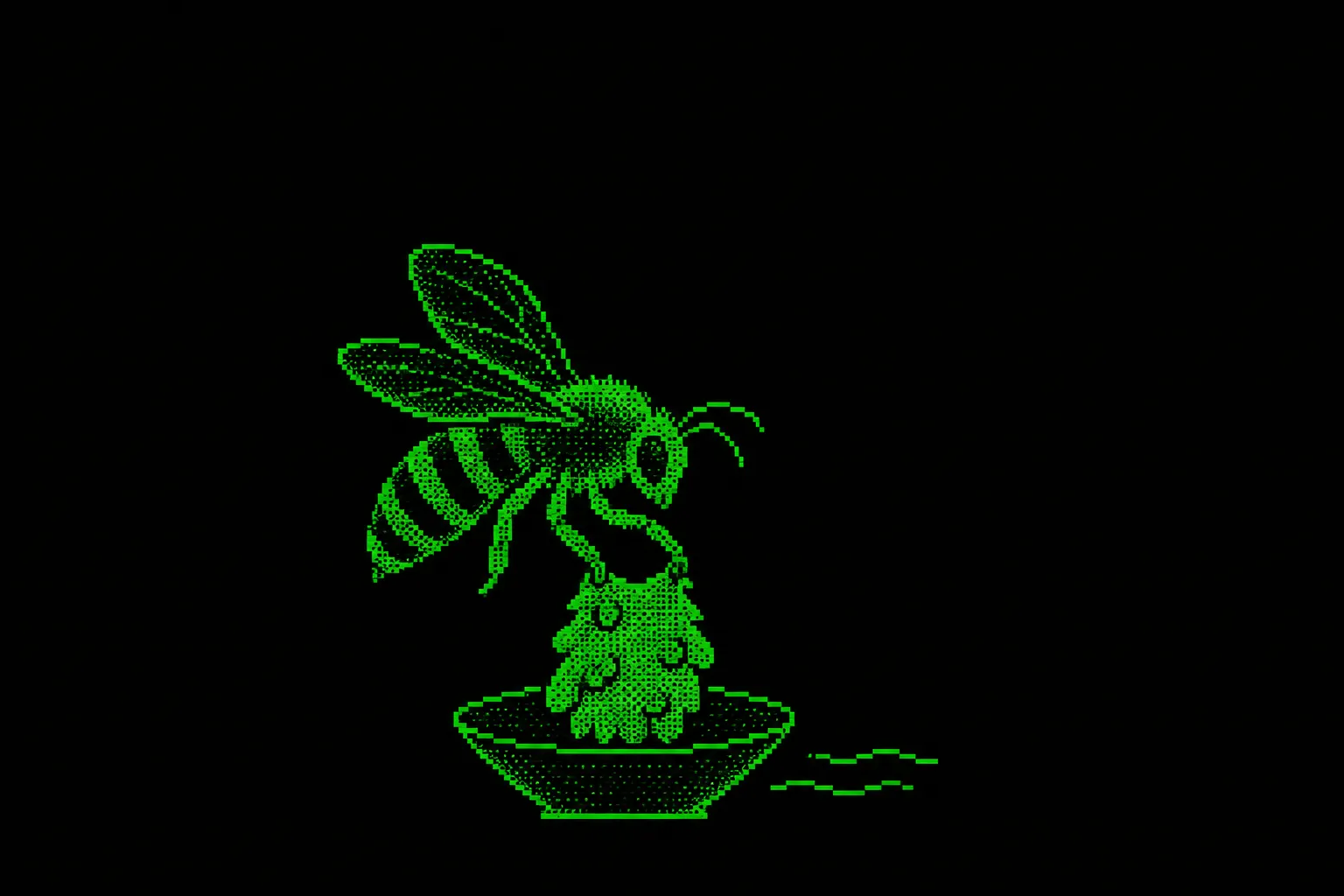
CTH 336 is a cluster of Hittite myths about a god who goes missing: the Tutelary Deity, written with the logogram KAL and rendered here as Inara. Like the better-known Telipinu story, each version follows the same pattern. The god goes away, the land fails, the Mother-goddess Hannahanna sends the bee to search, and a ritual brings the god back. The stories were composed in the Old Hittite period. They survive on fragmentary tablets from Hattusa in Middle and New Hittite script: the main tablet KUB 33.52 with its duplicates KUB 33.55 and 33.56, and the separate versions KUB 33.57, 33.58, 33.59, 33.60 and 36.51.
KUB 33.52 opens with offerings to the war-god Zababa: cheese, rennet, wine, wool and twenty thin breads. A speaker announces “To my mother I go,” clad in an iškarka-stone. The Mother-goddess sends the bee to Inara with a goat-horn to carry a message. Zababa hears it, becomes afraid, and takes spear and knife. Afterwards no humans or cattle can be found, and the people cry out for help. The Mother-goddess opens her window and sees the nurse and the herdsmen moving about. Someone kills the plowmen and drives the cattle off to the rocks. The tablet closes with words of the healing goddess Kamrušepa and the rubric “This is the incantation of the soul. If the heart of a man is afraid…”
The other fragments preserve different episodes. In KUB 33.59 the bee brings back the fleece. Hannahanna makes three springs, one by an ippiya-plant, one by a bowl and one by a fire. The bee lays the fleece in the bowl, the goddess Miyatanzipa sits down under the plant, and the broken lines end with “they impregnated.” In KUB 33.57 the Storm-god worries about his daughter, the Tutelary Deity, and Hannahanna promises her “a land, and … a man too.” Hannahanna also throws the thighs of every kind of wild animal into the fleece. KUB 33.58 tells someone to take wax and fit it to the head and “the form” under the feet. In KUB 33.60 the Mother-goddess finds a stone and orders it to “become a nurse,” and she tells Zababa to “keep going on campaign” year after year. In KUB 36.51 the striking weapons become blunt and someone is to destroy the city of the nurse.
None of the versions is complete. The reason the god vanishes is lost, and so is the final return. Many speakers cannot be identified, and in several key lines only the verb survives.
The page gives 259 tablet lines, 13 restored from a duplicate. Square brackets mark breaks in the clay and restorations; ... is a lost stretch. Hover over or tap a Hittite word for its meaning and the English words it becomes.
Fragment (KUB 33.52)
- 1A Vs. I 1 §1
... Zababa Zababa šipant- to libate
... he libates to Zababa.
Note · Line 1
Zababa is the Hittite war-god. The tablet opens with a ritual in which drink is poured out and objects are set down for him. - 2A Vs. I 1-Vs. I 2 §2–§5
gimra- field ŠA of NA4 stone ... nu=šan and GÍR dagger ]-in 1 one TUKUL weapon [ ... ] ... -ŠU his ŠA of GUŠKIN gold ]-x-et-ta ... -šmaš to them 3 three x TUR small 2 two šuwarti- wooden object ... -r]a-a
in the field ... of stone(?) ... and [a dagg]er(?) ..., one weapon [ ... ] ... his ... of gold(?) ... -ed ... but to them three small ..., two šuwarti- wooden objects ... -ra-a
Note · Line 2
A šuwarti is some wooden object used in the ritual; what it was is not known. - 3Vs. I 1′
[ ZA.GÌN blue [ ]
[But here, with] blue [wool, ... he places it on the altar.]
- 4Vs. I 6′
[ DINGIR-LIM deity dai- to place
[... the ...-dan before the dei]ty he places.
- 5Vs. I 7′–8′
[ tanḫašti- ritual object [ šipant- to libate
[... the tanḫašti to the deity ...] [he offer]s.
Note · Line 5
The tanḫašti is an item offered to the god, but its nature is unknown. - 6Vs. I 9′
[ ]
[gap in the text]
Obverse
- 7Vs. I 12′
[ ]x-zi
[... he ...]s.
- 8Vs. I 13′
[ ]-x-ta
[... he ...]ed.
- 9A Vs. I 7-Vs. I 10 §7
... GA.KIN.AG cheese 1 one EM-ṢÚ sour 1 one DUG vessel GEŠTIN wine ... KU-KU-BU kukkubu vessel tawal- tawal drink 3 three pittula- wool loop ... 20 twenty NINDA.GUR4.RA thick bread SIG thin ERIN cedar wood ... Zababa Zababa šipant- to libate
... [chee]se, one rennet, one vessel of wine ... [vess]el(?) kukkubu (of) tawal, three loops of wool, ... twenty thin thick-breads, cedar wood ... he offers [to Zab]aba.
Note · Line 9
Rennet (literally “the sour thing”) is the curdling agent that turns milk into cheese, and it is offered here beside the cheese. With wine, wool, bread and fragrant cedar, the list makes up a meal and gifts for the god. - 10A Vs. I 11 §8
... Zababa Zababa šipant- to libate
... he offers [to] Zababa.
- 11A Vs. I 12 §9
... ANA to Zababa Zababa šipant- to libate
... he offers [t]o Zababa.
- 12A Vs. I 16 §12–§14
... dāi- to place ... šiš unclear ... zarzur- mixture ... kunna- right-hand ... etta unclear
... [he] place[s] ... ...-šiš ... his [mix]ture ... on the [r]ight ... ...-etta
- 13A Vs. I 24-Vs. I 25 §17
... ḫūmant- all ... ...
... all ... ...
Obverse
- 14Vs. I 16′–19′
▒▒▒▒▒ 𒀭𒈤
[ ] x [ ] [ gauš unclear [ ] [ ] x DINGIR.MAḪ mother goddess
[...] ... [...] [...]-gauš [...] [...] ... the Mother-goddess
Note · Line 14
The Mother-goddess is Hannahanna, the wise mother of the gods. In these myths she is the one who organises the search for the missing god. - 15Vs. I 20′–1
𒈠𒄯 𒂼𒅀𒉿 𒉺𒄿𒈪 𒄑𒅆𒆕▒▒▒▒
[ ] [ peran before [ ] [ ta unclear [ ] [ ] x [ ] MAḪAR before AMA mother pāi- to go ŠUKUR spear x x [ ]
[...] [... b]efore [...] [... -t]a [...] [...] ... [...] "To my mother I go. A spear ... ... [...]
- 16Vs. II 2–3
𒉌𒌓𒅖𒋼𒀀𒃷𒉿𒈬𒌑𒂊𒌍𒋫𒀜𒁺𒉿𒀸𒈠▒
iškarka- iškarka stone wešš- to clothe addu- evil ] lē not manninkuan near pā- to go n=an and him MAḪAR before [ ]
I am clad in an iškarka-stone. But of evil [...] may I not go near, and him before [... I lead]."
Note · Line 16
The iškarka is a stone that has not been identified. The speaker says they are dressed in it, perhaps as protection on the journey. - 17A Vs. II 1 §24–§30
ḫ[a- ... kuwat why ... nu and; then kui- who; which šagai- sign; omen ... INA in; on UD day 3.KAM third nu=an and; him ...
[...] Why [...] And which sign [...] On the third day [him ...]
- 18Vs. II 4–7
𒄩𒇻𒂵𒀭 𒄿𒅀 𒀭𒆗 𒄩𒇻𒃷 𒄿𒅀𒀜 𒆠𒉈▒▒▒ 𒊭𒀭 𒈾𒄴𒋫 𒄑𒅆𒆕𒀉𒄈𒀉𒁕𒀀𒀸▒▒
DINGIR.MAḪ mother goddess NIM.LÀL bee ANA to Inara Inara ŠAPĀRU to send SI.UZ₆ goat horn dā- to take ] [ ] ḫaluga- message iye/a- to make Inara Inara ḫaluga- message iye/a- to make KI land; earth ] [ ] nu and; then kuišša each one kuwatta where; somewhere pā- to go ZABABA Zababa ] š=an and him or it naḫḫ- to fear ŠUKUR spear GÍR dagger dā- to take [ ]
The Mother-goddess sent the bee to Inara: "T[ake] the goat-horn [ ] [ ] and make a message!" Inara made a message. The lan[d ] [ ] And each one went somewhere. Zababa [heard] and he feared it. With the spear, with the knife he took (it) [ ]
Note · Line 18
Inara is the Tutelary Deity, the god who vanishes in this myth. As in the Telipinu story, the bee is Hannahanna’s messenger, and the goat-horn is what the message is to be carried in. - 19Vs. II 8–9
𒌑𒌌 𒂉𒅖𒆠 𒌑𒂊𒈪𒅀𒀜
iya- to do nu=ašta and; then pai-/pā- to go nu and; then DUMU.U₁₉.LU human GU₄ cattle [ ] UL not kuiški anyone wemiya- to find
[ ] he did. Then he went, and humans, cattle, [sheep] no one found.
Note · Line 19
Now no one can find people, cattle or sheep anywhere. The land emptying of life is the sign that a god has gone missing. In another manuscript, Zababa first fastens something onto the nurse before he leaves. - 20C Vs. 6' §41
nu and; then warri- help palaḫḫ- to cry out
And they cried out for help.
- 21C Rs. 3-Rs. 4 §47–§48
... dāi- to place kunkunuzzi- kunkunuzzi stone ...]
... he places the kunkunuzzi-stone ...
- 22Vs. II 10–13
𒀭𒊩𒈠𒌅𒇻𒌓𒁕𒀀𒄿𒄩𒀸𒋫𒋗▒▒ 𒌑𒂵𒉿𒊏𒀭𒍝 𒌋𒄴𒄭 𒉡𒉿 𒊩𒍏𒁕 𒇽𒈨𒌍𒉺𒇻𒄞𒇻𒄭𒀀𒂗𒋫𒊑𒇽𒈨𒌍▒▒▒ 𒌑𒌌 𒂉𒀉𒆠 𒌑𒂊𒈪𒅀𒀜 ▒▒▒
NIN.TU mother goddess luttai- window ḫeš- to open šu-x[ ] uk I auš- to see nu and; then ÙMMEDA nurse SIPA.GU₄.UDU cowherds and shepherds iya- to do LÚ man ] [ ] UL not kuiški anyone wemiya- to find x [ ]
The Mother-goddess opened the window; ... "But I see him, and the nurse (and) the cowherds and shepherds go. Men [...] [...] did not find anything ... [...]
Note · Line 22
The goddess looks out of her window over the land to see what has happened. She reports that the nurse and the herdsmen are still going about. - 23Vs. II 14–17
𒇽𒈨𒌍𒀳𒇲𒃷𒂉𒂗𒋫𒄞𒄭𒀀▒▒ 𒉌𒌓𒁉𒂊𒊒𒈾𒀸𒁕𒀀𒀸𒀜▒ 𒂕𒉺 𒌋𒌦𒉌𒌍𒋫 ▒▒▒ 𒌑𒌌 𒆠𒄿𒉿 𒊭▒
APIN.LÁ plowman kuen- to kill GU₄ cattle [ ] peruna- rock dā- to take a[t?- ] EGIR-pa back; again unna- to drive here x [ ] UL not ka- this ša-[ ]
He killed the plowmen; the cattle [...] he took [...] to the rocks; a[t?-...] he drove back ... [...] not [...] 'This ša-[...]'"
Note · Line 23
The killer is not named in what survives. He kills the men who plow the fields and drives the cattle off to the rocks, so the land loses both its farm workers and its herds. - 24Vs. II 18–21
𒀀𒉺𒀀𒊭 𒀭𒊩𒈠𒌅▒ 𒀀𒉺𒀀𒊭 𒅈▒▒ 𒋼𒄑𒍣 ▒▒
apa- that one NIN.TU mother goddess ] apa- that one ar-x[ ] peruna- rock ] [ ] te-/tar- to say [ ]
But that one [...] the Mother-goddess [...] But that one ...[...] stone[s ...] [...] says [...]
- 25Vs. II 22–25
𒆠𒄿 ▒▒
našma or ] NIN.TU mother goddess ] ka- this [ ] x[ ]
Or [...] The Mother-[goddess ...] This [...] ...[...]
- 26Rs. III 1′
[ ] maḫḫan as; when ]
[...] as [...]
- 27Rs. III 2′–5′
▒▒▒𒉆𒈠𒇷𒂊▒▒▒▒▒ 𒄩𒊍𒍣𒆠𒄑𒍣 𒍣𒂵 𒋫𒁍𒊭▒ 𒉿𒀠𒄴𒄩𒀭𒈾𒀜𒋾 𒍜𒊬𒉡𒈠𒀭▒
[ ] x araḫzanda around kā here ] [ ] x namma further le not x [ ] [ ] ḫazzik- to strike repeatedly zik you tapuša sideways ] walaḫḫanna- to strike repeatedly šarnuman body part ]
[...] ... around h[ere? ...] [...] ... further not ... [...] [...] he keeps striking; but you sidew[ays? ...] you keep striking; the šarnuman[...] [...]
- 28Rs. III 6′–9′
𒃌𒅗 𒀭𒁕𒀭 𒄩𒀸▒𒅀𒀸𒊭𒀸𒇷𒂊▒▒ 𒈧𒌉 𒈠𒀀𒀭 𒉿𒅈𒋗𒆷𒀭 𒀭𒁕 𒇷𒂊 ▒▒ 𒌆𒀸 𒈠𒀀𒀭 𒋗𒌒𒁉𒅀𒄴𒄷𒌓 𒁉𒂊𒁲 ▒▒▒ 𒌑𒌌 𒄠𒈨𒂖 𒌓𒁕𒀀𒅈 𒀭𒄰𒊒𒊺𒉺𒀸 𒌓𒁕𒀀𒅈▒
GALGA counsel andan inside ḫaš-x-iyašša meaning unclear le not [ ] MÁŠ.TUR young goat mân like waršula- scent anda in le not [ ] TÚG garment mân like šuppiyaḫḫ- to purify peda- place x [ ] UL not uk I uttar word; matter Kamrušepa Kamrušepa uttar word; matter ]
your understanding? inside his ḫaš-x-iyašša- not [...] Like a kid, the scent in do not [...] Like a garment, purify yourself! In the place ... [...] Not my words; Kamrušepa's word[s ...]
Note · Line 28
Kamrušepa is the Hittite goddess of healing and magic. The speaker says the spell’s words are hers rather than their own, which gives the incantation a god’s authority. - 29Rs. III 10′–12′
𒀭𒉡𒌑 𒅆𒁁 𒍣𒋾 𒋳𒈠 𒊮𒁀 𒇽𒅆 𒄿𒉺𒆷𒄴 ▒▒ 𒄿𒉺𒀸𒅆 𒊩𒈠 𒊭 𒄿𒇷𒂉𒌋 𒈨𒂊 𒌓 𒅗𒁇𒌑▒ 𒈠𒆷 𒄿𒈾 𒁾𒁉 𒊭𒀀𒀜𒊒
ANNÛ this ŠIPTU incantation ZI-TI soul ŠUMMA if ŠÀ.BA heart; interior LÚ-LIM man PALĀḪU to be afraid [ ] BAŠÛ to exist MIMMA anything ŠA of LEQÛ to take MÛ water ZABAR bronze Ú plant ] MALA as much as INA in; on ṬUPPU tablet ŠAṬĀRU to write
This is the incantation of the soul. If the heart of a man is afraid [...] [...] there is. Whatever he takes: water, bronze, pl[ants? ...] as much as is written on the tablet.
Note · Line 29
The closing rubric shows what the myth was used for. It was recited as a ritual to heal a man whose heart is gripped by fear, with the soul or life (Hittite ištanza) as the thing to be restored. - 30A Rs. IV 1'-Rs. IV 2' §87
... ]-zi-iš kā- this ... ... DÙ to make
... -ziš thi[s] ... ... is [made].
- 31A Rs. IV 2' §88
kā- this SÍSKUR ritual ...
But this ri[tual] ...
Fragment (KUB 33.59)
- 32Vs. I 1′–3′
[ ] x [ ] [ -u]š x [ ] [ -i]a?-at-x […] x
[ ] ... [ ] [ ...-u]š ... [ ] [ ...-i]a?-at-... [ ...] ...
- 33Vs. I 4′–7′
▒▒ 𒃲 𒁹 𒂁 𒁉𒃾 ▒▒ 𒁹 𒂵𒆥𒀝 ▒▒▒ 𒐈 𒃻𒆸𒊏 𒁹 𒂁𒆸𒆸 𒃾
[ ]-x GAL great 1 one DUG vessel KAŠ.GEŠTIN beer-wine [ ] 1 one GA.KIN.AG cheese [ ] x 3 three NINDA.GUR₄.RA thick bread 1 one ḪAB.ḪAB jug GEŠTIN wine [ ] x
[...] ... great [...], 1 vessel of beer-wine [...] 1 cheese [...] ... 3 thick breads, 1 jug of wine [...] ...
- 34Vs. II 1′
Ḫannaḫanna mother goddess [ ]
[Ha]nnahanna [...]
- 35Vs. II 2′–5′
𒋢𒆳𒊭𒀭 𒌅𒌓𒌅𒀭𒁕 𒁉𒂊𒁕𒀸 𒊬𒄷𒇷▒ 𒀭𒄩𒀭𒈾𒄩𒀭𒈾𒊭 ▒▒
pai- to go pēda- to carry away ]-x-⸢aš⸣ kurša- fleece tu-ut-t[u- anda in pēda- to carry away šarḫuli- pillar ] Ḫannaḫanna mother goddess [ ]
"I go. You carry [...] away ..." the fleece tutt[u- ... ] in carried to(?) the pillar [ ... ] But Hannahanna [ ... ]
Note · Line 35
The fleece (Hittite kurša) is a hunting bag made of animal skin and the sacred emblem of the Tutelary Deity. It holds the land’s plenty, so bringing it back stands for bringing back the missing god’s blessings. - 36Vs. II 6′–2′
▒▒▒▒▒▒▒𒈠𒀀𒈾𒀭𒅈▒▒▒ 𒁕𒀀 𒉡 𒌑𒁕 𒈠𒀀𒈾𒀸▒
ḫaruwanna- female attendant x x [ ] ⸢ú⸣-i-ši-it-[ta? ] [… … ]-x mān_-an if; him a[r?- ] [ ] dā- to take nu and; then uda- to bring mān_-aš if; he ]
the female attendant(?) ... [ ... ] ... [ ... ] [ ... ] "If [ ... ] him [ ... ] take! And bring (him)! If he [ ... ]
- 37Rs. III 3′–5′
𒀭𒁕𒀭 𒇷𒂊 𒌑𒁕𒀜𒁲 𒁉𒂊𒊏𒀭▒ 𒀀𒉺𒀀𒊭 𒋢𒂉𒌫𒅆𒅖𒅆 𒂕𒀭 𒄿𒅀𒀭▒ 𒉺𒀉 𒉏𒋭𒀸 𒈾𒀭 𒅈𒉡𒌓 𒋢𒂉𒌫𒊭𒀭
andan inside lē not uda- to bring peran before ] apā- that one kurša- fleece EGIR-an behind iya- to do pai- to go NIM.LÀL bee nu=an and; him arnu- to bring away kurša- fleece
do not bring (it) in! In front [...] But that one (is) behind his fleece. ... made(?) ... The bee went, and it brought it, the fleece.
- 38Rs. III 6′–9′
𒂉𒀉𒈠𒀭 𒌑𒄑𒍣 𒀭𒄩𒀭𒈾𒄩𒀭𒈾𒊭 𒐈 𒉿𒀜𒋫𒊒 𒄿𒂊𒀉 𒆠𒂊𒁕𒉌 𒄑𒄿𒅁𒁉𒀸 𒊺𒂊𒅕 𒅈𒋫 𒆠𒂊𒁕𒉌𒈠 𒄑𒄷𒌒𒉺𒊏𒀸 𒃰𒋫 𒆠𒀉𒋫 𒆠𒂊𒁕𒉌𒈠 𒉺𒄴𒄯 𒌑𒊏𒀀𒉌
kuitman while uwa- to come Ḫannaḫanna mother goddess 3 three wattaru- spring iya- to do ka- this ippiya- ippiya plant šer on top ar- to stand ka- this ḫuppar- bowl katta down below ki- to lie ka- this paḫḫur fire war- to burn
While it comes, Hannahanna [however] made three springs. By this one an ippiya-plant stands on top, but by this one a bowl lies down below, but by this one a fire burns.
Note · Line 38
Hannahanna sets up three springs to receive the fleece the bee brings back. The ippiya is a plant that has not been identified. - 39Rs. III 10′–13′
𒀭𒄩𒀭𒈾𒄩𒀭𒈾𒊭 𒂊𒌍𒍣 𒈨𒂊𒈾𒄴𒄩𒀭𒁕 𒌑𒍑𒆠𒄑𒍣 𒌑𒂊𒀉 𒉏𒋭𒀸 𒄑𒄷𒌒𒉺𒊑 𒀭𒁕 𒋢𒆳𒊭𒀭𒁕𒅖𒌑𒂊𒀉𒀭𒈪𒅀𒁕𒀭𒍣𒉺𒀸 𒄑𒄿𒅁𒁉𒀸 𒃰𒋫𒀭 𒂊𒊭𒁲
Ḫannaḫanna mother goddess eš- to sit menaḫḫanda opposite ušk- to keep looking uwa- to come NIM.LÀL bee ḫuppar- bowl anda in kurša- fleece dai- to place uwa- to come Miyatanzipa Miyatan zipa ippiya- ippiya plant kattan below eš- to sit
Hannahanna sits (and) opposite keeps looking. The bee came, i[n] the bowl it [p]laced the fleece. Miyata[nzipa] came, (and) she sat down below the ippiya-plant.
Note · Line 39
Miyatanzipa is a goddess whose name means “spirit of growth.” She embodies the land’s fertility and abundance. - 40Rs. III 14′–16′
▒▒𒋼𒄑𒍣𒀀𒊒𒈠𒉿𒅆𒂟𒅔𒂉𒀉𒅗𒅖𒄷▒ ▒▒▒▒▒▒▒▒▒▒▒▒▒▒▒▒▒▒𒌍𒅆𒀭𒁕𒋾𒄑𒄷𒌒𒉺𒊏𒀭▒▒
x x te-/tar- to say aruma exceedingly SIG₅ good kuitka something iš-ḫ[u?-x] [… … …] x x [… … ]-x-⸢eš-ši-an⸣-da-ti ḫuppar- bowl [ ] [… … … ]-x-ir [ ]
... says: "Something exceedingly good ... [...] ... [...] were ...-ed [...], the bowl [...] [...] they ...-ed [...]
Note · Line 40
The words “they impregnated” (ar-ma-aḫ-ḫe-er) appear a little further on, in the broken lines of the next column. The springs, the fleece and the goddess of growth appear to be a scene in which the land is made fertile again. - 41Rs. IV 1′–4′
▒ 𒉏𒋭𒀸
[ -š]a? [… … … ]-x [ NIM.LÀL bee [ ] [ -u]š-zi
[...] ... [...] ... [...] the bee [...] ...-s
Note · Line 41
The bee appears again in these broken last lines, still at work as Hannahanna’s helper in the scene of the fleece and the springs. - 42Rs. IV 5′–8′
▒𒄿 𒉡 𒀭𒋫𒀭
[ -z]i [ ]-⸢i⸣ nu and; then andan inside [ ] [ maḫḫanda just as [ ] [ Ḫannaḫanna mother goddess
[...] ... [...] ... and inside [...] just as [... Hannah]anna
- 43Rs. IV 9′–12′
▒▒ 𒄿𒁺𒍑 ▒▒▒𒊭 𒉏𒋭𒀭
[ ] [ armaḫḫ- to impregnate [ ]x idu- meaning unknown [ ] [ lā- to release [ ] [ -š]a? NIM.LÀL bee
[...] they impregnated [...] ... idus [...] released [...] ... the bee
- 44Rs. IV 13′
▒▒▒▒ 𒅈𒈠𒄴𒄭𒅕
[ ] [ ] armaḫḫ- to impregnate
[...] they impregnated
Note · Line 44
The words “they impregnated” come back a second time. Who makes whom pregnant is lost, but the scene seems to keep returning to the land and its creatures becoming fertile again. Fragment (KUB 33.57)
- 45Vs. I 1′–4′
▒▒ 𒑆 𒃻𒆸𒊏 𒅎𒍝 𒀾𒀸 ▒𒁉𒊏𒀭 𒃰𒋫 𒁕𒀀𒄿 ▒𒌍𒊬 𒁕𒀀𒄿 𒁹 𒂁𒅗𒆕
[ ] 9 nine NINDA.GUR₄.RA thick bread EMṢU sour ZÍZ emmer [ ] [ peran before katta down below dai- to place [ eššar meaning uncertain dai- to place 1 one KA.GAG vessel of beer
[...] 9 sour thick breads of emmer [...] [...] he places [in fr]ont, down [...]-eššar he places; 1 vessel of KA.GAG-beer
- 46Vs. I 5′–6′
▒▒▒▒▒▒ 𒂵𒆥𒀝
[ ] [ ] x x GA.KIN.AG cheese [ ] [ ] x
[...] ... cheese [...] ...
- 47Vs. I 7′–3′
𒀭𒈤 𒀭𒆗𒊑 𒋻𒀸𒆠𒄑𒍣▒▒ 𒀭𒆗𒀸𒊭 𒋼𒄑𒍣 𒇽▒▒▒▒▒ 𒉡 𒌑𒌌 𒄷𒂊𒄴𒄷𒌦 𒉡𒉿𒁺𒍝▒
[ ] x x x-zi DINGIR.MAḪ mother goddess KAL Tutelary Deity tarške- to speak [ ] KAL=a Tutelary Deity; and te-/tar- to say LÚ man x [ ] nu and; then UL not ḫuwai- to run nu=wa=du=za and; to you ]
[...] ... -s The Mother-goddess(?) speaks to the Tutelary Deity [...] and the Tutelary Deity says: "The ... man ... [...] and I did not run. And to you [...]"
Note · Line 47
The Tutelary Deity denies that she ran away. The Mother-goddess answers by telling her to sit down and stay. - 48Vs. II 4′–5′
𒀭𒊩𒈠𒌅𒊭𒋻𒀸𒆠𒄑𒍣𒇷𒂊𒉿𒂉▒▒▒▒▒▒▒▒▒▒ 𒅗𒀀𒁁𒉿𒍝 𒂊𒌍
NIN.TU=a Mother-goddess; but tarške- to speak lē=wa do not k[u?- … … …] x kā=pat=wa=za right here eš- to sit
But the Mother-goddess speaks: "Do not ... [...] ... Sit right here!"
- 49Vs. II 6′
𒌑𒊌𒋫 𒁉𒄴𒄭 𒌓𒉌𒂊 𒇽𒈾𒀭𒈾𒋫 𒁉𒄴𒄭
uk=tta I; to you pai- to go utne- land LÚ=a=tta man; and; you pai- to go
I will give you a land, and I will give you a man too."
Note · Line 49
To make her stay, Hannahanna promises her a land of her own and a man, most likely a husband. - 50Vs. II 7′–10′
𒀭𒌋𒀸 𒀭𒆗𒀭 𒆏𒁍𒌋𒉿𒀀𒀉 𒉏𒋭𒀭 𒁉𒄿𒂊𒀉 𒄿𒀉𒉿𒊏𒀭 𒍣𒅅 𒊭𒀭𒄩 𒉏𒋭𒀸 𒉺𒀉 𒀭𒊩𒈠𒌅𒀭 𒌑𒂊𒈪𒅀𒀜 𒉡𒍑𒅆 𒋻𒀸𒅆𒆠𒄑𒍣 𒀭𒅎𒀸𒉿𒍝 𒌉𒊩𒍪 𒆏𒁍𒌋𒉿𒀀𒀉
10 Storm-god KAL Tutelary Deity kappuwai- to count NIM.LÀL bee piye- to send pai-/pā- to go zik you šanḫ- to seek NIM.LÀL bee pai-/pā- to go NIN.TU mother goddess wemiya- to find nu=šši and to her te-/tar- to say IŠKUR storm god DUMU.MUNUS daughter kappuwāi- to reckon
The Storm-god was concerned about the Tutelary Deity; he sent the bee: "Go, you, seek her!" The bee went [and] found [the Mother-goddess], and she says to her: "[The Storm-god] was concerned about his daughter."
Note · Line 50
The Storm-god is the head of the Hittite gods and the Tutelary Deity’s father. In this version he is the one who sends the bee, and the bee goes to report to Hannahanna. - 51Vs. II 11′–14′
▒▒▒▒▒▒▒▒▒▒𒀸𒂉𒂊𒂖𒆷𒄷𒌋𒀉𒈾𒀸𒊭𒀝𒌓𒋫𒄿𒋫𒀀𒀸 ▒▒▒▒▒▒▒▒▒𒁕 𒋢𒆳𒅆 𒁉𒌍𒅆𒅀𒀜 𒊺𒅕𒊏𒀸𒊭𒀭 ▒▒▒▒▒▒▒▒▒▒𒁕𒀀𒅖𒀭𒊩𒈠𒌅𒀸 𒉏𒋭𒊭
[… … … ]-x-aš? kuišša each one ḫuitar wild animals šakuttai- thigh dā- to take [… … … -d]a kurša- fleece peššiya- to throw šer on top [… … … ]-x dai- to place NIN.TU mother goddess NIM.LÀL bee [ ] [ ] x [… … …] x x x x
[...] ... took the šakuttai (thighs?) of every (kind of) wild animal [... and she threw them in]to the fleece (bag). And on top [...] ... she placed, Hannahanna. But the bee [...] ... [...] ...
Note · Line 51
Hannahanna fills the fleece with the thighs of every kind of wild animal, so that it holds the game of the wild that this god of the hunt is responsible for. The word for the body part, šakuttai, is uncertain. - 52Rs. III 1′–4′
▒▒▒ 𒁕𒀀𒌑 ▒𒀭𒅖𒆠𒊭𒀸▒▒ ▒▒▒ 𒋼𒄑𒍣
[ ] x x [ ] x dā- to take [ ]-an iškiš- back [ ] [ ] x te-/tar- to say
[...] ... [...] ... let him take [...] ... of the back [...] [...] ... he says:
- 53Rs. III 5′–8′
▒▒ 𒌑𒌌 𒋻𒄴𒍣 𒂉𒂗𒍣 ▒▒ 𒈨𒈪𒅖𒆠𒅆
[ ] UL not tarḫu- to be able kuen- to kill [ ] [ ] memai- to say [ nakkiyatar importance
"[...] is not able to kill (literally "is not able, kills") [...] [...] you keep saying [...] importance
- 54Rs. III 9′
▒▒▒▒▒ 𒁉𒄴𒄭
[ ] [ ] x pai- to go
[...] ... I give."
- 55Rs. III 10′–12′
▒▒𒉿 𒂉𒂊𒁕𒉌 ▒▒▒ 𒇽𒌨𒂠 𒄀𒅎𒊏 ▒▒ 𒄿𒅀𒄴𒉡𒌓
[ -wa(r) quotative particle kui- who; which [ ] [ UR.GI₇ dog-man gimra/i- field [ ] [ ] iyaḫḫnu- to make go
[...]...: "To which [...] [...] the dog-man [...] to the field [...] [...] made go
Note · Line 55
The “dog-man” is probably a dog-handler, someone who kept dogs for hunting or herding. He appears in connection with the open field, but what he does there is lost. - 56Rs. III 13′–15′
[ tarḫu- to be able kuen- to kill [ ]-x-wa-ra-[ ] [ ] x [ ]
[...] they [are ab]le, they kill [...] [...]... "[...] [...] ... [...]
Note · Line 56
Someone is speaking about people who are able to kill. Who they are and whom they kill is lost in the break. Fragment (KUB 33.58)
- 571′–4′
▒▒▒▒▒▒▒▒▒▒𒍣𒌑𒁕𒉿𒁉𒊏𒀭▒ ▒▒▒▒▒▒▒▒▒𒀭𒌑𒌌𒌑𒂊𒈪𒂊▒
[… … …] x x [… … … mân like ] [… … … ]-x-zi uda- to bring peran before ] [… … … ]-da-aš-ši-it au(š)- to see [ ] [… … … -an him; her; it UL not wemiya- to find ]
[...] ... [...] as [...] [...] she ...-s: "Bring [...] befo[re ...]" [...] she se[es] her ...-da-[...] [...] ... she does not fin[d ...]
- 585′–8′
𒀭𒄩𒀭𒈾𒄩𒀭𒈾𒀸𒉏𒋭𒉿𒄿𒂊𒀉 ▒▒𒊭𒀭𒄩𒉺𒀉𒉏𒋭𒀸𒀀𒈾▒ 𒄑𒈥𒁍𒁕𒋗 𒀀𒁍𒌋𒌦𒈾▒ 𒄯𒍣 𒋗𒉿𒊏𒀸 𒉡𒌋𒈠𒀭 ▒▒
Ḫannaḫanna mother goddess NIM.LÀL bee pai- to go [ ] šanḫ- to seek pā- to go NIM.LÀL bee ANA to ] MAR.GÍD.DA wagon apa- that one ] ḫark- to hold Šuwara Šuwara nūman by no means [ ]
Hannahanna se[nt] the bee: "[...] seek!" The bee went to [...] her wagon, and that one [...] holds. šuwaraš by no means [...]
Note · Line 58
As in the other versions, Hannahanna orders the bee to search for the missing god, and the bee sets off. The word šuwaraš is not understood. Someone then declares that something must never happen, but the rest is lost. - 599′–12′
𒉏𒋭𒊭 𒉺𒀉 𒀭𒄩𒀭𒈾𒄩𒀭𒈾▒ 𒀭𒄩𒀭𒈾𒄩𒀭𒈾𒀸𒊭 ▒▒▒ 𒉡𒉿𒊍 𒂃𒋭 𒁕𒀀 𒉡𒉿▒ 𒊕𒁺𒍪 ▒▒
NIM.LÀL bee pā- to go Ḫannaḫanna mother goddess ] Ḫannaḫanna mother goddess x [ ] nu=wa=za for oneself DUḪ.LÀL wax dā- to take nu=wa and; then ] SAG.DU head [ ]
But the bee went. Ha[nnahanna ...] And Hannahanna [...] "Take wax for yourself, and [...] her head [...]
Note · Line 59
Hannahanna now gives instructions about wax. Hittite magic often used wax to model figures, and melting wax was thought to make evil melt away. - 6013′–16′
𒅗𒀀𒀸𒈠 𒁕𒀀 𒈾𒀜𒅆 ▒▒ 𒋫𒊒𒌒 𒂊𒌍𒊑 ▒▒ ▒▒▒▒𒄭𒀀𒊭▒▒▒
kašma here dā- to take nu=at=šši and it for her [ ] tarup- to join ešri- form [ ] GÌR foot kattan below ] [… ḪI.A plural marker ŠA of x [ ]
Here, take! And it for her [...] join! The form [...] under the [f]eet [...] [...] the [...]s of [...]
Note · Line 60
The Hittite ešri means “form, shape, image”. With the head above and the feet below, the wax seems to be shaped into a figure of a body, probably as part of a ritual to bring the god back. - 6117′–18′
ka- this ⸢ša⸣-[ ] [… … …] x [ ]
[T]his [...] [...]
Fragment (KUB 33.60)
- 62Vs. 1′–4′
▒▒▒𒈾𒀜▒▒
[ ] x [ ] maḫḫan as; when ] [ ] x nu=at and; it [ ] [ maḫḫan as; when [ ]
... But when ... ... and it ... ... as ...
- 63Vs. 5′–8′
▒𒊌𒉺𒀭𒁕𒁷▒▒
[ Ḫannaḫanna mother goddess x [ ] ḫarwant- nurse [ ] [ -u]k pa-an-⸢da⸣-tin [ ] [ ] x an-da-na-x [ ]
[Hann]ahanna ... ... [her nu]rse ... ...[-u]k the pandati- ... ... andana-x ...
Note · Line 63
This part of the tablet is too broken to follow. Only Hannahanna, a nurse and an unknown word pandati can still be made out. - 64Vs. 9′
▒▒▒𒊩𒄯𒉿𒀭𒍝▒▒
[ ] x ḫarwant- nurse [ ]
... the nurse ...
- 65Vs. 10′–13′
𒉡𒄞𒄭𒀀𒇻𒄭𒀀𒁕▒▒▒▒▒▒▒▒▒▒▒▒
nu and; then GU₄ cattle UDU sheep dā- to take … … …] x [ ] [ ] x x x-ši x x [ ] x [ ] [ ] x [ ] x-⸢ša?⸣-[x ] [ ] x peran before ]
[And?] cattle (and) sheep t[ake? ... ... ...] ... [ ] [ ] ... ... ...-ši ... ... [ ] ... [ ] [ ] ... [ ] ...-ša?-[ ... ] [ ] ... befo[re ... ]
- 66Vs. 14′–1′
[ ] x ⸢a⸣-x-an?-[x ] [ ] x x x [ ] [ ] x [ ] [ ] x x [ ]
[ ] ... a-x-an?-[ ... ] [ ] ... ... ... [ ] [ ] ... [ ] [ ] ... ... [ ]
- 67B Vs. I 1' §18–§20
]-x-⌈iš⌉ ... mān=wa=an if; reportedly; him ... aška- gate parā out pēda- to carry away ...
... "If [...] him [...] carr[y ...] out to the gate."
Note · Line 67
Someone is told to carry something, or someone, out to the gate. The person speaking is lost. - 68B Vs. I 4' §21–§22
NIN.TU mother goddess tē- to speak pai- to go pēru- stone wemiya- to find
The Mother-goddess spea[ks]: She went (and) found the stone.
Note · Line 68
The Mother-goddess goes out and finds a stone, which she is about to bring to life. - 69B Vs. I 5'-Vs. I 6' §23–§24
... kiššan as follows tē- to speak uwa- to come ... ḫarwant- nurse kiš- to become
... spoke as follows: "Come on, ... become a nurse!"
Note · Line 69
She orders the stone to become a nurse (Hittite ḫarwant-), a woman who looks after a child. A living helper is made out of lifeless stone by the goddess’s word alone. - 70B Vs. I 7' §25–§28
NA4 stone ... Ḫannaḫanna mother goddess appa back; again ... Hannahanna Hannahanna ... ḫarwant- nurse ...
The stone [...] Hannahanna [...] ag[ain ...] Hannahanna ... [...] her nurse ...
- 71Rs. 2′–5′
▒▒𒉿𒀭𒋼𒂊𒅆𒂉𒉿𒀀𒁉
[ peran before pai- to go [ iya- to do ḫumant- all [ ] [ ] [ ]-x-wa-an te-/tar- to say kuwapi where [ ]
[When you go] before [the Sun-god ...] [then do not] do everything [...] [...] [...]-x-wan you say: 'Wh[ere ...' [...]
Note · Line 71
The Sun-god is the all-seeing god of the sky and of justice. Someone, apparently Hannahanna speaking to Zababa, is giving instructions about going before him and what to do and say there. - 72Rs. 5′
[ te-/tar- to say zik you iya- to do ]
[the Sun-god] says: 'But you, d[o ...'
- 73C 2' §31
... iya- to do
... you make.
- 74B Rs. IV 3 §33
šu and; then pai-/pā- to go KAR to find
Then you go (and) fi[nd] (it).
- 75Rs. 6′–8′
▒𒈾𒀜𒋫𒈠𒂉𒀉𒆠𒋼𒄑𒍣▒▒
[ natta not kuiški anyone te-/tar- to say [ ] karāi- to be silent Zababa Zababa te-/tar- to say [ ] kuwatka anywhere pai-/pā- to go uk I kui- who; which dā- to take
[But] he does not say anything [at all] He shall .... But Zababa says: [“If not] [I go] anywhere, what [shall] I take?”
Note · Line 75
Zababa is unsure what to do. He asks what he should take if he does not go anywhere. - 76Rs. 9′–10′
𒀭𒄩𒀭𒈾𒄩𒀭𒈾𒊭𒈬𒀀𒀊𒉺𒋼𒄑𒍣
Ḫannaḫanna mother goddess appa back; again te-/tar- to say MU year MU year laḫḫa- military campaign paišk- to keep going
Hannahanna says back to me: “[Year] after year keep going on campaign!”
Note · Line 76
The Hittite laḫḫa means a military campaign. Hannahanna answers the war-god by telling him to do his proper work and go to war every year. - 77Rs. 11′–12′
𒊭 𒊩𒍏𒁕𒀸𒊭𒐈𒌉𒈨𒌍𒋗𒀭𒄩𒀭𒈾𒄩𒀭𒈾▒ 𒅗𒀀𒊭𒉿▒▒𒀉𒌅𒈨𒂊𒉌𒄿𒀉𒋼𒂗▒
ŠA of ÙMMEDA nurse 3 three DUMU{MEŠ}-ŠU his children Ḫannaḫanna mother goddess ] kaša here x x-⸢it⸣ dā- to take pai-/pā- to go ]
And the three sons of the nurse(?), Hannahanna [...] “Here ... we take ... go!
Note · Line 77
The nurse’s three sons now appear with Hannahanna. The broken speech that follows seems to be about who is to set out and who is to stay. - 78Rs. 13′–16′
▒▒𒄩▒▒▒▒▒▒▒▒▒▒𒇷𒂊𒉺𒅖𒆠𒀉𒁷▒▒ ▒▒▒▒▒𒋼𒊑𒅕𒀭𒌓𒊭▒▒ ▒𒆷𒄴𒄩𒀭𒁕𒅖▒
[ ]-x ⸢ḫa?⸣-x-[ … … … lē not pai- to go [ ] [ ] x [ ]-x te-/tar- to say UTU Sun-god [ ] [ laḫḫa- military campaign anda in ⸢iš?⸣-[ ] [ ]-eni [ ]
... do not keep going ...!” ... they said: “The Sun-god ... ... into the campaign ... ...
- 79C 14' §49
... ]-at
... ]-at
Fragment (KUB 36.51)
- 80Vs. I 1′–4′
[…] x x x [ ] […] x x x x-⸢ta?-li⸣ [ ] [… …] x x-an-na x [ ] [ ] […] x x [… ]-x-⸢ez⸣-zi ma-ḫ[a?-x ]
[...] ... [ ] [...] ...-tali(?) [ ] [... ...] ...-anna ... [ ] [ ] [...] ... [... ]...-ezzi ... [ ]
- 81Vs. I 5′–8′
▒▒▒▒▒▒▒▒▒▒𒈠𒅖𒄩𒀸𒅆𒅖𒉿𒈠𒄴𒄩𒀭 ▒▒▒▒▒▒▒▒𒌑𒌌𒄞𒍑𒌑𒌌𒈠𒉿𒇻𒍑 ▒▒▒▒▒▒▒▒ 𒈠𒄴𒄩𒀭 𒀀𒉺𒀀𒀸𒊭 𒋡𒌓𒈠
[… … … ]x-ma-⸢šu?⸣-wa x [ ] [… … … ]-x-ma? išḫā- lord maḫḫan as; when […] x […] x UL not GU₄ cattle UL not UDU sheep [… … ]-x x maḫḫan as; when apa- that one QĀTAMMA likewise
[... ... ...]...-mašu(?) ... [ ] [... ... ...]... his lord, a[s] [...] ... [...] ... not the ox, but not the shee[p], [... ...]... as ..., that one too (is) likewise.
Note · Line 81
A speaker is quoted comparing an ox and a sheep with their lord. The point of the comparison is lost in the break. - 82Vs. I 9′
▒▒▒▒▒▒▒▒▒𒄿𒀉𒁷𒉿𒊩𒍏𒁕 𒊭𒀸𒄩𒀜𒁷
[…] x x […] x pai- to go ÙMMEDA nurse šašḫa- to instruct
[...] ... [...] ... "Go and instruct the nurse!"
- 83Vs. I 10′–11′
▒▒▒▒▒𒄷𒄿𒉡𒆍𒀸𒁉𒊏𒀭𒋾𒄿𒂊𒀉▒▒▒▒▒ ▒▒▒▒▒▒▒▒▒▒▒▒𒅖𒉺▒▒𒄿 𒂊𒄷𒉿
x x x x x-⸢ḫu?-i⸣ nu and; then KÁ gate peran before tiye/a- to step [ …? ] x x [… … …] x-⸢iš?⸣ ⸢pa?⸣-x-x-i uwa- to come
... ... and he stepped before the gate [ ...? ] ... [... ... ...] ... ... "Come on!
- 84Vs. I 12′–14′
▒▒▒▒▒▒▒▒▒▒▒▒▒ 𒄷𒄭𒀀 𒅖𒌅 𒄞 𒇻𒄭𒀀 ▒▒▒▒▒▒▒▒▒▒▒▒𒋗𒊩𒍏𒁕 ▒▒▒▒▒▒▒▒▒▒𒉺𒄿𒅆𒉡▒▒▒▒▒▒
[… … …] x x x x MUŠEN bird IŠTU with GU₄ cattle UDU sheep [… … …] x x x ŠU his ÙMMEDA nurse [… … …] x pā- to go nu and; then x x x x [ ]
[... ... ...] ... the birds together with the oxen (and) sheep [... ... ...] ... his(?) ... the nurse [... ... ...] ... you go, and ... [ ]
Note · Line 84
Someone is told to set off with the birds, the cattle and the sheep, and with the nurse. It is as if all the living things of the land are being gathered up and taken away. Reverse
- 85B Vs. 1'-Vs. 2' §16–§19
... ]-x ⌈wa-al?⌉-x ... ... ]-x nu and; then kēt here ... ... walḫ- to strike ... ]-x-ta tampueš- to become blunt
... wal?-... ... And here ... ... he struck ... ... became blunt ...
- 86B Vs. 5'-Vs. 6' §20
... ]-x-⌈da⌉ mukri- mukri ... apā- that one tampueš- to become blunt
... with the mukri- ... that too became blunt.
Note · Line 86
In this version the striking weapons go blunt one after another, so they are useless while the god is gone. The mukri- is a wooden object whose nature is unknown. - 87B Vs. 7' §21–§24
... ]-x-ša UL not wemiya- to find ... ]-x peruna- rock ... ... ]-x ḫarwanzaši- nurse kiš- to become ... ]-x-ka natta not
... did not find ... ... on the stone ... ... his nurse ... becom[e? ... ... not ...
Note · Line 87
The stone and the nurse recall the scene in another version where Hannahanna orders a stone to become a nurse. Here too something seems to be told to become a nurse. - 88B Vs. 11' §25–§27
... pēda- to carry away ... ... nāi- to turn DUMU son ... ...
... you carry away ... ... they turned ... The son? ...
- 89B Vs. 13'-Vs. 14' §28–§29
... -a]z Ḫannaḫanna mother goddess ... ... ]-x-⌈it⌉ ...
... [fro]m ... Ha[nnahanna ... ... ...
- 90Rs. IV 1–3
▒▒▒▒▒▒▒▒▒▒▒▒𒁹𒂗𒀊𒁉𒄑𒍣▒▒▒▒▒▒▒▒▒▒▒ ▒▒▒▒▒▒▒▒▒𒄷𒂊𒅅𒉡𒍝𒄿𒀉𒁖𒂉𒁍𒉡𒍑𒊭𒀭𒍣 𒂉𒀉𒆠𒉡𒌓𒁺𒍝𒀀𒉺𒀀𒀸𒁁𒆏𒁍𒂊𒄑𒍣▒▒
[… … …] x x x 1-EN one appezziya- hindmost x x [… …] x [ ] [… … … ḫuek- to slaughter nu and; then pai-/pā- to go takku if punušš- to ask kuiški anyone nu and; then apa- that one kappuwāi- to reckon [ ]
[... ... ...] ... one for the hindmost ... [... ...] ... [ ] [... ... ... sl]aughter?! And go! If they ask [anyth]ing, then that very one will take account of you [ ].
- 91Rs. IV 4–5
𒉺𒄑𒍣𒉿𒈬𒍝 𒄩𒆷𒀀𒄿 𒌑𒁕𒉿𒈬 ▒▒ 𒍣𒅅𒁁 𒊭𒂵𒀀𒅔 𒂉𒅔𒆠 𒋼𒀉
pai-/pā- to go ḫalāi- to set swinging udā- to bring [ ] zik you šagai- sign; omen kuiški anyone te-/tar- to say
"He will go and set me in swinging motion. Bring me [ ] you yourself, say some sign!"
Note · Line 91
The word for sign, šagai-, means an omen, a token through which the gods show their will. The speaker wants some indication of what is going on. - 92Rs. IV 6–9
𒌝𒈠 𒀭𒈤 𒂉𒀉𒋫 𒋼𒈪 𒌑𒌌𒉿▒ 𒀭𒆗 𒄩𒇻𒃷 𒄿𒅀𒀜 𒍣𒅅𒉿▒ 𒅖𒋫𒈠𒀸𒋫 𒉡𒉿𒊏𒀸𒋫 ▒▒▒▒▒▒▒▒▒▒ 𒉿𒀜𒂉𒌓𒋫 𒈾𒀸 ▒▒▒▒▒
UMMA thus DINGIR.MAḪ mother goddess kui- who; which te-/tar- to say UL not ] KAL Tutelary Deity ḫaluga- message iye/a- to make zik you ] ištamaš- to hear nu and; then [… …] x x [ ] watku- to jump nu and; then x [ ] [ ]
Thus the Mother-goddess: "What then shall I say? Not [ ] the Tutelary deity sent a message. You [ ] heard, and he [... ...] ... [ ] jumped out. And he ... [ ] [ ]
Note · Line 92
Hannahanna’s answer seems to be that the vanished god left no message behind, so she has nothing to tell. - 93Rs. IV 10–1′
𒊭 𒊩𒍏 𒁕𒌷𒀭𒄯𒉌𒅅▒▒▒ ▒▒▒▒▒▒▒▒▒▒𒉆𒈠▒▒ ▒▒𒉡𒀭𒇴▒▒
ŠA of ÙMMEDA nurse URU city ḫarnink- to destroy …] [… …] x x [… … … -n]a-ša peran before ] [… … …] x namma further [ ] [ ] nu and; then DINGIR god x[ ]
destr[oy] the city of the nurse [...] [... ...] ... [... ... ...] before [ ] [... ... ...] ... further [ ] [ ] and the god ...[ ]
Note · Line 93
Someone is ordered to destroy the city of the nurse. Who gives the order, and why, is lost in the break. - 94lk. Rd. 2′
[ ] x x x [ ]
[gap in the text]