~/sacred-texts/harpers-songs
Harper’s Song of Neferhotep: The Land That Loves Silence
- Date
- Carved in the reign of Horemheb at the end of the 18th Dynasty (about 1319–1292 BC) on a wall of the tomb of Neferhotep, god's father of Amun, at Thebes
- Found
- Tomb of Neferhotep (TT 50), Sheikh Abd el-Qurna, on the west bank at Thebes (Luxor); still on the tomb wall
- Language
- Egyptian · Hieroglyphic
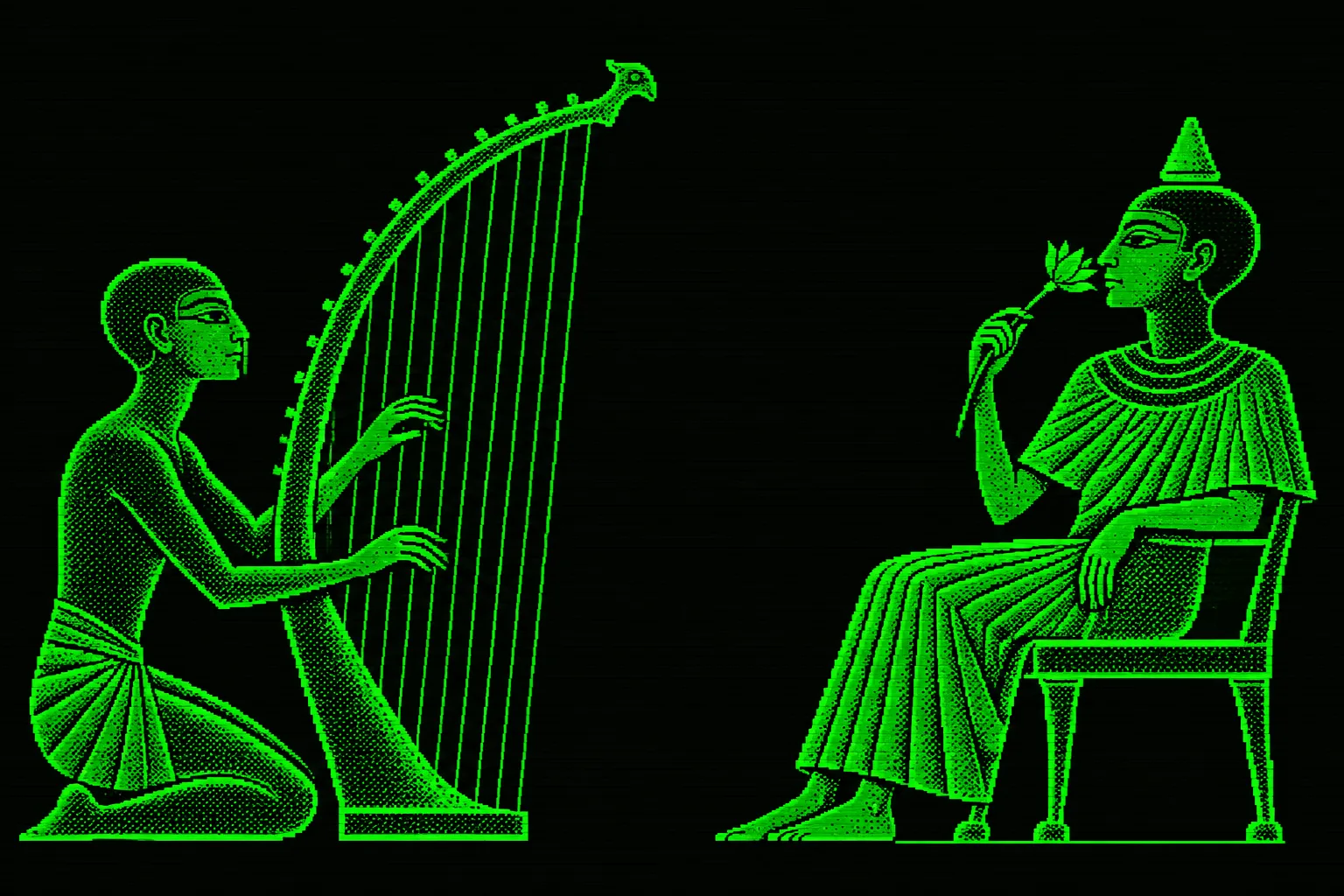
A harper sings to the dead priest Neferhotep inside his own tomb. Generations go and the young replace them: Bodies have been passing away since the time of the god; So he calls for perfume, garlands, music and the wife at his side: Enjoy a good day, O god’s father!
The houses of those who came before are gone: Their houses lie in ruins. The harper then shows the funeral itself, the priest in a leopard skin, the mummies stood upright before Ra, the wailing, and death, who sees but is not seen. His advice: Give loaves to one who has no field, because There is no coming and turning back.
- 1
𓆓𓂧𓈖 𓅮 𓎛𓎿𓋴𓀁 𓐝 𓃀𓈖𓏏𓏢 𓈖𓏏𓏮 𓐝 𓄿𓏏 𓈘𓊢𓂝𓏏𓉐 𓈖 𓊩𓁹 𓏐𓊹𓇋𓈖𓇋𓏠𓈖 𓄤𓊵𓏏𓊪𓀰 𓐙𓊤 𓆓𓂧 𓆑
ḏd.n pꜣ ḥs m bn,t n,tj m tꜣ mꜥḥꜥ,t n Wsjr jt-nṯr-n-Jmn Nfr-ḥtp mꜣꜥ-ḫrw ḏd =f
Thus spoke the harper in the tomb of the Osiris Neferhotep, god’s father of Amun, true of voice. He says:
Note · Line 1
“God’s father” is Neferhotep’s priestly title. In death he is called Osiris, after the god of the dead; “true of voice” means he has been vindicated before the gods. - 2
𓅨𓂋𓂧𓀉𓅨𓏲𓏮 𓀙 𓊪𓏲 𓌶𓂝𓏛
wrd.wj sr pw mꜣꜥ
How weary he is, this true nobleman!
- 3
𓅮 𓆷𓄿𓏲𓏛 𓄤 𓆣
pꜣ šꜣ,w nfr ḫpr
The good fate has come to pass.
Note · Line 3
The “good fate” is death. - 4
𓄡𓏏𓏥 𓁷𓏤 𓊄𓃀𓏏𓂻 𓇥 𓂋𓎡𓇳 𓊹𓀭
ẖ,t.pl ḥr zbi̯.t ḏr rk nṯr
Bodies have been passing away since the time of the god;
Note · Line 4
The “time of the god” is the age when the gods ruled the earth. - 5
𓍑𓄿𓐝𓂝𓀔𓀀𓁐𓏥 𓁷𓏤 𓇍𓇋𓏏𓂻 𓂋 𓊨𓏏𓉐 𓊃𓈖𓏥
ḏꜣ~mꜥ ḥr jy.t r s,t =sn
the young come to take their place.
- 6
𓂞 𓆑 𓇓𓅱 𓁶𓏤 𓇼𓇋𓇋𓏏𓇳 𓏏𓍃𓐝 𓊵 𓐝 𓌳𓏌𓏌𓏌𓈉
Rꜥ ḏi̯ =f sw tp dwꜣ,yt Tm ḥtp m Mꜣnw
Ra shows himself at break of day,
while Atum rests in the western mountains.Note · Line 6
Ra at dawn and Atum at rest in the west are two forms of the sun god. - 7
𓅷𓇋𓇋𓂸𓀀𓏥 𓁷𓏤 𓏏𓅱𓏏𓂸
ṯꜣy.pl ḥr wtt
Men beget,
- 8
𓈅𓏏𓏥 𓁷𓏤 𓊏𓊪𓂡
⸮jd,t.pl? ḥr šzp
wombs receive,
- 9
𓂉𓏤 𓎟 𓁷𓏤 𓏏𓊪𓇋𓂉𓂡 𓊡𓏲𓏥
fnḏ nb ḥr tpj ṯꜣw
every nose draws in air.
- 10
𓌉𓆓𓇶 𓇾𓏤𓈅 𓄟𓋴𓁑 𓋴𓈖𓏥 𓂋𓊃𓊃𓏮𓈐 𓂻𓅱 𓊃𓈖𓏥 𓂋 𓊨𓏏𓉐 𓇋𓂋𓏥
ḥḏ tꜣ msi̯ =sn rssj jwi̯ =sn r s,t jr.pl
When the earth grows light, all those they have borne come to the place that is theirs.
- 11
𓁹 𓉔𓂋𓇳𓏤 𓄤 𓅮 𓏐𓊹𓇋
jri̯ hrw nfr pꜣ jt-nṯr
Enjoy a good day, O god’s father!
- 12
𓇋𓐝𓐝𓂝 𓏏𓏇𓇋𓇋𓈒𓈒 𓁶𓊪𓏏𓏋𓏥 𓏏𓅱𓏏𓀾 𓂋 𓂉𓏤 𓎡 𓅁𓎛𓅱𓆰𓏥 𓊃𓈙𓈖𓏲𓏌𓆻𓏥 𓂋𓂋𓐝𓏏𓆭𓏥 𓂋
jmm qmy tp,t twt r fnḏ =k mꜣḥ.w.pl sšn.pl rrm,t.pl r šnb,t [=k]
Hold resin balm and fine oil together to your nose,
garlands of lotus blossoms and mandrakes to your breast. - 13
𓌢𓈖𓏏𓁐 𓎡 𓏶𓅓𓏏 𓄣𓏤 𓎡 𓋴𓇛𓍿 𓂋𓐞𓏤 𓎡
sn,t =k jm,j.t jb =k snḏm.ṯ r-gs =k
Your beloved, the one in your heart, sits at ease beside you.
Note · Line 13
The word for “sister” is also a term of endearment for a wife or lover. - 14
𓇋𓐝𓐝𓂝 𓎛𓎿𓋴𓀁 𓇘A243 𓂋𓐍𓆑𓏏𓁷𓏤 𓎡
jmm ḥs šmꜥ r-ḫft-ḥr =k
Set a singer and a musician before you.
- 15
𓐝𓂝𓎡𓇉𓄿𓁶 𓈋𓏏𓏲𓅪𓏥 𓎟𓏏
mkḥꜣ ḏw,t nb.t
Pay no heed to any evil.
- 16
𓋴𓆼𓀁 𓈖 𓎡 𓂋𓈙𓏏𓏲𓂉𓏛𓏥 𓂋 𓇍𓏏𓂻 𓇳𓏤 𓊪𓆑𓏮𓈐 𓈖 𓏠𓈖𓇋𓌙𓊛𓂡 𓇋𓐝 𓆑 𓂋 𓅮 𓇾𓏤𓈅 𓌻𓂋𓀁 𓋴𓎼𓂋𓀁 𓂜𓏏𓏭 …
sḫꜣ n =k rš,wt r jy.t hrw pfj n mnj jm =f r pꜣ tꜣ mr sgr jw,tj [...]
Keep joy in mind until that day comes
when one comes to moor in the land that loves silence, where there is no …Note · Line 16
The dead were ferried to the burial ground; coming to moor is an image of dying. - 17
… 𓅌𓀉 𓄣𓏤 𓅭𓏤 𓌻𓂋𓀁 𓆑
[...] ⸢wrd⸣ jb zꜣ mri̯ =f
… the heart of the son he loves is weary.
- 18
𓁹 𓇳𓏤 𓄤 𓄤𓊵𓀰 𓐙𓊤 𓅮 𓏐𓊹𓇋 𓇍𓈎𓂋𓏛 𓂝𓏤𓂝𓏲𓏮
jri̯ hrw nfr Nfr-ḥtp mꜣꜥ-ḫrw pꜣ jt-nṯr jqr wꜥb-ꜥ.wj.du
Enjoy a good day, Neferhotep, true of voice,
O god’s father, excellent one, whose two hands are pure! - 19
𓇋𓅱 𓄔𓐝𓏛𓈖 𓆣𓂋𓏏𓏥 𓎟 𓂋 𓈖𓄿 𓆑 …
jw sḏm.n (=j) ḫpr,t.pl nb(.t.pl) r ⸢nꜣj⸣ =f [...]
I have heard all that has come to pass concerning his …
- 20
𓉐𓏥 𓊃𓈖𓏥 𓆑𓐍𓍼𓂻
pr.pl =sn fḫ
Their houses lie in ruins.
- 21
𓂜 𓃹𓈖 𓊨𓏏𓉐 𓊃𓈖𓏥
n wn s,t =sn
Their place is no more.
- 22
𓊃𓏏𓏥 𓏇 𓈖𓏏𓏮 𓂜 𓆣 𓏲𓏥 𓇥 𓂋𓎡𓇳 𓊹
st mj n,tj n ḫpr =w ḏr rk nṯr
It is as though they had never existed, from the time of the god until now.
- 23
𓈖𓄿 𓎟𓏥 …
nꜣ nb.pl [...]
The lords …
- 24
… 𓁷𓏤 𓄭𓏏𓈅 𓈘𓈅𓏤 𓎡
[...] ḥr sp,t mr =k
… on the bank of your canal.
- 25
𓈞𓊃𓀔 𓊸𓅡 𓎡 𓌨𓂋 𓏲𓏥
ḥmsi̯ bꜣ =k ẖr =w
May your ba sit beneath them
Note · Line 25
The ba is the part of a person that can leave the tomb after death and return to it. It is often pictured as a bird with a human head. - 26
𓋴𓅨𓂋𓇋𓈗 𓆑 𓈗 𓊃𓈖𓏥
swrj =f mw =sn
and drink their water.
- 27
𓌞𓋴𓏲𓂻 𓄣𓏤 𓎡 𓅨𓏏 … 𓐍𓏏 … 𓈖 𓄡𓏏 𓎡 …
šms{.w} jb =k wr.t [...] [r]ḫ.pl (j)ḫ,t [...] n ẖ,t ⸢=k⸣ [...]
Follow your heart to the full … those who know things … for your body …
- 28
𓇋𓐝𓐝𓂝 𓏏𓈀𓏊𓏥 𓈖 𓂜𓏏𓏮𓅪 𓆷𓈅𓏤 𓆑 𓆣𓂋 𓈖 𓎡 𓂋𓈖𓀁 𓄤 𓈖 𓐝𓆱𓐍𓏏𓂻 𓎛𓇳𓎛
jmm tʾ.pl n jw,tj šꜣ =f ḫpr n =k rn nfr n m-ḫt nḥḥ
Give loaves to one who has no field,
that you may gain a good name for time to come and for eternity. - 29
𓈖𓍇𓏌𓏲𓁻 𓈖 𓎡 𓂋 𓋴𓅓 …
nw n =k r ⸮sm? [...]
Look for yourself at the sem-priest …
Note · Line 29
The sem-priest wore a leopard skin to perform funeral rites, including the Opening of the Mouth, which restored the dead person’s power to breathe, eat, and speak. - 30
… 𓍋𓏲𓃀𓃮
[...] [m] [jnm] ꜣbw
… in a leopard skin.
- 31
𓎗𓅱𓎛𓄣𓂡 𓊃𓈖𓏥 𓂋 𓃛𓏲𓏏𓈖𓈅
wḏḥ =sn r jwtn
They pour libations on the ground.
Note · Line 31
A libation is a drink poured out as an offering, here for the dead. - 32
𓏏𓈀𓏊𓏥 𓏲𓏥 𓐝 𓅮𓏲𓏏𓏖𓏥
tʾ.pl =w m pꜣ,t.pl
Their loaves are offering loaves.
- 33
𓎛𓎿𓋴𓏏𓁐𓏪 𓐝 …
ḥs,t.pl m ⸮r[my,t.pl]? [...]
The women who sing are in tears …
- 34
𓋴𓊣𓂻𓏏𓏲 𓊃𓂝𓎛𓀾𓏪 𓊃𓈖𓏥 𓐝𓂸𓏤 𓇴𓏤 𓇋𓏲 𓂋𓍿𓀀𓁐𓏥 𓊃𓈖𓏥 𓐝 𓈖𓐍𓏲𓏏𓀁𓏥
sꜥḥꜥ.tw sꜥḥ.pl =sn m-bꜣḥ Rꜥ jw r(m)ṯ.pl =sn m nḫ,wt
Their mummies are raised upright before Ra,
while their people wail.Note · Line 34
At the funeral the mummy was set upright for the rites, facing the sun. - 35
𓂜 …
n ⸢mꜣꜣ⸣ [...]
… does not see.
- 36
… 𓁷𓏤 𓇍𓇋𓏏𓂻 𓂋 𓏏𓂋𓇋𓆵𓇳 𓊃
[...] ḥr jy.t r trj =s
… comes in its own time.
- 37
𓆷𓇋𓇋𓁐 𓁷𓏤 𓎛𓃀𓋴𓐎𓏛 𓋴𓋴𓋴𓏲𓇳 𓆑
Šꜣy ḥr ḥ{b}s〈b〉 sw =f
Shai reckons his appointed day.
Note · Line 37
Shai is fate in divine form, the power that allots a person’s span of life. - 38
𓊃𓂋𓊃𓌘𓁻𓈖 𓎡 …
srs.n =⸮k? [...]
You have roused …
- 39
… 𓈞𓊃𓀔 𓄡𓊃𓅪 𓐝 𓁹𓏏 𓈖 𓆄𓏏𓅱𓇳 𓆑
[...] ḥmsi̯ ẖzj m jri̯.t n šw,t =f
… sits weary in the place made for his shadow.
Note · Line 39
The shadow was part of a person and, like the body, had a place in the tomb. - 40
𓁹 𓇳𓏤 𓄤 𓅮 𓂝𓏤𓂝𓏲𓏮 𓊸𓊹𓇋 𓄤𓊵𓀰 … 𓐝𓂺 … 𓎛𓈖𓂝 𓍛𓏤 …
jri̯ hrw nfr pꜣ wꜥb-ꜥ.wj.du jt-nṯr Nfr-ḥtp [⸮mꜣꜥ-ḫrw?] [...] ⸮m-⸢bꜣḥ⸣? [...] ḥnꜥ ⸮ḥm? [...]
Make the day glad, you of pure hands,
god’s father Neferhotep, justified, …
before … with the majesty …Note · Line 40
The singer addresses Neferhotep, the tomb’s owner. - 41
𓃀𓋔 𓂓𓏏𓏥 𓈖 𓅱𓍑𓉐𓏥 𓏌𓏤 𓇾𓌻𓂋𓇋𓆵𓊖𓊖 𓇋𓅱 𓃭𓂋𓇋𓇋𓏏𓏥 𓆑 𓀼𓋴𓋴𓍿 𓐝 …
bn kꜣ,t.pl n wḏꜣ.pl n.w Tꜣ-mrj jw rw,yt =f špss.ṯ m [...]
There is no work for the storehouses of Egypt,
while his hall of office is splendidly furnished with … - 42
… 𓂝𓈖𓏌𓏲𓂻 𓂋 𓂋𓐍𓏛 𓊃𓊪𓊗𓏛 𓁷𓏤 𓆑
[...] ꜥn,w r rḫ sp ḥr =f
… who turns back to learn what still rests on him.
- 43
𓂜 𓎝𓎛𓏛𓏏𓏲 𓄁𓏏𓇳 𓎡𓏏𓏏𓅪 𓐝 … 𓈖 𓄤
n wꜣḥ.tw ꜣ,t kt.t m [...] =⸮n? nfr jr[_]
Not a moment was left of …
- 44
… 𓐖𓏏𓈉
[...] zmy,t
… the desert.
- 45
𓈖𓄿 𓃹𓈖 𓌨𓂋 𓊚𓏏𓉐𓏥 𓁷𓏤 𓏏𓈀𓊸𓏥 𓈖 𓂧𓂋𓊪𓂋𓂡 𓈖𓄿 …
nꜣ wn ẖr šnw,t.pl ḥr tʾ.pl n drp{r} nꜣ [...]
Those who have granaries and loaves to offer to the …
- 46
… 𓐝𓏇𓏏𓏏𓏛
[...] m-mj,tt
… likewise.
- 47
𓎡𓄿 𓁹𓇋𓇋 𓋴𓈖𓏥 𓃹𓈖𓏌𓏏𓇼𓇳 𓊃𓏏 𓄤𓆑𓂋𓏏 𓐝 …
kꜣ jri̯.y =sn wnw,t =st nfr.t ⸢m⸣ [...]
Then let them spend their happy hour in …
- 48
… 𓋴𓋴𓋴𓏲𓇳 𓉔𓂋𓇳𓏤 𓏴𓌌𓅪 𓄂𓏏𓏲𓄣𓄣𓄣 𓅮 𓂞 𓉐𓏤 …
[...] [spr] [n,tj] [ḥr] [mꜣꜣ] [jw] [bn] [mꜣꜣ] =[f] [jw,tj] sw hrw ḥḏi̯ ḥꜣ,t(j).w.pl pꜣ ḏi̯ pr ḥr [ptḫ] [ḥr] [tꜣ] [spr] =[f] [...]
… until he comes who sees but is not seen,
who has no appointed hour on the day that breaks hearts,
who brings the house down to the ground when he comes …Note · Line 48
The unnamed visitor is death: no one sees him coming, but the whole household feels his arrival. - 49
𓋴𓆼𓀁 𓈖 𓎡 𓇳𓏤 𓈖 𓋴𓏏𓍬𓂻𓍔 𓎡𓏲𓏤 𓂋 𓅮 𓇾𓏤𓈅 𓈙𓃀𓀁 …
sḫꜣ n =k hrw n stꜣ =kw r pꜣ tꜣ šb〈b〉 [...]
Remember the day you are drawn to the land that mingles people …
- 50
… 𓅨𓏏𓂋
[...] wr.t
… greatly.
- 51
𓂜 𓃹𓈖 𓇍𓇋𓏏𓂻 𓂝𓈖𓈖𓂽
n wn jy.t ꜥnn
There is no coming and turning back.
- 52
𓅜𓇳𓏛 𓈖 …
ꜣḫ n [=k] [wn] [...]
It profits you to …
- 53
𓈖𓏏𓎡 𓂭𓂭 𓐙𓐙
ntk mtj mꜣꜥ
You are upright and just,
- 54
𓆜𓏏 𓆑 𓍅
bw,t =f grg
a man who loathes a lie.
- 55
𓇋𓂋 𓃹𓈖 𓌻𓂋𓏏𓏲 𓂝𓈎𓂭𓂭𓏛 𓇋𓅱 …
jr wn mrw,t ꜥq(ꜣ) jw [...]
If there is love of what is right, …
- 56
… 𓄡𓊃𓏮𓅪 𓐝𓂝 𓉐𓂝𓏤
[...] ẖzj m-ꜥ pr-ꜥ
… the weak from the violent.
- 57
𓂜 𓂾𓂻 𓈖𓏏𓏭 𓐝 … 𓂞 𓎡 …
n 〈jsq〉 n,tj m [...] ⸮ḏi̯? =k jw[_] [...]
The one who is in … does not hesitate. You give …
- 58
… 𓂜𓏏𓏮𓅪 𓈖𓐍𓅱𓏲𓂡 𓆑
[...] jw,tj nḫw =f
… one who has no defender.
- 59
𓋭𓊃𓅱𓏲𓂡 𓈖𓏏𓏮 𓅱𓎼 …
ṯsw n,tj ⸮wg? [...]
The commander who …
- 60
𓇋𓐝𓐝𓂝 𓇉𓄿𓏲𓏛𓏥 𓁷𓏤 𓄤𓏤 𓎡 𓐝𓍱𓏤𓏛𓌷 …
jmm ḥꜣ,w ḥr nfr =k m-sšr-mꜣꜥ [...]
Add to the good you do something truly fine …
- 61
… 𓐙𓁦 𓋉𓊾 𓊨𓏏𓆇
[...] Mꜣꜥ,t Mnw Ꜣs,t
… Maat, Min and Isis.
- 62
𓅮 𓂓𓏤𓈀𓈓 𓂋𓂝𓈖 …
pꜣ kꜣ rḏi̯.n [...]
The food that … gave …
- 63
… 𓎡
[...] =k
… you …
- 64
𓎗𓆓𓂧 𓊃 𓏏𓏲 𓈖 𓇋𓀗 𓂋 𓊨𓆄 𓇋𓏲 𓂜 …
wḏd =s tw n jꜣw r s,t-mꜣꜥ,t jw n [...]
In your old age she sends you to the Place of Truth, without …
Note · Line 64
The Place of Truth is the necropolis. The word for “truth” in its name is also the name of Maat, the goddess of truth and right order.