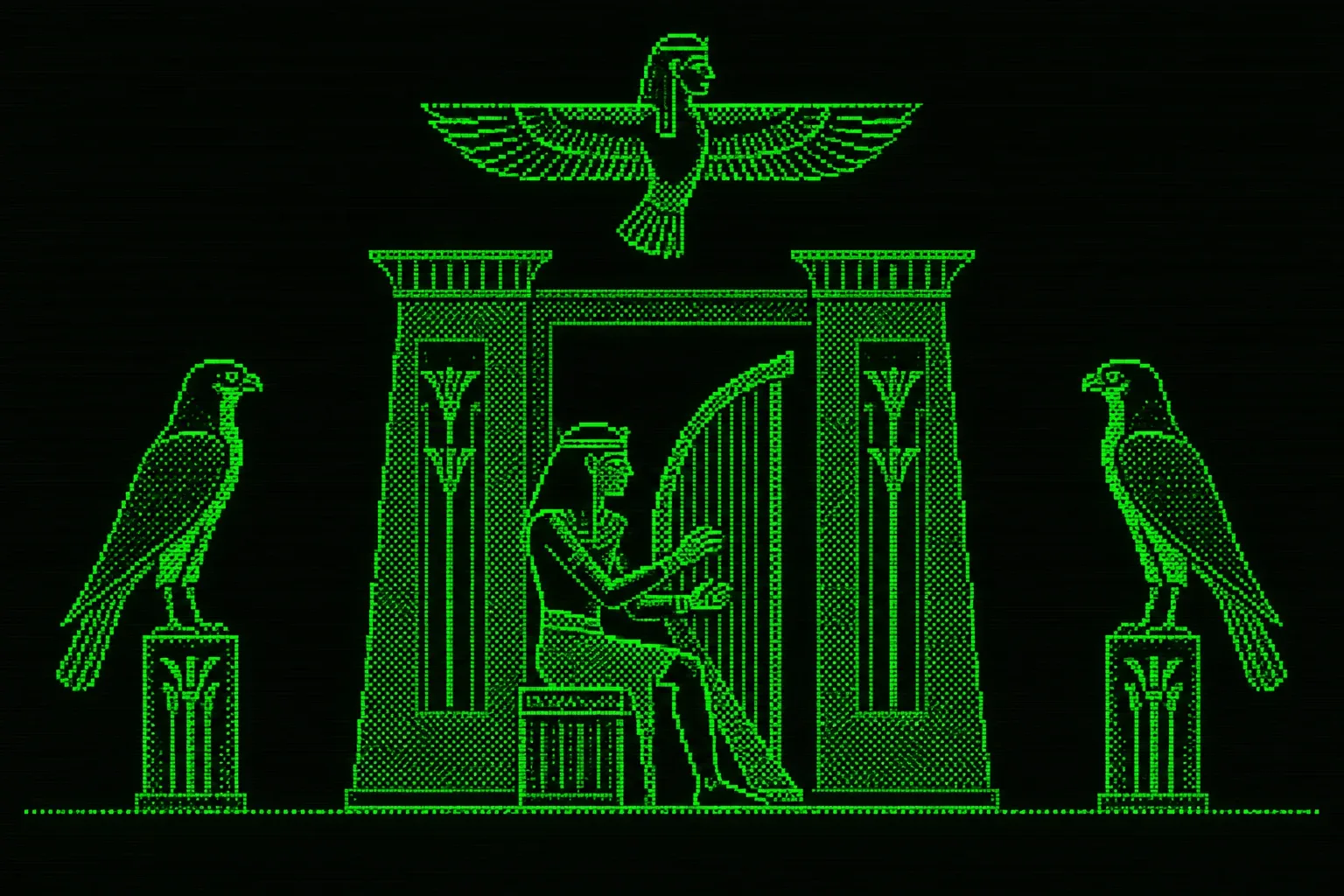
~/sacred-texts/harpers-songs
Harper’s Song of Djehutimes: A Defense of the Afterlife
- Date
- Carved in the 19th Dynasty (reign of Ramesses II, c. 1279–1213 BC) on the wall of the tomb of Djehutimes (TT 32) at Thebes
- Found
- Tomb of Djehutimes (TT 32), El-Khokha, Thebes (in situ)
- Language
- Late Egyptian · Hieroglyphic
A deceased woman opens by blessing Djehutimes, royal scribe and high steward of Amun in Thebes, praying that Amun protect him from womb to burial. A harper then answers older tomb songs that belittle the realm of the dead, defending it as that right and just land that holds no terror, where every human arrives.
Calling earthly life a spell of dreaming, the singer tells Djehutimes that the gods stand ready to guard his mummy, praise his festival rites for Sokar and Osiris—where he cuts his rebels to pieces—and honor his name as the two kites sit for you at your gate.
- 1
… 𓐙𓊤 𓆓D46__ 𓊃
[...] mꜣꜥ(,t)-ḫrw ḏd =s
…, the vindicated one, says:
Note · Line 1
The speaker is a woman. To be called “vindicated” is to be counted among the dead who have passed judgment in their favor. - 2
𓂓 𓁷 𓌳 𓎡 … 𓄤
kꜣ ḥr =[k] mꜣ =k [...] nfr
The ka is upon you as you look on … what is good.
Note · Line 2
The ka is the vital power of a god or a person. Offerings continue to nourish a person’s ka after death. - 3
… 𓎡 𓐍𓂋 … 𓐖𓏏𓏤𓊖 𓅨𓏏𓂋 𓆣𓂋𓈖 𓎡 𓇋𓅓 𓊃
[...] =k ⸮ḫr? [...] _ spꜣ,t wr.t ḫpr.n =k jm =s
May you … beside …,
the great district where you came into being. - 4
… 𓈐𓂻 𓎟 𓂋 𓊃 𓌻𓂋𓏏𓏲𓀀 𓂋𓍿𓀀𓁐𓏥𓏏𓏲 𓊃
t [...] wꜣi̯ ={⸮nb?}〈⸮k?〉 r =s mri̯{,wt} 〈tw〉 r(m)ṯ.ṱ =s
… as you go far from it,
while its people love you. - 5
𓏏𓏲𓀀 𓁷𓏤 𓄿𓎛𓏏𓏴𓀁 𓈖 𓎡 𓋴𓈖𓃀𓏛 𓎡
tw≡j ḥr nḥi̯.t n =k snb =k [rwd.ḫr] [ḥꜥ,pl] =[k]
I pray for your health;
then your body shall endure. - 6
𓇓𓏞 𓇋𓈎𓂋𓏛 𓎡 𓁷𓏤 𓂝𓏤𓂝𓏲𓏮 𓇋𓏠𓈖
zẖꜣ,w-nsw jqr [tw]≡k ḥr ꜥ.wj.du Jmn
Royal scribe, man of worth,
you rest on the two arms of Amun. - 7
𓊪𓊃𓂧𓊏 𓎡 𓃹𓈖 𓉔𓈖𓏭𓂝𓂡 𓁷𓏤 𓆑 𓏏𓄿𓇋𓇋 𓎡 𓇥𓂋 𓉐𓂋𓂻 𓎡 𓐝 𓄡𓏏𓏤 𓄤𓇋𓇋𓏏𓏛𓂋 𓇋𓀗
psd =k wn hnj ḥr [ḥm] =f tꜣy =k m~[k,t] ḏr pri̯ =k m ẖ,t nfr,yt-r jꜣw
Your back leans against His Majesty,
your protection from the time you came forth from the womb
all the way to old age. - 8
𓈖𓏏𓆑 𓇋𓋴 𓈖 𓄪𓐍 𓈎𓂋𓊃𓏏𓊭 𓏶𓆱𓏏𓏤 𓆑
ntf js 〈wḏ〉 n =[k] jmꜣḫ qrs,t jm,j-ḫt =f
It is he who decrees honor for you,
and burial to follow it. - 9
𓎡 𓂓𓏤 𓆑 𓂋 𓏏𓇋𓆵𓇳 𓎟 𓈖𓉔𓋴𓍟𓁻 𓎡 𓂋 𓇼𓀞𓏛 𓄤𓏤𓏛𓏥 𓆑
šms =k kꜣ =f r t〈r〉j nb nhsi̯ =k r dwꜣ nfr,pl =f
May you serve his ka at all times,
waking to praise his beauty. - 10
𓁹𓇋𓇋 𓆑 𓈖 𓎡 𓅨𓂋 𓃀 𓇬𓈖𓈖 𓎡
jr[.y] =f n =k wr 〈r〉 b〈w〉 wnn =k
May he do great things for you in the place where you will be.
- 11
𓂞 𓆑 𓏏𓏲 𓁷𓏤 𓌷𓏤𓂝𓅱𓊡 𓂜𓈖 𓈎𓂝𓎛𓂢𓈅𓏏𓏤
ḏi̯ =f tw ḥr mꜣꜥ,w nn qꜥḥ,t
May he set you in the wind where the river has no bend.
- 12
𓇛𓏛 𓄣𓏤 𓏏𓈖𓏥 𓅮𓏖𓏏 …
nḏm jb =tn jm,jw.pl-⸮dwꜣ[,t]? [ḥ]r,j-⸮jb? ⸮pꜣ(w)[,tj.w]? [...]
May your hearts be glad, you who dwell in the underworld
among the primeval gods … - 13
𓎟𓏤 𓇋𓈎𓂋𓏛𓏥 𓇷𓏏𓏥𓊹 𓎟𓏥 𓋹𓈖𓐍𓈉 𓄔𓐝 𓊃𓈖𓏥 𓁹𓂋𓏏 … 𓄓𓉐𓏤𓅨𓂋 𓅝𓄟𓋴 𓈖 𓌀𓏏𓊖 𓐝 𓋴𓍯𓈙𓀞𓏛
[sꜥḥ.pl] nb(.pl) jqr.pl psḏ,t nb.pl ꜥnḫ(,t) sḏm =sn jri̯.t [ḥss,t.pl] [n] [...] [jm,j-rʾ-pr]-wr Ḏḥw,tj-ms n Wꜣs,t m swꜣš [n] [bꜣ] =[f] [mnḫ] [n] [sꜥḥ] [jqr]
All the nobles of worth, the Ennead, the lords of the West—
they hear the songs of praise sung for …,
the high steward in Thebes, Djehutimes,
and the praise of his excellent ba,
the ba of a noble of worth.Note · Line 13
The Ennead is a company of nine gods; the West, where the sun sets, is the realm of the dead. - 14
𓎛𓇳𓎛 𓋴𓉻𓂝𓏲𓏭 𓅓 𓋀
[tj] [sw] [m] [nṯr] [ꜥnḫ] [r-nḥ]ḥ [s]ꜥꜣ.w{j} m jmn(,t)
Now he is a god who lives forever,
made great in the West. - 15
𓆣𓂋 𓋴𓈖𓏥 𓐝 𓋴𓆼𓏲
ḫpr =sn m sḫꜣ,w [n] [m-ḫt] [n] [jy] [nb] [r] [swꜣ]
May these songs become a memorial for those to come,
for everyone who passes by. - 16
𓇑𓇑𓈖𓈖 𓎛𓎿𓋴𓀁𓏪 𓈖𓏏𓏭 𓐝 𓇋𓇩𓋴𓆰𓉐𓏥 𓇥𓂋𓂝𓏤𓏛 𓊃𓈖𓏥 𓐝 𓊃𓉻𓏛
[jw] [sḏm.n] =[j] [n]n-n ḥs[.pl] n,[t]j(.w) m js.pl ḏr-ꜥ [sḏd.t] =[s]n m sꜥꜣi̯ [tp-tꜣ] [m] [sꜥnd] [ẖr,t-nṯr]
I have heard these songs that have been in the tombs since the beginning,
and what they say, making much of life on earth
and little of the realm of the dead.Note · Line 16
Some harpers’ songs urge the living to enjoy their days because no one comes back to tell them what awaits the dead. Here the singer answers those songs. - 17
𓐝𓂝𓀁 𓁹𓏏 𓐝𓏇𓏏𓏏𓏛 𓂋 𓅮 𓇾 𓋔 𓇳𓎛𓎛 𓌙𓌙 𓂜𓏏𓏭
[ḥr]-m [pw] jri̯.t m-mj,tt r pꜣ tꜣ n (n)ḥḥ [mtj] ꜥqꜣ jw,tj [ḥr],j[t] =[⸮f?]
Why treat the land of eternity so,
that right and just land that holds no terror? - 18
[⸮bw,t?] =[⸮f?] [⸮pw?] [⸮ẖnn,w?]
It abhors disorder.
- 19
𓁷𓂋𓐡𓂡 𓆑 𓇓 𓂋 𓊗 𓆑
[nn-w]n [ḥ]r =f sw r sn,nw =f
No one there sets himself against his neighbor.
- 20
𓇾𓏤𓈅 𓊪𓈖 𓂜𓏏𓏭𓅪 𓈎𓇋𓇋𓂢 𓉔𓄿𓇋𓇋𓀀𓏥 𓆑 𓇥 𓂋𓎡𓇳 𓅮𓏏𓏖 𓁶𓊪𓏏
tꜣ pn jw,tj 〈r〉q,y =[⸮f?] h[ꜣ]y.pl ={f} =〈n〉 [nb.pl] [ḥtp] [m-ẖnw] =[f] ḏr rk pꜣ(w),t tp.t
This land has no foe.
All our kin have rested there
since the very first beginning. - 21
𓈖𓏏𓏭 𓂋 𓆣𓂋 𓋔 𓁨𓏤 𓈖 𓁨𓏤𓏥 𓂻𓂻 𓂋 𓆑
n,tj(.w) r ḫpr n ḥḥ n ḥḥ.pl jwi̯ =[⸮w?] [⸮tm?] r =f
Those who will be born in a million million years
will come there, every one. - 22
𓂜𓈖𓃹𓈖
n[n-wn] [jsq] [m] [Tꜣ]-mrj
There is no lingering in Egypt.
- 23
𓂜𓈖 𓌡𓏤𓂝 𓏏𓍃𓐝 𓄭𓂋𓂻 𓈖 𓆑
nn wꜥ tm spr n =f
Not one fails to reach the land of the dead.
- 24
𓇋𓂋 𓊢𓂝𓇳𓏤 𓁹𓂋 𓁶𓏤 𓇾 𓊃𓊪𓊗
jr ꜥḥꜥ jr〈r〉 tp tꜣ sp [pw] [n] [rs,wt]
As for the lifetime spent on earth,
it is a spell of dreaming. - 25
𓆓𓂧 𓂀 𓈖 𓄖𓂻 𓏶𓅨𓏏𓂋𓈉
ḏd =〈tw〉 ⸮[w]ḏꜣ? wḏꜣ n pḥ jm,j-wr,t
“Be well! Be well!” they say
to the one who reaches the West. - 26
𓐍𓂧𓊛 𓊝 𓐝𓄚𓈖 𓊢𓂝𓇳𓏤
ḫdi̯ ḫnti̯ m-ẖn〈w〉 ꜥḥꜥ 〈r〉 〈mnj〉 〈r〉 〈rwd〉 〈ḥr-sꜣ〉 〈jr,j〉
Whoever sails downstream and upstream in life
will afterward moor at the shore.Note · Line 26
To moor after a voyage is also an image of coming to rest in death. - 27
… 𓅮𓇋𓇋 𓎡 I100 𓎸𓏛 𓎡 𓎟𓏥𓎛𓇳𓎛
[...] j [...] [ḫy] pꜣ[y] =k wḏ(j) ẖnm =k nb,pl-(n)ḥḥ
… Oh, how fair your journey
when you join the lords of eternity! - 28
𓊽𓊽𓏲𓏭 𓂋𓈖 𓎡 𓈖𓆓𓏏𓈀 𓋴𓅜𓏏𓏛 𓅓 𓊼
ḏd.wj rn =k n-ḏ,t sꜣḫ m ẖr,t-nṯr
How your name endures forever,
transfigured in the necropolis! - 29
𓁹 𓁹 𓎡 𓁷𓏤 𓊃𓈖𓏥 𓊃𓏏𓏥 𓍅𓏛 𓂋 𓊏𓊪𓂡 𓆞𓏏𓐎 𓎡 𓂋 𓐍𓂤𓏛 𓋴𓎜𓀾𓏛 𓎡 𓋴𓏠𓈖 𓄫𓏏𓈀𓏥 𓁷 𓏏𓏤 𓎡
[nṯr(.pl)] [nb(.pl)] [šms] =[k] [ꜥq] =[k] ⸮jr,t? ⸮jr,t? =k [ḥ]r =sn st grg r šzp ẖꜣ,t =k r ḫwi̯ sꜥḥ =k smn =[sn] ꜣw,t ḥr ḫꜣw,t [sꜥḥ] =⸮k?
All the gods you serve,
into whose presence you come, eye to eye—
they stand ready to receive your corpse,
to guard your mummy.
They set the offerings firmly on your mummy’s offering table. - 30
𓊹 𓈙𓏴𓃀𓏛𓏥 𓆑 𓊃𓏏𓏥 𓁷𓏤 𓆓𓂧 𓈖 𓎡 … 𓊵 𓅮 𓍛𓏤𓀀 𓅜𓐍𓏛 𓈖 𓂓𓏤 𓊃𓈖𓏥
nṯr [nb] [ẖ]r šb,pl =f st ḥr ḏd n =k [...] [jy.wj] [m-ḥ]tp pꜣ ḥm ꜣḫ n kꜣ ={sn} =〈n〉
Each god bears his meal.
They say to you, “… Welcome in peace,
you who serve our ka so well!” - 31
𓅮 𓄓𓉐𓏤 𓄔𓐝𓏛 𓎛𓎿𓏲𓏏𓏥 𓎡 𓂋𓐞𓏤 𓎟𓏪𓎛𓇳𓎛
pꜣ jm,j-rʾ-pr sḏm =〈j〉 ḥsw,t =k r-gs nb,pl-(n)ḥḥ
O steward, I hear your praises
beside the lords of eternity.Note · Line 31
The harper addresses Djehutimes, the dead steward whose tomb bears this song. - 32
𓆓𓂧 𓏏𓏲 𓂋 𓎡
ḏd =tw r =k
They say of you:
- 33
𓊃𓏏𓂻𓈖 𓊃𓎡𓂋 𓂞 𓆑 𓎛𓆰𓈖𓏌𓏲 𓁷𓏤 𓐝𓂝𓐍𓏏𓊏 𓆑 𓄴𓂋𓂻 𓆑 𓊅𓏤𓏥 𓆑 𓐝 𓌞𓂻𓏥 𓆑
st〈ꜣ〉.n =[f] [S]kr ḏi̯ =f ḥnw ḥr m{ꜥ}〈f〉ḫ{,t} =f pẖr =f jnb.pl =f m šms,pl =f
“He drew Sokar along,
setting the Henu bark on its sledge
and circling the god’s walls in his train.Note · Line 33
The Henu was Sokar’s sacred boat. In procession it travelled overland on a sledge. - 34
𓇓 𓐝𓂝𓏛 𓏶 𓂧𓏏𓏤 𓆑
sw m-ꜥ 〈ꜥ〉 jm,j ⸮ḏr?,t =f
He holds a deed in his hand.
- 35
𓅷𓇋𓇋𓂡 𓆑 𓏛𓏏𓏤𓍼 𓃀𓎛𓋔𓌫 𓆑 𓋴𓃀𓐨 𓆑 𓐢𓂋𓏛 𓋴𓐍𓅜𓀁𓏪
ṯꜣ.y =f mḏꜣ,t bḥn =f sbj[⸮.pl?] =f ꜥpr [m] sꜣḫ,pl
He takes up the scroll and cuts his rebels to pieces,
equipped with spells of transfiguration.Note · Line 35
Spells of transfiguration were recited to make the dead person an effective spirit. - 36
𓇩𓏏𓏤𓀭𓏥 𓊪𓏏𓎛 𓐝 𓆑
jz,t Ptḥ m ⸮ḥ[ꜥꜥ],wt? ={f} =〈s〉
Ptah’s crew rejoices.
- 37
𓈙𓍿𓇋𓇋𓏏𓐡 𓊃𓎡𓂋 𓐝 𓎱
šṯy,t Skr m ḥb
Sokar’s Shetit shrine keeps festival.
Note · Line 37
The Shetit was the crypt sacred to Sokar. - 38
𓋴𓊢𓂝𓂻𓈖 𓆑 𓊽𓏤𓀭 … 𓆑 𓁹𓂋 𓆑 𓂋 𓋴𓋴𓋴𓏲𓇳 𓆑 𓄞𓂧 𓆑 𓎛𓎱𓇳𓃀𓍼𓏏 𓈖 𓊸𓃝𓂧𓐝𓂧𓐝𓇼𓏤𓀭 𓉔𓂋𓇳𓏤 … 𓎡𓎡𓅱𓇱
sꜥḥꜥ.n =f Ḏd [m] [...] =f jri̯ =f [⸮ḫbs?]-tꜣ r sw =f šdi̯ =f ḥb,t n Bꜣ-dmdm hrw [...] kk,w
He raised the djed pillar in his …,
performing the rite of Breaking the Ground on its appointed day
and reading the festival ritual aloud for the United Ba
on the day of … darkness.”Note · Line 38
Raising the djed, the emblem of stability and the backbone of Osiris, marked the god’s return to life. - 39
𓉲𓀽𓍑 𓐝 𓄫𓋼𓄣
Rs-wḏꜣ m ꜣw,t-jb
He Who Wakes Unharmed is glad of heart.
Note · Line 39
He Who Wakes Unharmed is Osiris. - 40
… 𓈖𓏏𓏭 𓊸𓅡 𓎡 𓊃𓈙𓈖𓏴𓂻 𓂋𓅱𓏏𓏭𓊀 𓎡 𓇋𓎡𓃀𓀁
[...] [sḫ]ntj bꜣ =k sni̯ [qrs] =[k] [ḥmsi̯] [n] =[k] [ḏr,t.j.du] [r] rw,tj =k j(ꜣ)kb =[sn] [ḥr] [rn] =[k]
… your ba has been given pride of place
as your coffin passes
and the two kites sit for you at your gate
and mourn over your name.Note · Line 40
The two kites are Isis and Nephthys, who mourned Osiris in the form of these birds. - 41
𓎛𓏭𓂻 𓎡 𓂋𓎛𓇳𓎛
[nn-wn] [ḥ]ḥj =k r-(n)ḥḥ
No one will ever have to search for you.
- 42
𓂜𓈖 𓋴𓐍𓐝𓂜𓏏𓏲 𓂋𓈖 𓎡 𓄓𓉐𓏤𓈖𓇋𓏠𓈖 𓁟𓄟
nn s{ḫ}m〈ḫ〉.tw rn =k jm,j-rʾ-pr-n-Jmn Ḏḥw,tj-ms
Your name will not be forgotten,
Djehutimes, steward of Amun.