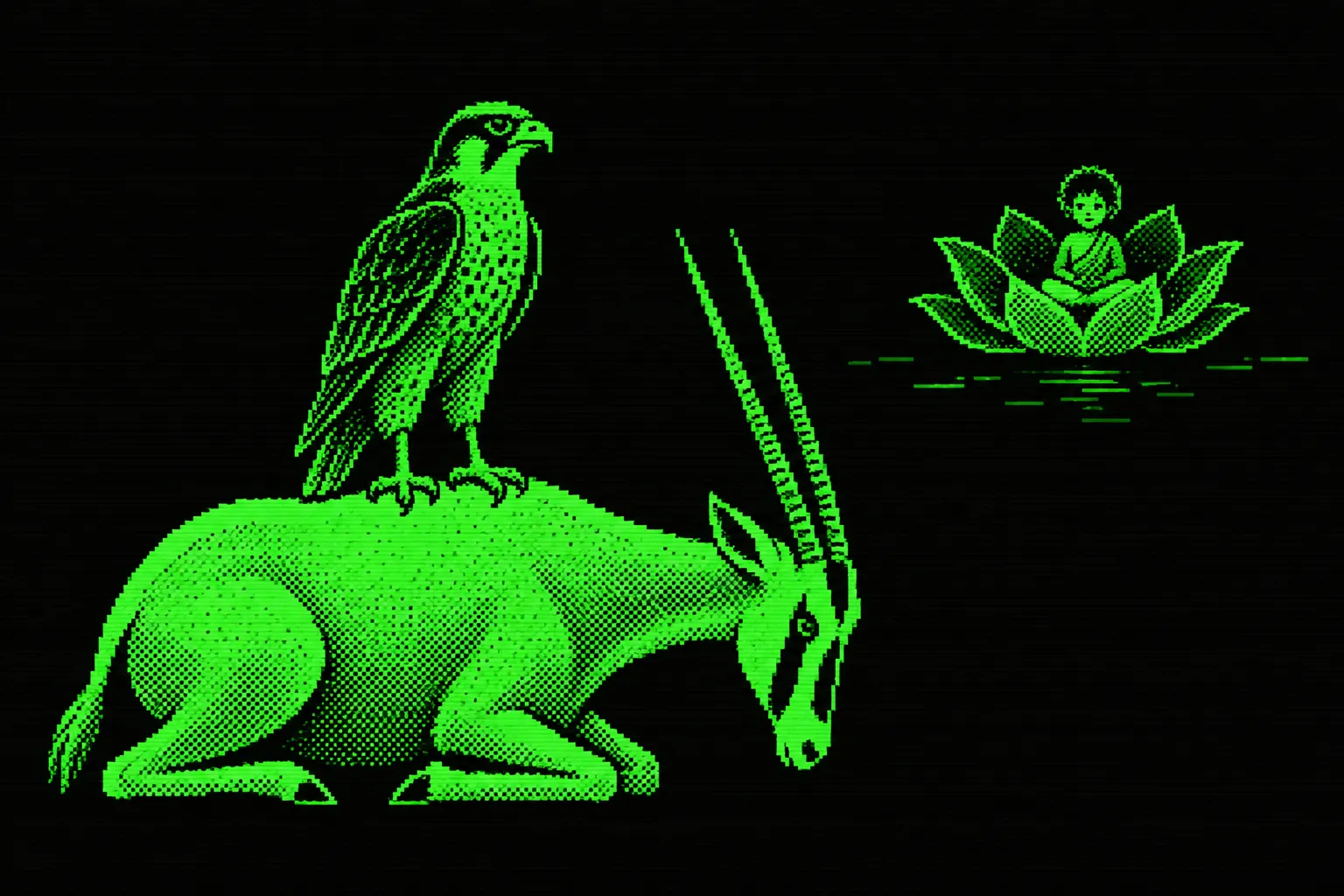
~/sacred-texts/tebtunis-temple-library
The Florence Mythological Manual: Relics of a Murdered God
- Text
- Tebtunis temple library, PSI inv. I 72: mythological handbook for the Upper Egyptian nomes 7–16
- Date
- Copied in the Roman period
- Found
- Tebtunis, Fayum; Istituto Papirologico G. Vitelli, Florence
- Language
- Late Middle Egyptian · Hieratic
This papyrus comes from the temple library of Tebtunis in the Fayum, where priests of the Roman period kept the lore of the whole country. It is a handbook for ten districts of Upper Egypt, from the seventh nome to the sixteenth. For each it gives the local gods, their sacred objects, the taboos and festivals, and the story behind every name: why Asyut is called “the Warder”, why Hermopolis is “Eight-Town”, why a falcon stands on the back of a white oryx.
Most of the stories turn on the murder of Osiris and the search for his body, but the gods of each place keep their own tales: the Eight of Hermopolis, the cow who carried the newborn sun across the flood, the goddess who felled a son for getting erect for two goddesses. The beginning of the roll is broken into fragments, and the gaps are marked where they fall.
- 1
… 𓉗𓏏𓉐𓌂𓏤𓅆𓊖
[...] [⸮_?] Ḥw,t-Sḫm [⸮_?]
… Hut-sekhem …
Note · Line 1
Hut-sekhem was the capital of the seventh province of Upper Egypt. The handbook moves from one province, or nome, to the next, following the scattered remains of Osiris. - 2
𓊪𓏲 𓅓 𓊨𓏏𓉐
[⸮_?] pw m s,t [⸮tn?] [⸮_?]
… it is, in this place …
- 3
… 𓇋𓅓𓏭𓊵 𓁷𓏤
[...] [⸮_?] jm ḥr ⸮qn? [⸮_?]
… there, because of …
- 4
[⸮_?] ⸢ꜣbd⸣ [⸮_?]
… Abydos …
Note · Line 4
Abydos was a holy city where worshippers came to honour Osiris at his tomb. - 5
[⸮_?] ⸢Tꜣ-wr⸣ [⸮_?]
… Ta-wer …
Note · Line 5
Ta-wer means “Great Land.” It was the province that included Abydos and took its other name, the Thinite nome, from the city of Thinis. - 6
… 𓏤𓊹𓅆
[...] [⸮_?] nṯr [⸮_?]
… a god …
- 7
[⸮_?] ⸢ꜣbd⸣ [⸮_?]
… Abydos …
- 8
[⸮_?] ⸢Tꜣ-wr⸣ [⸮_?]
… Ta-wer …
- 9
[...] [⸮_?] sḫpr ḫprr [⸮_?]
… who made the scarab beetle come to be …
Note · Line 9
The Egyptian name for the scarab, kheprer, sounds like kheper, “to come into being.” The beetle was an emblem of the sun bringing itself into being at dawn. - 10
… 𓅓𓏌𓉐𓈖 𓆑
[...] [⸮_?] m-ẖnw =f
… within him.
- 11
[⸮_?] ⸢Mw,t⸣ ẖr-sn≡s
… Mut Who-Is-Under-Her-Brother.
- 12
𓈖𓏥 𓅓 𓈘𓈇 𓊪𓈖
[⸮_?] =n m mr pn
… us, in this canal.
- 13
[⸮_?] rtḥ ⸢tꜣ.du⸣
… which fills the Two Lands with awe.
Note · Line 13
The Two Lands are Upper Egypt, the southern Nile valley, and Lower Egypt, the northern Delta. - 14
𓇋𓏲
[⸮_?] ⸢Dn⸣ jw =sn [⸮_?]
… Thinis, and they …
- 15
𓇋𓅓𓏭𓏛
[⸮_?] jm
… there.
- 16
𓂋𓂝𓏏
[⸮_?] rdi̯.t [⸮_?]
… giving …
- 17
[...] [⸮_?] Hkr [⸮_?]
… the Haker festival …
Note · Line 17
The Haker was a night festival at Abydos. Worshippers re-enacted the struggle over Osiris’s body and his eventual triumph. - 18
𓅓 𓂋𓈖𓏤
[⸮_?] m rn n [⸮_?]
… in the name of …
- 19
[⸮_?] jsp [⸮_?]
… the throne of …
- 20
𓅓𓅓 𓋁𓃀𓏭𓏛𓂀
[⸮_?] m-m jꜣb [⸮_?]
… among them the left Eye …
Note · Line 20
The left Eye of Horus represents the moon. - 21
𓊨𓏏𓉐 𓅓
[⸮_?] s,t m ꜥẖy [⸮_?]
… a seat as one who flies …
- 22
𓂉𓋀𓏏𓏏𓏤𓏫
[⸮_?] ḫnt,j-jmn,tt.pl [⸮_?]
… Khentamentiu …
Note · Line 22
Khentamentiu means “Foremost of the Westerners.” The west, where the sun sets, was the land of the dead, and the title names Osiris as their ruler. - 23
[...] [⸮_?] [Ḥr,w] jm,j-Šn,wt ḥr [⸮_?]
… Horus who dwells in Shenut, upon …
- 24
𓋴𓏏𓉐𓌯 …
[⸮_?] ⸢⸮wnp?⸣ Stš Jtm [⸮_?] [...]
… who stabs Seth, Atum …
- 25
[...] [⸮_?] ꜥnḫ.du [⸮_?]
… the two ears …
- 26
… 𓇋𓅓 …
[...] kꜣ jm [...]
… a bull therein …
- 27
… 𓅓 𓂋𓈖 𓈖 …
[...] m rn n [...]
… in the name of …
- 28
… 𓈖𓏏𓏭 …
[...] n,tj [...]
… which …
- 29
… 𓇋𓏲 𓍃 …
[...] jw tm [...]
… so as not to …
- 30
… 𓆑 𓏲𓏏𓈈𓏏𓏤𓊖 … 𓅓 𓁷𓏤 …
[...] [⸮_?] =f Wꜣḏ,t [...] m ⸮ḫtm? ḥr [...]
… his … Wadjet … with a seal upon …
Note · Line 30
Wadjet here is the tenth province of Upper Egypt, pictured as a woman. It shares its name with the cobra goddess. - 31
… 𓈖 𓆑 𓇋𓏲𓏠𓈖 …
[...] [⸮_?]r n =f jw-mn ⸢hrw⸣ [pn] [...]
… to him, to this very day …
- 32
… 𓇆𓏲𓏭𓆰𓏥𓊖𓁐
[...] ⸢Wꜣḏ⸣
… Wadjet
- 33
𓄑𓂋𓅆 𓈝𓅓𓂻 𓆑 𓇋𓏲 …
Ḥr šmi̯ =f jw [...] jꜣb
Horus went toward … of the east.
- 34
… 𓆑 𓆓𓂧 𓁷𓏤
[...] ⸢jt(j)⸣ =f ⸢Wsjr⸣ ḏd ḥr wrm,ṱ =f [⸮tn?] ⸢Wꜣḏ,t⸣ [⸮pw?]
… his father Osiris, saying of this figure of his: "It is Wadjet!"
Note · Line 34
Wadjet means “the Green One.” The story traces the province’s name to the words Osiris spoke when he recognized the figure. - 35
[...] [⸮m?] ⸢sḫn,w⸣ [⸮_?]
… in the search for …
- 36
… 𓆑 𓃹𓈖
[...] [⸮_?] =f wn[n] =[⸮f?]
… his …, when he is …
- 37
… 𓍱𓍱 𓋴𓏤 …
[...] šs =s [...]
… her linen …
- 38
… 𓇋𓏲 … 𓇋𓏲 𓋸𓋸
[...] jw [...] [⸮_?]y.pl jw ṯbw,t.du
… and … and the two sandals.
- 39
[...] ẖn [...]
… inside …
- 40
… 𓆑 … 𓈖𓏥 𓈖 𓆑
[...] ẖnw =⸢f⸣ [...] ⸢⸮ꜥq?⸣ =n n =f
… his residence …, when we go in to it.
- 41
… 𓅓 𓊖𓏏𓏤 𓏏𓈖 … 𓅓 𓌙𓌙𓌙
[...] m nʾ,t tn {mds}〈mdn〉 [...] m ḏbꜥ.pl =[⸮f?]
… in this city, inscribed … as his fingers.
- 42
… 𓋴𓏏𓉐𓌯 𓋸𓄻 𓆑 …
[...] Stš jn ṯbw,t =f [...]
… Seth, but his sandal …
- 43
… 𓅯𓄿 𓇋𓏏𓈖𓇳𓅆
[...] pꜣ jtn
… the sun disk.
- 44
𓆑 𓂝𓈖𓂽
ḏbw.n =f ꜥn [nkn.n] =[f] [ḥꜥ,w-nṯr] [m] [Tꜣ-stj]
Once more he was shod, after he had wounded the god's body in Ta-Seti.
Note · Line 44
Seth has put his sandals back on after wounding his brother Osiris. Ta-Seti was Egypt’s southernmost province, around Elephantine on the Nubian border. - 45
… 𓇋𓈖 𓂞𓂞𓃹𓈖𓅆 𓂝 𓆑𓏤𓏤 …
[...] jn Ddwn ꜥ.pl =f nkn [...]
… but it was Dedwen whose arms wounded …
Note · Line 45
Dedwen is a Nubian god who takes part in the attack on Osiris. - 46
… 𓆷𓄿
[...] Šꜣ Šꜣ[s-ḥtp]
… the Sha nome; Shashotep …
Note · Line 46
Sha was the name of the animal that represented Seth. The eleventh province bore its emblem, and Shashotep was its capital. - 47
… 𓆑 …
[...] [⸮_?].n =f [...]
… he had …
- 48
… 𓈝𓅓𓂻 𓀀 𓇋𓏲 𓀀
[...] šmi̯ =j jw dšr,t jw =[f] ⸢ꜥḥꜣ⸣ ḥnꜥ =j
… "I shall go to the desert, for he is fighting with me!"
Note · Line 48
Seth is speaking. The desert was his domain. - 49
𓎡 𓈖 𓀀 𓀀 𓇋 𓅓𓂝 𓏲𓏏𓀀 𓂋 𓊃
⸢rdi̯⸣.n{t} =k n =j Ḥn,t [⸮_?] [ḥn].n =j [jm] =[s] m tw≡j ⸢m⸣ ⸢qrj⸣ ⸢r⸣ =⸢s⸣
"You gave me Hunet …; I hurried there, and now I keep close by it!"
Note · Line 49
Hunet was a district of the Sha nome. Seth’s word for “I hurried,” hen, can be heard in the place-name. - 50
𓅬𓃀𓏲𓅆 𓄑𓂋𓅆 𓎡 𓆓𓂧𓈖 𓆑 𓅓𓂝 𓅓
Gbw [ḏd] =⸢f⸣ [n] ⸢Ḥr⸣ ⸢sdgꜣ⸣ =⸢k⸣ ḥn,t [n] [spꜣ,t] [tn] ḏd.n =f m [tw]≡sw m ⸢dꜣ,t⸣
But Geb said to Horus: "You have seen the Hen-water of this nome, which he said was in the Underworld!"
Note · Line 50
Geb, the earth god, is judging the dispute over who should inherit Osiris’s kingdom. His verdict gives Horus all Egypt and grants Seth an estate within it. - 51
𓋴 𓆑
[jw] ⸢n⸣ =⸢k⸣ tꜣ.du.pl{.pltk} ⸢jri̯⸣ =[tw] [n] =[f] ⸢spꜣ,t⸣ mj-⸢qd⸣ =s ḥn [m] [sꜣḥ] =⸢f⸣
"Yours are the Two Lands; for him the nome was made, the whole of it, fitted out as his estate."
- 52
𓅓
⸢sw⸣ ⸢m⸣ ḥn,t m [k(y).t] [ꜣḥ,t]
"He is in the Hen-water, in another field!"
- 53
𓅓 𓋴
⸢ḫpr⸣ B ⸢m⸣ ⸢Ḥn,t⸣ [ḥr] =s
That is how Be came to be in Hunet.
Note · Line 53
Be, “the Evil One,” is a name for Seth. - 54
𓁷𓏤𓏰 𓋴 𓇋𓏲𓏠𓈖
jri̯ =[tw] [rn] [n] [spꜣ,t] ⸢dn⸣ ḥr =s jw-mn hrw [pn]
And that is how this nome got its name, down to this day.
- 55
… 𓃹𓈖 𓂋𓊪𓇋𓇋𓏏𓆇𓁐 𓁷𓏤 𓈖 𓆑 𓅓 𓍑
[...] wn rpy,t ⸢n⸣ ḥr n Š(ꜣ)y,t [m] [ḏsr,w] =⸢f⸣ sẖkr.ṱ m ḏꜣ gꜣw-rw-[⸮_?]-rw-my
… There is a figure of a woman with the face of the Sow in its sacred seclusion, adorned with a garment of ….
- 56
𓐍𓂋 𓏲𓏏 𓂋 𓊃 𓋴 … 𓅓 𓂋𓎡𓇋𓏲𓈐𓂻𓏰𓇳𓏤 𓍛𓅆
[⸮_?] ⸢Ḥw,t-ḥr⸣ ḫr =tw r =s jṯi̯ =s j[⸮_?] [...] m rkjw ḥm Bꜣw-⸢nṯr⸣ ꜥnḫ-(w)ḏꜣ-s(nb)
… Hathor, they call her, for she seized … in the reign of the Majesty of Bau-netjer, l.p.h.
Note · Line 56
Bau-netjer is a name for Hetepsekhemwy, a king of the Second Dynasty. The wish that follows a royal name, abbreviated “l.p.h.,” is “life, prosperity, health.” - 57
… 𓏲𓏏 𓇋𓏲 𓉐𓏤𓅈𓏤𓅆𓊖
[...] ꜣtf,t ⸢ḏd⸣ =tw jw Pr-Nm,tj Wḫꜣ nṯr [jm] =[s]
… Atfet is what Per-Nemty is called, and Wekh is the god there.
Note · Line 57
Atfet was the name of both the twelfth province of Upper Egypt and its capital. Per-Nemty means “House of Nemti.” - 58
𓁷𓏤𓁶𓏤𓊃𓌳𓄿𓏲𓅓𓃒 𓇥𓂋 𓁷𓏤𓄻 𓆑
[Ḥr] ⸢pw⸣ ḥr(,j)-tp-smꜣ ḏr qnjw ḥr =f ⸢jri̯.n⸣ [Stš]
It is Horus, "He who is upon the sacrificial bull," ever since the injury to his face that Seth did.
- 59
𓈖𓎡𓂿 𓏲𓏏 𓈎𓈖𓇋𓏲𓐎𓅪𓌯 𓅓 𓏏𓈖 …
⸢n(j)k⸣ =tw qnjw m s,t tn [⸮_?] [...]
The injury was punished in this very place …
- 60
𓋴 𓄑𓂋𓅆 𓇋𓅓𓏭𓏛 𓌨𓂋𓏏𓏛𓄂𓏏𓏤 𓆑 𓇥𓂋 𓆑
jmn s(w) Ḥr jm ẖr-ḥꜣ,t =f ḏr qnjw =[f] ⸢r-ḫt⸣ mw,ṱ =f
Horus hid himself there from him, ever since his injury, with his mother.
- 61
𓂜𓈖 𓂋𓐍𓏛 𓆑 𓂝𓈎𓍼𓂻 𓂞𓂞𓃹𓈖𓅆
nn rḫ =f ꜥq ḥr,w [mn,tj] [n] Ddwn
For he cannot set foot on the mountain plateau of Dedun.
Note · Line 61
Dedun is the Dedwen named earlier. It is Seth who cannot enter his territory, so Horus can take refuge there. - 62
𓂝𓈎𓍼𓂻 𓄑𓂋𓅆 𓂝𓈎𓍼𓂻 𓋴
ꜥq Ḥr sbḫ,t ꜥq =s
Horus entered the grotto that she had entered.
- 63
𓊃𓊪𓊗 𓈋𓏲𓅪 𓆣𓂋𓏛 𓇋𓏲 𓅭𓏤𓅆 𓈖 𓊨𓏏𓆇𓁐 𓂋𓂝𓏏𓈖 𓊃 𓄑𓂋𓅆 …
sp ḏw pf[y] ḫpr jw sꜣ n ꜣs,t rdi̯.n =s Ḥr [...]
That ill turn befell the son of Isis; she had given Horus …
- 64
𓇋𓏲 𓂋𓂝𓏏𓈖 𓋞𓈒𓏥 𓏲𓆼𓄿𓈙𓏏𓏰𓅆 𓇋𓏲 𓊪 𓈖𓏏𓏭
jw rdi̯.n =tw nbw n Wḫꜣš jw ⸢ḥḥ⸣ p(ꜣ) n,tj ⸢jmn⸣
And gold was given to Wekh to search for the one who was hidden.
- 65
𓆑 𓂝𓏤 𓇋𓏲 𓏤𓊹𓅆 𓊪𓈖 𓈖 𓋞𓈒𓏥 𓈖
spr.n =f ꜥ sww jw nṯr pn ⸢rdi̯⸣ ⸢ḏbw⸣ n nbw n Nm,tj
When he had come to that part of the district, this god gave Nemti a payment in gold.
Note · Line 65
Nemti is a falcon god who ferries the gods across the river. In another story he accepts gold to ferry a goddess across, and gold becomes forbidden to him. - 66
𓇋𓋴 𓅓 𓆑 𓁷𓏤 𓇋𓏲𓏏𓂋𓈗𓈘𓈇𓅆 𓆑 𓈎𓈖𓇋𓏲𓐎𓅪𓏱 𓇋𓏲 𓏤𓊹𓎛𓂝𓄻𓏫 𓁷𓏤 𓐍𓏏𓏛𓏥
js Nm,tj m ḏꜣi̯.ṱ =f ḥr jtr,w sr.n =f qnjw jw ḥꜥ,w-nṯr ⸢dgꜣ.n⸣ =⸢f⸣ ⸢ḥmsi̯⸣ msḥ ḥr (j)ḫ,t
But Nemti, while he was ferrying him across the river, told of the outrage done to the god's body, for he had seen a crocodile sitting on the relic.
Note · Line 66
The relic is a piece of Osiris’s body. Different sanctuaries kept different parts, and the priests’ task of caring for each part helped make the murdered god whole again. - 67
𓈋𓏲𓊌 𓊪𓏲 𓈖𓇋𓋴𓀞 𓏲𓏏 𓉐𓏤𓄑𓂋𓅆 𓇋𓏲 𓍴𓍴𓈖𓏛 𓆑
ḏw pw njs =tw ⸢jm⸣ =[f] [⸮ꜥq.n?] [⸮Ḥr?] [⸮jw?] {h}〈pr〉-Ḥr jw ⸢s,t⸣ snsn jwd,j [snb] [nn] [jw,yt] =f
That is the mountain named after it, when Horus entered the House of Horus, the place where the rotting limbs were joined together, whole and without blemish.
- 68
𓄿 𓆷𓇋𓏲𓄛𓏏 𓁷𓏤 𓐍𓏏𓏛𓏥 𓁷𓏤 𓈖 𓆑 𓈙𓌳𓄿𓅓𓄦𓌯𓏥 𓆑
Mꜣjdy,t ꜣ Šjw,t ḥr (j)ḫ,t ḥr sḥrjw n =f Šmꜣ.pl =f
Matit, the Sow, stands over the relic and drives off for him the roaming demons that stalk him.
Note · Line 68
Matit was the goddess of this province. The sow standing guard over the remains is one of her local forms. - 69
𓋞𓈒𓏥𓈒𓏥 𓊪𓏲 𓏤𓊹𓎛𓂝𓏏𓏤𓄻 𓈖 𓁷𓏤 𓊪𓏲 𓂋𓂝𓏏𓈝𓅓𓂻
nbw pw ḥꜥ,w-nṯr n Nb,dj ḥr fqꜣw pw rdi̯-šm
Gold is the god's body of the Gilded One, because of that reward which was paid out.
Note · Line 69
The name translated “Gilded One,” Nebdi, echoes nebu, “gold.” The very substance forbidden to Nemti is identified with his flesh. - 70
𓇋𓂋 𓏲𓆼𓄿𓐍𓏏𓏰𓅆 𓏲𓅆 𓋴𓇛𓅓𓏛𓀉 𓁷𓏤 𓇋𓄿𓏏𓏯𓊾𓏏 𓆑 𓆄𓆄𓏲 𓏮𓏏 𓅓𓂺𓏭𓏛 𓆑 𓆄𓏏𓏏𓏭 𓏮𓏏 𓄖𓄻 𓆑 𓄚𓈖𓏌𓏲𓄛𓏲𓏏 𓌨𓂋𓏏𓏛𓏛 𓆑 𓄑𓂋𓅆
jr Wḫꜣḫ Wr snḏm ḥr jꜣ,t =f šw.du.w 2.t m-bꜣḥ =f šw,tj 2.t 〈ḥr〉 pḥwj =f ẖn,t ẖr =f n,tj Ḥr
As for Wekh the Great, who sits at ease on his standard: two feathers before him, two feathers behind him, and the pelt beneath him is that of Horus.
Note · Line 70
Wekh was worshipped in the form of a plumed pole mounted on a ceremonial support. The feathers belong to that sacred object. - 71
𓃀𓏤𓏲𓏏𓆜𓂻𓏲𓏏 𓋞𓈒𓏥𓈒𓏥 𓅓𓇥𓂋 𓆑 𓅓𓇥𓂋𓇋 𓇋𓏲 𓐍𓂋𓏲𓇋𓇋𓌪𓏥 𓏶𓅓𓄛𓏥 𓆑
bw,ṱ nbw m-ḏr jnm =⸢f⸣ m-ḏrj ⸢snsn⸣ ⸢wꜣww⸣ ⸢jw⸣ ḫrwy wnm.pl =f
Gold is taboo on account of its colour, and because of the stench that rises from the slaughter of his fattened cattle.
- 72
𓐎𓏏 𓏮𓏏 𓁷𓏤 𓇋𓄿𓏏𓏯𓊾 𓌡𓂝𓏏𓏤 𓇋𓏲 𓇋𓅓 𓋴𓈖𓏥
ṯni̯ šw,t 2.t ḥr jꜣ,t sꜣ wꜥ.t jw sꜣ wꜥ.t jm =sn
Two feathers are raised on a standard, set back to back.
- 73
𓃀𓏲𓏏𓆟𓏲𓏏 𓋞𓈒𓏥𓈒𓏥 𓅓 𓏏𓈖 𓊪𓏲
bw,ṱ nbw m s,t tn jnm pw jm,j =[f]
Gold is taboo in this place: it is the colour that it has.
- 74
𓄑𓂋𓅆 𓆣𓂋𓏛𓄟𓋴𓏯𓏥 𓆑 𓊃𓈙𓂧𓏭𓍔𓏤𓄿𓏲𓅆 𓋴 𓊨𓏏𓆇𓁐 𓅓
Ḥr ḫpr-ms šdi̯.n =f Mꜣtj,t [m] sšdꜣw =s 〈n〉 ꜣs,t ḥnꜥ [⸮Nb,t-Ḥw,t?] m ⸢ḫsf⸣ ⸢ꜥꜣpp⸣
Horus the Newborn rescued Matit in her guise of Isis, together with Nephthys, when Apophis was driven off.
Note · Line 74
Apophis is the serpent that tries to stop the sun on its nightly journey. The sun can rise again when the serpent is driven off.
The TLA’s German has Apophis approaching; the Egyptian has him driven off.
- 75
𓐍𓂋 𓏲𓏏 𓇋𓏲 𓌡𓂝𓏤𓏏 𓎛𓏌𓏏𓁐 𓋴
[⸮_?]-jb ḫr =tw jw wꜥ.t ḥn,wt-[⸮_?] [ḫr] =[tw] [jw] [⸮sn,t?] =s
"…-heart," one calls the one; "Mistress of …," one calls her sister.
- 76
𓊨𓏰𓇳𓅆 𓆑 𓈎𓊃𓇋𓋴 …
Wsjr m-ḫnt =f qjs [...]
Osiris is before him, buried …
- 77
𓋞𓈒𓏥𓈒𓏥 𓅓𓇥𓂋𓇋
bw,ṱ nbw m-ḏr [⸮jnm?] [⸮n?] ⸢ḥꜥ,w-nṯr⸣
Gold is taboo on account of the colour of the god's body.
- 78
𓂜𓈖 𓂋𓐍𓏛 𓆑 𓂸𓂋𓌙𓌙𓏭𓏛 … 𓅓 𓌉𓋞𓏥𓏤𓈒𓏥
nn rḫ =f mtr [...] [⸮qs.pl?] =f ⸢js⸣ m ḥḏ ꜥrq[wr]
He cannot bear witness … but his bones are of silver, of arqur-silver.
Note · Line 78
Egyptians imagined that gods could have flesh of gold and bones of silver. This gives the metals in a shrine a bodily connection to the god worshipped there. - 79
… 𓂋𓂝𓏏𓈖 𓊃 𓋴𓃀𓇋𓏲𓌙𓌯𓏥
[...] rdi̯.n =s sbjw.pl [⸮m?] [⸮sḏ,t?]
… she delivered the rebels to the fire.
- 80
𓅓 𓌙𓌙𓌙
[...] ⸢m⸣ ḏbꜥ.pl =⸢f⸣
… with his fingers.
- 81
… 𓈖
bw,t [nbw] [...] ⸢⸮nbw?⸣ n Ḥr
The taboo: gold … gold for Horus.
- 82
… 𓂋 𓋞𓈒𓏥
[...] Ṯbw,tj r nbw
… Tjebti, concerning gold.
- 83
𓇋𓄿𓏏𓏯𓊾𓏏
[...] ⸢jꜣ,t⸣
… a standard.
- 84
… 𓏲𓊨𓏰𓇳𓅆
[...] Wsjr
… Osiris.
- 85
𓇋𓂋 𓌉𓋞𓏏𓏥 𓌟𓏤𓄻𓏥 𓇋𓅓 𓈖 𓋩𓀾𓅆 𓈖 𓏲𓆼𓄿𓐍𓏏𓏯𓅆
jr ḥḏ qs.pl jm n sꜥḥ n Wḫꜣḫ
As for silver: the bones of Wekhakh's mummy are made of it.
- 86
𓄚𓈖𓏌𓏲𓄛 …
ẖn [⸮Ḥr?] [...]
The skin of Horus …
- 87
[...] ḥꜥ,w-[⸮nṯr?]
… the god's body.
- 88
𓂜𓈖 𓂋𓂝𓏏 𓆑 𓃹𓈖 𓎛𓐑𓊪𓏲𓃒𓅆 𓅓 𓊖𓏏𓏤 𓏏𓈖 𓅓 …
nn rdi̯ =f wn Ḥpw m nʾ,t tn m rḏww [...]
He shall not let Hapy be in this town with the fluids …
Note · Line 88
Hapy is one of the four sons of Horus who guard the dead. The fluids in his care come from Osiris’s corpse. - 89
… 𓏲𓆼𓄿𓐍𓏏𓏰𓆷𓏏𓈅𓅆 𓅓 𓊖𓏏𓏤 𓏏𓈖
[...] ⸢Wḫꜣḫ⸣ m nʾ,t tn
… Wekhakh in this town.
- 90
𓃹𓈖 𓊃𓏤𓀀 𓊪𓏲 𓏶𓅓𓏲𓏫𓆱𓐍𓂻 𓆑 𓂋𓂝𓏏 𓈖 𓆑 …
wn s pw jm,jw.pl-ḫt =f rdi̯ n =f [...]
There was a man of his retinue who gave him …
- 91
… 𓅓𓇥𓂋 𓆓𓂧 𓏲𓏏 𓈖 𓆑 𓈖𓏏𓏭 𓁹𓂋𓏭 𓏲𓏭 𓂭𓏤𓏏𓄻 𓅓 𓂇𓏏𓏤 𓆑
[...] m-ḏr ḏd =tw n =f n,tj [rdi̯] =[f] jri̯ ={wj}〈tw〉 ḏbꜥ m tj,t =f
… when he was told that he should have a finger made as his emblem.
- 92
𓃀𓏲𓆜𓅪𓏏𓏲 𓈖 𓆑 …
bw,t n =f nbw [...]
Gold is taboo for him …
- 93
… 𓅷𓏤𓄿𓂷𓂡 … 𓅓 𓈍𓂝𓏛 𓆑 𓅓 𓇺 𓏥 𓉐𓏤𓏰 𓇳 𓏥 …
[...] ṯꜣi̯ [...] m ḫꜥ =f m ꜣbd 3 pr,t hrw ⸢3⸣ [...]
… took … at his appearance, on day 3 of the third month of Peret …
Note · Line 93
Peret, the growing season, was the second of the three Egyptian seasons. A god’s “appearance” was the occasion when priests carried the divine image out in procession. - 94
… 𓊪𓏲 𓁷𓏤 …
[...] pw ḥr [⸮_?] [...]
… it is, on …
- 95
[...] rḏww [...]
… the fluids …
- 96
… 𓈖 …
[...] ⸢mḥw⸣ n jm,j =[⸮f?] [...]
… the floodwater of what is in it …
- 97
… 𓆑 𓁷𓏤 𓄦𓏏𓄻 …
[...] [⸮_?] =f ḥr jꜣ,t =[f] [...]
… he … on his back …
- 98
… 𓇋𓈖𓊪𓅆 …
[...] Jnp nb-[Rʾ-qrr,t] [...]
… Anubis, Lord of Ro-qereret …
Note · Line 98
Anubis is the jackal god who oversees embalming. Ro-qereret, “Mouth of the Cavern,” names the burial ground at Asyut where he stood guard. - 99
𓂜𓈖 𓆣𓂋𓏛 𓂋𓈖𓈖𓏤 𓅓 𓈈𓏏𓏤𓊗 𓏏𓈖 𓁷𓏤𓄻 𓋴
nn ⸢rḏi̯.n⸣ =[k] [js] ⸢pw⸣ ḫpr rn{n} m spꜣ,t tn ḥr =s
"What you gave does not exist": that is how this nome came by its name.
- 100
𓇋𓂋 𓊾𓈈𓏏𓏤 𓊪𓏲
⸢jr⸣ ⸢Sꜣ,wd⸣ ⸢Tj-nt-pr-šnꜥ⸣ ww pw ḫwi̯
As for Asyut, seat of She-of-Shena, it is a sacred district, a place kept safe.
Note · Line 100
“She-of-Shena” is Hathor, named for her shrine at Asyut. - 101
𓆓𓂧 𓇋𓏲 𓊃𓅭𓄿𓏲𓏭𓏴 𓐍𓏏𓏛𓏥
ḏd =tw ⸢Sꜣ,wd⸣ jw sꜣw (j)ḫ,t ⸢ṯsm⸣
It is called Siut, "the Warder," after the one who guarded the relic from the greyhound.
Note · Line 101
Siut and Asyut are names for the same city. A priest hearing Siut could hear the verb saw, “to guard,” in its name. - 102
𓈎𓂝𓎛𓏲𓀁𓄻 𓆑
snm.[n] =[f] [s(j)] qꜥ{ḥ} =f
For the greyhound had eaten it, and it spat it out.
- 103
𓆓𓂧 𓏲𓏏 𓅓 𓂝𓂋𓆑𓏭𓍱
ḏd =tw ꜣtf-ḫnt(,j) ⸢jw⸣ ⸢ḏfꜣ⸣ m ꜥrf
It is called Atef-khent after the "food in the bag."
Note · Line 103
Atef-khent was the province around Asyut, the thirteenth of Upper Egypt. The bag held what the hound had swallowed of Osiris. - 104
𓊪𓏲 𓅓
wrm pw m Sꜣ,wd ⸢wḫꜣ⸣ [m] ⸢Šnꜥ⸣ ḥn,wt-16 jw-⸢mn⸣ hrw ꜥḥꜥ [m] [bjꜣ-qs-ꜥnḫ]
There is a towering figure in Asyut, visited at Shena of the Mistress of the Sixteen, and to this day it stands, made of haematite.
Note · Line 104
The Mistress of the Sixteen is Hathor. Haematite is an iron mineral from which a sacred figure could be carved. - 105
𓋞𓈒𓏥𓈒𓏥 𓊪𓏲 𓈖 𓄑𓂋𓅆
[jr] nbw ⸢qs.pl⸣ ⸢pw⸣ n Ḥr
As for gold, it is the bones of Horus.
- 106
𓊪𓏲 𓈖
[jr] ⸢bjꜣ-n-p,t⸣ [qs.pl] pw n Stš
As for sky-iron, it is the bones of Seth.
Note · Line 106
“Sky-iron” is iron from a meteorite. The two metals here give bodily form to the rivalry between Horus and Seth. - 107
𓈖𓏥 𓂚𓄿𓏲𓏴 𓇥𓂋
⸢jw⸣ =〈s〉n ꜥḥꜣ [sp-2] mj [jri̯] =[sn] ḏr rk
They fight and fight, as they did back then.
- 108
𓇋𓏠𓈖𓀅𓏛𓏥 𓆑
jmn ⸢Wp-wꜣ,t.pl⸣ dšdš ⸢m⸣ [tpḥ,t] [n,t] {h}〈pr〉 =f
Wepwawet hid the Mangled One in the cavern of his house.
Note · Line 108
Wepwawet, “Opener of the Ways,” is the jackal god of Asyut. The Mangled One is Osiris in the state Seth left him in. - 109
𓋴 𓆑 𓊨𓏰𓇳𓅆
[s]dgꜣw s(j) Ḥr nhpw =[f] [jw] [rdi̯.t] [wꜣ,t] [n] jt(j) =f Wsjr
When Horus saw it, he hurried to clear the way for his father Osiris.
- 110
𓎛𓆰𓈖𓏌𓏲𓊛 𓈖 𓆑 𓆑 𓃛𓏲𓂧𓏭𓐎𓏥
ḥn n =f Smꜣy.pl-nb〈d〉 [nsb].n =f jwdj [n] ((sꜥḥ))-⸢šps⸣
For the Confederates of the Wicked One had rushed at him, because he had licked up the rotting fluid of the august mummy.
Note · Line 110
The attackers are Seth’s followers. It is Wepwawet who has licked the fluid from Osiris’s mummy. - 111
𓇋𓏲 𓆑 𓁷𓏤𓏯𓏛 𓋴 𓆑
jw ⸢sꜣb⸣ [pw] ⸢ḥr,j⸣ [wr]m,ṱ =f ḥr =s qꜥ =f ⸢ꜥm⸣.n =f
That is why a jackal sits on top of his figure: he spits up what he had swallowed.
- 112
𓀼𓋴𓅆 𓏤𓊹𓅆 𓇋𓐍𓏏𓏛𓏥 𓈖𓏏𓏭 𓇋𓏏𓆑𓅆 𓆑 𓊨𓏰𓇳𓅆
⸢smn⸣ ⸢jr,w⸣ šps sꜣw rḏww nṯr [⸮dšdš.n?] =[f] jḫ,t n,tj jt(j) =f Wsjr
The august form was set firm and the god's fluids kept safe, after he had mangled the remains of his father Osiris.
- 113
𓇋𓏲 𓆓𓂧 𓆑 𓏶𓅓𓀁𓈖 𓆑 𓈎𓂝𓂐𓏛 𓆑 𓆑 𓇋𓏲
jw ḏd =tw ⸢n⸣ =⸢f⸣ ⸢ṯsm⸣ [⸮pw?] wnm.n =f qꜥ =f ꜥn.n =f ⸢sw⸣ jw ⸢wnm⸣ [st] ⸢ꜥn⸣
Of him it is said: "A hound, that one! What he had eaten he spewed up, then turned round to eat it again."
- 114
𓅓𓏲𓏏 𓆓𓂧 𓃛𓃛𓏭𓏲𓄛 𓅓𓏲𓏏 𓂻𓏲 𓆑 𓇋𓏲 𓏶𓅓𓀁𓏳𓏥 𓆑 𓁷𓏤 𓇋𓆓𓂧 𓆑 𓁷𓏤 𓃀𓆑𓈖𓂉 𓆑
m-tw ḏd =tw jwjw m-tw jwi̯ =f jw wnm qꜥ =f ḥr j:ḏd nb =f ḥr bfn [m-ḥr] =[f] [n] ⸢fqꜣw⸣ =f
Hence one says iwiw, "dog": because he came (iw) to eat what he had spewed up, as his master had said when he barked in his face for his reward.
- 115
𓂝𓅓𓂸𓅪𓏤 𓈖𓎟𓅆 𓆑 𓂜𓈖 𓊃𓈖𓌱𓅓𓄑𓀁 𓆑 𓄟𓋴𓂧𓅪𓏱 𓆑 𓂝𓌳𓄿𓏲𓄑𓀁𓈖 𓆑 𓂋𓈋𓏲𓏲𓐏𓏥 𓉔𓂋𓂻 𓅓 𓆑 𓂭𓂭𓂭𓄹𓏥 𓆑 𓈖𓏏𓏭
{ꜥmt}〈ꜥm〉 nb =f {n}n snm =f msdi̯ =f ⸢sp-2⸣ ꜥm.n =f rḏww {h}〈p〉ri̯ ⸢m⸣ wrm,ṱ =f ḥnꜥ ḏbꜥ.pl =f n,tj wrd-jb
For his master took in what he had been feeding on, and loathed it, loathed it utterly: he had taken in the fluid that came out of the body, and the fingers of the Weary-Hearted.
Note · Line 115
The master “takes in” what the hound has done in two senses. The Egyptian verb means both “to learn” and “to swallow,” and among the things swallowed are the fingers of Osiris, here called the Weary-Hearted. - 116
𓊢𓂝𓇳𓏤 𓆑 𓇋𓏲 𓇾𓏤𓈇 𓂋𓂝𓏏 𓊪𓏲 𓆑 𓆑
ꜥḥꜥ ⸢qꜥ⸣.n =f ⸢sn⸣ jw tꜣ rdi̯.t pw jri̯.n =f snm.n =f sn m-wḥm
Then he spewed them out onto the ground: such was the giving back he made of what he had eaten a second time.
- 117
𓇋𓏲 𓆓𓂧 𓏲𓏏 𓄿𓂧𓆑𓂉𓊖 𓇋𓏲 𓌡𓂝𓏤𓏤 𓂧𓐍𓈖𓏭𓉶𓏏𓉐 𓂭𓂭𓂭𓄻𓏥 𓊪𓏲 𓂜𓈖
jw ḏd =tw ꜣtf-ḫnt(,j) jw wꜥ dḫn ḏbꜥ.pl pw {n}n wrd-jb m-ẖnw ḥꜥ,w-nṯr
And "Atef-khenty" is said of an obelisk: these are the fingers of the Weary-Hearted inside the god's body.
- 118
𓂜𓈖 𓂋𓐍𓏛 𓆑 𓃀𓏲𓏏𓆜𓂻𓏲𓏏 𓆑 𓋞𓈒𓏥𓈒𓏥 𓅓𓇥𓂋 𓆑
{n}n rḫ =f bw,ṱ =f nbw m-ḏr jnm =f
But he did not know his taboo: it is gold, because of his skin.
- 119
𓇋𓂋 𓉗𓏏𓁷𓂋𓏏𓆇𓁐 𓎛𓏌𓏏𓆇𓁐𓎆𓏥𓏥 𓊨𓏏𓆇𓁐 𓊪𓏲 𓅓 𓎃𓏛𓏥 𓈖 𓊨𓏰𓇳𓅆 𓂋𓊪𓇋𓇋𓏏𓆇𓁐 𓈞𓊃𓅓𓀀 𓁷𓏤 𓃀𓄑𓂧𓏏𓉐𓅆 𓅓 𓁷𓏤𓄻 𓈖
jr Ḥw,t-ḥr ḥn,wt-16 ꜣs,t pw m sꜣ n Wsjr rpy,t ḥms ḥr bḥd m ḥr n pꜥy
As for Hathor, Mistress of the Sixteen: she is Isis as the protection of Osiris, a female figure seated on a throne, with a human face.
- 120
𓈍𓂝𓏛𓇋𓇋𓅆 𓋴 𓊪𓏲 𓉔𓏏𓉐𓊃𓈙𓈙
ḫꜥy =s pw H(ꜣy,t)-sšš
Such is her appearing in the Sistrum Portico.
Note · Line 120
A sistrum was a sacred rattle played in Hathor’s worship. The portico where her image appeared bore the instrument’s name. - 121
𓂝𓂝𓏤𓏲𓏭 𓋴𓈖𓏥 𓋴 𓈖𓇋𓋴𓀞 𓁷𓏤 𓍴𓇋𓅆 𓋴
ꜥ.du.wj ={sn}〈s〉 [⸮fꜣi̯?] ⸢⸮jw?⸣ =⸢⸮s?⸣ njs ḥr sn =s
Her arms are raised as she hails her brother.
Note · Line 121
Osiris was both the brother and the husband of Isis. It is Isis whom the worshipper sees in this figure of Hathor. - 122
𓇋𓂋 𓂋𓈋𓏲𓏲𓐏𓏥 𓉔𓂋𓂻 𓅓 𓄂𓏏𓏤 𓅓 𓏤𓊹𓎛𓂝𓏏𓏤𓄻𓏫 𓃹𓈖 𓁹𓂋𓏭𓈖 𓊃𓏏𓉐𓌯 𓈖𓎡𓈖𓂿𓂻 𓅓 𓏠𓈖𓇋𓏏𓂾𓂾𓄻𓏥 𓈖 𓉔𓈖𓅆 𓂋𓂝𓏏 𓅓𓏌𓈖𓉐 𓅓𓏌𓉐𓈖 𓊨𓏏𓉐 𓏏𓈖 𓉗𓏏𓉐𓅆𓏤𓏤𓏤𓏤𓏤𓏤𓏤𓏤𓍴𓏌𓏲𓏏𓉐𓅆 𓂋𓈖𓅆 𓊃
jr Sꜣ,wdj ⸢ꜥrf⸣ ⸢ꜣs,t⸣ rḏww {h}〈p〉ri̯ m ḥꜣ,t m ḥꜥ,w-nṯr wn wḫꜣḫ =〈s〉 jri̯.n St(š) nkn m mnj,t.pl n hn rdi̯.t m-ẖnw Ḥw,t-ḫmnw-šnw m-ẖnw s,t tn Ḥw,t-ḫmnw-šnw rn =s
As for Asyut: Isis wrapped up the fluid that had come out of the front of the god's body, the fluid she had been searching for. Seth had wounded the thighs of Heni. She did this to set it within the Mansion of the Eight Trees, inside this place whose name is Mansion of the Eight Trees.
Note · Line 122
Heni is another name for Osiris, so the wound explains the source of the fluid Isis gathers. - 123
𓊢𓂝𓇳𓏤 𓂋𓂝𓏏 𓇋𓈖𓊪𓏰𓅆 𓎟𓏏𓂋𓏤𓈎𓂋𓂋𓏏𓉐𓊖 𓅓 𓎃𓏛𓏥 𓋴
ꜥḥꜥ rdi̯ Jnp nb-Rʾ-qrr,t m sꜣ =s
Then Anubis, Lord of Ra-qereret, was set there as its protection.
- 124
𓁹𓂋𓏭 𓏲𓏏 𓂋𓈖𓏤 𓈖 𓊃𓅭𓄿𓏲𓂧𓏭𓊖 𓇋𓏲 𓂝𓂋𓆑𓏭𓍱 𓅓𓏃𓈖𓏏𓏭𓂉 𓏲𓂧𓏭𓐏 𓁷𓏤𓄻 𓊃
jri̯ =tw rn n Sꜣ,wdj jw ꜥrf m-ḫnt wt.〈pl〉 ḥr =s
So the name of Asyut was made for it, after the Wrapped One, foremost in the bandages.
Note · Line 124
This gives Asyut a second origin for its name. Here the priests connect it with wrapping Osiris for burial. - 125
𓇋𓂋 𓍴𓈖𓏌𓏲𓆭𓏫 𓁹𓂋𓏭 𓏲𓏏 𓇋𓏲 𓊃𓅭𓄿𓏲𓂧𓏭𓊖 𓊨𓏏𓆇𓁐 𓊪𓏲 𓄑𓂋𓅆 𓉠𓏏𓆇𓁐
jr šn.pl jri̯ =tw jw Sꜣ,wdj wḫꜣḫ ꜣs,t pw Ḥr Nb,t-ḥw,t
As for the trees that were made at Asyut: they are the searching of Isis, Horus and Nephthys.
- 126
𓄑𓂋𓅆 𓊪𓏲 𓁹𓂋𓏭𓏲𓏏𓈖 𓆑 𓆣𓂋𓏲𓀾𓏛𓏥 𓈖 𓇋𓈖𓊪𓏰𓅆 𓅓 𓈖𓇥𓂋𓇋𓏲𓏴 𓃀𓏤𓌯𓅪 𓇋𓏲 𓂋𓏤𓈎𓂋𓂋𓏏𓉐𓅆 𓈖𓏏𓏭 𓅓 𓊨𓏏𓉐 𓏏𓈖
Ḥr pw jri̯{tw}.n =f ḫpr,w n Jnp m nḏrjw B jw Rʾ-qrr,t n,tj m s,t tn
It was Horus who took the form of Anubis when Be was seized at Ra-qereret, which is in this place.
- 127
𓏤𓊹𓅐𓏏𓆇𓁐 𓈖𓏏𓏭 𓅓 𓊨𓏏𓉐 𓏏𓈖 𓊨𓏏𓆇𓁐
⸢jr⸣ Mw,t-nṯr n,tj m s,t tn ꜣs,t pw
As for the Mother of the God who is in this place: she is Isis.
- 128
𓎟𓏏𓎟𓏲𓏥 𓈖𓏏𓏭 𓅓 𓃹𓈖𓋴 𓅓 𓎟𓏏𓋴𓎼𓂋𓀁 𓄋𓈐𓇋𓇋𓅆
jr nb-nb.w.pl n,tj m qn ={wn}s m nb-sgr Wpy pri̯-m-ḥꜣy,t
As for the Lord of Lords who is in her embrace: he is the Lord of Silence, Wepwawet, He-Who-Came-Forth-from-the-Embalming-Hall.
- 129
𓊨𓏏𓆇𓁐 𓊪𓏲 𓏴𓅐𓏏𓆇𓁐 𓆑 𓅓 𓋴
ꜣs,t pw wrm,t =f m ⸢qn⸣ ={s}〈f〉
Isis is the figure upon his breast.
- 130
𓈖 𓇋𓅓𓂜𓏏 𓌃𓏤𓏫 𓅓𓂝 𓂋𓏏𓀀𓏥 𓎟𓏏
⸢ḏd.n⸣ =tw ⸢n⸣ ⸢Wpy⸣ jmi̯.t mdw m-dj r(m)t nb
And Wepwawet was told to speak of it to no one.
- 131
[...] ⸢n-mꜣꜥ⸣
… truly.
- 132
𓂜𓈖 𓌃𓏤𓏫𓈖 𓊃
n{n} mdw.n =s [m-dj] [r(m)t] [nb]
Nor did she speak of it to anyone.
- 133
𓎆𓏤𓏤𓏤𓏤𓏤𓏤 𓅓 𓈈𓏏𓏤𓊖 𓊪𓈖
[nn] ⸢rḫ⸣ ⸢16⸣ ⸢n⸣ jmn m ww pn ⸢m⸣ ⸢hrw⸣ [pn] [ḥr] =[s]
That is why the sixteen secrets of this district are not known to this day.
Note · Line 133
The command to keep silent gives a reason why Asyut’s sixteen secrets remain hidden. The number also recalls Hathor’s local title, Mistress of the Sixteen. - 134
… 𓆓𓂧 𓏲𓏏 𓇋𓏲 𓂝𓂋𓆑𓏭𓍱 𓏌𓏤 𓇋𓅓𓏛
[...] ḏd =tw Qjs jw ꜥrf n,w [sš-n(j)swt] [qrjs] [Nb,t-ḥw,t] [ḥꜥ,w-nṯr] jm
… One says "Qus" of the bag of royal linen in which Nephthys buried the god's body.
Note · Line 134
Qus, also called Cusae, is the town whose burial story begins here. Its name echoes the Egyptian word qeres, “to bury.” - 135
𓉗𓏏𓅄𓏏𓆇𓁐 𓊪𓏲 … 𓂋𓈋𓏲𓏲𓐏𓏥 𓊹 𓅓
Ḥw,t-Ḥr pw [nb,t-Qjs] [...] sꜣq rḏww nṯr m Qbḥ-[sn.pl≡f]
It is Hathor, Lady of Qus, … who gathered up the fluids that ran from the god, as Qebehsenuef.
Note · Line 135
Qebehsenuef is the son of Horus who guards the jar containing the dead person’s intestines. Hathor takes on his role here. - 136
… 𓈖𓍇𓏌𓏲𓂧𓏴𓏲𓏏 𓆑 𓅓 …
[...] nw.tw =f m Ḥw,t-⸢hbn⸣ [...]
… and he was embalmed in Hut-heben …
Note · Line 136
Hut-heben means “House of the Heben-Jar.” - 137
𓁷𓏤
[⸮jri̯?] =[⸮tw?] [⸮rn?] [⸮n?] Qjs ḥr =[s]
That is why the name Qus was made.
- 138
… 𓆑 𓄿𓂧𓆑𓆭𓄖𓂻𓊖 𓇋𓏲 … 𓏇𓏏𓏏𓏭𓏛
[...] [⸮_?] =f ꜣtf-pḥ,wj jw ḏfꜣ [...] [⸮_?]s mj,tt
… his … Atef-pehu, regarding the food … likewise.
Note · Line 138
Atef-pehu was the fourteenth province of Upper Egypt, with Qus as its capital. - 139
… 𓇋𓂋𓏥
[...] jr,j
… belonging to it.
- 140
𓃹𓈖𓇋𓈖 …
wn.jn {h}〈p〉ri̯ [...] ⸢⸮ḥꜥ,w?⸣ n [...]
Then … came forth … the body of …
- 141
… 𓊨𓏰𓇳𓅆 … 𓆑
[...] Wsjr [...] [⸮_?]n.tw =f
… Osiris … he was …
- 142
[...] rk [...]
… in the time of …
- 143
𓂧𓄿 … 𓊪𓏲 …
[⸮_?] dꜣ nb,t [...] pw Ḥw,t-ḥr [...]
… the Lady of …: that is Hathor …
- 144
[⸮_?] ⸮nbs? s[⸮_?] [...] ⸢rḏww⸣ [nṯr] m-⸢ẖnw⸣ [...]
… the god's fluids within …
- 145
𓏤𓊹𓎛𓂝𓏏𓄻𓏫 … 𓅓𓏌𓉐𓈖
[⸮_?] ḥꜥ,w-⸢nṯr⸣ mn⸢⸮jnjw?⸣ [...] m-ẖnw ⸢⸮qrr,t?⸣
… the god's body had come to rest … within a cavern.
- 146
… 𓋴 𓅓 … 𓂞𓏏 𓇋𓏲
[...] [⸮_?] =s m ⸢⸮s,ṱ?⸣ =[⸮f?] [...] [⸮ḥꜥ,w-nṯr?] di̯ jw ⸮jmn,tt?
… her … in his place … the god's body, which had been taken to the West.
- 147
… 𓅓 …
[...] ⸢⸮mrw?⸣ m [...] ⸢n,tj⸣ ⸢m⸣ ꜣdf-[pḥ,wj]
… a canal in … which is in Atef-pehu.
- 148
… 𓂋𓈖𓏤 𓈖 …
[...] rn n wꜥb [...]
… is the name of the wab-priest …
Note · Line 148
A wab-priest was a “pure one,” a temple priest whose duties required ritual purification. - 149
𓅓 𓈈𓏏𓏤𓊖 𓂧𓈖 𓇋𓏲 𓊹𓎛𓂝𓏏𓏤𓄻 𓅓 𓈖𓏏𓏯𓈗𓈘𓈇
[⸮hꜣb?] [⸮ꜣs,t?] ⸢jdn,w⸣ m spꜣ,t dn jw ⸢šni̯⸣ ḥꜥ,w-nṯr m n,t
Isis sent a deputy into this nome to seek the god's body in the flood.
- 150
𓅠𓅓𓈖 𓏏𓏲 𓅓 𓈗𓈘𓈇𓅆𓆟𓂻
gmi̯.n =tw snm m mw-bsꜣ
For the one who feeds on the "water of protection" had been found.
Note · Line 150
The “water of protection” is breast milk. The one feeding on it is the infant Horus, son of Isis and Osiris. - 151
𓋴
bw,ṱ jr{r}〈t〉 ⸢jm⸣ ḥr =s
That is why milk is taboo there.
- 152
𓎟𓏏𓉗𓏏𓏏𓉐𓏏𓆇𓁐 𓊪𓏲 𓎡𓄿𓀀 𓏲𓏏 𓅓 𓏏𓈖
Nb,t-ḥw,t pw kꜣ =tw m spꜣ,t tn
It was Nephthys, so they say in this nome.
Note · Line 152
Nephthys is the deputy Isis sent. The two sisters mourn their brother Osiris and search for his remains. - 153
𓀞 𓏌𓏲𓏏𓋳 𓋳 𓅓 𓊃 𓅓 𓅓 𓂋𓈖𓈖𓏌𓏲𓏏𓆇𓆗 𓎛𓎛𓂻 𓋴 𓈖𓏏𓏭
[nṯr,t] [tn] mꜣr jn nw,t ḥbs m pꜣq,t ⸢⸮mrw?⸣.n =s m ⸢sš-n(j)swt⸣ nfr n psḏ ḏbꜣ.ṱ ⸢m⸣ Rnn,t ḥḥ =s ḥꜥ,w-nṯr n,tj mḥi̯
This goddess, bound in nut-cloth and clothed in fine linen, which she had wrapped about with royal linen of the good ninefold weave, decked out as Renenutet, went searching for the god's body that was drifting on the water.
Note · Line 153
Renenutet was a cobra goddess who nourished children and protected the harvest. Nephthys dresses in her likeness for the search. - 154
𓅠𓅓𓈖𓏲𓏏 𓆑 𓇋𓋴 𓁷𓏤 𓋴 𓌂𓏤𓅆 𓂝𓂋𓏲𓆭𓏫
gmi̯.n.tw =f js ḥr ḫfꜣ dgꜣ =s sḫm ẖr ꜥr,w
For he was found on the bank, when she caught sight of a divine image under an aru-tree.
- 155
𓅠𓅓𓏭𓏛 𓋴 𓋴 𓇋𓏲 𓋴𓅓 𓂧𓈙𓂧𓈙𓅆 𓂧𓐍𓈖𓏭𓀅 𓅓 𓀅𓏛𓏥 𓅓 𓇋𓋴 𓇓𓏲 𓇋𓏲
gmi̯ =s ḥḥ =s jw sm dšdš 〈m〉 sjꜣ,t dḫn m stj jmn m jmn,tt rdi̯.n.tw =⸢f⸣ js sw jw jmn,tt
She found the one she sought, in the form of the Mangled One, in a fringed siat-cloth, wrapped in a seti-garment, hidden away in the West—for he had indeed been taken to the West.
- 156
𓏏𓇙𓋳𓏞 𓂝𓂋𓆑𓏭𓍱 𓂋𓈋𓏲𓏲𓐏𓏥 𓉔𓂋𓂻 𓅓 𓄖𓂻𓏭𓏛 𓅓𓆱𓐍𓂻 𓆑 𓇋𓅓𓏛 𓇋𓏲 𓅓 𓊨𓏏𓉐 𓏏𓈖 𓉗𓏏𓉐𓉔𓄿𓃀𓈖𓏭𓍁𓈖𓏤𓏌𓊖 𓂋𓈖𓈖 𓋴
sš-n(j)swt ꜥrf ⸢ḥr⸣ rḏww {h}〈p〉ri̯ m pḥ,wj m-ḫt ⸢jri̯⸣.n St(š) ⸢nkn⸣ =f jm jw nn{m} hbu̯ ⸢St(š)⸣ m s,t tn Ḥw,t-hꜣbn rn =s
Royal linen was wrapped over the discharge that had come out of the backside after Seth had done him harm there; and Seth does not set foot in this place, whose name is Hut-heben.
- 157
𓀿𓊾 𓅓 𓈈𓏏𓏤𓊖 𓁹𓂋𓏭 𓏲𓏏 𓀫𓏏𓏰𓊖 𓁷𓏤𓏰 𓋴
ꜥḥꜥ =[f] qrs m spꜣ,t tn jri̯ =tw rn Qjs ḥr =s
Then he was buried in this nome, and that is why it was given the name Qis.
Note · Line 157
Qis is the town called Qus at the start of the account. The burial has brought the story back to its place-name. - 158
𓇋𓏲 𓅓 𓄖𓂻 𓈖𓏏𓏭 𓇋𓅓 𓋴 𓁷𓏤𓏰 𓁹𓂋𓏭 𓈖 𓆑
jw ꜥrf m pḥ,wj n,tj jm =s ḥr jri̯ n =f
And there is a bag with the backside inside it, because of what was done to him.
- 159
𓎛𓈖𓂝 𓉠𓏏𓆇𓁐 𓍴𓈖𓏌𓏲𓏴 𓂧𓈖𓏥 𓋴 𓍴𓈖𓂧𓏏𓏰𓆭𓏫 𓏮𓏏 𓏏𓈖 𓊨𓏏𓆇𓁐 𓌡𓂝𓏤𓏏 𓉠𓏏𓆇𓁐 𓎡𓏏 𓍴𓈖𓏌𓏲𓏴 𓋴𓈖𓏥 𓊃𓏏𓉐𓌯
〈ḏd〉 〈Ḥr〉 mw,t =[j] ⸢ꜣs,t⸣ ḥnꜥ Nb,t-ḥw,t šni̯ =dn s(w) ḫpr šnd,t.pl 2.t m-ẖnw spꜣ,t tn ꜣs,t wꜥ.t Nb,t-ḥw,t k(y).t šni̯ =sn St(š)
Horus said
, "My mother Isis, and Nephthys, accurse him!" So two acacias came into being in this nome, Isis the one and Nephthys the other, for they accursed Seth. - 160
𓏤𓏤𓏏 𓎛𓈖𓂝 𓊪𓏭 𓈖𓏏𓏭 𓁷𓏤 𓁶𓏤𓄻 𓈖 𓅯𓄿 𓏏𓏏𓏲𓀾 𓈖𓏏𓏭 𓅓 𓁷𓏤𓏰 𓈖 𓅓𓋴𓎛𓏲𓆊
ḥwr(,t) 2.t ḥnꜥ pj jtn n,tj ḥr tp n pꜣ twt n,tj m ḥr n msḥ
Two hur-birds, together with the sun disk that is on the head of the statue with the face of a crocodile.
- 161
𓇋𓂋 𓅯 𓏤𓊹𓅆 𓄑𓂋𓅆 𓊪𓏲
jr pꜣ nṯr Ḥr pw
As for the god: that is Horus.
- 162
𓇋𓂋 𓅯𓄿 𓏏𓏏𓏲𓀾𓏛𓏥 𓈖𓏏𓏭 𓅓 𓁷𓏤𓏰 𓅓𓋴𓎛𓏲𓆊 𓋴𓏏𓉐𓌯 𓊪𓏲
jr pꜣ twt n,tj m ḥr msḥ St(š) pw
As for the statue with a crocodile's face: that is Seth.
- 163
𓏏𓄿 𓏤𓏤𓏏 𓍴𓍴𓏏𓏭𓁐𓁐 𓆑
tꜣ ḥwr,t 2.t sn.du,tj.du ḏꜣi̯ 〈r〉 =f
The two hur-birds are the two Sisters, who stood against him.
Note · Line 163
The birds represent Isis and Nephthys standing together against the crocodile-faced Seth. - 164
… 𓃹𓈖 𓌂𓏤𓅆 𓅓 𓈈𓏏𓏤𓊖 𓏏𓈖 𓏇𓇋 𓌭𓅓𓏲𓅆 𓅓 𓎟𓏏𓈍𓂝𓏛𓈍𓈍 𓁷 𓆊 𓇳𓅆 𓊪𓏲 𓅓 𓐍𓆑𓐍𓆑𓈗𓂓𓏤𓅆 𓋔 𓅓 𓁶𓏤𓄻 𓆑
[...] wn sḫm m spꜣ,t tn mj sšm pn m ꜣtf-(pḥ,wj) nb-ḫꜥ.w ḥr msḥ Rꜥ pw m ḫfḫf-kꜣ n,t m tp =f
… There is a divine power in this nome like this cult image in Atef-pehu: the Lord of Appearances, crocodile-faced. That is Ra in the Ka-flood, the Red Crown on his head.
Note · Line 164
Ra is the sun god. His Red Crown is the royal crown of Lower Egypt. - 165
𓊨𓏏𓉐𓈖𓈟𓊃𓅓𓀉 𓊪𓏲 𓈖𓏏𓏭 𓅭𓅆 𓈖 𓇋𓏏𓆑𓅆 𓆑 𓅓 𓅓 𓃹𓊾𓈈𓏏𓏤𓊖
s,t-n-ḥms pw n,t ⸢⸮ḫsf?⸣ sꜣ ⸢ḫbn⸣ n jt(j) =f m sḫwꜣ m Wnw
This is the dwelling of her who punished the son who wronged his father, in the slaughter-yard at Hermopolis.
- 166
𓋴 𓅓 𓋴𓐍𓈖𓏌𓅯𓇋𓏲 𓎛𓈖𓂝 𓅐𓏏𓆇𓁐 𓆑 𓋴𓈖𓏥 𓇋𓏲 𓆄𓏲𓅆
m≡k s(w) m sḫnjw ḥnꜥ mw,t =f Dfn,t ⸢khbw⸣ =sn jw Šw
Look: he lay with his mother Tefnut, and together they raged against Shu.
Note · Line 166
The son appears to be Geb. Shu is his father, and Tefnut is both his mother and Shu’s sister and consort. - 167
𓁹𓂋𓏭 𓏲𓏏 𓅓 𓋴𓂧𓄢𓍱𓋳 𓋴𓋴𓏤𓏤𓏤𓏤𓏤𓏤𓏤𓏤𓏌𓏲𓅆𓅆𓏫 𓐍𓂋 𓏲𓏏 𓂋 𓆑
jri̯ =tw ḫmn,j m sd sjꜣ,ṱ Ḫmn,w ḫr =tw r =f
A kilt was made of eightfold weave, and they call it "siat-linen of the City of the Eight."
Note · Line 167
Hermopolis was called Khemenu, “City of the Eight.” The Egyptian word for “eightfold” lets a priest hear the city’s name in the weave of its sacred cloth. - 168
𓁹𓂋𓏭 𓏲𓏏 𓋴 𓅓 𓅓 𓋴𓋴𓏤𓏤𓏤𓏤𓏤𓏤𓏤𓏤𓏌𓏲𓊖 𓁷𓏤 𓎃𓏛𓏥 𓈖 𓎟𓏏 𓆑
jri̯ =tw s(w) m dbḥ,w m Ḫmn,w ḥr sꜣ n nb =f Šw sꜣ-sms,w
It was made as a ritual requisite in Hermopolis, to protect its lord Shu, the Eldest Son.
- 169
𓆑 𓆑 𓅓 𓄞𓂧𓏭𓏏𓈇𓏤𓏫 𓏲𓍑𓄿𓏭𓏛 𓏲𓍑𓄿𓏭𓏛 𓇋𓏲 𓂝𓐍𓇋𓇋 𓆑 𓇯𓏏𓏤𓅆 𓁷𓏤 𓆑 𓅓 𓉺𓏌𓊖𓅆 𓅓 𓁷𓏤𓄻𓈖𓎼𓄿𓆑𓏭𓄛𓅓𓂉𓈍𓇾𓊖
⸢ṯtf⸣.n =f jḥꜥ,w =f m šdj wḏꜣ wḏꜣ jw ꜥḫy =f p,t ḥr sꜣ =f m Jwn,w m ḥr-n-gꜣf-m-ḫnt-ḫꜥ-tꜣ
He plunged his body into a well and came out whole, whole, having lifted the sky above his son in Heliopolis as Ape-Face-before-the-Primeval-Mound.
Note · Line 169
Shu is the air between the earth and the sky. By lifting his daughter Nut, the sky, above his son Geb, he opens the space in which people live. - 170
𓇋𓂋 𓃹𓈖𓏌𓏏𓆇𓁐 𓋴 𓅓 𓊪𓏲 𓄋𓊪𓂧𓏴𓏲𓏏 𓅓 𓋴𓐍𓂋𓇋𓏲𓏛𓏥 𓆑 𓂋𓂝𓏏 𓁷𓏤 𓐝𓊃𓏤 𓆑 𓐍𓆑𓏏 𓈖𓈟𓅓𓂝𓍯𓄿𓏏𓆇𓁐 𓅓 𓋴𓋴𓏤𓏤𓏤𓏤𓏤𓏤𓏤𓏤𓏌𓏲𓊖
jr Wnw,t ꜣmm-mꜥbꜣ≡s ⸢jri̯⸣ =⸢s⸣ ⸢ꜥdw⸣ m sꜣ-whꜣjw ẖsi̯-〈q〉d pw wpd.ṱ m sḫr =f rdi̯ ḥr gs =f ḫft bnbn Nḥm-ꜥwꜣ m Ḫmn,w Nḥb,t-ꜥnw m Dp
As for Wenut, She-Who-Grasps-Her-Spear: she made a slaughter of the Failed Son, the Base-Natured One, who was judged as his nature deserved and felled onto his side for getting erect for Nehmetawy in Hermopolis and for Nehbet-anet in Buto.
Note · Line 170
Wenut, the hare goddess of Hermopolis, also appears as a cobra. Nehmetawy, one of the goddesses the son offended, is the consort of Thoth, the city’s chief god. - 171
𓎛𓃀𓎱𓇳𓏫 𓈖𓐍𓃀𓏭𓏛𓆸𓏲𓏏 𓈖 𓊃 𓇋𓈖 𓊗 𓏤𓏤 𓈖 𓋴
ḥ(ꜣ)b nḫb n =s jn ṯꜣ,y.⸢pl⸣ [ḥm,t].pl sp 2 ḥsi̯ n [⸮kꜣ?] =s
A festival was appointed for her, kept by men and women, men and women, who sing to her ka.
Note · Line 171
The ka is the life force of a god or a person. The singers address that living power in the goddess. - 172
𓅃𓅆𓏏𓆇𓁐 𓊪𓏲 𓎡𓄿𓀁 𓏲𓏏 𓂧𓄿
Ḥr,wt pw kꜣ =tw ḥr dꜣ ⸢ḥn,wt⸣-n-ẖn-{h}〈pr〉
That is Horet, so they call the Mistress of the Temple Within.
Note · Line 172
Horet is a female form of Horus. - 173
𓃹𓈖𓇋 𓋴 𓅓 … 𓋴 𓅓 𓈖𓏏𓏭 𓍛𓏤𓅆 𓈖𓈖𓐍𓇯𓏏𓆇𓁐
wnj =s m [...] ⸢⸮rn?⸣ =s m nrj n,tj ḥm Nnʾ,t
She was in … her name, in the season of Her Majesty Naunet.
Note · Line 173
Naunet and her male counterpart Nun embody the waters that existed before the world took shape. - 174
𓇋𓂋 𓏏𓈖 𓂸𓅆𓅆𓏫 𓏤𓏤𓏤𓏤𓏏 𓈞𓏏𓀀𓏥 𓈖 𓏰𓇳𓅆 𓂂𓏲 𓇳𓏏𓏛𓏥𓎟𓏏
jr [Ḫmny,w.du.pl] ⸢n⸣ nʾ,t dn ⸢4⸣ ṯꜣ,y.du.pl 4.t ḥm,t.pl ⸢Ḫmny,w.du.pl⸣ ⸢n,tj⸣ ⸢ḥr⸣ ⸢rdi̯.t⸣ ⸢jꜣ,w⸣ n Rꜥw jri̯.w (j)ḫ,t-nb dm.w
As for the Eight of this city, four male and four female, the Eight who give praise to Ra, who made all things entire:
Note · Line 174
The Eight, also called the Ogdoad, are the four divine couples of Hermopolis who were present at creation. - 175
𓇋𓋴 𓂸𓏲𓏏𓂐 𓋴𓈖𓏥 𓇋𓏲 𓃀𓈖𓈖𓈒𓏥 𓐍𓆑𓏏 𓇋𓂝𓂝𓏤𓏲𓏭𓂸
⸢qmꜣ.n⸣ =⸢sn⸣ js mtw,t =sn jw bnn ḫft ⸢wsn⸣ =[sn] [m] ⸢wbꜣ⸣ jꜥꜥwj
they had shaped their semen into a ball as they coupled, when the seed burst forth.
- 176
𓂋𓂝𓏏 𓎡𓏲𓏭𓇋𓏲𓏱 𓂋 𓐍𓆑𓏏𓇋𓇋𓈗 𓐍𓆑𓄿𓈗
rdi̯ kwjw r ⸢Km,t⸣ n,t ḫfy ḥr ḫfꜣ
Enmity was sent into Egypt, for the flood had flowed over the bank.
- 177
𓋴𓎔𓏛𓎛𓏲𓈗 𓋴
[msi̯] [sfj] [jn] ⸢ꜣḫw⸣ smḥi̯ s(j)
A child was born to the Shining One, who set herself adrift on the water.
Note · Line 177
The Shining One is Hathor in the form of a cow. Her calf is the newborn sun, so the first light comes as he begins to see. - 178
𓅨𓂋𓏏𓇓𓇋𓇋𓏏𓏛 𓐍𓂋
wr,t-nsw,yt ⸢ḫru̯⸣ =[tw] [r] =[s]
"Great Royal One," they call her.
- 179
𓋴 𓁷𓏤
[ꜥḥꜥ] [sfj] ⸢ẖr⸣ =s ḥr ⸢wḫꜣḫ⸣ [mw] [nṯr,t]
The child stood beneath her, seeking the goddess's water.
- 180
𓈗𓈘𓈇𓅆 𓉔𓂋𓂻 𓆑 𓅓
[ḫf.ṱ] [pw] [nn] ⸢mn⸣ mw pri̯ =f m ⸢mnd⸣ =[s]
But she had run dry: no water was left to come from her udder.
- 181
𓄋𓊪𓂧𓏴 𓈖𓐍𓃀𓆸
⸢ḫr⸣ [ḏfḏf] [jw] ⸢tꜣ⸣ wpd nḫb [wr] [ḫpr] [m] [wsr,t]
Yet a drop fell to the earth, and a great lotus opened, which rose to his neck.
- 182
𓎼𓊪𓋣 𓂜𓈖 𓂋𓐍𓏛 𓆑 𓇓
[rdi̯] [sfj] [dr.tw] ⸢jgp.pl⸣ nn rḫ =f sw
The child drove off the rainclouds without knowing it.
- 183
𓆑
⸢ḥḏḏwj⸣ [pw] [m]-[s,t] ⸢b(j)d⸣ =f
And there was light in place of his blindness.
- 184
𓋴
⸢smn⸣ [ꜣḫw] [sfj] [jm,ṱ] [ꜥb.du.pl] =s Mḥ-wr.t ⸢m⸣ [ḏꜣi̯.t] [Nw,w] [mw,t-nṯr]
The Shining One set the child between her horns, and Mehet-weret swam across Nun, the mother of the god.
Note · Line 184
Mehet-weret means “Great Flood.” It names the divine cow who carries the sun between her horns. - 185
𓐍𓆑𓏏𓏥 𓆑
[ḫfj] [Rꜥw] [s,t] [nḫb] [m] [ḥ(ꜣ)b] =[f] [m] Šꜥꜣ ḫft.pl =f [nb] [sḫr] [m] [Jw-nsrsr]
Ra passed beyond the place of the lotus to his festival in the Sha'a, for all his enemies had been struck down on the Island of Flame.
Note · Line 185
The Sha’a is the lake at Hermopolis identified with the waters of creation. The Island of Flame marks the place where the sun first rose. - 186
… 𓏤𓏤𓏤𓏤𓏤𓏤𓏤𓏤𓋴𓋴𓏌𓏲𓅆𓅆𓏫 𓊪𓏲 𓅓 𓈖𓏏𓏭 𓇋𓅓𓏛 𓆑
⸢pꜣ⸣ Jw-[nsrsr] [...] [s,t] [ḥꜣb.du.pl] Ḫmn,w pw ⸢m⸣ [Qꜣ,yt-qꜣ] [ḥr] [npr,t] n,tj Š[ꜥꜣ] [r-gs] [Nw,w] [pri̯] ⸢(j)ḫ,t-nb⸣ jm =f
The Island of Flame … is the place of the two festivals of Hermopolis, on the High Hill on the shore of the Sha'a beside Nun, from which all things came forth.
- 187
𓂧𓄿 𓁷𓏤 … 𓎸𓅓𓏭𓏛𓅆 𓈖𓂧𓄿 𓆑 𓂜𓈖 𓆑 𓄣𓏤𓄹𓈖𓇳𓅆 𓆑 𓆑 𓈎𓃀𓄳 𓆑 𓅓 𓎟𓏏𓋴𓋴𓏲𓄛 𓂧𓄿 𓂋𓂝𓏤 𓏲𓏏𓂋𓏞𓂐𓏤 𓋴 𓇋𓏲 𓄑𓂋𓅆 𓅓
dꜣ ḥn,wt-[n,t-ẖn-{h}〈pr〉] [Šw] ḥr šsdꜣ-[sštꜣ-n-(j)m(,j)-rʾ-Pr-ḥḏ] ⸢Sfḫ-ꜥb.du.pl⸣ [Sšꜣ,t] [wr.t] [...] [Šw] H̱nm ⸢⸮Mwj,t?⸣ [Jsdn] [ḥsq] [⸮_?] ⸢ṯsm⸣ 〈m〉 ⸮nd{ꜣ}? =f ⸢nn⸣ [sndt] =[f] [pꜣ] [snm] [qꜥ] =f ꜥn =[f] [sw] [jw] [wnm] =[w] [ꜥn] [pꜣ] ⸢wpw,tj⸣ ⸢wḥm⸣-[⸮md,t?] [dḫn-nṯr,j] jb-n-Rꜥw snsn =f sḫm =f (m)-qꜣb =f m nb-Ss(n,)w Sfḫ-ꜥb.du nb,t-⸢sẖꜣww⸣ dꜣ ḥn,wt-n-{h}〈pr〉-mḏꜣ,t sꜣ,t-Wsjr ⸢sfḫ⸣-jt(j)≡s-(j)ꜥb Sḫm,t Sbq,t ꜣs,t srjw rdi̯ wtr =s jw Ḥr m Stm
The Mistress of the Temple's Interior; Shu, with the Secret Image of the Overseer of the Treasury; Sefekh-abwy; Seshat the Great; …; Shu; Khnum; Muit; Isden, who cuts off …; the greyhound in his skin, who has no fear, who vomited what he had eaten and turned back to eat it again; the messenger, the reporter, the divine ibis, Heart of Ra, who joined his shrine, within which he is Lord of Hermopolis; Sefekh-abwy, Mistress of Writing, Mistress of the House of Books, Daughter of Osiris, She Who Unwraps Her Rejoined Father; Sekhmet, Sobket, Isis; a greylag goose that gives its blood, while Horus is the sem-priest.
Note · Line 187
The long list names those who take part in the festival. The ibis called “Heart of Ra” is Thoth, and Horus serves as the sem-priest, the priest who performs rites for the dead. - 188
𓇋𓂋 𓆑 𓅓𓂝𓈖𓐍𓐢 𓂧𓃀𓂧𓏭𓋸𓋸𓄻𓏥 𓆑
jr {sꜥḥ}〈šn〉 〈n,tj〉 〈m〉 sꜥḥ =f mꜥnḫ ẖr dbdj.du.pl =f
As for the ring that is his badge of rank: the tassel lies beneath his soles.
- 189
𓋞𓏥𓏤𓏏𓆇𓁐𓅓𓇋𓏠𓈖𓀅𓊃𓈙𓂧𓏴𓏤𓅆 𓏤𓊹𓉻𓏏𓏯𓄛 𓍴𓍴𓏭𓏛 𓈖 𓆑 𓇋𓏠𓈖𓅆 𓀗𓏲𓅆𓈖𓄿𓏤𓏤𓏤𓏤𓏤𓏤𓏤𓏤𓋴𓋴𓏌𓏲𓅆𓅆𓏫 𓊃𓈖𓌱𓅓𓄑𓀁 𓋴 𓇋𓄿𓏏𓏯𓀙𓅆 𓆏𓏥 𓅓 𓈞𓏏𓁐𓏥 𓅷𓏤𓄿𓂸𓀀𓏥 𓏶𓅓 𓋴𓈖𓏥
ꜥn,t-m-Wn,t nbw,t-m-Jmn-sšd Mrjw-⸢Ptḥ⸣-ꜥnḫ-tꜣ.du.pl ꜥꜣ-nṯr snsn n =f htt.pl Jmn wr-nꜣ-Ḫmnw.du.pl Sꜣ-t.pl snm =s(n) jꜣ,t ꜥbḫn.pl m ḥm,t.pl ṯꜣ,y.pl jm,j =sn
The Beautiful One in the Hare Nome, the Golden One in the Hidden Secret Place, Beloved of Ptah in Ankh-tawy; the Donkey of the God, whom the baboons join; Amun, eldest of the Eight; the Sons of the Earth, who feed on old age; and the frogs, female and male among them.
Note · Line 189
The “Sons of the Earth” are snakes. Shedding their skin made them seem able to cast off old age. - 190
𓍴𓍴𓂧𓏭𓅆𓅆𓏫 𓅓𓁷𓂋𓏏𓇯 𓈖𓌱𓅓𓇋𓏏𓆱𓏤 𓋴𓈖𓏥 𓅓 𓇘𓏏𓏯𓋑𓊖
Sn,dj.du.pl m-ḥr,(j)t nmj,t =sn m Šmꜥ Mḥ,w
The Two Sisters are on their bier, wearing the crowns of Upper and Lower Egypt.
- 191
𓋴𓈖𓏥 𓇋𓋴 𓁷𓏤 𓌡𓂝𓏤𓏏 𓋴𓈖𓏥 𓅓 𓊪𓇋𓇋𓊖 𓈖𓐍𓈖𓏏𓉐
nm{jt}ꜥ =sn js ḥr {⸮j?}〈ꜣty,t〉 wꜥ.t sẖkr =sn m Py Nḫn
For they lie on a single bed, and they are adorned with Pe and Nekhen.
Note · Line 191
Pe in the Delta and Nekhen in the southern valley stand for the two kingdoms. Their emblems, the cobra and the vulture, belong to the royal crowns the sisters wear. - 192
𓇋𓂋 𓁹𓂋𓏭 𓏤 𓎆𓏥𓏥𓏥 𓌉𓊵𓏏𓊪𓏭𓏛𓅆 𓅓 𓇋𓅆 𓆇𓃀𓏲𓅆 𓅓
jr ⸢ḥ(ꜣ)b⸣ jri̯ ꜣbd 1 ꜣḫ,t 19 Ḥḏ-ḥtp m J Gb m ⸢ṯsm⸣
As for the festival held on the nineteenth day of the first month of Akhet: Hedjhotep is Iu, and Geb is the greyhound.
Note · Line 192
Akhet was the season of the Nile flood. At this festival Hedjhotep, god of woven cloth, appears as Iu, “the Dog,” a name of Thoth. - 193
𓋴𓆄 𓊤𓏲𓀀 𓆄𓏲𓅆 𓅭𓅆𓋴𓅓𓋴𓀙𓅆 𓇋𓏲 𓆣𓂋𓏛 𓈖𓎡𓈖𓂿𓌯𓅪 𓇋𓅓 𓅓 𓍑𓄿𓅭𓅆𓏏
smꜣꜥ ḫrw Šw sꜣ-sms jw Gb ḫpr ⸢m⸣ 〈s,t〉 nkn jm m bḏꜣ
The triumph of Shu, the Eldest Son, over Geb, which came about there at the Place of Injury, by means of a bedja-goose.
Note · Line 193
The goose sacrifice commemorates Shu’s victory over his son Geb, who sought his father’s throne. - 194
𓊃𓊪𓊗 𓁹 𓊃 𓏲𓏏𓏞𓏏𓂐 𓊃𓈙𓂻𓌶𓂝𓏭𓏛 𓇋𓏲 𓄥𓏤𓏏𓄻 𓋴 𓂋𓏤𓅭𓏏 𓇋𓏲 𓈖𓈖𓐍𓇯𓏏𓆇𓁐 𓇋𓏲
sp jri̯ =s wt(r) sš-mꜣꜥ jw smꜣ =s rʾ jw Nnʾ,t jw sjp
If she bleeds most copiously, right into her lungs, the goose is to be handed over to Naunet.
- 195
𓂏𓏲𓂻 𓇋𓏲 𓐍𓏏𓏛𓏥 𓅓
⸢⸮šnꜥ?⸣ =〈s〉 {sp,tj}〈spr〉 jw (j)ḫ,t m ꜥḏ,t
Her breast goes to the offerings at the slaughter.
- 196
𓇍 𓅷𓏤𓄿𓏊 𓍿𓏏𓆑𓈗𓏲𓏏 𓌨𓂋𓏏𓏛 𓐍𓏏𓏛𓏥 𓂧𓈖 𓆑 𓅓 𓉗𓏏𓉐𓇋𓃀𓂧𓏭𓌦𓏏𓉐𓅆
ji̯ ṯꜣ ṯtf.ṱ ẖr (j)ḫ,t dn 〈jw〉 nm =f m Ḥw,t-jbdj
A tja-vessel comes, brimming with this offering, to carry it in procession into the Mansion of the Net.
Note · Line 196
The Mansion of the Net was Thoth’s sanctuary at Hermopolis. The vessel carries the goose offering there. - 197
𓂜𓈖 𓌙𓂝𓏲𓆙𓌯𓅪 𓋴𓈖𓏥 𓄓𓏏𓏤𓄻 𓋴𓈖𓏥
nn ḏbꜥ,w snm =sn ns =s{n}
There is no reproach if they eat her tongue.
- 198
𓇋𓋴𓂧𓈖𓏌𓏲𓅆 𓅓 𓆑
sꜥḥꜥ =〈tw〉 Jsdn m jr,w =f
Isden is set up in his form.
Note · Line 198
Isden is a form of Thoth. - 199
𓁹𓂋𓏭 𓏲𓏏 𓎤𓎤𓏏𓄻 𓇋𓏲 𓋴 𓂝𓂋𓏲𓆑𓏭𓍱𓏲𓏏 𓅓 𓎙𓂧𓏭𓏊𓏥 𓈖 𓄑𓂋𓅆𓏲𓅆 𓁷𓂋𓄣𓏤𓎤𓎤𓋴𓊖
jri̯ =tw gsꜣ,t jw =s ꜥrf.ṱ m ꜥd n Ḥr-wrw ḥr(,j)-jb-Gs(j)
A leather hide is made, wrapped in fat, for Haroeris who dwells in Qus.
Note · Line 199
Haroeris means “Horus the Elder.” - 200
𓇋𓏲 𓆓𓂧 𓏲𓏏 𓎤𓎤𓏲𓄻𓏏 𓇋𓏲 𓅓𓂝𓂋𓏤𓍱𓏏 𓈖 𓄑𓂋𓅆𓏲𓅆 𓅓 𓅓𓂋𓎛𓎿𓋴𓀁𓀀
jw ḏd =tw gsꜣ,t jw mꜥr n Ḥr-wrw m (j)m(,j)-rʾ-ḥs.〈pl〉
For the robe of Haroeris as Overseer of Singers is called "the leather hide."
- 201
𓊏𓊪𓈖 𓆑 𓋴 𓆑 𓂞𓏏 𓆑 𓋴 𓅓 𓎝𓎛𓏲𓆰𓏫
šsp.n =f s(j) ḥr-ḏꜣḏꜣ =f di̯ =f s(w) m wꜣḥw
He took it upon his head and wreathed himself in a garland.
- 202
𓈖 𓊃 𓎤𓎤𓄻𓏏 𓅓 𓂧𓌳𓄿𓏲𓋬 𓅘𓎛𓃀𓏏𓆇𓏏𓂝𓈖𓏌𓏲𓂽𓁼𓏏𓆇 𓅓 𓉔𓏤𓏏𓉐 𓏤𓊹𓍴𓈖𓃀𓄻𓏏 𓋴 𓈖 𓐍𓂋𓊪𓌂𓀀 𓄑𓂋𓏏𓆇𓁐𓏴𓂋𓏏𓆇𓁐 𓌻𓂋𓇋𓏲𓀁𓊪𓏏𓎛𓏰𓅆 𓌂𓐍𓏏𓆇𓁐 𓊪𓏲 𓂧𓆑𓏌𓏏𓏏𓆇𓁐𓅓𓉗𓏏𓉐𓆼𓄿𓐎𓅪
jri̯ =〈tw〉 n =s gsꜣ,t m dmꜣw 〈n〉 Nḥb,t-ꜥnw m {h}〈pr〉 Ḫmn,w šnb,t-nṯr =s n ḫrp Ḥr,t-wr.t js mrjw-Ptḥ pw Sḫm,t pw Jnb,w-ḥd Dfn,t-m-Ḥw,t-ḫꜣ
So a leather hide is made for her too, as the robe of Nehbet-anet in the temple of Hermopolis, and her god's-breast for the Kherep-priest. She is Horit-weret: she is Beloved of Ptah, she is Sakhmet of Memphis, Tefnut in the House of Pain.
Note · Line 202
The “god’s-breast” is an amulet worn on the chest. The Kherep-priest served Horit-weret, “the Great Female Horus,” the local lioness goddess. - 203
𓆓𓆑𓄿𓏲𓌙𓅯𓏒𓏥 𓈖 𓎟𓏏𓈍𓂝𓏛𓇋𓇋𓏫 𓏤𓊹𓂧𓏏𓏤𓄻𓏏𓆇𓁐 𓌨𓂋𓏏𓏛 𓏁𓈗 𓋴
ḏfꜣw n Ḥw,t-ḥr nb,t-ḫꜥy.pl ḏr,t-nṯr ẖr qbḥ,w jꜣfꜣf =s
The food is for Hathor, Lady of Appearances, the God's Hand, with a libation of water and her adoration.
Note · Line 203
“God’s Hand” gives Hathor a part in the creation story in which Atum brings forth the first gods by masturbating. Hathor embodies his hand. - 204
𓇋𓋴 𓇴𓅆 𓅓 E317𓏌𓏏𓈈𓏏𓏤𓊖 𓅓 𓇋𓐝𓅓𓀖𓊖 𓆑 𓅓 𓁷𓂋𓏏𓈗𓅆 𓅓 𓏌𓏌𓏌𓈗𓈘𓈇 𓁷𓏤 𓋴𓈖𓏥
js Rꜥw m Wnwt m Jm,t dpj =f m ḥr-mw m nw,w ḥr mḥw =sn
There too is Ra in Hermopolis and in Imet; his ship is a vessel on the water, in the Nun, upon their flood.
Note · Line 204
Imet was a town in the eastern Nile Delta. - 205
𓇋𓋴 𓎛𓊨𓅓𓏏𓃒𓏏𓆇𓁐 𓄞𓂧𓏭𓃒𓏏𓆇𓁐𓈖𓇳𓅆 𓎔𓏛𓃒𓏴𓂋𓃒𓏏𓆇𓁐 𓅓
js Ḥsꜣ,t šdj-n-Rꜥ Mḥ-wr.t m ḏꜣ-jtr-Rꜥw-ḥr-wp,t≡s-m-nḫn
There too are Hesat, Nurse of Ra, and Mehet-weret as She Who Ferries Ra Across the River on Her Horns as a Child.
- 206
𓇋𓏲 𓐏 𓈏𓏏𓉐𓅆𓅆𓏫 𓁷𓏤 𓆎𓊾𓅓𓏏𓃒𓊖 𓁷𓏤 𓈖𓏏𓏭 𓀸𓄿𓏲𓏴𓋴𓈖𓏥
jw ḥsb =tw jꜣ,t(jw).du.pl ḥr Km-wr ḥr Qꜣ,yt-qꜣw n,tj Sꜣ,w-〈n〉≡sn
And they count the Mound-dwellers on Kem-wer and on the High Mound, those called Their Guardians.
- 207
𓇋𓋴
js Rꜥw-m-ḥw,t-bkꜣw-{f}〈m〉-tꜣ-ḏsr
There too is Ra in the Mansion of the Pregnant One in the Sacred Land.
Note · Line 207
The Sacred Land is the burial ground. - 208
𓅡𓅆 𓅓 𓉔𓏤𓏏𓉐 𓍿𓊃𓍞 𓋴𓈖𓏥 𓇋𓏲 𓈍 𓇾𓊖
n(,j)-sn bꜣ m {h}〈pr〉 Ḫmn,w ṯsi̯ =sn jw ḫꜥ tꜣ
Each has a ba in the temple of Hermopolis, so that they may rise up to the Mound of the Earth.
Note · Line 208
A ba is a form in which a god or dead person can move about, often pictured as a bird. The mound is the first earth to rise above the waters at creation. - 209
S311𓈈𓏏𓏤𓊖 𓅓 𓋬𓂧𓏭𓏛 𓂐𓈗𓈘𓈇𓅆 𓃀𓈖𓈖𓏏𓈒𓈖𓃀𓏤𓏏𓉐𓅆𓏲𓅆 𓅓 𓏌𓏌𓏌𓇯𓈗𓈘𓈇𓅆 𓐍𓆑𓏏𓏭𓏛 𓇋𓊏𓊪𓇶 𓂋 𓈖 𓏲𓇋𓆛𓈖𓂻𓆱𓏏𓏤 𓅨𓂋𓇋𓇋𓆳𓇳𓏫
jm,j-štꜣdj{tꜣw}-ḥn,wt-m-{h}〈pr〉-Ḫmn,w Ṯbw,t-mꜥnḫ,t m kmꜣd dmḏ ḥꜥpj Bnn,t-n-b(w)-wrw pri̯ m nw,w ḫft jšp r drj n wjn {wr}〈dr〉y.pl
He Who Is in the Crypt of the Mistress in the Temple of Hermopolis (the crypt called "Sandal-of-the-Pendant") is in mourning when the flood unites with the Seed of the Place of the Great One, which came forth from Nun, at the dawning, at the time when the seasons pass.
- 210
𓇋𓂋 𓏤𓊹𓏏𓆇𓁐 𓊪𓏲 𓎟𓏏𓂚𓄿𓏲𓏴𓌯𓅪 𓈖𓂧𓇋𓇋𓏏𓉐 𓈖𓏏𓏭 𓉐𓏤 𓈖𓐍𓈖𓏌𓏏𓇯𓏏𓆇𓁐 𓈖 𓏥𓏤𓏥𓏤𓋴𓋴𓏌𓏲𓅆𓏥𓊖 𓇋𓏲 𓂧𓂋𓇋𓏲𓏴 𓇋𓋴𓆑𓏭𓇋𓇋𓅪𓏥𓌯 𓅓 𓃹𓊾𓈈𓏤𓊖𓊖
jr Wnw,t-n,tj-Tꜣ-šmꜥ nṯr,t pw nb,t-ꜥḥꜣw ndy,t n,t pr Nʾn,t 〈ḥr〉 Qꜣ,yt-qꜣ n Ḫmn,w ⸢n,tj⸣ [ḥr] [Jw]-⸢nsrsr⸣ jw drjw jsfy m Wnw
As for Unut of Upper Egypt: she is the goddess Mistress of Combat in the chamber of the temple of Naunet, on the High Hill of Hermopolis, which stands on the Isle of Flame, to drive wrongdoing out of the Hare nome.
Note · Line 210
Unut is the Wenut who wielded the spear earlier. Her name echoes Wenu, the name of the Hare nome she defends. - 211
𓏲𓏏 𓂓𓃒𓂸𓆄𓏏𓏛𓅆 𓅓 E317𓏌𓏏𓈈𓏏𓏤𓊖 𓅓 𓎟𓏏𓎘𓂧𓏭𓍼𓂻
sḥtp =tw Kꜣ-Mꜣꜥ,t m ḫpr,w ⸢pfy⸣ [n] [smꜣ-Mꜣꜥ,t] ⸢gsgs⸣ Wnwt m nb-wḏ wpw,tjw-n-Šmꜥ-Mḥw
So the Bull of Maat is satisfied in that form of He Who Is United with Maat, who set the Hare nome in order as Lord of Command and Judge of Upper and Lower Egypt.
Note · Line 211
The Bull of Maat is Thoth in his role as judge. Maat is the right order of the world, including truth and justice in human affairs. - 212
𓃛𓏲𓋴𓂧𓈖𓏌𓏲𓅆 𓇋𓅓𓏭𓏛 𓅓 𓇋𓅓 𓅓 𓄑𓂋𓏏𓆇𓁐
Jwsdn jm m [Ḥḏ-ḥtp] [jw] ⸢Nḥm⸣-ꜥwꜣy jm m Ḥr,t
Isden is there as Hedj-hotep, while Nehmet-away is there as Horet.
Note · Line 212
Nehmet-away means “She Who Rescues the Robbed.” It is another spelling of Nehmetawy, Thoth’s consort. - 213
𓈖𓏏𓋴 𓇥𓂋 𓏎𓈖 𓋴 𓅓 𓅓 𓇋𓏲 𓇾𓏤𓈇
nt〈s〉 [srq]-jḥdj-n-Šw ḏr jni̯ =s m [ꜥ] ⸢wꜣi̯⸣ [n] [bsi̯] [ḥr] [Šw] m Š-ꜥꜣ jw tꜣ ⸢ḥr⸣ ⸢jri̯⸣ ⸢ḥꜣb⸣ [n] [Kꜣ-mꜣꜥ,t]
It is she who is She Who Makes Shu's Throat Breathe, ever since she was brought from a distant land to be led in to Shu at the Great Lake, while the land holds festival for the Bull of Maat.
- 214
𓇋𓂋 𓈖𓏏𓏭 𓊃 𓎛𓎡𓈖𓏌𓏲𓅆 𓂭𓂭𓂭𓄻𓏥 … 𓆑 𓊪𓏲
jr ḫtm,t n,tj ṯꜣi̯ ⸢šnb,t⸣ [Jsdn] [ẖ]r =s ḥkn ḏbꜥ.pl [...] [ꜥš]ꜥšjw =f [⸮_?] pw
As for the treasure that Isden's breast bears beneath it, a lion collar: it is the fingers … his throat ….
- 215
𓂭𓂭𓂭𓄻𓏥
ḏbꜥ.pl [...]
The fingers …
- 216
… 𓈖
jr pꜣ [...] n ḫrp [Ḥr,t-wr.t] [tꜣ] [ḥn,wt-n-ẖn]-pr
As for the … for the Kherep-priest of Horet-weret, the Mistress of the Temple's Interior.
- 217
… 𓆄𓏲𓅆 … 𓈖 𓆄𓏲𓅆
Ḥr,t-[wr.t] [...] Šw sꜣ-sms [...] [p]w n Šw
Horet-weret … Shu, the Eldest Son … it is, of Shu.
- 218
… 𓇓𓏲 𓇋𓅓𓏛 𓆑
nw[⸮_?] [...] sw jm =f
… him in it.
- 219
𓎡𓇋𓇋 𓊪𓏲 … 𓈞𓊃𓅓𓀀𓏲𓏏 𓅓 … 𓉗𓏏𓉐 𓅓 𓈖𓏏𓏭
ky pw [...] ḥmsi̯.ṱ m sš[⸮tꜣ?] [...] ḥw,t {{m}} n,t Wnw
There is another … who sits in the form … of the temple of the Hare nome.
- 220
… 𓂋𓈖 𓊃 𓂋𓈖 𓈖
[...] rn =s rn n
… her name is the name of …
- 221
… 𓃀𓋴𓆟𓂻 𓆑 𓂝𓈖𓂻 …
[...] bsi̯ =f ꜥn [...]
… he entered again …
- 222
𓏎𓈖𓈖 𓋴 𓅓 𓎁𓏏𓏭𓏛𓀜𓈖 𓆑 𓋴 𓇋𓏲 𓂋𓂝𓏏𓈖 𓆑 𓅓 𓂉𓏏𓉐𓌯
jni̯.n =f s(j) m ⸢jṯ,t⸣ jṯi̯.n =f s(j) jw Ḥw,t-[⸮wr?] rdi̯.n =f s(j) ⸢sdj⸣ m ḫnr,t
He fetched her from the bed, took her off to Hut-weret, and had her thrown into prison.
Note · Line 222
Geb is the one who seizes the goddess. His captive is his mother Tefnut. - 223
𓊢𓂝𓇳𓏤 𓄋𓊪𓏏𓏴 𓅓 𓅓𓂝 𓆑 𓇋𓍯𓄿𓂧𓏭𓂻 𓊪𓈖 𓇋𓏲
ꜥḥꜥ.〈n〉 ḥmsi̯ =[tw] wpi̯.t m ꜥwꜣy ⸢wꜣr⸣ m-ꜥ =f jwꜣdj [s(j)] nṯr pn jw ⸢nh,t⸣ =[s]
Then a court sat to decide on stripping the girdle-band from him, for this god had stripped her of her protection.
Note · Line 223
The punishment fits the offence even in its wording. The Egyptian words for robbing the goddess of protection and depriving Geb of his girdle sound alike. - 224
𓂦𓂋𓏭𓏲𓏏 𓋴 𓇋𓅓𓏭𓏛 𓇋𓈖 𓋴 𓁷𓏤 𓍴𓈖𓃀𓏏𓄻 𓆑
⸢di̯.n⸣ =⸢tw⸣ ḏsr.tw =s jm jn ḫr[p] [m] [⸮sꜣw?] =s ẖkr pw ḥr šnb,t =f
So it was arranged that it be kept apart there by the Kherep-priest, to guard it; that is the ornament upon his breast.
- 225
𓊃𓈙𓂧𓈖𓍔𓄿𓏲𓂻𓏛𓏫𓈖 𓆑 𓋴 𓏶𓅓 𓂧𓏭𓌥𓃀𓏭𓏛𓋳 𓅓 𓊪𓏭𓎼𓄿𓏲𓍱 𓂦𓂋𓏭 𓅨𓂋 𓇋𓏠𓈖𓀅𓏛𓏥 𓊗𓏤𓏤 𓇋𓏲 𓋴𓏠𓈖𓍖𓏲𓏭 𓇋𓅓𓏭𓏛 𓇋𓏲 𓊨𓏏𓉐 𓇋𓂋𓏥 𓅓 𓃀𓏤𓏏𓉐 𓂧𓏭𓍔𓄿𓏲𓈖 𓆑 𓇓𓏲 𓇋𓅓𓏭𓏛
sšd{n}ꜣw.n =f s(j) jm(,j) ⸢jḥꜥ⸣ =⸢f⸣ djb(ꜣ) m pjgꜣw ḏsr wr sp-[2] jmn sp-2 jw smn.{j}〈t〉w jm jw s,t jr,w m b(w) {{dꜣ}}[[dw]]ꜣw.n =f sw jm
He kept it secret on his very body, wrapped in fine linen, set apart, utterly set apart, hidden, utterly hidden; and it stayed fixed there in its place, on the spot where he had put it on.
- 226
𓅓𓂝𓈖𓐍𓇋𓏲𓐢 𓍯𓄿𓂋𓍢 𓊪𓏲 𓁹𓂋𓏭𓈖 𓆑 𓇋𓅓𓏭𓏛 𓈖𓏏𓏭 𓈖𓈙𓆜𓂻𓌯𓅪 𓆑 𓋴 𓂋𓊃𓏤𓈐𓂻
mꜥnḫjw wꜣr pw jri̯.n =f jm n,tj 〈nn〉 nš =f s(w) 〈r〉 =〈s〉 rsj
The menkhet-pendant: that is the belt he made there, from which he never parts at all.
Note · Line 226
The menkhet is a tasselled pendant. The priest wears on his own body the object whose secrecy he must guard. - 227
𓇋𓏲𓎡𓇋𓏲𓀁 𓏲𓏏 𓈖 𓊃 𓇋𓈖 𓌦 𓆈𓏥 𓈖 𓆑 𓐍𓏏𓏛𓏥
jwkjw =tw n =s jn Sḫtj ꜥšꜣ n =f (j)ḫ,t Gb
For a claim had been brought to her by the Castrated One: let the goods of Geb be multiplied for him.
- 228
𓊢𓂝𓇳𓏤 𓃹𓈖𓇋𓈖 𓏲𓂝𓂋𓇍𓇋𓏭𓂻 𓋴𓈖𓏥 𓄂𓏏𓏤 𓋟𓂧𓏭𓇋𓏲𓌯𓅪 𓎛𓆑𓂧𓀉𓈖 𓊃 𓅓𓏌𓉐𓈖 𓈖𓈖𓐍𓇯𓏏𓆇𓁐
ꜥḥꜥ.〈n〉 wn.jn wꜥre =s{n} ḥꜣ,t nbdjw ḥfd.n =s m-ẖnw Nnʾ,t
Then she fled from the Evil One and settled within Naunet.
Note · Line 228
The fugitive is Tefnut, identified here with Nehmet-away. - 229
𓇍𓇋𓂻𓈖 𓏏𓏲 𓇋𓏲 𓐩𓏌𓏏𓂧𓏭𓀁 𓐍𓏏𓏛𓏥 𓋴 𓇋𓈖 𓅓𓂝 𓇋𓅆
ꜥḥꜥ.〈n〉 jji̯.n =tw jw ndj (j)ḫ,t =s jn Nb,t-ḥw,t m-dj J
Then Nephthys came, with Iu, to ask how she fared.
- 230
𓊢𓂝𓇳𓏤 𓆓𓂧𓏛 𓆑 𓈖 𓊃 𓇋𓈖 𓅓𓏲𓏏𓁐 𓊃𓏤𓀀 𓅓 𓈖𓄿 𓅓𓃹𓈖𓆄𓏏𓆇𓁐
ꜥḥꜥ.〈n〉 ḏd =f n =s jn mtw s dkn m nꜣ šps m-wn-mꜣꜥ,t
Then he said to her: "Have you a man who stands truly near the August Ones?"
Note · Line 230
Thoth is speaking. By “the August Ones” he means the eight gods of creation. - 231
𓊢𓂝𓇳𓏤 𓆓𓂧𓈖 𓊃 𓈖 𓆑 𓊤𓏲𓀁
ꜥḥꜥ.〈n〉 ḏd.n =s n =f 〈mꜣꜥ〉 ḫrw
Then she said to him: "True is the word!"
- 232
𓊢𓂝𓂻 𓆓𓂧 𓆑 𓈖 𓊃 𓅓𓂝𓎡 𓀼𓋴𓏭𓏛𓀀 𓅓𓏌𓉐𓈖 𓉐𓏤 𓀀 𓆓𓊃 𓀀
ꜥḥꜥ.〈n〉 ḏd =f n =s m≡k ⸢Špsj⸣ m-ẖnw pr =j ḏs =j
Then he said to her: "Behold, Shepsi, within my own house!"
Note · Line 232
Shepsi means “the August One.” Thoth is naming himself, so his answer places the very person she seeks in his own house. - 233
𓊢𓂝𓇳𓏤 𓌷𓂝𓄿𓏭𓏛 𓋴 𓆓𓂧 𓏲𓏏 𓈖 𓊃 𓈖𓄿 𓍴𓍴𓂧𓏭𓁐𓁐𓈖𓉔𓏤𓏤𓏤𓏤𓏤𓏤𓏤𓏤𓏤𓋴𓋴𓏌𓏲𓅆𓏥𓊖
ꜥḥꜥ.〈n〉 mꜣꜥ =s(t) ḏd =tw n =s(t) nꜣ Sn,dj.du-n-{h}〈pr〉-Ḫmn,w
Then they set a true course, and were called "The Two Siblings in the Temple of Hermopolis."
Note · Line 233
The siblings are Thoth and Tefnut, with Thoth in the role of her brother Shu. Their setting a “true course” takes up Tefnut’s word “true.” - 234
𓈏𓏏𓉐𓊮𓊮𓊃𓂋 𓆷 𓈙𓏏𓏤𓈗𓉻𓂝𓏛 𓐍𓂋 𓏲𓏏 𓂋 𓆑
Jw-nsrsr šꜣ Š-ꜥꜣ ḫr =tw r =f
The Isle of Flame is a marsh; the Great Lake, it is called.
- 235
𓊨𓏏𓉐𓊢𓂝𓇳𓏤 𓇋𓈖 𓏥𓏤𓏥𓏤𓋴𓋴𓏌𓏲𓅆𓅆𓏫 𓌨𓂋𓏭𓏛 𓇋𓏲 𓃹𓈖 𓅜𓐍𓏲𓃒 𓅓𓂝 𓋴𓈖𓏥 𓇋𓏲 𓈖𓄿𓇋𓇋 𓋴𓈖𓏥 𓂸 𓆰𓈖𓏌𓏲𓂸 𓅓 𓊃𓏤𓀀 𓏤𓏤𓏤𓏤𓏏 𓇋𓂋𓏥
s,t-ꜥḥꜥ jn Ḫmn.du.pl ẖr nꜥr,t jw wn ꜣḫw m-dj =sn jw-[ꜣw] jw nꜣy =sn ṯꜣ,y.〈pl〉 ḥnmt.〈pl〉 m s 4.t jr,w
The standing-place of the Ogdoad is beneath the Naret tree. The Shining One was with them all, their males and their females, four persons of each.
- 236
𓌙𓅯 𓋴𓈖𓏥 𓂋 𓊃𓋴𓈖𓏥 𓅓 𓏤𓊹𓅆 𓏤𓏤𓏤𓏤 𓈖𓄿𓈖𓄿𓂸 𓋴𓈖𓏥 𓋴𓈖𓏥
qmꜣ =sn r =sn m nṯr 4 {n}〈d〉ꜣ{n}〈d〉ꜣ =sn [jm] =sn
They went to them, the four gods, and copulated with them.
- 237
𓆣𓂋𓏛 𓆣𓂋𓂋𓅭𓅆 𓅓𓏌𓉐𓈖 𓋴𓈖𓏥 𓅓 𓊃𓊪𓊗𓁶𓏤𓊪𓏭 𓅓 𓈖𓐍𓃀𓆸 𓇋𓏲 𓈖𓐍𓈖𓀔 𓆑 𓅓 𓊃𓊪𓊗𓄤𓏛
ḫpr bnn n,tj ḫprr m-ẖnw =sn m sp-tp,j {h}〈p〉ri̯ m nḫb jw nḫn jm =f m sp-nfr
Into being, from within them, at the First Time, came the ball of the beetle of becoming, which burst forth as a lotus blossom with the babe inside it, a happy event.
Note · Line 237
The First Time is the moment of creation. The ball a scarab rolls gives the first sun one shape, and the opening lotus gives it another, with a play on nekheb, “lotus,” and nekhen, “child.” - 238
𓂋𓂋𓂻 𓁶𓏤𓏯 𓅜𓐍𓏛𓃒𓏏𓆇𓁐 𓇋𓏲 𓌳𓂂𓂂 𓅭𓏤𓅆 𓋴
pẖr tp ꜣḫ,t jw mꜣꜣ sꜣ =s
The head of the Shining One turned to see her son.
- 239
𓋴𓐍𓈖𓏌𓏲𓂘𓂻𓈖 𓆑 𓁷𓏤 𓄋𓊪𓂧𓏴𓄻 𓊃 𓉔𓂋𓂻𓈖 𓆑 𓅓 𓎡𓎡𓏲𓏭𓇰𓇳𓏤 𓇋𓏲 𓄝𓂧𓏭𓇰𓇳
sḫni̯.n =f ḥr wp,d =s {h}〈p〉ri̯.n =f m kkwj jw drjw sdj
He alighted on her horned brow and came forth from the darkness to spread the sunlight.
- 240
𓊢𓂝𓇳𓏤 𓃹𓈖 𓏥𓏤𓏥𓏤𓋴𓋴𓏌𓏲𓅆𓅆𓏫 𓇋𓅓𓏛 𓆑 𓇋𓏲 𓈖𓂝𓂋𓏏𓏯𓆭𓂉𓊖 𓆑𓏏𓆑𓏏𓏴
ꜥḥꜥ.〈n〉 wn Ḫmnw.du.pl jm =f jw nꜥr,t{-ḫnt} ftft
Then the Ogdoad were within it, and the Naret tree had leapt up.
- 241
𓈖𓂝𓂋𓏏𓏯𓆭𓈉𓊖 𓇋𓏲𓏠𓈖 𓉔𓂋𓇳𓏤
nꜥr,t tn mj,tt jw-mn hrw
And this naret-tree is the same to this day.
- 242
E317𓏌𓏏𓈈𓊖 𓆓𓂧 𓏲𓏏 𓇋𓏲
Wnwt ḏd =tw jw Ḫmn,w
Hermopolis is called "Wenu."
- 243
𓇋𓅆 𓊪𓏲 𓁹𓂋𓏭𓈖 𓆑 𓆣𓂋𓏲𓀾𓏛𓏥 𓆑 𓂚𓄿𓏲𓏴𓌯𓅪
J pw jri̯.n =f ḫpr,w =f 〈m〉 ꜥḥꜣ
As for Iu, he took his form as the Fighter.
Note · Line 243
The Fighter has the appearance of Bes, the squat, grimacing god whose fierce face wards off danger. - 244
𓃹𓈖 𓈖𓎡𓌯 𓄑𓂋𓅆 𓅓𓆱𓐍𓏏 𓂚𓄿𓏲𓏴𓌯𓅪 𓎛𓈖𓂝 𓊃𓏏𓉐𓌯 𓇋𓏲 𓄑𓂋𓅆 𓆓𓂧 𓆑 𓅓𓆱𓐍𓏏 𓌳𓂂𓂂𓈖 𓆑 𓃀𓏤𓌯𓅪 𓇍𓇋𓂻 𓁐 𓅐𓏏𓆇𓁐 𓀀
wn nk〈n〉 Ḥr m-ḫt ꜥḥꜣw ḥnꜥ St(š) jw Ḥr ḏd ⸢⸮m-dj?⸣ ⸢mw,t⸣ =f m-ḫt mꜣꜣ.n =f B jji̯ =t mw,t =j
Horus had been wounded after fighting with Seth, and after he had seen Be, Horus said to his mother: "Come, my mother!"
- 245
𓃹𓈖𓈖 𓏏 𓇋𓏲 𓃀𓏲𓀉 𓁹𓂋𓏭𓇋𓇋 𓌃𓏤𓏫 𓏏
wnn =t jw{j} bw jry =〈t〉 mdw =t
"Are you one who does not keep her word?"
- 246
𓇋𓄿𓂧𓏏𓏯𓌯𓅪 𓅓 𓆑
jꜣd,t m ḥꜥ,w-nṯr ={f}
"There is pestilence in the god's body!"
Note · Line 246
The TLA’s German has “suffering”; the Egyptian word means plague. - 247
𓆣𓂋𓏛 𓁹𓂋𓏭 𓏲𓏏 𓂋𓈖𓏤 𓈖 E317𓏌𓏏𓈈𓊖 𓃹𓈖 𓌃𓏤𓏫
ḫpr jri̯ =tw rn n Wnwt jw wn mdw
And so it came about that the name Wenu was made from "wen medu," "the word holds."
Note · Line 247
“The word holds” answers Horus’s accusation that his mother has broken her word. Her vindication supplies another explanation for the name Wenu. - 248
𓁹𓂋𓏭 𓏲𓏏 𓂋𓈖𓈖𓅆 𓅓 𓈈𓏏𓊖𓊖 𓏏𓈖 𓋴
jri̯ =tw rnn m spꜣ,t tn ḥr =s
The name was made in this nome on that account.
- 249
𓆓𓂧 𓏲𓏏 𓏥𓏤𓏥𓏤𓋴𓋴𓏌𓏲𓅆𓏥𓊖 𓋴𓆣𓂋𓏛 𓏥𓏤𓏥𓏤𓋴𓋴𓏌𓏲𓅆𓏥𓊖 𓌙𓅯𓈖 𓅓𓏌𓉐𓈖 𓏤𓏤𓏤𓏤 𓅷𓏤𓄿𓂸 𓏤𓏤𓏤𓏤𓏏 𓈞𓏏𓁐𓏥
ḏd =tw Ḫmnw ḥr sḫpr Ḫmnw qmꜣ.n Pdḥ m-ẖnw spꜣ,t tn 4 ṯꜣ(,y) 4.t ḥm,t.pl
It is called Khemenu, "Eight-Town," because of the making of the Eight whom Ptah fashioned within this nome: four male and four female.
Note · Line 249
Ptah was a creator god especially associated with craftsmen. Here his work begins a generation before the birth of the sun, when he fashions its eight progenitors. - 250
𓁹𓂋𓏭 𓏲𓏏 𓂋𓈖𓈖 𓅓 𓈉𓏏𓏤 𓏏𓈖 𓋴𓈖𓏥
jri̯ =tw rnn m ḫꜣs,t tn ḥr =sn
On their account the name was made in this hill-country.
- 251
𓇋𓅆 𓅓 𓎛𓏷𓀜𓏌𓏲𓏴 𓆑 𓁷𓏤𓏯 𓋴
J m ḥw =f ḥr =s
And so Iu is its Smiter.
- 252
𓇋𓂋 𓉔𓃀𓇋𓏲𓅞 𓇋𓊪𓏏𓅭 𓆑 𓅓 𓏤𓊹𓎛𓂝𓏏𓄹𓄹𓏥 𓅓 𓈗𓈘𓈇
jr hbjw jpd ⸢pw⸣ snm =f m ḥꜥ,w-nṯr m mw
As for the ibis, this bird fed on the god's body in the water.
Note · Line 252
The ibis is Thoth’s sacred bird. The body it finds in the river is Osiris’s. - 253
𓃹𓈖 𓄑𓂋𓅆 𓁷𓏤 𓎔𓏛𓎛𓏲𓈗 𓁷𓏤 𓇋𓏲𓏏𓂋𓈗𓈘𓈇 𓍯𓄿𓏲𓈐𓂻 𓇋𓏲 𓈎𓈖𓏌𓏲𓐎𓅪𓌯 𓇋𓂝𓎛𓇳 𓂝𓈎𓍼𓂻 𓆑 𓂋 𓇯𓅆 𓇋𓈖 𓌡𓂝𓏤𓏏 𓅘𓎛𓋴𓌙𓏏𓏏𓈉𓀀 𓐍𓊃𓏲𓏱𓅪 𓃹𓈖 𓏶𓅓 𓇾𓏤𓈇𓂉𓈖𓏏𓏭𓌙𓊖
wn Ḥr ḥr mḥw ḥr jtr,w wꜣ.w jw qn ⸢ꜥꜣ⸣ jꜥḥ rdi̯ ꜥq =f r p,t jn wꜥ nḥs ẖs.w wn jm,(j) Tꜣ-ḫnt,j
Horus was out on the water of the river, far from the great crime, and the moon had been made to enter the sky by a wretched Nubian who was in Ta-khenty.
Note · Line 253
Ta-khenty is Nubia, south of Egypt. The moon is Thoth’s light, and its “entering the sky” here describes its disappearance. - 254
𓃹𓈖 𓇋𓊪𓏏𓅭 𓊪𓈖 𓆑 𓅓 𓈗𓈘𓈇𓏤
wn jpt pn wnm jm =f m mw
And this bird was eating of it in the water.
- 255
𓋴𓇛𓅓𓏛𓀉 𓊪𓏲 𓁹𓂋𓏭𓈖 𓆑 𓁷𓏤 𓆑 𓋴𓐠𓄿𓏲𓏭𓏛 𓆑
snḏm pw jri̯.n =f ḥr ẖ,t =f ḫft sꜣw =f
What it did was settle down on its belly once it had eaten its fill.
- 256
𓏲𓂧𓈖𓏌𓏲𓀉 𓆑 𓂋 𓆑
wdn jb =f r =f
And its heart weighed heavy upon it.
- 257
𓆓𓂧 𓇥𓂋 𓉔𓃀𓇋𓏲𓏴𓈖 𓆑 𓇋𓏲 𓐏𓆞𓏏𓄻 𓐍𓆑𓏏 𓏠𓈖𓇋𓏲𓂻𓊛 𓋴 𓇋𓏲 𓅓
jw ḏd =[tw] [n] =[f] ⸢hbjw⸣ ḏr hbjw.n =f jw ẖꜣ,t ⸢n,tj⸣ ⸢Wsjr⸣ ḫft mnjw =s jw š-ꜥꜣ m nsr
And he is called "Ibis" because he pierced the corpse of Osiris when it came to land at the Great Lake in Flames.
Note · Line 257
The Egyptian name for the ibis, hebi, sounds like the verb “to pierce.” The bird takes its name from what its beak did to the corpse. - 258
𓄣𓏤𓄻𓈖 𓇥𓂋 𓏶𓅓𓏒𓏥 𓆑 𓐏𓆞𓏏 𓂧𓈖 𓅓
[jw] [ḏd] =[tw] [n] =[f] [⸮ꜣḫ,t?] jb p[w] ḏr wnm =f (j)ḫ,t [⸮_?]nw ⸢n,tj⸣ ẖꜣ,t dn šps m nw,w
He is also called "Ibis of the Heart," because he ate the … relic of this noble corpse in the Nun.
- 259
… 𓆑 𓇋𓏲 … 𓏶𓅓𓄛 …
[...] ⸢ḏrw,w⸣ =f jw sꜣ =[f] [...] jm ⸢pw⸣ [...] grg [...]
… his flanks as far as his back … it is the skin … furnished …
- 260
𓇋𓏲 … 𓊃𓊪𓊗 … 𓏶𓅓𓄛𓏥 𓆑 𓇋𓏲 …
sp [⸮_?] jw tp =[f] [...] sp [...] jm =f jw [...]
Once … as far as his head …; once … his skin as far as …
- 261
𓎆𓎆𓎆𓏤𓈖𓉐 𓁷𓏤 𓏤𓊹𓅆 … 𓇋𓏲 𓌟𓏤𓄻𓏥 𓆑
[⸮_?] ⸢⸮m?⸣ mꜥbꜣ,yt ḥr [⸮_?] nṯr ḥr [...] jw qs.pl =f
… in the Court of the Thirty upon … the god upon … down to his bones.
- 262
𓃹𓈖 𓏲𓏏 … 𓈖𓐍𓈖𓏌𓏏𓇯𓏏𓆇𓁐 𓇋𓏲
wn =tw ḫdy [...] Nʾn,t jw qn
Men were sailing north … Naunet, against the crime.
- 263
… 𓅓 𓇑𓃀𓏏𓏯𓊖
⸢⸮Sḫm,t?⸣ [...] m Nḫb
Sakhmet … in Elkab.
- 264
𓆓𓂧 𓏲𓏏 … 𓇓𓏏𓈖𓆰𓏫 𓅓 𓂇𓏏 𓇋𓏲 … 𓂧𓈖
ḏd =tw [...] sw,t m tj,t jw [...] [⸮_?] dn
It is said … the rush is the sign for … this …
Note · Line 264
The sedge was the plant emblem of Upper Egypt. - 265
𓆓𓂧 𓏲𓏏 𓈖 𓆑 … 𓀼𓋴𓅆 𓅓 𓁷𓏤𓏯 𓈖
ḏd =tw n =f [⸮_?] [...] šps m ḥr n [⸮_?]
He is called … noble … with the face of a …
- 266
… 𓅓 𓏤𓊹𓅆 𓊪𓈖 𓇋𓏲𓏠𓈖
[...] m nṯr pn jw-mn hrw
… as this god, to this day.
- 267
… 𓅨𓂋
[...] [⸮_?] wr
… great …
- 268
… 𓈖 𓏲𓆼𓅆 …
jr [⸮_?] [...] ḥꜥ,w-nṯr n Wḫ [...]
As for … it is the divine body of Ukh …
Note · Line 268
Ukh was worshipped at Cusae in the form of a sacred staff. - 269
𓊪𓏲 𓁹𓂋𓏭𓈖 𓊃𓏏𓉐𓌯 𓅓 … 𓈖𓏏𓏭 … 𓇋𓏲 𓂚𓄿𓏲𓏴𓌯𓅪 𓇋𓏲
[jji̯] pw jri̯.n St(š) m ⸢Wnw⸣ [...] n,tj [...] jw ꜥḥꜣ jw [Ḥr]
Then Seth came into Hermopolis … of … to fight against Horus.
- 270
𓋣𓇶𓆰𓏫 … 𓈖𓏏𓏭 𓏲𓄑𓂋𓅆
jw [⸮_?] ṯḥn.pl [...] n,tj {w}Ḥr
And … the gleaming flowers … of Horus.
- 271
… 𓂞𓏏 𓆑
ꜥḥꜥ.〈n〉 [ḥwi̯] ⸢Ḥr⸣ [Nḥꜣ]-ḥr [...] jw di̯ =f p(t)r.[tw] =[f] [jm]
Then Horus struck Wild-Face … and he made him be seen there.
Note · Line 271
Wild-Face is Seth in the form of a crocodile. The encounter explains why people in this place shun the animal. - 272
𓆓𓂧 𓏲𓏏 𓈖 𓆑 𓇋𓏲 … 𓏲𓏏 𓈖𓄿 𓁹𓏏𓏤𓄹
ḏd =tw n =f Ḥw,t-wr jw [...] ⸢ẖnm⸣ =tw nꜣ r(m)t.pl ⸢n-sp⸣ jw jr,t-[Ḥr]
It is called Hut-weret with reference to …: people were united, all together, with the Eye of Horus.
Note · Line 272
Hut-weret means “Great Mansion.” The name may echo “the Great One,” a title of the Eye of Horus. - 273
𓂋𓂋𓀀𓏥 𓅓𓋴𓎛𓏲𓆊 𓁷𓏤𓏯 𓋴
⸢bw,t⸣ nꜣ r(m){r}〈t〉.pl pw msḥ ḥr =s
Because of this the crocodile is an abomination to people.
- 274
𓎟𓏏𓉗𓏏𓉐𓅨𓂋𓊖 𓊃𓈙𓏏𓏭𓍔𓏤𓄿𓏲𓅆 𓈖 𓅨𓂋 𓂧𓈖 𓆑 𓍘𓅓𓎛𓏲𓈒𓏥
H̱nm nb-Ḥw,t-wr 〈ḥr,j〉-sštꜣw n wr dn ẖnm.n =f tjmḥw [n,tj] [j]m
Khnum, lord of Hut-weret, guardian of the secrets of this Great One, took to himself the red ochre that is in her.
Note · Line 274
The red ochre supplies the colour of human skin. Khnum, the ram-headed creator, uses it in his work as a potter shaping human bodies. - 275
𓇋𓏲 𓆓𓂧 𓏲𓏏 𓈖 𓆑 𓎸𓅓𓏭𓏛𓅆 𓅓
jw ḏd =tw n =f H̱nm qdjw-r(m)t.pl m nb-⸢nḥpw⸣
And he is called "Khnum who fashions people," as lord of the potter's wheel.
- 276
𓉐𓌯𓅪 𓋴 𓅓𓏲𓏏 𓋁𓃀𓀁 𓆑
pr snḥw.ṱ [jm] =s m-tw ꜣbi̯ =f [s]n
The harm stays bound up in it, since he loves them.
- 277
𓆓𓂧 𓏲𓏏 𓊪𓎼𓎼𓏏𓄛 𓎛𓎿𓋴𓀁 𓇋𓏲 𓈗𓈘𓈇𓅆 𓇋𓏲 𓋴𓏲𓍑𓄿 𓅓 𓇍𓇋𓂻 𓊃𓏏𓉐𓏱 𓇋𓏲 𓄙𓅓𓏭𓏛 𓇋𓏲 𓏤𓊹𓎛𓂝𓏏𓄻𓏫 𓉗𓏏𓉐𓏴𓂋𓊖
ḏd =tw pgg,t ḥr-ꜥꜣ-n-jtr,w ḥsi̯ jw mw jw swḏꜣ =sw ḥꜥ,w-[nṯr] m jji̯ St(š) jw wḥm ⸢qnjw⸣ jw ḥꜥ,w-nṯr ⸢m⸣ Ḥw,t-wr
It is said: "Frog, Great-Face of the River, who sang over the water," for she kept the god's body safe when Seth came to commit his crime again against the god's body in Hut-weret.
Note · Line 277
The frog is Heqet, the divine partner of Khnum. - 278
𓎸𓅓𓏭𓏛𓅆 𓅓 𓃂𓈗𓀀𓏥 𓈖𓆑𓇋𓅓𓇋𓇋𓀀𓏥
sꜣ [n] H̱nm nb-Ḥw,t-[wr] m wꜥb.pl n≡f-jm,y.pl
The protection of Khnum, lord of Hut-weret, lies in the wab-priests who are his own.
- 279
… 𓆓𓂧 𓏲𓏏 𓎔𓏛𓎛𓏲𓄧𓏏𓏏𓈉𓊖 𓇋𓏲 𓂋𓈖𓏤 𓈖 𓁹𓂋𓏭𓈖 𓁷𓏤 𓆑
[...] ḏd =tw Mḥw jw rn n mḥw [⸮_?] ⸢jri̯⸣.n Ḥr ḥr jt(j) =f
… It is called Mehu after the name of the … on the water (mehu) that Horus made for his father.
Note · Line 279
Mehu was the Oryx nome, the sixteenth province of Upper Egypt. Several stories that follow find its name in Egyptian words containing the sound meh. - 280
𓆓𓂧 𓏲𓏏 𓎛𓃀𓈖𓏌𓏲𓊖 𓇋𓏲 𓎛𓏷𓀜 𓈖𓈞𓅓𓏲𓏏 𓂀𓏏𓂂 𓅓𓂝𓏭𓏛 𓆑
ḏd =tw Ḥbn jw ḥwi̯ bjwn mꜣjw-ḥḏ nḥm.tw wḏꜣ,t m-ꜥ =f
It is called Hebenu after "striking the Evil One" (hu bin), the white oryx from whom the Wedjat-eye was rescued.
Note · Line 280
Hebenu was the provincial capital. The white oryx, a desert antelope, represents Seth, and wedjat means “sound” or “whole,” describing Horus’s Eye after its recovery. - 281
𓇋𓏲 𓆓𓂧
jw ḏd =〈tw〉 ⸮_? 〈jw〉 ⸮_?
And it is said … for …
- 282
𓇋𓂋 𓊃𓎔𓎛𓏲𓊛𓅆 𓃀𓈖𓏌𓏲𓊛 𓂙𓈖𓏌𓏲𓊛 𓏲𓏏 𓏤𓅆 𓇋𓅓𓏛 𓆑 𓅓 𓊪𓏲 𓎡𓄿𓀁 𓅓 𓂋𓂝𓏏 𓈖 𓏤𓊹𓅆 𓇋𓅓 𓆑 𓆑 𓐍𓏏𓏛𓏥 𓈖𓏏𓏭 𓆑 𓈖𓈞𓅓𓏛𓀜𓈖 𓆑 𓅓𓂝
jr smḥw bn ẖni̯ =tw bꜣ jm =f m mnḥp pw kꜣ =tw m rdi̯.t ḏsr [sšm,w] ⸢n⸣ ⸢nṯr⸣ jm =f šꜣꜥ.n =f mḥw ⸢ḥr⸣ (j)ḫ,t n,t ⸢jt(j)⸣ =f nḥm.n =f m-ꜥ pfy
As for the Semekh-bark of the setting-out: the Ba is rowed in it. It is made of the hide of the white oryx, so it is said, to set the god's image in it apart, when he began to care for his father's remains, which he had rescued from That One.
Note · Line 282
The bark is a ceremonial boat carrying Osiris’s ba. Horus has rescued his father’s remains from Seth, and even the hide that carries them comes from the defeated enemy. - 283
𓌨𓂋 𓆑
sꜣ-Wsjr-⸢ḥr⸣-psd-n-nbd bjk-šps-ḥr-⸢mꜣ⸣jw-ḥd ⸢Ḥr-mr,{n}〈t〉j⸣ pw ḥtm-m-(j)ḫ,t≡f sbjw-ẖsw ẖr [rd.du] =f
"Son of Osiris on the Back of the Evil One," "August Falcon upon the White Oryx": this is Harmerti, "Furnished with His Possessions," and the "Wretched Rebel" lies beneath his feet.
Note · Line 283
Harmerti means “Horus of the Two Eyes.” The titles describe a single image of the victorious Horus as a falcon standing on the oryx. - 284
𓇋𓏲 𓏲𓏏 𓇋𓏲 𓈉𓏏𓏤 𓐍𓏏𓏛𓏥 𓏤𓊹𓅆𓏥 𓎟 𓇋𓅓𓏛 𓆑
{jw}〈jr〉 Mḥw ⸢ḏd⸣ =tw jw ḫꜣs,t tn ⸢mḥ.tw⸣ (j)ḫ,t nṯr nb jm =f
As for Mehu: this desert land is called so because every god's relic was made whole (meh) in it.
- 285
𓏲𓏏 𓇋𓏲 𓇥𓂋 𓆓𓂧 𓏲𓏏 𓆑 𓊃𓎔𓎛𓏲𓊛𓅆
[jw] ⸢ḏd⸣ =tw Mḥw jw Ḥbn ḏr ḏd =[tw] ⸢jri̯⸣ =⸢tw⸣ 〈jm〉 =f smḥ
And Hebenu is called Mehu because, it is said, the Semekh-bark was made there.
- 286
𓆓𓂧 𓏲𓏏 𓎔𓎛𓏲𓄧𓊖 𓐍𓂧𓃀𓏲𓌪𓏥 𓁹𓁹𓏲𓏭𓏫 𓏲𓏫 𓅓𓂝
jw ḏd =tw Mḥw jw ḫdbw jr,t.du.pl ⸢nḥ⸣m =w m-ꜥ mꜣjw-ḥt
It is also called Mehu after the wounding of the two eyes and their rescue from the white oryx.
- 287
𓆑 𓅓𓂝 𓄑𓂋𓅆 𓇋𓋴
⸢nkn⸣.tw [wḏꜣ,t] =f m-ꜥ Ḥr js
His Wedjat-eye was wounded by Horus himself.
- 288
𓇋𓏲 𓆓𓂧 𓏲𓏏 𓈖 𓊃 𓅯𓄿 𓉔𓄿𓏱𓅪 𓐍𓊪𓆣𓂋𓏛 𓃀𓎼𓄿𓀉𓀀𓏥 𓊪𓏲 𓎛𓊨𓅓𓏏𓌙𓌯𓏥𓂡𓈖 𓆑 𓇓𓏲 𓅓 𓐍𓏏𓏛𓏥𓏒𓏥 𓌨𓂋𓏏𓏛𓏤 𓆑 𓂜𓈖 𓆑
jw ḏd =tw n =s pꜣ hꜣ m-tw ḫpr bgꜣ jw nṯr,t pw m-ḏr ḥtm.n =f sw m (j)ḫ,t.pl ẖr =f nn nšni̯.n =f
And it is called "the Damaged One" when weakness has come upon it; but it is his Divine Eye when he has furnished it with all the parts that belong to him and he rages no more.
Note · Line 288
The Eye’s injury and recovery can be seen each month as the moon wanes and grows full again. - 289
𓁹𓂋𓏭𓅓𓐍𓆑𓏏 𓈋𓏲𓅪𓊪𓆑𓏭𓇋𓇋𓏭𓏛 𓋴𓃀𓇋𓏲𓌙𓌯𓏥𓂀𓅆 𓐍𓂋 𓏲𓏏 𓇋𓏲 𓌳𓄿𓇋𓏲𓄛𓌉𓇳 𓐍𓆑𓏏 𓈖𓎡𓈖𓂿𓂻𓈖 𓆑 𓁷𓏤𓄻 𓊃
jri̯-m-ḫft ḏw-pfy sbjw-〈n〉-wḏꜣ,t ḫr =tw jw mꜣjw-ḥḏ ḫft nkn.n =f ḥr =s
'He Who Acts as a Foe', 'That Evil One', 'Enemy of the Sound Eye': so the white oryx is called, because it wounded the Eye's face.
- 290
𓆓𓂧 𓏲𓏏 𓈎𓈖𓇋𓏲𓌯𓅪 𓇋𓏲 𓊨𓏏𓉐 𓆑 𓄙𓅓𓏭𓏛𓂻𓈖 𓆑 𓅓 𓏲𓍑𓄿𓏏𓏯
ḏd =tw qhꜣ〈b〉-(j)ḫ,t-{h}〈p〉ri̯-m-jr,t-Rꜥw qnjw jw s,t ḫpr.n =f wḥm.n =f 〈jm〉 m wḏꜣ,t
It is also called 'Violator of the Relic That Came Forth from the Eye of Re', for the crime against the place where it came into being and came into being again as the Sound Eye.
Note · Line 290
The place of rebirth is the eastern horizon, where the sun and its Eye reappear each morning. - 291
𓇋𓂂𓏲𓀾𓏛𓏥 𓈖 𓋴𓏏𓉐𓌯 𓅓𓄙𓅓𓏭𓏛 𓈖𓐍𓃀𓆸 𓇓𓏲 𓇋𓅓𓏛 𓆑
jr,w n St(š) m-wḥm 〈pw〉 nḫb sw jm =f
This, once more, is the form of Seth that is lodged in it.
- 292
𓃹𓈖𓈖𓊪𓌪𓂡 𓋴 𓊃𓈖𓌱𓅓𓄑𓀁𓈖 𓆑 𓏲𓍑𓄿𓁹𓏏𓏤𓄻 𓆑 𓎛𓊨𓅓𓏏𓌙𓅯𓈖 𓆑 𓋴 𓌨𓂋𓏏 𓆑 𓅓 𓌨𓂋𓏏𓏛𓉔𓂋𓇳𓏤
wnp s(w) s(j)ꜣ-nṯr,j snm.n =f wḏꜣ,t =f ḥtm.n =f s(t) 〈m〉 ẖr,(j)t =f m ẖr,t-hrw
The divine Sia-falcon stabbed him, because he had eaten his Eye, the Eye he had furnished with all that is its own, its daily provision.
Note · Line 292
Sia personifies perception. The falcon bearing his name here is Horus. - 293
𓇋𓂋 𓎔𓎛𓏲𓄧𓊖 𓆓𓂧 𓏲𓏏 𓇋𓏲 𓎛𓃀𓈖𓏌𓏲𓊖 𓊃𓏏𓈙𓏱 𓊪𓏲 𓐍𓈖𓊪𓏴𓂻𓈖 𓆑 𓐍𓏏𓏛𓏥 𓈖 𓊨𓏰𓇳𓅆
jr Mḥw ḏd =tw jw Ḥbn St(š) pw ḫnp.n =f (j)ḫ,t n Wsjr
As for Mehu, as Hebenu is called: it was Seth who stole the relic of Osiris.
- 294
𓊢𓂝𓇳𓏤 𓄑𓂋𓅆 𓎛𓈖𓂝 𓇋𓅆 𓁷𓏤 𓋴𓐍𓈖𓇍𓇋𓂻 𓅓𓐠𓏤𓂻 𓆑 𓇋𓏲 𓏎𓈖𓏏𓏛 𓐍𓏏𓏛𓏥 𓆑
ꜥḥꜥ(.n) Ḥr ḥnꜥ J ḥr sḫni m-sꜣ =f jw jni̯.t (j)ḫ,t jṯi̯.n =f
Then Horus and I went in search of him, to bring back the relic he had taken.
Note · Line 294
“I” is a short form of the divine name Iu. The two searchers are Horus and Thoth. - 295
𓃹𓈖 𓋴𓈖𓏥 𓄖𓂻 𓆑 𓈖𓇥𓂋𓇋𓏲𓏴 𓋴𓈖𓏥 𓅨𓂋 𓊗 𓏤𓏤 𓂜𓈖 𓌙𓅓𓏭𓏛 𓋴𓈖𓏥 𓐍𓏏𓏛𓏥 𓅓𓂝𓏛 𓆑 𓁷𓏤 𓎔𓏏𓏏𓏤𓏫 𓈖 𓈉𓏏𓏤 𓂧𓈖
wn =sn pḥ =f nḏrjw =sn 〈sw〉 wr sp 2 nn gmi̯ =sn (j)ḫ,t m-ꜥ =f ḥr mḥ,tt n ḫꜣs,t dn
When they caught up with him they seized him very hard, but they did not find the relic on him, in the north of this desert land.
- 296
𓃹𓈖𓇋𓈖 𓄑𓂋𓅆 𓁷𓏤 𓊪𓊃𓂧𓏭𓄦𓏥𓄻 𓆑 𓃹𓈖 𓋴𓈖𓏥 𓆑 𓅨𓂋 𓊗 𓏤𓏤 𓁷𓏤 𓁹𓂋𓏭𓈖 𓆑
wn.jn Ḥr ḥr psd =f wn =sn ḥwi̯.ṱ =f wr sp 2 ḥr jri̯.n =f
Then Horus was on his back, and they beat him very hard for what he had done.
- 297
𓄑𓂋𓅆 𓆓𓂧 𓆑 𓎔𓏛𓎛𓏲𓄧𓀁𓈖 𓀀 𓏇𓏏𓏏𓏛 𓁷𓏤 𓁹𓂋𓏭𓈖 𓆑
Ḥr ḏd =f mḥi̯.n =j mj,tt ḥr jri̯.n =f
And Horus said: "I have seen to it, the like for what he has done!"
Note · Line 297
Horus’s words “I have seen to it” contain the verb mehi. The story finds the name Mehu in what Horus says as he subdues Seth. - 298
𓇋𓂋 𓃀𓇋𓄿𓎡𓅄𓅆 𓅯𓄿 𓈖𓏏𓏭 𓁷𓏤 𓌳𓄿𓇋𓏲𓄛𓌉𓏏𓇳 𓆑 𓊪𓏲
jr bjꜣk pꜣ n,tj ḥr ⸢psd⸣ ⸢n⸣ mꜣjw-ḥt sšm pn m-ꜥ j:ḏd.n =f pw
As for the falcon that stands on the back of the white oryx, this image comes from what he said.
- 299
𓆣𓂋𓏛 𓂋𓈖𓏤 𓈉𓏏𓏤 𓏏𓈖 𓇋𓏲 𓎔𓏛𓎛𓏲𓄧𓊖 𓁷𓏤 𓋴
ḫpr rn n ḫꜣs,t tn jw Mḥw ḥr =s
And so the name of this land became Mehu.
- 300
[...] [jw] ⸢ḏd⸣ =[tw] ⸢St(š)-ḥsb≡tw-ḏw≡f-r≡f⸣ jri̯.[n] =[tw] [...]
… and one says 'Seth, Whose Evil Is Counted against Him'. One did …
- 301
[...] [mj] ⸢tm⸣.[n] =[f] [wdi̯] [qn]
… as though he had not committed the crime.
- 302
⸢ḥr,j⸣-[nmj,t≡f] [jp] [ḥr] [...]
'He Who Is upon His Bier' is assigned to …
Note · Line 302
A bier is the stand on which a body is laid. The god named by this title is Osiris. - 303
[...] ⸢mḥw⸣ [...] [jtr,w]
… the flood … the river.
- 304
[qrjs.tw] =[f] [m] [s,t] [tn] ⸢tp⸣-ꜥnḫ-⸢ꜣbd⸣ [...] ⸢Tꜣ-wr⸣ [...]
He was buried in this place, 'Head of Life of Abydos' … Ta-wer …
- 305
[...] ⸢Nḥs⸣ ẖs.w [...] [psḏ] [n] [ḫrw,y] ⸢jkm⸣ =[f] [m] [jꜣb,j] =[f]
… a wretched Nubian … on the back of the enemy, his shield at his left …
- 306
… 𓆑 𓎝𓎛𓏭𓏛 𓁷𓏤 …
[...] [dbd.du].pl =f wꜣḥ ḥr [...]
… his soles are set upon …
- 307
[...] mḥw [...] ꜣḫ [...]
… the flood … potent …