~/sacred-texts/egyptian-medical-papyri
The Egyptian Pregnancy Test: If the Barley Sprouts, It Is a Boy
- Date
- Copied in the 19th Dynasty (about 1292–1191 BC) in hieratic on the back of the Berlin Medical Papyrus
- Found
- Found at Saqqara by Giuseppe Passalacqua and acquired for Berlin in 1827; now in the Ägyptisches Museum und Papyrussammlung, Berlin (P. 3038)
- Language
- Middle Egyptian · Hieratic
A physician’s handbook addresses the healer as you. It opens with a contraceptive, fumigating a woman at the womb with mimi grain, then gives seven tests of whether she will bear. She swallows a plant sealed in the milk of a woman who has borne a son: If she vomits, she will give birth. If she passes gas, she will never give birth. She is to be fumigated with hippopotamus dung. Her vessels, pulse and irises are read.
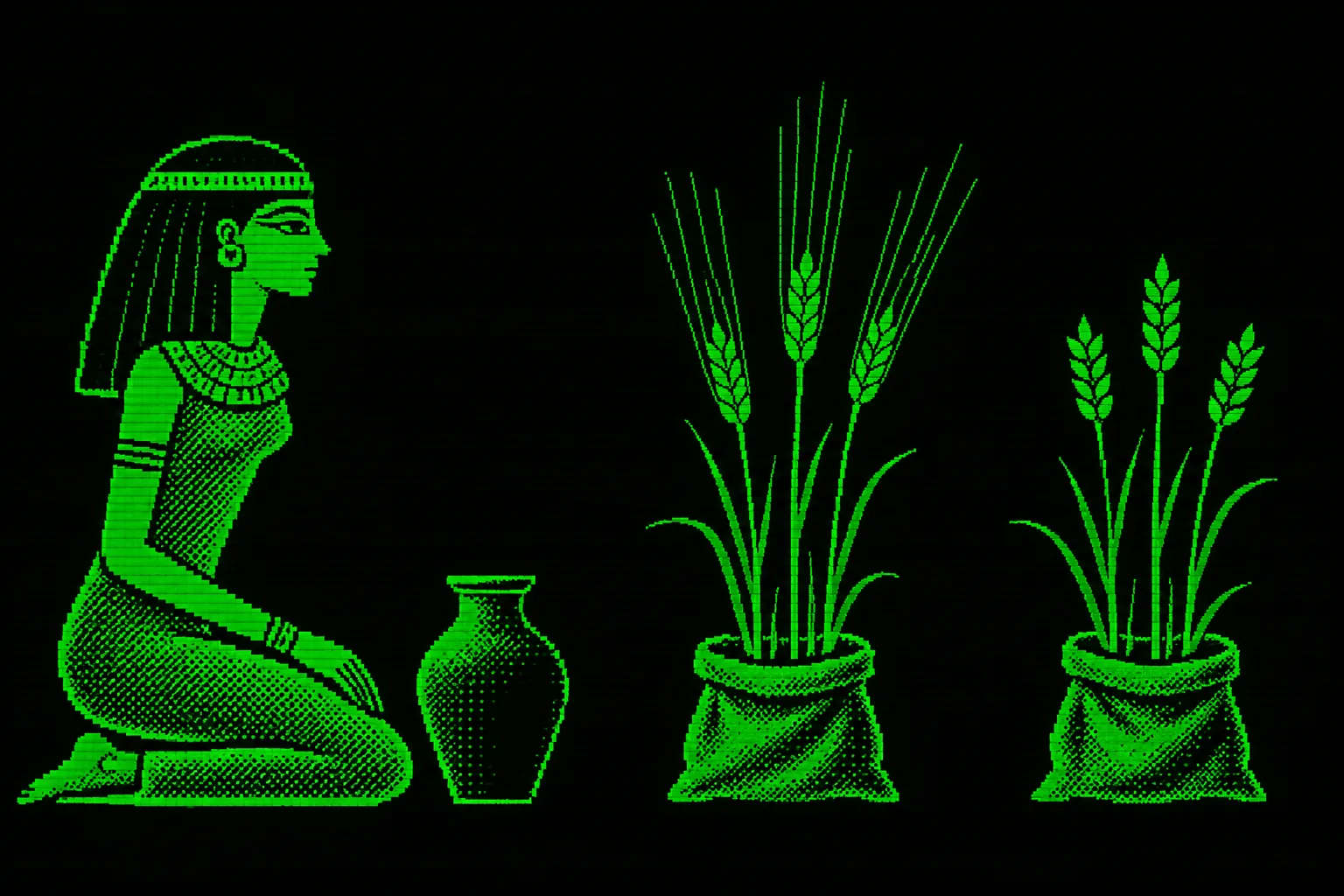
Last comes grain: The woman is to water them in two bags every day with her urine. If the barley sprouts, it is a boy. If the emmer sprouts, it is a girl. Four ear remedies and a draught for a man close the text.
- 1
… 𓆼𓄿𓏲𓂸𓏤 … 𓊃𓏏𓁐 𓂜𓈖 𓊏𓊪𓀜 𓂋 𓃛𓏲𓅨𓂋𓏏𓀉
[...] ⸮ḫꜣ,w? [...] ⸢z,t⸣ nn šzp r jwr,t
… contraceptive herbs … a woman, to keep her from conceiving:
- 2
𓊶𓊪𓏲𓊮𓐍𓂋 𓎢 𓋴𓏏 𓁷𓏤 𓅓𓏭𓅓𓏭𓈒𓏥 𓁷𓏤 𓎩𓏏𓏯 𓋴𓏏 𓏏𓍃𓅓𓏏𓏛 𓋴𓏏 𓂋𓂝 𓊏𓊪𓀜𓂸𓏤 𓋴𓏏
kꜣp.ḫr =k st ḥr mjmj ḥr jd,t =st tm =st rdi̯ šzp =st
You are to fumigate her at the womb with mimi grain, so that she keeps herself from conceiving.
- 3
𓎢 𓈖 𓊃𓋴𓏏 𓄲𓂋𓏏𓈒𓏪 𓂋 𓊠𓂝𓏲𓀜 𓆑
[⸮jri̯?].ḫr =k n =st pẖr,t r wḥꜥ =f
Then you are to make her a remedy to undo it:
- 4
𓌸𓂋𓎛𓏏𓏊𓏫 𓂆 𓌴𓏏𓏏𓆰𓏫 𓂆 𓎛𓈎𓏏𓏊𓏫 𓇛𓅓𓏛 𓂆
mrḥ 1/64 mꜣt,t 1/64 ḥ(n)q,t nḏm 1/64
Oil, 1/64 of an oipe; celery, 1/64; sweet beer, 1/64.
Note · Line 4
The oipe was a measure of volume. One sixty-fourth of it was called a dja. - 5
𓊮
psi̯
It is to be boiled.
- 6
𓀁 𓂋 𓇼𓄿𓏲𓇳
zwr r dwꜣ,w 4
It is to be drunk for four mornings.
- 7
𓊃𓏏𓁐 𓄟𓋴𓂸𓏤𓏏 𓂋 𓊃𓏏𓁐 𓄟𓋴𓇋𓇋 𓊃
[sjꜣ] ⸢z,t⸣ msi̯⸢.t⸣ r ⸢z,t⸣ [nn] ⸢msi̯.y⸣ =⸢s⸣
To tell a woman who will give birth from one who will not:
Note · Line 7
The tests that follow are not reliable ways to predict whether a woman will give birth. - 8
𓃀𓂧𓂧𓏲𓆰𓏫𓂓𓃒𓂸𓏲𓆰𓏫
bdd,w-kꜣ
Bededu-ka plants.
Note · Line 8
The plant has not been securely identified. - 9
𓐩𓏌𓀜 𓐍𓏏𓅓𓏲𓋩𓀜 𓁷𓏤 𓇋𓁹𓂋𓏏𓈒𓏥 𓈖𓏏𓏭 𓄟𓋴𓏯 𓅷𓄿𓂸𓏤 𓁹𓏲 𓅓 𓊃𓂝𓅓𓏲𓀁𓈅𓏥
nḏ ḫtm ḥr jrt n(,j).t msi̯(.t) ṯꜣ jri̯.w m sꜥm,w
They are to be ground, sealed in the milk of a woman who has borne a son, and made into a dose to swallow.
- 10
𓂝𓅓𓏲𓀁 𓇋𓈖 𓊃𓏏𓁐
ꜥm jn z,t
The dose is to be swallowed by the woman.
- 11
𓇋𓂋 𓈎𓂋𓇋𓄿𓂐 𓊃 𓄟𓋴𓏯 𓋴𓏏
jr qrjꜣ =s msi̯ =st
If she vomits, she will give birth.
- 12
𓇋𓂋 𓆓𓂝𓊡 𓋴 𓂜 𓄟𓋴𓏯 𓋴𓏏 𓂋 𓎛𓇳𓎛
jr ḏꜥ =s n msi̯ =st r nḥḥ
If she passes gas, she will never give birth.
- 13
𓆓𓂧𓏏𓏥 𓂋 𓆑 𓅓 𓎢𓏏𓍘𓇋 𓄲𓂋𓏏𓈒𓏫
ḏd.t r =f m k.tj pẖr,t
What is said of this in another prescription:
- 14
𓃀𓂧𓂧𓆰𓏫𓂓𓂸𓃒𓆰𓏫
bdd,w-kꜣ
Bededu-ka plants.
- 15
𓐍𓏏𓅓𓏲𓋩𓀜 𓁷𓏤 𓇋𓁹𓂋𓏏𓏊𓏫 𓈖𓏏 𓄟𓋴𓏯𓀔 𓅷𓄿𓇋𓇋𓂸𓏤
ḫtm ḥr jrt n(,j).t msi̯(.t) ṯꜣ,y
They are to be sealed in the milk of a woman who has borne a son.
- 16
𓎘𓎛𓏲𓏊𓀜 𓅓 𓂓𓏏𓏯𓄹 𓊃
wḏḥ m kꜣ,t =s
The mixture is to be poured into her vulva.
- 17
𓇋𓂋 𓈎𓄿𓋴𓂐 𓊃 𓄟𓋴𓀔 𓋴𓏏
jr qꜣs =s msi̯ =st
If she vomits, she will give birth.
- 18
𓇋𓂋 𓆓𓂝𓊡 𓋴𓏏 𓂜 𓄟𓋴𓏯𓀔 𓋴𓏏 𓊪𓏲
jr ḏꜥ =s n msi̯ =st pw
If she passes gas, it means she will not give birth.
- 19
𓎢𓇋𓇋 𓌴𓂂𓂂 𓊃𓏏𓁐 𓂜𓈖 𓄟𓋴𓏯𓏲𓆇 𓅓 𓅘 𓅓 𓐍𓏏𓏛𓏥 𓎟𓏏
⸢ky⸣ mꜣꜣ z,t nn msi̯ m ⸮⸢___⸣? m (j)ḫ,t ⸮nb.t?
Another way to recognize a woman who cannot give birth, in … by any means:
- 20
𓊶𓊪𓏲𓏏𓊮𓐍𓂋𓏏𓏲 𓋴𓏏 𓁷𓏤 𓎛𓋴𓐎𓆇𓏫 𓂧𓃀𓇋𓏲𓄛
kꜣp.ḫr.tw =st ḥr ḥs dbj
She is to be fumigated with hippopotamus dung.
- 21
𓇋𓂋 𓋴𓏏 𓅓𓂝𓇋𓇋𓏏𓈗 𓁷𓏤 𓎛𓋴𓃀𓐎𓆇 𓂋𓏤𓊪𓏲 𓆓𓂝𓊡𓐎 𓂋𓏤𓊪𓏲 𓅓 𓏏𓄿𓇋 𓄿𓏏𓏯𓇳𓏤 𓇋𓏲 𓋴𓏏 𓂋 𓄟𓋴𓏯𓀔
jr [wzš] =st m,yt ḥr ḥs{b} rʾ-pw ḏꜥ rʾ-pw m tꜣj ꜣ,t jw =st r msi̯
If she passes urine and, at the same moment, either stool or gas, she will give birth.
- 22
𓇋𓂋 𓏏𓍃𓅓𓏏𓏛 𓂋 𓊃 𓂜𓈖 𓇋𓏲 𓋴𓏏 𓂋 𓄟𓋴𓏯𓀔 𓅓𓂝𓈖𓏏𓏭 𓋴𓏏 𓊢𓂝𓂻 𓈖 𓊃 𓐍𓏏𓏛𓏥 𓎟
jr tm r =s nn jw =st r msi̯ m-ꜥ-n,t(j)t st ꜥḥꜥ n =s (j)ḫ,t nb
If none of this happens, she will not give birth, for something stands in her way.
- 23
𓎢𓇋𓇋 𓌴𓂂𓂂
[ky] mꜣꜣ
Another examination:
- 24
𓋴𓇥𓂋𓁀 𓋴𓏏 𓐞𓊃𓏲𓏊𓀜 𓎢 𓈎𓃀𓏏𓄹 𓋴𓏏 𓂝𓂝𓏤𓏲𓏭 𓋴𓏏 𓂋𓏠𓈖𓂢𓂢𓄹𓏤 𓅓 𓌸𓂋𓎛𓏏𓏊𓏫 𓌳𓄿𓏲𓏏𓏛
sḏr =st gs =k q(ꜣ)b,t =st ꜥ.wj.du =st rmn.du =〈st〉 m mrḥ mꜣw
When she lies down to sleep, you are to anoint her chest, both her forearms and both her upper arms with fresh oil.
- 25
𓇼𓄿𓏲𓇳 𓎢 𓂋 𓌴𓂂𓂂 𓋴𓏏
dwꜣ =k r mꜣꜣ =s
In the morning you are to examine her.
- 26
𓅠𓅓 𓎢 𓂸𓏏𓄹𓏥 𓋴𓏏 𓇅𓆓𓏛 𓄤𓆑𓂋 𓂜𓈖 𓉔𓂋𓊪𓏲𓈗 𓄟𓋴𓇋𓇋𓏏𓏯 𓊵𓏏𓊪𓏏𓏯
gmi̯ =k mt.pl =st wꜣḏ nfr nn hrp msy,t ḥtp.t
If you find her vessels a fine blue-green and not sunken, the birth will go well.
- 27
𓅠𓅓 𓎢 𓋴𓏏𓏥 𓉔𓄿𓂋𓊪𓏲𓈗 𓏇𓇋 𓆛𓈖𓌰𓅓𓏛 𓎛𓂝𓏏𓄹𓏫 𓋴𓏏 𓃀𓈖𓂧𓂸𓏤 𓊪𓏲
gmi̯ =k st hrp mj jnm ḥꜥ,w =st bnd pw
If you find them sunk to the level of her skin, it means a miscarriage.
- 28
𓇋𓂋 𓅠𓅓 𓎢 𓋴𓏏 𓇅𓆓𓏛 𓎢𓎢𓏲𓏭𓇰 𓇳𓏤 𓌴𓂂𓂂 𓋴𓏏 𓇋𓏲 𓋴𓏏 𓂋 𓄟𓋴𓏯𓀔 𓏲𓆓𓆑𓄿𓏲𓅯𓅪𓏫
jr gmi̯ =k st wꜣḏ kki̯.w hrw mꜣꜣ =st jw =st r msi̯ wḏfi̯
If you find them dark blue-green on the day you examine her, she will give birth, but only after a delay.
- 29
𓎢𓇋𓇋 𓌴𓂂𓂂
ky mꜣꜣ
Another examination:
- 30
𓇓𓏏𓈖𓀜𓐍𓂋 𓎢 𓂭𓂭𓂭 𓋴𓏏 𓅓 𓂧𓏏𓏤 𓎢
swtn.ḫr =k ḏbꜥ.pl =st m ḏr,t =k
You are to straighten her fingers with your hand.
- 31
𓈎𓂋𓆑𓂘𓂡𓇋𓈖 𓎢 𓂝𓏤 𓋴𓏏
qrf.jn =k ꜥ =st
Then you bend her forearm.
- 32
𓂙𓈖𓏲𓊛𓀜𓇋𓈖 𓎢 𓇋𓅓 𓅓 𓆓𓏏𓏤 𓋴𓏏 𓇋𓋴𓏏𓏲 𓄿𓅓𓂢𓂡𓈖 𓎢 𓏠𓈖𓇋𓄿𓂢 𓊃 𓅓 𓂭𓂭𓂭𓏥 𓎢 𓎛𓈖𓂝 𓂢𓈖𓇋𓄹 𓎢 𓁷𓏤 𓆙 𓁷𓏤 𓈐𓏏𓏤 𓎟𓏏 𓈖𓏏 𓂝𓏤 𓋴
ẖni̯.jn =k jm m ḏ,t =st jswt ꜣm.n =k ⸢mnjꜣ⸣ =s m ḏbꜥ.pl =k ḥnꜥ ⸢⸮rmnj?⸣ =k ḥr ⸮ḏdf? ḥr wꜣ,t nb.t n(,j).t ꜥ =s
Then you sweep it across her body, your fingers closed around her pulse point and your upper arm quivering along every path of her forearm.
- 33
𓇋𓂋 𓈖𓇋𓄿𓂢 𓂸𓏏𓏯𓄹 𓅓𓄚𓈖𓏌𓏲𓉐 𓂝𓏤 𓋴𓏏 𓂋 𓂧𓏏𓏤 𓎢 𓆓𓂧𓐍𓂋 𓎢
jr njꜣ mt m-ẖnw ꜥ =st r ḏr,t =k ⸢ḏd.ḫr⸣ =⸢k⸣
If the vessel inside her forearm beats against your hand, you are to say:
- 34
𓇋𓏲 𓋴𓏏 𓂋 𓃛𓏲𓅨𓂋𓏏𓁑
jw =st r jwr.t
“She will conceive.”
- 35
𓎢𓇋𓇋 𓌴𓂂𓂂
ky mꜣꜣ
Another way to tell:
- 36
𓂋𓂝𓏏𓂋𓐍𓏛 𓎢𓏲𓀀 𓊢𓂝𓂻 𓋴𓏏 𓅓 𓅱𓂸𓏏𓏯𓉐 𓈖𓏏 𓇼𓄿𓏏𓉐
rdi̯.{t}ḫr =k{wj} ꜥḥꜥ =st m wmt n(,j){.t} sbꜣ
You are to have her stand in the recess of a doorway.
- 37
𓇋𓂋 𓅠𓅓𓏛 𓎢 𓏏𓏲𓀾𓏫 𓏌𓏤 𓁹𓏏𓏤𓄹 𓋴𓏏 𓌡𓂝𓏤 𓏇𓇋 𓌙𓅓𓏲𓀀𓁐𓏥 𓎢𓏏𓍘𓇋 𓏇𓇋 𓌙𓋴𓏭𓀀 𓂜𓈖 𓄟𓋴𓏯 𓊃
jr gmi̯ =k twt,w n(,j).w jr,t(j) =st wꜥ mj ꜥꜣm k.tj mj nḥs,j nn msi̯ =s
If you find that one of her two irises looks like a man from western Asia and the other like a Nubian, she will not give birth.
Note · Line 37
The irises are called the “images” of the eyes. The comparison is one of color. - 38
𓇋𓂋 𓅠𓅓𓏛 𓋴𓏏𓏥 𓅓 𓇋𓆛𓈖𓈖𓌰𓅓𓁸𓏥 𓈖 𓌡𓂝𓏤 𓇋𓏲 𓋴𓏏 𓂋 𓄟𓋴𓏯
jr gmi̯ 〈=k〉 st m jnm n(,j) wꜥ jw =st r msi̯
If you find them both the same color, she will give birth.
- 39
𓎢𓇋𓇋 𓌴𓂂𓂂 𓄟𓋴𓇋𓇋𓀔 𓊃𓏏𓁐 𓂜𓈖 𓄟𓋴𓇋𓇋𓏯 𓊃
ky mꜣꜣ msi̯.y z,t nn msi̯.y =s
Another way to tell whether a woman will give birth or not:
- 40
𓌾𓏥 𓇣𓂧𓏏𓌾𓏥
jt bd,t
Barley and emmer.
Note · Line 40
Emmer is a kind of wheat. - 41
𓃛𓏲𓎛𓏏𓈗𓏌𓀜 𓊃𓏏𓁐 𓅓 𓅓𓂝𓏏𓈗 𓋴𓏏 𓂋𓂝𓇳𓏤𓎟 𓏇𓇋 𓃀𓇋𓈖𓂋𓇜𓌾𓏥 𓏇𓇋 𓈙𓂝𓏏𓆇𓏫 𓅓 𓂝𓂋𓆑𓍱𓂡
jwḥ z,t m m,t =st rꜥw-nb mj bnrj mj šꜥ m ꜥrf 2
The woman is to water them in two bags every day with her urine, as she would dates and as she would sand.
- 42
𓇋𓂋 𓌗𓏛𓏥 𓋴𓏏𓏥 𓂋𓄫𓏲𓏛𓏥 𓋴𓈖𓏥 𓇋𓏲 𓋴𓏏 𓂋 𓄟𓋴𓏏𓏯
jr rd =st r-ꜣw =sn jw =st r msi̯.t
If both sprout, she will give birth.
- 43
𓇋𓂋 𓂋𓂧𓏲𓌗𓏛 𓌾𓏥 𓅷𓄿𓇋𓇋𓂸𓏤 𓊪𓏲
jr rd jt ṯꜣ,y pw
If the barley sprouts, it is a boy.
Note · Line 43
In Egyptian, the word for barley is masculine and the word for emmer feminine. - 44
𓇋𓂋 𓌗𓏛 𓇣𓂧𓏏𓌾𓏥 𓊃𓏏𓁐 𓊪𓏲
jr rd bd,t z,t pw
If the emmer sprouts, it is a girl.
- 45
𓇋𓂋 𓏏𓍃𓅓𓏛 𓋴𓈖𓏥 𓂋𓂧𓏲𓌗 𓂜𓈖 𓄟𓋴𓇋𓇋𓏏𓏯 𓋴𓏏
jr tm =sn rd nn msi̯.y =st
If neither sprouts, she will not give birth.
- 46
𓄲𓂋𓏏𓈒𓏫 𓈖𓏏 𓂧𓂋𓀜 𓂧𓈖𓋴𓍖𓏛 𓅓 𓄔𓏤𓄹
pẖr,t n(,j).t dr dns m msḏr
A remedy to relieve heaviness in the ear:
- 47
𓇋𓆛𓈖𓎢𓆰𓏫 𓏤 𓊹𓌢𓏏𓂋𓇋𓆳𓈒𓏥 𓏤 𓌴𓏏𓏏𓆰𓏫 𓏤 𓊪𓇋𓋴𓏏𓈀𓏤 𓏤 𓃀𓈖𓆑𓄹 𓈖 𓃒 𓏤
jn〈n〉k 1 snṯrj 1 mꜣt,t ⸢1⸣ p⸢j⸣s 1 bnf n(,j) jḥ 1
Fleabane: 1; frankincense resin: 1; celery: 1; pesen bread: 1; ox gall: 1.
- 48
𓁹𓏲 𓅓 𓈙𓏏𓈅
jri̯.w m št
The mixture is to be shaped into a ball.
- 49
𓂞𓄹 𓂋 𓆑
di̯.w r =f
It is to be applied to the ear.
- 50
𓎢𓏏 𓄲𓂋𓏏𓈒𓏫 𓈖𓏏 𓄝𓏏𓏏𓏴𓏛 𓅓 𓄔𓏤𓄹𓄹
k.t pẖr,t n(,j).t st,t m msḏr.du
Another remedy for mucus in both ears:
- 51
𓂝𓆑𓄿𓆰𓏫
ꜥfꜣ
Clover.
- 52
𓅨𓂋𓎛𓏲𓏊𓀜 𓅓 𓇋𓃀𓂋𓇋𓎰𓏊𓏫
wrḥ m jbr
It is to be smeared with iber oil.
- 53
𓂞𓏲 𓂋 𓄔𓏤𓄹
di̯.w r msḏr
It is to be applied to the ear.
- 54
𓎢𓏏
k.t
Another remedy:
- 55
𓃀𓅯𓄿𓈎𓄿𓆮𓏊𓏫 𓇅𓏛 𓏤 𓐮𓏏𓏭𓈒𓏥 𓏤 𓉐𓂋𓏏𓏯𓈒𓏥 𓈙𓃀𓏏𓈒𓏪
bꜣqꜣ wꜣḏ 1 ztj 1 pr,t šb,t ⸮〈1〉?
Fresh moringa oil: 1; ochre: 1; cucumber fruit: 1.
- 56
𓂞𓏲 𓂋 𓄔𓇋𓄹
di̯.w r msḏr
It is to be applied to the ear.
- 57
𓎢𓏏 𓄲𓂋𓏏𓈒𓏫 𓈖𓏏 𓄝𓏏𓏏𓐎 𓅓 𓄔𓏤𓄹
k.t pẖr,t n(,j).t st,t m msḏr
Another remedy for mucus in the ear:
- 58
𓄟𓋴𓂧𓅓𓏏𓏪 𓏤 𓅓𓂝𓉔𓄿𓈖𓏌𓏲𓏊𓏫 𓏤
msdm,t 1 mhꜣ{n} 1
Galena: 1; cream: 1.
Note · Line 58
Galena is lead sulfide, the black mineral the Egyptians ground for eye paint. - 59
𓂞𓏲 𓂋 𓄔𓏤𓄹
di̯.w r msḏr
It is to be applied to the ear.
- 60
𓉐𓂋𓏏𓏯𓈒𓏥 𓆷𓄿𓄟𓋴𓆰𓏫 𓂋 𓏏𓊪𓈖𓈖𓈒𓏥 𓉐𓂋𓏏𓏯𓈒𓏥𓍲𓈖𓏌𓏲𓁸𓈒 𓉐𓂋𓏏𓏯𓈒𓏥 𓂝𓏲𓐎𓆮 𓂋 𓋹𓈖𓐍𓇋𓅓𓏭𓐎𓏫 𓏴 𓂝𓆑𓏏𓏏𓆰𓏫 𓂋 𓇥𓂋𓆓𓄔𓏤𓏥 𓈖 𓍲𓈖𓂧𓏏𓆮 𓂋 𓆮 𓈖 𓍑𓄿𓇋𓈒𓏥 𓂋 𓆤𓏏𓏯𓏊𓏫 𓂋 𓎛𓈎𓏏𓏊 𓇛𓅓𓏏𓏛 𓂆
pr,t šꜣms rʾ-64 tpnn rʾ-64 pr,t-šnj rʾ-64 pr,t wꜥr rʾ-8 ꜥnḫ-jm,j ḥsb ꜥf{tt}〈ꜣ〉 rʾ-32 ḏrḏ n(,j) šntj rʾ-32 ___ n(,j) ḏꜣj〈s〉 rʾ-64 bj,t rʾ-8 ḥ(n)q,t nḏm.t 1/64 2
Pyrethrum fruit: 1/64 dja; cumin: 1/64 dja; hair-fruit: 1/64 dja; juniper berries: 1/8 dja; white lotus: 1/4 dja; clover: 1/32 dja; Nile acacia leaves: 1/32 dja; … of the djais plant: 1/64 dja; honey: 1/8 dja; sweet beer: 2/64 of an oipe.
Note · Line 60
The dja and the oipe are measures of volume. An oipe holds sixty-four dja, so the measure of beer is two dja. - 61
𓊮 𓅓 𓉔𓄿𓊮 𓈖 𓋴𓋴
psi̯ m hꜣ n(,j) ss〈f〉
It is to be cooked in the glowing ashes.
- 62
𓋴𓅨𓂋𓇋𓈗𓀁 𓇋𓈖 𓊃𓀀𓏤
swrj jn z
The man is to drink it.