~/sacred-texts/funerary-stelae
Egyptian Funerary Stele: Offerings for a Temple Official
- Date
- Carved in the Middle Kingdom or Second Intermediate Period (c. 2055–1550 BC) on a funerary stele invoking the gods of Nekheb (Elkab), Nekhen (Hierakonpolis), and Edfu.
- Language
- Middle Egyptian · Hieroglyphic
- 1
ḥtp-ḏi̯-nswt Nḫb,t nb,t [N]ḫb ḥtp-ḏi̯ Ḥr-⸢Nḫn⸣ Wsjr ḥr(,j)-jb Nḫn ḥtp-ḏi̯ Ḥr-Bḥd,t(j) nṯr.pl nṯr[,t].pl jm,j(.pl) Nḫb
An offering the king and Nekhbet, lady of Nekheb, give; an offering Horus of Nekhen and Osiris, who dwells in the heart of Nekhen, give; an offering Horus of Edfu and the gods and goddesses in Nekheb give.
Note · Line 1
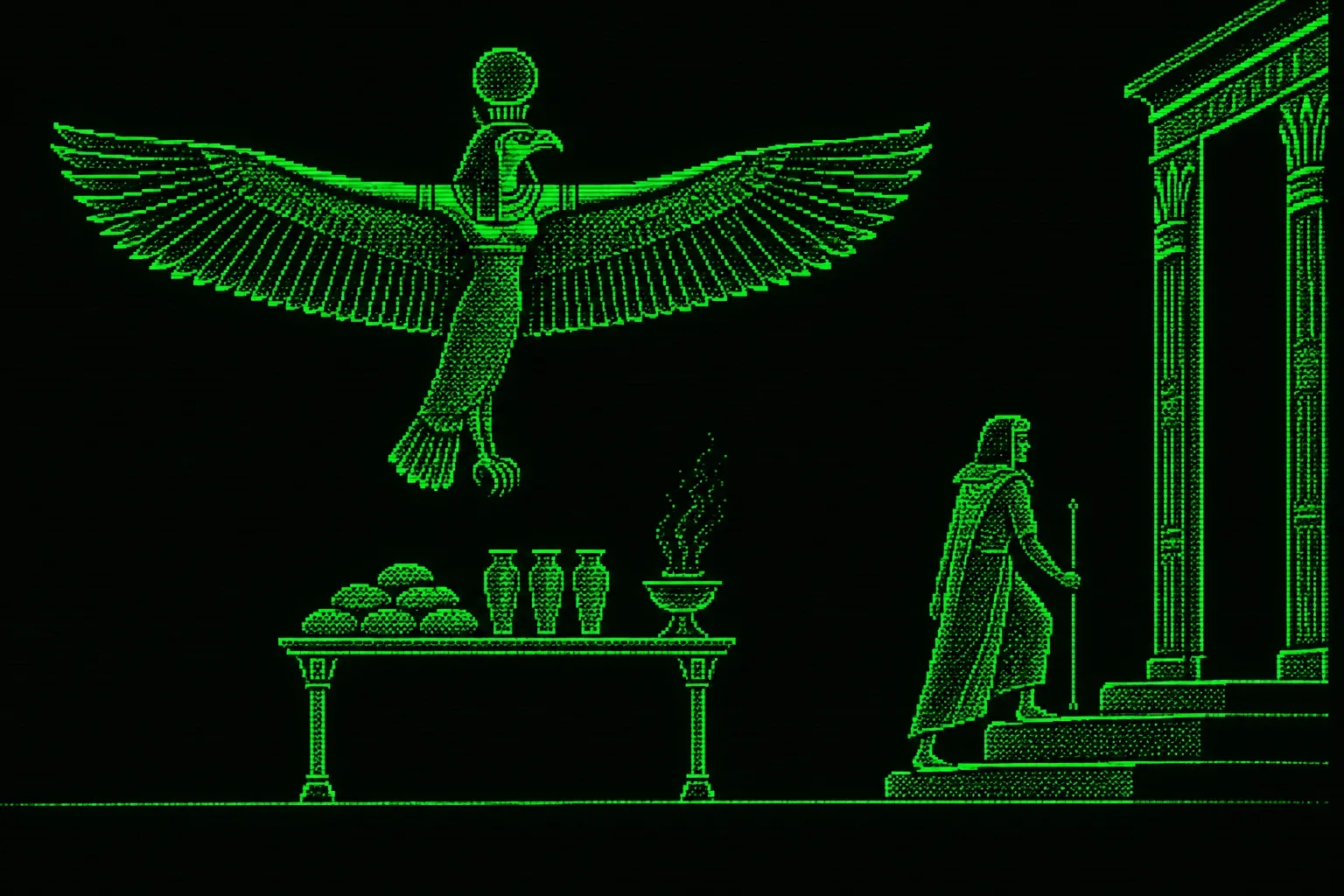
Nekheb (Elkab), home to the vulture goddess Nekhbet, stood across the Nile from Nekhen (Hierakonpolis), a center of Horus worship. - 2
ḏi̯ =sn pr,t-ḫrw tʾ ḥnq,t kꜣ.pl ꜣpd.pl šs mnḫ,t snṯr mrḥ,t [ḫ],t.pl nb[.t] nfr[.t] wꜥb[.t] ꜥnḫ.t nṯr jm
May they grant an invocation offering of bread and beer, bulls and fowl, alabaster and linen, incense and anointing oil, and every good and pure thing on which a god lives,
Note · Line 2
An invocation offering was spoken aloud to make the provisions available to the dead. - 3
n kꜣ n pr,t ṯni̯.t ꜣḥ,t ꜣḫ.t [m]tw,t j[q]r.t ḏn_ n.t Wꜣs,t
for the ka of the distinguished offspring, the fruitful field, the excellent semen, … of Thebes,
Note · Line 3
The ka is the life force that receives the offerings. The word for “offspring” also means the fruit of a plant. - 4
nḫt q(n)b,t n.t ḥw,t-nṯr sꜣwi̯.n nṯr =f jb =f
stalwart of the temple council, whose heart his god has gladdened,
- 5
sḫnt =s s,t =f m p[r] =s rḏi̯.n =s r-[ḥꜣ,t] šny,t
whose seat she brings forward in her house, whom she has set at the head of the court,
Note · Line 5
“She” is most likely Nekhbet. Her house is her temple, and a seat nearer the front marks higher rank. - 6
jri̯ ⸮ḥr? ⸮⸢mw⸣? ꜥq r-ḥꜣ,t =f
who acts loyally, who enters his presence,
- 7
rḏi̯ ḥr 〈n〉 n,tjw.pl m [...]
who turns his face toward those who are in …,
- 8
⸮[hru̯]? ḫrw ḥr pri̯.t 〈r〉 rd(w)
calm of voice as he comes out to the steps,
- 9
ꜥq ḥr nṯr m wꜥꜥ(.w) mn ṯb,t m s,t-[ḏs]r,t
who enters alone into the god’s presence, whose foot stands firm in the Sacred Place,
- 10
[...] nṯr m ḫ,t =f jri̯ ḥss.t [...]
… the god with his possessions, who does what … praises …
- 11
ḥtp-ḏi̯-nsw Ptḥ n kꜣ n zẖꜣ,w-qd Jy-mr [...]
An offering the king and Ptah give for the ka of the draftsman Iymeru …
Note · Line 11
The draftsman drew the outlines of figures and scenes. Ptah was the patron god of craftspeople.