~/sacred-texts/middle-kingdom-letters
Egyptian Letter of Nakht: Linen, Ink and Ten Jars of Beer
- Date
- Written in hieratic on papyrus in the Middle Kingdom (c. 2055–1650 BC)
- Found
- Egyptian Museum, Cairo (pCairo 31061, CG 58045)
- Language
- Middle Egyptian · Hieratic
- 1
bꜣk-n-pr-ḏ,t zẖꜣ(,w) Nḫt ḏd n ⸢zẖꜣ(,w)⸣ ⸢Ꜥꜣw⸣
The servant of the estate, the scribe Nakht, speaking to the scribe Aau:
Note · Line 1
“Servant of the estate” is a title for someone employed on an endowed estate, the kind of foundation set up to supply a temple or a tomb. - 2
jw ḫrt =k mj ꜥnḫ ḥḥ n(,j) zp
Your condition is like life, a million times over.
Note · Line 2
The letter opens with the polite greetings expected in Egyptian correspondence. - 3
jry ⸢n⸣ =⸢k⸣ Ḥr(,j)-š≡f
May Harsaphes act on your behalf!
Note · Line 3
Harsaphes, the ram-headed god of Herakleopolis, is literally “He who is upon his lake.” - 4
snḏm Ptḥ rs(,j)-jnb≡f jb =k m ꜥnḫ
May Ptah South-of-his-Wall gladden your heart with life!
Note · Line 4
“South-of-his-Wall” is Ptah’s standing epithet as god of Memphis, whose old name was “White Wall.” - 5
wn jmꜣḫ =k nfr ⸢ḫr⸣ ⸢kꜣ⸣ Ḥr(,j)-š≡f nb-⸢nn-nswt⸣
May you stand well with the ka of Harsaphes, lord of Herakleopolis!
Note · Line 5
The ka is a god’s or person’s vital force. To be well regarded by a god’s ka meant favour in life and provision after death. - 6
[...] r-n,tt ⸢rḏi̯.n⸣ ⸢=j⸣ ⸢bꜣk⸣-jm jnt〈.t(w)〉 zẖꜣ(,w) pn r rḫ sšm [...] ⸢nfr⸣ zẖꜣ(,w) =k ꜥnḫ-wḏꜣ-s(nb)
… that this humble servant has had this letter brought, to learn of the … good conduct of your scribe, life, prosperity, health!
Note · Line 6
Nakht calls himself “this servant,” a polite way of saying “I.” - 7
m =k gr,t jr pꜣ mn m =k sw wꜣḥ.y
Note, further: as for the men-cloth, see, it has been set aside.
- 8
m =k gr,t jr pꜣ dꜣj,w m =k sw sḫt
Note, further: as for the bale of linen, see, it has been woven.
- 9
m =k rḏi̯.n=j ⸢jnt〈.t(w)〉⸣ n =k pꜣ dꜣj,w
See, I have had the linen brought to you.
- 10
m =k gr,t pꜣ =k pr m =k sw rḏ n pꜣ wꜥb Nḫt ꜥꜣ.pl =f (j)ḫ,t =f nb.t
Note, further: as for your house, see, it has been made over to the wab-priest Nakht, its doors and everything in it.
Note · Line 10
A wab-priest was a “pure” priest, a lower-ranking priest who served in the temple by rotation. - 11
m =k gr,t rḏi̯.n =j jn〈t〉.t(w) n =k pn ry,t jn r pꜥ,t m =k ḏḏ =k jb =k ḫft hrw-nfr
Note, further: I have had this ink brought to you, got in exchange for cakes. See, you give your heart to the holiday.
Note · Line 11
The last sentence is obscure. “Holiday” is literally “beautiful day,” a feast day. - 12
jn jr gr,t pꜣ rḏi̯.t jn〈t〉.t(w) ṯnw-n,w-rʾ nn hꜣb ḥr ṯnw jr(,j)
But what is this, having word sent by mouth with no word sent to explain it?
Note · Line 12
Nakht complains that a spoken message reached him through a messenger without anything to explain what it meant. - 13
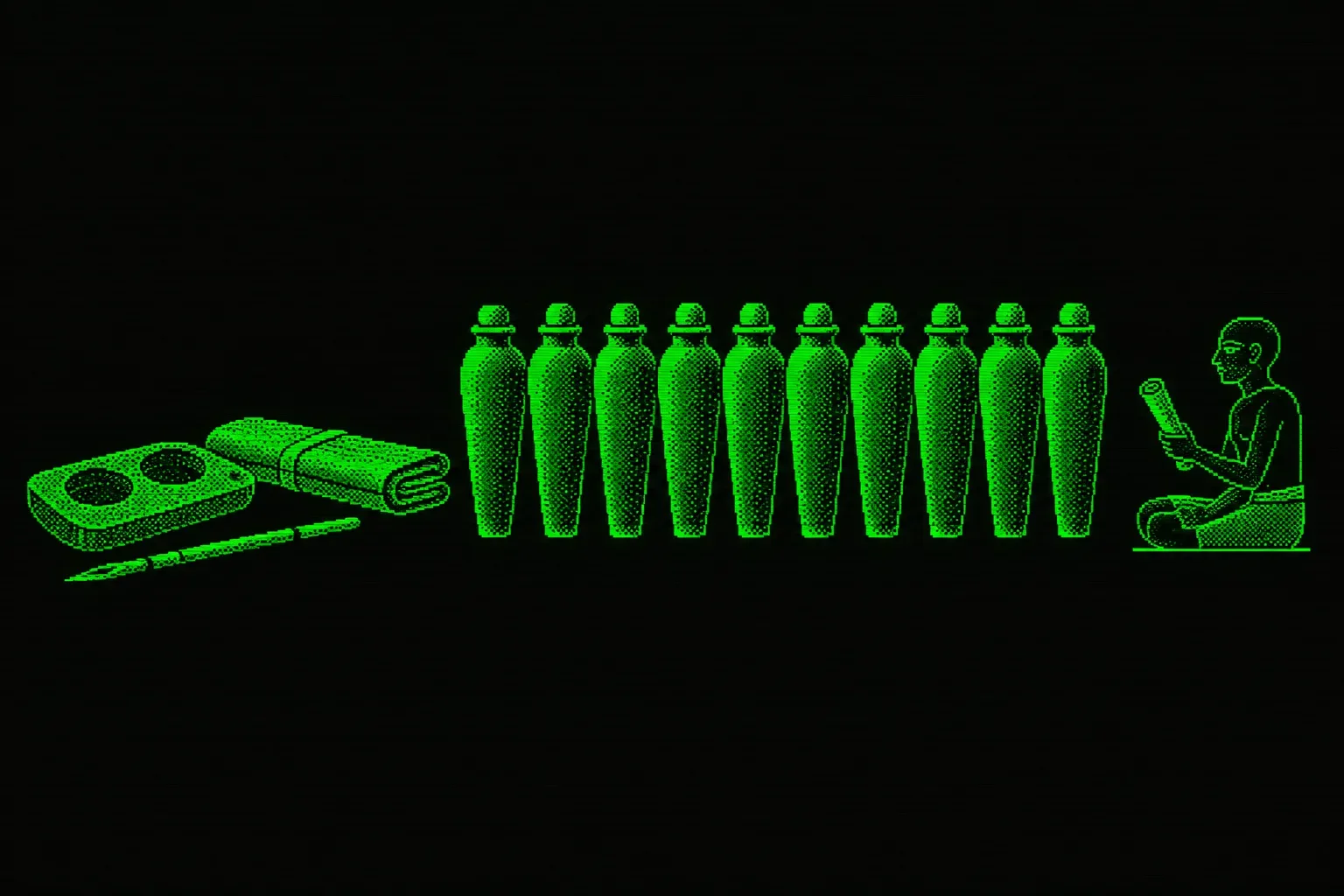
m =k gr,t jni̯ Hbnw dsr 10 rḫ kꜣ =k bw-nfr
Note, further: Hebenu is bringing ten jars of djeseret-beer, so that your ka may know good things.
- 14
ḏḏ zẖꜣ(,w) Nḫt n zẖꜣ(,w) Ꜥꜣw
What the scribe Nakht sends to the scribe Aau.
Note · Line 14
This is the address, written on the outside of the folded letter.