~/sacred-texts/late-ramesside-letters
Letter to Nubia: Are You Alive? Help Tjary on the Boat
- Date
- Written in the late 20th Dynasty (c. 1100–1070 BC) at Thebes
- Found
- Thebes, Egypt; now in the Bibliothèque nationale de France, Paris (pBN 197.VI)
- Language
- Late Egyptian · Hieratic
- 1
[...] sḏm(,w)-ꜥš-m-⸢s,t⸣-[_] [...] [m] [ꜥnḫ-wḏꜣ-s(nb)] [m] [ḥz(w),t] [Jmn-Rꜥw] nswt-nṯr,pl
… the servant in the Place of Truth … in life, prosperity, and health, in the favor of Amun-Ra, king of the gods.
Note · Line 1
The Place of Truth was the royal burial ground at Thebes. “Servant in the Place of Truth” was a title borne by the men who worked on the royal tombs. - 2
tw=n {r-}ḏd n Jmn-Rꜥw nswt-nṯr.pl jni̯ tw jw šdi̯ =k ḥty nb {r-}n,tj m pꜣ tꜣ ḥr,j r-n,tj tw=k [...] j:m =f
We ask Amun-Ra, king of the gods, to bring you home safe from every harm in the upper land where you are …
Note · Line 2
The upper land is Nubia, upriver from Egypt. - 3
j:hꜣb n =n ꜥ =k
Write and tell us how you are.
- 4
〈j〉n tw=k ꜥnḫ.tw
Are you alive?
- 5
[mtw] [=k] [hꜣb] [n] [=n] ꜥ n zẖꜣ(,w)- Ṯry -n-pꜣ-ḫr m-ḏr,t mḏꜣ,y Hd-nḫt
And send us word by the Medjay Hadnakht of how Tjary, scribe of the royal necropolis, is faring.
Note · Line 5
A Medjay was a member of the police force. - 6
mtw =k ḏi̯.t ḏr,t zẖꜣ(,w) Ṯry m pꜣ jmw
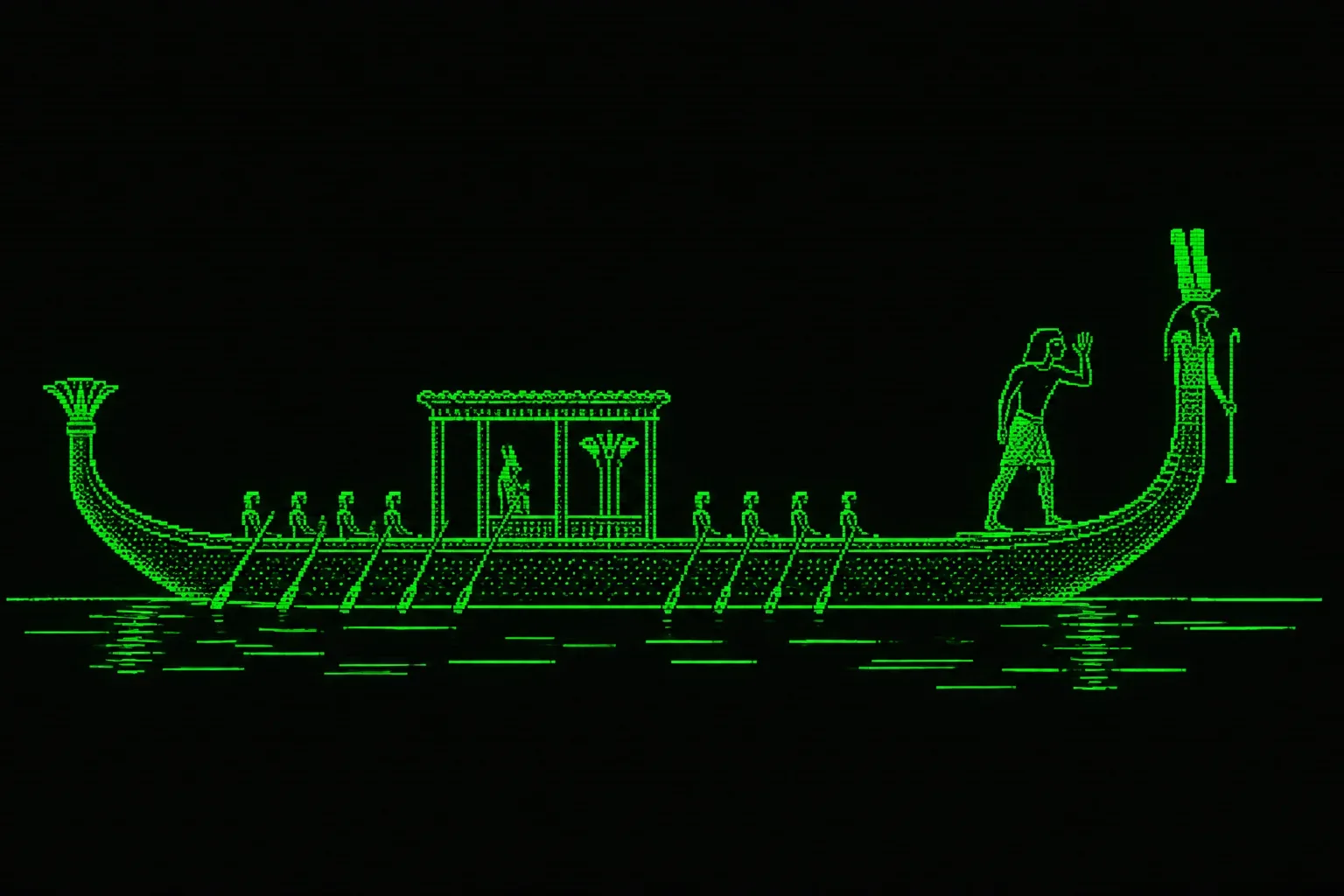
Lend the scribe Tjary a hand aboard the boat.
- 7
mtw =k ptr =f [m] [...] rwhꜣ rs-tp
Keep a close eye on him … in the evening.
- 8
mtw =k ꜥš n =f ḥꜣ,t ḫr ꜥš n =k Jmn ḥꜣ,t
Call out for him from the bow, and Amun will call out for you from the bow.
Note · Line 8
The man at the bow calls out directions to guide the boat. - 9
ptr r(m)ṯ mj pꜣ-hrw ḫr mntk pꜣy =f r(m)ṯ
When men are wanted, as they are today, you are his man.
- 10
jw =j hꜣb r rḏi̯.t ꜥm =k m-ḏr,t Ꜣḫ-mn,w
I am sending word by Akhmenu to let you know.
- 11
jḫ tꜣ mdw,t n pꜣ hꜣb j:jri̯ =k n =j r-ḏd j:jri̯ =k hꜣb šꜥ,t m-ḏr wn Ḥm-šr,jt dy
What did you mean when you wrote to me, “You didn’t send a letter until Hemetsherit was already here”?
Note · Line 11
The writer is quoting a complaint he received. The “you” accused of writing late is the writer himself. - 12
wn bn jw =k hꜣb n =j ꜥḏꜣ
You wouldn’t write me a lie, would you?
- 13
hꜣb 〈=j〉 n =k šꜥ,t 2 tm ḏi̯ =w n =k pꜣ j:jri̯ =w mj-qd nꜣ ḏi̯ =j ṯꜣy =tw n zẖꜣ(,w) Ṯry jw =w tm ḏi̯ =w n =f
I sent you two letters, but they didn’t give them to you. They did just the same with the ones I had carried to the scribe Tjary: they didn’t give them to him either.