~/sacred-texts/ostracon-berlin-p-10627-letter-to-nekhemmut
Egyptian Letter: A Childless Man Told to Adopt an Orphan
- Date
- Written in hieratic on an ostracon in the 20th Dynasty (c. 1186–1070 BC), at the end of the New Kingdom
- Found
- From western Thebes; now in the Egyptian Museum, Berlin
- Language
- Late Egyptian · Hieratic
- 1
n zẖꜣ(,w) Nḫ,w-m-Mw,t m ꜥnḫ-wḏꜣ-s(nb) m ḥz(w,t) nṯr =k šps,j Jmn-Rꜥw nswt-nṯr,pl pꜣy =k nb nfr rꜥw-nb
To the scribe Nekhemmut: in life, prosperity and health, and in the favour of your august god Amun-Ra, King of the Gods, your good lord, every day.
- 2
ḥnꜥ-ḏd yꜣ jḫ pꜣy =k ḫpr m pꜣj sḫr bjn n,tj tw=k j:m =f jw bw jri̯.t mdw,t n r(m)ṯ nb ꜥq m msḏr =k m-sꜣ tꜣy =k bjꜣ,t ꜥꜣ
Furthermore: oh, what is this, your sinking into this sorry state you are in, so that no one's word gets into your ear, because of your high and mighty ways?
Note · Line 2
“Furthermore” is the formula that moves a letter from greetings to business. “High and mighty ways” renders an Egyptian phrase meaning literally “your great character,” that is, arrogance. - 3
bn mntk r(m)ṯ jwnꜣ
You are no man.
- 4
yꜣ bw jri̯ =k ḏi̯.t jwr tꜣy =k ḥm,t mj-qd pꜣy =k jr,j
Truly, you don't get your wife pregnant the way your fellows do.
Note · Line 4
Fathering children, above all a son, was expected of every Egyptian man. The writer’s insult goes straight to the point. - 5
ky-ḏd tw=k ꜥšꜣ m ḏr,w r-jqr bw jri̯ =k ḏi̯.t nkt n wꜥ
And another thing: you are rich, rich to the very limit, yet you never give a thing to a single soul.
- 6
jr pꜣ n,tj jw mn m-dj =f ꜥḏd ḫr jni̯ =f n =f ky nmḥ,w sḫpr =f
Whoever has no boy of his own fetches himself another, an orphan, and brings him up.
Note · Line 6
Adoption was an accepted way to secure an heir. Here the writer advises it to the childless Nekhemmut. - 7
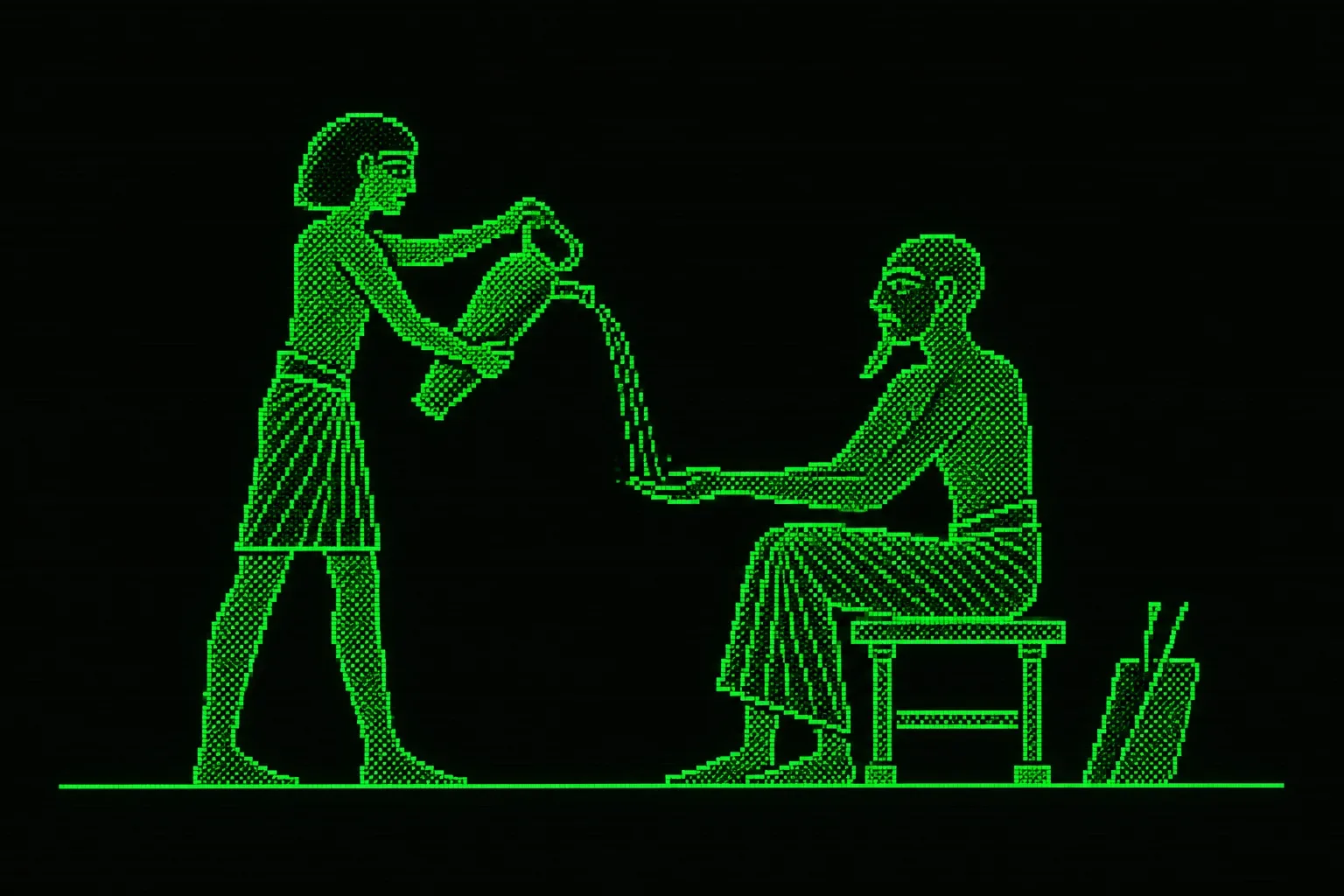
mntf ḏi̯ mw r ḏr,t tw=k m šrj ꜥꜣ n ḥꜥ =f
He is the one who will pour water on your hands, like an eldest son of a man's own body.
Note · Line 7
Pouring water over a father’s hands was a son’s duty of care.