~/sacred-texts/ramesside-royal-inscriptions
Egyptian-Hittite Peace Treaty: Extradition and Royal Seals
- Date
- Carved in the 19th Dynasty (reign of Ramesses II, 1259–1213 BC) on the west wall of the first court of the Ramesseum at Thebes
- Found
- In situ on the west wall of the first court of the Ramesseum, Western Thebes (Luxor), Egypt
- Language
- Late Egyptian · Hieroglyphic
- 1
[pꜣ-nṯr-n-Ḫr~p~n~t~ry]~s tꜣ-nṯr,t-n-dmj-n-K~rḫ~n [...]
… the god of Hapantaliyas; the goddess of the city of Karahna; …
Note · Line 1
These are witnesses to the treaty between Ramesses II of Egypt and Hattusili III of Hatti, the Hittite kingdom. - 2
[J~s~ḫr~j] t[ꜣ]-ḥn,wt-〈n〉-〈ꜥnḫ〉 〈nꜣ〉 〈nṯr.pl〉-〈ꜥḥꜣ,wtj〉 〈nꜣ〉 〈nṯr.pl〉-〈ḥm,t.pl〉 [...] 〈nꜣ〉-ḏw.pl-nꜣ-jtr,w.[pl-n-pꜣ-tꜣ-n-Ḫt] [...]
Ishhara, Lady of the Oath; the male gods; the female gods; … the mountains and the rivers of the land of Hatti; …
- 3
[jr] [nꜣj] [mdw,t] [n,tj] [ḥr] [pꜣj] [ꜥn] [n] [ḥḏ] n pꜣ tꜣ n Ḫt n pꜣ tꜣ n Km,t j[r] pꜣ [n,tj] [bn] [jw] =[f] [r] [sꜣu̯] =[sn] [...]
As for these words on this silver tablet of the land of Hatti and the land of Egypt, whoever will not keep them …
Note · Line 3
The Egyptian wall inscription records the words of a treaty inscribed on silver. - 4
[mtw] =[w] [tm] [jri̯.t] ⸢ḫmḫm⸣ r =sn jri̯ ḫꜣ n nṯr-n-pꜣ-tꜣ-n-Ḫt m-dj ḫꜣ n nṯr-n-pꜣ-tꜣ-n-Km,t [...]
and do not disavow them, the thousand gods of the land of Hatti together with the thousand gods of the land of Egypt shall …
Note · Line 4
The broken text has passed from a curse on those who break the treaty to a blessing on those who keep it. - 5
[jri̯] [pꜣ] [wr-ꜥꜣ-n-Ḫt] [mḥ] [j:m] =sn mtw =f di.t jni̯.tw =w ꜥn n Wsr-Mꜣꜥ,t-Rꜥw-stp.n-Rꜥw pꜣ-ḥqꜣ-ꜥꜣ-n-Km,[t] [...] [r] [rʾ] =[f] [r] [rd.du] =[f]
The Great Prince of Hatti shall seize them and have them brought back to Usermaatre Setepenre, the great ruler of Egypt. … his mouth or either of his feet.
Note · Line 5
Usermaatre Setepenre is the throne name of Ramesses II. This clause orders the return of fugitives but forbids their mutilation. - 6
m-dj jri̯.y =tw sꜥḥꜥ btꜣ nb r =[f] [m-mjt,t]
Let no one hold any offense against him. And likewise,
- 7
[j]r [wꜥr] [rmṯ] [m] [pꜣ] [tꜣ] [n] [Ḫt] [jw] =[f] [m] [wꜥ] [...]
if a man flees from the land of Hatti, whether he is alone …
- 8
[mtw] [tm] [pꜣ] ⸢wr-ꜥꜣ⸣-[n-Ḫ]t sꜥḥꜥ pꜣ =sn btꜣ [r] =[s]n [m]tw =tw tm fḫ pꜣ =f pr nꜣw =f ḥm,t.pl nꜣy =f ẖrd.pl
the Great Prince of Hatti shall not hold their offense against them, and no one shall destroy his house, his wives or his children.
- 9
m-dj fḫ.[tw] =[f]
Do not let him be destroyed.
- 10
m-dj ẖdb.tw =f
Do not let him be killed.
- 11
m-dj thi̯ =[tw] [r] [msḏr.du] =[f] [r] [jr,t.du] =[f] [r] [rʾ] =[f] [r] [rd.du] =[f] [mtw] =[tw] tm sꜥḥꜥ btꜣ [nb] [r] =[f]
Let no one harm either of his ears, either of his eyes, his mouth or either of his feet, or hold any offense against him.
- 12
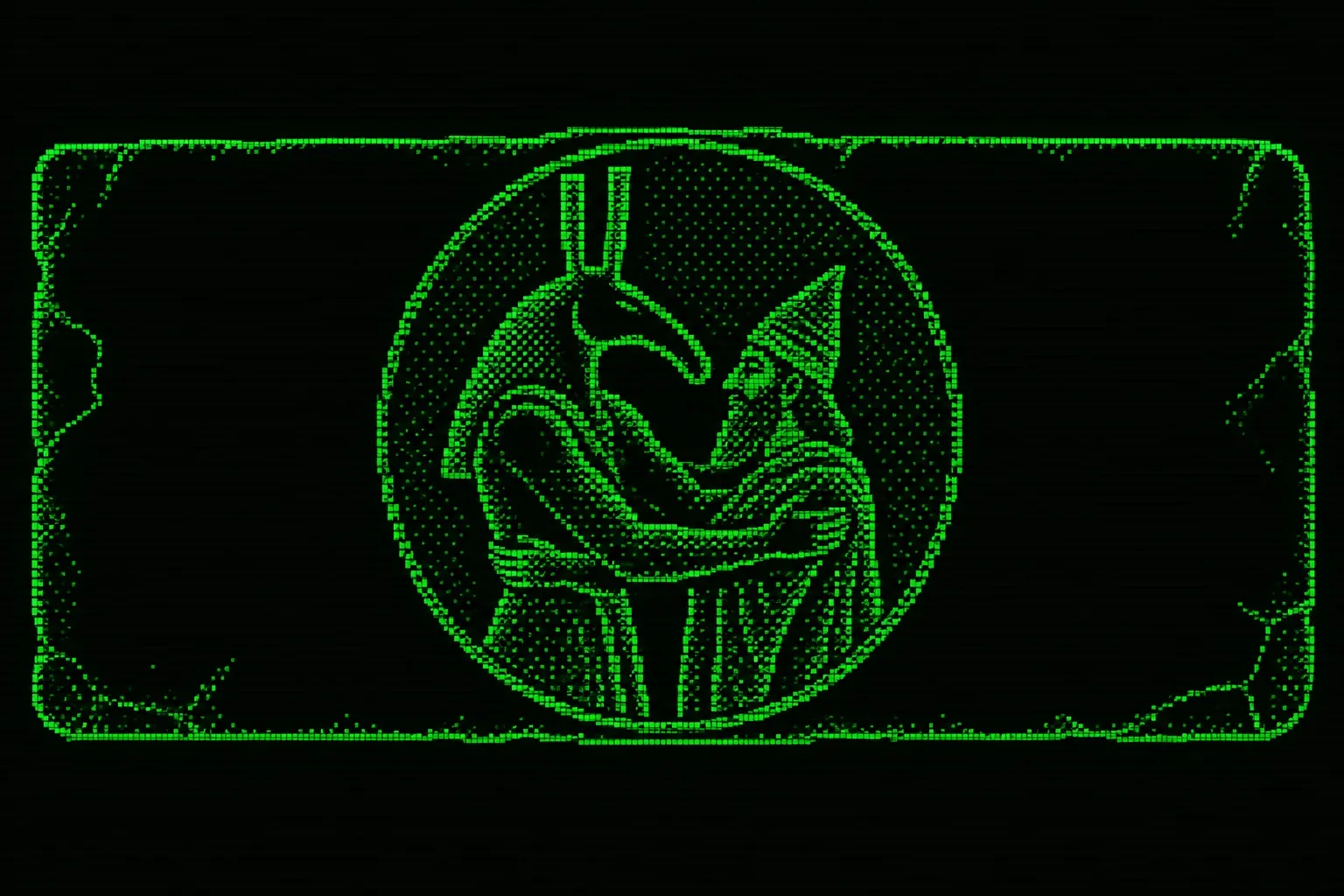
[n,tj] [m-ḥr,j-jb] [pꜣ] [ꜥn] n ḥḏ ḥr tꜣy =f [rw]jꜣ,t ḥꜣ,wtj
At the center of the silver tablet, on its first side:
Note · Line 12
The text now describes the Hittite seal on the tablet. - 13
ẖp,w m twt n Swtḫ ḥr qnj.w twt n pꜣ wr-ꜥꜣ-n-Ḫt jnḥ.w 〈m〉 smd,t mdw m-ḏd
A scene shows the figure of Seth embracing the figure of the Great Prince of Hatti. Around the scene runs an inscription that reads:
Note · Line 13
Seth is the Egyptian name used here for the Hittite storm god. - 14
[pꜣ] [ḫtm] [n] [Swtḫ] [pꜣ-ḥqꜣ-n-tꜣ-p,t] [pꜣ] ḫtm n pꜣ n,[t]-ꜥ jr Ḫ~t~s~r pꜣ wr-ꜥꜣ-n-Ḫt ṯnr pꜣ šrj n M~[r]~s~r pꜣ wr-ꜥꜣ-n-Ḫt ṯnr
“The seal of Seth, ruler of the sky; the seal of the treaty made by Hattusili, the Great Prince of Hatti, the Strong, son of Mursili, the Great Prince of Hatti, the Strong.”
- 15
n,tj m-ẖn[w] pꜣ jnḥ.w n pꜣ ẖp,w
Within the border of the scene:
- 16
pꜣ ḫtm n Swtḫ [pꜣ]-ḥqꜣ-n-tꜣ-p,t
“The seal of Seth, ruler of the sky.”
- 17
n,tj m-ḥr,j-jb ḥr tꜣy =[f] [k.t] [rwjꜣ,t]
At the center, on its other side:
- 18
[ẖp,w] [rp]y,[t] [n] [tꜣ-n]ṯ[r,t]-n-[Ḫt] ḥr [qnj.w] [rpy,t] [n] [wr,t-n]-Ḫt jnḥ.w m smd,t mdw m-ḏd
A scene shows the figure of the goddess of Hatti embracing the figure of the Great Lady of Hatti. Around the scene runs an inscription that reads:
Note · Line 18
The Great Lady is Puduhepa, the Hittite queen. - 19
pꜣ ḫtm n pꜣ-Rꜥw-n-dmj-n-J~rn~n pꜣ-nb-n-pꜣ-tꜣ pꜣ ḫtm n P~w~ḫ~p tꜣ-wr,t-[n]-pꜣ-tꜣ-[n-Ḫt] [tꜣ]-š[rj,t-n-pꜣ-tꜣ-n-Q~ḏ~w~dn] [tꜣ]-[⸮_?]-[n-pꜣ-Rꜥw-n-J~rn~n] [tꜣ-ḥn,wt-n-pꜣ-tꜣ] [tꜣ-bꜣk,t-n-tꜣ-nṯr,t]
“The seal of the sun god of the city of Arinna, lord of the land; the seal of Puduhepa, Great Lady of the land of Hatti, daughter of the land of Kizzuwatna, priestess of the sun god of Arinna, mistress of the land, servant of the goddess.”
Note · Line 19
The Hittites worshipped the sun deity of Arinna as a goddess. The Egyptian inscription calls her a sun god and gives her the title “lord.” - 20
[n,t]j m-[ẖ]nw pꜣ j[n]ḥ.w n pꜣ ẖp,w
Within the border of the scene:
- 21
pꜣ ḫtm n pꜣ-Rꜥw-n-J~rn~n pꜣ-nb-n-tꜣ-nb
“The seal of the sun god of Arinna, lord of every land.”