~/sacred-texts/edwin-smith-papyrus
Edwin Smith Surgical Papyrus: An Ailment I Will Fight
- Text
- Edwin Smith Papyrus, Book of Wounds, Cases 1–48 (columns 1.1–17.19)
- Date
- Copied in hieratic around 1600 BC, in the Second Intermediate Period, from a Middle Kingdom original
- Found
- Bought at Luxor in 1862 by the dealer Edwin Smith; now in the library of the New York Academy of Medicine
- Language
- Middle Egyptian · Hieratic
The book addresses the physician as “you” and works from the crown of the head down to the spine. Each case names the injury, tells him what his fingers will find, and gives him a verdict to speak: An ailment I will treat. An ailment I will fight. Or: An ailment for which nothing can be done. Under a shattered skull, Something there throbs and flutters beneath your fingers, like the soft spot on the crown of a child’s head before it has closed.
Wounds are stitched, bound with fresh meat, then dressed with fat, honey and lint. A dislocated neck leaves a man paralysed: His penis is erect as a result. Urine runs from his penis without his knowing it.
Head Wounds (Cases 1–27)
- 1
… 𓅓 𓁶 𓆑 𓇋𓋴𓏏 𓋴𓊪𓏏𓏭𓂏 𓏲𓃀𓈖𓏌𓏲𓂐 𓆑 … 𓂜𓃹𓈖𓏏 𓎢𓆑𓏏𓌪 𓇋𓋴𓏏 𓇋𓂋 𓆑 𓍋𓅓𓂋𓅪 𓁹𓇋𓇋 𓀀
[...] [ḏd.jn] =[k] [r] =[f] [ẖr,j] [wbn,w] m tp =f jst ⸮⸢mn⸣? sp,tj.du wbn,w =f [...] n-wn,t kf,t jst jr ⸮⸢sw⸣? [jꜥr] [n] [qs] [n(,j)] [ḏnn,t] =f mr jri̯.y =j
… Then say of him: “A man with a wound on his head. The two lips of his wound are sore … The wound does not gape, yet it reaches the bone of his skull. An ailment I will treat.”
Note · Line 1
The last sentence is the physician’s verdict. In other cases he may say that he will contend with the ailment, or that it is not to be treated. - 2
𓐎𓏏𓀜𓐍𓂋 𓎢 𓇓𓏲 𓁷𓏤 𓇋𓏲𓆑𓄹𓏪
wt.ḫr =k sw ḥr jwf [wꜣḏ] [hrw] [t]⸢p,j⸣
On the first day, lay fresh meat on the wound and bandage it.
- 3
𓋴𓂋𓏲𓐍𓂝 𓎢 𓅓𓆱𓐍𓏏𓂻 𓅓 𓌻𓂋𓎛𓏏𓏊𓏪 𓆑𓏏𓏏𓄦 𓇳𓏤𓎟 𓂋 𓇛𓅓𓏛 𓆑
srwḫ =k 〈sw〉 m-ḫt m mrḥ,t [bj,t] ftt rꜥ-nb r nḏm =f
After that, dress it daily with fat, honey, and lint until he feels well.
Note · Line 3
The lint is a pad of teased linen fibers. - 4
𓇋𓂋 𓂡 𓎢 𓊃𓀀𓏤 𓇋𓊪𓏛 𓏠𓈖𓀀 …
jr ḫꜣi̯ =k z jp mn [pw] [...]
“You examine a man” means taking the measure of so-and-so. …
Note · Line 4
Here a gloss takes up the wording of the examination. The Egyptian word for “examine” also means “measure.” - 5
… 𓐍𓏏𓏛𓏥 𓅓 𓇋𓊪𓏏𓌽
[...] ⸮[mj]? ⸮[j]p? (j)ḫ,t m jp,t
… like reckoning something with an oipe.
Note · Line 5
An oipe was a measure of capacity used for grain. - 6
𓆼𓄿𓏏𓂷𓀜 𓐍𓏏𓏛𓏥 𓏠𓈖𓏏𓏛 𓅓 𓇋𓊪𓏏𓌽
ḫꜣi̯.t [mj] [jp].tw (j)ḫ,t mn.t m jp,t
A man is examined much as a given thing is reckoned with an oipe.
- 7
𓇋𓊪𓏛 𓏠𓈖𓏏𓏛 𓅓 𓂭𓂭𓂭 𓂋 …
jp mn,t m ḏbꜥ.pl r [⸮rḫ?] [...]
One reckons a thing with the fingers in order to know …
- 8
𓇋𓈖 𓆼𓄿𓏏𓂡 𓐍𓏏𓏛𓏥 𓅓 𓇋𓊪𓏏𓌽 … 𓏠𓈖𓏏𓅪 𓇋𓅓 𓏇𓏏𓏏𓏛 𓆼𓄿𓏏𓂝 𓏠𓈖𓏏𓅪 𓊃𓀀𓏤 𓂋 𓄂𓏏𓏭𓄣
⸮[ḥr]-n,tt? j((n)) ḫꜣi̯.t (j)ḫ,t m jp,t [___] [...] ⸮[j]p[.t(w)]? mn,t jm mj,tt ḫꜣi̯.t mn,t z r [rḫ] [šm,t] ḥꜣ,tj
For it is by measuring something with an oipe that … an ailment is reckoned by it. So too one measures a man’s ailment to learn the pace of the heart.
- 9
𓇋𓏲 𓇋𓅓 𓆑 𓈖 𓂝𓏏𓄹𓏥
jw mt.w[.pl] jm =f n ꜥ,t [nb.t]
Vessels run from it to every part of the body.
- 10
𓈖𓍇𓏌𓏲 𓂞𓂞𓏲 𓌂𓐍𓏏𓏯𓃂𓈗𓏲𓀀𓏥 𓌕𓏌𓏤 𓎟 𓂧𓂧𓏏𓏥 𓆑 𓂭𓂭𓂭 𓆑 𓁷𓏤 𓂧𓂧𓏏𓏥 𓁷𓏤 𓊨𓏏𓉐 𓄣𓏤 𓁷𓏤 𓂾𓂾 𓄂𓏏𓏭𓄣
[jr] nw ḏḏ.w wꜥb.w.pl-Sḫm,t zwn(,w) nb ḏr,t〈j〉.du{.pl} =f ḏbꜥ.pl =f [ḥr] [tp] [ḥr] [mḥꜣ] ḥr ḏr,t〈j〉.du{.pl} ḥr s,t jb ḥr rd.du ḫꜣ[ꜣ] =[f] [n] ḥꜣ,tj
When the wab-priests of Sekhmet or any physician lay their two hands—their fingers—on these parts, on the head, the back of the head, both hands, the seat of the heart, or both feet, it is the heart each one is measuring.
Note · Line 10
Wab means “pure.” These priests served Sekhmet, a goddess associated with both disease and healing. - 11
𓈖𓏏𓊪𓏲 𓂸𓏏𓏲𓏯𓏪 𓆑 𓅓 𓇉𓄿𓁶 𓅓 𓊨𓏏𓉐 𓄣𓏤
n,t-pw mt.w.pl =f m ḥꜣ m s,t jb
For its vessels lie at the back, at the seat of the heart,
- 12
𓈖𓏏𓊪𓏲 𓂸𓏏𓏯 𓎟 𓈖 𓂝𓏏𓄹 𓎟𓏏
n,t-pw [mdwi̯] =[f] [ḫ]n[t] mt nb n(,j) ꜥ,t nb.t
and the heart speaks at the head of every vessel in every part of the body.
Note · Line 12
What the examiner feels under his fingers as a pulse is the heart speaking. - 13
𓆓𓂧 𓆑 𓆼𓄿𓏏𓂝 𓂋 𓆑 𓁷𓏤 𓈖 𓁶𓏤 𓆑 𓈖 𓅓𓇉𓄿𓁶 𓆑 𓈖 𓂋𓂧𓂾𓂾 𓆑𓏭
ḏd =f ḫꜣi̯.t r [ḏi̯.t] [___] =f ḥr mt[.w.pl] n(,j) tp =f n(,j) mḥꜣ =f n(,j) rd.du =fj
He calls it “examining” when he lays his … on the vessels of the man’s head, the back of his head, and both his feet.
- 14
… 𓎛𓄿𓏏𓏭𓄣 𓆑 𓂋 𓂋𓐍𓏛 𓄄𓏲𓏛𓏥 𓆣𓂋 𓇋𓅓
[...] ḥꜣ,tj =f r rḫ šsꜣ,w ḫpr jm
… of his heart, to recognize the signs that appear there.
- 15
𓆓𓂧 𓊃 𓂋 𓂋𓐍𓏛 𓆣𓂋𓇋𓇋𓏏𓏥 𓇋𓅓
ḏd =[f] [ḫꜣ]i̯.t(⸮w?) =s r rḫ ḫpr,yt jm
He says that it is examined to learn what has happened there.
- 16
𓇋𓂋 𓇋𓋴𓏏 𓏠𓈖𓅪 𓆑 𓆓𓂧 𓊪𓏲 𓈖𓆓𓊃𓅪 𓏲𓃀𓈖𓏌𓏲𓂐 𓆑 𓎢𓆑𓏏𓌪 𓇋𓈖 𓌡𓂝𓏤 𓂋 𓏌 𓊃
jr jst mn [sp,tj.du] [wbn,]w =f ḏd pw nḏs wbn,w =⸢f⸣ [nn] [wsḫ] n[n] kfi̯.t jn wꜥ〈.t〉 r 2-nw〈.t〉 =s
“The two lips of his wound are sore” means that his wound is small, not wide: one lip does not gape away from the other.
- 17
𓇋𓂋 𓂝𓂋𓈐 𓈖 𓆑 𓆓𓂧 𓊪𓏲 𓎢𓆑𓌪𓏏𓏲 𓇋𓈖 𓎛𓂝𓄹𓏥
jr (j)ꜥr n [qs] [n(,j)] [ḏnn,t] [nn] [kfi̯.t] =⸢f⸣ ḏd pw kfi̯.tw jn ḥꜥ,pl
To say that a wound “reaches the bone of the skull without gaping” is to say that the flesh parts,
- 18
𓇋𓋴𓏏 𓁷𓏤 𓌟𓏤 𓈖 𓆓𓈖𓈖𓏏𓁶 𓆑 𓂜𓈖 𓎢𓆑𓏏𓌪 𓇋𓈖 𓈖𓆓𓊃𓅪 𓂜𓈖 𓏲𓋴𓐍𓏛
jst pꜣ [⸮wbn,w?] [___] ḥr qs n(,j) ḏnn,t =f nn kfi̯.t jn [wꜥ.t] [r] [2-nw.t] =[s] nḏs nn wsḫ
but the wound … at the bone of his skull. Its two lips do not gape apart; the wound is small, not wide.
- 19
𓄄𓏛𓏥 𓏲𓃀𓈖𓏌𓏲𓂐 𓈖 𓂝𓂋𓈐 𓈖 𓌟𓏤
šsꜣ(,w) wbn,w n(,j) [kf,t] [m] [tp] =[f] (j)ꜥr n qs
Clinical instructions for a gaping wound on his head that reaches the bone.
- 20
𓇋𓂋 𓂡 𓎢 𓊃𓀀𓏤 𓈖 𓆑 𓂝𓂋𓈐 𓈖 𓌟𓏤 𓏲𓂧𓏴𓐍𓂋 𓎢 𓂝𓏤 𓎢 𓁷𓂋𓏤 𓆑
jr ḫꜣi̯ =k z n(,j) wbn[,w] [n(,j)] [kf,t] [m] [tp] =f (j)ꜥr n qs wdi̯.ḫr =k ꜥ =k ḥr =f
If you examine a man with a gaping wound on his head that reaches the bone, lay your hand on the wound.
- 21
𓆑
ḏꜥ[r.ḫr] =[k] [wbn,w] =⸢f⸣
Then examine his wound by touch.
- 22
𓇋𓂋 𓅠𓅓 𓎢 𓆓𓈖𓈖𓏏𓁶 𓆑 𓏏𓉔𓅓𓂾 𓇋𓅓 𓋴 𓎢 𓂋 𓅓 𓁶𓏤 𓆑 𓍋𓅓𓂋𓅪 𓁹𓏹𓏹 𓀀
jr gmi̯ =k ḏnn,t =⸢f⸣ [⸮wḏꜣ.tj?] [n-wn,t] ⸮[pš]n? thm jm =s ⸢ḏ⸣[d].jn =⸢k⸣ ⸢r⸣ =[f] ⸢ẖr,j⸣ [wbn,w] [n(,j)] [kf,t] m tp =f mr jri̯.y =j
If you find his skull intact, with neither a split nor a hole in it, then say of him: “A man with a gaping wound on his head. An ailment I will treat.”
- 23
wt.ḫ[r] =[k] [sw] [ḥr] [jwf] [wꜣḏ] [hrw] [tp,j]
On the first day, lay fresh meat on the wound and bandage it.
- 24
[wdi̯.ḫr] =[k] [ꜣ.wj.du] [n(,j)] [ḥbs]
Then apply a double bandage of linen.
- 25
𓇳𓏤𓎟 𓂋 𓇛𓅓𓏛 𓆑
[srwḫ] =[k] [sw] [m-ḫt] [m] [mrḥ,t] [bj,t] [ftt] rꜥ-nb r nḏm =f
After that, dress it daily with fat, honey, and lint until he feels well.
- 26
𓇋𓂋 𓏲𓃀𓈖𓏌𓏲𓂐 𓈖 … 𓆑 𓏲𓃀𓈖𓏌𓏲𓂐 𓆑
jr wbn,w n(,j) [kf,t] [m] [tp] =[f] [(j)ꜥr] [n] [qs] [...] [pw] [...] ⸮f? wbn,w =f
“A gaping wound on his head that reaches the bone” means … his wound.
- 27
𓇋𓂋 𓏲𓏭𓍱𓍱 𓈖 𓋳𓏪 𓂋 𓌡𓂝𓏏𓏤
jr 〈ꜣ〉.wj.du n(,j) ḥbs sšd.w[j.du] [pw] [n(,j)] [ḥbs] [ḏḏ] =[tw] [ḥr] [sp,tj.du] [wbn,w] [n(,j)] [kf,t] [r] [rḏi̯.t] [dmj] [wꜥ.t] r wꜥ.t
The “double bandage of linen” is a pair of linen strips laid on the two lips of the gaping wound to bring one lip into contact with the other.
- 28
𓇋𓂋 𓂜𓃹𓈖𓏏 𓊪𓈙𓈖𓏴 𓏏𓉔𓅓𓂾 …
jr n-wn,t pšn thm [jm] =[s] [...] [pw] [...]
“Neither a split nor a hole in it” means …
- 29
𓈖 𓎢𓆑𓏏𓌪 𓅓 𓁶𓏤 𓆑 𓂝𓂋𓈐 𓂋 𓌟𓏤 𓏏𓉔𓅓𓂾 𓆑
[šsꜣ,w] [wbn,w] n(,j) kf,t m tp =f (j)ꜥr r qs thm [ḏnn,t] =⸢f⸣
Clinical instructions for a gaping wound on his head that reaches the bone, with his skull pierced.
- 30
𓆑 𓂝𓂋𓈐 𓂋 𓌟𓏤 𓏏𓉔𓅓𓂾 𓆓𓈖𓈖𓏏𓁶 𓆑 𓆓𓂝𓌙𓂻𓐍𓂋 𓎢 𓏲𓃀𓈖𓏌𓏲𓂐 𓆑
[jr] [ḫꜣi̯] =[k] [z] [n(,j)] [wbn,w] [n(,j)] [kf,t] [m] [tp] =f (j)ꜥr r qs thm ḏnn,t =f ḏꜥ〈r〉.ḫr =k wbn,w =f
If you examine a man with a gaping wound on his head that reaches the bone, and his skull is pierced, examine his wound by touch.
- 31
𓆑 𓏠𓈖𓅪 𓆑 𓎀𓊃𓏲𓍞𓏪 𓅓 𓅘𓎛𓃀𓏏𓄹 𓆑
[g]m[m] =[k] [sw] [n] [gmi̯.n] =[f] [dgꜣ] =[f] [n] [qꜥḥ.du] =[fj] [ḥnꜥ] [qꜣ]b,t =f mn =f ṯs,w m nḥb,t =f
You find that he cannot look at either shoulder or at his chest and that he suffers from stiffness in his neck.
- 32
𓆓𓂧𓇋𓈖 𓎢 𓆑 𓆓𓈖𓈖𓏏𓁶 𓆑 𓏠𓈖𓅪 𓆑 𓎀𓊃𓏲𓍞𓏪 𓅓 𓅘𓎛𓃀𓏏𓄹 𓆑 𓍋𓅓𓂋𓅪 𓀀
ḏd.jn =k [r] =f [ẖ]r,j w[bn,w] [n(,j)] [kf,t] [m] [tp] =[f] [(j)ꜥr] [⸮r?] [qs] [thm] ḏnn,t =f mn =f ṯs,w m nḥb,t =f mr jri̯.y =j
Then you say of him: “A man with a gaping wound on his head that reaches the bone. His skull is pierced, and he suffers from stiffness in his neck. An ailment I will treat.”
Note · Line 32
The examiner speaks the diagnosis and closes with a judgment on the prospects for treatment. - 33
𓇋𓂋 … 𓇆𓏛 𓁶𓊪𓏭 𓁷𓏤 𓏲𓃀𓈖𓏌𓏲𓂐 𓆑
jr [...] [jwf] wꜣḏ hrw tp,j ḥr wbn,w =f
If … fresh meat on his wound on the first day.
Note · Line 33
The words that would tell us whether to apply the meat or to withhold it are lost. - 34
𓇋𓅓𓂜 𓎢 𓐎𓏏𓀜 𓇓𓏲
jmi̯ =k wt sw
You must not bandage him.
- 35
𓂧 𓂋 𓇾𓏤𓈇
(w)di̯ r tꜣ [ḥr] [mnj.pl] =[f] [r] [swꜣi̯] [ꜣ,t] [jh] =[f]
Let him be laid on the ground at his mooring posts until the worst of his pain has passed.
Note · Line 35
Like a boat at its posts, the man is to stay where he is laid. The text later explains that his place is on his bedding. - 36
𓎢 𓇓𓏲 𓅓 𓌻𓂋𓎛𓏏𓏌 𓆤𓏏𓏯𓏌𓏥 𓆑𓏏𓏏𓄦 𓇳𓏤𓎟 𓂋 𓇛𓅓𓏛 𓆑
[srw]ḫ =k sw [m]-ḫt m mrḥ,t bj,t ftt rꜥ-nb r nḏm =f
Afterward, treat him each day with oil, honey and lint until he feels well.
- 37
… 𓆑 𓋴𓂧𓈄𓏴 𓈖𓆓𓊃𓅪 𓈖 𓐢𓂋𓏛 𓆑 𓋴𓂧𓈄𓏴 𓏇𓇋 𓈖𓂝𓈙𓐎 𓎛𓆰𓈖𓏌𓏲𓏊𓏤
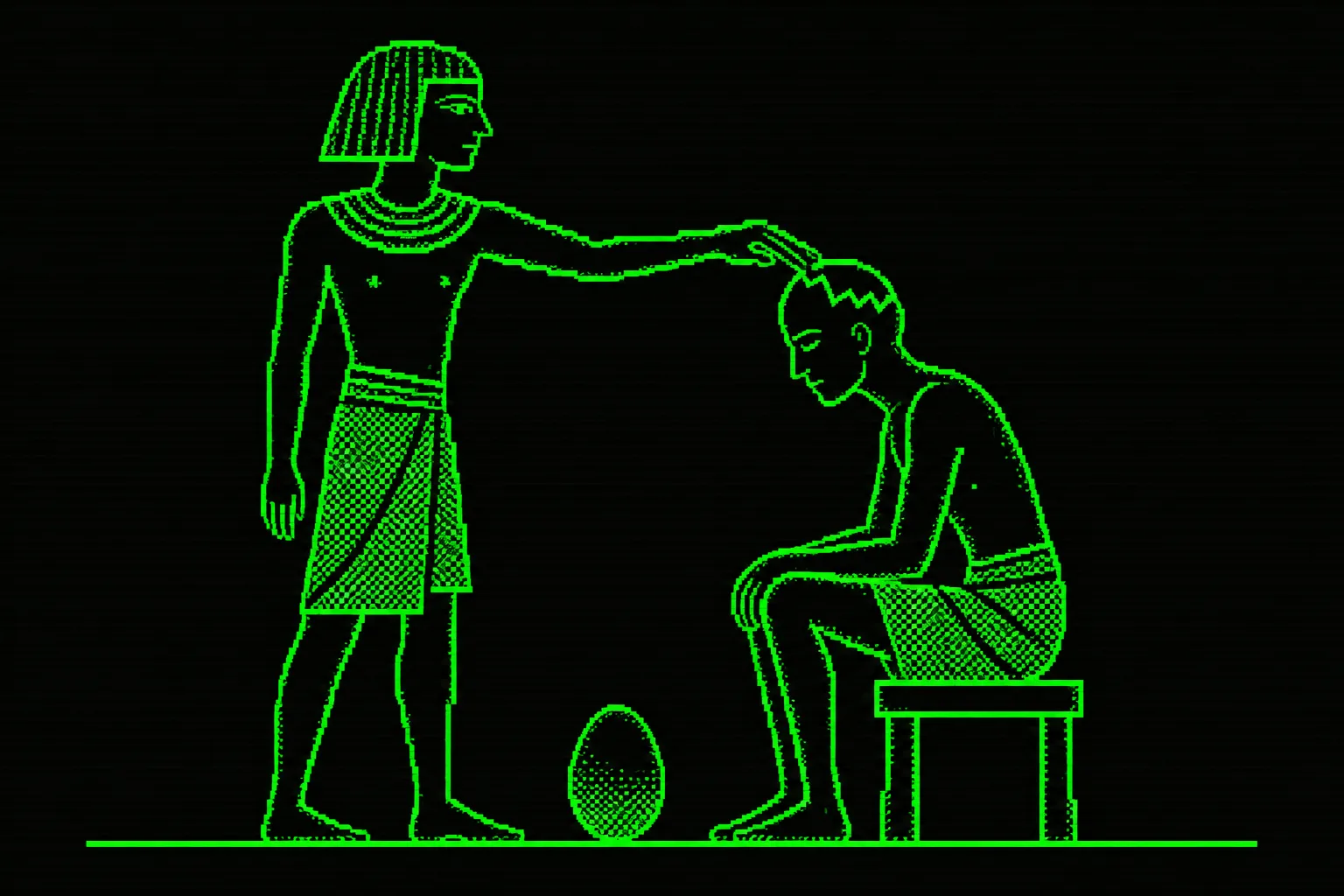
[jr] [...] [_] ḏnn,t =f sd nḏs n ꜥpr =f sd mj nꜥš ḥn,w
As for “ … his skull is … ”: this is a small fracture, for the fracture he has sustained is like a hole punched in a pot.
Note · Line 37
Here the instructions give way to explanations of phrases used earlier in the case. - 38
… 𓆑 𓆑
[...] =f [ꜥp]r.n =f
… that he has sustained.
- 39
𓇋𓂋 𓂜 𓅠𓅓𓈖 𓆑 𓂧𓎼𓄿𓁹 𓆑 𓈖 𓂢𓂢 𓆑𓏭 𓎛𓈖𓂝 𓂢𓂢 𓆑𓏭
jr n gmi̯.n =f dgꜣ =f n qꜥḥ.du =fj ḥnꜥ qꜣ[b,t] =[f] [⸮tm?] [nḏm] [n] =[f] [pw] [dgꜣ] =[f] [n] qꜥḥ.du =fj
As for “he cannot look at either shoulder or at his chest”: this means that it is uncomfortable for him to look at either shoulder,
- 40
𓂜 𓈖𓆓𓇛𓅓𓏛𓈖 𓈖 𓆑 𓂧𓎼𓄿𓁹 𓆑 𓈖 𓈎𓄿𓃀𓏏𓄹 𓆑
n nḏm.n n =f dgꜣ =f n qꜣb,t =f
and it is uncomfortable for him to look at his chest.
- 41
𓇋𓂋 𓏠𓈖𓅪 𓆑 𓎀𓊃𓏲𓍞𓏪 𓅓 𓅘𓎛𓃀𓏏𓄹 𓆑 𓎀𓊃𓏏𓍞𓂝 𓊪𓏲 𓅓 𓅯𓄿 𓆑 𓇋𓉔𓅪
jr mn =f ṯs,w m nḥb,t =f ṯsi̯.t pw m pꜣ =f jh
As for “he suffers from stiffness in his neck”: this means that the pain holds his neck stiffly upright.
- 42
𓈖𓍇𓏌𓏲 𓈖𓈖𓌰𓅓𓂽 𓅓 𓅘𓎛𓃀𓏏𓄹 𓆑
nw nnm m nḥb,t =f
This pain has strayed into his neck.
- 43
𓏠𓈖𓅪𓐍𓂋 𓅘𓎛𓃀𓏏𓄹 𓆑 𓌨𓂋 𓋴
mn.ḫr nḥb,t =f ẖr =s
His neck must then suffer from it.
- 44
𓇋𓂋 𓇾𓏤𓈇 𓁷𓏤 𓌙𓏤𓏥 𓆑 𓂋𓂝𓏏 𓆑 𓊪𓏲 𓁷𓏤 𓏶𓅓𓏏𓈀𓏥 𓆑
jr 〈(w)di̯〉 〈r〉 tꜣ ḥr mnj.pl =f rḏi̯.t =f pw ḥr jm,jt =f
As for “let him be laid on the ground at his mooring posts”: this means placing him on his bedding.
- 45
𓂸𓏏𓂋𓂭𓂭𓏛 𓂜𓈖 𓁹𓏏 𓈖 𓆑 𓄲𓂋𓏏𓈒𓏥
mtr nn jri̯.t n =f pẖr,t
Let him be watched, but let no remedy be prepared for him.
- 46
𓄄𓏲𓏛𓏥 𓇶𓏌𓂐 𓈖 𓎢𓆑𓏏𓌪 𓅓 𓁶𓏤 𓆑 𓂝𓂋𓈐 𓈖 𓌟𓏤 𓊪𓈙𓈖𓏴 𓆓𓈖𓈖𓏏𓁶 𓆑
šsꜣ,w wbn,w n(,j) kf,t m tp =f (j)ꜥr n qs pšn ḏnn,t =f
Clinical instructions for a gaping wound on a man’s head that reaches the bone: his skull is split.
- 47
𓇋𓂋 𓂡 𓎢 𓊃𓀀𓏤 𓈖 𓏲𓃀𓈖𓏌𓏲𓂐 𓈖 𓎢𓆑𓏏𓌪 𓅓 𓁶 𓆑 𓂝𓂋𓈐 𓈖 𓌟𓏤 𓊪𓈙𓈖𓏴 𓆓𓈖𓈖𓏏𓁶 𓆑 𓆓𓂝𓂋𓌙𓂻𓐍𓂋 𓎡 𓏲𓃀𓈖𓏌𓏲𓄹 𓆑
jr ḫꜣi̯ =k z n(,j) wbn,w n(,j) kf,t m tp =f (j)ꜥr n qs pšn ḏnn,t =f ḏꜥr.ḫr =k wbn,w =f
If you examine a man with a gaping wound on his head that reaches the bone, and his skull is split, you must feel the wound.
- 48
𓅠𓅓𓅓 𓎢 𓐍𓏏𓏛𓏥 𓇋𓅓 𓈖𓇉𓄿𓐎 𓌨𓂋 𓂭𓂭𓂭 𓎡
gmm =k (j)ḫ,t jm nḥꜣ ẖr ḏbꜥ.pl =k
You find something uneven there under your fingers.
- 49
𓇋𓀁𓈖𓂋𓇋𓇋𓏯𓀜 𓂋 𓆑 𓅨𓂋𓏏
j:nri̯.y r =f wr,t
He will shudder violently.
- 50
𓇋𓆄𓏲𓏲𓐎 𓏏𓐍𓃀𓏴 𓈖𓏏𓏭 𓁷𓂋𓏤 𓆑
j:šww tḫb n,tj ḥr =f
The swelling over the wound rises.
- 51
𓂞 𓆑 𓊃𓈖𓆑𓂐𓏥 𓅓 𓂊𓂊 𓆑𓏭 𓅓 𓄔𓄔 𓆑𓏭
ḏi̯ =f snf m msꜣḏ,t.du =fj m msḏr.du =fj
He bleeds from both nostrils and both ears.
- 52
𓏠𓈖𓅪 𓆑 𓍞𓏲 𓅓 𓅘𓎛𓃀𓏏𓄹 𓆑
mn =f ṯs,w m nḥb,t =f
He suffers from stiffness in his neck.
- 53
𓂜 𓅠𓅓𓈖 𓆑 𓂧𓎼𓄿𓁹 𓆑 𓈖 𓂢𓂢 𓆑𓏭 𓎛𓈖𓂝 𓈎𓄿𓃀𓏏𓄹 𓆑
n gmi̯.n =f dgꜣ =f n qꜥḥ.du =fj ḥnꜥ qꜣb,t =f
He cannot look at either shoulder or at his chest.
- 54
𓆓𓂧𓇋𓈖 𓎢 𓂋 𓆑 𓌨𓂋𓏭 𓇶𓏌𓂐 𓈖 𓎢𓆑𓏏𓌪 𓅓 𓁶𓏤 𓆑 𓂝𓂋𓈐 𓈖 𓌟𓏤 𓊪𓈙𓈖𓏴 𓆓𓈖𓈖𓏏𓁶 𓆑 𓂞 𓆑 𓊃𓈖𓆑𓂐𓏥 𓅓 𓂊𓂊 𓆑𓏭 𓅓 𓄔𓄔 𓆑𓏭 𓏠𓈖𓅪 𓆑 𓎀𓊃𓏲𓍞𓏪 𓅓 𓅘𓎛𓃀𓏏𓄹 𓆑 𓍋𓅓𓂋𓅪 𓂚𓄿𓀜 𓀀 𓎛𓈖𓂝
ḏd.jn =k r =f ẖr,j wbn,w n(,j) kf,t m tp =f (j)ꜥr n qs pšn ḏnn,t =f ḏi̯ =f snf m msꜣḏ,t.du =fj m msḏr.du =fj mn =f ṯs,w m nḥb,t =f mr ꜥḥꜣ =j ḥnꜥ
Then you say of him: “A man with a gaping wound on his head that reaches the bone. His skull is split. He bleeds from both nostrils and both ears and suffers from stiffness in his neck. An ailment I will fight.”
Note · Line 54
The change from “treat” to “fight” marks a less certain outcome, not a refusal to treat. - 55
𓇋𓂋 𓇥𓂋 𓅠𓅓𓅓 𓎢 𓊃𓀀𓏤 𓊪𓆑 𓊪𓈙𓈖𓏴 𓆓𓈖𓈖𓏏𓁶 𓆑 𓇋𓅓𓂜 𓎢 𓐎𓏏𓀜 𓇓𓏲
jr ḏr gmm =k z pf pšn ḏnn,t =f jmi̯ =k wt sw
Once you find that man whose skull is split, you must not bandage him.
- 56
𓂞 𓂋 𓇾𓏤𓈇 𓁷𓏤 𓌙𓏤𓏥 𓆑 𓂋 𓏴𓂻 𓄿𓏏𓏯𓇳𓏤 𓇋𓉔𓅪 𓆑
ḏi̯ r tꜣ ḥr mnj.pl =f r swꜣi̯ ꜣ,t jh =f
Let him be laid on the ground at his mooring posts until the worst of his pain has passed.
- 57
𓋴𓂋𓏲𓐍𓂝 𓆑 𓊪𓏲 𓈞𓊃𓏏𓀉 𓁹 𓈖 𓆑 𓅓𓂓𓄿𓏏𓏭𓉐𓉐 𓈖𓏏𓏭 𓅙𓃀𓏏𓊌 𓂋 𓂋𓐍𓏛 𓎢 𓊃𓊪𓂋𓄭𓂻 𓆑 𓂋 𓐍𓏏𓏛𓏥
srwḫ =f pw ḥmsi̯.t jri̯ n =f mkꜣ,tj.du n.tj ḏb,t r rḫ =k spr =f r (j)ḫ,t
His treatment is to sit, with two mud-brick supports made for him, until you know he has reached the turning point.
- 58
𓂋𓂝𓐍𓂋 𓎢 𓎯𓏪 𓅓 𓁶𓏤 𓆑
rḏi̯.ḫr =k mrḥ,t m tp =f
Then you must apply oil to his head.
- 59
𓋴𓎼𓈖𓈖𓀉 𓅘𓎛𓃀𓏏𓄹 𓆑 𓇋𓅓 𓎛𓈖𓂝 𓈎𓂝𓎛𓂢𓂢 𓆑𓏭
sgnn nḥb,t =f jm ḥnꜥ qꜥḥ.du =fj
His neck and both his shoulders are loosened by it.
- 60
𓁹𓂋 𓎢 𓏇𓇋 𓈖 𓊃𓀀𓏤 𓎟 𓅠𓅓𓅓 𓎢 𓊪𓈙𓈖𓏴 𓆓𓈖𓈖𓏏𓁶 𓆑
jrr =k mj n z nb gmm =k pšn ḏnn,t =f
You do the same for every man whose skull you find split.
- 61
𓇋𓂋 𓊪𓈙𓈖𓏴 𓆓𓈖𓈖𓏏𓁶 𓆑 𓃛𓏲𓂧𓂻 𓊪𓅯𓄿𓈎𓏏𓈒 𓊪𓏲 𓂋 𓊪𓅯𓄿𓈎𓏏𓈒 𓈖𓏏 𓆓𓈖𓈖𓏏𓁶 𓆑
jr pšn ḏnn,t =f jwd pꜣq,t pw r pꜣq,t n.t ḏnn,t =f
“His skull is split” means that one shard of his skull has been separated from another.
- 62
𓊃𓊪𓏲𓊗𓏥 𓏠𓈖𓏛 𓅓 𓎛𓂝𓄹𓏥 𓈖 𓁶𓏤 𓆑 𓂜 𓐍𓂋𓀒𓈖 𓂋 𓇾𓏤𓈇
sp.w.pl mn m ḥꜥ,pl n(,j) tp =f n ḫr.n r tꜣ
The fragments remain in the flesh of his head and do not fall to the ground.
- 63
𓇋𓂋 𓆄𓏲𓏲𓐏 𓏏𓐍𓃀𓐎 𓈖𓏏𓏭 𓁷𓂋𓏤 𓆑 𓅨𓂋 𓈙𓆑𓅱𓏏𓐎𓏥 𓊪𓏲 𓈖𓏏𓏭 𓁷𓏤 𓊪𓅯𓄿 𓊪𓈙𓈖𓏴 𓆑𓄿𓀋 𓂋𓁷𓂋𓏲𓇯𓏪
jr šww tḫb ((n,tj)) ḥr =f wr šf,wt pw n,tj ḥr pꜣ pšn fꜣi̯ r-ḥr,w
“The bulge over it rises” means that the swelling over this split is large and stands high.
- 64
𓇋𓂋 𓂋𓐍𓏛 𓎢 𓊃𓊪𓂋𓂻 𓆑 𓂋 𓐍𓏏𓏛𓏥 𓆓𓂧 𓊪𓏲 𓂋𓐍𓏛 𓎢 𓅓𓏏𓏱 𓆑 𓂋 𓋹𓈖𓐍𓏏 𓆑
jr rḫ =k spr =f r (j)ḫ,t ḏd pw rḫ =k mwt =f r ꜥnḫ.t =f
“You know he has reached the turning point” is to say, “You know he is dying until he pulls through,”
- 65
𓇥𓂋𓈖𓏏𓏏 𓇓𓏲 𓅓 𓍋𓅓𓂋𓅪 𓂚𓄿𓀜 𓀀 𓎛𓈖𓂝
ḏr-n,tt sw m mr ꜥḥꜣ =j ḥnꜥ
for his is “an ailment I shall fight.”
Note · Line 65
The physician undertakes the case without promising a cure. - 66
𓄄𓏲𓏛𓏥 𓏲𓃀𓈖𓏌𓏲𓂐 𓈖 𓎢𓆑𓏏𓌪 𓅓 𓁶𓏤 𓆑 𓋴𓂧𓈄𓏴 𓆓𓈖𓈖𓏏𓁶 𓆑
šsꜣ,w wbn,w n(,j) kf,t m tp =f sd ḏnn,t =f
Practical instruction on a gaping wound in his head with his skull shattered.
- 67
𓇋𓂋 𓂡 𓎢 𓊃𓀀𓏤 𓈖 𓏲𓃀𓈖𓏌𓏲𓂐 𓈖 𓎢𓆑𓏏𓌪 𓅓 𓁶𓏤 𓆑 𓂝𓂋𓈐 𓈖 𓌟𓏤 𓋴𓂧𓈄𓏴 𓆓𓈖𓈖𓏏𓁶𓏤 𓆑 𓆓𓂝𓂋𓌙𓂻𓐍𓂋 𓎢 𓇶𓏌𓂐 𓆑
jr ḫꜣi̯ =k z n(,j) wbn,w n(,j) kf,t m tp =f (j)ꜥr n qs sd ḏnn,t =f ḏꜥr.ḫr =k wbn,w =f
If you examine a man with a gaping wound in his head that reaches the bone, and his skull is shattered, you must feel his wound.
- 68
𓅠𓅓𓅓 𓎢 𓋴𓂧𓈄𓏴 𓊪𓆑 𓈖𓏏𓏭 𓅓 𓆓𓈖𓈖𓏏𓁶 𓆑 𓎓 𓉔𓂋𓊪𓈗 𓌨𓂋 𓂭𓏤𓏥 𓎢
gmm =k sd pf n,tj m ḏnn,t =f mḏ hrp ẖr ḏbꜥ.pl =k
You find that fracture in his skull deep and sunken beneath your fingers.
- 69
𓇋𓆄𓏲𓏲𓐏 𓏏𓐍𓃀𓐎 𓈖𓏏𓏭 𓁷𓂋𓏤 𓆑
j:šww tḫb n,tj ḥr =f
The bulge over it rises.
- 70
𓂞 𓆑 𓊃𓈖𓆑𓂐𓏥 𓅓 𓂊𓂊 𓆑𓏭 𓅓 𓄔𓄔 𓆑𓏭
ḏi̯ =f snf m msꜣḏ,t.du =fj m msḏr.du =f
He bleeds from both nostrils and both ears.
- 71
𓏠𓈖𓅪 𓆑 𓎀𓊃𓏲𓍞𓏪 𓅓 𓅘𓎛𓃀𓏏𓄹 𓆑
mn =f ṯs,w m nḥb,t =f
He suffers from stiffness at the back of his neck
- 72
𓂜 𓅠𓅓𓈖 𓆑 𓂧𓎼𓄿𓁹 𓆑 𓈖 𓈎𓂝𓎛𓂢𓂢 𓆑𓏭 𓎛𓈖𓂝 𓈎𓄿𓃀𓏏𓄹 𓆑
n gmi̯.n =f dgꜣ =f n qꜥḥ.du =fj ḥnꜥ qꜣb,t =f
and cannot look at either shoulder or at his chest.
- 73
𓆓𓂧𓇋𓈖 𓎢 𓂋 𓆑 𓌨𓂋𓏭 𓇶𓏌𓂐 𓈖 𓎢𓆑𓏏𓌪 𓅓 𓁶𓏤 𓆑 𓂝𓂋𓈐 𓈖 𓌟𓏤 𓋴𓂧𓈄𓏴 𓆓𓈖𓈖𓏏𓁶 𓆑 𓏠𓈖𓅪 𓆑 𓎀𓊃𓏲𓍞𓏪 𓅓 𓅘𓎛𓃀𓏏𓄹 𓆑 𓍋𓅓𓂋𓅪 𓂜 𓁹𓏲 𓈖𓏭
ḏd.jn =k r =f ẖr,j wbn,w n(,j) kf,t m tp =f (j)ꜥr n qs sd ḏnn,t =f mn =f ṯs,w m nḥb,t =f mr n jri̯.w nj
Then say of him: “A man with a gaping wound in his head that reaches the bone. His skull is shattered, and he suffers from stiffness at the back of his neck. An ailment for which nothing can be done.”
- 74
𓇋𓅓𓂜 𓎢 𓐎𓏏𓀜 𓇓𓏲
jmi̯ =k wt sw
Do not bandage him.
- 75
𓂞 𓂋 𓇾𓏤𓈇 𓁷𓏤 𓌙𓏤𓏥 𓆑 𓂋 𓏴𓂻 𓄿𓏏𓏯𓇳𓏤 𓇋𓉔𓅪 𓆑
ḏi̯ r tꜣ ḥr mnj.pl =f r swꜣi̯ ꜣ,t jh =f
Let him be laid on the ground at his moorings until the crisis of his suffering has passed.
Note · Line 75
The image is of a boat made fast. Here the moorings seem to be the place where the patient is laid to rest. - 76
𓇋𓂋 𓋴𓂧𓈄𓏴 𓆓𓈖𓈖𓏏𓁶 𓆑 𓋴𓂧𓈄𓏴 𓆓𓈖𓈖𓏏𓁶 𓆑 𓊪𓏲
jr sd ḏnn,t =f sd ḏnn,t =f pw
“His skull is shattered” means that his skull has been shattered.
- 77
𓌟𓏤𓏪 𓆣𓂋 𓅓 𓋴𓂧𓈄𓏴 𓊪𓆑 𓉔𓂋𓊪𓈗 𓈖 𓄚𓈖𓏌𓏲 𓆓𓈖𓈖𓏏𓁶 𓆑
qs.pl ḫpr m sd pf hrp n ẖnw ḏnn,t =f
The pieces of bone left by that fracture have sunk into his skull.
- 78
𓇋𓏲 𓆓𓂧𓈖 𓅷𓄿𓏲𓏛 𓈖 𓇋𓂋𓏛 𓈖 𓇶𓏌𓏲𓄹𓏥 𓆑
jw ḏd.n ṯꜣ,w n(,j) jr(,j) n(,j) wbn,w.pl 〈r〉 =f
The compendium on wounds says of it:
- 79
𓋴𓂧𓈄𓏴 𓊪𓏲 𓇋𓈖 𓆓𓈖𓈖𓏏𓁶𓏤 𓆑 𓅓 𓊃𓊪𓏲𓈒𓏥 𓆈𓏲𓏥 𓉔𓂋𓊪𓈗 𓈖 𓄚𓈖𓏌𓏲 𓆓𓈖𓈖𓏏𓁶 𓆑
sd pw jn ḏnn,t =f m sp.w.pl ꜥšꜣ.w hrp n ẖnw ḏnn,t =f
“His skull breaks into many pieces that lie sunken inside his skull.”
- 80
𓄄𓏲𓏛𓏥 𓏲𓃀𓈖𓏌𓏲𓂐 𓈖 𓎢𓆑𓏏𓌪 𓅓 𓁶𓏤 𓆑 𓂝𓂋𓈐 𓈖 𓌟𓏤 𓋴𓂧𓈄𓏴 𓆓𓈖𓈖𓏏𓁶 𓆑 𓈖𓍱𓇋𓇋 𓄿𓇋𓋴𓐏 𓈖 𓆓𓈖𓈖𓏏𓁶 𓆑
šsꜣ,w wbn,w n(,j) kf,t m tp =f (j)ꜥr n qs sd ḏnn,t =f ng(ꜣ).y ꜣjs n(,j) ḏnn,t =f
Practical instruction on a gaping wound in his head that reaches the bone, with his skull shattered and the brain within it laid open.
- 81
𓇋𓂋 𓂡 𓎢 𓊃𓀀𓏤 𓈖 𓇶𓏌𓂐 𓈖 𓎢𓆑𓏏𓌪 𓅓 𓁶𓏤 𓆑 𓂝𓂋𓈐 𓈖 𓌟𓏤 𓋴𓂧𓈄𓏴 𓆓𓈖𓈖𓏏𓁶 𓆑 𓈖𓍱𓇋𓇋 𓄿𓇋𓋴𓐏 𓈖 𓆓𓈖𓈖𓏏𓁶 𓆑 𓆓𓂝𓂋𓌙𓂻𓐍𓂋 𓎢 𓇶𓏌𓂐 𓆑
jr ḫꜣi̯ =k z n(,j) wbn,w n(,j) kf,t m tp =f (j)ꜥr n qs sd ḏnn,t =f ng(ꜣ).y ꜣjs n(,j) ḏnn,t =f ḏꜥr.ḫr =k wbn,w =f
If you examine a man with a gaping wound in his head that reaches the bone, and his skull is shattered and the brain within it laid open, you must feel his wound.
- 82
𓅠𓅓𓅓 𓎢 𓋴𓂧𓈄𓏴 𓊪𓆑 𓈖𓏏𓏭 𓅓 𓆓𓈖𓈖𓏏𓁶 𓆑 𓅨𓂋𓅓𓏲𓈒𓏥 𓇋𓊪𓈖 𓆣𓂋𓏲 𓅓 𓈔𓏤𓏪 𓈖 𓂝𓆓𓈖𓏏𓐖
gmm =k sd pf n,tj m ḏnn,t =f 〈mj〉 wrm.w.pl jpn ḫpr.w m ḥmt ((n(,j)⁝⁝)) ꜥḏn,t
You find that fracture in his skull like the ripples that form in copper in the crucible.
- 83
𓐍𓏏𓏛𓏥 𓇋𓅓 𓈖𓉔𓂧𓉔𓂧𓀁 𓈖𓊪𓅯𓄿𓊪𓅯𓄿 𓌨𓂋 𓂭𓂭𓂭 𓎢 𓏇𓇋 𓄿𓉔𓏏𓀁 𓏲𓉔𓈖𓈖𓁶 𓈖 𓀔𓀀 𓂜 𓎙𓂧𓏛𓈖 𓆑
(j)ḫ,t jm nhdhd npꜣpꜣ ẖr ḏbꜥ.pl =k mj ꜣht whnn n(,j) ẖrd n ꜥd.n =f
Something there throbs and flutters beneath your fingers, like the soft spot on the crown of a child’s head before it has closed.
- 84
𓆣𓂋 𓈖𓆑 𓈖 𓈖𓉔𓂧𓉔𓂧𓀁 𓈖𓊪𓅯𓄿𓊪𓅯𓄿 𓌨𓂋 𓂭𓂭𓂭 𓎢 𓇥𓂋 𓈖𓍱𓍱𓏴 𓄿𓇋𓋴𓐏 𓈖 𓆓𓈖𓈖𓏏𓁶 𓆑
ḫpr nf n(,j) nhdhd npꜣpꜣ ẖr ḏbꜥ.pl =k ḏr ngg ꜣjs n(,j) ḏnn,t =f
That throbbing and fluttering beneath your fingers begins when the brain in his skull breaks open.
- 85
𓂞 𓆑 𓊃𓈖𓆑𓐏𓏥 𓅓 𓂊𓂊 𓆑𓏭
ḏi̯ =f snf m msꜣḏ,t.du =fj
He bleeds from both nostrils
- 86
𓏠𓈖𓅪 𓆑 𓎀𓊃𓏲𓍞𓏪 𓅓 𓅘𓎛𓃀𓏏𓄹 𓆑
mn =f ṯs,w m nḥb,t =f
and suffers from stiffness at the back of his neck.
- 87
𓍋𓅓𓂋𓅪 𓂜 𓁹𓏲 𓈖𓏭
mr n jri̯.w nj
An ailment for which nothing can be done.
Note · Line 87
The judgment concerns the prospect of a cure. The physician still gives instructions for tending the wound. - 88
𓈖𓄓𓊃𓂋𓂝𓐍𓂋 𓎢 𓇶𓏌𓏲𓂐 𓆑 𓊪𓆑 𓅓 𓌻𓂋𓎛𓏏𓏊𓏥
nsr.ḫr =k wbn,w =f pf m mrḥ,t
Then you must drip oil onto that wound of his.
- 89
𓇋𓅓𓂜 𓎢 𓐎𓏏𓀜 𓇓𓏲
jmi̯ =k wt sw
Do not bandage it.
- 90
𓇋𓅓𓂜 𓎢 𓏲𓂧𓏴 𓄿𓇋𓏲𓍢𓍢 𓁷𓂋𓏤 𓆑 𓂋 𓂋𓐍𓏛 𓎢 𓄭𓂻 𓆑 𓂋 𓐍𓏏𓏛𓏥
jmi̯ =k wdi̯ ꜣjw.du ḥr =f r rḫ =k spr =f r (j)ḫ,t
Do not lay a double bandage on it until you know he has reached the turning point.
- 91
𓇋𓂋 𓋴𓂧𓈄𓏴 𓆓𓈖𓈖𓏏𓁶 𓆑 𓈖𓎼𓄿𓇋𓇋 𓄿𓇋𓋴𓐏 𓈖 𓆓𓈖𓈖𓏏𓁶𓏤 𓆑 𓋴𓂧𓈄𓏴 𓅨𓂋 𓍏𓃀𓅡𓄿𓏛 𓈖 𓄚𓈖𓏌𓏲 𓆓𓈖𓈖𓏏𓁶 𓆑 𓈖𓏏𓈖𓏏𓄛 𓂝𓂋𓆑𓏏𓎤 𓄿𓇋𓋴𓐏 𓆑
jr sd ḏnn,t =f ngꜣ.y ꜣjs n(,j) ḏnn,t =f sd 〈pw〉 wr wbꜣ n ẖnw ḏnn,t =f ntn,t ꜥrf.t ꜣjs =f
As for “his skull is shattered and the brain in his skull has burst open”: this is a great splintering fracture, open to the inside of his skull and to the membrane that wraps his brain.
Note · Line 91
The writer is explaining an earlier description of a head wound deep enough to expose the brain. - 92
𓋴𓂧𓈄𓏴𓐍𓂋 𓆑 𓈖𓄡𓂐𓂝 𓆑 𓅓 𓄚𓈖𓏌𓏲 𓁶 𓆑
sd.ḫr =f nẖ =f m ẖnw ⸮tp? =f
The brain then breaks apart and wells up from inside his head.
- 93
𓇋𓂋 𓅨𓂋𓅓𓏲𓈒𓏥 𓇋𓊪𓏲 𓆣𓂋𓏲 𓂋 𓈔𓏤𓏪 𓈖 𓂝𓆓𓈖𓏏𓐖 𓈔𓏤𓏪 𓊪𓏲 𓏲𓂧𓎛𓏲𓀜 𓈔𓏏𓏭𓂡𓀀 𓂜 𓊪𓂧𓊃𓏏𓌪𓂡 𓆑 𓅓 𓉻𓏏𓏯 𓂋 𓐍𓏏𓏛𓏥
jr wrm.w.pl jpw ḫpr.w r ḥmt n(,j) ꜥḏn,t ḥmt pw wdḥ.w ḥmt,j n pds.t =f m ꜥꜣ,t r (j)ḫ,t
As for “these blisters that form on the copper in the crucible”: this is copper the coppersmith has poured, before he beats it flat with a stone to make something of it.
Note · Line 93
The surface of the copper is being compared to the surface of the exposed brain. - 94
𓁷𓂋𓏤 𓆑 𓈖𓎛𓇉𓄿𓐏 𓏇𓇋 𓊪𓇋𓏲𓈒𓏥
ḥr =f nḥꜣ mj pj.w.pl
Its surface is rough like piw.
Note · Line 94
What the Egyptians called piw is unknown. - 95
𓆓𓂧 𓊪𓏲 𓇋𓏲 𓏇𓇋 𓅨𓂋𓅓𓏲𓈒𓏥 𓏌𓏤 𓂋𓇋𓇋𓏏𓐎𓏥
ḏd pw jw mj wrm.w.pl n.w ry,t
That is to say, “It is like blisters of pus.”
- 96
𓄄𓏲𓏛𓏥 𓏲𓃀𓈖𓏌𓏲𓂐 𓈖 𓎢𓆑𓏏𓌪 𓅓 𓁶𓏤 𓆑 𓂝𓂋𓈐 𓈖 𓌟𓏤 𓏏𓉔𓅓𓂾 𓏏𓊪𓅯𓄿𓏲𓈒𓏥 𓏌𓏤 𓆓𓈖𓈖𓏏𓁶 𓆑
šsꜣ,w wbn,w n(,j) kf,t m tp =f (j)ꜥr n qs thm tpꜣ.w.pl n.w ḏnn,t =f
Clinical instructions for a gaping wound in his head that reaches the bone, with parts of his skull pierced through.
Note · Line 96
A new case begins here. The Egyptian name for the parts pierced may refer to the sinuses. - 97
𓆓𓂝𓂋𓌙𓂻𓐍𓂋 𓎢 𓏲𓃀𓈖𓏌𓏲𓂐 𓆑
ḏꜥr.ḫr =k wbn,w =f
You must then probe his wound.
- 98
𓇋𓀁𓈖𓂋𓇋𓇋𓏯𓀁 𓂋𓆑 𓅨𓂋𓏏
j:nri̯.y rf wr,t
He will shudder violently indeed.
- 99
𓂋𓂝𓇋𓈖 𓎢 G57𓀋𓂡 𓆑 𓁷𓏤 𓆑
rḏi̯.jn =k fꜣi̯ =f ḥr =f
Then have him raise his face.
- 100
𓇋𓏲 𓌟𓈖𓅪 𓂋 𓆑 𓃹𓈖𓉿𓂝 𓂋𓏤 𓆑
jw qsn r =f wn rʾ =f
He finds it hard to open his mouth;
- 101
𓅨𓂋𓂧𓀉𓅪 𓄣𓏤 𓆑 𓂋 𓌃𓂧𓏏𓀁
wrd jb =f r mdwi̯.t
his heart is too weary for speech.
- 102
𓇋𓂋 𓂡 𓎢 𓇋𓈙𓆑𓀁 𓐍𓂋𓀒 𓂋 𓋴𓊪𓏏𓂏 𓆑 𓂜 𓐍𓂋𓀒𓈖 𓂋 𓇾𓏤𓈇
j((r)) ḫꜣi̯ =k jš{f} =〈f〉 ḫr r sp,t{.du} =f n ḫr.n r tꜣ
If you examine his spit and find that it has fallen to his lip but cannot fall to the ground,
- 103
𓂞 𓆑 𓊃𓈖𓆑𓂐𓏥 𓅓 𓂊𓂊 𓆑𓏭 𓅓 𓄔𓄔 𓆑𓏭
ḏi̯ =f snf m msꜣḏ,t.du =f m msḏr.du =fj
while he bleeds from both nostrils and both ears,
- 104
𓏠𓈖𓅪 𓆑 𓍞𓏲 𓅓 𓅘𓎛𓃀𓏏𓄹 𓆑
mn =f ṯs,w m nḥb,t =f
suffers from stiffness in the back of his neck,
- 105
𓂜 𓅠𓅓𓈖 𓆑 𓂧𓎼𓄿𓁹 𓆑 𓈖 𓈎𓂝𓎛𓂢𓂢 𓆑𓏭 𓎛𓈖𓂝 𓈎𓄿𓃀𓏏𓄹 𓆑
n gmi̯.n =f dgꜣ =f n qꜥḥ.du =fj ḥnꜥ qꜣb,t =f
and cannot look at either shoulder or at his chest,
- 106
𓆓𓂧𓇋𓈖 𓎢 𓂋 𓆑 𓌨𓂋 𓇶𓏌𓏲𓂐 𓈖 𓎡𓆑𓏏𓌪 𓅓 𓁶𓏤 𓆑 𓂝𓂋𓈐 𓈖 𓌟𓏤 𓏏𓉔𓅓𓂾 𓏏𓊪𓅯𓄿𓏲𓈒𓏥 𓏌𓏤 𓆓𓈖𓈖𓏏𓁶 𓆑 𓎛𓏏𓂋𓍢 𓍯𓄿𓏏𓍢 𓈖𓏏 𓂝𓂋𓏏𓄹𓄹 𓆑𓏭 𓂞 𓆑 𓊃𓈖𓆑𓂐𓏥 𓅓 𓂊𓂊 𓆑𓏭 𓅓 𓄔𓄔 𓆑𓏭 𓏠𓈖𓅪 𓆑 𓎀𓊃𓏲𓍞𓏪 𓅓 𓅘𓎛𓃀𓏏𓄹 𓆑 𓍋𓅓𓂋𓅪 𓂚𓄿𓂡 𓀀 𓎛𓈖𓂝
ḏd.jn =k r =f ẖr〈,j〉 wbn,w n(,j) kf,t m tp =f (j)ꜥr n qs thm tpꜣ.w.pl n.w ḏnn,t =f ḥtr wꜣ,t n.t ꜥr,t.du =fj ḏi̯ =f snf m msꜣḏ,t.du =fj m msḏr.du =fj mn =f ṯs,w m nḥb,t =f mr ꜥḥꜣ =j ḥnꜥ
then say of him: “A man with a gaping wound in his head that reaches the bone. Parts of his skull are pierced through. The ligament of his two jawbones is drawn tight. He bleeds from both nostrils and both ears and suffers from stiffness in the back of his neck. An ailment I will fight.”
- 107
𓇋𓂋 𓇥𓂋 𓅠𓅓𓅓 𓎢 𓊃𓀀𓏤 𓊪𓆑 𓎛𓏏𓂋𓍢 𓍯𓄿𓏏𓍢 𓈖𓏏 𓂝𓂋𓏏𓄹𓄹 𓆑𓏭 𓄒𓄒 𓆑𓏭 𓂋𓂝𓐍𓂋 𓎢 𓁹𓏏𓏲 𓈖 𓆑 𓐍𓏏𓏛𓏥 𓈙𓅓𓊮 𓂋 𓇛𓅓𓏛 𓆑
jr ḏr gmm =k z pf ḥtr wꜣ,t n.t ꜥr,t.du =fj wg,(y)t.du =fj rḏi̯.ḫr =k jri̯.tw n =f (j)ḫ,t šm r nḏm =f
As soon as you find that man with the ligament of the two halves of his lower jaw—his two jawbones—drawn tight, you must have something warm prepared for him until he feels better.
- 108
𓃹𓈖𓉿𓂝𓐍𓂋 𓂋𓏤 𓆑
wn.ḫr rʾ =f
His mouth will then open.
- 109
𓐎𓏏𓀜𓐍𓂋 𓎢 𓇓𓏲 𓁷𓏤 𓎯𓏏𓏥 𓆤𓏏𓏯𓏊𓏥 𓆑𓏏𓏏𓄦 𓂋 𓂋𓐍𓏛 𓎢 𓄭𓂋𓂻 𓆑 𓂋 𓐍𓏏𓏛𓏥
wt.ḫr =k sw ḥr mrḥ,t bj,t ftt r rḫ =k spr =f r (j)ḫ,t
Then bandage him with fat, honey and lint until you know he has reached a turning point.
- 110
𓇋𓂋 𓇓𓅱𓏏 𓅠𓅓 𓎢 𓊃𓀀𓏤 𓊪𓆑 𓄞𓂧𓂡𓈖 𓎛𓂝𓄹𓏥 𓆑 𓋴𓂋𓆑𓊮 𓌨𓂋 𓇶𓏌𓏲𓂐 𓊪𓆑 𓈖𓏏𓏭 𓅓 𓏏𓊪𓅯𓄿𓏲𓈒𓏥 𓏌𓏤 𓆓𓈖𓈖𓏏𓁶 𓆑 𓇋𓊃𓎢 𓊃𓀀𓏤 𓊪𓆑 𓄞𓂧𓂝𓈖 𓆑 𓏏𓇋𓄿𓄑 𓌨𓂋 𓇶𓏌𓏲𓄹 𓊪𓆑 𓅱𓂧𓏴𓀜𓇋𓈖 𓎢 𓂝𓏤 𓎢 𓁷𓂋𓏤 𓆑
jr swt gmi̯ =k z pf šdi̯.n ḥꜥ,pl =f srf ẖr wbn,w pf n,tj m tpꜣ.w.pl n.w ḏnn,t =f jsk z pf šdi̯.n =f tjꜣ ẖr wbn,w pf wdi̯.jn =k ꜥ =k ḥr =f
But if you find that his body has grown hot from that wound in those parts of his skull, and that the man has developed sharp pain from that wound, then lay your hand on him.
- 111
𓅠𓅓𓅓 𓎢 𓅓𓏃𓈖𓏏𓂊 𓆑 𓃀𓅡𓄿𓇋𓇋𓈗 𓅓 𓆑𓂧𓏏𓈗
gmm =k mḫnt =f bꜣi̯.y m fd,t
You will find his brow wet with sweat.
- 112
𓂸𓏏𓏲𓏥 𓏌𓏤 𓅘𓎛𓃀𓏏𓄹 𓆑 𓂧𓃹𓈖𓇋𓇋𓍢
mt.w.pl n.w nḥb,t =f dwn.y
The sinews at the back of his neck are drawn taut.
- 113
𓁷𓂋𓏤 𓆑 𓍘𓅓𓋴𓏞𓏛
ḥr =f tjms
His face is flushed.
- 114
𓈖𓅘𓎛𓆓𓏏𓄑𓏥 𓆑 𓊪𓊃𓂧𓄦 𓆑
nḥḏ,t.pl =f psd =f 〈___〉
His canine teeth … and his back …
- 115
𓋴𓏏𓐎 𓉔𓈖𓊬 𓈖 𓁶𓏤 𓆑 𓏇𓇋 𓃀𓎢𓈖𓐎𓏥 𓈖 𓋿𓅱𓏏𓃙𓏪
st(j) hn n(,j) tp =f mj bkn n(,j) ꜥw,t
The case of his head smells like the droppings of sheep and goats.
- 116
𓂋𓏤 𓆑 𓌻𓂋𓋳
rʾ =f mr
His mouth is bound shut.
- 117
𓇋𓆛𓈖𓎛𓂃𓂃 𓏭𓆑 𓋴𓂧𓇋𓇋𓀁
jnḥ.du =fj sd.y
Both his eyebrows are drawn up.
- 118
𓇋𓏲 𓁷𓏤 𓆑 𓏇𓇋 𓐍𓏏𓏛𓏥 𓂋𓅓𓁿 𓆑
jw ḥr =f mj (j)ḫ,t rmi̯ =f
His face looks as if he were weeping.
- 119
𓆓𓂧𓇋𓈖 𓎢 𓂋 𓆑 𓌨𓂋 𓏲𓃀𓈖𓏌𓏲𓂐 𓈖 𓎡𓆑𓏏𓌪 𓅓 𓁶𓏤 𓆑 𓂝𓂋𓈐 𓈖 𓌟𓏤 𓏏𓉔𓅓𓂾 𓏏𓊪𓅯𓄿𓏲𓈒𓏥 𓏌𓏤 𓆓𓈖𓈖𓏏𓁶 𓆑 𓄞𓂧𓂝𓈖 𓆑 𓏏𓇋𓄿𓄑 𓌻𓂋𓋳 𓂋𓏤 𓆑 𓏠𓈖𓅪 𓆑 𓍞𓏪 𓅓 𓅘𓎛𓃀𓏏𓄹 𓆑 𓍋𓅓𓂋 𓂜 𓁹𓏲 𓈖𓏭
ḏd.jn =k r =f ẖr〈,j〉 wbn,w n(,j) kf,t m tp =f (j)ꜥr n qs thm tpꜣ.w.pl n.w ḏnn,t =f šdi̯.n =f tjꜣ mr rʾ =f mn =f ṯz(,w) m nḥb,t =f mr n jri̯.w nj
Then say of him: “A man with a gaping wound in his head that reaches the bone. Parts of his skull are pierced through. He has developed sharp pain, his mouth is bound shut, and he suffers from stiffness in the back of his neck. An ailment for which nothing can be done.”
- 120
𓇋𓂋 𓇓𓅱𓏏 𓅠𓅓 𓎢 𓊃𓀀𓏤 𓊪𓆑 𓋴𓌉𓆓𓇳𓈖 𓆑 𓊪𓅯𓄿𓈖 𓆑 𓏲𓂧𓏏𓏴 𓈖𓉔𓂧𓀁 𓂋𓂝𓐍𓂋 𓎢 𓁹𓏏𓏲 𓈖 𓆑 𓅓𓍑𓄿𓏏𓆱 𓈖𓏏 𓆱𓏏𓏤 𓌥𓃀𓏛𓍘𓇋 𓅓 𓋳𓏪
jr swt gmi̯ =k z pf sḥḏ.n =f pꜣu̯.n =f wdi̯.t nhd rḏi̯.ḫr =k jri̯.tw n =f mḏꜣ,t n.t ḫt ḏbꜣ.tj m ḥbs
But if you find that the man has gone pale after a spell of weakness, you must have a wooden chisel wrapped in cloth made for him.
- 121
𓂋𓂝𓇋𓇋 𓁶𓏤 𓂋𓏤 𓆑
rḏi̯.y tp rʾ =f
Let the chisel be set to his mouth.
Note · Line 121
His jaws are clenched. - 122
𓂋𓂝𓐍𓂋 𓎢 𓁹𓏏𓏲 𓈖 𓆑 𓋴𓄡𓃀𓏲𓈗 𓈖 𓇹𓈒𓏥
rḏi̯.ḫr =k jri̯.tw n =f sẖb,w n(,j) wꜥḥ
Then you must have a drink of tiger nuts made for him to sip.
Note · Line 122
Tiger nuts are the small, edible tubers of a sedge. - 123
𓋴𓂋𓏲𓐍𓏛 𓆑 𓊪𓏲 𓈞𓊃𓏏𓀉 𓂧𓇋𓇋 𓏶𓅓𓏭𓏏𓏲 𓅓𓂝𓎢𓏏𓏭𓉗𓉗 𓈖𓏏𓏭 𓅙𓃀𓏏𓊌 𓂋 𓂋𓐍𓏛 𓎢 𓄭𓂻 𓆑 𓂋 𓐍𓏏𓏛𓏥
srwḫ =f pw ḥmsi̯.t (w)di̯.y jm,j-tw mꜥk,tj.du n.tj ḏb,t r rḫ =k spr =f r (j)ḫ,t
His treatment is to sit, propped between two supports of mud brick, until you know he has reached the turning point.
- 124
𓇋𓂋 𓏏𓉔𓅓𓂾 𓏏𓊪𓅯𓄿𓏲𓈒𓏥 𓏌𓏤 𓏶𓅓𓏏 𓊪𓅯𓄿𓈎𓏏𓈒 𓊪𓏲 𓂋 𓊪𓅯𓄿𓈎𓏏𓈒 𓈖𓏏 𓆓𓈖𓈖𓏏𓁶 𓆑
jr thm tpꜣ.w.pl n.w 〈ḏnn,t〉 =〈f〉 jm,(j)t pꜣq,t pw r pꜣq,t n.t ḏnn,t =f
“The tepa regions of his skull are pierced”: this refers to what lies between one plate of his skull and the next.
Note · Line 124
Here the writer begins explaining phrases from the case, taking them in turn. - 125
𓃹𓈖𓈖 𓏏𓊪𓅯𓄿𓏲𓈒𓏥 𓈖 𓂧𓁷𓂋𓄛
wnn tpꜣ.w.pl n dḥr
The tepa regions are leathery.
- 126
𓇋𓂋 𓎛𓏏𓂋𓍢 𓍯𓄿𓏏𓍢𓏪 𓈖𓏏 𓂝𓂋𓏏𓄒 𓆑𓏭 𓈖𓆱𓐍𓏏𓂝 𓊪𓏲 𓇋𓈖 𓂸𓏏𓏲𓏪 𓄖𓏲𓏭 𓄿𓅓𓂝𓅱𓏏𓂡 𓆑 𓈖𓏭 𓏠𓈖𓏛 𓅓 𓎼𓅁𓄹 𓆑 𓄖𓏲𓏭 𓏲𓎼𓄒𓏏 𓆑 𓊪𓏲 𓂜𓈖 𓎁𓏏𓏏𓂝 𓏎𓈖𓏏
jr ḥtr wꜣ,t.pl n.t ꜥr,t(j) =fj nḫt pw jn mt.w.pl pḥ,wj ꜣmꜥ,wt =f nj mn m gmꜣ =f pḥ,wj wg,(y)t =f pw nn jti̯.t jni̯.t
“The bands of the two halves of his lower jaw are drawn tight”: the sinews at the end of the upright branch of his jaw have stiffened as a result. The branch stays fixed where his cheekbone meets his temple. This is the end of his lower jaw; it does not move to and fro.
- 127
𓂜 𓈖𓆓𓇛𓅓𓏛𓈖 𓈖 𓆑 𓃹𓈖𓉿𓂝 𓂋𓏤 𓆑 𓅓𓂝 𓇋𓉔𓅪 𓆑
n nḏm.n n =f wn rʾ =f m-ꜥ jh =f
Because of his pain, he finds no ease in opening his mouth.
- 128
𓇋𓂋 𓍯𓄿𓏏𓍢 𓈖𓏏 𓂝𓂋𓏏𓄒 𓆑𓏭 𓂸𓏏𓏲𓏥 𓊪𓏲 𓌻𓂋𓍢𓂝 𓄖𓏲𓏭 𓏲𓎼𓏏𓄒𓄒 𓆑𓏭 𓏇𓇋 𓆓𓂧 𓍯𓄿𓏏𓍢 𓐍𓏏𓏛𓏥 𓅓 𓊃𓈙𓍢
jr wꜣ,t n.t ꜥr,t(j) =fj mt.w.pl pw mr pḥ,wj wg,(y)t.du =fj mj ḏd wꜣ,t ⸮〈r〉? (j)ḫ,t m s(w)š
“The band of the two halves of his lower jaw”: these are the sinews that bind the ends of the two halves, just as one speaks of a “band” on something bound with a twisted cord.
- 129
𓇋𓂋 𓏃𓈖𓏏𓂊 𓆑 𓃀𓅡𓄿𓇋𓏲𓈗 𓅓 𓆑𓂧𓏏𓈗 𓃹𓈖𓈖 𓁶𓏤 𓆑 𓊪𓏲 𓆑𓂧𓂐𓏥 𓈖𓆓𓊃𓅪 𓏇𓇋 𓃀𓅡𓄿𓇋𓈗 𓐍𓏏𓏛𓏥
jr ḫnt =f bꜣi̯.jw m fd,t wnn tp =f pw fd nḏs mj bꜣi̯.j (j)ḫ,t
“His brow is damp with sweat”: his head is sweating a little, as when something has been dampened.
- 130
𓇋𓂋 𓂸𓏏𓏲𓏪 𓏌𓏤 𓅘𓎛𓃀𓏏𓄹 𓆑 𓂧𓃹𓈖𓏹𓏹𓍢 𓃹𓈖𓈖 𓂸𓏏𓏲𓏪 𓊪𓏲 𓏌𓏤 𓅘𓎛𓃀𓏏𓄹 𓆑 𓂧𓃹𓈖𓂻 𓈖𓆱𓐍𓏏𓂝 𓅓𓂝 𓇋𓉔𓅪 𓆑
jr mt.w.pl n.w nḥb,t =f dwn.y wnn mt.w.pl pw n.w nḥb,t =f dwn nḫt m-ꜥ jh =f
“The sinews at the nape of his neck are taut”: the sinews there are stretched tight and stiff from his pain.
- 131
𓇋𓂋 𓇋𓏲 𓁷𓂋𓏤 𓆑 𓏏𓅓𓋴𓏞𓏛 𓂧𓈙𓂋𓏯 𓇋𓁹𓅂𓈒𓏥 𓁷𓏤 𓆑 𓊪𓏲 𓏇𓇋 𓇋𓁹𓅂𓈒𓏥 𓍁𓏏𓈒𓏪 𓏏𓅓𓋴𓏏𓏞𓈒𓏥
jr jw ḥr =f tms dšr jrt,jw ḥr =f pw mj jrt,jw pr,t tms,t
“His face is flushed”: his face is red, the color of the fruit of the temset tree.
Note · Line 131
The Egyptian word for “flushed” echoes the name of the tree. - 132
𓇋𓂋 𓋴𓏏𓐎 𓉔𓈖𓊬 𓈖 𓁶𓏤 𓆑 𓏇𓇋 𓃀𓎢𓐎 𓈖 𓋿𓅱𓏏𓃙𓏪 𓃹𓈖𓈖 𓋴𓏏𓐎 𓄋𓏏𓏤 𓆑 𓊪𓏲 𓏇𓇋 𓏲𓊃𓈙𓏏𓂸𓏥 𓈖𓏏 𓋿𓅱𓏏𓃙𓏪
jr st(j) hn n(,j) tp =f mj bk〈n〉 n(,j) ꜥw,t wnn st(j) wp,t =f pw mj wsš,t n.t ꜥw,t
“The box of his head smells like the droppings of sheep and goats”: the crown of his head smells like their urine.
- 133
𓇋𓂋 𓉔𓈖𓊬 𓈖 𓁶𓏤 𓆑 𓁷𓂋𓏭𓄣 𓊪𓏲 𓈖 𓄋𓏏𓏤 𓆑 𓂋𓉔𓏲𓄿𓏲𓏛𓏥 𓄿𓇋𓋴𓐏𓏥 𓆑
jr hn n(,j) tp =f ḥr,j-jb pw n(,j) wp,t =f r-hꜣ,w ꜣjs =f
“The box of his head” is the middle of his crown, close to his brain.
- 134
𓋴𓏏𓅱𓏏𓀾𓏛 𓆑 𓊪𓏲 𓈖 𓉔𓈖𓊬
stwt =f pw n hn
It resembles a box.
- 135
𓇋𓂋 𓂋𓏤 𓆑 𓌻𓂋𓋳 𓇋𓆛𓈖𓎛𓁸𓁸 𓆑𓏭 𓋴𓂧𓇋𓇋𓃢 𓁷𓂋𓏤 𓆑 𓏇𓇋 𓐍𓏏𓏛𓏥 𓂋𓅓𓁿 𓆑 𓏏𓍃𓅓 𓆑 𓃹𓈖𓉿𓂝 𓂋𓏤 𓆑 𓊪𓏲 𓌃𓂧𓏲𓀁 𓆑
jr rʾ =f mr jnḥ.du =fj sd.y ḥr =f mj (j)ḫ,t rmi̯ =f tm =f wn rʾ =f pw mdwi̯ =f
“His mouth is bound shut, his two eyebrows are drawn up, and his face looks as though he were weeping”: he does not open his mouth to speak.
- 136
𓇋𓄿𓏏𓂿 𓇋𓆛𓈖𓎛𓁸𓁸 𓆑𓏭 𓁹 𓊃𓊪𓊗 𓈖 𓋴𓆑𓂋𓏏𓂡 𓈖𓁷𓂋𓏲𓇯 𓊃𓊪𓊗 𓈖 𓊶𓊪𓂝 𓈖𓌨𓂋𓏲 𓏇𓇋 𓈖𓏏𓏭 𓁷𓏤 𓎀𓂋𓅓𓁹 𓁷𓏤 𓆑 𓂋𓅓𓏏𓁿
jꜣt jnḥ.du =fj jri̯ sp n(,j) sfr.t n-ḥr,w sp n(,j) kꜣp n-ẖr,w mj n,tj ḥr ṯrm ḥr =f ⸮〈ḥr〉? rmi̯.t
His two brows are drawn out of shape, one raised, the other lowered to hood the eye, like the brows of a man blinking as he weeps.
- 137
𓇋𓂋 𓋴𓌉𓆓𓇳𓈖 𓆑 𓅯𓄿𓈖 𓆑 𓅱𓂧𓏏𓏴 𓄿𓉔𓏏𓀁 𓋴𓌉𓆓𓏏𓇳 𓈖𓏏𓏏 𓇓𓏲 𓊪𓏲 𓅓 𓂝𓈎𓂻 𓅓 𓃀𓎁𓏏𓏲𓆙 𓐍𓆑𓏏𓁷𓏤 𓄿𓉔𓄿𓏏𓀁
jr sḥḏ.n =f pꜣu̯.n =f wdi̯.t ꜣht sḥḏ.t n,tt sw pw m ꜥ⸮q? m bt,w 〈sw〉 ḫft-ḥr ((ꜣ))h{{ꜣ}}t
“He has turned pale after showing signs of weakness”: he turns pale because he has entered into the Betu sickness and now faces weakness.
Note · Line 137
Betu is the name of an incurable sickness, written with the sign of a snake. - 138
𓄃𓏲𓏛𓏥 𓋴𓂧𓈄𓏴 𓅓 𓆓𓈖𓈖𓏏𓁶 𓆑 𓌨𓂋 𓇋𓆛𓈖𓌰𓅓𓄛 𓈖 𓁶𓏤
šsꜣ,w sd m ḏnn,t =f ẖr jnm n(,j) tp =〈f〉
Instructions on a splinter fracture of his skull beneath his scalp.
- 139
𓇋𓂋 𓂡 𓎢 𓊃𓀀𓏤 𓈖 𓋴𓂧𓈄 𓈖 𓆓𓈖𓈖𓏏𓁶 𓆑 𓌨𓂋 𓌰𓅓𓄛 𓈖 𓁶𓏤 𓆑 𓂜𓃹𓈖𓏏 𓐍𓏏𓏛𓏥 𓎟𓏏 𓁷𓏤 𓆑 𓆓𓂝𓂋𓐍𓂋 𓎢 𓇶𓏌𓄹 𓆑
jr ḫꜣi̯ =k z n(,j) sd n(,j) ḏnn,t =f ẖr 〈j〉nm n(,j) tp =f n-wn,t (j)ḫ,t nb.t ḥr =f ḏꜥr.ḫr =k wbn,w =f
If you examine a man with a splinter fracture of the skull beneath his scalp, with no mark on the surface, you must feel for the injury.
- 140
𓅠𓅓𓅓 𓎢 𓏏𓐍𓃀𓐏 𓇋𓆄𓏲𓏲𓐏 𓁷𓂋𓏤 𓐟𓏤 𓈖 𓋴𓂧𓈄𓏴 𓊪𓆑 𓈖𓏏𓏭 𓅓 𓆓𓈖𓈖𓏏𓁶 𓆑
gmm =k tḫb j:šw.w ḥr sꜣ n(,j) sd pf n,tj m ḏnn,t =f
You find a swelling raised over that fracture in his skull.
- 141
𓇋𓏲 𓁹𓏏𓏤 𓆑 𓎼𓏲𓈙𓏏𓁹 𓌨𓂋 𓋴 𓅓 𓐞𓏤 𓆑 𓌨𓂋𓏭 𓋴𓈎𓂋𓀜 𓊪𓆑 𓈖𓏏𓏭 𓅓 𓆓𓈖𓈖𓏏𓁶 𓆑
jw jr,t =f gwš.t(j) ẖr =s m gs =f ẖr,j sqr pf n,tj m ḏnn,t =f
His eye turns askew as a result, on the side where his skull took the blow.
- 142
𓈝𓅓𓂻 𓆑 𓋴𓇋A361 𓅓 𓏏𓃀𓅱𓏏𓋸 𓆑 𓅓 𓐞𓏤 𓆑 𓌨𓂋𓏭 𓋴𓈎𓂋𓀜 𓊪𓆑 𓈖𓏏𓏭 𓅓 𓆓𓈖𓈖𓏏𓁶 𓆑
šmi̯ =f sj(.w) m tbw,t =f m gs =f ẖr,j sqr pf n,tj m ḏnn,t =f
When he walks, he drags the sole of his foot on the side where his skull took the blow.
- 143
𓄋𓊪𓊪𓏴 𓎢 𓇓𓏲 𓂋 𓋴𓈎𓂋𓀜𓈖 𓂝𓈎𓏏𓂻 𓅓𓂋𓏲𓏏𓏭𓇯 𓅓 𓂜𓏏𓏲𓅪 𓋴𓆑𓐍𓍼 𓁶𓏤 𓈖 𓂝𓅓𓂝𓏏𓂝 𓅓 𓈎𓂝𓎛𓂢𓏤 𓆑 𓎛𓈖𓂝 𓈖𓏏𓏭 𓐍𓂋𓀒 𓂝𓈖𓏏𓂷 𓆑 𓅓𓁷𓂋𓄣𓈖 𓂧𓏏𓏤 𓆑
wpp =k sw r sqr.n ꜥq.t m-rw,tj m jw,tw sfḫ tp n(,j) ꜥmꜥ,t m qꜥḥ =f ḥnꜥ n,tj ḫr ꜥn,t =f m-ḥr(,j)-jb-n(,j) ḏr,t =f
You must distinguish him from one struck by something that entered from outside: in this man the head of the upper arm bone has not come loose at the shoulder, and his thumb falls into the middle of his palm.
- 144
𓂞 𓆑 𓊃𓈖𓆑𓂐𓏥 𓅓 𓂊𓂊 𓆑𓏭 𓅓 𓄔𓄔 𓆑𓏭
ḏi̯ =f snf m msꜣḏ,t.du =f m msḏr.du =fj
He bleeds from both nostrils and both ears.
- 145
𓏠𓈖𓅪 𓆑 𓍞𓏲 𓅓 𓅘𓎛𓃀𓏏𓄹 𓆑
mn =f ṯz,w m nḥb,t =f
He suffers from stiffness at the nape of his neck.
- 146
𓍋𓅓𓂋𓅪 𓂜 𓁹𓏲 𓈖𓏭
mr n jri̯.w nj
An ailment for which nothing can be done.
- 147
𓋴𓂋𓏲𓐍𓏛 𓆑 𓈞𓊃𓏏𓀉 𓂋 𓈖𓂝𓂝𓏞𓏛 𓆑 𓂋 𓂋𓐍𓏛 𓎢 𓄭𓂻 𓆑 𓂋 𓐍𓏏𓏛𓏥
srwḫ =f 〈pw〉 ḥmsi̯.t r nꜥꜥ =f r rḫ =k spr =f r (j)ḫ,t
His treatment is to sit until he is at ease, until you know he has reached the turning point.
- 148
𓇋𓂋 𓇥𓂋 𓅠𓅓𓅓 𓎢 𓋴𓂧𓈄𓏴 𓊪𓆑 𓈖𓏏𓏭 𓅓 𓆓𓈖𓈖𓏏𓁶 𓆑 𓏇𓇋 𓅨𓂋𓅓𓏲𓈒𓏥 𓇋𓊪𓈖 𓆣𓂋𓏲 𓂋 𓈔𓏤𓏪 𓈖 𓂝𓆓𓈖𓏏𓐖
jr ḏr gmm =k sd pf n,tj m ḏnn,t =f mj wrm.w.pl jpn ḫpr.w r ḥmt n(,j) ꜥḏn,t
Now if you find that fracture in his skull like the ripples that form on copper in the crucible,
- 149
𓐍𓏏𓏛𓏥 𓇋𓅓 𓈖𓉔𓂧𓉔𓂧𓀁 𓈖𓊪𓅯𓄿𓊪𓅯𓄿 𓌨𓂋 𓂭𓂭𓂭 𓎢 𓏇𓇋 𓉔𓂧𓀁 𓏲𓉔𓈖𓈖𓊬 𓈖 𓀔𓀀 𓈖 𓋭𓊃𓏏𓍢𓂝 𓆑
(j)ḫ,t jm nhdhd npꜣpꜣ ẖr ḏbꜥ.pl =k mj hd whnn n(,j) ẖrd n ṯ(ꜣ)s.t =f
and something there throbs and flutters under your fingers like the soft spot on a child’s crown before the bones have knit,
- 150
𓆣𓂋 𓈖𓆑 𓈖 𓈖𓉔𓂧𓉔𓂧𓀁 𓈖𓊪𓅯𓄿𓊪𓅯𓄿 𓌨𓂋 𓂭𓂭𓂭 𓎢 𓇥𓂋 𓈖𓍱𓍱𓏴 𓄿𓇋𓋴𓐏𓏪 𓈖 𓆓𓈖𓈖𓏏𓁶 𓆑
ḫpr nf n(,j) nhdhd npꜣpꜣ ẖr ḏbꜥ.pl =k ḏr ngg ꜣjs n(,j) ḏnn,t =f
that throbbing and fluttering under your fingers comes about because the brain in his skull has broken through.
- 151
𓂞 𓆑 𓊃𓈖𓆑𓂐𓏥 𓅓 𓂊𓂊 𓆑𓏭 𓅓 𓄔𓄔 𓆑𓏭
ḏi̯ =f snf m msꜣḏ,t.du =fj m msḏr.du =fj
He bleeds from both nostrils and both ears
Note · Line 151
The passage opens midway through the examination of a man with a skull fracture. - 152
𓏠𓈖𓅪 𓆑 𓍞𓏲 𓅓 𓅘𓎛𓃀𓏏𓄹 𓆑
mn =f ṯz,w m nḥb,t =f
and suffers from stiffness at the back of his neck.
- 153
𓍋𓅓𓂋𓅪 𓂜 𓁹𓏲 𓈖𓏭
mr n jri̯.w nj
An ailment for which nothing can be done.
Note · Line 153
This is the gravest of the book’s three verdicts. The other two name an ailment the physician will treat and one he will contend with. - 154
𓇋𓂋 𓋴𓂧𓈄𓏴 𓅓 𓆓𓈖𓈖𓏏𓁶 𓆑 𓌨𓂋 𓇋𓆛𓈖𓌰𓅓𓄛 𓈖 𓁶𓏤 𓆑 𓂜𓃹𓈖𓏏 𓇶𓏌𓏲𓂐 𓎟 𓁷𓂋𓏤 𓆑 𓋴𓂧𓈄𓏴 𓊪𓅯𓄿𓅱𓏏𓈒𓏥 𓊪𓏲 𓈖𓏏 𓆓𓈖𓈖𓏏𓁶 𓆑
jr sd m ḏnn,t =f ẖr jnm n(,j) tp =f n-wn,t wbn,w nb ḥr =f sd pꜣ{w}〈q〉,t.pl pw n.t ḏnn,t =f
“A splintering of his skull beneath the scalp, with no wound at all in the scalp” means that the bony plates of his skull are splintered,
Note · Line 154
Here the manual begins to explain phrases from the case just described. - 155
𓎛𓂝𓄹𓏥 𓈖𓏏𓏭 𓍑𓍑𓁶 𓆑 𓏲𓍑𓄿𓏛
ḥꜥ,pl n,tj 〈ḥr〉 ḏꜣḏꜣ =f wḏꜣ
yet the flesh over his head is intact.
- 156
𓇋𓂋 𓈝𓅓𓂻 𓆑 𓋴𓇋A361 𓆑 𓅓 𓏏𓃀𓅱𓏏𓋸 𓆑 𓆓𓂧 𓆑 𓂋 𓈝𓅓𓂻 𓆑 𓏏𓃀𓏏𓋸 𓆑 𓇑𓇑𓈖𓈖𓏏𓀉
jr šmi̯ =f sj =f m tbw,t =f ḏd =f r šm(w) =f tb(w),t =f nni̯((.t(j)⁝⁝))
“He walks dragging his foot”: what the writer says about his gait is that his foot is sluggish.
- 157
𓂜 𓈖𓆓𓇛𓅓𓏛𓈖 𓋴 𓈖 𓆑 𓂋 𓈝𓅓𓏏𓂻 𓎼𓈖𓈖𓀉𓍘𓇋 𓊪𓅯𓄿𓐍𓂧𓀡𓍘𓇋
n nḏm.n =s n =f r šmi̯.t gnn.tj pꜣḫd.tj
It gives him no ease in walking, for it is limp and hangs down.
- 158
𓁶𓏤𓏪 𓃃𓏲𓏥 𓆑 𓏲𓂝𓆑𓍢𓂝 𓈖 𓄡𓏏𓏤 𓈖𓏏 𓋸𓏏𓏤 𓆑
tp.pl sꜣḥ.w.pl =f wꜥf n ẖ,t n.t ṯb,t =f
The tips of his toes curl toward the sole of his foot;
- 159
𓈝𓅓 𓋴𓈖𓏥 𓁷𓏤 𓇉𓄿𓇉𓄿𓂻 𓅭𓏏𓏲𓈇𓏥
šmi̯ =sn ḥr ḥꜣḥꜣ zꜣt,w
as they go, they feel for the ground.
- 160
𓆓𓂧 𓆑 𓋴𓇋A361 𓆑 𓂋 𓊃
ḏd =f sj =f r =s
Of this the writer says, “He drags his foot.”
- 161
𓇋𓂋 𓋴𓈎𓈖𓂡𓈖 𓂝𓈎𓏏𓂻𓏪 𓅓𓂋𓏲𓏏𓏭𓇯 𓅓 𓐞𓏤 𓆑 𓌨𓂋𓏭 𓇋𓉔𓅪 𓊪𓈖 𓅓𓆓𓂧𓐥 𓂝𓈎𓏏𓂻 𓅓𓂋𓏲𓏏𓏭𓇯 𓊪𓏲 𓅓 𓐞𓏤 𓆑 𓌨𓂋𓏭 𓇋𓉔𓅪 𓊪𓈖
jr sq{n}〈r〉.n ꜥq.t m-rw,tj m gs =f ẖr,j jh pn mḏd ꜥq.t m-rw,tj pw m gs =f ẖr,j jh pn
“A man struck on his afflicted side by something that entered from outside” means that something that entered from outside presses hard against the side on which he bears this affliction.
- 162
𓇋𓂋 𓂝𓈎𓏏𓂻 𓅓𓂋𓏲𓏏𓏭𓇯 𓊡𓏲 𓊪𓏲 𓈖 𓊹𓏤 𓈖 𓂋𓏲𓏏𓏭𓇯 𓅓𓏏𓏱 𓂋𓏤𓊪𓏲
jr ꜥq.t m-rw,tj ṯꜣw pw n(,j) nṯr n(,j) rw,tj m(w)t rʾ-pw
The “something that entered from outside” is the breath of a god from outside, or the breath of a dead man.
- 163
𓇋𓈖 𓋴𓂝𓈎𓏏𓂻 𓈖 𓈎𓌳𓄿𓅓𓏏𓌙𓅯𓏛 𓎛𓂝𓄹𓏥 𓆑
jn sꜥq.t n qmꜣm.t ḥꜥ,pl =f
It is something let in, not something his body has made.
- 164
𓇋𓂋 𓂜𓏏𓏭𓅪 𓋴𓆑𓐍𓍼 𓁶 𓈖 𓄿𓅓𓂝𓏏𓀜 𓈖𓏏 𓈎𓂝𓎛𓂢𓏤 𓆑 𓎛𓈖𓂝 𓅓 𓂜𓏏𓏭𓅪 𓐍𓂋𓀒 𓂝𓈖𓏏𓂷 𓆑 𓅓𓁷𓂋𓄣𓈖 𓂧𓏏𓏤 𓆑 𓆓𓂧 𓆑 𓏏𓍃𓅓 𓈖𓆑𓂋𓂝 𓁶𓏤 𓊪𓇋 𓈖 𓄿𓅓𓂝𓏏𓂝 𓈖𓏏 𓈎𓂝𓎛𓂢𓏤 𓆑 𓎛𓈖𓂝 𓏏𓍃𓅓 𓐍𓂋𓀒 𓂝𓈖𓏏𓂷 𓆑 𓅓𓁷𓂋𓄣𓈖 𓂧𓏏𓏤 𓆑
jr jw,tj sfḫ tp n(,j) ꜣmꜥ,t n.t qꜥḥ =f ḥnꜥ m jw,tj ḫr ꜥn,t =f m-ḥr-jb-n(,j) ḏr,t =f ḏd =f tm nft tp pj n(,j) ꜣmꜥ,t n.t qꜥḥ =f ḥnꜥ tm ḫr ꜥn,t =f m-ḥr-jb-((n(,j)_)) ḏr,t =f
By “one in whom the head of the shoulder bone has not come loose and whose thumb has not fallen into the middle of his palm,” the writer means that the head of the bone in his shoulder has not loosened and that his thumb does not fall into the middle of his palm.
Note · Line 164
The “head” here is the rounded end of the bone at the shoulder joint. - 165
𓄄𓏲𓏛𓏥 𓄣𓏤 𓇶𓏌𓏲𓂐𓏥 𓅓 𓄂𓏏𓏤 𓁷𓂋𓏤 𓆑 𓋴𓂧𓈄𓏴 𓊪𓅯𓄿𓈎𓏏𓈒 𓈖𓏏 𓆓𓈖𓈖𓏏𓁶 𓆑
šsꜣ,w {{jb}} wbn,w m ḥꜣ,t ḥr =f sd pꜣq,t n.t ḏnn,t =f
Instructions for a wound on his forehead with the shell of his skull shattered.
Note · Line 165
The image of the skull as a shell carries through to the treatment with an ostrich egg. - 166
𓇋𓂋 𓂡 𓎢 𓊃𓀀𓏤 𓈖 𓇶𓏌𓏲𓄹 𓅓 𓄂𓏏𓏤 𓁷𓏤 𓆑 𓋴𓂧𓈄𓏴 𓊪𓅯𓈎𓏏𓈒 𓈖𓏏 𓍑𓍑𓁶 𓆑 𓁹𓐍𓂋 𓎢 𓈖 𓆑 𓋴𓏲𓎛𓏏𓆇 𓈖𓏏 𓈖𓇋𓏲𓂢𓅭 𓐩𓏌𓀜𓍘𓇋 𓁷𓏤 𓎯𓏏𓏥
jr ḫꜣi̯ =k z n(,j) wbn,w m ḥꜣ,t ḥr =f sd pꜣq,t n.t ḏꜣḏꜣ =f jri̯.ḫr =k n =f swḥ,t n.t njw nḏ.tj ḥr mrḥ,t
If you examine a man with a wound on his forehead and the bony shell of his head is shattered, you must prepare for him an ostrich egg ground with fat.
- 167
𓂋𓂝 𓅓 𓂋𓏤 𓈖 𓇶𓏌𓏲𓂐 𓆑
rḏi̯ m rʾ n(,j) wbn,w =f
Let it be put into the mouth of his wound.
- 168
𓇋𓂋𓅓𓆱𓐍𓏏𓂻 𓁹𓐍𓂋 𓎢 𓈖 𓆑 𓋴𓏲𓎛𓏏𓆇 𓈖𓏏 𓈖𓇋𓏲𓂢𓅭 𓐩𓏌𓀜𓍘𓇋 𓁹𓍘𓇋 𓅓 𓏏𓅓𓅱𓏏𓈒𓏥
jr-m-ḫt jri̯.ḫr =k n =f swḥ,t n.t njw nḏ.tj jri̯.tj m tmwt
Afterward you must prepare an ostrich egg for him, ground and made into a powder.
- 169
𓊃𓈙𓏏𓏲 𓇶𓄹 𓊪𓏲
sš{t}〈r〉,w wbn,w pw
This is a drying agent for the wound.
- 170
𓂋𓂝𓐍𓂋 𓎢 𓈖 𓆑 𓇉𓄿𓇋𓇋𓏏𓋳 𓁷𓂋𓏤 𓆑 𓈖𓏏 𓄚𓈖𓏛 𓌕𓏌𓏲𓀀
rḏi̯.ḫr =k n =f ḥꜣy,t ḥr =f n.t ẖn(w) zwn,w
Then you must lay a bandage from the physician’s bag over his wound.
- 171
𓎡𓆑𓋳𓐍𓂋 𓎢 𓇓𓏲 𓐄𓐄𓐄𓏌 𓇳𓏤
kfi̯.ḫr =k sw 3.nw hrw
On the third day you must uncover the wound.
- 172
𓅠𓅓𓅓 𓎢 𓋭𓊃𓍢𓂝 𓆑 𓊪𓈎𓏏𓈒 𓇋𓁹𓏏𓅂𓈒𓏥 𓏇𓇋 𓋴𓏲𓎛𓏏𓆇 𓈖𓏏 𓈖𓇋𓏲𓂢𓅭
gmm =k ((ṯ(ꜣ)s)) =((f)) p(ꜣ)q,t jrt,jw mj swḥ,t n.t njw
You will find that it knits the bony shell together; the color is like that of an ostrich egg.
- 173
𓆓𓂧𓏏𓏥 𓅓 𓎛𓂓𓄿𓏲𓀁𓏪 𓁷𓏤 𓄲𓂋𓏏𓈒𓏥 𓏏𓈖
ḏd.t m ḥkꜣ.w.pl ḥr pẖr,t tn
Words to be spoken as a spell over this remedy:
- 174
𓂧𓂋𓂝 𓐍𓆑𓏏𓏭𓏱 𓏶𓅓𓏭 𓇶𓏌𓏲𓄹
dr ḫft,j jm,j wbn,w
May the enemy in the wound be driven out!
- 175
𓋴𓈖𓍇𓏌𓏲𓂋𓆟 𓈐𓏏𓏳𓏥 𓏶𓅓𓏏 𓊃𓈖𓆑𓂐𓏥
snwr wꜣ,t jm,jt snf
May the plot in the blood be made to tremble!
- 176
𓂝𓏲𓅂 𓅃𓅆 𓐞𓏤𓊛 𓈖 𓂋𓏤 𓈖 𓅜𓐍𓏏𓅆
⸮ꜥw〈ꜣ〉,tj? Ḥr ⸮gs-dp,t? n rʾ n(,j) ꜣḫ,t
O robber of Horus, protection lies in the words of the Powerful One.
Note · Line 176
The Powerful One is Isis, the mother of Horus. - 177
𓂜𓈖 𓋴𓃀𓈖𓆟 𓌷𓂝𓆀𓄹 𓊪𓈖
nn sbn mꜣꜥ pn
This temple will not give way;
- 178
𓂜 𓈖𓊪𓏲𓆊 𓂸𓏏𓏯 𓇋𓅓
n npw mt jm
no vessel there has burst.
- 179
𓇋𓏲 𓀀 𓅓 𓅓𓂝𓎢𓏏𓏛 𓅜𓐍𓏏𓅆
jw =j m mk,t ꜣḫ,t
I am under the protection of the Powerful One;
- 180
𓇋𓏲 𓈖𓈞𓅓𓂝𓏏 𓅭𓅆𓊨𓁹𓅆
jw nḥm.t(w) Zꜣ-Wsjr
the son of Osiris is saved.
Note · Line 180
The son of Osiris is Horus. The spell invokes his rescue for the wounded man. - 181
𓇋𓂋𓅓𓆱𓐍𓏏𓂻 𓈎𓃀𓃀𓏁𓈗𓐍𓂋 𓎢 𓈖 𓆑 𓐥𓏏𓏥 𓈖𓏏 𓂧𓃀𓍼𓈒𓏥 𓎯𓏏𓏥 𓆤𓏏𓏯𓏊𓏥
jr-m-ḫt 〈s〉qbb.ḫr =k n =f jšd,t n.t d(ꜣ)b mrḥ,t bj,t
Afterward you must prepare a cooling remedy for him: fruit of the fig tree, oil and honey.
- 182
𓊮 𓋴𓈎𓃀𓃀𓏁𓈗 𓂋𓂝 𓈖 𓆑
psi̯ sqbb rḏi̯ n =f
Let it be cooked, cooled and given to him.
- 183
𓇋𓂋 𓇉𓄿𓇋𓇋𓏏𓋳 𓈖𓏏 𓄚𓈖𓏛 𓌕𓏌𓏲𓀀 𓋴𓄞𓂧𓍼𓏤 𓊪𓏲 𓃹𓈖𓈖 𓌨𓂋𓂝𓏤 𓅯𓄿 𓐎𓏏𓂡𓀀 𓂞𓂞 𓆑 𓁷𓏤 𓏏𓄿 𓄲𓂋𓏏𓈒𓏥 𓈖𓏏𓏏 𓁷𓏤 𓅯𓄿 𓇶𓏌𓂐 𓈖𓏏𓏭 𓅓 𓄂𓏏𓏤 𓁷𓂋𓏤 𓆑
jr ḥꜣy,t n.t ẖn(w) zwn,w sšd pw wnn ẖr-ꜥ pꜣ wt ḏḏ =f ḥr tꜣ pẖr,t n,tt ḥr pꜣ wbn,w n,tj m ḥꜣ,t ḥr =f
The “dressing from the physician’s bag” is the bandage in the wound dresser’s keeping. He lays it over the medicine on the wound on the patient’s forehead.
Note · Line 183
Here the handbook pauses to explain a phrase from the preceding treatment. - 184
𓄄𓏲𓏛𓏥 𓇶𓏌𓂐 𓅓 𓁶𓏤 𓈖 𓇋𓆛𓈖𓎛𓁸 𓆑
šsꜣ,w wbn,w m tp n(,j) jnḥ =f
What to know about a wound at the tip of his eyebrow.
- 185
𓇋𓂋 𓂡 𓎢 𓊃𓀀𓏤 𓈖 𓇶𓏌𓏲𓂐 𓅓 𓁶𓏤 𓈖 𓇋𓆛𓈖𓎛𓂃 𓆑 𓂝𓂋𓈐 𓈖 𓌟𓏤 𓆓𓂝𓂋𓌙𓂻𓐍𓂋 𓎢 𓏲𓃀𓈖𓏌𓏲𓂐 𓆑
jr ḫꜣi̯ =k z n(,j) wbn,w m tp n(,j) jnḥ =f (j)ꜥr n qs ḏꜥr.ḫr =k wbn,w =f
If you examine a man with a wound at the tip of his eyebrow and the wound reaches the bone, you must explore his wound by touch.
- 186
𓈖𓇥𓂋𓂝 𓈖 𓆑 𓎡𓆑𓏏𓏥 𓆑 𓅓 𓇋𓂧𓂋𓄔
nḏri̯ n =f kf,t =f m jdr
Let its gaping edges be drawn together for him with stitches.
- 187
𓆓𓂧𓇋𓈖 𓎢 𓂋 𓆑 𓇶𓏌𓂐 𓅓 𓇋𓆛𓈖𓎛𓂃 𓆑 𓍋𓅓𓂋𓅪 𓁹𓇋𓇋 𓀀
ḏd.jn =k r =f 〈ẖr,j〉 wbn,w m jnḥ =f mr jri̯.y =j
Then you say of him, “A man with a wound in his eyebrow: an ailment I will treat.”
Note · Line 187
In the others, the physician declares that he will contend with the ailment or that it is not to be treated. - 188
𓇋𓂋 𓅓𓆱𓐍𓏏𓂻 𓇋𓂧𓄔 𓎢 𓇓𓏲 𓁷𓏤 𓇋𓏲𓆑𓄹𓏥 𓇆𓏛 𓉔𓂋𓏲𓇳𓏤 𓁶𓊪𓏭
jr m-ḫt jd(r) =k sw 〈wt.ḫr〉 =〈k〉 〈sw〉 ḥr jwf wꜣḏ hrw tp,j
Once you have stitched the wound, you must bind fresh meat over it on the first day.
- 189
𓇋𓂋 𓅠𓅓 𓎢 𓇶𓏌𓂐 𓊪𓈖 𓃹𓈖𓐍𓍼 𓇋𓂧𓄔𓏥 𓆑 𓈖𓇥𓂋𓀜𓐍𓂋 𓎢 𓈖 𓆑 𓅓 𓄿𓏲𓏭𓍢𓍢
jr gmi̯ =k wbn,w pn wnḫ jd(r) =f nḏri̯.ḫr =k n =f m ꜣ.wj.du
If you find that the stitching of this wound has come loose, you must hold the wound together for him with a double bandage.
- 190
𓋴𓂋𓏲𓐍𓏛 𓎢 𓇓𓏲 𓅓 𓌻𓂋𓎛𓏏𓏌𓏪 𓆤𓏏𓏯𓏊𓏥 𓉔𓂋𓏲𓇳𓏤𓎟 𓂋 𓇛𓅓𓏛 𓆑
srwḫ =k sw m mrḥ,t bj,t {{hrw}}〈〈rꜥ〉〉-nb r nḏm =f
Treat him with oil and honey every day until he feels well.
- 191
𓇋𓂋 𓄿𓏲𓏭𓍢𓍢 𓈖 𓋳𓏥 𓋴𓄞𓂧𓏲𓏭𓍼𓍼 𓊪𓏲 𓈖 𓋳𓏥 𓂞𓂞 𓏏𓏲 𓁷𓏤 𓊃𓊪𓏏𓂏 𓇶𓏌𓏲𓂐 𓈖 𓎡𓆑𓏏𓌪 𓂋 𓂋𓂝𓏏 𓂧𓏇𓇋𓏛 𓌡𓂝𓏏𓏤 𓂋 𓌡𓂝𓏏𓏤
jr ꜣ.wj.du n(,j) ḥbs sšd.wj.du pw n(,j) ḥbs ḏḏ =tw ḥr sp,t.du wbn,w n(,j) kf,t r rḏi̯.t dmj wꜥ.t r wꜥ.t
The “double bandage of linen” is a pair of linen strips laid on the two lips of a gaping wound to bring one lip into contact with the other.
- 192
𓄃𓏲𓏛𓏥 𓐎𓏤 𓅓 𓉺𓏤𓈖𓂊𓏤 𓆑
šsꜣ,w ḥsb m jwn-n(,j)-fnḏ =f
What to know about a fracture of the pillar of his nose.
- 193
𓇋𓂋 𓂡 𓎢 𓊃𓀀𓏤 𓈖 𓐎𓏤 𓅓 𓉺𓏤𓈖𓂊𓏤 𓆑 𓇋𓏲 𓂊𓏤 𓆑 𓊪𓂧𓋴𓂾
jr ḫꜣi̯ =k z n(,j) ḥsb m jwn-n(,j)-fnḏ =f jw fnḏ =f pds
If you examine a man with a fracture of the pillar of his nose, his nose is flattened and spread wide;
- 194
𓅓𓂓𓄿𓉐 𓁷𓂋𓏤 𓆑
mkꜣ ḥr =f
his face is flat.
- 195
𓇋𓆄𓏲𓏲𓐏 𓏏𓐍𓃀𓐏 𓈖𓏏𓏭 𓁷𓂋𓏤 𓆑
j:šww tḫb n,tj ḥr =f
The swelling over the fracture rises
- 196
𓂞𓈖 𓆑 𓊃𓈖𓆑𓂐𓏥 𓅓 𓂊𓂊 𓆑𓏭
ḏi̯{.n} =f snf m msꜣḏ,t.du =fj
as he bleeds from both nostrils.
- 197
𓆓𓂧𓇋𓈖 𓎢 𓂋 𓆑 𓌨𓂋𓏭 𓎛𓊃𓃀𓐎 𓅓 𓉺𓏤𓈖𓂊𓏤 𓆑 𓍋𓅓𓂋𓅪 𓁹𓏹𓏹 𓀀
ḏd.jn =k r =f ẖr,j ḥsb m jwn-n(,j)-fnḏ =f mr jri̯.y =j
Then you say of him, “A man with a fracture of the pillar of his nose: an ailment I will treat.”
- 198
𓋴𓎝𓀜𓐍𓂋 𓎢 𓈖 𓆑 𓌬𓌬𓏲𓏭 𓈖 𓋳𓏪
sk.ḫr =k n =f 〈m〉 sšm.wj.du n(,j) ḥbs
Then you must wipe out his nostrils with two linen swabs.
- 199
𓏲𓂧𓏴𓐍𓂋 𓎢 𓌬𓌬𓏲𓏭 𓈖 𓋳𓏪 𓃛𓏲𓎛𓈗 𓅓 𓌻𓂋𓎛𓏏𓏊𓏪 𓅓𓄚𓈖𓏌 𓂊𓂊 𓆑𓏭
wdi̯.ḫr =k sšm.wj.du n(,j) ḥbs jwḥ m mrḥ,t m-ẖnw msꜣḏ,t.du =fj
Then you must place two linen swabs moistened with oil inside his two nostrils.
- 200
𓏲𓂧𓏴𓐍𓂋 𓎢 𓁷𓂋𓏤 𓌙𓏤𓏥 𓆑 𓂋 𓊃𓏏𓍬𓂻 𓏏𓐍𓃀𓂐 𓆑
wdi̯.ḫr =k 〈sw〉 ḥr mnj.pl =f r st(ꜣ) tḫb =f
Then you must lay him at his mooring posts until his swelling subsides.
- 201
𓏲𓂧𓏴𓐍𓂋 𓎢 𓈖 𓆑 𓃀𓍑𓄿𓏲𓊌𓏥 𓈖 𓋳𓏪
wdi̯.ḫr =k n =f bḏꜣ.w.pl n(,j) ḥbs
Then you must apply rolls of linen to him.
- 202
𓎼𓍯𓄿𓁶 𓈖 𓋴𓈖𓏥 𓂊𓏤 𓆑
gwꜣ n =sn fnḏ =f
Let his nose be held firm by them.
- 203
𓋴𓂋𓏲𓐍𓏛 𓎢 𓇓𓏲 𓅓𓆱𓐍𓏏𓂻 𓌻𓂋𓎛𓏏𓏊𓏪 𓆤𓏏𓏯𓏊𓏥 𓆑𓏏𓏏𓄦 𓇳𓏤𓎟𓏏 𓂋 𓇛𓅓𓏛 𓆑
srwḫ =k sw m-ḫt 〈m〉 mrḥ,t bj,t ftt rꜥ-nb{.t} r nḏm =f
Afterward, treat him with oil, honey and lint every day until he feels well.
- 204
𓇋𓂋 𓉺𓏤𓈖𓂊𓏤 𓆑 𓁶𓏤 𓊪𓏲 𓁷𓂋𓏭𓇯 𓈖 𓆑𓈖𓂧𓂊𓏤 𓆑 𓄤𓆑𓂋𓇋𓇋𓏏𓏛𓂋 𓐞𓏤 𓆑 𓁷𓂋𓏤 𓁷𓂋𓏲 𓂊𓏤 𓆑 𓅓𓄚𓈖𓏌𓏲 𓂊𓏤 𓆑 𓅓𓁷𓂋𓏭𓄣 𓄟𓋴𓂧𓏏𓂊𓂊 𓆑𓏭
jr jwn-n(,j)-fnḏ =f tp pw ḥr,j n(,j) fnd =f nfr,yt-r gs =f ḥr ḥr,w fnḏ =f m-ẖnw fnḏ =f m-ḥr,j-jb msd,t.du =fj
The “pillar of his nose” is the upper tip of his nose, extending as far as the midpoint along its upper surface. Inside his nose it lies midway between his two nostrils.
- 205
𓇋𓂋 𓄟𓋴𓂧𓏏𓂊𓂊 𓆑𓏭 𓇥𓂋𓏲𓄹𓄹 𓈖 𓂊𓏤 𓆑 𓂝𓂋𓈐 𓈖 𓏠𓈖𓂧𓏏𓂑𓄹 𓆑 𓄤𓆑𓂋𓇋𓇋𓏏𓏛𓂋 𓄖𓏲𓏭 𓂊𓏤 𓆑 𓃹𓈖𓐍𓍼 𓆑𓐍𓍼 𓁷𓂋𓏲 𓂊𓏤 𓆑
jr msd,t.du =fj ḏrw.du n(,j) fnḏ =f (j)ꜥr n mnd,t =f nfr,yt-r pḥ,wj fnḏ =f {{wnḫ}} ((f))ḫ 〈ḥr〉 ḥr,w fnḏ =f
His “two nostrils” are the two flanks of his nose. They reach to his cheek and as far as the back of his nose, and end on its upper surface.
- 206
𓄃𓏲𓏛𓏥 𓐎𓏤 𓅓 𓈙𓍘𓇋𓇋𓏏𓉗𓈖𓏏𓂊𓏤 𓆑
šsꜣ,w ḥsb m šty,t-n,t-fnḏ =f
What to know about a fracture in the chamber of his nose.
- 207
𓇋𓂋 𓂡 𓎢 𓊃𓀀𓏤 𓈖 𓐎𓏤 𓅓 𓈙𓍘𓇋𓇋𓏏𓉗𓈖𓏏𓂊𓏤 𓆑 𓅠𓅓𓅓 𓎢 𓂊𓏤 𓆑 𓆞𓄿𓃀𓂝
jr ḫꜣi̯ =k z n(,j) ḥsb m šty,t-n,t-fnḏ =f gmm =k fnḏ =f ẖꜣb
If you examine a man with a fracture in the chamber of his nose, you find his nose crooked;
- 208
𓊪𓂧𓋴𓂾 𓁷𓂋𓏤 𓆑
pds ḥr =f
his face is flattened and spread wide;
- 209
𓇋𓏲 𓆄𓏲𓇋𓇋 𓏏𓐍𓃀𓐏 𓈖𓏏𓏭 𓁷𓂋𓏤 𓆑
jw šwi̯.y tḫb n,tj ḥr =f
the swelling over the fracture rises.
- 210
𓆓𓂧𓇋𓈖 𓎢 𓂋 𓆑 𓌨𓂋𓏭 𓐎𓏤 𓅓 𓈙𓏏𓍘𓇋𓇋𓏏𓉗𓈖𓏏𓂊𓏤 𓆑 𓍋𓅓𓂋𓅪 𓁹𓇋𓇋 𓀀
ḏd.jn =k r =f ẖr,j ḥsb m šty,t-n,t-fnḏ =f mr jri̯.y =j
Then you say of him, “A man with a fracture in the chamber of his nose: an ailment I will treat.”
- 211
𓋴𓐍𓂋𓀒𓈖 𓎢 𓇓𓏲 𓂧 𓅓 𓊨𓏏𓉐 𓆑
sḫr.〈j〉n =k sw (w)di̯ m s,t =f
Then you let it drop back so that it rests in place.
Note · Line 211
The passage begins in the middle of the treatment for a broken nose. - 212
𓋴𓎝𓎡𓂝 𓈖 𓆑 𓏶𓅓𓏲𓏥 𓂊𓂊 𓆑𓏭 𓅓 𓊃𓈙𓏲𓏭𓍼𓍼 𓈖 𓋳𓏥 𓂋 𓉐𓂋𓂋𓂻 𓂝𓈖𓂝𓂋𓏏𓆙 𓎟𓏏 𓈖𓏏 𓊃𓈖𓆑𓂐𓏥 𓈖𓏏𓏏 𓋭𓊃𓍢𓂝𓍘𓇋 𓅓𓄚𓈖𓏌𓏲 𓂊𓂊 𓆑𓏭
sk n =f jm,(j)w.pl msꜣḏ,t.du =fj m s(w)š.wj.du n(,j) ḥbs r prr ꜥnꜥr,t nb.t n.t snf n,tt ṯ(ꜣ)s.tj m-ẖnw msꜣḏ,t.du =fj
Let what is in his two nostrils be wiped away with two wads of linen, until every worm of blood knotted inside his two nostrils comes out.
- 213
𓇋𓂋𓅓𓆱𓐍𓏏𓂻 𓏲𓂧𓏴𓐍𓂋 𓎢 𓌬𓌬𓏲𓏭 𓈖 𓋳𓏥 𓃛𓏲𓎛𓈗 𓅓 𓌻𓂋𓎛𓏏𓏊𓏪
jr-m-ḫt wdi̯.ḫr =k sšm.wj.du n(,j) ḥbs jwḥ m mrḥ,t
Next you are to lay out two linen plugs moistened with oil.
- 214
𓂋𓂝 𓅓 𓂊𓂊 𓆑𓏭
rḏi̯ m msꜣḏ,t.du =fj
They are to be put into his two nostrils.
- 215
𓏲𓂧𓏴𓐍𓂋 𓎢 𓈖 𓆑 𓃀𓍑𓄿𓏲𓏭𓊌𓊌 𓈖 𓋳𓏥
wdi̯.ḫr =k n =f bḏꜣ.wj.du n(,j) ḥbs
Then you are to apply two rolls of linen to him.
- 216
𓐎𓏏𓀜 𓁷𓂋 𓋴
wt ḥr =s
A bandage is to be laid over it.
- 217
𓋴𓂋𓏲𓐍𓏛 𓎢 𓇓𓏲 𓅓𓆱𓐍𓏏𓂻 𓅓 𓌻𓂋𓎛𓏏𓏊𓏪 𓆤𓏏𓏯𓏊𓏥 𓆑𓏏𓏏𓄦 𓇳𓏤𓎟 𓂋 𓇛𓅓𓏛 𓆑
srwḫ =k ((sw)) m-ḫt m mrḥ,t bj,t ftt rꜥ-nb r nḏm =f
After that you are to treat him daily with oil, honey and lint until he feels better.
- 218
𓇋𓂋 𓐎𓏤 𓅓 𓈙𓏏𓍘𓇋𓇋𓏏𓉗𓈖𓏏𓂊𓏤 𓆑 𓁷𓂋𓏭𓄣 𓊪𓏲 𓈖 𓂊𓏤 𓆑 𓄤𓆑𓂋𓇋𓇋𓏏𓏛𓂋 𓄖𓏲𓏭 𓂝𓂋𓈐 𓈖 𓏶𓅓𓏏 𓇋𓆛𓈖𓎛𓂃𓂃 𓆑𓏭
jr ḥsb m šty,t-n,t-fnḏ =f ḥr,j-jb pw n(,j) fnḏ =f nfr,yt-r pḥ,wj (j)ꜥr n jm,(j)-t(w) jnḥ.du =fj
“A fracture in the chamber of his nose”: the chamber is the middle part of his nose, extending back as far as the space between his two eyebrows.
Note · Line 218
Here the manual pauses to explain expressions used in the case. - 219
𓇋𓂋 𓆑𓈖𓂧𓂊𓏤 𓆑 𓆞𓄿𓃀𓂝 𓊪𓂧𓋴𓂾 𓁷𓏤 𓆑 𓆓𓈖𓃀𓂝 𓂊𓏤 𓆑 𓊪𓏲 𓈙𓆑𓏲𓐎 𓂋𓇥𓂋 𓆑 𓅨𓂋 𓏠𓈖𓂧𓏏𓂑𓄹𓄹 𓆑𓏭 𓅓𓏇𓏏𓏏𓏛
jr fnd =f ẖꜣb pds ḥr =f ḏnb fnḏ =f pw šfu̯.w r-ḏr =((f)) wr mnd,t.du =fj m-mj,tt
“His nose is awry, his face pressed flat”: this means that his nose is bent, swollen all over and enlarged. Both his cheeks, too, are swollen and enlarged.
- 220
𓐍𓂋 𓁷𓏤 𓆑 𓊪𓂧𓋴𓂾 𓌨𓂋 𓋴
ḫr ḥr =f pds ẖr =s
His face is pressed flat as a result.
- 221
𓂜𓈖 𓇓𓏲 𓅓 𓐪𓂧𓏌𓏛 𓆑 𓂸𓏏𓏭 𓅓𓂝 𓈖𓏏𓏏 𓈎𓂋𓏏𓈒𓏥 𓎟𓏏 𓌥𓃀𓏛 𓅓 𓈙𓆑𓅱𓏏𓐎𓏥
nn sw m qd =f mtj m-ꜥ n,tt qr,t nb.t ḏbꜣ〈.tj〉 m šfw,t
It no longer has its proper shape, for swelling fills every hollow.
- 222
𓐍𓂋 𓌴𓁹𓄿𓏏𓏲 𓁷𓂋𓏤 𓆑 𓊪𓂧𓋴𓂾 𓌨𓂋 𓋴
ḫr mꜣ.tw ḥr =f pds ẖr =s
That is why his face looks pressed flat.
- 223
𓇋𓂋 𓂝𓈖𓂝𓂋𓏏𓆙 𓎟𓏏 𓈖𓏏 𓊃𓈖𓆑𓂐𓏥 𓈖𓏏𓏏 𓋭𓊃𓍢𓂡𓍘𓇋 𓅓𓄚𓈖𓏌𓏲 𓂊𓂊 𓆑𓏭 𓈎𓆑𓈖𓊮 𓊃𓈖𓆑𓂐𓏥 𓊪𓏲 𓅓𓄚𓈖𓏌𓏲 𓂊𓂊 𓆑𓏭
jr ꜥnꜥr,t nb.t n.t snf n,tt ṯ(ꜣ)s.tj m-ẖnw msꜣḏ,t.du =fj qfn snf pw m-ẖnw msꜣḏ,t.du =fj
“Every worm of blood knotted inside his two nostrils”: this means that the blood has clotted inside his two nostrils.
- 224
𓏏𓅱𓏏𓀾𓏛 𓈖 𓂝𓈖𓂝𓂋𓏏𓆙 𓃹𓈖𓈖𓏏 𓅓𓅓𓂝 𓈗
twt n ꜥnꜥr,t wnn.t m-m mw
It looks like the worm that lives in water.
- 225
𓄃𓏲𓏛𓏥 𓋴𓂧𓏴 𓅓 𓂊𓏤 𓆑
šsꜣ,w sd m fnḏ =f
Instructions on a splinter fracture in his nose.
- 226
𓇋𓂋 𓂡 𓎢 𓊃𓀀𓏤 𓈖 𓋴𓂧𓏴 𓅓 𓂊𓏤 𓆑 𓏲𓂧𓏴𓐍𓂋 𓎢 𓂝𓏤 𓎢 𓁷𓏤 𓂊𓏤 𓆑 𓅓𓉔𓄿𓏲 𓋴𓂧𓈄𓏴 𓊪𓆑
jr ḫꜣi̯ =k z n(,j) sd m fnḏ =f wdi̯.ḫr =k ꜥ =k ḥr fnḏ =f m-hꜣ,w sd pf
If you examine a man with a splinter fracture in his nose, you are to lay your hand on his nose near that fracture.
- 227
𓈖𓐍𓃀𓐍𓃀𓏴 𓆑 𓌨𓂋 𓂭𓂭𓂭 𓎢
nḫbḫb =f ẖr ḏbꜥ.pl =k
It will shift under your fingers.
- 228
𓇋𓋴𓎢 𓇓𓏲 𓈞𓅓 𓂝 𓆑 𓊃𓈖𓆑𓂐𓏥 𓅓 𓂊𓏏𓏤 𓆑 𓅓 𓄔𓏤 𓆑 𓅓 𓂋𓏤 𓆑 𓌨𓂋 𓋴𓂧𓈄𓏴 𓊪𓆑
jsk sw ḥm ḏi̯ =f snf m msꜣḏ,t =f m msḏr =f m rʾ =f ẖr sd pf
He also bleeds from his nostril, his ear and his mouth because of that fracture.
- 229
𓇋𓏲 𓌟𓈖𓅪 𓃹𓈖𓉿𓂝 𓆑 𓂋𓏤 𓆑 𓌨𓂋 𓋴
jw qsn wn =f rʾ =f ẖr =s
It is hard for him to open his mouth because of it,
- 230
𓇋𓏲 𓆑 𓂧𓎼𓅓𓇋𓇋𓀉
jw =f dgm.y
and he is dazed.
- 231
𓆓𓂧𓇋𓈖 𓎢 𓂋 𓆑 𓌨𓂋 𓋴𓂧𓈄𓏴 𓅓 𓂊𓏤 𓆑 𓍋𓅓𓂋𓅪 𓂜 𓁹𓏲 𓈖𓏭
ḏd.jn =k r =f ẖr〈,j〉 sd m msꜣḏ,t =f mr n jri̯.w nj
Then you say of him: “A man with a splinter fracture in his nostril: an ailment for which nothing is to be done.”
Note · Line 231
The physician’s verdict states whether he will undertake treatment. - 232
𓄄𓏲𓏛𓏥 𓇶𓏌𓏲𓂐 𓅓 𓂊𓏏𓏤 𓆑
šsꜣ,w wbn,w m msꜣḏ,t =f
Instructions on an open wound in his nostril.
- 233
𓇋𓂋 𓂡 𓎢 𓊃𓀀𓏤 𓈖 𓇶𓏌𓏲𓂐 𓅓 𓂊𓏏𓏤 𓆑 𓇋𓋴𓂧𓃀𓍡𓂐 𓅠𓅓𓅓 𓎢 𓋴𓊪𓏏𓏭𓂏 𓇶𓏌𓏲𓄹 𓊪𓆑 𓋴𓐟𓄿𓏏𓂐 𓂋 𓋴𓈖𓏭
jr ḫꜣi̯ =k z n(,j) wbn,w m msꜣḏ,t =f j:sdb gmm =k sp,tj.du wbn,w pf sꜣt r =snj
If you examine a man with a sunken wound in his nostril, you will find the two lips of that wound drawn apart.
- 234
𓈖𓇥𓂋𓐍𓂋 𓎢 𓈖 𓆑 𓇶𓏌𓏲𓂐 𓊪𓆑 𓅓 𓇋𓂧𓂋𓄔
nḏri̯.ḫr =k n =f wbn,w pf m jdr
Then you are to draw that wound together for him with stitches.
- 235
𓆓𓂧𓇋𓈖 𓎢 𓂋 𓆑 𓌨𓂋 𓇶𓏌𓏲𓂐 𓅓 𓂊𓏏𓏤 𓆑 𓇋𓋴𓂧𓃀𓍡𓂐 𓍋𓅓𓂋𓅪 𓁹𓇋𓇋 𓀀
ḏd.jn =k r =f ẖr〈,j〉 wbn,w m msꜣḏ,t =f j:sdb mr jri̯.y =j
Then you say of him: “A man with a sunken wound in his nostril: an ailment I will treat.”
- 236
𓁹𓐍𓂋 𓎢 𓈖 𓆑 𓋴𓏲𓈙𓍢𓍢𓏲𓏭 𓈖 𓋳𓏥
jri̯.ḫr =k n =f swš.wj.du n(,j) ḥbs
Then you are to make two wads of linen for him.
- 237
𓋴𓎝𓎡𓂝𓐍𓂋 𓎢 𓂝𓈖𓂝𓂋𓏏𓆙 𓎟𓏏 𓈖𓏏 𓊃𓈖𓆑𓂐𓏥 𓃹𓈖𓈖𓏏 𓋭𓊃𓍢𓂡𓍘𓇋 𓅓𓄚𓈖𓏌 𓂊𓏏𓏤 𓆑
sk.ḫr =k ꜥnꜥr,t nb.t n.t snf wnn.t ṯ(ꜣ)s.tj m-ẖnw msꜣḏ,t =f
You are to wipe away every worm of blood knotted inside his nostril.
- 238
𓐎𓏏𓀜𓐍𓂋 𓎢 𓇓𓏲 𓁷𓏤 𓇋𓏲𓆑𓄹𓏥 𓇆𓏛 𓇳𓏤 𓁶𓊪𓏭
wt.ḫr =k sw ḥr jwf wꜣḏ hrw tp,j
On the first day you are to bandage the wound with fresh meat beneath the bandage.
- 239
𓇋𓂋 𓃹𓈖𓐍𓍼 𓇋𓂧𓂋𓄔𓏥 𓆑 𓊏𓊪𓂝𓈖 𓎢 𓈖 𓆑 𓇋𓏲𓆑𓄹𓏥 𓇆𓏛 𓐎𓏏𓀜𓐍𓂋 𓎢 𓇓𓏲 𓁷𓏤 𓌻𓂋𓎛𓏏𓏊𓏪 𓆤𓏏𓏯𓏊𓏥 𓆑𓏏𓏏𓄦 𓇳𓏤𓎟 𓂋 𓇛𓅓𓏛 𓆑
jr wnḫ jdr =f šzp.n =k n =f jwf wꜣḏ wt.ḫr =k sw ḥr mrḥ,t bj,t ftt rꜥ-nb r nḏm =f
If its stitches come loose after you have taken the fresh meat off him, you are to bandage the wound daily with oil, honey and lint until he feels better.
- 240
𓇋𓂋 𓇶𓏌𓏲𓂐 𓅓 𓂊𓏏𓏤 𓆑 𓇋𓋴𓂧𓃀𓍡𓂐 𓎼𓈖𓈖𓀉 𓊃𓊪𓏏𓏭𓂏 𓇶𓏌𓏲𓂐 𓆑 𓊪𓏲 𓍏𓃀𓅡𓄿𓏛 𓈖 𓄚𓈖𓏌𓏲 𓂊𓏤 𓆑 𓏇𓇋 𓆓𓂧 𓋴𓂧𓃀𓍡𓂐 𓂋 𓐍𓏏𓏛𓏥 𓎼𓈖𓈖𓀉
jr wbn,w m msꜣḏ,t =f j:sdb gnn sp,tj.du wbn,w =f pw wbꜣ n ẖnw fnḏ =f mj ḏd sdb r (j)ḫ,t gnn
“A sunken wound in his nostril”: this means that the two lips of his wound give way and lie open to the inside of his nose, just as one says “it has sunk in” of something that yields.
- 241
𓄃𓏲𓏛𓏥 𓂾𓋪 𓅓 𓏠𓈖𓂧𓏏𓂑𓄹 𓆑
šsꜣ,w thm m mnd,t =f
Clinical guidance on a perforation in his cheek.
- 242
𓇋𓂋 𓂡 𓎢 𓊃𓀀𓏤 𓈖 𓏏𓉔𓅓𓂾 𓅓 𓏠𓈖𓂧𓏏𓂑𓄹 𓆑 𓅠𓅓𓅓 𓎢 𓏏𓐍𓃀𓂐 𓇋𓆄𓇋𓇋 𓆎𓅓𓏛 𓈙𓌴𓄿𓇋𓇋 𓁷𓏤 𓏠𓈖𓂧𓏏𓂑𓄹 𓆑
jr ḫꜣi̯ =k z n(,j) thm m mnd,t =f gmm =k tḫb j:šwi̯.y km šmꜣ.y ḥr mnd,t =f
If you examine a man with a perforation in his cheek, you will find a swelling on his cheek, raised, black, and strange in appearance.
- 243
𓆓𓂧𓇋𓈖 𓎢 𓂋 𓆑 𓌨𓂋𓏭 𓏏𓉔𓅓𓂾 𓅓 𓏠𓈖𓂧𓏏𓂑𓄹 𓆑 𓍋𓅓𓂋𓅪 𓁹𓇋𓇋 𓀀
ḏd.jn =k r =f ẖr,j thm m mnd,t =f mr jri̯.y =j
Then say of him, “A man with a perforation in his cheek: an ailment I will treat.”
- 244
𓐎𓏏𓀜𓐍𓂋 𓎢 𓇓𓏲 𓁷𓏤 𓇋𓏇𓂋𓏲𓊌𓏥
wt.ḫr =k sw ḥr jmjr,w
Then bandage him with imeru.
Note · Line 244
Imeru is the name of a material used in bandaging. Its composition is unknown. - 245
𓂡 𓎢 𓇓𓏲 𓅓𓆱𓐍𓏏𓂻 𓌻𓂋𓎛𓏏𓏊𓏪 𓆤𓏏𓏯𓏊𓏥 𓇳𓏤𓎟 𓂋 𓇛𓅓𓏛 𓆑
srwḫ =k sw m-ḫt 〈m〉 mrḥ,t bj,t rꜥ-nb r nḏm =f
Afterward, treat him daily with fat and honey until he feels well.
- 246
𓄃𓏲𓏛𓏥 𓊪𓈙𓈖𓏴 𓅓 𓏠𓈖𓂧𓏏𓂑𓄹 𓆑
šsꜣ,w pšn m mnd,t =f
Clinical guidance on a fissure in his cheek.
- 247
𓇋𓂋 𓂡 𓎢 𓊃𓀀𓏤 𓈖 𓊪𓈙𓈖𓏴 𓅓 𓏠𓈖𓂧𓏏𓄹 𓆑 𓅠𓅓𓅓 𓎢 𓏏𓐍𓃀𓂐 𓇋𓏲𓆄𓏲𓇋𓇋 𓏏𓅓𓋴𓏞𓏛 𓁷𓏤 𓐟𓏤 𓈖 𓊪𓈙𓈖𓏴 𓊪𓆑
jr ḫꜣi̯ =k z n(,j) pšn m mnd,t =f gmm =k tḫb jw:šwi̯.y tms ḥr sꜣ n(,j) pšn pf
If you examine a man with a fissure in his cheek, you will find a raised red swelling over the outer face of that fissure.
- 248
𓆓𓂧𓇋𓈖 𓎢 𓂋 𓆑 𓌨𓂋𓏭 𓊪𓈙𓈖𓏴 𓅓 𓏠𓈖𓂧𓏏𓄹 𓆑 𓍋𓅓𓂋𓅪 𓁹𓇋𓇋
ḏd.jn =k r =f ẖr,j pšn m mnd,t =f mr jri̯.y =〈j〉
Then say of him, “A man with a fissure in his cheek: an ailment I will treat.”
- 249
𓐎𓏏𓂝𓐍𓂋 𓎢 𓇓𓏲 𓁷𓏤 𓇋𓏲𓆑𓄹𓏥 𓇆𓏛 𓇳𓏤 𓁶𓊪𓏭
wt.ḫr =k sw ḥr jwf wꜣḏ hrw tp,j
On the first day, bind fresh meat against the injury.
- 250
𓋴𓂋𓏲𓐍𓏛 𓆑 𓈞𓊃𓏏𓀉 𓂋 𓋴𓏏𓍬 𓏏𓐍𓃀𓂐 𓆑
srwḫ =f 〈pw〉 ḥmsi̯.t r st(ꜣ) tḫb =f
His treatment is to sit until his swelling subsides.
- 251
𓋴𓂋𓏲𓐍𓏛 𓎢 𓇓𓏲 𓅓𓆱𓐍𓏏𓂻 𓎯𓏏𓏤 𓆤𓏏𓏯𓏌𓏥 𓆑𓏏𓏏𓄦 𓇳𓏤𓎟 𓂋 𓇛𓅓𓏛 𓆑
srwḫ =k sw m-ḫt 〈m〉 mrḥ,t bj,t ftt rꜥ-nb r nḏm =f
Afterward, treat him daily with fat, honey, and lint until he feels well.
- 252
𓄃𓏲𓏛𓏥 𓋴𓂧𓈄𓏴 𓅓 𓏠𓈖𓂧𓏏𓄹 𓆑
šsꜣ,w sd m mnd,t =f
Clinical guidance on a splintered fracture in his cheek.
- 253
𓇋𓂋 𓂡 𓎢 𓊃𓀀𓏤 𓈖 𓋴𓂧𓈄 𓅓 𓏠𓈖𓂧𓏏𓂑𓄹 𓆑 𓂋𓂝𓐍𓂋 𓎢 𓂝𓏤 𓎢 𓁷𓏤 𓏠𓈖𓂧𓏏𓄹 𓆑 𓅓𓉔𓄿𓏲 𓋴𓂧𓈄𓏴 𓊪𓆑
jr ḫꜣi̯ =k z n(,j) sd m mnd,t =f rḏi̯.ḫr =k ꜥ =k ḥr mnd,t =f m-hꜣw sd pf
If you examine a man with a splintered fracture in his cheek, lay your hand on his cheek near that fracture.
- 254
𓈖𓐍𓃀𓐍𓃀𓏴 𓆑 𓌨𓂋 𓂭𓂭𓂭 𓎢
nḫbḫb =f ẖr ḏbꜥ.pl =k
The fracture will shift under your fingers.
- 255
𓇋𓋴𓎢 𓇓𓏲 𓂞 𓆑 𓊃𓈖𓆑𓂐𓏥 𓅓 𓂊𓏏𓏤 𓆑 𓅓 𓄔𓏤 𓆑 𓅓 𓐞𓏤 𓆑 𓌨𓂋𓏭 𓋴𓈎𓈖𓀜 𓊪𓆑
jsk sw ḏi̯ =f snf m msꜣḏ,t =f m msḏr =f m gs =f ẖr,j sq{n}〈r〉 pf
He is bleeding from his nostril and his ear on the side that took the blow.
- 256
𓇋𓋴𓎢 𓇓𓏲 𓈞𓅓 𓂝 𓆑 𓊃𓈖𓆑𓂐𓏥 𓅓 𓂋𓏤 𓆑
jsk sw ḥm ḏi̯ =f snf m rʾ =f
He is bleeding from his mouth as well.
- 257
𓇋𓏲 𓌟𓈖𓅪 𓃹𓈖𓉿𓂝 𓂋𓏤 𓆑 𓌨𓂋 𓋴
jw qsn wn rʾ =f ẖr =s
Because of this, he finds it hard to open his mouth.
- 258
𓆓𓂧𓇋𓈖 𓎢 𓂋 𓆑 𓌨𓂋𓏭 𓋴𓂧𓈄𓏴 𓅓 𓏠𓈖𓂧𓏏𓄹 𓆑 𓂞 𓆑 𓊃𓈖𓆑𓂐𓏥 𓅓 𓂊𓏏𓏤 𓆑 𓅓 𓄔𓏤 𓆑 𓅓 𓂋𓏤 𓆑 𓂧𓎼𓅓𓇋𓇋𓀉 𓍋𓅓𓂋𓅪 𓂜 𓁹𓏲 𓈖𓏭
ḏd.jn =k r =f ẖr,j sd m mnd,t =f ḏi̯ =f snf m msꜣḏ,t =f m msḏr =f m rʾ =f dgm.y mr n jri̯.w nj
Then say of him, “A man with a splintered fracture in his cheek, bleeding from his nostril, his ear, and his mouth, and dazed: an ailment for which nothing can be done.”
Note · Line 258
The judgment concerns the fracture. The instructions that follow still provide for the patient’s care. - 259
𓐎𓏏𓀜𓐍𓂋 𓎢 𓁷𓏤 𓇋𓏲𓆑𓄹𓏥 𓇆𓏛 𓉔𓏹𓏹𓏹𓏤 𓁶𓊪𓏭
wt.ḫr =k 〈sw〉 ḥr jwf wꜣḏ hrw tp,j
On the first day, bind fresh meat against the injury.
- 260
𓊃𓂋𓇋𓇋 𓆑 𓈞𓊃𓏏𓀉 𓂋 𓋴𓏏𓍬 𓏏𓐍𓃀𓂐 𓆑
sr,y =f 〈pw〉 ḥmsi̯.t r st(ꜣ) tḫb =f
He is instructed to sit until his swelling subsides.
- 261
𓋴𓂋𓏲𓐍𓏛 𓎢 𓇓𓏲 𓅓𓆱𓐍𓏏𓂻 𓌻𓂋𓎛𓏏𓏊 𓅯𓏏𓏯𓏊𓏥 𓆑𓏏𓏏𓄦 𓇳𓏤𓎟 𓂋 𓇛𓅓𓏛 𓆑
srwḫ =k sw m-ḫt 〈m〉 mrḥ,t {pꜣ}〈bj〉,t ftt rꜥ-nb r nḏm =f
Afterward, treat him daily with fat, honey, and lint until he feels well.
- 262
𓄃𓏲𓏛𓏥 𓇶𓏌𓏲𓂐 𓅓 𓎼𓌴𓄹 𓆑
šsꜣ,w wbn,w m gmꜣ =f
Clinical guidance on an open wound in his temple.
- 263
𓇋𓂋 𓂡 𓎢 𓊃𓀀𓏤 𓈖 𓇶𓏌𓏲𓂐 𓅓 𓎼𓌴𓄿𓄹 𓆑 𓂜𓃹𓈖𓏏 𓎡𓆑𓏏𓌪 𓆑 𓇋𓊃𓏏 𓇶𓏌𓏲𓂐 𓊪𓆑 𓂝𓂋𓈐 𓈖 𓌟𓏤 𓆓𓂝𓂋𓌙𓂻𓐍𓂋 𓎢 𓏲𓃀𓈖𓏌𓏲𓂐 𓆑
jr ḫꜣi̯ =k z n(,j) wbn,w m gmꜣ =f n-wn,t kf,t =f jst wbn,w pf (j)ꜥr n qs ḏꜥr.ḫr =k wbn,w =f
If you examine a man with an open wound in his temple that does not gape yet reaches the bone, examine his wound by touch.
- 264
𓅠𓅓𓅓 𓎢 𓎼𓌴𓄹 𓆑 𓏲𓍑𓄿𓏛 𓂜𓃹𓈖𓏏 𓊪𓈙𓈖𓏴 𓏏𓉔𓅓𓂾 𓋴𓂧𓈄𓏴 𓇋𓅓 𓆑
gmm =k gmꜣ =f wḏꜣ n-wn,t pšn thm sd jm =f
You will find his temple intact, with no fissure, perforation, or splintered fracture in it.
- 265
𓆓𓂧𓇋𓈖 𓎢 𓂋 𓆑 𓌨𓂋𓏭 𓇶𓏌𓏲𓂐 𓅓 𓎼𓌴𓄹 𓆑 𓍋𓅓𓂋𓅪 𓁹𓇋𓇋 𓀀
ḏd.jn =k r =f ẖr,j wbn,w m gmꜣ =f mr jri̯.y =j
Then say of him, “A man with an open wound in his temple: an ailment I will treat.”
- 266
𓐎𓏏𓀜𓐍𓂋 𓎢 𓇓𓏲 𓁷𓏤 𓇋𓏲𓆑𓄹𓏥 𓇆𓏛 𓇳𓏤 𓁶𓊪𓐍
wt.ḫr =k sw ḥr jwf wꜣḏ hrw tp,j
On the first day, bind fresh meat against the wound.
- 267
𓋴𓂋𓏲𓐍𓏛 𓎢 𓅓𓆱𓐍𓏏𓂻 𓎯𓏏𓏥 𓆤𓏏𓏯𓏊𓏥 𓇳𓏤𓎟 𓂋 𓇛𓅓𓏛 𓆑
srwḫ =k 〈sw〉 m-ḫt 〈m〉 mrḥ,t bj,t rꜥ-nb r nḏm =f
Afterward, treat him daily with fat and honey until he feels well.
- 268
𓇋𓂋 𓇶𓏌𓏲𓂐 𓂜 𓎡𓆑𓌪 𓆑 𓂜𓃹𓈖𓏏 𓎡𓆑𓏏𓌪 𓆑 𓇋𓋴𓏏 𓇓𓏲 𓂝𓂋𓈐 𓈖 𓌟𓏤 𓇶𓏌𓏲𓂐 𓊪𓏲 𓈖𓆓𓋴𓅪 𓄭𓂋𓂻 𓂋 𓌟𓏤 𓂜 𓆣𓂋 𓎡𓆑𓏏𓌪 𓇋𓅓 𓆑
jr wbn,w {{n}} {{kfi̯}} ={{f}} ((n-wn,t)) ((kf,t)) =((f)) jst sw (j)ꜥr n qs wbn,w pw nḏs spr r qs n ḫpr kf,t jm =f
As for “a wound that does not gape yet reaches the bone,” this is a small wound that reaches the bone but has not gaped open.
Note · Line 268
Here a commentator begins explaining the wording of the examination. - 269
𓆓𓂧 𓆑 𓂋 𓎛𓆰𓈖𓋴𓅪 𓂜𓃹𓈖𓏏 𓋴𓊪𓏏𓂏 𓆑𓏭 𓇶𓏌𓏲𓄹 𓆑
ḏd =f r ḥns n-wn,t sp,t.du ={{fj}} wbn,w =f
He is speaking of its narrowness: his wound has no two distinct lips.
- 270
𓇋𓂋 𓎼𓌴𓄹 𓆑 𓏶𓅓𓏭𓏏𓏲𓈖𓏭 𓋴𓂝𓈖𓈄𓂧𓅪 𓊪𓏲 𓈖 𓁹𓏏𓏤 𓆑 𓂋 𓎼𓈖𓇋𓇋𓏏𓄹 𓈖𓏏 𓄔𓏤 𓆑 𓂋 𓄖𓏲𓏭 𓏲𓎼𓇋𓇋𓄒𓏏 𓆑
jr gmꜣ =f jm,j-tw-nj s{{ꜥn}}d pw n(,j) jr,t =f r gn,yt n.t msḏr =f r pḥ,wj wg,yt =f
As for “his temple,” it is the region between the outer corner of his eye and the geryt of his ear, extending to the back of his lower jaw.
- 271
𓄃𓏲𓏛𓏥 𓏏𓉔𓅓𓂾 𓅓 𓎼𓌴𓄹 𓆑
šsꜣ,w thm m gmꜣ =f
Clinical directions for a perforation in his temple.
Note · Line 271
The Egyptian term for the temple includes the region of the cheekbone. - 272
𓇋𓂋 𓂡 𓎢 𓊃𓀀𓏤 𓏏𓉔𓅓𓂾 𓎼𓌴𓄹 𓆑 𓇶𓏌𓏲𓄹 𓁷𓂋𓏤 𓆑 𓌴𓁹𓄿𓄿𓐍𓂋 𓎢 𓏲𓃀𓈖𓏌𓏲𓂐 𓆑
jr ḫꜣi̯ =k z 〈n(,j)〉 thm 〈m〉 gmꜣ =f wbn,w ḥr =f mꜣꜣ.ḫr =k wbn,w =f
If you examine a man with a perforation in his temple and an open wound over it, you are to look at his wound.
- 273
𓆓𓂧 𓎢 𓈖 𓆑 𓂧𓎼𓄿𓁹 𓈖 𓈎𓂝𓎛𓂢𓂢 𓎢
ḏd =k n =f dgꜣ n qꜥḥ.du =k
Say to him, “Look at your shoulders.”
- 274
𓇋𓏲 𓌟𓈖𓅪 𓁹𓏏𓏤 𓁹𓂋 𓆑
jw qsn {{jr,t}} ((jri̯)) =f
He finds it hard to do;
- 275
𓈙𓂋𓅪 𓄲𓂋𓂻 𓈖 𓆑 𓅘𓎛𓃀𓏏𓄹 𓆑
šr pẖr n =f nḥb,t =f
his neck turns only a little.
- 276
𓇋𓏲 𓁹𓏏𓏤 𓆑 𓍱𓊃𓅓𓍘𓇋𓇋 𓅓 𓐞𓏤 𓆑 𓌨𓂋𓏭 𓋴𓈎𓈖𓀜 𓊪𓆑
jw jr,t =f šsm.ty m gs =f ẖr,j sq{n}〈r〉 pf
His eye is bloodshot on the side that took the blow.
- 277
𓆓𓂧𓇋𓈖 𓎢 𓂋 𓆑 𓌨𓂋𓏭 𓏏𓉔𓅓𓂾 𓅓 𓎼𓌴𓄹 𓆑 𓆑 𓏠𓈖𓅪 𓆑 𓍞𓏲 𓅓 𓅘𓎛𓃀𓏏𓄹 𓆑 𓍋𓅓𓂋𓅪 𓁹𓇋𓇋 𓀀
ḏd.jn =k r =f ẖr,j thm m gmꜣ =f __w =f mn =f ṯz,w m nḥb,t =f mr jri̯.y =j
Then say of him, “A man with a perforation in his temple. He … and suffers from stiffness in his neck. An ailment I will treat.”
Note · Line 277
The practitioner speaks the verdict. The cases distinguish an ailment he will treat, one he will fight, and one for which nothing is to be done. - 278
𓏲𓂧𓏴𓐍𓂋 𓎢 𓇓𓏲 𓁷𓏤 𓌙𓏤𓏥 𓆑 𓂋 𓏴𓏏𓂻 𓄿𓏏𓏯𓇳𓏤 𓇋𓉔𓅪 𓆑
wdi̯.ḫr =k sw ḥr ⸮mnj?.pl =f r swꜣi̯.t ꜣ,t jh =f
Then lay him on his bed until the worst of his pain has passed.
- 279
𓋴𓂋𓏲𓐍𓏛 𓎢 𓅓 𓎯𓏏𓏥 𓆤𓏏𓏯𓏊𓏥 𓆑𓏏𓏏𓄦 𓇳𓏤𓎟 𓂋 𓇛𓅓𓏛 𓆑
srwḫ =k 〈sw〉 m mrḥ,t bj,t ftt rꜥ-nb r nḏm =f
Treat him daily with oil, honey, and lint until he feels well.
Note · Line 279
Lint here is a wad of loose plant fibre, such as teased linen. - 280
𓇋𓂋 𓂂𓂂 𓆑 𓍱𓊃𓅓𓍘𓇋 𓂧𓈙𓂋𓏯 𓇋𓁹𓏏𓅂𓈒𓏥 𓁹𓁹 𓆑𓏭 𓊪𓏲 𓏇𓇋 𓇋𓁹𓅂𓈒𓏥 𓆷𓄿𓋴𓆰𓏥
jr ⸮jr,t?.du =f(j) šsm.tj dšr jrtjw jr,t.du =fj pw mj jrtjw šꜣs
As for “both his eyes are bloodshot,” it means that the colour of both his eyes is red, like the colour of the shas plant.
Note · Line 280
The case speaks of one eye, but the gloss speaks of both. The plant has not been securely identified. - 281
𓇋𓏲 𓆓𓂧𓈖 𓅷𓄿𓏲𓏛 𓈖 𓇋𓂋𓏛 𓈖 𓏲𓏏𓐎𓂝𓀀 𓂋 𓆑
jw ḏd.n ṯꜣw n(,j) jr(,j) n(,j) wt r =f
The compendium on the duties of the wound dresser says of it:
- 282
𓃹𓈖𓈖 𓁹𓁹 𓆑𓏭 𓂧𓈙𓂋𓏯𓂐 𓍑𓄿𓏲𓐎 𓏇𓇋 𓁹𓏏𓏤 𓁷𓏤 𓄖𓏲𓏭 𓄿𓉔𓂧𓀁 𓋴
wnn jr,t.du =fj dšr ḏꜣ.w mj jr,t ḥr pḥ,wj ꜣhd =s
“Both his eyes are red and inflamed, like an eye in the last stage of its weakness.”
- 283
𓄃𓏲𓏛𓏥 𓇶𓏌𓏲𓄚 𓅓 𓎼𓌴𓄹 𓆑 𓂝𓂋𓈐 𓈖 𓌟𓏤 𓂾 𓎼𓌴𓄹 𓆑
šsꜣ,w wbn,w m gmꜣ =f (j)ꜥr n qs thm gmꜣ =f
Clinical directions for a wound in his temple that reaches the bone, with the temple pierced.
- 284
𓇋𓂋 𓂡 𓎢 𓊃𓀀𓏤 𓈖 𓇶𓏌𓏲𓂐 𓅓 𓎼𓌴𓄹 𓆑 𓂝𓂋𓈐 𓈖 𓌟𓏤 𓏏𓉔𓅓𓂾 𓎼𓌴𓄹 𓆑 𓇋𓏲 𓁹𓁹 𓆑𓏭 𓍱𓊃𓅓𓍘𓇋𓇋
jr ḫꜣi̯ =k z n(,j) wbn,w m gmꜣ =f (j)ꜥr n qs thm gmꜣ =f jw jr,t.du =fj šsm.ty
If you examine a man with a wound in his temple that reaches the bone, and his temple is pierced, both his eyes are bloodshot.
- 285
𓂞 𓆑 𓊃𓈖𓆑𓂐𓏥 𓅓 𓂊𓂊 𓆑𓏭
ḏi̯ =f snf m msꜣḏ,t.du =fj
He bleeds from both nostrils,
- 286
𓈙𓂋𓅪 𓉔𓄿𓄿𓂻
šr hꜣꜣ
but only a little runs down.
- 287
𓇋𓂋 𓂞 𓎢 𓂭𓂭𓂭 𓎢 𓁷𓏤 𓂋𓏤 𓈖 𓇶𓏌𓏲𓂐 𓊪𓆑 𓇋𓀁𓈖𓂋𓏯𓇋𓇋 𓂋 𓆑 𓅨𓂋𓏏
jr ḏi̯ =k ḏbꜥ.pl =k ḥr rʾ n(,j) wbn,w pf j:nri̯.y r =f wr,t
If you lay your fingers on the mouth of that wound, he shudders violently.
- 288
𓇋𓂋 𓐩𓏌𓀁 𓎢 𓏠𓈖𓏏𓅪 𓆑 𓅓𓂝 𓆑 𓂜 𓌃𓂧𓏲𓀁𓈖 𓆑 𓈖 𓎢
jr nḏ =k mn,t =f m-ꜥ =f n mdwi̯.n =f n =k
If you ask him what ails him, he cannot speak to you.
- 289
𓂋𓅓𓏏𓁿 𓉻𓏏𓏛 𓉔𓄿𓏏𓂻 𓅓 𓁹𓁹 𓆑𓏭
rm,(w)t ꜥꜣ.t hꜣi̯.t(j) m jr,t.du =fj
Tears have streamed from both his eyes.
- 290
𓎁𓏏𓀜𓐍𓂋 𓆑 𓂝𓏤 𓆑 𓂋 𓁷𓂋𓏤 𓆑 𓆈𓄿 𓋴𓇋𓈖𓐎 𓆑 𓁹𓁹 𓆑𓏭 𓅓 𓐟𓏤 𓈖 𓂧𓏏𓏤 𓆑 𓏇𓇋 𓁹𓂋𓏏 𓀔𓀀 𓂜 𓂋𓐍𓏛 𓆑 𓁹𓂋𓏏 𓆑
jṯi̯.ḫr =f ꜥ =f r ḥr =f ꜥšꜣ sjn =f jr,t.du =fj m sꜣ n(,j) ḏr,t =f mj jrr.t ẖrd n rḫ =f jrr.t =f
Then he raises his arm to his face and rubs both eyes again and again with the back of his hand, as a child does. He does not know what he is doing.
- 291
𓆓𓂧𓇋𓈖 𓎢 𓂋 𓆑 𓌨𓂋𓏭 𓇶𓏌𓏲𓂐 𓅓 𓎼𓌴𓄹 𓆑 𓂝𓂋𓈐 𓈖 𓌟𓏤 𓏏𓉔𓅓𓂾𓋪 𓎼𓌴𓄹 𓆑 𓂞 𓆑 𓊃𓈖𓆑𓂐𓏥 𓅓 𓂊𓂊 𓆑𓏭 𓏠𓈖𓅪 𓆑 𓍞𓏲 𓅓 𓅘𓎛𓃀𓏏𓄹 𓆑 𓂧𓎼𓅓𓇋𓇋 𓍋𓅓𓂋𓅪 𓈖 𓁹𓏲 𓈖𓏭
ḏd.jn =k r =f ẖr,j wbn,w m gmꜣ =f (j)ꜥr n qs thm gmꜣ =f ḏi̯ =f snf m msꜣḏ,t.du =fj mn =f ṯz,w m nḥb,t =f dgm.y mr n jri̯.w nj
Then say of him, “A man with a wound in his temple that reaches the bone. His temple is pierced, he bleeds from both nostrils, his neck is stiff, and he is dazed. An ailment for which nothing is to be done.”
Note · Line 291
The verdict does not rule out caring for the man: directions for his care follow. - 292
𓇋𓂋 𓇥𓂋 𓅠𓅓𓅓 𓎢 𓊃𓀀𓏤 𓊪𓆑 𓂧𓎼𓅓𓇋𓇋𓁺 𓊃𓂋𓇋𓇋 𓆑 𓊪𓏲 𓈞𓊃𓏏𓀉
jr ḏr gmm =k z pf dgm.y sr,y =f pw ḥmsi̯.t
As soon as you find that man dazed, the position prescribed for him is sitting.
- 293
𓋴𓎼𓈖𓈖𓀉 𓁶𓏤 𓆑 𓅓 𓎯𓏏𓏥
sgnn tp =f m mrḥ,t
Let his head be anointed with oil.
- 294
𓏲𓂧𓎛 𓅓𓂝𓉔𓏲𓏭𓏊𓏥 𓂋 𓄔𓄔 𓆑
wdḥ mꜥhwj r msḏr.du =f(j)
Let mehui be poured into both his ears.
- 295
𓄄𓏲𓏛𓏥 𓊪𓈙𓈖𓏴 𓅓 𓎼𓌴𓄹 𓆑
šsꜣ,w pšn m gmꜣ =f
Clinical directions for a split in his temple.
- 296
𓇋𓂋 𓂡 𓎢 𓊃𓀀𓏤 𓈖 𓊪𓈙𓈖𓏴 𓅓 𓎼𓌴𓄹 𓆑 𓅠𓅓𓅓 𓎢 𓏏𓐍𓃀𓐏 𓇋𓆄𓏲𓇋𓇋 𓁷𓏤 𓐟𓏤 𓈖 𓊪𓈙𓈖𓏴 𓊪𓆑
jr ḫꜣi̯ =k z n(,j) pšn m gmꜣ =f gmm =k tḫb j:šwi̯.y ḥr sꜣ n(,j) pšn pf
If you examine a man with a split in his temple, you will find a raised swelling on the outer surface of that split.
- 297
𓇋𓋴𓎢 𓇓𓏲 𓂞 𓆑 𓊃𓈖𓆑𓂐𓏥 𓅓 𓂊𓏏𓏤 𓆑 𓅓 𓄔𓏤 𓆑 𓌡𓂝𓏏𓏤 𓌨𓂋 𓊪𓈙𓈖𓏴 𓊪𓆑
jsk sw ḏi̯ =f snf m msꜣḏ,t =f m msḏr =f wꜥ,t(j) ẖr pšn pf
Because of that split he also bleeds from the nostril and the ear on one side only.
- 298
𓇋𓏲 𓌟𓈖𓅪 𓄔𓅓 𓆑 𓌃𓂧𓏏𓀁 𓌨𓂋 𓋴
jw qsn sḏm =f mdw,t ẖr =s
Because of it he finds it hard to hear words.
- 299
𓆓𓂧𓇋𓈖 𓎢 𓂋 𓆑 𓌨𓂋𓏭 𓊪𓈙𓈖𓏴 𓅓 𓎼𓌴𓄹 𓆑 𓂞 𓆑 𓊃𓈖𓆑𓂐𓏥 𓅓 𓂊𓏏𓏤 𓆑 𓅓 𓄔𓏤 𓆑 𓌨𓂋 𓋴𓈎𓂋𓂡 𓊪𓆑 𓍋𓅓𓂋𓅪 𓂚𓄿𓂝 𓀀 𓎛𓈖𓂝
ḏd.jn =k r =f ẖr,j pšn m gmꜣ =f ḏi̯ =f snf m msꜣḏ,t =f m msḏr =f ẖr sqr pf mr ꜥḥꜣ =j ḥnꜥ
Then say of him, “A man with a split in his temple. He bleeds from his nostril and his ear because of that blow. An ailment I will fight.”
- 300
𓏲𓂧𓏴𓐍𓂋 𓎢 𓇓𓏲 𓁷𓏤 𓌙𓏤𓏥 𓆑 𓂋 𓂋𓐍𓏛 𓎢 𓄭𓂋𓂻 𓆑 𓂋 𓐍𓏏𓏛𓏥
wdi̯.ḫr =k sw ḥr ⸮mnj?.pl =f r rḫ =k spr =f r (j)ḫ,t
Then lay him on his bed until you know he has reached the turning point.
- 301
𓄃𓏲𓏛𓏥 𓋴𓂧𓈄 𓅓 𓎼𓌴𓄹 𓆑
šsꜣ,w sd m gmꜣ =f
Practical knowledge of a splintering fracture at his temple.
Note · Line 301
The temple here includes the region of the cheekbone. - 302
𓇋𓂋 𓂡 𓎢 𓊃𓀀𓏤 𓈖 𓋴𓂧𓈄 𓅓 𓎼𓌴𓄹 𓆑 𓏲𓂧𓏴𓐍𓂋 𓎢 𓂭𓏤 𓎢 𓁷𓏤 𓇋𓆛𓈖𓂝𓏏𓄹 𓆑 𓂭𓏤 𓎢 𓁷𓏤 𓄖𓏲𓏭 𓄿𓅓𓂝𓏏𓂝 𓆑
jr ḫꜣi̯ =k z n(,j) sd m gmꜣ =f wdi̯.ḫr =k ḏbꜥ =k ḥr jnꜥ,t =f ḏbꜥ =k ḥr pḥ,wj ꜣmꜥ,t =f
If you examine a man with a splintering fracture at his temple, place one finger on his chin and another on the end of his amat-bone.
- 303
𓉔𓄿𓄿𓂻𓐍𓂋 𓊃𓈖𓆑𓂐𓏥 𓅓 𓂊𓂊 𓆑𓏭 𓅓 𓏶𓅓𓏲 𓄔𓄔 𓆑𓏭 𓌨𓂋 𓋴𓂧𓈄𓏴 𓊪𓆑
hꜣꜣ.ḫr snf m msꜣḏ,t.du =fj m jm,w msḏr.du =fj ẖr sd pf
Blood will then run down from both his nostrils and from deep inside both his ears because of that fracture.
- 304
𓋴𓎝𓎢𓂝 𓈖 𓆑 𓅓 𓌬 𓈖 𓋳 𓂋 𓌴𓁹𓄿𓄿 𓎢 𓏲𓈙𓏏𓏥 𓆑 𓅓𓄚𓈖𓏌𓏲 𓄔𓄔 𓆑𓏭
sk n =f m sšm n(,j) ḥbs r mꜣꜣ =k wš,t.pl =f m-ẖnw msḏr.du =fj
Let the blood be wiped away with a linen swab until you see the splinters inside both his ears.
- 305
𓇋𓂋 𓈖𓇋𓋴𓀁𓈖 𓎡 𓈖 𓆑 𓇋𓏲 𓆑 𓂧𓎼𓅓𓇋𓇋𓁺 𓂜 𓌃𓂧𓏲𓀁𓈖 𓆑
jr njs.n =k n =f jw =f dgm.y n mdwi̯.n =f
When you have called to him, he is dazed and cannot speak.
- 306
𓆓𓂧𓇋𓈖 𓎢 𓂋 𓆑 𓌨𓂋 𓋴𓂧𓈄 𓅓 𓎼𓌴𓄹 𓆑 𓂞 𓆑 𓊃𓈖𓆑𓂐𓏥 𓅓 𓂊𓂊 𓆑𓏭 𓅓 𓄔𓄔 𓆑𓏭 𓂧𓎼𓅓𓇋𓇋𓁹 𓏠𓈖𓅪 𓆑 𓍞𓏲 𓅓 𓅘𓎛𓃀𓏏𓄹 𓆑 𓍋𓅓𓂋𓅪 𓂜 𓁹𓏲 𓈖𓏭
ḏd.jn =k r =f ẖr〈,j〉 sd m gmꜣ =f ḏi̯ =f snf m msꜣḏ,t.du =fj m msḏr.du =fj dgm.y mn =f ṯz,w m nḥb,t =f mr n jri̯.w nj
Then say of him: “A man with a splintering fracture at his temple. He bleeds from both nostrils and both ears. He is dazed and suffers from stiffness at the back of his neck. An ailment for which nothing can be done.”
- 307
𓇋𓂋 𓄖𓏲𓏭 𓄿𓅓𓂝𓏏𓂡 𓆑 𓄖𓏲𓏭 𓏲𓂝𓂋𓏏𓄒 𓆑 𓊪𓏲
jr pḥ,wj ꜣmꜥ,t =f pḥ,wj {w}ꜥr,t =f pw
“The end of his amat-bone” means the end of his lower jaw.
- 308
𓄿𓅓𓂝𓏏𓂝 𓄖 𓋴𓏭 𓅓 𓎼𓌴𓄹 𓆑 𓏇𓇋 𓎔𓂝 𓂝𓈖𓏏𓂷 𓄿𓅓𓂝𓅭𓂽 𓅓 𓐍𓏏𓏛𓏥
ꜣmꜥ,t pḥ sj m gmꜣ =f mj mḥ ꜥn,t ꜣmꜥ m (j)ḫ,t
The amat-bone reaches into his temple as the claw of the ama-bird takes hold of something.
Note · Line 308
The bird’s name echoes the name of the bone; its claw gives the reader a picture of the upturned end of the jaw. - 309
𓇋𓂋 𓌴𓁹𓄿𓄿 𓎢 𓏲𓈙𓏏𓏥 𓆑 𓅓𓄚𓈖𓏌𓏲 𓄔𓄔 𓆑 𓃹𓈖𓈖 𓈖𓎢𓏏𓏲𓅪𓏥 𓊪𓏲 𓈖 𓏲𓈙𓏏𓏥 𓈖𓏏 𓌟𓏤 𓁷𓏤 𓇍𓇋𓏏𓂻 𓂋 𓂧𓏇𓇋𓂝 𓂋 𓌬𓏤 𓂞𓂞𓏲 𓉔𓄿𓂻 𓆑 𓂋 𓋴𓎝𓎢𓂝 𓅓𓄚𓈖𓏌𓏲 𓄔𓄔 𓆑
jr mꜣꜣ =k wš,t.pl =f m-ẖnw msḏr.du =f(j) wnn nkt.w.pl pw n(,j) wš,t.pl n.t qs ḥr jy.t r dmj r sšm ḏḏ.w hꜣi̯ =f r sk m-ẖnw msḏr.du =f(j)
“You see the splinters inside both his ears” means that bits of splintered bone come to cling to the swab that is lowered to wipe the inside of both ears.
- 310
𓇋𓂋 𓇋𓏲 𓆑 𓂧𓎼𓅓𓇋𓇋𓁺 𓃹𓈖𓈖 𓆑 𓊪𓏲 𓎼𓂋𓀁 𓅓 𓎼𓅓𓏲𓀉 𓂜𓈖 𓌃𓂧𓏏𓀁 𓏇𓇋 𓌨𓂋𓏭 𓂧𓎼𓇋𓇋 𓈖 𓅧𓈎𓏏𓂻 𓆑 𓅓𓂋𓏲𓏏𓏭𓇯
jr jw =f dgm.y wnn =f pw gr m gm,w nn mdwi̯.t mj ẖr,j dg,y n ꜥq.t ={{f}} m-rw,tj
“He is dazed” means that he lies silent in his weakness, without speaking, like a man stricken with degy by something that has entered him from outside.
Note · Line 310
Degy is an affliction whose precise nature is unknown. The intruder may be understood as a spirit that brings illness. - 311
𓄃𓏲𓏛𓏥 𓏲𓃀𓈖𓏌𓏲𓂐 𓅓 𓄔𓏤 𓆑
šsꜣ,w wbn,w m msḏr =f
Practical knowledge of a wound in his ear.
- 312
𓇋𓂋 𓂡 𓎢 𓊃𓀀𓏤 𓈖 𓏲𓇶𓏌𓏲𓂐 𓅓 𓄔𓏤 𓆑 𓇋𓋴𓊪𓌪 𓂋 𓂋𓏤 𓎛𓂝𓄹𓏥 𓆑 𓇋𓋴𓏏 𓐍𓏏𓏛𓏥 𓅓 𓌨𓂋𓏭 𓈖 𓄔𓏤 𓆑 𓏠𓈖𓏛 𓅓 𓎛𓂝𓄹𓏥 𓈖𓇥𓂋𓀜𓐍𓂋 𓎢 𓈖 𓆑 𓅓 𓇋𓂧𓂋𓎩 𓇉𓄿𓁶 𓄚𓈖𓏏𓏭 𓈖 𓄔𓏤 𓆑
jr ḫꜣi̯ =k z n(,j) wbn,w m msḏr =f jsp r rʾ ḥꜥ,pl =f jst (j)ḫ,t.pl m ẖr,j n(,j) msḏr =f mn m ḥꜥ,pl nḏri̯.ḫr =k n =f m jdr ḥꜣ ẖn,tj n(,j) msḏr =f
If you examine a man with a wound in his ear, cut as far as the opening in his flesh, but part of the underside of his ear is still attached to the flesh, stitch it together for him behind the khenty of his ear.
Note · Line 312
The opening is the entrance to the ear canal. The exact part of the ear called the khenty is unknown. - 313
𓆓𓂧𓇋𓈖 𓎢 𓂋 𓆑 𓌨𓂋𓏭 𓇶𓏌𓏲𓂐 𓅓 𓄔𓏤 𓆑 𓇋𓋴𓊪𓌪 𓂋 𓂋𓏤 𓎛𓂝𓄹𓏥 𓆑 𓍋𓅓𓂋𓅪 𓁹𓇋𓇋 𓀀
ḏd.jn =k r =f ẖr,j wbn,w m msḏr =f jsp r rʾ ḥꜥ,pl =f mr jri̯.y =j
Then say of him: “A man with a wound in his ear, cut as far as the opening in his flesh. An ailment I will treat.”
- 314
𓇋𓂋 𓅠𓅓 𓎢 𓇶𓏌𓏲𓂐 𓊪𓆑 𓃹𓈖𓐍𓍼 𓇋𓂧𓂋𓎩𓏥 𓆑 𓏠𓈖𓏛 𓅓 𓋴𓊪𓏏𓏭𓂏 𓏲𓃀𓈖𓏌𓏲𓂐 𓆑 𓁹𓐍𓂋 𓎢 𓈖 𓆑 𓃀𓍑𓄿𓏲𓊌𓏥 𓈖 𓋳𓏥
jr gmi̯ =k wbn,w pf wnḫ jdr.pl =f mn m sp,tj.du wbn,w =f jri̯.ḫr =k n =f bḏꜣ,w.pl n(,j) ḥbs
If you find that the stitches in that wound have come loose but are still in the two lips of his wound, make him little rolls of linen.
- 315
𓌥𓃀𓏛 𓇉𓄿𓁶 𓈖 𓄔𓏤 𓆑 𓇋𓅓
ḏbꜣ ḥꜣ n(,j) msḏr =f jm
Let the back of his ear be padded with them.
- 316
𓂣𓏛 𓎢 𓋴𓏲 𓅓𓆱𓐍𓏏𓂻 𓎯𓏏𓏥 𓆤𓏏𓏯𓏌𓏥 𓆑𓏏𓏏𓄦 𓇳𓏤𓎟 𓂋 𓇛𓅓𓏛 𓆑
srwḫ =k sw m-ḫt 〈m〉 mrḥ,t bj,t ftt rꜥ-nb r nḏm =f
After that, treat him with fat, honey and lint every day until he feels well.
- 317
𓄃𓏲𓏛𓏥 𓐎 𓅓 𓂝𓂋𓏏𓄒 𓆑
šsꜣ,w ḥsb m ꜥr,t =f
Practical knowledge of a break in his lower jaw.
- 318
𓇋𓂋 𓂡 𓎢 𓊃𓀀𓏤 𓈖 𓐎𓏤 𓅓 𓂝𓂋𓏏𓄒 𓆑 𓏲𓂧𓏴𓐍𓂋 𓎢 𓂝𓏤 𓎢 𓁷𓂋𓏤 𓆑
jr ḫꜣi̯ =k z n(,j) ḥsb m ꜥr,t =f wdi̯.ḫr =k ꜥ =k ḥr =f
If you examine a man with a break in his lower jaw, lay your hand on the break.
- 319
𓅠𓅓𓅓 𓎢 𓐎𓏤 𓊪𓆑 𓈖𓐍𓃀𓐍𓃀𓏴 𓌨𓂋 𓂭𓂭𓂭 𓎢
gmm =k ḥsb ((pf)) nḫbḫb =〈f〉 ẖr ḏbꜥ.pl =k
You will find that the break shifts under your fingers.
- 320
𓆓𓂧𓇋𓈖 𓎢 𓂋 𓆑 𓌨𓂋𓏭 𓐎𓏤 𓅓 𓂝𓂋𓏏𓄒 𓆑 𓋴𓂧𓏴 𓇶𓏌𓏲𓂐 𓁷𓂋𓏤 𓆑 𓌀𓃀𓂐 𓍋𓃀𓈖 𓆑 𓊃𓊪𓈒𓂐 𓈙𓅓𓅓𓊮 𓆑 𓌨𓂋 𓋴 𓍋𓅓𓂋𓅪 𓂜 𓁹𓏲 𓈖𓏭
ḏd.jn =k r =f ẖr,j ḥsb m ꜥr,t =f sd wbn,w ḥr =f wꜣb ꜣb.n =f sp šmm =f ẖr =s mr n jri̯.w nj
Then say of him: “A man with a break in his lower jaw. The wound over the break has burst open and is sodden, though it has stopped oozing. He is feverish from it. An ailment for which nothing can be done.”
- 321
𓄃𓏲𓏛𓏥 𓃹𓈖𓐍𓍼 𓅓 𓄒𓏏𓏤 𓆑
šsꜣ,w wnḫ m ꜥr,t =f
Practical knowledge of a dislocation of his lower jaw.
- 322
𓇋𓂋 𓂡 𓎢 𓊃𓀀𓏤 𓃹𓈖𓐍𓍼 𓅓 𓂝𓂋𓏏𓄒 𓆑 𓅠𓅓𓅓 𓎢 𓂋𓏤 𓆑 𓃹𓈖𓉿𓂝
jr ḫꜣi̯ =k z 〈n,j〉 wnḫ m ꜥr,t =f gmm =k rʾ =f wn
If you examine a man with a dislocation of his lower jaw and find his mouth open,
- 323
𓂜 𓐍𓏏𓅓𓋩𓈖 𓈖 𓆑 𓂋𓏤 𓆑
n ḫtm.n n =f rʾ =f
and his mouth will not close,
- 324
𓂋𓂝𓐍𓂋 𓎢 𓂭𓏤 𓎢 𓁷𓏤 𓄖𓏲𓏭 𓄿𓅓𓂝𓏲𓏏𓏭 𓈖𓏏𓏭 𓂝𓂋𓏏𓄒𓄒 𓅓 𓄚𓈖𓏌𓏲 𓂋𓏤 𓆑
rḏi̯.ḫr =k ḏbꜥ =k ḥr pḥ,wj ꜣmꜥw.tj n.tj ꜥr,t.du m ẖnw rʾ =f
place a finger inside his mouth on the end of each of the two amat-bones, one on either half of the lower jaw,
- 325
𓂝𓈖𓏏𓂷𓂷 𓎢 𓌨𓂋 𓇋𓆛𓈖𓂝𓏏𓄹 𓆑
ꜥn,t.du =k ẖr jnꜥ,t =f
with both your thumbs under his chin.
- 326
𓋴𓐍𓂋𓀒𓇋𓈖 𓎢 𓋴𓈖𓏥 𓂧 𓅓 𓊨𓏏𓉐 𓋴𓈖𓏥
sḫr.jn =k sn (w)di̯ m s,t =sn
Then bring the bones down so that they settle back into place.
- 327
𓆓𓂧𓇋𓈖 𓎢 𓂋 𓆑 𓌨𓂋𓏭 𓃹𓈖𓐍𓍼 𓅓 𓂝𓂋𓏏𓄒𓄒 𓆑 𓍋𓅓𓂋𓅪 𓁹𓇋𓇋 𓀀
ḏd.jn =k r =f ẖr,j wnḫ m ꜥr,t.du =f mr jri̯.y =j
Then say of him: “A man with a dislocation of both halves of his lower jaw. An ailment I will treat.”
- 328
𓐎𓏏𓀜𓐍𓂋 𓎢 𓇓𓏲 𓁷𓏤 𓇋𓏇𓂋𓏲𓊌𓏥 𓆤𓏏𓏯𓏌𓏥 𓇳𓏤𓎟 𓂋 𓇛𓅓𓏛 𓆑
wt.ḫr =k sw ḥr jmr.w.pl bj,t rꜥ-nb r nḏm =f
Then bandage him with dressings and honey every day until he feels well.
- 329
𓄃𓏲𓏛𓏥 𓏲𓃀𓈖𓏌𓏲𓂐 𓅓 𓋴𓊪𓏏𓂎 𓆑
šsꜣ,w wbn,w m sp,t =f
Practical knowledge of a wound in his lip.
- 330
𓇋𓂋 𓂡 𓎢 𓊃𓀀𓏤 𓈖 𓇶𓏌𓏲𓂐 𓅓 𓋴𓊪𓏏𓂎 𓆑 𓇋𓋴𓂧𓃀𓍡𓏴 𓈖 𓄚𓈖𓏌𓏲 𓂋𓏤 𓆑 𓐍𓆼𓄿𓀜𓐍𓂋 𓎢 𓇶𓏌𓏲𓂐 𓆑 𓂋𓏠𓈖𓏛𓅓 𓉺𓏤 𓈖 𓂊𓏤 𓆑
jr ḫꜣi̯ =k z n(,j) wbn,w m sp,t =f j:sdb n ẖnw rʾ =f ḫꜣi̯.ḫr =k wbn,w =f r-mn-m jwn n(,j) fnḏ =f
If you examine a man with a wound in his lip that goes through to the inside of his mouth, examine his wound as far up as the pillar of his nose.
Note · Line 330
The pillar is the strip of flesh between the nostrils, just above the upper lip. - 331
𓈖𓇥𓂋𓀜𓐍𓂋 𓎢 𓇶𓏌𓏲𓂐 𓊪𓆑 𓇋𓂧𓂋𓎩
nḏri̯.ḫr =k wbn,w pf 〈m〉 jdr
Then you must draw that wound together with stitches.
- 332
𓆓𓂧𓇋𓈖 𓎢 𓂋 𓆑 𓌨𓂋𓏭 𓇶𓄹 𓅓 𓋴𓊪𓏏𓂎 𓆑 𓇋𓋴𓂧𓃀𓍡𓏴 𓈖 𓄚𓈖𓏌𓏲 𓂋𓏤 𓆑 𓍋𓅓𓂋𓅪 𓁹𓇋𓇋 𓀀
ḏd.jn =k r =f ẖr,j wbn,w m sp,t =f j:sdb n ẖnw rʾ =f mr jri̯.y =j
Then you say of him: “A man with a wound in his lip, sunk through to the inside of his mouth. An ailment I will treat.”
Note · Line 332
The handbook distinguishes ailments he will treat, those he will contend with, and those he will not treat. - 333
𓇋𓂋 𓅓𓆱𓐍𓏏𓂻 𓇋𓂧𓄔 𓎢 𓇓𓏲 𓐎𓏏𓂝𓐍𓂋 𓎢 𓇓𓏲 𓁷𓏤 𓇋𓏲𓆑𓄹𓏥 𓇅𓆓𓏛 𓇳𓏤 𓁶𓊪𓏭
jr m-ḫt jd(r) =k sw wt.ḫr =k sw ḥr jwf wꜣḏ hrw tp,j
Once you have stitched it, you must bind it up with fresh meat on the first day.
- 334
𓋴𓂋𓏲𓐍𓏛 𓎢 𓇓𓏲 𓅓𓆱𓐍𓏏𓂻 𓎯𓏏𓏥 𓆤𓏏𓏯𓏌𓏥 𓇳𓏤𓎟 𓂋 𓇛𓅓𓏛 𓆑
srwḫ =k ((sw)) m-ḫt 〈m〉 mrḥ,t bj,t rꜥ-nb r nḏm =f
After that, tend it daily with fat and honey until he feels well.
- 335
𓇋𓂋 𓇶𓏌𓏲𓂐 𓅓 𓋴𓊪𓏏𓂏 𓆑 𓇋𓋴𓂧𓃀𓍡𓏴 𓈖 𓄚𓈖𓏌𓏲 𓂋𓏤 𓆑 𓎼𓈖𓈖𓀉 𓋴𓊪𓏏𓂏 𓇶𓏌𓏲𓄹 𓆑 𓊪𓏲 𓍏𓃀𓅡𓄿𓏛 𓈖 𓄚𓈖𓏌𓏲 𓂋𓏤 𓆑
jr wbn,w m sp,t.du =f j:sdb n ẖnw rʾ =f gnn sp,t.du wbn,w =f pw wbꜣ n ẖnw rʾ =f
As for “a wound in his two lips, sunk through to the inside of his mouth”: this means that the two lips of his wound are soft and the wound opens into his mouth.
- 336
𓆓𓂧 𓆑 𓇋𓋴𓂧𓃀𓍡𓏴 𓂋 𓐍𓏏𓏛𓏥 𓎼𓈖𓀉
ḏd =f j:sdb r (j)ḫ,t.pl g((n))
He uses “sunk” of things that are soft.
- 337
𓄄𓏲𓏛𓏥 𓇶𓏌𓏲𓂐 𓈖 𓎢𓆑𓏏𓌪 𓅓 𓇋𓆛𓈖𓂝𓏏𓄹 𓆑
šsꜣ,w wbn,w n(,j) kf,t m jnꜥ,t =f
Instructions for a gaping wound on his chin.
- 338
𓇋𓂋 𓂡 𓎢 𓊃𓀀𓏤 𓈖 𓇶𓄹 𓈖 𓎡𓆑𓏏𓌪 𓅓 𓇋𓆛𓈖𓂝𓏏𓄹 𓆑 𓂝𓂋𓈐 𓈖 𓌟𓏤 𓆓𓂝𓂋𓌙𓂻𓐍𓂋 𓎢 𓇶𓄹 𓆑
jr ḫꜣi̯ =k z n(,j) wbn,w n(,j) kf,t m jnꜥ,t =f (j)ꜥr n qs ḏꜥr.ḫr =k wbn,w =f
If you examine a man with a gaping wound on his chin that reaches the bone, you must explore his wound by touch.
- 339
𓇋𓂋 𓅠𓅓 𓎢 𓌟𓏤 𓆑 𓏲𓍑𓄿𓏛 𓂜𓃹𓈖𓏏 𓊪𓈙𓈖𓏴 𓏏𓉔𓅓𓂾 𓇋𓅓 𓆑
jr gmi̯ =k qs =f wḏꜣ n-wn,t pšn thm jm =f
If you find his bone intact, with neither a split nor a hole in it,
- 340
𓆓𓂧𓇋𓈖 𓎢 𓂋 𓆑 𓌨𓂋𓏭 𓇶𓏌𓏲𓂐 𓈖 𓎡𓆑𓏏𓌪 𓅓 𓇋𓆛𓈖𓂝𓏏𓄹 𓆑 𓂝𓂋𓈐 𓈖 𓌟𓏤 𓍋𓅓𓂋𓅪 𓁹𓇋𓇋 𓀀
ḏd.jn =k r =f ẖr,j wbn,w n(,j) kf,t m jnꜥ,t =f (j)ꜥr n qs mr jri̯.y =j
then you say of him: “A man with a gaping wound on his chin that reaches the bone. An ailment I will treat.”
- 341
𓏲𓂧𓏴𓐍𓂋 𓎢 𓈖 𓆑 𓄿𓇋𓂋𓏲𓏭𓍢𓍢 𓁷𓏤 𓎡𓆑𓏏𓌪 𓇋𓊪𓏏𓆑
wdi̯.ḫr =k n =f ꜣjr.wj.du ḥr kf,t jptf
Then you must lay a pair of bandages over those gaps for him.
- 342
𓐎𓏏𓐍𓂋 𓎢 𓇓𓏲 𓁷𓏤 𓇋𓏲𓆑𓄹𓏥 𓇅𓆓𓏛 𓇳𓏤 𓁶𓊪𓏭
wt.ḫr =k sw ḥr jwf wꜣḏ hrw tp,j
On the first day you must bind the wound up with fresh meat.
- 343
𓋴𓂋𓏲𓐍𓏛 𓎢 𓇓𓏲 𓅓𓆱𓐍𓏏𓂻 𓎯𓏏𓏥 𓅯𓏏𓏯𓏊𓏥 𓆑𓏏𓏏𓄦 𓇳𓏤𓎟 𓂋 𓇛𓅓𓏛 𓆑
srwḫ =k sw m-ḫt 〈m〉 mrḥ,t {pꜣ}〈bj〉,t ftt rꜥ-nb r nḏm =f
After that, tend it daily with fat, honey, and lint until he feels well.
Neck and Trunk Wounds (Cases 28–48)
- 344
𓄃𓏲𓏛𓏥 𓇶𓏌𓏲𓄹 𓅓 𓐍𓂝𓅓𓄈𓄹 𓆑
šsꜣ,w wbn,w m ḫꜥm =f
What to know about a wound at the front of his neck.
- 345
𓇋𓂋 𓂡 𓎢 𓊃𓀀𓏤 𓈖 𓇶𓏌𓏲𓂐 𓈖 𓎢𓆑𓏏𓌪 𓅓 𓐍𓂝𓅓𓄈𓄹 𓆑 𓇋𓋴𓂧𓃀𓍡𓏴 𓂋 𓈙𓃀𓃀𓄈𓄹 𓆑
jr ḫꜣi̯ =k z n(,j) wbn,w n(,j) kf,t m ḫꜥm =f j:sdb r šbb =f
If you examine a man with a gaping wound at the front of his neck that reaches down to his windpipe,
- 346
𓇋𓂋 𓋴𓅨𓂋𓇋𓀁 𓆑 𓈗 𓋴𓏏𓊪𓀁 𓆑 𓐍𓂋 𓉐𓂋𓂋𓂻 𓅓 𓂋𓏤 𓈖 𓇶𓏌𓏲𓄹 𓆑
jr swrj =f mw stp =f ḫr prr m rʾ n(,j) wbn,w =f
and when he drinks water he chokes and the water runs out through the mouth of his wound,
- 347
𓇋𓏲 𓆑 𓈖𓄓𓊃𓂋𓇋𓇋𓊮 𓆈𓄿
jw =f nsr.y ꜥšꜣ
and the wound is badly inflamed,
- 348
𓄞𓂧𓂧𓂝 𓆑 𓋴𓂋𓆑𓊮 𓌨𓂋 𓋴
šdd =f srf ẖr =s
and he grows hot from it,
- 349
𓈖𓇥𓂋𓐍𓂋 𓎢 𓇶𓏌𓏲𓂐 𓊪𓆑 𓅓 𓇋𓂧𓂋𓎩
nḏri̯.ḫr =k wbn,w pf m jdr
then you must draw that wound together with stitches.
- 350
𓆓𓂧𓇋𓈖 𓎢 𓂋 𓆑 𓌨𓂋𓏭 𓇶𓄹 𓅓 𓐍𓂝𓅓𓏲𓄈𓄹 𓆑 𓇋𓋴𓂧𓃀𓍡𓏴 𓂋 𓈙𓃀𓃀𓄹 𓆑 𓍋𓅓𓂋𓅪 𓂚𓄿𓂡 𓀀 𓎛𓈖𓂝
ḏd.jn =k r =f ẖr,j wbn,w m ḫꜥm =f j:sdb r šbb =f mr ꜥḥꜣ =j ḥnꜥ
Then say of him: “A man with a wound at the front of his neck that reaches down to his windpipe. An ailment I will fight.”
- 351
𓐎𓏏𓀜𓐍𓂋 𓎢 𓇓𓏲 𓁷𓏤 𓇋𓏲𓆑𓄹𓏥 𓇅 𓇳𓏤 𓁶𓊪𓏭
wt.ḫr =k sw ḥr jwf wꜣḏ hrw tp,j
On the first day you must bandage him with fresh meat against the wound.
- 352
𓋴𓂋𓏲𓐍𓏛 𓎢 𓇓𓏲 𓅓𓆱𓐍𓏏𓂻 𓎯𓏏𓏥 𓆤𓏏𓏯𓏊𓏥 𓆑𓏏𓏏𓄦 𓇳𓏤𓎟 𓂋 𓇛𓅓𓏛 𓆑
srwḫ =k sw m-ḫt 〈m〉 mrḥ,t bj,t ftt rꜥw-nb r nḏm =f
After that, treat him each day with fat, honey and lint until he feels better.
- 353
𓇋𓂋 𓇓𓅱𓏏 𓅠𓅓 𓎢 𓇓𓏲 𓈙𓅓𓅓𓊮 𓆑 𓌨𓂋 𓇶𓏌𓏲𓂐 𓊪𓆑 𓎝𓎛𓏛𓐍𓂋 𓎢 𓈖 𓆑 𓆑𓏏𓏏𓄦 𓆄𓏲𓇳 𓅓 𓂋𓏤 𓈖 𓇶𓏌𓏲𓂐 𓆑
jr swt gmi̯ =k ((sw)) šmm =f ẖr wbn,w pf wꜣḥ.ḫr =k n =f ftt šw m rʾ n(,j) wbn,w =f
But if you find him feverish from that wound, you must put a pad of dry lint into the mouth of his wound.
- 354
𓂡 𓂋 𓇾𓏤𓈇 𓁷𓏤 𓌙𓏤𓏥 𓆑 𓂋 𓇛𓅓𓏛 𓆑
ḏi̯ r tꜣ ḥr mnj.pl =f r nḏm =f
Let him be laid down at his mooring posts until he feels better.
Note · Line 354
For the patient it seems to mean being put to bed and kept at rest. - 355
𓄃𓏲𓏛𓏥 𓇶 𓈖 𓎡𓆑𓏏𓌪 𓅓 𓋭𓏤 𓈖 𓅘𓎛𓃀𓏏𓄹 𓆑
šsꜣ,w wbn,w n(,j) kf,t m ṯ(ꜣ)z n(,j) nḥb,t =f
What to know about a gaping wound over a vertebra in his neck.
- 356
𓇋𓂋 𓂡 𓎢 𓊃𓀀𓏤 𓈖 𓇶𓄹 𓈖 𓎡𓆑𓏏𓌪 𓅓 𓋭𓏤 𓈖 𓅘𓎛𓃀𓏏𓄹 𓆑 𓂝𓂋𓈐 𓈖 𓌟𓏤 𓏏𓉔𓅓𓂾 𓋭𓏤 𓈖 𓅘𓎛𓃀𓏏𓄹 𓆑
jr ḫꜣi̯ =k z n(,j) wbn,w n(,j) kf,t m ṯ(ꜣ)z n(,j) nḥb,t =f (j)ꜥr n qs thm ṯ(ꜣ)z n(,j) nḥb,t =f
If you examine a man with a gaping wound over a vertebra in his neck, a wound that reaches the bone, with the vertebra itself pierced,
- 357
𓇋𓂋 𓏲𓐍𓆼𓄿𓂡 𓎢 𓇶𓏌𓏲𓂐 𓊪𓆑 𓇋𓂋𓅱𓈖𓂋𓏲𓏯 𓂋 𓆑 𓅨𓂋
jr wḫꜣ =k wbn,w pf j{{r}}((w)):nrw r =f wr
and if, when you probe that wound, he shudders violently
- 358
𓂜 𓅠𓅓𓈖 𓆑 𓂧𓎼𓄿𓁹𓈖 𓆑 𓈖 𓈎𓂝𓎛𓂣𓂣 𓆑𓏭 𓎛𓈖𓂝 𓈎𓄿𓃀𓏏𓄹 𓆑
n gmi̯.n =f dgꜣ{.n} =f n qꜥḥ.du =fj ḥnꜥ qꜣb,t =f
and cannot look at either shoulder or at his chest,
- 359
𓆓𓂧𓇋𓈖 𓎢 𓂋 𓆑 𓇶𓏌𓏲𓄹 𓅓 𓅘𓎛𓃀𓏏𓄹 𓆑 𓂝𓂋𓈐 𓈖 𓌟𓏤 𓏏𓉔𓅓𓂾 𓋭𓏤 𓈖 𓅘𓎛𓃀𓏏𓄹 𓆑 𓏠𓈖𓅪 𓆑 𓍞𓏲𓏪 𓅓 𓅘𓎛𓃀𓏏𓄹 𓆑 𓍋𓅓𓂋𓅪 𓂚𓄿𓂡 𓀀 𓎛𓈖𓂝
ḏd.jn =k r =f 〈ẖr,j〉 wbn,w m nḥb,t =f (j)ꜥr n qs thm ṯ(ꜣ)z n(,j) nḥb,t =f mn =f ṯs{{.w}}.((pl)) m nḥb,t =f mr ꜥḥꜣ =j ḥnꜥ
then say of him: “A man with a wound at the back of his neck that reaches the bone. A vertebra in his neck is pierced, and he suffers from stiffness in his neck. An ailment I will fight.”
- 360
𓐎𓏏𓐍𓂋 𓎢 𓇓𓏲 𓁷𓂋𓏤 𓇋𓏲𓆑𓄹𓏥 𓇅𓏛 𓇳𓏹𓏹𓏹𓏤 𓁶𓊪𓏭
wt.ḫr =k sw ḥr jwf wꜣḏ hrw tp,j
On the first day you must bandage him with fresh meat against the wound.
- 361
𓇋𓂋𓅓𓆱𓐍𓏏𓂻 𓂧 𓂋 𓇾𓏤𓈇 𓁷𓏤 𓌙𓌙𓌙 𓆑 𓂋 𓏴𓂻 𓄿𓏏𓏯𓇳𓏤 𓇋𓉔𓅪 𓆑
jr-m-ḫt (w)di̯ r tꜣ ḥr mnj.pl =f r swꜣ ꜣ,t jh =f
After that, let him be laid down at his mooring posts until the worst of his pain has passed.
- 362
𓄃𓏲𓏛𓏥 𓈖𓂋𓏏𓅐𓏪 𓅓 𓋭𓏤 𓈖 𓅘𓎛𓃀𓏏𓄹 𓆑
šsꜣ,w nr,t.pl m ṯ(ꜣ)z n(,j) nḥb,t =f
What to know about a sprain at a vertebra in his neck.
- 363
𓇋𓂋 𓂡 𓎢 𓊃𓀀𓏤 𓈖 𓈖𓂋𓏏𓏯𓏥 𓅓 𓋭𓏤 𓈖 𓅘𓎛𓃀𓏏𓄹 𓆑 𓆓𓂧𓈖 𓎢 𓈖 𓆑 𓂧𓎼𓄿𓁹 𓈖 𓈎𓂝𓎛𓂢𓂢 𓎢 𓎛𓈖𓂝 𓈎𓄿𓃀𓏏𓄹 𓎢
jr ḫꜣi̯ =k z n(,j) nr,t.pl m ṯ(ꜣ)z n(,j) nḥb,t =f ḏd.〈j〉n =k n =f dgꜣ n qꜥḥ.du =k ḥnꜥ qꜣb,t =k
If you examine a man with a sprain at a vertebra in his neck, say to him: “Look at each of your shoulders and at your chest.”
- 364
𓁹𓂋 𓆑 𓌟𓈖𓅪 𓌴𓁹𓄿𓄿 𓆣𓂋 𓅓𓂝 𓆑
jrr =f qsn mꜣꜣ ḫpr m-ꜥ =f
He does so, but it is hard for him to look.
- 365
𓆓𓂧𓇋𓈖 𓎢 𓂋 𓆑 𓌨𓂋𓏭 𓈖𓂋𓏏𓏯𓏪 𓅓 𓋭𓏤 𓈖 𓅘𓎛𓃀𓏏𓄹 𓆑 𓍋𓅓𓂋𓅪 𓁹𓇋𓇋 𓀀
ḏd.jn =k r =f ẖr,j nr,t.pl m ṯ(ꜣ)z n(,j) nḥb,t =f mr jri̯.y =j
Then say of him: “A man with a sprain at a vertebra in his neck. An ailment I will treat.”
- 366
𓐎𓏏𓐍𓂋 𓎢 𓇓𓏲 𓁷𓏤 𓇋𓏲𓆑𓄹𓏥 𓇅𓏛 𓇳𓏤 𓁶𓊪𓏭
wt.ḫr =k sw ḥr jwf wꜣḏ hrw tp,j
On the first day you must bandage him with fresh meat against the sprain.
- 367
𓇋𓂋𓅓𓆱𓐍𓏏𓂻 𓋴𓂋𓏲𓐍𓏛 𓎢 𓇋𓏇𓂋𓏲𓊌𓏥 𓅯𓏏𓏯𓏊𓏥 𓇳𓏤𓎟 𓂋 𓇛𓅓𓏛 𓆑
jr-m-ḫt srwḫ =k 〈sw〉 〈m〉 jmr.w.pl {pꜣ}〈bj〉,t rꜥw-nb r nḏm =f
After that, treat him each day with dressings and honey until he feels better.
- 368
𓇋𓂋 𓈖𓂋𓏏𓅐𓏪 𓆓𓂧 𓆑 𓂋 𓈖𓎼𓏏𓂡 𓇋𓈖 𓂝𓏏𓏭𓄹𓄹 𓇋𓏲 𓋴 𓅓 𓊨𓏏𓉐 𓋴
jr nr,t.pl ḏd =f r ngi̯.t jn ꜥ,tj.du jw =s m s,t =s
By “sprain” he means a tearing between the two parts of a joint, though each remains in place.
Note · Line 368
Here a commentator explains the word used by the author of the case. - 369
𓄃𓏲𓏛𓏥 𓃹𓈖𓐍𓍼 𓅓 𓋭𓏤 𓈖 𓅘𓎛𓃀𓏏𓄹
šsꜣ,w wnḫ m ṯ(ꜣ)z n(,j) nḥb,t =〈f〉
What to know about a dislocated vertebra in his neck.
- 370
𓇋𓂋 𓂡 𓎢 𓊃𓀀𓏤 𓈖 𓃹𓈖𓐍𓍼 𓅓 𓋭𓏤 𓈖 𓅘𓎛𓃀𓏏𓄹 𓆑 𓅠𓅓𓅓 𓎢 𓇓𓏲 𓐍𓅓𓂜𓈖 𓆑 𓂝𓂝𓏤𓏲𓏭 𓆑𓏭 𓂾𓂾 𓆑𓏭 𓌨𓂋 𓋴
jr ḫꜣi̯ =k z n(,j) wnḫ m ṯ(ꜣ)z n(,j) nḥb,t =f gmm =k sw ḫm.n =f ꜥ.wj.du =fj rd.du =fj ẖr =s
If you examine a man with a dislocated vertebra in his neck, you find that as a result he has lost feeling in both arms and both legs.
- 371
𓇋𓏲 𓎛𓆰𓈖𓈖𓂺 𓆑 𓈖𓆱𓐍𓏏𓀜 𓌨𓂋 𓋴
jw ḥnn =f nḫt ẖr =s
His penis is erect as a result.
- 372
𓉔𓄿𓄿𓂻 𓈗𓇋𓇋𓏏𓂺 𓆑 𓂜 𓂋𓐍𓏛 𓆑 𓋴𓏏
hꜣꜣ mwy,t 〈m〉 〈bꜣḥ〉 =f n rḫ =f st
Urine runs from his penis without his knowing it.
Note · Line 372
Injury to the spinal cord in the neck can cause all three signs: loss of feeling in the limbs, an involuntary erection and loss of bladder control. - 373
𓇋𓏲 𓊏𓊪𓂝𓈖 𓇋𓏲𓆑𓄹𓏥 𓆑 𓊡𓏲
jw šzp.n jwf =f ṯꜣw
His flesh has taken in wind.
Note · Line 373
This may describe swelling, as though air had entered the tissues. - 374
𓇋𓏲 𓁹𓁹 𓆑𓏭 𓍱𓊃𓅓𓍘𓇋𓇋𓁹
jw jr,t.du =fj šsm.ty
Both his eyes are bloodshot.
- 375
𓇋𓈖 𓃹𓈖𓐍𓍼 𓋭𓏤 𓈖 𓅘𓎛𓃀𓏏𓄹 𓆑 𓂝𓂋𓈐 𓈖 𓃀𓈎𓇓𓏲𓄹 𓆑 𓂝𓂝 𓐍𓅓𓂜 𓆑 𓂝𓂝 𓆑𓏭 𓂾𓂾 𓆑𓏭
jn wnḫ ⸮〈m〉? ṯ(Ꜣ)z n(,j) nḥb,t =f (j)ꜥr n bqs,w =f ḏḏ ḫm =f ꜥ.du =fj rd.du =fj
It is the dislocation of a vertebra in his neck, reaching to his backbone, that leaves him unable to feel either arm or either leg.
- 376
𓇋𓂋 𓇓𓅱𓏏 𓃹𓈖𓐍𓍼 𓋭𓏤 𓁷𓂋𓄣 𓈖 𓅘𓎛𓃀𓏏𓄹 𓆑 𓏠𓈖𓋴𓐟𓄿𓄣 𓊪𓏲 𓆣𓂋 𓂋 𓃀𓅡𓄿𓎛𓂺 𓆑
jr swt wnḫ ṯ(ꜣ)z ḥr(,j)-jb n(,j) nḥb,t =f mnsꜣ pw ḫpr r bꜣḥ =f
But if the middle vertebra of his neck is dislocated, there is an emission at the head of his penis.
Note · Line 376
The text does not specify whether the fluid is semen or urine. - 377
𓆓𓂧𓇋𓈖 𓎢 𓂋 𓆑 𓌨𓂋𓏭 𓃹𓈖𓐍𓍼 𓅓 𓋭𓏤 𓈖 𓅘𓎛𓃀𓏏𓄹 𓆑 𓐍𓅓𓂜 𓆑 𓂾𓂾 𓆑𓏭 𓂝𓂝 𓆑𓏭 𓇑𓇑𓇋𓇋 𓈗𓇋𓇋𓏏𓂺 𓆑 𓍋𓅓𓂋𓅪 𓂜 𓁹𓏲 𓈖𓏭
ḏd.jn =k r =f ẖr,j wnḫ m ṯ(ꜣ)z n(,j) nḥb,t =f ḫm =f rd.du =fj ꜥ.du =fj nn.y mwy,t =f mr n jri̯.w nj
Then say of him: “A man with a dislocated vertebra in his neck. He cannot feel either leg or either arm, and his urine will dribble. An ailment for which nothing can be done.”
- 378
𓇋𓂋 𓃹𓈖𓐍𓍼 𓅓 𓋭𓏤 𓈖 𓅘𓎛𓃀𓏏𓄹 𓆑 𓆓𓂧 𓆑 𓂋 𓃛𓏲𓂧𓂻 𓋭𓏤 𓈖 𓅘𓎛𓃀𓏏𓄹 𓆑 𓂋 𓏌 𓆑 𓎛𓂝𓄹𓏥 𓈖𓏏𓏭 𓁷𓂋 𓋴 𓏲𓍑𓄿𓏛
jr wnḫ m ṯ(ꜣ)z n(,j) nḥb,t =f ḏd =f r jwd ṯ(ꜣ)z n(,j) nḥb,t =f r 2.nw =f ḥꜥ,pl n,tj ḥr =s wḏꜣ
By “a dislocated vertebra in his neck” he means that one vertebra in his neck has parted from the next, though the flesh over it is intact.
Note · Line 378
Here a commentator takes up the words of the case record, phrase by phrase. - 379
𓏇𓇋 𓆓𓂧 𓇋𓏲 𓃹𓈖𓐍𓍼 𓂋 𓐍𓏏𓏛𓏥 𓃹𓈖𓈖 𓂧𓏇𓇋𓏛 𓐍𓆑𓏏 𓊪𓎛𓆓𓏏𓏴 𓌡𓂝𓏏𓏤 𓂋 𓏌 𓆑
mj ḏd jw wnḫ r (j)ḫ,t.pl wnn dmj ḫft pḥ((ḏ.t(w)⁝⁝)) wꜥ.((t)) r 2.nw =f
It is like saying “it has come loose” of things that still touch even as one is split away from the other.
- 380
𓇋𓂋 𓏠𓈖𓋴𓐟𓄿𓂺 𓊪𓏲 𓆣𓂋 𓂋 𓃀𓅡𓄿𓎛𓂺 𓆑 𓃹𓈖𓈖 𓎛𓆰𓈖𓈖𓂺 𓆑 𓈖𓆱𓐍𓏏𓀜 𓌨𓂋 𓈖𓈙𓏲𓐎𓏥 𓅓 𓄖𓏲𓏭 𓎛𓆰𓈖𓈖𓂺 𓆑
jr mnsꜣ pw ḫpr r bꜣḥ =f wnn ḥnn =f nḫt ẖr nš,w m pḥ,wj ḥnn =f
As for “there is an emission at the head of his penis”: his penis is hard, with a discharge at its tip.
- 381
𓆓𓂧 𓊪𓏲 𓇋𓏲 𓆑 𓏠𓈖𓏛 𓊃𓅭𓄿𓏲𓀸
ḏd pw ((jw)) =((f)) mn sꜣw
That is to say: “He stays still and waits;
- 382
𓂜 𓎼𓋴𓐟𓄿𓊊𓂝𓈖 𓆑 𓈖 𓌨𓂋𓏲𓈇𓏥 𓂜 𓎼𓂋𓏏 𓎀𓊃𓍞𓈖 𓆑 𓂜 𓁷𓂋𓏲𓇯
n gsꜣ.n =f n ẖr,w n gr.t ṯsi̯.n =f n ḥr,w
he can neither bend down nor straighten up.”
- 383
𓇋𓂋 𓇑𓇑𓈖𓈖𓏌𓏲𓀉 𓈗𓇋𓇋𓏏𓂺 𓆑 𓉔𓄿𓄿𓂻 𓈗𓇋𓇋𓏏𓂺 𓊪𓏲 𓆑 𓂜 𓋴𓐟𓄿𓆌𓏛𓈖 𓋴 𓈖 𓆑
jr nn.w mwy,t =f hꜣꜣ mwy,t pw 〈m〉 〈bꜣḥ〉 =f n sꜣ〈q〉.n =s n =f
As for “his urine dribbles”: urine runs down from the head of his penis and will not stop for him.
- 384
𓄃𓏲𓏛𓏥 𓈖𓄓𓊃𓅱𓏏𓏪 𓅓 𓋭𓏤 𓈖 𓅘𓎛𓃀𓏏𓄹 𓆑
šsꜣ,w nsw,t m ṯ(ꜣ)z n(,j) nḥb,t =f
Instructions for a sunken vertebra in his neck.
- 385
𓇋𓂋 𓂡 𓎢 𓊃𓀀𓏤 𓈖 𓈖𓄓𓊃𓅱𓏏𓏪 𓅓 𓋭𓏤 𓈖 𓅘𓎛𓃀𓏏𓄹 𓆑 𓇋𓏲 𓁷𓂋𓏤 𓆑 𓏠𓈖𓏛
jr ḫꜣi̯ =k z n(,j) nsw,t m ṯ(ꜣ)z n(,j) nḥb,t =f jw ḥr =f mn
If you examine a man with a sunken vertebra in his neck and his face stays fixed,
- 386
𓂜 𓄲𓂋𓂻𓈖 𓈖 𓆑 𓅘𓎛𓃀𓏏𓄹 𓆑
n pẖr.n n =f nḥb,t =f
and his neck will not turn for him,
- 387
𓆓𓂧𓐍𓂋 𓎢 𓈖 𓆑 𓂧𓎼𓄿𓁹 𓈖 𓈙𓈖𓃀𓏏𓄹 𓎢 𓎛𓈖𓂝 𓈎𓂝𓎛𓂢𓂢 𓎢
ḏd.ḫr =k n =f dgꜣ n šnb,t =k ḥnꜥ qꜥḥ.du =k(j)
tell him: “Look at your chest and at both your shoulders.”
- 388
𓂜 𓅠𓅓𓈖 𓈖𓆑 𓊪𓄡𓂋𓄲𓂻 𓆑 𓁷𓂋𓏤 𓆑 𓂧𓎼𓄿𓁹 𓆑 𓂜 𓈙𓈖𓃀𓏏𓄹 𓆑 𓎛𓈖𓂝 𓈎𓂝𓎛𓂢𓂢 𓆑𓏭
n gmi̯.n {n}=f pẖr =f ḥr =f dgꜣ =f n šnb,t =f ḥnꜥ qꜥḥ.du =fj
He finds he cannot turn his face to look at his chest and both his shoulders.
- 389
𓆓𓂧𓇋𓈖 𓎢 𓂋 𓆑 𓌨𓂋𓏭 𓈖𓄓𓊃𓅱𓏏𓏪 𓅓 𓋭𓏤 𓈖 𓅘𓎛𓃀𓏏𓄹 𓆑 𓍋𓅓𓂋𓅪 𓁹𓇋𓇋 𓀀
((ḏd.jn)) =((k)) ((r)) =((f)) ẖr,j nsw,t m ṯ(ꜣ)z n(,j) nḥb,t =f mr jri̯.y =j
Then say of him: “A man with a sunken vertebra in his neck. An ailment I will treat.”
- 390
𓐎𓏏𓐍𓂋 𓎢 𓇓𓏲 𓁷𓏤 𓇋𓏲𓆑𓄹𓏥 𓇅𓏛 𓇳𓏤 𓁶𓊪𓏭
wt.ḫr =k sw ḥr jwf wꜣḏ hrw tp,j
On the first day, bandage him with fresh meat under the dressing.
- 391
𓊠𓂝𓍢𓂝𓐍𓂋 𓎢 𓏲𓏏𓐎𓏥 𓆑
wḥꜥ.ḫr =k wt.pl =f
Then undo his bandages.
- 392
𓂋𓂝𓐍𓂋 𓎢 𓎯𓏏𓏥 𓅓 𓁶𓏤 𓆑 𓂋 𓃥 𓂋 𓅘𓎛𓃀𓏏𓄹 𓆑
rḏi̯.ḫr =k mrḥ,t m tp =f r ⸮zꜣb? r nḥb,t =f
Put oil on his head so that it runs down to his neck.
- 393
𓐎𓏏𓐍𓂋 𓎢 𓇓𓏲 𓁷𓏤 𓇋𓌻𓂋𓏲𓊌𓏥
wt.ḫr =k sw ḥr jmr,w
Then bandage him with imeru under the dressing.
- 394
𓋴𓂋𓏲𓐍𓏛 𓎢 𓇓𓏲 𓅓𓆱𓐍𓏏𓂻 𓅯𓏏𓏯𓏊𓏥 𓇳𓏤𓎟
srwḫ =k sw m-ḫt 〈m〉 {pꜣ}〈bj〉,t rꜥw-nb
After that, treat him with honey every day.
- 395
𓊃𓂋𓇋𓇋 𓆑 𓊪𓏲 𓈟𓊃𓏏𓀉 𓂋 𓇛𓅓𓏛 𓆑
sry =f pw ḥmsi̯.t r nḏm =f
His instructions are to sit until he feels better.
- 396
𓇋𓂋 𓈖𓄓𓊃𓅱𓏏𓏪 𓅓 𓋭𓏤 𓈖 𓅘𓎛𓃀𓏏𓄹 𓆑 𓆓𓂧 𓆑 𓂋 𓉔𓂋𓊪𓈗 𓋭𓏤 𓈖 𓅘𓎛𓃀𓏏𓄹 𓆑 𓄚𓈖𓏌𓏲 𓈖 𓅘𓎛𓃀𓏏𓄹 𓆑 𓏇𓇋 𓈖𓄓𓊃𓂻 𓂾𓏤 𓅓 𓄿𓎛𓏏𓈇𓏪
jr nsw,t m ṯ(ꜣ)z n(,j) nḥb,t =f ḏd =f r hrp ṯ(ꜣ)z n(,j) nḥb,t =f 〈n〉 ẖnw n(,j) nḥb,t =f mj ns rd m ꜣḥ,t.pl
By “a sunken vertebra in his neck” he means that a vertebra sinks into the neck itself as a foot sinks into the soil of a field.
- 397
𓆓𓆑𓇋𓇋𓏏𓂻 𓊪𓏲 𓈖𓌨𓂋𓏲𓈇
ḏf.yt pw n-ẖr,w
It is a sinking downward.
- 398
𓄃𓏲𓏛𓏥 𓋴𓈟𓅓𓍘 𓅓 𓋭𓏤 𓈖 𓅘𓎛𓃀𓏏𓄹 𓆑
šsꜣ,w sḥm m ṯ(ꜣ)z n(,j) nḥb,t =f
Instructions for a crushed vertebra in his neck.
- 399
𓇋𓂋 𓂡 𓎢 𓊃𓀀𓏤 𓈖 𓋴𓈟𓅓𓍘 𓅓 𓋭𓏤 𓈖 𓅘𓎛𓃀𓏏𓄹 𓆑 𓅠𓅓𓅓 𓎢 𓇓𓏲 𓐍𓂋𓀒 𓋭𓏤 𓅓 𓏌 𓆑
jr ḫꜣi̯ =k z n(,j) sḥm m ṯ(ꜣ)z n(,j) nḥb,t =f gmm =k sw ḫr ṯ(ꜣ)z m 2.nw =f
If you examine a man with a crushed vertebra in his neck, you find that one vertebra has fallen into the next.
- 400
𓇋𓋴𓎢 𓇓𓏲 𓂧𓎼𓅓𓇋𓇋𓁺 𓂜 𓌃𓂧𓏲𓀁𓈖 𓆑
jsk sw dgm.y n mdwi̯.n =f
He is dazed and cannot speak.
- 401
𓇋𓈖 𓐍𓂋𓀒 𓆑 𓅓 𓇋𓋴𓐍𓂧𓐍𓂧𓀡 𓂝𓂝 𓋴𓈟𓅓𓍘 𓋭𓏤 𓅓 𓏌 𓆑
jn ḫr =f m j:sḫdḫd ḏḏ sḥm ṯ(ꜣ)z m 2.nw =f
It is his headfirst fall that has caused one vertebra to be crushed into the next.
- 402
𓅠𓅓𓅓 𓎢 𓐍𓅓𓂜𓈖 𓆑 𓂝𓂝 𓆑𓏭 𓂾𓂾 𓆑𓏭 𓌨𓂋 𓋴
gmm =k 〈sw〉 ḫm.n =f ꜥ.du =fj rd.du =fj ẖr =s
You find that because of it he has lost all feeling in both arms and both legs.
- 403
𓆓𓂧𓇋𓈖 𓎢 𓂋 𓆑 𓌨𓂋𓏭 𓋴𓈟𓅓𓍘 𓅓 𓋭𓏤 𓈖 𓅘𓎛𓃀𓏏𓄹 𓆑 𓐍𓅓𓂜𓈖 𓆑 𓂝𓂝 𓆑𓏭 𓂾𓂾 𓆑𓏭 𓂧𓎼𓅓𓇋𓇋𓁹 𓍋𓅓𓂋𓅪 𓂜 𓁹𓏲 𓈖𓏭
ḏd.jn =k r =f ẖr,j sḥm m ṯ(ꜣ)z n(,j) nḥb,t =f ḫm.n =f ꜥ.du =fj rd.du =fj dgm.y mr n jri̯.w nj
Then say of him: “A man with a crushed vertebra in his neck. He has lost all feeling in both arms and both legs and is dazed. An ailment for which nothing can be done.”
- 404
𓇋𓂋 𓊃𓈟𓅓𓍘 𓅓 𓋭𓏤 𓈖 𓅘𓎛𓃀𓏏𓄹 𓆑 𓆓𓂧 𓆑 𓂋 𓐍𓂋𓀒 𓋭𓏤 𓈖 𓅘𓎛𓃀𓏏𓄹 𓆑 𓅓 𓏌 𓆑 𓌡𓂝𓏤 𓅧𓈎𓂻 𓅓 𓌡𓂝𓏤 𓂜𓈖 𓎁𓏏𓀜 𓏎𓈖𓏏
jr sḥm m ṯ(ꜣ)z n(,j) nḥb,t =f ḏd =f ((r)) ḫr ṯ(ꜣ)z n(,j) nḥb,t =f m 2.nw =f wꜥ ꜥq m wꜥ nn jṯi̯.t jni̯.t
“A crushed vertebra in his neck” means that one vertebra of his neck has fallen into the next. One is lodged in the other, with no room to move back and forth.
Note · Line 404
This and the next entry explain phrases from the preceding case. - 405
𓇋𓂋 𓇋𓈖 𓐍𓂋𓀒 𓆑 𓅓 𓇋𓋴𓐍𓂧𓐍𓂧𓀡 𓂡𓂡 𓋴𓈟𓅓𓍘 𓋭𓏤 𓅓 𓏌 𓆑 𓐍𓂋𓀒 𓆑 𓊪𓏲 𓋴𓐍𓂧 𓁷𓏤 𓍑𓍑𓁶 𓆑 𓋴𓐟𓄿𓐍𓆱 𓋭𓏤 𓈖 𓅘𓎛𓃀𓏏𓄹 𓆑 𓅓 𓏌 𓆑
jr jn ḫr =f m j:sḫdḫd ḏḏ sḥm ṯ(ꜣ)z m 2.nw =f ḫr =f pw sḫd ḥr ḏꜣḏꜣ =f sꜣḫ ṯ(ꜣ)z n(,j) nḥb,t =f m 2.nw =f
“It is his headlong fall that causes one vertebra to be crushed into the next” means that he falls headfirst and lands on his head, and one vertebra of his neck is driven into the next.
- 406
𓄃𓏲𓏛𓏥 𓃹𓈖𓐍𓍼 𓅓 𓃀𓃀𓏲𓄹𓄹 𓆑𓏭
šsꜣ,w wnḫ m bb.w.du =fj
Instructions for a dislocation of his two collarbones.
- 407
𓇋𓂋 𓂡 𓎢 𓊃𓀀𓏤 𓈖 𓃹𓈖𓐍𓍼 𓅓 𓃀𓃀𓏲𓄹𓄹 𓆑 𓅠𓅓𓅓 𓈎𓂝𓎛𓂢𓂢 𓆑 𓊪𓐍𓂧𓀡𓏲𓏭 𓁶𓏤 𓈖 𓃀𓃀𓏲𓄹𓄹 𓆑 𓍚𓀜 𓂋 𓁷𓂋𓏤 𓆑
jr ḫꜣi̯ =k z n(,j) wnḫ m bb.w.du =f(j) gmm =〈k〉 qꜥḥ.du =f(j) pḫd.wj tp n(,j) bb.w.du =f(j) ḫsf r ḥr =f
If you examine a man with a dislocation of his two collarbones and find both his shoulders drooping and the head of the collarbones turned toward his face,
- 408
𓆓𓂧𓇋𓈖 𓎢 𓂋 𓆑 𓌨𓂋𓏭 𓃹𓈖𓐍𓍼 𓅓 𓃀𓃀𓏲𓏭𓄹𓄹 𓆑 𓍋𓅓𓂋𓅪 𓁹𓇋𓇋 𓀀
ḏd.jn =k r =f ẖr,j wnḫ m bb.wj.du =f(j) mr jri̯.y =j
then say of him: “He has a dislocation of his two collarbones. An ailment I will treat.”
Note · Line 408
The examiner speaks here. The verdict names the injury and declares whether he will undertake treatment. - 409
𓋴𓐍𓂋𓀒 𓈖 𓎢 𓂧 𓅔 𓊨𓏏𓉐 𓋴𓈖𓏛
sḫr n =k 〈sn〉 (w)di̯ m s,t =sn
Press them down so that they sit in place.
- 410
𓐎𓏏𓐍𓂋 𓎢 𓇓𓏲 𓁷𓏤 𓃀𓍑𓄿𓏲𓊌𓏥 𓏌𓏤 𓋳𓏪
wt.ḫr =k sw ḥr bḏꜣ.w.pl n.w ḥbs.pl
Then bandage him over pads of cloth.
- 411
𓋴𓂋𓏲𓐍𓏛 𓎢 𓇓𓏲 𓅓𓆱𓐍𓏏𓂻 𓎯𓏏𓏥 𓆤𓏏𓏯𓏌𓏥 𓇳𓏤𓎟𓏏 𓂋 𓇛𓅓𓏛 𓆑
srwḫ =k sw m-ḫt 〈m〉 mrḥ,t bj,t rꜥw-nb{.t} r nḏm =f
Afterward, treat him with fat and honey every day until he is well.
- 412
𓇋𓂋 𓇓𓅱𓏏 𓅠𓅓𓅓 𓎢 𓃀𓃀𓏲𓏭𓄹𓄹 𓆑 𓋴𓂧𓈄𓏴 𓁷𓂋 𓋴 𓇋𓋴𓂧𓃀𓏲𓍡𓏴 𓈖 𓄚𓈖𓏌𓏲 𓍋𓅓𓂋𓅪 𓁹𓇋𓇋 𓀀
jr swt gmm =k bb.wj.du =f(j) sd ḥr =s j:sdb.w n ẖnw mr jri̯.y =j
But if you find that both his collarbones have broken as a result and have pierced inward: “An ailment I will treat.”
- 413
𓇋𓂋 𓃹𓈖𓐍𓍼 𓅓 𓃀𓃀𓏲𓏭𓄹𓄹 𓆑𓏭 𓈖𓆑𓏏𓍢𓂝 𓁶𓏤𓏥 𓊪𓏲 𓏌𓏲 𓆞𓄿𓃀𓌳 𓆑
jr wnḫ m bb.wj.du =fj nft tp.pl pw n.w ẖꜣb =f
“A dislocation of his two collarbones” means that the bony ends at the base of his neck have come loose.
- 414
𓏠𓈖𓏛 𓁶𓏤𓏪 𓋴𓈖𓏥 𓅓 𓌟𓏤 𓁷𓂋𓏭𓇯 𓈖 𓈎𓄿𓃀𓏏𓄹 𓆑 𓂝𓂋𓈐 𓈖 𓎛𓏏𓏏𓄈𓄹 𓆑
mn tp.pl =sn m qs ḥr,j n(,j) qꜣb,t =f (j)ꜥr n ḥt(y),t =f
Their ends rest in the upper bone of his breastbone, which reaches up to his throat.
- 415
𓃹𓈖𓈖 𓎛𓂝𓄹𓏥 𓈖 𓃀𓃀𓇋𓇋𓏏𓄹 𓆑 𓁷𓂋 𓋴
wnn ḥꜥ,pl n(,j) bb,yt =f ḥr =s
The flesh over his collarbones lies over it.
- 416
𓎛𓂝𓄹𓏥 𓊪𓏲 𓃹𓈖𓈖 𓁷𓏤 𓆷𓄿𓆷𓄿𓏏𓄹 𓆑
ḥꜥ,pl pw wnn ḥr šꜣšꜣ(y),t =f
This is the flesh at the front of his neck.
- 417
𓂸𓏏𓏯 𓌨𓂋 𓋴 𓌡𓂝𓏤 𓁷𓏤 𓋀𓅓𓂢 𓁷𓏤 𓋁𓃀𓂢 𓈖 𓎛𓏏𓏏𓄈𓄹 𓆑 𓈖 𓆷𓄿𓆷𓄿𓏏𓄹 𓆑
mt 2 ẖr =s wꜥ ḥr wnm(,y) ḥr jꜣb n ḥt(y),t =f n šꜣšꜣ(y),t =f
Beneath it are two vessels, one on the right and one on the left of his throat, at the front of his neck.
- 418
𓂞𓂞 𓋴𓈖𓏥 𓂜 𓄥𓄿𓄹 𓆑
ḏḏ =sn n zmꜣ =f
They supply his lung.
- 419
𓄃𓏲𓏛𓏥 𓐎 𓅓 𓃀𓃀𓏲𓏭𓄹𓄹 𓆑
šsꜣ,w ḥsb m bb.wj.du =f(j)
Instructions for a fracture of his two collarbones.
- 420
𓇋𓂋 𓂡 𓎢 𓊃𓀀𓏤 𓈖 𓐎 𓅓 𓃀𓃀𓏲𓏭𓄹𓄹 𓆑𓏭 𓅠𓅓𓅓 𓎢 𓃀𓃀𓏲𓏭𓄹𓄹 𓆑𓏭 𓎛𓏲𓂝𓅪 𓋴𓐟𓄿𓏏𓅪 𓂋 𓏌 𓆑
jr ḫꜣi̯ =k z n(,j) ḥsb m bb.wj.du =fj gmm =k bb.wj.du =fj ḥwꜥ sꜣt r 2.nw =f
If you examine a man with a fracture of his two collarbones and find his collarbones shortened and out of line with one another,
- 421
𓆓𓂧𓇋𓈖 𓎢 𓂋 𓆑 𓌨𓂋𓏭 𓐎𓏤 𓅓 𓃀𓃀𓏲𓏭𓄹𓄹 𓆑𓏭 𓍋𓅓𓂋𓅪 𓂜 𓁹𓏲 𓈖𓏭 𓁹𓇋𓇋 𓀀
ḏd.jn =k r =f ẖr,j ḥsb m bb.wj.du =fj mr {{n}} {{jri̯.w}} {{nj}} ((jri̯.y)) =((j))
then say of him: “He has a fracture of his two collarbones. An ailment I will treat.”
- 422
𓅱𓂧𓏴𓇋𓈖 𓎢 𓇓𓏲 𓋴𓎀𓊃𓏲𓂡 𓐍𓏏𓏛𓏥 𓈎𓄿𓃀 𓏶𓅓𓏏𓏲 𓏲𓈙𓂝𓈎𓏏𓏯 𓆑𓏭
wdi̯.jn =k sw sṯs.w (j)ḫ,t.pl qꜣb jm.j-tw {w}〈m〉šꜥq,t〈.du〉 =f(j)
Then lay him flat on his back with something folded double between his shoulder blades.
- 423
𓊃𓈙𓏴𓂻𓐍𓂋 𓎢 𓅓 𓈎𓂝𓎛𓂢𓂢 𓆑𓏭 𓂋 𓂧𓃹𓈖𓏛 𓃀𓃀𓏲𓏭𓄹𓄹 𓆑𓏭 𓂋 𓐍𓂋𓀒 𓐎𓏤 𓊪𓆑 𓅓 𓊨𓏏𓉐 𓆑
sš.ḫr =k m qꜥḥ.du =fj r dwn bb.wj.du =fj r ḫr ḥsb pf m s,t =f
Spread his shoulders apart to stretch his collarbones until the break falls back into place.
- 424
𓁹𓇋𓈖 𓎢 𓈖 𓆑 𓊃𓈙𓏲𓏭𓍢𓍢 𓈖 𓋳𓏥
jri̯.jn =k n =f s(w)š.wj.du n(,j) ḥbs.pl
Then make two rolls of cloth for him.
- 425
𓏲𓂧𓏴𓇋𓈖 𓎢 𓌡𓂝𓏤 𓋴𓏭 𓅓 𓄚𓈖𓏌𓏲𓉐 𓎼𓄿𓃀𓂣 𓆑 𓎢𓇋𓇋 𓅓 𓌨𓂋𓏭 𓎼𓃀𓂣 𓆑
wdi̯.jn =k wꜥ ⸮〈r〉? =s〈n〉j m ẖnw gꜣb =f ky =〈snj〉 m ẖr,j g(ꜣ)b =f
Place one against the inside of his upper arm and the other beneath his upper arm.
- 426
𓐎𓏏𓐍𓂋 𓎢 𓇓𓏲 𓁷𓏤 𓇋𓌻𓂋𓏲𓊌𓏥
wt.ḫr =k sw ḥr jmr.w.pl
Then bandage him over imeru.
- 427
𓋴𓂋𓏲𓐍𓏛 𓎢 𓇓𓏲 𓅓𓆱𓐍𓏏𓂻 𓆤𓏏𓏯𓏌𓏥 𓇳𓏤𓎟 𓂋 𓇛𓅓𓏛 𓆑
srwḫ =k sw m-ḫt 〈m〉 bj,t rꜥw-nb r nḏm =f
Afterward, treat him with honey every day until he is well.
- 428
𓄃𓏲𓏛𓏥 𓐎𓏤 𓅓 𓎼𓃀𓂣 𓆑
šsꜣ,w ḥsb m g(ꜣ)b =f
Instructions for a fracture of his upper arm.
- 429
𓇋𓂋 𓂡 𓎢 𓊃𓀀𓏤 𓈖 𓐎𓏤 𓅓 𓎼𓃀𓂣 𓆑 𓅠𓅓𓅓 𓎢 𓎼𓃀𓂣 𓆑 𓂧𓎛𓅪 𓂋 𓆑 𓋴𓐟𓄿𓍘𓇋𓅪 𓂋 𓏌 𓆑
jr ḫꜣi̯ =k z n(,j) ḥsb m g(ꜣ)b =f gmm =k g(ꜣ)b =f dḥ r =f sꜣt.j r 2.nw =f
If you examine a man with a fracture of his upper arm and find that the arm hangs low against his side, out of line with the other,
- 430
𓆓𓂧𓇋𓈖 𓎢 𓂋 𓆑 𓌨𓂋𓏭 𓐎 𓅓 𓎼𓃀𓂣 𓆑 𓍋𓅓𓂋𓅪 𓁹𓇋𓇋 𓀀
ḏd.jn =k r =f ẖr,j ḥsb m g(ꜣ)b =f mr jri̯.y =j
then say of him: “He has a fracture of his upper arm. An ailment I will treat.”
- 431
𓅱𓂧𓏴𓇋𓈖 𓎢 𓇓𓏲 𓋴𓎀𓊃𓏲𓂡 𓐍𓏏𓏛𓏥 𓈎𓄿𓃀 𓏶𓅓𓏏𓏲 𓅓𓈙𓂝𓈎𓏏𓍜 𓆑𓏭
wdi̯.jn =k sw sṯs.w (j)ḫ,t qꜣb jm,j-tw mšꜥq,t〈.du〉 =fj
Then lay him flat on his back with something folded double between his shoulder blades.
- 432
𓊃𓈙𓏴𓂻𓐍𓂋 𓎢 𓅓 𓂢𓂢 𓆑𓏭 𓂋 𓂧𓃹𓈖𓏛 𓎼𓃀𓂣 𓂋 𓐍𓂋𓀒 𓐎𓏤 𓊪𓆑 𓅓 𓊨𓏏𓉐 𓆑
sš.ḫr =k m qꜥḥ.du =fj r dwn g(ꜣ)b =f{j} r ḫr ḥsb pf m s,t =f
Spread his shoulders apart to stretch his upper arm until the break falls back into place.
- 433
𓁹𓇋𓈖 𓎢 𓈖 𓆑 𓊃𓈙𓏲𓏭𓍢𓍢 𓈖 𓋳
jri̯.jn =k n =f s(w)š.wj.du n(,j) ḥbs
Then make two rolls of cloth for him.
- 434
𓅱𓂧𓏴𓇋𓈖 𓎢 𓈖 𓆑 𓌡𓂝𓏤 𓂋 𓋴𓈖𓏭 𓅓 𓄚𓈖𓏌𓏲𓉐 𓎼𓃀𓂣 𓆑 𓎢𓇋𓇋 𓋴𓈖𓏭 𓅓 𓌨𓂋𓏭 𓎼𓃀𓂣 𓆑
wdi̯.jn =k n =f wꜥ ⸮r? =snj m ẖnw g(ꜣ)b =f ky =snj m ẖr,j g(ꜣ)b =f
Then lay one of the two rolls along the inside of his upper arm and the other along the underside.
Note · Line 434
The rolls are made of cloth, as directed just before this passage. - 435
𓐎𓏏𓀜𓐍𓂋 𓎢 𓇓𓏲 𓁷𓏤 𓇋𓌻𓂋𓏲𓊌𓏥
wt.ḫr =k sw ḥr jmr.w.pl
Then you must bind him with imeru bandages.
- 436
𓋴𓂋𓏲𓐍𓏛 𓎢 𓅓𓆱𓐍𓏏𓂻 𓆤𓏏𓏯𓏊𓏥 𓇳𓏤𓎟 𓂋 𓇛𓅓𓏛 𓆑
srwḫ =k 〈sw〉 m-ḫt 〈m〉 bj,t rꜥw-nb r nḏm =f
Afterward, treat him with honey every day until he is well.
- 437
𓄃𓏲𓏛𓏥 𓐎𓏤 𓅓 𓎼𓃀𓂣 𓆑 𓇶𓏌𓏲𓂐 𓁷𓂋𓏤 𓆑
šsꜣ,w ḥsb m g(ꜣ)b =f wbn,w ḥr =f
Instructions on a fracture in his upper arm with an open wound over it.
- 438
𓇋𓂋 𓂡 𓎢 𓊃𓀀𓏤 𓈖 𓐎 𓅓 𓎼𓃀𓂣 𓆑 𓋴𓂧𓈄𓏲 𓏲𓃀𓈖𓏌𓏲𓂐 𓁷𓂋𓏤 𓆑 𓅠𓅓𓅓 𓎢 𓐎𓏤 𓊪𓆑 𓈖𓐍𓃀𓐍𓃀𓏴 𓆑 𓌨𓂋 𓂭𓂭𓂭 𓎢
jr ḫꜣi̯ =k z n(,j) ḥsb m g(ꜣ)b =f sd wbn,w ḥr =f gmm =k ḥsb pf nḫbḫb =f ẖr ḏbꜥ.pl =k
If you examine a man with a fracture in his upper arm and a wound has broken open over it, and you find that the fracture opens under your fingers,
- 439
𓆓𓂧𓇋𓈖 𓎢 𓂋 𓆑 𓌨𓂋𓏭 𓐎𓏤 𓅓 𓎼𓃀𓂣 𓆑 𓋴𓂧𓏴 𓇶 𓁷𓂋𓏤 𓆑 𓍋𓅓𓂋𓅪 𓂚𓄿𓀜 𓀀 𓎛𓈖𓂝
ḏd.jn =k r =f ẖr,j ḥsb m g(ꜣ)b =f sd wbn,w ḥr =f mr ꜥḥꜣ =j ḥnꜥ
then say of him: “He has a fracture in his upper arm, and a wound has broken open over it. An ailment I will fight.”
- 440
𓁹𓇋𓈖 𓎢 𓈖 𓆑 𓊃𓈙𓏲𓏭𓍢𓍢 𓈖 𓋳𓏥
jri̯.jn =k n =f s(w)š.wj.du n(,j) ḥbs
Then make him two rolls of cloth.
- 441
𓐎𓏏 𓎢 𓇓𓏲 𓁷𓏤 𓇋𓌻𓂋𓏲𓊌𓏥
wt.ḫr =k sw ḥr jmr.w.pl
Then you must bind him with imeru bandages.
- 442
𓋴𓂋𓏲𓐍𓏛 𓎢 𓇓𓏲 𓅓𓆱𓐍𓏏𓂻 𓎯𓏏𓏥 𓅯𓏏𓏯𓏌𓏥 𓆑𓏏𓏏𓄦 𓇳𓏤𓎟 𓂋 𓏏𓐍𓏛 𓎢 𓄭𓂻 𓆑 𓂋 𓐍𓏏𓏛𓏥
srwḫ =k sw m-ḫt 〈m〉 mrḥ,t {pꜣ}〈bj〉,t ftt rꜥw-nb r rḫ =k spr =f r (j)ḫ,t.pl
Afterward, treat him with grease, honey, and lint every day until you know what turn his condition has taken.
- 443
𓇋𓂋 𓇓𓅱𓏏 𓅠𓅓𓅓 𓎢 𓇶𓏌𓏲𓂐 𓊪𓆑 𓈖𓏏𓏭 𓁷𓏤 𓐎 𓉐𓂋𓂻 𓊃𓈖𓆑𓂐 𓇋𓅓 𓆑 𓇋𓋴𓂧𓃀𓍡𓏴 𓈖 𓄚𓈖𓏌𓏲 𓇶𓏌𓏲𓂐 𓆑
jr swt gm{m} =k wbn,w pf n,tj ḥr ḥsb pri̯ snf jm =f j:sdb n ẖnw wbn,w =f
But if you find blood coming from that wound over the fracture, with a splinter jutting into his wound,
- 444
𓆓𓂧𓇋𓈖 𓎢 𓂋 𓆑 𓌨𓂋𓏭 𓐎𓏤 𓅓 𓎼𓃀𓂣 𓆑 𓋴𓂧𓏴 𓇶𓏌𓏲𓂐 𓁷𓂋𓏤 𓆑 𓇋𓋴𓂧𓃀𓍡 𓍋𓅓𓂋𓅪 𓂜 𓁹𓏲 𓈖𓏭
ḏd.jn =k r =f ẖr,j ḥsb m g(ꜣ)b =f sd wbn,w ḥr =f j:sdb mr n jri̯.w nj
then say of him: “He has a fracture in his upper arm, and a wound has broken open over it, with a splinter jutting into it. An ailment for which nothing is to be done.”
- 445
𓄃𓏲𓏛𓏥 𓊪𓈙𓈖𓏴 𓅓 𓎼𓃀𓂣 𓆑
šsꜣ,w pšn m g(ꜣ)b =f
Instructions on a split in the bone of his upper arm.
- 446
𓇋𓂋 𓂡 𓎢 𓊃𓀀𓏤 𓈖 𓊪𓈙𓈖𓏴 𓅓 𓎼𓃀𓂣 𓆑 𓅠𓅓𓅓 𓎢 𓏏𓐍𓃀𓂐 𓇋𓆄𓏲𓏲 𓁷𓂋𓏤 𓐟𓏤 𓈖 𓊪𓈙𓈖𓏴 𓊪𓆑 𓈖𓏏𓏭 𓅓 𓎼𓃀𓂣 𓆑
jr ḫꜣi̯ =k z n(,j) pšn m g(ꜣ)b =f gmm =k tḫb j:šww ḥr sꜣ n(,j) pšn pf n,tj m g(ꜣ)b =f
If you examine a man with a split in the bone of his upper arm and find a swelling raised over that split in his upper arm,
- 447
𓆓𓂧𓇋𓈖 𓎢 𓂋 𓆑 𓌨𓂋𓏭 𓊪𓈙𓈖𓏴 𓅓 𓎼𓃀𓂣 𓆑 𓍋𓅓𓂋𓅪 𓁹𓇋𓇋 𓀀
ḏd.jn =k r =f ẖr,j pšn m g(ꜣ)b =f mr jri̯.y =j
then say of him: “He has a split in the bone of his upper arm. An ailment I will treat.”
- 448
𓐎𓏏𓀜𓐍𓂋 𓎢 𓇓𓏲 𓁷𓏤 𓇋𓌻𓂋𓏲𓊌𓏥
wt.ḫr =k sw ḥr jmr.w.pl
Then you must bind him with imeru bandages.
- 449
𓋴𓂋𓏲𓐍𓏛 𓎢 𓇓𓏲 𓅓𓆱𓐍𓏏𓂻 𓆤𓏏𓏯𓏌𓏥 𓇳𓏤𓎟 𓂋 𓇛𓅓𓏛 𓆑
srwḫ =k sw m-ḫt 〈m〉 bj,t rꜥw-nb r nḏm =f
Afterward, treat him with honey every day until he is well.
- 450
𓄃𓏲𓏛𓏥 𓂺𓏏 𓁶𓏤 𓋴𓈎𓂋𓂣 𓅓 𓈎𓄿𓃀𓏏𓄹 𓆑
šsꜣ,w bnw,t tp sqr m qꜣb,t =f
Instructions on an abscess where a blow has struck his chest.
- 451
𓇋𓂋 𓂡 𓎢 𓊃𓀀𓏤 𓈖 𓃀𓈖𓏌𓏏𓂺𓏥 𓅓𓁶𓏤 𓋴𓈎𓂋𓀜 𓅓 𓈎𓄿𓃀𓏏𓄹 𓆑 𓅠𓅓𓅓 𓎢 𓏏𓍯𓄿𓏲𓐎𓏥 𓋴𓐪𓂧𓏌𓏛𓈖 𓋴𓈖𓏥 𓅓 𓂋𓇋𓇋𓏏𓐏𓏥 𓁷𓏤 𓈎𓄿𓃀𓏏𓄹 𓆑 𓁹𓈖 𓋴𓈖𓏥 𓏏𓅓𓋴𓏲𓏞𓏪
jr ḫꜣi̯ =k z n(,j) bnw,t m-tp sqr m qꜣb,t =f gmm =k twꜣ.w.pl sqdi̯.n =sn m ry,t ḥr qꜣb,t =f jri̯.n =sn tms.w.pl
If you examine a man with an abscess where a blow has struck his chest, and you find swellings that have spread with pus across his chest and left red patches,
- 452
𓇋𓋴𓎢 𓋴𓂋𓆑𓊮 𓇋𓅓 𓅨𓂋 𓅠𓅓𓅓 𓇓𓏲 𓂧𓏏𓏤 𓎢
jsk srf jm wr gmm sw ḏr,t =k
and the heat there is great—you can feel it with your hand—
- 453
𓆓𓂧𓇋𓈖 𓎢 𓂋 𓆑 𓌨𓂋𓏭 𓂺𓏌𓏏𓏥 𓁶𓏤 𓋴𓈎𓂋𓂣 𓅓 𓈎𓄿𓃀𓏏𓄹 𓆑 𓁹𓈖 𓋴𓈖𓏥 𓆑 𓐣𓏥𓏌𓏤𓂋𓇋𓇋𓏏𓏥𓐎 𓍋𓅓𓂋𓅪 𓁹𓇋𓇋 𓀀 𓅓 𓍑𓏤
ḏd.jn =k r =f ẖr,j bnw,t.pl tp sqr m qꜣb,t =f jri̯.n ={{sn}} =((f)) wḏꜥ,pl-n,w-ry,t mr jri̯.y =j m ḏꜣ
then say of him: “He has abscesses where a blow struck his chest. He has formed clumps of pus. An ailment I will treat with the fire drill.”
Note · Line 453
The fire drill is used here to cauterize the abscesses. - 454
𓆷𓄿𓅓𓊮𓐍𓂋 𓎢 𓈖 𓆑 𓁷𓏤 𓈎𓄿𓃀𓏏𓄹 𓆑 𓁷𓏤 𓃀𓈖𓏌𓅱𓏏𓐎𓏥 𓇋𓊪𓏏𓆑 𓈖𓏏𓏭 𓁷𓏤 𓈎𓄿𓃀𓏏𓄹 𓆑
šꜣm.ḫr =k n =f ḥr qꜣb,t =f ḥr bnw,t.pl jptf n,tj ḥr qꜣb,t =f
Then you must cauterize his chest at those abscesses on his chest.
- 455
𓋴𓂋𓏲𓐍𓏛 𓎢 𓇓𓏲 𓅓 𓋴𓂋𓏲𓐍𓏛 𓇶𓏌𓏲𓂐
srwḫ =k sw m srwḫ wbn,w
Treat him as you would treat an open wound.
- 456
𓇋𓅓𓂜 𓎢 𓊃𓅭𓄿𓏲𓀸 𓈖 𓍏𓃀𓅡𓄿𓏛 𓆑 𓆓𓊃 𓆑 𓇋𓅓 𓂜 𓏠𓈖𓐍𓍊𓇋𓇋𓏲𓏛𓏥 𓅓 𓇶𓏌𓏲𓂐 𓆑
jmi̯ =k sꜣw n wbꜣ =f ḏs =f jm ⸮n? mnḫ.yw.pl m wbn,w =f
Do not try to keep it from opening there of its own accord: that does his wound good.
- 457
𓇋𓏲 𓏲𓈙𓂋𓇳 𓇶𓏌𓏲𓂐 𓎟 𓆣𓂋 𓅓 𓈎𓄿𓃀𓏏𓄹 𓆑 𓇥𓂋 𓍏𓃀𓅡𓄿𓏛 𓆑 𓆓𓊃 𓆑
jw wšr wbn,w nb ḫpr m qꜣb,t =f ḏr wbꜣ =f ḏs =f
Any wound that forms on his chest dries up once it opens of its own accord.
- 458
𓇋𓂋 𓃀𓈖𓏌𓏲𓏏𓐎𓏥 𓁶𓏤 𓋴𓈎𓂋𓂣 𓅓 𓈎𓄿𓃀𓏏𓄹 𓆑 𓃹𓈖𓈖 𓐍𓏏𓏛𓏥 𓊪𓏲 𓈙𓆑𓏲𓐎 𓊃𓈙𓏴𓂻 𓁷𓏤 𓈎𓄿𓃀𓏏𓄹 𓆑 𓅓𓂝 𓇋𓉔𓅪 𓆑 𓁹𓈖 𓋴𓈖𓏥 𓂋𓇋𓇋𓏏𓐎𓏥 𓐍𓏏𓏛𓏥 𓂧𓈙𓂋𓏯 𓁷𓏤 𓈎𓄿𓃀𓏏𓄹 𓆑
jr bnw,t.pl tp sqr m qꜣb,t =f wnn (j)ḫ,t.pl pw šf.w sš ḥr qꜣb,t =f m-ꜥ ((j))h =f jri̯.n =sn ry,t.pl (j)ḫ,t.pl dšr ḥr qꜣb,t =f
As for “abscesses where a blow has struck his chest,” these are places that have swollen and spread across his chest as a result of his pain. They have produced pus; there are red patches on his chest.
- 459
𓆓𓂧 𓊪𓏲 𓇋𓏲 𓏇𓇋 𓐍𓏏𓏛𓏥 𓄡𓎢𓂋𓂷 𓈎𓌴𓄿𓅓𓌙𓏏 𓋴𓈖𓏥 𓂋𓇋𓇋𓏏𓐎𓏥
ḏd pw jw mj (j)ḫ,t.pl ẖkr qmꜣm.t =sn ry,t
That is to say, they are like places scratched open; what they produce is pus.
- 460
𓄃𓏲𓏛𓏥 𓇶𓏌𓏲𓂐 𓅓 𓈎𓄿𓃀𓏏𓄹 𓆑
šsꜣ,w wbn,w m qꜣb,t =f
Instructions on an open wound in his chest.
- 461
𓇋𓂋 𓂡 𓎢 𓊃𓀀𓏤 𓈖 𓇶𓏌𓏲𓂐 𓅓 𓈎𓄿𓃀𓏏𓄹 𓆑 𓇋𓂝𓈗 𓂋 𓌟𓏤 𓏏𓉔𓅓𓂾𓋪 𓎛𓆰𓈖𓏏𓄿𓄹 𓈖 𓈎𓄿𓃀𓏏𓄹 𓆑 𓏠𓈖𓏛𓇋𓈖 𓎢 𓎛𓆰𓈖𓏏𓄿𓄹 𓈖 𓈎𓄿𓃀𓏏𓄹 𓆑 𓅓 𓂭𓂭𓂭 𓎢
jr ḫꜣi̯ =k z n(,j) wbn,w m qꜣb,t =f 〈jꜥr〉 r qs thm ḥntꜣ n(,j) qꜣb,t =f mn.jn =k ḥntꜣ n(,j) qꜣb,t =f m ḏbꜥ.pl =k
If you examine a man with an open wound in his chest that reaches the bone, and the “hedgehog” of his chest has been pierced, then hold the “hedgehog” of his chest steady with your fingers.
Note · Line 461
“Hedgehog” is an anatomical name here. It is not certain which part of the chest it denotes. - 462
𓇋𓀁𓈖𓂋𓅐𓏲 𓂋 𓆑 𓅨𓂋
j:nr.w r =f wr
Then comes a violent shudder.
- 463
𓆓𓂧𓇋𓈖 𓎢 𓂋 𓆑 𓌨𓂋𓏭 𓇶𓏌𓏲𓂐 𓅓 𓈎𓄿𓃀𓏏𓄹 𓆑 𓇋𓂝𓈗 𓂋 𓌟𓏤 𓏏𓉔𓅓𓂾𓋪 𓎛𓆰𓈖𓏏𓄿𓄹 𓈖 𓈎𓄿𓃀𓏏𓄹 𓆑 𓍋𓅓𓂋𓅪 𓁹𓇋𓇋 𓀀
ḏd.jn =k r =f ẖr,j wbn,w m qꜣb,t =f 〈jꜥr〉 r qs thm ḥntꜣ n(,j) qꜣb,t =f mr jri̯.y =j
Then say of him: “He has an open wound in his chest that reaches the bone. The ‘hedgehog’ of his chest has been pierced. An ailment I will treat.”
- 464
𓐎𓏏𓀜𓐍𓂋 𓎢 𓇓𓏲 𓁷𓏤 𓇋𓏲𓆑𓄹𓏥 𓇅𓆓𓏛 𓉔𓂋𓏲𓇳𓏤 𓁶𓊪𓏭
wt.ḫr =k sw ḥr jwf wꜣḏ hrw tp,j
On the first day, bandage him with fresh meat against the wound.
- 465
𓋴𓂋𓏲𓐍𓏛 𓎢 𓇓𓏲 𓅓𓆱𓐍𓏏𓂻 𓎯𓏏𓏥 𓅯𓏏𓏯𓏊𓏥 𓆑𓏏𓏏𓄦 𓇳𓏤𓎟 𓂋 𓇛𓅓𓏛 𓆑
srwḫ =k sw m-ḫt 〈m〉 mrḥ,t {pꜣ}〈bj〉,t ftt rꜥw-nb r nḏm =f
After that, treat him each day with fat, honey, and lint until he is well.
- 466
𓇋𓂋 𓎛𓆰𓈖𓏏𓄿𓄹 𓈖 𓈎𓄿𓃀𓏏𓄹 𓆑 𓁶𓏤 𓁷𓂋𓏭𓇯 𓈖 𓈎𓄿𓃀𓏏𓄹 𓆑
jr ḥntꜣ n(,j) qꜣb,t =f tp ḥr,j 〈pw〉 n(,j) qꜣb,t =f
As for “the hedgehog of his breast,” it is the upper tip of his breast.
- 467
𓃹𓈖𓈖 𓆑 𓏇𓇋 𓆣𓂋𓏏 𓅓 𓎛𓆰𓈖𓏏𓄿𓄛𓏤
wnn =f mj ḫpr.t m ḥntꜣ
It resembles what one sees on a hedgehog.
- 468
𓄃𓏲𓏛𓏥 𓈙𓌴𓄿𓏱𓏭 𓈖 𓇶𓏌𓏲𓂐 𓅓 𓈎𓄿𓃀𓏏𓄹 𓆑
šsꜣ,w šmꜣj n(,j) wbn,w m qꜣb,t =f
Instructions for a stubborn wound on a man’s breast.
- 469
𓇋𓂋 𓂡 𓎢 𓊃𓀀𓏤 𓈖 𓈙𓌴𓄿𓏱𓏭 𓈖 𓇶𓏌𓏲𓂐 𓅓 𓈎𓄿𓃀𓏏𓄹 𓆑 𓇋𓋴𓏏 𓇶𓏌𓄹 𓊪𓆑 𓈖𓄓𓊃𓂋𓇋𓇋𓊮
jr ḫꜣi̯ =k z n(,j) šmꜣj n(,j) wbn,w m qꜣb,t =f jst wbn,w pf nsr.y
If you examine a man with a stubborn wound on his breast and find the wound inflamed,
- 470
𓋴𓏲𓈙𓍢 𓈖 𓊃𓂋𓆑𓊮 𓈖𓈙𓂐 𓆑 𓅓 𓂋𓏤 𓈖 𓇶𓏌𓏲𓂐 𓊪𓆑 𓂋 𓂧𓏏𓏤 𓎢
swš n(,j) srf nš =f m rʾ n(,j) wbn,w pf r ḏr,t =k
with the mouth of the wound spitting a blast of heat against your hand,
- 471
𓏏𓄟𓋴𓏞𓏛 𓋴𓊪𓏏𓏭𓂏 𓇶𓏌𓏲𓂐 𓊪𓆑
tms sp,tj.du wbn,w pf
the two lips of the wound red,
- 472
𓇋𓋴𓏏 𓊃𓀀𓏤 𓊪𓆑 𓈙𓅓𓅓𓊮 𓆑 𓌨𓂋 𓋴
jst z pf šmm =f ẖr =s
and the man feverish from it;
- 473
𓂜 𓊏𓊪𓂝𓈖 𓇋𓏲𓆑𓄹𓏥 𓆑 𓐎𓏏𓂡
n šzp.n jwf =f wt
if his flesh will not take a bandage,
- 474
𓂜 𓊏𓊪𓈖 𓇶𓏌𓏲𓂐 𓊪𓆑 𓇋𓂧𓃀𓈅 𓈖 𓇋𓆛𓈖𓌰𓅓𓄛𓏤
n šzp.n wbn,w pf jdb n(,j) jnm
the wound will not take on a rim of skin,
- 475
𓇋𓏲 𓊪𓅯𓄿𓇋𓋴𓏏𓆇 𓈖𓏏𓏏 𓅓 𓂋𓏤 𓈖 𓇶𓏌𓏲𓂐 𓊪𓆑 𓈗𓏲𓇋𓇋
jw pꜣjs,t n,tt m rʾ n(,j) wbn,w pf mw.y
the granulations in the mouth of the wound are wet,
Note · Line 475
Granulations are the small knobs of new tissue that form in an open wound. - 476
𓆷𓄿𓅓𓊮 𓇋𓁹𓏏𓅂𓏌𓏥 𓋴𓈖𓏥
šꜣm jrtjw =sn
their color is fiery,
- 477
𓊢𓂝𓏲𓇤𓏪 𓉔𓄿𓄿𓂻 𓇋𓅓 𓃀𓅡𓄿𓈎𓆮𓇋𓇋
ꜥḥꜥ,w.pl hꜣꜣ jm bꜣq.y
and the clumps that fall from the wound glisten,
- 478
𓆓𓂧𓇋𓈖 𓎢 𓂋 𓆑 𓌨𓂋𓏭 𓈙𓌴𓄿𓏱𓏭 𓈖 𓇶𓏌𓏲𓄹 𓅓 𓈎𓄿𓃀𓏏𓄹 𓈖𓄓𓊃𓂋𓇋𓇋𓊮 𓈙𓅓𓅓𓊮 𓆑 𓌨𓂋 𓋴 𓍋𓅓𓂋𓅪 𓁹𓇋𓇋 𓀀
ḏd.jn =k r =f ẖr,j šmꜣj n(,j) wbn,w m qꜣb,t =〈f〉 nsr.y šmm =f ẖr =s mr jri̯.y =j
then say of him: “He has a stubborn wound on his breast. The wound is inflamed, and he is feverish from it. An ailment I will treat.”
Note · Line 478
Elsewhere he may declare an ailment one he will fight or one he will not treat. - 479
𓁹𓐍𓂋 𓎢 𓈖 𓆑 𓊃𓊪𓏲𓊗𓏥 𓈎𓃀𓏁𓏪 𓏌𓏤 𓇋𓏏𓎛𓍢 𓋴𓂋𓆑𓊮 𓅓 𓂋𓏤 𓈖 𓇶𓏌𓏲𓂐
jri̯.ḫr =k n =f sp.w.pl qb.pl n.w jtḥ srf m rʾ n(,j) wbn,w
Prepare cooling remedies for him to draw the heat from the mouth of the wound:
- 480
𓄔𓏥 𓍘𓂋𓏏𓆮𓏥 𓈖𓃀𓋴𓆮𓏪 𓈎𓊃𓈖𓏏𓏭𓈒𓏥
ḏrḏ tjr,t nbs qsn,tj
Willow leaves, fruit of the Christ’s thorn, and qesenti.
- 481
𓂧 𓂋 𓋴
(w)di̯ r =s
Apply these to the wound.
- 482
𓄔𓏥 𓇋𓌴𓄿𓆮𓏪 𓃀𓈖𓆑𓐏 𓎛𓆰𓈖𓇾𓏤𓈇𓈒𓏥 𓈎𓊃𓈖𓏏𓏭𓈒𓏥
ḏrḏ jmꜣ bnf ḥn-tꜣ qsn,tj
Leaves of the ima tree, bile, the hen-ta plant, and qesenti.
- 483
𓂧 𓂋 𓋴
(w)di̯ r =s
Apply these to the wound.
- 484
𓁹𓐍𓂋 𓎢 𓈖 𓆑 𓊃𓊪𓏲𓊗𓏥 𓏌𓏤 𓊃𓈙𓂋𓏏𓇶 𓇶𓏌𓏲𓄹
jri̯.ḫr =k n =f sp.w.pl n.w s(w)šr.t wbn,w
Prepare remedies for him to dry the wound:
- 485
𓍱𓏏𓏥 𓈖𓏏 𓈐𓈋𓈒𓏥 𓏲𓈙𓃀𓏏𓈒𓏥 𓋣𓈖𓏏𓈒𓏥 𓎚𓊌𓏥
šs(y),t n.t wꜣḏ wšb,t ṯḥn,t ꜥḏ
Malachite frit, weshbet mineral, faience, and animal fat.
Note · Line 485
Frit is a pigment made by heating minerals together. Egyptian faience is a glazed material made from ground quartz. - 486
𓐎𓏏𓀜 𓁷𓂋 𓋴
nḏ wt ḥr =s
Grind them together and bind them on the wound.
- 487
𓎛𓌴𓄿𓎔𓏏𓈒𓏥 𓎚𓂧𓏊𓏥 𓈖𓄫𓏲𓄛𓏤
ḥmꜣ,t-mḥ,t ꜥḏ n(j)ꜣ,w
Salt from Lower Egypt and ibex fat.
- 488
𓐩𓏌𓀜 𓐎𓏏 𓁷𓂋 𓋴
nḏ wt ḥr =s
Grind them together and bind them on the wound.
- 489
𓁹𓐍𓂋 𓎢 𓈖 𓆑 𓏏𓅓𓏏𓏲𓈒𓏥
jri̯.ḫr =k n =f tmt.w.pl
Prepare powders for him:
- 490
𓈙𓊪𓈖𓈖𓈒𓏥 𓂧𓈙𓂋𓏯𓈒𓏥 𓈖𓄓𓈙𓈒𓏥 𓍑𓄿𓂋𓏏𓈒𓏥 𓄔𓏥 𓈖𓉔𓏏𓆮𓈒𓏥
špnn dšr ns-š ḏꜣr,t ḏrḏ nh,t
The shepenen plant, red pigment, nes-she, carob pods, and leaves of the sycamore fig.
Note · Line 490
Nes-she means “tongue of the lake”; the substance is unidentified. - 491
𓐎𓏏𓀜 𓁷𓂋 𓋴
wt ḥr =s
Bind them on the wound.
- 492
𓇋𓂋 𓆣𓂋 𓏇𓏏𓏏𓏛 𓅓 𓂝𓏏𓄹𓏥 𓎟𓏏 𓂝 𓎢 𓇓𓏲 𓐍𓆑𓏏 𓄃𓏲𓏛𓏥 𓇋𓊪𓈖
jr ḫpr mj,tt m ꜥ,t.pl nb.t ⸮ḫꜣi̯? =k sw ḫft šsꜣ,w jpn
If the same thing happens in any part of the body, examine him according to these instructions.
- 493
𓇋𓂋 𓈙𓌴𓄿𓏭𓏱 𓈖 𓇶𓏌𓏲𓂐 𓅓 𓈎𓄿𓃀𓏏𓄹 𓆑 𓈖𓄓𓊃𓂋𓇋𓇋𓊮 𓃹𓈖𓈖 𓇶𓏌𓏲𓄹 𓊪𓏲 𓈖𓏏𓏭 𓁷𓏤 𓈎𓄿𓃀𓏏𓄹 𓆑 𓏲𓆓𓆑𓄿𓅯𓂻 𓂜𓈖 𓅷𓄿𓅓𓋳
jr šmꜣj n(,j) wbn,w m qꜣb,t =f nsr.y wnn wbn,w pw n,tj ḥr qꜣb,t =f wḏfꜣ nn ṯꜣm
As for “a stubborn wound on his breast that is inflamed,” it means that the wound on his breast lingers without closing over.
- 494
𓈙𓅓𓅓𓏏𓊮 𓈎𓄿𓏏𓀠 𓁷𓏤 𓉐𓂋𓏏𓂻 𓇋𓅓 𓆑
šmm,t qꜣ.t ḥr pri̯.t jm =f
High heat rises from it.
- 495
𓋴𓊪𓏏𓂏 𓆑𓏭 𓂧𓈙𓂋𓏯
sp,t.du =fj dšr
Its two lips are red.
Note · Line 495
The lips are the two edges of the wound; its mouth is the opening between them. - 496
𓂋𓏤 𓆑 𓃹𓈖𓉿𓂝
rʾ =f wn
Its mouth is open.
- 497
𓇋𓏲 𓆓𓂧𓈖 𓅷𓄿𓏲𓏛 𓈖 𓇋𓂋𓏛 𓈖 𓇶𓏌𓏲𓂐 𓂋 𓆑 𓃹𓈖𓈖 𓆑 𓊪𓏲 𓈙𓆑𓏲𓐎𓏥 𓂋 𓉻𓏏𓏛 𓅨𓂋𓏏
jw ḏd.n ṯꜣw n(,j) jr(,j) n(,j) wbn,w r =f wnn =f pw šf.w r ꜥꜣ,t wr.t
This has been called “a gathering of wound matter”: it means the wound is very badly swollen.
- 498
𓆓𓂧 𓏏𓏲 𓈖𓄓𓊃𓂋𓊮 𓂋 𓈎𓄿𓏏𓀠
ḏd =tw nsr r qꜣi̯.t
One speaks of “burning” when the heat runs “high.”
- 499
𓇋𓂋 𓋴𓏲𓈙𓍢 𓈖 𓋴𓂋𓆑𓊮 𓅓 𓇶𓏌𓏲𓄹 𓆑 𓋴𓏲𓈙𓍢 𓋴𓂋𓆑𓊮 𓊪𓏲 𓄲𓂋𓂻 𓄚𓈖𓏌𓏲 𓇶𓄹 𓆑 𓂋𓇥𓂋 𓆑
jr swš n(,j) srf m wbn,w =f swš srf pw pẖr ẖnw wbn,w =f r-ḏr =f
“A knot of heat in his wound” means that the heat has gathered into a knot that runs all around the inside of his wound.
- 500
𓇋𓂋 𓏏𓅓𓋴𓏞𓏛 𓋴𓊪𓏏𓂏 𓆑𓏭 𓂧𓈙𓂋𓏯 𓋴𓊪𓏏𓂏 𓆑 𓊪𓏲 𓏇𓇋 𓇋𓁹𓅂𓈒𓏥 𓏏𓅓𓋴𓏏𓏞𓆮𓈒𓏥
jr tms sp,t.du =fj dšr sp,t.du =f(j) pw mj jrtjw tms,t
“Its two lips are crimson” means that its two lips are red, the color of crimson cloth.
- 501
𓇋𓂋 𓂜 𓊏𓊪𓈖 𓇋𓏲𓆑𓄹𓏥 𓆑 𓐎𓏏𓂡 𓍃𓅓 𓊏𓊪𓂡 𓇋𓏲𓆑𓄹𓏥 𓆑 𓄲𓂋𓏏𓈒𓏥 𓊪𓏲 𓅓𓂝 𓈙𓅓𓅓𓏏𓊮 𓈖𓏏𓏏 𓁷𓏤 𓇋𓏲𓆑𓄹𓏥 𓆑
jr n šzp.n jwf =f wt tm šzp jwf =f pẖr,t pw m-ꜥ šmm,t n,tt ḥr jwf =f
“His flesh does not take a dressing” means that his flesh does not take the remedy because of the heat on his flesh.
- 502
𓇋𓂋 𓇋𓋴𓏏 𓋴𓂋𓆑𓊮 𓈖𓈙𓅓𓂐 𓆑 𓅓 𓂋𓏤 𓈖 𓇶𓏌𓏲𓄹 𓆑 𓂋 𓂧𓏏𓏤 𓎢 𓉐𓂋𓂻 𓊮 𓅓 𓂋𓏤 𓈖 𓇶𓏌𓏲𓂐 𓆑 𓂋 𓂧𓏏𓏤 𓎢 𓏇𓇋 𓆓𓂧 𓈖𓈙𓏲𓂐 𓐍𓏏𓏛𓏥 𓉐𓂋𓏏𓂻 𓁷𓏤 𓇾𓏤𓈇
jr jst srf nš{m}〈w〉 =f m rʾ n(,j) wbn,w =f r ḏr,t =k pri̯ ⸮srf? m rʾ n(,j) wbn,w =f r ḏr,t =k mj ḏd nš.w 〈r〉 (j)ḫ,t.pl pri̯.t ḥr tꜣ
“And heat pours from the mouth of his wound against your hand” means that heat will come out of the mouth of his wound against your hand, just as one says “it poured out” of something that has spilled onto the ground.
- 503
𓄃𓏲𓏛𓏥 𓈖𓂋𓏏𓅐𓏪 𓅓 𓎛𓆰𓈖𓏌𓏲𓄹𓏥 𓏌𓏤 𓈎𓄿𓃀𓏏𓄹 𓆑
šsꜣ,w nr,t.pl m ḥn,w.pl n.w qꜣb,t =f
Instructions for a strain in the ribs of his chest.
- 504
𓇋𓂋 𓂡 𓎢 𓏠𓈖𓅪 𓆑 𓎛𓆰𓈖𓏌𓏲𓄹𓏥 𓏌𓏤 𓈎𓄿𓃀𓏏𓄹 𓆑 𓂜𓃹𓈖𓏏 𓃹𓈖𓐍𓍼 𓂜 𓎛𓋴𓃀𓐎 𓆑
jr ḫꜣi̯ =k 〈z〉 mn =f ḥn,w.pl n.w qꜣb,t =f n-wn,t wnḫ n ḥsb =f
If you examine a man who has pain in the ribs of his chest, and there is no dislocation and nothing is broken,
- 505
𓇋𓋴𓎢 𓊃𓀀𓏤 𓊪𓆑 𓏠𓈖𓅪 𓆑 𓇓𓏲
jsk z pf mn =f sw
yet the man is in pain from it
- 506
M17_𓀁𓈖𓂋𓅐 𓂋 𓆑 𓅨𓂋
j:nr r =f wr
and shudders violently,
Note · Line 506
The Egyptian word for shuddering echoes the name of the strain. - 507
𓆓𓂧𓇋𓈖 𓎢 𓂋 𓆑 𓌨𓂋𓏭 𓈖𓂋𓏲𓏏𓏯𓏥 𓅓 𓎛𓆰𓈖𓏌𓏲𓄹𓏥 𓏌𓏤 𓈎𓄿𓃀𓏏𓄹 𓆑 𓍋𓅓𓂋𓅪 𓁹𓇋𓇋 𓀀
ḏd.jn =k r =f ẖr,j nr{{w}}((,t)).pl m ḥn,w.pl n.w qꜣb,t =f mr jri̯.y =j
then say of him: “A man with a strain in the ribs of his chest. An ailment I will treat.”
- 508
𓐎𓏏𓀜𓐍𓂋 𓎢 𓇓𓏲 𓁷𓏤 𓇋𓌻𓂋𓏲𓊌𓏥
wt.ḫr =k sw ḥr jmr.w.pl
Bandage him with imeru.
- 509
𓋴𓂋𓏲𓐍𓏛 𓎢 𓇓𓏲 𓅓𓆱𓐍𓏏𓂻 𓆤𓏏𓏯𓏌𓏥 𓇳𓏤𓎟 𓂋 𓇛𓅓𓏛 𓆑
srwḫ =k sw m-ḫt 〈m〉 bj,t rꜥw-nb r nḏm =f
Afterward, treat him with honey every day until he is well.
- 510
𓇋𓂋 𓎛𓆰𓈖𓏌𓏲𓄹𓏥 𓏌𓏤 𓈎𓄿𓃀𓏏𓄹 𓆑 𓌟𓏤𓏥 𓊪𓏲 𓏌𓏤 𓈎𓄿𓃀𓏏𓄹 𓆑
jr ḥn,w.pl n.w qꜣb,t =f qs.pl pw n.w qꜣb,t =f
“The ribs of his chest” are the bones of his chest.
- 511
𓃹𓈖𓈖 𓋴𓂋𓏏𓇢 𓏇𓇋 𓆣𓂋𓏏 𓅓 𓎛𓃹𓈖𓄹 𓈖 𓋴𓂋𓏏𓇢
wnn sr,t mj ḫpr.t m ḥwn n(,j) sr,t
The spiny part is shaped like the cut of meat called the spine.
- 512
𓄃𓏲𓏛𓏥 𓃹𓈖𓐍𓍼 𓎛𓆰𓈖𓏌𓏲𓄹𓏥 𓏌𓏤 𓈎𓄿𓃀𓏏𓄹 𓆑
šsꜣ,w wnḫ 〈m〉 ḥn,w.pl n.w qꜣb,t =f
Instructions for a dislocation of the ribs of his chest.
- 513
𓇋𓂋 𓂡 𓎢 𓊃𓀀𓏤 𓈖 𓃹𓈖𓐍𓍼 𓎛𓆰𓈖𓏌𓏲𓄹𓏥 𓏌𓏤 𓈎𓄿𓃀𓏏𓄹 𓆑 𓅠𓅓𓅓 𓎢 𓎛𓆰𓈖𓏌𓏲𓄹𓏥 𓏌𓏤 𓈎𓄿𓃀𓏏𓄹 𓆑 𓐍𓆼𓄿𓋴𓂊 𓏏𓅓𓋴𓏞𓏛 𓁶𓏤 𓋴𓈖𓏥
jr ḫꜣi̯ =k z n(,j) wnḫ 〈m〉 ḥn,w.pl n.w qꜣb,t =f gmm =k ḥn,w.pl n.w qꜣb,t =f ḫꜣs tms tp =sn
If you examine a man with a dislocation of the ribs of his chest and find the ribs of his chest bulging, their tips red,
- 514
𓇋𓋴𓎢 𓊃𓀀𓏤 𓊪𓆑 𓏠𓈖𓅪 𓆑 𓋴𓏏𓏏𓐎𓏥 𓅓 𓆄𓆄 𓆑𓏭
jsk z pf mn =f st,t m šw(,t).du =fj
and the man suffers shooting pains in both sides,
Note · Line 514
The pain is understood as something carried by matter moving through the body. - 515
𓆓𓂧𓇋𓈖 𓎢 𓂋 𓆑 𓌨𓂋𓏭 𓃹𓈖𓐍𓍼 𓅓 𓎛𓆰𓈖𓏌𓏲𓄹𓏥 𓏌𓏤 𓈎𓄿𓃀𓏏𓄹 𓆑 𓍋𓅓𓂋𓅪 𓁹𓇋𓇋 𓀀
ḏd.jn =k r =f ẖr,j wnḫ m ḥn,w.pl n.w qꜣb,t =f mr jri̯.y =j
then say of him: “A man with a dislocation of the ribs of his chest. An ailment I will treat.”
- 516
𓐎𓏏𓀜𓐍𓂋 𓎢 𓇓𓏲 𓁷𓏤 𓇋𓌻𓂋𓏲𓊌𓏥
wt.ḫr =k sw ḥr jmr.w.pl
Bandage him with imeru.
- 517
𓋴𓂋𓏲𓐍𓏛 𓎢 𓅓𓆱𓐍𓏏𓂻 𓆤𓏏𓏯𓏌𓏥 𓇳𓏤𓎟 𓂋 𓇛𓅓𓏛 𓆑
srwḫ =k 〈sw〉 m-ḫt 〈m〉 bj,t rꜥw-nb r nḏm =f
Afterward, treat him with honey every day until he is well.
- 518
𓇋𓂋 𓃹𓈖𓐍𓍼 𓅓 𓎛𓆰𓈖𓏌𓏲𓄹𓏥 𓏌𓏤 𓈎𓄿𓃀𓏏𓄹 𓆑 𓈖𓆑𓏏𓍢𓂝 𓁶𓏤𓏥 𓊪𓏲 𓏌𓏤 𓎛𓆰𓈖𓏌𓏲𓄹𓏥 𓏌𓏤 𓈎𓄿𓃀𓏏𓄹 𓆑 𓃹𓈖𓈖 𓏠𓈖𓏛 𓅓 𓈎𓄿𓃀𓏏𓄹 𓆑
jr wnḫ m ḥn,w.pl n.w qꜣb,t =f nft tp.pl pw n.w ḥn,w.pl n.w qꜣb,t =f wnn mn m qꜣb,t =f
“A dislocation of the ribs of his chest” means that the tips of the ribs, normally held firm in his chest, have come loose.
- 519
𓇋𓂋 𓏠𓈖𓅪 𓆑 𓋴𓏏𓏏𓐎𓏥 𓅓 𓆄𓆄 𓆑𓏭 𓏠𓈖𓅪 𓆑 𓏲𓂧𓏏𓏥 𓇋𓂋𓏭 𓊪𓏲 𓅓 𓈎𓄿𓃀𓏏𓄹 𓆑 𓋴𓏏𓄝𓏲𓂺 𓅓 𓆄𓆄𓏏𓄹 𓆑
jr mn =f st,t m šw(,t).du =fj mn =f wd,t.pl jr,j pw m qꜣb,t =f st.w m šw,t.du =f(j)
“He suffers shooting pains in both sides” means that he suffers from deposits of this matter in his chest that have been shot into both sides.
- 520
𓇋𓂋 𓆄𓆄 𓆑𓏭 𓂧𓊪𓏏𓄹𓄹 𓆑 𓊪𓏲
jr šw(,t).du =fj dp,t.du =f(j) pw
“His two sides” are his two flanks.
- 521
𓄃𓏲𓏛𓏥 𓐎𓏤 𓅓 𓎛𓆰𓈖𓏌𓏲𓄹𓏥 𓏌𓏤 𓈎𓄿𓃀𓏏𓄹 𓆑
šsꜣ,w ḥsb m ḥn,w.pl n.w qꜣb,t =f
Instructions for a fracture in the ribs of his chest.
- 522
𓇋𓂋 𓂡 𓎢 𓊃𓀀𓏤 𓈖 𓐎𓏤 𓅓 𓎛𓆰𓈖𓏌𓏲𓄹𓏥 𓏌𓏤 𓈎𓄿𓃀𓏏𓄹 𓆑 𓋴𓂧𓏴 𓇶𓏌𓏲𓂐 𓁷𓂋 𓋴
jr ḫꜣi̯ =k z n(,j) ḥsb m ḥn,w.pl n.w qꜣb,t =f sd wbn,w ḥr =s
If you examine a man with a fracture in the ribs of his chest and a wound has broken open over it,
- 523
𓅠𓅓𓅓 𓎢 𓎛𓆰𓈖𓏌𓏲𓄹𓏥 𓏌𓏤 𓈎𓄿𓃀𓏏𓄹 𓆑 𓈖𓐍𓃀𓈖𓐍𓃀𓏴 𓋴𓈖𓏥 𓌨𓂋 𓂭𓂭𓂭 𓎢
gmm =k ḥn,w.pl n.w qꜣb,t =f nḫbḫb =sn ẖr ḏbꜥ.pl =k
and you find the ribs of his chest grating under your fingers,
- 524
𓆓𓂧𓇋𓈖 𓎢 𓂋 𓆑 𓌨𓂋𓏭 𓐎𓏤 𓅓 𓎛𓆰𓈖𓏌𓏲𓄹𓏥 𓏌𓏤 𓈎𓄿𓃀𓏏𓄹 𓆑 𓋴𓂧𓏴 𓇶𓏌𓏲𓂐 𓁷𓂋 𓋴 𓍋𓅓𓂋𓅪 𓂜 𓁹𓏲 𓈖𓏭
ḏd.jn =k r =f ẖr,j ḥsb m ḥn,w.pl n.w qꜣb,t =f sd wbn,w ḥr =s mr n jri̯.w nj
Then say of him: “He has a fracture of the ribs of his chest, with a wound broken open over it. An ailment for which nothing is to be done.”
- 525
𓄃𓏲𓏛𓏥 𓂺𓏏𓂝 𓎛𓌴𓄿𓍘𓇋𓇋𓐏 𓁷𓏤 𓈎𓄿𓃀𓏏𓄹 𓆑
šsꜣ,w bnw,t ḥmꜣ.ty ḥr qꜣb,t =f
Instructions on bulging lumps on a man’s breast.
- 526
𓇋𓂋 𓂡 𓎢 𓊃𓀀𓏤 𓈖 𓃀𓈖𓏌𓅱𓏏𓂺𓏥 𓎛𓌴𓂝𓍘𓇋𓇋𓐏 𓁷𓏤 𓈎𓄿𓃀𓏏𓄹 𓆑 𓅠𓅓𓅓 𓎢 𓋴𓐪𓂧𓏌𓏛𓈖 𓋴𓈖𓏥 𓁷𓏤 𓈎𓄿𓃀𓏏𓄹 𓆑
jr ḫꜣi̯ =k z n(,j) bnw,t ḥmꜣ.ty ḥr qꜣb,t =f gmm =k sqdi̯.n =sn ḥr qꜣb,t =f
If you examine a man with bulging lumps on his breast, you will find that they have spread across his breast.
- 527
𓇋𓂋 𓂡 𓎢 𓂧𓏏𓏤 𓎢 𓁷𓏤 𓈎𓄿𓃀𓏏𓄹 𓆑 𓁷𓏤 𓃀𓈖𓏌𓅱𓏏𓂺𓏥 𓇋𓊪𓏏𓆑 𓅠𓅓𓅓 𓎢 𓋴𓏭 𓈎𓄿𓃀𓏁𓈗𓍘𓇋 𓅨𓂋𓏏
jr ḏi̯ =k ḏr,t =k ḥr qꜣb,t =f ḥr bnw,t jptf gmm =k sj qꜣb.tj wr,t
If you lay your hand on his breast, over those lumps, you will find the breast very cool.
- 528
𓂜𓃹𓈖𓏏 𓋴𓂋𓆑𓊮 𓎟 𓇋𓅓 𓋴 𓅠𓅓𓅓 𓇓𓏲 𓂧𓏏𓏤 𓎢
n-wn,t srf nb jm =s gmm sw ḏr,t =k
There is no heat in it that your hand can detect.
- 529
𓂜 𓈙𓂝𓏥𓈖 𓋴𓈖𓏥 𓂜 𓁹𓈖 𓋴𓈖𓏥 𓈗 𓂜 𓈎𓌴𓄿𓅓𓌙𓅯𓏛𓈖 𓊢𓂝𓏲𓏪 𓏌𓏤 𓈗
n šꜥ.n =sn n jri̯.n =sn mw n qmꜣm.n(j) ꜥḥꜥ.w.pl n.w mw
The lumps do not granulate. They produce no fluid, nor does any fluid collect.
Note · Line 529
To granulate is to form small grains of new tissue, as on the surface of a healing wound. - 530
𓇋𓏲 𓋴𓈖𓏥 𓎛𓌳𓄿𓍘𓇋𓇋𓐏 𓂋 𓂧𓏏𓏤 𓎢
jw =sn ḥmꜣ.ty r ḏr,t =k
They bulge against your hand.
- 531
𓆓𓂧𓇋𓈖 𓎡 𓂋 𓆑 𓌨𓂋𓏭 𓃀𓈖𓏌𓅱𓏏𓂺𓏥 𓎛𓌴𓄿𓍘𓇋𓇋𓐏 𓍋𓅓𓂋𓅪 𓂚𓄿𓂝 𓀀 𓎛𓈖𓂝
ḏd.jn =k r =f ẖr,j bnw,t ḥmꜣ.ty mr ꜥḥꜣ =j ḥnꜥ
Then say of him: “He has bulging lumps. An ailment I will contend with.”
- 532
𓂜 𓐍𓏏𓏛𓏥 𓊪𓏲
n (j)ḫ,t.pl pw
There is no remedy.
Note · Line 532
The physician takes on the case without promising a cure. - 533
𓇋𓂋 𓅠𓅓 𓎢 𓃀𓈖𓏌𓅱𓏏𓂺𓏥 𓎛𓌴𓄿𓍘𓇋𓇋𓐏𓏥 𓅓 𓂝𓏏𓄹 𓎟𓏏 𓈖𓏏 𓊃𓀀𓏤 𓂡 𓎢 𓇓𓏲 𓐍𓆑𓏏 𓄃𓏲𓏛𓏥 𓇋𓊪𓈖
jr gmi̯ =k bnw,t ḥmꜣ.ty m ꜥ,t nb.t n.t z ⸮ḫꜣi̯? =k sw ḫft šsꜣ,w jpn
If you find bulging lumps on any part of a man’s body, examine him according to these instructions.
- 534
𓇋𓂋 𓃀𓈖𓏌𓅱𓏏𓂺𓏥 𓎛𓌴𓄿𓍘𓇋𓇋𓐏 𓁷𓏤 𓈎𓄿𓃀𓏏𓄹 𓆑 𓃹𓈖𓈖 𓈙𓆑𓅱𓏏𓐎𓏥 𓊪𓏲 𓁷𓏤 𓈎𓄿𓃀𓏏𓄹 𓆑 𓅨𓂋 𓊃𓈙𓂻 𓌗𓏛
jr bnw,t ḥmꜣ.ty ḥr qꜣb,t =f wnn šfw,t pw ḥr qꜣb,t =f wr sš rwḏ
“Bulging lumps on his breast” means that there are swellings on his breast, large, spreading and firm.
- 535
𓂧𓏇𓇋𓏛 𓏏 𓈖 𓋴𓈖𓏥 𓏇𓇋 𓂧𓏇𓇋𓏛 𓏏 𓈖 𓎛𓌴𓄿𓇢 𓈖 𓐎𓏥
dmj =t(w) n =sn mj dmj =t(w) n ḥmꜣ n(,j) ___
To touch them is like touching a ball of bandages.
- 536
𓏏𓏲𓏏𓏛 𓈖 𓎛𓌴𓄿𓇋𓇋𓏏𓄹 𓇅𓏏
twt n ḥmꜣ,yt wꜣḏ.t
The ball resembles a green fenugreek seed.
Note · Line 536
The Egyptian words for the bulge, the ball and the seed sound alike. - 537
𓃹𓈖𓈖 𓊃 𓌗𓏛𓍘𓇋 𓈎𓃀𓏁𓈗𓍘𓇋 𓂋 𓌨𓂋 𓂧𓏏𓏤 𓎢 𓏇𓇋 𓂧𓏇𓇋𓏛 𓏏 𓈖 𓈖𓄿𓈖 𓈙𓆑𓅱𓏏𓐎𓏥 𓈖𓏏𓏭 𓁷𓏤 𓈎𓄿𓃀𓏏𓄹 𓆑
wnn =s rwḏ.tj qb.tj r ẖr(,j) ḏr,t =k mj dmj =t(w) n ((n))ꜣ-n(,j) šf.wt n,tj ḥr qꜣb,t =f
The seed feels firm and cool beneath your hand, just as those swellings on his breast feel to the touch.
- 538
𓄃𓏲𓏛𓏥 𓁄 𓁶𓏤 𓂝𓂋 𓅓 𓈎𓄿𓃀𓏏𓄹 𓆑
šsꜣ,w sḥr tp 〈s〉ꜥr m qꜣb,t =f
Instructions on an abscess with a raised head in a man’s breast.
- 539
𓇋𓂋 𓂡 𓎢 𓊃𓀀𓏤 𓈖 𓋴𓎛𓁷𓂋𓈐 𓁶𓏤 𓋴𓂝𓂋𓌪 𓅓 𓈎𓄿𓃀𓏏𓄹 𓆑 𓅠𓅓𓅓 𓎢 𓏏𓐍𓃀𓐏 𓉻𓏛 𓅨𓂋 𓇋𓆄𓏲𓇋𓇋 𓁷𓏤 𓈎𓄿𓃀𓏏𓄹 𓆑 𓃀𓅡𓄿𓈎𓆮 𓏇𓇋 𓈗 𓌨𓂋 𓂧𓏏𓏤 𓎢
jr ḫꜣi̯ =k z n(,j) sḥr tp sꜥr m qꜣb,t =f gmm =k tḫb ꜥꜣ wr j:šw.y ḥr qꜣb,t =f bꜣq mj mw ẖr ḏr,t =k
If you examine a man with an abscess with a raised head in his breast, you will find a very large swelling rising on his breast, glistening like water beneath your hand.
- 540
𓁹𓈖 𓋴𓈖𓏥 𓐍𓏏𓏛𓏥 𓈖 𓂝𓃀𓅡𓄿 𓇋𓁹𓏏𓅂𓈒𓏥
jri̯.n =sn (j)ḫ,t.pl n ꜥbꜣ jrtjw =〈sn〉
The swellings have produced matter, but their color has not changed,
- 541
𓂜 𓏏𓅓𓋴𓏞𓏛𓈖 𓁷𓏤𓏪 𓋴𓈖𓏥
n tms.n ḥr.pl =sn
nor have their surfaces turned red.
- 542
𓆓𓂧𓇋𓈖 𓎢 𓂋 𓆑 𓌨𓂋 𓋴𓎛𓁷𓂋𓈐 𓁶𓏤 𓂝𓂋 𓅓 𓈎𓄿𓃀𓏏𓄹 𓆑 𓍋𓅓𓂋𓅪 𓁹𓇋𓇋 𓀀 𓅓 𓊃𓊪𓏲𓊗𓏥 𓈎𓄿𓃀𓏁𓈗𓏪 𓂋 𓋴𓎛𓁷𓂋𓈐 𓊪𓆑 𓈖𓏏𓏭 𓅓 𓈎𓄿𓃀𓏏𓄹 𓆑
ḏd.jn =k r =f ẖr(,j) sḥr tp 〈s〉ꜥr m qꜣb,t =f mr jri̯.y =j m sp.w.pl qꜣb.pl r sḥr pf n,tj m qꜣb,t =f
Then say of him: “He has an abscess with a raised head in his breast. I will treat this ailment with cooling dressings for that abscess in his breast.”
- 543
𓋴𓄡𓏏𓈒𓏥 𓊹𓂋𓏏𓈒𓏥 𓈎𓊃𓈖𓏏𓏭𓈒𓏥
sẖ,t nṯr,t qsn,tj
Barley, natron, qesenty.
- 544
𓐩𓏌𓀜 𓐎𓏏𓀜 𓁷𓂋 𓋴
nḏ wt ḥr =s
Grind them together and bind the mixture over the breast.
- 545
𓂧𓈎 𓍱𓊃𓈒𓏥 𓈎𓊃𓈖𓏏𓏭𓈒𓏥 𓄲𓈖𓈒𓏥 𓇋𓐪𓂧𓏌𓏲𓂡𓀃 𓈗
dq šs qsn,tj dbn jqd mw
Powdered alabaster, qesenty, potter’s clay, water.
- 546
𓐩𓏌𓀜 𓐎𓏏𓀜 𓁷𓂋 𓋴
nḏ wt ḥr =s
Grind them together and bind the mixture over the breast.
- 547
𓇋𓂋 𓍚𓀜 𓂋 𓊃 𓇑𓇑𓈖𓏏 𓊃𓊪𓊗𓏪 𓈎𓃀𓏲𓏁𓈗 𓊃𓅭𓄿𓀸𓀜𓇋𓈖 𓎢 𓈖𓆑𓄿 𓄲𓂋𓏏𓈒𓏥 𓂋 𓉔𓄿𓄿𓂻 𓈗 𓎟 𓈖𓏏𓏭 𓅓 𓋴𓎛𓁷𓂋𓈐 𓁶𓏤
jr ḫsf r =s nn-n{.t} sp.pl qb.w zꜣu̯.jn =k nfꜣ pẖr,t r hꜣꜣ mw nb n,tj m sḥr tp 〈sꜥr〉
If the breast rejects these cooling dressings, hold off on those remedies until all the fluid in the abscess with the raised head has drained away.
- 548
𓋴𓂋𓏲𓐍𓏛 𓎢 𓇓𓏲 𓅓 𓋴𓂋𓏲𓐍𓏛 𓇶𓄹 𓅓 𓊃𓊪𓏲𓊗𓏥 𓇋𓏏𓎛𓍢 𓋴𓂋𓆑𓊮 𓅓 𓂋𓏤 𓋔 𓇶𓏌𓏲𓄹 𓅓 𓈎𓄿𓃀𓏏𓄹 𓆑
srwḫ =k sw m srwḫ wbn,w m sp.w.pl 〈n.w〉 jtḥ srf m rʾ n(,j) wbn,w m qꜣb,t =f
Then treat him as you would treat a wound, with dressings that draw the heat from the mouth of the wound in his breast.
- 549
𓄔𓏥 𓍲𓈖𓂧𓏏𓆮 𓄔𓏥 𓈖𓉔𓏏𓆮𓏪 𓈗
ḏrḏ šnd,t ḏrḏ nh,t mw
Acacia leaves, sycamore fig leaves, water.
- 550
〈wt〉 〈ḥr〉 =〈s〉
Bind the mixture over the breast.
- 551
𓄔𓏥 𓇋𓌴𓄿𓆮𓏪 𓃀𓈖𓆑𓐏 𓈖 𓃒𓏤 𓎛𓆰𓈖𓏭𓇾𓏤𓈇𓆰𓏥
ḏrḏ jmꜣ bnf n(,j) jḥ ḥnj-tꜣ
Leaves of the ima tree, ox gall, heni-ta herb.
- 552
𓐎𓏏𓀜 𓁷𓂋 𓋴
wt ḥr =s
Bind the mixture over the breast.
- 553
𓁹𓇋𓈖 𓎢 𓈖 𓆑 𓊃𓈙𓂋𓏲𓇶 𓅓 𓈎𓄿𓃀𓏏𓄹 𓆑
jri̯.jn =k n =f s(w)šr.w ⸮〈n〉? 〈wbn,w〉 m qꜣb,t =f
Then prepare a drying dressing for the wound in his breast.
- 554
𓍱𓊃𓈒𓏥 𓈖𓏏 𓈐𓈋𓏲𓈒𓏥 𓍑𓂋𓏏𓈒𓏥 𓂝𓈙𓐎𓆮 𓎚𓂧𓈒𓏥 𓌻𓂋𓎛𓏏𓏌𓏥
šs,(y)t n.t wꜣḏ.w ḏꜣr,t ꜥš ꜥḏ mrḥ,t
Malachite frit, carob pods, fir wood, animal fat, and oil.
- 555
〈wt〉 〈ḥr〉 =〈s〉
Bind these over the swelling.
- 556
𓎛𓌴𓏏𓎔𓏏𓈒𓏥 𓎚𓂧𓈒𓏥 𓈖𓂋𓄫𓏲𓄛𓏤𓏪
ḥmꜣ,t-mḥ,t ꜥḏ nrꜣw
Salt from Lower Egypt and ibex fat.
- 557
𓐎𓂝 𓁷𓂋 𓋴
wt ḥr =s
Bind these over the swelling.
- 558
𓁹𓇋𓈖 𓎢 𓈖 𓆑 𓏏𓅓𓏏𓏲𓈒𓏥
jri̯.jn =k n =f tmt.w
Then make him a powder:
- 559
𓈙𓊪𓈖𓈖𓈒𓏥 𓂧𓈙𓂋𓏯𓈒𓏥 𓈖𓉔𓏏𓆮
špnn dšr 〈ḏrḏ〉 nh,t
shepenen, red pigment, and sycamore fig leaves.
- 560
𓐩𓏌𓀜 𓂧 𓂋 𓋴
nḏ (w)di̯ r =s
Grind them and apply the powder to the swelling.
- 561
𓇋𓂋 𓋴𓎛𓁷𓂋𓈐 𓁶𓏤 𓋴𓈎𓂋𓌪 𓅓 𓈎𓄿𓃀𓏏𓄹 𓆑 𓃹𓈖𓈖 𓐍𓏏𓏛𓏥 𓊪𓏲 𓈙𓆑𓏲𓐎 𓅨𓂋 𓁷𓏤 𓇋𓉔𓅪 𓈖𓏏𓏭 𓅓 𓈎𓄿𓃀𓏏𓄹 𓆑 𓎼𓈖𓀉 𓏇𓇋 𓈗 𓌨𓂋 𓂧𓏏𓏤
jr sḥr tp sqr m qꜣb,t =f wnn (j)ḫ,t.pl pw šf.w wr ḥr jh n,tj m qꜣb,t =f gn mj mw ẖr ḏr,t =〈k〉
“A swelling over the bruise on his chest” means that there are masses, greatly swollen from the hurt in his chest, that feel soft as water under your hand.
- 562
𓇋𓂋 𓈖 𓂝𓃀𓅡𓌂𓈖 𓇋𓁹𓅂𓈒𓏥 𓋴𓈖𓏥 𓏏𓍃𓅓 𓈖𓃀𓇋𓃀𓇋𓏲𓊮 𓇋𓆛𓈖𓌰𓅓𓄛 𓋴𓈖𓏥 𓊪𓏲
jr n ꜥbꜣ.n jrtjw =sn tm nbjbj.w jnm =sn pw
“Their color has not changed” means that the skin over them has not flushed.
- 563
𓇋𓂋 𓂜𓈖 𓏏𓅓𓋴𓏞𓏛 𓁷𓂋 𓋴 𓏏𓍃𓅓 𓃹𓈖 𓐍𓏏𓏛𓏥 𓊪𓏲 𓁷𓂋 𓋴 𓂧𓈙𓂋𓏯
jr nn tms ḥr =s tm wn (j)ḫ,t.pl pw ḥr =s dšr
“There is no redness on it” means that nothing on it is red.
- 564
𓄃𓏲𓏛𓏥 𓇶𓏌𓏲𓂐 𓈖 𓎡𓆑𓏏𓌪 𓅓 𓎛𓎀𓎀𓏏𓄹 𓆑
šsꜣ,w wbn,w n(,j) kf,t m ḥṯṯ,t =f
Instructions for a gaping wound in the armpit.
- 565
𓇋𓂋 𓂡 𓎢 𓊃𓀀𓏤 𓈖 𓇶𓏌𓏲𓄹 𓈖 𓎡𓆑𓏏𓌪 𓅓 𓎛𓎀𓎀𓏏𓄹 𓆑 𓐍𓆼𓄿𓂝𓐎 𓎛𓂝𓄹𓏥 𓆑 𓐣𓂝𓏛 𓆄𓏏𓏤𓏥 𓆑 𓏠𓅪 𓆑 𓋴𓏏𓏏𓐎𓏥 𓅓 𓈙𓂝𓈎𓏏𓍜 𓆑 𓎡 𓆓𓂧𓐍𓂋 𓎡 𓇶𓏌𓏲𓄹 𓆑
jr ḫꜣi̯ =k z n(,j) wbn,w n(,j) kf,t m ḥṯṯ,t =f ḫꜣꜥ ḥꜥ,pl =f wḏꜥ šw,t.pl =f mn =f st,t m 〈m〉šꜥq,t =f ={((k))} 〈ḏꜥr.ḫr〉 =〈k〉 wbn,w =f
If you examine a man with a gaping wound in his armpit, where the flesh hangs loose and the sides have drawn apart, and he suffers from shooting pains in his shoulder blade, probe his wound.
Note · Line 565
The Egyptian term for these pains names a substance, thought to be like mucus, to which such pain was attributed. - 566
𓅠𓅓𓅓 𓎢 𓎡𓆑𓏏𓏲𓌪𓏥 𓆑 𓋴𓐟𓄿𓍘𓇋 𓆑𓂋𓏲𓅪 𓆄𓏏𓏤𓏥 𓆑 𓅓 𓇶𓏌𓏲𓄹 𓆑 𓏇𓇋 𓈖𓆑𓈖𓆑𓈖𓍢𓂝 𓉻𓏏𓏯𓍢
gmm =k kf,t.w.pl =f sꜣ〈t〉.tj 〈ft.w〉 šw,t.pl =f m wbn,w =f mj nfnfn ꜥꜣ,t
If you find the lips of the wound ragged and its sides frayed within the wound like linen coming unraveled,
- 567
𓇋𓏲 𓌟𓈖𓅪 𓆑𓄿𓀋 𓆑 𓂝𓏤 𓆑 𓌨𓂋 𓋴
jw qsn fꜣi̯ =f ꜥ =f ẖr =s
and he has trouble raising his arm because of it,
- 568
𓈖𓇥𓂋𓀜𓐍𓂋 𓎢 𓈖 𓆑 𓎡𓆑𓏏𓌪𓏥 𓆑 𓅓 𓇋𓂧𓂋𓎩
nḏri̯.ḫr =k n =f kf,t.pl =f m jdr
draw the lips of the wound together with a stitch.
- 569
𓆓𓂧𓇋𓈖 𓎢 𓂋 𓆑 𓌨𓂋𓏭 𓇶𓏌𓏲𓄹 𓈖 𓎡𓆑𓏏𓌪𓏥 𓅓 𓎛𓎀𓎀𓏏𓄹 𓆑 𓐍𓆼𓄿𓂝𓐎 𓎛𓂝𓄹𓏥 𓆑 𓐣𓂝𓏛 𓆄𓏏𓏤𓏥 𓆑 𓏠𓈖𓅪 𓆑 𓋴𓏏𓏏𓐎𓏥 𓅓 𓈙𓂝𓈎𓏏𓍜 𓆑 𓍋𓅓𓂋𓅪 𓁹𓇋𓇋 𓀀
ḏd.jn =k r =f ẖr,j wbn,w n(,j) kf,t.pl m ḥṯṯ,t =f ḫꜣꜥ ḥꜥ,pl =f wḏꜥ šw,t.pl =f mn =f st,t m 〈m〉šꜥq,t =f mr jri̯.y =j
Then say of him, “He has a gaping wound in his armpit. The flesh hangs loose, the sides have drawn apart, and he suffers from shooting pains in his shoulder blade. An ailment I will treat.”
- 570
𓐎𓂝𓐍𓂋 𓎢 𓇓𓏲 𓁷𓏤 𓇋𓏲𓆑𓄹𓏥 𓇅𓆓𓏛 𓉔𓏹𓏹𓏹𓏤 𓁶𓊪𓏭
wt.ḫr =k sw ḥr jwf wꜣḏ hrw tp,j
On the first day, bind fresh meat over the wound.
- 571
𓇋𓂋 𓅠𓅓 𓎢 𓇶𓏌𓏲𓄹 𓊪𓆑 𓊪𓎼𓇋𓇋𓂐 𓃹𓈖𓐍𓍼 𓇋𓂧𓂋𓎩𓏥 𓆑 𓈖𓇥𓂋𓀜𓈖 𓎢 𓈖 𓆑 𓎡𓆑𓏏𓌪𓏥 𓆑 𓅓 𓄿𓇋𓏲𓏭𓍢𓍢 𓈖 𓋳𓏥 𓁷𓏤 𓎡𓆑𓏏𓌪𓏥 𓇋𓊪𓏏𓆑
jr gmi̯ =k wbn,w pf pg(ꜣ).y wnḫ jdr.pl =f nḏri̯.〈j〉n =k n =f kf,t.pl =f m ꜣj.wj.du n(,j) ḥbs.pl 〈wdi̯〉 ḥr kf,t.pl jptf
If you find that the wound gapes and its stitches have come loose, draw the lips together with two strips of cloth laid across them.
- 572
𓋴𓂋𓏲𓐍𓏛 𓎢 𓇓𓏲 𓅓𓆱𓐍𓏏𓂻 𓎯𓏏𓏥 𓆤𓏏𓏯𓏌𓏥 𓆑𓏏𓏏𓄦 𓂋𓏤𓎟 𓂋 𓇛𓅓𓏛 𓆑
srwḫ =k sw m-ḫt 〈m〉 mrḥ,t bj,t ftt rꜥw-nb r nḏm =f
After that, treat him with oil, honey, and lint every day until he is well.
- 573
𓇋𓂋 𓅠𓅓 𓎢 𓇶𓏌𓏲𓄹 𓆩𓂝 𓎛𓂝𓄹𓏥 𓆑 𓐣𓂝𓏛 𓆄𓏏𓏤𓏥 𓆑 𓅓 𓂝𓏏𓄹 𓎟𓏏 𓈖𓏏 𓊃𓀀𓏤 𓐍𓆼𓄿𓂡 𓎢 𓇓𓏲 𓐍𓆑𓏏 𓄃𓏲𓏛𓏥 𓇋𓊪𓈖
jr gmi̯ =k wbn,w ḫꜣꜥ ḥꜥ,pl =f wḏꜥ šw,t.pl =f m ꜥ,t nb.t n.t z ḫꜣi̯ =k sw ḫft šsꜣ,w jpn
If you find a wound anywhere on a man’s body where the flesh hangs loose and the sides have drawn apart, examine him according to these instructions.
- 574
𓇋𓂋 𓇓𓅱𓏏 𓅠𓅓 𓎢 𓇶𓏌𓏲𓂐 𓊪𓆑 𓄞𓂧𓂝𓈖 𓎛𓂝𓄹𓏥 𓆑 𓋴𓂋𓆑𓊮 𓌨𓂋 𓇶𓏌𓏲𓂐 𓊪𓆑 𓈖𓏏𓏭 𓅓 𓎛𓎀𓎀𓏏𓄹 𓆑
jr swt gmi̯ =k wbn,w pf šdi̯.n ḥꜥ,pl =f srf ẖr wbn,w pf n,tj m ḥṯṯ,t =f
But if, on examining that wound, you find that his body has grown hot from the wound in his armpit,
- 575
𓇋𓋴𓏏 𓇶𓏌𓏲𓂐 𓊪𓆑 𓈖𓄓𓊃𓂋𓇋𓇋𓊮 𓊪𓎼𓇋𓇋𓂐 𓃹𓈖𓐍𓍼 𓇋𓂧𓂋𓎩𓏥 𓆑 𓏲𓂧𓏴𓇋𓈖 𓎢 𓂝𓏤 𓎢 𓁷𓂋𓏤 𓆑
jst wbn,w pf nsr.y pg(ꜣ).y wnḫ jdr.pl =f wdi̯.jn =k ꜥ =k ḥr =f
and the wound itself is burning and gaping and its stitches have come loose, lay your hand on it.
- 576
𓅠𓅓𓅓 𓎢 𓋴𓂋𓆑𓊮 𓆑 𓅓 𓂋𓏤 𓈖 𓇶𓏌𓏲𓄹 𓆑 𓂋 𓂧𓏏𓏤 𓎢
gmm =k srf nš =f m rʾ n(,j) wbn,w =f r ḏr,t =k
If you feel heat spitting from the mouth of his wound against your hand,
- 577
𓊢𓂝𓏲𓏪 𓉔𓄿𓄿𓂻 𓇋𓅓 𓆑 𓏁𓈗 𓏇𓇋 𓈗 𓏌𓏤 𓃹𓈖𓈙𓏭𓈒𓏥
ꜥḥꜥ.w.pl hꜣꜣ jm =f qb mj mw n.w wnš,j
while the discharge that runs from it in quantity is cool as raisin water,
- 578
𓆓𓂧𓇋𓈖 𓎢 𓂋 𓆑 𓌨𓂋𓏭 𓇶𓏌𓏲𓄹 𓈖 𓎡𓆑𓏏𓌪 𓅓 𓎛𓎀𓎀𓏏𓄹 𓆑 𓈖𓄓𓊃𓂋𓇋𓇋𓊮 𓈙𓅓𓅓𓊮 𓆑 𓌨𓂋 𓋴 𓍋𓅓𓂋𓅪 𓂚𓄿𓂡 𓀀 𓎛𓈖𓂝
ḏd.jn =k r =f ẖr,j wbn,w n(,j) kf,t m ḥṯṯ,t =f nsr.y šmm =f ẖr =s mr ꜥḥꜣ =j ḥnꜥ
then say of him, “He has a gaping wound in his armpit. It is inflamed, and he is feverish from it. An ailment I will fight.”
Note · Line 578
“I will fight” marks a less certain prospect of recovery than “I will treat.” - 579
𓇋𓂋 𓇓𓅱𓏏 𓅠𓅓 𓎢 𓊃𓀀𓏤 𓊪𓆑 𓈙𓅓𓅓𓊮 𓆑 𓇋𓋴𓎢 𓇶𓏌𓏲𓄹 𓊪𓆑 𓈖𓄓𓊃𓂋𓇋𓇋𓊮 𓇋𓅓𓂜 𓎢 𓐎𓏏𓀜 𓇓𓏲
jr swt gmi̯ =k z pf šmm =f jsk wbn,w pf nsr.y jmi̯ =k wt sw
But if you find the man feverish and the wound inflamed, do not bandage him.
- 580
𓂧 𓂋 𓇾𓏤𓈇 𓁷𓏤 𓌙𓏤𓏥 𓆑 𓂋 𓏴𓂻 𓄿𓏏𓏯𓇳𓏤 𓇋𓉔𓁣𓋞 𓆑
(w)di̯ r tꜣ ḥr mnj.pl =f r swꜣi̯ ꜣ,t jh =f
Lay him down at his mooring posts until his time of pain has passed.
Note · Line 580
The patient at rest is pictured as a boat made fast to its posts. - 581
𓇋𓂋 𓇓𓅱𓏏 𓇋𓄿𓏏𓂿 𓈙𓅓𓅓𓏏𓏥 𓆑 𓋴𓏏𓄝 𓋴𓂋𓆑𓊮 𓅓 𓂋𓏤 𓈖 𓇶𓏌𓏲𓄹 𓆑 𓂋 𓇾𓏤𓈇 𓋴𓂋𓏲𓐍𓏛 𓎢 𓇓𓏲 𓅓𓆱𓐍𓏏𓂻 𓎯𓏏𓏥 𓆤𓏏𓏯𓏌𓏥 𓆑𓏏𓏏𓄦 𓇳𓏤𓎟 𓂋 𓇛𓅓𓏛 𓆑
jr swt jꜣt šmm,t =f sti̯ srf m rʾ n(,j) wbn,w =f r tꜣ srwḫ =k sw m-ḫt 〈m〉 mrḥ,t bj,t ftt rꜥw-nb r nḏm =f
But if his fever breaks and the heat pours from the mouth of his wound to the ground, then treat him with oil, honey, and lint every day until he is well.
- 582
𓄃𓏲𓏛𓏥 𓈖𓂋𓏲𓏏𓅐𓏪 𓋭𓏤 𓈖 𓊪𓊃𓂧𓄦𓄹 𓆑
šsꜣ,w nrw,t.pl 〈m〉 ṯ(ꜣ)z n(,j) psd =f
Instructions for a sprain in a vertebra of the back.
- 583
𓇋𓂋 𓂡 𓎢 𓈖𓂋𓏲𓏏𓅐𓏥 𓅓 𓋭𓏤 𓈖 𓊪𓊃𓂧𓄦𓄹 𓆑 𓆓𓂧𓇋𓈖 𓎢 𓈖 𓆑 𓌷𓂝𓂻 𓅓𓂝 𓂾𓂾 𓎢𓏭 𓈎𓂋𓆑𓎤 𓋴𓏭
jr ḫꜣi̯ =k 〈z〉 〈n(,j)〉 nrw,t.pl m ṯ(ꜣ)z n(,j) psd =f ḏd.jn =k n =f mꜣꜥ m wꜥr,t.du =kj qrf sj
If you examine a man with a sprain in a vertebra of his back, say to him, “Stretch out both legs. Now draw them up.”
- 584
𓌷𓂝𓂻𓐍𓂋 𓆑 𓋴𓏭 𓎤𓐍𓂋 𓆑 𓋴𓏭 𓁷𓏤𓂝𓏤𓏲𓏭 𓈖 𓌟𓈖𓅪 𓁹𓂋 𓆑 𓅓 𓋭𓏤 𓈖 𓊪𓊃𓂧𓄦𓄹 𓆑 𓏠𓈖𓏹𓏹𓅪 𓆑
mꜣꜥ.ḫr =f sj qrf.ḫr =f sj ḥr-ꜥ.wj n qsn jrr =f m ṯ(ꜣ)z n(,j) psd =f mn.y =f
When he straightens his leg, he draws it up again at once because of the pain he brings on in the affected vertebra of his back.
- 585
𓆓𓂧𓇋𓈖 𓎢 𓂋 𓆑 𓌨𓂋𓏭 𓈖𓂋𓏲𓏏𓏯𓏥 𓅓 𓋭𓏤 𓈖 𓊪𓊃𓂧𓄦𓄹 𓆑 𓍋𓅓𓂋𓅪 𓁹𓏹𓏹 𓀀
ḏd.jn =k r =f ẖr,j nrw,t.pl m ṯ(ꜣ)z n(,j) psd =f mr jri̯.y =j
Then you are to say of him: “A man with a strain in a vertebra of his back. An ailment I will treat.”
- 586
𓅱𓂧𓏴𓐍𓂋 𓎢 𓇓𓏲 𓋴𓎀𓄿𓋴𓏲
wdi̯.ḫr =k sw sṯꜣs.w
Lay him stretched out on his back.
- 587
𓁹𓐍𓂋 𓎢 𓈖 𓆑
jri̯.ḫr =k n =f 〈...〉
Then prepare for him …
Note · Line 587
The casebook breaks off here, before the treatment is named.