~/sacred-texts/edwin-smith-papyrus
Edwin Smith Papyrus: Turning an Old Man into a Youth
- Text
- Edwin Smith Papyrus, Verso 4.8–5.10 (columns 21.9–22.10)
- Date
- Copied in hieratic about 1600–1550 BC, in the Second Intermediate Period, on the back of the Edwin Smith surgical papyrus
- Found
- Bought at Luxor (ancient Thebes) by Edwin Smith in 1862; now in the New York Academy of Medicine
- Language
- Egyptian (Middle Egyptian) · Hieratic
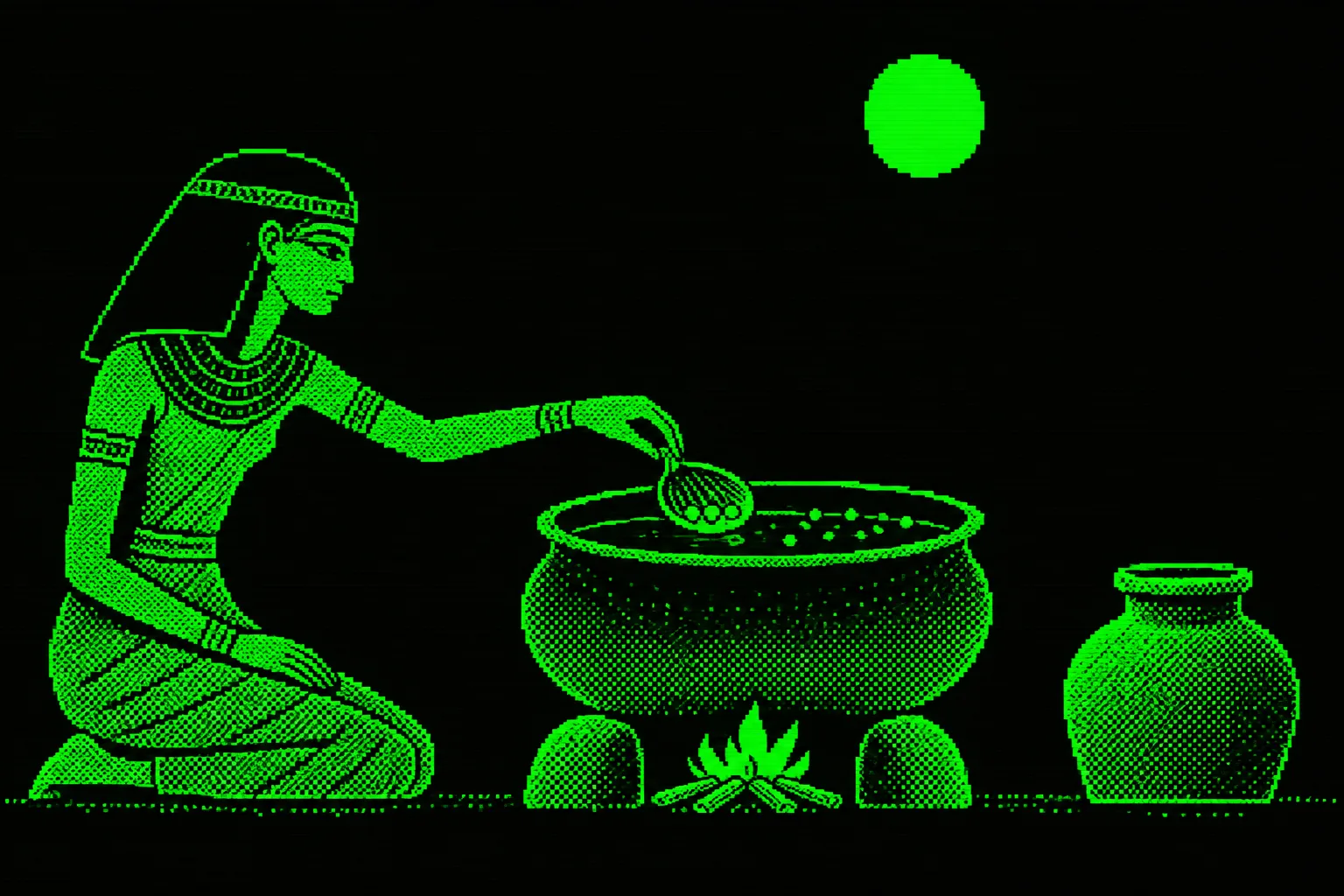
A recipe with no speaker named and no god invoked. It opens Here begins the book for turning an old man into a youth and then gives kitchen orders. Two khar of hemayt pods are pounded, dried in the sun, threshed as barley is threshed, boiled dry, washed in the river until the water has no bitter taste at all, then ground and boiled again.
A man uses a shell to skim off the oil as it rises. Stored in a stone jar, the oil is rubbed on the body: the skin grows more beautiful and the marks of age are cleared away. The last line vouches for it: An excellent remedy, tried a million times.
- 1
𓄂𓂝𓅓 𓏛𓏏𓏤𓍼 𓈖𓏏 𓁹𓏏 𓇋𓄿𓏲𓀗𓀀 𓅓 𓂋𓈖𓊪𓆳𓀔𓀀
ḥꜣ,t-ꜥ-m mḏꜣ,t n.t jri̯.t jꜣw m rnp
Here begins the book for turning an old man into a youth.
- 2
𓏎𓈖𓐍𓂋 𓏏𓏲 𓎛𓌳𓄿𓇋𓇋𓏏𓍖𓈒𓏥 𓂋𓉻𓏏𓏛𓅨𓂋𓏏 𓏇𓏏𓏏𓏛 𓆞𓂋𓎅 𓏤𓏤
jni̯.ḫr =tw ḥmꜣ,yt r-ꜥꜣ,t-wr,t mj,tt ẖꜣr 2
One must fetch a great quantity of hemayt pods, the equivalent of two khar.
- 3
𓈎𓈖𓈎𓈖𓏴𓂝𓐍𓂋 𓏏𓏲
qnqn.ḫr =tw
The pods must then be pounded.
- 4
𓂋𓂝 𓈖 𓆄𓏲𓇳
rḏi̯ n šw
Let them be set in the sun.
- 5
𓇋𓂋 𓅓𓆱𓐍𓏏𓂻 𓆄𓏲𓏲𓇳 𓁷𓏤𓐪𓂧𓏌𓏛 𓐍𓂋 𓏏𓏲 𓆓𓈖𓀜 𓏏𓏲 𓏇𓇋 𓆓𓈖𓀜 𓌾𓏥
jr m-ḫt šww ḥr-qd ḫr =tw ḏn =tw mj ḏn jt
Once they are dry through and through, they must be threshed as barley is threshed.
- 6
𓆼𓄿𓆼𓄿𓊡𓂝𓐍𓂋 𓏏𓏲 𓂋 𓊃𓊪𓊪𓊗𓏛 𓈖 𓉐𓂋𓏏𓍁𓈒𓏥 𓇋𓂋𓏭
ḫꜣḫꜣ.ḫr =tw r spp n pr,t jr,j
They must then be winnowed until only the seeds remain.
- 7
𓇋𓂋 𓆣𓂋𓏏𓏪 𓎟𓏏 𓇋𓅓 𓐍𓂋 𓏏𓅱 𓆼𓄿𓀜 𓏏𓏲 𓎛𓈖𓂝 𓂋𓂝𓏏 𓈖𓈎𓂋𓂝𓏏𓏲 𓋴𓐍𓂋𓏛𓏥 𓈖 𓈀𓈖𓉐 𓅓 𓈖𓈎𓂋𓏲𓎅𓏤
jr ḫpr.t.pl nb.t jm ḫr =tw ḫꜣi̯ =tw ḥnꜥ rḏi̯.t nqr.tw sḫr.pl n ⸮psḏn? m nqr.w
One must measure all that this yields and have the sweepings from the threshing floor sifted through a sieve.
Note · Line 7
The sweepings are not thrown away: the recipe uses both them and the seeds. - 8
𓆼𓄿𓂝 𓏇𓏏𓏏𓏛 𓆣𓂋𓏏𓏪 𓎟𓏏 𓅓 𓈖𓄿𓈖 𓉐𓂋𓏏𓍁𓈒𓏥
ḫꜣi̯ mj,tt ḫpr.t.pl nb.t m nꜣ-n pr,t
Let all that comes from these seeds likewise be measured.
- 9
𓁹 𓅓 𓊃𓊪𓊗 𓌡𓂝𓏤 𓅓 𓈖𓄿𓈖 𓉐𓂋𓏏𓍁𓈒𓏥 𓎢𓇋𓇋 𓅓 𓋴𓐍𓂋𓏛𓏥
jri̯ m sp 2 wꜥ m nꜣ-n pr,t ky m sḫr.pl
Let it be made into two portions, one of the seeds and the other of the sweepings.
- 10
𓁹 𓌡𓂝𓏤 𓏇𓇋 𓌡𓂝𓏤
jri̯ wꜥ mj wꜥ
Let one be made equal in measure to the other.
- 11
𓋴𓏠𓈖𓍖𓂝𓐍𓂋 𓏏𓏲 𓁹 𓅓 𓐍𓏏𓏛𓏥 𓌡𓂝𓏏𓏤 𓁷𓏤 𓈗
smn.ḫr =tw jri̯ m (j)ḫ,t wꜥ.t ḥr mw
The two portions, made into a single mass, must then be set to soak in water.
- 12
𓁹 𓅓 𓄞𓂧𓏏𓏌𓏥 𓎼𓈖𓏏𓈗
jri̯ m šd,t gn.t
Let the mixture be made into a soft dough.
- 13
𓂋𓂝𓐍𓂋 𓏏𓏲 𓅓 𓋴𓃀𓐍𓏊𓏤 𓌳𓄿𓏛 𓁷𓏤 𓐍𓏏𓊮
rḏi̯.ḫr =tw m sbḫ mꜣ(w) ḥr ḫ,t
It must then be put in a new sebekh pot over the fire.
- 14
𓊪𓆑𓋴𓊮 𓁷𓏤𓐪𓂧𓏌𓏛 𓂋 𓏠𓈖𓐍𓍊𓏛
pfs ḥr-qd r mnḫ
Let it be cooked through and through until well done.
- 15
𓂋𓐍𓏛 𓎢 𓊪𓆑𓋴𓋴𓊮 𓋴𓈖𓏥 𓁷𓏤 𓂝𓐍𓐍𓊮 𓈗 𓇋𓂋𓏭 𓁷𓏤 𓆄𓏲𓏲𓇳 𓋴𓈖𓏥 𓂋 𓃹𓈖𓈖 𓏇𓇋 𓋴𓐍𓂋𓏛𓏥 𓆄𓏲𓇳 𓂜𓈖 𓈖𓈎𓅱𓏏𓈗 𓂋 𓋴
rḫ =k pfss =sn ḥr ꜥḫḫ mw jr,j ḥr šww =sn r wnn mj sḫr.pl šw nn nqw,t r =s
You know the ingredients are cooked when their water steams away and they dry out until they are like dry sweepings, with no moisture left in the mixture.
- 16
𓄞𓂧𓂝𓐍𓂋 𓏏𓏲
šdi̯.ḫr =tw
They must then be taken off the fire.
- 17
𓇋𓂋 𓇋𓋴𓎢 𓋴𓏏 𓈎𓃀𓏁𓈗 𓂋𓂝𓐍𓂋 𓏏𓏲 𓂋 𓂝𓈖𓈋𓏲𓏊𓏤 𓂋 𓇋𓂝𓏏𓈗 𓋴𓏏 𓁷𓏤 𓇋𓏏𓂋𓏲𓈘𓈇
jr jsk st qb(.w) rḏi̯.ḫr =tw r ꜥnḏ,w r jꜥi̯.t st ḥr jtr,w
Once they have cooled, they must be put in an andju bowl to be washed in the river.
- 18
𓇋𓂝𓅱𓈗𓐍𓂋 𓏏𓏲 𓂋 𓏠𓈖𓐍𓍊𓏛
jꜥi̯.w.ḫr =tw r mnḫ
They must then be washed thoroughly.
- 19
𓂋𓐍𓏛 𓏏𓏲 𓇋𓂝𓂝𓈗𓀜 𓋴𓈖𓏥 𓁷𓏤 𓂧𓊪𓏯𓀁 𓏏𓏲 𓂧𓊪𓏏𓄓𓀁 𓈖𓄿𓈖 𓈗 𓈖𓏏𓏭 𓅓 𓅯𓄿 𓂝𓈖𓈋𓏲𓏊𓏤 𓂜𓈖 𓂧𓁷𓂋𓅪 𓎟 𓂋 𓋴
rḫ =tw jꜥꜥ =sn ḥr dp =tw dp,t nꜣ-n mw n,tj m pꜣ ꜥnḏ,w nn dḥr nb r =s
One knows they are washed by tasting the water in the andju bowl: it has no bitter taste at all.
- 20
𓂋𓂝𓐍𓂋 𓏏𓏲 𓈖 𓆄𓏲𓇳
rḏi̯.ḫr =tw n šw
They must then be set in the sun.
- 21
𓊃𓈙𓀜 𓁷 𓋳𓏲 𓈖 𓅺𓏏𓀜
sš ḥr ḥbs n rḫt(j)
Let them be spread out on a washerman’s cloth.
- 22
𓇋𓂋 𓇋𓋴𓏏 𓋴𓏏 𓆄𓏲𓏲𓇳 𓐩𓏌𓂝𓐍𓂋 𓏏𓏲 𓁷𓏤 𓃀𓈖𓏌𓏲𓏏𓊌𓏤 𓋴𓏲𓅠𓅓𓂝
jr jst st šw.w nḏ.ḫr =tw ḥr bnw,t swgm
Once dry, they must be ground to powder on a millstone.
- 23
𓋴𓏠𓈖𓍖𓂝𓐍𓂋 𓏏𓏲 𓁷𓏤 𓈗
smn.ḫr =tw ḥr mw
The powder must then be set to soak in water.
- 24
𓁹 𓏇𓇋 𓄞𓂧𓏏𓏌𓏥 𓎼𓈖𓏏𓈗
jri̯ mj šd,t gn.t
Let it be made like a soft dough.
- 25
𓂋𓂝𓐍𓂋 𓏏𓏲 𓅓 𓋴𓃀𓐍𓏊𓏤 𓁷𓏤 𓐍𓏏𓊮
rḏi̯.ḫr =tw m sbḫ ḥr ḫ,t
It must then be put in a sebekh pot over the fire.
- 26
𓊪𓆑𓋴𓊮 𓂋 𓏠𓈖𓐍𓍊𓏛
pfs r mnḫ
Let it be cooked thoroughly.
- 27
𓂋𓐍𓏛 𓏏𓏲 𓊪𓆑𓋴𓋴𓊮 𓁷𓏤 𓉐𓂋𓂋𓂻 𓊪𓈖𓋴𓏏𓈒𓏥 𓈖𓏏 𓌻𓂋𓎛𓏌𓏥 𓇋𓅓
rḫ =tw pfss =〈sn〉 ḥr prr pns,t.pl n.t mrḥ〈.t〉 jm
One knows the ingredients are cooked when beads of oil rise from them.
- 28
𓃹𓈖𓈖 𓊃𓀀𓏤 𓁷𓏤 𓊪𓈖𓈎𓂝 𓌻𓂋𓎛𓏏𓏌𓏥 𓉐𓂋𓏏𓂻 𓇋𓅓 𓅓 𓃀𓅡𓄿𓂧𓏏𓆩
wnn z ḥr pnq mrḥ,t pri̯.t jm m bꜣd,t
A man uses a shell to skim off the oil as it rises.
- 29
𓂋𓂝 𓅓 𓉔𓈖𓏌𓏲𓏊𓏤 𓂋𓐟𓏤 𓄿𓂧𓆊𓂝 𓆑 𓅓 𓋴𓇋𓆛𓈖𓈇𓏥
rḏi̯ m hnw r-sꜣ ꜣd =f m sjn
Let the oil be put into a hin jar after the jar has been lined with clay.
Note · Line 29
A hin was a liquid measure of about half a liter. - 30
𓊃𓈖𓂝𓂝𓏞𓏛 𓋴𓏲𓂸𓏏𓏛 𓄿𓂧𓆊𓏛𓏥 𓆑
snꜥꜥ swmt ꜣd =f
Let the jar be smoothed and its lining thickened.
- 31
𓊪𓈖𓈎𓂝 𓇑𓇑𓈖𓈖 𓌻𓂋𓎛𓏏𓏌𓏥
pnq nn-n mrḥ,t
Let this oil be skimmed off.
- 32
𓂝 𓁷𓏤 𓊶𓊪𓏏𓋳 𓅓 𓐞𓏤 𓈖 𓁷𓂋𓏭𓇯 𓉔𓈖𓏌𓏲𓏊𓏤 𓊪𓈖
ḏi̯ ḥr kꜣp,t m gs n ḥr,j hnw pn
Let it be placed on a covering cloth in the upper half of this hin-jar.
- 33
𓇋𓂋 𓅓𓆱𓐍𓏏𓂻 𓂋𓂝𓐍𓂋 𓏏𓏲 𓂋 𓎛𓆰𓈖𓏌𓏲𓏊𓏤 𓈖 𓉻𓏏𓏯𓊌
jr m-ḫt rḏi̯.ḫr =tw r ḥn,w n ꜥꜣ,t
After that, the oil must be transferred to a henu-jar of fine stone.
- 34
𓅨𓂋𓎛𓏌𓂝 𓊃𓀀𓏤 𓇋𓅓
wrḥ z jm
Let the man be anointed with it.
- 35
𓂧𓂋𓀜 𓏃𓈖𓏏𓂊 𓊪𓏲 𓅓 𓁶𓏤
dr ḫnt pw m tp
This clears the head of the khent ailment.
- 36
𓇋𓂋 𓋴𓎝𓎢𓂝𓏏𓏲 𓎛𓂝𓄹𓏪 𓇋𓅓 𓉐𓂋𓂋𓂻 𓋴𓄤𓆑𓂋 𓈖 𓇋𓆛𓈖𓌰𓅓𓁸𓏛
jr sk.tw ḥꜥ,pl jm prr snfr n jnm
When the body is rubbed down with it, the skin grows more beautiful.
- 37
𓂧𓂋𓀜 𓈖𓆓𓂝𓏲𓐎𓏥 𓇋𓐛𓅓𓈙𓏏𓐎𓏥 𓎟𓏏 𓏏𓈖𓇋𓐎𓏥 𓎟 𓋴𓂋𓆑𓏏𓐎𓏥 𓎟𓏏 𓃹𓈖𓈖𓏏 𓅓 𓎛𓂝𓄹𓏪
dr nḏꜥ,w jmš,t nb.t tnj nb srf,t nb.t wnn.t m ḥꜥ,pl
The nedjau marks of age, every imeshet blemish, every teni complaint of old age, and every inflammation of the skin on the body are cleared away.
Note · Line 37
Nedjau, imeshet, and teni are names for signs or ailments of aging. Just which ones they describe is unknown. - 38
𓍱𓏤𓏛𓏥 𓁨𓏤 𓈖 𓊃𓊪𓊗
šs ḥḥ n sp
An excellent remedy, tried a million times.