~/sacred-texts/edfu-temple-texts
Where the Sacrificial Crocodiles Are Slaughtered: The Edfu Pylon, Part IV
- Text
- Edfu temple texts, Edfou VIII, pp. 125–170
- Date
- Carved on the pylon under Ptolemy XII (80–51 BC)
- Found
- Temple of Horus, Edfu, Upper Egypt: the pylon (Chassinat, Le temple d'Edfou VIII)
- Language
- Ptolemaic Egyptian · Hieroglyphic
- 1
[... ...] .. [...].. n.f pt
… for him the sky.
Note · Line 1
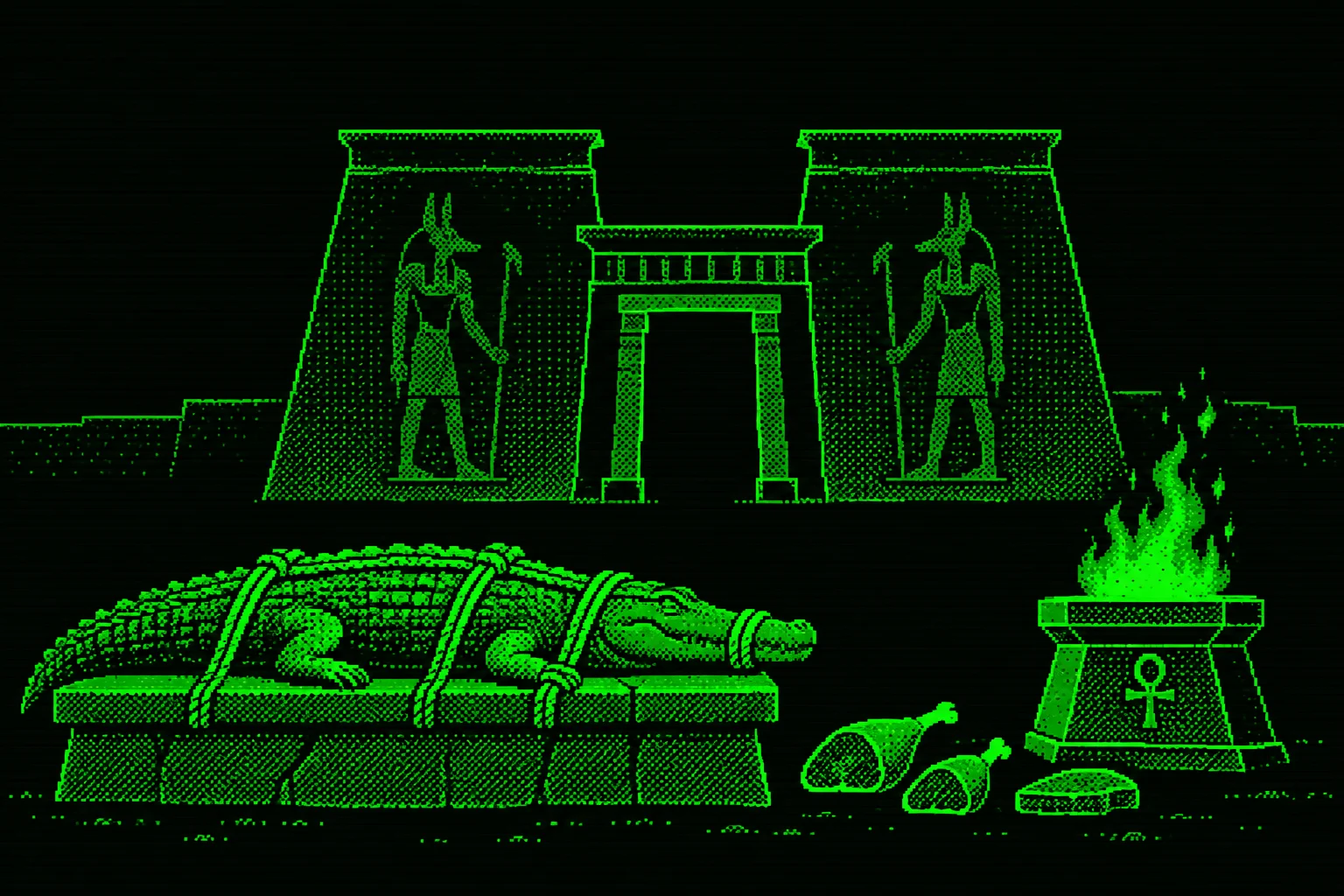
Only the end of the opening phrase survives. The inscriptions belong to different scenes on the pylon, the monumental temple gateway with a tower on either side. - 2
Bḥdtj nṯr ꜥꜣ nb pt sꜣb šwt prj m ꜣḫt
The Behdetite, the great god, lord of the sky, many-colored of plumage, who comes forth from the horizon.
Note · Line 2
“The Behdetite” means “he of Behdet.” Behdet is a sacred name of Edfu, where Horus appears as a falcon or as a winged sun disk. - 3
Ḥr Bḥdtj nṯr ꜥꜣ nb pt wn.f jrtj.f prj hrw ꜥnḫj ꜥnḫ.tw n mꜣꜣ.f
Horus the Behdetite, the great god, lord of the sky: when he opens his two eyes, day breaks. He is the living one by whose gaze people live.
Note · Line 3
The light by which people see and live is itself the gaze of Horus. - 4
(… …)
Ptolemy XII.
Note · Line 4
The king’s names are enclosed in ovals called cartouches. The pair gives the name he took at his coronation and his birth name, not the names of two different kings. - 5
(… …)
Ptolemy XII.
- 6
Nḫbt ... ...] m wpt nṯrw nbw
Nekhbet … the rearing cobra on the crown of every god’s head.
Note · Line 6
Nekhbet, the vulture goddess of Upper Egypt, can also appear as the rearing cobra called the uraeus. Worn on the brow, it guards whoever wears it. - 7
[... ... m ꜥwj.s
… with her two wings.
- 8
[... ... m ꜥwj.s
… with her two wings.
- 9
Wꜣḏt ... ...] ḫwjt sꜣ.s Ḥr m sš.f
Wadjet … who guards her son Horus in his nest.
Note · Line 9
Wadjet, the cobra goddess of Lower Egypt, is Nekhbet’s northern counterpart. Together they protect the king as ruler of both halves of Egypt. - 10
(… …)
Ptolemy XII.
- 11

(… …)
Ptolemy XII.
- 12
Ḥr Bḥdtj nṯr ꜥꜣ nb pt ... ...] .. ꜥq ꜥq.tw m ḫt.f
Horus the Behdetite, the great god, lord of the sky, … who enters, and after him others enter.
- 13
Bḥdtj nṯr ꜥꜣ nb pt sꜣb šwt prj m ꜣḫt
The Behdetite, the great god, lord of the sky, many-colored of plumage, who comes forth from the horizon.
- 14
Ḥr Bḥdtj nṯr ꜥꜣ nb pt ꜣgb jdbw wꜥ wꜥw nn snnw.f
Horus the Behdetite, the great god, lord of the sky, who waters the lands along the river, the one and only, who has no equal.
- 15
(… …)
Ptolemy XII.
- 16
(… …)
Ptolemy XII.
- 17
Nḫbt ... ...] sbj jrjt n.s jt.s nswjt.f
Nekhbet … the rebel, she to whom her father gave his kingship.
Note · Line 17
Nekhbet’s father here is Ra, the sun god. - 18
[... ... m ꜥwj.s
… with her two wings.
- 19
[... ... m ꜥwj.s
… with her two wings.
- 20
Wꜣḏt ...] m nfrw.s nbt tꜣ ḥnwt nṯrw nbw
Wadjet … in her perfection, lady of the land, mistress of all the gods.
- 21
(… …)
Ptolemy XII.
- 22
(… …)
Ptolemy XII.
- 23
Ḥr Bḥdtj nṯr ꜥꜣ nb pt ... ...] ẖr st rꜣ.f wpš msqt m stwt.f
Horus the Behdetite, the great god, lord of the sky, … under his command, who lights the underworld with his rays.
Note · Line 23
At night the sun was believed to travel through the realm of the dead, bringing light to those who dwelt there. - 24
Bḥdtj nṯr ꜥꜣ nb pt sꜣb šwt prj m ꜣḫt
The Behdetite, the great god, lord of the sky, many-colored of plumage, who comes forth from the horizon.
- 25
Ḥr Bḥdtj nṯr ꜥꜣ nb pt psḏ m bꜣẖ m ẖrt hrw sḥḏ pt tꜣ m stwt.f
Horus the Behdetite, the great god, lord of the sky, who shines each day in the eastern mountain and lights sky and earth with his rays.
- 26
(… …)
Ptolemy XII.
- 27
(… …)
Ptolemy XII.
- 28
Nḫbt ... ...] ḥnwt nṯrw nṯrwt
Nekhbet … mistress of the gods and goddesses.
- 29
Ḥr Wntj
Horus Unti.
- 30
Nḫbt ḥḏt Nḫn Nḫbt ḥḏt Nḫn ꜣwjt ꜥ nbt Fꜥg
Nekhbet, the White One of Nekhen. Nekhbet, the White One of Nekhen, she of the outstretched arm, Lady of Fag.
Note · Line 30
Nekhen was an early seat of kingship in Upper Egypt. Nekhbet’s outstretched arm recalls the vulture spreading her wings over the king. - 31
Wꜣḏt jnk mwt.k ḫw.j ḥꜣ.k jrj.j sꜣ.k r ḫftjw.k
Wadjet: “I am your mother. My protection surrounds you; I guard you against your enemies.”
- 32

Jḥj wr sꜣ Ḥt ḥr sḏtj šps n Nb r ḏr
Ihy the Great, son of Hathor, noble child of the Lord of All.
Note · Line 32
Ihy is the child musician who plays for his mother Hathor. - 33

Pḥtj
The Strong One.
Note · Line 33
The short names that follow label divine figures on the gateway. Many name a guardian by the strength, weapon or particular skill he brings to its defense. - 34

Ꜥnjꜣwtj
Kheniauti.
- 35

{mꜣsmꜣ
He Who Unites with Might.
- 36
Ḥmj ꜥ
He of the Arm That Wards Off.
- 37

Sḫm
The Mighty One.
- 38

Nꜥjtj
Naiti.
- 39

Ꜥtjtj
He Who Drives Back.
- 40
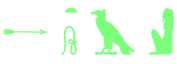
Wr mtw
He of the Mighty Sinews.
- 41

Ḫs rꜣ
He of the Piercing Mouth.
- 42
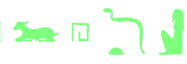
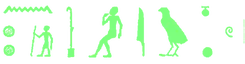
Wdj nfwt
He Who Breathes Out Fire.
- 43
[... ... ...]
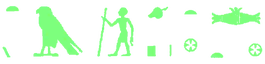
[gap in the text]
- 44
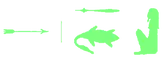
ꜥꜣ snḏ
He Who Inspires Great Dread.
- 45
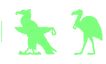
Jkntj
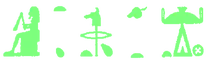
Ikenti.
- 46
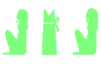
Ḥnṯtj
The Butcher.
- 47
[... ... ...]
[gap in the text]
- 48
Ḥr Wntj
Horus Unti.
- 49
Nḫbt ḥḏt Nḫn ꜣwjt ꜥ nbt Fꜥg
Nekhbet, the White One of Nekhen, she of the outstretched arm, Lady of Fag.
- 50
Wꜣḏt jnk mwt.k ḫw.j ḥꜣ.k jrj.j sꜣ.k r ḫftjw.k
Wadjet: “I am your mother. My protection surrounds you; I guard you against your enemies.”
- 51
Wp wꜣwt šmꜥw sḫm tꜣwj
Wepwawet of Upper Egypt, power of the Two Lands.
Note · Line 51
Wepwawet is a jackal god whose name means “Opener of the Ways.” The Two Lands are Upper Egypt in the south and Lower Egypt in the north. - 52
Ḏḥwtj ꜥꜣ ꜥꜣ nb Ꜥmnw
Thoth, twice great, lord of Hermopolis.
Note · Line 52
Hermopolis was the chief center of worship of Thoth, god of writing, reckoning and the moon. - 53
ḫntj Jw nšnj
Foremost of the Isle of Fury.
- 54
Wp wꜣwt mḥw sḫm n pt
Wepwawet of Lower Egypt, power of the sky.
- 55
[... ... ...]
[gap in the text]
- 56
Ꜥns
Khenes.
- 57

Wṯs
The Raiser.
- 58

ꜥꜣ ꜥwj
He of the Great Arms.
- 59
Ḥfd
He Who Takes Flight.
- 60

Sšwj
He Who Lifts on High.
- 61

Nbj ḫpš
He Who Forges Strength.
- 62

ꜥrj ḫnt
He Who Rises First.
- 63

Wr ds
He of the Great Knife.
- 64
Twꜣ
The Upholder.
- 65

Nḫt
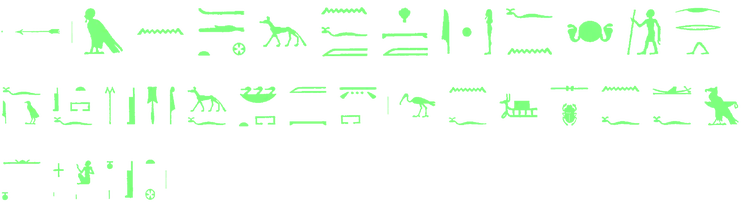
The Strong One.
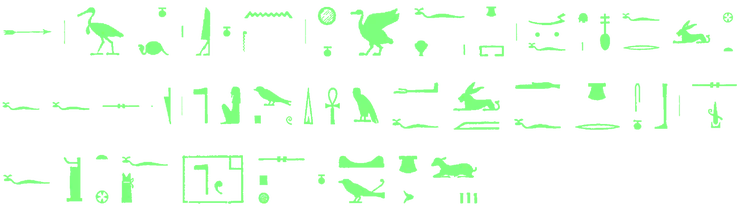
- 66
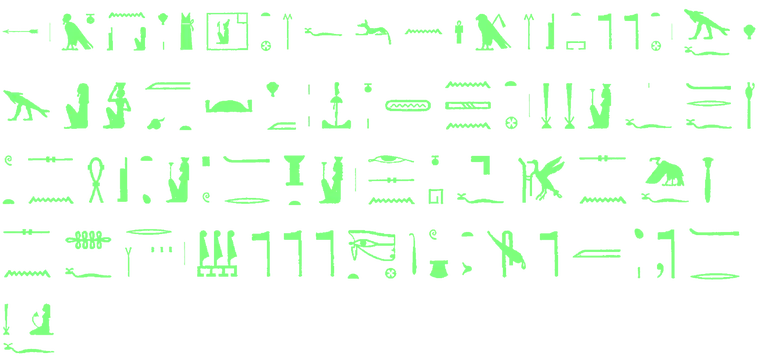
Jwhtj
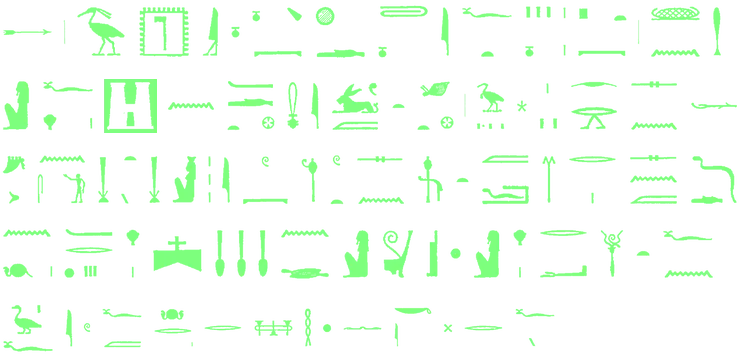
He Who Lifts Aloft.
- 67
[... ... ...]
[gap in the text]
- 68
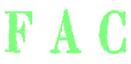
Nb mꜥbꜣ
Lord of the Maba Spear.
- 69

Bnbn
Benben.
- 70

{bjtj
The Banisher.
- 71
[... ... ...]
[gap in the text]
- 72

[... ... ...] Ḥr ꜣḫtj Ḥr Bḥdtj nṯr ꜥꜣ nb pt ḥtp.f jm.s ẖrt hrw m ꜥpj wr ḥrj nṯrw ꜥḥꜥ.f ḥr.sn m ꜥq St wrt ꜣms jb.f m tp nfr ẖnm.n.f sꜣt wrt m ḫntj.s [... ...]
… of Horakhty, where Horus of Behdet, the great god, lord of the sky, alights each day as the great Api, chief of the gods. He stands upon them as he enters the Great Seat, his heart rejoicing in its good order once he has joined the Great Daughter within it. …
Note · Line 72
Api is a falcon form of Horus. The Great Seat is his temple at Edfu, and the Great Daughter he meets there is Hathor. - 73
nṯr nfr snn n Ḥr šsp ꜥnḫ ntj Nḏ jt.f nswt bjt nb tꜣwj (… …) mrj Ḥr Bḥdtj nṯr ꜥꜣ nb pt Nb Msn
The perfect god, the image of Horus, the living likeness of him who avenges his father, the king of Upper and Lower Egypt, lord of the Two Lands, Ptolemy XII, beloved of Horus of Behdet, the great god, lord of the sky, lord of Mesen.
Note · Line 73
Seth killed Osiris, whose son Horus avenged him and inherited his throne. By calling Ptolemy the living likeness of that son, the inscription gives the king a place in the succession. - 74

[... ... ... .]. [... ... ...] wr
… . … great.
- 75
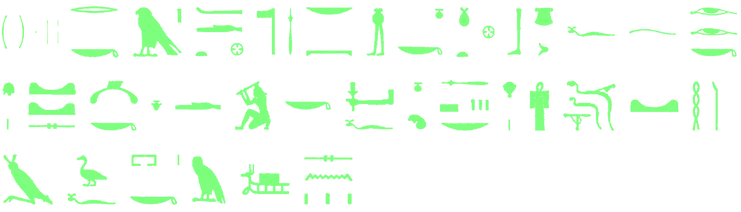
[... ... ... ... ... ... ... ...] jw.n . ..] ḫr.k Ḥr Bḥdtj nṯr ꜥꜣ nb pt jnj.f n.k Gbtjw ẖr jmjt.s jrtj.k tp ḏww.s ꜣwj jb.k [... ... ..] n ḫftj.k ḫrp.f n.k ꜥꜣwt nbt ḥr sꜣ ṯnwj ḥtm.f pr.k m bjꜣjt.sn
… has come before you, Horus of Behdet, great god, lord of the sky, to bring you Coptos with what it holds: your two eyes upon its mountains. Your heart rejoices … for your enemy is no more. He brings you every kind of precious stone from the hills along the Nile and adorns your house with their splendor.
Note · Line 75
Coptos stood at the Nile end of routes to the mines and quarries of the Eastern Desert, hence its gift of stone for the temple. Horus’s right eye was identified with the sun and his left with the moon. - 76
[... ... ... ...] Tꜣ rr
… Tarer.
Note · Line 76
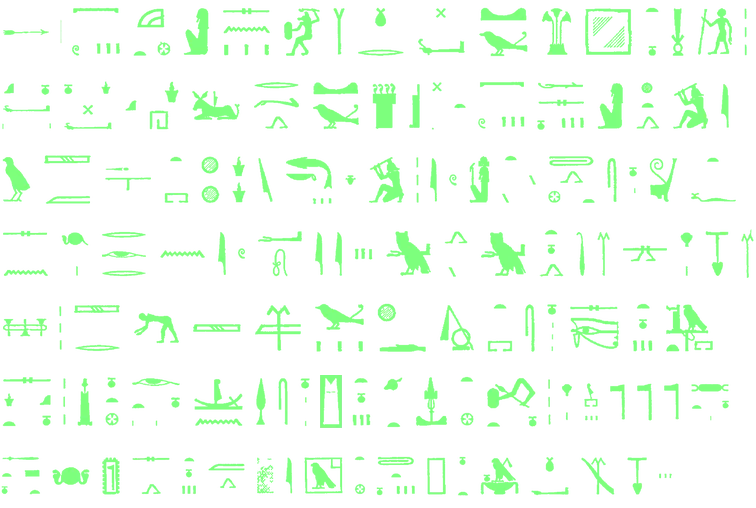
Tarer is a sacred name of Dendera, the city of Hathor. - 77
ḏd mdw jn Ḥt ḥr nbt Jwnt jrt Rꜥ nbt pt ḥnwt nṯrw nbw
Words to be spoken by Hathor, lady of Dendera, Eye of Ra, lady of the sky, mistress of all the gods.
Note · Line 77
As the Eye of Ra, Hathor is the sun god’s power to go out into the world and act on his behalf, especially to defend him. - 78

ḏd mdw jn Nfr ḥtp nṯr ꜥꜣ m Ḥt sḫmw sḫm šps m Ḥt [...]
Words to be spoken by Neferhotep, the great god in the House of the Sistrum, the august power in the House of …
Note · Line 78
A sistrum is a rattle used in worship, particularly in the worship of Hathor. - 79

ḏd mdw jn Wsjr ḫntj jmntt nṯr ꜥꜣ nb ꜣbḏw Wsjr nṯr ꜥꜣ m Bḥdt
Words to be spoken by Osiris, foremost of the West, the great god, lord of Abydos, Osiris, the great god in Behdet.
Note · Line 79
The west, where the sun sets, was associated with the realm of the dead, over which Osiris rules. Abydos was one of his principal places of worship. - 80

ḏd mdw jn Mnw nb Jpw nṯr ꜥꜣ n Bḥdt qꜣj šwtj jwh nḫꜣḫꜣ
Words to be spoken by Min, lord of Akhmim, great god of Behdet, whose twin plumes rise high, who raises the flail.
Note · Line 80
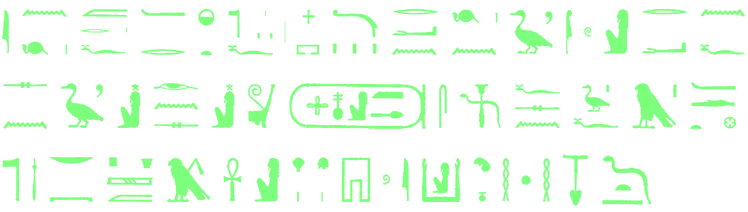
Min is a god of fertility. The tall feathered crown and the flail held aloft distinguish his figure in temple scenes. - 81

ḏd mdw jn Ḥr mꜣꜥtj nb Wꜣḏt nṯr ꜥꜣ m [... ... ...]
Words to be spoken by Horus the Justified, lord of the province of Wadjet, the great god in …
- 82

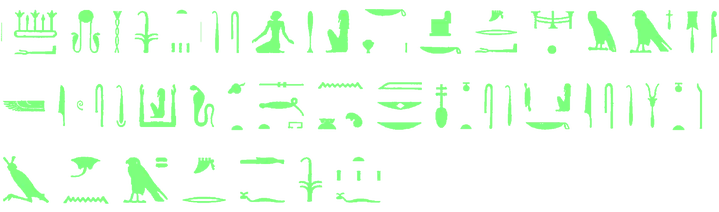
ḏd mdw jn H̱nmw nb Šꜣs ḥtp nṯr ꜥꜣ m Ḥt [...]
Words to be spoken by Khnum, lord of Shashotep, the great god in the House of …
- 83

ḏd mdw jn Nmtj Ḥr ꜥꜣ sꜣ Wsjr sḫm šps nb St Rꜥ
Words to be spoken by Nemty, Horus the Great, son of Osiris, the august power, lord of the Seat of Ra.
Note · Line 83
The Seat of Ra is another name for Edfu. - 84

ḏd mdw jn Wp wꜣwt nb {ꜣwtj [...]
Words to be spoken by Wepwawet, lord of Asyut …
- 85
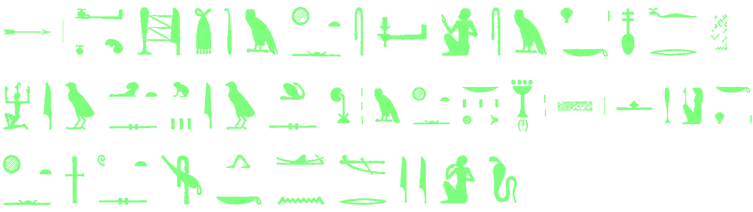
mn n.k ꜥꜣbt ꜥpr.tj m jḫt.s ḫrp.j sj m ḥr.k nfr ḥḥ r ḥꜣt.s ḥfnw r pḥwj.s ḫꜣw m jḫt nbt ḫr ḫꜣwwt.k ḥtp ḥm.k ḥr jḫt jmj wtj.s sšm.k jm n mrwt.k
Receive the great food offering with all its provisions.
I set it before your fair face.
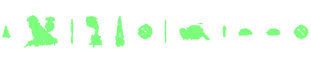
Millions at its head, hundreds of thousands at its end,
thousands of every good thing upon your altars.
May Your Majesty delight in what it holds,
and may you take from it as you wish.Note · Line 85
The king is speaking to the god, not the other way around: “Your Majesty” here is the recipient of the food. The enormous numbers express the wish that the altars should never lack provisions. - 86

nswt bjt nb tꜣwj (… …) sꜣ Rꜥ nb ḫꜥw (… …) Ḥꜥpj n Kmt Wꜣḏḏ n jmj.s mꜣꜥ ꜥꜣbt ḫr nṯrw nbw
The king of Upper and Lower Egypt, lord of the Two Lands, Ptolemy XII, son of Ra, lord of crowns, Ptolemy XII, Hapy of Egypt, the Wadjedj serpent of him who dwells there, who brings the great food offering to all the gods.
Note · Line 86
Hapy personifies the Nile flood that feeds Egypt. The king takes Hapy’s role when he brings the harvest to the gods. - 87
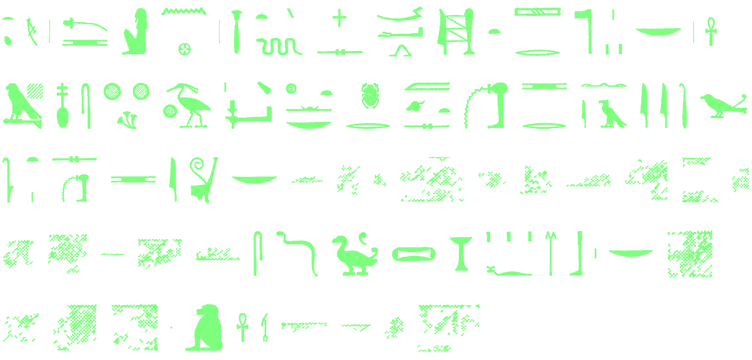
nṯr nfr sꜣḫꜣḫ ꜣḫt ḫrp jḫt nbt ḫprt m ḫntj.s wꜥbt r ꜥb n jꜣdt rnpt swꜥbt jn nb [... ... ...] .. sḏfꜣ ḫꜣwwt.f m bw nb nfr ... ... ... ...]
The perfect god, who makes the fields green and brings all that grows in them, clean of defilement, free of the pestilence of the year, purified by the lord …, who supplies his altars with every good thing …
Note · Line 87
The “perfect god” here is Ptolemy. The turn of the Egyptian year was considered a particularly dangerous time for outbreaks of disease. - 88
rdj.j n.k jḫt nbt wbnt.j ḥr.sn twr.tj r ꜥb nb ḏw
“I give you all that I rise over, free of every foul stain.”
Note · Line 88
The sun god now answers the king: in return for the offering, he grants the king the produce of everything under the sun. - 89
ḏd mdw jn Ḥr Bḥdtj nṯr ꜥꜣ nb pt Rꜥ Ḥr ꜣḫtj wbn m [.. hꜣj n ꜣḫt qjs rnpwt mḥ pt tꜣ m nfrw.f bjk nṯrj ṯḥn šwt šnbtj nb šwtj wrtj
Words spoken by Horus of Behdet, the great god, lord of the sky, Ra-Horakhty, who rises in …, husband of the field that spews forth fresh shoots, who fills sky and earth with his beauty, the divine falcon of gleaming plumage, the Shenebty falcon, lord of the two great plumes:
Note · Line 89
Ra-Horakhty means “Ra, Horus of the Two Horizons,” joining the sun’s rising and setting in one divine name. The two plumes are feathers of his crown. - 90

rdj.j n.k ḥnbwt nbt nt tꜣ [... ..].f
“I give you all the fields of the whole earth.”
- 91

ḫꜥj m bꜣẖ stj ww r nw.sn [... ..]. nṯr šps [... .]. [... ...] tꜣ m rꜣ ꜥwj.f .. ... ...] wr nb ꜣḫt Ḥr Bḥdtj nṯr ꜥꜣ nb pt sꜣb šwt prj m ꜣḫt
He who appears on the eastern mountain, who casts his rays on the farmlands in their season …, the august god … the earth by the work of his hands …, the great …, lord of the bounty of the fields, Horus of Behdet, the great god, lord of the sky, dappled of feather, who comes forth from the horizon.
- 92

twꜣ twꜣjt twꜣjt twꜣ ḥr ꜥwj.j Ḥr ꜣḫtj mj ꜥq sj smnt snb.tj n sbjw jm.s sꜣ.k ḥꜣ sꜣ.k Wsjr sꜣ.k jr.j sjꜥr.f n.k kꜣ.k nb nṯrw nwt.k n.k
Upholding the Upheld One.
“The Upheld One is upheld on my arms.
Horakhty, come and enter her.
The Steadfast One is sound; no rebels are in her.
May your protection surround your son, Osiris.
I am your son, who lifts your ka to you.
Lord of the gods, your sky is yours!”Note · Line 92
The king holds up the sky, addressed as a female being under the names “Upheld One” and “Steadfast One,” so that the sun god can enter her. The ka is the vital power of a god or a person. - 93
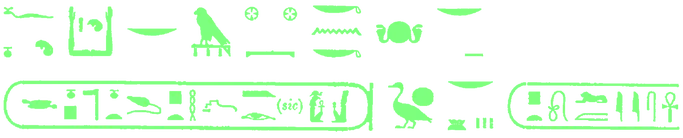
nswt bjt nb tꜣwj (… …) sꜣ Rꜥ nb ḫꜥw (… …)
The King of Upper and Lower Egypt, lord of the Two Lands, Ptolemy XII; the Son of Ra, lord of crowns, Ptolemy XII.
- 94
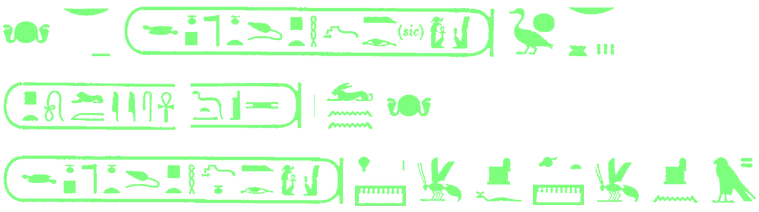
wnn nswt bjt (… …) ḥr mn bjt.f ḫnt Mn bjt nt Ḥr ꜣḫtj ḥr rmnj ṯst ḥr twꜣ ḥrt ḥr jwh pt n nb pt sw mj Ptḥ Tꜣ ṯnn ḥr ḫj ḫjt twꜣ ꜥwj ḥr kꜣwt gbt
The King of Upper and Lower Egypt, Ptolemy XII, is on his throne in the Throne of Horakhty. He bears the Raised One, upholds the Distant One, and lifts the sky for the lord of the sky. He is like Ptah-Tatenen, who holds the High One high and raises both arms to bear the sky.
Note · Line 94
The Throne of Horakhty is Edfu. The king models his gesture on that of Ptah-Tatenen, a creator god who bears up the sky. - 95

ḏd mdw jn Ḥr Bḥdtj nṯr ꜥꜣ nb pt Ḥr jꜣbtt wbn m bꜣẖ ꜥpj šps ḫwj gsw prw nṯrw sḥḏw wr sḥḏ tꜣwj
Words spoken by Horus of Behdet, the great god, lord of the sky, Horus of the East, who rises in the eastern mountains, the august Api, who guards the temples of the gods, the great giver of light who lights the Two Lands:
- 96
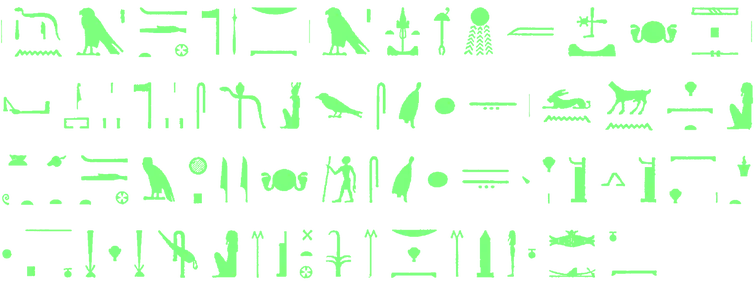
wnn ẖn ḥrt ḫꜥj.tj ḫnt Bḥdt m ḫprr wr sḥḏ tꜣwj ḥr ṯst ṯst ḥr bd tꜣ pn ḥr snsn sšmw.f m St wrt sw m nb ḥrt smn.f n Msn ḏꜣj.n.f pt sḫn.f Wṯst
He who crosses the sky has appeared in Behdet as the great scarab who lights the Two Lands. He raises the Raised One, brightens this land, and unites with his image in the Great Seat. He is lord of the sky; his likeness is in Mesen. Having crossed the sky, he seeks out the Throne.
Note · Line 96
The scarab beetle represents the morning sun. At Edfu, also called Mesen and the Throne, the celestial god was believed to enter his statue, making him present in the sanctuary. - 97
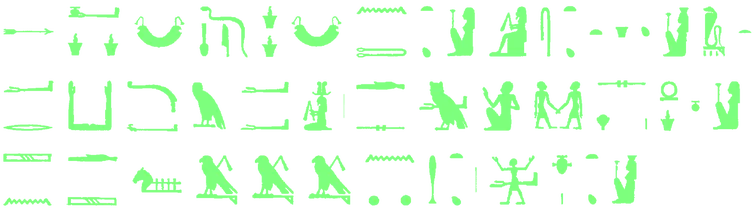
ḥnk bb ḏd mdw bb n.ṯ špst ḥnwt nṯrwt ꜥrq m ꜥwj Ptḥ Tꜣ ṯnn šsp sw m ꜥ.j snsn sw ḥr šnbt.ṯ ḫntš nṯrw n mꜣꜣ ḥmt.ṯ ḥꜥj jb.ṯ prj.ṯ r ḥꜣ ḥtp kꜣ.ṯ ḥr rꜣ ꜥwj.f
Offering the collar. Words to be spoken: “A collar for you, noble lady, mistress of the goddesses, wrought by the hands of Ptah-Tatenen. Take it from my hand and clasp it to your breast; the gods will rejoice to see Your Majesty. Your heart is glad when you go forth, and your ka is content with what the collar does.”
Note · Line 97
The king offers the collar to Hathor. When she “goes forth,” it is her adorned image that is carried out of the sanctuary in procession. - 98
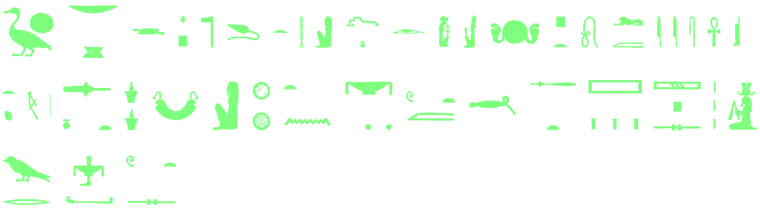
sꜣ Rꜥ nb ḫꜥw (… …) nswt bjt nb tꜣwj (… …)
The Son of Ra, lord of crowns, Ptolemy XII; the King of Upper and Lower Egypt, lord of the Two Lands, Ptolemy XII.
- 99
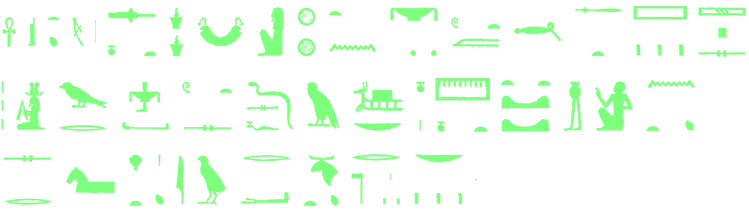
mn n.ṯ bb jrt ḫḫ nt nb mḥ.tj m ꜥꜣwt špswt Ptḥ Tꜣ ṯnn wr nbj sw ḏs.f m bjꜣjt nbt nt mntj jnj.j n.ṯ sw r ḫntš ḥr.ṯ r rdt šfjt.ṯ r nṯrw nbw
“Accept the collar, a neckpiece of gold set with precious stones. Great Ptah-Tatenen himself fashioned it from every marvel of the mountains on the two banks. I bring it to you to brighten your face, that the awe you inspire may surpass that of all the gods.”
- 100
rdj.j n.k ḏww ẖr ꜥꜣwt špswt m bjꜣjt nbt nt mꜣꜣ
“I give you the mountains laden with precious stones, every kind of marvel to behold.”
Note · Line 100
Hathor answers the gift of a single collar by granting the king the mountains from which its gold and stones came. - 101
ḏd mdw jn Ḥt ḥr nbt Jwnt jrt Rꜥ ḥrt jb Bḥdt špst wsrt ḥnwt nṯrw nṯrwt nbt ẖkrw ṯḥnt ḫꜥw qꜣꜥt n.s mntj bjꜣjt.sn
Words spoken by Hathor, lady of Dendera, Eye of Ra, who dwells in Behdet, the noble one, the mighty one, mistress of gods and goddesses, lady of adornment, radiant when she appears, for whom the mountains on both banks disgorge their marvels:
- 102
rdj.j n.k Ḫh ẖr sꜣwj Jstrnn ẖr ꜥrqwr qmꜣ n.k Ršt ḥnꜥ Tfrrt mfkꜣt ḫsbḏ r jmj wtj.sn ḏsr n.k ṯnwj ẖr ꜥꜣwt špswt ḥr ḫrp jḫt.sn r ꜥꜣjt.k
“I give you Heh laden with Saui-gold and Isterenen laden with silver. I grant that Reshet and Tefreret yield up for you the turquoise and lapis lazuli that lie between them, and that the mountains on both banks stand resplendent for you, laden with precious stones, bringing their riches to your house.”
- 103
mn n.k ḏw n bꜣẖ m ḥr.k wbn.k m sfj m ḫntj.f wn.k jrtj.k ḫpr hrw ꜥẖn.k sn ḫpr grḥ prj rmṯw m jrtj.k nṯrw m rꜣ.k sš.tw ḥwt nṯrw m ḫꜥw.k
“Take for yourself the eastern mountain before you; may you rise within it as a child.
You open your eyes and it is day;
you close them and it is night.
From your eyes come people, from your mouth the gods.
At your rising the temples are opened.”Note · Line 103
In an Egyptian creation story, people spring from the sun god’s tears. The Egyptian words for “tears” and “people” sound alike. - 104

nswt bjt nb tꜣwj (… …) sꜣ Rꜥ nb ḫꜥw (… …) jwꜥw mnḫ n Bḥdtj pẖr nst n Ḥr ꜣḫtj
The King of Upper and Lower Egypt, lord of the Two Lands, Ptolemy XII; the Son of Ra, lord of crowns, Ptolemy XII, worthy heir of Horus of Behdet, successor to the throne of Horakhty.
- 105
jw.n.j ḫr.k psḏ m nb ṯsj.j n.k ꜣḫt ẖr bꜣ.k rdj.k tp.k m nwt m ḥwn rnpj ꜥnḫ ḥr nb n ptr.k ṯwt jr.k wbꜣ nḥp m ḏt.f mḥ.k tꜣ m nqr
“I have come to you, you who gleam in gold, to lift for you the horizon that bears your ba, that you may raise your head in the sky as a boy in the bloom of youth. Every face lives at the sight of you. It is you who set the potter’s wheel turning at dawn and fill the earth with gold dust.”
Note · Line 105
A god’s ba is the form in which he can travel and make his presence felt beyond his shrine. The potter’s wheel turning at sunrise pictures the world being made anew each morning. - 106
rdj.j n.k Kmt ḥtp ḥr mw.k rꜣ ꜥ stwt jtn.j ḫꜣb n bꜣw.k
“I grant you Egypt at peace and loyal to you, and all that the rays of my sun disk reach bowed before your might.”
- 107

ḏd mdw jn Ḥr Bḥdtj nṯr ꜥꜣ nb pt sꜣb šwt prj m ꜣḫt Rꜥ Ḥr ꜣḫtj ḫnt St wrt sḥḏw wr sḥḏ tꜣwj m stwt.f
Words spoken by Horus of Behdet, the great god, lord of the sky, dappled of feather, who comes forth from the horizon, Ra-Horakhty in the Great Seat, the great giver of light who lights the Two Lands with his rays:
- 108
jw.tj m ḥtp nswt n Tꜣ mrj šsp ꜥnḫ n bjtj Rꜥ šsp.j wnwt.k msḫꜣ.j ḥr jrw.k tfn jb.j n dgt ḥm.k rdj.j n.k ṯnṯꜣt r ḫꜥt jm.s sbḫt tꜣ pn ẖr nfrw.k
“Welcome in peace, king of Egypt, living image of King Ra. I accept your service, I delight in your deeds, and my heart is glad at the sight of Your Majesty. I give you the royal throne on which to appear in glory, and grant that your splendor reign in the palace of this land.”
- 109

ḏmt nt sjꜣw ḏr jw.n.f m gbt m sštꜣ.f n Bḥdtj smꜣ.f ḥr smn.f m ḫntj St wrt ẖnm.f nwt.f m ḥꜥꜥwt ḫwj.f sꜣ.f mrj.f nswt bjt nb tꜣwj (… …) sꜣ Rꜥ nb ḫꜥw (… …) ḫntj kꜣw ꜥnḫw ḏt
The falcon’s perch when he has come from the sky in his hidden form as Horus of Behdet, to unite with his image in the Great Seat and join his city in jubilation. May he protect his beloved son, the King of Upper and Lower Egypt, lord of the Two Lands, Ptolemy XII, the Son of Ra, lord of crowns, Ptolemy XII, foremost of the kas of the living, forever.
Note · Line 109
The gate itself is the perch: the falcon can alight there from the sky and enter his temple. - 110
nṯr nfr ḫꜥj m ꜣḫ bjt rr.n sntj r nb ḥwn nfr ṯḥn ḫꜥw ḥꜥj nṯrw rmṯw n mꜣꜣ.f nswt bjt Ḥr Bḥdtj nṯr ꜥꜣ nb pt ꜥꜣ mꜣꜥ ḫrw ḫnt P Msn bẖ ꜣst r ꜥḥꜥ ḥr nst.f m nswt n nṯrw rmṯw nb jswt ḥqꜣ jtrtj jtj m jfd n nwt sr nṯrw nb jꜣwt ḥrj srḫ ḥqꜣ wr nb nbw nb nwwt bjtj spwt n nwt šwt m rn.f sḫmw nṯrw ḫtj ḥr kꜣ.f ḥr nḫ sḫmw jmjw Wḏꜣt
The perfect god who appeared in Chemmis, whom the two sisters reared to be lord; the fair youth, radiant when he appears, whom gods and people rejoice to see; the King of Upper and Lower Egypt, Horus of Behdet, the great god, lord of the sky, the great victor in Pe-Mesen, whom Isis bore to stand upon his throne as king of gods and people; lord of sanctuaries, ruler of the shrines of the Two Lands, sovereign of the four quarters of the sky, prince of the gods, lord of high office, he who stands atop the palace façade; great ruler, lord of lords, lord of cities, king of the provinces. No city is without his name. The sanctuaries of the gods are engraved with his ka, and he guards the powers that dwell in Egypt.
Note · Line 110
Chemmis is the refuge in the Delta marshes where Isis and her sister Nephthys cared for the young Horus. The falcon perched on a palace façade also appears in royal writing, above the frame that holds the king’s Horus name. - 111
snn.f ꜥnḫ ḫnt sꜣ n ꜥnḫ m rk ḏrtjw r mn mjn
His living likeness dwells in the palace,
from the days of the primeval gods down to this day.Note · Line 111
The “living likeness” in the palace is the reigning king. - 112

sḫm.f tpj m gsw prw nṯrw m jrw.f n ḥrj St wrt
His first image is in the temples of the gods,
in his form as master of the sanctuary. - 113
ntf pw ntj m Ṯꜣrw ḥr dm ḫftjw.f m ḫꜣb
It is he who is in Tjaru,
slaughtering his enemies in the form of hippos.Note · Line 113
Tjaru was a fortress on Egypt’s northeastern frontier. The hippos here embody Seth and his allies, so hunting them enacts Horus’s victory. - 114
ḥfd ḥm.f ḥr bḥdw.f n Bḥdt ḏd.tw Bḥdtj r kꜣ.f
Because His Majesty takes his throne in Behedet,
his ka is called “the Behedite.”Note · Line 114
The Egyptian word used here for “throne” sounds like Behedet. The line makes the god’s act of taking his seat explain his local name. - 115
ḫꜥj.f ḥr nst.f m stj ntj jt.f qnj kꜣ.f ḫnt Ḥt qn
Because he appears upon his throne as his father’s successor,
his ka is strong in the House of the Strong One.Note · Line 115
The House of the Strong One is a name for the sanctuary at Edfu. - 116
ntf pw ntj m Jrt Rꜥ nswt nṯrw kꜣ.tw m rn.f
It is he who is in the Eye of Ra;
“King of the Gods” is the name he bears.Note · Line 116
The Eye of Ra is a place name here: it refers to Thebes. - 117

tjt.f ḏsrt m ḫntj Jꜣt djt m bjk wr nfr ḥr
His sacred image is in Iat-dit:
a great falcon, fair of face.Note · Line 117
Iat-dit is a sacred name of Dendera. - 118

ḫwj.f nswt bjt nb tꜣwj (… …) sꜣ Rꜥ nb ḫꜥw (… …) ḥr st Ḥr ḫntj ꜥnḫw ḏt
May he forever protect the King of Upper and Lower Egypt, Lord of the Two Lands, Ptolemy XII,
Son of Ra, Lord of Crowns, Ptolemy XII,
who sits upon the throne of Horus, foremost of the living. - 119

ḏd mdw jn Ḥr Bḥdtj nṯr ꜥꜣ nb pt Nb Msn sꜣb šwt prj m ꜣḫt ḫntj jtrtj tꜣ šmꜥw
Words to be spoken by Horus the Behedite, the great god, lord of the sky, lord of Mesen, he of many-colored plumage who comes forth from the horizon, foremost in the two shrines of Upper Egypt.
- 120

ḏd mdw jn Ḥt ḥr nbt Jwnt jrt Rꜥ ḥrt jb Bḥdt wsrt ḫnt Jꜣt djt
Words to be spoken by Hathor, lady of Dendera, Eye of Ra, who dwells in Behedet, the mighty one in Iat-dit.
- 121

ḏd mdw jn Jḥj wr sꜣ Ḥt ḥr sḏtj šps n Bḥdtj
Words to be spoken by Ihy the Great, son of Hathor, noble child of the Behedite.
- 122
ḏd mdw jn H̱nmw nb Qbḥw nṯr ꜥꜣ ḫnt Wṯst Ḥr
Words to be spoken by Khnum, lord of the cataract region, the great god in the Throne of Horus.
Note · Line 122
A cataract is a stretch of rocky rapids. Khnum presided over the First Cataract of the Nile, at Aswan. - 123
ḏd mdw jn Ḥr Bḥdtj nṯr ꜥꜣ nb pt bjk n nb sꜣ Wsjr
Words to be spoken by Horus the Behedite, the great god, lord of the sky, falcon of the Golden One, son of Osiris.
Note · Line 123
The Golden One is Hathor. - 124
ḏd mdw jn Nḫbt ḥḏt Nḫn ꜣwjt ꜥ nbt Fꜥg sꜣwt bjk n nb ḫnt Wṯst.f
Words to be spoken by Nekhbet, the White One of Nekhen, she of the outstretched arm, lady of Fag, who guards the Falcon of Gold upon his throne.
- 125

[... ...] mnw n bjk n nb sjpj.tj [... ... .].[. jt.f smnḫ m rwḏt m rwt ꜥꜣjt.f [...] m jnr ḥḏ nfr n rwḏt qꜣj.tj mj pt wsḫ.tj tp tꜣ mꜣht.s m nfr mꜣꜣ
… the monument for the falcon of the Golden One, built … his father, finely wrought in hard stone outside his temple, built of fine white sandstone, high as the sky and broad upon the earth, its gateway fair to see.
- 126
nswt bjt nb tꜣwj (… …) sꜣ Rꜥ nb ḫꜥw (… …) tjt ḏsrt nt ḫmt jqr ꜥwj ḥr jrt kꜣt
The King of Upper and Lower Egypt, Lord of the Two Lands, Ptolemy XII, Son of Ra, Lord of Crowns, Ptolemy XII, sacred likeness of the Designer, whose hands are skilled in building.
- 127
nṯr nfr ẖnm.n H̱nmw rwḏ ꜥwj mj nb hj qjs bḫnt n sꜣb šwt n snnw.sn m ḫt Snwt st nfrt jmj wtj.sn m ḥnkt .. jrt m šms[..] ḫꜣw m jḫt nbt ꜥꜣwt špswt wr.tj m qꜣb.s ḥr ḫrp.s r tr.s m [..]. nb ḫwsj sꜣ Rꜥ (… …)
The perfect god whom Khnum fashioned, strong of arm like Neb-hi, who built for him of many-colored plumage a pylon whose like is no longer found in all Egypt. Between its towers are treasuries with offerings … made as …, thousands of things of every kind. Precious stones abound within it, presented in their season to … The master builder, the Son of Ra, Ptolemy XII.
Note · Line 127
Khnum fashions living beings on a potter’s wheel; even the king who builds the gateway is himself the work of a divine craftsman. Neb-hi is Ptah, patron of craftsmen. - 128
rdj.j n.k ḫꜣ wr ḫwsj.tj [.. ... ... ...]
I grant you the great palace, built …
- 129
ḏd mdw jn Ḥr Bḥdtj nṯr ꜥꜣ nb pt sꜣb šwt prj m ꜣḫt bjk n nb nb Wṯst nb jtrtj jrjt.tw n kꜣ.f gsw prw ḫtj ḥr rn.f ꜥpj šps ḫnt kꜣrw nbw ḫwj sḫmw jmjw Wḏꜣt
Words to be spoken by Horus the Behedite, the great god, lord of the sky, he of many-colored plumage who comes forth from the horizon, falcon of the Golden One, lord of the Throne, lord of the two shrines built for his ka, whose name is inscribed on the sanctuaries, the noble Api, foremost in all chapels, who guards the divine powers dwelling in Egypt:
- 130
rdj.j n.k sbḫt tꜣ pn sjpj r nfr n kꜣt nbt m rwt.f
I grant you the royal palace of this land, built to perfection. No work can stand beside it.
- 131
nḫw n nwwt nḏtj n tꜣwj jtj ḥrj tp nṯrw n kj ḥr ḫw.f pꜥpꜥ.n mwt.f r nb nswt mnḫ mrj nṯrw Wḏꜣt ṯnj sw Šꜣw ḥr msḫntj.f sḫm.f šps ḫꜥj.tj ḫnt Wṯst.f Ḥr Bḥdtj nṯr ꜥꜣ nb pt
Protector of the cities, guardian of the Two Lands,
sovereign and chief of the gods, with none like him,
whom his mother bore to be lord,
the worthy king whom the gods of Egypt love.
Shai singled him out upon his two birth bricks.
His noble image has appeared upon his throne:
Horus the Behedite, the great god, lord of the sky.Note · Line 131
Shai is the god of fate. Women could give birth supported on bricks, so Shai’s choice marks Horus out as king at the very moment of his birth. - 132
šms ꜥntjw ḏd mdw mn n.ṯn ꜥntjw m fnḏ.f nb ḥr ꜥwj mꜣj ḥqꜣ Pwnt jrt Rꜥ jrt Ḥr ḥnꜥ jrt Wsjr ꜣbḫ kꜣ.ṯn m sṯj.sn ḥḏw nn ḥtm.tj r ḫft ḥr.ṯn snsn.ṯn m ḫnmw.sn
Presenting myrrh. Words to be spoken:
Receive the myrrh, each to his nose,
from the hands of the lion, ruler of Punt.
The Eye of Ra, the Eye of Horus, and the Eye of Osiris:
may your kas mingle with their scent.
These hedju aromatics are here in full before you;
may you breathe their fragrance.Note · Line 132
Punt supplied Egypt with fragrant resins, including myrrh. Here the king offers the resin as the eyes of the gods themselves, not simply as a pleasing scent. - 133
ḏd mdw jn Ḏḥwtj ꜥꜣ ꜥꜣ nb Ꜥnmw sḫm šps ḫnt ꜣḫt nḥḥ
Words to be spoken by Thoth, the Twice-Great, lord of Hermopolis, the noble power in the Horizon of Eternity.
- 134

mḥ wḏꜣt m ḫnmt ḏd sšmt m [...]
Filling the Wedjat-eye with red jasper; making the moon-eye endure with …
Note · Line 134
The Wedjat, the “whole” or restored eye, is the eye Horus lost in his struggle with Seth and recovered. Filling it bit by bit enacts the waxing of the moon. - 135

ḏd mdw Ꜥstjw nn nhm.sn n ptr.k m ḫt mꜣꜣ.sn stwt jtn.k swꜣš.sn n.k dwꜣ.sn bs.k sḥtp.sn ḥm.k rꜥ nb
Words to be spoken: These are the Khestiu.
They rejoice at the sight of you,
having seen the rays of your disk.
They praise you, they adore your image,
they bring contentment to Your Majesty every day: - 136
nfr wj ḥr.k jꜣw jrj nḫn r nw.f ... ... ...]
How beautiful your face, old man
who becomes a child again in his season …Note · Line 136
The old man who becomes a child again is the moon: each lunar month gives him a new youth. - 137

nfr wj ḥr.k wꜣḥ qd.f wpj jbd psḏ [. ... [..].
How beautiful your face, you who renew your form,
who open the month when you shine … - 138

nfr wj ḥr.k wnf.k m jbd nb ..tj [... ...]
How beautiful your face when you rejoice each month,
for you are … - 139
nswt bjt (… …) sꜣ Rꜥ (… …)
The King of Upper and Lower Egypt, Ptolemy XII, Son of Ra, Ptolemy XII.
- 140

nṯr nfr sḏtj n Šsmw ḫbj jnw m Tꜣ nṯrw sgnn tp.sn n prjt jm.sn sꜣwj jb.sn m ḫnmw.sn
The perfect god, child of Shesmu, who gathers tribute in the Land of the Gods, anoints their heads with what comes forth from them, and gladdens their hearts with their fragrance.
Note · Line 140
Shesmu is the god of the press, used to make both wine and fragrant oils. Calling the king his child suits the work of anointing the gods. - 141
[...] ḥꜥj m wnmt nhm m jꜣbt tknj tkn.f pꜣ njk jrt Ḥr jp.tj km.tj m stwt.s kꜣ psj m jwn ḥꜥꜥ [...] .. [..] wbn.f m šw nb hp bꜥḥj.f tꜣ pn n wr rnnwt ꜣbḫ n kꜣ.f r nꜣj.w mꜣḥ n sšp nꜣj.w ẖms nꜣj.w ꜥmꜥꜣt nt hbnj jw.w ḥr jrt ḫbt jw.w tḫ jtn jtj sp 2 ẖnm.k jbd r 15 nt
… exults over the right eye and shouts for joy over the left.
The assailant assails the villain.
The Eye of Horus is full in its measure, complete in its radiance.
The Fiery Bull is Iun-haa.
… rises in splendor;
the lord of laws floods this land in abundance.
The young women join themselves to his ka.
With their wreaths of vine leaves, their ears of grain and their ebony clappers,
they dance, for they are drunk.
O Disk, O Sovereign! O Disk, O Sovereign!
May you join with the month until the fifteenth day.Note · Line 141
The clappers beat time for a festival dance; the women’s intoxication is part of the celebration. The fifteenth day is the ritual date of the full moon. - 142

ḏd mdw jn Rꜥ Ḥr ꜣḫtj nṯr ꜥꜣ nb pt sḫm šps ḫnt St wrt
Words spoken by Ra-Horakhty, the great god, lord of the sky, the august power foremost in the Great Seat.
- 143

mḥ wḏꜣt m wꜣḏw snṯrj nṯrt m nfrw.s
Filling the Wedjat eye with green eye paint; making the divine eye divine in all its perfection.
Note · Line 143
In the sequence of rites that follows, one deity after another supplies a substance to restore the eye. The green eye paint was made from malachite. - 144

ḏd mdw jn Jtmw nb Tꜣwj Jwnw nṯr ꜥꜣ ḥrj jb Bḥdt nḫḫ rnpj r nw.f
Words spoken by Atum, lord of the Two Lands of Heliopolis, the great god who dwells in Behdet, the old man who grows young again in his season.
- 145
mḥ wḏꜣt m ꜥnḫ jmj sḥtp wḏꜣt m dbḥw.s
Filling the Wedjat eye with ankh-imi; satisfying the Wedjat eye with its parts.
- 146

ḏd mdw jn Ḏḥwtj ꜥꜣ ꜥꜣ nb Ꜥmnw sḫm šps nṯr ꜥꜣ m St Rꜥ
Words spoken by Thoth, twice great, lord of Hermopolis, the august power, the great god in the Seat of Ra.
- 147

mḥ wḏꜣt m msdmt snfr ꜣḫt m ḏt.s
Filling the Wedjat eye with black eye paint; perfecting the radiant eye in its own form.
Note · Line 147
The black eye paint was made from galena, a dark lead ore. - 148

ḏd mdw jn Ḥr Bḥdtj nṯr ꜥꜣ nb pt ḥrj jb ꜣḫt ḏrtj wr ḫnt P Msn
Words spoken by Horus of Behdet, the great god, lord of the sky, who dwells in the horizon, the great falcon foremost in Pe-Mesen.
- 149
ꜥpr wḏꜣt m bjꜣ qs ꜥnḫ sꜥnḫ ḏfḏ.s m bbt
Equipping the Wedjat eye with magnetite; bringing its pupil to life with loosestrife.
- 150

ḏd mdw jn Wsjr jwn nṯr ꜥꜣ ḥrj jb Bḥdt sḫm šps ... ... ....
Words spoken by Osiris the Pillar, the great god who dwells in Behdet, the august power …
- 151

mḥ wḏꜣt m mfkꜣt sꜣḫ ḏfḏ.s m snp
Filling the Wedjat eye with turquoise; making its pupil radiant with the senep plant.
- 152

ḏd mdw jn Šw sꜣ Rꜥ ḫnt Nḏm ꜥnḫ sḫm wr ḫnt Wr nḫt
Words spoken by Shu, son of Ra, foremost in Nedjem-ankh, the great power foremost in Great-in-Victory.
- 153

mḥ wḏꜣt m nšmt ḥtm ḥwnt.s n ppt
Filling the Wedjat eye with green feldspar; providing its maiden with the pepet plant.
Note · Line 153
The eye’s “maiden” or “little girl” is its pupil. English pupil likewise comes from a word for a little girl or doll, like the tiny figure reflected in another person’s eye. - 154

ḏd mdw jn Tfnt sꜣt Rꜥ ḥrjt tp nt Bḥdtj špst wsrt ḫnt Jꜣt djt
Words spoken by Tefnut, daughter of Ra, the cobra on the brow of Horus of Behdet, the noble one, the mighty one foremost in Iat-dit.
- 155
mḥ wḏꜣt m šs ḏbꜣ sbqt m ẖms
Filling the Wedjat eye with calcite; furnishing the moon eye with ears of grain.
- 156

ḏd mdw jn Gbb rpꜥt nṯrw ṯnr wr pḥtj nṯr ꜥꜣ m St wnp
Words spoken by Geb, prince of the gods, the valiant one, great in strength, the great god in the Place of Stabbing.
- 157
mḥ wḏꜣt m jbhtj sbꜣq sḏtjt.s m jnnk
Filling the Wedjat eye with ibeheti stone; brightening its little girl with the inenek plant.
- 158

ḏd mdw jn Nwt wrt msjt nṯrw špst wsrt ḫnt P Msn
Words spoken by Nut the Great, who gives birth to the gods, the noble one, the mighty one foremost in Pe-Mesen.
- 159

mḥ wḏꜣt m ḥmꜣgt sꜥnḫ ꜥnḫt m ḫt ds
Filling the Wedjat eye with hemaget; giving life to the living eye with the khet-des plant.
- 160

ḏd mdw jn ꜣst ... ... ...] Bḥdt Jwntt ḫnt Tꜣ n Jtmw
Words spoken by Isis … in Behdet, the Lady of Dendera, foremost in the Land of Atum.
- 161
mḥ wḏꜣt m ḫsbḏ mꜣꜥ sḏfꜣ ḏt.s m jnjt
Filling the Wedjat eye with genuine lapis lazuli; nourishing its body abundantly with the init plant.
- 162

ḏd mdw jn Ḥr {ꜣ ꜣst nṯr ꜥꜣ m Wṯst Ḥr nṯr nfr jwꜥw n nswt bjt sꜣb šwt prj m ꜣḫt
Words spoken by Horus son of Isis, the great god in the Throne of Horus, the perfect god, heir to the king of Upper and Lower Egypt, he of many-colored plumage who comes forth from the horizon.
- 163

mḥ wḏꜣt m wꜣḏ šmꜥj sḥtp wḏꜣt m jt
Filling the Wedjat eye with the wadj mineral of Upper Egypt; satisfying the Wedjat eye with barley.
- 164

ḏd mdw jn Nbt ḥt snt nṯr ḫnt Bḥdw n Rꜥ ꜣḫt nt sn.s Wsjr
Words spoken by Nephthys, sister of the god, foremost in the Throne of Ra, she who shines for her brother Osiris.
- 165

mḥ wḏꜣt m qꜥ bꜥḥj ꜥꜣt m mꜣf
Filling the Wedjat eye with the qa mineral; flooding the great eye with the maf plant.
- 166

ḏd mdw jn Ḥqs nṯr ꜥꜣ ḫnt Nst nṯrw sḫm šps ḫnt Ḫꜣt bꜣ
Words spoken by Heqes, the great god foremost in the Throne of the Gods, the august power foremost in the Underworld of the Ba.
- 167

mḥ wḏꜣt m ḥḏ ꜥbꜣ ḏfḏ.s m tḥ ꜥꜥb
Filling the Wedjat eye with silver; lighting its pupil with chamomile.
- 168

ḏd mdw jn Ḥpḥp nṯr ꜥꜣ m Nst Rꜥ ṯnr dr ḏw ḥꜣ jt.f
Words spoken by Hephep, the great god in the Throne of Ra, the valiant one who drives evil away from his father.
- 169

mḥ wḏꜣt m shrt shrj jmjt.s m jsr
Filling the Wedjat eye with seheret resin; gladdening what is within it with tamarisk wood.
- 170
sḫmw wrw Ḏdw nṯrjw nw Wṯst nbw bd r st snkt grg tꜣ m prt ꜣḫt špsww nn šps jḫt mnt rdj sšp rwj nn
The great powers, the divine enduring ones of the Throne,
lords of radiance in the place of darkness,
who furnish the land with the seed of the field,
these august ones who sustain the world,
who give light, who drive out the dark. - 171
Bḥdtj nṯr ꜥꜣ nb pt sꜣb šwt prj m ꜣḫt ḫntj jtrtj mḥw
Behedety, the great god, lord of the sky, many-colored of plumage, who comes forth from the horizon, foremost in the two shrines of Lower Egypt.
- 172
Nb Msn nṯr ꜥꜣ nb pt sꜣb šwt prj m ꜣḫt ḫntj jtrtj šmꜥw
The lord of Mesen, the great god, lord of the sky, many-colored of plumage, who comes forth from the horizon, foremost in the two shrines of Upper Egypt.
- 173

15 nt nfrt mḥ.tj sḫnt jrt Rꜥ ẖnm.s sn.s rq [..[. ... ... ... ... ... ... ... ...] nb rnpt nfrt [..[. nꜣ sḫnw nfrw nw ḥꜥpj mtr tḫb.f nꜣ jdbw [.. ... ... ... ... ... ... ... ...] . ḥtpw . ... .[..]
Fifteenth day of the lunar month: the Perfect Eye is full.
Bringing the Eye of Ra forward, that she may join her brother …
… lord of a good year … the fair embraces of Hapy in due measure. He soaks the fields … food offerings …Note · Line 173
The meeting is between the solar Eye of Ra and her brother, the full moon. The prayer links their reunion to a Nile flood high enough to water the fields in the coming year. - 174

nꜣ kꜣw nw tꜣ sḫt st qꜣb šmw ꜥwꜣj.k st m nḏm jb ... ... m ẖnw nꜣ hꜣt r mw ḏꜣjs.f nꜣ [..[. ẖr ḥꜥpj r.sn ... ṯꜣwt .[..] mḥ ... ḥwt [..]. [...] ... [... [..]. [... ... ... ... ... ...]
The yield of the field is doubled. May you gather the harvest with a glad heart … in the poultry yards … he allots the … with Nile water for them … winds … fill … the temple …
- 175
sꜥḥꜥ tḫn ḏd mdw tḫnw.k n.k ḏrtj wr nb Ḏrtjw ḏt.k ẖn.tj hꜣw twt.k jw bꜣ.k ꜥnḫ n pt ḫnj.f m ḫntj ḥt.k smꜣ.f ḥr twt.f m ẖnw ḥt nṯr.f ḥsj.f Rꜥ ḥr jḫt.s nbt
Raising the obelisk. Words to be spoken:
Your obelisks for you, great falcon, lord of the falcon gods!
Your body has come close to your image.
Your living ba comes from the sky and alights within your house.
He unites with his image in his temple and praises Ra for all that the temple holds. - 176
nswt bjt nb tꜣwj (… …) sꜣ Rꜥ nb ḫꜥw (… …)
King of Upper and Lower Egypt, lord of the Two Lands, Ptolemy XII; son of Ra, lord of crowns, Ptolemy XII.
- 177
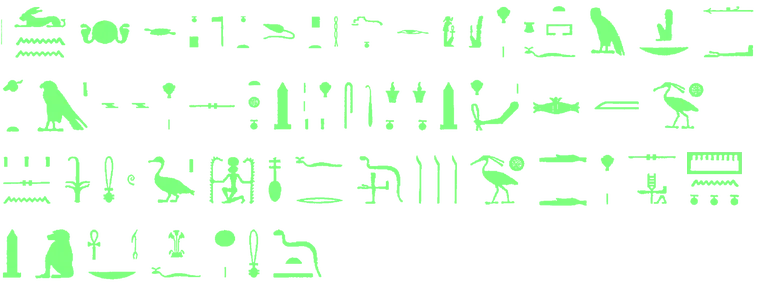
wnn nswt bjt (… …) ḥr nst.f m nb wꜥ ḫnt Jdbw Ḥr ḥr sꜥḥꜥ tḫnw ḥr smn bnbn ḥr ḏsr Msn m ꜣḫt.sn sw mj sꜣ Ḥḥ nfr ḏbꜥw ꜣḫ ḏrtj ḥr sꜥḥꜥ mnw
The King of Upper and Lower Egypt, Ptolemy XII, is on his throne as sole lord throughout the Banks of Horus. He raises the obelisks, sets the benben stone firm and hallows Mesen with their radiance. He is like the son of Heh, deft of finger, skillful of hand as he raises the monument.
Note · Line 177
The Banks of Horus are Egypt, the land on either side of the Nile. The pointed tip of an obelisk recalls the benben, the sacred stone of the sun god at Heliopolis. - 178

ḏd mdw jn Ḥr Bḥdtj nṯr ꜥꜣ nb pt Nb Msn ꜥꜣ mꜣꜥ ḫrw prj m ꜣst sꜣ smsw n Wsjr ḏrtj wr pḥtj ḫnt Ḥt Ḥr nḏ jt.f m Ḏbꜣ
Words spoken by Horus Behedety, the great god, lord of the sky, lord of Mesen, great in triumph, who came forth from Isis, eldest son of Osiris, the falcon mighty in strength within the House of Horus, who defends his father in Edfu:
- 179

rdj.j n.k ꜥwj.k rwḏ ḥr sꜥḥꜥ tḫnwj km.tj m ꜥꜣt nt mꜣṯ
I give you strength in both your arms to raise the two obelisks fashioned from granite.
- 180
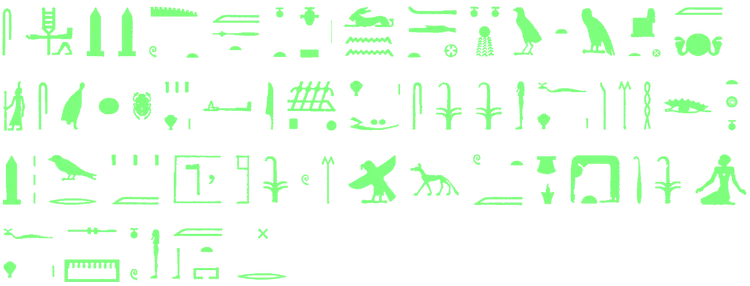
wnn Bḥdtj wbn.tj m Bḥdt m ḫprr wr sḥḏ tꜣw ḥr rdt sšp ḥr mꜣꜣ snn.f ḥr gmḥ tḫnw wrw m ḥt nṯr.f sw m Ḫwn ꜥnwj jw.tj m gbt tjs.f ḥr smn.f m Bw wr
Behedety has risen in Behedet as the great scarab who lights the lands. He sheds his light, sees his image and gazes on the great obelisks at his temple. He is Dunanwy, come from the sky to settle upon his image in the Great Place.
Note · Line 180
Dunanwy, “he who spreads his wings,” is a falcon god. The Great Place where he settles is Edfu. - 181
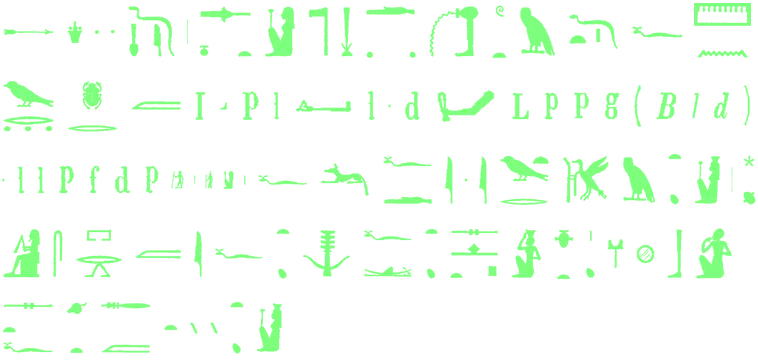
jrt snṯr ḏd mdw mn n.ṯ snṯr wꜥb.tj m ḏt.f mnwr ḫpr m sštꜣ.f fdt twr qmꜣ m ḥꜥ.ṯ rḏw šps prj m jwf.ṯ ẖnm.f jm.ṯ sḥtp.f jb.ṯ ꜣbḫ sṯj.f ḫnt ẖnmtj.ṯ
Offering incense. Words to be spoken:
Take the incense, pure in its very substance,
the menur incense that came into being in its secret way.
Pure sweat formed in your body, precious fluid that issues from your flesh:
may it mingle with you and soothe your heart as its scent mingles in your nostrils.Note · Line 181
The king addresses Hathor. By calling the incense her sweat, he presents the gift as something that came from her own body and now returns to her. - 182
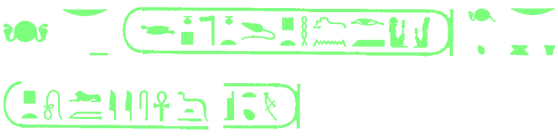
nswt bjt nb tꜣwj (… …) sꜣ Rꜥ nb ḫꜥw (… …)
King of Upper and Lower Egypt, lord of the Two Lands, Ptolemy XII; son of Ra, lord of crowns, Ptolemy XII.
- 183
wnn sꜣ Rꜥ (… …) ḥr ḫt wrḏ.f m ḥqꜣ n Tꜣ nṯrw ḥr ms snṯr ḥr sjꜥr mnwr ḥr sḥtp mwt.f m ḏsr sw mj ḥm ḥḏt prj m Ḥḏ nḫn ḥr jrt ẖrt n mwt.f r mrwt.s
The son of Ra, Ptolemy XII, is on his throne as ruler of the Land of the Gods. He brings incense, presents menur incense and soothes his mother with djeser incense. He is like the servant of the White Crown who comes forth from Elkab and provides for his mother’s needs as she desires.
Note · Line 183
The White Crown is the crown of Upper Egypt. Elkab, across the Nile from Nekhen, was the home of its protecting goddess Nekhbet. - 184

ḏd mdw jn Ḥt ḥr nbt Jwnt jrt Rꜥ ḥrt jb Bḥdt Wꜣḏt swꜣḏt tꜣw m wꜣḏ.s ḥrjt tp wrt m tp n jrj sj mḥt pt tꜣ m nfrw.s
Words spoken by Hathor, lady of Dendera, Eye of Ra, who dwells in Behedet, Wadjet, who greens the lands with her green papyrus scepter, the cobra on the brow, the Great One on the head of him who begot her, who fills sky and earth with her beauty:
Note · Line 184
Wadjet’s name means “the Green One.” Its sound recurs in the words for making the land green and for the papyrus scepter she carries. - 185

rdj.j n.k Pwnt ẖr jmjt.f sḫpr.j sṯj.k m ḥknw
I give you Punt with all it holds, and make you fragrant with hekenu oil.
- 186
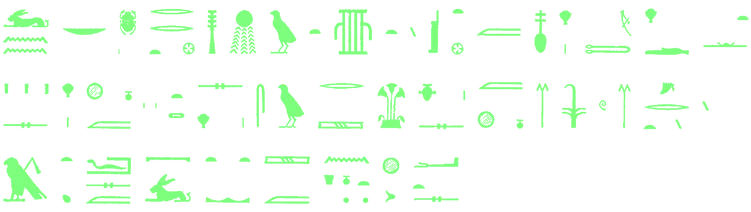
wnn nbt Tꜣ rr psḏ.tj ḫnt Wṯst m nfrt ḥr bnrt mrwt ḥr šsp jḫt.s ḥr ḫnm tw.s ḥr swꜣḫ jb.s m ḫnmw.f sj m ḏrtjt prj.s m Pwnt ... [...] n ꜥntjw ḫr ꜥwt.s
The lady of Tarer shines in the Throne Seat, fair of face and sweetly loved. She receives her gifts, breathes in the scent of her incense cones and gladdens her heart with their fragrance. She is the female falcon who comes forth from Punt … the scent of myrrh streams from her limbs.
- 187
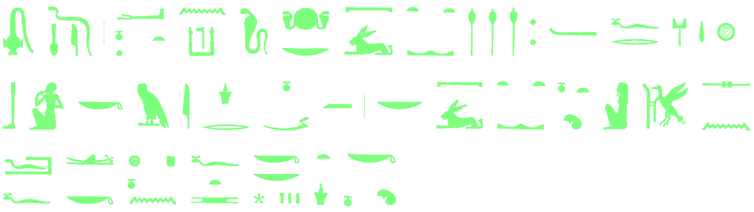
rdt ꜥntjw ḥr ḫt ḏd mdw ꜥntjw n kꜣ.k ꜥpj nb Pwnt ḥḏw ḥtj.f r fnḏ.k ꜣbḫ ḥꜥ.k m jbr mꜣꜥ nb Pwnt ntk qmꜣ sn prj.f jm.k ḫpr.n.f n fdt.k nb nṯrw t.k n.k
Offering myrrh on the embers. Words to be spoken:
Myrrh for your ka, Api, lord of Punt!
Hedju incense, its smoke at your nose.
May your body mingle with true iber ointment, lord of Punt.
You are the one who made them: the incense issues from you, the ointment came into being from your sweat.
Lord of the gods, your incense cones for you! - 188
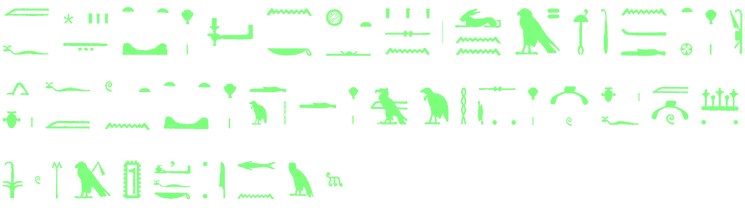
nswt bjt nb tꜣwj (… …) sꜣ Rꜥ nb ḫꜥw (… …)
King of Upper and Lower Egypt, lord of the Two Lands, Ptolemy XII; son of Ra, lord of crowns, Ptolemy XII.
- 189
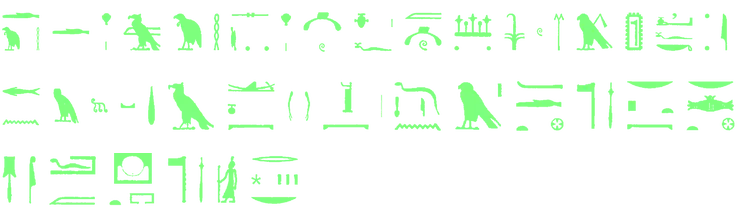
wnn nswt bjt (… …) ḥr ṯnṯꜣt.f m ḥqꜣ n Šsmt jꜣbtt ḥr jnt ꜥntjw jb ḥr ms ꜣwš ḥr rdt ꜥntjw r ḫft ḥr sw mj nw nfr ḥrj tp ḫꜣswt tnbẖ m Tꜣ nṯrw
The King of Upper and Lower Egypt, Ptolemy XII, is on his throne as ruler of Eastern Shesemet. He brings myrrh of the heart, presents aush incense and sets myrrh before the god. He is like the perfect scout, chief of the foreign lands, who ranges through the Land of the Gods.
- 190
ḏd mdw jn Ḥr Bḥdtj nṯr ꜥꜣ nb pt sꜣb šwt prj m ꜣḫt bjk nṯrj prj m Pwnt šms jb.f m Jnt ꜥntjw nb nṯrw wꜥ wꜥw Ꜥprj sḫpr ḫpr
Words spoken by Horus Behedety, the great god, lord of the sky, many-colored of plumage, who comes forth from the horizon, the divine falcon who comes forth from Punt and follows his heart in the Valley of Myrrh, lord of the gods, the one and only, Khepri, who brought becoming into being:
Note · Line 190
Khepri is the scarab god of the rising sun. His name echoes the Egyptian verb “to come into being,” as though the god’s very name describes creation. - 191
rdj.j n.k Pwnt ẖr jmjt.f Tꜣ nṯrw ḥr ḫrp n.k jḫt.sn
I give you Punt with all it holds, and the Land of the Gods bringing you its produce.
- 192
wnn Ḥr ꜣḫtj wbn.tj n Bḥdt ḥr šms jb.f m Wtnt ḥr šsp nḥd ḥr ꜣmm nḥꜣs jwꜥ ḥr ꜣwt jb.f m ꜣwš sw m bjk nṯrj mfk jnm ḏꜣj.n.f pt sḫn.f Wṯst
Horakhty has risen over Behedet. He follows his heart in Utenet, receives nehed, takes nehas-iua in his grasp and gladdens his heart with aush incense. He is the divine falcon, turquoise of skin. Having crossed the sky, he comes to the Throne Seat.
Note · Line 192
Nehed and nehas-iua are names of aromatics offered to the god. - 193
ḏd mdw jn Ḥr Bḥdtj nṯr ꜥꜣ nb pt Nb Msn sꜣb šwt prj m ꜣḫt nṯr ꜥꜣ wr r nṯrw nbw
Words spoken by Horus Behedety, the great god, lord of the sky, lord of Mesen, many-colored of plumage, who comes forth from the horizon, the great god, greater than all the gods.
- 194
ḥnk šwtj ḏd mdw wḏꜣtj.k n.k ṯs.tj r ḏnnt.k ẖnmt ẖnm.tj m wpt.k mꜣꜥ ḫrw.k ḫr Psḏt ꜥꜣt ḫbn ḫrw n ḫftjw.k
Presenting the double plume. Words to be spoken:
Your two whole eyes for you, bound to your head;
the united eye, united with the crown of your head,
when your voice was found true before the Great Ennead
and the voice of your foes was rejected.Note · Line 194
The king presents the two feathers of the crown as Horus’s restored eyes. The Great Ennead is the company of nine gods that judged the dispute over Osiris’s throne and ruled in favor of Horus. - 195
nswt bjt nb tꜣwj (… …) sꜣ Rꜥ nb ḫꜥw (… …)
King of Upper and Lower Egypt, lord of the Two Lands, Ptolemy XII; son of Ra, lord of crowns, Ptolemy XII.
- 196
jw.n.j ḫr.k Bḥdtj ḫnt Wṯst qbḥ m qꜣb Qbḥwj jnj.j n.k wnmt ꜣbḫ.tj r jꜣbt sḫn.j tp.k m ꜥb wnwtj ṯwt nb šwtj rdj mrtj m ḥꜣt.f ꜥꜣ mꜣꜥ ḫrw jwꜥw n nswt bjt
I have come to you, Behedety in the Throne Seat, pourer of libations in the midst of Egypt,
to bring you the right eye joined to the left and encircle your head with the two cobras.
You are the lord of the double plume, on whose brow the two eyes were set,
great in triumph, heir to the King of Upper and Lower Egypt.Note · Line 196
The same pair of eyes now appears as two cobras encircling Horus’s brow. - 197
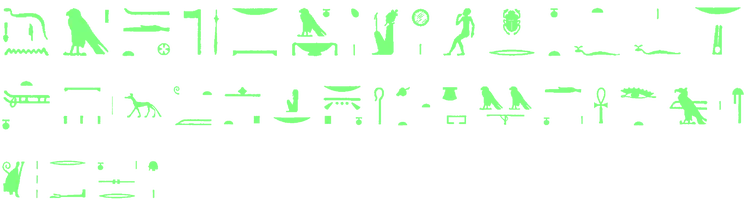
ḏd mdw jn Ḥr Bḥdtj nṯr ꜥꜣ nb pt bjk n nb sꜣ Wsjr ḫ ḫprw ntj jt.f nb šwtj dm.n.f pwt
Words spoken by Horus Behedety, the great god, lord of the sky, falcon of gold, son of Osiris, the child who bears his father’s likeness, lord of the double plume, who has touched the heavens:
- 198
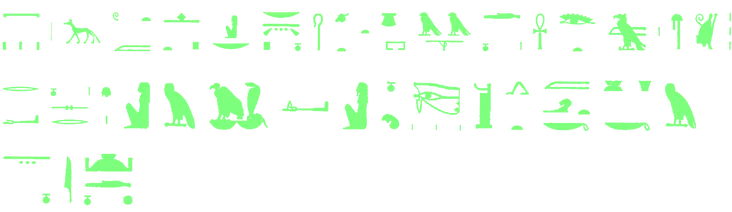
jw.tj m ḥtp nb tꜣ pn ḥqꜣ ḫnt Nst nṯrwj šsp.n.j ꜥnḫt ꜣmm.n.j ḥptj rdj.n.j sj r tp.j m nbtj rdj.j n.k wḏꜣtj ṯsj.tj m ḥꜣt.k ḫꜥj.k m tꜣ pn mj jtn
Come in peace, lord of this land, ruler in the Throne of the Two Gods.
I have received the living eye, I have grasped the crown,
and I have set it on my head as the Two Ladies.
I give you the two whole eyes, bound upon your brow,
that you may shine forth in this land like the sun disk.Note · Line 198
The Two Ladies are Nekhbet and Wadjet. Horus gives the king the protection he has just received for his own crown. - 199
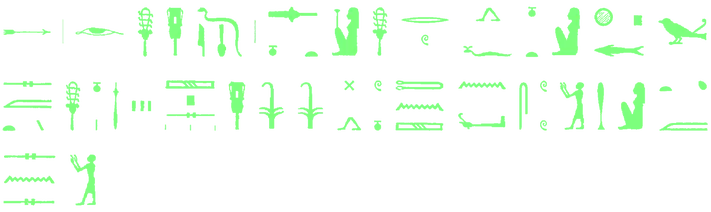
jrt sḫm sššt ḏd mdw mn n.ṯ sḫm rwj.f n.ṯ špt smdt nt ꜥꜣwt špswt sšš nn sš.f n.ṯ nšnj swꜣš.f ḥmt.ṯ m snsw
Playing the two sistra. Words to be spoken:
Take the sekhem sistrum: it drives your fury from you;
the semedet sistrum of splendid precious stones,
and this seshesh sistrum: it shakes your anger from you
and honors Your Majesty with songs of praise.Note · Line 199
The king shakes the rattles for Hathor in her fierce role as the Eye of Ra. Their sound is meant to turn her anger aside. - 200
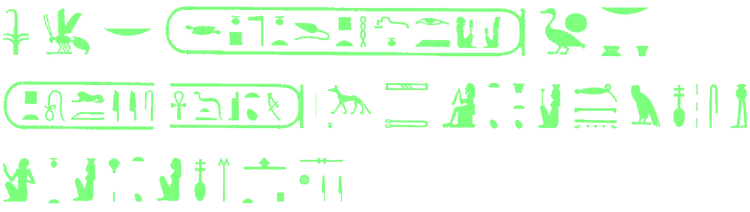
nswt bjt nb tꜣwj (… …) sꜣ Rꜥ nb ḫꜥw (… …)
King of Upper and Lower Egypt, lord of the Two Lands, Ptolemy XII; son of Ra, lord of crowns, Ptolemy XII.
- 201
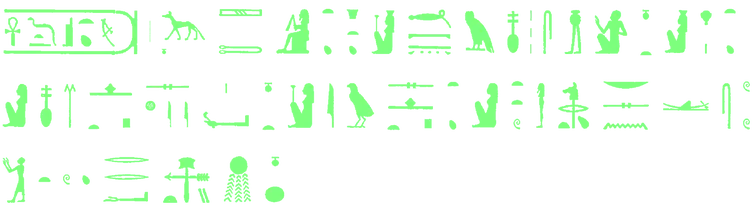
jw.n.j ḫr.ṯ špst ḥnwt mḥt pt tꜣ m nfrw.s jnj.j n.ṯ ḥr.ṯ nfr m ḥtp sḫ.j n.ṯ r sḥtp.ṯ ṯwt wsrt nbt .. ... swꜣšt.tw r rꜣ ꜥ stwt jtn
I have come to you, noble one, sovereign lady,
who fills heaven and earth with her beauty,
to bring you your beautiful face at peace
and to play for you, to set you at peace.
For you are the Strong One, mistress of …,
whom all praise as far as the sun disk’s rays reach.Note · Line 201
Hathor’s face often adorns the sistrum itself, so the king can bring her “your beautiful face” in the very instrument he plays. - 202
ḏd mdw jn Ḥt ḥr nbt Jwnt jrt Rꜥ ḥrt jb Bḥdt špst wsrt ḫnt Pr špst ꜥꜣt nbt šmꜥw mḥw nbt sššt ḥnwt sḫmw
Words to be spoken by Hathor, Lady of Dendera, Eye of Ra, who dwells in Behdet, the noble one, the strong one in the House of the Noble Lady, the great one, mistress of Upper and Lower Egypt, mistress of the sesheshet sistrum, sovereign lady of the sekhem sistra.
- 203

ḏd mdw jn Jḥj wr sꜣ Ḥt ḥr sḏtj mnḫ n Bḥdtj Šꜣw n Wḏꜣt Wꜣḏḏ n jmj.s rdj ẖrt n ḥr nb
Words to be spoken by Ihy the Great, son of Hathor, worthy child of the Behdetite, Shai of Egypt, the Wadjedj serpent of him who dwells there, who gives everyone food.
Note · Line 203
Ihy takes the name Shai here because he allots to each person the food they need. - 204
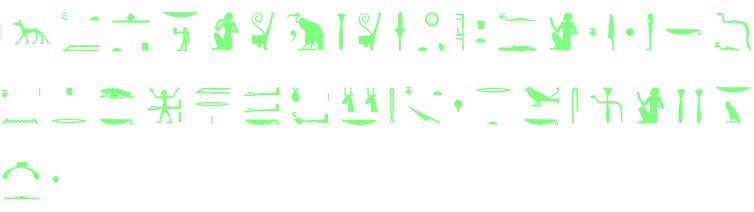
jw.tj m ḥtp nb jḥj jḥj n mwt.f wꜣḏ n Sḫmt šms ḥnwt.f šsp.n.j jrw.k tfn.j n ptr.k ḥꜥj.j m rꜣ ꜥwj.k dr.j dndn.k ḥnṯj.j ḥrjt.k swꜣḏ.j tꜣwj.k m ꜣwt jb
Come in peace, lord of music, who makes music for his mother,
shoot of Sekhmet, who serves his sovereign lady.
I have accepted your service;
I delight in seeing you and exult in the work of your hands.
I drive away your anger and banish the dread you inspire;
I make your Two Lands flourish in gladness of heart.Note · Line 204
Ihy greets the king, who has just played for Hathor as her own son does. - 205

rdt qn ḏd mdw mn n.k qn m ḫntj Ḥt qn kꜣ nḫt kꜣ.tw r kꜣ.k sḫm ꜥ.k m sbj n jt.k jrj.k šꜥt m ḫftjw.k
Presenting the Strong One. Words to be spoken:
Take the Strong One for yourself in the House of the Strong One,
for Mighty Bull is what they call you.
May your arm prevail against your father’s foe;
may you slaughter your enemies.Note · Line 205
The Strong One is a sword. Its name echoes that of the sanctuary where the king presents it to Horus. - 206
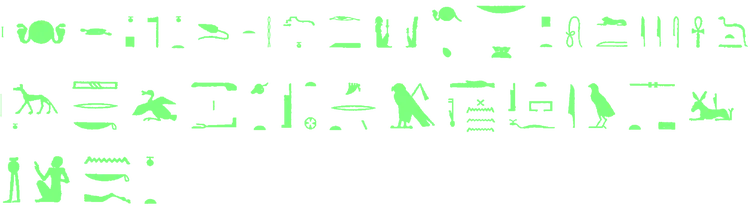
nswt bjt nb tꜣwj (… …) sꜣ Rꜥ nb ḫꜥw (… …)
King of Upper and Lower Egypt, lord of the Two Lands, Ptolemy XII; son of Ra, lord of crowns, Ptolemy XII.
- 207
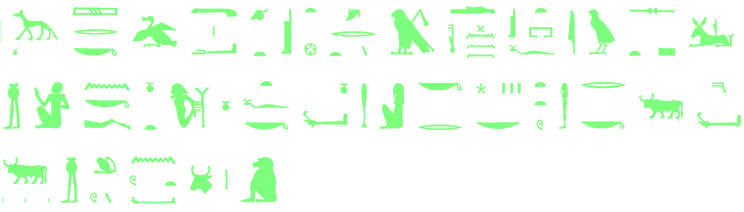
jw.n.j ḫr.k ṯꜣj ꜥ ḫnt Wṯst ḏrtj twr st.f r Stš jnj.j n.k ḫpš ntj sbj n jt.k qnj ḥm.k r nṯrw nbw ṯwt jr.k kꜣ ḥwj kꜣw jnj pḥwj n wdj qn
I have come to you, you of the manly arm in the Throne Seat,
falcon who cleanses his seat of Seth,
to bring you the foreleg of your father’s foe,
that Your Majesty may be mightier than all the gods.
For you are indeed the bull who beats down bulls,
who makes an end of the evildoer.Note · Line 207
The foreleg is a cut of sacrificial meat offered as Seth’s own limb. The Egyptian word for it can also mean a curved sword, linking the meat to the weapon just presented. - 208
sqn.j ḥm.k m ḫntj rꜣ ḏꜣwt srwḏ.j ꜥ.k r ḫftjw.k
I give Your Majesty strength on the battlefield;
I strengthen your arm against your enemies. - 209

ḏd mdw jn Ḥr Bḥdtj nṯr ꜥꜣ nb pt jwꜥw mnḫ n (Wnn nfrw mꜣꜥ ḫrw) ꜥꜣ mꜣꜥ ḫrw prj m ꜣst Nb Msn jrj ꜣwt jb
Words to be spoken by Horus of Behdet, the great god, lord of heaven, worthy heir of Wennefer the vindicated, great in triumph, born of Isis, lord of Mesen, who brings joy to the heart.
Note · Line 209
Wennefer is a name of Osiris. - 210
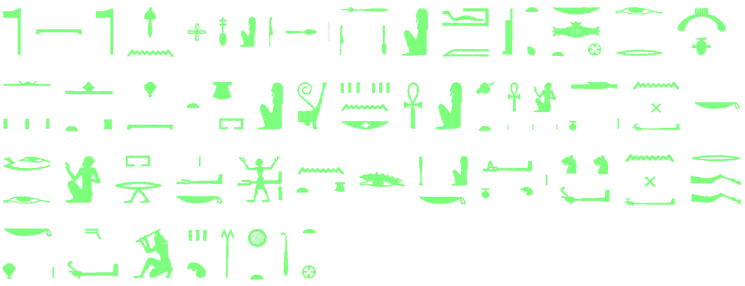
jw.tj m ḥtp ḥrj nst.j n Snwt ḥꜥ ꜥnḫ.j ḫntj ꜥnḫw šsp.n.j nḫt.k mꜣꜣ.j prt ꜥ.k ḥꜥj.j n dgt ḥm.k rdj.j n.k pḥtj nḫt r ḫpšwj.k ḥr ḥwt ḫftjw.k m jḫt mnt
Come in peace, heir to my throne in Egypt,
my living flesh, foremost of the living.
I have received your might; I see how your arm strikes,
and I rejoice to look upon Your Majesty.
I give you power and strength in both your arms
as you strike your foes throughout the world. - 211

smꜣ Stš ḏd mdw Stš dm.tj smꜣjw.f m ssf njkw.f snḏ ḥr.f
Killing Seth. Words to be spoken:
Seth lies stabbed, his confederates are ashes,
and fear is on the faces of his wicked followers. - 212
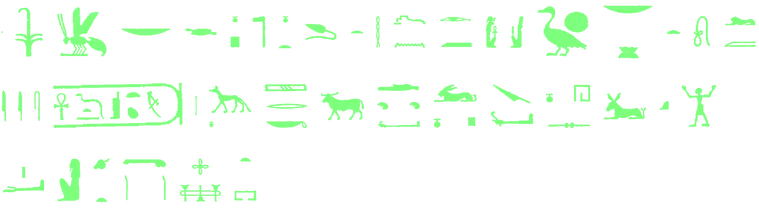
nswt bjt nb tꜣwj (… …) sꜣ Rꜥ nb ḫꜥw (… …)
King of Upper and Lower Egypt, lord of the Two Lands, Ptolemy XII; son of Ra, lord of crowns, Ptolemy XII.
- 213
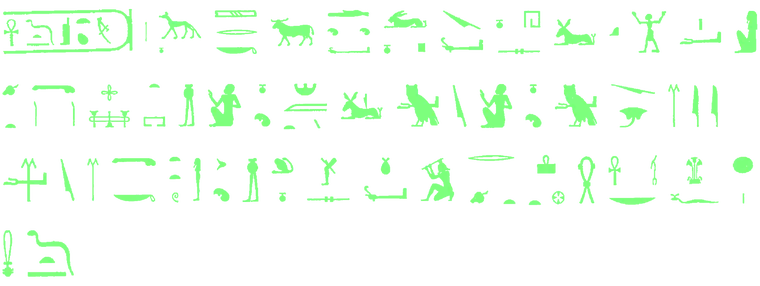
jw.n.j ḫr.k bꜣ tkk wnp nhs qꜣj ꜥ ḫnt mṯwn jnj.j n.k ḥmtj mds.j n.k mds ... .. mꜣꜥ m bꜣḥ.k ṯwt jr.k jnj pḥwj n thj sw dr ḫftj r ḫnt Ꜥtm
I have come to you, Ba quick to attack, who stabs Nehes,
you whose arm is raised high on the battlefield,
to bring you the Coward and cut down the cutthroat for you;
… is offered up before you.
For you are indeed the one who makes an end of whoever attacks him,
who drives the foe out of Egypt.Note · Line 213
Nehes and the Coward are names for Seth. The king presents the sacrificial victim to Horus as the defeated god himself. - 214

ḏd mdw jn Ḥr Pj Msnj nṯr ꜥꜣ ḫnt Bḥdt msntj qnj tp ꜥ hj spd sḫm ḥwj kjwjw sꜣw Snwt r ḫꜣswt bšṯwt
Words to be spoken by Horus of Pe and Mesen, the great god in Behdet, the mighty harpooner who stands over the place of Hi, the keen one, the powerful one, who strikes down his foes and guards Egypt against rebellious foreign lands.
Note · Line 214
Pe was part of Buto in the Nile Delta. Hi is another name for Seth. - 215

ḏd mdw jn Ḥt ḥr nbt Jwnt jrt Rꜥ ḥrt jb Bḥdt Wnwt wnpt wnj mw mḥnjt wrt m tp n ꜣḫtj wbdt sbjw m hh n rꜣ.s
Words to be spoken by Hathor, Lady of Dendera, Eye of Ra, who dwells in Behdet, Wenut who stabs the enemy, the rearing cobra, the great one on the head of the god of the horizon, who burns up rebels with the fiery breath of her mouth.
- 216

jw.tj m ḥtp rwḏ ꜥwj ẖr wꜥ ꜥꜣ pḥtj ḥwj ḫrwjw.f šsp.n.j khb mꜣꜣ.n.j sšꜥ dgj.n.j Stš.k m ḫbt rdj.j n.k wsr r wꜣwꜣ r.k thj mṯn.k n wnn.f
Come in peace, you whose strong arms bear the harpoon,
great in strength, who strikes down his foes.
I have received the Violent One, I have seen Sesha,
I have looked upon your Seth at the place of slaughter.
I give you power over whoever plots against you;
whoever crosses your path in enmity shall be no more.Note · Line 216
The Violent One and Sesha are not additional prisoners: both names designate the captive Seth. - 217
bꜣ n Bḥdtj jw.n.f m ḥrt m jrw.f n ꜥpj wr spr.f r st.f m St sꜣb šwt sꜣb.f sš m pt tꜣ pr.f gmj.n.f bjꜣjt sḫprt n.f jm.f kꜣt n.f jmjw nw Wṯst wꜣḥ.f sw m jb n jmj jrtj tꜣ pḫꜣ rdj.f sw m jb.f swꜣḥ.f jrjt n.f
The ba of the Behdetite has come from heaven in his form of Api the Great.
He reaches his seat in the Seat of the Dapple-plumed One,
that he may take his pleasure in the heaven and earth of his house.
He has found the marvel wrought for him there,
devised for him by the people of the Throne Seat.
He settles in its midst as pilot of the land;
joy settles in his heart, and he makes what was made for him endure. - 218
bꜣ n Rꜥ jj.n.f n [.. ... ...] ḫnj.f ḥr nst.f .. ...] mꜣꜣ.f tp nfr wn m nwt.f ḥsj.f Rꜥ r.s m prj m qd nṯr wr pw rdj ꜥnḫ m ꜥ.f wn m ḏrt.f ẖr snb swḏꜣ.f wṯst.f ḥn.f ḥt nṯr.f spḫꜣ.n.f ḏw ẖrj jw
The ba of Ra has come from heaven …
He alights on his throne …
He sees that all is well in his city
and praises Ra for it in boundless joy.
He is the great god who gives life;
it is in his power, in his hand together with health.
He keeps his Throne Seat safe and guards his temple;
he has taken suffering from the afflicted. - 219
bꜣ n Wsjr ḥr ḥn Ḥt Wsjr m sštꜣ.f n sjꜣw m St nṯrwj bs.f ḥr bs.f m ḫntj jꜣt ḥr gs jmntj n Jw nšnj sntj.f ḥnꜥ.f wdj.sn sꜣ.f ꜣst pw ḥnꜥ Nbt ḥt jrj.sn nht.f qmꜣ.sn mkt.f wḏ.sn sꜣ.f r sbjw.f gsw prw nṯrw Wḏꜣt mn.tj ẖr sšmw.f m ꜥb sꜣ.f ḥnꜥ snt.f
The ba of Osiris guards the House of Osiris
in his secret form of a falcon at the Seat of the Two Gods.
He comes to rest upon his image on the sacred mound
on the west side of the Isle of Raging.
His two sisters are with him and set their protection about him:
they are Isis and Nephthys.
They guard him, they shelter him,
they keep him safe from his enemies.
The temples of the gods of Egypt stand furnished for all time
with his image beside those of his son and his sister.Note · Line 219
The sister named beside Horus at the end is Isis, who is both sister and wife to Osiris. - 220
bnw nṯrj jj.n.f n bjꜣ ḫft pẖr.n.f jfd n pt wḥꜥ.n ḥm.f ḥr bḫnt nt Bḥdt mj wn.f m ḫntj Jwnw bꜣw nṯrw spr.sn m ḫt.f ḏr njs sntj r pt wḏ.sn wḏt m prjt m rꜣ.sn m ḏdt.n Rꜥ ḥnꜥ Psḏt.f ḥr wḏꜥ mdw n jwꜥw n Wsjr ḥr rdt jꜣwt.f n sꜣ.f jw.f m nswt bjt r ḏr nḥḥ n kj wḥm.tj.fj
The divine phoenix has come from the firmament
after crossing the four sides of the sky.
His Majesty has returned to the pylon of Behdet
as though he were in Heliopolis.
The bas of the gods come in his train
when the two sisters call to heaven.
The decree that goes forth from their mouths
is what Ra pronounced with his Ennead
when they gave judgment for the heir of Osiris
and gave Osiris’s office to his son.
He shall be King of Upper and Lower Egypt to the bounds of eternity;
none shall be his equal.Note · Line 220
The Egyptian phoenix is the Bennu, a sacred heron of Heliopolis. Its arrival gives the pylon at Edfu a place in the sun god’s own sacred landscape. - 221
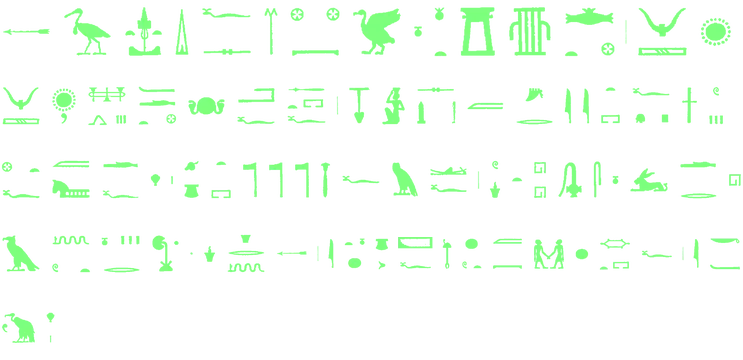
bꜣ jꜣbtt rdj.f sw m nwt ḫnj.f rwt ḫnt Msn wpš wpš.f wꜣwt Bḥdt ꜥpj ꜥq.f ꜥꜣjt.f smꜣ.f smn.f m ḏrjt.f tpt jmjw nwt.f m ḫntš rdj.f ḥr.f ḫnt Nst nṯrw wꜣḏtj.f m gs dpt.f wbd hh.sn Stš ḥr ḏd r hjw tw.n r ḫꜣꜥ bꜥr m tm wn
The ba of the East takes to the sky
and glides down upon the gate of Mesen.
His radiance lights the roads of Behdet;
Api enters his temple.
When he joins with his image in his first chamber,
the people of his city rejoice.
He shows his face in the Throne of the Gods,
his two cobras guarding him.
Their fiery breath burns Seth as they say against Hiu:
“We shall hurl Bar into nothingness.”Note · Line 221
The two cobras speak the threat. Hiu is a foe of the sun god, and Bar is Apophis, the serpent that threatens the sun on its journey. - 222
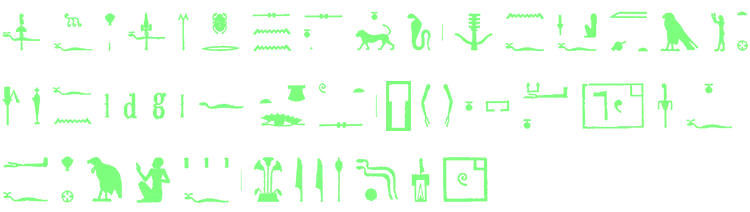
jtn ẖr ḏnḥ.f wbn.tj m pt snsn stwt.f stjt.f jqḥt.f ḥr wnmj.f ḥrjt tp.f ḥr jꜣbj.f m ḫprw.sn n {nf n Šnꜥ ẖnm.n.f sḫm.f m ḫntj Jꜣw Ḥr ꜣms jb.f n dgt.s sbḫ.n.f pr.f mkj.n.f ḥt nṯr.f ḫwj.n.f n ꜥ.f ḥr nwtjw.f ḥꜣj ḥḏḏ.f Rwt djt mꜣꜥt ḥt.f ḥtm.tj m ḥw
The winged sun disk has risen in the sky;
his rays embrace his sanctuary.
His vulture diadem is on his right, his brow-serpent on his left,
in their forms as the Blood of Shena.
He has joined with his image in Praise of Horus;
his heart rejoices at the sight of it.
He has taken his house into his keeping and guarded his temple;
he has stretched his arm in protection over the people of his city.
When his light illumines the Gate Where Truth Is Given,
his house is stocked with food.Note · Line 222
Praise of Horus is a name of the temple at Edfu. - 223
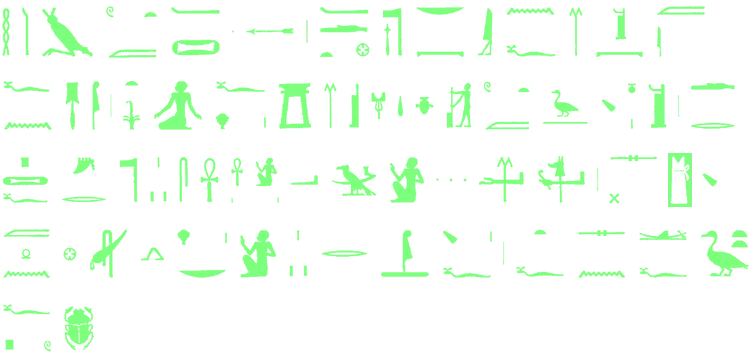
Bḥdtj nṯr ꜥꜣ nb pt jj.n.f m ṯst m jrw.f n sꜣb šwt tjs.f ḥr rwt m st ꜣbjt jb.f ḫwsj.tj m sꜣṯw n Wṯst drp.f Ḏrw sꜥnḫ.f ꜥnḫw nḫt.f mꜣr m ꜥ wsr swr.f ḥnbt.f m šnw n nwt.f sšm.f ḥr nb r tꜣš.f jt.sn jm.f sꜣt.f pw ḫprt n ḫpr.t ḫpr
The Behdetite, the great god, lord of heaven,
has come from the heights in his form of the Dapple-plumed One.
He alights on the gate, on the seat his heart desires,
built on the soil of the Throne Seat.
He feeds the Djeru, sustains the living
and shields the weak from the grasp of the strong.
He enlarges his fields all around his city
and leads each man to his own land.
For he is their father, and the city is his daughter,
who came to be before becoming itself came to be. - 224
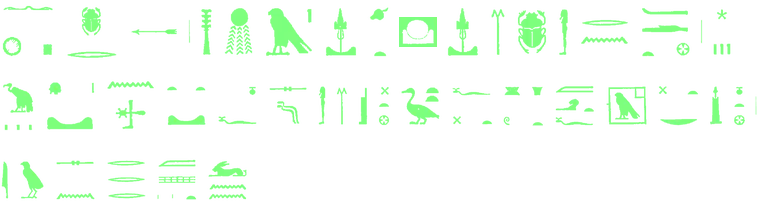
psḏ Ḥr jꜣbtt ḫnt ꜣḫt jꜣbtt m ḫprw.f n Bḥdtj nṯrw nṯrwt tp ḏw n bꜣẖ ḫfꜥ.n.f sḏḏ.f m St wrt sꜣt.f wrt ḫꜥj.tj m ḥꜣt.f Ḥt ḥr wrt nbt Jwnt jw.sn jrj m spt sntj wnn.sn dmḏ m wꜥt n wꜣj wꜥt r wꜥt jm.sn m wḏt nt Rꜥ ḥnꜥ ṯꜣw.f
Horus of the East shines on the eastern horizon
in his form of the Behdetite.
The gods and goddesses are on the mountain of sunrise
when he takes possession of his image in the Great Seat.
His great daughter has appeared upon his brow:
Hathor the Great, Lady of Dendera.
The two of them are there in the two districts;
the districts are joined as one, neither parted from the other,
by decree of Ra and his children.Note · Line 224
The two districts are Edfu and Dendera. The decree binds the cities of Horus and Hathor together just as the goddess on the god’s brow is inseparable from him. - 225
Ḥr Bḥdtj nṯr ꜥꜣ nb pt ... ...] wbnj wbn m bꜣẖ
Horus of Behdet, the great god, lord of the sky, … the shining one who shines on the eastern mountain.
- 226
(… …)
Ptolemy XII.
- 227
(… …)
Ptolemy XII.
- 228
Nḫbt ... ... ḥrjt tp m tp n nṯrw nbw
Nekhbet … the cobra on the brow of every god.
- 229
[... ... m ꜥwj.s
… with her two wings.
- 230
[... ... m ꜥwj.s
… with her two wings.
- 231
Wꜣḏt ... .].. jrjt nh.f m mꜥnḏt.f
Wadjet … who guards him in his Mandjet barque.
Note · Line 231
A barque is a boat: the Mandjet carries the sun god by day, and the Mesektet carries him by night. - 232
(… …)
Ptolemy XII.
- 233
(… …)
Ptolemy XII.
- 234
Ḥr Bḥdtj nṯr ꜥꜣ nb pt ... ...] bs.f ꜥnḫ jrt nbt m ḫꜥw.f
Horus of Behdet, the great god, lord of the sky, … his image, at whose appearing every eye comes to life.
- 235
Ḥr Bḥdtj nṯr ꜥꜣ nb pt ... ..]. n bꜣ.f sḥḏ.n.f tꜣ psḏ.f
Horus of Behdet, the great god, lord of the sky, … for his ba. He lit up the earth when he shone forth.
- 236
(… …)
Ptolemy XII.
- 237

(… …)
Ptolemy XII.
- 238
Nḫbt ... .].. jrjt gs dpt.f m msktt.f
Nekhbet … who guards him in his Mesektet barque.
- 239

[... ..]. m ꜥwj.s
… with her two wings.
- 240
[... ...] m ꜥwj.s
… with her two wings.
- 241
Wꜣḏt ... ...] sbj n jt.s wdjt nsr r ḫftjw.f
Wadjet … the rebel against her father; she spits fire at his enemies.
- 242
(… …)
Ptolemy XII.
- 243
(… …)
Ptolemy XII.
- 244
Ḥr Bḥdtj nṯr ꜥꜣ nb pt ... ...] tr n grḥ ꜥnḫ dꜣtjw n mꜣꜣ.f
Horus of Behdet, the great god, lord of the sky, … at night. Those in the underworld live by his gaze.
- 245
Ḥr Bḥdtj nṯr ꜥꜣ nb pt ... ...] tꜣ m ḥḏḏ.f
Horus of Behdet, the great god, lord of the sky, … the land with his rays of light.
- 246
(… …)
Ptolemy XII.
- 247
(… …)
Ptolemy XII.
- 248
Nḫbt ... ... n jt.s wdjt hh.s r ẖꜣkw jb
Nekhbet … her father’s foe; she breathes out her fiery breath against the rebels.
- 249
[... ..]. m ꜥwj.s
… with her two wings.
- 250

jrt snṯr qbḥw n jt.f šps jrj.f dj ꜥnḫ
Burning incense and pouring a libation for his august father, that he may be given life.
Note · Line 250
The king pours a liquid offering for his divine father; it is the king who hopes to receive life in return. - 251

nswt bjt (…) sꜣ Rꜥ (…)
King of Upper and Lower Egypt ( ), Son of Ra ( ).
Note · Line 251
The two cartouches were left empty: the titles are present, but no royal names were carved inside. - 252

Bḥdtj nṯr ꜥꜣ nb pt
He of Behdet, the great god, lord of the sky.
- 253

ḏd mdw jn Jj m ḥtp wr sꜣ Ptḥ nṯr ꜥꜣ ḥrj jb Bḥdt [...] hꜣb wrw rḫ sw snfr ḫꜣjt n ḫmt.n jb.f sꜣr ꜥšꜣ sꜣrt [...] ḏfꜣ .[. ...] .[. m kꜣt.f
Words spoken by Imhotep the Great, son of Ptah, the great god who dwells in Behdet, … who sends forth the great ones, the sage who heals sickness, to whose heart nothing is unknown, the wise one, rich in wisdom, … food … as his handiwork.
Note · Line 253
Imhotep was a royal official of the Old Kingdom, more than two thousand years before Ptolemy XII. He later came to be worshipped as a god of wisdom and healing. - 254

nṯr nfr sꜣ Bḥdtj šsp ꜥnḫ n sꜣb šwt sꜣ Rꜥ nb ḫꜥw (… …) mrj Ḥr Bḥdtj nṯr ꜥꜣ nb pt sꜣb šwt prj m ꜣḫt
The perfect god, son of him of Behdet, living likeness of the one of many-colored plumage, Son of Ra, lord of crowns, Ptolemy XII, beloved of Horus of Behdet, the great god, lord of the sky, the one of many-colored plumage who comes forth from the horizon.
- 255
Ḥrjw jpt.sn sḥrj sbj dr ḏw ḥꜣ ḥt nṯr tn šnwt qnjt gbj khb rwj ḏw rwt St wrt Ḥrjw ḫt.sn ḫtj ḫftj r ḫm ḫbḫb ẖꜣkw jb r ꜣḫtj pẖr nwt.sn n jt.sn Rꜥ r jrt nht.f r ꜥwꜣjw mj mj tkn.tj m sbsb ḥr smꜣtjw ḫr šmw ḫft ḫbt.sn swḏꜣ.ṯn Wṯst Ḥr sbꜣq.ṯn Jwnt jrj.ṯn gs dpt n jmjw.sn ḥn.ṯn Ꜥntj jꜣbtt ꜥḥꜣ.ṯn ḥr gsw prw nṯrw ꜥḏ.ṯn ꜥꜣjt nt ꜥpj nṯrj sḥm.ṯn ḥmtj r Ḥt Ḥr pẖr.ṯn ḥt nt bjk n nb dr nbḏ m ꜥb smꜣjw.f
O Heriu-ipet-sen, who drive off the foe
and keep evil far from this temple on every side;
you mighty followers, who press Keheb hard
and drive evil out of the Great Seat;
and you Heriu-khet-sen, who chase the enemy from the shrine,
who cut down those who rebel against Him of the Horizon,
who patrol their city for their father Ra
to shield him from the plunderers:
come, come, you who stand near and bar the ways!
Fell the hotheads at their place of slaughter.
May you keep the Throne of Horus safe,
may you guard Dendera and shelter those within them.
May you watch over Khenti-iabtet,
may you fight for the temples of the gods.
May you keep the sanctuary of the divine Api unharmed,
may you drive the Coward from the House of Horus,
may you encircle the House of the Falcon of Gold.
Drive out the Evil One together with his confederates!Note · Line 255
The Heriu-ipet-sen and Heriu-khet-sen are two companies of guardian gods summoned to patrol the sanctuaries. Keheb and the Evil One are names for Seth. - 256
Tḫn nḫt nṯr ꜥꜣ ḥrj jb Bḥdt
Tjekhen-nakht, the great god who dwells in Behdet.
Note · Line 256
The next twelve names belong to gods who guard Edfu. Their dwellings bear different sacred names of the city and its sanctuaries. - 257
Tšꜣ wpwt ḥrj jb St nfrt
The Skull-Splitter, who dwells in the Perfect Seat.
- 258
Jnj ꜥ.f ḥrj jb Bw wr
Ini-a-ef, who dwells in the Great Place.
- 259
Nb ꜥḏt nhp ꜥnḫ m ꜥ.f ḫnt Ḥt qn
Neb-adjet, who rises early, ankh in hand, in the House of the Strong One.
Note · Line 259
The ankh is the looped cross that signifies life; gods are often shown holding it in one hand. - 260
ꜥnḫ m ḥꜣt nṯr ꜥꜣ ḥrj jb Bḥdt
Ankh-em-hat, the great god who dwells in Behdet.
- 261
Jrj mḥ nṯr ꜥꜣ m St wnp
He Who Brings Sorrow, the great god in the Place of Stabbing.
- 262
ꜥnḫ wꜣs m ꜥ.f ḫnt Jw nšnj
He Who Holds the Ankh and the Was-Scepter, on the Island of Fury.
Note · Line 262
The was-scepter is a staff with an animal head and a forked foot, a sign of dominion. - 263
Bꜣ ꜥnḫ m snf ḫnt Ḥt bjk
The Ba Who Lives on Blood, in the House of the Falcon.
- 264
Jrj ꜥḏt ḫnt Msn
Iri-adjet, in Mesen.
- 265
Sḫm ds nṯr ꜥꜣ m St wrt
He of the Mighty Knife, the great god in the Great Seat.
- 266
... ... ḫnt Nḏm ꜥnḫ
… in Nedjem-ankh.
- 267
Bjk nṯr ꜥꜣ ḫnt P n Rꜥ
The Falcon, the great god in the Seat of Ra.
- 268
rdj.j n.k jꜣwt.k nst.k nswjt.k mn.tj ḫnt Pr bjk
I grant you this: your office, your throne and your kingship shall endure in the House of the Falcon.
- 269
ḏd mdw jn Ḏḥwtj ꜥꜣ ꜥꜣ nb Ꜥmnw ꜥꜣ ꜥḥꜥw ḥsb rnpwt ḥrj tp wr n nṯrw nbw ḫrp nst nt Psḏt
Words to be spoken by Thoth, twice great, lord of Hermopolis, long of life, who reckons the years, great chief of all the gods, who governs the throne of the Ennead:
- 270
ḥḥw nw ḥb sd ḥfnw m rnpwt ḥr srḫ.k m St wrt nrwt.k nḥḥ dmḏjt.k ḏt jw ḥm.k rdj m ẖrt ḏbꜥw ḏs.j ḥr nḫb gnwt.k jt.n Rꜥ m rꜣ.f ḥnꜥ Psḏt.f
Millions of Sed festivals, hundreds of thousands of years
upon your palace façade in the Great Seat!
May your seasons be everlasting, your appointed spans eternal,
with Your Majesty set over the estate.
My own fingers inscribe your annals,
as Ra has declared with his mouth, together with his Ennead.Note · Line 270
Thoth speaks as the divine scribe who records the years of the reign. The Sed festival ritually renewed a king’s strength to rule; a wish for millions of them promises far more than a single human lifetime. - 271
jmjt pr rdjt.n Rꜥ n sꜣ.f Šw rdj.n.f sj n sꜣ.f Gbb jrj.n sj Gbb n (Wnn nfrw mꜣꜥ ḫrw) swḏ.f sj n sꜣ.f Ḥr Bḥdtj nṯr ꜥꜣ nb pt pꜣ ꜥẖm ꜥnḫ ḥr tp srḫ jw kꜣ.k n nḥḥ smꜣ ḏt
The deed of inheritance that Ra gave his son Shu, Shu gave to his son Geb. Geb drew it up for Wennefer, vindicated, and Wennefer passes it on to his son Horus of Behdet, the great god, lord of the sky. O living falcon atop the palace façade, your ka shall endure for ever and ever.
Note · Line 271
The gods pass on kingship as a family might pass on an estate, with a deed establishing each heir’s right to it. - 272

ḏd mdw jn pꜣ ꜥẖm ꜥnḫ bꜣ n Rꜥ Ḥr ꜥꜣ ꜥḥꜥ ḥr srḫ
Words to be spoken by the Living Falcon, the ba of Ra, Horus the Great who stands upon the palace façade:
- 273
ḥpt.j ḥm.k m wꜣs ꜥnḫ ḏd dwꜣw sp 2 jw.k rnpj.tj
I enfold Your Majesty in dominion, life and stability,
morning after morning, as your youth is renewed. - 274
ḏd mdw jn Ḥr Bḥdtj nṯr ꜥꜣ nb pt nb ꜥḥꜥw ḥqꜣ jmjt pr nswt nṯrj nṯr m srḫ šꜣꜥ nswt bjt wꜣḥ nswjt
Words to be spoken by Horus of Behdet, the great god, lord of the sky, lord of the span of life, ruler of the deed of inheritance, the divine king, the god on the palace façade, who first reigned as King of Upper and Lower Egypt, whose kingship endures:
- 275
tjs ḥm.k ḥr Bḥdw.k ḏr ꜥ m Ḥr ꜥꜣ sꜣb šwt r smnt kꜣ.k ḫnt Sšd n ḫꜥw.k m ḥb.k nfr ntj smnt jwꜥt.k r smnt jꜣwt nt ꜥwt nt Ḥr ꜣḫtj ḏr šsp.f nswjt.f
May Your Majesty take your seat on the throne that has been yours since the beginning,
as Horus the Great, bright with many-colored feathers,
to establish your ka in the Window of Your Appearing
at your beautiful festival of establishing your inheritance,
and to establish the office of Horakhty’s animal
when it receives its kingship.Note · Line 275
The “animal” is a living falcon. At Edfu a falcon was enthroned as Horus and shown to the people at the Window of Appearance. - 276
(… …) (… …)
(Ptolemy XII) (Ptolemy XII)
- 277

Bḥdtj nṯr ꜥꜣ nb pt ḫwj.f sꜣ.f mrj.f
Horus of Behdet, the great god, lord of the sky, protects his beloved son.
- 278

nswt bjt (…)
King of Upper and Lower Egypt ( ).
- 279
ḏd mdw jn Nww
Words to be spoken by Nun.
Note · Line 279
Nun is both the boundless water believed to have existed before creation and the god who personifies it. - 280
[... ... ...]
[gap in the text]
- 281
ḏd mdw jn Jtmw
Words to be spoken by Atum.
- 282
ḏd mdw jn Šw
Words to be spoken by Shu.
- 283
ḏd mdw jn Ḏḥwtj ꜥꜣ ꜥꜣ nb Ꜥmnw
Words to be spoken by Thoth, twice great, lord of Hermopolis.
- 284
ḏd mdw jn Ptḥ
Words to be spoken by Ptah.
- 285

ꜥꜣbt jꜥb.tj m jḫt.s n ḏbꜥw ḫꜣw m jḫt nbt
The food offering is gathered from its many parts: tens of thousands and thousands of things of every kind.
- 286

sꜣ Rꜥ (…) sꜣ Rꜥ (…)
Son of Ra ( ), Son of Ra ( ).
- 287

ḥqꜣt nbt tꜣwj (…)
The ruler, Lady of the Two Lands ( ).
Note · Line 287
The feminine title marks a queen; the empty cartouche does not tell us her name. - 288
ḏd mdw jn Ḥr {mꜣ tꜣwj nb Ꜥꜣ dj sḫm n Rꜥ ḫnt Bḥdt
Words spoken by Harsomtus, lord of Khadi, the image of Ra in Behdet:
Note · Line 288
Harsomtus means “Horus who unites the Two Lands.” - 289

St wrt nt Rꜥ ḫr.tw r st tn Ḥt nṯr nt Ḥr ꜣḫtj ꜥpj.f m ꜣḫt m ꜥpj nṯrj m gs ḥrj n nṯrw nbw prj bꜣ.f r ḥrt m Ḥt Ḥr Ḥrw ḫj.f ꜣḫt ꜣḫtj m ḫntj.s wbn.f m nwt m jtn ẖr ḏnḥ sḥḏ stwtt.f tꜣ pn pꜥpꜥ.n sw gbt ...]
This place is called the Great Seat of Ra, the temple of Horakhty.
He flies on the horizon as the divine Api, higher than all the gods.
His ba comes forth into the sky from the House of Horus of the Horus Gods;
from within it the Dweller on the Horizon rises to the horizon.
He rises in the sky as the sun disk bearing wings.
His radiance lights this land. The sky goddess bore him … - 290
Bḥdw n Rꜥ kꜣ.tw r nwt tn ꜥḥ Ḥr ꜣḫtj ḏr sp tpj prj Ḥr jꜣbtt r ꜣḫt m ḫntj.s m ꜥpj nfr ḥrj nṯrw bꜣ jꜣbtt wbn.f m nww sḥḏ mꜣwt.f ndbwt ꜥḥꜥ.f ꜥqꜣ jꜣt.f m wjꜣ.f rꜥ nb ꜣms jb.f m tp nfr.s nbt Jwnt jj.tj r tr.s n rnpt [... ... ...]
This city is called the Throne of Ra, the Palace of Horakhty since the First Time.
From within it Horus of the East flies to the horizon
as Api the Perfect, highest of the gods.
The ba of the East rises from the primeval waters;
his light illumines the whole earth.
Each day he stands in his bark facing his shrine;
his heart delights in its perfect order.
The Lady of Dendera has come at her season of the year …Note · Line 290
The First Time is the time of creation. At her annual festival, Hathor’s image traveled by boat from Dendera to visit Horus at Edfu. - 291
snḏ n Ḥr Bḥdtj nṯr ꜥꜣ nb pt sꜣb šwt prj m ꜣḫt ... ... ... ... ... ... ... ... ...]
Revere Horus of Behdet, the great god, lord of the sky,
he of the many-colored feathers, who comes forth from the horizon …,Note · Line 291
The call to “revere Horus” carries through the lines that follow: each addresses a different company of gods and gives its reason for honoring him. - 292
nṯrw m pt ntf jtn nfr n nb ḥqꜣ.ṯn pw smn.f bꜣ.ṯn m snbt
you gods in the sky, for he is the perfect sun disk of gold;
he is your ruler, who sets your bas firm in the heavens; - 293
nṯrw m tꜣ ntf nswt.ṯn pw [... ...] ...f gsw prw ẖr ꜥẖmw.ṯn m tꜣ
you gods on earth, for he is your king,
who … the temples that house your images on earth; - 294
nṯrw m dꜣt ntf jtj.ṯn jrj šsp.ṯn sjqr.n.f jgrt m bꜣw.f ẖr ẖꜣwt.ṯn m ẖrt nṯr
you gods in the underworld, for he is your sovereign, who fashions your forms;
by his might he has made splendid the Silent Land,
which holds your corpses in the necropolis;Note · Line 294
The Silent Land is the realm of the dead; a necropolis is a burial ground. - 295
nṯrw m nww ntf jt.ṯn prj.ṯn jm.f smꜣ.n.f smꜣjw Stš m nwj
you gods in Nun, for he is your father,
from whom you come forth when he has killed Seth’s allies in the primeval flood; - 296
nṯrw rsjw ntf Ḥr Ḥrw ḥrj.n.f r ḥrt ḥḏ ḥḏḏ.f ḥḏ.ṯn
you gods of the south, for he is Horus of the Horus Gods;
he has gone far off into the heights of heaven,
and his bright light brightens your shrines; - 297
nṯrw mḥtjw ntf ḥꜣj ḥꜣj.n.f [... ... ...] . ḫj ḫꜣst
you gods of the north, for he is the Shining One
who has shed his light on …, who climbs the desert mountain; - 298
nṯrw jmntt ntf Jtmw nḫḫ m mꜣnw ꜥq.n.f .[.. [...
you gods of the west, for he is Atum,
the old man in Manu, who has entered …;Note · Line 298
Manu is the western mountain where the sun sets. Atum is the sun grown old at the close of day. - 299
nṯrw jꜣbtt ntf ꜥnḫj ꜥnḫ.tw m ꜥnḫ.f sḫj .. ḫj ḫjt
you gods of the east, for he is the Living One, by whose life all live,
the lifter … who lifts the sky; - 300
nṯrw r ḏr.sn ntf ḏfn tf ṯn drp drp.n.f ṯwt m ḏfꜣ
you gods, one and all, for he is the first father who spat you out,
the provider who has provided food for the altars;Note · Line 300
In the creation story, Atum spits out Shu and Tefnut, the first pair of gods. Here the hymn extends that image to all the gods it has called on to honor Horus. - 301
ṯꜣjw ḥmwt ntf jrj pꜥt wtṯ rḫjt ꜥšꜣ jbw snpw m tꜣ pn nwj nwj wnḏwt.f
you men and women, for he made the nobles and begot the common folk,
so many glad hearts in this land;
he is the one who takes care, who cares for his people; - 302
ḫꜣswt r ꜣw.sn ntf sꜣw sbj r swt {ꜣw.n.sn ḫwj Ꜥtm r ḫmjw kjwjw
you foreign lands, one and all, for he keeps the rebel far from the seats of the guardian gods
and shields Egypt from the ignorant and the barbarians; - 303
ꜥwt mnmnt ntf wbnj wbn.tj m wꜣwꜣ.f ꜥnḫj ꜥnḫ.tw n mꜣꜣ stwt.f
you flocks and herds, for he is the Shining One who shines with his own light,
the Living One: to see his rays is to live; - 304
pꜣjw rmw ntf Ḥꜥpj nfr bꜥḥj tꜣwj ꜣgb jdbw rdj ṯꜣw n ꜥnḫ n ꜥnḫw ꜣpdw rmw mj rmṯw
you birds and fish, for he is Hapy the Perfect,
who floods the Two Lands and overflows the banks,
who gives the breath of life to the living,
to birds and fish as to humankind; - 305
šꜣ n ꜣḫt ntf ḫnp kꜣ [... ... ..]. jwḥ.n.f ḫt nb bnr wꜣḫw smw
you plants of the field, for he is the Grasping Bull …,
who has watered every fruit tree, plant and herb.Note · Line 305
The bull gives the Nile flood an animal form: its strength is the force of the water spreading across the fields. - 306
ḫwj.f sꜣ.f mrj.f nswt bjt (… …) sꜣ Rꜥ (… …) ḥnꜥ snt.f ḥmt.f ḥqꜣt nbt tꜣwj (… …) nṯrwj mnḫwj
May he protect his beloved son, the King of Upper and Lower Egypt, Ptolemy VIII,
the Son of Ra, Ptolemy VIII,
together with his sister and wife, the ruler, Lady of the Two Lands, Cleopatra II,
the two Benefactor Gods.Note · Line 306
Ptolemy VIII and Cleopatra II ruled several decades before Ptolemy XII, under whom the pylon was carved. “Benefactor Gods” was the title under which this earlier royal couple was worshipped. - 307
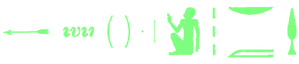
[... ... ... ... ...] ... nbw m ḫt n ꜥnḫ
… all people with food grown from the soil.
- 308
[... ... ... ... ...] ..s nbw
… all her …
- 309

[... ... ... ... ...] .[..] dmḏ.tj r psšt.k
… gathered together as your share.
- 310
Wṯst Ḥr nt bjk n nb Ḥr Bḥdtj nṯr ꜥꜣ nb pt ḏd.tw Wṯst m rn nwt tn twt Ḥr Rꜥ m ḫntj.s wbn.f ... ...]
The Throne of Horus belongs to the Falcon of Gold, Horus of Behdet, the great god, lord of the sky. The Throne is the name given to this city. The image of Horus-Ra is within it. He rises …
- 311
Msn tn nwt nt Ḥr spt nt Nb Msn Ḥt qn pw nt Ḥr {ꜣ ꜣst jwꜥw mnḫ n (Wnn nfrw) [... ...]
This Mesen, city of Horus, province of the Lord of Mesen, is the House of the Strong One, the house of Horus son of Isis, worthy heir to Wennefer …
- 312
snḏ n Ḥr Bḥdtj nṯr ꜥꜣ nb pt sꜣb šwt prj m ꜣḫt ...
Revere Horus of Behdet, the great god, lord of the sky,
he of the many-colored feathers, who comes forth from the horizon … - 313
nṯrw m pt ntf nḫw dwꜣ.n nṯrw nṯrwt [... ... ...]
O gods in heaven, he is the protector whom the gods and goddesses have praised …
- 314
nṯrw m tꜣ ntf msntj [...
O gods on earth, he is the harpooner …
Note · Line 314
The Egyptian title “harpooner” echoes the name Mesen, linking Horus’s skill with the harpoon to the place where he wields it. - 315
nṯrw m dꜣt ntf jwꜥw mnḫ n [...
O gods in the underworld, he is the worthy heir of …
- 316
nṯrw m nww ntf jꜣwtj [...
O gods in Nun, he is the harpooner …
- 317
nṯrw rsjw ntf bjk nṯrj ḫnt jtrtj ...]
O gods of the south, he is the divine falcon who presides over the two shrines …
Note · Line 317
The two shrines stand for the sanctuaries of Upper and Lower Egypt: the falcon presides over both halves of the country. - 318
nṯrw mḥtjw ntf mꜣj wr pḥtj ḫnt Ꜥntj jꜣbtt bjk n [... ...]
O gods of the north, he is the lion of great strength who presides over Khent-Iabet, the falcon of …
Note · Line 318
Khent-Iabet was a district in the eastern Nile Delta, hence its place in the call to the gods of the north. - 319
nṯrw jmntt ntf ḏrtj wr dbdb tbh [... ...]
O gods of the west, he is the great falcon who cuts Tebeh to pieces …
Note · Line 319
Tebeh is another name for Seth. - 320
nṯrw jꜣbtt ntf ꜣm wr jntj wꜣ .[.. [... ...]
O gods of the east, he is the great falcon who drives back the conspirator …
- 321
nṯrw r ḏr.sn ntf nḏ ntj ḥr nḏ nṯrw [... ...]
O gods, one and all, he is the protector who protects the gods …
- 322
ṯꜣjw ḥmwt ntf nfr ḥr sḥb mnḏtj ṯḥn šwt ... ...]
O men and women, he is fair of face, his two eyes decked for a feast, his plumage gleaming …
- 323
ḫꜣswt r ꜣw.sn ntf ẖrj ḫt ḫtḫt ḫrww [...]
O foreign lands, all of you, he is the weapon-bearer who drives back the foes …
- 324
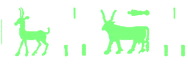
ꜥwt mnmnt ntf Mꜣj ḥsꜣ .. [... ... ... ...]
O flocks and herds, he is Maahes …
Note · Line 324
Maahes is a lion god whose name means “fierce lion.” - 325
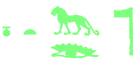
pꜣjw rmw ntf gmḥsw [... ... ...]
O birds and fish, he is the falcon …
- 326
šꜣ n ꜣḫt ntf Ḥꜥpj [... ... ... ...]
O plants of the field, he is Hapy …
- 327

nswt bjt (…)
The King of Upper and Lower Egypt ( ).
- 328

smꜣꜥ ꜥꜣbt n jt.f šps
Presenting a food offering to his august father.
- 329
nswt bjt (Pr ꜥꜣ) sꜣ Rꜥ (Pr ꜥꜣ)
The King of Upper and Lower Egypt, Pharaoh, the Son of Ra, Pharaoh.
Note · Line 329
Here “Pharaoh” itself occupies each place where a personal royal name would normally appear. - 330

ḏd mdw jn Ḥr Bḥdtj nṯr ꜥꜣ nb pt Nb Msn sꜣb šwt prj m ꜣḫt Rꜥ Ḥr ꜣḫtj ḫnt St wrt
Words spoken by Horus of Behdet, the great god, lord of heaven, lord of Mesen, the falcon of many-colored plumage who comes forth from the horizon, Ra-Horakhty in the Great Seat:
- 331
rdj.j n.k ḥꜥpj r tr.f tp rnpt
I give you the Nile flood in its season, at the beginning of the year.
Note · Line 331
The Egyptian year began with the season called Inundation. Horus promises the king not just water, but water at the right time for the fields. - 332

[... ... ... m mrjt.f
… with what he loves.
- 333

[... ... ... ... ..] r ẖrt.k
… for your sustenance.
- 334

[... ...] ḥnꜥ snt.f ḥmt.f ḥqꜣt nbt tꜣwj (…) nṯrw mrj jtw mrj Ḥr Bḥdtj nṯr ꜥꜣ nb pt
… together with his sister, his wife, the ruler, the Lady of the Two Lands ( ), the Father-loving Gods, beloved of Horus of Behdet, the great god, lord of heaven.
Note · Line 334
“Father-loving Gods” is the royal couple’s shared title, not a separate group of gods who accompany them. - 335

[... ...] sḫm ḫwj sḫmw m sš.sn ḫr ḫftj m St wnp dr sbj r rwt Wḏꜣt
… the mighty one who guards the mighty ones in their nests, who fells the foe at the Place of Stabbing and drives the rebel out of Egypt.
Note · Line 335
The gods’ “nests” are their temples. The Place of Stabbing is Edfu pictured as the site of Horus’s victory. - 336

[... ...] ḥrjt tp nt nṯrw nbw nbt sḫmw mnjt sššt sꜥḥꜥt wnšb n kꜣ.s nbt tḫt nbt hj nbt ḥst nbt ḫbt ḥnwt jbꜣ
… the cobra on the brow of all the gods, lady of the sekhem rattles, the menat and the sesheshet rattle, to whose ka the wenesheb is offered, lady of drunkenness, lady of jubilation, lady of song, lady of dance, mistress of the iba dance.
Note · Line 336
The menat was a necklace that could be shaken to make music alongside the rattles. The wenesheb was an emblem in the shape of a water clock. - 337

ḥr nst jt.f mj Ḥr kꜣ nḫt jtj psḏ m Tꜣ mrj mj Ḥp ꜥnḫ jrj n.f ḥb sd ꜥšꜣ wr mj Ptḥ Tꜣ ṯnn jt nṯrw nbtj wr pḥtj ḫntj š nḥḥ smn hpw mj Ḏḥwtj ꜥꜣ ꜥꜣ
on his father’s throne like Horus, the strong bull, the sovereign who shines in Egypt like the living Apis, for whom Sed festivals have been celebrated in great number as for Ptah-Tatenen, father of the gods; the Two Ladies: great in strength, foremost on the Mediterranean, who establishes the laws like Thoth, the twice-great.
Note · Line 337
The living Apis was a sacred bull kept at Memphis. Here it is Ptolemy XII, not Horus, whose splendor is compared to the bull’s. - 338
mꜣht ḏsrt m ꜥqꜣ St wrt m jnr ḥḏ nfr rwḏ wbnt.f jm.s m wṯs nfrw.f m ẖnt.f nfrt nt jbd 1 ꜣḫt jw ḥm.f m ḫntj r smꜣ ḫꜣswt rsjwt dwn.f ꜥwj.f r Ꜥnt ḥn nfr jw.n.f [...] ... wpj.tw ḫpr wḏꜣ.f mꜣrw.f jmntt nt Msn m sw 18 r sw 24 šsp.f St wrt nt Ḥr
the sacred gate of fine white sandstone directly before the Great Seat. In it he appears aboard the Bearer of His Beauty at his fair rowing festival in the first month of Inundation, when His Majesty sails south to slaughter the peoples of the southern lands and stretches out his arms toward Khent-hen-nefer, when he has come … and becoming is set in motion, when he enters his pavilion west of Mesen from day 18 to day 24, until he takes his place in the Great Seat of Horus.
Note · Line 338
“His Majesty” here is Horus: the Bearer of His Beauty is the ceremonial boat that carries his image. Khent-hen-nefer lay in Nubia, to the south, the direction of his ritual voyage. - 339

[...] rnpwt bsjt m Gbb rnpj ḥꜥ.k jm.sn ḥrrwt nbt prjt m ꜣḫt ꜣḫꜣḫ.sn m ḥr.k nfr [...] wnf ḥr.k m rn.k n nb rnpwt
… fresh shoots springing from Geb: may your flesh grow fresh again through them.
All the flowers that spring from the field bloom before your fair face.
… Your face lights up in your name of Lord of Fresh Shoots.Note · Line 339
Geb is the earth god. The Egyptian words for “fresh shoots” and “grow fresh again” share a root: the prayer asks that the new growth of the fields renew the god’s own body. - 340
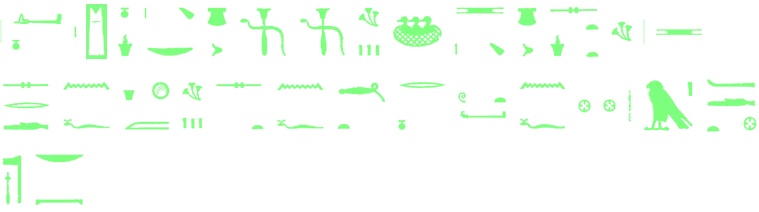
rdj.j n.k ḥnbt nbt ẖr wꜣḏwꜣḏw sš ẖr sbtwt [... ... ... ... ... ... ... ..]. srd.n.f ꜥẖmw .[.. ... ..[. ...] ..[. ... ... ..[. ... ...] Ḥr Bḥdtj nṯr ꜥꜣ nb pt
I give you every field laden with green plants, the marsh laden with flowers. … He has made the shoots grow … Horus of Behdet, the great god, lord of heaven.
- 341
nbt tꜣwj (… …) nṯrw mrj jtw mrj snw mrj ꜣst wrt mwt nṯr jrt Rꜥ nbt pt ḥnwt nṯrw nbw jrj.n.f mnw n jt.f Ḥr Bḥdtj nṯr ꜥꜣ nb pt
the Lady of the Two Lands, Cleopatra, the Father-loving, Brother-loving Gods, beloved of Isis the Great, mother of the god, Eye of Ra, lady of heaven, mistress of all the gods. He built a monument for his father Horus of Behdet, the great god, lord of heaven.
Note · Line 341
The queen is Cleopatra V. With “He built,” the inscription turns back to Ptolemy XII as the builder of the gate. - 342

[... ... ... ... .. r gs.f jn nb ḏrt nṯr m ḥb mswt nṯr m jbd 1 ꜣḫt prj.f jm.s r Bḥdw n Rꜥ m jbd 1 prt sw 27 r sfsf ꜣw n nṯrw nw Bḥdt tp tr ḥb nswjt.f ns sj Bḥdtj m ꜥb nbt Jwnt m jbd 3 šmw psḏntjw jnj.tw.s
… at his side by the Golden One, the God’s Hand, at the feast of the god’s birth in the first month of Inundation. Through this gate he goes forth to the Throne of Ra on day 27 of the first month of Emergence, to offer sacrifice to the gods of Behdet at the feast of his kingship. Through it Horus of Behdet passes with the Lady of Dendera at the new moon of the third month of Harvest, the day called “She Is Brought.”
Note · Line 342
Emergence was the season when the fields reappeared as the Nile receded. The dates give a calendar for the gate: a procession marking Horus’s kingship passed through it in a different season from the procession with Hathor. - 343

[... ... ... ... ... ...] .. r ꜥꜣjt.k
… to your palace.
- 344

[... ... ... ...] ..[. .. wr ꜥpj nwt m ḥtp ḫns ꜣḫt m nḏm jb wꜥ wꜥw n kj ḥr ḫw.f Ḥr Bḥdtj nṯr ꜥꜣ nb pt
… the great … who flies across the sky in peace,
who crosses the horizon with a glad heart,
the one and only, with none like him:
Horus of Behdet, the great god, lord of the sky. - 345
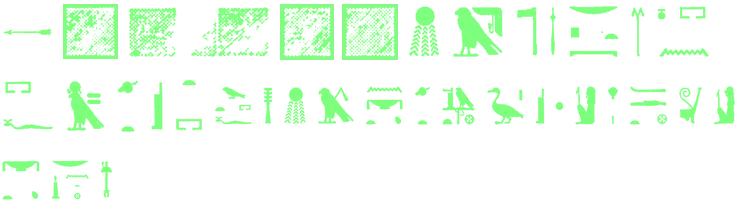
[... ... ... ... ... ... ...] wbn Ḥr Bḥdtj nṯr ꜥꜣ nb pt m ẖnw n pr.f Rꜥ Ḥr ꜣḫtj ḫnt St wrt.f psḏ bjk n nb ḫnt Wṯst Ḥr sꜣ Wsjr ḥrj jb Bḥdw n Rꜥ nb nbt Jwnt wbn r ḥnꜥ.sn ḥnꜥ Psḏt mj qd.sn ḥsj.sn Rꜥ r nwt.sn nfrt sr.sn ꜥnḫ m ḫntj.s nḥḥ ḏt ḥr wbn ḥtp mj Rꜥ rdj.f sw m ꜣḫt
… Horus of Behdet, the great god, lord of the sky, rises within his house:
Ra-Harakhty in his Great Seat.
The Falcon of the Golden One shines in the Throne of Horus:
the son of Osiris, who dwells in the Throne of Ra.
The Golden One, lady of Dendera, has risen with them,
together with the Ennead in full.
They praise Ra for their perfect city;
they proclaim life within it for ever and ever,
rising and setting like Ra when he shows himself on the horizon. - 346
[... ... ... ... ... ...] pt m ḥb Wṯst Ḥr m ḥꜥꜥwt Ḏbꜣ ẖnm.n.f ršwt hj pẖr m Ḥt bjk hnw m Spwt nṯrw ṯḥḥwt m St wnp ꜣwt jb m Nst nṯrw nḏm jb n Nst Rꜥ jꜣw sp 2 n Msn qmꜣ.sn swꜣš n pꜣ nb nṯrw Ḥr Bḥdtj nṯr ꜥꜣ nb pt jtj wr ḥrj nst.f
… the sky is in festival, the Throne of Horus is full of joy.
Edfu has embraced delight.
Shouts of joy ring through the House of the Falcon,
acclamations through the Provinces of the Gods.
Mirth at the Place of Stabbing,
glad hearts in the Throne of the Gods,
good cheer in the Throne of Ra,
praise, praise in Mesen!
They raise a song of praise to the lord of the gods,
Horus of Behdet, the great god, lord of the sky,
the sovereign, the great one upon his throne. - 347

rdj.f ḥb sd ꜥšꜣ wr n nswt bjt (… …) sꜣ Rꜥ (… …)
May he grant Sed festivals in great number to the King of Upper and Lower Egypt, Ptolemy XII, the Son of Ra, Ptolemy XII.
- 348
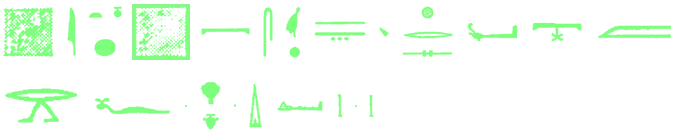
jꜣw n.k Ḥr ꜣḫtj ḥrj nṯrw nbw ꜥpj wr jtn m pt sḥḏ tꜣwj ḫsr kkw m prj.f
Praise to you, Harakhty, foremost of all the gods,
great Api, sun disk in the sky,
who lights the Two Lands,
who scatters the dark when he comes forth! - 349
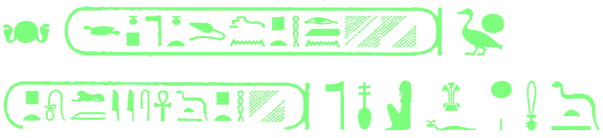
nswt bjt (… …) sꜣ Rꜥ (… …) nṯr nfr [... ... ... ... ... ...]
The King of Upper and Lower Egypt, Ptolemy XII, the Son of Ra, Ptolemy XII, the perfect god …
- 350

ḏd mdw jn Ḥr Bḥdtj nṯr ꜥꜣ nb pt sꜣb šwt prj m ꜣḫt ꜥpj šps ḫnt kꜣr nb ḏrtj wr pḥtj nb jḫt mnt ꜥn ḥr qnj m sḏm
Words to be spoken by Horus of Behdet, the great god, lord of the sky, the many-colored one of plumage who comes forth from the horizon, splendid Api who presides over every shrine, the falcon great in strength, lord of the world, kindly of face and quick to listen:
- 351

rdj.j n.k šmꜥw ḥr dwꜣ n.k nṯr mḥw ḥr hnw n ḥm.k
I grant that Upper Egypt give thanks to the god for you and Lower Egypt acclaim Your Majesty.
- 352

ḏd mdw jn Ḥt ḥr nbt Jwnt jrt Rꜥ ḥrt jb Bḥdt nbt pt ḥnwt nṯrw nbw Sšꜣt wrt ḥnwt Pr mḏꜣt sḫrt sbjw m tpw rꜣ.s
Words to be spoken by Hathor, lady of Dendera, Eye of Ra, who dwells in Behdet, lady of the sky, mistress of all the gods, Seshat the Great, mistress of the House of Books, who fells rebels with her spells:
Note · Line 352
Hathor speaks here as Seshat, goddess of writing. The House of Books was the temple library, where the written spells used in worship were kept. - 353

rdj.j n.k rsj mḥtj m jꜣw jmntt jꜣbtt m ksw
I grant you south and north singing praise, west and east bowing low.
- 354
...] r srnp ḏt.k m ꜥnḫ wꜣs [..]
… to renew the youth of your body with milk …
- 355

sbꜣ šps ntj Rwt djt mꜣꜥt m ꜥqꜣ n Bḥdt st rd pw nt ntjw jwtjw r nḥtj ꜥnḫ m ꜥ nb ꜥnḫ jrj.n nswt bjt (… …) n jt.f Ḥr Bḥdtj nṯr ꜥꜣ nb pt mkj ḥꜥ.f ḏt
The splendid portal of the Gate Where Justice Is Given stands directly before the temple of Behdet. This is the place where all people come to beg life from the Lord of Life. The King of Upper and Lower Egypt, Ptolemy XII, built it for his father Horus of Behdet, the great god, lord of the sky, who protects the king’s body for ever.
Note · Line 355
The outer gate gave people who could not enter the inner sanctuary a place to bring their troubles directly to Horus. - 356

st sḏm sprw ntj sprww nbw r wpt mꜣꜥt r jsft bw wr pw ntj nḫt mꜣrw r nḥm.w m wsrw wꜣt jꜣt nṯrjt nt sꜣb šwt r ms ꜥnḫw nw jmꜣ jšd
Here the pleas of all who plead are heard, to distinguish right from wrong. This is the great place where the distressed are given strength, to save them from the powerful; the way to the divine seat of the Many-Colored Falcon, where branches of the ima and ished trees are presented.
- 357
(… …) (… …)
Ptolemy XII. Ptolemy XII.
- 358

wnn Bḥdtj m mꜣj wr pḥtj ḥr sꜣw St wrt r sbjw ḥr mkt nwt.f ḥr sḫrt ḫftjw.s ḥr ḫwt nswt bjt (…)
The Behdetite is a lion, great in strength, guarding the Great Seat against rebels, keeping his city safe, felling its foes and protecting the King of Upper and Lower Egypt ( ).
- 359
wnn Wꜣḏt wbn.tj ḥr wꜣḏ.s jꜣbt nt Rꜥ ḥr sꜣw.f sj m jꜣrt špst swḏꜣt Ḥr ḥr ḫwt nswt bjt (Pr ꜥꜣ) ḥr p.f
Wadjet has risen on her papyrus stalk, the left eye of Ra, guarding him. She is the splendid cobra on the brow who keeps Horus safe and protects the King of Upper and Lower Egypt, Pharaoh, upon his throne.
- 360
fꜣt jḫt ḏd mdw mn n.k ḏsrw m jḫt nfrt nbt ḥtp ḏfꜣ ḫr ḥm.k sjꜥr.j n.k st m ṯnw n ḥḥw fꜣj.n.j sn m ḥr.k nfr ꜥḥꜥ.k ḥmsj.k jm.sn jw.w wꜥb ḥnꜥ sꜣt.k nb nbt Jwnt
Bringing the food offerings. Words to be spoken:
Receive these sacred offerings, every good thing.
Offerings and provisions for Your Majesty!
I present them to you by the million,
having lifted them before your fair face.
May you take your seat and eat of them, for they are pure,
with your daughter, the Golden One, lady of Dendera.Note · Line 360
Hathor can be Horus’s daughter here because he is receiving the meal as the sun god, her father. - 361

nṯr nfr mr bḥdw n Bḥdtj twr n sjꜣw ḫnt Wr nḫt sḏfꜣ Ḥt Ḥr m kꜣw špsw srwḏ tpt ꜥbꜣ.k swr ḏfꜣ nswt bjt (… …)
The perfect god, overseer of the throne of the Behdetite, pure priest of the falcon in Great-in-Victory, who stocks the House of Horus with food and delicacies, makes what is on your altar last and multiplies provisions: the King of Upper and Lower Egypt, Ptolemy XII.
Note · Line 361
Great-in-Victory is a sacred name of Edfu. The king appears here in the role of a priest responsible for feeding the god. - 362

rdj.j n.k ḥw srwḏ ḥr ḏrt.k drp.k ḥr nb r mrwt.k
I grant that food may never fail in your hand, so that you may feed everyone as you wish.
- 363

rdj.j n.k ... ... ... ...] ... jḫt nfrt nbt r ẖrt.k
I give you … and every good thing for your sustenance.
- 364
[... ...] Ḥr Bḥdtj nṯr ꜥꜣ nb pt
… Horus of Behdet, the great god, lord of the sky.
- 365
...] wnp sbjw.f jrj ḫftjw.f m tm wn ... ...]
… who stabs his rebels and brings his foes to nothing …
- 366
sbꜣ šps n sꜣb šwt m stj n nb pt st rd pw nt wrw nḏsw r sn tꜣ n ḥm.f ḥnꜥ Psḏt [... ...]
The splendid gate of the Many-Colored Falcon stands before the face of the lord of the sky. This is the place where great and small come to kiss the earth before His Majesty and the Ennead …
Note · Line 366
To kiss the earth was to bow face down before the god. - 367
st jꜥb jḫt m rwt.s m tp rnpt m jnw nbw nw ḥmw.f ꜥt ꜥḏ ꜥfꜥw ntj ḫrjt sbjw r snḏm [... ...]
The place before which offerings are assembled at the year’s beginning from all the gifts of his servants; the chamber where the sacrificial crocodiles, the rebels, are slaughtered to gladden …
Note · Line 367
The crocodiles stand for Seth’s allies. Slaughtering them at the turn of the year enacts Horus’s victory for the year ahead. - 368
wnn Nḫbt rwj.tj ḥr šnꜥ.s wnmt nt Rꜥ ḥr jrt mkt.f sj m nrt [... ..]. ... . n Ḥr ꜣḫtj ḥr ḫwt nswt bjt (…) [...]
Nekhbet has alighted on her shena plant, the right eye of Ra, guarding him. She is the vulture … of Harakhty, protecting the King of Upper and Lower Egypt ( ) …
- 369

wnn Bḥdtj m qn tp ḥt ḥr ḥn ḥt nṯr.f r ḥꜣjt ḥr sꜣt spt.f ḥr smꜣ sbjw.s ḥr ḫwt nswt bjt (…) ḥr smꜣt.f
The Behdetite is the Strong One atop the House, guarding his temple against harm, watching over his province, killing its rebels and protecting the King of Upper and Lower Egypt ( ) upon his throne.
- 370
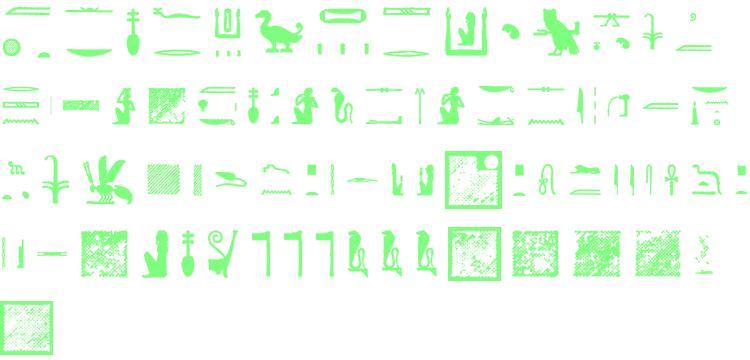
fꜣt jḫt ḏd mdw mn n.k ḏsrw m jḫt nbt nfrt kꜣw ḏfꜣ ḫr kꜣ.k ms.j n.k st m rḫt nt ḥfnw fꜣj.n.j sn m ḥr.k nfr wnm.k sꜥm.k jm.sn jw.w wꜥb m ꜥb nbt Jwnt ḥrjt tp.k wrt
Bringing the food offerings. Words to be spoken:
Receive these sacred offerings, every good thing.
Food and provisions for your ka!
I present them to you by the hundred thousand,
having lifted them before your fair face.
May you eat of them and partake of them, for they are pure,
with the lady of Dendera, the great cobra on your brow. - 371

nswt bjt (… …) sꜣ Rꜥ (… …) Wꜣḏḏ nfr n nṯrw nṯrwt [... ... ... ... ...]
The King of Upper and Lower Egypt, Ptolemy XII, the Son of Ra, Ptolemy XII, the perfect Wadjedj serpent of the gods and goddesses …
- 372

nṯr nfr ... ...] ms jḫt nfrt nbt ḥr sm.k Ḥr nb ḥtp sꜣ Rꜥ (… …)
The perfect god … who brings every good thing to your altar, O Horus, lord of offerings: the Son of Ra, Ptolemy XII.
- 373
... rdj.j n.k kꜣw ḏfꜣ r ẖrt.k sšm.k jm.sn r mrwt.k
“… I give you food and provisions to meet your needs, that you may apportion them as you please.”
- 374
nswt bjt (… …) sꜣ Rꜥ (… …)
The king of Upper and Lower Egypt, Ptolemy XII; the son of Ra, Ptolemy XII.
- 375

Ḥr ḥwn nfr bnr mrwt ṯnj.n sw nbtj ḥnꜥ kꜣ.f dwꜣ.n.f ẖnmw šps r šsp.n.f ḫꜥw m nswt snsn n.f ḥntjw m ḥꜥꜥwt mj Nḏ jt.f ṯḥn msḫꜥ
Horus: the perfect youth, sweetly loved, whom the Two Ladies singled out together with his ka; who praised the august creator until he received the crowns as king; whom the officers joined in joy as they joined the Avenger of His Father; radiant in appearance,
Note · Line 375
“Horus” at the head of this passage introduces the king’s Horus name. The youth chosen and crowned in the lines that follow is Ptolemy XII. - 376
nb šfjt mj Nb r ḏr ḏdj nswjt mj Rꜥ m ꜣwt jb ḥqꜣ jmjt pr nt Šw rdj n.f ꜥnḫ wꜣs jn Wsjr jrj.n.f mnw n jt.f Ḥr Bḥdtj nṯr ꜥꜣ nb pt
lord of majesty like the Lord of All, enduring in kingship like Ra, joyful of heart, ruler of the estate bequeathed by Shu, to whom Osiris gave life and dominion. He made a monument for his father Horus of Behdet, the great god, lord of the sky.
- 377
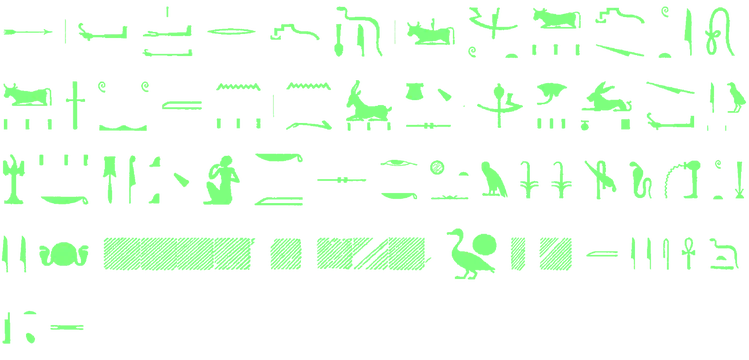
ḥwt ꜥ r stpw ḏd mdw smꜣ smꜣ.tj šsrw stp.tj jwꜣw wnḏww m šꜥt njꜣww gḥsw mꜣw ḥḏ wnp jw.w ḥr ḫꜣwwt.k sꜣb šwt wnm.k m nf jrj.k jḫt m nn sšm.k wꜥb n šnwt.k
Consecrating the choice cuts. Words to be spoken: “The slaughter bull is slaughtered, the beef cattle are jointed,
the iwa and wendju cattle are butchered.
The ibexes, gazelles and oryxes have been stabbed; they lie on your altars.
O dapple-feathered one, may you eat of that, may you dine on this,
may you apportion pure cuts to your court.”Note · Line 377
Iwa and wendju are Egyptian terms for kinds of offering cattle. To joint the carcass was to divide it at the joints into portions for the altar. - 378

nswt bjt (… …]) sꜣ Rꜥ (… …)
The king of Upper and Lower Egypt, Ptolemy XII; the son of Ra, Ptolemy XII.
- 379

nṯr nfr wsr ḥw ḥwj sbjw [...] ṯꜣj ꜥ ḥr ḫbḫb ḫftjw [... ... ... ... ... nṯrw ṯꜣjw nbw mds bšṯw ḫnt Wr nḫt nb pḥtj nswt bjt (… …)
The perfect god, the mighty one, the striker who strikes down rebels, … manly of arm, who kills his foes, … all the male gods, who cuts down rebels in Great-in-Victory, lord of strength, the king of Upper and Lower Egypt, Ptolemy XII.
- 380

nb ḥr n ḥr ṯmꜣ ꜥ wsr m nḫt.f ꜥꜣ jb mnḫ sꜣw nṯrw nṯrwt bs r .[.. ...] nwwt spwt [...] ... [... ... ... ... ...] Ḥr Bḥdtj nṯr ꜥꜣ [... ..] pt
The lord of dread, strong of arm, mighty in his strength, resolute, the excellent one who guards the gods and goddesses, who goes forth to … cities and provinces … Horus of Behdet, the great god, … sky.
- 381

ḏd mdw jn Ḥr Bḥdtj nṯr ꜥꜣ nb pt sꜣb šwt prj m ꜣḫt smꜣ ḫꜣswt m ꜥꜣw n nḫt.f prj ꜥ wnp.n.f nhs jrj ꜥḏt m ḫftjw.f
Words spoken by Horus of Behdet, the great god, lord of the sky, dapple-feathered, who comes forth from the horizon, who slays the peoples of foreign lands by his great strength, whose arm darts out, who has stabbed Nehes, who slaughters his foes:
- 382
rdj.j n.k sbjw.k spt m ds.k smꜣjw.sn m sbj n ḫt
“I grant you this: your rebels lie slaughtered by your knife, their companions are offerings for the fire.”
- 383

ḏrtj wr pḥtj mꜣj ꜥnḫ dr ḫftjw ꜥnḫ m nmt ḫꜣswt [... ...] ... ṯꜣms snf n smꜣjw nbḏ qn wr pḥtj ḥrst wḏꜣtj Ḥr Bḥdtj nṯr ꜥꜣ nb pt
The falcon of great strength, the living lion who drives off his foes, who lives by ranging the deserts, … who gulps down the blood of the Evil One’s companions, the valiant one, great in strength, his two eyes red with rage: Horus of Behdet, the great god, lord of the sky.
- 384

ṯtf nb ṯḥnt jt bdt ḏd mdw ṯtf.j n.ṯ nb ḫr.j n.ṯ ṯḥnt ... n.ṯ jt bdt [... ... ...] m nb [... . n.ṯ m [... ...] m tꜣ ḏr.f prj.n.ṯ m pr.ṯ m [..] hrw.ṯ [... ... ... ...]
Pouring out gold and faience, barley and emmer. Words to be spoken: “For you I pour out gold,
for you I scatter faience,
for you … barley and emmer
… with gold … for you with … throughout the land.
When you come forth from your house in …, you rejoice …”Note · Line 384
Egyptian faience was a material made from powdered quartz with a glossy glaze, often blue or green. Emmer is a kind of wheat. - 385

nswt bjt (… …) sꜣ Rꜥ (… …) ...] .. n .. tꜣwj jtj nb [..] nn nb n šmꜥj mḥj
The king of Upper and Lower Egypt, Ptolemy XII; the son of Ra, Ptolemy XII; … of … the Two Lands, sovereign and lord …, lord of the grain of Upper and Lower Egypt.
- 386
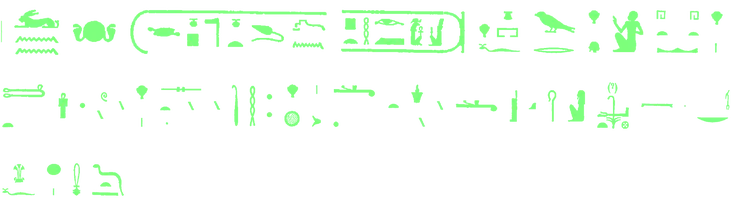
wnn nswt bjt (… …) ḥr nst.f m ḥqꜣ wr ḥrj tp Ḫh ḥr ṯtf sꜣwj ḥr sṯt ṯḥnt ḥr ḫr jt bdt [... ... ...] .. [...] ḥqꜣ šmꜥw [... ... ... ..] pt
The king of Upper and Lower Egypt, Ptolemy XII, sits on his throne as great ruler, chief of Heh. He pours out sawi-gold, scatters faience and showers down barley and emmer … the ruler of Upper Egypt … sky.
- 387
Rꜥjt ḫnt ꜣḫt jtnt snnwt jtn [... ... n mrjt.s ṯḥnt Ḥt ḥr wrt nbt Jwnt
Raet in the horizon, the female sun disk, the sun disk’s double, … with what she loves, the Shining One, Hathor the Great, lady of Dendera.
Note · Line 387
Raet is the feminine form of Ra’s name. “Shining One” also echoes the Egyptian word for faience: Hathor shares the gleam of the gift scattered before her. - 388
ḏd mdw jn Ḥt ḥr wrt nbt Jwnt jrt Rꜥ nbt pt ḥnwt nṯrw nbw nb n nṯrw [...] n nṯrwt mfkꜣt nt Psḏt ꜥꜣt
Words spoken by Hathor the Great, lady of Dendera, Eye of Ra, lady of the sky, mistress of all the gods, gold of the gods, … of the goddesses, turquoise of the Great Ennead:
- 389
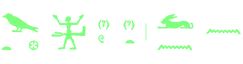
rdj.j n.k [...] m ḫntj St wrt ḥꜥj ḥr nb n mꜣꜣ.k
“I grant you this: … in the Great Seat, and every face rejoices at the sight of you.”
- 390
wnn [... ... ... ...] ḫnt St wrt nt Ḥr ꜣḫtj ḥr rdt sšp ḥr [.. ... ... ... ... ... ... ... . ḥr mḥ pt tꜣ [..] m stwt.s
… has appeared in the Great Seat of Horakhty. She sheds light … and fills sky and earth … with her rays.
- 391
nswt bjt nb tꜣwj (… …) mrj Ḥr Bḥdtj nṯr ꜥꜣ nb pt sꜣb šwt prj m ꜣḫt Ḥr nb ꜥꜣ jb jtj nb qnt nḫt mj {ꜣ ꜣst sꜣ Rꜥ nb ḫꜥw (… …) ḥnꜥ snt.f ḥmt.f ḥqꜣt
The king of Upper and Lower Egypt, lord of the Two Lands, Ptolemy XII, beloved of Horus of Behdet, the great god, lord of the sky, dapple-feathered, who comes forth from the horizon; Horus of Gold: resolute, sovereign, lord of valor and might like the Son of Isis; the son of Ra, lord of crowns, Ptolemy XII, together with his sister, his wife, the sovereign lady,
- 392

sbꜣ ꜥꜣ n ḫft ḥr ntj Wṯst Ḥr prjt Bḥdtj ḫnt.s r rwt ꜥꜣ.f m mrw tp Ꜥtjw nbj m ḥmtj Sṯt wꜣt nṯr pw nt Ḥr {mꜣ tꜣwj r ḥtp m ḫntj Ḥt nmjt
the great gate facing the Throne of Horus, from which Horus of Behdet comes forth. The gate’s door is of meru wood from Lebanon, plated with copper from Asia. This is the sacred road by which Harsomtus goes to rest in the House of the Bed.
Note · Line 392
Harsomtus is the divine child of Horus and Hathor. The House of the Bed is the birth house at Edfu, where his birth was celebrated. - 393
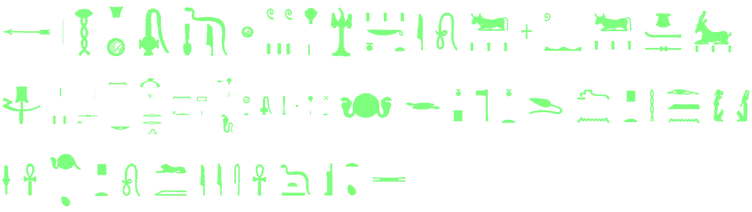
wꜣḥ ꜥḫ ḏd mdw ḫꜣw ḥr ḫꜣwwt.k ntj jwꜣw wnḏww gḥsw mꜣw ḥḏ njꜣww ꜥntjw ḥr ḫt snṯr ḥr sḏt sṯj ḥb pẖr.n.f pr.k
Setting up a brazier. Words to be spoken: “On your altars lie cuts of meat from iwa and wendju cattle, gazelles, oryxes and ibexes.
Myrrh is on the flame, frankincense on the fire;
the fragrance of the feast has filled your house.” - 394

nswt bjt (… …) sꜣ Rꜥ (… …) ṯmꜣ ꜥ ꜣmm sbjw nw jt.f mꜥq wꜥbw.sn
The king of Upper and Lower Egypt, Ptolemy XII; the son of Ra, Ptolemy XII, strong of arm, who seizes his father’s rebels and grills the cuts of their flesh.
Note · Line 394
The flesh on the grill is the sacrificial meat just listed. In the rite, preparing a feast for Horus and destroying his enemies are the same act. - 395

nṯr nfr qnj m gꜣbtj mds sbjw ... ẖꜣkw jb ḫrp stpw rdj ꜥwt ḥr ḫꜣwwt gs sꜣb šwt m sṯj qnt bhd nwt m stj n Wṯst nb pḥtj sꜣ Rꜥ (… …)
The perfect god, valiant with both arms, who slaughters rebels, … the treacherous of heart, who presents choice cuts and lays meat on the altars, who anoints the dapple-feathered one with the scent of roasting fat and perfumes the sky opposite the Throne with smoke, lord of strength, the son of Ra, Ptolemy XII.
- 396
ḏd mdw jn Ḥr Bḥdtj nṯr ꜥꜣ nb pt [... ... ..] pḥtj sḏ bṯnww.f nb nḫt prj ꜥ ꜣm.n.f sbj rdj šnṯjw r wnmjt
Words spoken by Horus of Behdet, the great god, lord of the sky, … strength, who breaks his opponents, lord of might, whose arm darts out, who has burned the rebel, who casts the insurgents into the flame:
- 397

rdj.j n.k ḫftjw.k ḫr m sꜣḫt.k ḫftjw.k m nmt nt Sḫmt
“I grant you this: your foes fall by your knife; your foes are at Sekhmet’s place of execution.”
Note · Line 397
Sekhmet is the lioness goddess who strikes down the sun god’s enemies. - 398
Ḥr Bḥdtj nṯr ꜥꜣ nb pt
… Horus of Behdet, the great god, lord of the sky.
- 399

wnn sꜣ Rꜥ (… …) ḥr p.f m wr ḥswt ḫr tpjw tꜣ ḥr .. ... ..] n wsrt m Jwnt ḥr ṯs wsḫ n ḥqꜣt [... ... sw mj ... ..]. wr tpw ꜥšꜣ [... ... ..] wꜣḏwꜣḏ
The son of Ra, Ptolemy XII, sits on his throne, high in favor with those who dwell on earth. He … for the Mighty One in Dendera and fastens a broad collar on the sovereign lady … He is like …, rich in fields, with many … green plants.