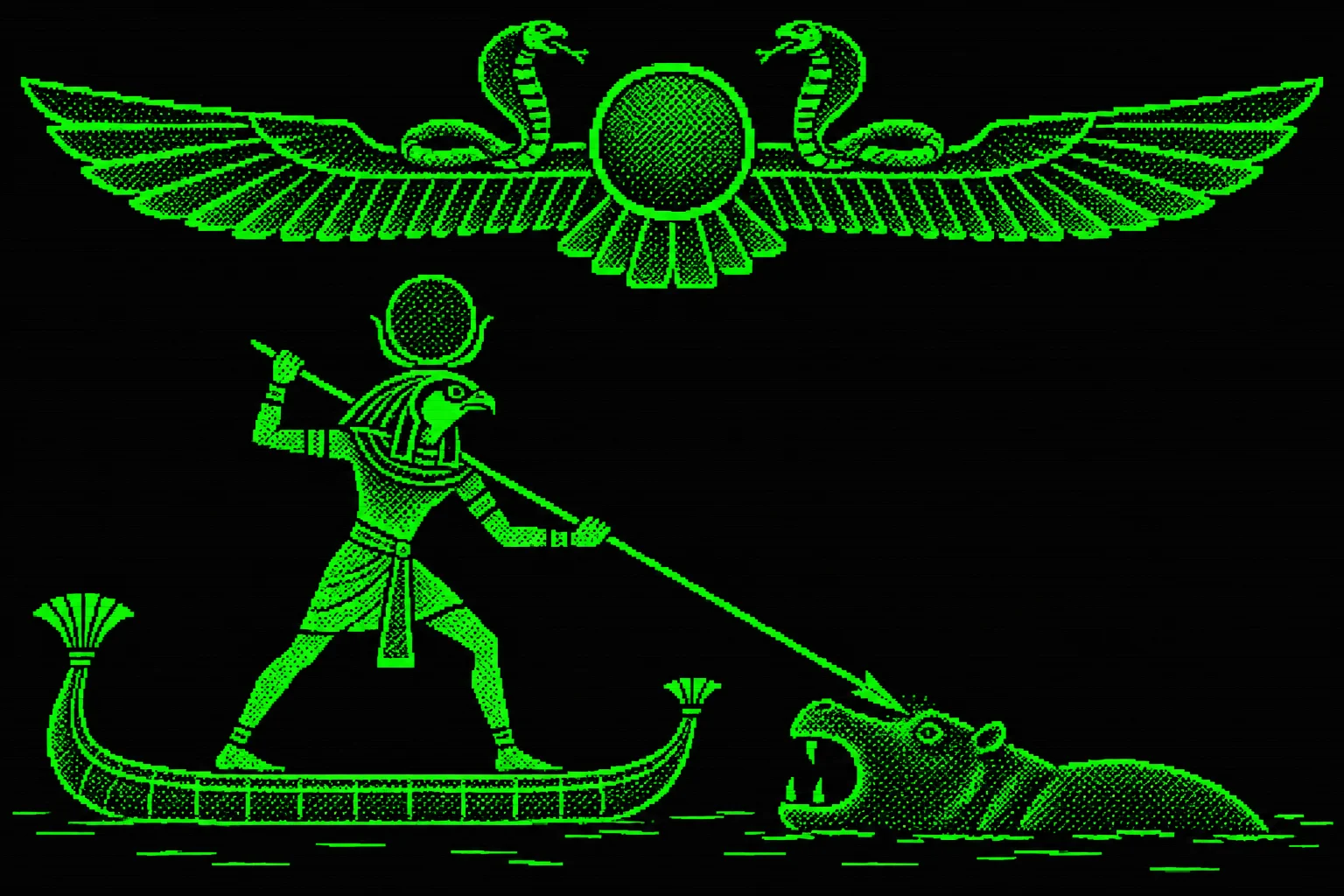
~/sacred-texts/edfu-temple-texts
Spear in My Fist: The Great Gate of the Edfu Pylon
- Text
- Edfu temple texts, Edfou VIII, pp. 1–43
- Date
- Carved on the pylon under Ptolemy XII (80–51 BC)
- Found
- Temple of Horus, Edfu, Upper Egypt: the pylon (Chassinat, Le temple d'Edfou VIII)
- Language
- Ptolemaic Egyptian · Hieroglyphic
- 1
Bḥdtj nṯr ꜥꜣ nb pt sꜣb šwt prj m ꜣḫt ḫntj jtrtj mḥw nswt nṯrw ḫnt Nḏm ꜥnḫ bꜥḥj Bḥdt m nfrw.f nb P n Rꜥ ḫnt Tꜣwj nṯrw ḫwj sḫmw m Qbḥwj
Behedety, the great god, lord of the sky, many-colored of plumage, who comes forth from the horizon; foremost in the two shrines of Lower Egypt, king of the gods in Nedjem-ankh, who floods Behedet with his beauty; lord of the Seat of Ra in the Two Lands of the Gods, who guards the mighty ones in Egypt.
Note · Line 1
Behedety means “he of Behedet”: this is Horus as the falcon worshipped at Edfu. Behedet, Nedjem-ankh and the Seat of Ra are sacred names for Edfu. - 2
Nb Msn nṯr ꜥꜣ nb pt sꜣb šwt prj m ꜣḫt ḫntj jtrtj šmꜥw nb P Msn Msn jꜣbtt {mꜣ bḥdt ḥnꜥ jswt ḫprr wr mkj Ḏrtjw m sš.sn sꜣw Wḏꜣt m dmꜣtj.f
The Lord of Mesen, the great god, lord of the sky, many-colored of plumage, who comes forth from the horizon; foremost in the two shrines of Upper Egypt, lord of Pe-Mesen, Eastern Mesen, Sema-Behedet and the other temples; the great scarab who guards the falcon gods in their nests and shelters Egypt with his two wings.
Note · Line 2
Mesen is another name for Edfu. The scarab, a dung beetle, was an image of the morning sun. - 3

ḥnk bbt ḏd mdw bbt n.ṯ n wn mjtt.s sšp stwt.s tꜣ pn šsp.n.ṯ ḫḫ.ṯ swr.n.s nrw.ṯ ḥr sḥḏ Msn mj ḥꜣjtj
Presenting the collar. Words to be spoken: “For you, a collar without equal.
Its rays light up this land now that you have received your collar.
It has heightened the awe you inspire,
lighting Mesen like the two lights.”Note · Line 3
The king is speaking to Hathor. The “two lights” are the sun and moon, so the light flashing from her collar is imagined on the scale of the whole sky. - 4

nswt bjt (… …) sꜣ Rꜥ (… …) nswt nb ḥmww twt sw r ... [. ...] ... m bꜣḥ.f
The King of Upper and Lower Egypt, Ptolemy XII, Son of Ra, Ptolemy XII, king and lord of craftsmen, who resembles … before him.
Note · Line 4
One royal title introduces the king’s throne name, the other his birth name. Both belong to the same man. - 5

wnn nswt bjt (… …) ḥr bkrt ḥr ms jnw.f n ḥnwt.f ḥr ṯḥn ḥr.s ḥr sꜥꜣ bꜣw.s ḥr sḥtp jb.s m mꜣꜣ stwt.s sw mj ṯnj ḥꜣtj n mwt.f sḥꜥj ḥqꜣt m ꜣbjt.s
The King of Upper and Lower Egypt, Ptolemy XII, is on the throne. He brings his gifts to his lady, makes her face shine, magnifies her power and contents her heart with the sight of her rays. He is like him who lifts his mother’s heart, who gladdens the sovereign lady with what she desires.
- 6

ḏd mdw jn Ḥt ḥr nbt Jwnt jrt Rꜥ nbt pt nbt ḏww sḫprt ꜥꜣt špst wsrt ḫnt Wṯst Ḥr ꜥꜣt m Msn wsrt m Ḥt nhm mfkꜣt nt Psḏt ꜥꜣt
Words spoken by Hathor, lady of Dendera, Eye of Ra, lady of the sky, lady of the mountains, who brings precious stone into being; the august one, mighty on the Throne of Horus, great in Mesen, mighty in the House of Jubilation, turquoise of the Great Ennead.
Note · Line 6
Hathor’s chief sanctuary was at Dendera, where the House of Jubilation stood; the Throne of Horus is at Edfu. Calling her the “turquoise” of the Great Ennead makes her the jewel of a company of nine gods. - 7
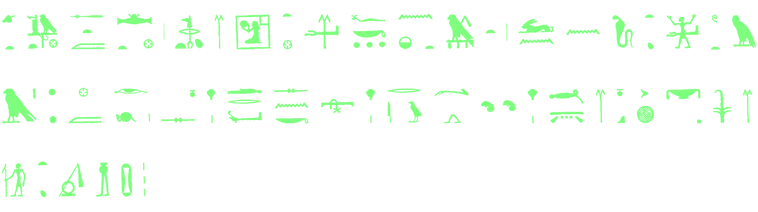
wnn ḥrjt tp ḥꜥj.tj m Mꜣꜣ Ḥr m jrt Rꜥ snnwt.s ḥr dr snkt ḥr rwjt kkw ḥr mḥ tꜣ m nqr sj m jtjt ḫbjt jnw
The uraeus rejoices in Maa-Hor as the Eye of Ra and its counterpart. She banishes darkness, drives back the gloom and fills the land with gold dust. She is the princess who gathers tribute.
Note · Line 7
The Eye of Ra is the sun god’s power acting as a goddess in her own right. As the uraeus, Hathor is the rearing cobra on the god’s or king’s forehead, ready to strike in his defense. - 8

ḥnk mꜣꜥt ḏd mdw mꜣꜥt.k n.k Bḥdtj nb Wṯst nb nṯrw ꜥnḫ.k jm.s wpj.k tꜣwj pn m Ḥr wpj tꜣwj Ḥr wpw rn ḥm.k
Presenting Maat. Words to be spoken: “Your Maat for you, Behedety, lord of the Throne, lord of the gods, for you live by her.
May you judge this twofold land as Horus who judges the Two Lands,
for Horus the Judge is Your Majesty’s name.”Note · Line 8
Maat is both the right order of the world, including truth and justice, and the goddess who embodies it. The king offers Horus a small figure of her as a pledge to govern justly. - 9

nswt bjt (…) sꜣ Rꜥ (…) sꜣ n Jsdn .. ꜥm tꜣwj ḥmww n rḫ sw
The King of Upper and Lower Egypt, Son of Ra, son of Isden, … of him who knows the Two Lands, the skilled one who belongs to him who knows him.
Note · Line 9
Isden is a name of Thoth, god of knowledge and writing. The ovals reserved for the royal names, called cartouches, were left blank here. - 10
nṯr nfr ḥrj tꜣ n ꜥm mꜣꜥt mwj nṯrj n jpj jb twt ꜥwj ḥr fꜣt mꜣꜥt n nb.s r shrj.f m mꜣꜣ sꜣt ḥꜥj ḥm.f m mꜣꜣ.s r tr.f
The perfect god, earthly deputy of him who takes Maat into himself, divine seed of Ipi-ib, raises Maat with his two perfect arms to her lord, to gladden him with the sight of his daughter. His Majesty rejoices to see her at his appointed time.
Note · Line 10
The “perfect god” is the king, and Ipi-ib is Thoth. The daughter the king holds up is Maat, child of the sun god Ra. - 11

ḏd mdw jn Ḥr Bḥdtj nṯr ꜥꜣ nb pt sꜣb šwt prj m ꜣḫt šnbtj ḥtp ḥr mꜣꜥt nswt njwswt nṯr nṯrw ꜥnḫw ḥr dwꜣ.f
Words spoken by Horus Behedety, the great god, lord of the sky, many-colored of plumage, who comes forth from the horizon; the falcon who delights in Maat, king of kings, god of gods, whom the living praise.
- 12

ḏd mdw jn Ḥt ḥr nbt Jwnt jrt Rꜥ ḥrt jb Bḥdt nbt pt ḥnwt nṯrw nbw Mꜣꜥt sꜣt Rꜥ ḥrjt tp m wpt nt dmḏ nṯrw
Words spoken by Hathor, lady of Dendera, Eye of Ra, who dwells in Behedet, lady of the sky, mistress of all the gods; Maat, daughter of Ra, the uraeus on the brow of the assembled gods.
Note · Line 12
Hathor is speaking here as Maat; a second goddess has not stepped forward. - 13
bꜣ šf ḥꜣwt ḥtp ḥr sḥtpt nṯr wptj nfr m bw nb bwt.f pw rdt ḥr gs.f kꜣw.f jrt mꜣꜥt jwtj šsp ḏbꜣw.f Ḥr Bḥdtj nṯr ꜥꜣ nb pt
The ram-headed ba, pleased with her who pleases the god, the perfect judge of all people: he abhors taking sides, feeds on doing justice and takes no bribe. He is Horus Behedety, the great god, lord of the sky.
Note · Line 13
A ba is a form in which a god’s power makes itself present. For Horus the judge, giving an honest verdict is itself nourishment. - 14

sjꜥr wntj ḥr ḏd mdw ḥꜣjtj nn ḥr ḥꜥt ḥr.ṯ nbt Jwnt ꜣḫtjt ḥꜣjt prj.ṯ jw jb.ṯ wnf pẖr.ṯ st.ṯ m ꜣwt jb
Presenting the two mirrors. Words to be spoken: “These two lights brighten your face with joy, lady of Dendera,
you of the horizon, you who shine.
May you come forth, glad at heart;
may you pass through your dwelling in joy.”Note · Line 14
The king holds up the mirrors so that Hathor sees her own radiance reflected back at her. - 15

nswt bjt (… …) sꜣ Rꜥ (… …) snn n Rꜥ jwꜥw n jwn ḥꜥꜥ ḥnk mwt.f m mrjt.s
The King of Upper and Lower Egypt, Ptolemy XII, Son of Ra, Ptolemy XII, image of Ra, heir of the moon god, who gives his mother what she loves.
- 16

wnn sꜣ Rꜥ (… …) ḥr ḥꜥt.f ḥr rdt ḥḏḏ n nb ḥḏḏ ḥr sšp wsrt ḥr qmꜣ šfjt.s ḥr ḥꜥt ḥnwt m ḥr.s nfr sj m jtnt jtn.n.s tꜣwj mꜣꜣt jrt nbt jm.s
The Son of Ra, Ptolemy XII, is on his throne. He gives the light of the Lord of Light, shines it on the Mighty One, brings forth her splendor and gladdens the Lady with her own fair face. She is the sun disk in female form; she has lit the Two Lands, and by her every eye sees.
- 17

ḏd mdw jn Ḥt ḥr nbt Jwnt jrt Rꜥ ḥrjt jb Bḥdt jtnt snnwt nt jtn nfrt ḥr sḥbt mnḏtj wpj.n.s pwt m m wbn.s ẖnmt wrt nt ꜥꜣ mꜣꜥ ḫrw mwt nṯr nt bjk n nb
Words spoken by Hathor, lady of Dendera, Eye of Ra, who dwells in Behedet; the sun disk in female form, counterpart of the sun disk, fair of face, her two eyes decked for a feast, who opened the heavens at her rising; great nurse of him whose triumph is great, divine mother of the Falcon of Gold.
- 18

wnn wsrt wsr.tj m Wṯst ꜥnt ḥr spdt jrw ḥr sšp Wḏꜣt ḥr rwt kkw ḥr mḥ pt tꜣ m nfrw.s sj m jrt Rꜥ ḫnt Tꜣ n Jtmw
The Mighty One is mighty on the Throne, lovely of face, perfect in form. She lights up Egypt, drives out darkness and fills sky and earth with her beauty. She is the Eye of Ra in the Land of Atum.
Note · Line 18
The Land of Atum here means Dendera. - 19

ḥnk mꜣꜥt ḏd mdw mꜣꜥt.k n.k Bḥdtj nb Wṯst nb nṯrw ꜥnḫ.k jm.s wpj.k tꜣ pn m Ḥr wpj tꜣwj Ḥr wpw rn ḥm.k
Presenting Maat. Words to be spoken: “Your Maat for you, Behedety, lord of the Throne, lord of the gods, for you live by her.
May you judge this land as Horus who judges the Two Lands,
for Horus the Judge is Your Majesty’s name.” - 20

nswt bjt (…) sꜣ Rꜥ (…) nb mꜣꜥt ꜥnḫ m mꜣꜥt ... m šmꜥw mḥw ...
The King of Upper and Lower Egypt, Son of Ra, lord of Maat, who lives by Maat … in Upper and Lower Egypt …
- 21

nṯr nfr sꜣ n Jsdn jwꜥw mnḫ n wpj rḥwj kꜣwt mtwt kꜣ m bꜣḥ kꜣ sṯj jꜥr šfjt ḫr nb šfjt ḫntš jb.k jsk r ḫft ḥr ḥm.k ... ...
The perfect god, son of Isden, worthy heir of him who parts the two rivals, holds the Bull’s Semen high before the bull who begets, and raises Awe before the Lord of Awe. The joy of your heart is indeed before Your Majesty …
Note · Line 21
Thoth settled the dispute over the throne between Horus and Seth, who had killed Horus’s father Osiris. The Bull’s Semen, Awe and the joy of the god’s heart are names for the one offering, Maat, not separate things the king brings. - 22

ḏd mdw jn Ḥr Bḥdtj nṯr ꜥꜣ nb pt bjk n nb sꜣ Wsjr nb mꜣꜥt bwt.f jsft jrj ꜥnḫ n ḥr nb
Words spoken by Horus Behedety, the great god, lord of the sky, Falcon of Gold, son of Osiris, lord of Maat, who abhors injustice and gives everyone the means to live.
- 23

ḏd mdw jn Ḥt ḥr wrt nbt Jwnt jrt Rꜥ nbt pt špst wsrt ḫnt Wṯst Ḥr Mꜣꜥt nfrt ḫrjt Rꜥ mfkꜣt nt nṯrw nṯrwt
Words spoken by Hathor the Great, lady of Dendera, Eye of Ra, lady of the sky, the august one, mighty on the Throne of Horus; Maat the fair, born of Ra, turquoise of the gods and goddesses.
- 24

kꜣ mrj mꜣꜥt jrj mꜣꜥt m pt m tꜣ pn ḥwj ꜥwꜣj nṯr n wn ḥr ḫw.f pꜣwtj tpj ḫpr m ḥꜣt ḏrw.f m ꜥnḫt.f jm.s Ḥr Bḥdtj nṯr ꜥꜣ nb pt
The bull who loves Maat and does Maat in heaven and in this land, who strikes down the rebel; the god without his like, the first of the primeval ones, who came into being in the beginning, whose food offering is she on whom he lives: Horus Behedety, the great god, lord of the sky.
- 25

Rꜥ Ḥr ꜣḫtj jw.tj m nwt ḥsj.f St wrt.f ḏr bꜣḥ Pt.f nt Kmt ḫr.tw r Ḏbꜣ [... ... ...] ..[. ꜥẖj.f pt r ꜣḫt m ḫntj.s m ꜥpj šps sr nṯrw wꜣḏtj.f ḥnꜥ.f ḥr jrt sꜣ.f m Nḫbt ḥnꜥ Wꜣḏt rdj.f ...
Ra-Horakhty has come from the sky and praises his Great Seat from the Beginning. “His Sky of Egypt” is what Edfu is called … He flies across the sky to the horizon within it as the splendid Api, prince of the gods. His two cobras are with him, guarding him as Nekhbet and Wadjet. May he grant …
Note · Line 25
Ra-Horakhty, “Ra-Horus of the Two Horizons,” crosses the temple as if it were the sky, with the sanctuary as his horizon. Api is the winged sun disk, flanked by Nekhbet and Wadjet, the guardians of Upper and Lower Egypt. - 26

sbꜣ šps ntj Rwt djt mꜣꜥt mꜣht wrt jmj wtj bḫntj ꜥnḫtj.s nfrtj nt ꜥš [... ... ... ... ... ... ...] ꜥḥꜥ m st.sn r [..]. [... ... ... ... ...] ḏdt.s Rꜥ kmt n.s nḥḥ jnjt n.s pḥwj ḏt [..] nwt [...
The splendid door of the Gate Where Maat Is Given, the great doorway between the two pylon towers, its two fine leaves of conifer wood … the pivots in their sockets … It endures as Ra endures; its span is the fullness of Neheh, its appointed end the farthest bound of Djet … the city …
Note · Line 26
Neheh and Djet express different kinds of eternity: time renewed again and again, like the rising sun, and time that endures without change. The gate is to last in both senses. - 27
dwꜣ nb nṯrw m rnw.f wrw ḫnt spwt nt šmꜥw mḥw
Praising the lord of the gods by his great names throughout the provinces of Upper and Lower Egypt:
Note · Line 27
The repeated “you” throughout this hymn addresses Horus of Edfu. With each province he takes on the name, deeds or appearance of a god worshipped there. - 28
ntk bjk n nb ḥrj wṯst.f wꜥt.f m tmꜣt ḥr sꜣwt.f ḏdj
You are the falcon of gold upon his throne,
his cobra a mother who guards him without cease. - 29
ntk pḏ nmtt ḥr ḥwt ḫftjw.f šꜥd šnṯjw m ḥrjt jb.f
You are the long strider who strikes his foes,
who cleaves his enemies down the middle. - 30
ntk ꜥpj ꜥpj.f m nwt ẖnm.n.f St.f ḏr bꜣḥ
You are Api, who flies through the sky
after uniting with his Seat from the Beginning.Note · Line 30
Api’s name echoes the Egyptian word for flying. The seat where he comes to rest is Edfu. - 31
ntk H̱nmw ẖnm jḫt nbt bꜣ šf spd ḥnwtj
You are Khnum, who shapes all things,
the ram-headed ba with two sharp horns.Note · Line 31
Khnum is the divine potter, who fashions living beings on his wheel. His name sounds like the Egyptian word for shaping. - 32
ntk nb ḥrjt tp sꜣw ꜥrtj sptj psš kf dmḏ ꜥwt
You are lord of the uraeus, keeper of the two jaws, the two lips
and the peseshkef of Him Whose Limbs Are Joined.Note · Line 32
“Him Whose Limbs Are Joined” is Osiris, whose body was put back together after death. The peseshkef was a forked blade used in the Opening of the Mouth, the rite that restored the dead person’s ability to breathe, speak and eat. - 33
ntk nb srḫ šnbtj ḫnt qrsw jw m šnbt nt Nḏ jt.f
You are lord of the palace façade, the falcon at the head of the coffin,
who has come bearing the breast of the Protector of His Father.Note · Line 33
A falcon perched above a drawing of a palace façade marked the king’s Horus name. The Protector of His Father is Horus caring for the dead Osiris. - 34
ntk bjk prj.n.f m Wṯst snsn.n.f nwt.f m nb srḫ
You are the falcon who came forth from the Throne
and united with his city as lord of the palace façade. - 35
ntk nb šwtj ḥḥj jrtj.f ḥr ḫꜣst jrj ḥpt.f n mrtj.f
You are lord of the double-plume crown, who seeks his two eyes in a foreign land
and crowns himself with his two eyes.Note · Line 35
A divine eye could leave its owner, act as a goddess and return. Once back, it could take its place on his forehead as a protective cobra. - 36
ntk nb mnjt sššt m ḫfꜥ.f sḥtp jb n jrt Rꜥ
You are lord of the menat, the sistrum in his fist,
who soothes the heart of the Eye of Ra.Note · Line 36
The menat was a heavy beaded necklace, the sistrum a hand-held rattle. Both could be shaken to make the music that soothed Hathor. - 37
ntk {mꜣ tꜣwj smꜣ šmꜥw mḥw ḏrtj šps nb šwtj wrtj
You are the Uniter of the Two Lands, who unites Upper and Lower Egypt,
the noble falcon, lord of the two tall plumes. - 38
ntk wtṯw prj m bꜣ ꜥnḫ smn.n.f ꜥ n nṯr ꜥꜣ
You are the son who sprang from the living ba,
who has made firm the seat of the great god. - 39
ntk sḥrj šmꜣj ḥr jꜣbt nt jt.f qꜣj sw r pḥwj n [. ḥrt
You are the one who drives the bringer of sickness from his father’s left eye,
who rises higher than the farthest edge of the … sky. - 40
ntk nb šwtj ḥqꜣ nḫꜣḫꜣ kꜣ sṯj kꜣ nb nḏmnḏm
You are lord of the double-plume crown, master of the flail,
the bull who shoots his seed, the bull who is lord of lust. - 41
ntk ḥḥj jḫt ḥr ḏw Wꜣḏt ḥts m ḫntj Rꜣ qrrt
You are the one who seeks the thing on Wadjet’s mountain,
who performs the burial at Raqereret. - 42
ntk ḫfꜥ ds swḏꜣ ḥrj nmjt.f sntj.f m sꜣ.f
You are the one who grips the knife and keeps safe the one upon his bier,
his two sisters keeping watch over him.Note · Line 42
The dead god on the funeral couch is Osiris. His sisters Isis and Nephthys are his mourners as well as his guards. - 43
ntk ḏrtj ꜥḥꜥ ḥr šꜣt.f ḥr smꜣ smꜣ m ꜥnwt.f
You are the falcon standing on his taloned foot,
killing the sacrificial beast with his claws. - 44
ntk wpj wpj wꜣwt m dꜣt snj mṯn [. ...]
You are the Opener who opens the ways in the underworld,
who clears the path …Note · Line 44
“Opener of the Ways” is the name of Wepwawet, a god who guides the dead. - 45
ntk sꜣq rḏw nw fnḏ.f ꜥnḫ ḥts m ḫntj Ḥt hbnw
You are the one who gathers the discharge of Him Whose Nose Lives,
who performs the burial at Het-hebenu.Note · Line 45
Even the fluids from Osiris’s body must be recovered so that nothing of him is lost in burial. - 46
ntk nb mꜣꜥt bwt.f jsft nḥm ꜥwꜣj m ꜥ Stš
You are the lord of Maat, who loathes injustice,
who saves the wronged from the hand of Seth. - 47
ntk nb ḥr n ḥr ꜥwj.f ḥr jrt ḥrjt r nšnj m wjꜣ nḥm twt Rꜥ jm smꜣ sbjw.f ḏrtj ḥr psḏ n mꜣ ḥḏ šdj nṯrtj m ẖt nt ꜥm
You are the lord of terror, whose arms strike terror
into the one who rages at the sun barque,
who saves the image of Ra there and kills his foes;
the falcon on the back of the white oryx,
who draws the two divine eyes from the devourer’s belly.Note · Line 47
A barque is a boat; Ra’s journey across the sky could be pictured as a voyage under attack. The eyes recovered from the belly of the oryx, a kind of antelope, are the sun and moon. - 48
ntk Ḥr jṯj jt.f ḥr nmjt smn.n.f sw ḥr sꜣ kꜣ
You are Horus, who bears his father from the bier
after binding him fast on the bull’s back. - 49
ntk ꜥẖm ꜥẖj.f m ꜥẖtj.f Ḫwn ꜥnwj pꜣ ḥr jt.f
You are the falcon who soars on his two wings,
Dunanwy, who takes flight from his father. - 50
ntk ḏrtj tnm dns jrj ꜥḏt m bꜣ whj
You are the falcon who drives back the hippopotamus,
who slaughters the ba of the Failed One.Note · Line 50
The hippopotamus here is Seth in animal form. “The Failed One” names him by the outcome of his fight with Horus. - 51
ntk tjt ḏsrt m ḫntj Nꜥrt jrj ꜥnꜥnt nt Jht wrt
You are the sacred image in Naret
whose place is at the nape of the great Ihet cow. - 52
ntk nb mnw nb nbw rn.f sštꜣ.tj m spwt nṯrw
You are the lord of trees, the lord of lords,
whose name is secret in the provinces of the gods. - 53
ntk nb ꜣt ḫꜥr r ḫꜥrtj sḥtp jb n mwt.f ꜣst
You are the lord of might, who rages against the raging one
and sets his mother Isis’s heart at rest. - 54
ntk pḥrr jnj ḥꜥ nṯr jꜥb.tj m wsḫt štꜣt
You are the runner who brings the god’s body,
pieced together in the Hidden Hall. - 55
ntk ḫntj wꜣrt.f ḥb.f bꜣw nw sbjw ṯsj jḫt nt jt.f m ꜥ.f
You are Foremost of His Snare, whose catch is the rebels’ bas,
who heaps up with his hand what belongs to his father. - 56
ntk ꜣm jṯj jḫt m jṯw.f ḏbꜣ wnmt r st.s m sp tpj
You are the falcon who takes back what the robber took,
who puts the right leg back where it was in the beginning.Note · Line 56
The leg is one of Osiris’s scattered limbs. Different sanctuaries claimed to preserve different parts of his body, so the hymn can follow Horus’s search from province to province. - 57
ntk nb pḏt ḫfꜥ šsr sḫr sbjw m nmtt.f
You are the master of the bow, who grips the arrow
and fells the rebels in his path. - 58
ntk nwd mrḥt m ḫntj Ḥt Nt sbꜣq ḥꜥ n prj.n.f jm.f
You are the one who boils ointment in the House of Neith
and makes the body of him from whom he sprang gleam. - 59
ntk jꜣwtj jrj ḥꜣt m ꜥḥꜣt r ḏbꜣ dns m wꜥ.f
You are the harpooner who stands at the prow of the warship
to punish the Fat One with his harpoon.Note · Line 59
The “Fat One” is the hippopotamus the harpooner hunts from his boat. - 60
ntk Ḥr sꜣw jt.f m Ṯkw Nb Msn bjk tkn tknj
You are Horus, who guards his father in Tjeku,
the lord of Mesen, the falcon who advances on the advancing foe. - 61
ntk wnjtj wnj sw r ḫftjw.f rdj msḫtjw.f r pt mḥtjt
You are the victor who puts himself beyond his enemies’ reach,
who sets Seth’s foreleg in the northern sky.Note · Line 61
The stars of the Big Dipper were pictured as a bull’s foreleg. Set in the northern sky, the limb that once gave Seth his strength is beyond his reach. - 62
ntk nb mꜥbꜣ wꜣrt.f m ꜥ.f sḫt wgjt nt ꜥm nṯrj.f
You are the lord of the maba-spear, his snare in his hand,
who snares the lower jaw of Him Who Knows His Heart. - 63
ntk Nḏ jt.f ḫnf sbjw m ḫnf.f nḥm ꜥ mn m ẖnw Pr mgꜣ
You are the avenger of his father, who swallows the rebels in his …,
who rescues the arm of … in the House of Mega. - 64
ntk nṯr ꜥꜣ sḥrj bwt.f ḫwj ꜥt r ḫtm n Stš
You are the great god who drives out what he loathes,
who guards the limb against the seal of Seth. - 65
ntk ḥḥj js n jt.f m Jwnw r gs Rꜥ nb Ḥt bnbn
You are the one who seeks out his father’s tomb in Heliopolis,
beside Ra, lord of the House of the Benben.Note · Line 65
The Benben was the sacred stone of Heliopolis, identified with the first land to rise from the waters at creation. - 66
ntk sꜣw nṯr ꜥꜣ prj m nṯr Rꜥ r spt.f dꜣt.f m Ḥt [...]
You are the guardian of the great god who comes forth from the god Ra,
who belongs to his province, whose underworld is in the House of … - 67
ntk ꜣmm ḫꜣb nb Ꜥntj jꜣbtt ṯꜣ m rw nb Ṯꜣrw
You are the one who seizes the hippopotamus, the lord of Khenty-Iabtet,
the young lion, lord of Tjaru.Note · Line 67
Khenty-Iabtet was a province in the eastern Nile Delta; Tjaru was its chief town. - 68
ntk ḫnp nfrt rdjt ḥr nt dmḏ tp.f m sḫmtj
You are the one who takes the White Crown set upon the Red,
who joins his head to the Double Crown.Note · Line 68
Upper Egypt is the upstream Nile valley in the south; Lower Egypt is the Delta in the north. The White Crown stood for the former and the Red Crown for the latter, so wearing them together proclaimed rule over the whole country. - 69
ntk ḏsr bꜣꜣwt m ḫntj Ḥt bꜣw ḫwj ꜥt nṯr m Psḏt
You are the one of surpassing virility in the House of Rams,
who guards the god’s limb among the Nine. - 70
ntk Jmn jmn.f sw r Stš m jdḥw nw {mꜣ bḥdt
You are Amun, who hides from Seth
in the marshes of Sema-Behdet.Note · Line 70
Amun means “the Hidden One,” so the god’s name is also a clue to what he does in the marshes. - 71
ntk Spdw smsw ḥwj mnṯw Ḥjt . ... ...
You are Sopdu the Eldest, who strikes down the peoples of Asia;
you are Hit …Note · Line 71
Sopdu guarded Egypt’s eastern frontier. “Asia” here means the lands beyond that frontier, not the whole modern continent. - 72
ntk mꜣj prj ꜥ wnp sbjw ḥr sꜣ.f ḥr skj tp.f m ḥtjt.f
You are the lion whose paw strikes out,
who kills the rebel from behind,
tearing his head from his neck. - 73
ntk sꜣ šdj m jdḥw ḫwj sw mwt.f m Jmt
You are the son reared in the marshes
while his mother kept him safe in Imet.Note · Line 73
The child is Horus. Isis hid him in the Delta marshes to keep him out of Seth’s hands until he grew up. - 74
ntk nṯr wꜥ n kj ḥr ḫw nṯr ꜥꜣ ḫnt Ḥt bjk
You are the unique god, with no other like you,
the great god who presides in the House of the Falcon.Note · Line 74
The hymn has come home to Edfu: the House of the Falcon is Horus’s temple, and the Great Seat and Throne Seat name his sanctuary there. - 75
ntk ꜥḏd ḫnt St wrt sꜣ ꜣst bnr mrwt
You are the child who presides in the Great Seat,
the son of Isis, dearly loved. - 76
ntk mꜣj ꜥꜣ hmhm wr šfjt m ẖnw Wṯst ḫr sbjw.f
You are the lion of mighty roar,
held in great awe within the Throne Seat,
who lays his enemies low. - 77
ntk nb ꜥnḫ rdj ꜥnḫ n mrj.f ḫrp mꜣꜥtj ḥr mꜣꜥw nfr
You are the lord of life, who gives life to the one he loves,
who steers the just man into a fair wind. - 78
ntk Ḥr wpw wpj tꜣ ḥr ndb.f Ḥr smꜣ tꜣwj m sp
You are Horus the Judge, who judges the length and breadth of the land;
you are Horus, who makes the Two Lands one. - 79
ntk msntj tqr ꜥ ẖr mꜥbꜣ jrj ꜥḏt n dns
You are the Harpooner, who bears the maba-spear on his powerful arm,
who slaughters the hippopotamus. - 80
ntk nb bḥdw ḫnt Bḥdw n Rꜥ p.f wr m Wṯst Ḥr
You are the lord of the throne who presides in the Throne of Ra,
his great seat in the province of Edfu. - 81
ntk bjk ꜥꜣ sḥb mnḏtj dwꜣ sw Ḏrtjw r rwt ḏrjt.f
You are the Great Falcon whose two eyes are decked for the feast,
whom the falcon gods praise outside his chamber. - 82
ntk nb tꜣwj nb Qbḥwj Jdbw Ḥr ḥr dwꜣ n.f nṯr mj m ḥtp r Bḥdw ntj Rꜥ St wrt.k pw ḏr bꜣḥ
You are lord of the Two Lands, lord of the Two Cool Waters,
for whose sake the Banks of Horus praise the god.
Come in peace to the Throne of Ra,
your Great Seat since the beginning!Note · Line 82
The Two Cool Waters and the Banks of Horus are ways of naming Egypt by its river. - 83
ntk Ḥr Bḥdtj nṯr ꜥꜣ nb pt bjk n nb sꜣ Wsjr sšm.k mn.tj m spwt tꜣ šmꜥw ẖntj.k m nwwt tꜣ mḥw
You are Horus of Behdet, the great god, lord of the sky,
the falcon of gold, the son of Osiris.
Your image endures in the provinces of Upper Egypt,
your statue in the cities of Lower Egypt. - 84
ḥtp ḥr.k nfr n nwt.k Wṯst nḥm.k sj tp tꜣ ḏt ḥtp ḥr.k nfr n nswt bjt (… …)
May your fair face be gracious to your city, the Throne Seat;
may you shield her on earth for ever.
May your fair face be gracious to the King of Upper and Lower Egypt, Ptolemy XII. - 85
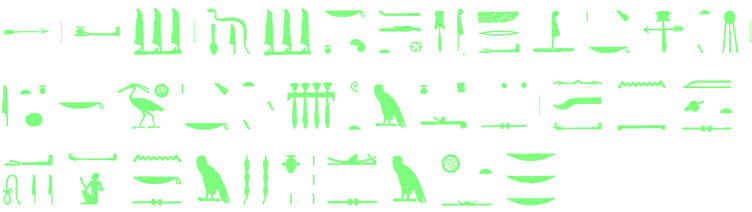
ḥnk sḫt ḏd mdw sḫt.k n.k Bḥdtj sꜣb šwt rꜣ ꜥ tꜣš.k stwt jtn.k ꜣḫt.k ꜣḫ.tj ṯḥn.tj m npr.s n ṯꜣt nt pt m ḫntj.s ꜥwꜣj.j n.k sj m nḏm jb ḥfnw jm.s m jḫt nbt
Presenting the field. Words to be spoken:
Your field is yours, Behdety of the dappled plumage;
your estate reaches as far as the rays of your sun disk.
Your field is splendid and gleams with grain;
the sky has stolen nothing from it.
With a glad heart I shall reap it for you:
everything is there in its hundreds of thousands.Note · Line 85
The sky’s “theft” is what a storm might take from the harvest before the king can offer it. - 86
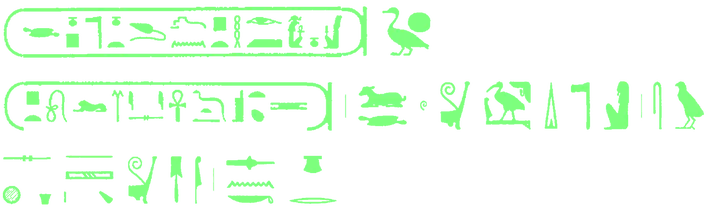
nswt bjt (… …) sꜣ Rꜥ (… …) jwꜥw n Ḏḥwtj spdd nṯr m [.. ...] swsḫ tꜣš n sꜣb šwt [... ...]
The King of Upper and Lower Egypt, Ptolemy XII, the Son of Ra, Ptolemy XII,
heir of Thoth, who equips the god with …,
who extends the bounds of the Dappled One …: - 87
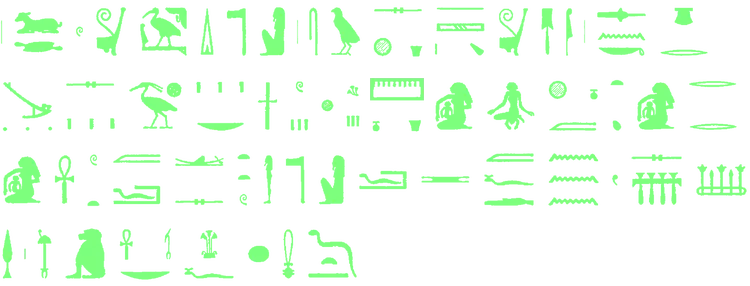
mn n.k [... ksj.tj ẖr prt.sn ꜣḫt nbt jmjt ꜣḫt mnꜥt msjt ḫnmt rrt ꜥnḫ.tw m prjt jm.s ṯwt nṯr prj ḥꜥpj m fdt.f sṯḥn šꜣw m wbs
Take the field for yourself … bowed beneath the grain they bear,
with every good thing the field holds:
the nurse who gives birth, the foster mother who suckles,
on whose yield people live.
For you are the god from whose sweat the Nile flood flows,
who makes the meadows gleam with green shoots.Note · Line 87
The mother and nurse are the field itself: its “children” are the crops that feed people. - 88

Rꜥ nb Rꜥw ꜥẖm šps rdj.f sw m bꜣẖ jrtj.f ḥꜥpj ḥꜥ.f tꜣwj.f ḫprw.f wꜣḏ wr prj.n.f jm.f jw.n.f mḥjt r srq ḥtjt r sꜥnḫ rꜣ nb qq nb stwt sṯḥn ꜣḫt Ḥr Bḥdtj nṯr ꜥꜣ nb pt
Ra, lord of the sun gods, the august falcon who goes to the eastern land,
whose eyes are the Nile flood, whose body is his Two Lands,
whose form is the sea from which he came forth;
he who brought the north wind to give breath to throats
and keep every mouth that eats alive;
lord of rays, who makes the field gleam,
Horus of Behdet, the great god, lord of the sky. - 89

ḏd mdw jn Ḥr Bḥdtj nṯr ꜥꜣ nb pt sꜣb šwt prj m ꜣḫt Rꜥ Ḥr ꜣḫtj ḫnt St wrt jrj šꜣw sḫpr ḥrrt nb npr qmꜣ ḫt n ꜥnḫ jrj rmṯw msj nṯrw ꜥnḫ jrt nbt jm.f
Words spoken by Horus of Behdet, the great god, lord of the sky,
the Dappled One who comes forth from the horizon,
Ra-Horakhty who presides in the Great Seat,
who made the trees and brought the flowers into being,
lord of grain, who created the plants that give food,
who made humankind and gave birth to the gods,
by whom every eye lives:Note · Line 89
“Every eye” means everyone. Horus now answers the king: in return for the gift of one field, he grants farmland extending over the whole earth. - 90

rdj.j n.k tpw nw šmꜥw mḥw ḫꜣ n tꜣ nw tꜣ r ꜣw.f
I give you the farmlands of Upper and Lower Egypt
and the fields of the whole earth. - 91
ḏd mdw jn Ḥt ḥr wrt nbt Jwnt jrt Rꜥ ḥrt jb Bḥdt mḥjt nfrt srdt ꜣḫt jnjt ḥꜥpj r nw.f r sꜥnḫ tꜣwj nbt ꜥnḫ kꜣ.tw m rn.s
Words spoken by Hathor the Great, Lady of Dendera,
Eye of Ra who dwells in Behdet,
the good north wind that makes the field bear fruit,
who brings the Nile flood in its season to keep the Two Lands alive,
she who is called Lady of Life: - 92

rdj.j n.k ḥꜥpj m wr r tr.f prt ꜣḫt nbt nt tꜣ
I give you a Nile flood high in its season
and the grain of every field on earth. - 93
rdj.j n.k šꜣw nw šmꜥw mḥw wnnt nbt jm.s ḥr ḫsbḏ mḥwt.k ḥr sꜣḫt ꜣḫwt.k wbs.sn n.k r nw.sn swḏ.sn šmw r šnwt.k tp rnpt sꜣj jrt nbt m rk.k
I grant that the plants of Upper and Lower Egypt and all that grows on them
turn your fields the blue of lapis and make your croplands shine.
They sprout for you in their season
and deliver the harvest to your granary year by year,
so that every eye is sated in your reign. - 94
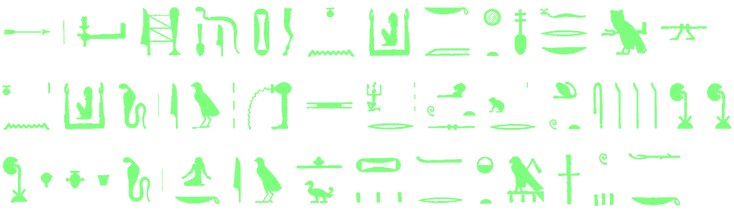
ḫrp ꜥꜣbt ḏd mdw t ḫpš ḥqt n kꜣ.k m jḫt nfrt nbt mst.n.j n kꜣ.k jw.w wꜥb ḥḥw r ḥꜣt.s ḥfnw r pḥwj.s ḏbꜥw ḫꜣw m ḥr jb.s ꜥḥꜥ.k ḥmsj.k r ḥtp ḏfꜣ ḥnꜥ Psḏt jmjw ḫt.k
Presenting the great food offering. Words to be spoken:
Bread, a haunch of beef and beer for your ka,
every good thing I have brought for your ka, all pure!
Millions at the head of the offering, hundreds of thousands at its end,
tens of thousands and thousands in its midst!
May you rise and seat yourself before the offerings and provisions
with the Ennead in your train.Note · Line 94
The ka is the life force of a god or person. Food set on an altar nourishes the ka of the one to whom it is offered. - 95

nswt bjt (… …) sꜣ Rꜥ (… …) bjtj mḥw rdj kꜣw n jmj.s sḏfꜣ St wrt m ḏfꜣ
The King of Upper and Lower Egypt, Ptolemy XII, the Son of Ra, Ptolemy XII,
the King of Lower Egypt, who gives food to the one who dwells there,
who stocks the Great Seat with provisions. - 96
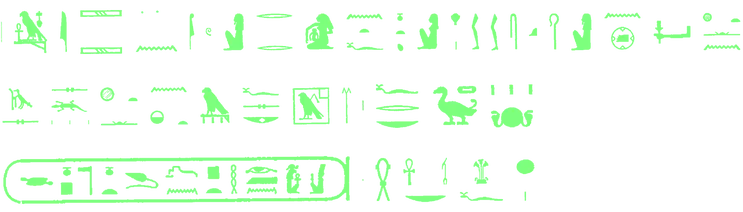
nṯr nfr jšš n Šw rr.n Tfnt ḥr mntj.s ḥqꜣ n Kmt ḫrp jḫt n qmꜣ sw sꜥšꜣ jḫt n Psḏt.f sḥb Ḥt bjk m bw nb nfr nb ḏfꜣ nswt bjt (… …)
The perfect god, the issue of Shu,
whom Tefnut suckled on her lap,
the ruler of Egypt, who presents offerings to his maker,
who multiplies offerings for his Ennead
and decks the House of the Falcon for the feast with every good thing,
the lord of provisions, the King of Upper and Lower Egypt, Ptolemy XII.Note · Line 96
The Egyptian word for Shu’s offspring also suggests spittle. Shu himself was said to have come from the creator’s mouth. - 97

ḏd mdw jn Ḥr Bḥdtj nṯr ꜥꜣ nb pt sꜣb šwt prj m ꜣḫt nb ꜣḫt msj nfrw sḫm šps ḫnt St wrt nb ꜥnḫ srq ḥtjt
Words spoken by Horus of Behdet, the great god, lord of the sky,
the Dappled One who comes forth from the horizon,
lord of provisions, who brings offerings to birth,
the august power who presides in the Great Seat,
lord of life, who gives breath to the throat: - 98

rdj.j n.k Tꜣ mrj ḥr fꜣt n.k jḫt rdj.k jm n mrj.k
I grant that Egypt bring you its produce,
that you may give of it to the one you love. - 99

ḏd mdw jn Ḥr {mꜣ tꜣwj pꜣ ẖrd sꜣ Ḥt ḥr sḏtj šps n ꜣḫtj ḥwn nfr ꜥnḫ.tw n mꜣꜣ.f sꜣj jrt nbt n ptr.f
Words spoken by Harsomtus the Child, son of Hathor,
august nursling of Him of the Horizon,
the fair youth whom to see is to live,
whose gaze fills every eye:Note · Line 99
Harsomtus means “Horus who unites the Two Lands.” At Edfu he is the child of Hathor and the local Horus. - 100

rdj.j n.k ꜥbꜣ.k ꜥpr m jḫt nfrt nbt r mn.k m ẖrt hrw
I grant that your offering altar be furnished with every good thing for your regular daily offering.
- 101
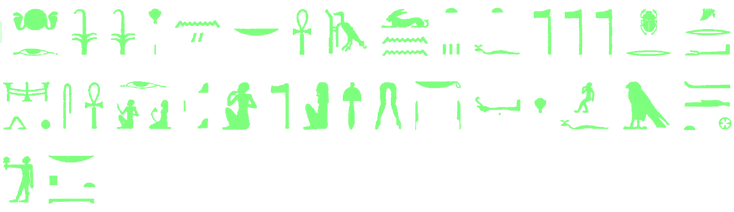
jrj nn ḥr nf nb ꜥnḫ qmꜣ wnnt jt nṯrw ḫpr ḏr ꜥ sꜥnḫ jrt nbt qqt nṯr mnḫ n kj ḥr ḫw.f Ḥr Bḥdtj nṯr ꜥꜣ nb pt
He who made this and that, lord of life,
who fashioned all that is, father of the gods,
who came into being at the very beginning,
who keeps alive all who eat,
the excellent god without equal:
Horus of Behdet, the great god, lord of the sky. - 102

[... ... ... ... ..] šꜥ šnṯjw [...] m ꜥbbt
… cutting the enemies to pieces … with a spear.
- 103
wnn nswt bjt (… …) ḥr ṯnṯꜣt.f m ḥwn qn mꜥr spw ḥr ḥḏt ḥntj ḥr ꜥḏ ꜥfꜥ m ꜥbbt ḫbḫb ḫꜥw ṯtf snf.f r ḫft ḥr n sꜣb šwt
The King of Upper and Lower Egypt, Ptolemy XII, is on his throne as a valiant youth who succeeds in his deeds. He maims the greedy one, strikes down the crocodile with a spear, hacks to pieces the one that surfaces and spills its blood before the face of the Dappled One.
Note · Line 103
The “greedy one” and the “one that surfaces” are a single crocodile. Its killing before Horus is a ritual defeat of the god’s enemy, not a hunt for food. - 104
rdj.j n.k ... sḥm nmtt [. ... ..] r dr bṯnw.k
I grant you … to check the stride of … to drive off your enemy.
- 105
mwt nṯr nt bjk n nb ḫwjt sꜣ.s Ḥr mkjt sn.s Wsjr sḫrt sbjw m tp rꜣ.s
The divine mother of the Falcon of the Golden One, who guards her son Horus, shields her brother Osiris and fells the rebels with a word from her mouth:
Note · Line 105
The speaker is Isis. Osiris is her husband as well as her brother. - 106
[... ...] ... . ḥr sḫrt sbjw nw sꜣ Wsjr
… in felling the enemies of the son of Osiris.
- 107

wnn {ꜣ ꜣst rwḏ ẖr mꜥbꜣ m Nḏ jt.f ḫnt St wnp ḥr dr sbjw r [.. . ḥr wnp wjn mw.f sw m dwntj ḥr sꜣ n sbjw.f ḫftjw.f m ṯst ẖr.f
The Son of Isis is mighty with the maba-spear, avenger of his father in the Place of Stabbing. He drives the rebels from … and stabs his adversaries. He triumphs on the backs of his rebels; his foes lie crushed beneath him.
Note · Line 107
The Place of Stabbing, also called the Place of Piercing, is Edfu itself, named for Horus’s victory there. - 108

ḏd mdw jn Ḥr Bḥdtj nṯr ꜥꜣ nb pt psḏ m pt [...] šps wbn m ꜣḫt sšp tꜣw nbw m mꜣꜣ.f ꜥnḫj ꜥnḫ.tw n jtn.f dgj jrt nbt jm.f
Words to be spoken by Horus of Behdet, the great god, lord of the sky,
who shines in the sky, the august … who rises on the horizon,
who lights all lands with his gaze,
the living one by whose disk people live,
by whom every eye sees: - 109

ḏd mdw jn Ḥt ḥr nbt Jwnt jrt Rꜥ ḥrt jb Bḥdt mḥnjt m jtn n Jtmw sꜣt Rꜥ n ḥrj.s r ḥm.f wbdt wbnr m nbj.s
Words to be spoken by Hathor, lady of Dendera, Eye of Ra, who dwells in Behdet, the cobra on the sun disk of Atum, daughter of Ra, who does not leave His Majesty, who burns Ubener with her flame:
Note · Line 109
Ubener is another name for Apep, or Apophis, the serpent who tries to stop the sun god’s passage. - 110

rdj.j n.k ḫftjw bns dn rn.sn rwj m ḥr tꜣ
I grant you that the enemies be torn to pieces and their names erased, that they be swept from the face of the earth.
Note · Line 110
A name helped keep its bearer in existence. Erasing it was meant to make the enemy’s defeat last beyond death. - 111

nṯr pn šps ḏrtj nb Ḏrtjw sjꜣw wr spd ꜥgꜣwt bjk wr pḥtj ḫnt St wnp smꜣ sbjw sḫr ḫftj.f prj ꜥ wnp tkk sw [... ... ...]
This august god, the Djerty-falcon, lord of the falcon gods,
the great Siau-falcon, sharp of talon,
the falcon of great might in the Place of Stabbing,
who kills the rebels and fells his foe,
whose arm darts out, who stabs whoever attacks him … - 112
sjꜥr mꜥnḏt nt nb ḏd mdw ḫꜥj jr.k m wjꜣ ntj šsmt mꜥnḏt.k .[.. rdj .. [..[. [... ..]. ... [...] ꜥꜣpp .[.. ..].
Presenting the Mandjet-barque of gold. Words to be spoken: Appear, then, in the barque of malachite, your Mandjet-barque … give … Apep …
Note · Line 112
The Mandjet is the boat in which the sun god travels by day. - 113
nswt bjt (…) sꜣ Rꜥ (… …)
King of Upper and Lower Egypt ( ), Son of Ra (Ptolemy ).
Note · Line 113
The first cartouche was left empty; in the second, only “Ptolemy” was carved. - 114

ḏd mdw jn Ḥr Bḥdtj nṯr ꜥꜣ nb pt bꜣ m hrw ẖn ḥrt Jtmw ḥtp m ꜥnḫt jꜣw m wḫ ḫ rnpj sw r nw.f sqdj r rꜣ ꜥ.f n sf
Words to be spoken by Horus of Behdet, the great god, lord of the sky,
the ba by day who makes his way to the sky,
Atum who sets in the western mountains,
the old man in the night, the child who renews his youth at his hour,
who sails to the place where he was yesterday:Note · Line 114
The old man and the child are the same sun at different hours. As Atum he grows old and sets; by dawn he has become a child again. - 115

rdj.j n.k ḥbw sd ꜥšꜣ wr ḥr st Ḥr ḫntj ꜥnḫw
I grant you Sed festivals in great abundance on the throne of Horus, as foremost of the living.
Note · Line 115
The Sed festival was a jubilee that renewed the king’s fitness to rule, traditionally held first after thirty years on the throne. To promise many jubilees was to promise a long reign. - 116

ḏd mdw jn Ḥt ḥr nbt Jwnt jrt Rꜥ ḥrt jb Bḥdt Jtmt wsrt sꜣt Jtmw m jꜣbtt nt pt sḥḏt nt tꜣwj Rꜥjt m qꜣb wjꜣ.f
Words to be spoken by Hathor, lady of Dendera, Eye of Ra, who dwells in Behdet,
Temet the mighty, daughter of Atum in the east of the sky,
who lights the Two Lands, Raet in the midst of his barque:Note · Line 116
Temet and Raet are feminine forms of the names Atum and Ra. Both name Hathor here as the sun god’s female counterpart. - 117
rdj.j n.k jtn n Rꜥ ḥr tp tꜣ ꜥḥꜥ n ḥm.k
I grant that the disk of Ra stand above the earth for Your Majesty.
- 118
jw.tj m ḥtp sꜣ.j mrj.j ꜥšꜣ bjkw ḫnt nwj šsp.n.j pḥtj.k mꜣꜣ.n.j nḫt.k ḥꜥj.j m rꜣ ꜥwj.k rdj.j n.k mꜣꜥ ....k r ḫnt Š Ḥr jṯj.n.k nwj m wsr.k
Come in peace, my beloved son, whose ships are many upon the water.
I have received your strength, I have seen your might;
I rejoice in the work of your two arms.
I grant that your ship sail on the Lake of Horus,
now that you have taken possession of the waters by your strength. - 119
šsp Rꜥ m ḥtp hṯt kꜣ.f m mꜣnw
Receiving Ra as he sets and hailing his ka in the western mountains.
- 120
wpn
Upen
Note · Line 120
The short entries that follow are labels for figures in the scene of Ra’s welcome at sunset, not a continuation of the prayer. - 121
gjf
Gif-ape
- 122
... .
[gap in the text]
- 123
Jtmw
Atum
- 124

(…)
[gap in the text]
- 125
bꜣw P jrj hnw n Rꜥ nswt m tp n jꜥnjw ḏsr.f wꜣt ẖr šfjt.f ḫnt St Rꜥ m ḏr bꜣḥ
The Souls of Pe acclaim Ra as the king, at the head of the baboons, clears the way for Ra’s august presence in the Seat of Ra since the Beginning.
Note · Line 125
Pe was part of Buto, an ancient seat of kingship in the Delta; its “Souls” are ancestral powers of Lower Egypt. Baboons were often shown with raised hands in salute to the sun. - 126
bꜣw P
The Souls of Pe.
- 127

ḏd mdw jn Ḥr Bḥdtj nṯr ꜥꜣ nb pt
Words to be spoken by Horus of Behdet, the great god, lord of the sky.
- 128

bjk n nb jw.tj m ḥrt dwꜣ.f mwt.f Wṯst.f r ṯst pt nt kꜣ.f ꜣḫt nt ḥm.f ḥr wbn ḥtp m ḫntj.s ꜥẖj.f nwt r ꜣḫt jm.s m ꜥpj nṯrj ḥrj nṯrw wrtj.f ḥnꜥ.f ḥr jrt mkt.f ꜣst pw ḥnꜥ Nbt ḥt
The Falcon of the Golden One has come from the sky. He praises his mother, his throne, to the height of heaven. She is the sky of his ka, the horizon where His Majesty rises and sets. He flies across the sky to the horizon within her as the divine Api, foremost of the gods. His two rearing cobras are with him to guard him: they are Isis and Nephthys.
Note · Line 128
The Golden One is Hathor. As Horus’s mother she is imagined here as both the throne that supports him and the sky through which he flies. - 129
rdj.f nswjt ꜥꜣt n sꜣ.f mrj.f nswt bjt (… …)
May he grant great kingship to his beloved son, the King of Upper and Lower Egypt, Ptolemy XII.
- 130

sbꜣ šps ntj nb pt st sn tꜣ n ḥrj nṯrw nb mꜣꜥt bwt.f jsft sḫm kꜣ.f m knm m grg ꜥꜣ wj snḏ.f wr wj šfjt.f wnp.n.f jj m jwḥ ḏdt.s pt kmt n.s tꜣ jnjt n.s ḏrwj ḏt
This is the splendid gate of the lord of the sky, the place where the ground is kissed before the foremost of the gods, the lord of Maat. He abhors injustice; his ka overpowers whoever speaks lies. How great the dread he inspires! How great the awe he commands! He has struck down whoever comes with evil. The gate endures as long as the sky; its full span is that of the earth; its appointed bounds are the bounds of eternity.
Note · Line 130
Kissing the ground meant bowing down in homage before the god at his gate. - 131
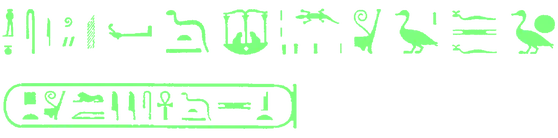
rdj.f ḥbw sd ꜥšꜣ n sꜣ.f mrj.f sꜣ Rꜥ (… …)
May he grant many Sed festivals to his beloved son, the Son of Ra, Ptolemy XII.
- 132
dwꜣ Rꜥ m hrw pꜣ ḥr r jꜣbtt
Praise of Ra by day, with the face turned east:
- 133
rs.k nfr pꜣ nb jtrtj Rꜥ Ḥr ꜣḫtj ḫnt St wrt
May you wake well, O lord of the Two Shrines, Ra-Horakhty in the Great Seat!
Note · Line 133
The Two Shrines stand for the sanctuaries of Upper and Lower Egypt. The repeated greeting welcomes the rising sun as one might greet a king on waking. - 134
rs.k nfr pꜣ ḏrtj ḥqꜣ Ḏrtjw Ḥr nṯr ꜥꜣ nb pt
May you wake well, O falcon, ruler of the falcon gods, Horus, great god, lord of the sky!
- 135
rs.k nfr pꜣ sꜣb šwt nfr ḥr sḥb mnḏtj
May you wake well, O you of many-colored plumage, fair of face, both brows decked for the feast!
- 136
rs.k nfr pꜣ bjk n nb nb msntjw qn smꜣ ḫftjw.f
May you wake well, O Falcon of the Golden One, lord of the harpooners, mighty one who kills his foes!
- 137
rs.k nfr pꜣ wr n bꜣẖ jtn šps wbn m nww
May you wake well, O great one of the eastern mountains, glorious sun disk rising in the primeval waters!
Note · Line 137
Each sunrise recalled the first sunrise, when light emerged from the waters that existed before there was land. - 138
rs.k nfr psḏ m nb pꜣ šw ntj ḥr sšp nꜣ tꜣwj
May you wake well, O you who shine in gold, light that illumines the Two Lands!
- 139
rs.k nfr prj m nww ḥrj ḥrt m ḫpr.f
May you wake well, O you who come forth from the primeval waters, who set the sky far above as you come into being!
- 140
rs.k nfr pꜣ bjk bꜣ tkk dwn ꜥwj ḥꜣ šmꜥw mḥw
May you wake well, O falcon, fierce ba who spreads his wings about Upper and Lower Egypt!
- 141
rs.k nfr pꜣ ꜥpj n ktmt ḫwj nṯrw nṯrwt m dmꜣtj.f
May you wake well, O Api of gold, who shelters gods and goddesses with his two wings!
- 142
rs.k nfr ḫprr ḫwj Ꜥtm ḫmw nṯrw ḫtm ḥr rn.f
May you wake well, O scarab who guards Egypt, with whose name the shrines of the gods are sealed!
- 143
rs.k nfr bꜣ šf ḥꜣwt spd ꜥbwj dm ḥnwtj
May you wake well, O ram-headed ba, both horns pointed, both horns sharp!
- 144
rs.k nfr nbj sw ḏs.f H̱nmw H̱nmww ẖnm jḫt nbt
May you wake well, O you who fashioned yourself, Khnum of Khnums, shaper of all things!
- 145
rs.k nfr pꜣ ḫj n ḥꜣjtj dwꜣ nṯrw nbw r dwꜣ kꜣ.f
May you wake well, O you who rise in the two lights, whose ka all the gods rise at dawn to praise!
- 146
rs.k nfr ḫꜥj m ḥrt ḏꜣj pt n wrḏ.n.f
May you wake well, O you who appear in the sky and cross the heavens without tiring!
- 147
rs.k nfr sḫm jnj ḥꜥpj r sšm ꜥnḫ n tpjw tꜣ
May you wake well, O mighty one who brings the Nile flood to give life to those who dwell on earth!
- 148
rs.k nfr pꜣ kꜣ nb qrtj ḫꜥj r nw.f r tp rnpt
May you wake well, O bull, lord of the two source caverns, who appears in his season at the year’s beginning!
Note · Line 148
The Nile flood was believed to issue from two caverns. Its annual return marked the renewal of the year. - 149
rs.k nfr pꜣ Ḏrtj n Ḏrtj Km ꜣt.f jrj wnnt
May you wake well, O Djerty serpent of the Djerty falcon, Kematef, who makes all that is!
Note · Line 149
Kematef, “He who has completed his time,” is a creator god in serpent form. - 150
rs.k nfr pꜣ kꜣ n 4 ḥrw rdj ṯꜣw n fnḏ rꜥ nb
May you wake well, O bull with four faces, who give breath to the nose each day!
- 151
rs.k nfr wr sw r nṯrw qꜣj sḫm r Psḏt ꜥꜣt
May you wake well, greater than the gods, more exalted in might than the Great Ennead!
- 152
rs.k nfr . ... ... jt jtw mwt mwwt
May you wake well, … father of fathers, mother of mothers!
- 153
rs.k nfr pꜣ nb jtrtj ḫwsj sḫmw n [...]
May you wake well, lord of the Two Shrines, builder of the sanctuaries of …!
- 154
rs.k nfr nb jḫt mnt bꜣq Bꜣqt r jꜣdt
May you wake well, lord of the world, who keep Egypt safe from harm!
- 155
rs.k nfr nb nwwt jtj [. ḥrj tp spwt
May you wake well, lord of cities, sovereign …, chief of the provinces!
- 156
rs.k nfr nb stp sꜣ ḫꜥj nswt ḫft wḏt.f
May you wake well, lord of the palace, at whose command the king appears!
- 157
rs.k nfr nṯr nb ḥptj ꜥn ḫꜥw m [... ...]
May you wake well, O god, lord of the Two Crowns, fair when you appear in …!
- 158
rs.k nfr pꜣ sr mkt nt ḥḥw pꜣ nḫw n ḥfnw
May you wake well, O prince, refuge of millions, defender of hundreds of thousands!
- 159
rs.k nfr nb pr Mnṯw jtj nb rꜣ ꜥ ḫt
May you wake well, lord of the armory, sovereign, lord of battle!
Note · Line 159
The Egyptian name for the armory means “house of Montu,” the warrior god. - 160
rs.k nfr jrj nn r ꜣw nb pt tꜣ mw ḏww
May you wake well, maker of all this, lord of sky and earth, of water and mountains!
- 161
rs.tj sšmw nb [..] tꜣ ḫnt Msn sḫm šps ḫnt St wrt
Awake, O guide, lord … of the earth in Mesen, august power in the Great Seat!
- 162
rs.k nfr bꜣw.k ḥr wbn m dj mrt m Ḥr ꜣḫtj sḥḏ tꜣwj m ..[. ..f msj rmṯw nbw ḥr mn nfrw nṯrw šmꜥw mḥw
May you wake well as your bas rise in the sky as Horakhty, who lights the Two Lands with his eyes and gives birth to all the people who sustain the perfection of the gods of Upper and Lower Egypt!
- 163
rs.k nfr ...] .[.. [. ḫnt tꜣ pn
May you wake well, … in this land;
- 164
ntk Bḥdtj ḫwj sḫmw m .sn ntk Rꜥ wbn.f m šw
for you are Horus of Behdet, who guards the divine images in their …, and you are Ra as he rises in light.
- 165
pꜣ nb nṯrw [... ...] ḫnt Msn nṯr ꜥꜣ nb Ḏbꜣ [.. ... ... ...] ḥr.k wnf ḥr ḥꜥt ḫnt [..]..k
O lord of the gods … in Mesen, great god, lord of Edfu …, your face is glad and you rejoice in your …!
- 166
ḥtp ḥr.k nfr n nwt.k Wṯst nḥm.k sj m ꜥ jḫt nbt ḏwt [... ...] ḫrjt nbt nt tp rnpt
May your fair face look kindly on your city, the Throne Seat. May you save her from every evil … every calamity of the New Year!
Note · Line 166
The turn of the Egyptian year was considered a dangerous time, when illness might strike. The city asks for protection as well as a fresh beginning. - 167
dwꜣ nṯrt tn n tr n dwꜣw
Praising this goddess at break of day:
Note · Line 167
The dawn greeting now turns to Hathor. It wakes her part by part, addressing even her teeth, her clothing and the things she holds. - 168
rs.ṯ m ḥtp jw jb.ṯ nḏm Ḥt ḥr wrt nbt Jwnt
May you wake in peace, your heart glad, O Hathor the Great, Lady of Dendera!
- 169
rs.ṯ wrrt ḥrjt tp nṯrwt ntj m nt
May you wake, O brow-serpent, foremost of the goddesses on the Red Crown!
- 170
rs.ṯ mḥnjt mn.tj ḥr ḥꜣt Wrt ḥkꜣw [..] St wrt
May you wake, O cobra, abiding on the brow, Great of Magic in the Great Seat!
- 171
rs.ṯ ꜥbwj spd sḫr ḫftjw nw Rꜥ
May you wake, O pair of sharp horns that fell the foes of Ra!
- 172
rs.ṯ jtn ḫꜥj ḥr wpt nt Rꜥ sḥḏ n.f tꜣwj
May you wake, O sun disk, rising on the crown of Ra’s head and lighting the Two Lands for him!
- 173
rs.ṯ ꜣḫtj [... ...].sn sḥḏt n.f tꜣ mj Nb r ḏr
May you wake, O pair of eyes …, lighting the earth for him as the Lord of All does!
- 174
rs.ṯ ... ... ...] kꜣ.ṯ sḏm sprww ntjw jwtjw
May you wake, … of your ka, you who hear the pleas of those who are and those who are not!
- 175
rs.ṯ fnḏ sš n ṯꜣw srq ḥtjt nt bw nb
May you wake, O nose, nest of the wind, who give breath to every throat!
- 176
rs.ṯ sptj ꜥꜣwj nw nwt prjt mꜣꜥt jm.sn rꜥ nb
May you wake, O two lips, twin leaves of heaven’s door! From between you Maat comes forth each day.
- 177
rs.ṯ snw [... ... ... ... ..]. [... ...]
May you wake, O tongue …!
- 178
rs.ṯ ṯswt m ꜥb [...] Psḏt jsk nt ḥmt.ṯ
May you wake, O teeth, together with …, the very Ennead of Your Majesty!
- 179
rs.ṯ ṯpḥt [...] ..[. .[..] .[.. ... ...]
May you wake, O throat …!
- 180
rs.ṯ swrwt nfrwt nt pꜣqt mnḫwt sṯꜣmt ḥꜥ.s
May you awake, fair beads on fine linen,
garments that enfold her body! - 181
rs.ṯ wꜣḏ nfr m ꜥ.ṯ wꜣḏ [.. ...] jm.f [... ... ...]
May you awake with the fair wadj-scepter in your hand;
… flourishes through it …Note · Line 181
The wadj-scepter is shaped like a papyrus stalk. Its name also means “to flourish,” the very thing its bearer makes happen. - 182
rs.ṯ ꜥnḫ m ḫfꜥ.ṯ sꜥnḫ Tꜣ mrj r ꜣw.s
May you awake with the ankh in your fist,
giving life to Egypt from end to end.Note · Line 182
The ankh, a cross with a loop at the top, is the Egyptian sign for life. - 183
rs.ṯ nfr wꜥ ḥr wnp sbjw nw jt.ṯ mdw nḫt ḥr ḫr [... ...]
May you awake in peace,
as the spear pierces your father’s foes
and the stout staff strikes down … - 184
rs.ṯ kꜣr n pꜣ ꜥḥ šps sšp ḫꜥj m pr.ṯ wbn.ṯ m [.. ... ... ... ... ...] jb.ṯ m Ḥt Ḥr
May you awake as the shrine of the august palace grows bright
and shines forth in your house,
as you rise in …
your heart in the House of Horus.Note · Line 184
“House of Horus” names the temple at Edfu, but it is also what Hathor’s own Egyptian name means. - 185

wꜣstjw nbw twt r mꜣꜣ.ṯ ḥr jrt jꜣw m ḥr.ṯ nfr hj n nwt nt nbt pt [.. ... pt m ḥb tꜣ m ršwt m ꜥꜣt.ṯ ḥqꜣt nt wṯst.ṯ m St wrt Ḥt ḥr nbt Jwnt jrt Rꜥ nbt pt ḥnwt nṯrw nbw
All the townsfolk have gathered to see you,
to give praise before your beautiful face.
Acclaim fills the sky of the Lady of the Sky.
… the sky keeps festival, the earth rejoices
at your greatness, O ruler on your throne in the Great Seat,
Hathor, Lady of Dendera, Eye of Ra,
Lady of the Sky, Mistress of all the gods. - 186

ḥtp ḥr.ṯ nfr n sꜣ Rꜥ (Pr ꜥꜣ) ḫwj.ṯ sw mkj.ṯ sw [...ṯ sw [..] jꜣdt rnpt
May your beautiful face look kindly on the Son of Ra, Pharaoh.
May you shield him, may you guard him,
may you … him from the plague of the year. - 187
ḥnk sḫt ḏd mdw sḫt.k n.k Bḥdtj sꜣb šwt pḥ tꜣš.k rꜣ ꜥ stwt jtn.k šꜣ.k ꜣḫꜣḫ.tj npr sjwr.tj ḏdꜣ nfr jqr sp 2 ꜥwꜣj.j n.k sj m nḏm jb ḥḥw jm.s m jḫt nbt
Presenting the field. Words to be spoken:
Your field is yours, Behdety of the dappled plumage;
your land reaches as far as the rays of your sun disk.
Your field flourishes, the grain bears fruit,
ripe and fine, excellent, excellent!
With a glad heart I shall reap it for you;
in it are millions of every good thing. - 188
nswt bjt (… …) sꜣ Rꜥ (… …) swsḫ tꜣš n Bḥdtj
King of Upper and Lower Egypt, Ptolemy XII, Son of Ra, Ptolemy XII, who extends the bounds of Behdety’s land.
- 189
mn n.k W Ḥr ksj.tj ẖr jḫt.s rdt nbt nt šꜣ mwt msjt mnꜥt rrt ꜥnḫt.tw m msw.s ṯwt nṯr ꜥnḫj nb ꜥnḫ ꜥnḫ ḥr nb n mꜣwt.f
Take for yourself the Farmland of Horus,
bowed beneath its produce and every plant of the field:
the mother who gives birth, the nurse who suckles,
on whose children people live.
You are the living god, lord of life,
by whose light everyone lives. - 190
[... ...] kꜣw m ḥꜥ.f nb mꜣwt srd sḫt Ḥr Bḥdtj nṯr ꜥꜣ nb pt
… food from his body,
lord of light, who makes the field bear fruit,
Horus of Behdet, the great god, lord of the sky. - 191
ḏd mdw jn Ḥr Bḥdtj nṯr ꜥꜣ nb pt sꜣb šwt prj m ꜣḫt bjk n nb sꜣ Wsjr jw.n.f ḥꜥpj sḫntj nww r bꜥḥt ꜣḫt r nw.f
Words spoken by Horus of Behdet, the great god, lord of the sky,
dapple-feathered, who comes forth from the horizon,
falcon of the Golden One, son of Osiris,
who has brought the Nile flood,
who sends Nun upstream to flood the field in season:Note · Line 191
Nun is the primeval water, here imagined as rising again in the seasonal Nile flood. - 192

rdj.j n.k ꜣḫt jwr.tj r tr.s msj.s n.k r dmḏjt.s
I grant you a field pregnant in her season;
she gives birth for you at full term. - 193

ḏd mdw jn Ḥt ḥr nbt Jwnt jrt Rꜥ ḥrt jb Bḥdt mḥt pt tꜣ m nfrw.s šdjt ḥꜥpj m ṯpḥt.f r bꜥḥt ꜣḫt r sꜥnḫ nṯrw rmṯw
Words spoken by Hathor, Lady of Dendera, Eye of Ra, who dwells in Behdet,
who fills sky and earth with her beauty,
who draws the Nile flood from its source
to flood the fields and keep gods and people alive: - 194

rdj.j n.k ḥꜥpj ꜥšꜣ m npr n ꜥnḏ m wḥꜣj.f
I grant you a Nile flood rich in grain,
whose yield is not small. - 195
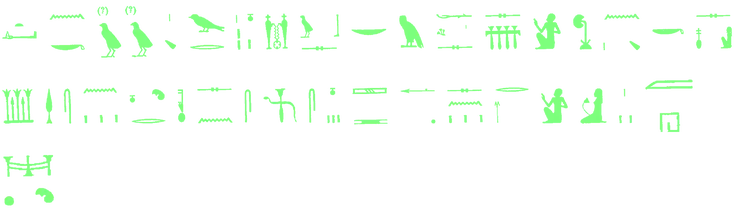
rdj.j n.k ww wrw nw Qbḥwj wbsw nbw m ḫt.sn sṯḥn.j ḫꜣ n tꜣ.k snfr.j šꜣ.k rd.sn n.k r tr.sn swḏ.sn šmw.sn r mẖr.k tp rnpt sꜣj .] nb m hꜣw.k
I give you the great farmlands of the Two Lands
and all green shoots on their stems.
I make your field shine, I bring your farmland to perfection.
Your lands grow for you in season
and send their harvests to your storehouse year by year,
that everyone may eat their fill in your reign. - 196
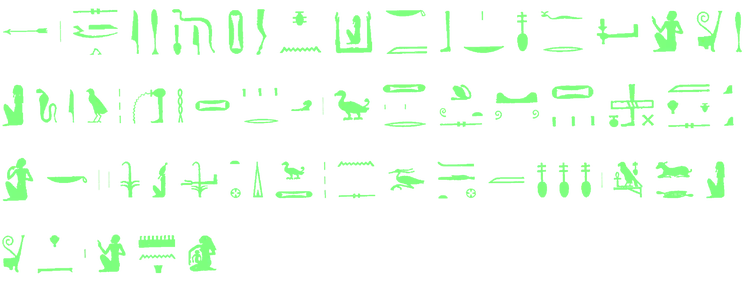
smꜣꜥ ꜥꜣbt ḏd mdw t ḫpš ḥqt n kꜣ.k m bw nb nfr ḫrp.j n ḥm.k jw.w wꜥb ḥw r ḥꜣt.s ḏfꜣ r pḥwj.s wnḏww šbn m ḥr jb.s wnm.k jm.sn sꜥm.k jm.sn ḥnꜥ nṯrw jmjw ḫt.k
Presenting the food offering. Words to be spoken:
Bread, a foreleg of beef, and beer for your ka:
every good thing I bring before Your Majesty is pure.
Food at the head of the offering, provisions at its foot,
offerings of many kinds mingled in its midst.
May you eat of them, may you swallow them,
together with the gods who follow you. - 197
nswt bjt (… …) sꜣ Rꜥ (… …) nswt šmꜥw rdj ḏfꜣ n jmj.s bꜥḥj Bḥdt m nfrw
King of Upper and Lower Egypt, Ptolemy XII, Son of Ra, Ptolemy XII, king of Upper Egypt, who feeds the one who dwells there and floods Behdet with good offerings.
- 198

nṯr nfr jwꜥw n ḥrj jdb mnꜥ.n ḫnmt ḥr mntj.s jtj n Bꜣqt ḫrp ꜥꜣbt n jt.f swr jḫt n nṯrw sḥb Msn m jḫt nfrt nbt nb kꜣw sꜣ Rꜥ (… …)
The perfect god, heir of the Overseer of the Fields, whom the nurse suckled on her lap; ruler of Egypt, who presents the food offering to his father, multiplies the offerings for the gods, and makes Mesen keep festival with every good thing; lord of food offerings, Son of Ra, Ptolemy XII.
Note · Line 198
The Overseer of the Fields is Shu, the god from whom the king claims descent in the matching food-offering scene. - 199

ḏd mdw jn Ḥr Bḥdtj nṯr ꜥꜣ nb pt sꜣb šwt prj m ꜣḫt nb ḥw sḫpr ḏfꜣ snn n Rꜥ ḫnt Wṯst Ḥr rdj ṯꜣw r fnḏ n gꜣw
Words spoken by Horus of Behdet, the great god, lord of the sky,
dapple-feathered, who comes forth from the horizon,
lord of food, who brings provisions into being,
image of Ra in the Throne of Horus,
who gives breath to the nostrils of one in need: - 200
rdj.j n.k ḫꜣwt.k dns.tj m kꜣw ḥtp.k bꜥḥj m ḏfꜣ
I grant you an altar heavy with offerings
and an offering table overflowing with food. - 201

ḏd mdw jn Jḥj wr sꜣ Ḥt ḥr nṯr ꜥꜣ ḥrj jb Bḥdt ḫ nfr bnr mrwt sḏtj n špst ḫnt Ḥt sššt nb kꜣw rdj n mrj.f
Words spoken by Ihy the Great, son of Hathor, the great god who dwells in Behdet,
the fair boy, dearly loved,
child of the Noble Lady in the House of the Sistrum,
lord of food, who gives to the one he loves:Note · Line 201
The Noble Lady is Hathor. The House of the Sistrum is her temple at Dendera, named for the instrument played in her worship. - 202

rdj.j n.k ṯt.k ḫj.tj m jḫt nfrt nbt rdj.k jm n mrj.k
I grant you a table heaped high with every good thing,
that you may give of it to the one you love. - 203

ḥqꜣ nb Tꜣ mrj nb ꜥnḫ ꜥnḫ.tw n mꜣꜣ.f kꜣw m ꜥ.f ḏfꜣ [... ...] jḫt nbt nfrt tp ꜥwj.f sḏfꜣ ḫꜣwwt nt nṯrw jnj ḏfꜣ jrj ḥtp Ḥr Bḥdtj nṯr ꜥꜣ nb pt
The ruler, lord of Egypt, lord of life,
at whose sight people live;
food is in his hand, provisions …,
every good thing rests on his arms.
He stocks the altars of the gods with food,
brings provisions and makes the offering:
Horus of Behdet, the great god, lord of the sky. - 204
smꜣ db ḏd mdw šsp.n.j wꜥ ꜣmm.j [...] mꜣwt ḥnṯj.j ḥtm m wꜥ ẖdb.j ḫꜣb dbdb.j db rdj.j ... ..f n nṯrw nbw nwj msntj tpj n ṯt.k sꜣ.k jm.j ḥr jrt ꜣbjt jb.k
Killing the hippopotamus. Words to be spoken:
I have taken up the spear, I have grasped … the shaft.
With the spear I kill the one marked for destruction.
I strike down the Crooked One, I harpoon the hippopotamus.
I give its … to all the gods.
I am the foremost harpooner of your company;
I am your son, who does what your heart desires.Note · Line 204
The king speaks as Horus’s son and harpooner. The Crooked One is his quarry, not a second enemy. - 205

[...] qnj jnj pḥwj n thj sw
… the mighty one, who brings his attacker to his end.
- 206
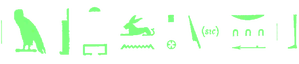
[... ... ... ... ... ... ... ... ...] m St wnp nb mꜥbꜣ [...] bṯnww.f jrj ꜥḏt m ...] ...
… at the Place of Piercing, lord of the maba-spear,
who kills his enemies and makes a slaughter among his foes: - 207

rdj.j n.k pḥtj m ẖnw nwj ḥr sḥmt nmtt nt jmjw mw
I give you strength in the water
as you check the advance of the creatures that dwell in it.Note · Line 207
The water creatures in this promise are crocodiles. - 208

ḏd mdw jn Nbt ḥt mnḫt wrt snt nṯr ḫnt Wṯst Ḥr nbt nbj nsrt sbjw nw sn.s Wsjr swḏꜣt sꜣ.f mnḫ n snt.s ꜣst
Words spoken by Nephthys, the excellent, the great,
the god’s sister in the Throne of Horus,
lady of flame, who burns the foes of her brother Osiris
and keeps his worthy son safe for her sister Isis: - 209

wnn.j m ḫt.k ḥr jrt gs dpt.k sꜣ Wsjr Ḥr {ꜣ ꜣst
I shall be at your back, guarding the side of your boat,
O son of Osiris, Horus son of Isis. - 210

wnn Bḥdtj ṯmꜣ ꜥ ẖr mꜥbꜣ m bꜣ tkk ḫnt Wr nḫt ḥr ꜥḏ ꜥwꜣjw ḥr [. ...] ḥr jrt šꜥt m dns sw m Ḥr nfr hꜣj r dpt.f bjꜣ nṯr.f ḥr ḫr sbjw
Behedeti, strong of arm, bears the maba-spear as a ba poised to strike in Great-of-Victory. He cuts down the robbers, …, and butchers the Heavy One. He is Horus the Fair, who has boarded his ship; his divine metal fells the rebels.
Note · Line 210
Great-of-Victory is a sacred name of Edfu. The “divine metal” is the weapon in Horus’s hand. - 211

ḏd mdw jn Ḥr Bḥdtj nṯr ꜥꜣ nb pt nṯr nṯrj wbn m bꜣẖ rdj.f sw m ꜣḫt sḥḏ tꜣw nbw m nfrw.f
Words spoken by Horus of Behdet, the great god, lord of the sky, the god most divine, who rises from the eastern mountain, takes his place in the horizon and lights all lands with his beauty.
- 212

ḏd mdw jn Ḥt ḥr nbt Jwnt jrt Rꜥ ḥrt jb Bḥdt ḥrjt tp nt Rꜥ Ḥr ꜣḫtj mḥnjt nt Rꜥ ḫnt Bḥdt wbdt ꜥꜣpp m hh.s
Words spoken by Hathor, lady of Dendera, Eye of Ra, who dwells in Behdet, the cobra on the brow of Ra-Horakhty, the coiled serpent of Ra in Behdet, who burns Apophis with her fiery breath:
- 213

srwḏ.j .. m sꜣ ḫftjw.k sḫm.j m sbjw jt.j
I kindle fire at the backs of your foes;
I overpower my father’s enemies. - 214

nṯr pn šps bjk bꜣ tkk ꜥẖm nṯrj dndn ꜥgꜣt ḏrtj wr pḥtj ḫnt Ḥt qn jrjw.f m tm wn nṯr nṯrj wr nṯrw mꜣj nꜥš mkj sw ḏs.f
This august god, the falcon, the ba poised to strike, the divine Akhem-falcon of the fearsome talon, the mighty Djerty-falcon in the House of the Strong, whose enemies are no more; the god most divine, greatest of the gods, the fierce lion who guards himself.
- 215
ms msktt nt nb ḏd mdw ḫꜥj jr.k m wjꜣ.k ntj šsmt msktt nt mfkꜣt Ḥr jꜣbtt nb Wṯst wjꜣ.k m mꜣꜥw ꜥꜣpp ḫr nn wnn.f sꜣḥ.k m ḥtp r ꜣḫt jmntt wpj.k wꜣt m mꜥnḏt
Presenting the Mesektet barque of gold. Words to be spoken:
Appear, then, in your barque of malachite,
the Mesektet barque of turquoise,
O Horus of the East, lord of the Throne Seat.
Your barque has a fair wind;
Apophis lies fallen and is no more.
May you reach the western horizon in peace
and open the way in the Mandjet barque.Note · Line 215
The Mesektet is the sun god’s night boat. Offering it complements the gift of the day boat: the sun must pass safely through the night before it can rise again. - 216
nswt bjt (… …) sꜣ Rꜥ (… …) ẖntj n Rꜥ ẖnj msktt n ḥwn sjꜥr nṯr m wjꜣ.f
The King of Upper and Lower Egypt, Ptolemy XII, the son of Ra, Ptolemy XII, the image of Ra, who rows the Mesektet barque for the Child and lifts the god high in his barque.
- 217
jw.n.j ḫr.k wbn m bꜣẖ dgj jrt nbt jm.f jnj.j n.k rꜣ ḏꜣf m sbj n ḫt ḫftjw.k ḫr.tj m ḫbt.f ṯwt psḏ m ḥrt ḏꜣj pt n wrḏ.n.f
I have come to you, who rise from the eastern mountain,
by whom every eye sees,
that I may bring you Radjaf perishing in the fire
and your foes fallen at his place of slaughter.
You are the one who shines on high,
who crosses the sky and never tires.Note · Line 217
Radjaf is another name for Apophis. The king brings the defeated serpent before the sun god. - 218
ḏd mdw jn Ḥr Bḥdtj nṯr ꜥꜣ nb pt sꜣb šwt prj m ꜣḫt psḏ m nb tp dwꜣw jtn wr sḥḏ tꜣwj m stwt.f sḫm šps m Wṯst Ḥr
Words spoken by Horus of Behdet, the great god, lord of the sky, he of the dappled plumage, who comes forth from the horizon and shines in gold at daybreak, the great sun disc who lights the Two Lands with his rays, the august power in the Throne Seat of Horus:
- 219

rdj.j n.k ꜥḥꜥ n šmꜥw mḥw ḥr ḫdt ḫntjt r bw ẖr.k
For you I send the ships of Upper and Lower Egypt sailing downstream and upstream to where you are.
- 220

ḏd mdw jn Ḥt ḥr wrt nbt Jwnt jrt Rꜥ ḥrt jb Bḥdt jtnt snnwt nt jtn Rꜥjt mḥnjt wrt m tp ꜣḫtj wbdt ꜥꜣpp m hh.s
Words spoken by Hathor the Great, lady of Dendera, Eye of Ra, who dwells in Behdet, the female sun disc, the sun disc’s double, Raet, the coiled cobra, the Great One on the head of Him of the Horizon, who burns Apophis with her fiery breath:
- 221

rdj.j n.k ḫftjw.k ḫr ẖr ṯbwj.k šnṯjw.k ...
This I grant you: your foes lie fallen beneath your two feet,
and your enemies … - 222

jw.tj m ḥtp jrj ḥꜣt m msktt ẖnjt n mꜣꜥw r mꜣnw šsp.n.j wsr.k mꜣꜣ.n.j n pḥtj.k prj.j m [...] ḥr nḫt.k rdj.j n.k nwj ḥss m dpt.k gꜣbtj.k ḥr gbgb kjwj.k
Come in peace, you who stand at the prow of the Mesektet barque
as she sails before a fair wind to the western mountain.
I have received your mighty deed; I have seen your strength.
I come forth in … because of your might.
I grant you waters that favor your ship
while your two arms beat down your foe. - 223

bꜣw jmntt šsp Rꜥ m ḥtp hṯt kꜣ.f m rꜣ mꜣnw
The bas of the West, who welcome Ra as he sets and hail his ka at the gate of the western mountain.
- 224

bꜣw P
The bas of Pe.
- 225
....
[gap in the text]
- 226

wptj
The Judge.
- 227

hṯt
The Jubilant One.
- 228
sš mꜣꜥt
The Scribe of Maat.
- 229

Rꜥ Bḥdtj
Ra of Behdet.
- 230
sꜣ Rꜥ (…)
The son of Ra, Ptolemy.
- 231

bꜣw Nḫn hꜣ snḏ n nb.sn nswt m tp n.sn ḥr rdt nrw.f ḥr swr qfꜣt.f ḫnt Gꜣjt.f ḏr bꜣḥ
The bas of Nekhen hail their lord, with the king at their head. They spread the dread of him and exalt his majesty in his Shrine-from-the-Beginning.
Note · Line 231
Nekhen was an early seat of kingship in Upper Egypt. Its ancestral powers are the southern counterparts of the Souls of Pe. - 232

bꜣw Nḫn
The bas of Nekhen.
- 233
ḏd mdw jn Ḥr Bḥdtj nṯr ꜥꜣ nb pt
Words spoken by Horus of Behdet, the great god, lord of the sky.
- 234

jrj n.f ḥbw sd ꜥšꜣ wr jn Ptḥ Tꜣ ṯnn jt nṯrw nbtj wr pḥtj ḫntj š nḥḥ smn hpw mj Ḏḥwtj ꜥꜣ ꜥꜣ nb šfjt mj Nb r ḏr ḏdj nswjt mj Rꜥ m ꜣwt jb ḥqꜣ jmjt pr nt Šw ḥtp ḥr nst Gbb jrj n.f ꜥnḫ ḏd wꜣs jn Wsjr
For whom Ptah-Tatenen, father of the gods, has celebrated Sed festivals in great number. Two Ladies: great in strength, foremost on the Mediterranean, who establishes the laws like Thoth the Twice-Great, lord of awe like the Lord of All, enduring in kingship like Ra, joyful of heart, who holds Shu’s deed of inheritance and sits upon the throne of Geb, for whom Osiris has made life, stability and dominion.
Note · Line 234
These are titles of Ptolemy XII: “Two Ladies” introduces the royal name protected by Nekhbet and Wadjet. Shu’s deed and Geb’s throne present the king’s right to Egypt as an inheritance passed down from the gods. - 235
Ḥr gmḥsw bꜣ šps psḏ m hrw Ḥr nb ꜥnḫ wbn m wjꜣ.f wḏ ꜥnḫ n ḥr nb rdj.f sw r rwt r sr nfrw m ḥb.f nfr n jbd 2 ꜣḫt Ḥr Bḥdtj nṯr ꜥꜣ nb pt sꜣb šwt prj m ꜣḫt
Horus the hawk, the splendid ba who shines by day; Horus, lord of life, who rises in his barque and decrees life for all when he goes forth to proclaim good tidings at his fair festival in the second month of Inundation; Horus of Behdet, the great god, lord of the sky, he of the dappled plumage who comes forth from the horizon.
Note · Line 235
Inundation was the first of the Egyptian year’s three seasons, named for the flooding of the Nile. - 236
jw.n sꜣ Rꜥ (… …) ḫr.k Ḥr Bḥdtj nṯr ꜥꜣ nb pt jnj.f n.k ḥbbt nb ndb ḥr pgꜣ n.k ꜥwj.f ḥꜣ tꜣš.k ntk kꜣ psj kꜣp n psḏntjw bsj m pt tp jbd
The son of Ra, Ptolemy XII, has come to you, Horus of Behdet, great god, lord of the sky, to bring you the primeval flood, lord of the whole earth, who spreads his two arms for you around the bounds of your land. For you are the fiery bull who hides on the day of the new moon and comes forth in the sky at the month’s beginning.
Note · Line 236
The bull here follows the moon, not the sun: his hiding is the dark interval before the first crescent shows. - 237
jw.n nswt bjt (… …) ḫr.k Ḥr Bḥdtj nṯr ꜥꜣ nb pt jnj.f n.k šꜣ ẖr ꜣḫwt.s bꜣq r nšnj n pt ntk sṯꜣ ḏbꜥwt nt ḥrjw tp wḏb.f ẖr ḫtm.f
The King of Upper and Lower Egypt, Ptolemy XII, has come to you, Horus of Behdet, great god, lord of the sky,
to bring you the field with its produce, safe from the fury of the sky.
You are the one who draws back the bolts on the crops of his riverbank, kept under his seal.Note · Line 237
The gifts alternate in the lines that follow. The same Ptolemy brings floodwater as Son of Ra and the land it waters as King of Upper and Lower Egypt. - 238
jw.n sꜣ Rꜥ (… …) ḫr.k Ḥr Bḥdtj nṯr ꜥꜣ nb pt jnj.f n.k nfnf snḏm npr ḥr ꜥrꜥr ḥr jḫmwt ntk nb mꜣꜥt šw m jsft ẖrt kꜣ.f wḏꜥ rjt
The Son of Ra, Ptolemy XII, has come to you, Horus of Behdet, great god, lord of the sky,
to bring you the floodwater that gladdens the grain and climbs the banks.
You are the lord of Maat, free of wrongdoing; what your ka requires is the cutting away of evil. - 239
jw.n nswt bjt (… …) ḫr.k Ḥr Bḥdtj nṯr ꜥꜣ nb pt jnj.f n.k ḥnbt ẖr ḥw.s wḏꜣ r snm n ḥrt ntk ꜥnḫj ꜥnḫ.tw n mꜣꜣ.f snsn.tw m ḥnbb.f
The King of Upper and Lower Egypt, Ptolemy XII, has come to you, Horus of Behdet, great god, lord of the sky,
to bring you the field with the food it yields, safe from the ravages of the sky.
You are the Living One: people live by the sight of you and breathe your breeze. - 240
jw.n sꜣ Rꜥ (… …) ḫr.k Ḥr Bḥdtj nṯr ꜥꜣ nb pt jnj.f n.k bꜥḥ sjwr sḫt ḥr bkꜣ šꜣ.k r dmḏjt.sn ntk Jꜥḥ rnpj.f sw m jbd kḥkḥ mnḫ m ḫt 15 nt
The Son of Ra, Ptolemy XII, has come to you, Horus of Behdet, great god, lord of the sky,
to bring you the flood that makes the field conceive and your farmland swell with young, each in its season.
You are Iah, who grows young again at the feast of the month, the worthy elder after the fifteenth day.Note · Line 240
Iah is the moon god. Around the fifteenth day of the lunar month the moon is full; as it wanes, the hymn pictures it as an aging man. - 241
jw.n nswt bjt (… …) ḫr.k Ḥr Bḥdtj nṯr ꜥꜣ nb pt jnj.f n.k jww ẖr wꜣḥjt.s ḥr ṯs n.k tꜣ m prt ꜣḫt ntk ꜥꜣ sḫrw spd sḥ jtj [... ..]
The King of Upper and Lower Egypt, Ptolemy XII, has come to you, Horus of Behdet, great god, lord of the sky,
to bring you the island field with its harvest, where the sprouting seed lifts the earth for you.
You are great in your designs, keen in counsel, the sovereign … - 242
jw.n sꜣ Rꜥ (… …) ḫr.k Ḥr Bḥdtj nṯr ꜥꜣ nb pt jnj.f n.k ḥꜥpj m wr r tr.f n ꜥḥꜥw n nmtt r nw.f ntk nṯr wꜥ n tp prw.f ṯs prt n nṯrw rmṯw
The Son of Ra, Ptolemy XII, has come to you, Horus of Behdet, great god, lord of the sky,
to bring you Hapy, great in his season, never halting in his stride when his time comes.
You are the one god whom none surpasses, who makes the seed spring up for gods and people.Note · Line 242
Hapy is the annual Nile flood personified, which is why the water can come striding like a god. - 243
ḥnk ḥḏt dšrt ḏd mdw mn n.k ḥḏt dšrt swt wꜣḏ n kꜣ.k wṯs.k ḫꜥw jm.s sḫn ḥḏt dšrt m ḥtp ꜣbḫ nfrt nt snsn šmꜥ.s r ḥnꜥ mḥw.s smꜣ.n.k tꜣwj nb m bw wꜥ rsj mḥtj jmntt jꜣbtt nb.sn jm.k r ꜣw.sn ntk nṯr ꜥꜣ wr nb St wrt nswt bjt nṯrw rmṯw
Presenting the White Crown and the Red Crown. Words to be spoken:
Receive the White Crown and the Red Crown, the sedge and the papyrus for your ka.
May you crown yourself with them.
The White Crown embraces the Red Crown in peace;
the Perfect Crown joins the Net Crown, the crown of Upper Egypt its fellow of Lower Egypt.
You have united every pair of lands in one place:
south and north, west and east, you are lord of them all, to their farthest reaches.
You are the supremely great god, lord of the Great Seat, king of gods and people.Note · Line 243
The sedge and papyrus are the plant emblems of Upper and Lower Egypt respectively. Offering them with the crowns gives Horus the two kingdoms in plants as well as in royal regalia. - 244

nswt bjt (… …) sꜣ Rꜥ (… …) ḥqꜣ sꜣ ḥqꜣ wr qfꜣt ḫnt Ꜥtm ḫbj jnw m tꜣwj ḫꜣswt
The King of Upper and Lower Egypt, Ptolemy XII, the Son of Ra, Ptolemy XII, ruler and son of a ruler, held in high honor in Egypt, who gathers tribute in the Two Lands and in foreign lands.
- 245
nṯrw m pt mj.n m ḥꜥꜥwt nṯrw m tꜣ ms.n m hṯt Ḥr Bḥdtj nṯr ꜥꜣ nb pt
Gods in heaven, come with shouts of joy!
Gods on earth, come exulting
over Horus of Behdet, the great god, lord of the sky! - 246
mn n.k nwwt jpn nt tꜣ šmꜥw n.k jmj nwwt tꜣ mḥw ḥḏt ḥr ḥꜣt.k ḥr sḥḏt ḥm.k dšrt bꜣk.s n.k dšrt ẖnm nswjt m ꜥb bjtjt wnmt ꜣbḫ.n.s jꜣbt snsn nfrt nt m sp wꜥ dmḏ.sn tp.k m sḫmtj
Receive these cities of Upper Egypt; yours is what lies in the cities of Lower Egypt.
The White Crown on your brow makes Your Majesty shine;
the Red Crown makes the Red Land serve you.
The queen of Upper Egypt joins the queen of Lower Egypt;
the right-hand diadem has embraced the left.
The Perfect Crown and the Net Crown meet as one;
together on your head they form the Double Crown.Note · Line 246
The Red Land is the desert beyond the fertile Nile valley, not the kingdom of the Red Crown. The two “queens” embracing are the crowns themselves. - 247
nswt n sḫmw ḥqꜣ nb šmꜥ.s mḥw.s wbn m štꜣt psḏ m mḥnjt wṯs ḫꜥw m nbtj dwꜣ nṯrw rmṯw r dwꜣ.f rꜥ nb ḫnt St wrt nt kꜣ.f nb gsw prw ḥqꜣ nwwt spwt Ḥr Bḥdtj nṯr ꜥꜣ nb pt
King of the mighty ones, ruler, lord of the crowns of Upper and Lower Egypt,
who rises in Shetat and shines in the rearing cobra, crowned with the Two Ladies;
for whom gods and people rise at dawn each day to adore him at the Great Seat of his Ka;
lord of temples, ruler of cities and provinces:
Horus of Behdet, the great god, lord of the sky.Note · Line 247
Shetat is Nekhbet in the form of a vulture; the cobra beside her is Wadjet. - 248
ḏd mdw jn Ḥr Bḥdtj nṯr ꜥꜣ nb pt sꜣb šwt prj m ꜣḫt nb šmꜥ.s ḥqꜣ mḥw.s nswt m rsj bjtj m mḥtj nfr ḥr m šwtj wrtj nb nwwt nb gsw prw jtj n tꜣ ḥr ndb.f
Words spoken by Horus of Behdet, the great god, lord of the sky, he of many-colored plumage who comes forth from the horizon, lord of the crown of Upper Egypt, ruler of the crown of Lower Egypt, king of Upper Egypt in the south and king of Lower Egypt in the north, fair of face in the two great plumes, lord of cities, lord of temples, sovereign of the land to its very limits:
- 249

rdj.j n.k tꜣ šmꜥw tꜣ mḥw ḥr dwꜣ.k ḫꜣswt ḥrjwt n.k r mr
I give you Upper and Lower Egypt in adoration of you, and the far foreign lands to be your servants.
- 250

ḏd mdw jn Ḥt ḥr nbt Jwnt jrt Rꜥ ḥrt jb Bḥdt nbt pt ḥnwt nṯrw nbw mḥnjt wrt nt sꜣb šwt ḥrt jb Bḥdt nt Bḥdtj
Words spoken by Hathor, lady of Dendera, Eye of Ra, who dwells in Behdet, lady of the sky, mistress of all the gods, great rearing cobra of him of many-colored plumage, She Who Dwells in Behdet, who belongs to the god of Behdet:
- 251

rdj.j n.k tꜣwj nb ḥr mw n ḥm.k sꜥšꜣ.j ḥswt.k ḫr ḥr nb
I grant that the Two Lands in their entirety be loyal to Your Majesty; I increase the favor you find in everyone’s eyes.
- 252
rdj.j n.k ḫꜥw nfrw ḫnt pr.k mj Rꜥ psḏ m ꜣḫt ḥptj ḥr tp.k ḥr swrt qfꜣt.k ḥr rdt šfjt.k m tꜣ pn ṯꜣjw ḥmwt ḥr jrt n.k hj ḥꜥꜣw ḥꜥj.tj n mꜣꜣ.k
I grant you splendid appearances in your house, like Ra shining on the horizon.
The two crowns rest on your head, adding to your honor and spreading awe of you through this land.
Men and women cheer you; children shout for joy at the sight of you. - 253
smꜣ db ḏd mdw dwn.n.j ꜥ.j ẖr ḫmt m ḫfꜥ.j sḫt.n.j wnj mw.k ḫbḫb.j ḫꜣb ḥtm.j ḥtm ksm.j kꜣ mḥj šꜥd.j nš wnp.j wdn ḥms.n.j ḥm m bjꜣ smꜣ.j nšnj mds mds.j m ḫrjt.f dns sšm.j stpt.f r nwwt spwt r sḥtp jb n nṯrw nbw mꜣꜥ ḫrw.k Ḥr ꜥꜣ mꜣꜥ ḫrw wnj mw.k .[. m .[. ...]
Killing the hippo. Words to be spoken:
I have stretched out my arm, spear in my fist; I have caught your foe.
I stab the hippo, I destroy the one doomed to destruction.
I lay low the marsh bull, I slash the raging one, I pierce the heavy one.
I have killed the lecher with the lance; I slaughter the furious one.
My knife cuts keenly into his sacrificial flesh.
The fat one’s choice cuts I send to the cities and provinces, to content the hearts of all the gods.
May you triumph, Horus, great in triumph! Your foe is destroyed …Note · Line 253
The marsh bull, the lecher and the raging one are all the same hippo. What begins as the capture of an enemy ends as a sacrifice whose meat can be shared among the gods. - 254

nswt bjt (… …) sꜣ Rꜥ (… …) [... ... Ḥr nfr hꜣj r dpt.f dmj jtrw m ꜥḥꜣt.f
The King of Upper and Lower Egypt, Ptolemy XII, the Son of Ra, Ptolemy XII, … of Horus the Fair, who goes down to his boat and takes to the river in his warship.
- 255

nṯr nfr sꜣ Nb Msn sḫtj qnj ḫnt St wnp pḥrr m ꜥḥꜣt.f r smꜣ šnṯjw.f sḫr nf.f m nww dbdb dbw wnp wrw sw ḥr jtrw nb pḥtj nswt bjt (Pr ꜥꜣ)
The good god, son of the Lord of Mesen, stalwart trapper at the Seat of Piercing, who ranges in his warship to kill his enemies, who fells his foes in the waters of Nun, beats down the hippos and pierces the great ones when he is on the river; lord of strength, the King of Upper and Lower Egypt, Pharaoh.
- 256

ḏd mdw jn Ḥr Bḥdtj nṯr ꜥꜣ nb pt Nb Msn ꜥꜣ mꜣꜥ ḫrw jwꜥw n nswt bjt msntj jqr tp ꜥ hj nḏrjw jrj ḥꜣt m ꜥḥꜣt.f stj.n.f mꜥbꜣ r fnḏ n ḫꜣb ... ... ...]
Words spoken by Horus of Behdet, the great god, lord of the sky, Lord of Mesen, great in triumph, heir of the King of Upper and Lower Egypt, skilled harpooner over the place of Hi, the Grasper, he who takes the bow of his warship, who has hurled the maba-spear at the hippo’s nose …:
Note · Line 256
The king whose throne Horus inherits is Osiris. Hi is a name for Seth. - 257

rdj.j n.k pḥtj ḫnt rꜣ ḏꜣwt stj.k n whj n sp.k
I give you strength on the field of battle, that you may shoot without once missing.
- 258

ḏd mdw jn Ḥt ḥr nbt Jwnt jrt Rꜥ ḥrt jb Bḥdt Ḥddt ḥnt bjk n nb ḏrtjt drt ḏw ḥꜣ ḏrtj Bḥdtjt sꜣbt šwt ꜣṯjt nfrt jrjt sꜣ nw.s [... ... ..].
Words spoken by Hathor, lady of Dendera, Eye of Ra, who dwells in Behdet, Hededet who guards the Falcon of Gold, the hen falcon who drives evil away from the falcon, she of Behdet, of many-colored plumage, the good nurse who guards her child …:
Note · Line 258
Hededet is a protective scorpion goddess. Hathor bears her name here in her role as guardian of Horus. - 259
rdj.j n.k sbjw.k ḫr ẖr ṯbwj.k ẖꜣkw jb.k m nṯstjw ẖr.k
I grant that your rebels fall beneath your two soles, that those who defy you lie crushed beneath you.
- 260

bjk bꜣ tkk wr pḥtj r nṯrw nbw rdj n.f Rꜥ nswjt.f r jnt pḥwj n dbw ꜥḏ ꜥwꜣjw ḫbḫb ḫbj snw Ḥr Bḥdtj nṯr ꜥꜣ nb pt
The falcon, the attacking ba, stronger than all the gods, to whom Ra gave his kingship to make an end of the hippos, who cuts down the plunderers and cuts to pieces the one with the severed tongue: Horus of Behdet, the great god, lord of the sky.
Note · Line 260
The plunderers are hippos; the one with the severed tongue is a crocodile. - 261

[... ... ... ...] Bḥdtj ẖrd [... ...] ... ... ... ... ... jwꜥw n sꜣb šwt [... ...] ḥrj nst n Bḥdtj
… of the god of Behdet, the child … heir of him of many-colored plumage … successor to the throne of the god of Behdet.
- 262

wnn Nb Msn wsr.tj ḫnt Msn bꜣw.f bꜣ.tj ḫr tpj tꜣ ḥr dr sbjw ḥr ḫbḫb ḫftj ḥr jrt ꜥḏt n bṯnww.f sw m sjꜣw wr snḏ sš ꜥnwt.f bsk jbw nw ẖꜣkw jb
The Lord of Mesen is strong in Mesen; his might makes itself felt among those on earth.
He drives back the rebels, slays the foe and makes a slaughter among his enemies.
He is the falcon, great in dread, who spreads his talons and tears out the hearts of rebels. - 263

nswt bjt (…) sꜣ Rꜥ (…)
The King of Upper and Lower Egypt, the Son of Ra.
- 264
Ḥr ḏsr msḫꜥ ... ... ... ... ... ... nbtj wr pḥtj tḫs sbjw sjꜣw sḥꜥꜥ nṯr m mrjt.f Ḥr nb ꜥꜣ pḥtj ḫj [... .].. ꜥnḫ.tw n mꜣꜣ.f
Horus: splendid in his appearing …
Two Ladies: great in strength, who slaughters the falcon’s foes and gladdens the god with what he loves.
Horus of Gold: great in strength, high in …, by the sight of whom people live.Note · Line 264
“Horus,” “Two Ladies” and “Horus of Gold” introduce three of Pharaoh’s ceremonial names; they do not announce three new speakers. - 265
ḏd mdw jn Ḥr Bḥdtj nṯr ꜥꜣ nb pt ... ...] Ḥt Ḥr [... ... ...]
Words spoken by Horus of Behdet, the great god, lord of the sky … House of Horus …
- 266

ḏd mdw jn Ḥt ḥr nbt Jwnt jrt Rꜥ ḥrt jb Bḥdt [...] [. bjk n nb [.. ... ... ... ... ...] drt sbj mrt qjs ḥꜣ ḫftj
Words spoken by Hathor, lady of Dendera, Eye of Ra, who dwells in Behdet … the Falcon of Gold … who drives back the rebel, whose fetter bites at the enemy’s back.
- 267
nṯr pn šps kꜣ ḥwj kꜣw kꜣ nḫt spd ḥnwtj db.f m wnmj ḥr ḥwt Sṯt jꜣbj.f ḥr snb ... ... ... ḥsj.f sw jm.f ꜥꜣ hmhm ḥrst wḏꜣtj nn ꜥnḫ m [.. ...]
This august god, the bull who beats down bulls, the mighty bull with two sharp horns: his right horn strikes down Asia, his left lays low … when he comes against him. Mighty is his bellow, red with rage are his eyes. There is no life in …
- 268
ms rꜣw pꜣjw ḏd mdw mn n.k rꜣw sjꜥr.n.j n.k ḥnw [..] rꜣw rdj.n.j n.k ꜥpj nb n ꜥprw rꜣw nn nw Ḥr ... ... ... ... ... hꜣj.sn r [..] jtj jdbw tꜣwj nb
Presenting geese and fowl. Words to be spoken: “Receive the geese I have brought you, the plants and birds I have given you, O Api, lord of fowl. These geese of Horus … may they fly down to …, O ruler of the riverbanks and of every land.”
- 269
nswt bjt (Pr ꜥꜣ) sꜣ Rꜥ (Pr ꜥꜣ)
The King of Upper and Lower Egypt, Pharaoh, the Son of Ra, Pharaoh.
Note · Line 269
Here “Pharaoh” fills both places where the king’s individual names would ordinarily stand. - 270
jw.n.j ḫr.k nḏ nḏ jt.f sḫm m ḥꜥ nbw jnj.j n.k rꜣw jpn mrj kꜣ.k ẖnmw hꜣj m šꜣw ṯwt nṯr ḥqꜣ nwwt spwt ḫbj jnw m jḫt mnt
“I have come to you, guardian who guards his father, mighty in every limb, to bring you these geese your ka loves, birds that settle in the marshes. For you are the god who rules the towns and provinces and gathers tribute throughout the world.”
- 271

ḏd mdw jn Ḥr Bḥdtj nṯr ꜥꜣ nb pt mꜣꜥtj ḫnt Ḥr mꜣꜥ.tj jwꜥw mnḫ prj m ꜣst sꜣ smsw n Wsjr ḥqꜣ bjtj bjtjw nswt n wḥm.tj.fj tjt ḏsrt nt ḥm Ḥr ꜣḫtj smn.f ntj m
Words spoken by Horus of Behdet, the great god, lord of the sky, vindicated in Horus-Is-Vindicated, the worthy heir who came forth from Isis, eldest son of Osiris the ruler, king of the kings of Lower Egypt, king of Upper Egypt whose like will not come again; the sacred image of the majesty of Horakhty, his very likeness, which is in—
- 272
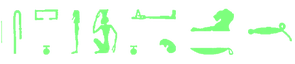
rdj.j n.k ḥrjt tp mn ḥr ḥꜣt.k .[.. ... ...]
“I grant that the cobra shall abide upon your brow.”
- 273
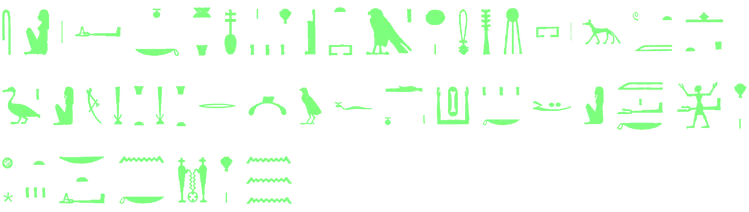
ḏd mdw jn Ḥt ḥr nbt Jwnt jrt Rꜥ ḥrt jb Bḥdt Jwntt ḫwjt jwn bjꜣjt wrt ḫnt nṯrwt mfkꜣt nt Psḏt ꜥꜣt pꜥpꜥt ḥmt.s m Jwnt r nswjt prjt šw ḫft prj.s
Words spoken by Hathor, lady of Dendera, Eye of Ra, who dwells in Behdet, the Denderan who guards Iun, the marvel, great among the goddesses, turquoise of the Great Ennead. Her Majesty is born a queen in Dendera; light comes forth when she comes forth:
Note · Line 273
Dendera’s Egyptian name, Iunet, echoes Iun, a name of Osiris. The sound links Hathor’s home with the god she guards. - 274

rdj.j n.k ḫꜥw nfrw ḥr st Ḥr mj Rꜥ psḏ m ꜣḫt
“I grant that you appear in splendor on the throne of Horus, like Ra shining on the horizon.”
- 275
jw.tj m ḥtp sꜣ.j mrj.j šnw šnj tꜣ r ꜣw.f šsp.n.j kꜣw.k mꜣꜣ.j rwḏ m ꜥ.k ḥꜥj.j ḥr jḫt nṯr.k rdj.j n.k Qbḥwj ḥr mw n ḥm.k šmꜥw mḥw ḥr dwꜣ kꜣ.k ...
“Come in peace, my son whom I love, conqueror who conquers the whole earth.
I have received your offerings; I see the strength in your arm and rejoice in your gift to the god.
I grant that Egypt be loyal to Your Majesty and that Upper and Lower Egypt adore your ka …” - 276
ḥqꜣt nbt tꜣwj (… …) nṯrw mrj jtw mrj snw mrj ꜣst wrt mwt nṯr jrt Rꜥ nbt pt ḥnwt nṯrw nbw mrj Ḥr Bḥdtj nṯr ꜥꜣ nb pt sꜣb šwt prj m ꜣḫt Rꜥ Ḥr ꜣḫtj ḫnt St wrt
The sovereign, lady of the Two Lands, Cleopatra Tryphaena; the gods who love their fathers and their siblings, beloved of Isis the Great, the god’s mother, Eye of Ra, lady of the sky, mistress of all the gods, and beloved of Horus of Behdet, the great god, lord of the sky, the one of many-colored plumage who comes forth from the horizon, Ra-Horakhty who presides over the Great Seat.
Note · Line 276
Cleopatra Tryphaena is Ptolemy XII’s queen. “The gods who love their fathers and their siblings” is the royal couple’s shared title. - 277
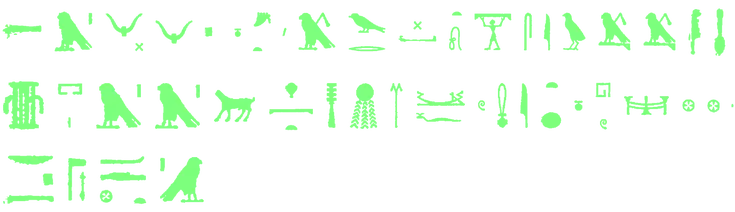
Ḥr n mꜣꜥt Ḥr wpw wpj tꜣ pn ḏrtj wr pḥtj twꜣ sw r nṯrw n nṯr m snt r.f Ḥr mꜣꜥ ḫrw ḫnt Pr Ḥr Ḥr ẖn ḥrt psḏ m wjꜣ.f mj jtn.f hꜣw nwt prj.f m pr.f r sꜥnḫ tꜣwj Ḥr Bḥdtj nṯr ꜥꜣ nb pt
Horus who belongs to Maat, Horus the judge who judges this land, the falcon of great strength who has raised himself above the gods: no god can match him. Horus vindicated in the House of Horus, Horus who ascends the sky, shining in his bark like his sun disk in the heights of heaven when he comes forth from his house to give life to the Two Lands: Horus of Behdet, the great god, lord of the sky.
- 278
jw.n sꜣ Rꜥ (… …) ḫr.k Ḥr Bḥdtj nṯr ꜥꜣ nb pt jnj.f n.k [..] ... smsj mḥwt ḥr bẖ sḫt nbt r nw.s ntk wr ḥswt m m nṯrw ꜥꜣ bꜣw m tꜣwj jdbw
The Son of Ra, Ptolemy XII, has come to you, Horus of Behdet, great god, lord of the sky, to bring you the flood … that makes the farmlands give birth and every field bring forth in its season. For you stand high in the gods’ favor; great is your power in the Two Lands and along the riverbanks.
- 279
jw.n nswt bjt (… …) ḫr.k Ḥr Bḥdtj nṯr ꜥꜣ nb pt jnj.f n.k qbḥw ẖr smw.s sṯḥn.tj r prw wꜣḏ m mfkꜣt.sn ntk wpj rḥwj sḫpr šꜥj npr m pꜣj.f
The King of Upper and Lower Egypt, Ptolemy XII, has come to you, Horus of Behdet, great god, lord of the sky, to bring you the marshland laden with its plants, dazzlingly bright and green with their turquoise sheen. For you are the one who parts the two contenders and brings sand and grain into being, each for the one to whom it belongs.
Note · Line 279
The division gives each contender his own ground: the desert sand belongs to Seth, the grain of the cultivated land to Horus. - 280
jw.n sꜣ Rꜥ (… …) ḫr.k Ḥr Bḥdtj nṯr ꜥꜣ nb pt jnj.f n.k jṯj kꜣ bꜥḥj ḫꜣ n tꜣ m sṯjt.f ḥr ḫj sḫd r mrwt.f ntk nb ꜥnḫ srq ḥtjt rdj ṯꜣw r fnḏ nb
The Son of Ra, Ptolemy XII, has come to you, Horus of Behdet, great god, lord of the sky, to bring you the Grasping Bull, who floods the farmland with his semen and rises and falls at will. For you are the lord of life, who lets the throat breathe and brings breath to every nose.
Note · Line 280
The Grasping Bull and the Plundering Bull that follows are both the Nile flood. Its water is imagined as the seed that makes the fields conceive. - 281

jw.n nswt bjt (… …) ḫr.k Ḥr Bḥdtj nṯr ꜥꜣ nb pt jnj.f n.k ḫmꜥt ẖr nww wbg m jḫt nbt r tr.s ntk sjꜥr [..] sbkꜣ ꜣḫt rdj.s r tꜣ m msw.s
The King of Upper and Lower Egypt, Ptolemy XII, has come to you, Horus of Behdet, great god, lord of the sky, to bring you the farmland under the floodwaters, which will grow green with all manner of things in its season. For you are the one who makes the floodwaters rise and impregnates the field so that she gives birth to her children.
- 282
jw.n sꜣ Rꜥ (… …) ḫr.k Ḥr Bḥdtj nṯr ꜥꜣ nb pt jnj.f n.k ḫnp kꜣ stf jww m rḏw.f ḥr šft r nḏrt ḏr jb.f ntk nṯr mnḫ m m nṯrw wr ḥswt ḫnt Psḏt
The Son of Ra, Ptolemy XII, has come to you, Horus of Behdet, great god, lord of the sky, to bring you the Plundering Bull, who floods the island fields with his discharge and swells to seize as his heart desires. For you are the excellent god among the gods, held in great favor within the Ennead.
- 283
jw.n nswt bjt (… …) ḫr.k Ḥr Bḥdtj nṯr ꜥꜣ nb pt jnj.f n.k šꜣ m ḥtp ẖr gjw nw rꜣ ḥwj ntk nswt n Ꜥtm bjtj dšrt jtj nb nf mj nn
The King of Upper and Lower Egypt, Ptolemy XII, has come to you, Horus of Behdet, great god, lord of the sky, to bring you the field that gladly bears the plants of the Delta lagoons. For you are king of Egypt, king of the desert lands, sovereign and lord of this and that alike.
- 284
jw.n sꜣ Rꜥ (… …) ḫr.k Ḥr Bḥdtj nṯr ꜥꜣ nb pt jnj.f n.k ḥꜥpj m ḫꜣꜥ r nw.f n jnjn n nmtt.f r sw.f ntk nṯr wꜥ n mjtj.f msj rmṯw jrj nṯrw
The Son of Ra, Ptolemy XII, has come to you, Horus of Behdet, great god, lord of the sky, to bring you Hapy, rushing on in his season, with no check to his stride on his appointed day. For you are the sole god, without equal, who begets humankind and makes the gods.
- 285

ḥnk šmꜥw mḥw ḏd mdw mn n.k tꜣ šmꜥw m jꜣw n ḥḏt.k tꜣ mḥw ḥr jrt hnw n nt.k ḫꜣswt nbt ḫꜣb n bꜣw.k jḫt nbt ꜥrf m ḫfꜥ.k
Presenting Upper and Lower Egypt. Words to be spoken: “Receive Upper Egypt, praising your White Crown,
and Lower Egypt, acclaiming your Red Crown,
all foreign lands bowed before your might,
all things gathered in your fist.”Note · Line 285
The king offers the country to Horus as its rightful lord; in return the gods grant the king the people’s allegiance. - 286

nswt bjt (… …) sꜣ Rꜥ (… …) nswt Wḏꜣt ꜥꜣ šfjt m Jdbw Ḥr ḫntš ḥnmmt n mꜣꜣ.f
The King of Upper and Lower Egypt, Ptolemy XII, the Son of Ra, Ptolemy XII, king of the Whole Land, held in high honor on the Banks of Horus, at whose sight humankind rejoices.
- 287

ršw n.ṯn j nꜣ tꜣwj swḏ pꜣ tꜣ n Ḥr {ꜣ ꜣst
“Rejoice, O Two Lands! The earth is handed over to Horus son of Isis!”
- 288

mn n.k rsj ḥr ḫꜣm n.k gꜣbtj mḥtj ḥr sn n.k tꜣ jmntt mjtt rdj ḥr ẖt.s jꜣbtt ḥr dwꜣ kꜣ.k tꜣwj jdbw ḥr wꜣḥ n.k tp.s ḫꜣstjw nbw n.k r nḏt
“Receive the South, bending both arms before you,
and the North, kissing the ground before you;
the West likewise, lying on her belly,
and the East, adoring your ka;
the Two Lands and the riverbanks, bowing their heads before you,
and all the people of foreign lands, yours as subjects.” - 289
ḫꜥj ḥr wṯst.f jtj n nṯrw nbw ḥrj tp ḥrjt tp nb mḥnjt ḥqꜣ nb wrrt wbn m nfrt jꜥj ḥr m nt ꜥn ḫꜥw m sḫmtj nb jḥt mnt nb jꜣwt ḥrj srḫ Ḥr Bḥdtj nṯr ꜥꜣ nb pt
He who appears on his throne, ruler of all the gods, chief of the brow serpent, lord of the coiled cobra, ruler and lord of the Red Crown’s coil; he who shines in the White Crown, radiant of face in the Red Crown, fair when he appears in the Double Crown; lord of the world, lord of the kingly office, the falcon atop the palace façade: Horus of Behdet, the great god, lord of the sky.
- 290

ḏd mdw jn Ḥr Bḥdtj nṯr ꜥꜣ nb pt sꜣb šwt prj m ꜣḫt ꜥpj šps ḫwj jtrtj nswt n šmꜥw bjtj mḥw jtj n ḥptj nb gsw prw ḥqꜣ nwwt spwt ḫtj r rwt.sn ḥr rn.f
Words spoken by Horus of Behdet, the great god, lord of the sky, the one of many-colored plumage who comes forth from the horizon, noble Api who guards the twin shrines, king of Upper Egypt, king of Lower Egypt, ruler of the world, lord of the temples, ruler of the towns and provinces on whose gates his name is inscribed:
- 291
rdj.j n.k Tꜣ mrj ḥr dwꜣ n.k nṯr ḫꜣstjw nbw ḥr sdꜣdꜣ n snḏ.k
“I grant that Egypt praise the god on your behalf and that all foreign peoples tremble in dread of you.”
- 292
ḏd mdw jn Ḥt ḥr nbt Jwnt jrt Rꜥ ḥrt jb Bḥdt nbt pt ḥnwt nṯrw nbw bjkt nṯrjt ḥnwt pr nswt jtjt n tꜣ ḥr ndb.f
Words spoken by Hathor, lady of Dendera, Eye of Ra, who dwells in Behdet, lady of the sky, mistress of all the gods, the divine she-falcon, mistress of the royal house, sovereign of the land to its farthest bounds:
- 293
rdj.j mrwt.k sš.tj ḫr ḥr nb nn sꜣj.sn n ptr.k
“I cause love for you to spread among all people; they cannot get their fill of the sight of you.”
- 294
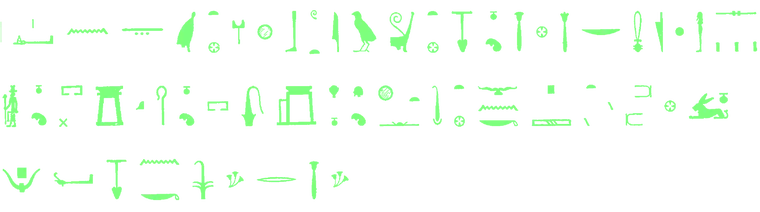
rdj.j n.k tꜣ šmꜥw ꜣbḫ.tj r mḥw smꜣ.n.k tꜣwj nbw mj qd.sn jtj.n.k pr wr ḥqꜣ.n.k pr nsr ḥr tp.n.k jḫt mnt dmḏ.n.k psštj wn wpj smꜣ.n.k swt ḥnꜥ wꜣḏ
“I give you Upper Egypt joined to Lower Egypt, for you have united all lands, every one.
You have taken possession of the Great House and taken command of the House of Flame;
you have brought the world under your rule.
You have joined the two halves that once were parted;
you have united the sedge and the papyrus.”Note · Line 294
The Great House and the House of Flame are the traditional sanctuaries of Upper and Lower Egypt. Taking possession of both is another way of claiming the undivided kingdom. - 295
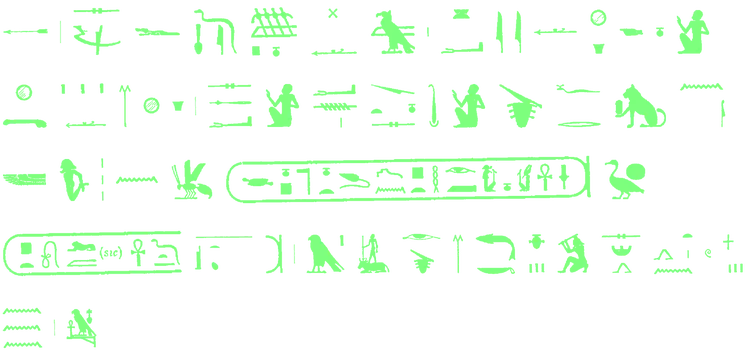
smꜣ msḥ ḏd mdw šsp.n.j mꜥbꜣ ꜣmm.j ḫꜥw ḫfꜥ.n.j ḫmt m ḫfꜥ.j ḫbḫb.j ḫꜥww m [.. ... ... ... ..] . msḥ ḥr mr.f stp.j ḫpš.f šdj.j ḥꜣtj.f rdj.j ḫt m ... .f sꜥꜣ.j ꜥḏt.f dns.j šꜥt.f r ḫft ḥr n sꜣb šwt sbjw nw [..] . šm [... ... ... ... ...]
Killing the crocodile. Words to be spoken: “I have taken up the maba-spear; I grip the weapon. I have clenched the trident in my fist to stab the crocodiles in … the crocodile in his canal. I cut away his haunch, I cut out his heart, I set fire to his limbs. Great is the carnage I make of him, grievous his slaughter before the one of many-colored plumage. The rebels of … go …”
- 296

nswt bjt (… …) sꜣ Rꜥ (… …) Ḥr dwntj jrj šꜥt m ẖꜣkw jb sḥm nmtt nt jmjw mw
The King of Upper and Lower Egypt, Ptolemy XII, the Son of Ra, Ptolemy XII, Horus Dunti, who slaughters the rebels and checks the advance of those who dwell in the water.
- 297

nṯr nfr [... ... ... ... ... ...] pẖr m sktj r jrt tpjw ꜥḥt m ḥbw ntj bjk n nb šꜥd šnṯjw ḫnt Wr nḫt nb qnt sꜣ Rꜥ (… …)
The perfect god …, who sails the circuit in the warship to celebrate the rite of the first catch of the net at the festivals of the Falcon of Gold, who slaughters his foes in Great-in-Victory, lord of strength, son of Ra, Ptolemy XII.
- 298

ḏd mdw jn Ḥr Bḥdtj nṯr ꜥꜣ nb pt Nb Msn sꜣb šwt prj m ꜣḫt bjk n nb sꜣ Wsjr jꜣwtj nfr ḫj ḥꜣt ẖr ḫmt ḫnd ḥr psḏ n ḫrwj.f
Words spoken by Horus of Behdet, the great god, lord of the sky, lord of Mesen, bright of plumage, who comes forth from the horizon, the Falcon of Gold, son of Osiris, the perfect harpooner, proud bearer of the trident, who sets foot on his enemy’s back:
- 299
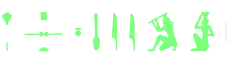
rdj.j n.k qnt nt ḥm.j r ḫpš.k r kꜣt pw ꜥn
Into your arm I put the strength of my Majesty for this work of overturning.
- 300

ḏd mdw jn Ḥt ḥr nbt Jwnt jrt Rꜥ ḥrt jb Bḥdt nbtj rḫjt ḥnwt nṯrwt bjkt m Bḥdt nht.s ḥꜣ sꜣ.s mwt nṯr nt Kꜣ mwt.f ꜥwj nw ḥmt.s m sꜣ ḥꜣ.f hh m nsr r ḫftjw.f
Words spoken by Hathor, lady of Dendera, Eye of Ra, who dwells in Behdet, queen of the people, sovereign of the goddesses, the female falcon in Behdet whose protection surrounds her son, divine mother of Kamutef, both arms of her Majesty about him as a guard, a blast of flame against his enemies:
Note · Line 300
Kamutef means “Bull of His Mother.” The title expresses a divine paradox: the god fathers himself and is born again as his own son. - 301

wnn.j m ḫt.k n ḥrj.j r.k gs dp.j ḥm.k ḫnt nwj
I am behind you; I do not leave your side. I guard Your Majesty on the water.
- 302

bjk prj ꜥ sjꜣw sꜣsꜣ sꜣ n sbjw.f wr pḥtj ḥrst wḏꜣtj ꜥnḫ.f m sẖb snf Ḥr ṯmꜣ ꜥ wnp sbjw nw jt.f Ḥr Bḥdtj nṯr ꜥꜣ nb pt
The falcon swift to strike, the Sia-falcon that swoops on the backs of his foes,
great in strength, both eyes red with rage, who comes alive as he drinks down blood:
Horus the Strong-Armed, who stabs his father’s enemies,
Horus of Behdet, the great god, lord of the sky. - 303
ḏd mdw Stš m sḏt smꜣjw.f m ssf nbḏ npḏ ḥr bjn.f
Words to be spoken: Seth is in the fire, his band is ash. The wicked one has been butchered for his wickedness.
- 304
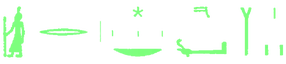
nswt bjt (…) sꜣ Rꜥ (…)
King of Upper and Lower Egypt ( ), son of Ra ( ).
- 305
wnn sꜣ Rꜥ (…) ḥr nst.f m ṯmꜣ ꜥ ḫnt Ḏbꜣ ḥr .. ...] nhs ḥr ... r šnṯjw.f ḥr rdt nrw.f n wnj mw.f sw mj Bḥdtj prj ꜥ ẖr mꜥbꜣ wr bꜣw r nṯrw dmḏ
The son of Ra ( ) sits on his throne as the Strong-Armed One in Edfu, killing Nehes, … against his foes, striking terror into those who defy him. He is like Horus of Behdet, swift to strike, bearing the maba-spear, mightier than all the gods together.
Note · Line 305
Nehes is Seth. The king takes the part of Horus, wielding the maba-spear as a hunter would a harpoon. - 306
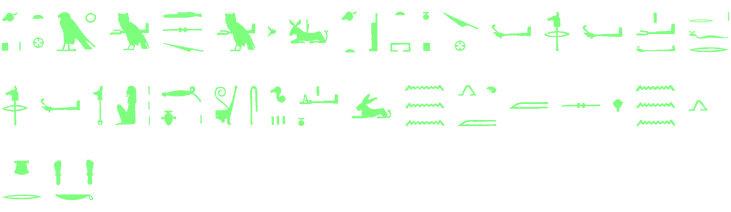
ḏd mdw jn Ḥr Bḥdtj nṯr ꜥꜣ nb pt nṯr ꜥꜣ wr r nṯrw nbw ḥwj sbjw ḫnt P n Ḥr mds mhr ḫnt St wnp wsr ꜥ jrf r Wsrw ḥꜣt mḥ jb n nṯrw rmṯw
Words spoken by Horus of Behdet, the great god, lord of the sky, the great god greater than all the gods, who strikes down rebels at the Seat of Horus, who butchers Meher at the Place of Stabbing, stronger of arm indeed than the Useru-hat, who fills the hearts of gods and men:
Note · Line 306
Meher is another name for Seth, and the Seat of Horus is Edfu itself. - 307

rdj.j n.k wnj mw.k [.. ..] m [...] dšrt dgdg ẖr ṯbwj.k
I grant that your enemies … upon …, and that the people of the Red Land lie trampled beneath your two soles.
- 308

ḏd mdw jn Jḥj wr sꜣ Ḥt ḥr nṯr ꜥꜣ ḥrj jb Bḥdt ḫ šps n ꜣḫtj snn ꜥnḫ n wbn m nḫb tjt ḏsrt nt nb Ḏrw
Words spoken by Ihy the Great, son of Hathor, the great god who dwells in Behdet, noble child of Him of the Horizon, living likeness of him who rises from the lotus, sacred image of the lord of Djeru:
Note · Line 308
Egyptians pictured the newborn sun as a child emerging from a lotus blossom. Ihy is likened to that child. - 309
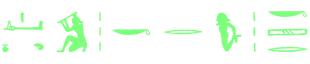
rdj.j n.k ḫftjw.k [... ... .]. .k ḫr ẖr.k
I grant that your foes … and your enemies lie fallen beneath you.
- 310
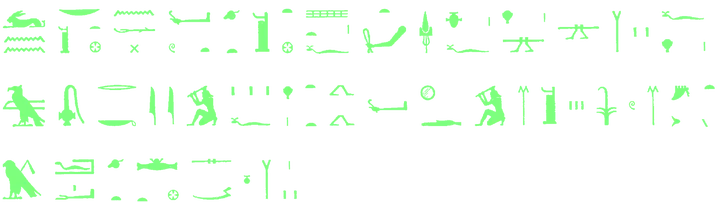
wnn nb Wṯst nḫt.tj ḫnt Wṯst spt.f ḏsrt ꜣbjt jb.f ḥr sbsb sbjw.f ḥr ꜣm rqww.f ḥr tjtj ḫftj m ṯst sw m ḏrtj prj ꜥ ḫnt Msn smꜣr.n.f sbjw nw jt.f
The lord of the Throne-Seat stands strong in the Throne-Seat, his sacred precinct for which his heart longs.
He drives off his rebels, burns his opponents, tramples his foe out of existence.
He is the falcon swift to strike in Mesen; he has destroyed his father’s enemies. - 311
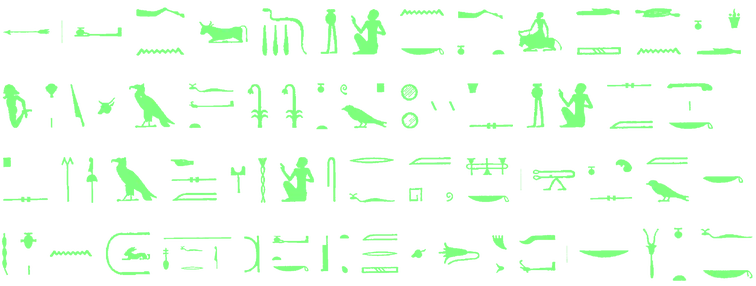
ḥnk ḫpš n ḫrjt ḏd mdw jnj.j n.k ḫpš ntj ḫrjt dšr n nbḏ ḥr dn ḏꜣḏꜣ.f ꜥt nn nt whj sp.f ḫfꜥ.j sj jnj.j sj m bꜣḥ.k šsp.j sj m wnmj.j ꜣmm.j sj m jꜣbj.j wꜣḥ.j sj jrf m hꜣw.k jṯj.n.k sj m wr pḥtj.k nḏm jb n (Wnn nfrw mꜣꜥ ḫrw) mwt.k ꜣst m ršrš ḏr ṯꜣj.k jꜣwt nt jt.k
Offering the foreleg of the sacrificial beast. Words to be spoken:
I bring you the foreleg of the sacrificial beast, the red flesh of the wicked one, as I cut off his head.
This limb of him whose venture failed—I seize it and bring it before you.
I take it in my right hand, I grip it in my left, I lay it down here beside you.
You have taken it in your great strength.
The heart of Wennefer, vindicated, is glad;
your mother Isis rejoices now that you have taken up your father’s office.Note · Line 311
By offering the foreleg to Horus, the king gives him the strength taken from Seth. Wennefer is Osiris; “vindicated” means that judgment has been given in his favor. - 312

nswt bjt (Pr ꜥꜣ) sꜣ Rꜥ (Pr ꜥꜣ)
King of Upper and Lower Egypt (Pharaoh), son of Ra (Pharaoh).
- 313

Ḥr ḏsr msḫꜥ ... [...] ktkt nbḏ m dwntj nbtj wr pḥtj mds sbjw ḫntš nṯr m wnwt.f Ḥr nb wr pḥtj sdꜣdꜣ n.f ḥḥ ḥm ꜥnḫ.tw n mꜣꜣ.f
Horus: splendid in his appearing …, who slays the wicked one in triumph.
Two Ladies: great in strength, who butchers the rebels and gladdens the god with his service.
Golden Horus: great in strength, before whom millions tremble, the Majesty on whom one looks and lives. - 314

ḏd mdw jn Ḥr Bḥdtj nṯr ꜥꜣ nb pt ḫntj prw nb gsw prw ꜥẖm šps wpj tꜣwj m ḏnḥ.f sš ꜥ.f m ḫt . [... .].. . wsr ḫpš ḫnt Tꜣwj wr ḫpš šnṯjw.f r wnmjt
Words spoken by Horus of Behdet, the great god, lord of the sky, foremost of shrines, lord of temples, the noble falcon who opens the Two Lands with his wing, who spreads his talons behind his enemies, strong of arm in the Two Lands of the Strong-Armed One, whose foes are destined for the fire:
- 315

rdj.j n.k tꜣwj nb ḥr mw ḥm.k wr n.k [..] n ḫꜣswt nbt
I grant that every double kingdom shall obey Your Majesty, and that your … shall be great in every foreign land.
Note · Line 315
Egypt, with its two halves under one ruler, is the model for “every double kingdom”: Horus promises the king obedience beyond Egypt itself. - 316

ḏd mdw jn Ḥt ḥr nbt Jwnt jrt Rꜥ ḥrt jb Bḥdt ꜣst ꜣṯt sꜣ.s wrt pḥtj drt tbh sbsbt sbjw m tp rꜣ.s jntntt nbḏ sḫtḫtt ... ... ... ... ...
Words spoken by Hathor, lady of Dendera, Eye of Ra, who dwells in Behdet, Isis who rears her son, great in strength, who drives out Tebeh, who puts the rebels to flight with her spell, who wards off the wicked one, who drives back …:
Note · Line 316
Hathor speaks here as Isis, the mother of Horus. Tebeh is Seth. - 317

rdj.j n.k ḥr nb ḥngg n mꜣꜣ.k swsr.j ꜥ.k r ḫftjw.k
I grant that everyone shall shout for joy at the sight of you. I strengthen your arm against your enemies.
- 318

nṯr pn šps sḫm wr ḥrj sḫmw ḏsr fꜣw sḫm pḥtj ꜥꜣ nrw wdn ꜣt jw n.f nṯrw m ksw nb nḫt hd ḥḥw ḥfnw n.f jmj Kmt dšrt
This noble god, the great Power at the head of the powers,
exalted in renown, mighty in strength, great in terror, weighty in might,
to whom the gods come bowing,
lord of victory, who lays low millions and hundreds of thousands:
his is all that lies in the Black Land and the Red Land.Note · Line 318
The Black Land is the farmland along the Nile, named for its dark silt. Paired with the desert, it leaves no ground outside the god’s rule. - 319
ms ms n Sḫt ḏd mdw mn n.k ḫt ms.n.j m ḥr.k ẖr rꜣw hꜣj m qbḥw Sḫt snḥt.sn n jt.j Bḥdtj jḫt.s pwj m ꜥwj šmꜥw mḥw n kꜣ.k ... ... ... ... ... ... jw.n.j r ḫꜣwwt.k m ḫrjt sbjt tpt ꜥwj.j ... ... ... ... ... ...
Presenting the bouquet of Sekhet. Words to be spoken:
Take the bouquet-staff I have brought before you, with the geese that settled in the marshes.
Sekhet has bound them for my father, Horus of Behdet.
These gifts of hers from Upper and Lower Egypt are for your ka …
I have come to your altars with the rebel beasts for slaughter on my two arms …Note · Line 319
Sekhet is the goddess of the fields and marshes. The geese the king brings from her marshes serve both as food for Horus and as captured rebels. - 320
nswt bjt (Pr ꜥꜣ) sꜣ Rꜥ (Pr ꜥꜣ)
King of Upper and Lower Egypt (Pharaoh), son of Ra (Pharaoh).
- 321

jw.tj m ḥtp ḥrj tꜣ.j ḫpr n nswt njwswt ḫntj ꜥnḫw šsp.n.j wnwt.k nt wḥꜥ qnj ḥꜥj.j ḥr jḫt.k nfrt rdj.j n.k Qbḥw Ḥr ẖr sš ꜥgꜣt Qbḥw Stš ẖr sš ꜥnwt
Come in peace, my successor on earth, who have become king of kings, foremost of the living.
I have accepted your service as a skilful fowler; I rejoice in your fine gift.
I give you the marshes of Horus with their claw-spreaders, the marshes of Seth with their talon-spreaders.Note · Line 321
Horus answers the king’s gift of birds by granting him the marshes themselves: those of Horus stand for Lower Egypt, those of Seth for Upper Egypt. The “claw-spreaders” and “talon-spreaders” are the birds that live there. - 322

ḏd mdw jn Ḥr Bḥdtj nṯr ꜥꜣ nb pt ḏrtj šps spd ꜥnwt nb sꜣḥ jtj msḫtjw ḥqꜣ mꜣnw ḥrj tp bꜣẖ wbn m wṯst.f ḫꜥj ḥr nst.f pḥtj sḫr bṯnw.f
Words spoken by Horus of Behdet, the great god, lord of the sky, the noble falcon with sharp talons, lord of Orion, prince of the Foreleg, ruler of the western mountain, chief of the eastern mountain, who rises at his throne-seat and shines upon his throne, the mighty one who fells his foe:
Note · Line 322
Orion in the south and the Foreleg in the north give Horus command of opposite ends of the sky, just as the two mountains give him the horizons of sunset and sunrise. - 323
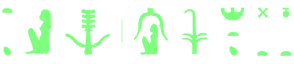
rdj.j n.k jfd n nwt ḥtp ḥr.k tꜣwj nb ḥr dwꜣ n.k nṯr
I grant that the four quarters of the sky shall be pleased with you and that every land shall praise the god for your sake.
- 324

ḏd mdw jn Ḥt ḥr nbt Jwnt jrt Rꜥ ḥrt jb Bḥdt ẖnmt ẖnmt rs wḏꜣ ḥmt nswt wrt nt nswt bjt mwt nṯr nt mꜣꜥtj Sḫmt sḫmt rdjt n.s qnt nbt ḥnwt qnt šꜥt.s r nbḏ
Words spoken by Hathor, lady of Dendera, Eye of Ra, who dwells in Behdet, the nurse who embraces Him Who Wakes Whole, great royal wife of the king of Upper and Lower Egypt, divine mother of the Vindicated One, Sekhmet the Mighty, to whom all strength is given, mistress of strength, whose slaughter falls upon the wicked one:
Note · Line 324
“Him Who Wakes Whole” is Osiris restored to life. Hathor takes on the killing power of the lioness goddess Sekhmet, whose name means “the Mighty One.” - 325

rdj.j gsj n.k qbḥw ẖr rꜣw jm.f m wḏt nt jt.k Rꜥ Ḥr ꜣḫtj
I make the marsh come to you bearing all the geese in it, at the command of your father Ra-Horakhty.
- 326

jw.n.j ḫr.k nb jtrtj nṯr ꜥꜣ wr r nṯrw nbw jnj.j n.k rꜣw ꜥšꜣ n šbnw ꜣpdw nbw m rn.sn ṯwt nswt bjt nṯrw rmṯw nb n tꜣ ḥr ndb.f
I have come to you, lord of the Two Shrines, great god, greater than all the gods, to bring you geese in plenty and of many kinds, and birds of every name. You are king of Upper and Lower Egypt over gods and men, lord of the land to its furthest bound.
- 327
nṯr nfr mḥ ḥr Wḏꜣt ḫm ꜥꜥw ḥr sꜣw ḥwt nṯrw nswt bjt nb tꜣwj (… …) sꜣ Rꜥ nb ḫꜥw (… …) mrj Ḥr Bḥdtj nṯr ꜥꜣ nb pt
The perfect god, who cares for Egypt and never tires of guarding the temples; the king of Upper and Lower Egypt, lord of the Two Lands, Ptolemy XII, son of Ra, lord of crowns, Ptolemy XII, beloved of Horus of Behdet, the great god, lord of the sky.
- 328
nṯr nfr jrj mnw n mwt.f kꜣw mnḫw n snnw.sn nswt bjt nb tꜣwj (… …) sꜣ Rꜥ nb ḫꜥw (… …) mrj Ḥt ḥr nbt Jwnt jrt Rꜥ nbt pt ḥnwt nṯrw nbw
The perfect god, who has provided his mother with a monument and with choice offerings beyond compare; the king of Upper and Lower Egypt, lord of the Two Lands, Ptolemy XII, son of Ra, lord of crowns, Ptolemy XII, beloved of Hathor, lady of Dendera, Eye of Ra, lady of the sky, mistress of all the gods.
Note · Line 328
The mother for whom Ptolemy built is Hathor, his mother in his role as king. - 329
nṯr nfr ḏrtj wr pḥtj ḫwj Ꜥtm r ḫmjw sṯtjw nswt bjt nb tꜣwj (… …) sꜣ Rꜥ nb ḫꜥw (… …) mrj Ḥr Bḥdtj nṯr ꜥꜣ nb pt Nb Msn sꜣb šwt prj m ꜣḫt
The perfect god, the falcon great in strength, who defends Egypt against its foes, the peoples of Asia; the king of Upper and Lower Egypt, lord of the Two Lands, Ptolemy XII, son of Ra, lord of crowns, Ptolemy XII, beloved of Horus of Behdet, the great god, lord of the sky, lord of Mesen, he of many-colored plumage who comes forth from the horizon.
- 330
nṯr nfr ꜥrq ꜥrtj m ꜥš nfr jnḥ m ḥmtj nswt bjt nb tꜣwj (… …) sꜣ Rꜥ nb ḫꜥw (… …) mrj Ḥt ḥr nbt Jwnt jrt Rꜥ nbt pt
The perfect god, who has finished the two door leaves of fine conifer wood edged with copper; the king of Upper and Lower Egypt, lord of the Two Lands, Ptolemy XII, son of Ra, lord of crowns, Ptolemy XII, beloved of Hathor, lady of Dendera, Eye of Ra, lady of the sky.
Note · Line 330
These are the two wooden doors of the gateway between the pylon’s stone towers, the very passage on which the inscription was carved. - 331
nṯr nfr nn [... ..]. stp m tꜣ m ḫntj ḥḥw nswt bjt nb tꜣwj (… …) sꜣ Rꜥ nb ḫꜥw (… …) mrj Ḥr Bḥdtj nṯr ꜥꜣ nb pt Nb Msn
The perfect god, the child …, chosen on earth from among millions; the king of Upper and Lower Egypt, lord of the Two Lands, Ptolemy XII, son of Ra, lord of crowns, Ptolemy XII, beloved of Horus of Behdet, the great god, lord of the sky, lord of Mesen.
- 332
nṯr nfr sfj n Ḥr sḥnj msj.n nb nṯrw nswt bjt nb tꜣwj (… …) sꜣ Rꜥ nb ḫꜥw (… …) mrj Ḥt ḥr nbt Jwnt tꜣ mnjt jrt Rꜥ nbt pt
The perfect god, son of Horus-Seheni, whom the Gold of the Gods bore; the king of Upper and Lower Egypt, lord of the Two Lands, Ptolemy XII, son of Ra, lord of crowns, Ptolemy XII, beloved of Hathor, lady of Dendera, the Menat, Eye of Ra, lady of the sky.
Note · Line 332
“Gold of the Gods” names Hathor as the king’s mother. Here even the name of her necklace, the menat, serves as a name for the goddess herself. - 333
nṯr nfr sꜥḥꜥ trj m ꜥš nfr n Ꜥntj š nswt bjt nb tꜣwj (… …) sꜣ Rꜥ nb ḫꜥw (… …) mrj Ḥt ḥr nbt Jwnt
The perfect god, who had the gate of fine conifer wood from Lebanon raised; the king of Upper and Lower Egypt, lord of the Two Lands, Ptolemy XII, son of Ra, lord of crowns, Ptolemy XII, beloved of Hathor, lady of Dendera.
- 334
nṯr nfr ḫwsj mꜣht m jnr ḥḏ nfr rwḏ nswt bjt (… …) sꜣ Rꜥ (… …) mrj Ḥr Bḥdtj nṯr ꜥꜣ nb pt Nb Msn
The perfect god, who built the gatehouse of fine, hard, pale sandstone; the king of Upper and Lower Egypt, Ptolemy XII, son of Ra, Ptolemy XII, beloved of Horus of Behdet, the great god, lord of the sky, lord of Mesen.
- 335
nṯr nfr Ḥꜥpj n Kmt Rnnt n tꜣ nb nswt bjt nb tꜣwj (… …) sꜣ Rꜥ (… …) mrj Ḥt ḥr nbt Jwnt jrt Rꜥ nbt pt ḥnwt nṯrw nbw
The perfect god, Hapy of Egypt, Renenet of every land; the king of Upper and Lower Egypt, lord of the Two Lands, Ptolemy XII, son of Ra, Ptolemy XII, beloved of Hathor, lady of Dendera, Eye of Ra, lady of the sky, mistress of all the gods.
Note · Line 335
Renenet is the goddess of the harvest. By calling the king both Hapy and Renenet, the inscription credits him with the floodwater and the crop it makes possible. - 336
nṯr nfr jbw ḥꜣ Tꜣ mrj rs ḥr sꜣw {ꜣw.n.sn nswt bjt nb tꜣwj (… …) sꜣ Rꜥ nb ḫꜥw (… …) mrj Ḥr Bḥdtj nṯr ꜥꜣ nb pt
The perfect god, the rampart around Egypt, the watchful one who guards the guardian gods; the king of Upper and Lower Egypt, lord of the Two Lands, Ptolemy XII, son of Ra, lord of crowns, Ptolemy XII, beloved of Horus of Behdet, the great god, lord of the sky.
- 337
nṯr nfr ḥqꜣ ḥqꜣw ḫꜣswt jrj n.f ṯꜣjw mj ḥmwt nswt bjt nb tꜣwj (… …) sꜣ Rꜥ nb ḫꜥw (… …) mrj Ḥt ḥr nbt Jwnt jrt Rꜥ nbt pt ḥnwt nṯrw nbw
The perfect god, ruler of the rulers of foreign lands, for whom men and women alike were made; the king of Upper and Lower Egypt, lord of the Two Lands, Ptolemy XII, son of Ra, lord of crowns, Ptolemy XII, beloved of Hathor, lady of Dendera, Eye of Ra, lady of the sky, mistress of all the gods.
- 338
nṯr nfr sꜥḥꜥ ꜥnḫwj jrj ꜣḫt m ḥt nṯr Wṯst nswt bjt nb tꜣwj (… …) sꜣ Rꜥ nb ḫꜥw (… …) ... ...]
The perfect god, who had the two door leaves hung and does glorious work in the temple of the Throne Seat; the king of Upper and Lower Egypt, lord of the Two Lands, Ptolemy XII, son of Ra, lord of crowns, Ptolemy XII …
- 339
nṯr nfr ḥqꜣ ḥqꜣw ḫꜣswt jrj n.f ṯꜣjw mj ḥmwt nswt bjt nb tꜣwj (… …]) sꜣ Rꜥ nb ḫꜥw (… …) mrj Ḥt ḥr nbt Jwnt jrt Rꜥ nbt pt ḥnwt nṯrw nbw
The perfect god, ruler of the rulers of foreign lands, for whom men and women alike were made; the king of Upper and Lower Egypt, lord of the Two Lands, Ptolemy XII, son of Ra, lord of crowns, Ptolemy XII, beloved of Hathor, lady of Dendera, Eye of Ra, lady of the sky, mistress of all the gods.
- 340
nṯr nfr ḫ ꜣḫtj ḫwj Ꜥwjt m ḫpšwj.s nswt bjt nb tꜣwj (… …) sꜣ Rꜥ nb ḫꜥw (… …) mrj Ḥr Bḥdtj nṯr ꜥꜣ nb pt sꜣb šwt prj m ꜣḫt
The perfect god, son of Him of the Horizon, whom Khuyet protects with her two arms; the king of Upper and Lower Egypt, lord of the Two Lands, Ptolemy XII, son of Ra, lord of crowns, Ptolemy XII, beloved of Horus of Behdet, the great god, lord of the sky, he of many-colored plumage who comes forth from the horizon.
Note · Line 340
Khuyet means “the Protectress.” In Egyptian her name echoes the verb for what she does with her arms. - 341
nṯr nfr ḥwn n Ḥr Ḥrw ḥpt m ꜥwj Ḥddt nswt bjt nb tꜣwj (… …) sꜣ Rꜥ nb ḫꜥw (… …) mrj Ḥt ḥr nbt Jwnt jrt Rꜥ nbt pt ḥnwt nṯrw nbw
The perfect god, the young son of Horus of the Horus gods, clasped in the two arms of Hededet; the king of Upper and Lower Egypt, lord of the Two Lands, Ptolemy XII, son of Ra, lord of crowns, Ptolemy XII, beloved of Hathor, lady of Dendera, Eye of Ra, lady of the sky, mistress of all the gods.
- 342
nṯr nfr sꜥḥꜥ ꜥḥꜥ mk m ḥmtj n Sṯt nswt bjt nb tꜣwj (… …) sꜣ Rꜥ (… …) mrj Ḥr Bḥdtj nṯr ꜥꜣ nb pt bjk n nb nb Wṯst
The perfect god, who had the door pivots fitted, sheathed in copper from Asia; the king of Upper and Lower Egypt, lord of the Two Lands, Ptolemy XII, son of Ra, Ptolemy XII, beloved of Horus of Behdet, the great god, lord of the sky, falcon of gold, lord of the Throne Seat.
Note · Line 342
Instead of swinging on side hinges, each door turned on pivots fitted into sockets above and below it. - 343
nṯr nfr qmꜣ kꜣt nt qmꜣ sw jrj ꜣḫt m gsw prw nswt bjt nb tꜣwj (… …) sꜣ Rꜥ (… …) mrj Ḥt ḥr nbt Jwnt
The perfect god, who fashions the work of the one who fashioned him, who does glorious work in the temples; the king of Upper and Lower Egypt, lord of the Two Lands, Ptolemy XII, son of Ra, Ptolemy XII, beloved of Hathor, lady of Dendera.
- 344
nṯr nfr ꜥšꜣ wꜣḥjt sꜥnḫ tꜣ m rꜣ ꜥwj.f nswt bjt (… …) sꜣ Rꜥ (… …) mrj Ḥt ḥr nbt Jwnt jrt Rꜥ nbt pt ḥnwt nṯrw nbw
The perfect god, rich in harvests, who keeps the land alive by the work of his two hands; the king of Upper and Lower Egypt, Ptolemy XII, son of Ra, Ptolemy XII, beloved of Hathor, lady of Dendera, Eye of Ra, lady of the sky, mistress of all the gods.
- 345
nṯr nfr jwꜥw n Ḥr ꜣḫtj šdj.n špst wsrt nswt bjt (… …) sꜣ Rꜥ (… …)
The perfect god, heir of Horakhty, whom the Noble Lady, the Mighty One, suckled; the king of Upper and Lower Egypt, Ptolemy XII, son of Ra, Ptolemy XII.
- 346
Nb Msn nṯr ꜥꜣ nb pt sꜣb šwt prj m ꜣḫt ḫntj jtrt mḥt Bḥdtj nṯr ꜥꜣ nb pt sꜣb šwt prj m ꜣḫt ḫntj jtrt šmꜥt
The lord of Mesen, the great god, lord of the sky, he of many-colored plumage who comes forth from the horizon, foremost in the royal shrine of Lower Egypt. He of Behdet, the great god, lord of the sky, he of many-colored plumage who comes forth from the horizon, foremost in the royal shrine of Upper Egypt.
- 347
Nḫbt ḥḏt Nḫn ꜣwjt ꜥ nbt Fꜥg dmꜣt pḏwt ḫwjt bjk n nb wpj.s dmꜣtj.s ḫwj.s sꜣ.s mrj.s nswt bjt (Pr ꜥꜣ)
Nekhbet, the White One of Nekhen, she of the outstretched arm, lady of Fag, Demat-pedjut, who shields the falcon of the Golden One as she spreads her two wings. May she shield her beloved son, the king of Upper and Lower Egypt, Pharaoh.
- 348
Wꜣḏt nbt P Ḫp mḥnjt m tp n nṯrw nbw dwn.s gꜣbtj.s ḫwj.s sꜣ.s mrj.s sꜣ Rꜥ (… …)
Wadjet, lady of Pe and Dep, the coiled cobra on every god’s brow, stretches out both arms. May she protect her beloved son, the son of Ra, Ptolemy XII.
Note · Line 348
Pe and Dep were the two parts of Buto, Wadjet’s city in the Nile Delta. - 349
Ḥr Nb Msn nṯr ꜥꜣ nb pt sꜣb šwt prj m ꜣḫt ḫntj jtrtj mḥw rdj.f wsr nbw n nswt bjt (… …)
Horus, lord of Mesen, the great god, lord of the sky, he of many-colored plumage who comes forth from the horizon, foremost in the two shrines of Lower Egypt. May he give all power to the king of Upper and Lower Egypt, Ptolemy XII.
- 350
Nḫbt ḥḏt Nḫn ꜣwjt ꜥ nbt Fꜥg dmꜣt pḏwt ḫwjt bjk n nb rdjt mꜣꜣt nbt n ꜣḫtj.s n nswt bjt (… …)
Nekhbet, the White One of Nekhen, she of the outstretched arm, lady of Fag, Demat-pedjut, who shields the falcon of the Golden One and gives the king of Upper and Lower Egypt, Ptolemy XII, all that her two eyes see.
- 351
[... ...] Ḥr Nb Msn nṯr ꜥꜣ nb pt sꜣb šwt prj m ꜣḫt ḫntj jtrt mḥt
… Horus, lord of Mesen, the great god, lord of the sky, he of many-colored plumage who comes forth from the horizon, foremost in the royal shrine of Lower Egypt.
- 352
ꜥpj wbn m nb mḥ pt tꜣ m nfrw.f sštꜣ.f wr n Bḥdtj wꜣḏtj.f n.f m jtrtj.f sš.f ꜣḫtj.f mꜣꜣ.n.f Wṯst.f ꜣwj jb.f šsp.n.f nwt.f ḥdj.f dmꜣtj.f ꜥq.f St wrt wpt.n n.f ḥm.f m ḥꜥꜥwt [... ... ... ...] msḫꜣ ḫntš ḥꜥ.f ḥr mꜣꜣ tp nfr m pr.f rdj.f nswjt ꜥꜣt m qnt nḫt n nswt bjt (Pr ꜥꜣ)
Api, who rises in gold,
who fills sky and earth with his beauty,
whose great image is He of Behdet,
his two cobras flank him as he opens his two eyes.
When he sees his Throne Seat, his heart is glad.
When he has taken possession of his city, he spreads his two wings
and enters the Great Seat,
which His Majesty has opened for him in jubilation.
… joy.
His body rejoices to see all in good order in his house.
May he grant the king of Upper and Lower Egypt, Pharaoh,
a long reign in valor and strength. - 353
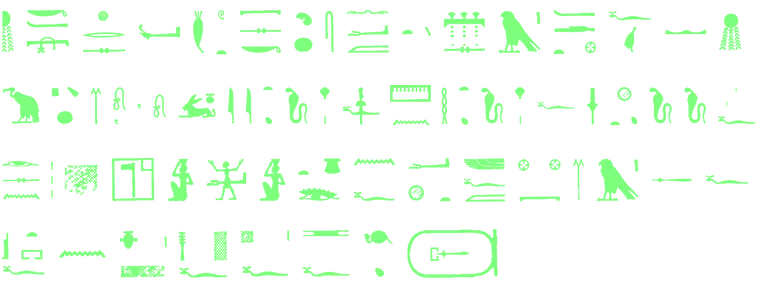
ꜥpj wbn knḥw ḫsr šnjt pt n kkw.s n ꜥmt.s Ḥr Bḥdtj sḥḏ bꜣẖ wbꜣ.f nḥp m wꜣwꜣw wnwt ḥr wnmj.f mnḥjt ḥr jꜣbj.f sḫmtj.f jrj.sn sꜣ.f wn.n.f jrtj.f mꜣꜣ.n.f ḥt nṯr.f ḥꜥj.f dgj.n.f p.f [... ... ... ...] ꜥẖj.f m nwt m bjk ꜥꜣ sꜣb šwt ꜥq.f st.f m jꜥt jb ḏdj.f sꜣ.f mrj.f sꜣ Rꜥ (Pr ꜥꜣ)
Api, who lights the darkness,
who scatters the clouds of the sky
till neither darkness nor storm remains in it;
Horus of Behdet, who lights the eastern mountains,
who begins the potter’s work with light.
A cobra at his right, a cobra at his left,
his two mighty ones guard him as soon as he opens his two eyes.
When he sees his temple, he rejoices;
when he has looked upon his seat …,
he flies across the sky as a great falcon of many-colored plumage
and enters his seat with a glad heart.
May he make his beloved son endure,
the son of Ra, Pharaoh.Note · Line 353
In Egyptian the words for shaping clay and for early morning sound alike. The potter at work is an image of daybreak. - 354
Bḥdtj nṯr ꜥꜣ nb pt sꜣb šwt prj m ꜣḫt ḫntj jtrtj šmꜥw nswt nṯrw ḫnt Nḏm ꜥnḫ bꜥḥj Wṯst m nfrw.f nb P n Rꜥ ḫnt Tꜣwj nṯrw ḫwj sḫmw m jtrtj [... ..]
He of Behdet, the great god, lord of the sky, he of many-colored plumage who comes forth from the horizon, foremost in the two shrines of Upper Egypt, king of the gods in Nedjemankh, who floods the Throne Seat with his beauty, lord of the Seat of Ra in the Two Lands of the Gods, who protects the divine powers in the two shrines …
Note · Line 354
The “Two Lands of the Gods” is a name for Punt, a region to Egypt’s southeast linked to it by trade across the Red Sea. - 355
Nb Msn nṯr ꜥꜣ nb pt sꜣb šwt prj m ꜣḫt ḫntj jtrtj mḥw nb P Msn ḫnt Ḥt Ḥr Msn jꜣbtt ḥnꜥ gsw prw ḫprr wr nḫ Ḏrtjw m sš.sn sꜣw Wḏꜣt m nḫt.f
The lord of Mesen, the great god, lord of the sky, he of many-colored plumage who comes forth from the horizon, foremost in the two shrines of Lower Egypt, lord of Pe-Mesen in the House of Horus, in Eastern Mesen and in the temples, the great scarab who shelters the falcon gods in their nests and guards Egypt with his strength.
Note · Line 355
Eastern Mesen is Tjaru on Egypt’s northeastern frontier. The name links Horus’s sanctuary at Edfu with his worship at the border.