~/sacred-texts/edfu-temple-texts
Edfu Temple Wall Texts: I Hold Up the Testicles of Seth
- Text
- Edfu Temple Texts, Edfou VII, pp. 251–289
- Date
- Carved between about 116 and 88 BC, under Ptolemy IX and Ptolemy X Alexander, on the outer face of the enclosure wall of the temple of Horus at Edfu; the king named in these scenes is Ptolemy X
- Found
- Still in place on the enclosure wall of the temple of Horus at Edfu, Upper Egypt
- Language
- Ptolemaic Egyptian · Hieroglyphic
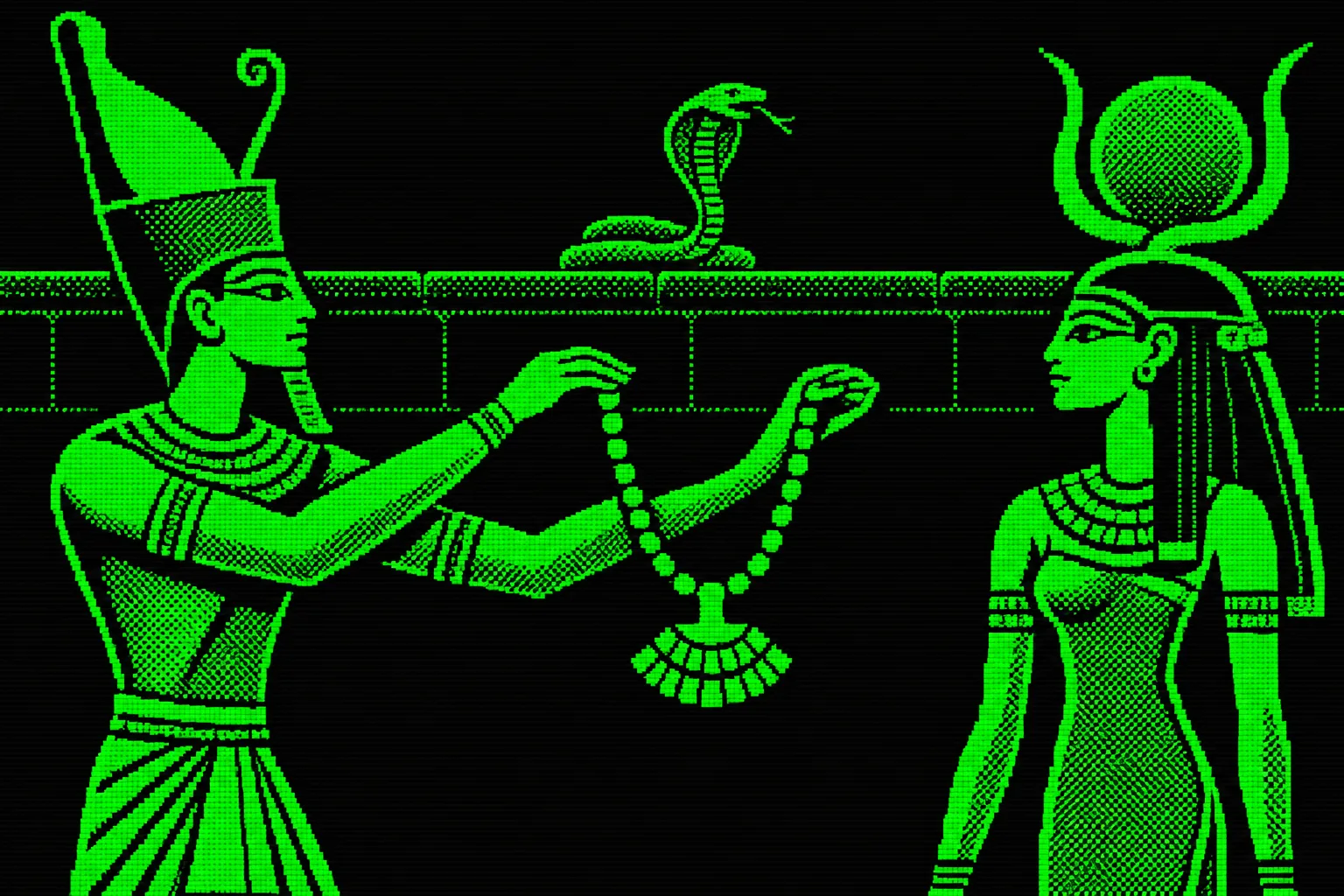
Ptolemy X stands before the gods of Edfu in scene after scene. He names the rite and speaks the spell, and the god answers with a gift. He burns incense, presents Maat, wine, beer, milk and eye paint, and he kills: the ox, the oryx, the Asiatics, Seth. To Hathor he offers the menat necklace: on my two arms I hold up the testicles of Seth.
Horus, Hathor, Khnum, Ptah, Min and the guardian serpents of the temple reply in turn. Ra-Horakhty says: I give you drunkenness to gladden your heart, so that no sorrow rises in your breast. Wadjet promises to be the serpent between your two eyebrows who seizes your foes for you.
- 1
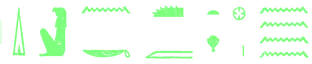
rdj.j n.k Kmt ḥr mw n ḥm.k swr.j ḫꜣ n tꜣ.k r jrt ẖrt.sn
“I give you Egypt in allegiance to Your Majesty.
I enlarge the fields of your land to provide for its people.”Note · Line 1
The Egyptian expression for allegiance pictures Egypt as being “upon the water of Your Majesty.” - 2

ḏd mdw jn Ḥr Bḥdtj nṯr ꜥꜣ nb pt sꜣb šwt prj m ꜣḫt nḫw nwwt nḏtj n jtrtj ... ḫwj ṯꜣw.f m sš.sn mḥ ḥr Wḏꜣt r jrt ẖrt nt msw.f sšm šbw.sn r gsw prw.f
Words spoken by Horus of Behdet, the great god, lord of the sky,
many-coloured of plumage, who comes forth from the horizon,
guardian of cities, protector of the Two Shrines,
… who shelters his nestlings in their nests,
who tends Egypt to provide for his children
and brings their food to his temples:Note · Line 2
The Two Shrines stand for the sanctuaries of Upper and Lower Egypt. - 3
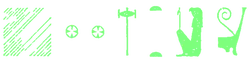
rdj.j n.k nwwt spwt jdbw dhnjw dmḏ r ẖrt.k
“I give you the cities and the nomes,
the fields on the riverbanks and the fields along the desert hills,
all for your sustenance.”Note · Line 3
A nome was a territorial district of Egypt. - 4

ḏd mdw jn Ḥt ḥr wrt nbt Jwnt jrt Rꜥ nbt pt nbt ḥtpw sḏfꜣt tꜣwj rrt nt Bꜣqt sꜥšꜣt wꜣḥjt.f Rnnt nfrt m Jdbw Ḥr
Words spoken by Hathor the Great, lady of Dendera,
Eye of Ra, lady of the sky, lady of offerings,
who feeds the Two Lands,
nurse of Egypt, who multiplies its harvest,
fair Renenet on the Banks of Horus:Note · Line 4
Hathor appears here as Renenet, the goddess who nurses the young and safeguards the harvest. The Banks of Horus are Egypt. - 5

rdj.j n.k ꜣḫt r mḥ šnwwt.k Rnnt nfrt m st nfrt.k
“I give you farmland to fill your granaries,
and fair Renenet in your storehouse.” - 6
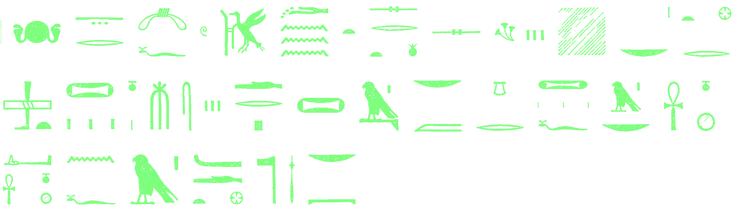
. tꜣ r ꜣw.f qmꜣ jꜣdt srd smww .. ... Snwt r šbw nw msw.f drp nṯr nb m ẖrt.f nb ꜥnḫ rdj ꜥnḫ n mrj.f Ḥr Bḥdtj nṯr ꜥꜣ nb pt
… of the whole earth, who brings forth the dew,
who makes green things grow … in Egypt
as food offerings for his children,
who gives every god the food he needs,
lord of life, who gives life to the one he loves:
Horus of Behdet, the great god, lord of the sky. - 7
... ... ... ḏd mdw ... ... ... ... ... ... ...k wr.tj m bꜣḥ.k m wnḏww nbw n ṯnw.sn snm.k jm.sn ꜥm.k jm.sn ḥn ḥm.k m ꜥnḫ jw.w wꜥb
… Words to be spoken: “Your … stands richly furnished before you
with every kind of offering food, past counting.
May you eat of them, may you swallow them.
As Your Majesty lives, they are pure.” - 8

rn n jwꜣ rn n ngꜣ ... ... rn n mꜣ ḥḏ
A young iwa ox, a young nega ox, … a young oryx.
- 9

nswt bjt (… …) sꜣ Rꜥ (… …) pꜣ nṯr mrj mwt.f ḫ n ḫnmt wtṯw n mnꜥt wꜥb fꜣj n Bḥdtj
The king of Upper and Lower Egypt, Ptolemy X, son of Ra, Ptolemy X, the god who loves his mother,
child of the nurse, offspring of the wet nurse,
priest who bears the offerings to Horus of Behdet.Note · Line 9
The king acts as the priest who brings the food. “Who loves his mother” is his cult title Philometor. - 10
nṯr nfr pꜥpꜥ.n ꜣḫt jtj sꜣ sr nṯrw ḥqꜣ nb ḥnbt ꜥšꜣ tpw nb ḏfꜣ wr ꜥḥꜥ ꜥꜣ spt dns.tj m wꜣḥjt bꜥḥj n.f šnwt.f jm.sn snfr jdbw n kꜣw nw kꜣ.f nb ꜥꜣbt sꜣ Rꜥ (… …)
The perfect god whom Akhet bore,
the sovereign, son of the prince of the gods,
ruler and lord of farmland, whose fields are many,
lord of provisions, great in storehouses,
whose broad threshing floor is heavy with the harvest
that will fill his granaries to overflowing,
who makes the riverbanks fruitful to feed the god’s ka,
lord of the food offering, son of Ra, Ptolemy X.Note · Line 10
Akhet is the field personified as a goddess. A god’s ka is his vital power, nourished by offerings. - 11
ḏd mdw jn Wꜣḏt wꜣḏt ꜥnḫ n P Ḫp nbt pr nsr ḫntt pr nw
Words spoken by Wadjet, green with life in Pe and Dep,
lady of the House of Flame, foremost in the Per-nu shrine:Note · Line 11
Wadjet’s name means “the Green One.” She is the cobra of Lower Egypt, whose crown is red. Pe and Dep were the two parts of her city, Buto. - 12
wnn.j ḥr tp.k m nbt nt mḥn.j n mḥnjt m . tp ... ... ...tj jmj wtj wpt.k dngngs jmj wtj jnḥwj.k jṯjt n.k ẖnm.s m tp.k sšm.s n.k wꜣwt mḥtjt
“I shall be on your head as lady of the Red Crown.
I coil as the Coiling One upon your head,
… upon your crown,
the serpent between your two eyebrows who seizes your foes for you.
When she joins herself to your head,
she guides the northern lands for you.” - 13
swr.j ḫꜣwt.k m jḫt nbt nfrt psš.k psšt nt šnwt.k
“I heap your altar with every good thing,
that you may allot your retinue its share.”Note · Line 13
In the offering scene the king addresses Horus; the god in turn provides for his retinue. - 14
ḏd mdw jn Ḥr Bḥdtj nṯr ꜥꜣ nb pt sꜣb šwt prj m ꜣḫt nfr ḥr ḥrj st.f wrt bjk nṯrj ḥqꜣ m srḫ nb nst nswt nṯrw nb jꜣḫw sḫpr ḏfꜣ qmꜣ wnnt nbt
Words spoken by Horus of Behdet, the great god, lord of the sky, dapple-feathered, who comes forth from the horizon, fair of face, master of his sanctuary, the divine falcon who rules from the palace façade, lord of the throne, king of the gods, lord of light, who brings food into being, who creates all that exists,
Note · Line 14
Behdet is Edfu. The falcon perched atop the image of a palace façade is Horus in his role as god of kingship. - 15
wḫr ḫt ḥr ḥnmmt m ḥqꜣ ḫnt šmꜥw mḥw ... ... ... .. ḫpšwj nswt n pt sr m tꜣ .. ... ... prj m ẖt tpjt ḏꜣj.n.f pt pḏ ꜥwj m ḥrt jrj šwt n nṯr nb
who provides for the Henememet people as ruler of Upper and Lower Egypt, … the two arms, king in heaven, prince on earth, … who came forth from the first company of gods, who crossed the sky and spread his arms as the firmament, casting his shade over every god:
- 16
sḫj.n.j sm.k swr.n.j ẖrt.k bꜥḥj.j ꜥbꜣ.k m bw wr
“I have piled your altar high,
I have amply supplied your needs,
flooding your offering table with food.” - 17
ḏrtj wr pḥtj pꜣwtj sꜣ pꜣt tpjt qmꜣ jḫt nbt nḏtj mnḫ nḏ nṯrw nbw prj ꜥ sḫr sbj Wꜣḏḏ wꜣḏ tꜣwj jdbw m nfrw.f nfr ḥr sḥb mnḏtj mfk jnm ḫntš.tw n mꜣꜣ.f Ḥr Bḥdtj nṯr ꜥꜣ nb pt
The falcon, great in strength, the primeval one, son of the first company of gods, who created all things; the able defender who defends all the gods, swift of arm to fell the rebel; the Wadjedj serpent, who makes the Two Lands and the riverbanks flourish by his perfection; fair of face, his brows decked for festival, his skin turquoise, a joy to behold: Horus of Behdet, the great god, lord of the sky.
Note · Line 17
The Two Lands are Upper and Lower Egypt. - 18
.. snṯr ḏd mdw šsp.n.j nṯrj twꜣ.j sw m ꜥ.j wdn.j snṯr n jrt Rꜥ sṯj Nḫbt rdj.f tp.f m ꜣḫt
Burning incense. Words to be spoken: “I have grasped the incense arm; I raise it with my arm.
I offer incense to the Eye of Ra.
The scent of Nekhbet lifts its head from the flame.Note · Line 18
The censer was shaped like an outstretched arm, with a small cup for the burning incense in its hand. - 19
jrj.n.f st.f tp ꜥwj.ṯ twt ḫnmw.f r ḫnmw n Kbn ꜥntjw tpj m ḏt.f snḏm.n.f sṯj.ṯ snfr.n.f ḥꜥ.ṯ ḥꜥj.ṯ snsn.ṯ sꜣb šwt
Once it has taken its place before you, its fragrance matches the fragrance of Byblos.
Myrrh, first of its kind, has sweetened your scent and perfected your flesh.
You rejoice and embrace the dapple-feathered one.”Note · Line 19
Byblos, on the coast of present-day Lebanon, was a port through which Egypt obtained aromatic resins. - 20
nswt bjt (… …) sꜣ Rꜥ (… …) pꜣ nṯr mrj mwt.f
The king of Upper and Lower Egypt, Ptolemy X, the son of Ra, Ptolemy X, the god who loves his mother.
- 21
nṯr nfr ḥm dmꜣt pḏwt sḥtp wrt m mrjt.s ḫfꜥ snṯr rdj sw ḥr ḫt shrj ḥnwt m ḥtj.f snsn šrtj.s n fdt m jwf.s nšp ẖnmtj n Psḏt nbtj wr pḥtj sꜣ nbt Fꜥg nb Kbn sꜣ Rꜥ (… …)
The perfect god, priest of Demat-pedjut, who satisfies the Great One with what she loves, who takes a handful of incense and puts it on the fire, who gladdens the Mistress with its scent, who brings to her two nostrils the sweat of her own flesh, who gives breath to the nostrils of the Ennead; the royal lord, great in strength, son of the Lady of Fag, lord of Byblos, son of Ra, Ptolemy X.
Note · Line 21
Demat-pedjut and the Lady of Fag are names of Nekhbet. The incense offered to the goddess is understood as sweat from her own body. The Ennead is the company of nine gods. - 22
rdj.n.j n.k snṯr r snṯr ḥꜥ.k dqr nṯr r sḥb pr.k ẖrt hrw ntj rꜥ nb
“I have given you incense to make your limbs divine,
and the god’s fruit to deck your house for festival,
your daily due, day after day.”Note · Line 22
The Egyptian word for incense echoes the verb “to make divine.” The god’s fruit is another name for incense. - 23
ḏd mdw jn Ḥt ḥr nbt Jwnt jrt Rꜥ ḥrt jb Bḥdt nbt pt ḥnwt nṯrw nbw bjkt nṯrjt ḫnt Ḥt Ḥr špst nbt jꜣdt nṯr nbtj rḫjt ḫnt St msḫnt
Words spoken by Hathor, lady of Dendera, Eye of Ra, who dwells in Behdet, lady of the sky, mistress of all the gods, divine she-falcon in the House of Horus, the august one, lady of the god’s scent, queen of the people in the Place of the Birth Bricks,
Note · Line 23
The Place of the Birth Bricks is Dendera, Hathor’s own city. The name recalls the bricks on which women gave birth. - 24
ḥnwt tꜣwj wꜣḏt jdbw m wꜣḏ.s nḏmt jꜣdt jmj wtj nṯrwt ḫnmw.s ꜣbḫ m st wrt dhn ꜣbj.s r ꜥḥꜥ ḥr nst.f ḫꜥjt nb ẖr st rꜣ.s nb nṯrw ḫnt Tꜣ n Jtmw Bḥdtjt m Wṯst Ḥr
mistress of the Two Lands, who greens the riverbanks with her green papyrus scepter, sweet of scent among the goddesses, whose fragrance fills the sanctuary, who appoints whom she will to take his stand upon his throne, at whose word the lord appears as king, the Gold of the Gods in the Land of Atum, the Lady of Behdet in the Throne of Horus:
Note · Line 24
The Land of Atum is Dendera; the Throne of Horus is Edfu. - 25
rdj.n.j n.k qmꜣtjw ksj.tj ẖr qmjt.sn ḥr ḫrp jḫt.sn r ꜥꜣjt.k
“I have given you the Qematiu, bowed beneath their resin
as they bring their goods to your palace.”Note · Line 25
The Qematiu are the bearers of the aromatic resin; in Egyptian their name echoes that of their burden. - 26
ḏd mdw jn Jḥj wr sꜣ Ḥt ḥr ẖrd šps n ꜣḫtj sfj n wsrt ḫnt Ḥt sššt wḏḥ bnr mrwt ṯḥn ḫꜥw wr bjꜣjt rš ḥr nb n mꜣꜣ.f nb kꜣw rdj kꜣw n mrj.f ḥꜥj n. f ḥꜥꜣw
Words spoken by Ihy the Great, son of Hathor, august child of the god of the horizon, offspring of the Mighty One in the House of the Sistrum, dearly loved child, radiant in his appearing, great in wonders, at whose sight every face lights up, lord of food, who gives food to those he loves, for whom the children shout with joy:
Note · Line 26
The sistrum, a sacred rattle played in Hathor’s worship, is the instrument of her son Ihy. - 27

rdj.j mrwt.k ḫr ṯꜣjw ḥmwt n sꜣj bw nb m ḥswt.k
“I give you the love of men and women;
no one can have enough of your favor.” - 28
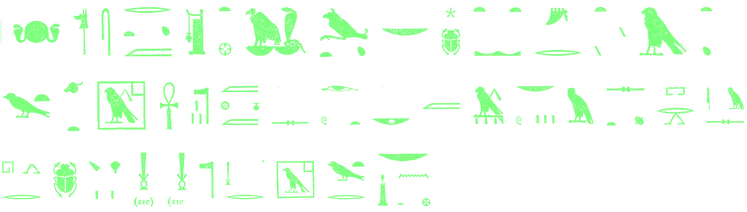
wsrt m Wṯst nbtj rḫjt nbt Tꜣ nṯr ḏrtjt wrt ḫnt Ḥt bjk ꜥnḫt nṯrw m ḫnmw.s jrjt.tw sṯj ḥb m nṯrw nbw m sṯj prj jm.s hꜣjt r tꜣ ḥr snsn snṯr Ḥt ḥr wrt nbt Jwnt
The Mighty One in the Throne, queen of the people, lady of the God’s Land, the great she-falcon in the House of the Falcon, who gives the gods life with her fragrance. From the scent that comes from her, a festival scent is made for all the gods. She comes down to earth when she breathes the incense: Hathor the Great, lady of Dendera.
- 29
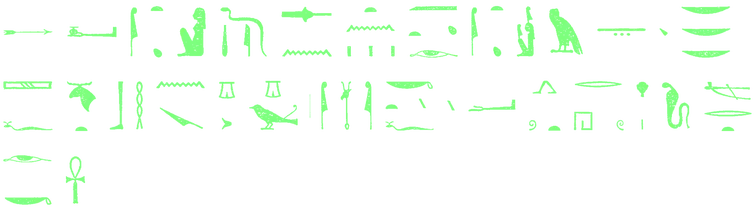
ḥnk mꜣꜥt ḏd mdw mn n.ṯn mꜣꜥt jrjw mꜣꜥt m tꜣ nbw šfjt bḥnw grg ššt.k tfj mꜣꜥ.tj r hꜣw ḥr.k mrt.k ꜥnḫt.k jm.s jbt tn n ꜣb r ꜣbwt.k
Presenting Maat. Words to be spoken: “Receive Maat, you who do Maat on earth,
lords of awe, who root out falsehood.
This throat of yours is offered before your face:
your Meret-eye, by which you live,
this Ibet-collar that never leaves your form.Note · Line 29
Maat is both the right order of things and the goddess who embodies it. - 30

n wꜣj.s jrf ḫr ḥm.k ẖrt kꜣ.ṯn jw.ṯn ḥr.s ꜥnḫ tꜣ ḏr psḏ.s
Indeed she never strays from Your Majesty.
She is what your ka requires: may you come for her.
The land lives when she shines.”Note · Line 30
The ka is the life force sustained by offerings. Here Maat herself is what the gods require. - 31
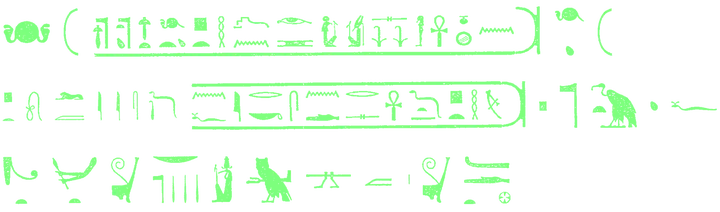
nswt bjt (… …) sꜣ Rꜥ (… …) pꜣ nṯr mrj mwt.f tjt ḏsrt nt nb mdw nṯr ms gs ḏb n Bḥdtj
The king of Upper and Lower Egypt, Ptolemy X, the son of Ra, Ptolemy X, the god who loves his mother, sacred image of the lord of divine words, who brings Maat to Horus of Behdet.
Note · Line 31
The lord of divine words is Thoth, god of writing and reckoning. - 32
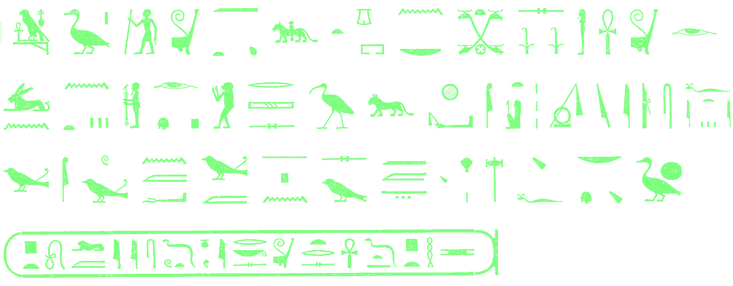
nṯr nfr sꜣ sr n mꜣꜥt pẖr nst n nb Ꜥmnw snn ꜥnḫ n jrj wnnt jrj tp nfr mj rḫ sw ḫwj mꜣꜥtjw ḫb jsftjw šw nmꜥ m tꜣ pn swr mꜣꜥt m tꜣ ḥr ndb.f nb tp bjꜣ sꜣ Rꜥ (… …)
The perfect god, son of the prince of Maat, heir to the throne of the lord of Hermopolis, living likeness of him who made all that exists, who does what is right like the one who knows it, who guards the just and executes evildoers, who shows no partiality in this land, who makes Maat great over the whole face of the earth, lord of exemplary character, son of Ra, Ptolemy X.
Note · Line 32
The lord of Hermopolis is Thoth; the maker of all that exists is Ptah. - 33
rdj.j n.k mꜣꜥt rwḏ.tj m rk.k jsft n wnn.s
“I grant you that Maat stands firm in your time
and injustice has no being.” - 34
ḏd mdw jn Ḥr Bḥdtj nṯr ꜥꜣ nb pt sꜣb šwt prj m ꜣḫt ... ... ... bjk n nb sꜣ Wsjr
Words spoken by Horus of Behdet, the great god, lord of the sky, dapple-feathered, who comes forth from the horizon, … the falcon of gold, son of Osiris,
- 35
ḏrtj nb Ḏrtjw twꜣ sw r nṯrw nb mꜣꜥt wsr ḥtjt nb šfjt ꜥnḫ m šfjt ẖrt ḥm.f mtwt kꜣ ṯꜣ m rw ḫnt Ꜥntj jꜣbtt nṯr nṯrj m Wṯst Ḥr
the falcon, lord of the falcon gods, who raises himself above the gods, lord of Maat, strong of throat, lord of awe, who lives on awe, whose Majesty requires the bull’s semen, the young lion in Khent-iabet, the god most divine in the Throne of Horus:
- 36
rdj.n.j n.k Ḏꜣḏꜣt ḥr wḏꜥ rjt n ṯnj wrw r šrjw
“I have granted you that the council of gods judges cases
without favoring the great over the small.” - 37

ḏd mdw jn Ḥt ḥr wrt nbt Jwnt jrt Rꜥ ḥrt jb Bḥdt nbt pt ḥnwt nṯrw nbw ... ... sꜣt Bḥdtj wsrt ḫnt nṯrwt nṯrt tn wsrt nn snnwt.s jwtt mꜣꜣ ḥr tp.s m nṯrw nṯrwt
Words spoken by Hathor the Great, lady of Dendera, Eye of Ra, who dwells in Behdet, lady of the sky, mistress of all the gods, … daughter of Horus of Behdet, the Mighty One among the goddesses, this mighty goddess without an equal, whom no god or goddess surpasses:
- 38

rdj.n.j n.k mꜣꜥt jmj wtj jmj st ꜥ.k ḥr sgrḥ tꜣ n ḏw ḏr wnn ḥmt.s
“I have set Maat in your heart to bring the land to peace.
There is no evil so long as Her Majesty lives.” - 39
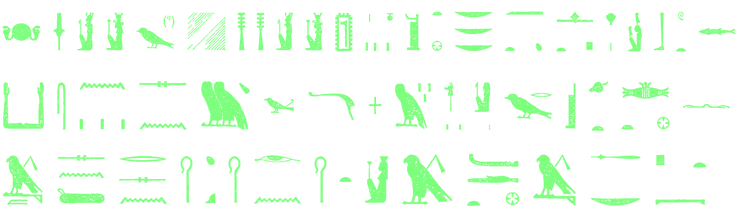
sḫmwj wrwj Ḏdwj nṯrwj nw Wṯst nbw mꜣꜥt ḥtp ḥr mꜣꜥt bwt kꜣ.sn snm ns jmjw ḥꜣt wr st ḫnt Msn n nṯr m snt r.sn ḥqꜣ sꜣ ḥqꜣ jrj.n ḥqꜣt Ḥr Bḥdtj nṯr ꜥꜣ nb pt
The two great Powers, the two enduring divine ones of the Throne, lords of Maat, content with Maat, whose kas abhor a slanderous tongue; the primeval ones, high of station in Mesen, whom no god can equal; the ruler, son of a ruler, born of a ruling queen: Horus of Behdet, the great god, lord of the sky.
Note · Line 39
The pair are Horus and Hathor. Mesen is a sacred name of Edfu. - 40

mꜣꜣ nṯr ḏd mdw wḏꜣ.j r Wṯst ꜥpr m ḏt.j snsn.j st.k ḫnt Šns mꜣꜣ.j Ḥr wpw m st.f ḏsrt snḏt.f wr.tj m ḥꜥ.j
Beholding the god. Words to be spoken: “I go to the Throne, fully arrayed.
I draw near your throne in Shenes
to see Horus the Judge in his holy place.
Great is the awe of him in my limbs.” - 41
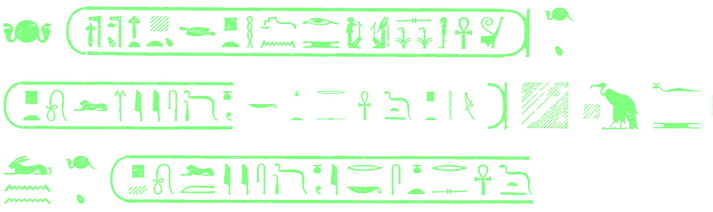
nswt bjt (… …) sꜣ Rꜥ (… …) pꜣ nṯr mrj mwt.f
The king of Upper and Lower Egypt, Ptolemy X, the son of Ra, Ptolemy X, the god who loves his mother.
- 42
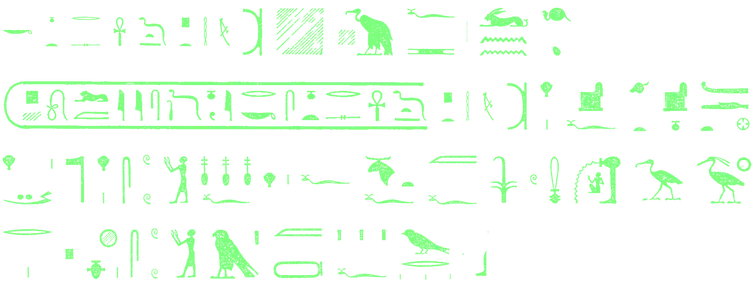
wnn sꜣ Rꜥ (… …) ḥr bḥdw.f ḫnt Bḥdw n Bḥdtj ḥr mꜣꜣ nṯr ḥr swꜣš nfrw.f ḥr .. ...f šfjt.f m ḥꜥ.f sw mj wꜥb jqr ꜣḫ rꜣ pḫꜣ jb swꜣš Ḥr m rnw.f wrw
The son of Ra, Ptolemy X, is on his throne in the Throne of the Lord of Behdet. He beholds the god, praises his perfection, and … his … . Awe of the god fills his limbs. He is like a skilled purification priest, eloquent of speech and discerning of heart, praising Horus by his great names.
- 43
Bḥdtj nṯr ꜥꜣ nb pt
The Behdetite, the great god, lord of the sky.
Note · Line 43
The Behdetite is Horus of Behdet, the sacred name of Edfu. - 44
rdj.j n.k bw nb ḥr swꜣš n kꜣ.k ḥr nb ḫꜣb n bꜣw.k
“I grant you that everyone praises your ka and every face bows before your might.”
- 45
ḏd mdw jn Ḥr Bḥdtj nṯr ꜥꜣ nb pt sꜣb šwt prj m ꜣḫt ꜥpj wr ḫwj jtrtj hrw jb sḏm sprww wbꜣ ꜥnḫwj n bw nb sꜣj ḥr.f sprww n mꜣꜣ.f ꜣs jw n ꜣš n.f
Words spoken by Horus of Behdet, the great god, lord of the sky,
dappled of plumage, who comes forth from the horizon,
the great Api, who guards the Two Shrines,
patient of heart, who hears petitioners,
who opens both ears to everyone,
whose face contents petitioners at the very sight of him,
who comes quickly to whoever calls to him.Note · Line 45
The great Api is Horus as the winged sun disk. - 46

ḏd mdw jn Ḥt ḥr nbt Jwnt jrt Rꜥ nbt pt ḥnwt nṯrw nbw jwtt snnwt.s n pt tꜣ wrt mrwt ḫnt Wṯst Ḥr wꜥt ḫnt Ḥt bnbn sšmwt mḥt pt tꜣ m nfrw.s
Words spoken by Hathor, Lady of Dendera, Eye of Ra,
lady of the sky, mistress of all the gods,
who has no equal in heaven or on earth,
greatly loved in the Throne of Horus,
the uraeus in the House of the Benben,
the brow-serpent who fills heaven and earth with her beauty.Note · Line 46
The Throne of Horus is Edfu. The benben is the sacred stone of Heliopolis, associated with the first land to rise from the waters. The cobra worn on the divine brow is called the uraeus. - 47
wnn ḏdw nw Bḥdt m jtjw m Ḥr mꜣꜥ.tj ḥr sḏm ḏdw .. .. ... ... n sꜣ.sn nb ḥr nst.sn st m ḥqꜣw nw tꜣ ḥr ndb.f ḥr jrt sḫrw.f m rḫjt
The two enduring ones of Behdet rule in Horus-is-Vindicated. They hear what … has said … for their son, the lord upon their throne. They rule the earth to its limits and carry out his counsels among his subjects.
Note · Line 47
Horus-is-Vindicated is a name of Edfu that recalls the judgment upholding Horus’s claim to his father’s throne. - 48

Psḏt Bꜣw Nḫn bst ḥm.f .. ... ... ... ... sḫmw nn m nb jtrtj ... ... ... nswt twrw ꜥꜣw ṯsw sw .. ... r .. ... ... ...
“O Ennead, Souls of Nekhen, you who usher in His Majesty …,
you powers here with the Lord of the Two Shrines,
… who bear the king, you great purification priests who lift him … to …,Note · Line 48
The Souls of Nekhen and of Pe are ancestral powers of the old royal centers of Upper and Lower Egypt. - 49

jtw nṯr rmnw nṯr nw Ḥr ... ... ... sꜥꜣ.ṯn snḏt swr.ṯn .. ... ... ... ... ... ... nbw Msn ḥꜥj.tj n .. ... ... ... ... ... ... ... m ḥt nṯr ... ... ... ...
you god’s fathers and god-bearers of Horus …,
may you deepen awe, may you magnify … all … .
Mesen rejoices at … in the temple ….”Note · Line 49
“God’s father” is a priestly title. The god-bearers carry the divine image in procession. - 50

jw.tj m ḥtp r st ḏt ... ... ... ... ḥꜥj r.ṯn ... mn bjt ... ... ... ... ... ... sp 2
“Come in peace to the seat of eternity …!
Rejoice, all of you … throne ….” Twice.Note · Line 50
The “seat of eternity” here is the temple. “Twice” directs the reciter to repeat the words. - 51
jn Rꜥ ḥnꜥ Ḥr n sꜣ nj mrwt.sn nswt bjt (… …) sꜣ Rꜥ (… …)
So say Ra and Horus to the son they love, the King of Upper and Lower Egypt, Ptolemy X, the Son of Ra, Ptolemy X.
- 52
wnn Bꜣw Nḫn Bꜣw P ḫnt Bḥdt m Psḏt wrw ḫnt Msn ḥr ms nswt ḥr ṯsj ḥqꜣ r Ḥt Ḥr n Ḥr ꜥꜣ st m twrw jqrw nw Bḥdt bs ḥm.f r .. ...f m ḥtp
The Souls of Nekhen and the Souls of Pe are in Behdet as the great Ennead in Mesen. They bring the king and bear the ruler aloft to the Horus House of Horus the Great. They are the skilled purification priests of Behdet who usher His Majesty in peace to his … .
- 53

... ... ... ... .. m ꜥꜣj sp 2 ṯḥḥ pr m ḫntj Ḥt bjk . ḫns.n sj ḥqꜣ n Tꜣ mrj
… in great jubilation, great jubilation! A shout of joy goes up in the House of the Falcon when the ruler of Egypt has passed through it.
- 54

... ... .. ḫnt Ḥt ḥqꜣ nswjt .. .. ... ...
… in the House of the Ruler; kingship … .
- 55

jrt snṯr ḏd mdw Fꜥgt r fnḏ.ṯ ḥr sḥꜥꜥ jb.ṯ Nbt ḥtpt ḥnwt ḫnt Msn ḫntš r.ṯ ꜥnḫt nbt ꜥnḫ nbt r ḏr sḫrt ḫftj.s
Offering incense. Words to be spoken: “Faget is at your nose, gladdening your heart,
O Nebet-Hetepet, mistress in Mesen.
Rejoice, O living one, lady of life,
lady of all, who fells her foe!Note · Line 55
Faget is the vulture goddess Nekhbet, present here in the incense. The king addresses Hathor as Nebet-Hetepet. - 56

Jtmt jm.ṯ ḥr ḫns nwt ꜣbḫt mḥjt ḥr snṯr n kꜣ nṯrw nbw
You are Temet, crossing the sky,
mingling the north wind with incense for the ka of every god.”Note · Line 56
Temet is the female counterpart of Atum, the creator god of Heliopolis. - 57

nswt bjt (… …) sꜣ Rꜥ (… …) pꜣ nṯr mrj mwt.f
The King of Upper and Lower Egypt, Ptolemy X, the Son of Ra, Ptolemy X, the god who loves his mother.
Note · Line 57
“Who loves his mother” gives the king’s Greek title, Philometor, in Egyptian. - 58

wnn nswt bjt (… …) ḥr mkt rdwj.f m jtj ḫntj ꜥnḫw ḥr sḥbt Mḥjt ḥr ḫwt Ꜥwjt ḥr jrt snṯr n ꜥpjt sw mj mr ḥmw nṯr jrj jḫt n mwt.f m st .... ḥr kꜣp snṯr
The King of Upper and Lower Egypt, Ptolemy X, sits on his throne as sovereign, foremost of the living. He brings festal joy to Mehit, protects Khuyet and offers incense to Apit. He is like the overseer of priests who performs the rites for his mother in the place of …, burning incense.
Note · Line 58
Khuyet means “the Protectress”: here the king protects her. - 59
wnn sꜣ Rꜥ (… …) ḥr wṯst ḫnt Wṯst nt Nḏ jt.f ḥr ꜣmm ꜥntjw ḥr kꜣp ḥnwt nṯrwt m sṯj.s sw mj nb kꜣp ḫns Pwnt ḫnmw.f ꜣbḫ m ḥrw
The Son of Ra, Ptolemy X, sits on the throne in the Throne of Him Who Avenges His Father. He takes myrrh in his fist and censes the mistress of the goddesses with her fragrance. He is like the lord of incense who travels through Punt, whose fragrance brushes people’s faces.
Note · Line 59
Horus avenges his father Osiris. Punt was a source of the fragrant resins used in Egyptian temples. - 60
wnn nswt bjt (… …) ḥr ꜥḏn.f m bjtj ḫnt ḥt nṯr.f ḥr ... ... ... ... ... ḥr snṯr nṯrw m jḫt Pwnt sw mj nb Nḫn jrj jḫt n mwt.f snḏm nṯrw m sṯj jꜣdt.s
The King of Upper and Lower Egypt, Ptolemy X, sits on his throne as king of Lower Egypt in his temple. He … and censes the gods with the produce of Punt. He is like the lord of Nekhen, who performs the rites for his mother and refreshes the gods with the scent of her sweat.
- 61

rdj.j n.k Pwnt ẖr ... ... snṯr ḫꜣw nbw wn m ...
“I give you Punt laden with …, incense and all the aromatics that are in it.”
- 62

ḏd mdw jn Ḥt ḥr Nbt ḥtpt m w n Rꜣ nfr prjt n.s Rꜥ m Jwnw r Ṯꜣrw nb nbt Jwnt ḫnt Wṯst Ḥr jrt Rꜥ ḥtp.tj m Wꜣst
Words spoken by Hathor Nebet-Hetepet in the fields of Ra-nefer, to whom Ra goes forth from Heliopolis to Tjaru, the Golden One, Lady of Dendera in the Throne of Horus, the Eye of Ra who has come to rest in Thebes.
- 63
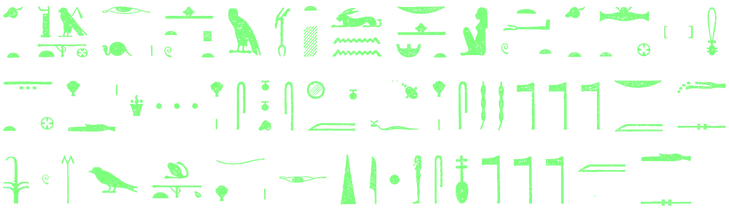
wnn Nbt ḥtpt ḫꜥj.tj ḫnt Msn mj wn.s ḫnt Wḥꜥ tꜣ ḥr šsp snṯr ḥr snsn ḫnmw.f ḥr snḏm nṯrw nbw m jdt.s sj m wrt ḥkꜣw ꜥnt ḥr spdt jrw snfrt nṯrw m sṯj jꜣdt.s
Nebet-Hetepet has appeared in Mesen just as she does in Uha-ta. She receives the incense, becomes one with its fragrance and refreshes all the gods with her perfume. She is Great of Magic, radiant of face, splendid of form, who gladdens the gods with the scent of her sweat.
Note · Line 63
Uha-ta was a sanctuary near Heliopolis. - 64
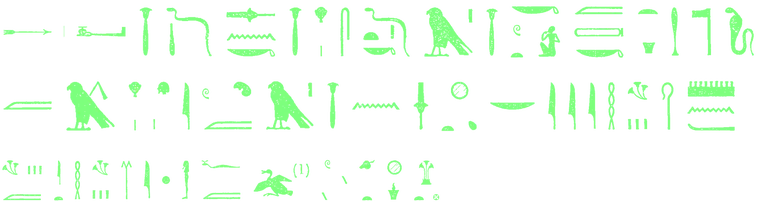
ḥnk wꜣḏ ḏd mdw mn n.k wꜣḏ ḥr srwḏ ḏt.k Ḥr wꜣḏ kꜣ.tw m rn.k ḫꜥj ḥm.k m bjk ḥr tp.f jw.k m Ḥr wꜣḏ n Sḫmt nb jjḥw ḥqꜣ mnḥw m jdḥw m jrw.f m ṯꜣ ḫnt ꜣḫ bjt
Presenting papyrus. Words to be spoken: “Take this papyrus that makes your body flourish.
‘Horus of the Papyrus’ is the name you bear,
for Your Majesty appears as a falcon on its tip.
You are Horus, the green shoot of Sekhmet,
lord of the marsh plants, ruler of the papyrus in the Delta marshes,
in his form of a nestling in Chemmis.”Note · Line 64
The Egyptian word for papyrus also evokes green growth: Horus himself is a young shoot. Chemmis is the marsh retreat where Isis raised him in hiding. - 65

nswt bjt (… …) sꜣ Rꜥ (… …) pꜣ nṯr mrj mwt.f
The King of Upper and Lower Egypt, Ptolemy X, the Son of Ra, Ptolemy X, the god who loves his mother.
- 66
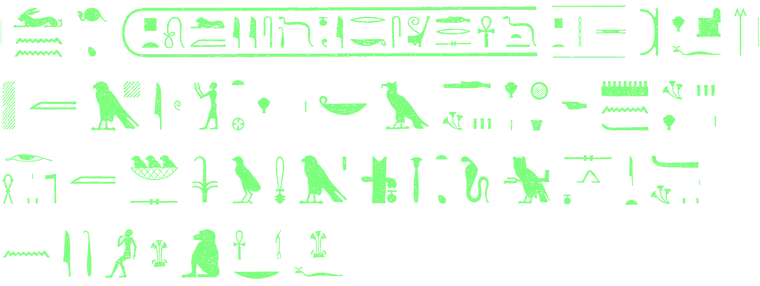
wnn sꜣ Rꜥ (… …) ḥr bḥdw.f m ḥqꜣ mnḫ m Jꜣw Ḥr ḥr rmnj sṯj jdḥw ḥr ḫfꜥ mnḥw ḥr jrt sꜣ nṯrw m sš.sn sw mj Ḥr wtṯ n Wꜣḏt ms n.f jdḥw n jdḥw
The Son of Ra, Ptolemy X, sits on his throne as an excellent ruler in Praise-of-Horus. He bears the fragrance of the marsh plants, grasps the papyrus stems and guards the gods in their nest. He is like Horus, son of Wadjet, to whom marsh plants are brought from the Delta marshes.
Note · Line 66
Wadjet is the cobra goddess of Lower Egypt. - 67

rdj.j n.k ḥnwt nbw nw tꜣ tꜣwj ḥr dwꜣ kꜣ.k
“I give you all the channels and waters of the land, and I grant that the Two Lands praise your ka.”
- 68
ḏd mdw jn Ḥr Bḥdtj nṯr ꜥꜣ nb pt Nb Msn ... ... St wrt ṯꜣ wr ... ... Ṯꜣrw nṯr ꜥꜣ ḥqꜣ.n.f ḥnt
Words spoken by Horus of Behdet, the great god, lord of the sky, Lord of Mesen, … the Great Seat, the nestling great in … Tjaru, the great god who has taken possession of the waters.
- 69
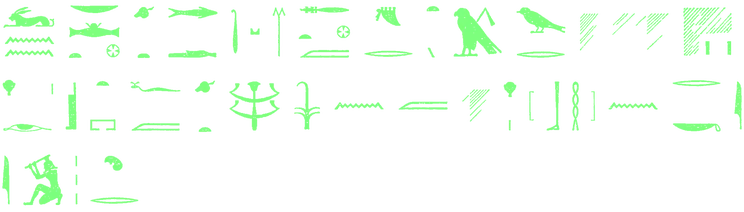
wnn Nb Msn ḫnt ... ... .. m ḏrtj wr ... ... ... ... ... ... ḥr jrt st.f m ḫntj wꜣḏ sw n .. ... ... ... ... ... ḥr bḥn rqww.f r ... ...
The Lord of Mesen is in … as a falcon great in … . He takes his seat in the papyrus thicket. He is … who cuts his foes to pieces … .
- 70

Bḥdtj nṯr ꜥꜣ nb pt sꜣb šwt prj m ꜣḫt ḫntj jtrtj šmꜥw mḥw
The Behdetite, the great god, lord of the sky, dappled of plumage, who comes forth from the horizon, foremost in the Two Shrines of Upper and Lower Egypt.
- 71

nswt bjt (… …) sꜣ Rꜥ (… …) pꜣ nṯr mrj mwt.f
The King of Upper and Lower Egypt, Ptolemy X, the Son of Ra, Ptolemy X, the god who loves his mother.
- 72
wnn nswt bjt (… …) ḥr ṯnṯꜣt.f ḫnt Ṯnṯꜣt.f ḏr bꜣḥ ... ... .. ḥr .. ... ꜣḫt ḥr wṯs ꜥwj ẖr dj mrt sw mj swꜣḏ bꜣ ... ... ...f jwh ḥrt .. ...
The King of Upper and Lower Egypt, Ptolemy X, sits on his throne in His-Throne-since-the-Beginning … horizon … . He raises both arms beneath the sky. He is like Him Who Makes the Ba Flourish …, who bears the sky … .
Note · Line 72
The figure with upraised arms is Shu, god of the air, who holds the sky above the earth. The ba is the power of a being to move and manifest itself. - 73
rdj.j n.k ... ... ... rdj.s n.k mḥjt jꜣdt r mrwt.s
I grant you that the sky …, so that she may give you the north wind and the rain as she pleases.
- 74
ḏd mdw jn Ḥr Bḥdtj nṯr ꜥꜣ nb pt ḥrj ḥrt r ḥꜣp ḫprw.f
Words to be spoken by Horus of Behdet, the great god, lord of the sky, who raised the heavens high to hide his form.
- 75

wnn Ḥr wbn.tj m Bḥdt m ꜥpj wr ḫnt nṯrw ḥr wḏꜣ r ꜣḫt ḥr ḥtp n pr.f ḥr smꜣ ḥnꜥ ... ...
Horus has risen in Behdet as the great Api at the head of the gods. He journeys to the horizon, comes to rest in his house and unites with his image …
Note · Line 75
Api is Horus in the form of the winged sun disk. His house is his temple. - 76
ḥnk mnḫt ḏd mdw ḏbꜣ.n.j ṯn m ḏbꜣ n Rnnt sḫmw wrw ḫnt Msn ḥnk.j ḥꜥ.ṯn m wꜥbw wꜥb.tj sšp kꜣ.ṯn m sšpt kꜣt nt rḫtj ḥnꜥ snḏt Sḫmt wnn.sn ḥr dmt r.ṯn
Offering cloth. Words to be spoken: I have robed you in the djeba-robe of Renenutet, great powers of Mesen. I clothe your limbs in pure wabu-cloth.
Light up your kas with the robe of light, the work of the two weavers, and with the dread robe of Sekhmet. They cling to you.Note · Line 76
Here the king dresses the gods of Edfu, also called Mesen. The two weavers are Isis and Nephthys; the kas are the gods’ vital powers. - 77

nswt bjt (… …) sꜣ Rꜥ (… …) pꜣ nṯr mrj mwt.f
The King of Upper and Lower Egypt, Ptolemy X, the Son of Ra, Ptolemy X, the god who loves his mother.
- 78
wnn sꜣ Rꜥ (… …) ḥr ꜥḏn.f m jtj ḫnt nṯrw ḥr jrt mkt ḥr ḏbꜣ jrt Ḥr ḥr smꜥr nṯrw m mnḫt sw mj ꜣḫ ꜥwj sn sw r Ḥḏ ḥtp sꜣ Tꜣjt ḥr sẖkr sḫmw
The Son of Ra, Ptolemy X, sits on his throne as sovereign at the head of the gods. He gives them protection, clothes them with the Eye of Horus and arrays them in linen. He is like the Deft-Handed One; he is the equal of Hedjhotep, the son of Tayet, who adorns the divine powers.
Note · Line 78
The cloth itself is offered as the Eye of Horus. Hedjhotep and Tayet are deities of weaving. - 79

rdj.j n.k .. ... . ẖr ... ... ... ... ... ... ... Ḥḏ ḥtp ḥr .. ... ... ... ....sn
I give you … under … Hedjhotep upon …
- 80

ḏd mdw jn Ḥr Bḥdtj nṯr ꜥꜣ nb pt ... ... šdj.n ... ... ... ... ... ... ... ...
Words to be spoken by Horus of Behdet, the great god, lord of the sky, … whom … suckled …
- 81

ḏd mdw jn Ḥt ḥr ... ... ... ... ... nbt pt ḥnwt nṯrw nbw ... ...
Words to be spoken by Hathor …, lady of the sky, mistress of all the gods …
- 82

wnn ... ... ... ... ... ... mn.tj m Ḥr mꜣꜥ.tj ḥr šsp sšd ḥr ḫfꜥ ḥḏt ḥr ḏbꜣ ḥꜥ m ḏbꜣ st m nbw snḏt ḥqꜣw nw fꜣj jtjw ... m ... drtj ...
… abide in Horus-Is-Vindicated. They receive the seshed-band, grasp the white cloth and robe their bodies in the djeba-robe. They are lords of the dread robe, rulers of the fai-cloth, princes … in … a falcon …
Note · Line 82
The seshed is a band worn around the head. - 83
smꜣ smꜣ ḏd mdw mn n.k smꜣ smꜣ ẖr mꜥbꜣ.k .. ... stp.tj m ḫmt.k mds.j tp.f jnj.n.j ḥꜣt.f wꜣḥ.n.j stpwt.f ḥr ꜥḫw.k Ḥr ... ... jrj.k jḫt jm.f sbj r.k ẖr šꜥt.k
Slaughtering the ox. Words to be spoken: Take the ox slaughtered beneath your maba-spear, … pierced by your lance. I cut off its head, I have brought its forequarters and laid its choice cuts on your burnt-offering altars. O Horus …, may you eat of it. Whoever rebels against you falls to your blade.
Note · Line 83
The slaughtered ox stands for the rebel: the same act feeds the god and defeats his enemy. - 84
nswt bjt (… …) sꜣ Rꜥ (… …) pꜣ nṯr mrj mwt.f
The King of Upper and Lower Egypt, Ptolemy X, the Son of Ra, Ptolemy X, the god who loves his mother.
- 85
wnn nswt bjt (… …) ḥr ḫndw.f m ṯmꜣ ꜥ ḫnt P wr ḥr mds grgj ḥr ẖdb nhs ḥr jrt ꜥḏt m ẖꜣkw jb sw mj Ḥr nšnj r sbjw.f ꜥꜣ pḥtj ḥr smꜣ ḫftjw.f
The King of Upper and Lower Egypt, Ptolemy X, sits on his throne as Strong of Arm in the Great Throne. He cuts the Liar to pieces, kills Nehes and makes a slaughter among the treacherous. He is like Horus raging against his rebels, great in strength as he slaughters his enemies.
Note · Line 85
The Great Throne is Edfu; Nehes is a name of Seth, the enemy of Horus. - 86
rdj.j n.k ẖꜣkw jb.k ḫr.tj m ḫmt.k jrj ḏw r.k ẖr šꜥt.k
I grant you that your lance lays your foes low and whoever does you harm falls to your blade.
- 87
rdj.j n.k ẖꜣkw jb.k ḫr.tj m ḫmt.k jrj ḏw r.k ẖr šꜥt.k ḏd mdw jn Ḥr {ꜣ ꜣst Bḥdtj sꜣb šwt nṯr ꜥꜣ ḫnt Wṯst Ḥr jwꜥw mnḫ mnꜥ sw sntj .. ... ... nṯrw dmḏ nḫw n ... ... ... ... ... ... nḏtj wr ... ... ... ... ... ... ... tꜣwj . ... ... ... ... ... ...
I grant you that your lance lays your foes low and whoever does you harm falls to your blade. Words to be spoken by Horus son of Isis, Horus of Behdet, dappled of plumage, the great god in the Throne of Horus, the worthy heir whom the two sisters reared, … of all the gods together, protector of …, great defender … the Two Lands …
Note · Line 87
The two sisters are Isis, Horus’s mother, and Nephthys, his aunt. - 88

wnn {ꜣ ꜣst ḫꜥj.tj ḫnt ... .... sw m qꜣj ꜥ nšnj r ḫrwjw.f nrw.f ꜣbḫ m ḥrw
The Son of Isis has appeared in … He is the one with arm upraised, raging against his foes. Dread of him has spread among mankind.
- 89

smꜣ ḫftjw ḏd mdw ḫftjw nn ḫbḫb.n.j m bꜣḥ.k Ḥr ṯmꜣ ꜥ kꜣ.tw m rn.k jrj ḏw r.k ẖr šꜥt nt ḥm.k ḫftjw.k ḫr m ḫmt.k
Slaying the enemies. Words to be spoken: Here before you are the enemies I have struck down. Horus Strong of Arm is the name you are called. Whoever does you harm falls to Your Majesty’s blade; your enemies have fallen to your lance.
- 90

nswt bjt (… …) sꜣ Rꜥ (… …) pꜣ nṯr mrj mwt.f
The King of Upper and Lower Egypt, Ptolemy X, the Son of Ra, Ptolemy X, the god who loves his mother.
- 91
wnn sꜣ Rꜥ (… …) ḥr ...f .... ḥr ... ... ... ... ... ḥr wnp smꜣjw ... .. ḥr fdq wꜣb ntj ẖꜣkw jb sw mj Ḥr {ꜣ ꜣst m skjt spd ꜥwj.f m ḫftjw.f
The Son of Ra, Ptolemy X, sits on his throne in … He …, stabs the confederates … and tears the treacherous out by the roots. He is like Horus son of Isis on the battlefield when his arms strike hard at his enemies.
Note · Line 91
The confederates are Seth’s allies. - 92
rdj.j n.k pḥtj.k pḥtj.tj r rqww.k jrj ḏw r.k n wn rn.f
I grant you that your might shall be mighty against your foes, and that the name of whoever does you harm shall be no more.
- 93
ḏd mdw jn Ḥr Bḥdtj Smꜣ ḫꜣswt nṯr ꜥꜣ nb pt ḏrtj wr ḫnt nṯrw ꜥꜣ pḥtj sḫm ḫftjw.f jnj.n.f pḥwj n ḫrwjw.f
Words to be spoken by Horus of Behdet, Slayer of Foreigners, the great god, lord of the sky, the great falcon at the head of the gods, great in strength, who overpowers his enemies and has made an end of his foes.
- 94
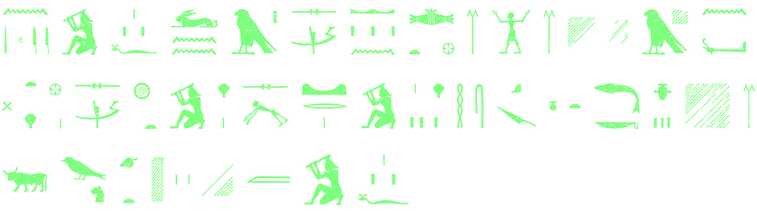
wnn Ḥr Smꜣ ḫꜣswt n Msn m qꜣj ꜥ m Ḥt Ḥr nḫt ḥr smꜣ ḫftj ḥr sḫr ḏww rꜣ ḥr ḥsk ḥꜥ ntj ẖꜣkw jb sw m kꜣ wr pḥtj ḫnt nṯrw wdj r sꜥrq m ḫftjw.f
Horus, Slayer of Foreigners, lord of Mesen, stands with arm upraised in the House of Horus the Strong. He slays the enemy, strikes down those who speak evil and hacks the limbs off the treacherous. He is the bull of great strength at the head of the gods, who strikes his enemies until he has wiped them out.
- 95
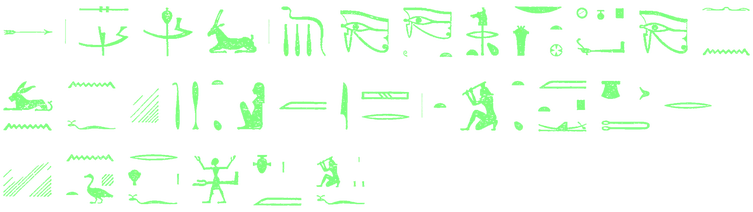
smꜣ mꜣ ḥḏ ḏd mdw wḏꜣt wḏꜣ.tj wsrt nbt Bꜣst ḫnp wḏꜣt nn wnn.f ẖnj.tw ḥmt.ṯ m Jšrw ḫftj.ṯ m dpt ẖr.ṯ rdj wḏꜣt n sꜣ.ṯ r ḥr.f ḥꜥj jb.f m ḫftjw.f
Slaying the oryx. Words to be spoken: The Sound Eye is safe and sound, O Mighty One, lady of Bubastis. The thief who stole the Eye is no more.
Your Majesty is rowed on the Isheru, your enemy the boat beneath you.
When the Sound Eye is given to your son, restored to his face, his heart rejoices over his enemies.Note · Line 95
The goddess addressed is Bastet. The Sound Eye is the injured eye of Horus made whole again. Here its thief is identified with the oryx, whose hide forms the goddess’s boat. - 96
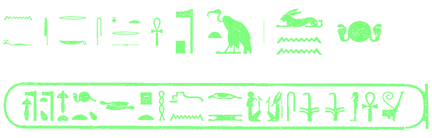
nswt bjt (… …) sꜣ Rꜥ (… …) pꜣ nṯr mrj mwt.f
The King of Upper and Lower Egypt, Ptolemy X, the Son of Ra, Ptolemy X, the god who loves his mother.
- 97
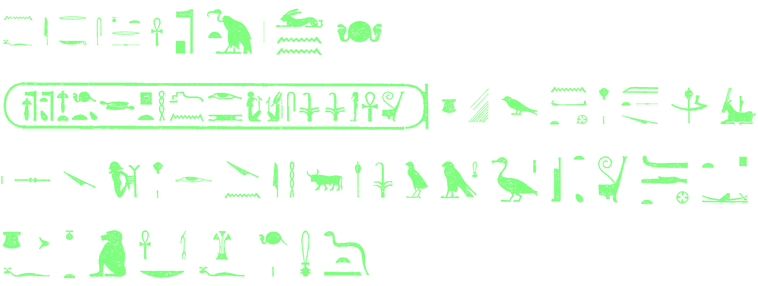
wnn nswt bjt (… …) ḥr nst.f .. Wr nḫt ḥr mds mꜣ ḥḏ ḥr tḫs sbj ḥr jrt ꜥḏt n jḥ ḥḏ sw mj Ḥr {ꜣ ꜣst n Bḥdt dpt ẖr.f ntj mꜣ ḥḏ
The King of Upper and Lower Egypt, Ptolemy X, sits on his throne in Great-in-Victory. He slaughters the oryx, cuts the rebel to pieces and butchers the white ox. He is like Horus son of Isis of Behdet, with the boat of oryx hide beneath him.
Note · Line 97
Great-in-Victory is Edfu. The “white ox” is another name for the oryx. - 98
rdj.j n.k wḏꜣtj.k mn.tj m st.sn jrj ḏw r.k n wnn.f
I grant you that both your Sound Eyes stand firm in their places, and whoever does you harm shall be no more.
- 99
ḏd mdw jn Bꜣstt ꜥꜣt nbt Bꜣst jrt Rꜥ ḥrt jb Bḥdt .... ḥrt ḫndw ntt ḥr tḫnj ḫnw nṯrw ḥr ḫwt.s Jpjj m pẖr.s ḥꜥpj m sqdt ẖr sbḫt.s
Words to be spoken by Bastet the Great, lady of Bubastis, Eye of Ra, who dwells in Behdet, … who sits on the throne and slays the foes. The gods protect her, Ipi is in her retinue and Hapy sails beneath her temple gate.
Note · Line 99
Hapy is the Nile in flood, personified as a god. - 100
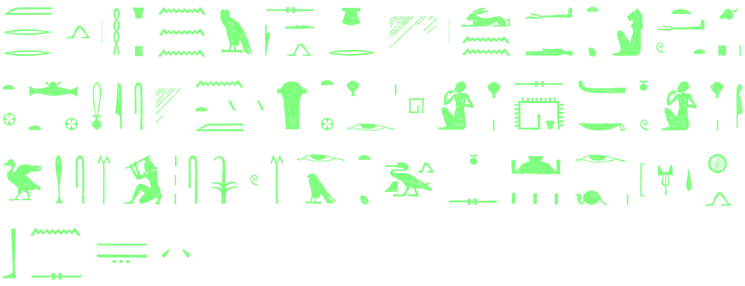
wnn ꜥḏt ḫꜥj.tj ḫnt P Msn mj sḫrw.s ntj m Bꜣst ḥr jrt hj ḥr swsḫ ḥknw ḥr ḫntš ḥmt.s m ḫftjw.s sj m jrt Ḥr ꜥq.n.s jꜣwt jrt Rꜥ ꜣbḫ.n.s tꜣwj
Adjet has appeared in Pe-Mesen as is her custom in Bubastis. She makes merry and swells the shouts of praise; Her Majesty rejoices over her enemies. She is the Eye of Horus that has entered the sacred places, the Eye of Ra that has joined itself to the Two Lands.
Note · Line 100
Adjet is Bastet, appearing here at Edfu as she does in her own city of Bubastis. - 101
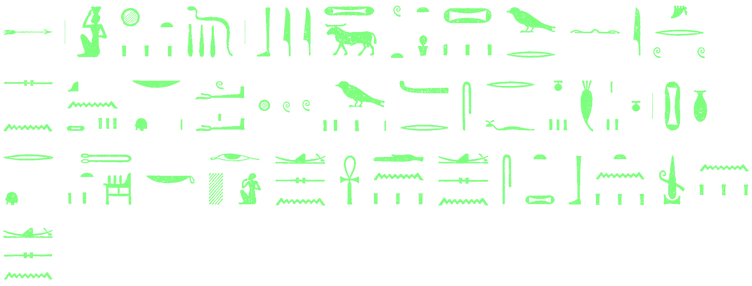
fꜣt jḫt ḏd mdw bjt bꜣ.tj t wr n ḏrw.sn qfnw nbw tp ꜥwj.j ḫꜣw wrw ḥnꜥ srf bnrw t ḥqt jwf r tp ṯt.k jrj.ṯn jm.sn ꜥnḫ.ṯn jm.sn sdb.ṯn wḏꜣ.ṯn jm.sn
Bringing the food offerings. Words to be spoken: Bit-cakes abound, great loaves in plenty.
On my arms are qefen-loaves of every kind, great cuts of meat and sweet warm beer.
Bread, beer and meat upon your offering table!
Eat of them and live by them;
take them into you and thrive on them.Note · Line 101
The king addresses one god as he sets out the food on “your offering table,” then invites all the gods to eat. - 102
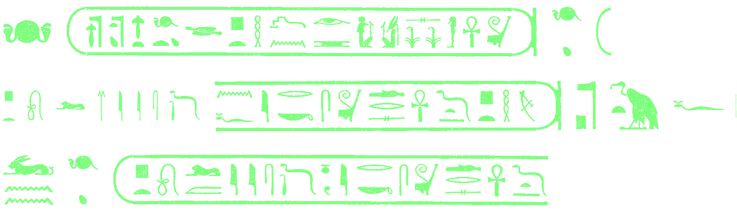
nswt bjt (… …) sꜣ Rꜥ (… …) pꜣ nṯr mrj mwt.f
The King of Upper and Lower Egypt, Ptolemy X, the Son of Ra, Ptolemy X, the god who loves his mother.
- 103
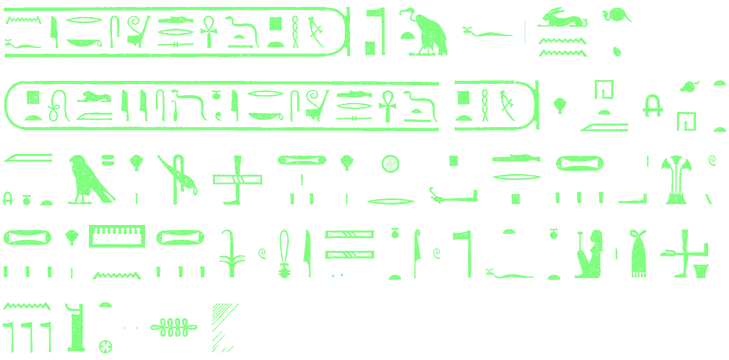
wnn sꜣ Rꜥ (… …) ḥr hdmw.f ḫnt Ḫdmw ntj Ḥr ꜣḫtj ḥr sšm šbw ḥr ḫrp drpw ḥr rdt ḥꜣw ḥr mn sw mj jšš ntj Šw Tfnt ḥr ꜥpr ꜥbꜣ n nṯrw Wṯst
The Son of Ra, Ptolemy X, sits on his throne in the Throne of Horakhty. He portions out food, presents the food offerings and adds to the gifts. He is like the son of Shu and Tefnut, who furnishes the offering table for the gods of the Throne.
Note · Line 103
The Throne of Horakhty and the Throne are sacred names for Edfu. The son of Shu and Tefnut is Geb, god of the earth. - 104

rdj.j n.k jḫt wr.tj r ẖrt.k jḫt nbt nfrt r ẖnw hn.k
“I give you food in plenty for your sustenance,
and every good thing for your belly.” - 105

ḏd mdw jn Ḥr {mꜣ tꜣwj pꜣ ẖrd sꜣ Ḥt ḥr jwꜥw mnḫ n Wsjr nb kꜣw rdj ḏfꜣ n mrj.f jrj ꜥnḫ n ḥr nb
Words to be spoken by Harsomtus the Child, son of Hathor, worthy heir of Osiris, lord of food, who gives provisions to the one he loves and provides a livelihood for everyone.
- 106
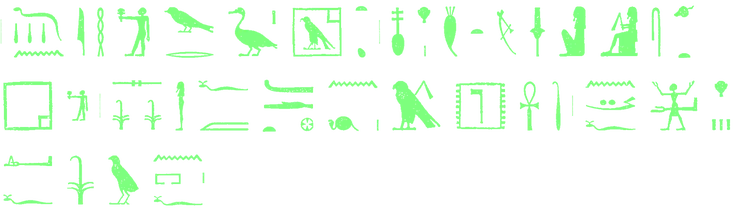
ḏd mdw jn Jḥj wr sꜣ Ḥt ḥr nfr ḥr bnr mrwt sḫm šps ḫnt Ḥt Jḥj snn.f m Bḥdw n Rꜥ bjk nṯrj ꜥnḫ.tw n mꜣꜣ.f ḥꜥj ḥrw rdj.f sw n pr.f
Words to be spoken by Ihy the Great, son of Hathor, fair of face and dearly loved, the splendid power in the House of Ihy, whose likeness is in the Throne of Ra, the divine falcon at whose sight people live, at whose appearance in his house faces rejoice.
Note · Line 106
The House of Ihy is at Dendera; the Throne of Ra is at Edfu. - 107
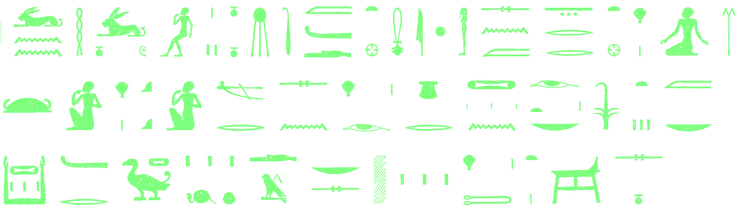
wnn ḥwnw wbn.tj m Bḥdt mj jrw.sn m Tꜣ rr ḥr ḥmsj m wḥꜥ ḥr qq mrjt.sn ḥr jrt ẖrt nt jrt nbt st m nbw kꜣw ḥnꜥ ḏfꜣ rꜥ nb šsp nṯr nb snw ḥr ṯt.sn
The two youths have risen in Behedet as is their way in Tarer. They sit down to eat, feast on what they love and provide sustenance for every eye. Day after day they are lords of food and provisions; every god receives food offerings from their altar.
Note · Line 107
The two youths are Harsomtus and Ihy. Behedet is Edfu, and Tarer is Dendera. - 108
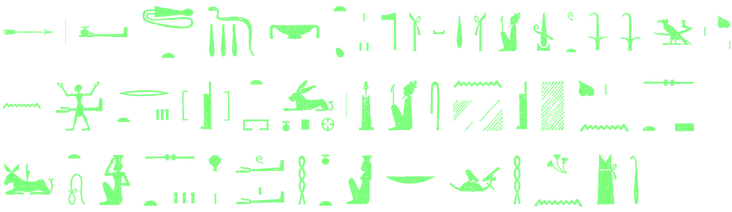
ḥnk mnjt ḏd mdw nb nṯrw rs wḏꜣ wḏꜣ.tj sjꜥr.n.j nn mꜣwtj n pf ḥꜥj r.ṯn jmjw St wnp Jwn snb.tj m Wṯst mꜣwtj n Stš twꜣ.j st ḥr ꜥwj.j ḥnwt nb ḥnw ḥn.tj
Offering the menat. Words to be spoken: “O Gold of the Gods, he who wakes whole is whole: I have held up these two testicles of That One.
Rejoice, you who are in the Place of Stabbing!
Iun is sound in the Throne: on my two arms I hold up the testicles of Seth.
O Mistress, the lord of the Henu barque is safe.”Note · Line 108
A menat is a beaded necklace with a counterweight, sacred to Hathor, the Gold of the Gods. - 109
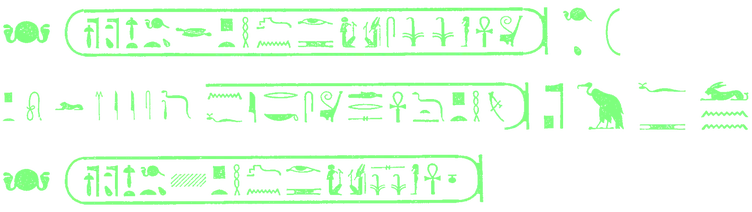
nswt bjt (… …) sꜣ Rꜥ (… …) pꜣ nṯr mrj mwt.f
The King of Upper and Lower Egypt, Ptolemy X, the Son of Ra, Ptolemy X, the god who loves his mother.
Note · Line 109
“The god who loves his mother” is the royal title Philometor. - 110
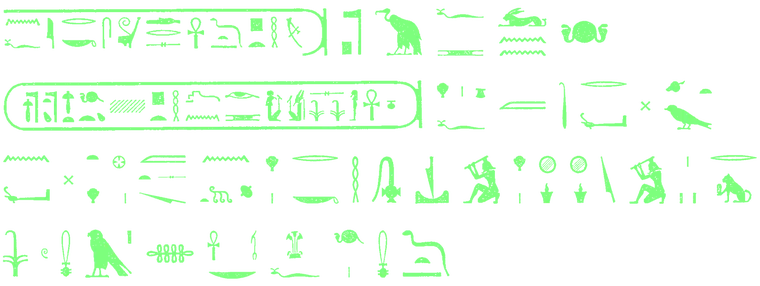
wnn nswt bjt (… …) ḥr nst.f m ṯnr ḫnt Wr nḫt ḥr mds nbḏ ḥr rkḥ ḏw qd ḥr ḫbḫb ḫftjw r ḫft ḥr sw mj Ḥr rdj mnjt n wrt mꜣwtj n Stš m ḫt ḥms.f
The King of Upper and Lower Egypt, Ptolemy X, sits on his throne as the strong one in Great-in-Victory. He cuts up the evildoer, burns the villain and hacks his enemies to pieces in plain sight. He is like Horus presenting the menat to the Great One: the testicles of Seth, once cut off.
- 111
Bḥdtj nṯr ꜥꜣ nb pt
The Behedite, the great god, lord of the sky.
Note · Line 111
The Behedite is Horus of Edfu. - 112
rdj.j n.k ꜥ.k rwḏ r sbjw.k pḥtj.k pḥtj.tj r rqww.k
“I grant that your arm be strong against your rebels,
your might mighty against your foes.” - 113
ḏd mdw jn Ḥt ḥr nbt Jwnt tꜣ mnjt jrt Rꜥ ḥrt jb Bḥdt jwntt wrt m Wṯst Ḥr Sšꜣt wrt nḏt ḥr sn ṯḥnt ḥr nbt mfkꜣt
Words to be spoken by Hathor, lady of Dendera, the Menat, the Eye of Ra, who dwells in Behedet, the goddess of Dendera, great in the Throne of Horus, Seshat the Great, who protects her brother, bright of face, lady of turquoise.
- 114
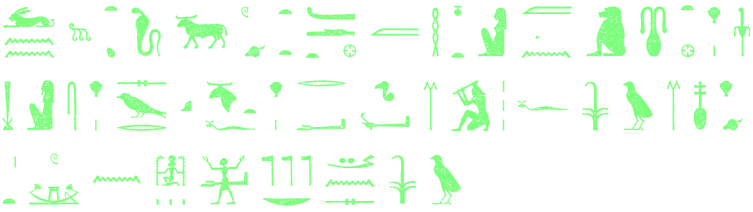
wnn ḥrjt tp bꜣ.tj ḫnt Bḥdt m ḥnwt m Tꜣ n Jtmw ḥr ḫwt sn.s ḥr swrt qfꜣt.f ḥr rdt nrw m ḫftjw.f sj m nfrt ḥr ḫnt wjꜣ n ḥḥw ḥꜥjt nṯrw nbw mꜣꜣ.sn sj
The cobra on the brow is mighty in Behedet as mistress from the Land of Atum. She shields her brother, increases his renown and strikes terror into his enemies. She is the fair-faced one in the Barque of Millions; all the gods rejoice when they see her.
Note · Line 114
Hathor takes the form of the protective cobra on the sun god’s brow. Her brother here is Osiris. The Barque of Millions is the sun god’s boat. - 115
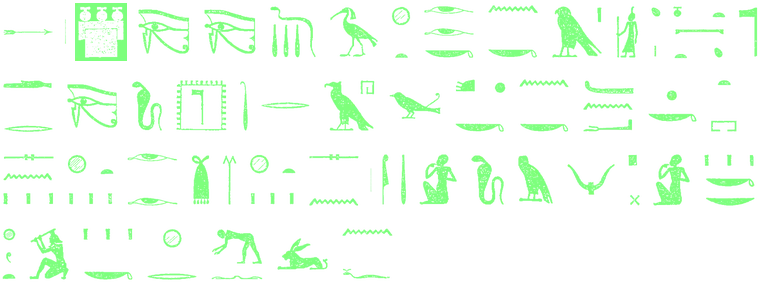
ḥnk wḏꜣtj ḏd mdw ꜣḫtj.k n.k Ḥr wr sꜣ Nwt nṯrt.k nṯrj.tj r ꜣhw km.k n.k ḥnꜥ ḥḏt.k m st.sn jḫt jrtj ꜥpr m jḫt.sn mꜣꜥ ḫrw.k m wpwt.k nbt ḫftjw.k ḫr n wnn.f
Offering the two wedjat eyes. Words to be spoken: “Your two radiant eyes are yours again, Horus the Elder, son of Nut; your divine eye is proof against harm.
The black of your eye is yours again, together with the white, each in its place, the parts of both eyes furnished with all they need.
You stand vindicated in every trial of yours. Your enemies lie fallen; not one will remain.”Note · Line 115
The wedjat is the restored, uninjured Eye of Horus. Here the king offers a pair so that the god has both eyes whole. - 116
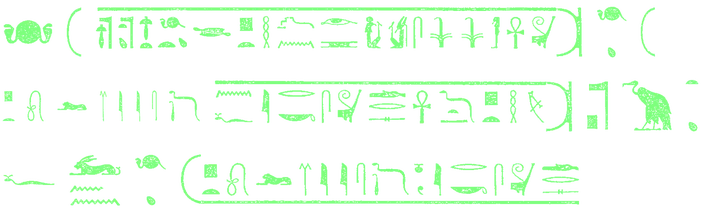
nswt bjt (… …) sꜣ Rꜥ (… …) pꜣ nṯr mrj mwt.f
The King of Upper and Lower Egypt, Ptolemy X, the Son of Ra, Ptolemy X, the god who loves his mother.
- 117
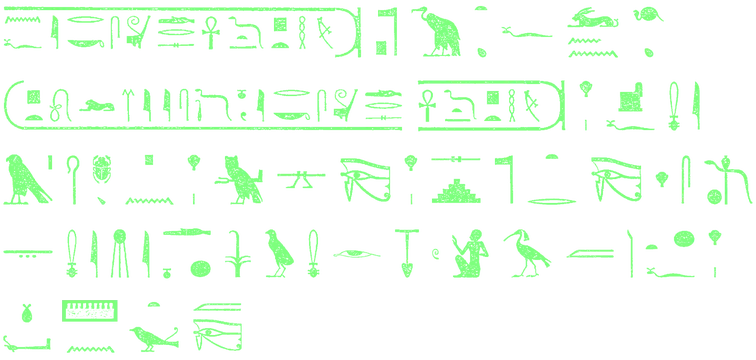
wnn sꜣ Rꜥ (… …) ḥr bḥdw.f mj Ḥr ḥqꜣ tꜣ pn ḥr ms wḏꜣt ḥr sjꜥr nṯrt ḥr sḥḏt tꜣwj mj jꜣḫw jtn sw mj jrj smꜣw ꜣḫ m wnwt.f ḥr dr mnt m wḏꜣtj
The Son of Ra, Ptolemy X, sits on his throne like Horus, ruler of this land. He brings the wedjat eye, raises the divine eye and lights the Two Lands like the radiance of the sun disk. He is like the Iry-semau, effective in his hour of service, driving pain from the two wedjat eyes.
Note · Line 117
Iry-semau is a ritual title; its bearer here tends the injured eyes. - 118

rdj.j n.k ꜥnḫtj.k mn.tj m st.sn jrj ḏw r.k n wnn.f
“I grant that your two eyes hold firm in their places;
whoever does you harm shall be no more.” - 119
ḏd mdw jn Ḥr wr sꜣ Nwt nb {ḫm nṯr ꜥꜣ ḫnt Gjs ꜥꜣ pḥtj m Wṯst Ḥr nḫw nfr nḏtj n sn.f sḥḏ.n.f tꜣwj m ꜣḫtj.f
Words to be spoken by Horus the Elder, son of Nut, lord of Letopolis, the great god in Qus, great in strength in the Throne of Horus, the perfect protector, guardian of his brother, who has lit the Two Lands with his two radiant eyes.
- 120
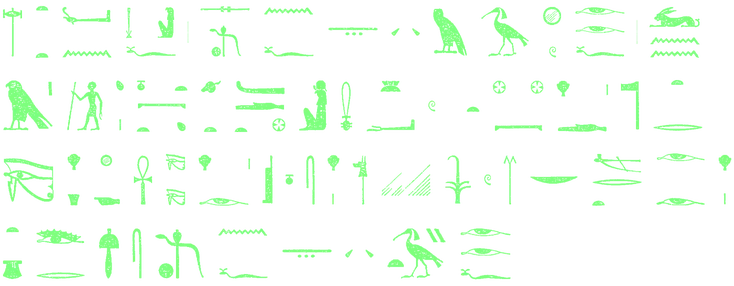
wnn Ḥr wr sꜣ Nwt ḫnt Bḥdt mj Rꜥ ḫꜥj.tj m nwt ḥr šsp nṯrt ḥr ḫfꜥ ꜥnḫtj ḥr jrt st.sn ḥr ḥꜣt.f sw m nb mrtj ḥr dgt r mnḫ sḥḏ.n.f tꜣwj m ꜣḫtj.f
Horus the Elder, son of Nut, is in Behedet like Ra risen in the sky. He receives the divine eye, takes the two eyes in hand and sets them in their places in his face. He is lord of the two eyes; his sight is keen, and he has lit the Two Lands with his two radiant eyes.
- 121
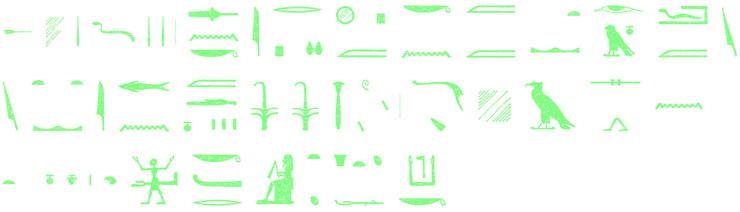
ḥnk jrp ḏd mdw mn n.k jrp ḫpr m Knmt jrt Ḥr prj m Ḫsds jnmt nn wꜣḏ wj dpt.sn šꜣs.n.sn ẖt.k tfn jb.k ḥꜥj ḥꜥ.k ḥnꜥ špst ḥnwt ḫr kꜣ.k
Offering wine. Words to be spoken: “Accept the wine that grew in the Great Oasis, the Eye of Horus that came forth from Bahariya.
These inemet wines, how refreshing they taste!
Once they have coursed through your body, your heart is glad and your flesh rejoices beside the Splendid One, the mistress who is with your ka.”Note · Line 121
The Great Oasis comprises Kharga and Dakhla; Bahariya is another oasis in Egypt’s western desert. The king offers wine as the Eye of Horus. - 122
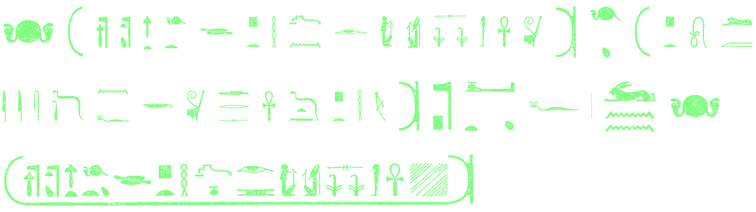
nswt bjt (… …) sꜣ Rꜥ (… …) pꜣ nṯr mrj mwt.f
The King of Upper and Lower Egypt, Ptolemy X, the Son of Ra, Ptolemy X, the god who loves his mother.
- 123
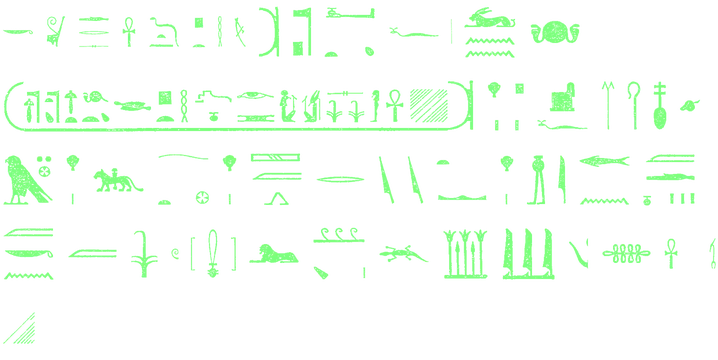
wnn nswt bjt (… …) ḥr p.f m ḥqꜣ nfr ḫnt Mꜣꜣ Ḥr ḥr pẖr Jmt ḥr šmt r Ḫsds ḥr jnt jnmt m Knmt sw mj mr ꜣḥt ꜥšꜣ šꜣ sḫt wpj.f rꜣ n jt.f m jrt Ḥr wꜣḏt
The King of Upper and Lower Egypt, Ptolemy X, sits on his throne as the perfect ruler in Maa-Hor. He travels through Imet, goes to Bahariya and brings inemet wine from the Great Oasis. He is like the overseer of farmland, rich in vineyards and fields, as he opens his father’s mouth with the green Eye of Horus.
Note · Line 123
Maa-Hor is a name for Edfu. The king’s father here is the god who receives the wine. - 124
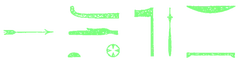
Bḥdtj nṯr ꜥꜣ nb pt
The Behedite, the great god, lord of the sky.
- 125

rdj.j n.k tḫt r swnf jb.k nn jꜥr ḏw jmj wtj jmj st ꜥ.k
“I give you drunkenness to gladden your heart,
so that no sorrow rises in your breast.” - 126

ḏd mdw jn Rꜥ Ḥr ꜣḫtj nb Tꜣwj Jwnw Jtmw Ꜥprj Bḥdtj sꜣb šwt jt nṯrw ḥqꜣ Psḏt jtj wr ḫnt Wṯst Ḥr sḫm šps jrj ḥrjw ẖrjw ḫntš ḥrw rdj.f sw m nwt
Words to be spoken by Ra-Horakhty, lord of the domain of Heliopolis, Atum, Khepri, the Behedite of many-colored plumage, father of the gods, ruler of the Ennead, great sovereign in the Throne of Horus, the splendid power who creates those above and those below, who gladdens faces when he appears in the sky.
- 127

ḏd mdw jn Jw.s ꜥꜣ.s ḥmt Ḥr ꜣḫtj Nbt ḥtpt jrt Rꜥ mrjt jb.f nbt Jwnt pw ḏrt Jtmw qmꜣt sꜣtj.f nbt pt ḥnwt nṯrw nbw
Words to be spoken by Iusaas, wife of Horakhty, Nebethetepet, the Eye of Ra, whom his heart loves. She is the lady of Dendera, the Hand of Atum who bore his two children, lady of the sky, mistress of all the gods.
Note · Line 127
Atum’s two children are Shu and Tefnut. The goddess is his Hand because in the Heliopolitan account he begot them by masturbation. - 128

wnn Ḥr ꜣḫtj ḫnt St.f wrt ꜣḫtj ḫnt Ꜥm.f ḫntj ḥr šsp jrp ḥr ... ... .. ḥr sḫpt ḥknw m ... ... sw m ... sḥb šnbt ḫnt St sḫn.f ḏr m bꜣḥ
Horakhty is in his Great Seat, the one of the horizon in his foremost shrine. He receives wine, … and brings rejoicing with … . He is …, his breast decked for the feast, in the Place Where He Has Alighted since the Beginning.
- 129

dwꜣ nṯr ḏd mdw jnḏ ḥr.ṯn ... ... ... ... ... ... ... ... ... ... ... ... ... .. Rꜥ ... ... ... ... ... ... grg nwt sꜣḫ spwt ... ... ... ... ... ...
Praising the god. Words to be spoken: “Hail to you … Ra …, you who found cities and make the nomes flourish …”
- 130

nswt bjt (… …) sꜣ Rꜥ (… …) pꜣ nṯr mrj mwt.f
The King of Upper and Lower Egypt, Ptolemy X, the Son of Ra, Ptolemy X, the god who loves his mother.
- 131
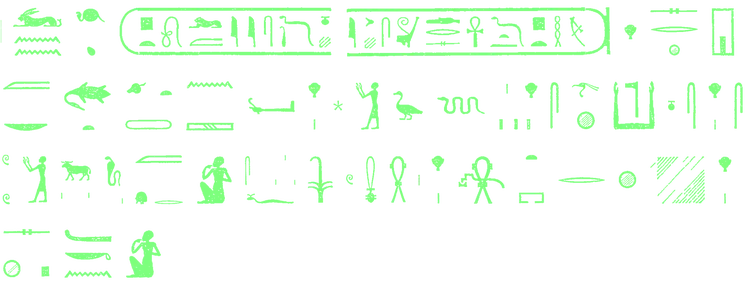
wnn sꜣ Rꜥ (… …) ḥr srḫ m nb snḏt ḫnt Jw nšnj ḥr dwꜣ sꜣw tꜣ ḥr sꜣḫt kꜣ.sn ḥr swꜣš bꜣw m tpw rꜣ.f sw mj sꜣw ḥr stp sꜣ ... .. ... ... ... ḥr sḫpt ḥknw
The Son of Ra, Ptolemy X, sits on the throne as lord of awe on the Island of Fury. He adores the sons of the earth, glorifies their kas and praises the bas with his spells. He is like the one who watches over the palace …, bringing praise.
Note · Line 131
The sons of the earth are serpents. The bas are divine powers manifest here in serpent form. - 132
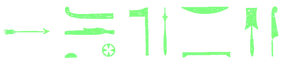
Bḥdtj nṯr ꜥꜣ nb pt sꜣb šwt
The Behedite, the great god, lord of the sky, of many-colored plumage.
- 133

ḥqꜣt nbt tꜣwj (…)
The ruler, the Lady of the Two Lands, Cleopatra.
- 134

ndb.ṯn sꜣḫw.f hrw.ṯn ḥr ḏdt.f sꜣ.ṯn mrj.ṯn
May you hear his words of glorification and rejoice at what he says, this son of yours whom you love.
- 135
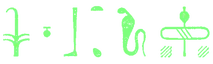
Nḫbt ḥḏt Nḫn
Nekhbet, the White One of Nekhen.
Note · Line 135
Nekhbet is the vulture goddess of Upper Egypt; Nekhen is Hierakonpolis. - 136

ḏd mdw nhw wrw nbw šfjt ḏsr st m St wrt ḥfꜣww nfrw nṯrjw ḫnt Wṯst sꜣw tꜣ nf sꜣw St wnp Wꜣḏḏw jqrw jqr Msn bꜥḥj Bḥdt m ḏfꜣ
Words to be spoken: The great guardian serpents, lords of awe,
whose seat is exalted in the Great Seat;
the perfect divine serpents in the Throne,
those sons of the earth who guard the Place of Stabbing;
the excellent Wadjedj serpents who keep Mesen excellently supplied
and flood Behedet with food;Note · Line 136
Edfu bears many sacred names here, among them the Great Seat, the Throne, the Place of Stabbing, Mesen and Behedet. - 137

nbw pḥtj npḏ nbḏ ꜥnḏ ꜥꜣpp sḥm smꜣjw.sn rs ḥr Wṯst ḥn Ḥt bjk ḫsf rꜣw ḥꜣ Jꜣw Ḥr pẖr sꜣ.sn rwt jnb.s sꜣw sbꜣw.sn swḏꜣ mꜣht.sn
the lords of strength who kill Nebedj,
who sap Apep’s strength and scatter their bands,
who watch over the Throne and protect the House of the Falcon,
who drive the ra-serpents back from Praise-of-Horus,
who ring the outer face of its wall with their protection,
guard their doors and keep their gateway safe;Note · Line 137
Nebedj is Seth. Apep is the serpent who threatens the sun god. Here the temple’s guardian serpents repel hostile serpents. - 138

nbw snḏt m tꜣwj ḥnꜥ jdbw wr qfꜣt nrj.tw n.sn ꜥḥꜥw nfr bꜣ n Bḥdtj jnrt nfrt jrt Ḥr wrt ꜥšꜣ nrwt ḫꜣꜥ tm r tr.sn rnpwt.sn nḥḥ ḥnꜥ ḏt
the lords of dread in the Two Lands and the lands along the banks,
great in renown, before whom people tremble:
Ahau the Perfect, the ba of Horus of Behedet,
and Ineret the Perfect, the Eye of Horus,
the Great One, rich in harvest seasons,
at whose appointed times all things come to pass,
whose years are neheh and djet together.Note · Line 138
Neheh and djet are two Egyptian ways of conceiving eternity: time ever renewed and time that endures. - 139
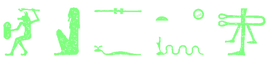
sḥrj.j sftḫ bṯww špt jb r bw nb wn ẖr ḥm.k
I drive the Seftekh serpent, the evildoers and the fierce-hearted one from every place where Your Majesty is.
Note · Line 139
All three names designate hostile snakes. - 140
ḏd mdw jn ꜥḥꜥw nfr nṯr ꜥꜣ m St wrt sḥrj sbjw ḥꜣ ḥt nṯr.s Šꜣw šps šps St Rꜥ swḏꜣ smꜣtjw.s r rꜣw
Words to be spoken by Ahau the Perfect, the great god in the Great Seat, who drives rebels from around its temple; the splendid Shai, who clothes the Seat of Ra in splendor and keeps its roads safe from the ra-serpents.
Note · Line 140
Shai is the god of destiny, here identified with Ahau. - 141

ḏd mdw jn Rnnt nfrt ḥnwt ḫnt Wṯst sꜣḫt Msn m ꜣḫw špst wrt špst Šns ꜥnbt ḏdft m šnw pr.s
Words to be spoken by Renenet the Perfect, the lady in the Throne, who furnishes Mesen richly with food; the splendid one, the great one, who provisions Shenes and stops venomous creatures at the boundary of her house.
Note · Line 141
Renenet is a cobra goddess who both provides food and guards it. Shenes is another sacred name of Edfu. - 142
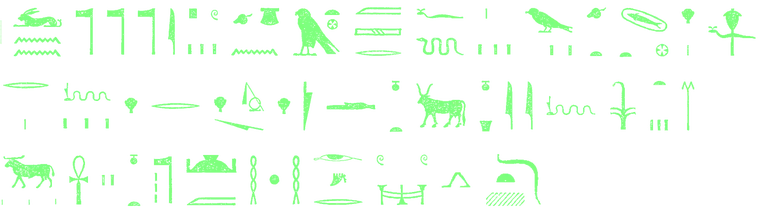
wnn nṯrw jpw ḫnt Nst nt Ḥr m šrfw wrw ḫnt Šns ḥr ḫsf rꜣw ḥr ꜥnb wbr ḥr ḫb ... ... ntj kꜣ nꜥw st m bꜣw ꜥnḫw ntj nṯrw km nḥḥ jrj ḏrw ḏt
These gods are in the Throne of Horus as the great Sheref serpents in Shenes. They drive back the ra-serpents, hold Uber fast and destroy … of the Bull of the Nau-serpents. They are the living bas of the gods, who bring neheh to fullness and set the bounds of djet.
Note · Line 142
Uber and the Bull of the Nau-serpents are names of Apep. - 143
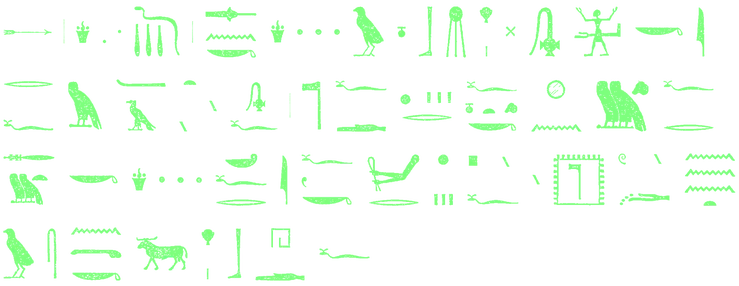
jrt snṯr ḏd mdw mn n.k snṯr wbn ḥr ḫt ḥꜥj.k jrf m ḥtj.f fdt nṯr r fnḏ.k ḫnmw.f r ẖnmtj.k snṯr sṯj.f r jwf.k ḏsr pf nṯrj wj jdt.f wsn.k bꜣ ḥr bhd.f
Offering incense. Words to be spoken: Receive the incense that rises over the flame;
may you rejoice in its smoke!
The god’s sweat to your nose, its scent to your nostrils,
the fragrance of incense to your flesh!
That djeser incense—how divine its scent!
At its smell, O Ram, you mate.Note · Line 143
The king offers incense to Khnum in his form as a ram. The incense is the god’s own sweat returned to him; its scent arouses him. - 144
nswt bjt (… …) sꜣ Rꜥ (… …) pꜣ nṯr mrj mwt.f
The King of Upper and Lower Egypt, Ptolemy X, the Son of Ra, Ptolemy X, the god who loves his mother.
- 145
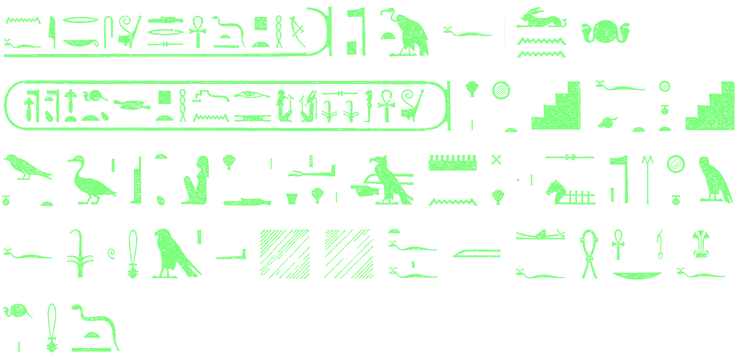
wnn nswt bjt (… …) ḥr ḫndw.f ḫnt Ꜥndw wr ntj {ꜣ ꜣst ḥr šsp ꜥ ḥr ꜣmm mnwr ḥr sḫntš nṯr m ḫnmw.f sw mj Ḥr ḥnk jḫt n jrj sw sḥtp jt.f m prjt jm.f
The King of Upper and Lower Egypt, Ptolemy X, sits on his throne in the Great Throne of the Son of Isis. He takes up the bowl, grasps the incense and gladdens the god with its scent. He is like Horus bringing offerings to the one who begot him, pleasing his father with what comes forth from him.
- 146
Bḥdtj nṯr ꜥꜣ nb pt
Horus of Behedet, the great god, lord of the sky.
- 147
rdj.j n.k Kbn ẖr jmjt.f Tꜣ nṯr pẖr m st.k
I give you Byblos with all it holds, and grant that God’s Land encircle your seat.
Note · Line 147
Byblos was a port on the Lebanese coast. God’s Land here is Punt, a source of incense. - 148
ḏd mdw jn H̱nmw nb mꜥbꜣjt wr m Bḥdt nṯr ꜥꜣ mnḫ ḫnt Wṯst Ḥr sḫm šps wsnj .. jrj nḏmnḏm .. ... nḫt.f bꜣ wr ... ... ... ḏsr st m Tꜣ nṯr
Words to be spoken by Khnum, lord of the Court of Thirty, great in Behedet, the great god whose power is felt in the Throne of Horus; the splendid Power who mates …, who takes his sexual pleasure … his strength; the great ram …, whose seat is exalted in God’s Land.
- 149
wnn bꜣ wr bꜣ.tj m Bḥdt m štꜣj šps ... ... ... ... ... ... ḥr sḥꜥꜥ ḥꜥ.f m prjt jm.f sw m bꜣ ꜥnḫ ꜥnḫ r nḥḥ bꜣ sṯj mrj ḥmwt
The great ram is mighty in Behedet as the splendid Hidden One …, and he gladdens his body with what comes forth from him. He is the living ba, alive for all eternity, the ram who mates, who loves females.
Note · Line 149
The Egyptian words for “ram,” “mighty” and “ba” all sound alike. - 150
ḥnk mꜣꜥt ḏd mdw .. mꜣꜥ.tj m hꜣw.k qbbt.k wrt ḥr srwḏ ḏt.k ... ... ... ḥtjt.k tf ꜥnḫt.k jm.s snsnt.k m ṯꜣw jm.s ... ... ....k nn ḥrj.s r ḥm.k ḥnꜥ snt.k ... ...
Offering Maat. Words to be spoken: … is offered to you, your great throat that strengthens your body.
… that gullet of yours by which you live, through which you breathe the air.
… your …, without her withdrawing from Your Majesty or from your sister …Note · Line 150
Here she is the god’s very throat, through which he draws breath. - 151
nswt bjt (… …) sꜣ Rꜥ (… …) pꜣ nṯr mrj mwt.f
The King of Upper and Lower Egypt, Ptolemy X, the Son of Ra, Ptolemy X, the god who loves his mother.
- 152
wnn sꜣ Rꜥ (… …) ḥr smꜣt.f ... ... ... ... ... ... ... ... .. ḥr bḥn grg m tꜣ pn sw mj sr m mꜣꜥt ḥr tmꜣ.f bwt ḥm.f rdt ḥr gs
The Son of Ra, Ptolemy X, sits on his throne … and roots out falsehood in this land. He is like the prince of Maat on his mat: His Majesty abhors taking sides.
- 153

Nḫbt ḥḏt Nḫn
Nekhbet, the White One of Nekhen.
- 154
rdj.j n.k mꜣꜥt wr.tj m rk.k jsft stp.tj m hꜣw.k
I grant you that Maat be great in your day and that injustice be cut down in your reign.
- 155

ḏd mdw jn Šw sꜣ Rꜥ ḫnt ꜣḫt nḥḥ nṯr ꜥꜣ ... sꜣb šwt ḥm gmḥsw qꜥḥ ḏrt n jt.f n Bḥdt qꜣj ḥr jꜣt.f ḥtm jsft nb mꜣꜥt wbn.tj m tp.f sḥꜥj ... ḫntš jb.f wpj tꜣš n nṯr nb n.f
Words to be spoken by Shu, son of Ra, in the Horizon of Eternity, the great god …, dappled of plumage, servant of the Gemehsu falcon, who stretches out his hand for his father in Behedet; he who stands high on his standard, who destroys injustice, lord of Maat, who shines upon his brow; he who praises …, whose heart rejoices, who allots to every god his own domain.
- 156

ḏd mdw jn Tfnt sꜣt Rꜥ ḥrt jb Bḥdt jrt Rꜥ m Tꜣ n Jtmw Mꜣꜥt wrt wnn.s ḥr šnbt.f ḥr qmꜣ ꜣḫt.s r ḫft ḥr.f
Words to be spoken by Tefnut, daughter of Ra, who dwells in Behedet, the Eye of Ra in the Land of Atum, Maat the Great as she rests on his breast and unfolds her radiance before his face.
Note · Line 156
The Land of Atum here is Dendera. - 157
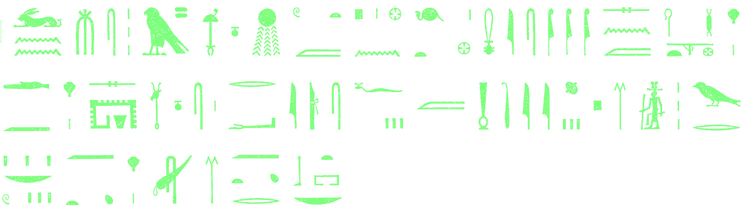
wnn msw Ḥr ꜣḫtj wbn.tj m P n Rꜥ mj sḫrw.sn m Ḥqꜣ ꜥnḏw ḥr šsp mꜣꜥt ḥr swsḫ ḥtjt.sn ḥr rdt jsft m šnṯjw st m jtjw wrw nbw mꜣꜥt ḥr sšm mꜣꜥt r bw nb
The children of Horakhty have risen radiant in the Throne of Ra, as is their custom in Heka-anedju. They receive Maat, open wide their throats and do battle with injustice. They are the great rulers, the lords of Maat, who carry Maat everywhere.
Note · Line 157
The children are Shu and Tefnut. Horakhty is Horus of the Two Horizons; Heka-anedju is the district of Heliopolis. - 158

smꜣ sṯtjw ḏd mdw ... ... .. m sp wꜥ m ꜣms ... ... ...
Slaying the Asiatics. Words to be spoken: … at a single stroke with the ames-mace …
Note · Line 158
In this ritual the king strikes down peoples of the lands northeast of Egypt, depicted as enemies. - 159
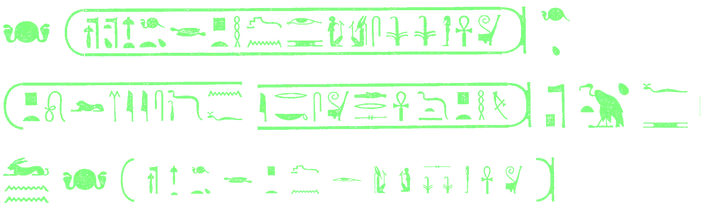
nswt bjt (… …) sꜣ Rꜥ (… …) pꜣ nṯr mrj mwt.f
The King of Upper and Lower Egypt, Ptolemy X, the Son of Ra, Ptolemy X, the god who loves his mother.
- 160
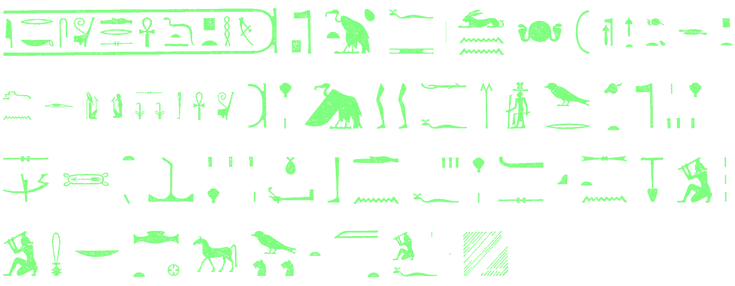
wnn nswt bjt (… …) ḥr mkt rdwj.f m jtj wr ḫnt nṯrw ḥr smꜣ sṯtjw ḥr dr bṯnww.f ḥr ḥsq ṯst nt smꜣjw nbḏ sw mj Nb Msn qn wr pḥtj wdj r sꜥrq m ḫftjw.f
The King of Upper and Lower Egypt, Ptolemy X, sits on his throne as a great ruler before the gods. He slays the Asiatics, drives out his adversaries and severs the backbones of the Evil One’s confederates. He is like the lord of Mesen, valiant and great in strength, who makes an end of his enemies.
Note · Line 160
The Evil One is Seth. Mesen here is Tjaru, on Egypt’s northeastern frontier. - 161
rdj.j n.k qnt r gbgb kjwjw.k ḥwj.n ḥḏ.k ḥrjw.k
I give you strength to fell your foes when your mace strikes your adversaries.
- 162
ḏd mdw jn Spdw Ḥr ꜥꜣ nb jꜣbtt ꜥꜣ nḫt nb Spdw Ḥr jꜣbtt m Wṯst Ḥr bꜣ jꜣbtt kꜣ.tw m rn.f
Words to be spoken by Sopdu, Horus the Great, lord of the East, great in strength, lord of Sopdu, Horus of the East in the Throne of Horus, whom they call the Ba of the East.
- 163
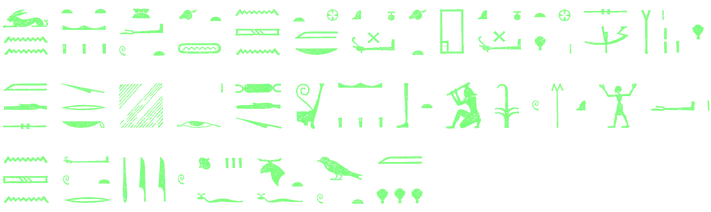
wnn nb Sṯt ḫꜥj.tj ḫnt Jw nšnj m nb qnt ḫnt Ḥt qn ḥr smꜣ sbjw ḥr mds rqww ḥr jrt ꜥḏt nt ḫꜣswt bṯnwt sw m qꜣj ꜥ nšnj.tj r ḫrwjw.f šfjt.f wr.tj m ḥrw
The Lord of Asia has appeared on the Island of Rage, lord of strength in the House of the Strong One. He kills the rebels, slaughters his adversaries and deals slaughter to the rebellious foreign lands. He is the One with Arm Raised, raging against his foes. Great is the awe he inspires among men.
Note · Line 163
The Island of Rage and the House of the Strong One are sacred names for Edfu. The raised arm is the pose of a victor about to strike. - 164
ḥnk mꜥnḫt ḏd mdw ... ... ... ... ... mnḫ jmj st ꜥ.k smn.s .. ... ... sḥtp.s .. ... ... sꜣḫ.s n.k ꜥwt.k ḥrj mkt.k ḥr jrt sꜣ.k jrj.s stp sꜣ r.k nn ḥrj r st.s ḫwj.s twk r Psḏt
Offering the mankhet tassel. Words to be spoken: “… that brings well-being to your heart.
It makes … firm, it brings … contentment,
it makes your limbs and your heart sound and keeps you safe.
It stands guard over you without stirring from its place;
it guards you better than the Ennead.”Note · Line 164
The king presents the tassel to Ptah to be worn as a charm. - 165
nswt bjt (… …) sꜣ Rꜥ (… …) pꜣ nṯr mrj mwt.f
The King of Upper and Lower Egypt, Ptolemy X, the Son of Ra, Ptolemy X, the god Philometor.
Note · Line 165
Philometor means “mother-loving.” - 166
wnn sꜣ Rꜥ (… …) ḥr nst.f m ṯnr ḫnt Wr nḫt ḥr ms mꜥnḫt ḥr .. wḏꜣw ḥr snfr ḫḫ n Ptḥ sw mj Ḥr jrj mkt n jt.f ḥꜥj nṯrw m rꜣ ꜥwj.f
The Son of Ra, Ptolemy X, is on his throne, the mighty one in Great-in-Victory. He presents the mankhet tassel, fastens the amulet and adorns the neck of Ptah. He is like Horus, who protects his father and gladdens the gods with the work of his hands.
- 167
rdj.j n.k ḥꜥ.k ... ... ... jwf.k m nht nt Sḫmt
“I grant that your body be shielded from harm and your flesh be under Sekhmet’s protection.”
- 168
ḏd mdw jn Ptḥ rsj jnb.f nb ꜥnḫ tꜣwj nfr ḥr ḫnt St wrt Ptḥ Tꜣ ṯnn tpj (Ꜥmnjw) jt nṯrw jrj nn r ꜣw sḫm šps ḫnt Ḥt bjk
Words to be spoken by Ptah, South of His Wall, lord of Life-of-the-Two-Lands, fair of face in the Great Seat; Ptah-Tatenen, first of the Eight, father of the gods, who made all this, the splendid power in the House of the Falcon,
Note · Line 168
Life-of-the-Two-Lands is Memphis, Ptah’s city. The Eight are the primordial gods of Hermopolis. - 169
nb mꜣꜥt ḫnt Ḥt kꜣ Ptḥ ꜥḫj pt smn tꜣ qmꜣ wnnt sḫpr ḥmwt nb mkt swḏꜣ .. ... sꜣw ḫmw ẖr ꜥẖmw
lord of Maat in the House of the Ka of Ptah, who lifts the sky and sets the earth firm, who fashioned all that exists and brought craftsmanship into being, lord of protection, who keeps … safe and guards the shrines and the divine images within them.
Note · Line 169
The House of the Ka of Ptah was his temple at Memphis; the ka is the life force of a god or a person. - 170

ḏd mdw jn Sḫmt ꜥꜣt mrjt Ptḥ ḫnt Wṯst Ḥr špst wsrt nbt ꜥnḫ tꜣwj ḥnwt nbt jnsj mrj.s ṯḥnt ḫwjt jt.s swḏꜣt ḏt.f
Words to be spoken by Sekhmet the Great, beloved of Ptah in the Throne of Horus, the splendid one, the mighty one, lady of Life-of-the-Two-Lands, sovereign lady, mistress of red linen, who loves faience, who shields her father and keeps his body sound.
Note · Line 170
Faience is a glazed material, often brilliant blue or green, used for amulets and ornaments. - 171
wnn ḏdw ḏd.tj m Bḥdt m jtjwj wrwj ḫnt Ḥr mꜣꜥ.tj ḥr šsp mꜥnḫt ḥr rdt.s ḥr jb.f ḥr jrt mkt.f r ḫftjw.f sw m ... .. ṯsj n.f sꜣw.f nṯrw nbw ḥꜥj.tj r mꜣꜣ.f
The two Enduring Ones endure in Behdet, the two great rulers in Horus-is-Vindicated. He receives the tassel, lays it on his heart and shields himself from his enemies. He is …, to whom his amulets are raised. All the gods rejoice to see him.
Note · Line 171
The two rulers are Ptah and Sekhmet; it is Ptah who receives the tassel. - 172

smꜣ Stš ḏd mdw hj hꜣj ꜥꜣ m ꜥḏt ḫbḫb.n.j nbḏ m šꜥt bjn rn.f bjn ꜣš m nmt ḥꜥj r.k Ḥr ṯmꜣ ꜥ
Slaying Seth. Words to be spoken: “Hi is felled, the donkey goes to slaughter.
I have hewn the Evil One down in a cruel slaughter.
Ill fares the one whose name is ill;
Ash is on the killing ground.
Rejoice, then, Horus, strong of arm!”Note · Line 172
Hi and Ash here name Seth, and the donkey is his animal form. In the scene that follows he is also called the Liar and Nehes. - 173

nswt bjt (… …) sꜣ Rꜥ (… …) pꜣ nṯr mrj mwt.f
The King of Upper and Lower Egypt, Ptolemy X, the Son of Ra, Ptolemy X, the god Philometor.
- 174
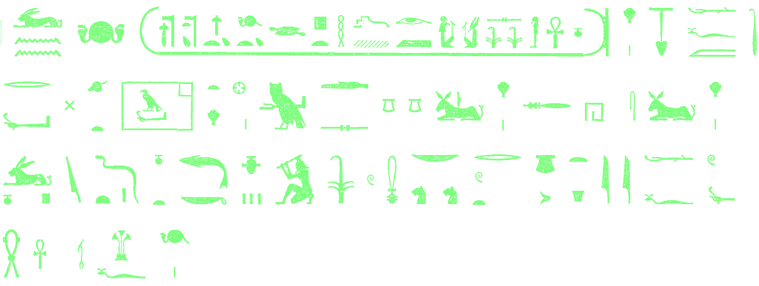
wnn nswt bjt (… …) ḥr smꜣt.f m ṯnr ḫnt Ḥt Ḥr nḫt ḥr mds grgj ḥr ẖdb nhs ḥr wnp ḏt nt ẖꜣkw jb sw mj nb pḥtj rwḏ ẖr ḫꜥw.f wdj r sꜥrq m ḫftjw.f
The King of Upper and Lower Egypt, Ptolemy X, is on his throne, the mighty one in the House of Horus the Strong. He slaughters the Liar, butchers Nehes and pierces the flesh of the defiant. He is like the Lord of Might, his grip firm on his spear, striking his foes until he has made an end of them.
- 175
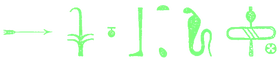
Nḫbt ḥḏt Nḫn
Nekhbet, the White One of Nekhen.
- 176
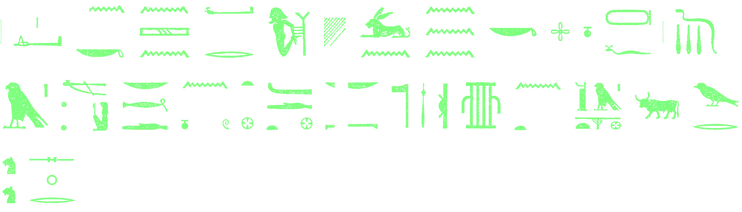
rdj.j n.k nšnj.k r sbjw.k wnj mw.k n wn rn.f
“I grant that you rage against your rebels and that the name of the one who opposes you cease to be.”
- 177

ḏd mdw jn Ḥr mrtj nb Šdnw Bḥdtj nb pt nṯr ꜥꜣ ḫnt Wṯst Ḥr kꜣ wr pḥtj sḫr ḫftjw.f bꜣ tkk ḫnt nṯrw
Words to be spoken by Harmerti, lord of Shedenu, the Behdetite, lord of the sky, the great god in the Throne of Horus, the bull of great might who fells his foes, the fierce ba among the gods.
Note · Line 177
Harmerti means “Horus of the Two Eyes”; the Behdetite is Horus of Behdet. - 178

... ... ... ... ... Nbt ḥt ... ... ... ... ... ... Wṯst Ḥr ... ... ... ... ... ... ḥtp
… Nephthys … the Throne of Horus … peace.
- 179
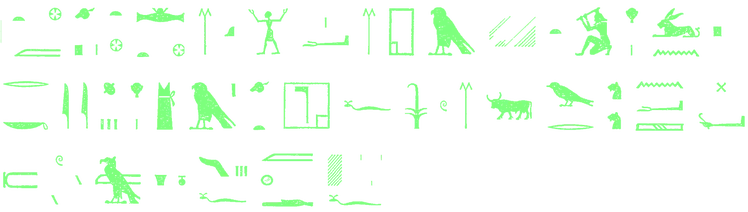
wnn ... ... .. m ḫnt P Msn m qꜣj ꜥ m Ḥt Ḥr nḫt ḥr ... ḫftj ḥr wnp rqww ḥr ḥn Ḥr ḫnt ḥt nṯr.f sw m kꜣ wr pḥtj nꜥš dnjwt ꜣmm ꜥnwt.f m ḫftjw.f
… in Pe-Mesen, as the One with Arm Raised in the House of Horus the Strong. He … the enemy, stabs his adversaries and shields Horus in his temple. He is a bull of great might, fierce of bellow, whose claws seize his foes.
- 180
ms mꜣḥ n mꜣꜥ ḫrw ḏd mdw mḥ.n.j mꜣꜥ ḫrw m ḥꜣt tp.k n ꜥnḫ wsr ḥm.k ḫnt ꜥnḫw mꜣꜥ ḫrw.k ḫnt nṯrw nṯrwt m bꜣḥ Ḏꜣḏꜣt sḏmt mdw wḥm.k ḥknw sp 4 ḫftjw.k ḫr sḫr
Presenting the wreath of vindication. Words to be spoken: “I have bound vindication upon your brow with life,
that Your Majesty may be mighty among the living.
You stand vindicated among the gods and goddesses,
before the divine council that hears the case.
Four times you raise the cry of joy:
your foes have fallen, felled.”Note · Line 180
The wreath marks a verdict in the wearer’s favor, like the verdict the gods gave Horus in his dispute with Seth. - 181
nswt bjt (… …) sꜣ Rꜥ (… …) pꜣ nṯr mrj mwt.f
The King of Upper and Lower Egypt, Ptolemy X, the Son of Ra, Ptolemy X, the god Philometor.
- 182

wnn sꜣ Rꜥ (… …) ḥr bḥdw.f ḫnt Bḥdw n Bḥdtj ḥr jrt mꜣꜥt ḥr bḥn grg ḥr dr jsftjw m ḫt jdbw sw mj nb ꜥbwj spd ḥnwtj jṯj.n.f mꜣꜥ ḫrw m ḫt tꜣwj
The Son of Ra, Ptolemy X, is on his throne in the Throne of the Behdetite. He does what is right, cuts down falsehood and drives out wrongdoers the length of the riverbanks. He is like the Lord of the Two Horns, whose horns are sharp, who has won vindication throughout the Two Lands.
- 183
rdj.j n.k mꜣꜥ ḫrw.k m wpt ḏdj kꜣ.k ḫnt ꜥnḫw
“I grant that you prevail in court and that your ka endure among the living.”
- 184
ḏd mdw jn Ḥr n P nṯr ꜥꜣ nb Ḫp Bḥdtj nṯr ꜥꜣ nb pt msj.n ... .. m ẖnw ꜣḫ bjt sꜣ Wsjr m Ḥr kꜣ nḫt
Words to be spoken by Horus of Pe, the great god, lord of Dep, the Behdetite, the great god, lord of the sky, whom … bore in Chemmis, son of Osiris as Horus the strong bull.
- 185

ḏd mdw jn Wꜣḏt nbt P Ḫp ḫnt Wṯst Ḥr nṯrt ꜥꜣt ḫnt Jrj ꜣḫt ꜣṯjt nfrt m ẖnw ꜣḫ bjt mnꜥt sꜣ.s Ḥr tp wꜣḏ.s
Words to be spoken by Wadjet, lady of Pe and Dep in the Throne of Horus, the great goddess in the Maker of Splendor, the perfect nurse in Chemmis, who reared her son Horus upon her papyrus stalk.
- 186
wnn nb ꜣḫ bjt wbn m Bḥdt mwt.f Wꜣḏt ḥr jrt bsꜣ.f ḥr rdt ḥꜥꜥwt ḥr swrt nrw ḥr jṯt tꜣwj nb m mꜣꜥ ḫrw st m nbw ꜣḫ bjt ... ... ... ... ... ... ...
The lord of Chemmis rises in Behdet while his mother Wadjet keeps him safe. He stirs up jubilation, deepens the awe he inspires and takes possession of the whole of the Two Lands in triumph. They are the lords of Chemmis …
- 187
ḥnk ḥḥ ḏd mdw mn n.k tjt ḏsrt m sštꜣ.k twꜣ nwt ḥr ꜥwj.f bꜣ.k jm.f m js njw ndb ḫrw.f n rḫ.tw.f srq.k ḥtjt m nꜣw n ꜥnḫ tfn.k fnḏ m mḥjt
Offering Heh. Words to be spoken: “Receive this sacred image, your own hidden likeness,
who holds the sky upon his arms.
Your ba is in him as a breath of air:
his voice is heard, but no one knows him.
You fill the throat with the breath of life;
you delight the nose with the north wind.”Note · Line 187
Heh personifies boundless time. The king offers his image with both arms raised to hold up the sky. - 188
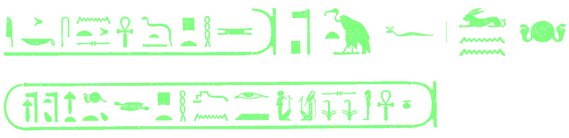
nswt bjt (… …) sꜣ Rꜥ (… …) pꜣ nṯr mrj mwt.f
The King of Upper and Lower Egypt, Ptolemy X, the Son of Ra, Ptolemy X, the god Philometor.
- 189
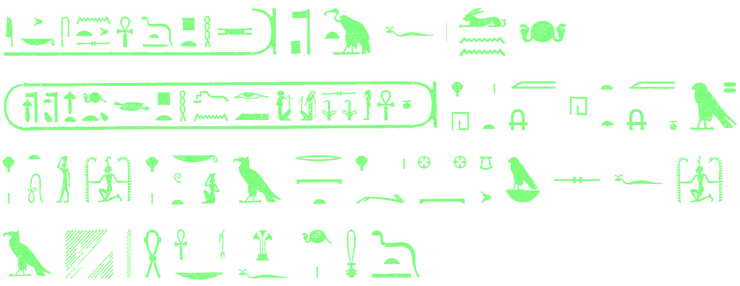
wnn nswt bjt (… …) ḥr hdmw.f ḫnt Ḫdmw n Ḥr ꜣḫtj ḥr twꜣ ḥḥ ḥr kꜣwt jrt ḥr rmnj nwt ẖr nb.s sw mj ... ḥḥ ... ... ... ... ... ...
The King of Upper and Lower Egypt, Ptolemy X, is on his throne in the Throne of Horakhty. He raises Heh aloft, bears the sky and supports the firmament with its lord upon it. He is like … Heh …
- 190
rdj.j n.k ḫftjw.k m ḫbt jꜣbtt sqꜣ.j ꜥwj.k ḫnt ꜥnḫw
“I consign your enemies to the eastern place of execution and give your arms long reach among the living.”
- 191
ḏd mdw jn Jn ḥrt nṯr ꜥꜣ nb Tꜣ wr Bḥdtj sꜣ Rꜥ ḫnt Bḥdt kꜣ wr pḥtj sḫr ḫftjw.f ṯnr ꜥꜣ ḫpš m sꜣ thj.tj.fj
Words to be spoken by Onuris, the great god, lord of Ta-wer, the Behdetite, son of Ra in Behdet, the bull of great might who fells his foes, the strong one, mighty of arm, who pursues whoever would attack him.
Note · Line 191
Ta-wer is the district of Upper Egypt that includes Abydos. - 192
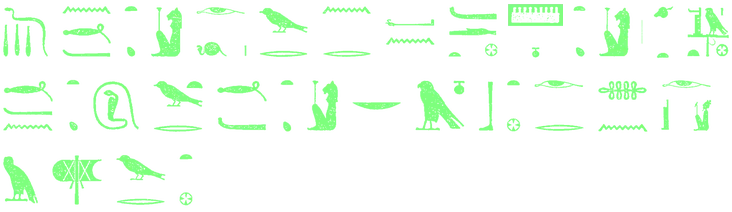
ḏd mdw jn Mḥjt jrt Rꜥ wrt nrw n Bḥdt Mnt ḫnt Wṯst Ḥr mḥnjt wrt Mḥjt nbt Wbn jrt sꜣ n Wsjr m Tꜣ wr
Words to be spoken by Mehit, the Eye of Ra, held in great awe in Behdet, Menet in the Throne of Horus, the great brow-serpent, Mehit, lady of Weben, who guards Osiris in Ta-wer.
Note · Line 192
The brow-serpent is the rearing cobra worn on the forehead of a god or king to ward off attack. - 193
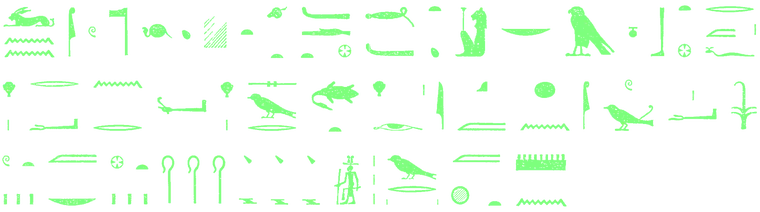
wnn Šw sꜣ Rꜥ ḫꜥj.tj ḫnt Bḥdt Mḥjt nbt Wbn r gs.f ḥr rdt nrw ḥr swrt snḏt ḥr jrt jkm n šw ꜥ st m nbw nwwt ḥqꜣw jdbw jtjw wrw m jḫt mnt
Shu, son of Ra, has appeared in Behdet with Mehit, Lady of Weben, at his side. He inspires dread, makes fear grow great and forms a shield for the helpless. The two are lords of the cities, rulers of the riverbanks, great princes of the world.
Note · Line 193
The two banks of the Nile stand for Egypt. - 194

ḥnk wꜣḏw msdmt ḏd mdw wꜣḏw r wnmt.k ḥr sꜣḫ ꜣḫt.k msdmt ḥr snfr jꜣbt.k
Offering green and black eye paint. Words to be spoken:
“Green paint for your right eye, to make your bright eye shine;
black paint to beautify your left.Note · Line 194
The green paint was made from malachite, the black from galena. - 195

jḫt jrtj nn ... prj m štꜣw ꜥpr.sn jsk m jrtj.k ... ... ... ... ḥꜥj.tw n mꜣꜣ.sn dgj.tw.k n bnr mrwt
These are the … things for the two eyes, come forth from the mountains. When they are applied to your eyes, … People rejoice at the sight of them when they see you, so dearly loved.”
- 196
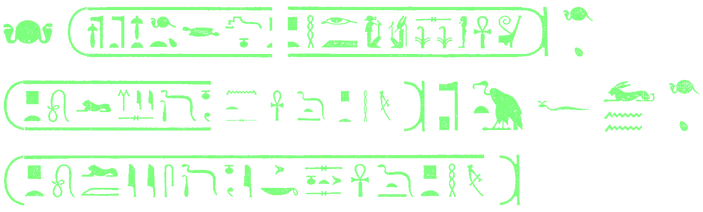
nswt bjt (… …) sꜣ Rꜥ (… …) pꜣ nṯr mrj mwt.f
The King of Upper and Lower Egypt, Ptolemy X, the Son of Ra, Ptolemy X, the god who loves his mother.
Note · Line 196
Ptolemy X was also called Alexander. His Greek title Philometor means “mother-loving.” - 197
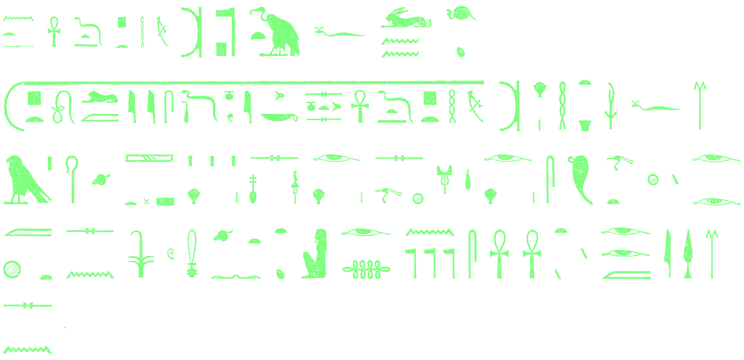
wnn sꜣ Rꜥ (… …) ḥr ḥꜥt.f m Ḥr ḥqꜣ ḫnt štꜣ ḥr snfr wnmt ḥr sꜣḫt jꜣbt ḥr smꜥr ꜣḫtj m jḫt.sn sw mj Ꜥntj jrtj jrj sꜣ n nṯrw sꜥnḫ ꜥnḫtj m jmjt.sn
The Son of Ra, Ptolemy X, sits on his throne as Horus, ruler in the mountains. He beautifies the right eye, brightens the left and adorns the two radiant eyes with their paints. He is like Khenty-irty, who shields the gods and gives life to the two living eyes with what is in them.
Note · Line 197
Khenty-irty is a falcon god identified with Horus. The god’s right eye is the sun, his left the moon. - 198
rdj.j n.k mꜣꜣt nbt nt ḥꜣjtj
“I give you all that the Two Lights behold.”
Note · Line 198
Min answers the king’s gift of eye paint with everything the sun and moon can see. - 199

ḏd mdw jn Mnw nswt Ḥr nḫt nṯr ꜥꜣ ḥrj jb Bḥdt nfr ḥr bnr mrwt wbnj ꜥnḫ.tw n mꜣꜣ.f dgj jrt nbt jm.f
Words spoken by Min the King, Horus the Strong, the great god who dwells in Behdet, fair of face and dearly loved, the shining one at whose sight people live and by whom every eye sees.
- 200

ḏd mdw jn ꜣst wrt mwt nṯr ḫnt Wṯst Ḥr mwt Mnw swḏꜣt sꜣ.s rdj.j msj n.k štꜣ nb bjꜣjt.sn
Words spoken by Isis the Great, the god’s mother in the Throne of Horus, mother of Min, who keeps her son safe: “I make all the mountains bring forth their wonders for you.”
- 201
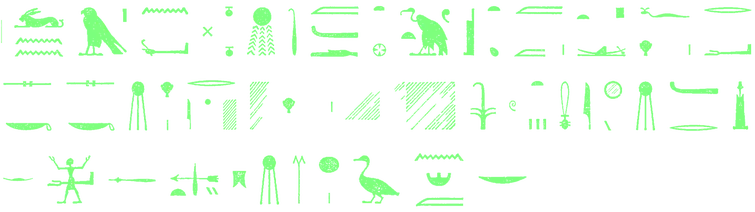
wnn Ḥr nḫt wbn.tj m Bḥdt mwt.f ꜣst m gs dpt.f ḥr rdt sksk ḥr rwj knḥw ḥr .. ... ... ... st mj jꜣḫw ḥnꜥ jwn ḥꜥꜥ ꜥꜣ stwt m hrw ḥnꜥ nḥm nb
Horus the Strong has shone forth in Behdet, with his mother Isis guarding him. He sheds light, drives off darkness and … The two are like sunlight and moonlight, great in radiance by day and by night.
- 202
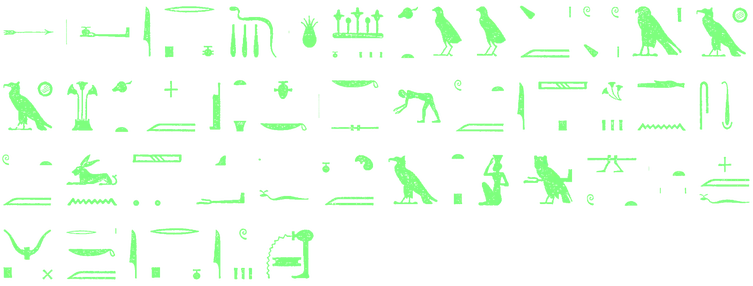
ḥnk jrp ḏd mdw rd šꜣ ḫnt w m W Ḥr ꜣḫꜣḫ.f ḫntj jmj st ꜥ.k ksj.tj m sšp dns.tj m wnš qꜣꜥ.f n.k m ꜣṯpw.f ms.tw m bꜣḥ.k m jḫt jm.f wpj rꜣ.k m jrp jw.w wꜥb
Offering wine. Words to be spoken:
“The vineyard grows in the fields of the Field of Horus.
It makes your darling flourish, thick with vine leaves, heavy with grapes.
The vine spits out its burden for you; some of what it bears is brought before you.
Open your mouth to the wine: it is pure!”Note · Line 202
The god’s darling is the grapevine. - 203
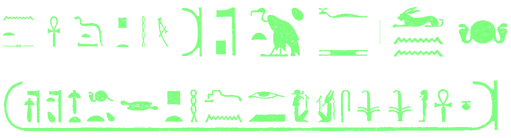
nswt bjt (… …) sꜣ Rꜥ (… …) pꜣ nṯr mrj mwt.f
The King of Upper and Lower Egypt, Ptolemy X, the Son of Ra, Ptolemy X, the god who loves his mother.
- 204
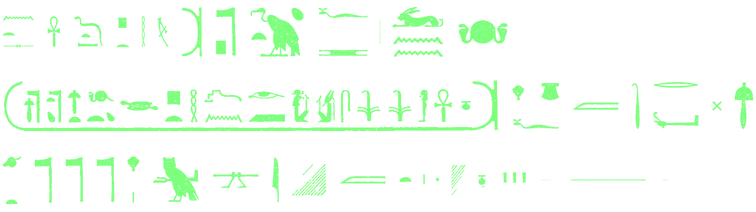
wnn nswt bjt (… …) ḥr nst.f m ṯnr mnḫ ḫnt nṯrw ḥr ms sšp ḥr ḥnk jnmt ... ... ... .. sw mj nb šꜣ ꜣḫ m wnwt.f ḥr rwj mnt m jbw jnd
The King of Upper and Lower Egypt, Ptolemy X, sits on his throne, a mighty champion before the gods. He presents wine and offers inemet-wine … He is like the lord of wine, splendid in his service, who drives sorrow from grieving hearts.
- 205

Bḥdtj nṯr ꜥꜣ nb pt
He of Behdet, the great god, lord of the sky.
- 206
rdj.j n.k Knmt Ḫsds Nḥꜣm ẖr jḫt nbt wnt jm.sn
“I give you the Great Oasis, Bahariya and Neham, with all that is in them.”
Note · Line 206
The Great Oasis comprised Kharga and Dakhla in Egypt’s Western Desert. The oases were known for their wine. - 207
ḏd mdw jn Ḥr Bḥdtj nṯr ꜥꜣ nb pt sꜣb šwt prj m ꜣḫt nb šꜣ jrj ḥrjw ẖrjw snwḥ nṯrw rmṯw m ḫt.f
Words spoken by Horus of Behdet, the great god, lord of the sky, many-hued of plumage, who comes forth from the horizon, lord of wine, who creates those above and those below and makes gods and mortals drunk in his wake.
- 208

ḏd mdw jn Ḥt ḥr wrt nbt Jwnt jrt Rꜥ ḥrt jb Bḥdt nbt pt ḥnwt nṯrw nbw nbt šꜣ jrjt jrp šꜣꜥ.tw snwḥ ḥmt.s m jrt Ḥr
Words spoken by Hathor the Great, Lady of Dendera, Eye of Ra, who dwells in Behdet, lady of the sky, mistress of all the gods, lady of wine, who makes wine. It was ordained that her Majesty be made drunk on the Eye of Horus.
Note · Line 208
Hathor herself is called the Eye of Ra. The Eye of Horus here is the wine she is given to drink. - 209

ḏd mdw jn Ḥr {mꜣ tꜣwj pꜣ ẖrd sꜣ Ḥt ḥr sfj šps prj m ꜣst
Words spoken by Harsomtus the Child, son of Hathor, the noble boy born of Isis.
- 210

wnn Ḏdw bꜣ.tj ḫnt Bḥdt m ḥqꜣw m Ḥr mꜣꜥ.tj ḥr sꜥm jnmt ḥr wpt rꜣ m šꜣ ḥr sḥꜥj jb.sn m mrjt.sn st m nbw šnj tꜣ . ... ... ... ... .. n nṯrw rmṯw
The Enduring Ones are mighty in Behdet, rulers in Horus-is-Vindicated. They drink the inemet-wine, open their mouths to the wine and gladden their hearts with what they love. They are lords of the hair of the earth, … food for gods and mortals.
Note · Line 210
The earth’s “hair” is the vegetation that grows from it. - 211
mn n.ṯn snṯr qbḥw bꜣw nw Bḥdt snfr ṯn sꜥnḫ ṯn jm
“Receive the incense and the libation, O bas of Behdet. With them make yourselves whole and bring yourselves to life!”
- 212
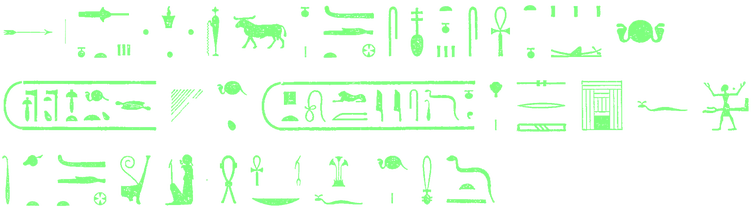
nswt bjt (… …) sꜣ Rꜥ (… …) pꜣ nṯr mrj mwt.f
The King of Upper and Lower Egypt, Ptolemy X, the Son of Ra, Ptolemy X, the god who loves his mother.
- 213
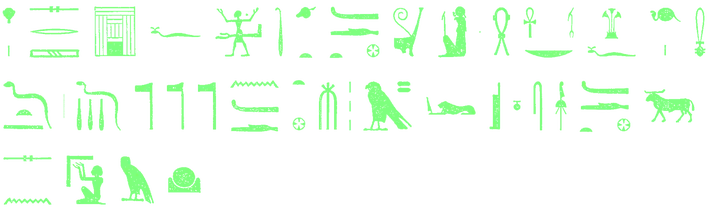
wnn sꜣ Rꜥ (… …) ḥr srḫ.f ḥꜥj.tj ḫnt Bḥdw n Rꜥ
The Son of Ra, Ptolemy X, sits on his throne, rejoicing in the Throne of Ra.
- 214
ḏd mdw nṯrw n Bḥdt Msw Ḥr ꜣḫtj ḏsr st.sn m Bḥdt bꜣ.sn jmn m ꜣḫt nḥḥ ẖꜣt.sn ḥꜣp m Jꜣt štꜣt ḏt.sn štꜣ n rḫ sp 2 ḫr jwn wr ḫnt Bḥdt jꜥr r ꜣḫt m ꜣḫt nḥḥ r gs Bḥdtj jt.sn m nwt
Words to be spoken: These are the gods of Behdet, the children of Horakhty.
Their seats are set apart in Behdet,
their bas are secret in the Horizon of Eternity,
their corpses are hidden in the Hidden Mound,
their bodies concealed—unknown, unknown—
beside the Great Pillar in Behdet.
They rise to the horizon from the Horizon of Eternity,
to the side of the Behdetite, their father, in the sky. - 215
spr Ḥr r bw ẖr ḥm.sn qbḥ.f n.sn mj jt.f mwt.f jm mjtt jrjw m Qbḥ Bḥdtj qbḥ n sꜥḥ.sn ... ... ... n rḫ mjtt.s šsp.sn snw ḫr nb.sn
Horus comes to the place where Their Majesties are and pours a libation for them as though his father and mother were there. He does likewise as the libation priest, the Behdetite who pours water for their mummies … The like of it is unknown. They receive offerings in their lord’s presence.
Note · Line 215
In pouring water for the dead, he performs a son’s duty. - 216
st m jtjw nw 18000 nṯrw jrjw mjtt nbt Jwnt jj.tj r tr.s n rnpt r stj mw ḫr kꜣ.sn mn.tj sp 2 ḏdj.tj sp 2 mj nwt ḥr sḫnwt.s 4
They rule the eighteen thousand and the gods as well.
The Lady of Dendera has come at her time of year
to pour water for their kas.
May they stand firm, may they stand firm;
may they endure, may they endure,
like the sky on its four supports.Note · Line 216
The Lady of Dendera is Hathor, who visited Edfu in procession each year. - 217
rnpwt.sn m ḥḥw n rḫ ... ... ... jꜣt.sn nṯrj wr jbd.sn ꜥꜣ hrw.sn n rḫ ṯnw n wnwt.sn
Their years run into millions. No one knows … their divine mounds.
Many are their months, many their days;
no one knows the number of their hours. - 218
ḏd mdw jn Bꜣ nb Ḏdt nṯr ꜥꜣ ḫnt Bḥdt ṯnr wr ḫnt ... nṯrw
Words to be spoken by Banebdjedet, the great god in Behdet, the mighty champion in … the gods.
- 219
ḏd mdw jn Ḥrj š.f ḫnt Wṯst Ḥr wr nrw m Nst nṯrw
Words to be spoken by Heryshef in the Throne of Horus, held in great awe in the Throne of the Gods.
Note · Line 219
The Throne of Horus and the Throne of the Gods are both names for Edfu. - 220
ḏd mdw jn Jmnḥj nṯr ꜥꜣ n Bḥdt wr .. r ḫftjw.f
Words to be spoken by the Slaughterer, the great god of Behdet, great in strength against his foes.
- 221
ḏd mdw jn Nmtj ... ... Msn wr nrw m rmṯw nṯrw
Words to be spoken by Nemty … Mesen, held in great awe among people and gods.
- 222
ḏd mdw jn Nṯr ꜥꜣ m spt.f ḫnt P n Rꜥ ꜥꜣ nḫt m hrw dmḏ
Words to be spoken by the Great God in His Province, in the Seat of Ra, great in might on the day of battle.
- 223
ḏd mdw jn Nb šn nṯr ꜥꜣ ... ... nḫt ḫpš ... nṯrw
Words to be spoken by the Lord of the Shen Tree, the great god … strong of arm … the gods.
- 224
ḏd mdw jn Bnw nṯrj ḫpr ḏs.f wsḫ nmtt m ꜣḫt nḥḥ
Words to be spoken by the divine Bennu, who came into being of himself and strides freely in the Horizon of Eternity.
Note · Line 224
The Bennu is the sacred heron of Heliopolis, a bird associated with the sun’s renewal. - 225
ḏd mdw jn Ꜥntj Bḥdt nṯr ꜥꜣ m Jꜣt štꜣt wr pḥtj m Bḥdt rsjt
Words to be spoken by Khenty-Behdet, the great god in the Hidden Mound, great in strength in Southern Behdet.
- 226

ḏd mdw jn Nb Ḥt wꜥrt ḫnt Mrjt nfrt nṯr ꜥꜣ m 4 jꜣwt
Words to be spoken by the Lord of Het-waret at the Fair Landing Place, the great god in the four mounds.
- 227

wnn bꜣw ꜥnḫw ḫnt ... ... ... .. jꜣt.sn nṯrjt
The living bas are in … their divine mound.
- 228
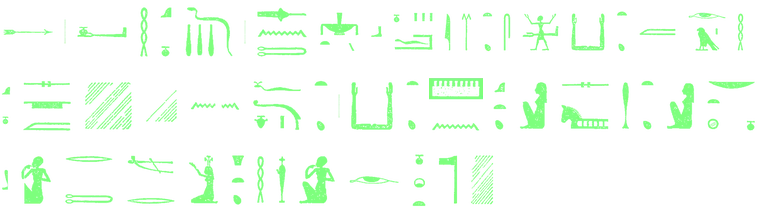
ḥnk ḥqt ḏd mdw mn n.ṯ nbtj prj jm.ṯ sḥꜥj kꜣ.ṯ m jrt Ḥr ḥqt sꜥm.ṯ jm.s wnf jb.ṯ kꜣt Mnqt ḥr sḫntš ḥmt.ṯ nbt tḫ r.ṯ Mrt ḥnwt ḥst jrjt .. ... ... n Psḏt
Offering beer. Words to be spoken:
Take the nebty-beer that came forth from you;
gladden your ka with the Eye of Horus, the beer.
When you drink of it, your heart is glad.
Menqet’s handiwork delights Your Majesty,
for you are the Lady of Strong Drink,
Meret, mistress of song, who makes … for the Ennead.Note · Line 228
The Eye of Horus, lost and restored in myth, is a model for the gift returned to a god in ritual. Menqet is a goddess of brewing; the Ennead is a company of nine gods. - 229

nswt bjt (… …) sꜣ Rꜥ (… …) pꜣ nṯr mrj mwt.f
The King of Upper and Lower Egypt, Ptolemy X, the Son of Ra, Ptolemy X, the god who loves his mother.
Note · Line 229
“Who loves his mother” gives the sense of the king’s Greek title Philometor. - 230
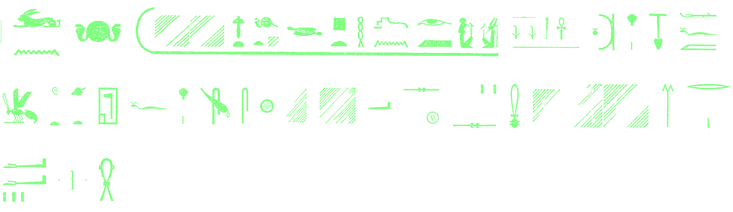
wnn nswt bjt (… …) ḥr smꜣt.f m bjtj ḫnt ḥt nṯr.f ḥr sšm ... ... ... ... ... ... ... ... ... sw mj ... ... ... ... ... ... m rꜣ ꜥwj.f
The King of Upper and Lower Egypt, Ptolemy X, is on his throne as king of Lower Egypt in his temple. He brings forward … He is like … through the work of his hands.
- 231

Bḥdtj nṯr ꜥꜣ nb pt
The Behdetite, the great god, lord of the sky.
- 232
rdj.j n.k ꜣḫt ksj.tj ẖr jḫt.s ḥsmn.k nṯr nb r mrwt.k
I give you the field bowed beneath its produce, that you may feed every god as you please.
- 233
ḏd mdw jn Nbt ḥt wdjt nsr ḫnt Wṯst Ḥr ꜣḫt nfrt r Psḏt ꜥnt wrt jrjt srf sḫprt tḫt wnft n.s jb n nbtj
Words to be spoken by Nephthys, who spits fire in the Throne of Horus, the splendid one, more perfect than the Ennead, surpassingly beautiful, who makes the seref-drink and brings strong drink into being, in whom the heart of the Two Ladies rejoices.
Note · Line 233
The Two Ladies are Nekhbet and Wadjet, the goddesses who protect Upper and Lower Egypt. Their Egyptian title, nebty, echoes the name of the beer. - 234
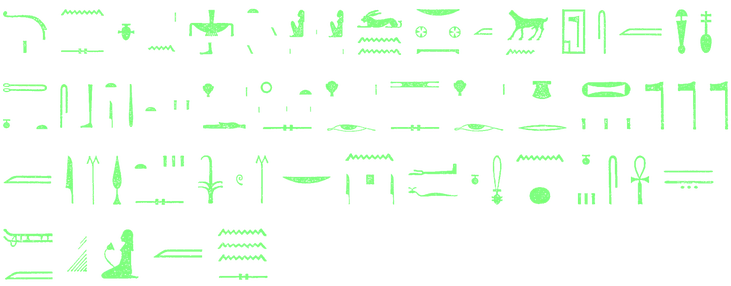
wnn nbt nwt m ẖnw ḥt nṯr.s m tpjt nfrt ntj sbṯ mdw ḥr šsp jḫt.s ḥr jrt mrjt.s ḥr jrt ẖrt nṯrw m jmꜣ.s sj m nbt npr jꜥft mjn sꜥnḫt tꜣwj tmw m jꜣdt.s
The Lady of the Sky is within her temple, the fair leader of those whose voices are merry. She receives her offering, does what she loves and provides the gods with sustenance through her fine handiwork. She is the Lady of Grain, who strains the min-liquid and keeps the Two Lands and all people alive with her sweat.
Note · Line 234
The goddess’s handiwork and her sweat are both beer. - 235

jrt snṯr qbḥw ḏd mdw mn n.k snṯr wbn ḥr sḏt snbt stj mw Ḥr Bḥdtj jw ḥm.k r jḫt.k nb sp tpj n jrt ꜣbw
Burning incense and pouring a libation. Words to be spoken:
Take the incense rising from the fire
and the senebet-jar pouring out water, O Horus of Behdet.
May Your Majesty come without cease to your offering,
O lord of the First Time.Note · Line 235
The First Time is the time of creation. - 236
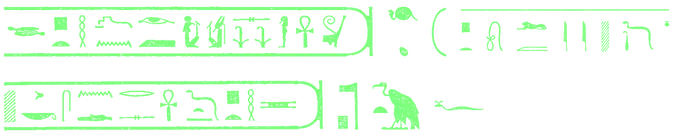
nswt bjt (… …) sꜣ Rꜥ (… …) pꜣ nṯr mrj mwt.f
The King of Upper and Lower Egypt, Ptolemy X, the Son of Ra, Ptolemy X, the god who loves his mother.
- 237
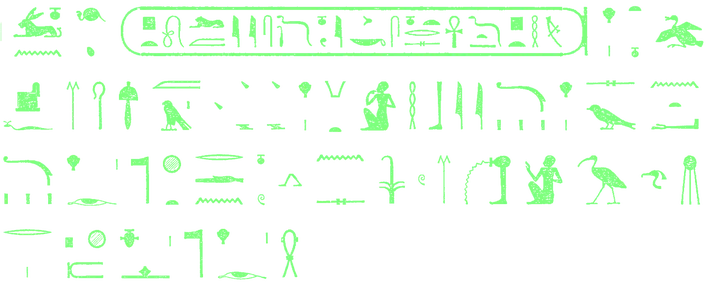
wnn sꜣ Rꜥ (… …) ḥr ṯnṯꜣt.f m ḥqꜣ mnḫ m Jdbw Ḥr ḥr šdt ḥbt ḥr swr nwt ꜥ ḥr jrt jḫt nṯr r ṯnw nw.s sw m wꜥb jqr ꜣḫ rꜣ pḫꜣ jb ḥtp nṯr ḥr jrt ḥnt.f
The Son of Ra, Ptolemy X, is on his throne, an excellent ruler on the Banks of Horus. He reads the festival liturgy aloud, celebrates the rites in splendour and performs the god’s service at each appointed time. He is a skilled purification priest, eloquent of speech and discerning of heart. The god is pleased with the offering service he performs.
- 238

Bḥdtj nṯr ꜥꜣ nb pt
The Behdetite, the great god, lord of the sky.
- 239
rdj.j n.k jḫt nbt wbnt.j ḥr.sn jmꜣḫ ḥm.k ḥr nst jt.k
I give you all that I shine upon and grant that Your Majesty may sit in honour on your father’s throne.
- 240
ḏd mdw jn Jtmw nb Tꜣwj Jwnw ḫnt Wṯst Ḥr Ḥr Bḥdtj nṯr ꜥꜣ nb pt Rꜥ m dwꜣjt Ꜥprj m ḥrj jb hrw jmꜣḫw m mšrw
Words to be spoken by Atum, lord of the Two Lands of Heliopolis, in the Throne of Horus: Horus of Behdet, the great god, lord of the sky, Ra in the morning, Khepri at midday, a venerable old man in the evening.
- 241
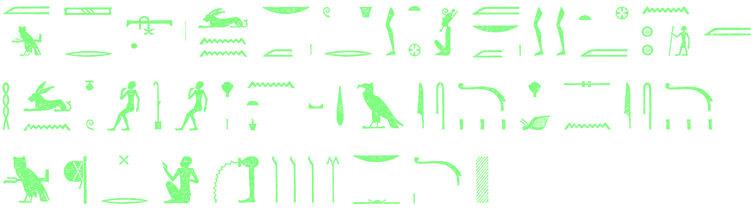
wnn nb Gs wꜥrt m nb Gs wꜥrtj m nḫḫ m ḥwn rnpj ḥr ndb ḏꜣjsw ḥr sḏm snsw m ꜥ twr wꜥb ḏbꜥw sw m nb mḏꜣwt ... ... ...... šsp nṯrw nbw snw ḥr ṯt.f
The lord of Ges-waret is lord of Ges-wareti, both an old man and a young boy. He listens to the recitations and hears the praises of the purification priest whose fingers are pure. He is lord of the books … All the gods receive offerings from his table.
- 242
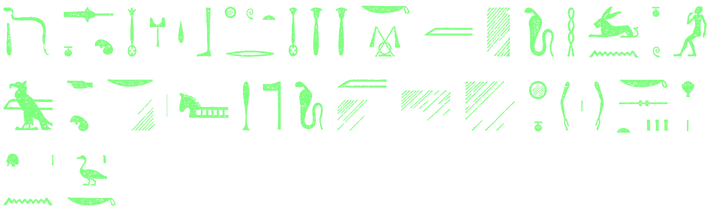
ḥnk wꜣḏtj ḏd mdw mn n.k šmꜥw ꜣbḫ.tj r mḥw wꜣḏtj.k dmḏ m sp ...k ḥwnt ꜣmm.k nbt .. ḫntš ḥm.k m .. ... ... ... ... .. sḫn.k st ḥr tp n sꜣ.k
Presenting the two cobras. Words to be spoken:
Take Upper Egypt joined to Lower Egypt,
your two cobras united as one.
May you … the maiden;
may you grasp the lady of …
May Your Majesty delight in …
May you unite them on the head of your son.Note · Line 242
The cobras are the uraei, the rearing serpents worn on the royal brow. The maiden and the lady are the crowns themselves, addressed as goddesses. - 243
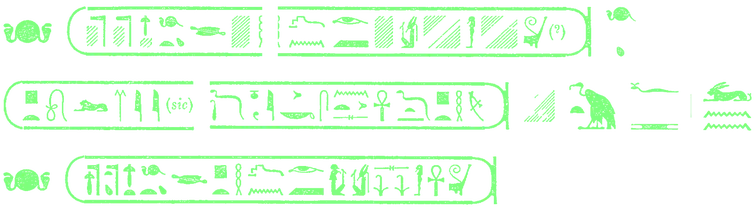
nswt bjt (… …) sꜣ Rꜥ (… …) pꜣ nṯr mrj mwt.f
The King of Upper and Lower Egypt, Ptolemy X, the Son of Ra, Ptolemy X, the god who loves his mother.
- 244
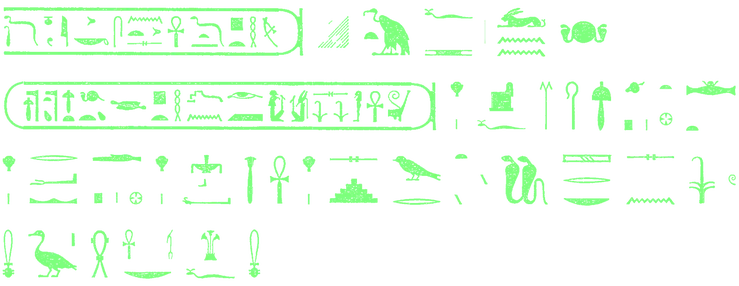
wnn nswt bjt (… …) ḥr bḥdw.f m ḥqꜣ mnḫ ḫnt P Msn ḥr rdt Pjt Ḫpjt ḥr nbt wꜣḏt ꜥnḫ ḥr sjꜥr wrtj ḫr nb.sn sw mj {ꜣ ꜣst nb rsj mḥtj jmntt jꜣbtt n.f m nḏt
The King of Upper and Lower Egypt, Ptolemy X, is on his throne, an excellent ruler in Pe-Mesen. He presents Her of Pe and Dep, adorns the brow with the Living One, and raises the Two Great Ones to their lord. He is like the Son of Isis, lord of south and north: west and east are his subjects.
Note · Line 244
Pe-Mesen is a sacred name of Edfu. The Two Great Ones are Nekhbet and Wadjet, the guardian goddesses who rise as cobras from the royal brow. The Son of Isis is Horus. - 245
Bḥdtj nṯr ꜥꜣ nb pt
The Behdetite, the great god, lord of the sky.
- 246
rdj.j n ...
I give you …
- 247

ḏd mdw jn Wṯst Ḥr snḏmt ẖr sꜣ.s nbtj rḫjt ḫwjt ṯꜣ.s nṯrt wrt twꜣt Ḥr ḥr wpt.s ḥr sḫjt.f r ꜣḫt mj ꜣḫtj
Words spoken by the Throne of Horus, who has settled beneath her son, mistress of the people, who shelters her nestling, the great goddess who bears Horus between her horns and lifts him to the horizon like the One of the Horizon.
Note · Line 247
The throne itself is a goddess here: the king it supports is her child. The One of the Horizon is the sun god. - 248
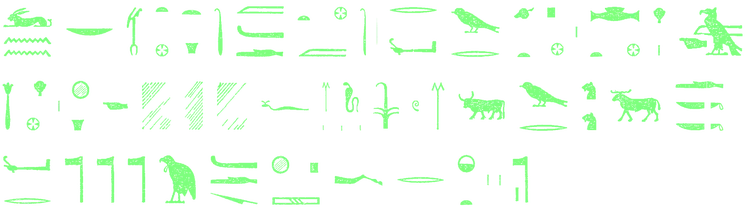
wnn nb Wꜣst ḫꜥj.tj m Bḥdt m ṯnr wr ḫnt P Msn ḥr ꜣmm šmꜥw ḥr ḫfꜥ mḥw ... ... ...f m jꜣrtj sw m kꜣ wr pḥtj bꜣ tkk r nṯrw nḥd ḫpš r Psḏt
The lord of Thebes has risen in Behdet, mighty in strength in Pe-Mesen. He grasps Upper Egypt, takes Lower Egypt in his fist, and lifts his brow with its two cobras. He is a bull of great strength, a ba fiercer in attack than the gods, mightier of arm than the Ennead.
- 249
ḥnk ḥrw ꜥ ḏd mdw mn n.k wnšt ḥr sḥbt šnbt.k prt jꜣꜣ mjn jm.s sꜣ nn ntj ḥḏt m Nḫn jw.w ... ... .. nb nḥḥ
Offering the heru-a drink. Words to be spoken: “Receive the wine that makes a feast in your breast,
the wine that holds the essence of Min.
This is the protection of the White One of Nekhen … lord of eternity.Note · Line 249
Min is a god of fertility. The White One of Nekhen is Nekhbet, goddess of the White Crown of Upper Egypt. - 250
Ḥbjw qnjw ntj ḥnwt Fꜥg ḥr mkt ḥꜥ.k r ḫftjw.k ꜥm.n.k mw ntj wgt jꜣrrt mšꜥ.k ḥꜣ.k mj snḥmw
The mighty messengers of the Mistress of Fag guard your body against your enemies.
Once you have drunk the water of chewed grapes,
your army follows at your heels like locusts.”Note · Line 250
The Mistress of Fag is Nekhbet. The ‘water of chewed grapes’ is the wine of the offering. - 251

nswt bjt (… …) sꜣ Rꜥ (… …) pꜣ nṯr mrj mwt.f
The King of Upper and Lower Egypt, Ptolemy X, son of Ra, Ptolemy X, the god who loves his mother.
- 252
wnn nswt bjt (… …) ḥr qnjt.f m ṯnr ḫnt Wr nḫt ḥr sjꜥr sšp ḥr ms šrp ḥr dr mnt n prj m šṯjt sw mj Ꜥntj jrtj jrj sꜣ ntj wtṯ sw sꜣḫ.f ḥꜥ n jt.f n Bḥdt
The King of Upper and Lower Egypt, Ptolemy X, is on his throne, the strong one in Great-in-Victory. He raises the wine, brings the grapes, and drives affliction from him who comes forth from the underworld. He is like Khenty-irty, who guards the one who begot him and gives strength to his father’s body in Behdet.
- 253

rdj.j n.k hꜣw.k n wn rḫt.sn msw.sn mj šꜥ n wḏb
“I grant you kin beyond counting,
their children like sand on the riverbank.” - 254

ḏd mdw jn Ḥr Bḥdtj sḫm ḥr Pꜣ sgmḥ n Bḥdt ṯnr prj ꜥ swḏꜣ sꜣ.f Mdw n Rꜥ ḫnt st.f ḏsrt ... ... ... ḏbꜣ ḫftjw.f
Words spoken by Horus of Behdet, mighty of countenance, the Horus-Spear in Behdet, the strong one whose arm strikes out, who keeps his son safe, the Staff of Ra in his holy place, … who punishes his enemies.
- 255
wnn Ḥḏ wr wbn n P n Rꜥ m bꜣ tkk ḫnt Jw nšnj ḥr jrt nht ḥr mkt ḥꜥ ḥr wḫr ḫt ḥr nb ꜥnḫ sw m nb nrw wr šfjt r nṯrw nn skj nn mrḥ ḏt
The Great Mace has risen in the Seat of Ra, a ba fierce in attack on the Island of Fury. He gives protection, guards the body, and cares for the Lord of Life. He is lord of dread, held in greater awe than the gods. He shall not perish or be destroyed, for all eternity.
Note · Line 255
The Great Mace is the god himself under the name of his weapon. The Seat of Ra and the Island of Fury are names for Edfu. - 256

ḥnk jrṯt ḏd mdw mn n.k ... .. mhr n Ḥsꜣt nḥfk n Sḫꜣt Ḥr
Offering milk. Words to be spoken: “Receive the milk that comes from Hesat, milked from Sekhat-Hor.”
Note · Line 256
Hesat and Sekhat-Hor are goddesses in the form of cows. - 257
nswt bjt (… …) sꜣ Rꜥ (… …) pꜣ nṯr mrj mwt.f
The King of Upper and Lower Egypt, Ptolemy X, son of Ra, Ptolemy X, the god who loves his mother.
- 258
wnn sꜣ Rꜥ (… …) ḥr dnjt.f m twr wꜥb ḏbꜥw ḥr rdt sšp ḥr ms mw ḥsj ḥr sꜥnḫ ẖrdw m ẖrt sw mj Jnpw sꜣ Ḥsꜣt nb wpt šdj nḫnw m jrṯt ḥḏt
The son of Ra, Ptolemy X, is on his throne, a purification priest with clean fingers. He gives milk, brings the praised draught, and keeps the children alive with the milk they need. He is like Anubis, son of Hesat, lord of the horned cattle, who rears the little ones on white milk.
- 259

Bḥdtj nṯr ꜥꜣ nb pt
The Behdetite, the great god, lord of the sky.
- 260
Jḥj wr sꜣ Ḥt ḥr
Ihy the Great, son of Hathor.
- 261
rdj.j n.k ḥꜥ.k wꜥb.tj r ꜥb swḏꜣ.n.j twk r sḏb nb ḏw
“I grant that your body be free of impurity; I have kept you safe from every evil that could befall you.”
- 262
ḏd mdw jn Ḥr {mꜣ tꜣwj pꜣ ẖrd sꜣ Ḥt ḥr ḥwn nfr prj m Rꜥ Jtmw pw nṯr ꜥꜣ ḥrj jb Bḥdt bsj.n.f Ḥꜥpj r ẖrt.f
Words spoken by Harsomtus the Child, son of Hathor, the fair youth who came forth from Ra. He is Atum, the great god who dwells in Behdet; he has brought forth the Nile flood for his own needs.
Note · Line 262
Harsomtus means ‘Horus who unites the Two Lands.’ Here the child is also Atum, the creator god. - 263

wnn ... ... wnm jḫt nt Štꜣt .. Mnw sw m Ḥr sꜣ Wsjr ... ... ... ... ... ...
… consumes what Shetat produces … Min. He is Horus, son of Osiris …
- 264
ḫrp wꜣḏ rꜣw ḏd mdw ḫrp.j wꜣḏ ḫr.k Pj Msnj . ... ... ... .. ... ... ... ... ... ... ... snm n.k rꜣw m hꜣmw.sn jrjw pt ... ... ... ... ... ...
Presenting papyrus and geese. Words to be spoken: “I offer you papyrus, O you of Pe and Mesen … Feast on the geese from their fowl yards, the birds of the sky …”
- 265

nswt bjt (… …) sꜣ Rꜥ (… …) pꜣ nṯr mrj mwt.f
The King of Upper and Lower Egypt, Ptolemy X, son of Ra, Ptolemy X, the god who loves his mother.
- 266

wnn nswt bjt (… …) ḥr .. ... ... ... ḥr sjꜥr rꜣw ḥr sḥꜥꜥ ṯꜣwj m ẖꜣt jdḥw sw mj ḫntj wꜣrt.f sḫt ... ... ... ... ...
The King of Upper and Lower Egypt, Ptolemy X, is on his throne … He holds the geese aloft and gladdens the young Horus with the catch from the Delta marshes. He is like the Foremost of His Snare, who catches …
- 267
wnn ... ... ... m ꜥwj sꜣ.sn ntj ḥr nst.sn st m nbw .. m tꜣwj ḥnꜥ jdbw ḫꜣswt ḥrjwt r ḥmw n kꜣ.sn
… in the arms of their son, who sits on their throne. They are lords … in the Two Lands and the lands along the banks; the distant foreign lands are servants to their ka.
- 268
ḥnk ꜥnḫ ḏd wꜣs ḏd mdw mn n.k tjt.k tn ... ... .. n jt.k mwt.k ...k jm .. ... ... ḥꜥj jb.k m snn.sn Šw m ꜥnḫ Tfnt m wꜣs ḥr swḏꜣ ḥm.k m ḏd
Offering the ankh-djed-was. Words to be spoken: “Receive this image of yourself … your father and your mother … there …
Your heart rejoices in their likeness.
Shu is the ankh, Tefnut the was;
they keep Your Majesty safe as the djed.”Note · Line 268
The offering joins three signs in one emblem: the ankh means life, the djed pillar stability, and the was scepter dominion. - 269
nswt bjt (… …) sꜣ Rꜥ (… …) pꜣ nṯr mrj mwt.f
The King of Upper and Lower Egypt, Ptolemy X, son of Ra, Ptolemy X, the god who loves his mother.
- 270

wnn sꜣ Rꜥ (… …) ḥr ... ... ... ... ... nb.s sw mj Ḥr mḥ jb n qmꜣ sw sḏdj.f jt.f ḫnt nṯrw
The son of Ra, Ptolemy X, is on his throne … her lord. He is like Horus, whom his maker trusts, who makes his father endure among the gods.
- 271

ḏd mdw jn .. ... .. ḫnt Wṯst Ḥr ... spdt ḥnwtj Sšꜣt wrt ... ... ... ... ḥqꜣt mḏꜣwt
Words spoken by … in the Throne of Horus … she of the two sharp horns, Seshat the Great, … mistress of books.
Note · Line 271
Seshat is the goddess of writing and recordkeeping. - 272
wnn nṯrw wrw ḫnt Bḥdt m jtjw m Ḥr mꜥꜣ.tj ḥr šsp ꜥnḫ ḥr ḫfꜥ wꜣs ḥr snsn ... .. ḥr ꜥwj sꜣ.sn st m ... ... ... ... gsw prw mn ẖr ẖntj.sn
The two great gods are in Behdet as rulers in Horus-Is-Vindicated. They receive the ankh, grasp the was, and unite with … on the arms of their son. They are …; the temples endure with their images within them.
- 273

ḥnk jrp ḏd mdw rd šꜣ ḫnt w m Mꜣꜣ Ḥr ꜣḫꜣḫ.f ḫntj rꜣ jb.k ... ... ... ... ... .. ẖr wnš.f dns.f n.k ẖr jḫt.f ... ... ... ...
Offering wine. Words to be spoken: The vineyard grows in the fields of Maa-Hor;
it makes the darling of your heart flourish … beneath its clusters.
For you it hangs heavy with its fruit …Note · Line 273
The darling of the god’s heart is the grapevine. - 274

... ... ... ... ... nṯrw rmṯw m ḫnm.k ... ... ... ... ... ... ... ... ... Psḏt.k m jrt Ḥr
… gods and mortals when you breathe in … your Ennead with the Eye of Horus.
Note · Line 274
The wine is offered as the Eye of Horus: the return of the injured god’s eye, made whole again, is a model for the ritual gift. - 275
nswt bjt (… …) sꜣ Rꜥ (… …) pꜣ nṯr mrj mwt.f
The King of Upper and Lower Egypt, Ptolemy X, the Son of Ra, Ptolemy X, the god who loves his mother.
- 276
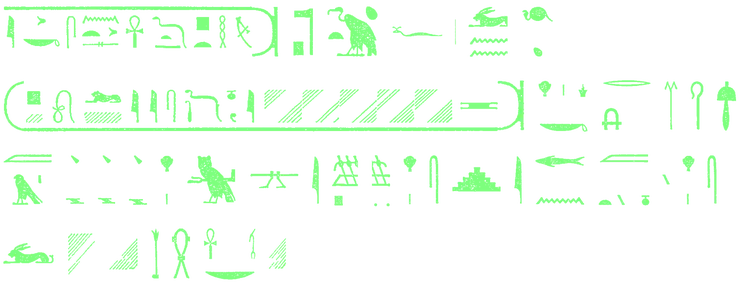
wnn sꜣ Rꜥ (… …) ḥr bkr.f m ḥqꜣ mnḫ m Jdbw Ḥr ḥr ms sšp ḥr sjꜥr jnmt ḥr swnf .. ... sw mj ... ... ... šꜣ ḫr jt.f bsj n.f ꜣḫt m jḫt nbt
The Son of Ra, Ptolemy X, is on his throne, a worthy ruler on the Banks of Horus. He brings wine, lifts the inemet-wine high and gladdens … He is like … who offers wine to his father, for whom the field brings forth every kind of fruit.
Note · Line 276
The king approaches the god as a son bringing a gift to his father. - 277

Bḥdtj nṯr ꜥꜣ nb pt
Horus of Behdet, the great god, lord of the sky.
Note · Line 277
Horus, who receives the wine, now tells the king what he gives him in return. - 278
rdj.j n.k rd nb ḥr sꜣ tꜣ ḥrrt prḫ.sn n wbn.k
I give you all that grows on the back of the earth, and I grant that the flowers bloom at your rising.
- 279
ḏd mdw jn Ꜥnsw nṯr ꜥꜣ ḥrj jb Bḥdt jmn sḫrw m St wrt bjk wr pḥtj ḥr tp n dndn bꜣ.f m sjꜣw sꜣ.f ḥꜣ ḥḏ.f
Words to be spoken by Khonsu, the great god who dwells in Behdet, whose plans are hidden in the Great Seat, the mighty falcon who stands on the head of the Raging One. His ba is a falcon; his protection surrounds his shrine.
Note · Line 279
The Great Seat is Edfu. A god’s ba is his power to be present and active in a form such as the falcon here. - 280
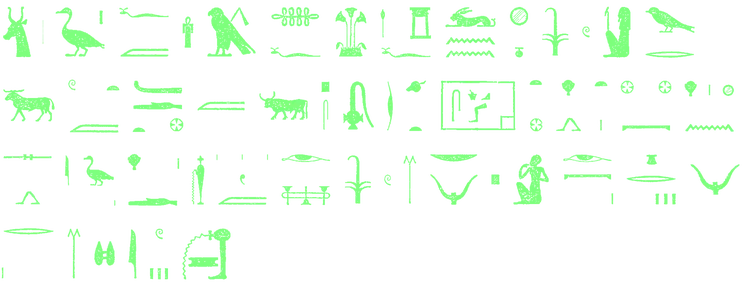
wnn Ꜥnsw wr bꜣ.tj m Bḥdt m kꜣ psj ḫnt Ḥt sbq ḥr nmt nwt ḥr ḫns sꜣṯw ḥr šsp qbḥw.f m jrt Ḥr sw m nb wpt jrj ḥrjw ẖrjw wpj rꜣ.f m jrp jw.w wꜥb
Khonsu the Great is mighty in Behdet as the Fiery Bull in the House of the Leg. He strides across the sky, roams the earth and receives his libation in the form of the Eye of Horus. He is the lord of parting, who made those above and those below; he parts his lips for the pure wine.
Note · Line 280
The word for roaming echoes the name of Khonsu, the moon god who travels across the sky. - 281

ḥnk t ḥqt ḏd mdw t r ḫḫ.k ḥqt r štꜣt.k jḫt nbt nfrt r ẖnw hn.k ꜥḥꜥ.k ḥmsj.k jm.sn jw.w wꜥb bꜥḥj kꜣ.k m jrt Ḥr
Offering bread and beer. Words to be spoken: Bread to your throat, beer to your body, every good thing to your belly!
May you take your seat and eat of them, for they are pure;
may your ka overflow with the Eye of Horus. - 282

ḥw m ḥr.k ḏfꜣ m bꜣḥ.k snm.k jm.sn r ḏr jb.k jr.k m ꜥb nṯrw smꜣ.k jḫt m sḫmw dbḥt.k pw ḥtp.k ḥr.s
Food is before your face, provisions are before you.
May you eat of them to your heart’s content;
may you eat among the gods and dine with the mighty ones.
This is the fare you need; may you be satisfied with it. - 283
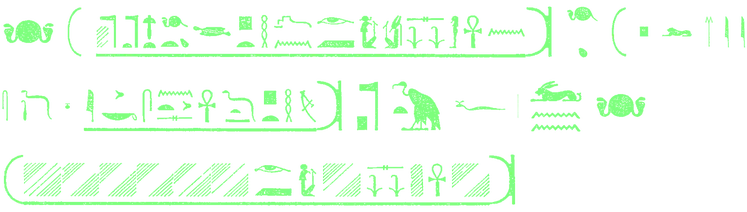
nswt bjt (… …) sꜣ Rꜥ (… …) pꜣ nṯr mrj mwt.f
The King of Upper and Lower Egypt, Ptolemy X, the Son of Ra, Ptolemy X, the god who loves his mother.
- 284
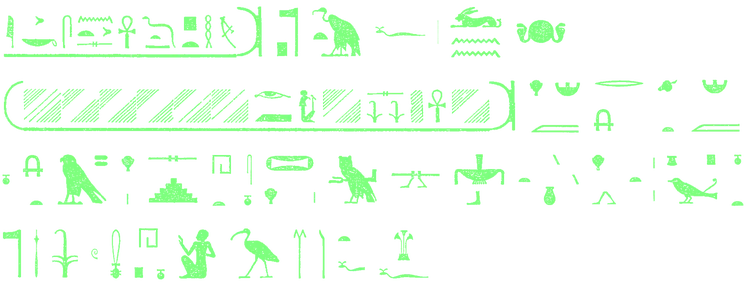
wnn nswt bjt (… …) ḥr ḥmr.f ḫnt Ḥmr ntj Ḥr ꜣḫtj ḥr sjꜥr hꜣṯt ḥr ms nbtj ḥr .. gp ntj nṯr ꜥꜣ sw mj hpn jqr m wnwt.f sḫntš nṯrw m rꜣ ꜥwj.f
The King of Upper and Lower Egypt, Ptolemy X, is on his throne in the Throne of Horakhty. He lifts the hatjet-loaf high, brings the beer and banishes hunger and thirst from the great god. He is like the cupbearer, deft in his hour of service, who gladdens the gods with the work of his hands.
Note · Line 284
The Throne of Horakhty is Edfu, named here for Horus of the Two Horizons. - 285
Bḥdtj nṯr ꜥꜣ nb pt
Horus of Behdet, the great god, lord of the sky.
- 286

rdj.j n.k jḫt nbt rdjt pt qmꜣt tꜣ dnjt nt ḥtp nṯr
I give you all that the sky bestows and the earth creates, and the allotted shares of the divine offering.
- 287

ḏd mdw jn Ḥr {mꜣ tꜣwj nb Ꜥꜣ dj nṯr nṯr ꜥꜣ ḥrj jb Jwnt sḫm n Rꜥ ḫnt Bḥdt sꜣ tꜣ wr prj m jrt Rꜥ bꜣ ꜥnḫ ḥr nḫb m mꜥnḏt.f
Words to be spoken by Harsomtus, lord of Khadi-netjer, the great god who dwells in Dendera, the image of Ra in Behdet, the great serpent who comes forth from the Eye of Ra, the living ba on the lotus in his day bark.
Note · Line 287
The lotus evokes the sun rising from the flower at creation. The day bark is the boat in which the sun crosses the sky. - 288
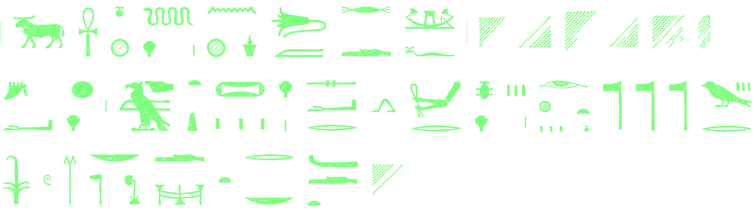
wnn ... ... ... ... ... ... ... ḏr ꜥ ḥr ꜣmm t ḥr sꜥmt ḏsr ḥr jrt jḫt n nṯrw wrw sw m nb Ꜥꜣ dj nṯr ... r nb Bḥdt ... ... ...
… has been since the beginning. He grasps the bread, drinks the beer and makes offerings to the great gods. He is the lord of Khadi-netjer … to the lord of Behdet …
- 289
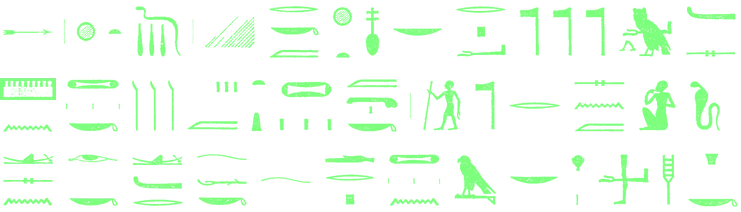
fꜣt jḫt ḏd mdw ... ... r.k m jḫt nbt nfrt rpꜥt nṯrw mj ḥsmn.k ḏbꜥw ḥfnw m t m bꜣḥ.k sr wr snm.k jm.sn jr.k jm ḥnꜥ jmjw ḫt.k drpw n nṯr nb ḥr ꜥbꜣ.k
Bearing the offerings. Words to be spoken: … to you with every good thing!
Prince of the gods, come and eat the loaves before you by tens of thousands and hundreds of thousands!
Great prince, may you feed on them, may you eat of them with those who follow you.
The food offerings of every god are on your altar. - 290
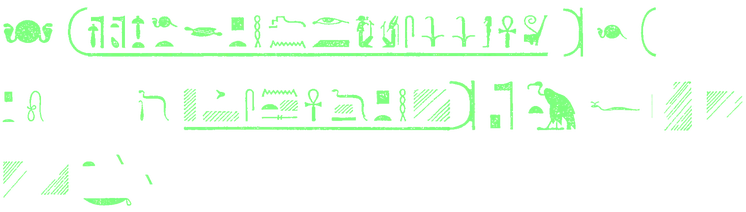
nswt bjt (… …) sꜣ Rꜥ (… …) pꜣ nṯr mrj mwt.f
The King of Upper and Lower Egypt, Ptolemy X, the Son of Ra, Ptolemy X, the god who loves his mother.
- 291
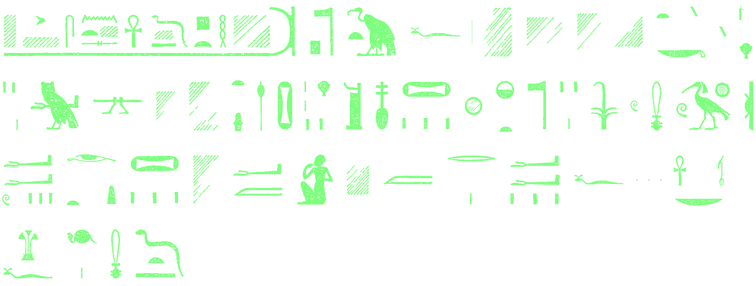
wnn sꜣ Rꜥ (… …) ḥr mkt rdwj ḥr ms .. ḥr.. ... t ḥḏ ḥr wṯs nfrw ḫr Pꜣwtjw sw mj ꜣḫ ꜥwj jrj t ... snm nṯr nb m rꜣ ꜥwj.f
The Son of Ra, Ptolemy X, is on his throne. He brings … and … white bread, and lifts the perfect offerings before the two primeval ones. He is like the one of skillful hands, who makes bread … and feeds every god with the work of his hands.
Note · Line 291
The two primeval ones are Geb, the earth god, and Nut, the sky goddess.