~/sacred-texts/edfu-temple-texts
Edfu Temple Inscriptions: The Lion Who Laps the Rebel’s Blood
- Text
- Edfu Temple Texts, Edfou VII, pp. 290–330
- Date
- Carved under Ptolemy IX and Ptolemy X Alexander (c. 116–88 BC) on the outer face of the enclosure wall of the temple of Horus at Edfu; these scenes name Ptolemy X and his mother Cleopatra III
- Found
- Outer face of the enclosure wall, temple of Horus, Edfu, Upper Egypt; still in place
- Language
- Ptolemaic Egyptian · Hieroglyphic
Ptolemy X walks the outer wall of Horus’s temple scene by scene, handing each god a gift and getting a promise back. He brings Maat, incense, myrrh, cloth, crowns, a lotus and Egypt itself. I have come to you, he says; the god answers Come in peace and pays in harvests, tribute and dead enemies.
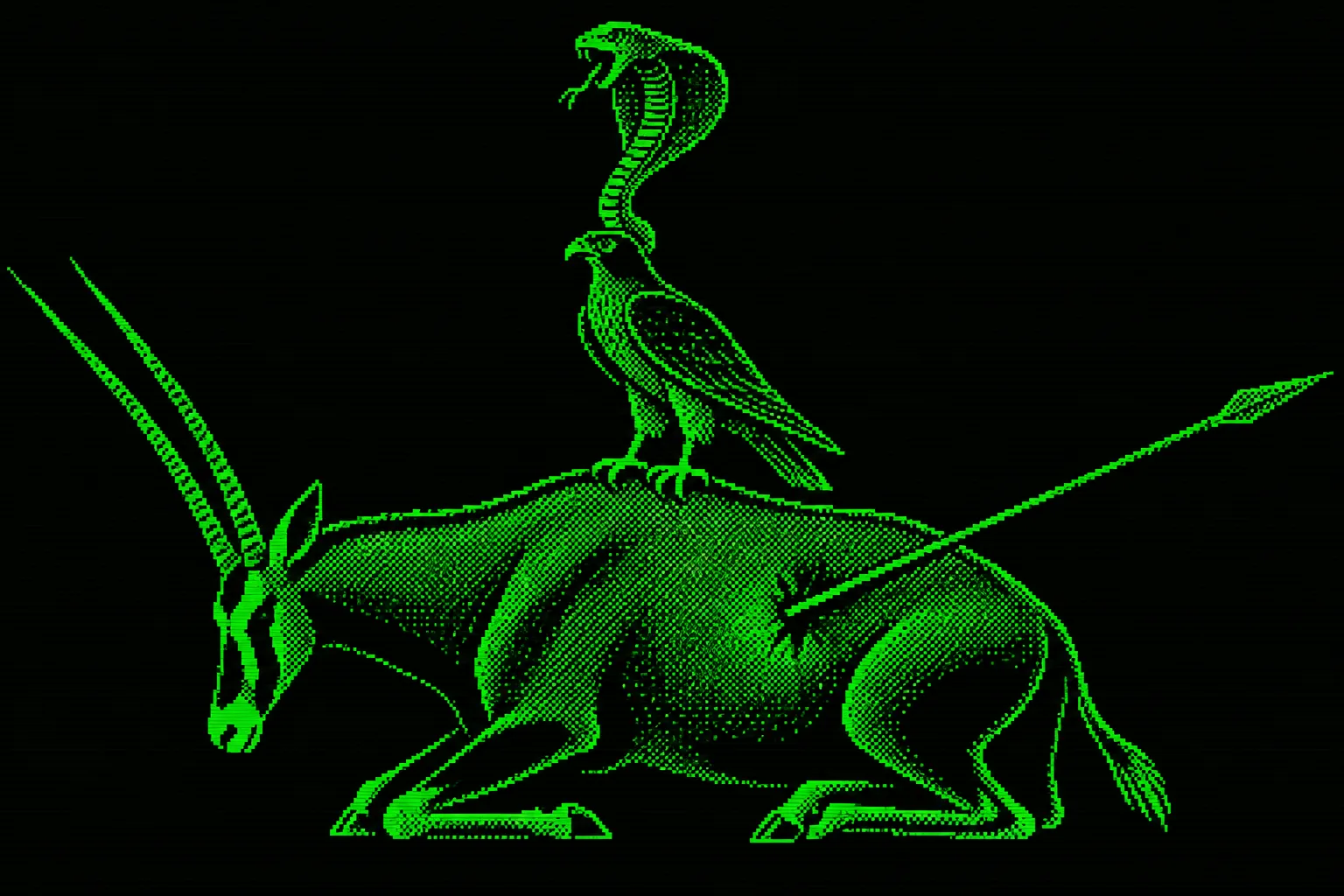
Much of the giving is killing. The king stabs Seth, slaughters the ox, butchers the turtle and gouges out the eyes of the oryx that is Seth. His mother Cleopatra III says of the slaughtered flock: look, they are images of your rebels. Horus is the lion who laps the rebel’s blood, the falcon who tears out traitors’ hearts.
- 1

rdj.j n.k jḫt nbt ḫprt ḥr sꜣ tꜣ ḥr nb sꜣj.tj m ptr.k
I give you all that comes into being on the back of the earth, and I grant that everyone shall eat their fill at the sight of you.
- 2

ḏd mdw jn Gbb rpꜥt nṯrw nṯr ꜥꜣ ḫnt Bḥdt ḥqꜣ wr ḫntj nṯrw sḫm ꜥꜣ prj m Rꜥ wr djw wtṯ.n.f djw
Words to be spoken by Geb, prince of the gods, the great god in Behdet, the mighty ruler, foremost of the gods, the great power who came forth from Ra, the Great One of the Five, who begot the Five.
Note · Line 2
The Five are the children of Geb and Nut: Osiris, Horus the Elder, Seth, Isis and Nephthys. - 3

ḏd mdw jn Nwt wrt msjt nṯrw sšmwt ꜥꜣt ḫnt Bḥdt mwt nṯr ntj nṯr djw sꜣt Rꜥ swḏꜣt ṯꜣw.s
Words to be spoken by Nut the Great, who gives birth to the gods, the guiding cobra, great in Behdet, divine mother of the five gods, daughter of Ra, who keeps her children safe.
- 4
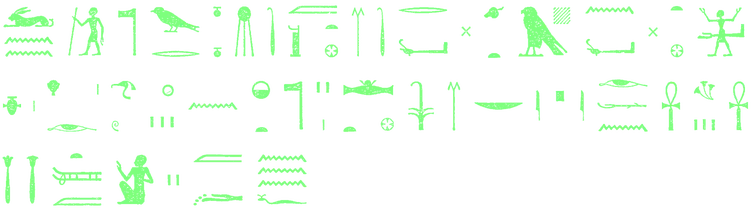
wnn sr wr wbn.tj m Wṯst m ṯnr ḫnt Wr nḫt ḥr .. .. ḥr ḥꜥt jb.f ḥr jrt ꜣḫt n Psḏt Msn sw m nb npr jrj ḫt n ꜥnḫ ꜥnḫ tꜣwj tmw m jꜣdt.f
The great prince has risen in the Throne Seat as the Strong One in Great-in-Victory. He …, gladdens his heart and prepares delicacies for the Ennead of Mesen. He is lord of grain, who brings forth the plants that give life; the Two Lands and all humankind live on what flows from him.
Note · Line 4
The Throne Seat, Great-in-Victory and Mesen are names of Edfu. The Two Lands are Upper and Lower Egypt. - 5
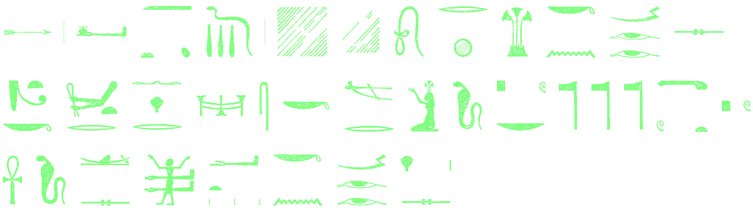
ḥnk mꜣꜥt ḏd mdw ... ... ... ... wꜣḫj ḥꜥ.k n mꜣꜣ.s tjt.k ḏsrt n ḥrj.s r.k mrt.k pw nb nṯrw mtwt pw ꜥnḫ.k jm.s ḥꜥj ꜥwt.k n mꜣꜣ ḥr.s
Offering Maat. Words to be spoken: … At the sight of her your flesh blooms.
She is your sacred image, never far from you.
She is your throat, lord of the gods; she is the semen by which you live.
Your limbs rejoice at the sight of her face.Note · Line 5
Maat is both the goddess and the right order of the world. The king offers her image to the god as sustenance. - 6
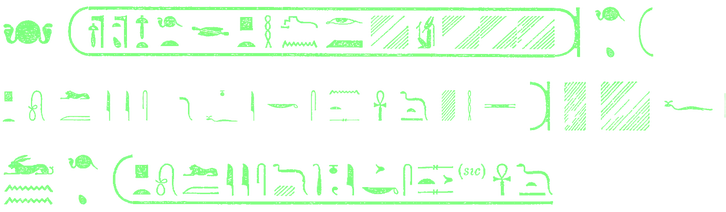
nswt bjt (… …) sꜣ Rꜥ (… …) pꜣ nṯr mrj mwt.f
The King of Upper and Lower Egypt, Ptolemy X, the Son of Ra, Ptolemy X, the god who loves his mother.
- 7
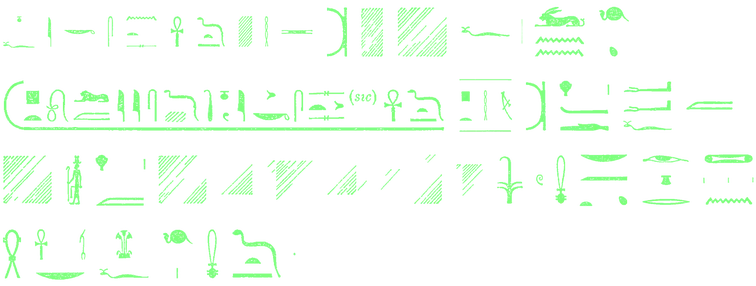
wnn sꜣ Rꜥ (… …) ḥr ḥꜥt.f m jtj wr ḥr . ... ... ... ... ... ... ... sw mj nb mꜣꜥt jrj ẖrt nt nṯrw mr nwt jwtj rdt ḥr gs
The Son of Ra, Ptolemy X, is on his throne-couch as a great sovereign, and he … He is like the lord of Maat, who provides for the gods, the governor of the city who takes no sides.
- 8
Bḥdtj nṯr ꜥꜣ nb pt
Horus of Behdet, the great god, lord of the sky.
- 9
rdj.j n.k ... ... ... ... ... ... jsft ... ... ... ... ...
I give you … injustice …
- 10

ḏd mdw jn Jmn Rꜥ ... ... ... ... Bḥdtj nṯr ꜥꜣ nb pt bjk nṯrj wbn m nṯrj snsn Wꜣst m nb srḫ
Words to be spoken by Amun-Ra …, Horus of Behdet, the great god, lord of the sky, the divine falcon who rose from the divine heart, who joined himself to Thebes as lord of the palace façade.
- 11

ḏd mdw jn Mwt wrt nbt Jšrw Ḥt ḥr nbt Tꜣ rr ḫntt Jwnt Rꜥjt wrt jwtt snnwt.s mḥt pt tꜣ m nfrw.s
Words to be spoken by Mut the Great, lady of Lake Isheru, Hathor, lady of Tarer, foremost in Dendera, Raet the Great, who has no equal, who fills sky and earth with her beauty.
Note · Line 11
The titles bring together Mut of Thebes and Hathor of Dendera. Tarer is Dendera; Raet is the goddess named as the female counterpart of Ra. - 12
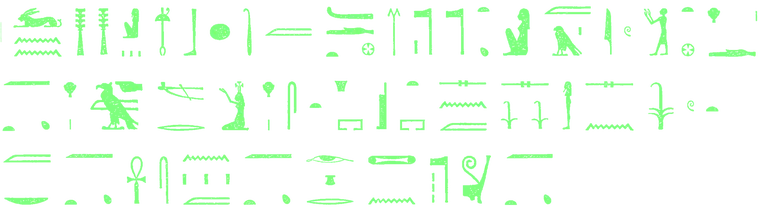
wnn Ḏdw wbn.tj m Bḥdt m nṯr nṯrt m Jꜣw Ḥr ḥr šsp mꜣꜥt ḥr ꜣmm Mrt ḥr swsḫ st.sn m snn.sn st m nbw mꜣꜥt ꜥnḫ.sn m mꜣꜥt jrj ẖrt nt nṯrw n mꜣꜥt
The Two Enduring Ones have risen in Behdet, god and goddess in Praise-of-Horus. They receive Maat, clasp Meret, and raise their rank with their likeness. They are the lords of Maat: they live on Maat and make for the gods the Maat they need.
Note · Line 12
Behdet and Praise-of-Horus are names for Edfu. - 13
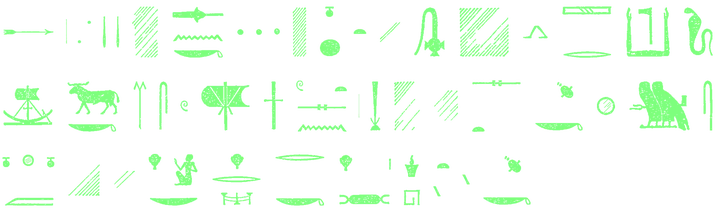
jrt snṯr ḏd mdw mn n.k snṯr wbn ḥr ḫt ... ... ḫr kꜣ.k ḫntj bꜣ.k m swḥ jmj wtj.sn snsn.k sṯj.k ḫr m m.sn ḫnm .. ... ḥr nb ḥrj r.k ḥr ꜥḏ bhd.k
Burning incense. Words to be spoken: “Take for yourself the incense that rises from the fire … to your ka. When your ba passes like wind through the incense, you mingle there with your own fragrance. Everyone breathes …; even one far from you catches your scent.”
Note · Line 13
The ka is the god’s sustaining life force; the ba is his power to move and make himself present, here as wind. - 14
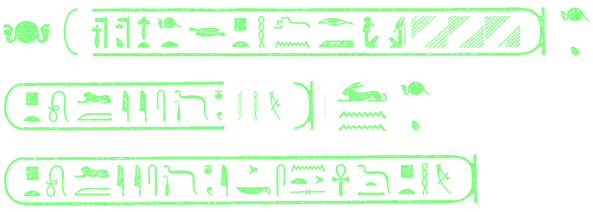
nswt bjt (… …) sꜣ Rꜥ (… …) pꜣ nṯr mrj mwt.f
The King of Upper and Lower Egypt, Ptolemy X, the Son of Ra, Ptolemy X, the god who loves his mother.
Note · Line 14
“Who loves his mother” is the royal cult title known in Greek as Philometor. - 15
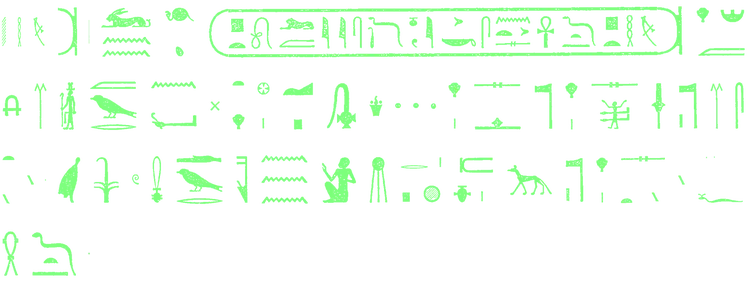
wnn sꜣ Rꜥ (… …) ḥr ḥmr.f m jtj m Wr nḫt ḥr kꜣp snṯr ḥr sḥtp nṯr ḥr sḥꜥꜥ sḫm nṯr m sṯj ḥḏt sw mj twr ꜣḫ rꜣ pḫꜣ jb jw nṯr ḥr sṯj.f
The Son of Ra, Ptolemy X, sits on his throne as sovereign in Great-in-Victory. He burns incense, contents the god, and gladdens the god’s image with the scent of the White One. He is like the Purifier, eloquent of mouth and discerning of heart, at whose scent the god comes.
Note · Line 15
Great-in-Victory is Edfu. The White One is Nekhbet, the vulture goddess of Upper Egypt. - 16
Bḥdtj nṯr ꜥꜣ nb pt
He of Behdet, the great god, lord of the sky.
- 17
rdj.j n.k Pwnt ẖr prjt jm.f Tꜣ nṯr ẖr wnt jm.f
“I give you Punt with what comes forth from it,
and God’s Land with what it holds.”Note · Line 17
Punt was a source of the aromatic resins burned in Egyptian temples. - 18
ḏd mdw jn Ḥr m Nḫn nswt nṯrw nṯr ꜥꜣ nb pt sꜣb šwt m Jꜣt sꜣb šwt kjj wꜥb ḥꜥ ḫntj Jrt Rꜥ
Words spoken by Horus in Nekhen, king of the gods, the great god, lord of the sky, the Dapple-Plumed One in the Place of the Dapple-Plumed One, a second Pure-of-Body, foremost in the Eye of Ra.
Note · Line 18
Nekhen was an ancient seat of Horus in Upper Egypt. Pure-of-Body is Shu, the god of air. - 19
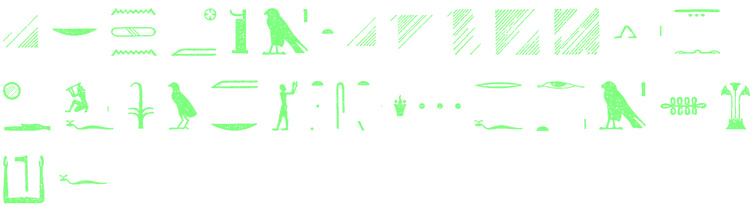
wnn nb Nḫn m Wṯst Ḥr .. ... ... ... ... ... ... .. ḥr nmt tꜣ n ḫftjw.f sw m nb ꜥntjw sṯj snṯr r.f jrt Ḥr sꜣ.f ḥꜣ kꜣ.f
The Lord of Nekhen is on the Throne of Horus … He strides across the earth; none of his enemies is there. He is lord of myrrh; the scent of incense is his. The Eye of Horus spreads its protection around his ka.
Note · Line 19
Here the incense itself is the Eye of Horus: its fragrance surrounds the god. - 20

ḥnk ꜥbbt ḏd mdw ꜥbbt.k n.k nt wnp rqww.k jnjn sbjw jmjw mw bjꜣ nṯr.k pw sḫr ... ... ... ... ...
Presenting the abebet-harpoon. Words to be spoken: “Here is your abebet-harpoon, with which you kill your foes and drive back the rebels in the water. It is your divine metal that fells …
Note · Line 20
The metal is the harpoon head. The rebels are hippopotamuses; Nehes, named in the next line, is Seth in this guise. - 21

nhs gbgb qmḥw.f jmj wtj ẖꜣkw jb.k kꜣwt ꜥ kꜣ.tw r ḥm.k
Nehes; his … lies battered amid your foes. ‘He of the Upraised Arm’ is what they call Your Majesty.”
- 22
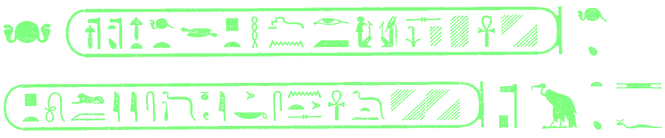
nswt bjt (… …) sꜣ Rꜥ (… …) pꜣ nṯr mrj mwt.f
The King of Upper and Lower Egypt, Ptolemy X, the Son of Ra, Ptolemy X, the god who loves his mother.
- 23

wnn sꜣ Rꜥ (… …) ḥr ... ... ... ... ... .. ḥr wdt r sꜥrq ḥr . ... .. ḥr stj msḥw sw mj ḏrtj ꜥḫj . ... jnj kꜣp jrj tšmm m ꜥn ꜥwj
The Son of Ra, Ptolemy X, sits on his throne … He strikes until nothing is left, … and spears the crocodiles. He is like the falcon that lifts …, hauls in the lurkers, and twists back the crocodiles’ claws.
- 24
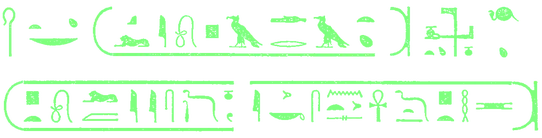
ḥqꜣt nbt tꜣwj (… …) mwt nṯr nt sꜣ Rꜥ (… …)
The ruler, the Lady of the Two Lands, Cleopatra III, divine mother of the Son of Ra, Ptolemy X:
- 25

sꜣ.k mrj.k sjꜥr n.k ... ...k r sḫtḫt sbjw.k wjn mw.k
“He is your son, whom you love. He holds up your … to you, to drive back the rebels who rose against you.”
- 26
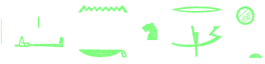
rdj.j n.k pḥtj r smꜣ ḫftjw.k hrw bs.k r skw
“I give you strength to kill your enemies on the day you enter the fray.”
- 27
ḏd mdw jn Ḥr Bḥdtj nṯr ꜥꜣ nb pt Nb Msn sꜣb šwt prj m ꜣḫt jwꜥw mnḫ msj.n ꜣst ḫpr m nswt r nḥḥ
Words spoken by Horus of Behdet, the great god, lord of the sky, lord of Mesen, dappled of plumage, who comes forth from the horizon, the worthy heir whom Isis bore, who became king for all eternity.
- 28
wnn Bḥdtj bꜣ.tj ḫnt Bḥdt mj Rꜥ ḫnt msktt ḥr jrt ꜥḏt ḥr dbdb sbj ḥr wnp ... ... ... sw m kꜣ wr pḥtj qnj sw r qnw wdj r sꜥrq m ḫftjw.f
He of Behdet is mighty in Behdet like Ra in the Mesektet bark. He wreaks slaughter, stabs the rebel, and kills … He is the bull of great might, stronger than the strong; he strikes his enemies until none is left.
Note · Line 28
The Mesektet is the bark in which the sun god makes his night journey. - 29
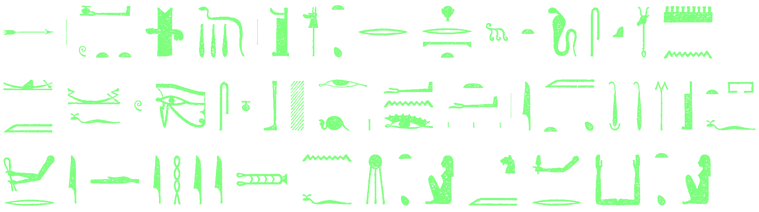
ḥnk wnšb ḏd mdw ṯsj ḥꜣt.ṯ r ḥrw ḥrjt tp srq ḥtjt mnj m wjꜣ.f wḏꜣt snb.tj jrt Rꜥ ꜥn ḫꜥw jm.ṯ mn.tj m st.f ḏsr jtn ꜥḥ.n.f jꜣḫw.ṯ pḥtj m ḏsr kꜣ.ṯ
Presenting the wenesheb. Words to be spoken: “Lift your head high, O brow-serpent;
give breath to the throat of him who moors in his bark.
The Sound Eye is whole, O Eye of Ra, fair in your appearing.
Your pupil is firm in its place;
splendid is the moon disk now that it has caught your sunlight,
whose strength comes from the offering of your ka.”Note · Line 29
Hathor is the cobra on Ra’s brow, his solar Eye. The other eye, the Wedjat or Sound Eye, is the moon, which here catches its light from hers. - 30
nswt bjt (… …) sꜣ Rꜥ (… …) pꜣ nṯr mrj mwt.f
The King of Upper and Lower Egypt, Ptolemy X, the Son of Ra, Ptolemy X, the god who loves his mother.
- 31
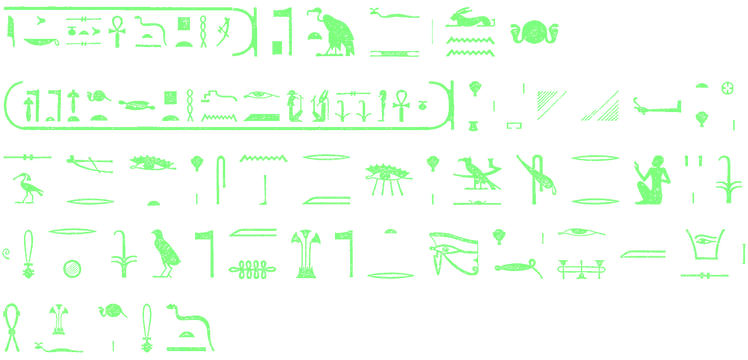
wnn nswt bjt (… …) ḥr nst.f ḫnt Ḥt qn ḥr sꜣḫt mrt ḥr snb rmjt ḥr mꜣw sšmt rmṯw sw mj rḫ sw m sꜣ ḥꜣ nṯrt ḥr mḥ jrt Ḥr m dbḥw.s
The King of Upper and Lower Egypt, Ptolemy X, sits on his throne in the House of the Strong One. He makes the Meret-eye shine, heals the Weeping Eye, and renews the Guide of Humankind. He is like the Knowing One, a guard behind the goddess, filling the Eye of Horus with what it needs.
Note · Line 31
The Egyptian words for tears and humankind sound alike: in one creation story people spring from the sun god’s tears. The Knowing One is Thoth, who restores the lunar Eye as the moon waxes. - 32
Bḥdtj nṯr ꜥꜣ nb pt
He of Behdet, the great god, lord of the sky.
- 33
rdj.j n.k ꜣḫtj mn.tj m st.sn ḥr dgt ḥrjt r.k m ḫꜣḫ
“I give you the two eyes, steady in their place, quick to see what is far from you.”
- 34
ḏd mdw jn Ḥt ḥr wrt nbt Jwnt jrt Rꜥ ḥrt jb Bḥdt ḥnwt wrt m Tꜣ rr mfkt jnm ḫsbḏt tp sšmwt wrt nt Ḥr ꜣḫtj
Words spoken by Hathor the Great, Lady of Dendera, Eye of Ra who dwells in Behdet, great mistress in Tarer, her skin turquoise, her head lapis lazuli, great guide of Horakhty.
Note · Line 34
Horakhty is Horus of the Two Horizons. - 35
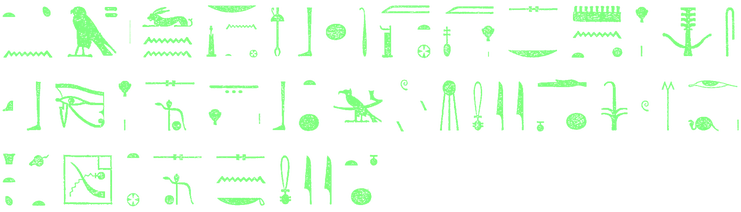
wnn nbt Jwnt wbn.tj m Wṯst m nfrt ḥr sḥbt mnḏt ḥr ẖnm sbqt ḥr sḥḏt tꜣwj ḥr bd mꜣwt mj jtn sj m jrt Rꜥ ḥnwt ḫnt Ḥt ꜥbt sḥḏt snkt mj jtn
The Lady of Dendera has risen on the Throne, fair of face, her eyes decked for the feast. She joins with the lunar eye, lights the Two Lands, and sheds light like the sun disk. She is the Eye of Ra, mistress in the Pure House, who lights the dark like the sun disk.
Note · Line 35
The Throne is at Edfu; the Pure House is at Dendera. - 36
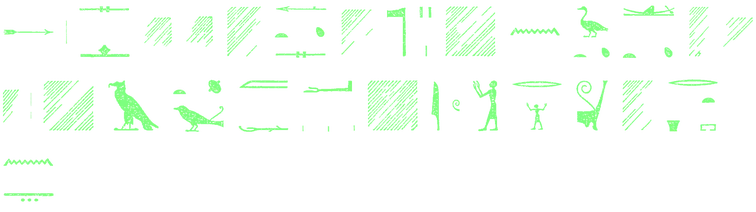
sḥtp Sḫmt ḏd mdw ... ... wꜥt . ... nṯrw ... .. n sꜣ.ṯ jm.ṯ ... ... ... ḫsf ꜣd m ḫt ꜥwt.ṯ rdj.j jꜣw r qꜣw n pt sn tꜣ r wsḫt nt tꜣ
Pacifying Sekhmet. Words to be spoken: “… the Sole One … the gods … for you are the … of your son … to drive the fury from your limbs.
I praise you as high as the sky;
I kiss the ground before you as far as the earth is wide.”Note · Line 36
Kissing the ground is an act of homage: the worshipper bows to the earth before the goddess. - 37
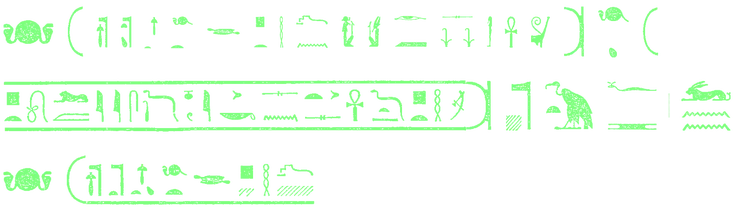
nswt bjt (… …) sꜣ Rꜥ (… …) pꜣ nṯr mrj mwt.f
The King of Upper and Lower Egypt, Ptolemy X, the Son of Ra, Ptolemy X, the god who loves his mother.
- 38
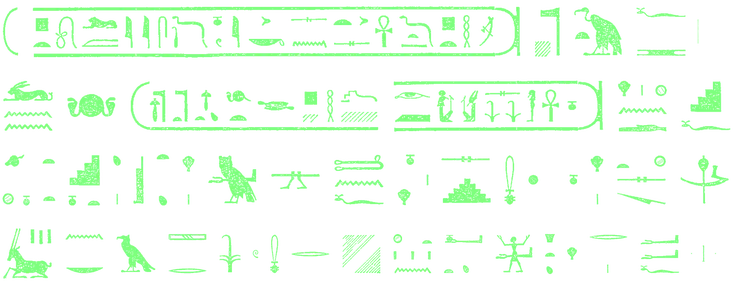
wnn nswt bjt (… …) ḥr ḫndw.f ḫnt Ꜥndw ntj {ꜣ ꜣst ḥr ms ṯnf ḥr sjꜥr mjn ḥr tḫs mꜣw ḥḏ n nbt Jšrw sw mj ... ... .. jrj jḫt n mwt.f sḥꜥꜥ ḥnwt ḥr rꜣ ꜥwj.f
The King of Upper and Lower Egypt, Ptolemy X, sits on his throne in the Throne of the Son of Isis. He brings the strong tjenef-drink, raises the min-drink, and slaughters the antelopes for the Lady of Isheru. He is like … who makes offerings for his mother and gladdens the mistress with the work of his hands.
Note · Line 38
The Lady of Isheru is Sekhmet. The strong drink recalls the story in which beer dyed the color of blood quenches the goddess’s rage. - 39
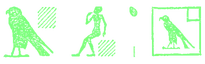
Ḥr {mꜣ tꜣwj pꜣ ẖrd sꜣ Ḥt ḥr
Harsomtus the Child, son of Hathor:
- 40
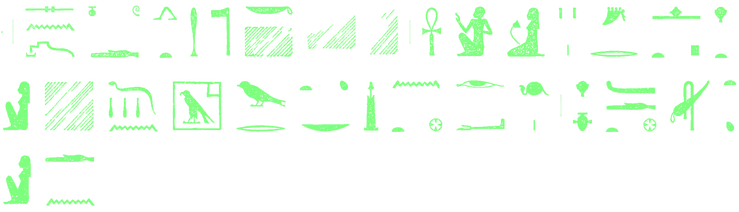
snwd.j ḥm.k n ꜥnḫ ... ꜥnḫ ꜥnḫw ḏr ḥtp ḥr.j ... ...
“I allot life to Your Majesty …
The living live when my face is at peace …” - 41
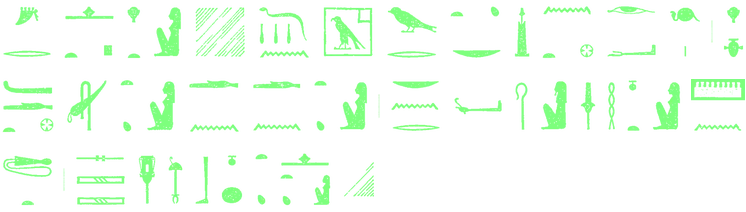
ḏd mdw jn Ḥt ḥr wrt nbt Jwnt jrt Rꜥ ḥrt jb Bḥdt sšmwt dndnt nbt nrw ḥqꜣt sḫm ḥnwt mnjt sššt wbnt ḥtpt ... ...
Words spoken by Hathor the Great, Lady of Dendera, Eye of Ra who dwells in Behdet, the Guide, the Raging One, lady of dread, ruler of the sekhem-sistrum, mistress of the menat and the sesheshet-sistrum, she who rises and she who sets …
Note · Line 41
The two sistra are sacred rattles. The menat is a heavy beaded necklace that could also be shaken to make music for Hathor. - 42

ḏd mdw jn Jḥj wr sꜣ Ḥt ḥr ꜥꜣ ḫꜥw nfr jrw ṯḥn ḥr bnr mrwt nb wḏꜣtj nb mnš .. bjk nṯrj wsr nswjt ḫpr ... ...
Words spoken by Ihy the Great, son of Hathor, splendid in his appearing, beautiful in form, radiant of face, dearly loved, lord of the two Wedjat eyes, lord of the royal ring, … the divine falcon, mighty in kingship, who came into being …
Note · Line 42
The Wedjat is the eye of Horus made whole after it was injured. Here Ihy bears the sacred eyes as a pair. - 43
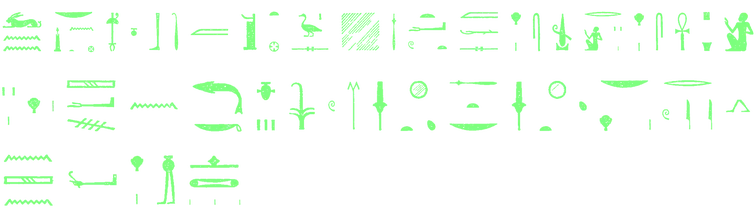
wnn nbt Jwnt wbn.tj m Wṯst sꜣ.s nṯr ꜥꜣ ḫꜥj.tj m ḫt.s ḥr swḏꜣ rmṯw ḥr sꜥnḫ pꜥt ḥr jrt šꜥt n ẖꜣkw jb sj m Sḫmt ꜥꜣt nbt Sḫmwt nbt ḥr rwjt nšnj ḥr jnt ḥtpw
The Lady of Dendera shines in the Throne Seat, her son, the great god, resplendent behind her. She makes the people thrive, gives life to the nobles and deals slaughter to the rebellious. She is Sekhmet the Great, mistress of all the Sekhmets. She drives out fury and brings peace.
Note · Line 43
The Throne Seat is Edfu. Hathor appears here as Sekhmet, the lioness goddess who can both unleash fury and quell it. - 44
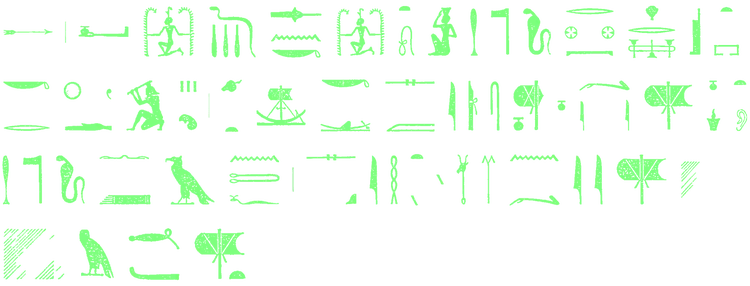
ḥnk ḥḥ ḏd mdw mn n.k ḥḥ twꜣ ḥm.k r nwt ḥrj st.k r ḫftjw.k ḫntj.k jm.s m js njw ndb ḥm.k n sjꜣ.n.tw.f srq ḥtjt m nꜣw ... ... ... fnḏ m mḥjt
Offering Heh. Words to be spoken: “Take Heh, who lifts Your Majesty to the sky and sets your seat far from your enemies.
May you sail upstream across the sky on a breath of wind that Your Majesty hears but no one can discern.
Let the throat breathe with the breeze, … the nose with the north wind.”Note · Line 44
Heh embodies boundless time and is shown holding up the sky. His figure is presented to the god. - 45
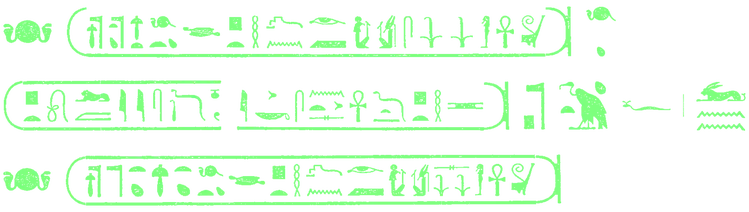
nswt bjt (… …) sꜣ Rꜥ (… …) pꜣ nṯr mrj mwt.f
The King of Upper and Lower Egypt, Ptolemy X, the Son of Ra, Ptolemy X, the god who loves his mother.
Note · Line 45
The king is named twice, once as sovereign of Egypt and once as son of the sun god. - 46
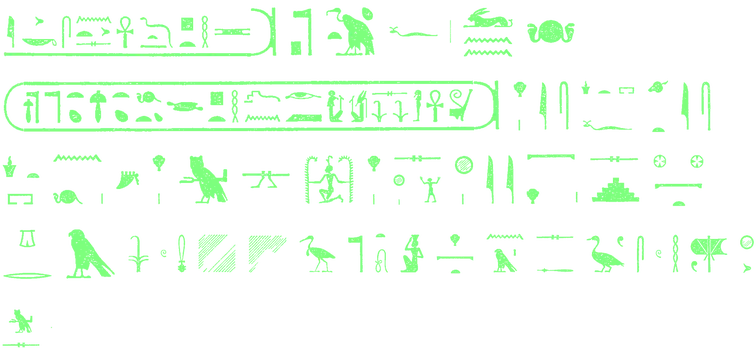
wnn nswt bjt (… …) ḥr jsbt.f ḫnt Jsbt nt Rꜥ ḏr bꜣḥ ḥr ms ḥḥ ḥr sḫjt ḫjt ḥr sjꜥr nwt ẖr nb.s sw mj swḏꜣ bꜣ twꜣ ḥrt n Ḥr sꜥꜣ bꜣ.f m swḥ.f ḫr m m.s
The King of Upper and Lower Egypt, Ptolemy X, is on his throne in the Throne of Ra from the Beginning. He brings Heh, lifts the sky and raises heaven beneath its lord. He is like Him Who Makes the Ba Thrive, who holds up the sky for Horus and exalts his ba in the wind that blows there.
Note · Line 46
The ba is the power of a god or a person to take form and move about. Here the ba of Horus is active in the wind. - 47
rdj.j n.k wꜣḏ.k pn nfr ḥr sḥrj ḏw jrj ḥꜥ.k
“I grant you this: your fine papyrus stalk drives away the evil that clings to your flesh.”
- 48
ḏd mdw jn Ḥr Bḥdtj nṯr ꜥꜣ nb pt sꜣb šwt prj m ꜣḫt nfr ḥr ḥrj st.f wrt nṯr ꜥꜣ mnḫ šꜣꜥ tꜣwj m sḫrw.f sštꜣ sštꜣ.f n rḫ sštꜣ.f
Words spoken by Horus of Behdet, the great god, lord of the sky, bright of plumage, who comes forth from the horizon, fair of face upon his great throne; the great god, the excellent one, who in the beginning fashioned the Two Lands according to his plans, who keeps his image hidden so that no one knows it.
Note · Line 48
Behdet is a sacred name of Edfu. - 49

ḏd mdw jn Ḥt ḥr wrt nbt Jwnt jrt Rꜥ ḥrt jb Bḥdt nbt pt ḥnwt nṯrw nbw Rꜥjt mnḫt Mḥjt mḥn.s nṯrw nbw n mḥn nṯr ḥr tp.s
Words spoken by Hathor the Great, Lady of Dendera, Eye of Ra, who dwells in Behdet, lady of the sky, mistress of all the gods; Raet the Excellent; Mehit, who coils around all the gods, though no god coils around her brow.
Note · Line 49
The Eye of Ra is the sun god’s power embodied as a goddess. As a cobra she coils at a god’s brow to protect him. - 50
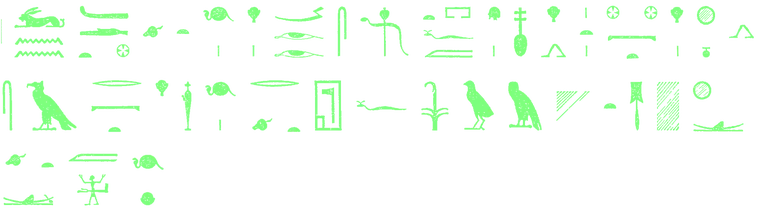
wnn Bḥdtj ḫnt ꜣḫt Rꜥ ḥr mꜣꜣ sḥḏjt.f m tp nfr ḥr nmt nwt ḥr ḫns jrt ḥr ḥst Rꜥ r ḫnt ḥt nṯr.f sw m ... ... ... sꜣb šwt ḫdj ḫntj m ḥꜥꜥwt rꜥ nb
Horus of Behdet is in the Horizon of Ra. He looks upon his sanctuary, perfect of its kind, strides across the sky, traverses the firmament and praises Ra for his temple. He is … the bright-plumed one who sails downstream and upstream in jubilation every day.
- 51

ḥts ḥb ḏd mdw ḫwsj n.k ḥt nṯr.k ꜥpr.tj m jrw.s snḏm.k ḥr nst.k ḫnt.s jnb.k wr nḥp.tj nfr ḥbw.k wr.tj ḫr m m.s
Celebrating the festival. Words to be spoken: “Your temple has been built for you and fitted with all its furnishings.
May you sit at ease on your throne within it.
Your great wall has been raised, your festivals are fair, and you are exalted within your temple.” - 52
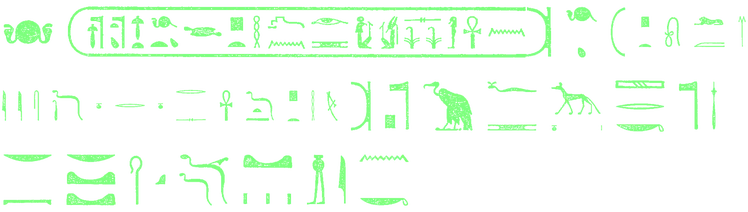
nswt bjt (… …) sꜣ Rꜥ (… …) pꜣ nṯr mrj mwt.f
The King of Upper and Lower Egypt, Ptolemy X, the Son of Ra, Ptolemy X, the god who loves his mother.
- 53
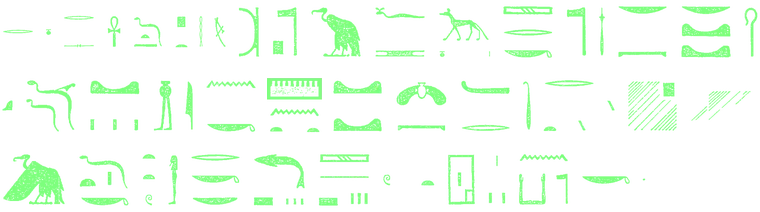
jw.n.j ḫr.k nṯr ꜥꜣ nb pt nb ḏww ḥqꜣ ṯnwj jnj.j n.k mntj ... ... ... ... ... ... mkj ḏt.k ṯwt jr.k nb ẖꜣt štꜣ nbj.tw ḥwt n kꜣ.k
“I have come to you, great god, lord of the sky, lord of the mountains, ruler of the heights on either bank, to bring you the twin mountain ranges. … protect your body, for you are indeed lord of the quarries and the mines, and temples are built for your ka.”
Note · Line 53
The heights on either side of the Nile supply the stone for the god’s temples. His ka is his vital presence, to which worship and offerings are directed. - 54

rdj.j n.k bjꜣjt nt mntj ṯnwj r nḫb ḥt nṯr ḥr rn.k
“I give you the treasures of the twin ranges and the heights on either bank, that the temple may be inscribed with your name.”
- 55

ḏd mdw jn Ḥr Bḥdtj nṯr ꜥꜣ nb pt sꜣb šwt prj m ꜣḫt ꜥpj wr r nṯrw nbw ḫwsj ḫwsj.tw n kꜣ.f nṯr nb ḥtp ḫnt jtrtj.f
Words spoken by Horus of Behdet, the great god, lord of the sky, bright of plumage, who comes forth from the horizon; Api, greater than all the gods, the builder for whose ka men build, in whose two shrines every god rests content.
- 56

ḏd mdw jn Ḥt ḥr wrt nbt Jwnt jrt Rꜥ ḥrt jb Bḥdt nbt pt ḥnwt nṯrw nbw ꜥnt m Wnw nb m Bꜥḥ mrjt Ptḥ m ꜥnḫ tꜣwj
Words spoken by Hathor the Great, Lady of Dendera, Eye of Ra, who dwells in Behdet, lady of the sky, mistress of all the gods; the Beautiful One in Hermopolis, the Gold in Bah, beloved of Ptah in Life of the Two Lands.
Note · Line 56
Life of the Two Lands is a sacred name for Memphis, the city of Ptah. - 57

jw.tj m ḥtp ḥqꜣ n Tꜣ mrj ḥꜥ ꜥnḫ.j ḫnt rḫjt šsp.n.j pḥtj.k mꜣꜣ.n.j jrw.k ḥꜥj.j ḥr ḥb ... ... ... ... rdj.j n.k ṯnwj štꜣ ... ... ... ...
“Come in peace, ruler of Egypt, my own living flesh among the people. I have received your strength and seen your deeds. I rejoice at the festival … I give you the heights on either bank and the mines …”
Note · Line 57
The goddess addresses the king as her son. - 58

ḥnk ẖnm ḏd mdw mn n.k tjt.k tn štꜣt ẖnm.k ḥꜥ.k m mw rnpj ... ... nn bsj m ḥꜣt spwt
Offering the water jar. Words to be spoken: “Take this secret likeness of yours and unite your body with the water that renews youth. This is … which wells up at the Head of the Nomes.
Note · Line 58
The nomes were the provinces of Egypt. Their “head” is Elephantine, in the first province of Upper Egypt, where the Nile flood was believed to rise. - 59

sꜥm.k jm.sn ... ꜥnḫ.k jm.sn jw.w wꜥb n ḥm.k qrtj jw ḥꜣw Snmt mw n mntj ḥr bst r tr.sn qbḥ n.k jm.sn r mrwt.k
“Drink of these waters … and you will live by them. They are pure for Your Majesty.
Water of the twin springs, coming from near Bigeh,
water of the twin mountains, welling up in season:
cool yourself with these waters as you please.” - 60

nswt bjt (… …) sꜣ Rꜥ (… …) pꜣ nṯr mrj mwt.f
The King of Upper and Lower Egypt, Ptolemy X, the Son of Ra, Ptolemy X, the god who loves his mother.
- 61
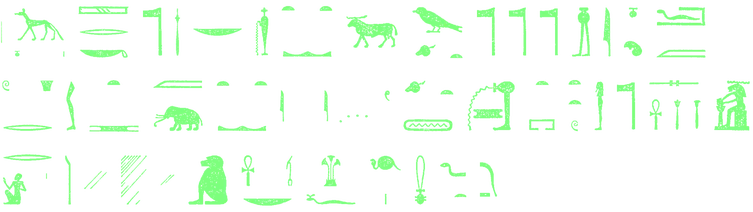
jw.n.j ḫr.k nṯr ꜥꜣ nb Qbḥw bꜣ wr ḫnt nṯrw jnj.j n.k prjt m wꜥrt m ꜣbw stjt ḥꜥpj ḫnt Jw wꜥbt ṯwt nṯr sꜥnḫ tꜣwj ẖnm rmṯw qmꜣ ... ... ... ...
“I have come to you, great god, lord of the Cataract, great ba among the gods, to bring you what flows from the leg at Elephantine, what Hapy pours out in the Pure Island. For you are the god who keeps the Two Lands alive, who fashions people, who creates …”
Note · Line 61
The leg is a relic of Osiris from which the flood was said to flow. Hapy embodies the Nile in flood; the Pure Island is the Abaton, the sacred precinct of Osiris on Bigeh. - 62

rdj.j n.k ḥꜥpj m ḥpt r sḫt.k ḥrt ḥtp.tj ḥr ḥnbt.k
“I grant you that the Nile shall rush to your field and the sky look kindly on your cropland.”
- 63

ḏd mdw jn H̱nmw Rꜥ nb Qbḥw nṯr ꜥꜣ sr ḫnt ḥꜣt spwt nb Wꜣwꜣt ḫnt Tꜣ stj qbḥḫnt Wṯst Ḥr grg tꜣwj sḏfꜣ ḫmw šdj n tꜣ r ꜣw.f
Words spoken by Khnum-Ra, lord of the Cataract, the great god, prince in the Head of the Nomes, lord of Wawat, foremost in Ta-Seti, who pours the libation in the Throne Seat of Horus, who founds the Two Lands and provisions the shrines, who feeds the whole land.
Note · Line 63
Wawat is Lower Nubia. Ta-Seti, “Land of the Bow,” is also the name of Egypt’s southernmost province. - 64

ḏd mdw jn Sṯjt ꜥꜣt nbt ꜣbw srt ꜥꜣt ḫnt ḥꜣt spwt ḥqꜣt wrt ḥnwt Tꜣ stj jwntt ḫnt Wṯst Ḥr
Words spoken by Satet the Great, Lady of Elephantine, great princess in the Head of the Nomes, great ruler, mistress of Ta-Seti, Iuntet in the Throne Seat of Horus.
- 65

jw.tj m ḥtp wtṯ n Šw jwꜥw n H̱nmw ḫntj wꜣrt.f mꜣꜣ.j .. ... ... jm.f šsp.j mw rnpj ḥr ꜥwj.k ḥr bst n.k Spdt ... ... ... ... ...
“Come in peace, offspring of Shu, heir of Khnum, Foremost of His Snare. I see … with it. I receive the water that renews youth from your hands and bring forth Sothis for you …”
Note · Line 65
Sothis is Sirius personified as a goddess. The star’s annual return to the dawn sky heralded the Nile flood. - 66
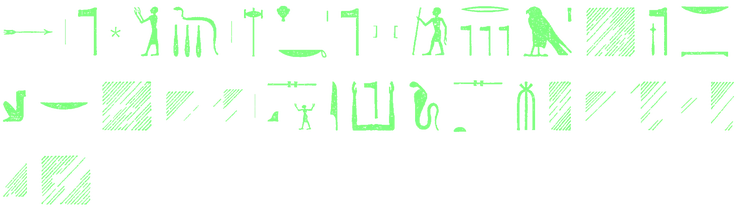
dwꜣ nṯr ḏd mdw jnḏ ḥr.k nṯr wr r nṯrw Ḥr Bḥdtj nṯr ꜥꜣ nb pt ḥqꜣ nb mḏꜣwt ... ... ... sqꜣ.j kꜣ.k ... ... ... ... ... ... ... ... ... ... ...
Praising the god. Words to be spoken: “Hail to you, god greater than the gods, Horus of Behdet, great god, lord of the sky, ruler and lord of books … I exalt your ka …”
- 67
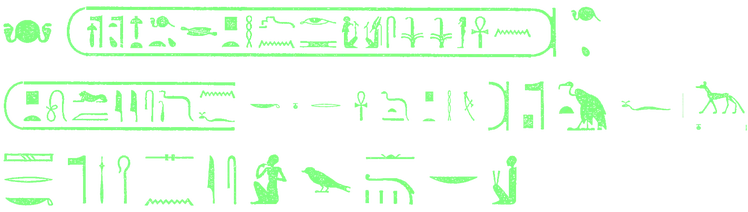
nswt bjt (… …) sꜣ Rꜥ (… …) pꜣ nṯr mrj mwt.f
The King of Upper and Lower Egypt, Ptolemy X, the Son of Ra, Ptolemy X, the god who loves his mother.
- 68
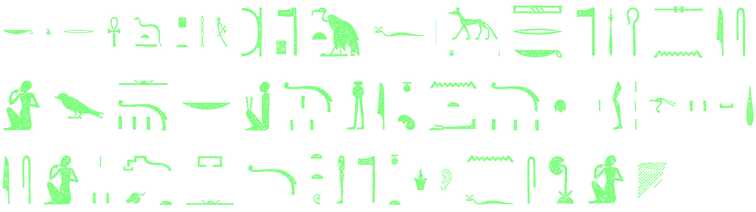
jw.n.j ḫr.k nṯr ꜥꜣ ḥqꜣ snsw wr mḏꜣwt nb jrjt jnj.j n.k nwt ꜥ tpw rd ꜣḫw ḏꜣjsw stp ḫnt pr mḏꜣt ṯwt nṯr ndb.n.f sꜣḫw ... ... wr ... ... ...
“I have come to you, great god, ruler of praises, rich in books, lord of rites, to bring you the ceremonies, the potent rules of worship and the sayings chosen in the House of Books. For you are the god who has heard the spells of transfiguration … great …”
Note · Line 68
The House of Books is the temple library. Spells of transfiguration were recited to make their subject a glorified and powerful being. - 69

rdj.j n.k mḏꜣwt wrwt nt jḫt nṯr sqꜣ.j ḥm.k ḫntj ... ...
“I give you the great scrolls of the sacred rites. I exalt Your Majesty among …”
- 70

ḏd mdw jn Ḥr Bḥdtj nṯr ꜥꜣ nb pt ꜥšꜣ rnw ḫntj Psḏt sꜣb šwt prj m ꜣḫt nb sš jꜥb.tw n.f nwt ꜥ
Words spoken by Horus of Behdet, the great god, lord of the sky, of many names, foremost in the Ennead, bright of plumage, who comes forth from the horizon, lord of writing, for whom the ceremonies are performed.
Note · Line 70
The Ennead is a divine company traditionally numbered as nine. - 71

ḏd mdw jn Ḥt ḥr wrt nbt Jwnt jrt Rꜥ ꜥnt ḫꜥw sšmwt nt sḥḏw wr Sšꜣt wrt ḫntt pr mḏꜣt nbt sš ḥqꜣt mḏꜣwt
Words spoken by Hathor the Great, Lady of Dendera, Eye of Ra, beautiful in her appearing, brow-cobra of the Great Illuminator, Seshat the Great, foremost in the House of Books, lady of writing, ruler of books.
Note · Line 71
The Great Illuminator is Horus. Hathor appears here as Seshat, goddess of writing and recordkeeping. - 72
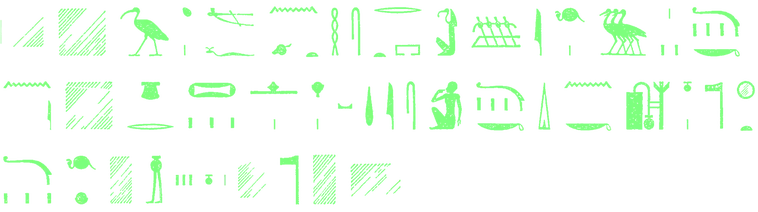
jw.tj m ḥtp ... ... ... sꜣ mr.f n ḫntj ḥsrt šsp.j bꜣw Rꜥ.k ndb.j ... jrj.j ẖrt.j ḥtp.j ḥr ḏꜣjsw.k rdj.j n.k sš n jḫt nṯr rꜥ nb .. jnj ... ... ... ...
Come in peace, … His Beloved Son of the Foremost of Heseret. I receive your sacred recitations. I hear … I meet my need and am content with your sayings. Each day I give you the text of the ritual … bring …
Note · Line 72
“His Beloved Son” is a priestly title. The Foremost of Heseret is Thoth, god of writing and sacred speech. - 73
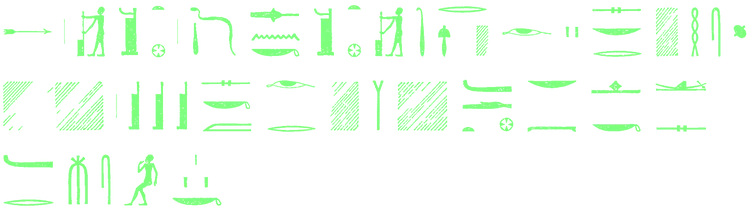
ḫwsj Wṯst ḏd mdw mn n.k Wṯst ḫwsj.tj r mnḫ jrw.s nb r tp ḥsb .. ... ... swt.s nb m jrjt r sš ... ... Bḥdtj nb pt ḥtp.k jm.s ḥnꜥ msw.k
Building the Throne Seat. Words to be spoken: Receive the Throne Seat, built to perfection, its every feature true to the rule … All its chambers are fashioned according to the writings … Behedeti, lord of the sky, may you rest there with your children.
Note · Line 73
The king presents the temple itself to Behedeti, Horus of Behedet. - 74

nswt bjt (… …) sꜣ Rꜥ (… …) pꜣ nṯr mrj mwt.f
The King of Upper and Lower Egypt, Ptolemy X, the Son of Ra, Ptolemy X, the god Philometor.
Note · Line 74
Philometor means “he who loves his mother.” - 75
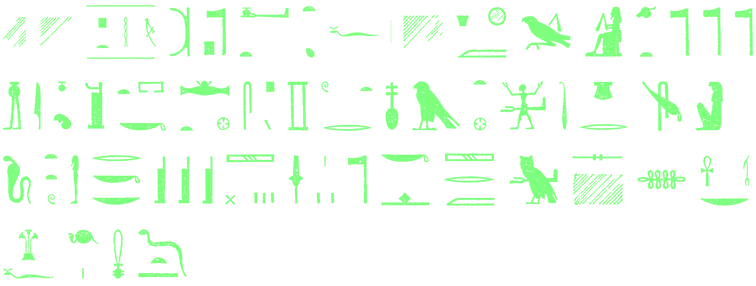
jw.n.j ḫr.k ... ... ꜥẖm šps ḫnt nṯrw jnj.j n.k wṯst.k Msn sjpj.tj r nfr ... Ḥr ḥꜥj.tj ẖr sšmw.k ṯwt jr.k nb swt štꜣwt sḫmw.k ḥtp ḫr m m.sn
I have come to you, … splendid falcon, foremost among the gods, to bring you your throne: Mesen, laid out to perfection, … of Horus, rejoicing beneath your image. For you are lord of the hidden chapels, and your sacred images rest within them.
Note · Line 75
Mesen is another sacred name for Edfu. - 76
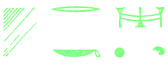
rdj.j n.k .. ... ... ḫwsj.tj m rk.k
I give you … built in your time.
- 77
ḏd mdw jn ... ... ... .. nb jtrtj ... ... ... ... ... ... ... ... ... ... ... ... ... mk.k
Words spoken by … lord of the Two Shrines … your protection.
Note · Line 77
The Two Shrines stand for the sanctuaries of Upper and Lower Egypt. - 78

ḏd mdw jn Ḥt ḥr wrt nbt Jwnt jrt Rꜥ ḥrt jb Bḥdt ḥnwt nṯrw nbw st wrt pw nt ḥm n bjk n nb st wrt ḥmt.s
Words spoken by Hathor the Great, lady of Dendera, Eye of Ra, who dwells in Behedet, mistress of all the gods. This is the Great Seat of the Majesty of the Falcon of Gold, the Great Seat of Her Majesty.
Note · Line 78
The Falcon of Gold is Horus. Hathor shares his seat at Edfu. - 79
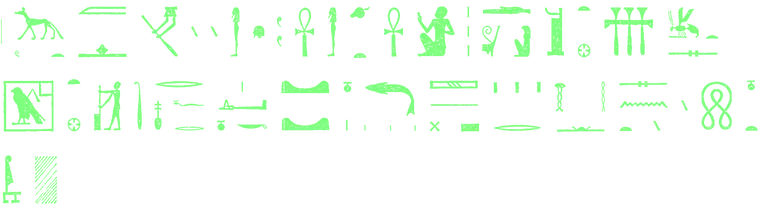
jw.tj m ḥtp ẖntj.j tp tꜣ ḥꜥ ꜥnḫ.j ḫnt ꜥnḫw šsp.n.j Wṯst ṯḥnt kꜣt.s Ḥt bjk ḫwsj.tj r nfr rdj.j n.k ḏww nw ẖꜣt štꜣ r wꜣḥ snṯt nt gsw prw
Come in peace, my image on earth, my living flesh, foremost of the living.
I have received the Throne Seat, radiant in its workmanship, the House of the Falcon, built to perfection.
I give you the mountains of the quarries and the mining lands, to lay the foundations of temples.Note · Line 79
The goddess addresses the king as her own living flesh: he is her son on earth. - 80

ḥnk ḥḥ ḏd mdw twꜣ.j ḥrt n bꜣ.k ḥrj.j mwt.k ꜣḫt r ḥꜣꜥjt
Offering Heh. Words to be spoken: I raise the sky for your ba;
I keep your mother, the horizon, far from tumult.Note · Line 80
Heh is a god who holds up the sky. A god’s ba is the living presence that can move beyond the god’s image. - 81

nswt bjt (… …) sꜣ Rꜥ (… …) pꜣ nṯr mrj mwt.f
The King of Upper and Lower Egypt, Ptolemy X, the Son of Ra, Ptolemy X, the god Philometor.
- 82
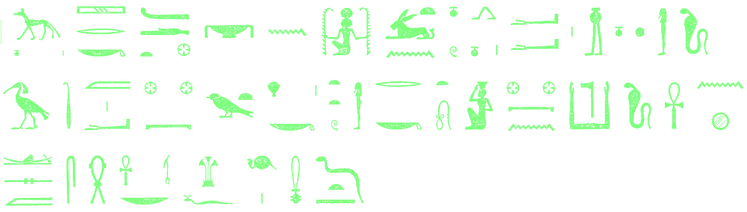
jw.n.j ḫr.k Bḥdtj nb pt Ḥḥ dwn.n.j ꜥwj.j jnj.j n.k jrw.k ꜣḫ.tj m ꜥ nwt wr.tj ḥr gꜣbtj.j ṯwt jr.k twꜣ nwt n kꜣ.f ꜥnḫ bꜣ.. jm.s m swḥ
I have come to you, Behedeti, lord of the sky, Heh. I have stretched out my two arms to bring you your own form, glorious as the arm of Nut, raised high on my two arms. For it is you who lift the sky for your ka, that the ba … may live there in the wind.
Note · Line 82
Nut is the sky goddess. - 83
rdj.j n.k sbjw.k m ḫbt jꜣbtt ṯꜣj.j sdmt jm.sn r ḫbt ꜣḫt
I consign your rebels to the eastern place of execution;
I drive the knife into them at the place of execution on the horizon. - 84
ḏd mdw jn Ḥr Bḥdtj nṯr ꜥꜣ nb pt jrj pt m hj n bꜣ.f sꜣb šwt ḫnt Ndm ꜥnḫ ꜥpj ꜥpj r nwt
Words spoken by Horus Behedeti, the great god, lord of the sky, who built the sky as a hall for his ba, the many-feathered one of Nedjemankh, Api who takes wing to the sky.
Note · Line 84
Api is Horus in the form of a winged scarab. Nedjemankh is a sacred name for Edfu. - 85

ḏd mdw jn Ḥt ḥr nbt Jwnt jrt Rꜥ ḥrt jb Bḥdt nbt pt ḥnwt nṯrw nbw mḥnjt nt Rꜥ sšmwt ... .. ... ...
Words spoken by Hathor, lady of Dendera, Eye of Ra, who dwells in Behedet, lady of the sky, mistress of all the gods, the serpent on Ra’s brow, the rearing cobra …
- 86

jw.tj m ḥtp wtṯ n Rꜥ jwꜥw mnḫ n ꜥpj šsp.n.j sḏḏ.j jqr m ꜥwj.k r .. ... rdj.j n.k ḥrt ḥtp.tj ḥr ḥnbt npr.k ꜣḫ.tj n qnw
Come in peace, offspring of Ra, worthy heir of Api. I have received my fine likeness from your hands … I grant you a sky kindly to the field, so that your grain flourishes without a barren patch.
- 87
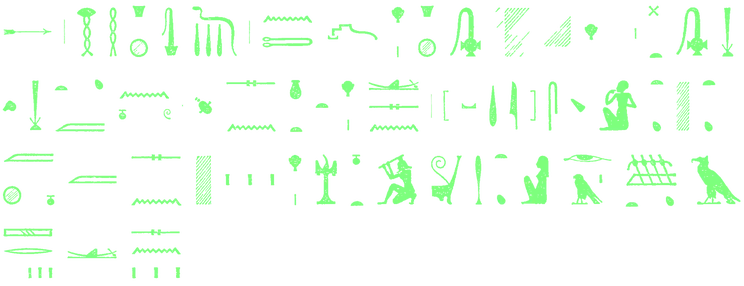
wꜣḥ ꜥḫ ḏd mdw mn n.ṯ stpt ḥr ꜥḫ ... ... ... . ḥr sḏt snsn.ṯ m qn.sn ḥst jm.sn ṯꜣms.ṯ wšꜥ.ṯ m ḫnmw.sn ḫꜣw ḥr ḫꜣwt ntj ḫftj n ḥmt.ṯ jrt Ḥr šsp.ṯ ꜣšrt jm.sn
Setting up the brazier. Words to be spoken: Take the choice cuts on the brazier … on the embers. May you breathe in the scent of their fat. The haunch is among them; may you draw in their fragrance and savor it. On the altar of burnt offering lie the cuts of meat from the enemy of Your Majesty. The Eye of Horus: may you take the roasted morsels from among them.
Note · Line 87
The sacrificial meat stands for the defeated enemy. As a gift to the goddess it is also called the Eye of Horus, the injured eye that was made whole. - 88
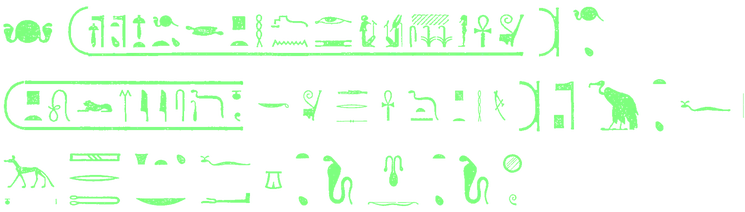
nswt bjt (… …) sꜣ Rꜥ (… …) pꜣ nṯr mrj mwt.f
The King of Upper and Lower Egypt, Ptolemy X, the Son of Ra, Ptolemy X, the god Philometor.
- 89
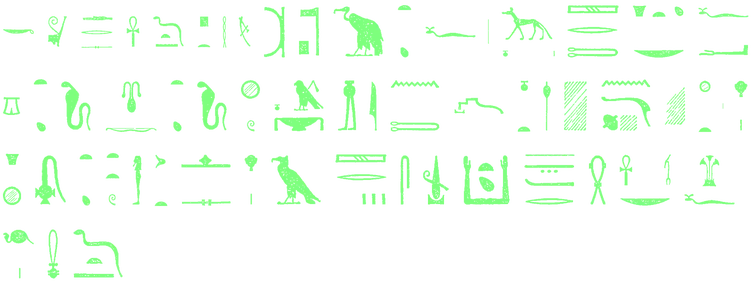
jw.n.j ḫr.ṯ ḥnwt nbt Fꜥg dmꜣt pḏwt ḫwjt bjk n nb jnj.j n.ṯ stpt nt ꜣbwt nbḏ ... ... ḥr ꜥḫ.ṯ ṯwt jr.ṯ ḥtpt sj ḥr ꜣšrt swḏꜣ kꜣ.ṯ tꜣwj ḥnꜥ tmw
I have come to you, mistress, lady of Fag, Demat-pedjut, who shields the Falcon of Gold, to bring you the choice cuts from the effigies of the enemies … on your brazier. For you are she who eats her fill of the roasted morsels, that your ka may keep the Two Lands and all the people safe.
- 90

rdj.j n.k sbjw.k snwḫ m ḫt wdj.j hh.j r ẖꜣkw jb.k
I give you your rebels burned to cinders in the fire;
I send my scorching breath against those who defy you. - 91

ḏd mdw jn Nḫbt ḥḏt Nḫn ꜣwjt ꜥ nbt Fꜥg Ꜥwjt ḫwjt Ḥr ḫnt ḥḏ.f ꜥpjt wrt mkjt ꜥpj Bḥdtjt m Wṯst Ḥr
Words spoken by Nekhbet, the White One of Nekhen, she of the outstretched arm, lady of Fag, Khuyet who shelters Horus in his chapel, great Apit who guards Api, Behedetyt in the Throne Seat of Horus.
Note · Line 91
Nekhbet is the vulture goddess of Upper Egypt. Khuyet means “Protectress”; Apit is the female counterpart of Api. - 92
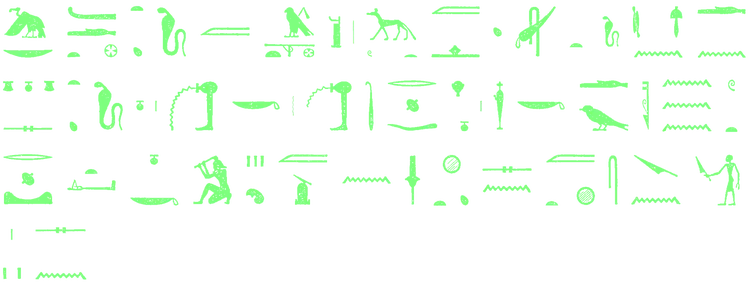
jw.tj m ḥtp sꜣ sšmwt jwꜥw mnḫ n dngngs šsp.n.j wꜥbw.k wꜥb.tj r ꜥb ḥr n ḥst.k twr.tj r ḏw rdj.j n.k ḫftjw.k m nmt nt Sḫmt ḥꜥ.sn m tḫs n Ḥnṯtjw.sn
Come in peace, son of the guiding cobra, worthy heir of the serpent on the brow. I have received your pure cuts, pure of filth, and your shoulder cut, free of taint. I set your enemies on Sekhmet’s chopping block, their bodies cut apart by their butchers.
Note · Line 92
Sekhmet is the lioness goddess who strikes down divine and royal enemies. - 93
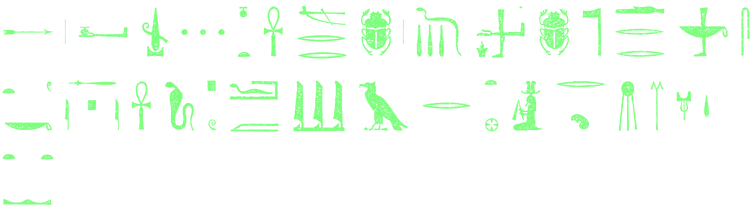
ḥnk wḏꜣw ntj ꜥnḫ mrr ḫpr ḏd mdw ꜥbb nṯrj r bgs.k ꜥpj ꜥnḫ.k pw prj m Sḫt jꜣrw
Offering the amulet of the Beetle Who Loves Becoming. Words to be spoken: The divine beetle for your neck, Api! It is your life-beetle, come forth from the Field of Reeds.
Note · Line 93
The Egyptian word for a scarab echoes the verb “to come into being.” The beetle embodies the sun’s daily renewal; the Field of Reeds is a fertile realm of the afterlife. - 94

Ptḥ Tꜣ ṯnn jr.k wbn m jꜣbtt sr ḥꜣt prj m ḥt dꜣt mꜣꜥ ḫrw.k ꜥpj n.k r nwt ḫwj jtrtj m dmꜣtj.k
You are Ptah-Tatenen, who rises in the east, who heralds the beginning and comes forth from the House of the Underworld.
May you triumph! Fly up to the sky and shield the Two Shrines with your two wings. - 95
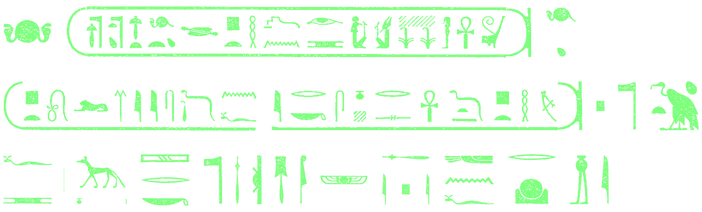
nswt bjt (… …) sꜣ Rꜥ (… …) pꜣ nṯr mrj mwt.f
The King of Upper and Lower Egypt, Ptolemy X, the Son of Ra, Ptolemy X, the god Philometor.
- 96
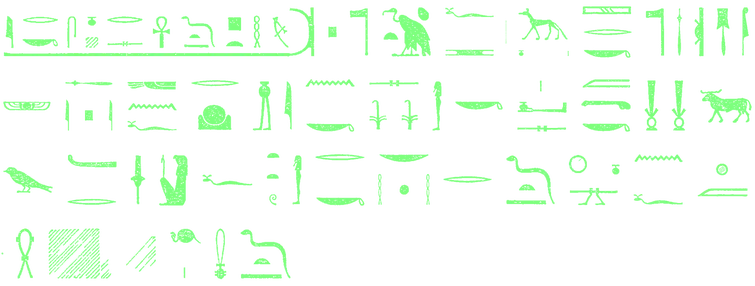
jw.n.j ḫr.k nṯr ꜥꜣ sꜣb šwt ꜥpj ꜥpj.n.f r ꜣḫt jnj.j n.k snn.k ḥnk.j sw m bꜣḥ.k ḥr snsn bꜣ wr ḥnꜥ sḫm.f ṯwt jr.k nb nḥḥ r ḏt ḫns.n.f ꜣḫt m . ...
I have come to you, great god of many-colored plumage, Api who has taken wing to the horizon, to bring you your likeness and offer it before your face, uniting the great ba with his sacred image. For you are lord of unending time for all eternity, you who have crossed the horizon …
- 97
rdj.j n.k ꜥwj.j ḥr ḫwt ḥꜥ.k mkj.j ḏt.k r ḫftjw.k
I give you my two arms to guard your flesh;
I shield your body from your enemies. - 98

ḏd mdw jn Ḥr Bḥdtj nṯr ꜥꜣ nb pt ꜥpj wr ḫwj jtrtj ḫprr šps ḫpr m tp nṯr ... ....f wn ḥr nst.f
Words spoken by Horus Behedeti, the great god, lord of the sky, great Api who shields the Two Shrines, splendid scarab who came into being from the head of the god … who sits upon his throne.
- 99
jw.tj m ḥtp ḥqꜣ n Wḏꜣt jtj ḥrj jb Tꜣ mrj šsp.n.j ḏꜣjsw.k mꜣꜣ.n.j ... ... ... ... ... ... ... ... ... wsr r ẖꜣkw jb.k
Come in peace, ruler of the Sound Eye, sovereign in the heart of Egypt. I have received your sayings; I have seen … strength against those who defy you.
Note · Line 99
The Sound Eye, the eye of Horus restored to wholeness, is here a name for Egypt. - 100

sṯꜣ mrwt ḏd mdw mn n.k jfdw n tꜣ r ꜣw.f hjn n ḥm.k ḥꜣ.tj n nwt .. ... ... ... ... ...
Drawing the cloth chests. Words to be spoken: Take the four quarters of the earth in all its breadth. Your Majesty’s bounds are all that the sky covers …
Note · Line 100
Four chests of ritual cloth are drawn before the god, one for each quarter of the earth. - 101
nswt bjt (… …) sꜣ Rꜥ (… …) pꜣ nṯr mrj mwt.f
The King of Upper and Lower Egypt, Ptolemy X, the Son of Ra, Ptolemy X, the god Philometor.
- 102

jw.n.j ḫr.k ... .. nb šwtj ḥqꜣ nḫꜣḫꜣ jnj.j n.k Wḏꜣt sṯꜣ.tj m bꜣḥ.k ndb ḫꜣb.tj n bꜣw.k ṯwt .. ... ... ... ... sḫpr wnnt
I have come to you, … lord of the double-plumed crown, ruler of the flail,
to bring you Egypt, drawn before you,
and the whole earth, bowed before your might.
For you are … who bring all that is into being.Note · Line 102
The king speaks as though Egypt and the whole earth were being led into the god’s presence. - 103
rdj.j n.k ... ... . . m ḫfꜥ.k ḫꜣswt ḥrjwt n.k r ḥmw
I grant you this: … is in your grasp, and the far-off foreign lands are yours as servants.
- 104
ḏd mdw jn Jmn Rꜥ nswt nṯrw nṯr ꜥꜣ nb Bḥdt fꜣj ꜥ jꜥb.tw m nfrw.f šnbtj prj m jb nṯr snsn Wꜣst m nb srḫ
Words to be spoken by Amun-Ra, king of the gods, the great god, lord of Behdet, he of the upraised arm who glories in his beauty, the falcon who came forth from the divine heart, who joins himself to Thebes as lord of the palace façade:
Note · Line 104
The palace façade is an emblem of kingship: it forms the base of the frame in which the king’s Horus name is written. - 105
jw.tj m ḥtp nswt n ḥḥw ḥqꜣ n tꜣwj ḥnꜥ jdbw šsp.n.j jrw.k mꜣꜣ.n.j pḥtj.k ḥꜥj.n.j m qnt.k nḫt.k rdj.j n.k Kmt dšrt ... ... ... ẖr ṯbwj.k
Come in peace, king of millions, ruler of the Two Lands and the lands along the banks.
I have accepted your service, I have seen your strength,
I have rejoiced in your valor and your might in victory.
I give you the Black Land and the Red Land … beneath the soles of your feet.Note · Line 105
The Black Land is Egypt’s dark, cultivated soil; the Red Land is the desert. - 106

... ... ḏd mdw ṯt.k n.k Bḥdtj ... ... ḫꜣ m jḫt ...
… Words to be spoken: Here is your offering table, O Behdety, … a thousand portions of food …
Note · Line 106
Behdety means “he of Behdet,” the local Horus. - 107
jw.n.j ḫr.k ... ... .. nb ḏfꜣw qmꜣ wnnt jnj.j n.k t wr n ḏrw.sn ḏfꜣw n jjt n ꜥḥꜥ.sn ṯwt nṯr bsj.n.f ḥꜥpj ḥr .. ...
I have come to you, … lord of provisions, who created all that is,
to bring you great loaves without end and provisions beyond number.
For you are the god who brought forth Hapy upon …Note · Line 107
Hapy is the Nile in flood, the source of the harvest from which these offerings come. - 108
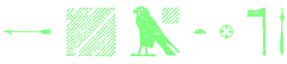
ḏd mdw jn Ḥr Bḥdtj nṯr ꜥꜣ nb pt ... ...
Words to be spoken by Horus of Behdet, the great god, lord of the sky …
- 109

sꜥḥꜥ sḥnt ḏd mdw smn.j jḫt.k m bꜣḥ.k rꜥ nb ... ... .. r ḥm.k .. ... ... ... ... ḏꜥr jḫt.k r jnt.s n nb mntj ḥqꜣ n štꜣ
Raising the climbing frame. Words to be spoken: Each day I set up your frame before you. … to Your Majesty … seek what is yours, to bring it to the lord of the mountains on either bank, the ruler of the mining regions.
- 110
nswt bjt (… …) sꜣ Rꜥ (… …) pꜣ nṯr mrj mwt.f
The King of Upper and Lower Egypt, Ptolemy X, the Son of Ra, Ptolemy X, the god Philometor.
- 111

jw ḫr ... ...
I have come to you …
- 112

rdj.j n.k jḫt nbt nt ... .. ... jrtjw nbw ḥr ḫnd ṯnwj
I give you all that belongs to …, and I grant that all the Irtiu range the mountains on both banks.
- 113

ḏd mdw jn Mnw gbtjw nṯr ꜥꜣ nb .. ꜥn ḥr m Nṯrwj nb wṯst ḫntj St wrt snn.f .. ... ...
Words to be spoken by Min of Coptos, the great god, lord of …, fair of face in the district of the Two Gods, lord of the throne, foremost in the sanctuary, whose likeness …
Note · Line 113
Coptos stood at the Nile end of routes into the mining country of the Eastern Desert. - 114

rdj.j n.k qmꜣtjw ḥr jnt n.k jnw.sn ḥr ḥtr bꜣk.sn r pr.k
I grant that the Qematiu bring you their dues and deliver their tribute to your house.
- 115
jw.tj m ḥtp ḥqꜣ mntj jtj m ḏww štꜣw šsp.n.j jḫt.k jnt.n.k n ḥm.j ḥꜥj.j ḫntš.j n mꜣꜣ.sn rdj.j n.k Pwnt ꜥpr m ṯnw.f Tꜣ nṯr ṯnw.tj ẖr ꜥ.k
Come in peace, ruler of the mountains on either bank, sovereign in the inaccessible heights.
I have received the gift you brought My Majesty;
I shout for joy and delight in the sight of your gifts.
I give you Punt, rich in its produce, and God’s Land under your hand.Note · Line 115
Here it stands alongside God’s Land as a domain placed at the king’s disposal. - 116
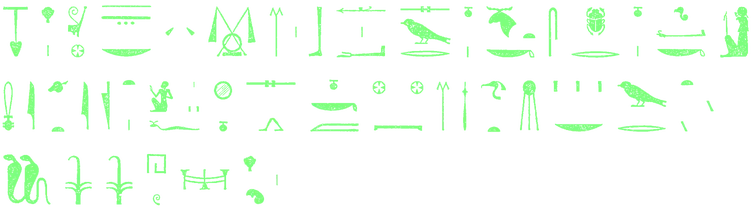
jrt ḥptj ḏd mdw mn n.k šmꜥw smꜣ ḥr mḥw tꜣwj nbw dmḏ m bw wꜥ swr.n.j šfjt.k sḫpr.n.j nrw.k mj Rꜥ ḫnt jst.f ḫns.n.k m nwt m ꜥꜣ jꜣḫw nb wrtj nn hꜣw ḥr.k
Forming the Hepti crown. Words to be spoken: Take Upper Egypt joined to Lower Egypt,
the Two Lands entire, gathered into one.
I have made your majesty greater and roused such awe of you
as Ra inspires at the head of his crew.
You have crossed the sky in great splendor,
lord of these two diadems before your face.Note · Line 116
The two diadems make one crown, as the two parts of Egypt make one kingdom. Ra’s crew accompanies him in his solar boat. - 117
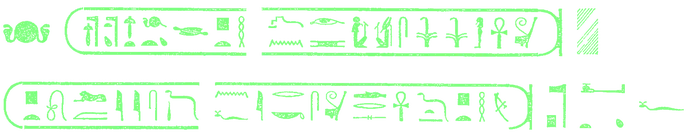
nswt bjt (… …) sꜣ Rꜥ (… …) pꜣ nṯr mrj mwt.f
The King of Upper and Lower Egypt, Ptolemy X, the Son of Ra, Ptolemy X, the god Philometor.
- 118
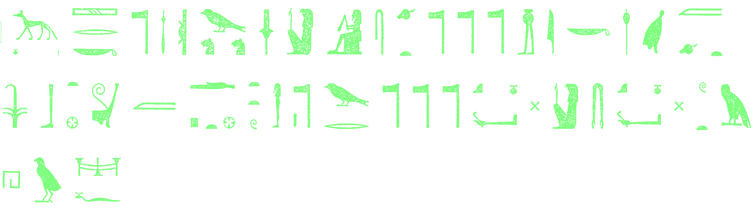
jw.n.j ḫr.k nṯr ꜥꜣ wr pḥtj sḫm šps ḫnt nṯrw jnj.j n.k ḥḏt m ḫnt Nḫb nt prjt m Ḫp ṯwt nṯr wr r nṯrw qn n qnj.tw m hꜣw.f
I have come to you, great god, great in strength, august power among the gods,
to bring you the White Crown from Elkab and the Red Crown that came forth from Dep.
For you are the god greater than the gods,
the strong one beside whom none can be strong.Note · Line 118
Elkab was a seat of the vulture goddess of Upper Egypt; Dep was part of Buto, the Delta seat of the cobra goddess of Lower Egypt. - 119
rdj.j n.k jꜣwtj wr.tj m tp.k nbj.j hn.k m wrtj
I make the two emblems of office splendid upon your brow; I adorn your head with the two cobras.
Note · Line 119
The rearing cobras worn on the royal brow are called uraei. They guard the wearer. - 120
ḏd mdw jn Ḥr Bḥdtj nṯr ꜥꜣ nb pt prj m ꜣḫt ꜥpj wr ḫwj jtrtj nb šwtj ḥqꜣ ḥptj wr ꜣtf nb hmhm
Words to be spoken by Horus of Behdet, the great god, lord of the sky, who comes forth from the horizon, the great Api who guards the twin shrines, lord of the double plume, ruler of the two crowns, master of the Atef crown, lord of the Hemhem crown:
- 121
jw.tj m ḥtp kꜣwt mrtj jꜥr wrtj ḥr ḥꜣt.f šsp.j pjt dpjt ḥnꜥ nt m ꜥ.k dmḏ.j wrt ḥnꜥ ḥwnt rdj.n.j sj ḥr tp.k m ḥqꜣ tꜣ pn mj ḥm.j ḫnt nṯrw
Come in peace, bearer of the two cobras, who raises the two serpents to his brow.
I take the crown of Upper Egypt and the crown of Lower Egypt from your hand;
I join the Great One to the Maiden.
I have set it on your head as ruler of this land,
as My Majesty rules among the gods.Note · Line 121
The Great One and the Maiden are the two crowns personified. Horus takes them from the king and sets them back on his head as one. - 122
jrt sḫm sššt ḏd mdw mn n.ṯ sḫm ḥr rwj sḫm.ṯ sššt sš.n.f nšnj.ṯ ṯḥn ḥr.ṯ ḥnwt nbt Jwnt wdj.ṯ špt.ṯ r ḫftj.ṯ ḥtp jr.ṯ n dndn ḫr.ṯ nbt sššt mrj.n.s jḥj
Playing the two sistra. Words to be spoken: Take the sekhem sistrum that shakes off your violence,
and the sesheshet sistrum that has stilled your fury.
May your face shine, Mistress, Lady of Dendera;
may you turn your anger on your enemy.
Be gracious, do not rage,
Lady of the sesheshet, lover of music.Note · Line 122
The sekhem and the sesheshet are two kinds of ritual rattle. Their music soothes Hathor; her anger is not to fall on her worshippers. - 123
Jḥj wr sꜣ Ḥt ḥr
Ihy the Great, son of Hathor.
Note · Line 123
Ihy is Hathor’s child, the god who plays the sistrum for her. - 124
nswt bjt (… …) sꜣ Rꜥ (… …) pꜣ nṯr mrj mwt.f
The King of Upper and Lower Egypt, Ptolemy X, the Son of Ra, Ptolemy X, the god Philometor.
- 125
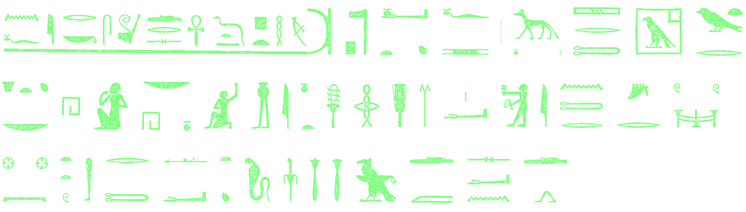
jw.n.j ḫr.ṯ Ḥt ḥr wrt ḥnwt nbt hj nbt hnw jnj.j n.ṯ sḫm ḥnꜥ sššt m ꜥ.j jḥj.j n.ṯ r ḏrw nwt ṯwt jr.ṯ wꜥt ḫwjt tꜣwj kꜣt.tw m sꜥnḏt jdbw
I have come to you, Hathor the Great, Mistress, Lady of joyful cries, Lady of jubilation,
to bring you the sekhem and the sesheshet in my hand,
to play for you as far as the sky extends.
For you are the one who guards the Two Lands,
whom they call Destroyer of the Riverbanks. - 126

rdj.j n.k jst.k wḏꜣ.tj r sḫm.j šnwt.k ḫwj.tj r nšnj.j
I grant that your following is safe from my violence, your court shielded from my fury.
- 127

ḏd mdw jn Ḥt ḥr wrt nbt Jwnt jrt Rꜥ ḥrt jb Bḥdt sšmwt nt sḥḏw wr nbt ꜣtf mfkt jnm nbt . ... ḥꜥꜥ m ṯḥnt
Words to be spoken by Hathor the Great, Lady of Dendera, Eye of Ra, who dwells in Behdet, guiding cobra of the Great Illuminator, Lady of Incense, turquoise of skin, lady of …, who rejoices in the faience sistrum:
Note · Line 127
Hathor goes before him as the cobra on his brow. Faience is a glazed material often made in a bright blue-green. - 128
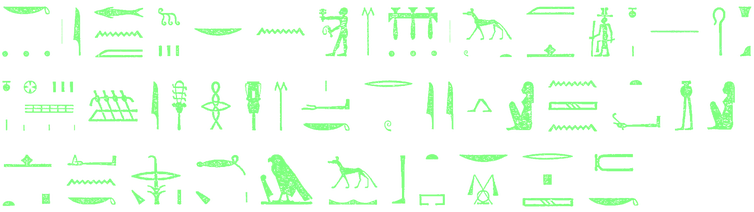
jw.tj m ḥtp jtj n tꜣwj ḥqꜣ n nwwt spwt šsp.n.j sḫm ḥnꜥ sššt m ꜥ.k rwj.j nšnj jnj.j ḥtp rdj.j n.k rsj mḥtj jmntt jꜣbtt bw nb dmḏ r psšt.k
Come in peace, sovereign of the Two Lands, ruler of the towns and districts.
I have taken the sekhem and the sesheshet from your hand;
I drive out fury and bring peace.
I give you south and north, west and east,
all places together as your share. - 129
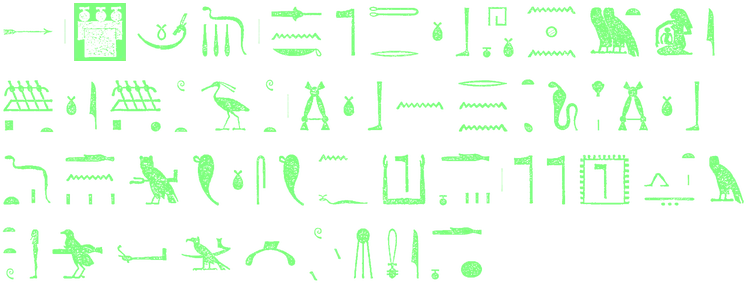
ḥnk mnḫt ḏd mdw mn n.k nṯrj bhn n ḫnmt sšp sšp.tj ꜣḫ.tj ḏbꜣ n Rnnt ḥr ḏbꜣ ḏt.ṯn mꜥr smꜥr.n.f kꜣ.ṯn nṯrwj nṯrj nmt tꜣ m twt wdj mꜣwt mj jtn
Offering cloth. Words to be spoken: Take the divine garment, the nurse’s protective garment,
the robe of light, light and lustrous,
Renenutet’s djeba cloth that clothes your bodies,
the mar cloth that has clad your kas,
O you two most divine gods,
who cross the land in perfection and send out rays like the disk of the sun.Note · Line 129
Renenutet is a goddess of linen as well as of the harvest. - 130
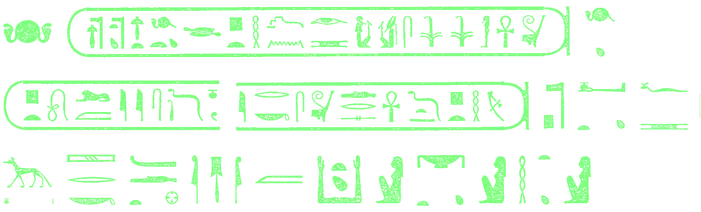
nswt bjt (… …) sꜣ Rꜥ (… …) pꜣ nṯr mrj mwt.f
The King of Upper and Lower Egypt, Ptolemy X, the Son of Ra, Ptolemy X, the god Philometor.
- 131
jw.n.j ḫr.k Bḥdtj sꜣb šwt m ꜥb kꜣt nb ḥnwt jnj.j n.ṯn mnḫt nt nṯr ꜥbt swr.n.s snḏt.ṯn ṯwt nṯr ḥrjt tp.f ḥnꜥ.f stj stwt šmm.tj m nbjt.sn
I have come to you, Behdety of the many-colored plumage, and to the female ka, the Golden One, the Mistress,
to bring you both the divine garment, the pure garment that has deepened the awe you inspire.
For you are the god whose brow-serpent is with him,
the two who shed rays hot with their own fire.Note · Line 131
The Golden One is Hathor. The king addresses Horus alone, then both gods together: Hathor is also the serpent on Horus’s brow. - 132
rdj.j šfjt.k m ẖt nt rḫjt bw nb ḫꜣb n bꜣw.k
I set awe of you in the bellies of the people; everyone bows before your might.
- 133
ḏd mdw jn Ḥr Bḥdtj nṯr ꜥꜣ nb pt sꜣb šwt prj m ꜣḫt ꜥpj wr mkj jtrtj šnw m tꜣ m dmꜣtj.f ḥbs nfr ntj ḥsjtj dwn mtw ntj qrf
Words to be spoken by Horus of Behdet, the great god, lord of the sky, bright of plumage, who comes forth from the horizon; Api the Great, who guards the two shrines, within whose wings the whole earth lies, who clothes the shivering one well and stretches out the muscles and sinews that have drawn tight.
- 134

ḏd mdw jn Ḥt ḥr nbt Jwnt jrt Rꜥ nbt pt Ꜥwjt ḫwjt nṯrw m ḏnḥ.s sšmwt wrt ... Wṯst Ḥr ꜥꜣt snḏt sḫm m sbjw
Words to be spoken by Hathor, Lady of Dendera, Eye of Ra, Lady of the Sky, Khuyet who shelters the gods with her wing, the great rearing cobra … at the Throne of Horus, great in dread, who overpowers the rebels.
Note · Line 134
The Throne of Horus is Edfu. - 135
jw.tj m ḥtp sꜣ Ḥḏ ḥtp ꜣṯ n Tꜣjt ḥr mntj.s šsp.n šrwt.k šṯ.n m šṯw.k ꜥrq.n mḏꜣt m nfrw.k rdj.n n.k qnjw dns.tj m nꜣjt.k bꜣk.sn ḥtr r pr.k
Come in peace, son of Hedjhotep, whom Tayet reared on her lap.
We receive your garments and clothe ourselves in your cloth;
with your neferu linen we complete the mummy wrapping.
We grant you weavers in great numbers in your spinning house;
they deliver their due to your house.Note · Line 135
Hedjhotep and Tayet are deities of weaving. The gods receive cloth from the king and in return promise him weavers and the cloth they owe. - 136
sḫꜥj sḫm ḏd mdw sḫm ḫꜥj.tj qꜣj.tj hꜣw ḥr.ṯ ꜥꜣt nrw sḥrjt sbjw m nsrt dbḥw nn mrj kꜣ.ṯ ḥnwt tjt ḥmt.ṯ ḥr swḏꜣ sn.ṯ sštꜣ pw n kꜣ.ṯ qmꜣtj.ṯ ḥr ḥn Bnw m Ḥt nṯr
Making the sistrum shine. Words to be spoken:
The sistrum shines, held high before your face,
O dreaded Great One, who drives the rebels off with flame.
This is the offering your ka loves, O Mistress,
the likeness of Your Majesty that keeps your brother safe.
It is the secret form of your ka,
your image sheltering the Bennu in the god’s house.Note · Line 136
A sistrum is a sacred rattle. Here it is also an image of Nephthys, whose brother is Osiris. Her ka is her vital power; the Bennu is the sacred bird often called the phoenix. - 137
nswt bjt (… …) sꜣ Rꜥ (… …) pꜣ nṯr mrj mwt.f
King of Upper and Lower Egypt, Ptolemy X; Son of Ra, Ptolemy X, the god who loves his mother.
Note · Line 137
“The god who loves his mother” is the royal title Philometor. - 138
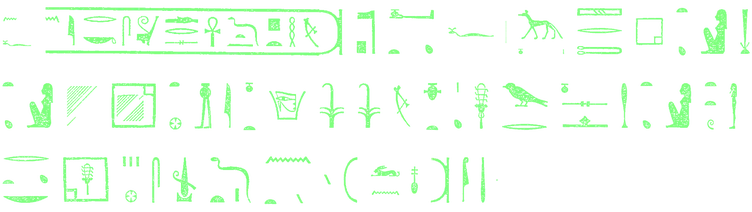
jw.n.j ḫr.ṯ Rmnjt ḥt snt ... ḫnt Ḥt Bnw jnj.j n.ṯ dbḥw nn mrj jb.ṯ sḫm wr n sḥtp ḥmt.ṯ ṯwt jr.ṯ nbt Ḥt sḫmw swḏꜣt ḏt ntj (Wnn nfrw) mꜣꜥ ḫrw
I have come to you, Bearer of the House, sister … in the House of the Bennu, to bring you the offering your heart loves: the great sistrum that soothes Your Majesty. For you are the Lady of the House of Sistra, who keeps the body of Wennefer the Justified safe and sound.
Note · Line 138
The king addresses Nephthys. Wennefer is a name of Osiris. - 139
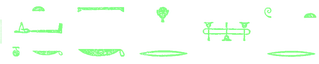
rdj.j n.k tꜣwj.k ḥrj.tj r ḥꜣꜥjt wdj.j nsrt r wjn m wꜣt.k
I grant you your Two Lands free of revolt; I spit flame at whoever bars your way.
- 140
ḏd mdw jn Nbt ḥt mnḫt nbt Ḥt sḫmw ẖrjskt ḫnt P Msn snt nṯr swḏꜣt Bnw jrt sꜣ.f whmt mkt.f
Words to be spoken by Nephthys the Excellent, Lady of the House of Sistra, Kheresket in Pe-Mesen, the god’s sister, who keeps the Bennu safe, watches over him and shields him time and again.
Note · Line 140
Pe-Mesen is a sacred name of Edfu. - 141
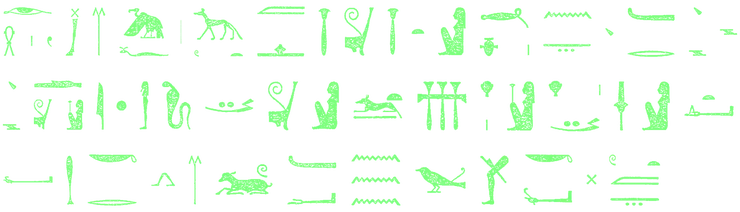
jw.tj m ḥtp wꜣḏ n Bꜣt mḥ jb n tꜣwj ḥnꜥ jdbw šsp.n.j jrw.k mꜣꜣ.n.j sštꜣ.j ṯḥn ḥr.j ḥr mꜣꜣ sḫm.j rdj.j sḫm ḥm.k r jw m jwḥ thw.k dr.tj m tꜣ
Come in peace, shoot of Bat, in whom the Two Lands and the lands along the banks put their trust.
I have received your service; I have seen my secret form.
My face shines at the sight of my image.
I grant Your Majesty power against whoever comes intent on harm,
so that your assailant is driven from the earth.Note · Line 141
Bat is a cow goddess associated with the sistrum. In receiving the king’s offering, Nephthys sees her own image. - 142

wnp nhs npḏ nbḏ r ḫft ḥr n sꜣ Wsjr
Stabbing Nehes, slaughtering the Evil One before the face of the son of Osiris.
Note · Line 142
Nehes and the Evil One are names of Seth. The rite enacts the victory of Horus over his father’s killer. - 143
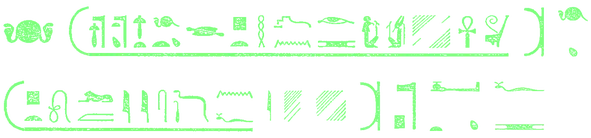
nswt bjt (… …) sꜣ Rꜥ (… …) pꜣ nṯr mrj mwt.f
King of Upper and Lower Egypt, Ptolemy X; Son of Ra, Ptolemy X, the god who loves his mother.
- 144
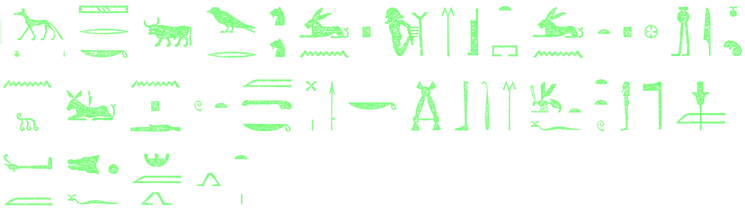
jw.n.j ḫr.k kꜣ wr pḥtj wnp sbj m St wnp jnj.j n.k nbḏ npḏ.tj m bꜣḥ.k mꜥbꜣ.k ḏbꜣ.tj m kꜣt.f ṯwt nṯr sḫm m ꜣt.f ḥmj nmtt ntt bjn rn.f
I have come to you, bull of great strength, who stabs the rebel at the Place of Stabbing, to bring you the Evil One, slaughtered before you, your maba-spear having done its work. For you are the god whose might shows in his hour, who turns back the steps of Evil-is-his-Name.
- 145
rdj.j wsr ḥm.k r sbj r.k wpj.k wꜣt jm.sn
I make Your Majesty strong against whoever rebels against you, so that you clear the road of them.
- 146
ḏd mdw jn Ḥr Bḥdtj nṯr ꜥꜣ nb pt nḫw qnj ḫnt Ḥt qn jꜣwtj ṯnr dr ḏwtj ḏbꜣ ṯmsw.f m Ḏbꜣ bꜣ tkk wnp.f tkk sw smꜣr.n.f sbjw ḥr jt.f
Words to be spoken by Horus of Behdet, the great god, lord of the sky, the mighty guardian in the House of the Mighty One, the valiant harpooner who drives out the Evil One and requites his crimes in Djeba, the fierce ba who stabs whoever attacks him, who has destroyed those who rebelled against his father.
Note · Line 146
Djeba is Edfu. - 147
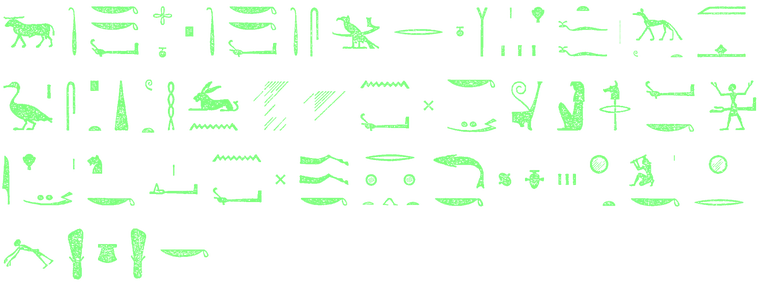
jw.tj m ḥtp sꜣ spd ḥwn ... ... ... ... šsp.n.j nḫt.k mꜣꜣ.n.j wsr.k ḥꜥj.j ḥr mꜣꜣ pḥtj.k rdj.j nḫt ḫpšwj.k r ḫtḫt ẖꜣkw jb ḫftjw.k ḫr ẖr ṯbwj.k
Come in peace, worthy son, young man …
I have received your strength; I have seen your might.
I exult at the sight of your power.
I make both your arms strong to drive the defiant back;
your enemies fall beneath the soles of your feet. - 148
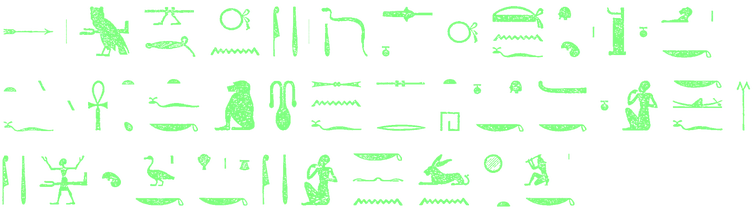
ms mꜣḥ n mꜣꜥ ḫrw ḏd mdw mn n.k mꜣḥ mḥ.n.f tp.k ṯsj.n.f ḥꜣt.k tf ꜥnḫt jt.k Jtmw ṯs.n.f sj r dhnt.k ḥkn.k jm.f m mꜣꜥ ḫrw ḥꜥj jr.k sꜣ.k ḥr nst.k mꜣꜥ ḫrw.k nn wn ḫftjw.k
Presenting the wreath of vindication. Words to be spoken:
Take the wreath: it has adorned your head and clasped your brow.
This living one your father Atum has bound about your forehead.
May you exult in it, vindicated.
Rejoice, for your son is on your throne.
May you triumph, for your enemies are no more.Note · Line 148
The wreath marks Osiris’s victory in the judgment against Seth. His son Horus now holds his throne. - 149
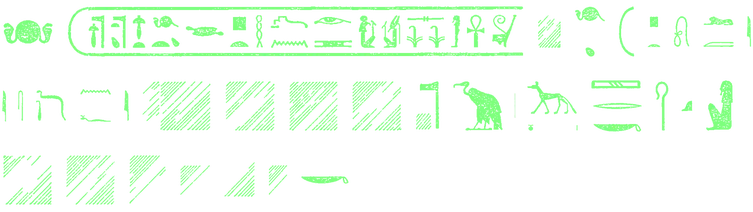
nswt bjt (… …) sꜣ Rꜥ (… …) pꜣ nṯr mrj mwt.f
King of Upper and Lower Egypt, Ptolemy X; Son of Ra, Ptolemy X, the god who loves his mother.
- 150
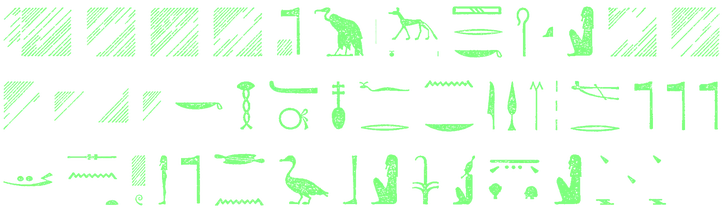
jw.n.j ḫr.k ḥqꜣ ... ... ... ... ... jnj.j n.k wꜣḥ nfr n nb jmꜣ mrj nṯrw mꜣꜣ.sn tw ṯwt nṯr jwꜥw n Gbb nswt tꜣwj ḥrj tp jdbw
I have come to you, ruler … to bring you the fair wreath of the Lord of Grace, that the gods may delight to see you. For you are the god, Geb’s heir, king of the Two Lands, chief of the lands along the banks.
Note · Line 150
Geb is the earth god and father of Osiris. - 151
rdj.j n.k ḥbw sd ꜥšꜣ wr mj Rꜥ ... ...
I give you Sed festivals in great number, as Ra has them …
Note · Line 151
A Sed festival is a royal jubilee at which the king’s power is renewed. - 152
ḏd mdw jn Wsjr ḫntj jmntt nṯr ꜥꜣ nb ꜣbḏw ... ... ... ... prj m ẖt jꜥrrwt m tp.f .. jwꜥt tꜣwj m mꜣꜥ ḫrw sꜣ.f Ḥr mn.tj ḥr nst.f .. sbjw.f ḫnt ꜣḫt
Words to be spoken by Osiris, Foremost of the West, the great god, lord of Abydos, … who came from the womb with rearing cobras on his head, … the inheritance of the Two Lands in triumph, whose son Horus is established on his throne, … his rebels within the horizon.
Note · Line 152
The rearing cobras are emblems of kingship: Osiris bears them from birth. - 153

ḏd mdw jn ꜣst wrt mwt nṯr ... ... Ꜥwjt ḫwjt sn.s Wsjr ... ... ... m St wrt dr ... ... ... ...
Words to be spoken by Isis the Great, mother of the god, … Khuyet who shelters her brother Osiris … in the Great Seat, who drives off …
- 154
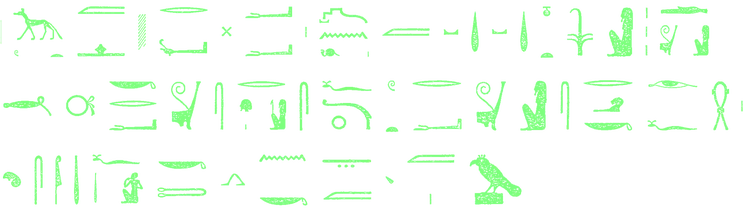
jw.tj m ḥtp ṯnr ꜥwj stp n Rꜥ m ꜥb Ḏꜣḏꜣt šsp.n.j mꜣḥ.k rdj.n.j sw r tp.j sfḫ.tj rdj.n.j sw r ḥꜣt.k jrj.f sꜣ.k smꜣꜥ ḫrw.f ḫrw.k jṯj.n.k tꜣwj m gs db
Come in peace, strong of arm, whom Ra chose in the midst of the tribunal.
I have received your wreath and set it on my head.
Once it was unbound, I set it on your brow.
It guards you and declares your voice true,
now that you have taken possession of the Two Lands by right.Note · Line 154
Osiris receives the king’s wreath, wears it and returns it to him. Its promise of vindication now extends to the king. - 155
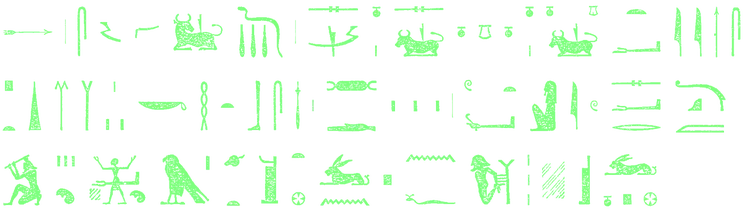
smꜣ smꜣ ḏd mdw smꜣ.n.j smꜣ nkn.n.j ngꜣw ḫꜥw.j spd m sbjw.k ḥdb.n.j nbḏ sꜥꜣ.n.j ꜥḏt wdj.j r sꜥrq m ḫftjw.k ḥꜥj jr.k Ḥr ḫntj Wṯst wnp.n.f sbjw ḫnt St wnp
Slaughtering the slaughter-ox. Words to be spoken:
I have slaughtered the slaughter-ox; I have cut down the nega-bull,
my weapon keen among your rebels.
I have laid the Evil One low; I have made great the slaughter,
striking your enemies until none was left.
Rejoice, Horus, foremost on the Throne,
who has stabbed the rebels at the Place of Stabbing.Note · Line 155
The ox stands for Seth; killing it is counted as a victory over the enemies of Horus. - 156
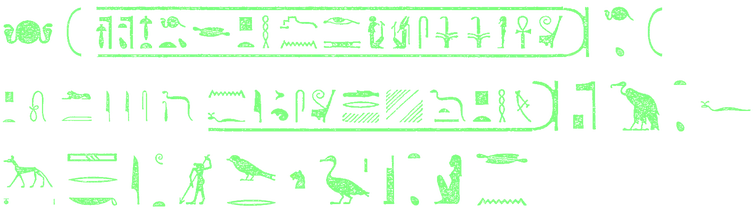
nswt bjt (… …) sꜣ Rꜥ (… …) pꜣ nṯr mrj mwt.f
King of Upper and Lower Egypt, Ptolemy X; Son of Ra, Ptolemy X, the god who loves his mother.
- 157
jw.n.j ḫr.k jꜣwtj wr pḥtj sꜣ ꜣst jwꜥw n Wsjr jnj.j n.k ḫftjw.k ḫr.tj m ḫbt mꜥbꜣ.k mds m ẖꜣkw jb ṯwt bꜣ tkk nḏ nṯrw nbw tjtj sbjw m nṯstjw ẖr.f
I have come to you, harpooner of great strength, son of Isis, heir of Osiris, to bring you your enemies, fallen at the place of execution, your maba-spear having raged among the defiant. For you are the fierce ba who guards all the gods, who tramples the rebels to nothing beneath his feet.
- 158
rdj.j n.k qnt r ḫtḫt sbjw.k pḥtj.k pḥtj.tj r rqww.k
I give you strength to drive your rebels back; mighty is your might against your foes.
- 159
ḏd mdw jn Ḥr Bḥdtj nṯr ꜥꜣ nb pt dwntj wdn ꜣt m ḫftjw.f nḏtj n jt.f nhp n mwt.f jṯj tꜣwj nb m ... nswt m rsj bjtj m mḥtj ... ... ...
Words to be spoken by Horus of Behdet, the great god, lord of the sky, the victor who bears down hard on his enemies, champion of his father, guardian of his mother, who has seized every land by …, King of Upper Egypt in the south and King of Lower Egypt in the north …
- 160

ḏd mdw jn Ḥt ḥr wrt nbt Jwnt jrt Rꜥ nbt pt nbt nrw ḫnt Wṯst Ḥr wrt ḥkꜣw sḫrt sbjw m tp rꜣ.s sꜣḫt sn.s rdjt jwꜥw.f ḥr nst.f
Words to be spoken by Hathor the Great, Lady of Dendera, Eye of Ra, Lady of the Sky, mistress of dread on the Throne of Horus, great in magic, who fells the rebels with her spell, transfigures her brother and sets his heir on his throne.
- 161

jw.tj m ḥtp ḥqꜣ wr pḥtj prj ꜥ hrw dmḏ šsp.n.j ... ... sbjw.k sbj m ssf
Come in peace, ruler of great strength, quick to strike on the day of battle. I have received … your rebels are burned to ash.
- 162
sjꜥr wḏꜣt ḏd mdw wḏꜣt.k n.k gsgs.tj m rꜣw.s snsn jꜣbt ḥnꜥ wnmt ꜣḫt ꜣḫ.tj m jrw.s ꜥnḫ ḏfḏ.s ḏdj.tj m st.f nṯrt nṯrj.tj r ꜣhw skj.n.s snkt sšm.n.s ḥrw m ḥḏḏwt.s
Presenting the wedjat eye. Words to be spoken:
Here is your wedjat eye, its parts fitted together,
that the left eye may join the right.
The radiant eye is radiant in its form;
its pupil lives, held firm in its place.
The divine eye is proof against harm;
it has swept away darkness and guided faces by its light.Note · Line 162
The offering restores the injured eye of Horus to wholeness. His left eye is the moon, his right the sun. - 163
nswt bjt (… …) sꜣ Rꜥ (… …) pꜣ nṯr mrj mwt.f
King of Upper and Lower Egypt, Ptolemy X; Son of Ra, Ptolemy X; the god Philometor.
- 164

jw.n.j ḫr.k kꜣ nb psḏntjw nṯrj ḫꜥw m smdt jnj.j n.k ... ... sḥḏ tꜣ wn m kkw
I have come to you, Bull, lord of the day of the new moon,
divine in your appearing on the day of the full moon,
to bring you …, which lights the land that was in darkness. - 165
rdj.j n.k mꜣꜣt nbt n jtn dgjt nbt n jꜥḥ
I give you all that the sun disk sees
and all that the moon beholds. - 166
ḏd mdw jn Mnw nb Jpw ḫnt Wṯst Ḥr nṯr ꜥꜣ mnḫ ḫnt Ḥt jꜥḥ prj r ḥꜣ m hrw psḏntjw jdn st nt jwn ḥꜥꜥ
Words spoken by Min, lord of Akhmim, foremost in the Throne of Horus, the great god, excellent in the House of the Moon, who comes forth on the day of the new moon and takes the place of the Rejoicing Pillar:
Note · Line 166
The Rejoicing Pillar is a name for the moon. - 167
rdj.j n.k jrtj.k snb.tj sp 2 ḫftjw.k šp nn mꜣꜣ.sn
I grant that both your eyes be sound, sound,
and your enemies blind, unable to see. - 168
jw.tj m ḥtp ḥqꜣ n Wḏꜣt jnj wrt wnt ḥrj.tj šsp.n.j wḏꜣt mꜣꜣ.n.j jm.s ḫntš jb.j ḥr mꜣꜣ.k rdj.j n.k ꜣḫtj.k ḥr mꜣꜣ m wꜣw wḏꜣtj.k wḏꜣ.tj r ḏꜣjt
Come in peace, ruler of Egypt,
you who bring the Great Eye that was far away.
I have received the wedjat eye; I have seen with it.
My heart rejoices at the sight of you.
I grant that your two radiant eyes see far,
that your two sound eyes stay sound and free of harm. - 169
smꜣ štw ḏd mdw mn n.k ḫftjw.k ḫr ẖr ḫmt.k Ḥr Ḥrw ꜥḏt.k jm.f štw m šꜥt kꜣ mnḥ m ksm ḫftj ḥnṯj m bjꜣ.k ḥꜥj jr.k Bḥdtj sꜣb šwt wnj mw.k wnp m bꜣḥ.k
Killing the turtle. Words to be spoken:
Take your enemies, fallen beneath your spear,
O Horus of Horuses! Your slaughter has fallen on him.
The turtle is butchered, the ka-meneh sorely struck;
the enemy is torn apart by your iron spear.
Rejoice, Behdetite, dapple-feathered one!
Your adversary lies stabbed before you.Note · Line 169
Ka-meneh is another name for the turtle. In this rite the turtle stands for the enemy of Horus. - 170
nswt bjt (… …) sꜣ Rꜥ (… …) pꜣ nṯr mrj mwt.f
King of Upper and Lower Egypt, Ptolemy X; Son of Ra, Ptolemy X; the god Philometor.
- 171
jw.n.j ḫr.k Bḥdtj ꜥꜣ mꜣꜥ ḫrw kꜣ nḫt spd jrw jnj.j n.k ḫftjw.k m nmt nt Sḫmt mꜥbꜣ.k mds m ḥꜥ.f ṯwt jr.k fꜣj ꜥ nb mꜥbꜣ stj r mnḫ m ḫftjw.f
I have come to you, Behdetite, great in triumph,
mighty bull of keen aspect,
to bring your enemies to you at Sekhmet’s place of slaughter,
now that your maba-spear has raged in his flesh.
For you are the one who raises his arm, lord of the maba-spear,
whose aim is true against his enemies.Note · Line 171
The Behdetite is Horus of Behdet, the falcon god worshipped at Edfu. - 172
rdj.j n.k pḥtj mj {ꜣ ꜣst wnj mw.k n wnn.f
I give you strength like that of the son of Isis;
your enemy shall be no more.Note · Line 172
The son of Isis is Horus. - 173
ḏd mdw jn Ḥr Bḥdtj nṯr ꜥꜣ nb pt sꜣb šwt prj m ꜣḫt bjk wr pḥtj bns bṯnw.f sjꜣw sfsf sbjw m ....f ꜥpj nb ꜥꜣjt ... ... ḏbꜣ ḏbꜣ .. ḥr .. ...
Words spoken by Horus of Behdet, the great god, lord of the sky,
dapple-feathered, who comes forth from the horizon,
the falcon great in strength, who destroys his opponents,
the Siau-falcon, who burns rebels with his …,
Api, lord of the sky, … who punishes … for … - 174

ḏd mdw jn Ḥt ḥr wrt nbt Jwnt jrt Rꜥ nbt . ... ... spd ḥnwtj nbt nsr sḫrt sbjw nw jt.s wbdt wbr m hh.s
Words spoken by Hathor the Great, lady of Dendera, Eye of Ra, lady of …,
sharp of horn, mistress of flame,
who strikes down her father’s rebels
and burns Uber with her fiery breath.Note · Line 174
Uber is a name for Apep, the serpent enemy of the sun god Ra, Hathor’s father. - 175
jw.tj m ḥtp qn prj ꜥ ꜥꜣ nḫt ḫnt Wr nḫt ḫf.n.j pḥtj.k mꜣꜣ.n.j nḫt.k ḥꜥj.n.j m qnt.k nḫt rdj.j n.k ꜥ.k rwḏ.tj r sbjw.k ḫftjw.k ḫb.tj m ...
Come in peace, valiant one whose arm strikes out,
great in victory in Great-in-Victory.
I have recognized your might, I have seen your strength,
I have rejoiced in your great valor.
I grant that your arm be strong against your rebels
and your enemies be struck down in … - 176
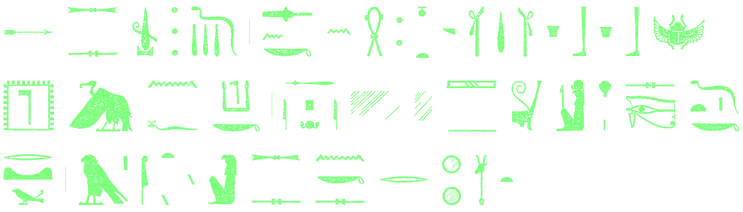
ṯs wḏꜣw ḏd mdw mn n.k sꜣ ntj ꜥpj rs wḏꜣ ꜥbb nṯrj mkj.n.f kꜣ.k ꜥpj ꜥnḫ.k pw sštꜣ n Rꜥ ḥr swḏꜣ ḏt.k r ḏw
Tying on the amulet. Words to be spoken:
Take the amulet of Api, who belongs to Him Who Wakes Unharmed,
the divine beetle that has guarded your ka.
O Api, it is your ankh-beetle, the hidden likeness of Ra,
keeping your body safe from harm.Note · Line 176
He Who Wakes Unharmed is Osiris. The ankh-beetle takes its name from the word for “life.” - 177
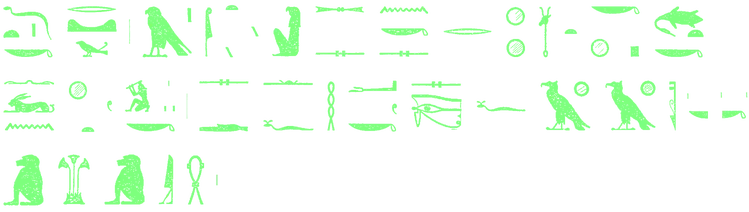
Ḥr mꜣꜥtj ṯs.n.k sw r ḫḫ.k ḫpr snḏt.k n wn ḫftjw.k sꜥḏ.f ḥꜥ.k swḏꜣ.f ꜣḫꜣḫw.k sꜣ ḥꜣ sꜣ jj sꜣ
O Horus the Justified, once you have tied it at your throat,
dread of you arises and your enemies are no more.
It guards your limbs and keeps your bones sound.
Protection upon protection: protection comes! - 178

nswt bjt (… …) sꜣ Rꜥ (… …) pꜣ nṯr mrj mwt.f
King of Upper and Lower Egypt, Ptolemy X; Son of Ra, Ptolemy X; the god Philometor.
- 179

jw.n.j ḫr.k Ḥr nb Wꜣḏt nṯr šps twt m tjt.f jnj.j n.k wḏꜣw ꜥpr.tj m ꜥnḫ Bḥdtj wr ḥr ḫwt.k ṯwt Ḥr ... mꜣꜥ ḫrw stp.sn sꜣ.sn ḥr.f
I have come to you, Horus, lord of Wadjet,
august god, perfect in form,
to bring you the amulet fitted with the ankh-beetle,
while the great Behdetite protects you.
For you are Horus … triumphant,
over whom they spread their protection. - 180
rdj.j sꜣ.j ḥꜣ.k m nht nt ꜥnḫ smꜣꜥ ḫrw.k r ḫftjw.k
I set my protection about you as a guard for your life,
to give you victory over your enemies. - 181
ḏd mdw jn Ḥr mꜣꜥtj nb Wꜣḏt jṯj nst nbwj Ḥr nb dmḏ.tw n.f psštj sḫm šps ꜥpr m jrw.f Ḏdw dmḏ ḥr bsꜣ.f wr pḥtj nb mꜣꜥ ḫrw mrwtj nfr n nṯrw nṯrwt
Words spoken by Horus the Justified, lord of Wadjet,
who has taken the throne of the Two Lords,
the Golden Horus, for whom the Two Halves were united,
the august power, endowed with all his attributes,
whom the Enduring Ones join in protecting,
great in strength, lord of triumph,
well beloved of gods and goddesses:Note · Line 181
The Two Lords are Horus and Seth, rivals for the throne. The Two Halves are Upper and Lower Egypt. - 182
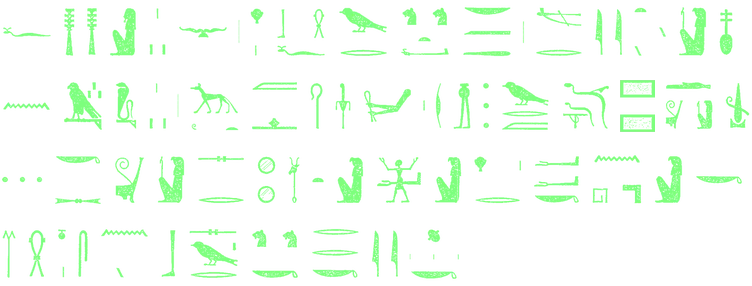
jw.tj m ḥtp ḥqꜣ ḫwj ḏsrw.j ḫbj jnw wrw m ṯnwj šsp.n.j wḏꜣw.k ṯs.n.j sw r ḫḫ.j ḥꜥj.j ḥr rꜣ ꜥwj.k nh.j ḥꜥ.k m sꜣ n snb swr.j pḥtj.k r rqww.k
Come in peace, ruler who guards my sacred image,
who gathers rich tribute in the hills along the river.
I have received your amulet and tied it at my throat;
I rejoice in the work of your two hands.
I shelter your body with the protection of the seneb plant
and increase your strength against your foes.Note · Line 182
The name of the seneb plant echoes the Egyptian word for health. - 183

ḥqꜣ jm.j jtj n wšbw stpw.j mrj.k jnjt.n.j m bꜣḥ.k
I am the ruler, master of cattle.
My choicest beasts, the ones you love, are what I have brought before you.Note · Line 183
The four color labels that follow distinguish the calves in the rite. - 184
sꜣb
Dappled
- 185
ḏsr
Red
- 186
ḥḏ
White
- 187
km
Black
- 188
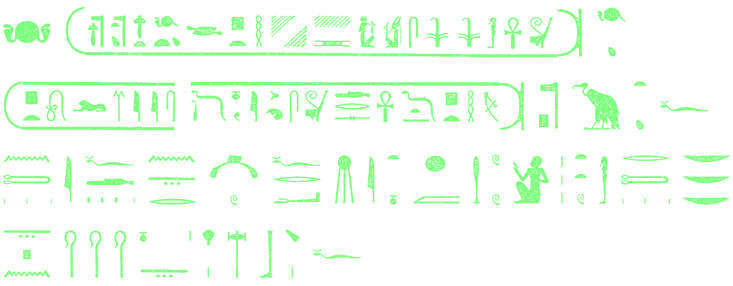
nswt bjt (… …) sꜣ Rꜥ (… …) pꜣ nṯr mrj mwt.f
King of Upper and Lower Egypt, Ptolemy X; Son of Ra, Ptolemy X; the god Philometor.
- 189
jw.n.j ḫr.k Bḥdtj sꜣb šwt m ꜥb kꜣt nb nbt Jwnt jnj.j n.ṯn jfdw n tꜣ r ꜣw.f r ꜥ stwt jtn m ḥmw ṯwt jr.ṯn nbw tꜣ pn ḥqꜣw nw tꜣ ḥr ndb.f
I have come to you, dapple-feathered Behdetite,
and to her who is with you, the female ka, the Golden One, lady of Dendera,
to bring you both as servants the peoples of the four quarters of the earth,
as far as the rays of the sun disk reach.
For you are the lords of this land,
the rulers of the earth in its full extent.Note · Line 189
The king offers the peoples of the four quarters to her and Horus together. - 190

rdj.j n.k rsj mḥtj jmntt jꜣbtt jfdw n tꜣ ḥr ndb.f
I give you south and north, west and east,
the four quarters of the whole earth. - 191

ḏd mdw jn Ḥr Bḥdtj nṯr ꜥꜣ nb pt sꜣb šwt prj m ꜣḫt nswt m rsj bjtj m mḥtj jtj m jmntt jꜣbtt ḥqꜣ jtrtj nb jswt gsw prw ḫtj ḥr rn.f sḥrj bṯnw.f dr snm sntj wrtj
Words spoken by Horus of Behdet, the great god, lord of the sky,
dapple-feathered, who comes forth from the horizon,
king of Upper Egypt in the south, king of Lower Egypt in the north,
sovereign in the west and east,
ruler of the Two Shrines, lord of chapels,
with whose name the sanctuaries are inscribed,
who drives off his opponents
and takes away the grief of the two great sisters.Note · Line 191
The Two Shrines represent Upper and Lower Egypt. The two great sisters are Isis and Nephthys, who mourn their brother Osiris. - 192

ḏd mdw jn Ḥt ḥr wrt nbt Jwnt jrt Rꜥ nbt pt ḥqꜣt ... ... ... ... ... ... .. ... ... ... ... ... ... jꜣbtt
Words spoken by Hathor the Great, Lady of Dendera, Eye of Ra, Lady of Heaven, ruler of … the east.
- 193
jw.tj m ḥtp ẖntj.j tp tꜣ ḥrj nst.j ḫnt ꜥnḫw šsp.n.j jrw.k ḥꜥj.j ḥr jḫt.k ḫntš jb.j m rꜣ ꜥwj.k rdj.j n.k rsj mḥtj r psštj.k jmntt jꜣbtt r ḥmw.k
Come in peace, my image on earth,
you who sit on my throne, foremost of the living.
I have accepted your service. I rejoice in your offerings;
my heart delights in the work of your two arms.
I give you south and north as your two halves of the land,
west and east as your servants.Note · Line 193
Hathor welcomes the king. South and north are Upper and Lower Egypt, the two halves of his kingdom. - 194

jrt snṯr qbḥw ḏd mdw jw ... ... jṯj kꜣ ... ... šsp.ṯn jm.sn snm.ṯn ... ... ... ... ... ... ... ...
Burning incense and pouring a libation. Words to be spoken: There comes … the Seizing Bull …
May you receive a share of them;
may you feed on …Note · Line 194
The Seizing Bull is the water of the Nile flood. - 195
nswt bjt (… …) sꜣ Rꜥ (… …) pꜣ nṯr mrj mwt.f
The King of Upper and Lower Egypt, Ptolemy X, the Son of Ra, Ptolemy X, the god who loves his mother.
- 196
jw.n.j ḫr.ṯn nṯrw wrw Pꜣwtjw nbw qbḥw snṯr jnj.j n.ṯn jḫt prjt jm.ṯn srf wr ḥnꜥ sṯj ḥḏt ṯwt jr.ṯn jrj jḫt jm.sn ḥn nswt m ꜥnḫ jw.w wꜥb
I have come to you, great gods, primeval ones,
lords of libation and incense,
to bring you what came forth from you:
the great libation and the scent of the White One.
For you are the ones who take your fill of them in truth,
for they are pure. - 197

rdj.j n.k ... ... ... .tj r ḥnꜥ.k nn qnw jm.s
I grant you that the field … for you, with no barren patch in it.
- 198

ḏd mdw jn H̱nmw nb Šꜣs ḥtp nṯr ꜥꜣ ḥrj jb Bḥdt sꜣ ḫntj mks nḫ nṯrw jw r nw.f rnpj r tr.f ꜥnḫ ḥr nb n mꜣꜣ.f
Words spoken by Khnum, lord of Shashotep, the great god who dwells in Behdet, son of the Foremost of the Deed of Inheritance, who protects the gods, who comes at his appointed time and grows young again in his season, at whose sight everyone lives.
Note · Line 198
The holder of the deed of inheritance is Osiris; Khnum’s timely return evokes the yearly Nile flood. - 199

ḏd mdw jn Sṯjt ꜥꜣt nbt Tꜣ stj ... ... nbtj rḫjt stj ḥꜥpj ... ... ... bꜥḥj tꜣ m t ḫpš ḥqt
Words spoken by Satet the Great, Lady of Ta-Seti, … mistress of the people, who makes the Nile flood flow … who floods the land with bread, forelegs of beef and beer.
Note · Line 199
Satet’s sanctuary stood on Elephantine, at the First Cataract. Ta-Seti, “Land of the Bow,” was the name of Egypt’s southernmost province. - 200

... ... ... ḥr.sn rdj.j n.k ... ...
… upon them. I give you …
- 201

... ... ... ... ... msj ... ... . ṯs prt m rmṯw nṯrw
… giving birth … who formed semen in humans and gods.
- 202
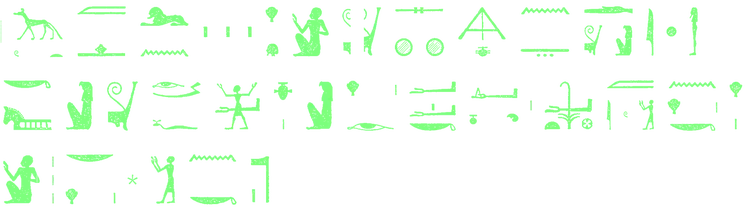
jw.tj m ḥtp nb n ... ḥrj tp n sḫḫ n tꜣ šsp.n.j jrw.k ḫntš.j n mꜣꜣ.f ḥꜥj jb.j ḥr jrt ꜥwj.k rdj.j n.k šmꜥw m jꜣw n ḥr.k ḥr nb ḥr dwꜣ n.k nṯr
Come in peace, lord of …, chief of all the earth embraces.
I have accepted your service; I delight in the sight of it.
My heart rejoices in what your two arms do.
I grant that Upper Egypt acclaim you to your face
and that everyone praise the god for your sake. - 203
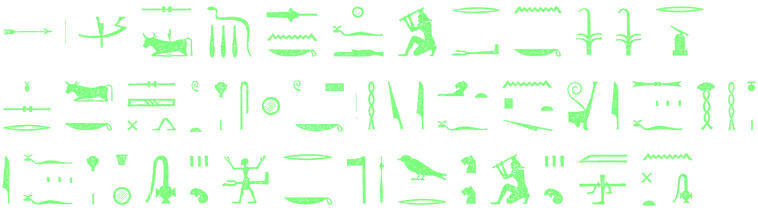
smꜣ smꜣ ḏd mdw mn n.k ḫftj rdj.j n.k sw r nmt šsr.k sš.tj ḥr sḫw.k ḥsk.j ḥꜣt.f npḏ.n.j ṯsw.f wꜣḥ.n.j jwf.f ḥr ꜥḫw.k ḥꜥj jr.k nṯr ꜥꜣ wr pḥtj ḫftjw.k m sbj n ḫt
Slaughtering the slaughter-ox. Words to be spoken: Take the enemy for yourself;
I lay him on the killing ground for you.
Your offering bull lies stretched out on your slaughter block.
I cut off his forequarters;
I have cut through his vertebrae
and laid his flesh on your offering basins.
Rejoice, then, great god, great in strength!
Your enemies perish in the fire.Note · Line 203
The slaughter-ox stands for the god’s enemy. Its killing is both a meat offering and a defeat of the god’s foes. - 204
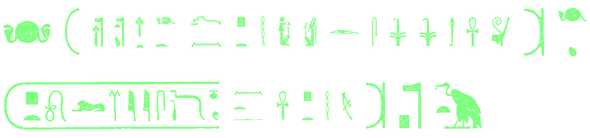
nswt bjt (… …) sꜣ Rꜥ (… …) pꜣ nṯr mrj mwt.f
The King of Upper and Lower Egypt, Ptolemy X, the Son of Ra, Ptolemy X, the god who loves his mother.
- 205
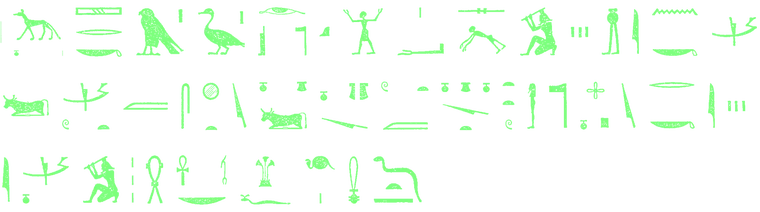
jw.n.j ḫr.k Ḥr ꜥꜣ sꜣ Wsjr qꜣj ꜥ ḥr sḫrt ḫftjw.f jnj.j n.k smꜣ smꜣ.tj m sꜣḫt ngꜣw ngꜣ.tj m nknt ṯwt nṯr wnp rqww smꜣ.n.f ḫftjw.f ḥnꜥ smꜣjw.sn
I have come to you, Horus the Great, son of Osiris,
who raises his arm to strike down his enemies,
to bring you the slaughter-ox slaughtered with the knife,
the sacrificial bull sacrificed with the blade.
For you are the god who stabs his foes,
who has killed his enemies and their allies with them. - 206

rdj.j n.k ḫftjw.k m nmt nt Sḫmt smꜣjw.sn sbj ḥr ḫt
I consign your enemies to the killing ground of Sekhmet for you,
and their allies to perish in the fire. - 207

ḏd mdw jn Ḥr nṯr ꜥꜣ sꜣ Wsjr wr pḥtj ḫnt Jw nšnj ḏrtj nṯrj ḥr tp n ḫrwjw.f ꜣmm šꜣt.f m ḫftjw.f
Words spoken by Horus, the great god, son of Osiris, mighty on the Island of Rage, the divine falcon atop the heads of his foes, whose talon grips his enemies.
Note · Line 207
The Island of Rage is a sacred name for Edfu. - 208

ḏd mdw jn ꜣst wrt mwt nṯr ... ... ḥqꜣt ḫnt St msḫnt smn.n.s sꜣ.s .. ... ... .. m šsrw ... ...
Words spoken by Isis the Great, mother of the god, … ruler at the Place of the Birth Brick, who has made her son secure … with spells …
Note · Line 208
The Place of the Birth Brick is the temple’s birth house, where the birth of the divine child was celebrated. - 209

jw.tj m ḥtp ẖntj n Rꜥ .. ... .. m tꜣwj ḥnꜥ jdbw šsp.n.j jrw.k ḥꜥj.j n mꜣꜣ.k ḫntš.j . ... ... ... rdj.j n.k šsrw wr.tj m nmt.k mḫtmt.k dns.tj m kꜣw
Come in peace, image of Ra, … in the Two Lands and the lands along the banks.
I have accepted your service; I rejoice at the sight of you
and delight in …
I grant you beasts in plenty on your slaughtering ground
and a byre heavy with bulls. - 210
šms ꜥntjw ḏd mdw mn n.k ... gꜣr nw gꜣr dbn n Tꜣ nṯr ... ... .. ... ... ... ... ꜣbḫ stj.ṯn m ḫt tꜣ jḥ sp 2 js njw rmṯw nṯrw m ḫnmw.f snsn.sn jm.f
Presenting myrrh. Words to be spoken: Take for yourself … the garnu incense and the gardeben incense from God’s Land. …
Your scent spreads through all the land.
How sweet, how sweet is the breath of humans and gods
with its fragrance as they breathe it in!Note · Line 210
God’s Land is a name for the region from which the Egyptians obtained aromatic resins, associated here with Punt. - 211
nswt bjt (… …) sꜣ Rꜥ (… …) pꜣ nṯr mrj mwt.f
The King of Upper and Lower Egypt, Ptolemy X, the Son of Ra, Ptolemy X, the god who loves his mother.
- 212
jw.n.j ḫr.k Bḥdtj nb Pwnt jnj.j n.k ꜥntjw ... ... ... ... ḏfḏf nb nw Tꜣ nṯr ṯwt jr.ṯn nbw Pwnt sgnn ḥꜥ.ṯn m jdt nṯr
I have come to you, Horus of Behdet, lord of Punt,
to bring you myrrh … and every bead of incense from God’s Land.
For you are the lords of Punt;
your bodies are anointed with a god’s sweat.Note · Line 212
The fragrant resin is understood as sweat from a god’s body. - 213
rdj.j n.k Pwnt ẖr jmjt.f Tꜣ nṯr ẖr prjt jm.f
I give you Punt bearing what it holds,
and God’s Land bearing what springs from it. - 214
ḏd mdw jn Ḥr Bḥdtj nṯr ꜥꜣ nb pt sꜣb šwt prj m ꜣḫt nb Pwnt ḥqꜣ Tꜣ nṯr šms jb.f m Jnt ꜥntjw
Words spoken by Horus of Behdet, the great god, Lord of Heaven, bright of plumage, who comes forth from the horizon, lord of Punt, ruler of God’s Land, who follows his heart in the Valley of Myrrh.
- 215

ḏd mdw jn Ḥt ḥr wrt nbt Jwnt jrt Rꜥ ḥrt jb Bḥdt nbt pt ḥnwt nṯrw nbw mfkt jnm ḫsbḏt tp nbt ꜥntjw ḥqꜣt Pwnt
Words spoken by Hathor the Great, Lady of Dendera, Eye of Ra, who dwells in Behdet, Lady of Heaven, mistress of all the gods, her skin turquoise, her head lapis lazuli, Lady of Myrrh, ruler of Punt.
- 216
jw.tj m ḥtp jtj nb jrtjw šsp.n.j ꜥntjw jnj.n.k n ḥm.j ḥꜥj.j ḥtp.j ḥr.f rdj.j n.k Tꜣ ḫt ẖr wnt jm.f sṯj.k ꜣbḫ m ḫnt ḥrw
Come in peace, sovereign, lord of the Irtiu.
I have received the myrrh you brought My Majesty;
I rejoice in it and am content.
I give you the land of Khet with what it holds
and grant that your scent may waft over people’s faces. - 217
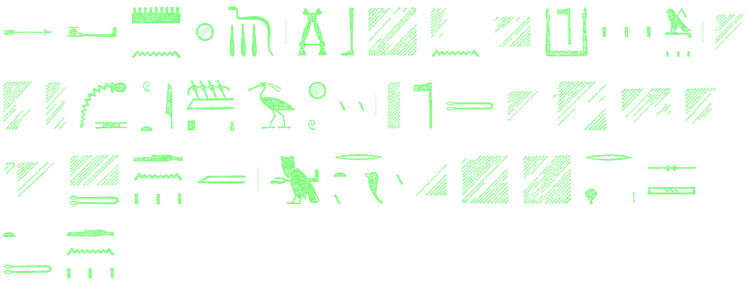
ḥnk mnḫt ḏd mdw ḏbꜣ n Rnnt n kꜣ.ṯn nṯrw ... ... ... wꜥbt wꜥb.tj sšp ꜣḫ.tj nṯrwj nṯrj .. ... ... ... mꜥr.j ṯn m mꜥr ... ... ... .. ḥr sštꜣ.ṯn
Offering cloth. Words to be spoken: The djeba robe of Renenutet for your kas, O gods …
the pure robe, pure indeed,
the robe of light, radiant.
You two most divine gods …
I wrap you in the mar robe …
and hide you from sight.Note · Line 217
In this rite the cloth veils the divine images. - 218

nswt bjt (… …) sꜣ Rꜥ (… …) pꜣ nṯr mrj mwt.f
The King of Upper and Lower Egypt, Ptolemy X, the Son of Ra, Ptolemy X, the god who loves his mother.
- 219
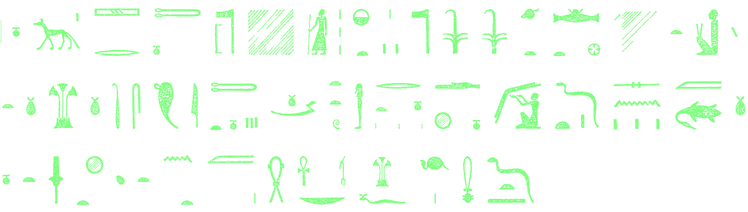
jw.n.j ḫr.ṯn nṯrw wrw Pꜣwtjw nn ḫnt Msn ... jnj.j n.ṯn jrjw ḥꜣtj smꜥr.j ṯn m mnḫt ṯwt jr.ṯn tḫn ḏt.sn m snḏt nt Sḫmt ntt m ꜥ.j
I have come to you, great gods, you primeval ones here in Mesen, …
to bring you the iriu robe and the hati robe
and clothe you in linen.
For you are the ones who veil their bodies
in the Dread of Sekhmet, the robe that lies on my arm.Note · Line 219
Iriu and hati are names of ritual garments. - 220
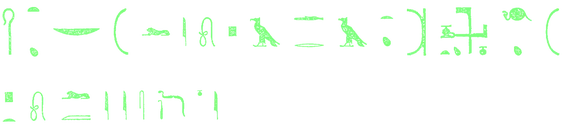
ḥqꜣt nbt tꜣwj (… …) mwt nṯr nt sꜣ Rꜥ (… …)
The sovereign, Lady of the Two Lands, Cleopatra III, divine mother of the Son of Ra, Ptolemy X:
Note · Line 220
The queen now speaks to the god. - 221

šsp m ꜥ.f sꜣ.k mrj.k ḥrj nst.k ḫntj ꜥnḫw
Receive it from his hand, from the hand of the son you love,
who sits on your throne, foremost of the living. - 222

rdj.j wsṯn nmtt. k m bw nb . .. ... ... ... ... ...
I grant that your stride be free in every place. …
- 223

ḏd mdw jn Wp wꜣwt ... ... ... ... ... ... ... Bḥdt nṯr .. m . ... ... ... ... ... .. wpj wꜣwt nw nṯr nb
Words to be spoken by Wepwawet, … in Behdet, the … god in …, who opens the ways of every god:
Note · Line 223
Wepwawet’s name means “Opener of Ways.” - 224

ḏd mdw jn Ḥt ḥr wrt ḥnwt 16 nṯrt ꜥꜣt ḫnt Wṯst nbtj rḫjt drp šnꜥw m kꜣ.s ꜣst ḥrjt tp Ḏw qꜣ
Words to be spoken by Hathor the Great, mistress of the Sixteen, the great goddess in the Throne Seat, lady of the subjects, who stocks the storehouse with her ka; Isis, chief of the High Mountain:
- 225
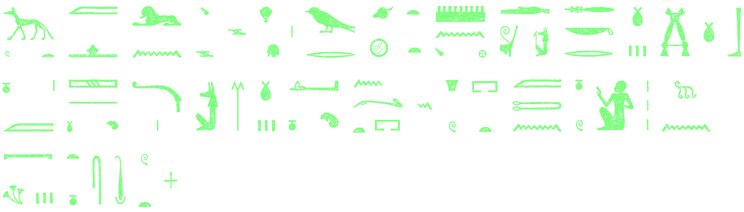
jw.tj m ḥtp nb n jdbw ḥrj tp wr ḫnt jḫt mnt šsp.n.j ẖkrw ḏbꜣ.n.j m šṯ.k ꜥrq.j ḥꜥ.j m šs rdj.j n.k nꜣjt wsḫ.tj m qnjw jwn n pt dns.tj jm.s
Come in peace, lord of the riverbanks,
great chief over all that is.
I have received the cloth; I have clothed myself in your garment.
I wrap my body in linen.
I grant you a spinning house rich in weavers,
with flax in plenty within it.Note · Line 225
Royal gifts of cloth dress the goddess’s image. In return she promises the king both the weavers and the flax. - 226

ḥwj.j ꜥ r stpt m jwꜣw wnḏww gḥsw mꜣw ḥḏ njꜣww
I stretch out my hand to consecrate cuts of meat from iwa cattle and wendju cattle, from gazelles, oryxes and ibexes.
- 227
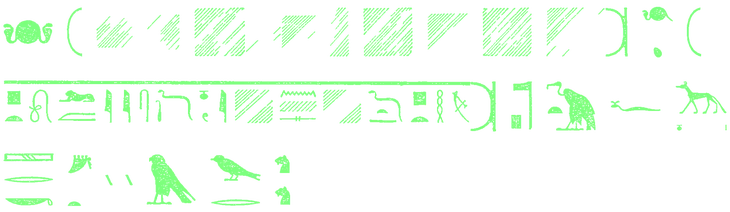
nswt bjt (… …) sꜣ Rꜥ (… …) pꜣ nṯr mrj mwt.f
The King of Upper and Lower Egypt, Ptolemy X, the Son of Ra, Ptolemy X, the mother-loving god.
Note · Line 227
Philometor, “mother-loving,” was a royal title. - 228
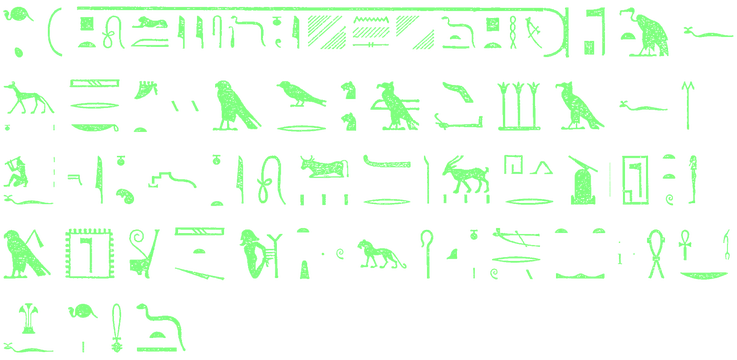
jw.n.j ḫr.k ḏrtj wr pḥtj ꜣmm šꜣt.f m ḫftjw.f ḥwj.j n.k stpt nt jwꜣw ḥnꜥ ꜥwt hꜣjt r nmt m ḥt nṯr ṯwt bjk nṯrj nšd sbj ṯꜣm ḥqꜣ n mrw
I have come to you, falcon great in strength, whose talon grips his foes,
to consecrate to you cuts of meat from iwa cattle and small livestock
destined for the slaughtering block in the temple.
For you are the divine falcon who tears the rebel apart,
the lion who rules the desert. - 229

ḥqꜣt nbt tꜣwj (… …) mwt nṯr n sꜣ Rꜥ (… …)
The sovereign, the Lady of the Two Lands, Cleopatra III, divine mother of the Son of Ra, Ptolemy X:
Note · Line 229
Cleopatra speaks here as the king’s mother. - 230

ꜥwt nn smꜣ ḥm.f m ḥr.k mk st m ꜣbwt sbjw.k
These sheep and goats that His Majesty slaughters before your eyes—
look, they are images of your rebels. - 231

rdj.j n.k sbjw.k sjpj.tj n dm.k wnj mw.k ꜣq n wnn.sn
I grant that your rebels lie slain by your knife,
that those who defy you have perished and are no more. - 232

ḏd mdw jn Ḥr Bḥdtj nṯr ꜥꜣ nb pt mꜣj ḥsꜣ m ḫftjw ... ... ... wr pḥtj bsk jbw nw ẖꜣkw jb
Words to be spoken by Horus the Behdetite, the great god, lord of the sky, the fierce lion among his foes, …, great in strength, who tears the hearts out of the false-hearted:
- 233

ḏd mdw jn Ḥt ḥr nbt Jwnt jrt Rꜥ ḥrt jb Bḥdt ... ... ... ... ... sbjw n jt.s qqjt qqt r qꜣw.s
Words to be spoken by Hathor, lady of Dendera, Eye of Ra, who dwells in Behdet, … the rebels against her father, the devouring flame who devours all she can:
Note · Line 233
As the Eye of Ra, Hathor is the sun god’s daughter and the fire that defends him. - 234
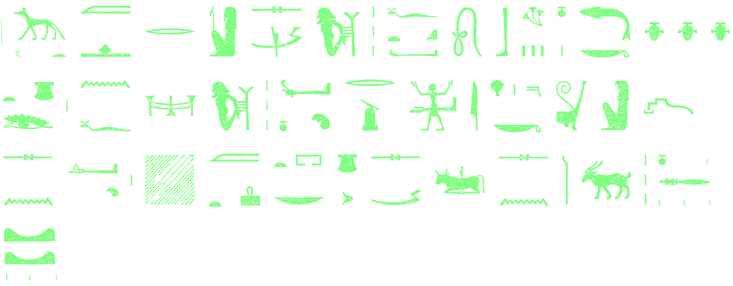
jw.tj m ḥtp rwḏ ꜥ smꜣ sbjw fdq wꜣbw nw ẖꜣkw jb dgj.j nf sbjw ḫrp.n.k r nmt ḥꜥj.j ḥr ḥwj.k n.j stpt.sn rdj.j n.k mḫtmt nbt ẖr smꜣ.sn ꜥwt nt ẖꜣwt ḏww
Come in peace, strong of arm,
you who kill rebels and tear traitors out by the roots.
I see those rebels you led to the slaughtering block;
I rejoice when you consecrate their cuts of meat to me.
I grant that every stall be full of its cattle for slaughter
and of the small livestock of marsh and mountain. - 235
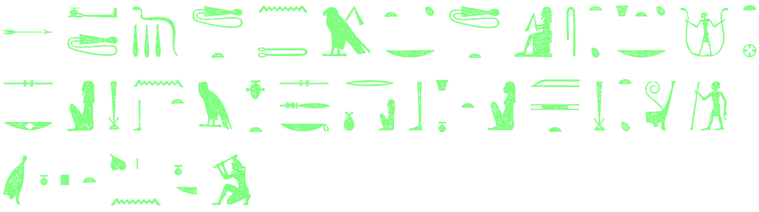
ḥnk mnjt ḏd mdw mnjt n.ṯ bjkt nbt mnjt špst ḥnwt nbt Qjs sḥb.j šnbt.ṯ m jḫt jb.ṯ sẖkr.j bꜥnt.ṯ m mrjt.ṯ Mꜣꜥt jm.ṯ wrt snt nt sr ḥḏt npḏt jswj n ... ...
Presenting the menat. Words to be spoken:
The menat is for you, she-falcon, lady of the menat,
noble one, sovereign, lady of Cusae.
I deck your breast for the feast with what your heart desires;
I adorn your throat with what you love.
For you are Maat the Great, sister of the Prince of the White Crown,
who cuts off the testicles of …Note · Line 235
The prince is Osiris, and the mutilated enemy is Seth. - 236
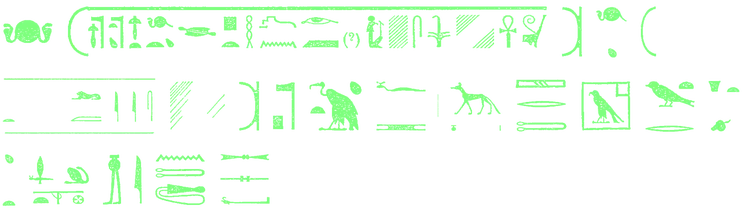
nswt bjt (… …) sꜣ Rꜥ (… …) pꜣ nṯr mrj mwt.f
The King of Upper and Lower Egypt, Ptolemy X, the Son of Ra, Ptolemy X, the mother-loving god.
- 237

jw.n.j ḫr.ṯ Ḥt ḥr wrt ḥnwt ḫnt Nḏft pḥt jnj.j n.ṯ mnjt ṯs.ṯ sj r ḫḫ.ṯ snt Wsjr Wsjr m ꜥḏ wḏꜣ ṯwt bjkt nṯrjt nfrt ḥr nbt mnjt ḥqꜣ.n.s wpt
I have come to you, Hathor the Great, mistress in the Lower Pomegranate Nome,
to bring you the menat, that you may fasten it round your neck,
sister of Osiris, that Osiris may be safe and sound.
For you are the divine she-falcon, fair of face,
lady of the menat, who has claimed the horns.Note · Line 237
The nome was the Egyptian province whose capital was Cusae. Hathor’s horns are those of the cow; she is often shown with the sun disk between them. - 238
rdj.j n.k ḫntš ẖrt hrw snḏm.j jb.k rꜥ nb
I give you joy day after day;
I gladden your heart each day. - 239
ḏd mdw jn Ḥt ḥr nbt Qjs ḫnt Wṯst Ḥr ꜣḫt mnḫt nt sn.s bjkt nṯrjt nfrt ḥr nbt mnjt ḥqꜣ.n.s wpt
Words to be spoken by Hathor, lady of Cusae in the Throne Seat of Horus, the radiant one, her brother’s excellent one, the divine she-falcon, fair of face, lady of the menat, who has claimed the horns:
- 240
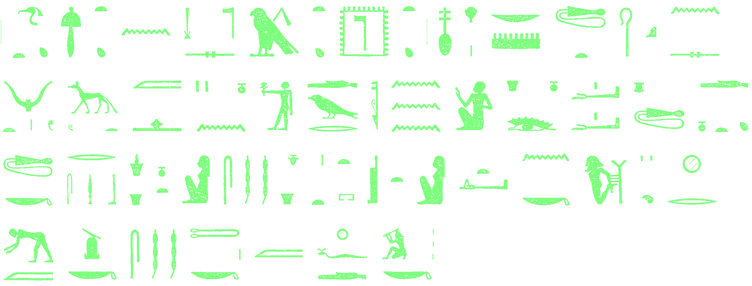
jw.tj m ḥtp snnw n Jḥj twr ꜥn ꜥwj ẖr mnjt šsp.n.j mnjt.k r sẖkr bꜥnt.j r snḏm jb.j r wsḫ st.j rdj.j n.k sbjw.k ḫr m nmt.k snḏm.j jb.k m ḫftjw.k
Come in peace, likeness of Ihy,
the purification priest whose arms bear the menat so gracefully.
I have received your menat to adorn my throat,
to gladden my heart and heighten my standing.
I grant that your rebels lie fallen at your slaughtering block;
I gladden your heart with your foes.Note · Line 240
The king takes his part as he presents the necklace. - 241
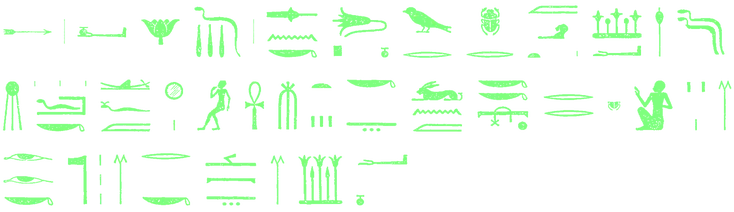
ḥnk nḫb ḏd mdw mn n.k nḫb pn wr ḫpr m ḥꜣt šꜣꜥ ḥḏḏwt prj.k jm.f m ḫ ꜥnḫ msḫꜥ ....k tꜣ wn m kkw ḫpr rmṯw m jrtj.k nṯrw m rꜣ.k grg pt tꜣ m šꜣꜥ.n.k
Presenting the lotus blossom. Words to be spoken:
Take this great lotus blossom
that comes into being at the beginning and brings forth the light.
From it you emerge, a child of living radiance.
You light the land that lay in darkness.
People come into being from your two eyes, gods from your mouth;
heaven and earth are founded once you have come into being.Note · Line 241
The lotus opening on the water at daybreak was an image of the sun’s first appearance. In Egyptian, the words for “people” and “tears” sound alike: humankind comes from the sun god’s eyes. - 242
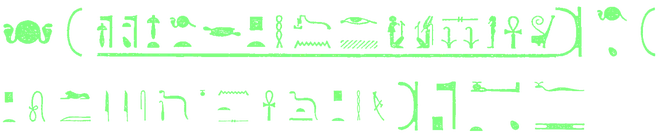
nswt bjt (… …) sꜣ Rꜥ (… …) pꜣ nṯr mrj mwt.f
The King of Upper and Lower Egypt, Ptolemy X, the Son of Ra, Ptolemy X, the mother-loving god.
- 243
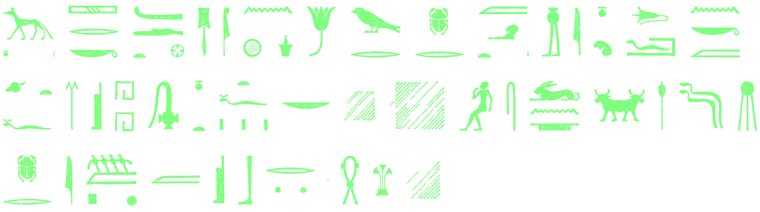
jw.n.j ḫr.k Bḥdtj sꜣb šwt nḫb wr ḫpr m ḥꜣt jnj.j n.k sšn prj.n.k m ḫnt.f m st hh nt jtw.k ṯwt sfj swn wbn ḥḏḏw ḫpr sšp m st brwj.f
I have come to you, Behdetite of many-colored plumage,
great lotus that comes into being at the very beginning,
to bring you the lotus from whose heart you emerged
at the Seat of Flame of your fathers.
For you are the child who brings forth the dawn,
the giver of light in whose eye sockets light comes into being. - 244

rdj.j n.k sš nb ẖr ḫppwj ḥr wbs n.k r dmḏjt.f
I grant that every marsh be thick with flowers
that spring up for you in their season. - 245
ḏd mdw jn Ḥr Bḥdtj nṯr ꜥꜣ nb pt sfj šps prj m nḫb jwꜥw mnḫ ms.n Ꜥmnjw mwj nṯrj n Pꜣwtjw tpjw
Words to be spoken by Horus the Behdetite, the great god, lord of the sky, the noble child who comes forth from the lotus, the worthy heir born of the Eight, the divine semen of the first primeval gods:
Note · Line 245
The Eight are the four pairs of primeval gods worshipped at Hermopolis, before whom there was no created world. - 246
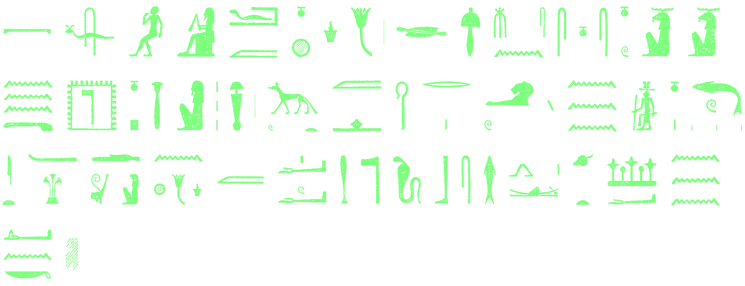
jw.tj m ḥtp ḥqꜣ rꜣ ḥwj jtj n ẖꜣwt jdḥw šsp.n.j nḫb m ꜥwj ḥm.k bs.j jm.f ḫnt šꜣꜥ rdj.j n.k mnw nb n pḥww ẖr sšn sꜣpt
Come in peace, ruler of the mouths of the Nile,
sovereign of wetlands and marshes.
I have received the lotus from Your Majesty’s two hands;
from it I shall rise in the primeval waters.
I grant that all the waters of the Delta
be covered with lotus blossoms and leaves. - 247
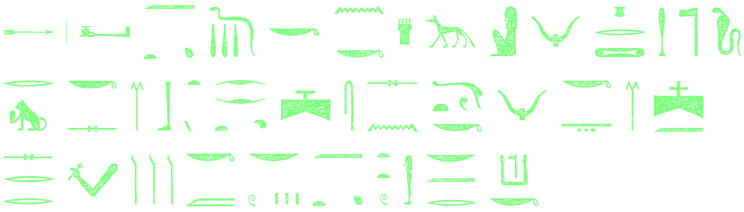
ḥnk mꜣꜥt ḏd mdw mꜣꜥt.k n.k tꜣjtj sꜣb wpj mꜣꜥt ẖrt ḥm.k r ḫft ḥr.k prj.s m btj.k wḏꜥ.s snw.k wpj.k tꜣ m wḏꜥ mꜣꜥt spẖr ḏbꜥw.k m nbw mꜣꜥt ṯwt nb mꜣꜥt r kꜣ.k
Presenting Maat. Words to be spoken:
Your Maat is for you, vizier who discerns Maat;
Your Majesty’s sustenance lies before your face.
She comes forth from your lips and guides your tongue.
You judge the land as a judge of Maat;
your fingers write as lords of Maat.
For you are lord of the Maat that belongs to your ka.Note · Line 247
In presenting her image, the king offers the god the very order on which divine life depends. - 248
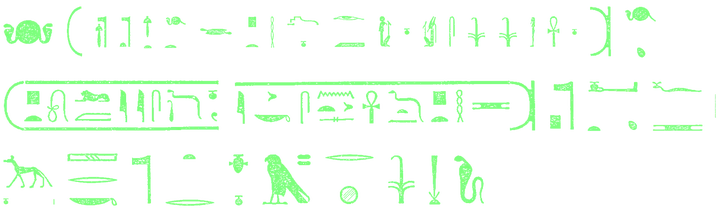
nswt bjt (… …) sꜣ Rꜥ (… …) pꜣ nṯr mrj mwt.f
The King of Upper and Lower Egypt, Ptolemy X, the Son of Ra, Ptolemy X, the mother-loving god.
- 249
jw.n.j ḫr.k nṯrj n Ḥr ꜣḫtj rḫ sw ... ... jnj.j n.k mꜣꜥt n ḥrj r ḥm.k ꜥnḫ.k jm.s rꜥ nb ṯwt tꜣjtj sꜣb nb mꜣꜥt jrj mꜣꜥt wḏꜥ mꜣꜥt sš sš mꜣꜥt
I have come to you, heart of Horakhty, knowing one, …
to bring you Maat, who never leaves Your Majesty,
that you may live by her every day.
For you are the vizier, lord of Maat,
who does Maat and decides what is Maat,
the scribe who writes Maat down.Note · Line 249
The king addresses Thoth. As the heart of Horakhty, Horus of the Two Horizons, Thoth is the sun god’s power of thought. - 250
rdj.j n.k mꜣꜥt wr.tj m rk.k mꜥbꜣjt.k ḥr wḏꜥ r nfr
I grant that Maat be great in your time
and that your Court of Thirty judge aright. - 251
ḏd mdw jn Ḏḥwtj ꜥꜣ ꜥꜣ wr nb Ꜥmnw tḫn šps ḫnt Ḥt jbṯt prj m Rꜥ ḫpr m Ꜥprj gmḥsw ḥtp ḥr mꜣꜥt
Words to be spoken by Thoth, twice great and mighty, lord of Hermopolis, the noble ibis in the House of the Bird Trap, who came forth from Ra and came into being from Khepri, the falcon who rests content with Maat:
Note · Line 251
The House of the Bird Trap is a name for Thoth’s temple at Hermopolis. Khepri is the sun at its rising. - 252

ḏd mdw jn Nḥmt ꜥwꜣj nbt Ꜥmnw Mꜣꜥt ḫnt Bḥdt sꜣt Rꜥ ḥqꜣt m Jw nsrsr mrt.f pw ꜥnḫ.f jm.s ṯpḥt wḏt kꜣw.f r ẖt.f
Words to be spoken by Nehemetaway, lady of Hermopolis, Maat in Behdet, daughter of Ra, ruler of the Isle of Flame. She is Ra’s throat, by which he lives, the gullet that carries his food to his belly.
Note · Line 252
Here Nehemetaway is herself Maat, the right order on which even the sun god lives. - 253
jw.tj m ḥtp wpw nb mꜣꜥt šm jb bwt.f gsꜣ šsp.n.j mꜣꜥt m ꜥwj ḥm.k jrj.j ẖrt.k rdj.j n.k Ḏꜣḏꜣt ḥr wḏꜥ r nfr Mꜥbꜣjt.k n šsp ḏbꜣw
Come in peace, judge, lord of Maat, beam of the scales, who abhors what is crooked.
I have received Maat from Your Majesty’s hands; I see to your needs.
I grant that the divine council judge rightly and that your Court of Thirty take no bribes.Note · Line 253
The king presents Maat in the form of a small figure. In return the goddess grants him justice in his courts. - 254
ḫrp ꜥwt nt ḫꜣst ḏd mdw qnb.j mḥw tꜣw ḥnꜥ njꜣww ḥr ḫrp st r Sḫw Ḥr ḫnp.w stpt.sn r sḥbt ḫꜣwwt.k pḥ qnt.sn r rꜣ ꜥ nwt
Bringing in the small herd animals of the desert. Words to be spoken: I catch antelopes, gazelles and ibexes and lead them to the slaughterhouse of Horus. Their choice cuts are taken to deck your offering tables for the feast, and the scent of their fat reaches the sky.
- 255
nswt bjt (… …) sꜣ Rꜥ (… …) pꜣ nṯr mrj mwt.f
King of Upper and Lower Egypt, Ptolemy X; son of Ra, Ptolemy X, the god who loves his mother.
- 256
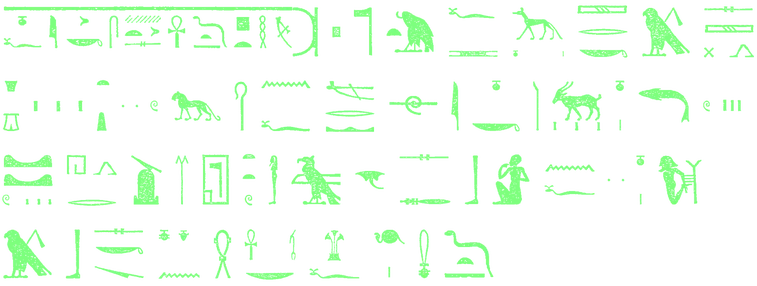
jw.n.j ḫr.k bjk sš ꜥgꜣwt ṯꜣm ḥqꜣ.n.f mrw sṯꜣ.j n.k ꜥwt nt ẖꜣwt ḏww hꜣj r nmt m ḥt nṯr ṯwt ꜣm sẖb snf n sbj bjk bsk jbw nw ẖꜣkw jb
I have come to you, falcon who spreads his talons, lion who has claimed the desert,
to bring you the herds of marsh and mountain, destined for the place of slaughter in the temple.
For you are the lion who laps the rebel’s blood, the falcon who tears out traitors’ hearts.Note · Line 256
The king speaks to Horus. The animals led to slaughter stand for the god’s enemies. - 257

rdj.j n.k sbjw.k snḥ m nmt smr.j qꜣs ntj ẖꜣkw jb.k
I give you your rebels bound at the place of slaughter; I draw the fetter painfully tight on those who turn against you.
- 258

ḏd mdw jn Ḥr Bḥdtj nṯr ꜥꜣ nb pt bjk nṯrj sš ꜥgꜣwt mꜣj wr pḥtj ḥqꜣ štꜣw pḥrr nmtt m sꜣ thj sw
Words to be spoken by Horus of Behdet, the great god, lord of the sky, the divine falcon who spreads his talons, the lion great in strength, ruler of the mountains, who races after whoever attacks him.
- 259
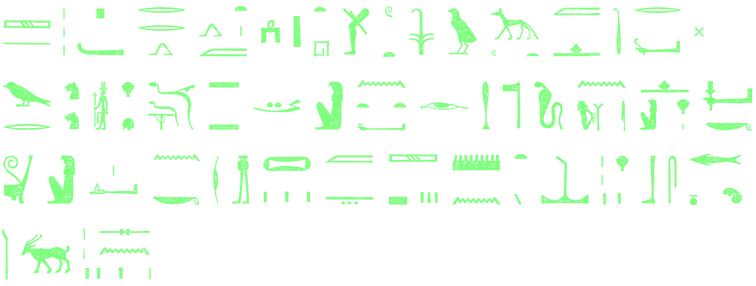
jw.tj m ḥtp ṯnr wr pḥtj jtj ḥrj tp ṯnwj mꜣꜣ.j nṯṯ jrj ḥm.k n sbj.j ḥtp.j ḥr ḫrp.k n.j rdj.j n.k ḫbj jnw m tꜣwj štꜣw mnṯw ḥr bs n.k ꜥwt.sn
Come in peace, mighty one, great in strength, sovereign, chief of the mountain ranges on either bank.
I see how Your Majesty has bound my rebel; I am pleased that you bring him to me.
I grant that tribute be gathered in the Two Lands and the mountain regions, and that the peoples of Asia bring you their flocks. - 260
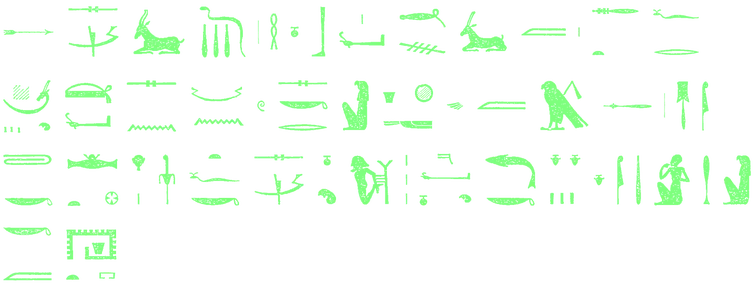
smꜣ mḥ ḏd mdw ḥbn.j mḥ .. m ds.j ẖt.f r mnḫt.k mḏḥ.s wjꜣ n {kr ꜥẖj.k m bjk ꜥꜣ sꜣb šwt pẖr.k Msn ḥr ḫwt jt.k smꜣ.n.k sbjw ḥwj.n.k ẖꜣkw jb mꜣꜥ ḫrw ḥm.k m wsḫt
Slaying the oryx. Words to be spoken: I strike down the oryx … with my knife.
Its body is to be your garment, from which the barque of Sokar is fashioned.
You fly as a great falcon of dappled plumage; you circle Mesen, guarding your father.
When you have killed the rebels and struck down the traitors, Your Majesty stands vindicated in the court.Note · Line 260
Sokar’s barque is a sacred boat carried in procession. - 261
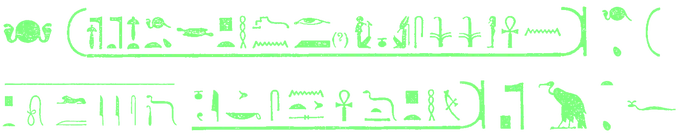
nswt bjt (… …) sꜣ Rꜥ (… …) pꜣ nṯr mrj mwt.f
King of Upper and Lower Egypt, Ptolemy X; son of Ra, Ptolemy X, the god who loves his mother.
- 262
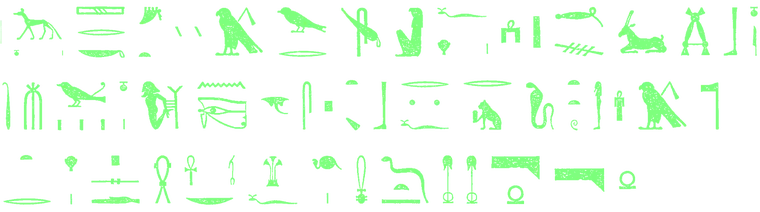
jw.n.j ḫr.k ḏrtj wr pḥtj sšm.f ḥr sꜣ mḥ ḏbꜣ.n.j ṯmsw n sbj n wḏꜣt ḥr spt brwj.f r ḫft ḥr.k ṯwt sjꜣw nṯrj ḥr psḏ n mꜣ ḥḏ wnp whj sp.f
I have come to you, Djerti-falcon, great in strength, whose image rests on the oryx’s back.
I have punished the crimes of the enemy of the Wedjat Eye by gouging out both his eyes before your face.
For you are the divine Sia-falcon on the back of the white oryx, who runs through the one whose plot failed.Note · Line 262
The enemy is Seth, who injured the eye of Horus. The restored eye is called the Wedjat, the “sound one”; here the king exacts an eye for an eye. - 263
rdj.j n.k sbjw.k ḫr ẖr ṯbwj.k ḫftjw.k m nṯstjw ẖr.k
I give you your rebels fallen beneath the soles of your feet, your enemies lying slain beneath you.
- 264
ḏd mdw jn Ḥr nb Ḥbnw nṯr ꜥꜣ ḫnt Ḥbnw ḏrtj ḥr psḏ n mḥ ḥwj bjn rn.f jrj sꜣ n njꜣw sšp dbdb jwf.f sꜥm ṯrw.f
Words to be spoken by Horus, lord of Hebenu, the great god foremost in Hebenu, the Djerti-falcon on the oryx’s back, who strikes him whose name is evil, whose place is on the back of the white ibex, who hacks its flesh to pieces and drinks its blood.
Note · Line 264
“Him whose name is evil” is Seth. The falcon perched on his quarry shows Horus victorious over him. - 265
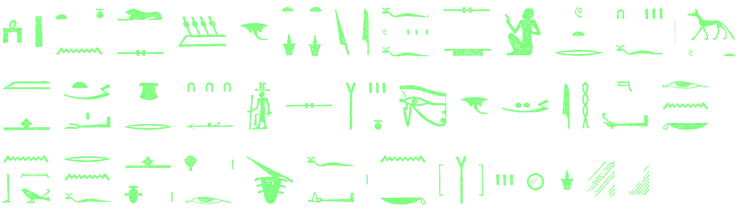
jw.tj m ḥtp ṯmꜣ ꜥ ẖr mꜥbꜣ jtj smꜣ sbjw nw wḏꜣt mꜣꜣ.j ḥwt jrj.n.k n bjn rn.f ḥtp jb.j ḥr jrt šꜥt.f rdj.j n.k sbjw ... ... ... ... ... ... ...
Come in peace, strong of arm, bearing the maba-spear, sovereign who kills the rebels against the Wedjat Eye.
I see the blows you dealt him whose name is evil; my heart is content at his slaughter.
I give you the rebels … - 266

kꜣp ꜥntjw ḏd mdw ꜥntjw n kꜣ.k Bḥdtj sꜣb šwt bꜣ.k ... ... ... ... ... ... ... spr.k r ꜣḫt m ꜥpj pgꜣ.n.k dmꜣtj.k . ... ... ... ... ...
Burning myrrh. Words to be spoken: Myrrh for your ka, Horus of Behdet, you of dappled plumage.
Your ba …
You reach the horizon as Api, having spread your two wings … - 267
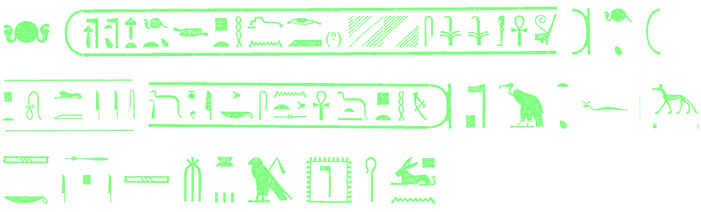
nswt bjt (… …) sꜣ Rꜥ (… …) pꜣ nṯr mrj mwt.f
King of Upper and Lower Egypt, Ptolemy X; son of Ra, Ptolemy X, the god who loves his mother.
- 268
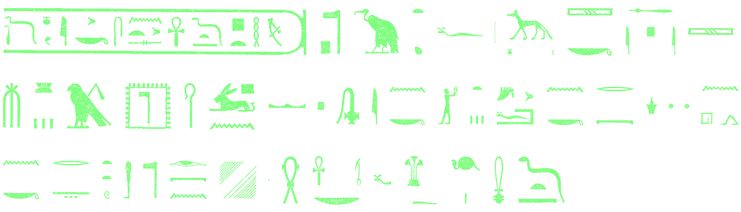
jw.n.j ḫr.k ꜥpj štꜣ msḫꜥ bjk nṯrj ḥqꜣ Pwnt kꜣp.j n.k ꜥntjw ḏr prj.n.k r pt snṯr n hꜣj.n.k r tꜣ ṯwt nṯr jrj pt n ... ... ... ... ... ... ... ...
I have come to you, Api, mysterious in your radiance, divine falcon, ruler of Punt,
to burn myrrh for you when you have risen to the sky, and frankincense when you have come down to earth.
For you are the god who makes the sky …Note · Line 268
Punt, a land reached by way of the Red Sea, supplied the Egyptians with fragrant resins. - 269
Bḥdtj nṯr ꜥꜣ nb pt
Horus of Behdet, the great god, lord of the sky.
- 270
rdj.j n.k Pwnt ẖr jmjt.f Tꜣ nṯr ẖr prjt jm.f
I give you Punt with all it holds,
and God’s Land with all that comes forth from it. - 271
ḏd mdw jn Ḥr Bḥdtj nṯr ꜥꜣ nb pt Ḫwn ꜥwj pꜣ ḥr jt.f sštꜣ ḏt.f m ꜥpj nṯrj m Bḥdtj sꜣb šwt
Words to be spoken by Horus of Behdet, the great god, lord of the sky, Dunawy who takes flight from his father, who conceals his body as the divine Api, as the Behdetite of dappled plumage.
Note · Line 271
Dunawy means “he who spreads his two arms,” an image of the falcon spreading its wings. - 272

ḏd mdw jn Ḥt ḥr wrt nbt Jwnt jrt Rꜥ ḥrt jb Bḥdt nbtj rḫjt ḥnwt tꜣwj bjkt nṯrjt ḥqꜣt Pwnt Bḥdtjt sꜣbt šwt
Words to be spoken by Hathor the Great, lady of Dendera, Eye of Ra, who dwells in Behdet, lady of the people, mistress of the Two Lands, divine she-falcon, ruler of Punt, the female Behdetite of dappled plumage.
- 273

jw.tj m ḥtp ḥqꜣ n ... ... ... ... ... ... ... šsp.n.j ꜥntjw.k ẖnm.j nwt ḥr sṯj.f rdj.j n.k qmꜣtjw ḥr kꜣwt ... ... ... ... ...
Come in peace, ruler of …
I have received your myrrh; at its scent I rise to the sky.
I grant that the Qematiu bring you … - 274
jrt wpt rꜣ ḏd mdw pẖr.j ḥꜣ.k sp 4 m nmst 4 dšrt 4 ḥnꜥ ṯꜣw nbw ... ... ... ... ... ... nbw ꜥbw m tꜣ pn wꜥb sp 2 Ḫwn ꜥwj nb Ḥr dj ... ... ... ... ... ... ...
Performing the Opening of the Mouth. Words to be spoken: I circle you four times with the four nemeset-jars, the four desheret-jars and all the pellets of incense … the lords of purification in this land. Pure, pure! Dunawy, lord of Hardai, …
Note · Line 274
The Opening of the Mouth enables a sacred image to breathe, speak and receive food. The two sets of jars hold water for the purification. - 275
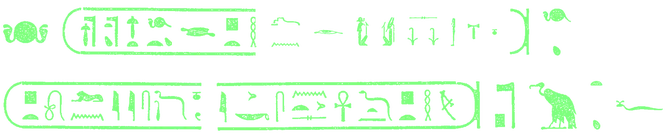
nswt bjt (… …) sꜣ Rꜥ (… …) pꜣ nṯr mrj mwt.f
King of Upper and Lower Egypt, Ptolemy X; son of Ra, Ptolemy X, the god who loves his mother.
- 276

jw.n.j ḫr.k ꜣḫ ꜥwj nb nw . ... ... ... ... jrj.j ḥtp dj nswt wp.n.j rꜣ.k m jrt Ḥr ṯwt nb ꜥbw jꜥb .. ... ... ... ... ...
I have come to you, skillful of hand, lord of embalming, … to present the offering that the king gives, having opened your mouth with the Eye of Horus. For you are the lord of purification, who joins together …
- 277
Nḫbt ḥḏt Nḫn
Nekhbet, the White One of Nekhen.
- 278
ḫwj.j ḥꜥ.k r sbjw ḥr.k pḏ.j dmꜣtj.j ḥr mkt ḏt.k
I guard your limbs from those who rebel against you;
I spread my two wings to shelter your body. - 279
ḏd mdw jn Jnpw nb Ḥr dj nṯr ꜥꜣ ḫnt Bḥdt sḫm šps ḫnt P Msn mr ꜣḥt n Rꜥ ḫntj sḥ nṯr smꜣ mꜣꜥt ḫnt Ḥt wḏꜣt
Words to be spoken by Anubis, lord of Hardai, the great god foremost in Behdet, the august power foremost in Pe-Mesen, overseer of the fields of Ra, foremost in the god’s hall, the Sema-Maat in the House of the Wedjat Eye.
Note · Line 279
The god’s hall is the place of embalming. Sema-Maat is a priestly title held here by Anubis himself. - 280

ḏd mdw jn Wꜣḏt nbt Ḥr dj sꜣt Rꜥ ḥrt jb Bḥdt ḥmt nṯr n sꜣ smsw mḥnjt wrt ḥrt tp n jt.s wdjt hh.s r ḫftjw.f
Words to be spoken by Wadjet, lady of Hardai, daughter of Ra, who dwells in Behdet, divine wife of the Eldest Son, the great cobra on her father’s head, who sends her fiery breath against his enemies.
Note · Line 280
The Eldest Son is Osiris. Wadjet is also the rearing cobra on the brow of her father, Ra. - 281
jw.tj m ḥtp sm sꜣ {kr sšm ḫsw n nṯrw nṯrwt šsp.n.j ḥnkwt.k twr.j m ꜥbw.k jj.j ḥr ḫrw ḥknw.k wdj.n.j sꜣ.k wḥm.n.j mkt.k ꜥbw.k ḫr nṯrw fdw
Come in peace, sem-priest, son of Sokar, who directs the rites of the gods and goddesses.
I have received your offering; I am made pure by your purification, and I come at the sound of your praise.
I have taken you into my keeping; I have renewed your protection. Your purification comes from the four gods.Note · Line 281
The king takes the role of the sem-priest, the officiant who performs the Opening of the Mouth. - 282

ḥnk šmꜥw mḥw ḏd mdw mn n.k šmꜥw ꜣbḫ.tj r mḥw nb mks ḥqꜣ jmjt pr smꜣ.n.k psštj ntj jt.k Wsjr pḏt 9 dmḏ ẖr ṯbwj.k
Offering Upper and Lower Egypt. Words to be spoken:
Take for yourself Upper Egypt joined to Lower Egypt,
lord of the mekes, ruler of the deed of inheritance.
You have reunited the two halves of your father Osiris;
the Nine Bows are all beneath your sandals.Note · Line 282
The mekes is a ceremonial case for the deed by which the king inherits Egypt. - 283

šsp.n.k ꜣtf m ḫꜥw n Rꜥ ḥꜥj nṯrw rmṯw n mꜣꜣ.k smꜣ.n.k tꜣwj m sšd wr jrj.k ḥb sd ḫnt ṯnṯꜣt
You have received the Atef crown and with it the majesty of Ra;
gods and people rejoiced at the sight of you.
You have united the Two Lands on the great balcony;
you celebrate the Sed festival on the throne.Note · Line 283
The Atef is the plumed crown of Osiris. - 284
nswt bjt (… …) sꜣ Rꜥ (… …) pꜣ nṯr mrj mwt.f
The King of Upper and Lower Egypt, Ptolemy X, the Son of Ra, Ptolemy X, the god who loves his mother.
- 285

jw.n.j ḫr.k jwꜥw tꜣwj ḥqꜣ jdbw nb jmjt pr ḥqꜣ sꜣ ḥqꜣ jnj.j n.k tꜣwj dmḏ m sp wꜥ mks.sn ꜥrf m ḫfꜥ.k ṯwt ... ... ḥrj nst Ḥr šmꜥw mḥw ... ...
I have come to you, heir of the Two Lands, ruler of the riverbanks,
lord of the deed of inheritance, ruler, son of a ruler,
to bring you the Two Lands joined as one,
their mekes clasped in your fist.
You are …, heir to the throne, Horus, Upper and Lower Egypt … - 286
rdj.j n.k ḫꜥw rdj n.j Rꜥ mks rdj n.j ḫntj mks
I give you the majesty that Ra gave me
and the mekes that Foremost of the Mekes gave me.Note · Line 286
The speaker is Horus. “Foremost of the Mekes” is his father Osiris, from whom he inherits the land. - 287
ḏd mdw jn Ḥr nb Ḥt nswt wr šfjt ḫnt Bḥdt sꜣ Wsjr msj.n ꜣst snḏm ḥr nst nt jt.f Wsjr pḏt 9 dmḏ ẖr rdwj.f ḫfꜥ mks ꜣmm.f jmjt pr nb p ḥqꜣ m srḫ
Words spoken by Horus, lord of the King’s House, held in great awe in Behdet,
son of Osiris, whom Isis bore,
seated on the throne of his father Osiris,
the Nine Bows all beneath his feet,
who clasps the mekes and grips the deed of inheritance,
lord of the throne, ruler on the palace façade:Note · Line 287
The falcon Horus stands on top of it. - 288
jw.tj m ḥtp jtj n Tꜣ mrj ḥrj tp tꜣwj ḥqꜣ jdbw šsp.j šmꜥw mḥw ḥr ꜥwj ḥm.k dmḏ.j st ḥr tp.k m sḫmtj rdj.j n.k mks grb n tꜣ pn jmjt pr n tꜣ ḥr ndb.f
Welcome in peace, sovereign of Egypt, chief of the Two Lands, ruler of the riverbanks.
I receive Upper and Lower Egypt from Your Majesty’s hands;
I join them on your head as the Double Crown.
I give you the mekes, title to this land,
and the deed of inheritance for the whole earth.Note · Line 288
The king offers the two halves of Egypt to Horus. Horus returns them to him as the Double Crown, which combines the crowns of Upper and Lower Egypt. - 289

... ... ... ... ... ... ... ... ḥr ḫr . ... ... ẖꜣkw jb ḫftj n nšmt
… striking down … the rebels and the enemy of the Neshmet barque.
Note · Line 289
The Neshmet is the sacred boat of Osiris, used in his festival procession at Abydos. - 290
nswt bjt (… …) sꜣ Rꜥ (… …) pꜣ nṯr mrj mwt.f
The King of Upper and Lower Egypt, Ptolemy X, the Son of Ra, Ptolemy X, the god who loves his mother.
- 291

jw.n.j ḫr.k msntj qnj prj ꜥ ḫnd ḥr psḏ n ḫrwjw.f jnj.j n.k sbjw ntj jt.k Rꜥ ns.f ꜣḫ n ḥngg.f ṯwt jꜣwtj jrj ḥꜣt m dpt nṯr sꜣw jt.f sbsb sbjw.f
I have come to you, mighty harpooner, whose arm is quick to strike,
who treads on the backs of his enemies,
to bring you the rebels against your father Ra,
each with his tongue cut out and no throat.
You are the harpooner who stands at the prow of the god’s barque,
who guards his father and drives off his rebels. - 292

Bḥdtj nṯr ꜥꜣ nb pt
The Behdetite, the great god, lord of the sky.
- 293

... ... ... ...k šmꜥs ḫr.k ꜣbḫ r mḥws ... nwt ... ...
… the crown of Upper Egypt for you, joined to the crown of Lower Egypt … sky …
- 294

... ... rdj.j n.k ... ḫꜣb n bꜣw.k
… I give you … bowed before your might.
- 295
... ... ... m tꜣ pn
… in this land.
- 296
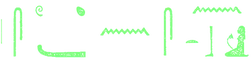
... ṯwt jrj swḥt n snbt
… You are the one who forms the egg in a woman who can bear children.
- 297

... ... rdj.j n.k ... ... wbꜣ.k ḥr wḫr ḫt.sn
… I give you … as you provide for them.
- 298

dwꜣ nṯr ḏd mdw jnḏ ḥr.k Bḥdtj nṯr ꜥꜣ nb pt Jtmw Ꜥprj nb ꜥnḫ ... ... snḏm.k ꜣḫt ḥtp n.j ḥr.k nfr
Praising the god. Words to be spoken:
Hail to you, Behdetite, great god, lord of the sky,
Atum, Khepri, lord of life …
You take your rest on the horizon.
May your beautiful face look kindly on me. - 299

... ... ... ... Ꜥprj ḫpr m ḥꜣt
… Khepri, who comes into being at the beginning.
Note · Line 299
His name echoes the Egyptian verb “to come into being.” - 300

... ... ... ...k nfr
… your perfect …
- 301
... ... rdj.j n.k ... .. nb smꜣ.n.k tꜣwj ẖr nst.k
… I give you … and every …, now that you have united the Two Lands beneath your throne.
- 302

... ... ḏd mdw sẖkr.j bꜥnt.ṯ ... ... ... ... m mrjt.ṯ
… Words to be spoken: I adorn your neck … with what you love.
- 303

... ... ... kꜣw ... ḥmt tpt
… the bulls … the first cow.
- 304

... ... rdj.j n.k ... nṯrw nbw nṯrwt ḥr jrt gs dpt.k
… I give you … so that all the gods and the goddesses may keep you safe.
- 305

jrt sḫm sšš ḏd mdw ... … ... sšš nt ṯḥnt m jꜣbj.j ... ... ... ... jm.ṯ
Playing the sekhem and seshesh sistra. Words to be spoken: … The seshesh sistrum of faience is in my left hand … in you …
- 306

... ... ṯwt ... ꜣḫt nbt pt ḥnwt nṯrw nbw
… You are … horizon, lady of the sky, mistress of all the gods.
- 307
... ... rdj.j n.k ... .. sjmꜣ.j n.k šmꜥw mḥw
… I give you … I win you the goodwill of Upper and Lower Egypt.
- 308

... ... ... ... ꜥpj .. ꜥq.k sw m ꜥꜣj ... ... ... ꜥḏ wḏꜣ
… Api … May you enter it in festive joy … is safe and sound.
- 309
... ... wbꜣ nḥpt m ḏt.f mḥ tꜣ m nqr
… who takes up the work of creation at dawn,
who fills the earth with gold dust. - 310
... ... rdj.j n.k ... .. m jtrw nb .. ... ... ... ...k
… I give you … on every waterway …