~/sacred-texts/edfu-temple-texts
Edfu Temple Inscriptions: Serpents Who Butcher Apophis
- Text
- Edfu Temple Texts, Edfou VII, pp. 100–125
- Date
- Carved under Ptolemy IX and Ptolemy X Alexander (c. 116–88 BC) on the outer face of the enclosure wall of the temple of Horus at Edfu; the king named in these scenes is Ptolemy IX, with his mother Cleopatra III
- Found
- Temple of Horus, Edfu, Upper Egypt; still in place on the outer face of the enclosure wall
- Language
- Ptolemaic Egyptian · Hieroglyphic
On the outer wall of the temple, Ptolemy IX stands before the gods in scene after scene. He speaks the offering spell, and the god answers with a gift. He harpoons the figures of Apophis, beheads the oryx, and holds out his enemies as meat: The cuts of the enemies’ flesh that lie on my arms are pure cuts, cleansed of filth and purified; no evil is in them. His mother Cleopatra III adds: Receive the flesh of my brother.
Other scenes bring figs, myrrh, milk, wine and lettuce for the bull god who puts semen in the vagina so that the egg may form. Four serpent gods guard the temple, and nine dead gods lie buried at Edfu.
- 1
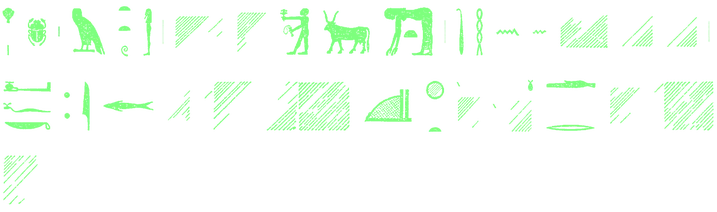
ḏd mdw jn Ḥr Bḥdtj nṯr ꜥꜣ nb pt ṯḥn .. ... ... ... ... ... mfk jnm ... ... ... ... sḫt .. drw .. ... ... ...
Words to be spoken by Horus of Behedet, the great god, lord of the sky, whose … shines, turquoise of skin … weave … garments …
Note · Line 1
Behedet is Edfu. The title names Horus as the god of this sanctuary. - 2

ḏd mdw jn Ḥt ḥr wrt nbt Jwnt jrt Rꜥ ḥrt jb Bḥdt nbt pt ḥnwt nṯrw nbw špst wsrt ḥꜥjt n.s ḥmwt ꜥꜣt šfjt ḫnt nṯrwt
Words to be spoken by Hathor the Great, lady of Dendera, Eye of Ra, who dwells in Behedet, lady of the sky, mistress of all the gods, the splendid one, the mighty one whom the women acclaim, who inspires great awe among the goddesses.
Note · Line 2
The Eye of Ra is the sun god’s power embodied in a goddess who acts on his behalf. - 3
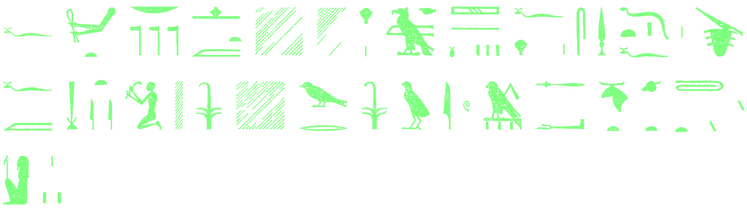
wnn Nb Msn m st.f ḏsrt nb nṯrw ḥtp.tj m ... ... ḥr ꜣmm šṯ.f ḥr sẖkr ḏt.f ḥr rdjt šꜥt.f m šnṯjw sw m .. ... wr sw r nṯrw ꜥꜣ šfjt ḫnt Pẖrtjw
The lord of Mesen is in his sacred seat. The lord of the gods has settled in … He grasps his shety-garment, adorns his body and wreaks slaughter among the foes. He is … Greater is he than the gods; great is the awe he inspires among the Pekhertiu.
Note · Line 3
Mesen is a sanctuary of Horus. Here the name refers to his seat at Edfu. - 4
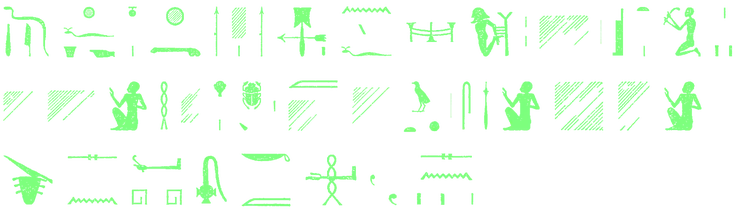
smꜣ ṯstjw nw ꜥꜣpp ḏd mdw ḫfꜥ.n.j ḫmt ꜣmm.j wꜥ stj.j nf sbjw ... ṯstjw ... ... ... ... ... .. ... ... ḥr tꜣ m .. ... ... ... sꜥꜣ.j ... ... ....j šꜥt.sn ... . hh.k m ḥꜥ.sn
Destroying the enemy figures of Apophis. Words to be spoken:
“I have grasped the khemet-harpoon; I seize the harpoon and shoot at those rebels.
… enemy figures … on the ground in …
I multiply the slaughter among them; I swell their bloodbath.
… your fiery breath is upon their bodies.”Note · Line 4
Apophis is the serpent who threatens the sun god. In the rite the king strikes figures that stand for the serpent’s forces. - 5
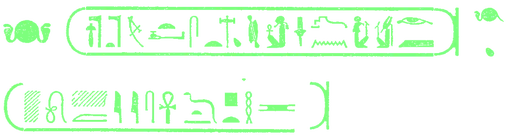
nswt bjt (… …) sꜣ Rꜥ (… …)
The King of Upper and Lower Egypt, Ptolemy IX, the Son of Ra, Ptolemy IX.
Note · Line 5
The two titles introduce the same king, first by his throne name and then by his birth name. - 6
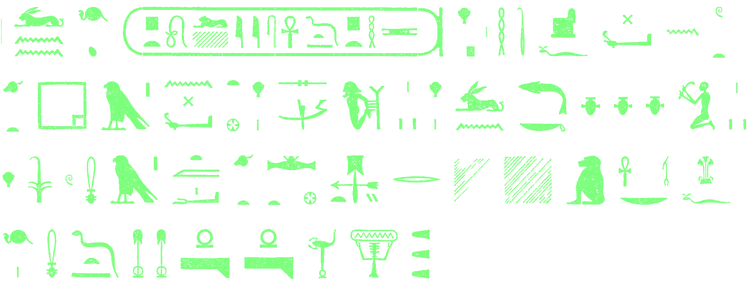
wnn sꜣ Rꜥ (… …) ḥr bḥdw.f nḫt.tj ḫnt Ḥt Ḥr nḫt ḥr smꜣ sbjw ḥr wnp ẖꜣkw jb ḥr .. ... ... ... sw mj Ḥr ṯmꜣ ꜥ ḫnt Msn stj r .. ... ... sbjw
The Son of Ra, Ptolemy IX, is on his throne, strong in the House of Horus the Strong. He kills the rebels, stabs the wicked and … He is like Horus, strong of arm in Mesen, who shoots at … the rebels.
- 7

rdj.j n.k snṯw.k ḥr sdꜣdꜣ ... snḏt.k wjn wꜣt.k wnp m bꜣḥ.k
“I grant that your foes tremble for fear of you
and that whoever scorns your path lies stabbed before you.”Note · Line 7
Here the god addresses the king. - 8

ḏd mdw jn Ḥr sḫm ḥr Pꜣ sgmḥ sḫm sḫm ḫnt St wnp nḫw nfr m Nst nṯrw sꜣw Rꜥ ḫnt St wrt ḥḏ.f wr ḥr sḫrt ḫftjw.f ḥn nṯr m Wṯst Ḥr
Words to be spoken by Horus of the Mighty Face, the Segemeh-spear, the Mighty One, mighty in the Place of Stabbing, the perfect protector on the Throne of the Gods, who guards Ra in the Great Seat, whose great mace strikes down his foes, who watches over the god on the Throne of Horus.
Note · Line 8
The spear is a name for Horus himself. The Place of Stabbing, the Great Seat and the thrones are sacred names for Edfu. - 9
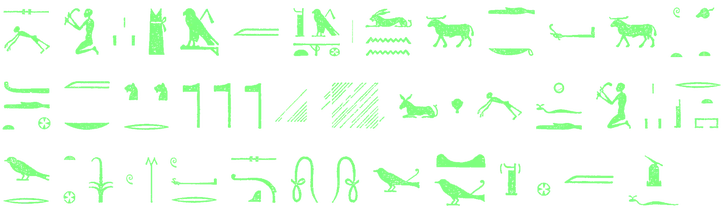
wnn bꜣ tkk bꜣ.tj ḫnt Bḥdt m nb pḥtj r nṯrw ... ... ḥr ... ... ḥr sḫr ḫftjw r St wrt sw m ... ... wdj r sꜥrq wꜣwꜣ ḏw r Wṯst m nmt.f
The fierce ba is mighty in Behedet, a lord of strength beyond the gods … He … and strikes down the foes at the Great Seat. He is … who strikes to make an end, at his place of execution, of whoever plots evil against the Throne.
Note · Line 9
A god’s ba is a form in which his power is present and active. - 10
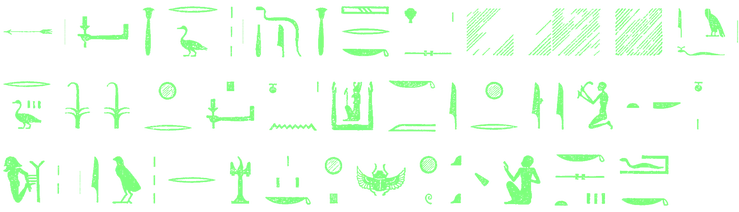
ḫrp wꜣḏ rꜣw ḏd mdw wꜣḏ ḫr.k ḥr . ... ... ... ... ... jm.f rꜣw nn ḫrp.n.j n kꜣ.k m ḫrjt nbt nt sbjw jw.w r ḫꜣwwt.k ḫprr ḫwj tꜣ mḥw qq.k st prj.k m qd
Presenting papyrus and geese. Words to be spoken:
“Papyrus for you, who … through it.
These geese I have brought for your ka as slaughter beasts of every kind, drawn from the rebels.
They are for your altars, O scarab who guards Lower Egypt.
When you eat them, you rejoice greatly.”Note · Line 10
The ka is the vital power of a god or a person; offerings of food sustain it. The king offers the geese as the god’s defeated enemies. - 11
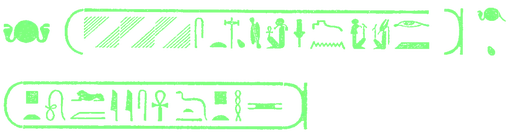
nswt bjt (… …) sꜣ Rꜥ (… …)
The King of Upper and Lower Egypt, Ptolemy IX, the Son of Ra, Ptolemy IX.
- 12
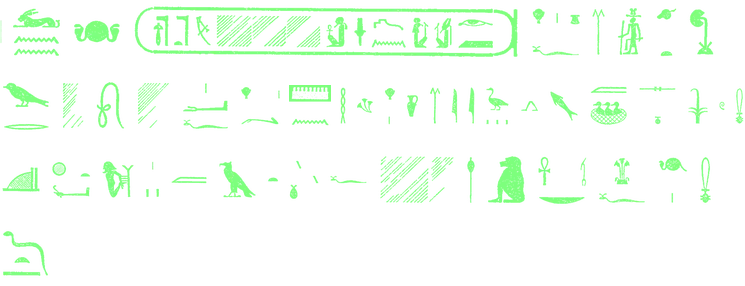
wnn nswt bjt (… …) ḥr nst m jtj ḫnt ḫꜣ wr ḥr twꜣ ꜥ ḥr rmnj mnḥ ḥr ḫrp ẖnmw bsj m sš sw mj Nb {ḫm sḫt sbjw m jꜣdt .. ... ... ... ..
The King of Upper and Lower Egypt, Ptolemy IX, is on his throne as ruler in the palace. He raises his arm, bears papyrus and presents the waterbirds that come up from the marsh. He is like the lord of Letopolis, catching rebels in his net …
- 13

rdj.j n.k ḥꜥ.k wꜣḏ.tj m wꜣḏ jw n.k sš ꜥnwt m jdḥw
“I grant that your body grows fresh from the fresh papyrus
and that the claw-spreaders come to you from the marshes.”Note · Line 13
The Egyptian word for green papyrus also means “to flourish.” The “claw-spreaders” are the birds of the marsh. - 14
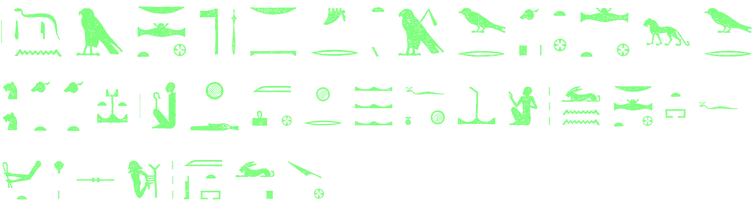
ḏd mdw jn Ḥr Nb Msn nṯr ꜥꜣ nb pt ḏrtj wr ḫnt P Msn mꜣj wr pḥtj ḫnt Ꜥntj jꜣbtt sꜣw Ꜥtm r Ꜥꜣswt Fnḫw
Words to be spoken by Horus, lord of Mesen, the great god, lord of the sky, the great falcon in Pe-Mesen, the lion of great strength in Khenty-iabet, who guards Egypt against the lands of the Fenkhu.
Note · Line 14
Khenty-iabet lay in the eastern Nile Delta. The Fenkhu were peoples to Egypt’s northeast. - 15
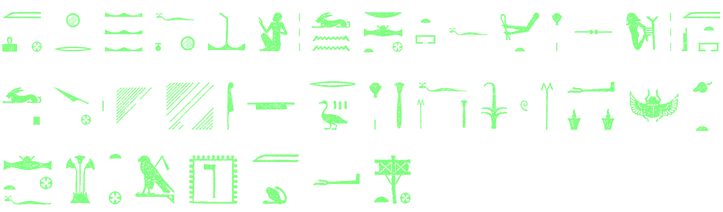
wnn Nb Msn m st.f ḏsrt ḥr smꜣ sbjw m St wnp ḥr jrt jḫt ḥr wšꜥ rꜣw ḥr wꜣḏ ḥꜥ.f m wꜣḏ sw m ꜥbb ḫnt Msn.f mḥw nṯr nṯrj m pḥw Ḏꜥ
The lord of Mesen is in his sacred seat. He kills the rebels in the Place of Stabbing, feasts, eats geese and refreshes his body with fresh papyrus. He is the scarab in his Northern Mesen, the most divine of gods in the marshes of Tanis.
- 16
sḫpt ḥꜣt stpwt ḏd mdw ḥw ꜥ ꜣmm.j sw m wnmj.j ḫfꜥ.j jꜣꜣt m jꜣbj.j
Bringing the choicest cuts of meat. Words to be spoken:
“The Hu-a scepter I grasp in my right hand;
the Iaat scepter I grip in my left. - 17
ḫrp.j n.ṯ nmt ḥtm.tj m ḫftj m ꜥwt m ḫrjt sbjw ḥnk.j n.ṯ stpwt.sn r sḥb ḫꜣwwt.ṯ pḥ qnt.sn r rꜣ ꜥ nwt
I bring you the slaughter block, laden with the foe in the form of sheep and goats, with rebels as beasts for slaughter.
I offer you their cuts of meat to deck your altars for the feast,
so that the smell of their fat reaches the sky.” - 18

nswt bjt (… …) sꜣ Rꜥ (… …)
The King of Upper and Lower Egypt, Ptolemy IX, the Son of Ra, Ptolemy IX.
- 19
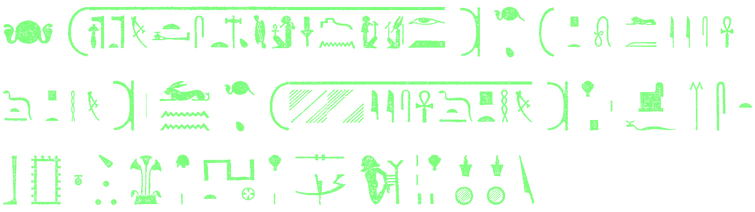
wnn sꜣ Rꜥ (… …) ḥr p.f m sbtj n bjꜣ ḥꜣ Tꜣ mrj ḥr smꜣ sbjw ḥr ḫbḫb ḫftjw m ḫbt nt jꜣbtt sw mj Ḥr dr sbjw nw jt.f smꜣr.n.f ꜥwj.... ... ...
The Son of Ra, Ptolemy IX, is on his throne, a wall of bronze around Egypt. He kills the rebels and butchers the foes at the eastern place of execution. He is like Horus driving off his father’s enemies after he has made both arms of … hang limp.
- 20

ḥrst.j wḏꜣtj.j r bḥn ḫrwjw.k swḏꜣ.j ḥm.k rꜥ nb
“I make both my eyes red with rage to punish your enemies.
I keep Your Majesty safe every day.” - 21

ḏd mdw jn Mḥjt jrt Rꜥ ḥrt jb Bḥdt Sḫmt ꜥꜣt nbt Sḫmt nbt Mnt wrt mrt nsrt sḥrjt sbjw r St wrt
Words to be spoken by Mehit, Eye of Ra, who dwells in Behedet, Sekhmet the Great, mistress of all the Sekhmets, Menet the Great, whose flame sears, who drives the rebels from the Great Seat.
Note · Line 21
Mehit is a lioness goddess. Here Sekhmet and Menet are names she bears as the fiery Eye of Ra. - 22
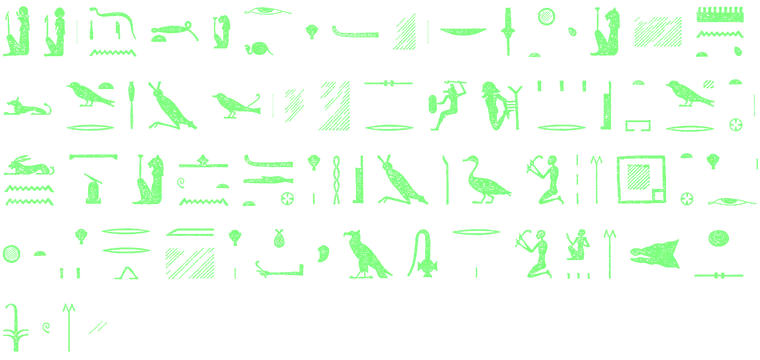
wnn ḥrjt nmt ḥtp.tj n Bḥdt ḥr ḥtm ḫftjw m Ḥt .. ḥr jrt jḫt ḥr pẖr m qd ḥr dr tꜣw rꜣ m ꜣt.s sj m ... ... ... ...tj ḥr hn ... ... ... ...
She Who Presides over the Slaughter Block has settled in Behedet. She destroys the foes in the House of …, devours them, grows merry and drives off the hot-mouthed by her strength. She is the … who lies upon the coffin …
- 23
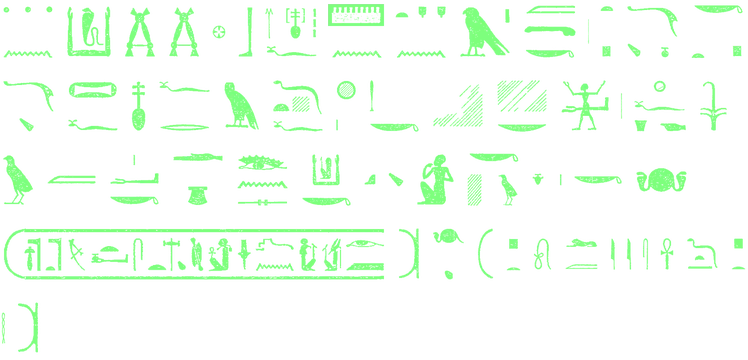
ḥnk dꜣb ḏd mdw dꜣb n kꜣ.k ḏbꜣ Ḏbꜣ m nfrw.f mnḏwj n Ḥr m bꜣḥ.k dp n.k dpt.f nfr m ḏt.f jḫt ḥm.k pw nb ḥꜥꜥwt ḫfꜥ sw m ꜥ.k dgj.n sw kꜣ.k qq.k sw ḫntš jb.k
Presenting figs. Words to be spoken:
“Figs for your ka, who supplies Edfu with his perfect gifts.
The two breasts of Horus are before you.
Taste their flavor for yourself: they are perfect of their kind.
They are what Your Majesty desires, O lord of joy.
Take them in your hand, now that your ka has seen them.
When you eat them, your heart rejoices.”Note · Line 23
“The two breasts of Horus” names the figs set before the god. In the opening line the Egyptian words for figs, supplying and Edfu echo one another. - 24

nswt bjt (… …) sꜣ Rꜥ (… …)
The King of Upper and Lower Egypt, Ptolemy IX, the Son of Ra, Ptolemy IX.
- 25
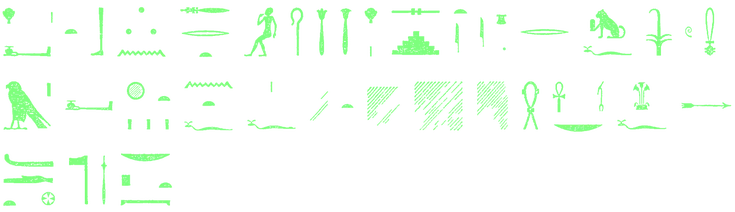
wnn nswt bjt (… …) ḥr tmꜣ.f m wr ḫꜣ n tꜣ ḫnt jḫt mnt ḥr ḥnk dꜣb n ẖrd ḥqꜣ tꜣwj ḥr sjꜥr dqr r ḫft ḥr.f sw mj Ḥr ḥnk jḫt n jt.f ... ... ... ... ...
The King of Upper and Lower Egypt, Ptolemy IX, is on his throne, a lord of many fields throughout the world. He offers figs to the Child, ruler of the Two Lands, and holds out fruit before his face. He is like Horus offering gifts to his father …
Note · Line 25
The Two Lands are Upper and Lower Egypt. - 26

Bḥdtj nṯr ꜥꜣ nb pt
He of Behedet, the great god, lord of the sky.
- 27

rdj.j n.k ꜣḫt ksj.tj ẖr kꜣw.s ẖr dqr nb bnr
“I grant that the field bows beneath its yield,
laden with every kind of sweet fruit.” - 28

ḏd mdw jn Ḥr {mꜣ tꜣwj pꜣ ẖrd sꜣ Ḥt ḥr ꜥꜣ wr tpj n Ḥr Bḥdtj nṯr ꜥꜣ nb pt ḫ nfr nḏm ptr.f ꜥnḫ bw nb n psḏ.f
Words to be spoken by Harsomtus the Child, son of Hathor, the very great one, firstborn of Horus of Behedet, the great god, lord of the sky; the beautiful child whom it is sweet to see, by whose radiance everyone lives.
- 29

ḏd mdw jn Jḥj wr sꜣ Ḥt ḥr nṯr ꜥꜣ ḥrj jb Bḥdt sfj šps n ꜣḫtj ẖrd nb ẖrt wḏ ẖrt n mrj.f ḥwn bnr mrwt
Words to be spoken by Ihy the Great, son of Hathor, the great god who dwells in Behedet, the splendid child of the Horizon-Dweller, the child who is lord of food, who grants food to whom he loves, the dearly beloved boy.
- 30
wnn nḫnw ḫꜥj.tj ḫnt Pr ḫꜥw m Wꜣḏḏw ḥr wꜣḏ tꜣwj ḥr šsp dqr ḥr ꜥwj nb.s ḥr smꜣ jḫt m mrwt.sn st m ẖrdw nbw kꜣw ḥqꜣw ḏfꜣ jtjw nw Wṯst Jwnt
The two boys have appeared in the House of Appearing as the two Wadjedj serpents. They make the Two Lands flourish, take fruit from its lord’s hands and eat as they please. They are the two children, lords of food, rulers of plenty, sovereigns of the Throne and of Dendera.
Note · Line 30
The two boys are Harsomtus and Ihy. The name of their serpent forms echoes the word for making the land flourish. - 31
jrt sḫm sšš ḏd mdw šsp.n.j sšš ꜣmm.n.j sḫm rdj.j jꜣw n nb nṯrw sšš jsk sš.n.f nšnj.ṯ sḫm rwj.n.f špt.ṯ ḥtp jr.ṯ wrt nbt tꜣwj ḫwj.ṯ Wḏꜣt r jꜣdw
Playing the sekhem and seshesh sistra. Words to be spoken: “I have taken up the seshesh and grasped the sekhem; I give praise to the Gold of the Gods.
The seshesh has ever hushed your fury; the sekhem has driven off your anger.
Be gracious, Great One, Lady of the Two Lands; guard Egypt against its wretched foes.”Note · Line 31
The sistra are two kinds of ritual rattle. The king plays them to soothe Hathor, here called the Gold of the Gods. - 32

nswt bjt (… …) sꜣ Rꜥ (… …)
The King of Upper and Lower Egypt, Ptolemy IX, the Son of Ra, Ptolemy IX.
- 33
wnn sꜣ Rꜥ (… …) ḥr ṯnṯꜣt.f ḥr sꜣḫt wsrt m ꜣḫw.s ḥr sḥꜥj ḥnwt.f ḥr sṯḥn ḥr.s ḥr jrt hj n nbt hj sw mj Jḥj ẖrd šps n ꜣḫtj jḥj n mwt.f r mrwt.s
The Son of Ra, Ptolemy IX, is on his throne. He glorifies the Mighty One with the praises that are hers;
he acclaims his mistress, makes her face shine, and shouts for joy to the Lady of Shouts of Joy.
He is like Ihy, noble child of the Horizon-Dweller, making music for his mother just as she loves it.Note · Line 33
Ihy is Hathor’s child, the young god who plays the sistrum for her. - 34
nh.j jwf.k swḏꜣ.j ḥꜥ.k ḫwj.j ḥm.k r jꜣdw
“I guard your flesh, keep your limbs sound, and shield Your Majesty from wretched foes.”
- 35
ḏd mdw jn Ḥt ḥr wrt nbt Jwnt jrt Rꜥ ḥrt jb Bḥdt nbt pt ḥnwt nṯrw nbw nbt sḫm šꜣꜥ.tw n.s sšš nhm n.s nṯrwt r sḥtp.s
Words spoken by Hathor the Great, Lady of Dendera, Eye of Ra, who dwells in Behdet, Lady of Heaven, Mistress of all the gods, Lady of the sekhem sistrum, for whom the seshesh sistrum was first played, for whom the goddesses shout for joy to soothe her.
Note · Line 35
Behdet is Edfu. Hathor bears the title Lady of Dendera even here, in the temple of Horus. - 36
wnn ḥnwt .. ḥtp.tj m Ḥt bjk nb nbt Jwnt m st jb.s ḥr dr dndn ḥr sqbb nsrt ḥr rdt ršw jnt ḥtp sj m nbt ḥꜥꜥwt ḫf.n.s sḫm ḫntš jb.s n mꜣꜣ sšš
The Mistress … rests content in the House of the Falcon; the Golden One, Lady of Dendera, is in the place she loves.
She drives out anger and cools the flame; she gives joy and brings peace.
She is the Lady of Jubilation when she has seen the sekhem; her heart delights in the sight of the seshesh. - 37
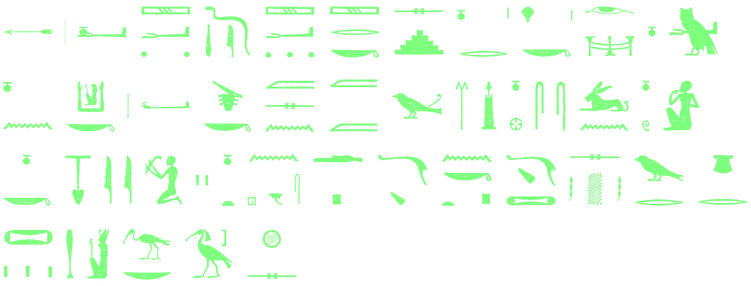
ḥnk šꜥwt ḏd mdw šꜥwt ḫr.k sjꜥrt.n.j r ḥr.k jrt Ḥr mst.n.j n kꜣ.k sḫm šꜥt.k m snm m Jwnw sswn.n.k smꜣjt nt nhs dp n.k dpt.s nḏmt wr ẖrt ḥm.k gmj.k ꜣḫ.s
Offering the shaut-cake. Words to be spoken: “Here is the shaut-cake for you, which I have brought before your face, the Eye of Horus, which I have carried here for your ka.
With might you cut away grief in Heliopolis when you punished the band of Nehes.
Taste it for yourself: how sweet its taste! It is Your Majesty’s food; you will find it excellent.”Note · Line 37
The cake is presented as Horus’s recovered eye, an image of wholeness restored. Nehes is a name of Seth. - 38

nswt bjt (… …) sꜣ Rꜥ (… …)
The King of Upper and Lower Egypt, Ptolemy IX, the Son of Ra, Ptolemy IX.
- 39
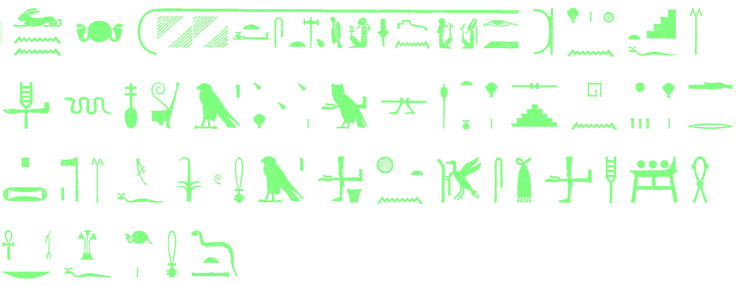
wnn nswt bjt (… …) ḥr ḫndw.f m ꜥḥꜥw nfr n Jdbw Ḥr ḥr ms ḥḏt ḥr sjꜥr hnjꜣj ḥr drp nṯr m mrjt.f sw mj Ḥr jꜥb jḫt n qmꜣ sw ꜥpr ꜥbꜣ n kꜣw nw Msn
The King of Upper and Lower Egypt, Ptolemy IX, is on his throne as the perfect Ahau of the Banks of Horus. He brings honey cake, presents sweet cake, and feeds the god what he loves. He is like Horus, who brings offerings to the one who begot him and stocks the altar for the kas of Mesen.
Note · Line 39
The Banks of Horus are Egypt, the land on either side of the Nile. - 40
rdj.j n.k nhp r nhp tꜣwj mj ḥm.j ḥr nḏ nṯrw
“I give you the power to protect, that you may protect the Two Lands as My Majesty protects the gods.”
- 41
ḏd mdw jn Jmn pꜣ ꜥḏr nṯr ꜥꜣ ḥrj jb Bḥdt nḏtj mnḫ m St wrt nḫw n nṯrw mḥ jb n nṯrwt mwnf .. n Psḏt
Words spoken by Amun the Savior, the great god who dwells in Behdet, the worthy protector in the Great Seat, defender of the gods, trusted by the goddesses, the … helper of the Ennead.
Note · Line 41
The Ennead is a company of nine gods. - 42
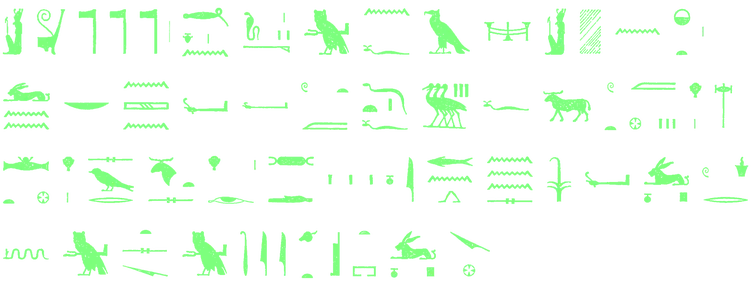
wnn nb nšnj sḫm.tj m ḏt.f bꜣw.f bꜣ.tj m nwwt ḥr nḏ Msn ḥr swrt šfjt.s ḥr jrt ꜥḏt n wjn mw.s sw m nb ṯnr wnp wbr mds mtj ḫnt St wnp
The Lord of Fury is mighty in body; his might is felt in the towns.
He guards Mesen, makes her more greatly revered, and slaughters her enemies.
He is the Lord of Strength, who stabs Uber and butchers Meti in the Place of Stabbing.Note · Line 42
Uber is the serpent Apophis; Meti is Seth. The Place of Stabbing is a name of Edfu that recalls the defeat of the gods’ enemies. - 43
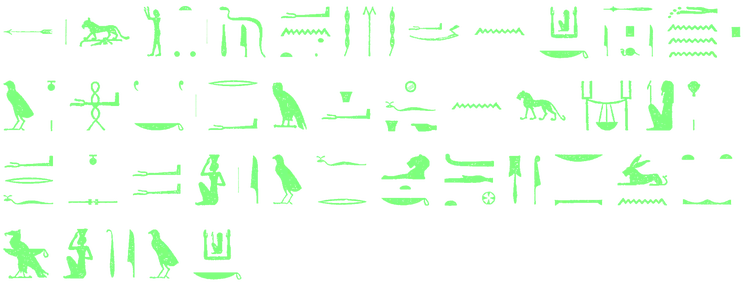
šms ꜥntjw ḏd mdw ꜥntjw nḏm mꜣꜥ.tj n kꜣ.k ꜥpj jꜣdt pw nt ḥꜥ.k rdj m ꜥ ḫfꜥ.n sw rw Šsmw ḥr ꜥrf sw ḏs.f jw.f r ḥꜣt.k Bḥdtj sꜣb šwt nb Pwnt kꜣ.tw r kꜣ.k
Presenting myrrh. Words to be spoken: “Sweet myrrh is brought for your ka, O Api.
It is the sweat of your limbs, put in the bowl the lion has grasped; Shezmu himself presses it out.
It is for your brow, Behdety, Dapple-feathered One, for they call your ka ‘Lord of Punt.’”Note · Line 43
Shezmu is the god of the press, who squeezes out the precious substance for anointing. Punt was famed as a source of aromatics. - 44
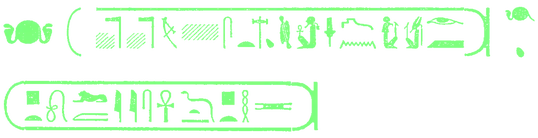
nswt bjt (… …) sꜣ Rꜥ (… …)
The King of Upper and Lower Egypt, Ptolemy IX, the Son of Ra, Ptolemy IX.
- 45
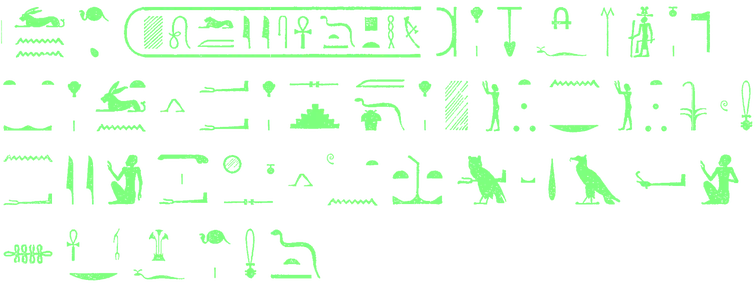
wnn sꜣ Rꜥ (… …) ḥr smꜣt.f m jtj n Tꜣ nṯr ḥr dwn ꜥwj ḥr sjꜥr mḏt ḥr šms ꜥntjw n nb ꜥntjw sw mj nꜥj ṯꜣj ꜥ ḫns Wtnt mḏꜣj nfr n Pwnt
The Son of Ra, Ptolemy IX, is on his throne as ruler of the God’s Land. He stretches out both arms, presents ointment, and offers myrrh to the Lord of Myrrh. He is like the wandering god of the manly arm, who ranges through Wetenet, the perfect prospector of Punt.
- 46
rdj.j n.k nwd n ꜥnḫ tp tꜣ sṯj.k m snt r Pwnt
“I give you the vigor of life on earth and a fragrance to match that of Punt.”
- 47
ḏd mdw jn Ḥr Bḥdtj nṯr ꜥꜣ nb pt šnbtj šps nb hj bsj m nṯrj ḫnt Tꜣwj nṯrw snsn Wꜣst m nb srḫ ꜥpj bꜣ.f r ꜣḫt nt pt r Jtrtj nt pꜣ nb Wṯst
Words spoken by Horus of Behdet, the great god, Lord of Heaven, noble falcon, Lord of the Firmament, who comes forth from the divine heart in the Two Lands of the Gods, who unites with Thebes as Lord of the Palace Façade, whose ba flies to the horizon of heaven, to the twin shrines of the Lord of the Throne Seat.
Note · Line 47
The ba is the form in which a god can travel and make his presence felt away from his dwelling. - 48

ḏd mdw jn Ḥt ḥr wrt nbt Jwnt jrt Rꜥ ḥrt jb Bḥdt nbt pt ḥnwt nṯrw nbw jtjt wrt nbt Tꜣ nṯr nḏmt sṯj ḥqꜣt Pwnt
Words spoken by Hathor the Great, Lady of Dendera, Eye of Ra, who dwells in Behdet, Lady of Heaven, Mistress of all the gods, great princess, Lady of the God’s Land, sweet of scent, ruler of Punt.
- 49
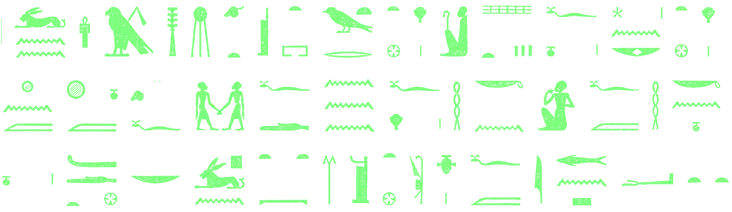
wnn sjꜣw psḏ ḫnt St wrt ḥr sꜣt spwt.f nt Snwt ḥr ḫnm ḫnmw.f ḥr snsn fdt.f ḥr ḥkn ḥꜥ.f m ḥknw sw m Bḥdtj nb Pwnt m Wṯst šms jb.f m Jnt ꜥntjw
The falcon shines in the Great Seat. He guards his provinces of Egypt,
breathes in his own fragrance, mingles with his own sweat, and gladdens his limbs with the oil of gladness.
He is Behdety, Lord of Punt in the Throne Seat, who follows his heart in the Valley of Myrrh. - 50

ḥnk stpwt ḏd mdw mn n.ṯn stpwt ḥnkt.j ḫr kꜣ.ṯn ḫꜣw nw ḫftjw tp ꜥwj.j wꜥbw nw wꜥb.tj r ꜥb twr.tj n sꜣt jm.sn
Offering the choice cuts of meat. Words to be spoken: “Receive the choice cuts I offer to your kas.
The cuts of the enemies’ flesh that lie on my arms are pure cuts, cleansed of filth and purified; no evil is in them. - 51

ḥsmn.ṯn jm.sn prj.ṯn m qd ḥtp.ṯn ḥr.sn rꜥ nb
When you eat of them, you rejoice greatly and are content with them, day after day.”
- 52
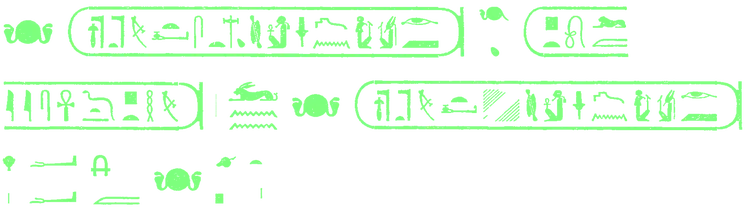
nswt bjt (… …) sꜣ Rꜥ (… …)
The King of Upper and Lower Egypt, Ptolemy IX, the Son of Ra, Ptolemy IX.
- 53
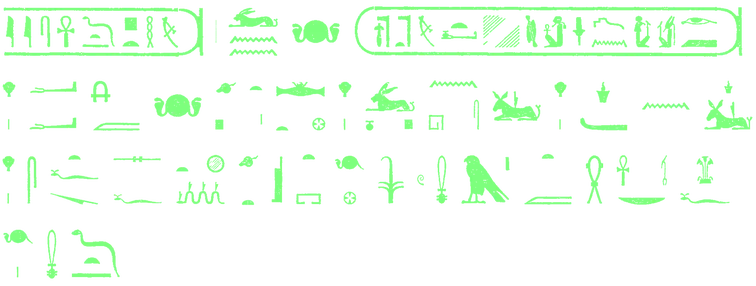
wnn nswt bjt (… …) ḥr jwꜥt.f m nswt bjt ḫnt P Msn ḥr wnp nhs ḥr bḥn b ḥr sfṯ sftḫ ḫnt St Rꜥ sw mj Ḥr ṯmꜣ ꜥ ḥwj sbjw smꜣ smꜣ ḫnt sḫw n Msn
The King of Upper and Lower Egypt, Ptolemy IX, is on his throne as King of Upper and Lower Egypt in Pe-Mesen. He stabs Nehes, cuts down Be, and butchers Seftekh in the Seat of Ra. He is like Horus the Strong-Armed, who strikes the rebels and slaughters the bull in the slaughterhouse of Mesen.
Note · Line 53
Be is another name of Seth, and Seftekh a name of Apophis. The slaughter of the bull enacts the defeat of the gods’ enemies. - 54

Bḥdtj nṯr ꜥꜣ nb pt
Behdety, the great god, Lord of Heaven.
- 55
ḥqꜣt nbt tꜣwj (… …) mwt nṯr nt sꜣ Rꜥ (… …)
The ruler, Lady of the Two Lands, Cleopatra III, divine mother of the Son of Ra, Ptolemy IX.
- 56

šsp ḥꜣt nt sn.j qnqn.ṯn jm.sn twt ḏt.ṯn m bꜣ ꜥnḫ
“Receive the flesh of my brother. When you eat of it, your bodies are made whole as living bas.”
- 57
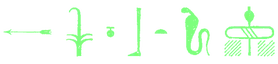
Nḫbt ḥḏt Nḫn
Nekhbet, the White One of Nekhen.
- 58

ḏd mdw nṯrw jpn ꜥꜣw wrw sꜣw tꜣ ḏsrw sꜣw sꜣb šwt ꜥḥꜥww nfrw ḫnt St wrt wr snḏt ḫr tꜣ ḏr.f
Words to be spoken: “These gods, great and mighty,
these sacred sons of the earth who guard the Dapple-feathered One,
these perfect Ahau-serpents in the Great Seat, whom the whole land holds in awe,Note · Line 58
The sons of the earth are guardian serpents. The Dapple-feathered One they protect is Horus in falcon form. - 59

Wꜣḏḏw mnḫw wꜣḏ Ḥt Ḥr Ḥrw bꜣw ꜥnḫw bwt.sn mnj nhw wrw ḫnt ḥt qn bꜥḥj Bḥdt m ḏfꜣ nb .. ... ... ... ... sꜣw St wnp ꜥḏ ꜥꜣpp r ꜥꜣjt nt ꜥpj ḫb ḫm mꜣꜣ r Jw nšnj
these worthy Wadjedj-serpents who make the House of Horus of the Horus Gods flourish,
these living bas who abhor death,
these great guardian serpents in the House of the Strong One, who flood Behdet with food of every kind,
… who guard the Place of Stabbing,
who butcher Apophis at the shrine of Api,
who destroy Khem-maa at the Isle of Fury,Note · Line 59
Khem-maa is a name of Seth. - 60

rs ḥr Msn swḏꜣ nb.s wsrw bwt.sn ꜥꜥw ḏt.sn r ḫt Jrj dndn ḥr tp mw nṯrj n Wṯst rnpj r nw.sn m ḫt ꜣwj rnpwt.sn ḫm skj n Bḥdt r ḏt
who watch over Mesen and keep its lord safe,
the mighty ones who abhor sleep,
who serve under Iri-denden on the divine waters of the Throne Seat,
who grow young again in their season when their years have grown long,
who know no end in Behdet, for all eternity.Note · Line 60
Mesen, Behdet and the Throne Seat are names for Edfu. Its guardians here are serpents. - 61

ḏd mdw jn Jrj dndn nṯr ꜥꜣ ḥrj jb Bḥdt ꜥḥꜥw mnḫ m Ḥt bjk
Words spoken by Iri-denden, the great god who dwells in Behdet, the excellent ahau-serpent in the House of the Falcon.
Note · Line 61
The falcon is Horus, lord of the temple. - 62

ḏd mdw jn Sꜣq ḥꜥ nṯr ꜥꜣ ḫnt Bḥdt Wꜣḏḏ nfr m St wnp
Words spoken by Saq-ha, the great god foremost in Behdet, the perfect wadjedj-serpent in the Place of Stabbing.
- 63
ḏd mdw jn Ḥꜥ Ḥr ḫnt Bḥdw n Rꜥ Ḥr.f mds ḥn ḥꜥ Ḥr
Words spoken by Ha-Hor in the Throne Seat of Ra, whose gaze cuts, who guards the body of Horus.
- 64

ḏd mdw jn Ꜥntj Ḥr ḫnt Ḥt Ḥr nḫt Nsbtj sꜣw St Rꜥ
Words spoken by Khenti-Hor in the House of Horus the Strong, the Devourer who guards the Seat of Ra.
- 65

wnn sꜣw tꜣ ḫnt Bḥdt m ꜥꜣ šfjt ... ... ... ḥr jrt nht ḥr sḫr sbjw ḥr ḥn Ḥꜣjt nt Ḥr ꜣḫtj st m mnḫ ... ... ... ... ... ...
The sons of the earth are held in great awe in Behdet … They give protection, strike down rebels and guard the sanctuary of Horakhty. Theirs are the excellent …
Note · Line 65
Horakhty is Horus of the Two Horizons. - 66
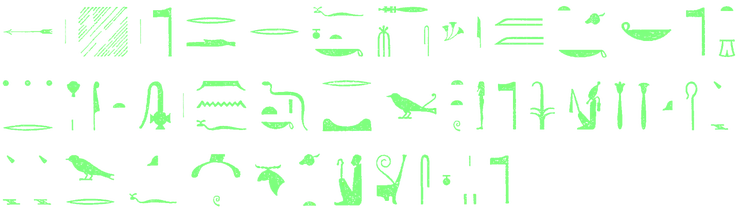
jrt snṯr ḏd mdw fdt nṯr r fnḏ.k ẖms r ẖnmtj.k sṯj dqr nṯr r ḥꜥ.k pḏ pn rdj.n.j ḥr ḫt pḏ.n.f ḏt.k r ḏw ṯwt nṯr nswt tꜣwj ḥqꜣ jdbw wr qfꜣt ḫnt sꜣw.n.sn
Offering incense. Words to be spoken:
A god’s sweat to your nose,
khemes to your two nostrils,
the scent of divine fruit to your flesh!
This incense I set on the flame has freed your body from harm.
For you are the god, king of the Two Lands,
ruler of the riverbanks, held in high honor among the guardian gods.Note · Line 66
The king burns incense before the god. Khemes is an aromatic substance; the incense is spoken of both as sweat from a god’s body and as fruit. - 67
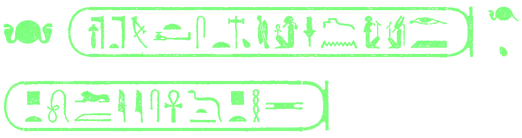
nswt bjt (… …) sꜣ Rꜥ (… …)
The King of Upper and Lower Egypt, Ptolemy IX; the Son of Ra, Ptolemy IX.
Note · Line 67
The two titles introduce the king’s two cartouches. - 68
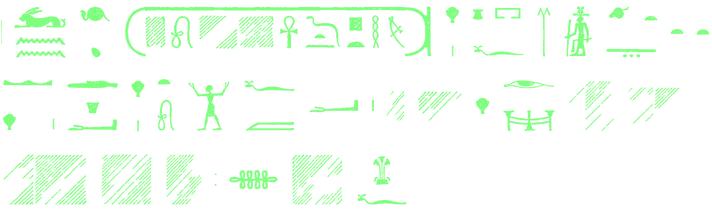
wnn sꜣ Rꜥ (… …) ḥr nst.f m jtj ḫnt Tꜣ nṯr ḥr šsp ꜥ ḥr twꜣ.f m ꜥ.f ... ... ḥr jrt Ḥr ... ... ... ... ... ... ... ... ...
The Son of Ra, Ptolemy IX, is on his throne as sovereign in God’s Land. He takes up the incense arm, raises it with his arm and sets incense upon the Eye of Horus …
Note · Line 68
The censer is shaped like an outstretched arm. Its flame is the Eye of Horus. - 69
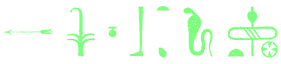
Nḫbt ḥḏt Nḫn
Nekhbet, the White One of Nekhen.
Note · Line 69
Nekhbet is the vulture goddess who protects the king of Upper Egypt. - 70
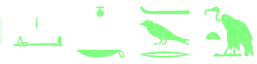
rdj.j n.k ḥwrt ḥr ḥn ḥꜥ.k nbt Kbn ḥr jrt bsꜣ.k
I grant you this: the she-vulture guards your body, and the Lady of Byblos shields you.
Note · Line 70
The Lady of Byblos is Hathor. - 71
ḏd mdw jn Ḥrj šf nswt tꜣwj nṯr ꜥꜣ ḥrj jb Bḥdt (Wnn nfrw mꜣꜥ ḫrw) sꜣ n Gbb sḫm šps ḫnt Nꜥrt ḫntt ꜥꜣ šfjt m Rmnj pt
Words spoken by Heryshef, king of the Two Lands, the great god who dwells in Behdet, Wennefer the vindicated, son of Geb, the august power in Naret-Khentet, held in great awe in Remeni-pet.
Note · Line 71
Heryshef, the ram god, is named here as Wennefer, or Osiris. Naret-Khentet is the Upper Egyptian district of Herakleopolis, Heryshef’s chief sanctuary. - 72
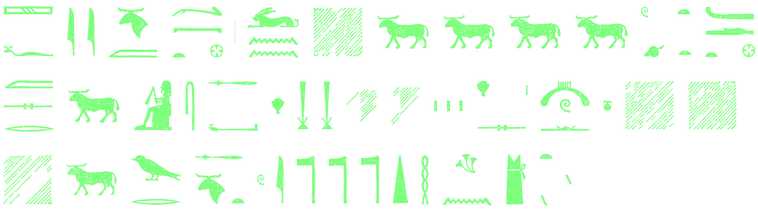
wnn bꜣ bꜣw bꜣ.tj ḫnt Bḥdt m sr šps ꜥꜣ nrw ḥr snsn ... ... ... ... ḥr sꜣwj ... ... ... sw m bꜣ wr ꜥꜣ šfjt r nṯrw spd ꜥbwj dm ḥnwtj
The ba of bas is mighty in Behdet, a splendid ram who commands great dread. He breathes in … and gladdens … He is the great ram, held in greater awe than the gods, his two horns pointed, both sharp.
Note · Line 72
In Egyptian, “ba” and “ram” sound alike. - 73
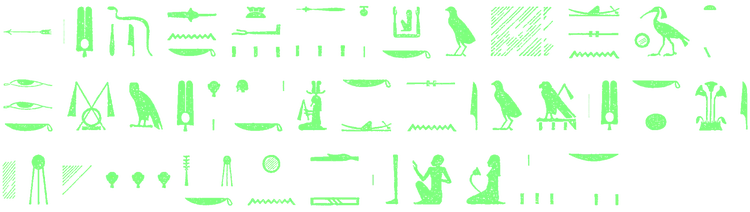
ḥnk šwtj ḏd mdw mn n.k ḫꜥw ꜥꜣw nw kꜣ.k wṯs .. ... jm.sn ꜣḫtj.k dmḏ m šwtj ḥr tp.k ṯnj.k jm.sn r nṯrw šwtj.k jtn ḥꜣj .sn ḥrw psḏ.k ḫntš bw nb
Offering the twin plumes. Words to be spoken:
Take the great crowns of your ka; crown yourself with them.
Your two glorious eyes are joined as twin plumes on your head;
through them you rise higher than the gods.
The light of your two plumes falls on faces.
When you shine forth, everyone rejoices.Note · Line 73
His two eyes, the “glorious ones,” are figured here as the two feathers of his crown. - 74
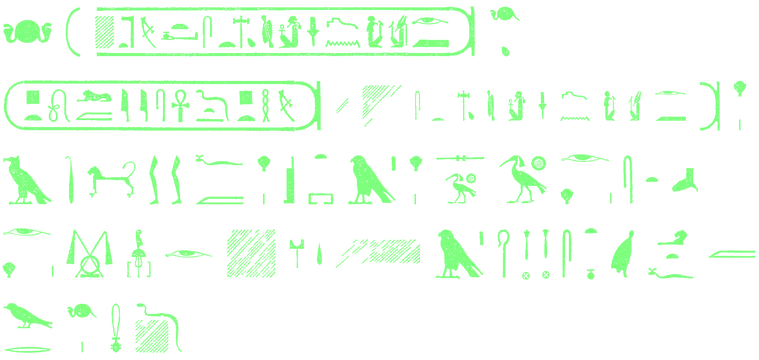
nswt bjt (… …) sꜣ Rꜥ (… …)
The King of Upper and Lower Egypt, Ptolemy IX; the Son of Ra, Ptolemy IX.
- 75
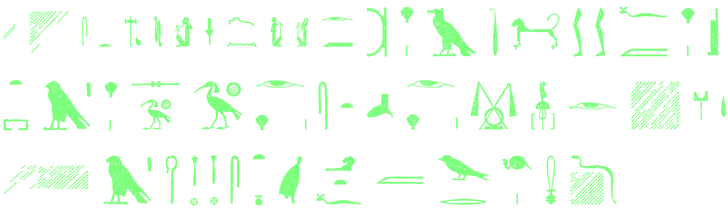
wnn nswt bjt (… …) ḥr ꜣṯt rdwj.f m ... ḥr st Ḥr ḥr sꜣḫt ꜣḫt ḥr snfr mrt ḥr dmḏ wnmt ḥr snsn jꜣbt sw mj Ḥr ḥqꜣ šmꜥw mḥw sṯnj ḥꜣt.f m wrtj ḥkꜣw
The King of Upper and Lower Egypt, Ptolemy IX, is on his throne as king upon the seat of Horus. He makes the Glorious Eye glorious and the Meret Eye perfect; he joins the right eye to the left and draws the left close to the right. He is like Horus, ruler of Upper and Lower Egypt, who exalts his brow with the Two Great in Magic.
Note · Line 75
The Two Great in Magic are the royal diadems. - 76

rdj.j n.k ḫꜥw nfrw mj Rꜥ mn.tj ḥr nst.k ḫnt St wrt
I grant you to appear in splendor like Ra, enduring on your throne in the Great Seat.
Note · Line 76
The Great Seat is the palace. - 77

ḏd mdw jn Jmn Rꜥ nswt nṯrw Bḥdtj sꜣb šwt nṯr ꜥꜣ ḫnt Wṯst Ḥr sḫm šps ḥqꜣ nb Wꜣst nḫt qꜣj šwtj wr r nṯrw
Words spoken by Amun-Ra, king of the gods, the Behdetite of many-colored plumage, the great god in the Throne Seat of Horus, the august power, ruler and lord of Thebes Victorious, whose twin plumes rise high, who is greater than the gods.
Note · Line 77
“The Behdetite” means “he of Behdet,” a title of the falcon god Horus, here given to Amun-Ra. - 78
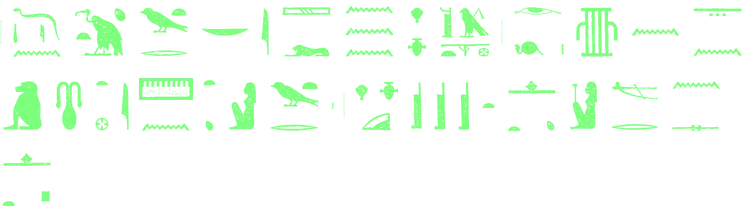
ḏd mdw jn Mwt wrt nbt Jšrw ḥrt jb Wṯst Ḥr jrt Rꜥ ḫnt Tꜣ n Jtmw Jmnt wrt ḥrt jb Jpt swt ḥtpjt mrj.n.s ḥtp
Words spoken by Mut the Great, Lady of Lake Isheru, who dwells in the Throne Seat of Horus, the Eye of Ra in the Land of Atum, Amunet the Great who dwells in Karnak, Hetepet who loves peace.
Note · Line 78
Isheru is Mut’s sacred lake at Karnak; the Land of Atum here is Dendera. - 79
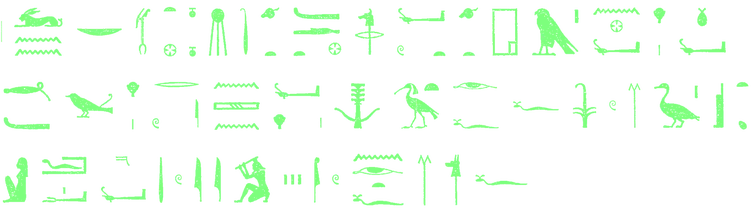
wnn nb Wꜣst wbn.tj ḫnt Bḥdt wsr.tj ḫnt Ḥt Ḥr nḫt ḥr dr mḥ ḥr rwj nšnj ḥr ẖnm ꜣḫt.f mrjt.f sw m {ꜣ ꜣst prj ꜥ ḥwj ḫrwjw.f n šw.n jrt.f m ḥꜣt.f
The lord of Thebes has risen in Behdet and is mighty in the House of Horus the Strong. He banishes grief, drives out anger and embraces his beloved Glorious Eye. He is the Son of Isis, whose arm seizes, who strikes down his foes. Never shall his Eye be absent from his brow.
Note · Line 79
The Eye is a goddess as well as the cobra on the god’s brow. - 80
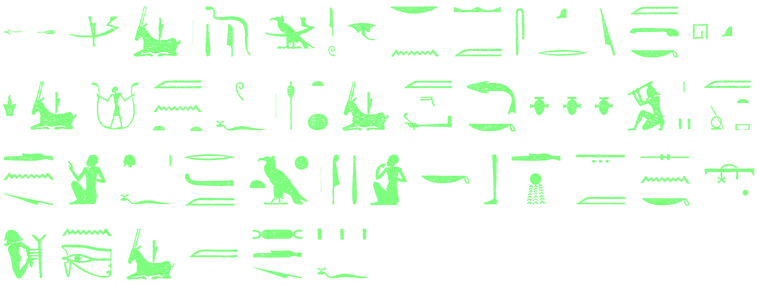
smꜣ mꜣ ḥḏ ḏd mdw mꜣ nb n ḫꜣst m sqr m bꜣḥ.k khb qꜣs m nṯṯ.f ḥḏ m ḥwt ẖꜣkw jb m ḫbt dn.j tp.f r . m ꜣt mꜣꜥ ḫrw.k bd tꜣ m snkt sbj n wḏꜣt m ꜥḏt.f
Slaying the oryx. Words to be spoken:
Every antelope of the desert is slain before you;
Keheb is bound in his fetter.
The oryx is struck down, the rebels are at the place of execution,
that I may cut off its head … in an instant.
You triumph, and the earth grows bright in the dark,
for the enemy of the Udjat Eye is butchered.Note · Line 80
Keheb is Seth. The oryx stands for him as the enemy of the Udjat, the restored Eye of Horus. Here the Eye is the moon: its enemy’s death brings light at night. - 81

nswt bjt (… …) sꜣ Rꜥ (… …)
The King of Upper and Lower Egypt, Ptolemy IX; the Son of Ra, Ptolemy IX.
- 82
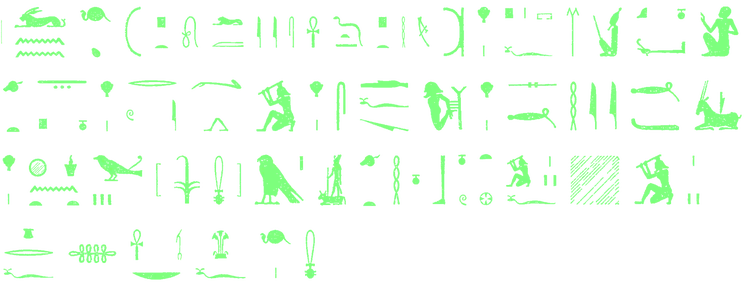
wnn sꜣ Rꜥ (… …) ḥr p.f m nswt qnj ḫnt tꜣ pn ḥr rwj ḫftj ḥr sfṯ sbj ḥr smḥj mḥ ḥr ḫbnt.f sw mj Ḥr dwntj ḫnt Ḥbnw ḫftjw.f m ṯst ẖr.f
The Son of Ra, Ptolemy IX, is on his throne as a valiant king in this land. He drives out the adversary, slaughters the rebel and makes a boat of the antelope for its crime. He is like Horus Dunty in Hebenu, whose enemies lie destroyed beneath him.
Note · Line 82
Horus Dunty is the form of Horus worshipped at Hebenu as the slayer of the oryx. - 83
Bḥdtj nṯr ꜥꜣ nb pt
The Behdetite, the great god, lord of the sky.
- 84
rdj.j n.k sbjw.k sjpj n dm.k ẖꜣkw jb.k ḫr.tj m tꜣ
I grant you this: your rebels are slain by your blade, and your foes lie fallen to the ground.
- 85
ḏd mdw jn Ꜥnsw nṯr ꜥꜣ ḥrj jb Bḥdt jwn ḥꜥꜥ sḥḏ tꜣwj jtn m grḥ snnw n šw mꜣꜣ ḥr nb jm.f nḫḫ rnpj r tr n mrj.f rnp rnpj sw r nw.f
Words spoken by Khonsu, the great god who dwells in Behdet,
the moon who lights the Two Lands,
the disk of the night, the second sun, by whose light everyone sees,
the old one who grows young when he pleases,
the youth who renews his youth in his season.Note · Line 85
Khonsu’s aging and return to youth are the waning and waxing of the moon. - 86
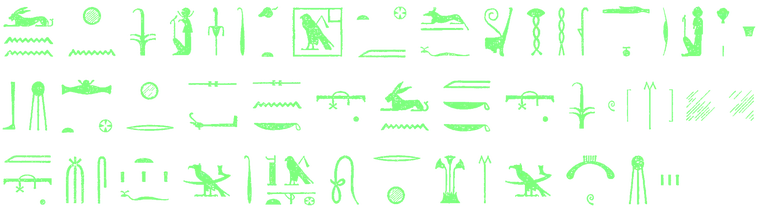
wnn Ꜥnsw ḫwj.tj ḫnt Ḥt bjk m sštꜣ.f n wꜣḥ qd ḥr ꜥbꜣ Msn ḥr ḫsr snkt ḥr wpš tꜣ wn m kkw sw m Jꜥḥ m grḥ msḫꜥ.f mꜣwj.tj Wṯst Ḥr wꜣḫj m mꜣwt.f
Khonsu is safe in the House of the Falcon in his secret form of the waxing moon. He lights up Mesen, dispels the darkness and illumines the land that lay in gloom. He is the moon by night; his radiance is renewed, and the Throne Seat of Horus is flooded with his light.
- 87

ḥnk ꜥnḫ ḏd wꜣs ḏd mdw mn n.k ꜥnḫ ḫfꜥ n.k ḏd ꜣmm.k wꜣs m ꜥwj.k ꜥnḫ.k m ꜥnḫ ḏdj.k m ḏd wsr ḥm.k m wꜣs
Offering the ankh, the djed and the was-scepter. Words to be spoken:
Take the ankh, grasp the djed;
may you clasp the was-scepter in both hands.
By the ankh you live, by the djed you endure,
by the was-scepter Your Majesty is strong.Note · Line 87
The ankh is the sign of life, the djed-pillar the sign of stability, and the was-scepter the sign of power. - 88

ꜣḫ ẖnmtj.k ḥr ꜥḏ ṯꜣw nḏm mꜥr .. r nṯrw nbw ṯwt nṯr nṯrj ḫpr m ḥꜣt jrj ntt qmꜣ wnnt
Your nostrils open wide to draw in the sweet air;
you flourish more than all the gods.
You are the most divine of gods, who came into being in the beginning,
who made what is and fashioned what exists. - 89
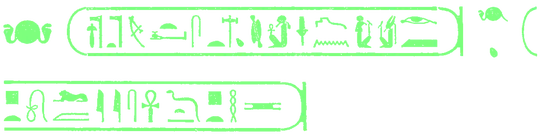
nswt bjt (… …) sꜣ Rꜥ (… …)
The King of Upper and Lower Egypt, Ptolemy IX; the Son of Ra, Ptolemy IX.
- 90
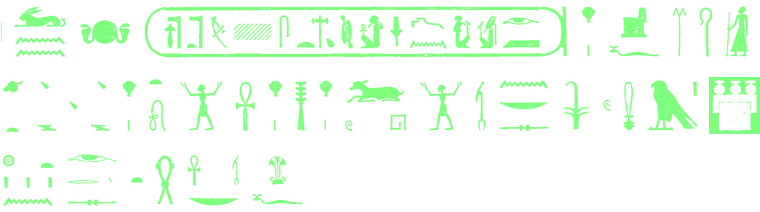
wnn nswt bjt (… …) ḥr bḥdw.f m ḥqꜣ wr ḫnt jdbw ḥr twꜣ ꜥnḫ ḥr rmnj ḏd ḥr jwh wꜣs n nb.s sw mj Ḥr ḥnk jḫt n jrj sw sḥtp jb.f m mrjt.f
Ptolemy IX, king of Upper and Lower Egypt, sits on his throne as great ruler of the riverbanks. He lifts the ankh, bears the djed aloft and hands the was-scepter to its lord. He is like Horus, who brings gifts to his father and gladdens his heart with what he loves.
- 91
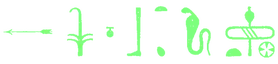
Nḫbt ḥḏt Nḫn
Nekhbet, the White One of Nekhen.
- 92

rdj.j n.k nswjt ꜥꜣt ẖr ršwt nst.k mn.tj mj pt
“I give you great kingship amid rejoicing, your throne as firm as the sky.”
- 93

ḏd mdw jn Ptḥ nfr ḥr ḥrj jb Wṯst Ḥr sḫm šps ḫnt ꜥnḫ tꜣwj snn ꜣḫ ptḥ nt nb nrw ḥn nṯr ḫnt Ḥt bjk
Words spoken by Ptah, fair of face, who dwells in the Throne of Horus, the august power in the Life of the Two Lands, the glorious image who opened the primeval flood, who spreads dread and guards the god in the House of the Falcon.
Note · Line 93
The Throne of Horus and the House of the Falcon are names for Edfu. The Life of the Two Lands is Memphis, Ptah’s city. - 94
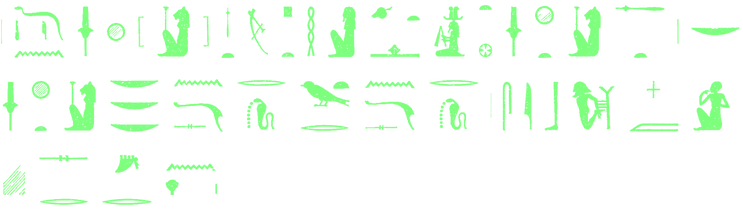
ḏd mdw jn Sḫmt ꜥꜣt mrjt Ptḥ ḫnt Ḥtp Tꜣ ṯnn Sḫmt ꜥꜣt nbt Sḫmwt nbt nsrt wrt nsrt sbjw wnm.s r ḏr n ḥr.s
Words spoken by Sekhmet the Great, beloved of Ptah in the Resting Place of Tatenen; Sekhmet the Great, mistress of all the Sekhmets, the great fire-spitting serpent who burns the rebels and eats whatever comes into her sight.
- 95
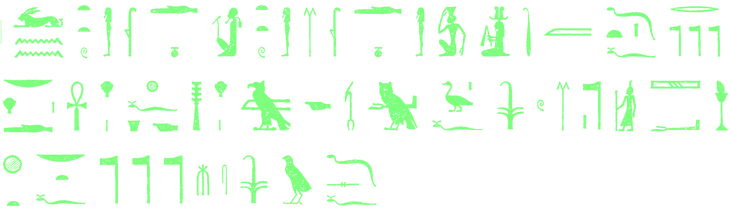
wnn twt qd twt m qd.f ṯnj.tj m ḏt.f r nṯrw nbw ḥr šsp ꜥnḫ ḥr ḫfꜥ ḏd ḥr ꜣmm wꜣs m ꜥ sꜣ.f sw m nṯr wr šꜣꜥ nḥp jḫt nbt jt nṯrw msj sw ḏs.f
He whose form is perfect is perfect in form, his body more exalted than those of all the gods. He receives the ankh, grasps the djed and takes the was-scepter in his grip from his son’s hand. He is the great god who first set about shaping all things, the father of the gods who begot himself.
Note · Line 95
Ptah receives the king’s gifts as a father receives them from his son. - 96
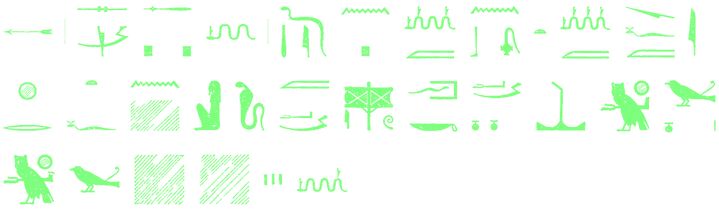
smꜣ ꜥꜣpp ḏd mdw np m nbj ḫbtj m ḫbt.f m ḫrjt.f nꜥj ḥm.k m mꜣꜥw r ꜥq.k mꜣnw ḫmꜥ.n.j ḫmꜥ hꜣw.f
Slaying Apophis. Words to say: “The Gut is in the fire;
the one marked for slaughter is at his place of slaughter, at his ruin.
Your Majesty may sail on a fair wind until you enter the Western Mountain,
for I have destroyed Khema-hau-ef.”Note · Line 96
The Gut and Khema-hau-ef are names for him; even the word for “destroyed” echoes the sound of Khema. - 97
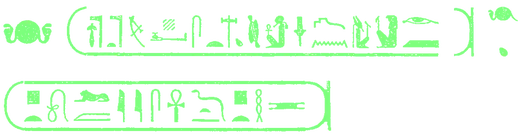
nswt bjt ( … … ) sꜣ Rꜥ (… …)
King of Upper and Lower Egypt, Ptolemy IX; Son of Ra, Ptolemy IX.
- 98
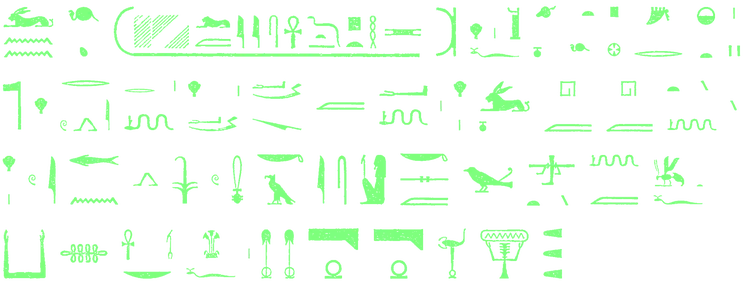
wnn sꜣ Rꜥ (… …) ḥr wṯst.f ḫnt P n Rꜥ ḏr Pꜣwtjw ḥr rwj rꜣ ḥr mꜣꜥmꜣꜥ jmj ꜥ ḥr wnp hmhmtj ḥr wjn.f sw mj Qjsj ksm sbjtj m kꜣt.f bwt kꜣ.f šdt ḥr.f
Ptolemy IX, Son of Ra, has held his throne in the Throne of Ra since the time of the primeval gods. He drives out the snake, kills Imy-a and stabs the Roarer for his crime. He is like Qisi, who by his deeds drives back the Sebiti-serpent, whose ka abhors the theft of his sight.
Note · Line 98
Imy-a, the Roarer and the Sebiti-serpent are all Apophis. - 99
Bḥdtj nṯr ꜥꜣ nb pt
The Behdetite, the great god, lord of the sky.
- 100

rdj.j n.k šnṯjw.k šꜥd m tꜣ pn bns jrj n wnn.sn
“I grant that your enemies lie slaughtered in this land, wiped out to the last one. They are no more.”
- 101

ḏd mdw jn Ḥr Bḥdtj nṯr ꜥꜣ nb pt sꜣb šwt prj m ꜣḫt Rꜥ Ḥr ꜣḫtj wbn m ḥrt jtn wr rdj.f tp.f m nwt sḥḏ tꜣ wn m kkw
Words spoken by Horus of Behdet, the great god, lord of the sky, many-colored of plumage, who comes forth from the horizon; Ra-Horakhty, who rises on high, the great sun disk who lifts his head in the sky and lights the land that lay in darkness.
Note · Line 101
Ra-Horakhty is Ra as Horus of the Two Horizons. - 102

ḏd mdw jn Ḥt ḥr wrt nbt Jwnt jrt Rꜥ ḥrt jb Bḥdt nbt pt ḥnwt nṯrw nbw ḥrjt tp nt Rꜥ sšmwt nt Bḥdtj ꜥꜣt snḏt ḫnt dpt nṯr
Words spoken by Hathor the Great, Lady of Dendera, Eye of Ra, who dwells in Behdet, lady of the sky, mistress of all the gods, the cobra on Ra’s brow, the guide of the Behdetite, held in great awe aboard the god’s bark.
- 103
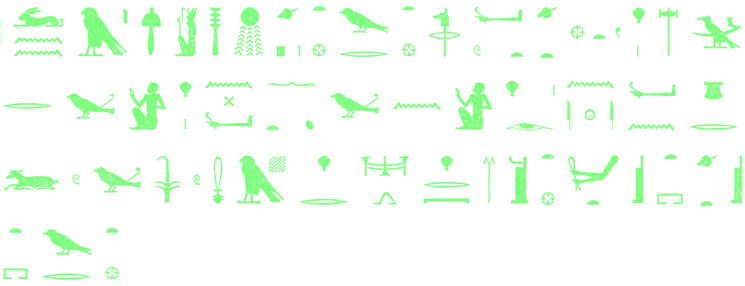
wnn Ḥr ꜥꜣ psḏ ḫnt P wr wsr.tj ḫnt nwt.f Ḏbꜣ ḥr nḏ mꜣr ḥr nḫt jwtj n.f ḥr jrt nḫj n ẖrj jw sw m Ḥr ḥrj ḥrt m Wṯst ḏsr st ḫnt St wrt
Horus the Great shines in the Great Throne, mighty in his city of Edfu. He shields the needy, strengthens those who have nothing and shelters those weighed down by grief. He is Horus who spreads the sky wide in the Throne, whose seat is splendid in the Great Seat.
- 104
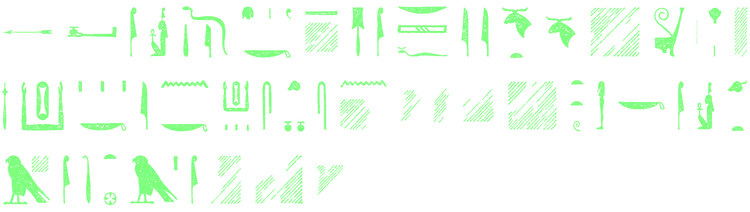
ḥnk mꜣꜥt ḏd mdw tp.k n.k Bḥdtj sꜣb šwt nb šfjt šfjt.k n.k ṯpḥt wḏt kꜣw.k wḏ.s n.k kꜣw snsn n.k ... ... ... ṯwt nb mꜣꜥt ḫnt Ḥr Mꜣꜥ.tj Ḥr mꜣꜥtj rn n ḥm.k
Offering Maat. Words to say: “Your head is yours, Behdetite of many-colored plumage, lord of awe;
the awe you inspire is yours, and yours the gullet that allots food.
She allots you food. Join yourself to …
You are lord of Maat in Horus-is-Vindicated;
Horus the Vindicated is Your Majesty’s name.”Note · Line 104
Maat is right order and the goddess who embodies it. Here the king offers her as the god’s own throat: she is what he lives on and what lets him swallow his food. - 105

nswt bjt (… …) sꜣ Rꜥ (… …)
King of Upper and Lower Egypt, Ptolemy IX; Son of Ra, Ptolemy IX.
- 106
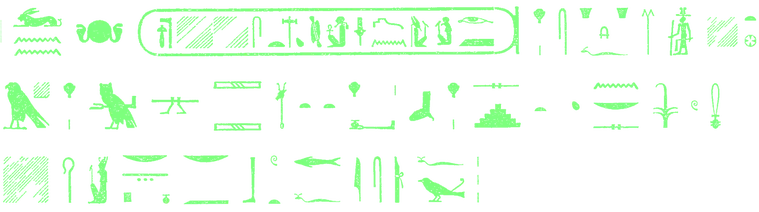
wnn nswt bjt (… …) ḥr sjwꜥ.f m jtj ḫnt .. Ḥr ḥr ms šꜣšꜣjt ḥr ḥnk mrt ḥr sjꜥr mꜣꜥt n nb.s sw mj Ḥr ḥqꜣ nb tꜣ pn nb mꜣꜥt bwt.f jsft
Ptolemy IX, king of Upper and Lower Egypt, sits on his throne as sovereign in the … of Horus. He presents the throat, offers the gullet and raises Maat to her lord. He is like Horus, ruler and lord of this land, lord of Maat, who abhors injustice.
- 107
Bḥdtj nṯr ꜥꜣ nb pt
The Behdetite, the great god, lord of the sky.
- 108

rdj.j n.k jsftjw sqr n ḥḏ.k mtwt kꜣ wꜣḫj.tj m rk.k
“I grant that the wicked lie struck down by your mace and that the semen of the bull flourishes in your reign.”
Note · Line 108
The semen of the bull is another image of Maat, here as a power of generation. - 109

ḏd mdw jn Ḥr Bḥdtj nṯr ꜥꜣ nb pt bjk n nb ... ... Ḥr mꜣꜥtj wpj mꜣꜥt r jsft sḏm sprww nw ꜥš n.f
Words spoken by Horus of Behdet, the great god, lord of the sky, the falcon of gold, … Horus the Vindicated, who distinguishes right from wrong and hears the pleas of whoever calls to him.
- 110

ḏd mdw jn Ḥt ḥr wrt nbt Jwnt jrt Rꜥ ḥrt jb Bḥdt nbt pt ḥnwt nṯrw nbw Mꜣꜥt m Jwnt bjkt m Ḥt bjk mfkꜣt nt nṯrw nṯrwt
Words spoken by Hathor the Great, Lady of Dendera, Eye of Ra, who dwells in Behdet, lady of the sky, mistress of all the gods, Maat in Dendera, the female falcon in the House of the Falcon, the turquoise of the gods and goddesses.
- 111
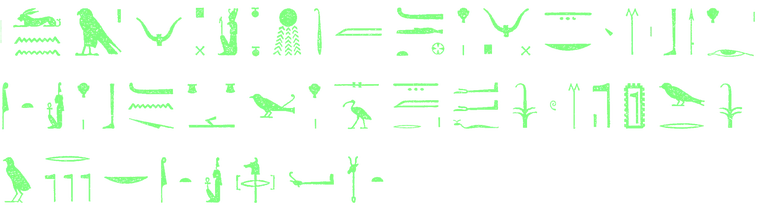
wnn Ḥr wpw wbn.tj m Bḥdt ḥr wpt tꜣwj nbw m bw wꜥ ḥr jrt mꜣꜥt ḥr bḥn grg ḥr smnḫ tꜣ m rꜣ ꜥwj.f sw m nṯr nṯrj wr sw r nṯrw nb mꜣꜥt wsr ḥtjt
Horus the Judge has risen in Behdet. He judges the whole of the Two Lands as one. He does what is right, cuts off falsehood and makes the land prosper by the work of his hands. He is a god most divine, greater than the gods, lord of Maat, mighty of throat.
- 112

njs dbḥt ḥtp ḏd mdw mn n.k ḥṯꜣ ḫnfw t rtḥ nw m ꜥb t wr dr mnt špnwt
Calling out the provisions for the funerary offering. Words to say: “Take for yourself the hetja-loaf, the khenefu-cake and the reteh-loaf,
the water with the great loaf, the drink that drives out grief and the shepenut-drink.Note · Line 112
Calling the foods and drinks by name was part of serving the meal to the dead. - 113
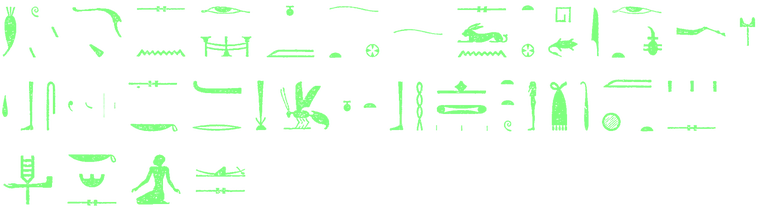
bnr wj dpt.sn jrt Ḥr m Jmt Swnj hꜣ snḏ jrṯt ḫpš jꜣb swt jsk ḥnꜥ sn bjt dbḥt ḥtp twt ꜥpr.tj m jḫt.s ꜥḥꜥ.k ḥmsj.k jm.s
How sweet they taste! The Eye of Horus from Imet and Suni,
and—rejoice!—the milk, the foreleg, the iab-meat and the sut-meat, and with them honey.
The funerary offering is complete, furnished with all that belongs to it.
May you rise and sit down to the meal.”Note · Line 113
The Eye of Horus here is wine from the two places named. - 114
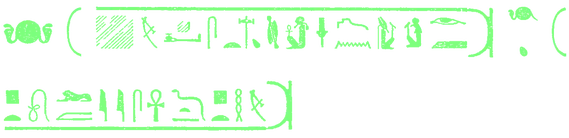
nswt bjt (… …) sꜣ Rꜥ (… …)
King of Upper and Lower Egypt, Ptolemy IX; Son of Ra, Ptolemy IX.
- 115
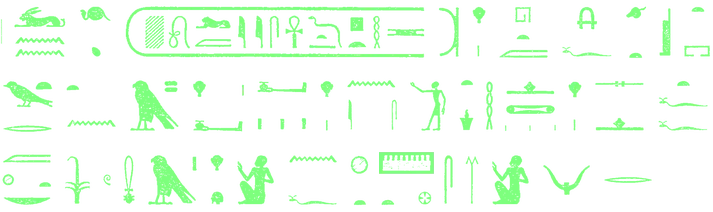
wnn sꜣ Rꜥ (… …) ḥr hdmw.f ḫnt St wrt nt Ḥr ꜣḫtj ḥr ḥnk ḥnkwt ḥr njs dbḥt ḥtp ḥr sḥtp jt.f m jḫt nbt sw mj Ḥr ḥr tp.n.f jḫt mnt sm wpj rꜣ n {kr
Ptolemy IX, Son of Ra, sits on his throne in the Great Seat of Horakhty. He offers gifts, calls out the provisions for the funerary offering and contents his father with every kind of offering. He is like Horus, who has taken possession of the world, the sem-priest who opens Sokar’s mouth.
Note · Line 115
By ritually opening the mouth, the sem-priest enables the recipient to eat and drink. - 116

rdj.j jw n.k ḥꜥpj r tr.f tp rnpt rnpt nn ꜣbw
“I cause the Nile flood to come to you in its season, at the beginning of each year, without fail.”
- 117

ḏd mdw jn Wsjr jwn nṯr ꜥꜣ ḥrj jb Bḥdt ḥwn nswt wpj ḥḏt ḏd m Ḏdw ḥqꜣ nb gsw prw ḫntj jmntt nb ꜣbḏw
Words spoken by Osiris the Pillar, the great god who dwells in Behdet, the youth, the king who wears the White Crown, the djed-pillar in Busiris, ruler and lord of the temples, foremost of the West, lord of Abydos.
Note · Line 117
The White Crown belongs to Upper Egypt. The West is the realm of the dead, over which Osiris rules. - 118
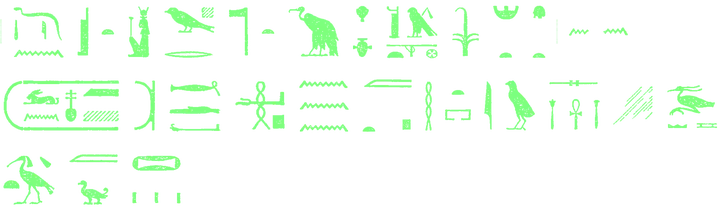
ḏd mdw jn ꜣst wrt mwt nṯr ḥrt jb Wṯst Ḥr ḥmt nswt tpt nt (Wnn nfrw mꜣꜥ ḫrw) šdjt ḥꜥpj m ṯpḥt.f r sꜥnḫ tꜣwj r bꜥḥj ꜣḫt m ḏfꜣ
Words spoken by Isis the Great, the god’s mother, who dwells in the Throne of Horus, first royal wife of Wennefer the Vindicated, who draws the Nile flood from its cavern to keep the Two Lands alive and flood the fields with food.
Note · Line 118
Wennefer is a name of Osiris. - 119
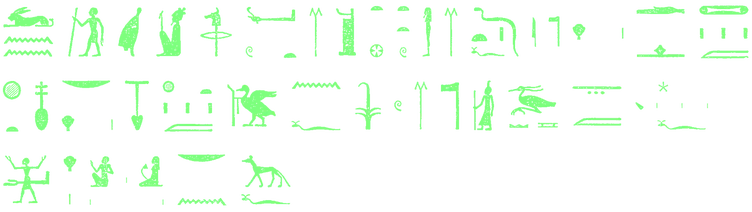
wnn sr ḥḏt wsr.tj m Wṯst twt m ḏt.f n jt nṯr mrj nṯr ḥr šsp ḥtpw m jḫt nbt nfrt ḥr smꜣ jḫt m qmꜣ.n.f sw m nṯr wr bꜥḥj tꜣwj m rḏw.f ḥꜥj ḥr nb n jw.f
The Prince of the White Crown is mighty in the Throne, perfect in his form as the god’s father who loves the god. He receives offerings of every good thing and accepts gifts from the one he created. He is the great god who floods the Two Lands with the fluid from his body. Every face rejoices at his coming.
Note · Line 119
The life-giving Nile flood is here the fluid that flows from Osiris’s body. - 120
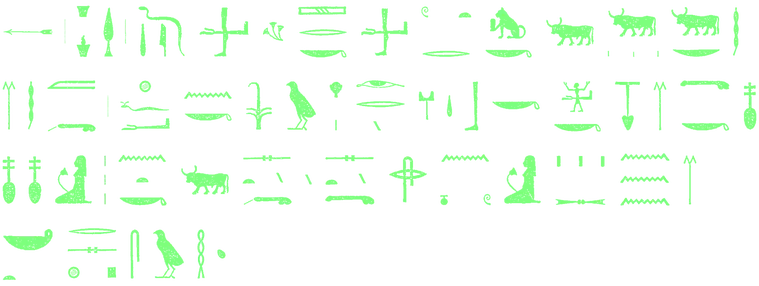
ḥnk ꜥbw ḏd mdw ꜥbw ḫr.k jꜥb.tj r ḫft ḥr.k kꜣ kꜣw kꜣ nb nḏmnḏm ḫfꜥ n.k sw ḥr jrt ꜣbjt.k ḥꜥj.k smꜣ.k nfrwt ntk kꜣ sṯj sṯj rnnwt ṯs mw m kꜣt r sḫpr swḥt
Offering lettuce. Words to be spoken:
“Here is lettuce for you, set before your face,
O bull of bulls, bull, lord of sexual pleasure!
Grasp it and do as you please,
aroused with joy as you mate with the beautiful women.
You are the bull who sows his seed, who makes young women conceive,
who puts semen in the vagina so that the egg may form.”Note · Line 120
Lettuce was sacred to Min, the god of male fertility. Its milky sap was likened to semen. - 121
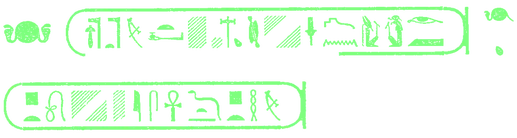
nswt bjt (… …) sꜣ Rꜥ (… …)
The King of Upper and Lower Egypt, Ptolemy IX; the Son of Ra, Ptolemy IX.
- 122
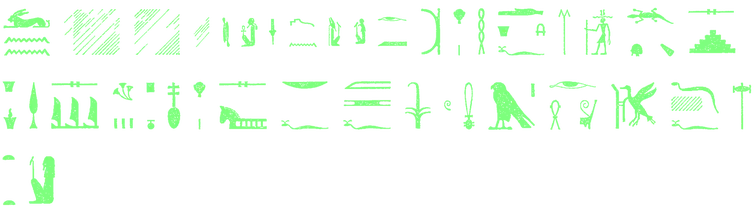
wnn nswt bjt (… …) ḥr ḥꜥt.f m jtj ꜥšꜣ tpw ḥr sjꜥr ꜥbw smw pn nfr ḥr sḫntš nb.f m mrjt.f sw mj Ḥr jrj sꜣ n qmꜣ ḏt.f nḏtj nb nwwt spwt
The King of Upper and Lower Egypt, Ptolemy IX, is on his throne, a ruler rich in fields. He holds the lettuce aloft, this fine plant, and gladdens his lord with what he loves. He is like Horus, who guards the one who formed his body, protector and lord of towns and provinces.
- 123

Bḥdtj nṯr ꜥꜣ nb pt
The Behdetite, the great god, lord of the sky.
- 124
rdj.j n.k šꜣ ꜣḫꜣḫ.tj ... sš nb ẖr smw
“I give you the floodplain green with growth … and every marsh thick with plants.”
- 125
ḏd mdw jn Jmn Rꜥ kꜣ mwt.f ḥrj jb Wṯst Ḥr sḫm šps ḫnt P Msn snn ꜥnḫ n tḫn wꜥtj qꜣj šwtj jwh nḫꜣḫꜣ
Words to be spoken by Amun-Ra Kamutef, who dwells in the Throne of Horus, the august power in Pe-Mesen, the living likeness of the Sole Obelisk, whose twin plumes are tall, who raises the flail:
Note · Line 125
Kamutef means “bull of his mother”: the god begets himself anew. The Throne of Horus and Pe-Mesen are sacred names for Edfu. - 126
rdj.j n.k ... wrw ḫnt jḫt mnt šnj tꜣ nb ḥr sꜣ Gbb
“I give you the great … in the world, and all the hair of the earth on the back of Geb.”
Note · Line 126
Geb is the earth god. The plants that grow from his back are his hair. - 127

ḏd mdw jn ꜣst wrt mwt nṯr ḥrt jb Wṯst Ḥr nbtj rḫjt ḥnwt tꜣwj ꜣḫt nfrt nbt ꜣḫt mḥjt n ḏw ḫr.s
Words to be spoken by Isis the Great, mother of the god, who dwells in the Throne of Horus, queen of the people, mistress of the Two Lands, fair goddess of the fields, lady of their splendid yield, the north wind that bears no harm:
- 128

rdj.j n.k ḥrt ḥtp.tj n ꜣḫt.k bsj.s n.k rdw nbw
“I grant that the sky favor your field and bring forth every shoot for you.”
- 129
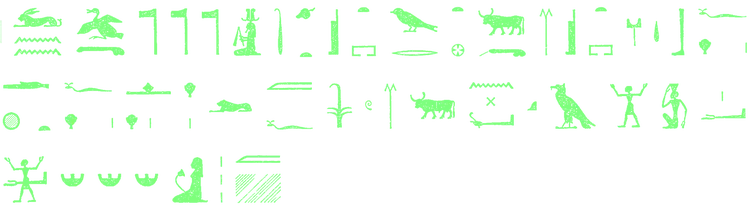
wnn ṯꜣj nṯrw ṯnj.tj ḫnt St wrt kꜣ sṯj m st ꜣbjt.f ḥr šsp jḫt.f ḥr ḥtp ḥr.f ḥr rš m mrjt.f sw m kꜣ nḫt qꜣj fꜣj ꜥ ḥꜥj ḥmwt m .. ...f
The male among the gods stands exalted in the Great Seat. The bull who sows his seed is in the place he desires. He receives what is his, takes pleasure in it and rejoices in what he loves. He is the mighty bull who stands tall, arm raised; the women cry out for joy at the sight of him.
Note · Line 129
The raised arm is a familiar feature of Min’s image: the god stands erect, one arm held high beneath a flail. - 130
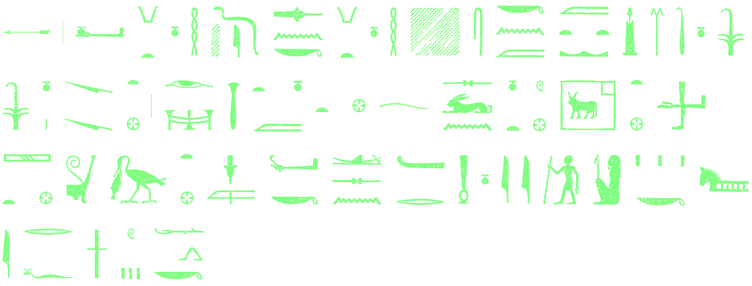
ḥnk šdḥ ḏd mdw mn n.k šdḥ bsj m Knmt jnmt nn nw Ḫsds jrt Ḥr wꜣḏt m Jmt Swnj Ḥt jḥt jꜥb Š Nḥꜣm sḫm.k jm.sn ḥnꜥ šnwt.k ḫntš jrf jmjw ḫt.k
Offering shedeh wine. Words to be spoken:
“Take for yourself the shedeh wine that comes from the Great Oasis,
this inemet wine from Bahariya Oasis,
the green Eye of Horus from Imet, Suni, the House of the Cow and likewise from Shi-Neham.
Through them you will grow strong, you and your court;
then your followers too will rejoice.”Note · Line 130
The Great Oasis comprised Kharga and Dakhla in the Western Desert. The wines are offered as the Eye of Horus, the eye the god lost and received back whole. - 131
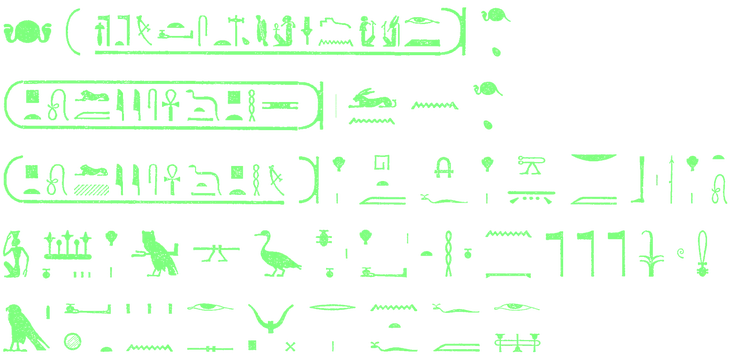
nswt bjt (… …) sꜣ Rꜥ (… …)
The King of Upper and Lower Egypt, Ptolemy IX; the Son of Ra, Ptolemy IX.
- 132
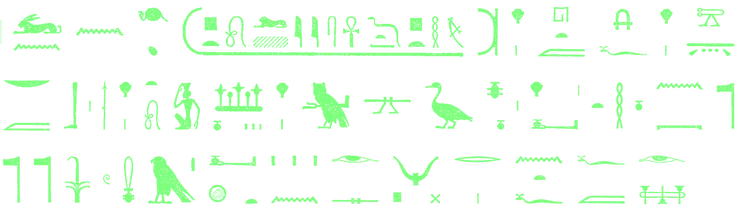
wnn sꜣ Rꜥ (… …) ḥr hdmw.f ḥr jṯt tꜣwj nbw m bw wꜥ ḥr twꜣ šꜣ ḥr ms jrp ḥr ḥnk šdḥ n ḥrj nṯrw sw mj Ḥr ḥnk jḫt n jrj sw wpj rꜣ n jt.f m jrt Ḥr
The Son of Ra, Ptolemy IX, is on his throne. He takes possession of the Two Lands entire, as one. He holds wine aloft, brings wine and offers shedeh wine to the foremost of the gods. He is like Horus, who presents offerings to the one who begot him and opens his father’s mouth with the Eye of Horus.
Note · Line 132
Opening the mouth ritually restores the power to eat and drink. Horus performs this rite for his father Osiris. - 133

rdj.j n.k šmꜥw mḥw ḥr ḫrp n.k šꜣ.sn ḥr jnt jḫt.sn r ꜥꜣjt.k
“I grant that Upper and Lower Egypt deliver their wine to you and bring their produce to your palace.”
- 134

ḏd mdw jn Ḥr Bḥdtj nṯr ꜥꜣ nb pt sꜣb šwt prj m ꜣḫt psḏ m nb tp dwꜣw wbn m nwt m ẖrt hrw wbg šꜣw nbw n wbn.f
Words to be spoken by Horus the Behdetite, the great god, lord of the sky,
bright of plumage, who comes forth from the horizon,
who gleams with gold at break of day,
who rises in the sky each day,
at whose rising every vine grows green. - 135

ḏd mdw jn Ḥt ḥr wrt nbt Jwnt jrt Rꜥ ḥrt jb Bḥdt nbt tḫt ḥnwt nfrwt ẖrt ḥmt.s qq sꜥmt bwt nwt.s snm ḥr.s
Words to be spoken by Hathor the Great, lady of Dendera, Eye of Ra, who dwells in Behdet, lady of drunkenness, mistress of young women, whose Majesty delights in eating and drinking, whose city cannot bear to see her face sad.
- 136

ḏd mdw jn Ḥr {mꜣ tꜣwj pꜣ ẖrd sꜣ Ḥt ḥr ꜥꜣ wr tpj n Ḥr Bḥdtj nṯr ꜥꜣ nb pt ḥwn nfr bnr mrwt ꜥn ḫꜥw mj Rꜥ
Words to be spoken by Harsomtus the Child, son of Hathor, the very great one, firstborn of Horus the Behdetite, the great god, lord of the sky; the handsome youth, dearly loved, radiant as Ra when he appears.
- 137
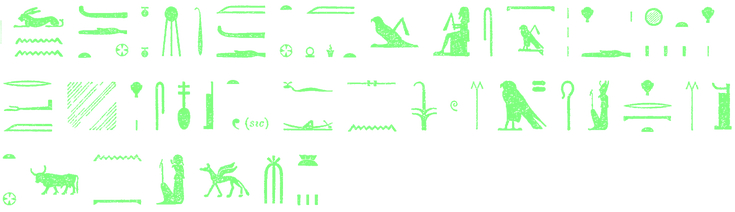
wnn Bḥdtj wbn.tj m Bḥdt m šnbtj šps ḥrj nṯrw ḥr šsp jḫt ḥr rdt m ẖt ḥr snfr st.f jm.sn sw m Ḥr ꜣḫtj ḥqꜣ ḥrt m Wṯst kꜣ n pt ḫꜣḫ msḫꜥ
The Behdetite has risen in Behdet as a noble falcon, foremost of the gods. He receives the offerings, takes them into his belly and with them makes his seat perfect. He is Horakhty, ruler of the firmament in the Throne, the Bull of the Sky, swift to shine forth.
- 138

jrt snṯr qbḥw n nṯrw nw Bḥdt
Burning incense and pouring cool water for the gods of Behdet.
Note · Line 138
The gods honored here are the divine dead buried at Edfu. - 139
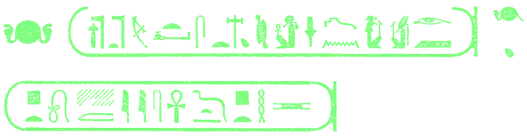
nswt bjt (… …) sꜣ Rꜥ (… …)
The King of Upper and Lower Egypt, Ptolemy IX; the Son of Ra, Ptolemy IX.
- 140
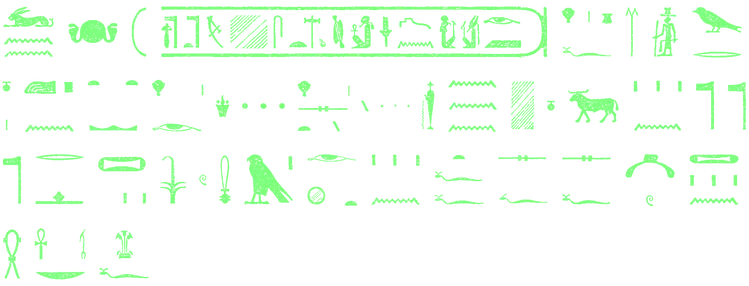
wnn nswt bjt (… …) ḥr nst.f m jtj wr n Kbn ḥr jrt snṯr ḥr stt qbḥw ḥr jnt bꜣw nw nṯrw r ḥtpw sw mj Ḥr jrj jḫt n jt.f sfsf ꜣw n sꜥḥw špsw
The King of Upper and Lower Egypt, Ptolemy IX, is on his throne as great ruler of Byblos. He burns incense, pours out cool water and brings the bas of the gods to their offerings. He is like Horus, who performs the rites for his father and presents the offering to the august mummies.
- 141
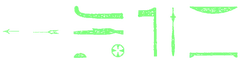
Bḥdtj nṯr ꜥꜣ nb pt
The Behdetite, the great god, lord of the sky.
- 142
ḏd mdw nṯrw ḫnt Bḥdt ꜥꜣw wrw Msw Rꜥ prj jm.f wtṯw nw ntj wr m ꜣḫt nḫḫw nw
Words to be spoken: These are the gods who dwell in Behdet, the great and mighty, the children of Ra who came forth from him, these beings begotten by the Great One in the horizon, the descendants of
- 143
Pꜣwtjw tpjw prt r ḥrt jn bꜣ.sn n Bḥdt ꜥnḫ.sn ḥnꜥ ꜥnḫw tḫn.tw ẖꜣt.sn ḫnt jꜣt nṯrjt ḏsr.tw st.sn m jgrt
the first primeval gods. At Behdet their bas ascend to the sky to live among the living ones, while their bodies lie hidden in the divine mound and their tombs are set apart in the land of silence.
Note · Line 143
The “living ones” are the stars; the “land of silence” is the necropolis. - 144
ḥst Rꜥ r.sn jn ḥm Ḥr ꜣḫtj nw.tw.w m bw pn wḏ.n ḥm.f r jmn jmnt.sn r štꜣ šṯjt.sn r tpjw tꜣ r sꜣḫ sḫrw.sn r swr bꜣ.sn r snfr tꜣ ḏr tḫn.sn
The Majesty of Horakhty praises Ra on their account, for they were embalmed in this place. His Majesty decreed that their burial ground be kept secret, that their hidden chambers be hidden from those who dwell on earth, that their affairs be well tended, their power made great, and the land made perfect from the time they were laid away.
- 145
spr Bḥdtj nbt Jwnt ḫr.sn r wꜣḥ jḫt n kꜣ.sn js bꜣw ꜥnḫw wḥm.sn ꜥnḫ mj ḏfn.sn ḥntj.sn ḥḥw rnpwt.sn mn.tj n Bḥdt r ḏt
The Behdetite and the Lady of Dendera come to them to lay offerings before their kas, and thus before the living bas. They renew their lives like their divine father. Their lifetimes span millions of years; their years endure in Behdet forever.
- 146
Bꜣ nb Ḏdt nṯr ꜥꜣ ḥrj jb Bḥdt
Banebdjedet, the great god who dwells in Behedet.
Note · Line 146
Banebdjedet is the ram god of Mendes. - 147
Ḥrj š.f ḫnt Wṯst Ḥr
Heryshef, foremost in the High Seat of Horus.
- 148
Nmtj ḫnt Nst Rꜥ
Nemty, foremost in the Throne of Ra.
- 149
Jmnḥj ḥrj jb Bḥdw n Rꜥ
The Slaughterer, who dwells in the Throne Seat of Ra.
- 150
Nb šn ḫnt Wr nḫt
The Lord of the Shen Tree, foremost in Great-in-Victory.
- 151
Nṯr ꜥꜣ m spt.f ḥrj jb Jw nšnj
The Great God in His Nome, who dwells on the Isle of Fury.
Note · Line 151
A nome is an Egyptian province. - 152
Bnw ḫpr ḏs.f ḥrj jb Ḥt bjk
The phoenix who came into being of himself, who dwells in the House of the Falcon.
Note · Line 152
The Egyptian phoenix is the benu, a sacred heron. - 153
Ꜥntj Bḥdt ḫnt Ḥt qn
Khenty-Behedet, foremost in the House of the Strong One.
Note · Line 153
Khenty-Behedet means “Foremost in Behedet.” - 154
Nb Ḥt wꜥrt ḥrj jb P Msn
The Lord of Het-Waret, who dwells in Pe-Mesen.
- 155
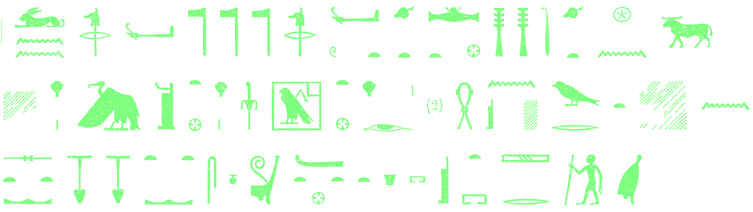
wnn Wsrw ḥꜣt wsr.tj ḫnt Msn ḏdj.tj ḫnt Ḫꜣt nt bꜣ ḥr mkt Wṯst ḥr ḫwt Ḥt bjk ḥr jrt sꜣ n St wrt st m ... . smjt smꜣ smꜣt.sn n Bḥdt wsḫ st ḫr sr ḥḏt
The Useru-hat are mighty in Mesen and endure in the Underworld of the Ba. They guard the High Seat, watch over the House of the Falcon and shield the Great Seat. They are … of the necropolis, united with their tombs in Behedet, held in high honor by the Prince of the White Crown.
Note · Line 155
The Useru-hat are the nine gods just named; their name echoes the word for “mighty.” The prince is Osiris. - 156
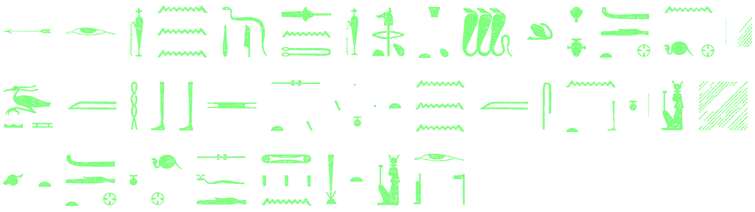
jrt qbḥw ḏd mdw mn n.ṯ qbḥw wsrt ḥnwt nṯrwt Wrt ḥkꜣw ḥrt jb Bḥdw n Rꜥ ... ... bꜥḥj m ḥbbt stj.j n.ṯ mw m snbt ntṯ qbḥwt ḫnt Bḥdw n Rꜥ sfsf.ṯ ꜣw n sn.ṯ Wsjr
Pouring a libation. Words to be spoken: “Receive this libation, mighty one, mistress of the goddesses, Werethekau, who dwells in the Throne Seat of Ra.
… is flooded with fresh water, and I pour water for you from the senebet jar.
You are the one who pours libations in the Throne Seat of Ra, for you present offerings to your brother Osiris.”Note · Line 156
The king pours the water for Isis. Her title Werethekau means “Great of Magic.” - 157
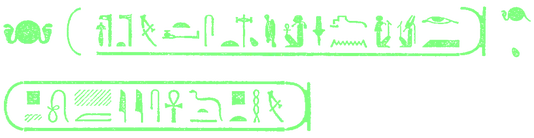
nswt bjt (… …) sꜣ Rꜥ (… …)
The King of Upper and Lower Egypt, Ptolemy IX, the Son of Ra, Ptolemy IX.
- 158

wnn sꜣ Rꜥ (… …) ḥr smꜣt.f m ḥqꜣ mnḫ ḫnt Jdbw Ḥr ḥr ꜣmm qbḥw ḥr ḫfꜥ ḥḏt ḥr jrt pr ḫrw n sꜣt Gbb sw mj Ḥr wꜣḥ jḫt n qmꜣ sw wṯs nmst r St wrt
The Son of Ra, Ptolemy IX, sits on his throne as an excellent ruler in the Banks of Horus. He grasps the libation jar, takes the hedjet vessel in hand and presents a funerary offering to the daughter of Geb. He is like Horus, who lays offerings before the one who begot him and bears the nemeset jar up to the Great Seat.
Note · Line 158
The banks are Egypt, on either side of the Nile. The daughter of Geb is Isis; the father to whom Horus brings offerings is Osiris. - 159
Nḫbt ḥḏt Nḫn
Nekhbet, the White One of Nekhen.
- 160
bsj.j n.k ḥꜥpj r tr.f wꜥb.tj r jꜣdt rnpt
“I make the Nile flood well up for you in its season, free of the plague of the year.”
Note · Line 160
The “plague of the year” was the danger of disease at the turning of the Egyptian year. - 161
ḏd mdw jn ꜣst Ḥddt n Bḥdt ḥqꜣt ḫnt Ḥr mꜣꜥ.tj ꜥꜣt m Wṯst ḥnt jwn ḏsr st m Bḥdt rsjt
Words spoken by Isis, Hededet of Behedet, ruler in Horus-is-Vindicated, the Great One in the High Seat, who guards the pillar, whose seat is screened from view in Southern Behedet.
Note · Line 161
Hededet is a scorpion goddess. The pillar that Isis guards represents Osiris. - 162
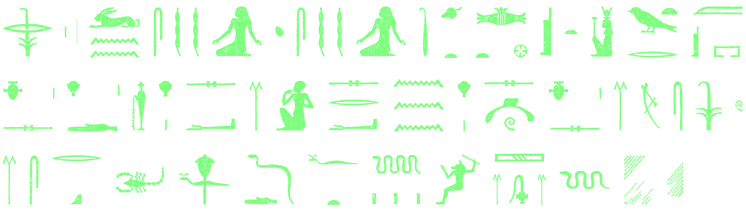
wnn snḏmt snḏm.tj ḫnt Msn ꜣst wrt m st jb.s ḥr šsp qbḥw ḥr sꜥmt srf ḥr sꜣwj jb.s m mrjt.s sj m Srqt ḫsft ḏdft sḥrjt šmw ... ...
Senedjemet has settled at ease in Mesen. Isis the Great is in the place her heart desires. She receives the libation, drinks the water and gladdens her heart with what she loves. She is Serket, who drives off venomous creatures and chases the Fiery Ones from Edfu.
Note · Line 162
Serket is the scorpion goddess invoked against venom. - 163
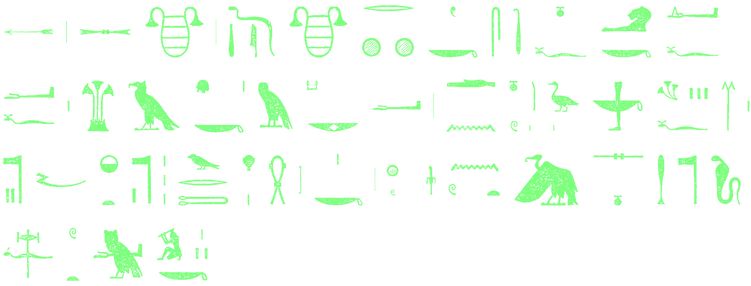
ṯs wsḫ ḏd mdw wsḫ r ḫḫ.k smn.n.f ḥꜣt.k rdj.f ꜥ.f ḥꜣ.k m mk ṯnw gꜣbwt.f m nṯrw 9 Psḏt wrt ḥr sꜣt.k ḫwj.sn ṯw mkj.sn ḥm.k nḏ.f ṯw m ꜥ ḫftjw.k
Fastening the broad collar. Words to be spoken: “The broad collar to your throat!
It has strengthened your breast; it lays its arm about you in the joy of the feast.
Its rows of leaves are nine gods in number: the Great Ennead that watches over you.
They guard you, they shield Your Majesty, and it saves you from the hand of your foes.”Note · Line 163
The collar itself is the protector: its rows of leaf-shaped beads stand for a company of nine gods, the Ennead. - 164
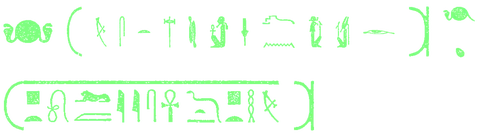
nswt bjt (… …) sꜣ Rꜥ (… …)
The King of Upper and Lower Egypt, Ptolemy IX, the Son of Ra, Ptolemy IX.
- 165
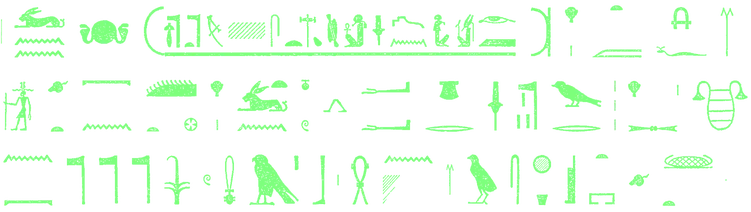
wnn nswt bjt (… …) ḥr tmꜣ.f m jtj ḫnt Pt nt Kmt ḥr dwn ꜥwj ẖr sḫmw wrw ḥr ṯs wsḫ n ḥrj nṯrw sw mj Ḥr bsꜣ ... wsḫ st ḫnt Wḥꜥt
The King of Upper and Lower Egypt, Ptolemy IX, sits on his throne as sovereign in the Sky of Egypt. He stretches out both arms beneath the great powers and fastens the broad collar about the neck of the Chief of the Gods. He is like Horus, who protects … and is held in high honor in Uhat.
- 166
Bḥdtj nṯr ꜥꜣ nb pt
The Behedetite, the great god, lord of the sky.
Note · Line 166
The Behedetite is Horus in his local form, the falcon god of Edfu. - 167

ḫwj.j ḥm.k mkj.j ḥꜥ.k nḥm.tw.k r jḫt nbt ḏwt
“I guard Your Majesty and shield your body, so that you are saved from every evil thing.”
- 168

ḏd mdw jn Ḥr Bḥdtj ḥrj jb ꜣḫt sjꜣw nṯrj m Wṯst nfr ḥr sḥb mnḏtj ṯsj r ṯst m Wṯst Ḥr jꜥr ꜥꜣjt ḫnt St wrt
Words spoken by Horus of Behedet, who dwells in the horizon, the divine falcon in the High Seat, fair of face, his two eyes decked for the feast, who rises skyward from the High Seat of Horus and climbs to the firmament from the Great Seat.
- 169
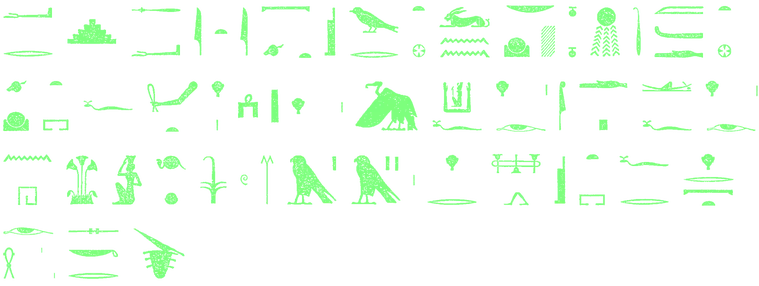
wnn nb ꜣḫt wbn.tj m Bḥdt ḫnt ꜣḫt.f ḏsrt ḥr sꜣ tꜣ ḥr mkt kꜣ.f ḥr jrt gs dpt.f ḥr jrt nht ḥꜣ.f rꜥ nb sw m Ḥr Ḥrw ḥrj st.f r ḥrt jrj sꜣ.f jsk r šꜥt
The lord of the horizon has risen in Behedet, in his secluded horizon on earth. He guards his ka, makes himself unassailable and sets protection about himself each day. He is the Horus of Horuses, who sets his seat far off in the sky and so guards himself against slaughter.
- 170

ḥnk nbtj ḏd mdw dmꜣt pḏwt jsk snsn.s ḥnꜥ mḥnjt ꜣbḫ nfrt m ꜥb nt wnwt jw.tj ẖnm.s Mnḥjt
Presenting the Two Ladies. Words to be spoken: “Demat-Pedjut has joined the rearing cobra;
the White Crown has joined the Red Crown.
The brow-serpent has come and joined Menhit.Note · Line 170
The Two Ladies are Nekhbet and Wadjet, protectors of Upper and Lower Egypt. Here Nekhbet is called Demat-Pedjut; Wadjet is the cobra. The king presents the pair as the White and Red Crowns. - 171

snt ꜣmm.s snnwt.s nbt Nḫn smꜣ.s ḥnꜥ nbt .. snḏm.sn ḥr ḥꜣt.k m nbtj
One sister has taken the other in her arms.
The Lady of Nekhen has joined the Lady of …;
they settle on your brow as the Two Ladies.” - 172
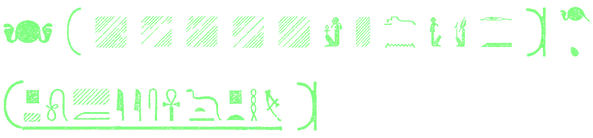
nswt bjt (… …) sꜣ Rꜥ (… …)
The King of Upper and Lower Egypt, Ptolemy IX, the Son of Ra, Ptolemy IX.
- 173
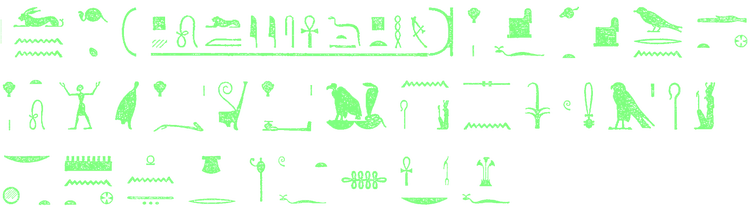
wnn sꜣ Rꜥ (… …) ḥr bḥdw.f ḫnt Bḥdw wr n Bḥdtj ḥr twꜣ ḥḏt ḥr rmnj dšrt ḥr ḥnk nbtj n ḥqꜣ.sn sw mj Ḥr ḥqꜣ jḫt mnt šnw n tꜣ ẖr wḏ.f
The Son of Ra, Ptolemy IX, sits on his throne in the Great Throne Seat of the Behedetite. He lifts the White Crown, bears the Red Crown and presents the Two Ladies to their ruler. He is like Horus, ruler of all things: the whole circuit of the earth is under his command.
- 174

rdj.j n.k wꜣḏtj mn.tj m ḥꜣt.k ḥr wdt hh.sn r ḫftjw.k
“I grant that the two diadems sit firm on your brow and breathe their fire against your foes.”
- 175

ḏd mdw jn Ḥr Bḥdtj nṯr ꜥꜣ nb pt bjk n nb ḥrj wṯst.f ḏrtj nb Ḏrtjw wr sw r nṯrw ḥqꜣ nb ...
Words spoken by Horus of Behedet, the great god, lord of the sky, falcon of the Golden One, who sits on his throne, the falcon, lord of the falcon gods, greater than the other gods, ruler and lord …
Note · Line 175
The Golden One is Hathor. - 176

ḏd mdw jn Wṯst Ḥr špst ḥnwt nwwt ꜣst wrt ḫwjt sꜣ.s jtjt ḥnwt tꜣwj wṯs Ḥr.s m Wṯst ꜥq.n.f ꜣḫt nt pt
Words to be spoken by the Throne of Horus, the splendid one, mistress of cities, Isis the Great, who guards her son, sovereign lady and mistress of the Two Lands, who bears her Horus aloft at the Throne when he has entered the horizon of heaven.
Note · Line 176
The Throne is Edfu, here personified as Isis. Its Egyptian name echoes the word for bearing Horus aloft. - 177
wnn Bḥdtj wbn.tj m Wṯst m jtj n nṯrw rmṯw ḥr ꜣwt ꜥwj.f ḥr ḫfꜥ wꜣḏtj.f ḥr sṯnj ḥꜣt.f m wrtj ḥkꜣw.f sw m nb šmꜥs ḥqꜣ mḥws nb wꜥ ḥrj tp tꜣwj
The Behdetite has risen at the Throne as sovereign of gods and men. He stretches out his arms, grasps his two diadems and adorns his brow with his two Great Ones of Magic. He is lord of the crown of Upper Egypt, ruler of the crown of Lower Egypt, sole lord, head of the Two Lands.
Note · Line 177
The two diadems are themselves divine powers, the Great Ones of Magic. - 178

ḥnk jꜣrrt r mw ḏd mdw prt jꜣꜣ nn ḥnk.n.j n kꜣ.k ḫnt šꜣw.k ḥr jꜣbtt Wṯst.k smꜣ.tj ḥr mw rḫt.sn
Offering grapes in juice. Words to be spoken: “These are the grapes I have offered to your ka, from your vineyards east of your Throne, blended with juice. Their proportions
Note · Line 178
It receives nourishment from offerings. - 179

r nfr jrw.sn nb r tp ḥsb ꜥm.n.k mjn.sn wšꜥ.k wnš.sn ẖnm.n.k bꜣ.k m ꜣḫt wdj.n.k sꜣ.k m prjt jm.k ḥꜥj.k sḥb.n.k šnbt.k
are perfect, every detail true to measure. You have drunk their juice and eaten their grapes; you have joined your ba in the horizon. You have protected yourself with what comes forth from you. You rejoice, for you have made a festival in your breast.”
- 180
nswt bjt (… …) sꜣ Rꜥ (… …)
The King of Upper and Lower Egypt, Ptolemy IX; the Son of Ra, Ptolemy IX.
Note · Line 180
The two titles introduce the king’s throne name and his birth name, each enclosed in a cartouche. - 181
wnn nswt bjt (… …) ḥr qnjw.f m jtj ꜥšꜣ tpw ḥr ms jḫt ḥr ḥnk ḥnkt ḥr .. qmꜣ sw m mrjt.f sw mj Ḥr ḥr tp.n.f tꜣwj bꜣk n.f Knmt Ḫsds
The King of Upper and Lower Egypt, Ptolemy IX, is on his throne as sovereign of many fields. He brings gifts, presents offerings and gladdens his father with what he loves. He is like Horus, who has taken possession of the Two Lands, to whom the Great Oasis and Bahariya pay tribute.
- 182
rdj.j n.k šꜣw ꜥšꜣ ḫnt Ꜥtm ẖr dqrw nbw bnrw
“I give you vineyards in plenty in Egypt, laden with every sweet fruit.”
- 183

ḏd mdw jn Ḥr Bḥdtj nṯr ꜥꜣ nb pt nṯr thj prj m Bḥdt nswt nṯrj smꜣ ḫrwjw prj ꜥ dndn smꜣjw
Words to be spoken by Horus of Behdet, the great god, lord of heaven, the god who attacks, who comes forth from Behdet, the divine king who kills his enemies, whose arm strikes out, who cuts down his foes.
- 184
wnn nb nḥḥ wbn.tj m Bḥdt šnwt.f ḥꜣ.f m snḥmw ḥr šsp jḫt.f ḥr sꜥm ẖrt.f ḥr sḥtp jb.f m jrt Ḥr sw m bꜣ tkk bꜣ.tj ḫnt Bḥdt n skj r ḏr nwt
The lord of eternity has risen in Behdet, his followers behind him like locusts. He receives his gifts, eats his offerings and contents his heart with the Eye of Horus. He is the ba that attacks, mighty in Behdet, undying as long as heaven endures.
Note · Line 184
The offering is identified with the Eye that Horus lost and recovered. To present it is to restore to him what is his. - 185

ḥnk jrṯt ḏd mdw ꜥnḫ wꜣs n kꜣ.k jwꜥw n ꜥpj ꜥnḫ.k wsr.k jm.sn
Offering milk. Words to be spoken: “Life and Dominion for your ka, heir of Api! Through them you live and grow strong.
Note · Line 185
Life and Dominion and the White One are ritual names for milk. - 186

ḥḏw nn ḥḏ m ḏt.sn jsk jḫt rnnwt nt Ḥt ḥr ḥwn ḥꜥ.k jm.sn jrt Ḥr ḥḏt jrj.w sꜣ.k wḥm.w mkt.k nht jm.sn ḥḥw nw ḥb sd swr.k st ꜥq.sn r ẖt.k
Here is the White One, white by nature, the very yield of Hathor’s heifers. It makes your flesh young. The white Eye of Horus guards you and renews your protection. In the milk is the power to guard you for millions of Sed festivals when you drink it and it enters your belly.”
Note · Line 186
The Sed festival was a jubilee that renewed the king’s strength and his power to rule. - 187

nswt bjt ( … … ) sꜣ Rꜥ (… …)
The King of Upper and Lower Egypt, Ptolemy IX; the Son of Ra, Ptolemy IX.
- 188
wnn sꜣ Rꜥ (… …) ḥr tmꜣ.f ḥr sꜥnḫ ḥr nb m kꜣw.f ḥr ḥnk bnr ḥr sjꜥr mnq ḥr rdt jrṯt n nb.s sw mj Ḥr {ꜣ ꜣst m ꜣḫ bjt sntj ḥr jrt bsꜣ.f
The Son of Ra, Ptolemy IX, is on his throne. With his food he keeps everyone alive. He offers the sweet milk, lifts the menek-milk high and gives the milk to its lord. He is like Horus son of Isis in Chemmis, where the two sisters guard him.
Note · Line 188
Chemmis was the marshland refuge where Isis hid the infant Horus. The sisters are Isis and Nephthys. - 189

rdj.j n.k rnnwt ẖr bnr nfr qq.k jm.sn rꜥ nb
“I give you heifers laden with fine sweet milk, that you may drink from them every day.”
- 190

ḏd mdw jn Ḥr {mꜣ tꜣwj pꜣ ẖrd sꜣ Ḥt ḥr ꜥꜣ wr tpj n Ḥr Bḥdtj nṯr ꜥꜣ nb pt ẖrd nb ẖrt rdj ẖrt n mrj.f nb ḥḏw ḥqꜣ ꜥnḫ wꜣs
Words to be spoken by Harsomtus the Child, son of Hathor, the very great one, firstborn of Horus of Behdet, the great god, lord of heaven; the child, lord of food, who gives food to whom he loves, lord of the White One, ruler of Life and Dominion.
- 191
wnn sꜣ Bḥdtj wbn.tj m Bḥdt m nb ḥw ḥqꜣ ḏfꜣ .. ... .. ḥr rdt m ẖt ḥr sꜥm jrṯt ꜣbjt jb.f sw m nb ḥḏw ḥꜥj.tw n mꜣꜣ.f ẖrd šps wsr m pḥtj.f
The son of the Behdetite has risen in Behdet as lord of food and ruler of provisions. … He takes food into his belly and drinks the milk his heart desires. He is lord of the White One, at whose sight people rejoice, the splendid child, mighty in his strength.
- 192
ḥnk ṯt rꜣw ḏd mdw mn n.k hꜣjw hꜣj.sn m pt ẖnmw bsj m sš.sn srwt nw wbꜣ.sn qbḥw msw Sḫt prj m mḥ.sn qq.k m nf jrj.k jḫt m nw wšn.sn ḥr ꜥḫ n kꜣ.k
Offering a flock of geese. Words to be spoken: “Take for yourself the birds of passage that descend from the sky,
the marshfowl that come forth from their nests,
these geese that sweep down into the wetlands,
the children of Sekhet that come forth from their nesting grounds.
May you eat of those and dine on these:
they are sacrificed on the fire altar for your ka.”Note · Line 192
Sekhet is the goddess of the fields and marshes. The wildfowl that breed there are her children. - 193

nswt bjt (… …) sꜣ Rꜥ (… …)
The King of Upper and Lower Egypt, Ptolemy IX; the Son of Ra, Ptolemy IX.
- 194
wnn nswt bjt (… …) ḥr qnjw.f m qn ḫnt Wr nḫt ... ... ... ... .. ḥr ḥtr rꜣw nw tjt nbḏ sw mj ... wꜣrt.f ꜥꜣ šfjt ḫnt rww mꜥr sp hꜣj n.f sḫt
The King of Upper and Lower Egypt, Ptolemy IX, is on his throne as the strong one in Great-in-Victory. … He binds the geese as images of the Evil One. He is like … of his snare, held in great awe in the marshes, the successful hunter to whom the field comes.
Note · Line 194
Binding the geese enacts the capture of the god’s enemy. - 195

rdj.j n.k ḫnnt ꜥšꜣ r ẖrt.k ḥrj.tj r ꜣbwt nṯr
“I give you birds in plenty for your food, kept far from the god’s image.”
- 196

ḏd mdw jn Ḥr Bḥdtj nṯr ꜥꜣ nb pt ḥdj ḥrt m ꜥpj ḏrtj qnj hb.n.f ... jnj pḥwj n ḫrwjw.f
Words to be spoken by Horus of Behdet, the great god, lord of heaven, who spans the sky as Api, the valiant falcon when he sets foot on the battlefield, who makes an end of his enemies.
- 197

ḏd mdw jn Ḥt ḥr wrt nbt Jwnt jrt Rꜥ ḥrt jb Bḥdt nbt pt ḥnwt nṯrw nbw ḏrtjt wrt ḫnt Ḥt bjk Bḥdtjt sꜣbt šwt
Words to be spoken by Hathor the Great, lady of Dendera, Eye of Ra, who dwells in Behdet, lady of heaven, mistress of all the gods, the great she-falcon in the House of the Falcon, the Behdetite of many-colored plumage.
Note · Line 197
The House of the Falcon is the temple at Edfu. Here Hathor takes the falcon form of its lord, Horus. - 198
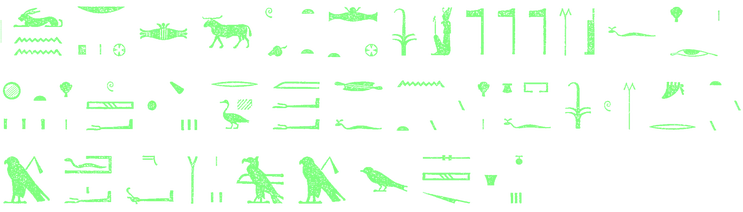
wnn nb P Msn bꜣ.tj ḫnt Msn nswt nṯrw m st jb.f ḥr jrt jḫt ḥr wšꜥ rꜣw m ꜥwj jwꜥw.f ntj ḥr nst.f sw m ḏrtj prj ꜥ ḥwj sbjw ꜣm wr sš ꜥnwt
The lord of Pe-Mesen is mighty in Mesen; the king of the gods is in the place dear to his heart. He dines on the geese from the hands of his heir, who sits upon his throne. He is the falcon whose arm strikes out, who strikes down rebels, the great bird of prey who spreads his talons.
Note · Line 198
The heir who feeds Horus is the reigning king. - 199
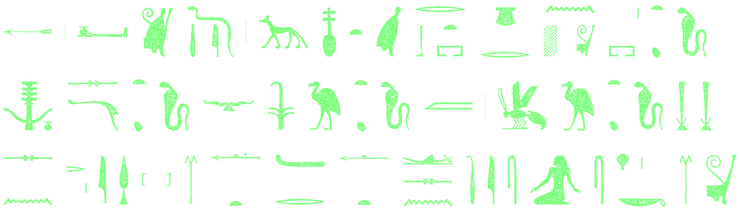
ḥnk sḫmtj ḏd mdw jw nfrt r bw ẖr nt Pjt ẖnm.n.s Ḫpjt dmḏ nswjt m ꜥb bjtjt snsn.sn jrj n sp jmꜣ wꜥt ḥnꜥ wꜥt jm.sn tjs.sn ḥr tp.k m sḫmtj
Offering the Double Crown. Words to be spoken: “The White Crown comes to where the Red Crown is;
the goddess of Pe has joined the goddess of Dep.
The queen of Upper Egypt unites with the queen of Lower Egypt;
the two draw close.
Each welcomes the other;
they settle on your head as the Double Crown.”Note · Line 199
Pe and Dep were the two parts of Buto in the Nile Delta. The crowns themselves appear here as goddesses and queens.