~/sacred-texts/ebers-papyrus
Ebers Papyrus on the Heart: The Heart Speaks at the Ends of the Vessels
- Text
- Ebers Papyrus, Eb 854–855 (columns 99,1–102,16)
- Date
- Copied in hieratic about 1550 BC, at the start of the 18th Dynasty, on columns 99–102 of the Ebers Papyrus; the treatise itself goes back to the Middle Kingdom
- Found
- Found at Thebes and bought at Luxor by Georg Ebers in 1873; now in the Leipzig University Library
- Language
- Egyptian (Middle Egyptian) · Hieratic
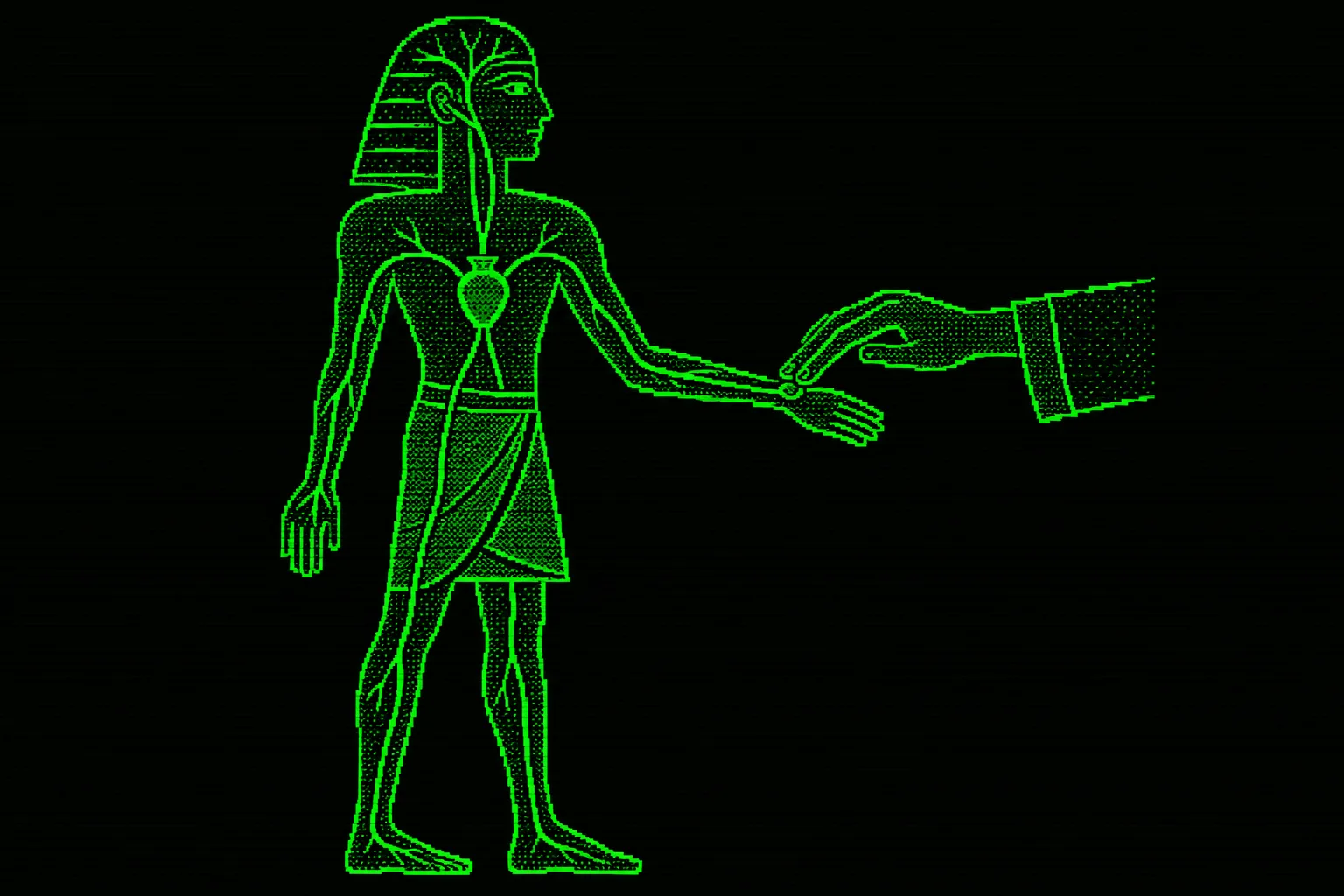
A physician instructs a colleague. The heart sits at the centre and sends vessels to every limb; a hand laid anywhere on the body measures it: For the heart speaks at the ends of the vessels in every part of the body. The vessels are counted. They carry blood, mucus, urine, semen, air and feces. The breath of life enters through the right ear. The breath of death enters through the left ear.
The second half explains the names of heart ailments: the heart that kneels, dances, dries up, floods or is swallowed by anger. Demons and priests’ breath cause some; of the bitter afflictions it says: They boil and boil throughout his flesh.
- 1
𓄂𓂝𓅓 𓋴𓈙𓏏𓍔𓄿𓏛 𓈖 𓌕𓏌𓏤𓀀
ḥꜣ,t-ꜥ-m sštꜣ n(,j) zwn,w
Here begins the physician’s secret knowledge:
- 2
𓂋𓐍𓏛 𓈝𓅓𓏏𓂻 𓄂𓏏𓏭𓄣 𓂋𓐍𓏛 𓄂𓏏𓏭𓄣
rḫ šm,t ḥꜣ,tj rḫ ḥꜣ,tj
knowing the course of the heart, knowing the heart itself.
- 3
𓇋𓏲 𓂸𓏏𓏲𓏯𓏥 𓇋𓅓 𓆑 𓈖 𓂝𓏏𓄹 𓎟𓏏
jw mt.w.pl jm =f n ꜥ,t nb.t
From it vessels run to every part of the body.
Note · Line 3
The Egyptian word for a vessel has a wider reach than ours: it can also mean a sinew or a cord. - 4
𓇋𓂋 𓈖𓍇𓏌𓏲 𓂞𓂞𓏲 𓌕𓏌𓏤𓀀 𓎟 𓌂𓐍𓏏𓏯𓃂𓈗𓀀 𓎟 𓎃𓏲𓀀 𓎟 𓂝𓂝 𓂭𓂭𓂭 𓆑 𓁷𓏤 𓁶𓏤 𓁷𓏤 𓅓𓂝𓎢𓇉𓄿𓁶 𓁷𓏤 𓂧𓏏𓏥 𓁷𓏤 𓊨𓏏𓉐 𓄣𓏤 𓁷𓏤 𓂝𓏤𓏲𓏭 𓁷𓏤 𓂾𓂾 𓆼𓄿𓄿𓂝 𓆑 𓂜 𓄂𓏏𓏭𓄣 𓁷𓏤𓈖𓏏𓏏 𓂸𓏏𓏲𓏯𓏥 𓆑 𓈖 𓂝𓏏𓄹 𓆑 𓎟𓏏
jr nw dd{.w} zwn,w nb wꜥb-Sḫm,t nb zꜣ,w nb ꜥ.du ḏbꜥ.pl =f ḥr dp ḥr mkḥꜣ ḥr ḏr,t.pl ḥr s,t jb ḥr ꜥ.wj.du ḥr rd.du ḫꜣꜣ =f n ḥꜣ,tj ḥr-n,t(j)t mt.w.pl =f n ꜥ,t =f nb.t
As for these vessels, when any physician, any priest of Sekhmet or any protective magician lays both hands and two fingers on the head, the back of the head, the hands, the seat of the ib-heart, both arms or both legs, it is the heart he measures, for its vessels run to every part of the man’s body.
- 5
𓈖𓏏𓊪𓏲 𓌃𓂧𓏲𓀁 𓆑 𓏃𓈖𓏏 𓂸𓏏𓏲𓏯𓏥 𓏌𓏤 𓂝𓏏𓄹 𓎟𓏏
n,t-pw mdwi̯ =f ḫnt mt.w.pl n(,j).w ꜥ,t nb.t
For the heart speaks at the ends of the vessels in every part of the body.
Note · Line 5
The heart’s speech is what the practitioner feels under his fingers: the pulse. - 6
𓇋𓏲 𓂸𓏏𓏲𓏱𓏥 𓅓 𓄟𓋴𓂧𓏏𓂉𓂉 𓆑𓏭
jw mt.w.pl 4 m msd,t.du =fj
Four vessels lie in his two nostrils.
- 7
𓇋𓈖 𓂝𓂝 𓈖𓈙𓅱𓏏𓂐𓏥
jn 2 dd nšw,t
Two yield mucus.
- 8
𓇋𓈖 𓂝𓂝 𓊃𓈖𓆑𓂐𓏥
jn 2 dd snf
Two yield blood.
- 9
𓇋𓏲 𓂸𓏏𓏲𓏯𓏥 𓅓 𓄚𓈖𓏌𓏲𓉐 𓅠𓅓𓎛𓏏𓆃𓆃 𓆑𓏭 𓈖𓏏𓏭 𓅓𓆱𓐍𓏏𓂻 𓂝𓂝 𓊃𓈖𓆑𓂐𓏥 𓁹𓁹 𓆣𓂋 𓆼𓄿𓇋𓇋𓏏𓐎𓅪𓏥 𓎟𓏏 𓈖𓏏 𓁹𓁹 𓅓𓂝 𓋴𓈖𓏥 𓅓𓂝 𓃹𓈖𓈖 𓍏𓃀𓅡𓄿𓏛 𓈖 𓁹𓁹
jw mt.w.pl 4 m ẖnw gmḥ,t.du =fj n,tj m-ḫt dd snf jr(,t).du ḫpr ḫꜣ,yt nb.t n(,j).t jr(,t).du m-ꜥ =sn m-ꜥ wnn wbꜣ n jr(,t).du
Four vessels lie within his two temples. It is these that in time make both eyes bloodshot. Every disease of the eyes arises from them, for they open into the eyes.
- 10
𓇋𓂋 𓈗 𓉔𓄿𓄿𓂻 𓇋𓅓 𓋴𓈖𓏥 𓇋𓈖 𓆓𓆑𓂧𓂂𓂂 𓈖 𓁹𓁹 𓂝𓂝 𓋴𓏏
jr mw hꜣꜣ jm =sn jn ḏfd.pl n(,j) jr(,t).du dd st
As for the water that runs down from the eyes, it is the irises of the two eyes, with their pupils, that yield it.
- 11
𓎢𓇋𓇋𓆓𓂧 𓇋𓈖 𓐪𓂧𓂧𓏌𓏲𓁹𓏥 𓅓 𓁹𓁹 𓁹𓂋 𓋴𓏏
ky-ḏd jn qdd.w.pl m jr(,t).du jrr st
Another account: it is the sleepers in the eyes that produce it.
Note · Line 11
“Sleepers” is a name for something within the eyes; just what it names is unknown. - 12
𓇋𓏲 𓂸𓏏𓏲𓏯𓏥 𓊪𓊃𓈙𓈖𓏴 𓈖 𓁶𓏤 𓄝𓏏𓏏𓀜 𓋴𓈖𓏥 𓅓 𓅓𓂝𓎢𓆼𓄿𓁶 𓈖𓏏𓏭 𓅓𓆱𓐍𓏏𓂻 𓈎𓌴𓄿𓅓𓌙𓅯𓏛 𓊵𓏏𓊪
jw mt.w.pl 4 psš{n} n dp stt =sn m mkḥꜣ n,tj m-ḫt qmꜣm ḥtp
Four vessels branch toward the head. They are drawn together at the back of the head, and it is they that in time produce the ḥtp condition.
- 13
𓃀𓅬𓄿𓈒 𓉻𓂝𓄿𓂝𓁸 𓈎𓌴𓄿𓅓𓏏𓌙𓅯𓏛𓏥 𓋴𓈖𓏥 𓊪𓏲 𓂜 𓂋𓏲𓏏𓏭𓇯
bꜣ ꜥꜣꜥ qmꜣm.t.pl =sn pw n rw,tj
What they produce on the outside is bꜣ and ꜥꜣꜥ.
Note · Line 13
These two outward signs, like the ḥtp condition itself, have not been securely identified. - 14
𓇋𓂋 𓊡𓏲 𓅧𓈎𓂻 𓅓 𓂉𓏤 𓅧𓈎𓂻 𓆑 𓈖 𓄂𓏏𓏭𓄣 𓎛𓈖𓂝 𓄥𓄿𓄹
jr ṯꜣw ꜥq m fnḏ ꜥq =f n ḥꜣ,tj ḥnꜥ zmꜣ
The breath that enters through the nose enters the heart and the lung.
- 15
𓈖𓏏𓋴𓈖𓏥 𓂝𓂝 𓈖 𓄡𓏏𓏤 𓍃𓅓𓏛
ntsn dd ((n)) ẖ,t tm
It is they that give it to the whole belly.
- 16
𓇋𓂋 𓇋𓂧𓂧𓏏𓄕 𓄕𓄕 𓌨𓂋 𓋴 𓇋𓈖 𓂸𓏏𓏯 𓁹𓂋 𓋴𓏏 𓋴𓌫𓅓𓂻 𓈖 𓍯𓄿𓃀𓆰 𓈖 𓁹𓏏𓏤
jr jdd.t msḏr.du ẖr =s jn mt 2 jrr st sšmi̯ n wꜣb n(,j) jr,t
What makes both ears deaf? It is two vessels that do it, the ones that lead to the root of the eye.
- 17
𓎢𓇋𓇋𓆓𓂧 𓇋𓂋 𓈖𓍇𓏌𓏲 𓇋𓂧𓂧𓏲𓄕 𓄕𓄕 𓌨𓂋 𓋴 𓈖𓄿 𓊪𓏲 𓃹𓈖𓈖 𓁶𓏤 𓌷𓂝𓆀𓄹𓏭 𓈖 𓊃𓀀𓏤 𓁷𓏤 𓈖𓈙𓈙𓏲𓊡 𓂝𓂝 𓎛𓋴𓈎𓌫𓏱 𓊪𓏲 𓅓 𓊃𓀀𓏤
ky-ḏd jr nw jdd.w msḏr.du ẖr =s nꜣ pw wnn dp mꜣꜥ.(w)j n(,j) s ḥr nšš,w dd ḥsq pw m s
Another account of what makes both ears deaf: it is the vessels at a man’s two temples that carry nššw. This is what the Severer puts into the man.
Note · Line 17
The Severer is a demon. The name nššw is written with the sign for wind or breath. - 18
𓊏𓊪𓂝𓐍𓂋 𓆑 𓈖 𓆑 𓊡𓏲𓏲𓏥 𓆑
šsp.ḫr =f n =f ṯꜣw.w.pl =f
Then he takes the man’s breaths for himself.
- 19
𓇋𓂋 𓃀𓅡𓄿𓂝𓎛𓅤𓏛 𓄣𓏤 𓈗𓏲𓇋𓇋𓏏𓈗 𓂋𓏤 𓊪𓏲
jr bꜣ~ꜥḥi̯ jb mw,yt rʾ pw
When the ib-heart overflows, it is the fluid of the mouth.
- 20
𓂝𓅓𓂧𓅪 𓂝𓏏𓄹𓏥 𓆑 𓍃𓅓𓏛
ꜥmd ꜥ,t.pl =f tm
All his limbs are left limp.
- 21
𓇋𓂋 𓍱𓊃𓅪 𓄣𓏤 𓇋𓈖 𓂸𓏏𓏯 𓊏𓊪𓏲𓀜 𓂋𓈖𓀁 𓆑 𓁹𓂋 𓋴𓏏
jr šs jb jn mt šsp.w rn =f jrr st
When the ib-heart is in the šs condition, it is the vessel called the Receiver that causes it.
- 22
𓈖𓏏𓆑 𓂝𓂝 𓈗 𓂜 𓄂𓏏𓏭𓄣 𓎢𓇋𓇋𓆓𓂧 𓈖 𓁹𓏏𓏤 𓏏𓍃𓅓𓍘𓇋
ntf dd mw n ḥꜣ,tj ky-ḏd n jr,t tm.tj
It is the Receiver that gives water to the heart or, in another account, to the whole eye.
- 23
𓇋𓂋 𓇋𓂧𓄕 𓆑 𓂜 𓃹𓈖𓉿𓂝𓈖 𓂋𓏤 𓆑 𓉐𓂋𓂋𓂻 𓂝𓏏𓄹𓏥 𓆑 𓎟𓏏 𓇑𓇑𓈖𓈖𓀉 𓅓𓆱𓐍𓏏𓂻 𓈖𓆑𓈐 𓊏𓊪𓏲𓀜 𓄂𓏏𓏭𓄣 𓇋𓅓
jr jdi̯ =f n wn.n rʾ =f prr ꜥ,t.pl =f nb.t nni̯ m-ḫt nf šsp.w ḥꜣ,tj jm
If he is deaf and his mouth will not open, all his limbs grow weary from the things the heart receives in this way.
- 24
𓇋𓂋 𓄿𓂧𓅪 𓆣𓂋 𓅓 𓄂𓏏𓏭𓄣 𓆼𓄿𓋴𓂉 𓆑 𓊪𓏲 𓂋 𓇥𓂋𓏲𓈐𓏥 𓄥𓄿𓄹 𓎛𓈖𓂝 𓈘𓈇𓋴𓏏𓄹
jr ꜣd ḫpr m ḥꜣ,tj ḫꜣs =f pw r ḏr.w.pl zmꜣ ḥnꜥ mjs,t
As for the weakness that arises in the heart, it is his ḫꜣs condition reaching to the limits of the lung and liver.
- 25
𓉐𓂋𓂋𓂻 𓇋𓂧𓄕 𓈖 𓆑 𓂸𓏏𓏲𓏯𓏥 𓆑 𓐍𓂋𓀒 𓅓𓆱𓐍𓏏𓂻 𓉔𓉔𓊮 𓋴𓈖𓏥
prr jdi̯ n =f mt.w.pl =f ḫr m-ḫt hh =sn
His vessels then go deaf, felled by their own heat.
- 26
𓆼𓄿𓋴𓂉 𓆑 𓋴𓆑𓐍𓍼𓏛𓐍𓂋
ḫꜣs =f sfḫ.ḫr
His ḫꜣs condition then lets go.
- 27
𓇋𓏲 𓂸𓏏𓏲𓏯𓏥 𓈖 𓄕𓏤 𓆑 𓎛𓈖𓂝 𓂸𓏏𓏯 𓁷𓏤 𓈎𓂝𓎛𓂢 𓆑 𓋀𓅓𓏭𓂢 𓂜 𓈎𓂝𓎛𓂢 𓆑 𓋁𓃀𓏭𓂢
jw mt.w.pl 4 n msḏr =f 2 ḥnꜥ mt 2 ḥr qꜥḥ =f wnm,j 2 n qꜥḥ =f jꜣb,j
Four vessels lead to his two ears; there are also two vessels at his right shoulder and two leading to his left shoulder.
- 28
𓅧𓈎𓂻 𓊡𓏲 𓈖 𓋹𓈖𓐍 𓅓 𓄕𓏤 𓋀𓅓𓏭𓂢
ꜥq ṯꜣw n(,j) ꜥnḫ m msḏr wnm,j
The breath of life enters through the right ear.
- 29
𓅧𓈎𓂻 𓊡𓏲 𓈖 𓅓𓏏𓏱 𓅓 𓄕𓏤 𓋁𓃀𓏭𓂢
ꜥq ṯꜣw n(,j) m(w)t m msḏr jꜣb,j
The breath of death enters through the left ear.
- 30
𓎢𓇋𓇋𓆓𓂧 𓅧𓈎𓂻 𓆑 𓅓 𓈎𓂝𓎛𓂢𓏤 𓋀𓅓𓏭𓂢
ky-ḏd ꜥq =f m qꜥḥ wnm,j
Another account: the breath of life enters through the right shoulder.
- 31
𓅧𓈎𓂻 𓊡𓏲 𓈖 𓅓𓏏𓏱 𓅓 𓈎𓂝𓎛𓂢𓏤 𓋁𓃀𓏭𓂢
ꜥq ṯꜣw n(,j) m(w)t m qꜥḥ jꜣb,j
The breath of death enters the left shoulder.
- 32
𓇋𓏲 𓂸𓏏𓏲𓏯𓏥 𓋴𓌫𓅓𓂻 𓂜 𓂝𓏤𓏲𓏭 𓂜 𓋀𓅓𓏭𓂢 𓂜 𓋁𓃀𓏭𓂢 𓋴𓌫𓅓𓂻 𓈖 𓂭𓂭𓂭 𓆑
jw mt.w.pl 6 sšmi̯ n ꜥ.wj 3 n wnm,j 3 n jꜣb,j sšmi̯ n ḏbꜥ.pl =f
Six vessels run to the two arms, three to the right and three to the left, and on to his fingers.
Note · Line 32
The Egyptian word for “vessel” is broader than “blood vessel.” In this account the vessels carry air as well as bodily fluids. - 33
𓇋𓏲 𓂸𓏏𓏲𓏯𓏥 𓋴𓌫𓅓𓂻 𓈖 𓂾𓂾 𓂜 𓂾 𓋀𓅓𓏭𓂢 𓂜 𓂾 𓋁𓃀𓏭𓂢 𓂋 𓄖𓂻 𓏏𓃀𓏏𓋸
jw mt.w.pl 6 sšmi̯ n rd.du 3 n rd wnm,j 3 n rd jꜣb,j r pḥ tb,t
Six vessels run to the two legs, three to the right leg and three to the left leg, to reach the sole of the foot.
- 34
𓇋𓏲 𓂸𓏏𓏯 𓈖 𓌨𓂋𓏲𓄹𓄹 𓆑𓏭
jw mt 2 n ẖr,w.du =fj
Two vessels run to his two testicles.
- 35
𓈖𓏏𓋴𓈖𓏥 𓂝𓂝 𓂸𓏏𓅱𓏏𓂺𓏥
ntsn dd mtw,t
It is these vessels that supply semen.
- 36
𓇋𓏲 𓂸𓏏𓏯 𓂜 𓐍𓊪𓂧𓏲𓄹𓏥 𓏤 𓂜 𓐍𓊪𓂧𓄹 𓎢𓇋𓇋 𓂜 𓐍𓊪𓂧𓄹
jw mt 2 n ḫpd.w.pl 1 n ḫpd ky n ḫpd
Two vessels run to the buttocks, one to one buttock and one to the other.
- 37
𓇋𓏲 𓂸𓏏𓏲𓏯𓏥 𓂜 𓈐𓈇𓋴𓏏𓄹
jw mt.w.pl 4 n mjs,t
Four vessels run to the liver.
- 38
𓈖𓏏𓋴𓈖𓏥 𓂝𓂝 𓈖 𓊃 𓈗 𓊡𓏲 𓈖𓏏𓏭 𓅓𓆱𓐍𓏏𓂻 𓂝𓂝 𓆣𓂋 𓆼𓄿𓇋𓇋𓏏𓐎𓅪𓏥 𓎟𓏏 𓂋 𓊃 𓅓 𓇋𓃀𓃙𓎛𓈗𓀜 𓌨𓂋 𓊃𓈖𓆑𓂐𓏥
ntsn dd n =s mw ṯꜣw n,tj m-ḫt dd ḫpr ḫꜣ,yt nb.t r =s m jbḥ ẖr snf
It is these vessels that supply it with water and air and later bring every kind of sickness upon it by drenching it in blood.
- 39
𓇋𓏲 𓂸𓏏𓏲𓏯𓏥 𓂜 𓄥𓄿𓄹 𓂜 𓂜𓈖𓈝𓅓𓄹
jw mt.w.pl ((4)) n zmꜣ n nnšm
Four vessels run to the lung and to the spleen.
- 40
𓈖𓏏𓋴𓈖𓏥 𓂝𓂝 𓈗 𓊡𓏲 𓈖 𓆑 𓏇𓇋𓏛
ntsn dd mw ṯꜣw n =f mj
It is these vessels that likewise supply him with water and air.
- 41
𓇋𓏲 𓂸𓏏𓏯 𓂜 𓈙𓊪𓏏𓇋𓇋𓏏𓄹
jw mt 2 n špty,t
Two vessels run to the bladder.
- 42
𓈖𓏏𓋴𓈖𓏥 𓂝𓂝 𓈗𓇋𓇋𓏏𓂺
ntsn dd mw,yt
It is these vessels that supply urine.
- 43
𓇋𓏲 𓂸𓏏𓏲𓏯𓏥 𓍏𓃀𓅡𓄿𓏛 𓈖 𓄖𓏲𓇋𓇋𓏏𓄹
jw mt.w.pl 4 wbꜣ n pḥ,wyt
Four vessels open into the anus.
- 44
𓈖𓏏𓋴𓈖𓏥 𓂝𓂝 𓈎𓌴𓄿𓅓𓌙𓅯𓏛 𓈖 𓋴 𓈗 𓊡𓏲
ntsn dd qmꜣm n =s mw ṯꜣw
It is these vessels that cause water and air to be produced for it.
- 45
𓇋𓏲 𓎼𓂋𓏏 𓄖𓏲𓇋𓇋𓏏𓄹 𓍏𓃀𓅡𓄿𓏛 𓊃 𓂜 𓂸𓏏𓏯 𓎟 𓂜 𓐛𓏤 𓋀𓅓𓏭𓂢 𓐛𓏤 𓋁𓃀𓏭𓂢 𓅓 𓂝𓂝 𓅓 𓂾𓂾 𓇋𓏲 𓇋𓃀𓃙𓎛𓈗𓀜 𓅓 𓎛𓋴𓐎𓏥
jw gr,t pḥ,wyt wbꜣ =s n mt nb n gs wnm,j gs jꜣb,j m ꜥ.du m rd.du jw jbḥ m ḥs
The anus in turn opens into every vessel on the right side and the left, in both arms and both legs; the vessels are awash with feces.
- 46
𓇋𓂋 𓂝𓅓𓂧𓅪 𓄣𓏤 𓍃𓅓 𓌃𓂧𓏏𓀁 𓄂𓏏𓏭𓄣 𓊪𓏲 𓂸𓏏𓏲𓏯𓏥 𓂋𓏤𓊪𓏲 𓈖 𓄂𓏏𓏭𓄣 𓇋𓆛𓈖𓃀𓅡𓄿𓀁
jr ꜥmd jb tm md(w)i̯.t ḥꜣ,tj pw mt.pl rʾ-pw n(,j) ḥꜣ,tj jnbꜣ
When the ib-heart flags, it means that the haty-heart or its vessels do not speak: they are mute.
Note · Line 46
The physician uses two words for “heart.” The ib can refer more broadly to a person’s interior; the haty is the beating organ. Its “speech” is the pulse. - 47
𓂜𓃹𓈖𓏏 𓈙𓊃𓐟𓄿𓏲𓄃𓏛𓏥 𓋴𓈖𓏥 𓌨𓂋 𓂧𓂧𓇋𓇋𓏏𓏥 𓎢𓏭 𓆣𓂋 𓅓𓂝 𓊡𓏲 𓎔𓏛 𓇋𓅓 𓋴𓈖𓏥
n-wn,t šsꜣ,w.pl =sn ẖr ḏr,yt.pl =kj ḫpr m-ꜥ ṯꜣw mḥ jm =sn
Under your two hands you feel none of the signs that arise from the air that fills them.
- 48
𓇋𓂋 𓆑𓏏𓅪 𓄣𓏤 𓏲𓎤𓎤𓅪 𓄂𓏏𓏭𓄣 𓊪𓏲 𓅓𓂝 𓉔𓉔𓊮 𓈖 𓄖𓏲𓇋𓇋𓏏𓄹
jr ft jb wgg ḥꜣ,tj pw m-ꜥ hh n(,j) pḥ,wyt
When the ib-heart grows weary, it means that the haty-heart is weak from the searing heat of the anus.
- 49
𓅠𓅓𓅓 𓎢 𓇓𓏲 𓅨𓂋 𓋴𓄡𓊪𓀜 𓐍𓏏𓏛𓏥 𓅓 𓂋𓏤𓄣𓏤 𓆑 𓏇𓇋 𓋴𓅓𓁹𓏏𓏤
gmm =k sw wr(r) sẖp (j)ḫ,t m rʾ-jb =f mj s-m-jr,t
If you find it enlarged, something stirs in his stomach like the iris of an eye.
- 50
𓇋𓂋 𓄣𓏤 𓆑 𓊃𓈙𓏴𓂻 𓆑 𓃹𓈖𓈖 𓂸𓏏𓏲𓏯𓏥 𓊪𓏲 𓈖 𓄂𓏏𓏭𓄣 𓌨𓂋 𓎛𓋴𓐎𓏥
jr jb =f sš =f wnn mt.pl pw n(,j) ḥꜣ,tj ẖr ḥs
When his ib-heart spreads out, it means that the vessels of the haty-heart are laden with feces.
- 51
𓇋𓂋 𓂧𓁷𓂋𓏏𓅪𓏥 𓎟𓏏 𓅧𓈎𓂻 𓋴 𓅓 𓁹𓏏𓏤 𓋁𓃀𓏏𓂢 𓉐𓂋𓂋𓂻 𓊃 𓅓 𓄡𓊪𓅯𓄿𓐎
jr dḥr,t.pl nb.t ꜥq =s m jr,t jꜣb(,j).t prr =s m ẖpꜣ
Of all the bitter afflictions, each enters through the left eye and comes out through the navel.
- 52
𓊡𓏲 𓊪𓏲 𓈖 𓂋𓏤𓂝𓏤 𓏁𓈗𓀀
ṯꜣw pw n(,j) rʾ-ꜥ wꜥb
This is the breath that comes of a wab-priest’s work.
Note · Line 52
A wab-priest was a temple priest whose title means “pure one.” - 53
𓇋𓈖 𓄂𓏏𓏭𓄣 𓂝𓂝 𓅧𓈎𓂻 𓋴𓈖𓏥 𓅓 𓂸𓏏𓏲𓏯𓏥 𓆑
jn ḥꜣ,tj dd ꜥq =sn m mt.w.pl =f
It is the haty-heart that lets these afflictions enter its vessels.
- 54
𓊪𓊃𓋴𓊮 𓊪𓊃𓇋𓇋𓏏𓊮 𓅓 𓇋𓏲𓆑𓄹𓏥 𓆑 𓍃𓅓𓏛
pss 〈=sn〉 psi̯.yt m jwf =f tm
They boil and boil throughout his flesh.
- 55
𓈖𓆓𓎛𓆓𓎛𓅪 𓂋 𓆑 𓄂𓏏𓏭𓄣 𓅓𓂝 𓋴𓈖𓏥 𓅓𓂝 𓈖𓏏𓏏 𓉐𓂋𓂋𓂻 𓆑 𓊪𓊃𓊮
nḏḥḏḥ r =f ḥꜣ,tj m-ꜥ =sn m-ꜥ n,t(j).t prr =f psi̯
The haty-heart quivers because of them, for it comes out boiled.
- 56
𓈖𓉔𓂧𓅪 𓂋 𓆑 𓂸𓏏𓏲𓏱𓏥 𓏌𓏤 𓄂𓏏𓏭𓄣 𓆑 𓅓 𓐍𓏏𓏛𓏥
nhd r =f mt.w.pl n(,j).w ḥꜣ,tj =f m (j)ḫ,t
The vessels of his haty-heart, in turn, tremble because of this.
- 57
𓇋𓂋 𓂧𓄿𓂋𓌗𓀜 𓋴𓈖𓏥 𓎛𓃀𓋴𓋳𓀜 𓋴𓈖𓏥 𓂧𓁷𓂋𓏏𓅪𓏥 𓊪𓏲
jr dꜣjr =sn ḥbs =sn dḥr,t.pl pw
If the vessels prevail, it means that they cover the bitter afflictions.
- 58
𓇋𓂋 𓂋 𓆑 𓀠𓏛 𓂧𓁷𓂋𓏏𓄛𓅪𓏥 𓆑 𓃀𓂝𓎛𓅤 𓋴𓈖𓏥 𓊪𓏲
jr r =f qꜣi̯ dḥr,t.pl =f bꜥḥi̯ =sn pw
But if his bitter afflictions rise high, it means that they overflow.
- 59
𓇋𓂋 𓈖𓆓𓎛𓆓𓎛𓅪 𓄣𓏤 𓎛𓅷𓄿𓀜 𓄣𓏤 𓊪𓏲 𓅓 𓄂𓏏𓏭𓄣
jr nḏḥḏḥ jb ḥṯꜣ jb pw m ḥꜣ,tj
When the ib-heart quivers, it means that the ib-heart is set like an inlay in the haty-heart.
- 60
𓎢𓇋𓇋𓆓𓂧 𓇉𓄿𓇉𓄿𓂐 𓄣𓏤 𓊪𓏲 𓅓 𓄂𓏏𓏭𓄣
ky-ḏd ḥꜣḥꜣ jb pw m ḥꜣ,tj
Another reading: it means that the ib-heart flows within the haty-heart.
- 61
𓉐𓂋𓂻 𓉔𓄿𓂻 𓆑 𓄖𓂻𓈖 𓆑 𓆷𓄿𓏏𓄹 𓆑
pri̯ hꜣi̯ =f pḥ.n =f šꜣ,t =f
It rises and falls once it has reached his neck.
- 62
𓄣𓏤 𓆑 𓌨𓂋 𓏲𓇋𓄿𓏏𓂐
jb =f ẖr wjꜣ,t
His ib-heart is under the sway of the wiat-discharge.
Note · Line 62
Wiat is the name of a bodily discharge; the text does not identify the fluid. - 63
𓇋𓂋 𓌴𓄿𓊨𓏏𓂾 𓄣𓏤 𓎼𓍯𓄿𓁶 𓄣𓏤 𓆑 𓊪𓏲 𓄂𓏏𓏭𓄣 𓆑 𓁷𓏤 𓊨𓏏𓉐 𓆑 𓅓 𓊃𓈖𓆑𓏲𓂐𓏥 𓏌𓏤 𓄥𓄿𓄹
jr mꜣs.t jb gwꜣ jb =f pw ḥꜣ,tj =f ḥr s,t =f m snf.w.pl n(,j).w zmꜣ
The kneeling of the ib-heart means that his ib-heart has been drawn tight, while his haty-heart is in its place, in the blood of the lung.
Note · Line 63
The physician uses two words for the heart. Here the ib-heart can be drawn tight while the haty-heart, the organ located in the left breast, stays where it is. - 64
𓉐𓂋𓂋𓂻 𓎢𓏏𓅪 𓌨𓂋 𓋴
prr kt(t) ẖr =s
This makes it grow small.
- 65
𓏏𓍔𓄿𓊮 𓄂𓏏𓏭𓄣 𓊪𓏲
tꜣ ḥꜣ,tj pw
It means the haty-heart grows hot.
- 66
𓅨𓂋𓂧𓀉𓅪𓐍𓂋 𓄣𓏤 𓆑 𓌨𓂋 𓋴
wrd.ḫr jb =f ẖr =s
His ib-heart then grows weary from it.
- 67
𓈖𓆓𓋴𓅪 𓏶𓅓𓀁 𓆑 𓋴𓏏𓊪𓍉𓀁 𓆑
nḏs wnm =f stp =f
His appetite is slight, and he picks and chooses.
- 68
𓇋𓂋 𓏲𓈙𓂋𓅪 𓄣𓏤 𓂧𓌴𓄿𓇶 𓊃𓈖𓆑𓂐𓏥 𓊪𓏲 𓅓 𓄂𓏏𓏭𓄣
jr wšr jb dmꜣ snf pw m ḥꜣ,tj
When the ib-heart dries up, it means the blood is bound fast in the haty-heart.
- 69
𓇋𓂋 𓌴𓄿𓋴𓂾𓂽 𓄣𓏤 𓈖 𓏲𓐍𓂧𓏲𓐎𓏥 𓎢𓏏𓏏𓅪 𓄣𓏤 𓆑 𓊪𓏲 𓅓𓄚𓈖𓏌𓏲𓉐 𓄡𓏏𓏤 𓆑 𓐍𓂋𓀒 𓏲𓐍𓂧𓏲𓐎𓏥 𓁷𓏤 𓄂𓏏𓏭𓄣 𓆑
jr mꜣs jb n wḫd,w ktt jb =f pw m-ẖnw ẖ,t =f ḫr wḫd,w ḥr ḥꜣ,tj =f
When the ib-heart kneels before the agents of disease, it means his ib-heart grows small inside his body and the agents of disease fall upon his haty-heart.
Note · Line 69
These agents are conceived of as harmful substances that can move through the body. - 70
𓇋𓄿𓂋𓁼𓐍𓂋 𓆑 𓌴𓄿𓋴𓂾𓐍𓂋 𓆑
jꜣr.ḫr =f mꜣs.ḫr =f
Then it grows faint; then it kneels.
- 71
𓇋𓂋 𓏲𓎤𓎤𓅪 𓂜 𓏲𓇋𓄿𓏲𓇋𓇋𓏏𓀗 𓏲𓐍𓂧𓏲𓐎𓏥 𓊪𓏲 𓁷𓏤 𓄂𓏏𓏭𓄣 𓆑
jr wgg n(,j) wjꜣw,yt wḫd,w pw ḥr ḥꜣ,tj =f
The weakness of old age means that agents of disease lie on his haty-heart.
- 72
𓇋𓂋 𓂋𓏲𓏏𓀥 𓈖𓏏 𓄂𓏏𓏭𓄣 𓂋𓏲𓏲𓂻 𓆑 𓇓𓏲 𓊪𓏲 𓁷𓏤 𓏠𓈖𓂧𓂑𓄹 𓆑 𓋁𓃀𓏭𓂢
jr rw,t n(,j).t ḥꜣ,tj rww =f sw pw ḥr mnd =f jꜣb,j
The dance of the haty-heart means that it steps away from his left breast.
- 73
𓏏𓃹𓈖𓃒𓏛𓐍𓂋 𓆑 𓁷𓏤 𓅓𓂝𓎢𓏏𓏛𓄹 𓆑
twn.ḫr =f ḥr mk(ꜣ),t =f
Then it knocks against its support.
- 74
𓂋𓏲𓇋𓂻𓐍𓂋 𓆑 𓅓 𓊨𓏏𓉐 𓆑
rwj.ḫr =f m s,t =f
Then it moves out of its place.
- 75
𓃹𓈖𓈖 𓎙𓂧𓏏𓐎𓏥 𓆑 𓊪𓏲 𓅓 𓆅𓏏𓏤 𓆑 𓋁𓃀𓏏𓂢 𓂋 𓋬𓂧𓏛 𓅓 𓈎𓂝𓎛𓂢𓏤 𓆑
wnn ꜥd,t =f pw m šw,t =f jꜣb(,j).t r dmd m qꜥḥ =f
It means that his mass of fat lies in his left side and is about to join his shoulder.
- 76
𓇋𓂋 𓆈𓏥 𓂧𓎛𓂋𓄜𓅪 𓄣𓏤 𓆑 𓉔𓂋𓊪𓈗 𓄣𓏤 𓆑 𓊪𓏲 𓊃𓅭𓄿𓂻 𓂋𓌨𓂋𓏲𓈇𓏥
jr ꜥšꜣ dḥr jb =f hrp jb =f pw sꜣi̯ r-ẖr,w
When his ib-heart is often bitter, it means his ib-heart is sinking: it has gone down.
- 77
𓂜𓈖 𓇓𓏲 𓅓 𓊨𓏏𓉐 𓆑
nn sw m s,t =f
It is not in its place.
- 78
𓇋𓂋 𓄂𓏏𓏭𓄣 𓆑 𓁷𓏤 𓊨𓏏𓉐 𓆑 𓃹𓈖𓈖 𓊪𓏲 𓇋𓈖 𓎙𓂧𓏒𓏥 𓈖𓏏 𓄂𓏏𓏭𓄣 𓅓 𓐛𓏤 𓆑 𓋁𓃀𓏭𓂢
jr ḥꜣ,tj =f ḥr s,t =f wnn pw jn ꜥd(,t) n(,j).t ḥꜣ,tj m gs =f jꜣb,j
When his haty-heart is in its place, it means the fat of the haty-heart lies in his left side.
- 79
𓂜 𓉐𓂋𓂻𓈖 𓆑 𓂋𓁷𓂋𓏲𓇯 𓂜 𓉔𓄿𓂻𓈖 𓆑 𓂋𓌨𓂋𓏲𓈇 𓅓𓂝 𓐍𓏏𓏛𓏥 𓏠𓈖𓏛 𓅓 𓊨𓏏𓉐 𓆑
n pri̯.n =f r-ḥr,w n hꜣi̯.n =f r-ẖr,w m-ꜥ (j)ḫ,t mn m s,t =f
It neither rises nor falls on that account; it stays in its place.
- 80
𓇋𓂋 𓄂𓏏𓏭𓄣 𓆑 𓈖𓅯 𓆑 𓉻𓂝𓄿𓏛 𓎙𓂧𓏒𓏥 𓌨𓂋 𓏠𓈖𓂧𓂑𓄹 𓆑 𓋁𓃀𓏭𓂢 𓁹𓏏 𓈖𓉔𓏭𓅪𓈒𓏥 𓊪𓏲 𓈖 𓉔𓄿𓏏𓂻 𓂋𓌨𓂋𓏲𓈇 𓇋𓈖 𓄂𓏏𓏭𓄣 𓆑
jr ḥꜣ,tj =f n⸮pꜣ? =f ꜥꜣ ꜥd(,t) ẖr mnd =f jꜣb,j jri̯.t nhj pw n(,j) hꜣi̯.t r-ẖr,w jn ḥꜣ,tj =f
When his haty-heart flutters excessively and the mass of fat is beneath his left breast, it means his haty-heart drops a little.
- 81
𓊃𓈙𓏴𓂻𓐍𓂋 𓆼𓄿𓇋𓇋𓏏𓐎𓅪𓏥 𓆑
sš.ḫr ḫꜣ,yt =f
Then his illness spreads.
- 82
𓇋𓂋 𓂋𓏤𓄣𓏤 𓆑 𓍚𓀜 𓅨𓂋 𓂋𓏤𓄣𓏤 𓆑 𓊪𓏲
jr rʾ-jb =f ḫsf wr(r) rʾ-jb =f pw
When his stomach is blocked, it means his stomach is enlarged.
- 83
𓇋𓂋 𓇋𓏲 𓂋𓏤 𓏏𓍔𓄿𓊮 𓆑 𓐍𓈖𓏌𓏲𓋴𓅪 𓇋𓂋 𓐍𓈖𓏌𓏲𓋴𓅪 𓄣𓏤 𓏏𓍔𓄿𓏲𓊮𓏥 𓊪𓏲 𓐍𓈖𓋴𓂻 𓁷𓏤 𓄂𓏏𓏭𓄣 𓆑
jr jw rʾ〈-jb〉 〈=f〉 tꜣ =f ḫnws jr ḫnws jb tꜣ,w pw ḫns ḥr ḥꜣ,tj =f
When his stomach burns and stings, and when the ib-heart stings, it is heat that has swept across his haty-heart.
- 84
𓃹𓈖𓈖 𓄣𓏤 𓆑 𓊪𓏲 𓏏𓍔𓄿𓊮 𓁷𓏤 𓉔𓏲𓏏𓏲𓏏𓊮 𓏇𓇋 𓊃𓀀𓏤 𓋴𓂸𓏏𓄕𓈖 𓇓𓏲 𓐍𓈖𓏌𓏲𓋴𓅪
wnn jb =f pw tꜣ ḥr hwt,wt mj s smt.n sw ḫnws
It means his ib-heart burns from the fierce heat, as a man’s does when a mosquito has tormented him.
Note · Line 84
The Egyptian word for the stinging pain is also the name given here to the insect. - 85
𓇋𓂋 𓇋𓏲 𓄣𓏤 𓆑 𓎼𓊪𓅪 𓏇𓇋 𓊃𓀀𓏤 𓏶𓅓𓀁𓈖 𓆑 𓂓𓂸𓏲𓈒𓏥 𓏌𓏤 𓈖𓉔𓏏𓆮 𓎛𓃀𓋴𓋳𓀜 𓄣𓏤 𓆑 𓊪𓏲 𓏇𓇋 𓊃𓀀𓏤 𓏶𓅓𓀁 𓆑 𓂓𓂸𓏲𓈒𓏥 𓏌𓏤 𓈖𓉔𓏏𓆮
jr jw jb =f gp mj s wnm.n =f kꜣ,w.pl n(,j).w nh,t ḥbs jb =f pw mj s wnm.n =f kꜣ,w.pl n(,j).w nh,t
When his ib-heart is clouded like that of a man who has eaten unripe sycamore figs, it means his ib-heart is veiled like that of a man who has eaten unripe sycamore figs.
- 86
𓇋𓂋 𓄿𓈎𓅪 𓄣𓏤 𓅓𓂝𓉔𓏏𓅪𓄣𓏤 𓇋𓈖 𓊡𓏲 𓈖 𓂋𓏤𓂝𓏤 𓎛𓃀𓌨𓂋𓎱𓀀 𓁹𓂋 𓋴𓏏
jr ꜣq jb mh,t-jb jn ṯꜣw n(,j) rʾ-ꜥ {ḥb-}ẖr(,j)〈-ḥb〉 jrr st
As for the failing of the ib-heart and forgetfulness, it is the breath of a lector priest at work that causes this.
Note · Line 86
A lector priest recited ritual texts aloud. - 87
𓅧𓈎𓂻 𓆑 𓅓 𓄥𓄿𓄹 𓅓 𓊃𓊪𓏲𓈒𓏥
ꜥq =f m zmꜣ m sp,w
That breath enters the lung as bouts of illness.
- 88
𓉐𓂋𓂋𓂻 𓄣𓏤 𓏏𓉔𓂾𓂻 𓌨𓂋 𓋴
prr jb thi̯ ẖr =s
So the ib-heart goes astray.
- 89
𓇋𓂋 𓐍𓂋𓀒 𓋴𓏲𓈙𓍢 𓁷𓏤 𓄂𓏏𓏭𓄣 𓆑 𓐍𓂋𓀒 𓋴𓏲𓈙𓍢 𓊪𓏲 𓈖 𓏏𓍔𓄿𓏲𓊮𓏪 𓁷𓏤 𓄂𓏏𓏭𓄣 𓆑
jr ḫr swš ḥr ḥꜣ,tj =f ḫr swš pw n(,j) tꜣ,w ḥr ḥꜣ,tj =f
When a knot falls on his haty-heart, it means a knot of heat falls on his haty-heart.
Note · Line 89
The word for the knot is written with a sign showing a coil of rope. - 90
𓄿𓉔𓂧𓀁 𓊪𓏲 𓆈𓏥
ꜣhd pw ꜥšꜣ
It means frequent bouts of weakness.
- 91
𓂝𓅓𓄈𓀁 𓄣𓏤 𓆑 𓊪𓏲 𓅓𓂝 𓆓𓈖𓆓𓅪
ꜥm jb =f pw m-ꜥ ḏnḏ
It means that his heart is swallowed up by anger.
- 92
𓇋𓈖 𓎔𓏛 𓄂𓏏𓏭𓄣 𓆑 𓅓 𓊃𓈖𓆑𓂐𓏥 𓁹𓂋 𓋴𓏏
jn mḥ ḥꜣ,tj =f m snf jrr st
What causes this is the filling of his heart with blood.
Note · Line 92
Egyptian has two words for the heart. The one that fills with blood here usually names the bodily organ; the one swallowed by anger can also mean the seat of thought and feeling. - 93
𓆣𓂋 𓅓𓂝 𓋴𓅨𓂋𓇋𓈗𓀁 𓈗
ḫpr m-ꜥ swrj mw
It comes of drinking water;
- 94
𓏶𓅓𓀁 𓊄𓃀𓇋𓇋𓏏𓆟𓏥 𓏏𓍔𓄿𓊮 𓂝𓂝 𓆣𓂋
wnm sb,yt tꜣ dd ḫpr
eating spoiled food while it is hot brings it on.
- 95
𓇋𓂋 𓇋𓏲 𓄣𓏤 𓆑 𓏲𓐍𓇰 𓆑 𓂧𓊪𓏲𓀁 𓆑 𓄂𓏏𓏭𓄣 𓆑 𓃹𓈖𓈖 𓄣𓏤 𓆑 𓊪𓏲 𓎼𓄿𓏲𓐎𓅪 𓎢𓎢𓏲𓇰 𓅓 𓄡𓏏𓏤 𓆑 𓅓𓂝 𓆓𓈖𓏌𓏲𓂧𓅪
jr jw jb =f wḫ =f dpw =f ḥꜣ,tj =f wnn jb =f pw gꜣw kk,w m ẖ,t =f m-ꜥ ḏnwd
If his heart grows dark and he tastes his heart, it means that his heart is constricted and there is darkness in his body from anger.
- 96
𓁹 𓆑 𓊃𓊪𓏲𓊗𓏥 𓏌𓏤 𓂝𓅓𓄈𓀁𓄣𓏤 𓆑
jri̯ =f sp,w.pl n(,j).w ꜥm-jb =f
This brings on his lapses of attention.
Note · Line 96
The Egyptian word for a lapse takes up the earlier image of the heart being swallowed. - 97
𓇋𓂋 𓇋𓏲 𓇋𓏲𓆑𓄹𓏥 𓆑 𓂋𓇥𓂋 𓆑 𓆓𓂧𓏌𓏲𓊮 𓏇𓇋 𓅨𓂋𓂧𓀕𓅪 𓄣𓏤 𓈖 𓊃𓀀𓏤 𓅠𓅓𓈖 𓇓𓏲 𓈐𓏏𓏤 𓃹𓈖𓈖 𓇋𓏲𓆑𓄹𓏥 𓆑 𓊪𓏲 𓅨𓂋𓂧𓀉𓅪 𓌨𓂋 𓋴 𓏇𓇋 𓅨𓂋𓂧𓀉𓅪 𓇋𓏲𓆑𓄹𓏥 𓈖 𓊃𓀀𓏤 𓌨𓂋 𓈝𓅓𓏏𓂻 𓄫𓅱𓏏𓏛𓏥
jr jw jwf =f r-ḏr =f ḏdn.w mj wrd jb n(,j) s gmi̯.n sw wꜣ,t wnn jwf =f pw wrd ẖr =s mj wrd jwf n(,j) s ẖr šmi̯.t ꜣw,t
If his flesh is hot all over, as a man’s heart grows weary when the road has claimed him, it means his flesh is weary from it, as a man’s flesh grows weary from walking a long way.
- 98
𓇋𓂋 𓈖𓃀𓅡𓄿𓂻 𓈖 𓅧𓈎𓏏𓂻𓅓𓂋𓏲𓏏𓏭𓇯 𓈖𓃀𓄿𓎃 𓄣𓏤 𓆑 𓊪𓏲 𓅓𓂝 𓅧𓈎𓏏𓂻𓅓𓂋𓏲𓏏𓏭𓇯
jr nbꜣ n(,j) ꜥq,t-m-rw,tj nbꜣ jb =f pw m-ꜥ ꜥq,t-m-rw,tj
As for the frenzy caused by She Who Enters from Outside: it means that She Who Enters from Outside drives his heart into a frenzy.
Note · Line 98
She Who Enters from Outside is the name of a female demon. - 99
𓇋𓂋 F34_𓏤 𓆑 𓎔𓎛𓈗 𓅓𓂝𓉔𓉔𓅪 𓄣𓏤 𓆑 𓊪𓏲 𓏇𓇋 𓈖𓏏𓏭 𓁷𓏤 𓋴𓆼𓄿𓏏𓀁 𓎢𓏏 𓌃𓂧𓏏𓀁
jr jb =f mḥi̯ mhh jb =f pw mj n,tj ḥr sḫꜣ.t k.t md,t
If his heart is flooded, it means his heart is forgetful, like someone calling something else to mind.
Note · Line 99
The Egyptian words for being flooded and forgetting sound much alike.