~/sacred-texts/sumerian-literary-texts-etcsl
Dumuzid's Dream: Gazelle's Hands or Snake's Hands
Translated by AI straight from the Sumerian, not from a modern translation, then checked against the editions and studies listed below. How we translate
- Text
- Sumerian literary texts (ETCSL), ETCSL 1.4.3, Dumuzid's Dream (complete)
- Date
- Old Babylonian copies, about 1800 BC
- Found
- Dozens of tablets and fragments, most from Nippur (Nibru) and Ur (Urim); others from Susa and of unknown origin
- Language
- Sumerian · Cuneiform
Dumuzid’s Dream is a Sumerian poem of about 260 lines, known from dozens of Old Babylonian tablets and fragments, most from Nippur and Ur. Dumuzid is the shepherd god, husband of the goddess Inana; later Mesopotamia mourned him as Tammuz. The poem opens with him going out to the steppe in tears, his staff hung at his neck, calling on the marsh, the crabs and the frogs to mourn him. He lies down to sleep and wakes from a dream so frightening that he sends for his sister Ĝeštinana, whom he calls his scribe, his singer and his wise woman who knows the meaning of dreams.
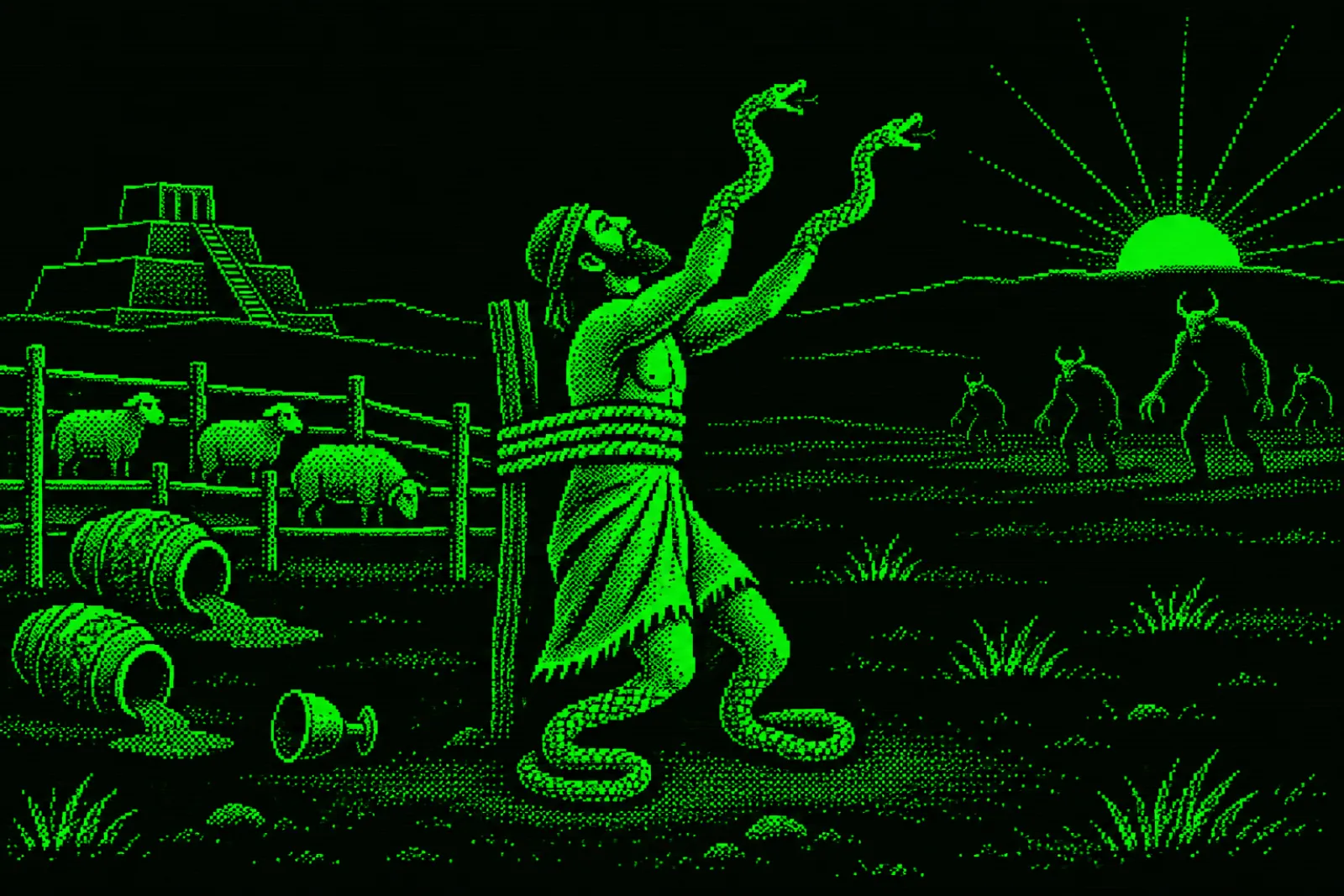
He tells her the dream: rushes rising, a single reed shaking its head, a twin reed parted, a tree shooting up, water poured on his embers, the churn uncovered, the cup knocked from its peg, his staff gone, a bird of prey taking a lamb, a falcon a sparrow, the churns lying overturned, “Dumuzid was not alive”. She reads it line by line as his death and her own mourning. Then the galla come, the netherworld’s constables, two men each from five cities, who eat nothing, drink nothing and take no bribes. Ĝeštinana will not betray him for a river of water or a field of grain; his friend does. Three times they bind him, three times he begs Utu the sun god, Inana’s brother, to change his hands and feet so that he can escape, first to Kubireš, then to the house of Old Woman Belili, then to his sister’s sheepfold. In the sheepfold the galla go in one after another, and the dream comes true.
The English is translated from ETCSL’s composite text, word by word, and compared with ETCSL’s English and Pascal Attinger’s French, with its apparatus of the copies; Bendt Alster’s edition of 1972 was not reached. The copies differ, and the notes give the variants that change the story: in one tablet Dumuzid’s hands and feet become a snake’s, not a gazelle’s, in his second escape; in another he goes to his sister before Belili; one ends with seven galla instead of five. A few lines are broken (79–82, 98–102, 136–137, 245) and are translated as far as the signs go.
Each numbered line gives the Sumerian first: the original script, then the same words in Latin letters. Our English is underneath. Tap a dotted word for its meaning, and Note for our comment on the line; our comments are in the right margin.
Dumuzid’s lament
- 1-3
𒊮𒂵𒉌 𒀀𒅆 𒅎𒋛 𒂔𒂠 𒁀𒊏𒌓𒁺 / 𒄨 𒊮𒂵𒉌 𒀀𒅆 𒅎𒋛 𒂔𒂠 𒁀𒊏𒌓𒁺 / 𒀭𒌉𒍣 𒊮𒂵𒉌 𒀀𒅆 𒅎𒋛 𒂔𒂠 𒁀𒊏𒌓𒁺
šag₄-ga-ni er₂ im-si edin edin: open country, steppe · ePSD2 ba-ra-e₃ / ĝuruš šag₄-ga-ni er₂ im-si edin edin: open country, steppe · ePSD2 ba-ra-e₃ / dumu-zid dumu-zid: Dumuzid, the shepherd, husband of Inana · ePSD2 šag₄-ga-ni er₂ im-si edin edin: open country, steppe · ePSD2 ba-ra-e₃
His heart filled with tears; he went out to the edin: open country, steppe. The young man's heart filled with tears; he went out to the steppe. dumu-zid: Dumuzid, the shepherd, husband of Inana's heart filled with tears; he went out to the steppe.
Note on line 1-3
Literally ’tears filled his heart’. The first line is the title by which an Old Babylonian library catalogue from Ur lists the poem; ETCSL marks the Nippur and Louvre catalogue entries as uncertain. - 4
𒉺 𒄘𒈾 𒈬𒌦𒁲𒇲 𒄿𒇻 𒈬𒌦𒁺𒁺
ĝidru ĝidru: sceptre, staff · ePSD2 gu₂-na mu-un-di-la₂ i-lu i-lu: lament, (sad) song · ePSD2 mu-un-du-du
His ĝidru: sceptre, staff hung at his neck, and he went about i-lu: lament, (sad) song:
Note on line 4
One copy has ‘his shepherd’s staff’. - 5-6
𒄿𒇻 𒃻𒅆𒁳 𒄿𒇻 𒃻𒅆𒁳 𒂔 𒄿𒇻 𒃻𒅆𒁳 / 𒂔 𒄿𒇻 𒃻𒅆𒁳 𒆹 𒅗 𒃻𒅆𒁳
i-lu i-lu: lament, (sad) song · ePSD2 ĝar-u₃ i-lu i-lu: lament, (sad) song · ePSD2 ĝar-u₃ edin edin: open country, steppe · ePSD2 i-lu i-lu: lament, (sad) song · ePSD2 ĝar-u₃ / edin edin: open country, steppe · ePSD2 i-lu i-lu: lament, (sad) song · ePSD2 ĝar-u₃ ambar ambar: marsh · ePSD2 inim ĝar-u₃
"Raise a lament, raise a lament, steppe, raise a lament! Steppe, raise a lament! ambar: marsh, raise a cry!
- 7-8
𒀠𒈜 𒀀𒇉𒁕 𒄌 𒄿𒇻 𒃻𒅆𒁳 / 𒉈𒍝𒍝 𒀀𒇉𒁕 𒅗 𒃻𒅆𒁳 𒂼𒈬 𒅗 𒃶𒅎𒈨
al-lub id₂-da girid₂ i-lu i-lu: lament, (sad) song · ePSD2 ĝar-u₃ / bi₂-za-za id₂-da inim ĝar-u₃ ama-ĝu₁₀ inim ḫe₂-em-me
Crab of the river, … raise a lament! Frog of the river, raise a cry! My mother will call out for me,
Note on line 7-8
girid₂ is of unknown meaning (ePSD2 lists it also as ’to wail?’). Attinger, after Veldhuis, takes girid₂ i-lu together as ’lament’ (n. 7). - 9
𒂼𒈬 𒀭𒁍𒌉𒈬 𒅗 𒃶𒅎𒈨
ama-ĝu₁₀ dur7-tur dur7-tur: Durtur, Dumuzid's mother (also Turtur) · ePSD2 inim ḫe₂-em-me
my mother, my dur7-tur: Durtur, Dumuzid's mother (also Turtur), will call out for me,
Note on line 9
Durtur (also Turtur, Duttur) is Dumuzid’s mother. - 10-11
𒂼𒈬 𒃻 𒐊𒀀𒀭 𒅗 𒃶𒅎𒈨 / 𒂼𒈬 𒃻 𒌋𒀀𒀭 𒅗 𒃶𒅎𒈨
ama-ĝu₁₀ niĝ₂ 5-am₃ inim ḫe₂-em-me / ama-ĝu₁₀ niĝ₂ 10-am₃ inim ḫe₂-em-me
my mother will call out for my five things, my mother will call out for my ten things.
Note on line 10-11
Literally ‘my five things … my ten things’. Attinger takes them as what Dumuzid used to bring her. - 12-13
𒌓𒁕 𒌓 𒂦𒄀𒈬 𒉡𒌦𒍪 / 𒂔 𒂼 𒌋𒅗𒈬 𒅗 𒈬𒂊𒉈𒍪𒌦
ud-da ud ug₅-ge-ĝu₁₀ nu-un-zu / edin edin: open country, steppe · ePSD2 ama ugu-ĝu₁₀ inim mu-e-de₃-zu-un
If she does not know the day I die, you, steppe, can tell it to the mother who bore me.
Note on line 12-13
Attinger reads ‘if anyone does not know that I am about to die, steppe, you can tell him, as my mother would’. - 14
𒊩𒆪 𒌉𒁕𒈬𒁶 𒀀𒅆𒈬 𒃶𒋁𒋁
nin₉ ban₃-da-ĝu₁₀-gin₇ er₂-ĝu₁₀ ḫe₂-še₈-še₈
Like my little sister, may you weep for me!"
The dream
- 15-16
𒌓 𒌋𒄞𒂊 𒁀𒈿 𒌓 𒌋𒄞𒂊 𒁀𒈿 𒉺𒇻 𒌓 𒌋𒄞𒂊 𒁀𒈿 / 𒉺𒇻 𒌓 𒌋𒄞𒂊 𒁀𒈿𒁶 𒈠𒊬𒉈 𒁀𒈿
ud ul ul: distant time (ETCSL); joy, bud (ePSD2); 'flowers' (Attinger) · ePSD2 ba-nu₂ ud ul ul: distant time (ETCSL); joy, bud (ePSD2); 'flowers' (Attinger) · ePSD2 ba-nu₂ sipad sipad: shepherd · ePSD2 ud ul ul: distant time (ETCSL); joy, bud (ePSD2); 'flowers' (Attinger) · ePSD2 ba-nu₂ / sipad sipad: shepherd · ePSD2 ud ul ul: distant time (ETCSL); joy, bud (ePSD2); 'flowers' (Attinger) · ePSD2 ba-nu₂-gin₇ ma-mu2 ma-mu2: dream · ePSD2 ba-nu₂
He lay down ul: distant time (ETCSL); joy, bud (ePSD2); 'flowers' (Attinger), he lay down among the flowers, the sipad: shepherd lay down among the flowers. As the shepherd lay down among the flowers, he lay down to ma-mu2: dream.
Note on line 15-16
ud ul-e is ‘among the flowers’ (Attinger, n. 15); ETCSL has ‘in ancient times’, the reading of one copy, which Attinger takes as a reinterpretation, though he calls the sense unclear, perhaps metaphorical. Three copies have ’to lament’ instead. The scene is the shepherd’s sleep in the open. - 17
𒄿𒅎𒍣 𒈠𒊬𒁕 𒄿𒅎𒁍𒇻𒌓𒆵 𒅆𒁳𒁲𒂵𒀀𒀭
i-im-zig₃ ma-mu2 ma-mu2: dream · ePSD2 bu-luḫ bu-luḫ: to shudder, tremble · ePSD2 u₃-sa₂-ga-am₃
He sprang up: a dream! He bu-luḫ: to shudder, tremble: it was sleep!
- 18
𒅆𒉌 𒋗 𒉈𒅔𒆥 𒃻𒈨𒃻 𒋤𒂵𒀀𒀭
igi-ni šu bi₂-in-kiĝ₂ niĝ2-me-ĝar niĝ2-me-ĝar: silence; stupor · ePSD2 sug₄-ga-am₃
He rubbed his eyes; a niĝ2-me-ĝar: silence; stupor filled him.
Note on line 18
Literally ‘he searched his eyes with his hand; silence was full’. Attinger: ‘un profond silence régnait’; ETCSL ‘he was terrified’. - 19-20
𒁺𒈬𒌦𒍢𒂗 𒁺𒈬𒌦𒍢𒂗 𒊩𒆪𒈬 𒁺𒈬𒌦𒍢𒂗 / 𒀭𒃾𒀭𒈾𒈬 𒁺𒈬𒌦𒍢𒂗 𒊩𒆪𒈬 𒁺𒈬𒌦𒍢𒂗
tum₂-mu-un-ze₂-en tum₂-mu-un-ze₂-en nin₉-ĝu₁₀ tum₂-mu-un-ze₂-en / ĝeštin-an-na ĝeštin-an-na: Ĝeštinana, 'Vine of Heaven', Dumuzid's sister · ePSD2 tum₂-mu-un-ze₂-en nin₉-ĝu₁₀ tum₂-mu-un-ze₂-en
"Bring her, bring her, bring my sister! Bring my ĝeštin-an-na: Ĝeštinana, 'Vine of Heaven', Dumuzid's sister, bring my sister!
Note on line 19-20
Ĝeštinana’s name means ‘Vine of Heaven’ (or ‘of An’). - 21
𒁾𒊬 𒅎 𒍪𒈬 𒁺𒈬𒌦𒍢𒂗 𒊩𒆪𒈬 𒁺𒈬𒌦𒍢𒂗
dub-sar dub-sar: scribe · ePSD2 im im: clay; tablet · ePSD2 zu-ĝu₁₀ tum₂-mu-un-ze₂-en nin₉-ĝu₁₀ tum₂-mu-un-ze₂-en
Bring my dub-sar: scribe who knows im: clay; tablet, bring my sister!
Note on line 21
Literally ‘who knows clay’: the tablets. - 22
𒈜 𒇷𒁺 𒍪𒈬 𒁺𒈬𒌦𒍢𒂗 𒊩𒆪𒈬 𒁺𒈬𒌦𒍢𒂗
nar en₃-du zu-ĝu₁₀ tum₂-mu-un-ze₂-en nin₉-ĝu₁₀ tum₂-mu-un-ze₂-en
Bring my singer who knows songs, bring my sister!
- 23
𒇽𒌉𒁕 𒊮 𒅗𒈠 𒍪𒈬 𒁺𒈬𒌦𒍢𒂗 𒊩𒆪𒈬 𒁺𒈬𒌦𒍢𒂗
lu₂-ban₃-da šag₄ inim-ma zu-ĝu₁₀ tum₂-mu-un-ze₂-en nin₉-ĝu₁₀ tum₂-mu-un-ze₂-en
Bring my clever girl who knows the heart of words, bring my sister!
Note on line 23
lu₂-ban₃-da, ’little one, child’. ‘The heart of words’ is what lies inside speech; Attinger: ’le fond des choses’. - 24
𒌝𒈠 𒊮 𒈠𒊬𒁕 𒍪𒈬 𒁺𒈬𒌦𒍢𒂗 𒊩𒆪𒈬 𒁺𒈬𒌦𒍢𒂗
um-ma um-ma: old woman; experienced, wise woman · ePSD2 šag₄ ma-mu2 ma-mu2: dream · ePSD2 zu-ĝu₁₀ tum₂-mu-un-ze₂-en nin₉-ĝu₁₀ tum₂-mu-un-ze₂-en
Bring my um-ma: old woman; experienced, wise woman who knows the heart of ma-mu2: dream, bring my sister!
Note on line 24
um-ma is ‘old woman, wise woman’, the same word as the title of Old Woman Belili, in whose house Dumuzid later hides. - 25
I will bur2: to release, loosen; to interpret (a dream) my dream to her."
Note on line 25
bur₂ is ’to loosen, release’, and with a dream ’to interpret’: a dream is untied by its reader. - 26
𒈠𒊬𒁕 𒊩𒆪𒈬 𒈠𒊬𒁕 𒊮 𒈠𒊬𒁕𒂷
ma-mu2 ma-mu2: dream · ePSD2 nin₉-ĝu₁₀ ma-mu2 ma-mu2: dream · ePSD2 šag₄ ma-mu₂-da-ĝa₂
"A dream, my sister! A dream! In the heart of my dream:
Note on line 26
Attinger: ‘au plus profond de mon rêve’. - 27
𒌑𒍤𒆸 𒈠𒊏𒍣𒍣 𒌑𒍤𒆸 𒈠𒊏𒊬𒊬
numun2 numun2: alfalfa grass, rush · ePSD2 ma-ra-zi-zi numun2 numun2: alfalfa grass, rush · ePSD2 ma-ra-mu₂-mu₂
numun2: alfalfa grass, rush were rising up for me, rushes kept growing for me;
- 28
𒄀 𒀸 𒆕𒂊 𒊕 𒈠𒊏𒀭𒉺𒄀
gi gi: reed · ePSD2 dili du₃-e saĝ ma-[ra-an]-sag₃-ge
a single gi: reed was shaking its head at me;
- 29
𒄀 𒀸𒀸 𒆕𒂊 𒀸 𒈠𒊏𒀭𒁁𒁺
gi gi: reed · ePSD2 dili-dili du₃-e dili ma-ra-an-ba₉-re₆
a twin reed: one stalk was being parted from me;
Note on line 29
gi dili-dili, a reed of single stalks paired; Attinger ‘un roseau à deux tiges’. - 30
𒄑𒊺𒉪𒊏 𒄑 𒀭𒁶 𒉎𒁉 𒈠𒊏𒀭𒍣𒂵
{ĝiš}tir-ra ĝiš an-gin₇ ni₂-bi ma-ra-an-zig₃-[ga]
in the forest a tree, tall as heaven, rose up by itself over me;
Note on line 30
ni₂-bi, ‘by itself’ (Attinger, n. 26): a tree shoots up at once. - 31
𒉈𒄯 𒆬𒂷 𒀀 𒈬𒁕𒀭𒌤
ne-mur ne-mur: glowing charcoal, embers · ePSD2 kug-ĝa₂ a mu-da-an-de₂
water was poured on my holy ne-mur: glowing charcoal, embers;
Note on line 31
One copy has ‘my holy brazier’. - 32
𒂁𒌼 𒆬𒂷 𒂅𒁉 𒁀𒊏𒀭𒁁𒁺
šakir3 šakir3: churn · ePSD2 kug-ĝa₂ TUN3 TUN3: an unidentified part of the churn; 'cover' (Alster) · ePSD2 ba-ra-an-ba₉-re₆
the TUN3: an unidentified part of the churn; 'cover' (Alster) of my holy šakir3: churn was taken off;
Note on line 32
TUN₃ is an unidentified part of the churn that can be removed or broken; Alster proposed ‘cover’, Shehata ‘protective cover?’ (Attinger, n. 30). - 33
𒄑𒀭𒍝𒄠 𒆬𒈬 𒄑𒆕𒋫 𒇲𒀀 𒄑𒆕𒋫 𒁀𒊏𒀭𒋛𒅅
an-za-am an-za-am: a drinking vessel · ePSD2 kug-ĝu₁₀ gag gag: peg · ePSD2 la₂-a gag gag: peg · ePSD2 ba-ra-an-si-[ig]
my holy an-za-am: a drinking vessel, hanging from its peg, was knocked off its peg;
- 34
𒄑𒈠𒉡𒈬 𒌑𒄖 𒈬𒁕𒀭𒌤
ma-nu ma-nu: willow wood; staff of that wood · ePSD2 u₂-gu mu-da-an-de₂
my ma-nu: willow wood; staff of that wood vanished from me;
Note on line 34
ma-nu is willow wood (ePSD2); here it is the staff of line 4. - 35
𒀭𒊩𒌆𒇥𒌋𒌋𒄷𒋫𒂊 𒂷 𒇻𒅗 𒃢 𒋗 𒁀𒉌𒅁𒋾
nin-ninna2-ta nin-ninna2-ta: a bird of prey, the harrier · ePSD2 ĝa₂ udu-ka sila₄ šu ba-ni-ib-ti
a nin-ninna2-ta: a bird of prey, harrier? took a lamb from the sheep-house;
- 36
𒊨𒆕𒄷𒂊 𒄀 𒁾𒁀𒈾𒅗 □𒄷 𒋗 𒁀𒉌𒅁𒋾
sur2-du3 sur2-du3: falcon · ePSD2 gi gi: reed · ePSD2 dub-ba-na-ka buru5 buru5: sparrow; small birds · ePSD2 šu ba-ni-ib-ti
a sur2-du3: falcon took a buru5: sparrow; small birds on the reed fence;
- 37
𒈧𒍚𒁕𒈬 □ 𒍝𒆳𒁉 𒅖𒊏 𒈠𒊏𒀭𒁍𒂊
maš₂-ud₅-da-ĝu₁₀ sun₄ za-gin3 za-gin3: lapis lazuli; lustrous, dark blue · ePSD2 saḫar-ra ma-ra-an-gid₂-e
my billy goats were dragging their za-gin3: lapis lazuli; lustrous, dark blue beards in the dust for me;
- 38
𒇻□𒈬 𒀉 𒄥𒄥𒊏𒁉 𒆠 𒈠𒊏𒀊𒄯𒄯𒊑
udu-utua₂-ĝu₁₀ a₂ gur-gur-ra-bi ki ḫur ḫur: to scratch, tear, lacerate · ePSD2
my rams were scratching the earth with their thick legs for me;
- 39-40
𒂁𒌼 𒉌𒂉𒂉 𒂵 𒉡𒌦𒌤 / 𒀭𒍝𒄠 𒉌𒂉𒂉 𒀭𒌉𒍣 𒉡𒋾 𒁦 𒆤𒇲𒀀𒀭 𒀠𒆕
šakir3 šakir3: churn · ePSD2 i₃-dur₂-dur₂ ga nu-un-de₂ / an-za-am an-za-am: a drinking vessel · ePSD2 i₃-dur₂-dur₂ dumu-zid dumu-zid: Dumuzid, the shepherd, husband of Inana · ePSD2 nu-til₃ amaš amaš: sheepfold · ePSD2 lil2 lil2: wind, breeze; ghost · ePSD2 al-du₃
the churns lay on their sides, no milk was poured; the drinking cups lay on their sides; Dumuzid was not alive; the amaš: sheepfold was given to the lil2: wind, breeze; ghost."
Note on line 39-40
amaš lil₂-la₂ al-du₃, literally ’the sheepfold is made (of) wind’. lil₂ is ‘wind’ and ‘ghost’ (ePSD2): ETCSL ‘haunted’, Attinger ‘vouée à l’abandon’. The dreamer sees his own death and names himself in the third person. The sister reads the dream
- 41
𒀭𒃾𒀭𒈾𒆤 𒀭𒌉𒍣 𒈬𒌦𒈾𒉌𒅁𒄄𒄄
ĝeštin-an-na ĝeštin-an-na: Ĝeštinana, 'Vine of Heaven', Dumuzid's sister · ePSD2 dumu-zid dumu-zid: Dumuzid, the shepherd, husband of Inana · ePSD2 mu-un-na-ni-ib-gi₄-gi₄
Ĝeštinana answered Dumuzid:
- 42-43
𒋀𒈬 𒈠𒊬𒍪 𒉡𒊷𒊷 𒉆𒈠𒀭𒁔𒂊 / 𒀭𒌉𒍣 𒈠𒊬𒍪 𒉡𒊷𒊷 𒉆𒈠𒀭𒁔𒂊
šeš-ĝu₁₀ ma-mu2 ma-mu2: dream · ePSD2 nu-sag₉-sag₉ bur2 bur2: to release, loosen; to interpret (a dream) · ePSD2 / dumu-zid dumu-zid: Dumuzid, the shepherd, husband of Inana · ePSD2 ma-mu2 ma-mu2: dream · ePSD2 nu-sag₉-sag₉ bur2 bur2: to release, loosen; to interpret (a dream) · ePSD2
"My brother, your dream is not good; do not make me bur2: to release; to interpret (a dream) it! Dumuzid, your dream is not good; do not make me interpret it!
Note on line 42-43
nam-ma-an-bur₂-e, a negative wish: ’let it not be interpreted to me’. Attinger: ‘si seulement il ne fallait pas l’expliquer!’ - 44-45
𒌑𒍤𒆸 𒈠𒊏𒀭𒍣𒍣 𒌑𒍤𒆸 𒈠𒊏𒀭𒊬𒊬 / 𒊓𒄤 □𒋫 𒈠𒊏𒀭𒍣𒂵
numun2 numun2: alfalfa grass, rush · ePSD2 ma-ra-an-zi-zi numun2 numun2: alfalfa grass, rush · ePSD2 ma-ra-an-mu₂-mu₂ / sa-gaz sa-gaz: robber, murderer · ePSD2 šubtum₆-ta ma-ra-an-zig₃-ga
The rushes rising up for you, the rushes growing for you: sa-gaz: robber, murderer will rise against you from their ambush.
- 46-47
𒄀 𒀸 𒆕𒂊 𒊕 𒈠𒊏𒀭𒉺𒄀 / 𒂼 𒌋𒅗𒍪 𒊕 𒈠𒊏𒀭𒉺𒄀
gi gi: reed · ePSD2 dili du₃-e saĝ ma-ra-an-sag₃-ge / ama ugu-zu saĝ ma-ra-an-sag₃-ge
The single reed shaking its head at you: the mother who bore you will shake her head at you.
- 48-49
𒄀 𒀸𒀸 𒆕𒂊 𒀸 𒈠𒊏𒀭𒁁𒁺 / 𒂷𒂊 𒅆𒁳 𒍝𒂊 𒀸 𒈠𒊏𒀭𒁁𒁁𒁺
gi gi: reed · ePSD2 dili-dili du₃-e dili ma-ra-an-ba₉-re₆ / ĝe₂₆-e u₃ za-e dili ma-ra-an-bad-ba₉-re₆
The twin reed, one stalk parted from you: you and I, one will be parted from you.
Note on line 48-49
Attinger: ’toi et moi, nous serons écartés l’un de l’autre'. - 50-51
𒄑𒊺𒉪𒊏 𒄑 𒀭 𒉎𒁉 𒈠𒊏𒀭𒍣𒍣 / 𒇽 𒅆𒌨𒅅𒂊 𒄿𒍣𒀀 𒅎𒈬𒂊𒉌𒆪𒁉
{ĝiš}tir-ra ĝiš an ni₂-bi ma-ra-an-zi-zi / lu₂ ḫul-ĝal₂-e iz-zi iz-zi: wall; (Attinger) wave · ePSD2 im-mu-e-ni-dab₅-be₂
The tree in the forest, tall as heaven, rising up by itself over you: an evil man will seize you iz-zi: wall; (Attinger) wave.
Note on line 50-51
ETCSL takes i-zi as ‘wall’; Attinger reads it as ‘wave’ (‘un méchant t’emportera dans une vague’), which answers the tree that shoots up at once. - 52-53
𒉈𒄯 𒆬𒍪 𒀀 𒈬𒁕𒀭𒌤 / 𒁦 𒂍 𒋛𒂵 𒁀𒂊𒉈𒂷𒂷
ne-mur ne-mur: glowing charcoal, embers · ePSD2 kug-zu a mu-da-an-de₂ / amaš amaš: sheepfold · ePSD2 e₂ sig₉-ga ba-e-de₃-ĝa₂-ĝa₂
Water poured on your holy coals: the sheepfold will become a house of silence.
- 54-55
𒂁𒌼 𒆬𒍪 𒂅𒁉 𒈠𒊏𒀭𒁁𒁺 / 𒇽 𒅆𒌨𒅅𒂊 𒋗𒈾 𒁀𒂊𒉌𒅔𒆭𒆭
šakir3 šakir3: churn · ePSD2 kug-zu TUN3 TUN3: an unidentified part of the churn; 'cover' (Alster) · ePSD2 ma-ra-an-ba₉-re₆ / lu₂ ḫul-ĝal₂-e šu-na ba-e-ni-in-ku₄-ku₄
The cover of your holy churn taken off for you: an evil man will take you into his hands.
Note on line 54-55
Literally ‘will make you enter his hand’. - 56-57
𒀭𒍝𒄠 𒆬 𒄑𒆕𒋫 𒇲𒀀 𒄑𒆕𒋫 𒁀𒊏𒀭𒋛𒅅 / 𒄭𒌒 𒂼 𒌋𒅗𒍝𒋫 𒁀𒊏𒊒𒁍𒉈
an-za-am an-za-am: a drinking vessel · ePSD2 kug gag gag: peg · ePSD2 la₂-a gag gag: peg · ePSD2 ba-ra-an-si-ig / dub3 dub3: knee, lap · ePSD2 ama ugu-za-ta ba-ra-šub-bu-de₃
The holy drinking cup hanging from its peg, knocked off its peg: you will fall from the dub3: knee, lap of the mother who bore you.
Note on line 56-57
du₁₀-ub, ‘knee, lap’. - 58-59
𒄑𒈠𒉡𒍪 𒌑𒄖 𒈬𒌦𒁕𒀭𒌤 / 𒋼𒇲𒂊 𒉈 𒉈𒊏𒊏𒀀𒀭
ma-nu ma-nu: willow wood; staff of that wood · ePSD2 u₂-gu mu-un-da-an-de₂ / gal5-la2 gal5-la2: policeman, constable; a demon of the netherworld · ePSD2 izi bi₂-ra-ra-am₃
Your staff vanishing from you: the gal5-la2: policeman, constable; a demon of the netherworld will set fire to it.
Note on line 58-59
Some copies have ‘will strike the thing’, one ‘will strike (it) hard’, glossed in Akkadian ‘he will kill him’. The galla are the netherworld’s constables, who arrest the dead: the word also means ‘policeman’ (ePSD2). - 60-61
𒀭𒊩𒌆𒇥𒌋𒌋𒄷𒋫𒂊 𒂷 𒇻𒅗 𒃢 𒋗 𒁀𒉌𒅁𒋾 / 𒇽 𒅆𒌨𒅅𒂊 𒋼𒍪 𒈠𒊏𒀭𒉺𒄀
nin-ninna2-ta nin-ninna2-ta: a bird of prey, the harrier · ePSD2 ĝa₂ udu-ka sila₄ šu ba-ni-ib-ti / lu₂ ḫul-ĝal₂-e te-[zu ma-ra]-an-sag₃-ge
The bird of prey taking a lamb from the sheep-house: an evil man will strike your cheek.
Note on line 60-61
One copy: ‘an evil man will fall upon the sheep-house’. - 62-63
𒊨𒆕𒄷𒂊 𒄀 𒁾𒁀𒀭𒅗 □ 𒋗 𒁀𒉌𒅁𒋾 / 𒋼𒇲 𒃲𒂊 𒂷 𒇻𒋫 𒀀𒀭𒈬𒂊𒊑𒇯𒁺𒇯𒁺
sur2-du3 sur2-du3: falcon · ePSD2 gi gi: reed · ePSD2 dub-ba-an-ka buru5 buru5: sparrow; small birds · ePSD2 šu ba-ni-ib-ti / gal5-la2 gal5-la2: policeman, constable; a demon of the netherworld · ePSD2 gal-e ĝa₂ udu-ta am₃-mu-e-re-ed₃-ed₃
The falcon taking a sparrow on the reed fence: the big galla will come down from the sheep-house.
Note on line 62-63
Copies differ: ‘come out’, and ‘from the sheepfold and pen’. - 64-65
𒂁𒌼 𒉌𒂉𒂉 𒂵 𒉡𒌦𒌤 𒀭𒍝𒄠 𒉌𒂉𒂉 𒀭𒌉𒍣 𒉡𒌦𒋾 𒁦 𒆤𒇲 𒀀𒀭𒆕 / 𒋗𒍪 𒋗𒆕𒀀 𒁀𒂊𒆪 𒀉𒍪 𒀉𒇲𒂊 𒁀𒂊𒇲
šakir3 šakir3: churn · ePSD2 i₃-[dur₂]-dur₂ [ga nu-un-de₂] an-za-am an-za-am: a drinking vessel · ePSD2 i₃-dur₂-dur₂ dumu-zid dumu-zid: Dumuzid, the shepherd, husband of Inana · ePSD2 nu-un-til₃ amaš amaš: sheepfold · ePSD2 lil2 lil2: wind, breeze; ghost · ePSD2 am₃-du₃ / šu-zu šu-du3 šu-du3: handcuff, manacle · ePSD2 ba-e-dab₅] a₂-zu a2-la2 a2-la2: fetter, arm-bond · ePSD2 ba-e-la₂
The churns lying on their sides, no milk poured, the drinking cups lying on their sides, Dumuzid not alive, the sheepfold given to the wind: your hands will be seized in šu-du3: handcuff, manacle, your arms will be bound in a2-la2: fetter, arm-bond.
- 66-67
𒈧𒍚𒁕𒍪 □ 𒍝𒆳𒁉 𒅖𒊏 𒈠𒊏𒀭𒁍𒂊 / 𒋠𒈬 𒈥𒋽𒁶 𒀭𒈾 𒈠𒊏𒆸𒆸𒂊
maš₂-ud₅-da-zu sun₄ za-gin3 za-gin3: lapis lazuli; lustrous, dark blue · ePSD2 saḫar-ra ma-ra-an-gid₂-e / siki-ĝu₁₀ mar-uru5 mar-uru5: tempest, storm · ePSD2 an-na ma-ra-ni₁₀-ni₁₀-e
Your billy goats dragging their lapis-dark beards in the dust for you: my hair will whirl in the sky for you like a mar-uru5: tempest, storm.
- 68-69
𒇻□𒍪 𒀉 𒄥𒄥𒊏𒁉 𒆠 𒈠𒊏𒀊𒄯𒄯𒊑 / 𒋗𒋛𒈬 𒄑𒁑 𒌆𒁶 𒋼 𒈠𒊏𒀊𒄯𒄯𒊑
udu-utua₂-zu a₂ gur-gur-ra-bi ki ḫur ḫur: to scratch, tear, lacerate · ePSD2 / šu-si-ĝu₁₀ {ĝiš}bulug taškarin taškarin: box tree, boxwood · ePSD2 te ḫur ḫur: to scratch, tear, lacerate · ePSD2
Your rams scratching the earth with their thick legs for you: my fingers, needles of taškarin: box tree, boxwood, will tear my cheeks for you."
Note on line 68-69
ḫur, ’to scratch, tear’. The mourner gouges her own face with her nails. On the mound
- 70
𒅗𒁉 𒅗𒅗𒈾 𒌝𒈠𒁕𒂷𒂷
inim-bi ka-ga₁₄-na um-ma-da-ĝa₂-ĝa₂
The words were hardly out of her mouth:
Note on line 70
Literally ’these words (were still) in the mouth’; a set phrase for an interruption, its grammar unclear but its sense plain (Attinger, n. 60). - 71-73
𒊩𒆪 𒇯𒁕 𒇯𒁺𒉈 𒊩𒆪 𒇯𒁕 𒇯𒁺𒉈 / 𒊩𒆪 𒇯𒁕 𒇯𒁺𒁕𒍪𒉈 / 𒇯𒁕 𒇽𒍇𒁶 𒉆𒇯𒁺𒁕𒉆
nin₉ du6 du6: (ruin) mound · ePSD2 ed₃-bi₂ nin₉ du6 du6: (ruin) mound · ePSD2 ed₃-[bi₂] / nin₉ du6 du6: (ruin) mound · ePSD2 ed₃-da-zu-[ne] / du6 du6: (ruin) mound · ePSD2 lu₂-ulu₃-gin₇ nam-ed₃-da-[nam]
"Sister, go up onto the du6: (ruin) mound! Sister, go up onto the mound! Sister, when you go up onto the mound, do not go up onto the mound like an ordinary person:
- 74-75
𒊮𒍝 𒁇𒍝 𒅆𒁳𒈬𒉌𒄯 / 𒌆𒍝 𒍮𒍝 𒅆𒁳𒈬𒉌𒄯
šag₄-za bar-za ḫur ḫur: to scratch, tear, lacerate · ePSD2 / tug₂-za ḫaš2 ḫaš2: lower body, abdomen; thigh; crotch · ePSD2 ḫur ḫur: to scratch, tear, lacerate · ePSD2
ḫur: to scratch, tear, lacerate your heart and your skin, tear your clothes and your ḫaš2: lower body, abdomen; thigh; crotch!
Note on line 74-75
One copy has ‘your hair’ for ‘your heart’. bar is ‘outside’, the body’s surface; ETCSL reads ’liver’. Attinger, following copies U′ and D″, reads zi ‘pull off’ for the verb and siki ‘wool’ (n. 62–63): ‘having pulled off the wool on your body and the garment over your thighs’. These lines are the mourner’s laceration of lines 69 and 242–244, with the same verb. - 76-78
𒊩𒆪 𒇯𒁕 𒇯𒁺𒉈 / 𒊩𒆪 𒇯𒁕 𒇯𒁺𒁕𒍪𒉈 / 𒇯𒁕 𒅆 𒅍𒆷𒀊
nin₉ du6 du6: (ruin) mound · ePSD2 ed₃-bi₂ / nin₉ du6 du6: (ruin) mound · ePSD2 ed₃-da-[zu-ne] / du6 du6: (ruin) mound · ePSD2 igi il₂-la-[ab]
Sister, go up onto the mound! Sister, when you go up onto the mound, look out from the mound!
- 79
𒀀𒀭𒈠𒀭𒍼 𒀚 𒁄 𒉆𒇽𒍇𒆤𒉈
am₃-ma{?}-an-gig lipiš lipiš: inner body, innards; heart; rage · ePSD2 bal bal: to turn over; to pour (a libation) · ePSD2 nam-lu₂-ulu₃-[ke₄-ne]
Hateful are they, who turn the lipiš: inner body, innards; heart; rage of humankind.
Note on line 79
lipiš bal, ’to turn the innards’. ETCSL: ’the evil ……, hated by men’. The copies differ widely in lines 79–82, and Attinger (n. 69) reconstructs a refrain from them: ‘He is unhealthy, he comes here: it is for Dumuzi. The magur boat on the river comes here: it is for Dumuzi’, and so on for the handcuffs and the neck-stock. - 80
𒄑𒈣𒋽 𒀀𒇉𒁕 □ □ □
ma2-gur8 ma2-gur8: processional boat, barge · ePSD2 id₂-da AM₃ X [...]
A ma2-gur8: processional boat, barge of the river … […]
Note on line 80
Broken. - 81-82
𒄑 𒋗𒅗 𒋗 𒀀𒀭𒈪𒅔𒂃 / 𒄑 𒄘𒅗 𒁀𒀭𒅆𒊒 𒁔𒁔𒁉 𒇽 𒉡𒍪
ĝiš šu-ka šu du8 du8: to spread; to caulk (ePSD2) · ePSD2 / ĝiš gu₂-ka pad3 pad3: to find; to name, reveal · ePSD2 bur2 bur2: to release, loosen; to interpret (a dream) · ePSD2 lu₂ nu-zu]
The wood for the hands: they hold it in their hands. The wood for the neck: it is found on them, and no one knows how to loosen it."
Note on line 81-82
The galla carry hand-stocks and neck-stocks. ETCSL: ’they are identified (?) from the wood to bind the neck’. Attinger takes du₈ as ’to spread’ a cloth: ‘a cloth covers the handcuffs … a linen cloth has been spread on the neck-stock’. - 83-84
𒂼𒀭𒃾𒀭𒈾𒆤 𒇯𒁕 𒁀𒀭𒇯𒁺 𒅆 𒁀𒀭𒅍 □ □ / 𒀭𒃾𒀭𒈾𒆤 𒄘 𒌝𒈠𒁕𒁍
ama-ĝeštin-an-na ama-ĝeštin-an-na: Mother Ĝeštinana; Attinger 'the venerable' · ePSD2 du6 du6: (ruin) mound · ePSD2 ba{?}-[an-ed₃ igi] ba-[an]-il₂ X [...] / ĝeštin-an-na ĝeštin-an-na: Ĝeštinana, 'Vine of Heaven', Dumuzid's sister · ePSD2 gu₂ um-ma-da-[gid₂]
ama-ĝeštin-an-na: Mother Ĝeštinana; Attinger 'the venerable' went up onto the mound and raised her eyes […]; Ĝeštinana stretched out her neck.
- 85
𒈠𒆷𒂵𒉌 𒀭𒃾𒆕𒆕𒂊 𒀜 □
ma-la ma-la: girlfriend · ePSD2 ĝeštin-du3-du3 ĝeštin-du3-du3: Ĝeštindudu, Ĝeštinana's girlfriend · ePSD2 ad{?} [...]
Her ma-la: girlfriend ĝeštin-du3-du3: Ĝeštindudu, Ĝeštinana's girlfriend gave her counsel […]:
Note on line 85
ad, ‘voice; counsel’. Lines 85–88 differ from copy to copy; Attinger reads the friend’s name as AnBUdudu and has her point something out to a second woman, Absura. - 86
𒄘 𒆟𒁕 𒃲𒃲 𒈬𒌦𒅆𒁻𒌋𒌋𒌋 □ 𒈬𒌦𒅆𒁻𒌋𒌋𒌋
gu₂{?} keše₂-da gal-gal mu-un-ši-re₇-[eš ...] mu-un-ši-[re₇-eš]
"The big ones who bind the neck are coming for him; […] they are coming for him!"
Note on line 86
Attested in one copy only; Attinger (n. 73) takes it as probably an interpolation. - 87
𒀜 𒃻𒊏 𒈠𒆷𒈬 𒈬𒅆□𒌋𒌋𒌋
ad ĝar-ra ma-la ma-la: girlfriend · ePSD2 mu-ši-re₇re{?}-[eš]
"My girlfriend who gives counsel, are they coming for him?"
- 88
𒄘 𒆟𒁕 𒂷𒂊 𒈬𒉌𒅔𒅆𒊒𒉈
gu₂ keše₂-da ĝe₂₆-e pad3 pad3: to find; to name, reveal · ePSD2
"I will point out to you those who bind the neck!"
Note on line 88
pad₃, ’to find; to name, reveal’; it is the word for ‘reveal his whereabouts’ that follows. - 89-90
𒋀𒈬 𒋼𒇲𒍪 𒅎𒅆𒁻𒌋𒌋𒌋 𒊕 𒌑𒀀 𒊒𒅆𒁳 / 𒀭𒌉𒍣 𒋼𒇲𒍪 𒅎𒅆𒁻𒌋𒌋𒌋 𒊕 𒌑𒀀 𒊒𒅆𒁳
šeš-ĝu₁₀ gal5-la2 gal5-la2: policeman, constable; a demon of the netherworld · ePSD2 im-ši-re₇-[eš saĝ u₂-a šub-u₃] / dumu-zid dumu-zid: Dumuzid, the shepherd, husband of Inana · ePSD2 gal5-la2 gal5-la2: policeman, constable; a demon of the netherworld · ePSD2 im-ši-re₇-eš saĝ u₂-[a šub-u₃]
"My brother, your galla are coming for you: drop your head in the grass! Dumuzid, your galla are coming for you: drop your head in the grass!"
Note on line 89-90
‘To drop the head in the grass’ is the usual reading of saĝ u₂-a šub: to lie hidden. Attinger (n. 80) points to grammatical problems with it and suggests the phrase may be a set term for a hiding place. - 91-94
𒊩𒆪𒈬 𒊕 𒌑𒀀 𒂵𒀭𒊒 𒆠𒈬 𒈾𒀊𒅆𒊒𒉈 / 𒊕 𒌑 𒌉𒌉𒇲 𒂵𒀭𒊒 𒆠𒈬 𒈾𒀊𒅆𒊒𒉈 / 𒊕 𒌑 𒃲𒃲𒆷 𒂵𒀭𒊒 𒆠𒈬 𒈾𒀊𒅆𒊒𒉈 / 𒂊 𒀀𒊏𒇷𒅗 𒂵𒀭𒊒 𒆠𒈬 𒈾𒀊𒅆𒊒𒉈
nin₉-ĝu₁₀ saĝ u₂-a ga-an-šub ki-ĝu₁₀ pad3 pad3: to find; to name, reveal · ePSD2 / saĝ u₂ di₄-di₄-la₂ ga-an-šub ki-ĝu₁₀ pad3 pad3: to find; to name, reveal · ePSD2 / saĝ u₂ gal-gal-la ga-an-šub ki-ĝu₁₀ pad3 pad3: to find; to name, reveal · ePSD2 / eg₂ a-ra-li a-ra-li: Arali, the steppe of Dumuzid's herds; the netherworld · ePSD2 ga-an-šub ki-ĝu₁₀ pad3 pad3: to find; to name, reveal · ePSD2
"My sister, I will drop my head in the grass: do not pad3: to find; to name, reveal where I am! I will drop my head in the short grass: do not reveal where I am! I will drop my head in the tall grass: do not reveal where I am! I will drop into the ditches of a-ra-li: Arali, the steppe of Dumuzid's herds; the netherworld: do not reveal where I am!"
Note on line 91-94
eg₂ a-ra-li, ’the dykes of Arali’. Arali is the steppe where Dumuzid grazes his flocks, and a name for the netherworld (ePSD2 ’earth, land; underworld’): his last hiding place is already the land of the dead. - 95-97
𒌓 𒆠𒍪 𒀊𒅆𒊒𒉈𒂗𒈾𒀀 𒌨𒍪 𒄷𒈬𒅥𒂊 / 𒌨 𒈪 𒌨 𒉆𒉺𒇻𒁕𒍪 / 𒌨 𒂠 𒌨 𒉆𒂗𒈾𒍪 𒌨𒍪 𒄷𒈬𒅥𒂊
ud ki-zu pad3 pad3: to find; to name, reveal · ePSD2 ur ur: dog · ePSD2 ḫu-mu-gu₇-e / ur ur: dog · ePSD2 gig₂ ur ur: dog · ePSD2 nam-sipad-da-zu / ur ur: dog · ePSD2 gir₁₅ ur ur: dog · ePSD2 nam-en-na-zu ur ur: dog · ePSD2 ḫu-mu-gu₇-e
"If I reveal where you are, may your ur: dog eat me! The black dog, your shepherd's dog, the noble dog, the dog of your lordship: may your dog eat me!"
Note on line 95-97
nam-en, ’lordship, high (priestly) office’ (ePSD2). - 98
𒄑𒌆𒉿 𒈬𒌦𒊑𒄀 □ □ 𒈾𒁀 𒆪𒇷𒍪 𒊑𒂵
ĝeštug₂{?} mu-un-de₅-ge [X] X na-ba gu5-li gu5-li: friend · ePSD2 de₅-ga
She heeded […]: "… the counsel … your friend …
Note on line 98
Broken. ĝeštug₂ de₅, ’to gather the ear’, is to pay attention. Attinger reads the line differently: ‘your friend, having harvested the barley I wanted to gather for you …’. - 99
Ah, [my brother], friend, dub3-us2-sa: companion!
Note on line 99
‘My brother’ is restored. Attinger (n. 86–87) takes Ĝeštinana’s speech to end at line 98 and Dumuzid to speak from here, to his friend. - 100-102
□ □𒁶 𒈾𒀭𒌇𒉆 / □ □ □ □ 𒈪𒉌𒅔𒆥𒆥𒀀𒋫 / □𒁉𒀀 𒅗 □ □ 𒅆𒁳𒈬𒊏𒀊𒅗
[X] X-gin₇ na-[an]-tuku-nam / [X X] X X [mi-ni-in]-kiĝ₂-kiĝ₂-a-ta / X-bi-a inim X [X] u₃-mu-ra-ab-dug₄
… like … may he not have! … after they have searched … when he has told you …"
Note on line 100-102
Broken. ETCSL: ‘O my brother, may you never have a friend or comrade like ……! After the demons (?) have searched for you, ……, if he tells you ……’. In ETCSL’s reading she warns him against his friend; in Attinger’s, Dumuzid turns on the friend himself. - 103-106
𒆪𒇷𒈬 𒊕 𒌑𒀀 𒂵𒀭𒊒 𒆠𒈬 𒈾𒀊𒅆𒊒𒉈 / 𒊕 𒌑 𒌉𒌉𒇲 𒂵𒀭𒊒 𒆠𒈬 𒈾𒀊𒅆𒊒𒉈 / 𒊕 𒌑 𒃲𒃲𒆷 𒂵𒀭𒊒 𒆠𒈬 𒈾𒀊𒅆𒊒𒉈 / 𒂊 𒀀𒊏𒇷 𒂵𒀭𒊒 𒆠𒈬 𒈾𒀊𒅆𒊒𒉈
gu5-li gu5-li: friend · ePSD2 saĝ u₂-a ga-an-šub ki-ĝu₁₀ pad3 pad3: to find; to name, reveal · ePSD2 / saĝ u₂ di₄-di₄-la₂ ga-an-šub ki-ĝu₁₀ pad3 pad3: to find; to name, reveal · ePSD2 / saĝ u₂ gal-gal-la ga-an-šub ki-ĝu₁₀ pad3 pad3: to find; to name, reveal · ePSD2 / eg₂ a-ra-li a-ra-li: Arali, the steppe of Dumuzid's herds; the netherworld · ePSD2 ga-an-šub ki-ĝu₁₀ pad3 pad3: to find; to name, reveal · ePSD2
"My gu5-li: friend, I will drop my head in the grass: do not reveal where I am! I will drop my head in the short grass: do not reveal where I am! I will drop my head in the tall grass: do not reveal where I am! I will drop into the ditches of Arali: do not reveal where I am!"
- 107-109
𒌓 𒆠𒍪 𒀊𒅆𒊒𒉈𒂗𒈾𒀀 𒌨𒍪 𒄷𒈬𒅥𒂊𒂗 / 𒌨 𒈪 𒌨 𒉆𒉺𒇻𒁕𒍪 / 𒌨 𒂠 𒌨 𒉆𒂗𒈾𒍪 𒌨𒍪 𒄷𒈬𒅥𒂗
ud ki-zu pad3 pad3: to find; to name, reveal · ePSD2 ur ur: dog · ePSD2 ḫu-mu-gu₇-e-en / ur ur: dog · ePSD2 gig₂ ur ur: dog · ePSD2 nam-sipad-da-zu / ur ur: dog · ePSD2 gir₁₅ ur ur: dog · ePSD2 nam-en-na-zu ur ur: dog · ePSD2 ḫu-mu-gu₇-en
"If I reveal where you are, may your dog eat me! The black dog, your shepherd's dog, the noble dog, the dog of your lordship: may your dog eat me!"
The galla come
- 110
𒈗𒊏 𒇽 𒈬𒅆𒁻𒌋𒌋𒌋𒀀𒀭 𒇽 𒄭𒄭𒀀𒈨𒌋𒌋𒌋
lugal lugal: king · ePSD2 lu₂ mu-<ši>-re₇-eš-am₃ lu₂ ḫi-ḫi-a-me-eš
Those who came for the lugal: king were a mixed crowd:
Note on line 110
lu₂ ḫi-ḫi-a, ‘mixed people’. The galla are drawn from five cities (lines 119–128). - 111
𒌑 𒉡𒍪𒈨𒌋𒌋𒌋 𒀀 𒉡𒍪𒈨𒌋𒌋𒌋
u₂ nu-zu-me-eš a nu-zu-me-eš
they know no food, they know no water,
Note on line 111
u₂, ‘plant, grass; food’. - 112-113
𒍥 𒁾𒁾𒁀 𒉡𒅥𒈨𒌋𒌋𒌋 / 𒀀 𒁄𒁄𒀀 𒉡𒅘𒅘𒈨𒌋𒌋𒌋
zid2 zid2: flour · ePSD2 dub-dub-ba nu-gu₇-me-eš / a bal bal: to turn over; to pour (a libation) · ePSD2 nu-na₈-na₈-me-eš
they eat no zid2: flour, they drink no bal: to turn over; to pour (a libation),
Note on line 112-113
Scattered flour and poured water are offerings (Attinger: ’en sacrifice’, ’en libation’): the offerings made to the dead. Dumuzid asks Old Woman Belili for exactly these (lines 207–209). - 114
𒃻𒊮𒀀 𒃻 𒄭𒂵 𒋗 𒉡𒁍𒄿𒈨𒌋𒌋𒌋
kadra kadra: greeting gift, present; bribe · ePSD2 niĝ₂ dug₃-ga šu nu-gid₂-i-me-eš
they accept no pleasant kadra: greeting gift, present; bribe,
Note on line 114
kadra is a greeting gift and a bribe: the galla cannot be bought off. - 115
𒌫 𒁮 𒃻 𒄭𒄀𒂠 𒉡𒋛𒄀𒈨𒌋𒌋𒌋
ur2 ur2: root, base; lap, loins · ePSD2 dam niĝ₂ dug₃-ge-eš₂ nu-sig₉-ge-me-eš
they lay open no wife's ur2: root, base; lap, loins for pleasure,
Note on line 115
ur₂ dam, ‘a wife’s lap, loins’. They do not have sex with wives. ETCSL softens it to ‘who do not enjoy a wife’s embraces’; Attinger has ’they do not strip the garment from a wife’s voluptuous lap’. - 116
𒌉 𒃻 𒆯𒆯𒁕 𒉈 𒉡𒋢𒌒𒁀𒈨𒌋𒌋𒌋
dumu niĝ₂ ku₇-ku₇-da ne su-ub su-ub: to rub; with ne, to kiss · ePSD2
they never su-ub: to rub; with ne, to kiss sweet children,
- 117
𒋧𒊬 𒃻 𒋀𒀀𒀭 𒅗 𒉡𒁺𒁍𒈨𒌋𒌋𒌋
šum2 šum2: garlic · ePSD2 niĝ₂ sis-am₃ zu₂ nu-gub-bu-me-eš
they never set their teeth in šum2: garlic, the bitter thing,
- 118
𒇽 𒄩 𒉡𒅥𒈨𒌋𒌋𒌋 𒇽 𒂵𒆜𒊬 𒉡𒅥𒈨𒌋𒌋𒌋
lu₂ ku6 ku6: fish · ePSD2 nu-gu₇-me-eš lu₂ ga-raš ga-raš: leek · ePSD2 nu-gu₇-me-eš
they eat no ku6: fish, they eat no ga-raš: leek.
- 119
𒈗𒊏 𒌉 𒌓𒉣𒆠𒀀 𒁹𒁹𒀀𒀭 𒈬𒌦𒅆𒁻𒊑𒌋𒌋𒌋
lugal lugal: king · ePSD2 dumu adab adab: Adab, a city of Sumer · ePSD2 2-am₃ mu-un-ši-re₇{re}-eš
Two men of adab: Adab, a city of Sumer came for the king.
- 120-121
𒄑𒌑𒄉 𒀀 𒋗𒊒𒊌𒂵 𒄑𒅆𒆕 𒀀 𒇥𒁀 / 𒋗𒉌 𒄑𒍎𒊏 𒅴𒉌 𒂍𒃲𒆷
kiši16 kiši16: acacia; a thorny plant · ePSD2 a šu-ru-ug-ga {ĝiš}dala₂ a ḫab₂-ba / šu-ni banšur banšur: (offering) table · ePSD2 eme-ni e2-gal e2-gal: palace · ePSD2
kiši16: acacia; a thorny plant of dried-up water, spikes of stinking water: 'his hand on the banšur: (offering) table, his tongue in the e2-gal: palace'.
Note on line 120-121
ETCSL marks line 121 as an allusion to a proverb. Attinger (n. 106) reads it of guests who eat at the table and slander in the palace. - 122-123
𒈗𒊏 𒌉 𒌓𒆵𒆠 𒁹𒁹𒀀𒀭 𒈬𒌦𒅆𒁻𒊑𒌋𒌋𒌋 / □ 𒉏□𒈨𒁕 𒄘𒁀 𒇲𒀀
lugal lugal: king · ePSD2 dumu akšak akšak: Akšak, a city of Sumer · ePSD2 2-am₃ mu-un-ši-re₇{re}-eš / X nim-AḪ.ME-da gu₂-ba la₂-a
Two men of akšak: Akšak, a city of Sumer came for the king, with … hung on their necks.
Note on line 122-123
nim-AḪ.ME is of unknown meaning. - 124-125
𒈗𒊏 𒌉 𒀕𒆠𒂵 𒁹𒁹𒀀𒀭 𒈬𒌦𒅆𒁻𒊑𒌋𒌋𒌋 / 𒄑𒆪 𒊕 𒋻𒀀 𒌫𒊏 𒇲𒀀
lugal lugal: king · ePSD2 dumu unug unug: Unug (Uruk), Inana's city · ePSD2 2-am₃ mu-un-ši-re₇{re}-eš / tukul tukul: weapon, club · ePSD2 saĝ kud-a ur2 ur2: root, base; lap, loins · ePSD2 la₂-a
Two men of unug: Unug (Uruk), Inana's city came for the king, with head-cutting tukul: weapon, club hung at their loins.
Note on line 124-125
saĝ kud, ’to cut the head’; ETCSL ‘head-smashing clubs’. ETCSL’s English joins each description to the next city’s line, but each belongs with the line before it. - 126-127
𒈗𒊏 𒌉 𒋀𒀕𒆠𒈠 𒁹𒁹𒀀𒀭 𒈬𒌦𒅆𒁻𒊑𒌋𒌋𒌋 / 𒌆 𒊿𒈾 𒋼𒀀𒊏 𒅅𒆷
lugal lugal: king · ePSD2 dumu urim2 urim2: Urim (Ur) · ePSD2 2-am₃ mu-un-ši-re₇{re}-eš / tug₂ šen-na kar-ra ĝal₂-la
Two men of urim2: Urim (Ur) came for the king, their clothes pure, set out on the quay.
Note on line 126-127
šen, ‘pure, shining’; one copy has dan₃, ‘clean’. - 128-129
𒈗𒊏 𒌉 𒂗𒆤𒆠 𒁹𒁹𒀀𒀭 𒈬𒌦𒅆𒁻𒊑𒌋𒌋𒌋 / 𒇽 𒇽𒊏 𒁽𒈠𒉌𒅁 𒁦 𒂍𒉣𒇬𒂠 𒈬𒌦𒅆𒁻𒊑𒌋𒌋𒌋
lugal lugal: king · ePSD2 dumu nibru nibru: Nibru (Nippur), city of Enlil · ePSD2 2-am₃ mu-un-ši-re₇{re}-eš / lu₂ lu₂-ra im₂-ma-ni-ib amaš amaš: sheepfold · ePSD2 {e₂}tur₃-še₃ <mu-un>-ši-re₇{re}-eš
Two men of nibru: Nibru (Nippur), city of Enlil came for the king. Crying 'Man, run after man!', they came to the sheepfold and the pen.
- 130
𒀭𒃾𒀭𒈾𒆤 𒁦 𒉣𒇬𒂠 𒈬𒉌𒅔𒆪𒁉𒉈
ĝeštin-an-na ĝeštin-an-na: Ĝeštinana, 'Vine of Heaven', Dumuzid's sister · ePSD2 amaš amaš: sheepfold · ePSD2 tur₃-še₃ mu-ni-in-dab₅-be₂-ne
They seized Ĝeštinana at the sheepfold and the pen.
- 131-132
𒀀𒇉 𒀀𒁀 𒈬𒌦𒈾𒁀𒂊𒉈 𒋗 𒉡𒌝𒈠𒁍𒉈 / 𒀀𒊮 𒊺𒁀 𒈬𒌦𒈾𒁀𒂊𒉈 𒋗 𒉡𒌝𒈠𒁍𒉈
id₂ a-ba mu-un-na-ba-e-ne šu nu-[um]-ma-gid₂-de₃ / a-šag₄ še-ba mu-un-na-[ba]-e-ne šu [nu]-um-ma-gid₂-[de₃]
They offered her a river of water; she would not stretch out her hand. They offered her a field of grain; she would not stretch out her hand.
- 133-135
𒋼𒇲 𒌉𒊑 𒋼𒇲 𒄖𒆷𒊏 𒅗 𒈬𒌦𒈾𒌤𒂊 / 𒋼𒇲 𒆬𒍪 𒋼𒇲 𒋾𒆷 / 𒋼𒇲 𒃲𒁉 □𒁉 𒋾𒆷
gal5-la2 gal5-la2: policeman, constable; a demon of the netherworld · ePSD2 tur-re gal5-la2 gal5-la2: policeman, constable; a demon of the netherworld · ePSD2 gu-la-[ra gu₃ mu]-un-na-de₂-e / gal5-la2 gal5-la2: policeman, constable; a demon of the netherworld · ePSD2 kug-zu gal5-la2 gal5-la2: policeman, constable; a demon of the netherworld · ePSD2 til₃-la / gal5-la2 gal5-la2: policeman, constable; a demon of the netherworld · ePSD2 gal-bi murub₄-bi til₃-la
The little galla shouted to the big galla, the wise galla, the living galla, the big galla in the middle of them:
Note on line 133-135
til₃, ’to live’. ETCSL ’the lively demon'. - 136-137
𒆬𒍪 □ 𒁀𒀭𒁕𒄩𒇴𒈠𒁶 / □ □ □𒂠 𒁀𒀭𒄃𒁀𒁶
kug-zu [X ba]-an-da-ḫa-lam-ma-gin₇ / X X X-še₃ ba-an-gib-ba-gin₇
"Like a wise one who has … lost …, like … that lies across the way to …,
Note on line 136-137
Broken similes. - 138-139
𒊩𒆪 𒆠 𒋀 𒀀𒀭𒈬𒌦𒅆𒊒𒉈𒀀 / 𒌓 𒌋𒄞𒇲𒋫 𒀀𒁀𒀀 𒅆 𒈪𒉌𒅔𒂃𒀀
nin₉ ki šeš pad3 pad3: to find; to name, reveal · ePSD2 / ud ul ul: distant time (ETCSL); joy, bud (ePSD2); 'flowers' (Attinger) · ePSD2 a-ba-a igi du8 du8: to spread; to caulk (ePSD2) · ePSD2
a sister revealing where her brother is: since the days of old, who has ever seen it?
Note on line 138-139
ETCSL: ‘Who since the most ancient times has ever known a sister reveal a brother’s whereabouts?’ - 140
𒂷𒉆𒈠𒀭𒍢𒂗 𒆪𒇷𒉌𒅕 𒂵𒀭𒅆𒁻𒂗𒉈𒂗
ĝa₂-nam-ma-an-ze₂-en gu5-li gu5-li: friend · ePSD2 ga-an-ši-re₇-en-de₃-en
Come, let us go to his friend!"
- 141-143
𒌓 𒉈 𒆪𒇷𒉌𒅕 / 𒀀𒇉 𒀀𒁀 𒈬𒌦𒈾𒁀𒂊𒉈 𒋗 𒀀𒀭𒈠𒁍𒉈𒂗 / 𒀀𒊮 𒊺𒁀 𒈬𒌦𒈾𒁀𒂊𒉈 𒋗 𒀀𒀭𒈠𒁍𒉈
ud ne gu5-li gu5-li: friend · ePSD2 / id₂ a-ba mu-un-na-ba-e-ne šu am₃-ma-gid₂-de₃-«en» / a-šag₄ še-ba mu-un-na-ba-e-ne šu am₃-ma-gid₂-de₃
Then, to his friend: they offered him a river of water, and he stretched out his hand; they offered him a field of grain, and he stretched out his hand.
- 144
𒆪𒇷𒈬 𒊕 𒌑𒀀 𒃶𒂗𒊒 𒆠𒉌 𒁀𒊏𒍪
gu5-li gu5-li: friend · ePSD2 saĝ u₂-a ḫe₂-en-šub ki-ni ba-ra-zu
"My friend has dropped his head in the grass; I don't know where he is."
Note on line 144
ḫe₂-en-šub … ba-ra-zu: the friend states the hiding place and denies knowing it, in one breath. - 144Aone manuscript adds
𒀭𒌉𒍣𒉈 𒊕 𒌑𒀀 𒃶𒂗𒊒 𒆠𒉌 𒁀𒊏𒍪
dumu-zid dumu-zid: Dumuzid, the shepherd, husband of Inana · ePSD2 saĝ u₂-a ḫe₂-en-šub ki-ni ba-ra-zu
"[Dumuzid] has dropped his head in the grass; I don't know where he is."
- 145
𒀭𒌉𒍣𒉈 𒊕 𒌑𒀀 𒈬𒉌𒅔𒆥𒆥𒉈 𒉡𒈬𒌦𒅆𒊒𒉈
dumu-zid dumu-zid: Dumuzid, the shepherd, husband of Inana · ePSD2 saĝ u₂-a mu-ni-in-kiĝ₂-kiĝ₂-ne pad3 pad3: to find; to name, reveal · ePSD2
They searched for Dumuzid's head in the grass; they did not find him.
- 146-147
𒊕 𒌑 𒌉𒌉𒇲 𒃶𒂗𒊒 𒆠𒉌 𒁀𒊏𒍪 / 𒀭𒌉𒍣𒉈 𒊕 𒌑 𒌉𒌉𒇲 𒈬𒉌𒅔𒆥𒆥𒉈 𒉡𒈬𒌦𒅆𒊒𒉈
saĝ u₂ di₄-di₄-la₂ ḫe₂-en-šub ki-ni ba-ra-zu / dumu-zid dumu-zid: Dumuzid, the shepherd, husband of Inana · ePSD2 saĝ u₂ di₄-di₄-la₂ mu-ni-in-kiĝ₂-kiĝ₂-ne pad3 pad3: to find; to name, reveal · ePSD2
"He has dropped his head in the short grass; I don't know where he is." They searched for Dumuzid's head in the short grass; they did not find him.
- 148-149
𒊕 𒌑 𒃲𒃲𒆷 𒃶𒂗𒊒 𒆠𒉌 𒁀𒊏𒍪 / 𒀭𒌉𒍣𒉈 𒊕 𒌑 𒃲𒃲𒆷 𒈬𒉌𒅔𒆥𒆥𒉈 𒉡𒈬𒌦𒅆𒊒𒉈
saĝ u₂ gal-gal-la ḫe₂-en-šub ki-ni ba-ra-zu / dumu-zid dumu-zid: Dumuzid, the shepherd, husband of Inana · ePSD2 saĝ u₂ gal-gal-la mu-ni-in-kiĝ₂-kiĝ₂-ne pad3 pad3: to find; to name, reveal · ePSD2
"He has dropped his head in the tall grass; I don't know where he is." They searched for Dumuzid's head in the tall grass; they did not find him.
- 150
𒂊 𒀀𒊏𒇷𒅗 𒃶𒂗𒊒 𒆠𒉌 𒁀𒊏𒍪
eg₂ a-ra-li a-ra-li: Arali, the steppe of Dumuzid's herds; the netherworld · ePSD2 ḫe₂-en-šub ki-ni ba-ra-zu
"He has dropped into the ditches of Arali; I don't know where he is."
- 151
𒀭𒌉𒍣𒉈 𒂊 𒀀𒊏𒇷𒅗 𒈬𒉌𒅔𒆪𒁉𒉈
dumu-zid dumu-zid: Dumuzid, the shepherd, husband of Inana · ePSD2 eg₂ a-ra-li a-ra-li: Arali, the steppe of Dumuzid's herds; the netherworld · ePSD2 mu-ni-in-dab₅-be₂-ne
They seized Dumuzid in the ditches of Arali.
- 152
𒀭𒌉𒍣𒉈 𒀀𒅆 𒅎𒈠𒀭𒅆𒊒 𒅊𒅊 𒉌𒂷𒂷
dumu-zid dumu-zid: Dumuzid, the shepherd, husband of Inana · ePSD2 er₂ pad3 pad3: to find; to name, reveal · ePSD2 šex(SIG₇)-šex(SIG₇) i₃-ĝa₂-ĝa₂
Dumuzid burst into tears and wept and wept:
Note on line 152
šex(SIG₇)-šex(SIG₇) ĝar, ’to set up weeping'. - 153
𒌷𒀀 𒊩𒆪𒈬 𒈬𒌦𒋾𒇷𒂗 𒆪𒇷𒈬 𒈬𒌦𒂦𒄀𒂗
iri-a nin₉-ĝu₁₀ mu-un-til₃-le-en gu5-li gu5-li: friend · ePSD2 mu-un-ug₅-ge-en
"In the city my sister keeps me alive; my friend kills me.
Note on line 153
mu-un-til₃-le-en … mu-un-ug₅-ge-en: ‘makes me live … makes me die’. - 154-155
𒌉 𒊩𒆪𒂊 𒋻𒀀 𒃶𒂗𒁺 𒇽 𒉈 𒃶𒋢𒌒𒁉 / 𒌉 𒆪𒇷 𒋻𒀀 𒃶𒂗𒁺 𒇽 𒉈 𒈾𒀭𒋢𒌒𒁉
dumu nin₉-e sila-a ḫe₂-en-gub lu₂ ne su-ub su-ub: to rub; with ne, to kiss · ePSD2 / dumu gu5-li gu5-li: friend · ePSD2 sila-a ḫe₂-en-gub lu₂ ne su-ub su-ub: to rub; with ne, to kiss · ePSD2
Let a sister's child who stands in the street be su-ub: to rub; with ne, to kiss by passers-by; let no one kiss a friend's child who stands in the street!"
Note on line 154-155
A blessing on sisters’ children and a curse on friends’. ETCSL and Attinger (n. 131) make the sister the one who brings the child out: ‘If a sister leaves (?) a child in the street, someone should kiss it’. First escape: the gazelle
- 156
𒇽 𒁀𒀭𒆸𒆸𒉈𒌋𒌋𒌋 𒀀𒆸 𒁀𒉌𒅔𒂃𒍑
lu₂ ba-an-niĝin₂-niĝin₂-ne-eš a-niĝin₂ du8 du8: to spread; to caulk (ePSD2) · ePSD2
The men surrounded him; they du8: to spread; to caulk (ePSD2) the standing water.
Note on line 156
a-niĝin₂, ‘surrounding water, pool’. ETCSL ‘drained the standing waters’; Attinger (n. 133) leaves the verb untranslated and cites Jaques, ’they let loose an encircling water against him’. - 157-158
𒄖 𒈬𒌦𒈾𒋩𒊒𒉈 𒊓 𒈬𒌦𒈾𒆟𒁕𒉈 / 𒄖 𒍣𒅁𒉺𒌈 𒈬𒌦𒈾𒋩𒊒𒉈
gu gu: cord, net; flax thread · ePSD2 mu-un-na-sur-ru-ne sa sa: net · ePSD2 mu-un-na-keše₂-da-[ne] / gu gu: cord, net; flax thread · ePSD2 zi-ip-pa-tum mu-un-na-sur-ru-ne
They twisted gu: cord, net; flax thread for him, they knotted a sa: net for him; they twisted zippatum cord for him;
Note on line 157-158
zi-ip-pa-tum: ePSD2 ‘wool (from the tail); cord’. Attinger (n. 135) cites ‘a plant fibre’ (Mayer), ‘a strong cord’ (Peterson), ‘wool or yarn’ (Schrakamp); ETCSL ‘reed hawser’. - 159
𒄑𒈠𒉡 𒈬𒌦𒈾𒄯𒊒𒉈
ma-nu ma-nu: willow wood; staff of that wood · ePSD2 ḫur ḫur: to scratch, tear, lacerate · ePSD2
they ḫur: to scratch, draw; to carve ma-nu: willow wood; neckstock for him.
Note on line 159
ḫur, the verb of lines 38, 69 and 244; Attinger ‘ils incisent’, calling ‘cut’ ad hoc (n. 136). ePSD2 lists ’neckstock’ among the senses of ma-nu. - 160-161
𒇽 𒅆𒈾𒆤 𒃻 𒈬𒌦𒊏𒊏 / 𒇽 𒋞𒈾𒆤 𒁹 𒌑𒁶 𒈬𒌦𒁔𒊑
lu₂ igi-na-ke₄ niĝ₂ mu-un-ra-ra / lu₂ murgu-na-ke₄ 1 kuš₃-gin₇ bur2 bur2: to release, loosen; to interpret (a dream) · ePSD2
The man in front of him struck at him; the man behind him released him like a cubit.
Note on line 160-161
1 kuš₃-gin₇ mu-un-bur₂-re, ‘released like one cubit’. Attinger: ’le … comme une coudée’. - 162-163
𒋗𒉌 𒋗𒆕𒀀 𒁀𒂊𒆪𒁉 / 𒀉𒉌 𒀉𒇲𒀀 𒁀𒂊𒇲𒂊
šu-ni šu-du3 šu-du3: handcuff, manacle · ePSD2 ba-e-dab₅-be₂ / a₂-ni a2-la2 a2-la2: fetter, arm-bond · ePSD2 ba-e-la₂-e
His hands were seized in handcuffs; his arms were bound in fetters.
- 164
𒄨𒂊 𒀭𒌓𒊏 𒀭𒂠 𒋗𒉌 𒁀𒉌𒅔𒍣
ĝuruš-e utu utu: Utu, the sun god, Inana's brother · ePSD2 an-še₃ šu-ni ba-ni-in-zig₃
The young man raised his hands to heaven, to utu: Utu, the sun god, Inana's brother:
- 165
𒀭𒌓 𒊩𒌓𒂔𒈬𒈨𒂗 𒂷𒂊 𒊩𒍑𒁲𒍪𒈨𒂗
utu utu: Utu, the sun god, Inana's brother · ePSD2 murum5 murum5: member of the wife's family · ePSD2 ĝe₂₆-e mussa mussa: son-in-law (ePSD2) · ePSD2
"Utu, you are my murum5: member of the wife's family, I am your mussa: son-in-law (ePSD2)!
Note on line 165
Utu is Inana’s brother; Dumuzid calls on him as kin by marriage. - 166
𒂍𒀭𒈾𒂠 𒌑 𒅍𒊒𒈨𒂗
e2-an-na e2-an-na: Eana, 'House of Heaven', Inana's temple in Unug · ePSD2 u₂ gur₃-ru-me-[en]
I am the one who carries food to e2-an-na: Eana, 'House of Heaven', Inana's temple in Unug!
- 167
𒀕𒆠𒂠 𒃻𒊩𒍑𒁲 𒀝𒀀𒈨𒂗
unug unug: Unug (Uruk), Inana's city · ePSD2 niĝ2-mussa niĝ2-mussa: betrothal gift · ePSD2 ak-a-me-en
I am the one who brought the niĝ2-mussa: betrothal gift to Unug!
- 168
I am the one who kisses the holy nundum: lip!
- 169
𒄭 𒆬𒂵 𒄭 𒀭𒈹𒅗 𒂊𒉈 𒁲 𒅗𒂵𒈨𒂗
dub3 dub3: knee, lap · ePSD2 kug-ga dub3 dub3: knee, lap · ePSD2 inana inana: Inana, goddess of love and war, Dumuzid's wife · ePSD2 e-ne e-ne: pleasure, play; with dug₄, to play; cf. e-ne-di dug₄, to have sex · ePSD2 di dug₄-ga-[me-en]
I am the one who e-ne: pleasure, play; with dug₄, to play; cf. e-ne-di dug₄, to have sex on the holy dub3: knee, lap, on the knees of inana: Inana, goddess of love and war, Dumuzid's wife!
Note on line 169
e-ne di dug₄: ePSD2 gives ene dug ’to play’ and enedi dug ’to have sexual intercourse’. ETCSL ‘dances on the holy knees’ softens it, and Attinger has ‘me suis délassé’, ‘relaxed’, on the splendid thighs. The play on the goddess’s lap is sex. - 170-171
𒋗𒈬 𒋗 𒈦𒆕 𒅆𒁳𒈬𒂊𒉌𒋧 / 𒄊𒈬 𒄊 𒈦𒆕 𒅆𒁳𒈬𒂊𒉌𒋧
šu-ĝu₁₀ šu maš-da3 maš-da3: gazelle · ePSD2 u₃-mu-e-ni-[sig₁₀] / ĝiri₃-ĝu₁₀ ĝiri₃ maš-da3 maš-da3: gazelle · ePSD2 u₃-mu-e-ni-[sig₁₀]
Turn my hands into maš-da3: gazelle hands, turn my feet into gazelle's feet,
- 172
𒋼𒇲𒋼𒇲𒈬 𒂵𒁀𒁕𒀭𒍢𒅕
gal5-la2 gal5-la2: policeman, constable; a demon of the netherworld · ePSD2 ga-ba-da-an-ze₂-er
let me slip away from my galla!
Note on line 172
ze₂-er, ’to tear out; to slip away’. Attinger (n. 142) finds the line in only one of ten copies. - 173
𒆪𒄑𒉆𒊑𒌋𒌋𒌋𒀸𒁕𒊑𒌋𒌋𒌋 𒍣𒈬 𒂵𒁀𒅆𒁺
KU-bir5-re-eš-dil-da-re-eš KU-bir5-re-eš-dil-da-re-eš: Kubireš-dildareš, a place · ePSD2 zi zi: life, breath · ePSD2 ga-ba-ši-de₆
Let me carry my zi: life, breath away to KU-bir5-re-eš-dil-da-re-eš: Kubireš-dildareš, a place!"
Note on line 173
The place is otherwise unknown; ETCSL reads its first sign as KU. - 174-175
𒀭𒌓 𒀀𒅆𒈾 𒋗 𒁀𒅆𒅔𒋾 / 𒇽 𒃣𒀀𒁶 𒃣 𒁀𒉌𒅔𒀝
utu utu: Utu, the sun god, Inana's brother · ePSD2 er₂-na šu ba-ši-in-ti / lu₂ arḫuš-a-gin₇ arḫuš ba-[ni-in-ak]
Utu accepted his tears; like a merciful man he showed him mercy.
Note on line 174-175
One copy adds ‘as a gift’: the tears as a greeting gift, the thing the galla refuse. Line 175 is in one copy only (Attinger, n. 144). - 176-177
𒋗𒉌 𒋗 𒈦𒆕 𒅆𒁳𒈬𒉌𒅔𒋧 / 𒄊𒉌 𒄊 𒈦𒆕 𒅆𒁳𒈬𒉌𒅔𒋧
šu-ni šu maš-da3 maš-da3: gazelle · ePSD2 u₃-mu-ni-in-sig₁₀ / ĝiri₃-ni ĝiri₃ maš-da3 maš-da3: gazelle · ePSD2 u₃-mu-ni-in-sig₁₀
He turned his hands into gazelle's hands, he turned his feet into gazelle's feet.
- 178-179
𒋼𒇲𒋼𒇲𒂊𒉈 𒁀𒁕𒀭𒍢𒅕 / 𒆪𒄑𒉆𒊑𒌋𒌋𒌋𒀸𒁕𒊑𒌋𒌋𒌋 𒍣𒉌 𒁀𒅆𒅔𒁺
gal5-la2 gal5-la2: policeman, constable; a demon of the netherworld · ePSD2 ba-da-an-ze₂-er / KU-bir5-re-eš-dil-da-re-eš KU-bir5-re-eš-dil-da-re-eš: Kubireš-dildareš, a place · ePSD2 zi zi: life, breath · ePSD2 ba-ši-in-de₆
He slipped away from his galla and carried his life away to Kubireš-dildareš.
Note on line 178-179
The first clause is in two copies only (Attinger, n. 146). - 180
𒋼𒇲𒉈𒉈 𒈬𒉌𒅔𒆥𒆥𒉈 𒉡𒈬𒌦𒅆𒊒𒉈
gal5-la2 gal5-la2: policeman, constable; a demon of the netherworld · ePSD2 mu-ni-in-[kiĝ₂-kiĝ₂-ne] pad3 pad3: to find; to name, reveal · ePSD2
The galla searched for him; they did not find him.
- 181
𒂷𒉆𒈠𒀭𒍢𒂗 𒆪𒄑𒉆𒊑𒌋𒌋𒌋 𒂵𒀭𒅆𒁻𒊑𒉈𒂗
ĝa₂-nam-ma-an-ze₂-en KU-{ĝiš}bir₅-re-[eš] ga-an-ši-re₇{re}-de₃-en
"Come, let us go to Kubireš!"
- 181Aone manuscript adds
□ □ □ 𒊓𒁖𒁶 □
[...] X X sa-par₃-gin₇ [...]
[…] … like a net […]
Second escape: the house of Old Woman Belili
- 182
𒀭𒌉𒍣 𒆪𒄑𒉆𒊑𒌋𒌋𒌋 𒈬𒉌𒅔𒆪𒁉𒉈
dumu-zid dumu-zid: Dumuzid, the shepherd, husband of Inana · ePSD2 KU-{ĝiš}bir₅-re-eš mu-ni-in-dab₅-be₂-ne
They seized Dumuzid at Kubireš.
- 183
𒇽 𒁀𒀭𒆸𒆸𒉈𒌋𒌋𒌋 𒀀𒆸 𒁀𒉌𒅔𒂃𒍑
lu₂ ba-an-niĝin₂-niĝin₂-ne-eš a-niĝin₂ du8 du8: to spread; to caulk (ePSD2) · ePSD2
The men surrounded him; they let loose the standing water.
- 184-186
𒄖 𒈬𒌦𒈾𒋩𒊒𒉈 𒊓 𒈬𒌦𒈾𒆟𒁕𒉈 / 𒄖 𒍣𒅁𒉺𒌈 𒈬𒌦𒈾𒋩𒊒𒉈 / 𒄑𒈠𒉡 𒈬𒌦𒈾𒄯𒊒𒉈
gu gu: cord, net; flax thread · ePSD2 mu-un-na-sur-ru-ne sa sa: net · ePSD2 mu-un-na-keše₂-da-[ne] / gu gu: cord, net; flax thread · ePSD2 zi-ip-pa-tum mu-un-na-sur-ru-ne / ma-nu ma-nu: willow wood; staff of that wood · ePSD2 ḫur ḫur: to scratch, tear, lacerate · ePSD2
They twisted cord for him, they knotted a net for him; they twisted zippatum cord for him; they carved manu-wood for him.
- 187-188
𒇽 𒅆𒈾𒆤 𒃻 𒈬𒌦𒊏𒊏 / 𒇽 𒋞𒈾𒆤 𒁹 𒌑𒁶 𒈬𒌦𒁔𒊑
lu₂ igi-na-ke₄ niĝ₂ mu-un-ra-ra / lu₂ murgu-na-ke₄ 1 kuš₃-gin₇ bur2 bur2: to release, loosen; to interpret (a dream) · ePSD2
The man in front of him struck at him; the man behind him … him like a cubit.
- 189-190
𒋗𒉌 𒋗𒆕𒀀 𒁀𒂊𒆪𒁉 / 𒀉𒉌 𒀉𒇲𒀀 𒁀𒂊𒇲𒂊
šu-ni šu-du3 šu-du3: handcuff, manacle · ePSD2 ba-e-dab₅-be₂ / a₂-ni a2-la2 a2-la2: fetter, arm-bond · ePSD2 ba-e-la₂-e
His hands were seized in handcuffs; his arms were bound in fetters.
- 191
𒄨𒂊 𒀭𒌓𒊏 𒀭𒂠 𒋗𒉌 𒁀𒉌𒅔𒍣
ĝuruš-e utu utu: Utu, the sun god, Inana's brother · ePSD2 an-še₃ šu-ni ba-ni-in-zig₃
The young man raised his hands to heaven, to Utu:
- 192-194
𒀭𒌓 𒊩𒌓𒂔𒈬𒈨𒂗 𒂷𒂊 𒊩𒍑𒁲𒍪𒈨𒂗 / 𒂍𒀭𒈾𒂠 𒌑 𒅍𒊒𒈨𒂗 / 𒀕𒆠𒂠 𒃻𒊩𒍑𒁲 𒀝𒀀𒈨𒂗
utu utu: Utu, the sun god, Inana's brother · ePSD2 murum5 murum5: member of the wife's family · ePSD2 ĝe₂₆-e mussa mussa: son-in-law (ePSD2) · ePSD2 / e2-an-na e2-an-na: Eana, 'House of Heaven', Inana's temple in Unug · ePSD2 u₂ gur₃-ru-me-en / unug unug: Unug (Uruk), Inana's city · ePSD2 niĝ2-mussa niĝ2-mussa: betrothal gift · ePSD2 ak-a-me-en
"Utu, you are my brother-in-law, I am your sister's husband! I am the one who carries food to Eana! I am the one who brought the betrothal gifts to Unug!
- 195-196
𒅻 𒆬𒄀 𒉈 𒋢𒌒𒁀𒈨𒂗 / 𒄭 𒆬𒄀 𒄭 𒀭𒈹𒆤 𒂊𒉈 𒁲 𒅗𒂵𒈨𒂗
nundum nundum: lip · ePSD2 kug-ge ne su-ub su-ub: to rub; with ne, to kiss · ePSD2 / dub3 dub3: knee, lap · ePSD2 kug-ge dub3 dub3: knee, lap · ePSD2 inana inana: Inana, goddess of love and war, Dumuzid's wife · ePSD2 e-ne e-ne: pleasure, play; with dug₄, to play; cf. e-ne-di dug₄, to have sex · ePSD2 di dug₄-ga-me-en
I am the one who kisses the holy lips! I am the one who has sex on the holy knees, on the knees of Inana!
- 197-198
𒋗𒈬 𒋗 𒈦𒆕 𒅆𒁳𒈬𒂊𒉌𒋧 / 𒄊𒈬 𒄊 𒈦𒆕 𒅆𒁳𒈬𒂊𒉌𒋧
šu-ĝu₁₀ šu maš-da3 maš-da3: gazelle · ePSD2 u₃-mu-e-[ni]-sig₁₀ / ĝiri₃-ĝu₁₀ ĝiri₃ maš-da3 maš-da3: gazelle · ePSD2 u₃-mu-e-ni-sig₁₀
Turn my hands into maš-da3: gazelle. Here one copy has muš, snake hands (one copy: snake's hands), turn my feet into gazelle's feet (one copy: snake's feet),
Note on line 197-198
The main text has maš-da₃, ‘gazelle’; one manuscript has muš-a, ‘of a snake’, in all four lines of the second escape (197–198, 201–202), and ETCSL records it again at the third (236–237); the first escape (170–177) has gazelle in every copy. Attinger (n. 149–153) gives the second-escape readings to manuscript J′ (BM 113234). In that copy Dumuzid escapes as a snake, as he does in Inana’s Descent (ETCSL 1.4.1, 373–378), where Utu turns his hands and feet into a snake’s. The two words are close in sound; whether by ear or from the Descent, a scribe wrote this escape as a snake’s. Attinger (n. 141) notes that J′ and D″ phrase the change as ‘make like gazelle’s hands’, a calque on Akkadian. - 199
𒂍 𒌝𒈠 𒀭𒁁𒇷𒇷 𒍣𒈬 𒂵𒁀𒅆𒅔𒁺
e₂ um-ma um-ma: old woman; experienced, wise woman · ePSD2 be-li-li be-li-li: Belili, a goddess · ePSD2 zi zi: life, breath · ePSD2 ga-ba-ši-in-de₆
let me carry my life away to the house of um-ma: old woman; experienced, wise woman be-li-li: Belili, a goddess!"
Note on line 199
um-ma {d}be-li-li: Belili carries the divine determinative. Belili is otherwise one of Dumuzid’s sisters, beside Ĝeštinana, but here he has to introduce himself to her (line 206); one copy, D′′, sends him to his sister first and then to Belili (Attinger, n. 151). The word um-ma is the one Dumuzid used for Ĝeštinana, his ‘wise woman who knows the heart of dreams’ (line 24). - 200
𒀭𒌓 𒀀𒅆𒈾 𒋗 𒁀𒅆𒅔𒋾
utu utu: Utu, the sun god, Inana's brother · ePSD2 er₂-na šu ba-ši-in-ti
Utu accepted his tears.
- 201-202
𒋗𒉌 𒋗 𒈦𒆕 𒅆𒁳𒈬𒉌𒅔𒋧 / 𒄊𒉌 𒄊 𒈦𒆕 𒅆𒁳𒈬𒉌𒅔𒋧
šu-ni šu maš-da3 maš-da3: gazelle · ePSD2 u₃-mu-ni-in-sig₁₀ / ĝiri₃-ni ĝiri₃ maš-da3 maš-da3: gazelle · ePSD2 u₃-mu-ni-in-sig₁₀
He turned his hands into gazelle's hands (one copy: snake's hands), he turned his feet into gazelle's feet (one copy: snake's feet).
- 203-204
𒋼𒇲𒋼𒇲𒂊𒉈 𒅎𒈠𒁕𒀭𒍢𒅕 / 𒂍 𒌝𒈠 𒀭𒁁𒇷𒇷 𒍣𒉌 𒁀𒅆𒅔𒁺
gal5-la2 gal5-la2: policeman, constable; a demon of the netherworld · ePSD2 im-ma-da-an-[ze₂-er] / e₂ um-ma um-ma: old woman; experienced, wise woman · ePSD2 be-li-li be-li-li: Belili, a goddess · ePSD2 zi zi: life, breath · ePSD2 ba-ši-in-de₆
He slipped away from his galla and carried his life away to the house of Old Woman Belili.
Note on line 203-204
Line 203 is in one copy only (Attinger, n. 155). - 205
𒂍 𒌝𒈠 𒀭𒁁𒇷𒇷𒂠 𒁀𒀭𒈾𒋼
e₂ um-ma um-ma: old woman; experienced, wise woman · ePSD2 be-li-li be-li-li: Belili, a goddess · ePSD2 ba-an-na-te
He came up to the house of Old Woman Belili.
- 206
𒌝𒈠 𒇽 𒉡𒈨𒂗 𒁮 𒀭𒊏𒈨𒂗
um-ma um-ma: old woman; experienced, wise woman · ePSD2 lu₂ nu-me-en dam diĝir diĝir: god, goddess · ePSD2
"Old woman, I am not just a man: I am the husband of a diĝir: god, goddess!
Note on line 206
lu₂ nu-me-en: ‘I am not a (mere) man’. - 207-208
𒀀 𒌒𒋫𒀭𒁄𒁄 𒀀 𒋗𒃻𒌉𒇲𒁉 𒂵𒅘 / 𒍥 𒌒𒋫𒀭𒁾𒁾 𒍥 𒋗𒃻𒌉𒇲𒁉 𒂵𒅥
a bal bal: to turn over; to pour (a libation) · ePSD2 a tukum-bi ga-naĝ / zid2 zid2: flour · ePSD2 ub-ta-an-dub-dub zid2 zid2: flour · ePSD2 tukum-bi ga-gu₇
If water is poured out, let me drink water at once! If flour is scattered, let me eat flour at once!"
Note on line 207-208
a ub-ta-an-bal … tukum-bi ga-naĝ: ‘once water has been poured, let me drink’ (Attinger, n. 157). Poured water and scattered flour are the food the galla do not eat (lines 112–113). The request is the dead man asking for his own funerary meal. - 209
𒀀 𒌒𒋫𒀭𒁄 𒍥 𒌒𒋫𒀭𒁾 𒊮𒁉𒀀 𒁀𒀭𒆪
a bal bal: to turn over; to pour (a libation) · ePSD2 zid2 zid2: flour · ePSD2 ub-ta-an-dub šag₄-bi-a ba-an-tuš
Water was poured out, flour was scattered, and he sat down among them.
Note on line 209
šag₄-bi-a, ‘in their midst’: among the water and flour (Attinger, n. 159). - 210-212
𒌝𒈠 𒂍𒋫 𒁀𒊏𒌓𒁺 / 𒌝𒈠 𒂍𒋫 𒌓𒁺𒁕𒉌 / 𒋼𒇲𒂊𒉈 𒅆 𒁀𒉌𒅔𒂃𒍑𒀀𒀭
um-ma um-ma: old woman; experienced, wise woman · ePSD2 e₂-ta ba-ra-e₃ / um-ma um-ma: old woman; experienced, wise woman · ePSD2 e₂-ta ed₂-da-ni / gal5-la2 gal5-la2: policeman, constable; a demon of the netherworld · ePSD2 igi du8 du8: to spread; to caulk (ePSD2) · ePSD2
The old woman went out of the house. As the old woman went out of the house, the galla caught sight of her.
- 213-215
𒋗𒃻𒌉𒇲𒁉 𒌓𒁕 𒌝𒈠 𒆠 𒀭𒌉𒍣 𒋾𒆷 𒉡𒌒𒍪 / 𒅆 𒉎 𒋼𒀀 𒈾𒁇𒁇𒊑 / 𒅗 𒉎 𒋼𒀀 𒈾𒌤𒌤𒂊
tukum-bi ud-da um-ma um-ma: old woman; experienced, wise woman · ePSD2 ki dumu-zid dumu-zid: Dumuzid, the shepherd, husband of Inana · ePSD2 til₃-la nu-ub-zu / igi ni₂ te-a na-bar-bar-re / gu₃ ni₂ te-a na-de₂-de₂-e
"If the old woman did not know where Dumuzid is, would she be glancing about in fear? Would she be crying out in fear?
Note on line 213-215
ETCSL takes na- as affirmative: ‘Unless the old woman is aware of Dumuzid’s whereabouts, she is indeed looking frightened!’ Attinger (n. 161) reads the lines as questions (‘pourquoi …?’), as here. - 216
𒂷𒉆𒈠𒀭𒍢𒂗 𒂍 𒌝𒈠 𒀭𒁁𒇷𒇷𒂠 𒂵𒀭𒅆𒁻𒉈𒂗
ĝa₂-nam-ma-an-ze₂-en e₂ um-ma um-ma: old woman; experienced, wise woman · ePSD2 be-li-li be-li-li: Belili, a goddess · ePSD2 ga-an-ši-re₇-de₃-en
Come, let us go to the house of Old Woman Belili!"
Third escape: the sister’s sheepfold
- 217
𒀭𒌉𒍣𒉈 𒂍 𒌝𒈠 𒀭𒁁𒇷𒇷𒂠 𒈬𒌦𒆪𒁉𒉈
dumu-zid dumu-zid: Dumuzid, the shepherd, husband of Inana · ePSD2 e₂ um-ma um-ma: old woman; experienced, wise woman · ePSD2 be-li-li be-li-li: Belili, a goddess · ePSD2 mu-un-dab₅-be₂-ne
They seized Dumuzid at the house of Old Woman Belili.
- 218
𒇽 𒁀𒀭𒆸𒆸𒉈𒌋𒌋𒌋 𒀀𒆸 𒁀𒉌𒅔𒂃𒍑
lu₂ ba-an-niĝin₂-niĝin₂-ne-eš a-niĝin₂ du8 du8: to spread; to caulk (ePSD2) · ePSD2
The men surrounded him; they let loose the standing water.
- 219-221
𒄖 𒈬𒈾𒀊𒋩𒊒𒉈 𒊓 𒈬𒌦𒈾𒆟𒁕𒉈 / 𒄖 𒍣𒅁𒉺𒌈 𒈬𒌦𒈾𒋩𒊒𒉈 / 𒄑𒈠𒉡 𒈬𒈾𒀭𒄯𒊒𒉈
gu gu: cord, net; flax thread · ePSD2 mu-na-ab-[sur-ru-ne sa sa: net · ePSD2 mu-un-na-keše₂-da-[ne] / gu gu: cord, net; flax thread · ePSD2 zi-[ip]-pa-tum [mu-un-na]-sur-[ru-ne] / ma-nu ma-nu: willow wood; staff of that wood · ePSD2 ḫur ḫur: to scratch, tear, lacerate · ePSD2
They twisted cord for him, they knotted a net for him; they twisted zippatum cord for him; they carved manu-wood for him.
- 222-223
𒇽 𒅆𒈾𒆤 𒃻 𒈬𒌦𒊏𒊏 / 𒇽 𒋞𒈾𒆤 𒁹 𒌑𒁶 𒈬𒌦𒁔𒊑
lu₂ [igi]-na-ke₄ niĝ₂ mu-[un-ra-ra] / lu₂ [murgu-na-ke₄ 1 kuš₃-gin₇ bur2 bur2: to release, loosen; to interpret (a dream) · ePSD2
The man in front of him struck at him; the man behind him … him like a cubit.
- 224-225
𒋗𒉌 𒋗𒆕𒀀 𒁀𒂊𒆪𒁉 / 𒀉𒉌 𒀉𒇲𒀀 𒁀𒂊𒇲𒂊
šu-[ni šu-du3 šu-du3: handcuff, manacle · ePSD2 ba-e]-dab₅-be₂ / a₂-[ni a2-la2 a2-la2: fetter, arm-bond · ePSD2 ba-e-la₂]-e
His hands were seized in handcuffs; his arms were bound in fetters.
- 226
𒄨𒂊 𒀭𒌓𒊏 𒀭𒂠 𒋗𒉌 𒁀𒉌𒅔𒍣
ĝuruš-[e] utu utu: Utu, the sun god, Inana's brother · ePSD2 an-še₃ šu-ni ba-ni-in-zig₃
The young man raised his hands to heaven, to Utu:
- 227-229
𒀭𒌓 𒊩𒌓𒂔𒈬𒈨𒂗 𒂷𒂊 𒊩𒍑𒁲𒍪𒈨𒂗 / 𒂍𒀭𒈾𒂠 𒌑 𒅍𒊒𒈨𒂗 / 𒀕𒆠𒂠 𒃻□𒍑□ 𒀝𒈨𒂗
utu utu: Utu, the sun god, Inana's brother · ePSD2 murum5 murum5: member of the wife's family · ePSD2 ĝe₂₆-e mussa mussa: son-in-law (ePSD2) · ePSD2 / e2-an-na e2-an-na: Eana, 'House of Heaven', Inana's temple in Unug · ePSD2 [u₂ gur₃]-ru-me-en / unug unug: Unug (Uruk), Inana's city · ePSD2 niĝ2-mussa niĝ2-mussa: betrothal gift · ePSD2 ak-me-en
"Utu, you are my brother-in-law, I am your sister's husband! I am the one who carries food to Eana! I am the one who brought the betrothal gifts to Unug!
- 230-231
𒅻 𒆬𒄀 𒉈 𒋢𒌒𒁀𒈨𒂗 / 𒄭 𒆬𒄀 𒄭 𒀭𒈹𒆤 𒂊𒉈 𒁲 𒅗𒂵𒈨𒂗
nundum nundum: lip · ePSD2 kug-ge ne su-ub su-ub: to rub; with ne, to kiss · ePSD2 / dub3 dub3: knee, lap · ePSD2 kug-ge dub3 dub3: knee, lap · ePSD2 inana inana: Inana, goddess of love and war, Dumuzid's wife · ePSD2 e-ne e-ne: pleasure, play; with dug₄, to play; cf. e-ne-di dug₄, to have sex · ePSD2 di dug₄-ga-me-en
I am the one who kisses the holy lips! I am the one who has sex on the holy knees, on the knees of Inana!
- 232-233
𒋗𒉌 𒋗 𒈦𒆕 𒅆𒁳𒈬𒉌𒅔𒋧 / 𒄊𒉌 𒄊 𒈦𒆕 𒅆𒁳𒈬𒉌𒅔𒋧
šu-ni šu maš-da3 maš-da3: gazelle · ePSD2 [u₃]-mu-ni-in-sig₁₀ / ĝiri₃-ni ĝiri₃ maš-da3 maš-da3: gazelle · ePSD2 u₃-mu-ni-in-sig₁₀
Turn my hands into gazelle's hands, turn my feet into gazelle's feet,
Note on line 232-233
ETCSL’s composite has šu-ni, ‘his hands’, here, in the narrator’s form, inside Dumuzid’s speech. - 234
𒁦 𒆬 𒁦 𒊩𒆪𒂷𒂠 𒍣𒈬 𒂵𒁀𒅆𒅔𒁺
amaš amaš: sheepfold · ePSD2 kug amaš amaš: sheepfold · ePSD2 nin₉-ĝa₂-še₃ zi zi: life, breath · ePSD2 ga-ba-ši-in-de₆
let me carry my life away to the holy sheepfold, my sister's sheepfold!"
- 235
𒀭𒌓 𒀀𒅆𒈾 𒋗 𒁀𒅆𒉌𒅔𒋾
utu utu: Utu, the sun god, Inana's brother · ePSD2 er₂-na šu ba-ši-ni-in-ti
Utu accepted his tears.
- 236-237
𒋗𒉌 𒋗 𒈦𒆕 𒅆𒁳𒈬𒉌𒅔𒋧 / 𒄊𒉌 𒄊 𒈦𒆕 𒅆𒁳𒈬𒉌𒅔𒋧
šu-ni šu maš-da3 maš-da3: gazelle · ePSD2 u₃-mu-ni-in-sig₁₀ / ĝiri₃-ni ĝiri₃ maš-da3 maš-da3: gazelle · ePSD2 u₃-mu-ni-in-sig₁₀
He turned his hands into gazelle's hands (one copy: snake's hands), he turned his feet into gazelle's feet (one copy: snake's feet).
- 238-239
𒁦 𒆬 𒁦 𒊩𒆪𒈾𒂠 𒍣𒉌 𒁀𒅆𒅔𒉐 / 𒁦 𒆬 𒁦 𒊩𒆪𒈾𒂠 𒁀𒀭𒈾𒋼
amaš amaš: sheepfold · ePSD2 kug amaš amaš: sheepfold · ePSD2 nin₉-na-še₃ zi zi: life, breath · ePSD2 ba-ši-in-tum₃ / amaš amaš: sheepfold · ePSD2 kug amaš amaš: sheepfold · ePSD2 nin₉-na-še₃ ba-an-na-te
He carried his life away to the holy sheepfold, his sister's sheepfold. He came up to the holy sheepfold, his sister's sheepfold.
- 240-241
𒀭𒃾𒀭𒈾𒆤 𒅗 𒀭𒂠 𒁀𒋼 𒅗 𒆠𒂠 𒁀𒋼 / 𒅗 𒋗 𒆸𒁉 𒀭𒌫𒊏 𒌆𒁶 𒄿𒅎𒌋𒌆 𒃰𒁶 𒄿𒅎𒁔
ĝeštin-an-na ĝeštin-an-na: Ĝeštinana, 'Vine of Heaven', Dumuzid's sister · ePSD2 gu₃ an-<še₃ ba>-te gu₃ ki-še₃ ba-te / gu₃ šu niĝin₂-bi an-ur2 an-ur2: horizon · ePSD2 tug₂-gin₇ i-im-dul gada gada: linen · ePSD2 bur2 bur2: to release, loosen; to interpret (a dream) · ePSD2
Ĝeštinana cried out to heaven, cried out to earth. The noise of her cry covered the an-ur2: horizon like a garment, spread over it like gada: linen.
- 242-244
𒅆 𒈬𒌦𒈾𒄯 𒅗 𒈬𒌦𒈾𒄯 / 𒄑𒌆𒉿 𒆠 𒅆𒂍 𒁲 𒈬𒌦𒈾𒄯 / 𒆠 𒇽𒁕 𒉡𒁲 𒍮𒃲 𒈬𒌦𒈾𒄯
igi ḫur ḫur: to scratch, tear, lacerate · ePSD2 giri17 giri17: nose · ePSD2 ḫur ḫur: to scratch, tear, lacerate · ePSD2 / ĝeštug₂ ki u₆ di ḫur ḫur: to scratch, tear, lacerate · ePSD2 / ki lu₂-da nu-di ḫaš2-gal ḫaš2-gal: thigh; with ḫur, to scratch the groin · ePSD2 ḫur ḫur: to scratch, tear, lacerate · ePSD2
She tore her eyes, she tore her giri17: nose; she tore her ears, the place of wonder; she tore her ḫaš2-gal: thigh; with ḫur, to scratch the groin, the place no one speaks of.
Note on line 242-244
ḫaš₄-gal … ḫur: ePSD2 lists the phrase as ’to scratch the groin’. ki lu₂-da nu-di, ’the place not spoken of with anyone’; Attinger: ’l’entre-jambes, (ce) lieu dont on ne parle avec personne’. ETCSL takes the two places as ‘in public’ and ‘in private’ and the part torn as her buttocks. - 245
𒋀𒈬 𒋻𒀀 𒂵𒆸𒆸 𒂷𒂊 □
šeš-ĝu₁₀ sila-a ga-[...]-niĝin₂-niĝin₂ ĝe₂₆-e [...]
"My brother, I will go round in the streets […] I […]"
Note on line 245
Broken. Attinger, from a copy that keeps the end: ‘for my brother I would go back and forth in the streets; I want to stand before him!’ - 246-248
𒋗𒃻𒌉𒇲𒁉 𒀭𒃾𒀭𒈾𒆤 𒆠 𒀭𒌉𒍣 𒋾𒆷 𒉡𒌒𒍪 / 𒅆 𒉎 𒋼𒀀 𒈾𒁇𒁇𒊑𒂗 / 𒅗 𒉎 𒋼𒀀 𒈾𒌤𒌤𒂊
tukum-bi ĝeštin-an-na ĝeštin-an-na: Ĝeštinana, 'Vine of Heaven', Dumuzid's sister · ePSD2 ki dumu-zid dumu-zid: Dumuzid, the shepherd, husband of Inana · ePSD2 til₃-la nu-[ub-zu] / igi ni₂ te-a na-bar-bar-[re]-«en» / gu₃ ni₂ te-[a] na-de₂-de₂-e
"If Ĝeštinana did not know where Dumuzid is, would she be glancing about in fear? Would she be crying out in fear?
- 249
𒂷𒉆𒈠𒀭𒍢𒂗 𒁦 𒉣𒇬𒂠 𒂵𒁀𒅆𒁺
ĝa₂-nam-ma-an-ze₂-en amaš amaš: sheepfold · ePSD2 tur₃-še₃ [ga-ba]-ši-ĝen
Come, let us go to the sheepfold and the pen!"
- 250-251
𒋼𒇲 𒁹 𒁦 𒉣𒇬𒂠 𒆭𒊏𒉌 / 𒄑𒆕𒂵𒊏 𒉈 𒁀𒉌𒅔𒊏
gal5-la2 gal5-la2: policeman, constable; a demon of the netherworld · ePSD2 1 amaš amaš: sheepfold · ePSD2 tur₃-še₃ kur₉-ra-ni / gag gag: peg · ePSD2 izi ba-[ni]-in-ra
When the first galla entered the sheepfold and the pen, he set fire to the gag: peg.
Note on line 250-251
gag is a peg; Alster reads ĝiš gag GA.RA on collation, and Attinger (n. 172) leaves it ‘…’. - 251Aone manuscript, for line 251
𒄑 𒉌 □ 𒅗 𒁀𒉌𒊏
ĜIŠ NI X gu₃ ba-ni-ra
… he set fire to …
Note on line 251A
ETCSL reads gu₃, ‘he shouted’; Attinger (n. 172), after Tinney, reads izi, ‘fire’, as in line 251. - 252-253
𒁹𒁹𒄰𒈠 𒁦 𒉣𒇬𒂠 𒆭𒊏𒉌 / 𒄑𒈠𒉡 𒉈 𒁀𒉌𒊏
2-kam-ma amaš amaš: sheepfold · ePSD2 tur₃-še₃ kur₉-ra-ni / ma-nu ma-nu: willow wood; staff of that wood · ePSD2 izi ba-ni-ra
When the second entered the sheepfold and the pen, he set fire to the staff.
- 254-255
𒐈𒄰𒈠 𒁦 𒉣𒇬𒂠 𒆭𒊏𒉌 / 𒂁𒌼 𒆬𒂵𒀀 𒂅𒁉 𒁀𒊏𒁁𒁺
3-kam-ma amaš amaš: sheepfold · ePSD2 tur₃-še₃ kur₉-ra-ni / šakir3 šakir3: churn · ePSD2 kug-ga-a TUN3 TUN3: an unidentified part of the churn; 'cover' (Alster) · ePSD2 [ba]-ra-[ba₉-re₆]
When the third entered the sheepfold and the pen, he took off the cover of the holy churn.
- 256-257
𒐉𒄰𒈠 𒁦 𒉣𒇬𒂠 𒆭𒊏𒉌 / 𒀭𒍝𒄠 𒄑𒆕𒋫 𒇲𒀀 𒄑𒆕𒋫 𒁀𒊏𒀊𒋛𒅅
4-kam-ma amaš amaš: sheepfold · ePSD2 tur₃-še₃ kur₉-ra-ni / an-za-am an-za-am: a drinking vessel · ePSD2 gag gag: peg · ePSD2 la₂-a gag gag: peg · ePSD2 ba-ra-ab-si-ig
When the fourth entered the sheepfold and the pen, he knocked the drinking cup off its peg.
- 258-259
𒐊𒄰𒈠 𒁦 𒉣𒇬 𒆭𒊏𒉌 / 𒂁𒌼 𒉌𒂉𒂉 𒂵 𒉡𒌦𒌤
5-kam-ma amaš amaš: sheepfold · ePSD2 tur₃ kur₉-ra-ni / šakir3 šakir3: churn · ePSD2 i₃-dur₂-dur₂ ga nu-un-de₂
When the fifth entered the sheepfold and the pen, the churns lay on their sides, no milk was poured;
- A-Bone manuscript, instead of lines 257–259: lines A–B
𒆠𒉈 𒆬𒂷 𒀀 𒈬𒁕𒀭𒌤 / 𒐊𒄰𒈠 𒁦 𒉣𒇬𒂠 𒆭𒊏𒉌
ki-izi ki-izi: brazier · ePSD2 kug-ĝa₂ a mu-da-an-de₂ / 5-kam-ma amaš amaš: sheepfold · ePSD2 tur₃-še₃ kur₉-ra-ni
he poured water on my holy ki-izi: brazier. When the fifth entered the sheepfold and the pen,
Note on line A-B
One manuscript has seven galla instead of five, and has lines A–F after line 256 in place of 257–259, then line 260; the ‘my’ keeps the words of the dream. Attinger prints this seven-galla sequence in his own text. - C-Dthe same manuscript: lines C–D
𒀭𒍝𒄠 𒆬 𒄑𒆕𒋫 𒇲𒈬 𒄑𒆕𒋫 𒁀𒊏𒀊𒋛𒅅 / 𒐋𒄰𒈠 𒁦 𒉣𒇬𒂠 𒆭𒊏𒉌
an-za-am an-za-am: a drinking vessel · ePSD2 kug gag gag: peg · ePSD2 la₂-ĝu₁₀ gag gag: peg · ePSD2 ba-ra-ab-si-ig / 6-kam-ma amaš amaš: sheepfold · ePSD2 tur₃-še₃ kur₉-ra-ni
he knocked my holy drinking cup off its peg. When the sixth entered the sheepfold and the pen,
- E-Fthe same manuscript: lines E–F
𒂁𒌼 𒉌𒂉𒂉 𒂵 𒉡𒌦𒌤 / 𒐌𒄰𒈠 𒁦 𒉣𒇬𒂠 𒆭𒊏𒉌
šakir3 šakir3: churn · ePSD2 i₃-dur₂-dur₂ ga nu-un-de₂ / 7-kam-ma amaš amaš: sheepfold · ePSD2 tur₃-še₃ kur₉-ra-ni
the churns lay on their sides, no milk was poured. When the seventh entered the sheepfold and the pen,
- 260
𒀭𒍝𒄠 𒉌𒂉𒂉 𒀭𒌉𒍣 𒉡𒌦𒋾 𒁦 𒆤𒇲 𒀠𒆕
an-za-am an-za-am: a drinking vessel · ePSD2 i₃-dur₂-dur₂ dumu-zid dumu-zid: Dumuzid, the shepherd, husband of Inana · ePSD2 nu-un-til₃ amaš amaš: sheepfold · ePSD2 lil2 lil2: wind, breeze; ghost · ePSD2 al-du₃
the drinking cups lay on their sides; Dumuzid was not alive; the sheepfold was given to the wind.
Note on line 260
The last line of the dream (40), now come true. - 261
𒀭𒌉𒍣 𒂦𒂵 𒂡𒆗𒆗𒀀𒀭
dumu-zid dumu-zid: Dumuzid, the shepherd, husband of Inana · ePSD2 ug₅-ga šir3-kal-kal šir3-kal-kal: a type of song, literally 'precious song' · ePSD2
A šir3-kal-kal: a type of song, literally 'precious song' for the dead Dumuzid.
Note on line 261
The Nippur reading; Attinger (n. 178) finds none of its explanations satisfying. The copies from outside Nippur end instead: ‘Dumuzid has been killed!’