~/sacred-texts/old-kingdom-tomb-inscriptions
Egyptian Tomb of Djau: A Son Buried with His Father
- Date
- Carved in the reign of Pepi II, late 6th Dynasty (c. 2200 BC), on the east wall of the tomb of Djau at Deir el-Gebrawi
- Found
- Rock-cut tomb of Djau at Deir el-Gebrawi, Middle Egypt; still in place
- Language
- Egyptian (Old Egyptian) · Hieroglyphic
- 1
zꜣ =f mr,y =f n ẖ,t =f [jrr-ḥzz,t≡f] jm,j-jb =f n s,t =f ḥꜣ,tj-ꜥ ḫtm,tj-bj,tj ḥqꜣ-ḥw,t smr-wꜥ,tj-mꜣꜥ ḥr,j-tp-ꜥꜣ-(n-)Ꜣtf,t Ḏꜥw ḏd =f
His son of his own body, his beloved, one who does what he praises, his confidant in his place: the count, seal-bearer of the King of Lower Egypt, estate manager, true sole companion, great chief of Atfet, Djau. He says:
Note · Line 1
The speaker is the younger Djau, a provincial governor under King Pepi II, near the end of the Old Kingdom (around 2200 BC). - 2
jnk mr,y-n-jtj≡f ḥz,y-n-mw,t≡f mrr,w-sn,w≡f-sn,wt≡f
I was one loved by his father, praised by his mother, loved by his brothers and his sisters.
Note · Line 2
These are fixed epithets, phrased in the third person (“his father”) even when a man speaks of himself; they mean his own father, mother and siblings. - 3
jw qrs.n =(j) jtj =(j) ḥꜣ,tj-ꜥ Ḏꜥw r mꜥr r ⸢nfr⸣ r mj,tj =f nb n,tj m ⸢⸮Šmꜥ,w?⸣
I buried my father, the count Djau, more splendidly and more finely than any peer of his in Upper Egypt.
- 4
jw dbḥ.n =(j) m sꜣr m-ꜥ ḥm n nb =(j) nswt-bj,tj Nfr-kꜣ-Rꜥw ꜥnḫ(.w) ḏ,t šdi̯.t qrs,w ḥbs sṯi̯-ḥ(ꜣ)b n Ḏꜥw pn
I asked, as a favour from the Majesty of my lord, the King of Upper and Lower Egypt Neferkare, may he live forever, that a coffin, clothing and festival perfume be issued for this Djau.
Note · Line 4
Neferkare is the throne name of Pepi II. The goods were to be “taken out” of the royal stores. Festival perfume was one of the seven sacred oils used in funerary ritual. - 5
jw rḏi̯.n ḥm =f jni̯.t ḫnt,j-š qrs,w sṯi̯-ḥ(ꜣ)b sfṯ ḥbs 200 m ḥꜣ,tjw m šmꜥ(,t) nfr.t n rwḏ šdi̯ m pr,wj-ḥḏ n ẖnw n Ḏꜥw pn
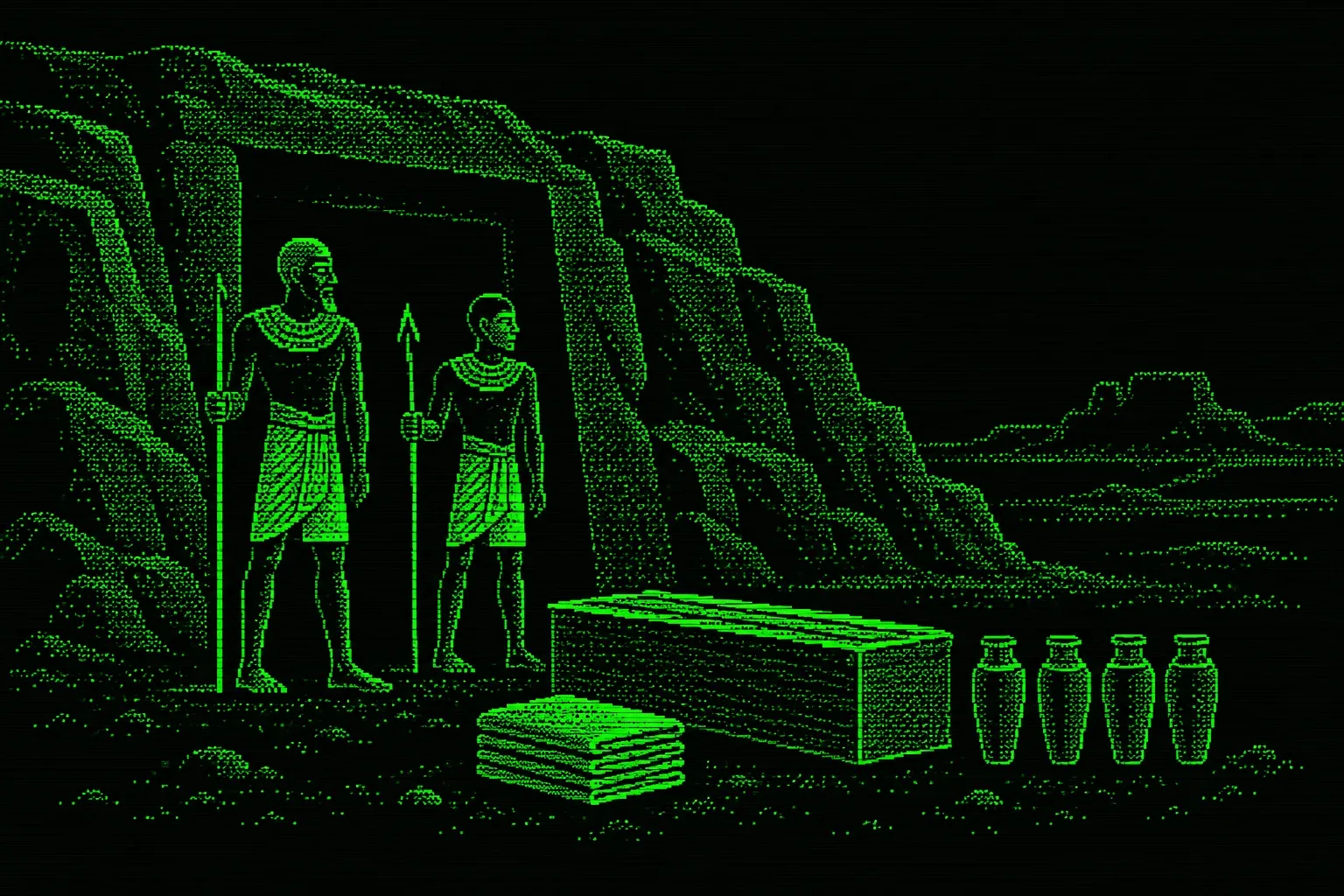
And His Majesty had brought khentishe wood, a coffin, festival perfume, sefetj oil, and two hundred pieces of cloth of first-quality linen and of fine thin linen, from the rewedj garments drawn out of the Two Treasuries of the Residence, for this Djau.
- 6
n-zp jri̯.t n ky mj,t =f
Never had the like been done for anyone else of his rank.
- 7
rḏi̯.n =(j) swt qrs.t =(j) m jz wꜥ ḥnꜥ Ḏꜥw pn n-mrw,t wnn ḥnꜥ =f m s,t wꜥ.t n-js n tm =(j) wnn ẖr ꜥ n jri̯.t jz.du sn,w ḫr jri̯.n =(j) nw n-mrw,t mꜣꜣ Ḏꜥw pn rꜥw-nb n-mrw,t wnn ḥnꜥ =f m s,t wꜥ.t
Now I saw to it that I should be buried in one tomb with this Djau, so as to be with him in one place. It was not that I lacked the warrant to build two tombs. No, I did this so that I might see this Djau every day, so as to be with him in one place.
Note · Line 7
Officials normally needed royal authorization and resources for a tomb. The son insists that sharing his father’s tomb was his choice out of love, not a sign of poverty or lack of favour. - 8
ḥꜣ,tj-ꜥ ḥqꜣ-ḥw,t smr-wꜥ,tj Ḏꜥw ḏd
The count, estate manager, sole companion, Djau, says:
- 9
j ꜥnḫ,w tp,j.w-tꜣ bꜣk.w mj,tj =j mrr!.w nswt pw ḥzz!.w nṯr =sn nʾ.tj ḏd.t(j) =sn ḫꜣ tʾ ḥnq,t jḥ ꜣpd šs mnḫ,t n Ḏꜥw zꜣ n Ḏꜥw
O you who live upon earth, servants and my peers: loved by the king and praised by their town god are those who will say, "A thousand of bread and beer, of cattle and fowl, of alabaster and cloth for Djau son of Djau."
Note · Line 9
This is an “appeal to the living”: passers-by are urged to speak the offering formula aloud. - 10
jw dbḥ.n =(j) [m-ꜥ] [ḥm] =[f] ⸢nḏ⸣ ⸢jꜣw,t⸣ n,j.t ḥꜣ,tj-ꜥ n Ḏꜥw pn
I asked of His Majesty that the office of count be conferred on this Djau.
- 11
jw rḏi̯.n ḥm =f jri̯.t wḏ(,w) n rḏi̯.t =f m ḥꜣ,tj-ꜥ m ḥtp-ḏi̯-nswt
And His Majesty had a decree drawn up appointing him count, as a boon the king gives.
Note · Line 11
“A boon the king gives” (ḥtp-ḏi-nswt) is the opening phrase of the standard Egyptian offering formula.