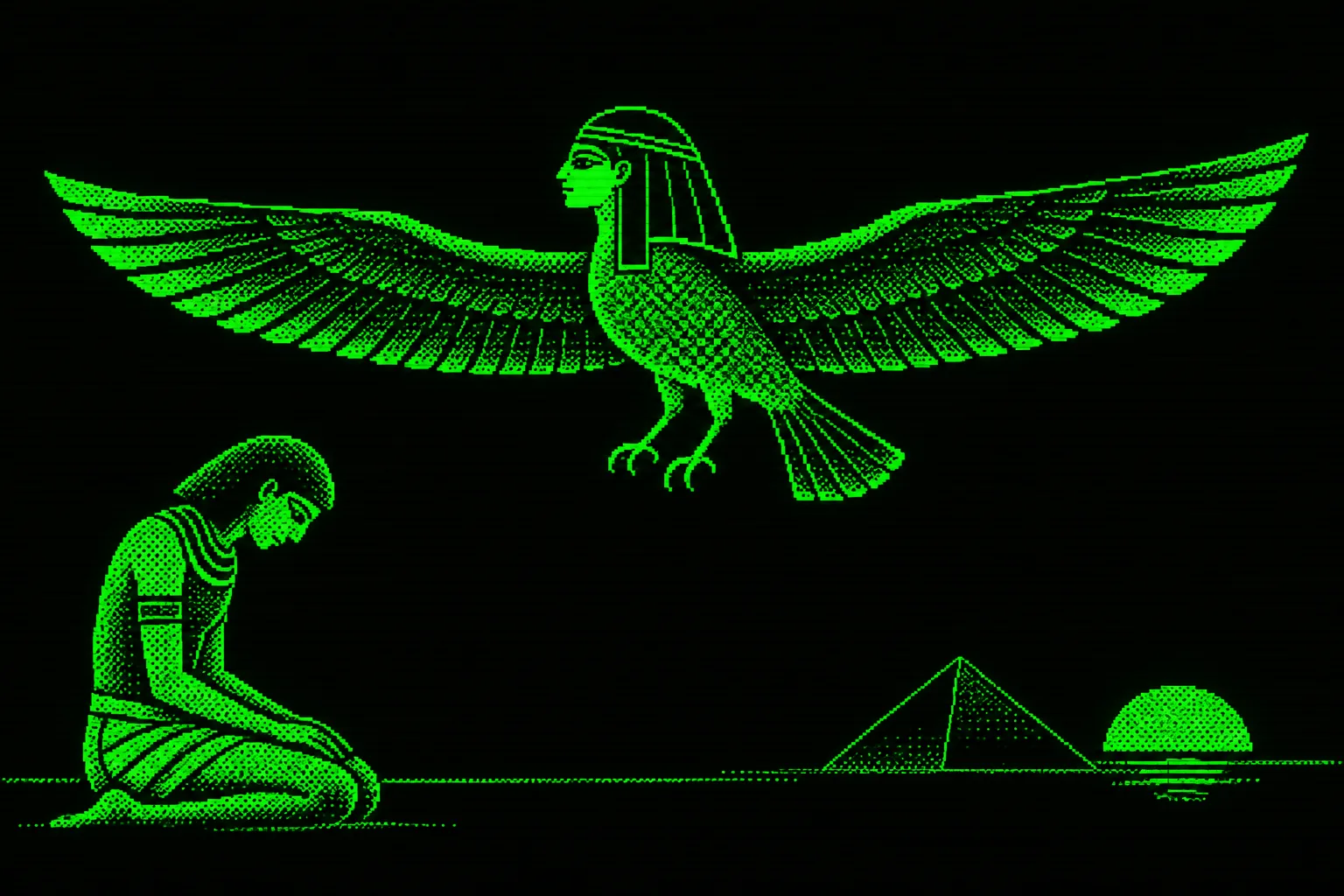
~/sacred-texts/middle-kingdom-literature
Dispute between a Man and His Ba: Death Is Before My Eyes Today
- Date
- Composed in the 12th Dynasty; this copy written in hieratic on papyrus under Amenemhat III (about 1850–1800 BC)
- Found
- From a tomb library at Thebes; acquired by Richard Lepsius in 1843. Now in the Ägyptisches Museum und Papyrussammlung, Berlin (P. 3024), with fragments of the opening in New York (P. Amherst III) and Mallorca (P. Mallorca II)
- Language
- Middle Egyptian · Hieratic
A man tired of living speaks with his ba, his own soul. He wants the West, the land of the dead, and promises his ba a tomb and an heir to tend it. The ba mocks him, You are no man!, and says burial is only heartache: Never again will you come up to see Ra. It tells of a farmer whose wife and children are taken by crocodiles, and urges: Seek out a happy day.
The man answers in four poems. His name stinks. To whom shall I speak today? Death is like the scent of myrrh. The dead are living gods. The ba has the last word: live now, die later. Then let us make harbor together.
- 1
… 𓁹𓏏 𓋴𓏏 …
[...] ⸮[ḏ]w,t? ⸮⸢jri̯.t⸣? st [...]
… evil, to do it …
- 2
… 𓎢 …
[...] [___] =k ⸮⸢mꜣ⸣? [...]
… you see …
- 3
… 𓃹𓈖𓏌𓏲𓇼 𓊪𓅱 …
[...] wnw.t pw [...]
… It is the hour …
- 4
… 𓇑𓏲 𓁷𓏤 …
[...] sw ḥr ⸮st[ꜣ]? [...]
… he is dragging …
- 5
… 𓋴 … 𓊪 …
[...] s [...] ⸮p? [...]
[gap in the text]
- 6
… 𓊃𓅭𓄿𓏲𓀸𓀜 𓏏 …
[...] sꜣw t(w) [...]
… Guard yourself …
- 7
𓂋 𓎢 𓋴𓃀𓇼𓀜 𓀀 𓏏𓏲 …
[m]j r =k sbꜣ =j tw [...]
Come, then, let me teach you …
- 8
𓎢 𓇋𓐍𓂋𓃭𓏲𓅪𓏥 𓈖 𓋀𓏏𓈉 …
[___] =k jḫr,w n(,j) jmn,t [...]
… you … the hostility of the West …
Note · Line 8
The West, where the sun sets, is the realm of the dead. - 9
𓇋𓏲 𓊃𓀀𓏤 …
jw z [...]
A man is …
- 10
… 𓏏𓈖𓏥 𓂋 𓆓𓂧 …
[...] tn r ḏd [...]
… you all, to say …
- 11
𓂜 𓈖𓌰𓅓𓂝𓀁𓈖
n nmꜥ.n [ns] =[s]⸢n⸣
Their tongue takes no sides.
- 12
𓂋 … 𓂧𓃀𓅡𓄿𓏲𓌥𓏛𓏥
[j]w r ⸮ẖꜣ[_]? [...] dbꜣ,w
It is for … payment.
- 13
𓂜 𓈖𓌰𓅓𓂝𓀁𓈖 𓄓𓄹 𓋴𓈖𓏥
n nmꜥ.n ns =sn
Their tongue takes no sides.
- 14
𓇋𓅱 𓄋𓊪𓏴𓈖 𓀀 𓂋𓏤 𓀀 𓈖 𓊸𓅡𓏱 𓀀 𓅱𓈙𓃀𓏴𓀁 𓀀 𓆓𓂧𓏏𓈖 𓆑
⸢j⸣w ⸢wp⸣i̯.n =j rʾ =j n bꜣ =j wšb =j ḏd.t.n =f
I opened my mouth to my ba to answer what he had said:
Note · Line 14
A person’s ba was an aspect of the self that could move and act apart from the body. Here the man speaks to his own ba, and the ba has a voice of his own. - 15
𓇋𓏲 𓈖𓄿 𓅨𓂋 𓂋 𓀀 𓅓𓏇𓈖𓇳
jw nꜣ wr r =j m-mjn
These things are too much for me today!
- 16
𓂜 𓌃𓂧𓅱𓀁 𓊸𓅡𓏱 𓀀 𓎛𓈖𓂝 𓀀
n mdwi̯ bꜣ =j ḥnꜥ =j
My ba has not spoken with me.
- 17
𓇋𓅱 𓎼𓂋𓏏 𓅨𓂋 𓂋 𓂝𓃀𓂝𓀁
jw gr.t wr r ꜥ⸢b⸣ꜥ
And this goes beyond boasting!
- 18
𓇋𓅱 𓏇𓇋 𓀀
jw mj wsf =j
It is as though he were abandoning me.
- 19
𓇋𓅓𓂜 𓈝𓅓𓂻 𓊸𓅡𓏱 𓀀
jmi̯ šm bꜣ =j
May my ba not go!
- 20
𓊢𓂝𓂻 𓆑 𓈖 𓀀 𓁷𓂋 𓋴
ꜥḥꜥ =f n =j ḥr =s
May he stand by me in this.
- 21
… 𓆑
[...] [___] =f
… him.
- 22
𓂜𓈖 𓆑 … 𓆑 𓅓 𓄡𓏏𓏤 𓀀 𓅓 𓍲𓈖𓏌𓏲𓍢 𓈖𓍇𓏌𓏲𓎛𓍢
nn ꜥ[_]⸮m? =⸮f? [...] ⸢___⸣ =f m ẖ,t =j m šnw nwḥ
He will not … his … in my body with net and rope.
- 23
𓂜𓈖 𓆣𓂋 𓅓𓂝 𓆑 𓂋𓅱𓇋𓂻 𓆑
nn ḫpr m-ꜥ =f rwj =f hrw [q]s[n,t]
It will not be in his power to leave on the day of trouble.
- 24
𓅓𓂝 𓏏𓈖𓏥 𓊸𓅡𓏱 𓀀 𓁷𓏤 𓏏𓉔𓏏𓂾𓂻 𓀀 𓂜 𓄔𓅓𓈖 𓀀 𓈖 𓆑 𓁷𓏤 𓋴𓏏𓍔𓄿𓋴𓍬𓂻 𓀀 𓂋 𓅓𓏏𓏱 𓂜 𓇍𓇋𓏏𓂻 𓈖 𓆑 𓁷𓏤 𓆼𓄿𓂝𓀜 𓐍𓏏𓊮 𓂋 𓋴𓌳𓄿𓅓𓏏𓊮 𓀀
m =tn bꜣ =j ḥr thi̯.t =j n sḏm.n =j n =f ḥr stꜣ{s} =j r m(w)t n jyi̯.t =〈j〉 n =f ḥr ḫꜣꜥ =〈j〉 ḥr ḫ,t r smꜣm.t =j
Look, all of you! My ba is wronging me, though I do not heed him.
He is dragging me to death before I have come to it,
throwing me onto the fire to burn me up. - 25
𓏠𓈖𓏏𓏛 𓆑 … 𓐟 … 𓆑
⸢ptr⸣ mn,t =f [...] ⸮sꜣ? [...] =f
What is his way? … back … his …
- 26
𓏏𓎢𓂻 𓆑 𓇋𓅓 𓀀 𓉔𓂋𓅱𓇳𓏤 𓈎𓋴𓌟𓈖𓏏𓅪𓏥
tk〈n〉 =f ⸢jm⸣ =j hrw qsn,t
May he draw near me on the day of trouble.
- 27
𓊢𓂝𓂻 𓆑 𓅓 𓊪𓆑 𓐞𓏤 𓏇𓇋 𓁹 𓈖𓅘𓎛𓊪𓅱𓀁𓀀
ꜥḥꜥ =f m pf gs mj jri̯ nḥp,w
May he stand on that side as the Creator will.
- 28
𓊪𓅬𓄿 𓇋𓋴 𓊪𓅱 𓉐𓂋𓂋𓂻 𓏎𓈖 𓆑 𓇓𓅱 𓂋 𓆑
pꜣ js pw prr jni̯ =f sw r =f
For this is the one who comes forth to bring him to himself.
- 29
𓊸𓅡𓏱 𓀀 𓅱𓐍𓆼𓄿𓅪 𓂋 𓊃𓂧𓎛𓀁 𓄿𓉔𓅪 𓁷𓏤 𓋹𓈖𓐍 𓇋𓉔𓅓𓀜 𓅱𓀀 𓂋 𓅓𓏏𓏱 𓂜 𓇍𓇋𓏏𓂻 𓀀 𓈖 𓆑
bꜣ =j wḫꜣ r sdḥ ꜣh(,w) ḥr ꜥnḫ jhm wj r m(w)t n jyi̯.t =j n =f
O my ba, too foolish to ease the sorrow of living,
lead me slowly toward death before I come to it. - 30
𓋴𓇛𓈖𓆓𓅓𓏛 𓈖 𓀀 𓋀𓏏𓈉
snḏm n =j jmn,t
Make the West sweet for me!
- 31
𓇋𓈖𓇋𓅱 𓈎𓋴𓌟𓈖𓏏𓅪 𓊪𓏲
jn-jw qsn,t pw
Is that such a misfortune?
- 32
𓊪𓄡𓂋𓏏𓄲𓇳 𓊪𓅱 𓋹𓈖𓐍
pẖr,t pw ꜥnḫ
Life is a cycle.
- 33
𓇋𓅱 𓆱𓏏𓏤𓏥 𓐍𓂋𓀒 𓋴𓈖𓏥
jw ḫt.pl ḫr =sn
Even the trees fall.
- 34
𓐍𓈖𓏏𓂧𓂾𓂻 𓂋 𓎢 𓁷𓏤 𓇋𓋴𓆑𓏏𓅪𓏥 𓍯𓄿𓎛𓎝𓏛 𓌳𓄿𓇋𓂋𓌗𓅪 𓀀
ḫn{t}d r =k ḥr jsf,t wꜣḥ mꜣjr =j
Tread down wrong, then, while my misery lasts!
- 35
𓅱𓆓𓂝𓐣𓏛 𓅱𓀀 𓅝𓏏𓏭𓅆 𓎛𓊵𓏏𓊪 𓊹𓏤𓏥
wḏꜥ wj Ḏḥwtj ḥtp nṯr.pl
May Thoth, who sets the gods at peace, judge me.
- 36
𓐍𓊃𓆑𓍚𓀜 𓐍𓈖𓇓𓅱𓅆 𓁷𓂋 𓀀 𓏞𓀀 𓅓𓌳𓐙𓂝𓏏𓏯𓏛
ḫsf Ḫnsw ḥr =j zẖꜣ,w m-mꜣꜥ,t
May Khonsu, the true scribe, defend me.
- 37
𓄔𓅓 𓂋𓂝𓇳𓏤𓅆 𓌃𓂧𓅱𓀁 𓀀 𓊃𓎼𓀝 𓅱𓇋𓄿𓇳𓊛
sḏm Rꜥ mdw =j sg wjꜣ-⸮Rꜥ?
May Ra, who steers the sun barque, hear my words.
Note · Line 37
The barque is the boat in which the sun god crosses the sky. - 38
𓐍𓊃𓆑𓍚𓀜 𓇋𓋴𓂧𓊃𓏊𓅆 𓁷𓂋 𓀀 𓅓 𓂝𓏏𓉐 𓋴𓐟𓄿𓂋𓌗𓅪 𓀀 𓅱𓂧𓈖𓍖𓏛 𓅓 𓆑𓄿𓀋𓂝𓈖 𓆑 𓈖 𓀀
ḫsf Jsds ḥr =j m ꜥ,t ḏs[r.t] [ḥr]-n,tt sꜣr =j wdn ⸮⸢m⸣? ⸮[ꜣtp,w]? fꜣi̯.n =f n =j
May Isdes defend me in the sacred chamber,
for my need weighs heavy with the load he has borne for me.Note · Line 38
Isdes is a god who takes part in the judgment of the dead. - 39
𓈖𓆓𓇛𓅓𓏛 𓐍𓋴𓆑𓍚𓀜 𓊹𓏤𓏥 𓈙𓏏𓍔𓄿𓏛𓏥 𓄡𓏏𓏤 𓀀
nḏm ḫsf nṯr.pl štꜣ.pl ẖ,t =j
How sweet it would be if the gods would ward off the secrets of my body!
- 40
𓆓𓂧𓏏𓈖 𓈖 𓀀 𓊸𓅡𓏱 𓀀
ḏd.t.n n =j bꜣ =j
What my ba said to me:
Note · Line 40
The ba is the part of a person that can move apart from the body and survive death. Here the man’s own ba answers him. - 41
𓂜 𓈖𓏏𓎢 𓇋𓋴 𓊃𓀀𓏤
n ntk js z
“You are no man!
- 42
𓇋𓅱 𓎢 𓏏𓂋𓆳𓀁 𓋹𓈖𓐍𓏏
jw =k tr ꜥnḫ.t(j)
Are you even alive?
- 43
𓊪𓏏𓂋𓆳 𓆎𓅓𓏛 𓎢
ptr km =k
What end do you seek?
- 44
𓎔𓂝𓇋𓇋𓀁 𓎢 𓁷𓏤 𓋹𓈖𓐍 𓏇𓇋 𓎟𓀀𓊢𓂝𓉴𓏛𓏥𓀀
mḥi̯.y =k ḥr ⸢ꜥnḫ⸣ mj nb-ꜥḥꜥ.pl
You should take thought for life as a rich man does.”
- 45
𓆓𓂧 𓀀
ḏd =j
Let me say this:
- 46
𓂜 𓈝𓅓𓂻 𓀀
n šm =j
“I have not gone.
- 47
𓇋𓏲 𓈖𓆑𓄿 𓂋 𓇾𓈇𓏤
jw nfꜣ r tꜣ
Those things count for nothing.
- 48
𓈖𓈞𓅓𓂝𓈖 𓏏𓏲 𓁷𓏤 𓏏𓆑𓇋𓇋𓏏𓂾𓂻𓏥
nḥm-n tw ḥr tf.yt
Sure enough, you are leaping away.
- 49
𓂜𓈖 𓈖𓍇𓏌𓏲𓏏𓍢𓂝 𓎢
nn nwi̯.t(w) =k
No one will care for you.
- 50
𓐍𓈖𓂋𓇋𓂉𓀁𓀀 𓎟 𓁷𓏤 𓆓𓂧
ḫnrj nb ḥr ḏd
Every prisoner says,
- 51
𓇋𓅱 𓀀 𓂋 𓎁𓏏𓀜 𓎢
jw =j r jṯi̯(.t) =k
‘I will seize you.’
- 52
𓇋𓅱 𓎼𓂋𓏏 𓎢 𓅓𓏏𓏱
jw gr,t =k m(w)t(.tj)
Yet you are dead,
- 53
𓂋𓈖 𓎢 𓋹𓈖𓐍
rn =k ꜥnḫ
and your name lives.
- 54
𓊨𓏏𓉐 𓈖𓆑𓄿 𓈖𓏏 𓐍𓈖𓏏𓅯𓂻 𓂝𓆑𓂧𓏛 𓈖𓏏 𓄣𓏤 … 𓈖 𓆑𓂧𓈎 𓄣𓏤
s,t nfꜣ n.t ḫni̯.t ⸮ꜥfd〈.t〉? ⸮n.t? jb [...] ⸮n? ⸮fdq? jb
Yonder is a place to rest, the heart’s goal … for one whose heart is torn.
- 55
𓂧𓏇𓇋𓈇𓏤 𓊪𓅱 𓋀𓏏𓈉 𓂙𓈖𓏏𓊛 … 𓁷𓏤
dmj pw jmn,t ẖni̯,t qs[_] [...] ḥr
The West is a landing place; the hard crossing … face.
- 56
𓇋𓂋 𓄔𓅓 𓈖 𓀀 𓊸𓅡𓏱 𓀀 … 𓀀 𓏏𓏏𓀾𓏛 𓄣𓏤 𓆑 𓎛𓈖𓂝 𓀀 𓇋𓅱 𓆑 𓂋 𓅓𓂝𓂋𓐬𓏛
jr sḏm n =j bꜣ =j ⸮jw[,tj]? [...] ⸮n[n]? ⸮[n]? =⸮j? [b]tꜣ t(w)t jb =f ḥnꜥ =j jw =f r mꜥr
If my ba listens to me, who lack …—I have done no wrong—
and if his heart is at one with me, he will prosper. - 57
𓂋𓂝 𓀀 𓊪𓎛𓄖𓂻 𓆑 𓋀𓏏𓈉 𓏇𓇋 𓈖𓏏𓏭 𓅓 𓍋𓅓𓂋𓉴 𓆑 𓊢𓂝𓂻𓈖 𓁷𓂋𓇯𓇾𓈇𓏤𓀀 𓁷𓏤 𓈎𓂋𓋴𓆱 𓆑
rḏi̯ =j pḥ =f jmn,t mj n,tj m mḥr =f ꜥḥꜥ.n ḥr(,j)-tꜣ ḥr qrs =f
I will bring him to the West like one who lies in his pyramid,
after one left here on earth has taken his stand beside his coffin. - 58
𓇋𓅱 𓀀 𓂋 𓁹𓏏 𓈖𓇋𓄿𓇋𓋼 𓆞𓄿𓏏𓐎𓏥 𓎢 𓊃𓆓𓂧𓅓𓀁 𓎢 𓎢𓇋𓇋 𓊸𓅡𓏱 𓅓 𓇑𓇑𓈖𓈖𓏌𓏲𓀉
jw =j r jri̯.t njꜣj [ḥr] ẖꜣ,t.pl =k sḏdm =k ky bꜣ m nnw
I will make a fan to hold over your remains,
so that you may be the envy of another ba, one grown weary.Note · Line 58
The man turns from speaking about his ba to speaking directly to it, promising the care due to the dead. - 59
𓇋𓅱 𓀀 𓂋 𓁹𓏏 𓈖𓇋𓄿𓇋𓋼 𓇋𓐍𓏛 𓍃𓅓 𓆑 𓎛𓎿𓊃𓅱𓊡 𓊃𓆓𓂧𓅓𓀁 𓎢 𓎢𓇋𓇋 𓊸𓅡𓏱 𓈖𓏏 𓏏𓍔𓄿𓅱𓊮
jw =j r jri̯.t njꜣj jḫ tm =f ḥs.w sḏdm =k ky bꜣ n,t〈j〉 tꜣ.w
I will make a fan—may it not be too cool—
so that you may be the envy of another ba, one burning hot. - 60
𓋴𓅨𓂋𓇋𓀁 𓀀 𓈗 𓁷𓏤 𓃀𓅡𓄿𓃀𓅡𓄿𓏏𓈗 𓍿𓊃𓇋𓇋𓍞𓀜 𓀀 … 𓆅𓇋𓇋𓏏𓇳 𓊃𓆓𓅓𓀁 𓎢 𓎢𓇋𓇋 𓊸𓅡𓏱 𓈖𓏏𓏭 𓎛𓈎𓂋𓅪
swrj =j mw ḥr bꜣbꜣ,t ṯsi̯.y =j šwy[,t] [...] šw,t sḏ〈d〉m =k ky bꜣ n,tj ḥqr
I will drink water at the watering place
and heap up dry rushes … shade,
so that you may be the envy of another ba, one that hungers.” - 61
𓇋𓂋 𓉔𓇋𓅓𓂝 𓎢 𓅱𓀀 𓂋 𓅓𓏏𓏱 𓅓 𓊪𓅯𓄿 𓈎𓇋𓀾𓏛 𓂜𓈖 𓅠𓅓 𓎢 𓐍𓈖𓏏𓅯𓂻 𓎢 𓁷𓂋 𓋴 𓅓 𓋀𓏏𓈉
jr 〈j〉h{j}m =k wj r m(w)t m pꜣ qj nn gmi̯ =k ḫni̯.t =k ḥr =s m jmn,t
If you hold me back from such a death, you will find nowhere to alight in the West.
Note · Line 61
The man is speaking to his ba, the part of him that can travel apart from his body. - 62
𓄣𓏤 𓎢 𓊸𓅡𓏱 𓀀 𓌢𓈖 𓀀 𓂋 𓆣𓂋𓏏 𓃛𓂝𓅱𓄯 𓀀 𓂧𓂋𓊪𓂞𓏏𓏭 𓆑𓏭 𓊢𓂝𓏏𓂻 𓆑𓏭 𓁷𓏤 𓇉𓄿𓏏𓉐 𓉔𓂋𓅱𓇳𓏤 𓈎𓂋𓋴𓀾𓀜 𓋴𓐟𓄿𓇋𓇋𓏛 𓆑 𓎛𓆰𓈖𓎢𓇋𓇋𓏏𓂠𓋳𓏤 𓈖𓏏 𓂋𓈉
wꜣ[ḥ] jb =k bꜣ =j sn =((j)) r ḫpr.t jwꜥ,w =⸮j? drp.tj =fj ꜥḥꜥ.t(j) =fj ḥr ḥꜣ,t hrw qrs sꜣi̯.y =f ḥnk,yt n.t ẖr,t-nṯr
Have patience, my ba, my brother, until my heir is grown, the one who will make offerings and stand at the tomb on the day of burial to make ready the funeral bed.
Note · Line 62
The heir’s duty did not end with the burial: he was to keep bringing food and drink to the tomb. - 63
𓇋𓅱 𓄋𓊪𓏴𓈖 𓈖 𓀀 𓊸𓅡𓏱 𓀀 𓂋𓏤 𓆑 𓅱𓈙𓃀𓏴𓀁 𓆑 𓆓𓂧𓏏𓈖 𓀀
jw wpi̯.n n =⸢j⸣ bꜣ =j rʾ =⸢f⸣ wšb =f ḏd.t.n =j
Then my ba opened his mouth to me and answered what I had said:
- 64
𓇋𓂋 𓊃𓐍𓆼𓄿𓀁 𓎢 𓈎𓂋𓋴𓊭 𓈖𓇉𓄿𓏏𓐎𓏥𓄣𓏤 𓊪𓏲
jr sḫꜣ =k qrs nḥꜣ,t-jb pw
If you call a burial to mind, it is heartache.
- 65
𓏎𓈖𓏏 𓂋𓅓𓇋𓇋𓏏𓁹 𓊪𓏲 𓅓 𓋴𓇋𓆛𓈖𓂧𓅪 𓊃𓀀𓏤
jni̯.t rm,yt pw m sjnd z
It means drawing tears by bringing a man to grief.
- 66
𓄞𓂧𓏏𓂝 𓊃𓀀𓏤 𓊪𓏲 𓅓 𓉐𓏤 𓆑 𓆼𓄿𓂝𓀜 𓁷𓏤 𓈎𓄿𓄿𓀠𓈇𓏤
šdi̯.t z pw m pr =f ḫꜣꜥ ḥr qꜣꜣ
It means taking a man from his house and leaving him on the hill.
Note · Line 66
Egyptian burial grounds often lay on the desert heights beyond the fields. - 67
𓂜𓈖 𓉐𓂋𓂻𓈖 𓎢 𓂋𓁷𓂋𓏲𓇯 𓌳𓁹𓄿 𓎢 𓂋𓂝𓇳𓏤𓅆𓏥
nn pri̯.n =k r-ḥr,w mꜣ =k Rꜥ{.pl}
Never again will you come up to see Ra.
- 68
𓐪𓂧𓏌𓀢𓀜𓅱𓀀𓏥 𓅓 𓇋𓈖𓂋𓊌 𓈖 𓌳𓄿𓏏𓊌 𓐍𓂝𓅱𓋴𓀜𓉲𓏥 𓅓 𓍋𓅓𓂋𓉴 𓄤𓆑𓂋𓅱𓏥 𓅓 𓂓𓄿𓏏𓀋𓏛𓏥 𓄤𓆑𓂋𓏏 𓆣𓂋 𓋴𓐪𓂧𓏌𓅱𓀢𓀀𓏥 𓅓 𓊹𓏤𓏥 𓂝𓃀𓅡𓄿𓅱𓌂𓏥 𓇋𓂋𓏭 𓅱𓈙𓅱𓁸 𓏇𓇋 𓇑𓇑𓈖𓏌𓏲𓀉𓀀𓏥 𓅓𓏏𓏥𓏱 𓁷𓏤 𓌸𓂋𓇋𓇋𓏏𓈇𓏤 𓈖𓎼𓄿𓅱𓎣𓅪 𓁷𓂋𓇯𓇾𓈇𓏤𓀀 𓎁𓏏𓀜𓈖 𓈖𓍇𓏌𓏲𓇋𓇋𓈗 𓄖 𓆑𓏭 𓇶𓅆 𓅓𓏇𓏏𓏏𓏛𓇋𓂋𓏭 𓌃𓂧𓅱𓀁 𓈖 𓋴𓈖𓏥 𓂋𓅓𓅱𓆟𓏥 𓊃𓊪𓏏𓂏𓈖𓈗
qd.w.pl m jnr n(,j) mꜣt ḫ{ꜥ}wsi̯.⸮pl? m mḥr〈.pl〉 nfr.w.pl m kꜣ,t nfr.t ḫpr sqd.w.pl m nṯr.pl ꜥbꜣ.w.pl jr,j wš.w mj nn.w.pl m(w)t.pl ḥr mr,yt n-gꜣ,w ḥr(,j)-tꜣ jṯi̯.n nwy pḥ(,wj) =fj jꜣḫw m-mj,tt-jr,j mdwi̯ n =sn rm.w.pl 〈n.w〉 sp,t.du-n(.t)-mw
Those who built in granite,
raising perfect pyramids with perfect workmanship
so that those who had them built might become gods—
their altars stand empty,
like those of the weary ones who died on the riverbank
for want of anyone left behind.
The flood has taken its share of them, and the sunlight its share.
The fish along the water’s two banks speak to them.Note · Line 68
The “weary ones” are the dead. The ba sets the kings who could command pyramids beside people whose bodies lay unburied. - 69
𓄔𓅓 𓂋 𓎢 𓈖 𓀀
sḏm r =k n =j
Do listen to me!
- 70
𓅓𓂝 𓎢 𓄤𓆑𓂋 𓄔𓅓 𓂋 𓂋𓍿𓀀𓁐𓏥
m =k nfr sḏm n r(m)ṯ.pl
Look, it is good for people to listen.
- 71
𓌞𓋴𓂻 𓉔𓂋𓅱𓇳𓏤𓄤𓆑𓂋
šms hrw-nfr
Seek out a happy day.
- 72
𓋴𓅓𓐍𓂜 𓎔𓂝𓀁
smḫ mḥ
Forget your cares!
- 73
𓇋𓏲 𓈖𓆓𓊃𓅪𓀀 𓋴𓂓𓄿𓍁𓂝 𓆑 𓄞𓂧𓅱𓈇𓏤 𓆑
jw nḏs skꜣ =f šd,w =f
A common man plows his plot.
- 74
𓇋𓏲 𓆑 𓄿𓊪𓀋𓂝 𓆑 𓈙𓈗𓌽𓏥 𓆑 𓂋𓄚𓈖𓏌𓏲𓉐 𓂧𓊪𓏏𓊛 𓋴𓏏𓍔𓄿𓋴𓍬𓂻 𓆑 𓋴𓐪𓂧𓏌𓅱𓏏𓊛
jw =f ꜣ〈t〉p =f šm,w =f r-ẖnw dp,t stꜣ{s} =f sqd,wt
He loads his harvest into a boat and tows it some way.
- 75
𓎛𓃀𓎱 𓆑 𓏏𓎢𓈖𓂻 𓌳𓁹𓄿𓈖 𓆑 𓉐𓂋𓏏𓂻 𓅱𓐍𓏏𓇰 𓈖𓏏 𓎔𓎛𓇋𓇋𓏏𓊡 𓂋𓋴𓍞𓁹 𓅓 𓂧𓊪𓏏𓊛
ḥ(ꜣ)b =f tkn mꜣ.n =f pri̯.t wḫ,t n.t mḥ,yt rs m dp,t
His feast is near. On watch in the boat, he has seen the darkness of the north wind rising.
- 76
𓂋𓂝𓇳𓅆 𓁷𓏤 𓅧𓈎𓂻 𓉐𓂋𓂻 𓎛𓈖𓂝 𓈞𓏏𓁐 𓆑 𓄟𓊃𓅱𓀔𓀀𓁐𓏥 𓆑 𓄿𓈎𓅪 𓁶𓏤 𓈙𓏤𓈇 𓍲𓈖𓆊 𓅓 𓎼𓂋𓎛𓇰 𓌨𓂋 𓌸𓂋𓇋𓇋𓏏𓆊𓏥
Rꜥ ḥr ꜥq pri̯〈.t〉 ḥnꜥ ḥm,t =f ms.w.pl =f ꜣq tp š šn m grḥ ẖr mr,yt.pl
Ra sets and rises. In the night his wife and children have perished on the lake, taken by the creatures that ring its banks.
Note · Line 76
The creatures that haunt the banks are crocodiles. - 77
𓇥𓂋𓇋𓈖 𓆑 𓈞𓋴𓀔 𓊪𓊃𓈙𓏴𓏛 𓆑 𓅓 𓊤𓏲𓀁 𓁷𓏤 𓆓𓂧
ḏr.jn =f ḥmsi̯ psš =f m ḫrw ḥr ḏd
At last he sits down, and his voice breaks as he says:
- 78
𓂜 𓂋𓅓𓁹 𓀀 𓈖 𓏏𓆑𓄿 𓄟𓋴𓏏𓁒
n rmi̯ =j n tfꜣ ms,t
“I have not wept for that woman who bore them.
- 79
𓂜𓈖 𓈖 𓋴 𓉐𓂋𓏏𓂻 𓅓 𓋀𓏏𓈉 𓂋 𓎢𓏏 𓁷𓏤 𓇾𓈇𓏤
nn n =s pri̯.t m jmn,t r k,t ḥr tꜣ
There is no coming out of the West for her to live another life on earth.
- 80
𓎔𓂝𓇋𓇋𓀁 𓀀 𓁷𓏤 𓄟𓋴𓏲𓀔𓀀𓁐𓏥 𓋴 𓊃𓂧𓅱𓏴 𓅓 𓊃𓅱𓎛𓏏𓐎 𓌳𓁹𓄿𓏲𓏥 𓁷𓏤 𓈖 𓏃𓈖𓏏𓏭𓆊𓅆 𓂜 𓋹𓈖𓐍𓏏 𓋴𓈖𓏥
mḥi̯.y =j ḥr ms.w.pl =s sd.w m swḥ,t mꜣ.w.pl ḥr n(,j) Ḫntj n ꜥnḫ.t =sn
Let me grieve for her children, broken in the egg, who saw the face of Khenty before they had lived.”
Note · Line 80
Khenty is the crocodile god. - 81
𓇋𓏲 𓈖𓆓𓊃𓅪𓀀 𓂧𓃀𓎛𓄑𓀁 𓆑 𓅓𓂝𓈙𓂋𓃭𓅱𓏏𓇳𓏥
jw nḏs dbḥ =f m{ꜥ}šr,wt
A common man asks for supper.
- 82
𓇋𓅱 𓈞𓁐 𓆑 𓆓𓂧 𓋴 𓈖 𓆑
jw ḥm〈,t〉 =f ḏd =s n =f
His wife says to him:
- 83
𓇋𓅱 𓂋 𓄟𓋴𓇋𓇋𓏏𓈀𓏥
jw r ms,yt
“It’s for the evening feast.”
- 84
𓇋𓅱 𓆑 𓉐𓂋𓂻 𓆑 𓂋𓏃𓈖𓏏𓅱𓈇𓏤 𓂋 𓋴𓋴𓎀 𓂋 𓄿𓏏𓏯𓇳
jw =f pri̯ =f r-ḫnt,w r ⸮ssṯ? r ꜣ,t
He goes outside to brood for a moment.
- 85
𓂝𓈖𓈖𓂽 𓆑 𓇓𓏲 𓂋 𓉐 𓆑 𓇋𓅱 𓆑 𓏇𓇋 𓎢𓇋𓇋𓀀
ꜥnn =f sw r pr =f jw =f mj ky
When he turns back toward his house, he is like another man.
- 86
𓈞𓏏𓁐 𓆑 𓁷𓏤 𓈙𓋴𓐟𓄿𓄃𓏛 𓈖 𓆑
ḥm,t =f ḥr šsꜣ n =f
His wife tries to reason with him,
- 87
𓂜 𓄔𓅓𓈖 𓆑 𓈖 𓋴 𓋴𓎀𓅪𓈖 𓆑 𓅱𓈙𓅪 𓄣𓏤 𓈖 𓄋𓊪𓅱𓅂𓀀𓏥
n sḏm.n =f n =s sṯ.n =f wš jb n wpw,tj.pl
but he does not listen to her. He has brooded until his heart has nothing left for those who bring him word.
- 88
𓇋𓏲 𓄋𓊪𓏴𓈖 𓀀 𓂋𓏤 𓀀 𓈖 𓊸𓅡𓏱 𓀀 𓅱𓈙𓃀𓏴𓀁 𓀀 𓆓𓂧𓏏𓈖 𓆑
jw wpi̯.n =j rʾ =j n bꜣ =j wšb =j ḏd.t.n =f
Then I opened my mouth to my ba and answered what he had said:
- 89
𓅓𓂝 𓎢 𓃀𓂝𓎛𓆜𓀁 𓂋𓈖 𓀀 𓅓𓂝 𓎢 𓂋 𓋴𓏏𓐎 𓄿𓋴𓏲𓅯𓏥 𓅓 𓉔𓂋𓅱𓇳𓏤𓏥 𓈙𓈗𓇳 𓊪𓏏𓇯 𓏏𓍔𓄿𓏏𓊮
m =k bꜥḥ rn =j m-ꜥ =k r st(j) ꜣs,w.pl m hrw.pl šm,w p,t tꜣ.t(j)
Look, you have made my name stink,
worse than the stench of vultures
on summer days when the sky burns. - 90
𓅓𓂝 𓎢 𓃀𓂝𓎛𓆜𓀁 𓂋𓈖 𓀀 𓅓𓂝 𓎢 𓊏𓊪𓂝 𓋴𓃀𓈖𓏌𓏲𓆟 𓅓 𓉔𓂋𓅱𓇳𓏤 𓂋𓊃𓆑𓅯𓏥 𓊪𓏏𓇯 𓏏𓍔𓄿𓏏𓊮
m =k bꜥḥ rn =j m-ꜥ =k 〈r〉 〈st(j)〉 šzp sbn,w m hrw rsf p,t tꜣ.t(j)
Look, you have made my name stink,
worse than the smell of catfish hauled in
on the day of the catch, when the sky burns. - 91
𓅓𓂝 𓎢 𓃀𓂝𓎛𓆜𓀁 𓂋𓈖 𓀀 𓅓𓂝 𓎢 𓂋 𓋴𓏏𓐎 𓄿𓊪𓋴𓅱𓅯𓏥 𓂋 𓃀𓍯𓄿𓏏𓈇𓏤 𓈖𓏏 𓏏𓂋𓇋𓆵𓆰𓏥 𓌨𓂋 𓄟𓋴𓇋𓇋𓏏𓅯𓏥
m =k bꜥḥ rn =j m-ꜥ =k r st(j) ꜣp{s}〈d〉w.pl r bwꜣ,t n.t trj ẖr ms,yt
Look, because of you my name is foul,
fouler than the smell of fowl
by a reed thicket teeming with waterbirds. - 92
𓅓𓂝 𓎢 𓃀𓂝𓎛𓆜𓀁 𓂋𓈖 𓀀 𓅓𓂝 𓎢 𓂋 𓋴𓏏𓐎 𓇉𓄿𓅓𓅱𓅻𓀜 𓂋 𓆼𓄿𓊃𓅱𓏴𓈇𓏤𓏥 𓏌𓏤 𓅹𓈇𓏤𓏥 𓇉𓄿𓅓𓅻𓀜𓈖 𓋴𓈖𓏥
m =k bꜥḥ rn =j m-ꜥ =k r st(j) ḥꜣm,w〈.pl〉 r ḫꜣs.w.pl n.w zš.pl ḥꜣm.n =sn
Look, because of you my name is foul,
fouler than the smell of fishermen
by the marsh creeks after they have fished. - 93
𓅓𓂝 𓎢 𓃀𓂝𓎛𓆜𓀁 𓂋𓈖 𓀀 𓅓𓂝 𓎢 𓂋 𓋴𓏏𓐎 𓅓𓋴𓎛𓏲𓆊𓏥 𓂋 𓈞𓋴𓏏𓀔 𓌨𓂋 𓐖𓈇𓏤𓏥 𓌨𓂋 𓌸𓂋𓂋𓇋𓇋𓏏𓆊𓏥
m =k bꜥḥ rn =j m-ꜥ =k r st(j) msḥ.w.pl r ḥmsi̯.t ẖr ⸮ꜥḏ.pl? ẖr mr{r},yt.pl
Look, because of you my name is foul,
fouler than the stench of crocodiles,
fouler than sitting below the banks, beneath the bank-dwellers.Note · Line 93
The bank-dwellers are the crocodiles. - 94
𓅓𓂝 𓎢 𓃀𓂝𓎛𓆜𓀁 𓂋𓈖 𓀀 𓅓𓂝 𓎢 𓂋 𓊃𓏏𓈞𓏏𓁐 𓆓𓂧 𓎼𓂋𓍅𓀁 𓂋 𓋴 𓈖 𓅷𓄿𓇋𓇋𓂺𓀀
m =k bꜥḥ rn =j m-ꜥ =k r s,t-ḥm,t ḏd grg r =s n ṯꜣy
Look, because of you my name is foul,
fouler than a woman’s
when a man is told a lie about her. - 95
𓅓𓂝 𓎢 𓃀𓂝𓎛𓆜𓀁 𓂋𓈖 𓀀 𓅓𓂝 𓎢 𓂋 𓄡𓂋𓂧𓀔𓀀 𓈎𓈖𓀜 𓆓𓂧 𓂋 𓆑 𓇋𓏲 𓆑 𓆑 𓈖 𓄟𓋴𓂧𓅱𓀁 𓆑
m =k bꜥḥ rn =j m-ꜥ =k r ẖrd qni̯ ḏd r =f jw =f ={f} n msd.w =f
Look, because of you my name is foul,
fouler than the name of a brave boy
of whom they say, “He belongs to the man he hates.” - 96
𓅓𓂝 𓎢 𓃀𓂝𓎛𓆜𓀁 𓂋𓈖 𓀀 𓅓𓂝 𓎢 𓂧𓏇𓇋𓈇𓏤 𓈖 𓆊 𓍲𓈖𓈖𓀁 𓃀𓈙𓏏𓏲𓂉𓀁 𓌳𓁹𓄿𓄿 𓐟𓏤 𓆑
m =k bꜥḥ rn =j m-ꜥ =k 〈r〉 dmj n(,j) ⸮jt〈y〉? šnn bšt,w mꜣꜣ sꜣ =f
Look, because of you my name is foul,
fouler than the name of a ruler’s town
that plots revolt the moment his back is turned. - 97
𓆓𓂧 𓀀 𓈖 𓅓𓂝 𓏇𓈖𓇳
ḏd =j n m mjn
To whom shall I speak today?
- 98
𓌢𓈖𓏌𓅱𓀀𓏥 𓃀𓇋𓈖𓅪
sn.w.pl bjn
Brothers are wicked;
- 99
𓐍𓈖𓌰𓅓𓋴𓏲𓀍𓀀𓏥 𓏌𓏤 𓏇𓈖𓇳 𓂜 𓌻𓂋𓀁𓈖𓏭
ḫnms.w.pl n.w mjn n mri̯.nj
today’s friends have no love for one another.
- 100
𓆓𓂧 𓀀 𓈖 𓅓𓂝 𓏇𓈖𓇳
ḏd =j n m mjn
To whom shall I speak today?
- 101
𓂝𓃹𓈖𓀜 𓄣𓏤𓏥
ꜥwn jb.pl
Hearts are greedy;
- 102
𓊃𓀀𓏤 𓎟 𓁷𓏤 𓎁𓏏𓏏𓀜 𓐍𓏏𓏛𓏥 𓌢𓈖𓏌𓅱𓀁 𓆑𓏭
z nb ḥr jṯi̯.t ḫ,t.pl sn.nw.du =fj
every man is seizing his fellow’s goods.
- 103
[...] 〈ḏd〉 =〈j〉 〈n〉 〈m〉 〈mjn〉
… To whom shall I speak today?
- 104
𓇋𓏲 𓊃𓆑𓂉𓀁 𓄿𓈎𓅪
jw sf ꜣq
Gentleness is dead,
- 105
𓈖𓆱𓐍𓏏𓀜𓁷𓏤 𓉔𓄿𓏲𓂻 𓈖 𓃀𓏲𓎟𓀀𓁐𓏥
nḫt-ḥr hꜣi̯.w n bw-nb
and insolence has descended on everyone.
- 106
𓆓𓂧 𓀀 𓈖 𓅓𓂝 𓏇𓈖𓇳
ḏd =j n m mjn
To whom shall I speak today?
- 107
𓊵𓏏𓊪 𓁷𓏤 𓃀𓇋𓈖𓅪
ḥtp ḥr bjn
People are content with evil;
- 108
𓂋𓂝 𓂋 𓆑 𓃀𓏲𓄤𓆑𓂋 𓂋 𓇾𓈇𓏤 𓅓 𓊨𓏏𓉐 𓎟𓏏
rḏi̯ r =f bw-nfr r tꜣ m s,t nb.t
everywhere, what is good is thrown to the ground.
- 109
𓆓𓂧 𓀀 𓈖 𓅓𓂝 𓏇𓈖𓇳
ḏd =j n m mjn
To whom shall I speak today?
- 110
𓋴𓈍𓂝𓂋𓀁 𓊃𓀀𓏤 𓅓 𓊃𓊪𓊗 𓆑 𓃀𓇋𓈖𓅪 𓋴𓋴𓃀𓏏𓄑𓀁 𓆑 𓃀𓏲𓎟𓀀𓁐𓏥 𓃛𓅱𓅪 𓆑 𓈋𓅱𓅪
sḫꜥr z m sp =f bjn ssbt =f bw-nb 〈m〉 jw =f ḏw
The man who roused another to fury with his foul deed
makes everyone laugh with his vile mischief. - 111
𓆓𓂧 𓀀 𓈖 𓅓𓂝 𓏇𓈖𓇳
ḏd =j n m mjn
To whom shall I speak today?
- 112
𓇋𓏲 𓎛𓂝𓍑𓄿𓀜 𓏏𓏲
jw ḥꜥḏꜣ =tw
People rob;
- 113
𓊃𓀀𓏤 𓎟 𓁷𓏤 𓎁𓏏𓏏𓀜 𓌢𓈖𓏌𓅱𓀀 𓆑
z nb ḥr jṯi̯.t 〈ḫ,t〉 sn.nw.du =f(j)
every man is seizing his fellow’s goods.
- 114
𓆓𓂧 𓀀 𓈖 𓅓𓂝 𓏇𓈖𓇳
ḏd =j n m mjn
To whom shall I speak today?
- 115
𓅓 𓅧𓈎𓂻𓄣𓏤𓀀
〈btꜣ,w〉 m ꜥq-jb
A criminal is a confidant;
- 116
𓌢𓈖𓀀 𓁹𓂋 𓎛𓈖𓂝 𓆑 𓆣𓂋 𓅓 𓐍𓏏𓆑𓀏
sn jrr ḥnꜥ =f ḫpr m ḫft(,j)
the brother you once worked beside has become an enemy.
- 117
𓆓𓂧 𓀀 𓈖 𓅓𓂝 𓏇𓈖𓇳
ḏd =j n m mjn
To whom shall I speak today?
- 118
𓂜 𓋴𓆼𓄿𓀁 𓏏 𓋵𓇳
n sḫꜣ =t(w) sf
No one remembers yesterday.
- 119
𓂜 𓁹 𓏏 𓈖 𓁹𓀀 𓅓 𓏏𓄿 𓄿𓏏𓏯𓇳
n jri̯ =t(w) n jri̯ m tꜣ ꜣ,t
No one acts now for the one who acted.
- 120
𓆓𓂧 𓀀 𓈖 𓅓𓂝 𓏇𓈖𓇳
ḏd =j n m mjn
To whom shall I speak today?
- 121
𓌢𓈖𓏌𓅱𓀀𓏥 𓃀𓇋𓈖𓅪
sn.w.pl bjn
Brothers are cruel.
- 122
𓏎𓈖𓈖 𓏏𓏲 𓅓 𓇥𓂋𓇥𓂋𓅱𓀢𓀀𓏥 𓂋 𓂸𓏏𓏏𓂭𓂭𓏛𓈖𓏏𓄣𓏤
jnn =tw m ḏrḏr.w.pl r mt(j),t-n,t-jb
One turns to strangers for an honest heart.
- 123
𓆓𓂧 𓀀 𓈖 𓅓𓂝 𓏇𓈖𓇳
ḏd =j n m mjn
To whom shall I speak today?
Note · Line 123
The speaker is a man in dialogue with his ba, the part of him that can move apart from his body and survive his death. - 124
𓁷𓏤𓏥 𓎛𓍃𓅓𓅬𓅪
ḥr.pl ḥtm
Faces have gone blank.
- 125
𓊃𓀀𓏤 𓎟 𓅓 𓁷𓏤 𓅓𓌨𓂋𓅱𓈇𓏤 𓂋 𓌢𓈖𓏌𓅱𓀀𓏥 𓆑
z nb m ḥr m-ẖr,w r sn.w.pl =f
Every man keeps his face lowered before his brothers.
- 126
𓆓𓂧 𓀀 𓈖 𓅓𓂝 𓏇𓈖𓇳
ḏd =j n m mjn
To whom shall I speak today?
- 127
𓄣𓏤𓏥 𓂝𓃹𓈖𓀜
jb.pl ꜥwn
Hearts are greedy.
- 128
𓂜𓈖𓃹𓈖 𓄣𓏤 𓈖 𓊃𓀀𓏤 𓂋𓉔𓈖𓂢 𓏏𓏲 𓁷𓂋𓏤 𓆑
nn-wn jb n(,j) z rhn =tw ḥr =f
No man has a heart one can lean on.
- 129
𓆓𓂧 𓀀 𓈖 𓅓𓂝 𓏇𓈖𓇳
ḏd =j n m mjn
To whom shall I speak today?
- 130
𓂜𓈖 𓌳𓐙𓂝𓏏𓅂𓏛𓀀𓏥
nn mꜣꜥ,tj.pl
There are none who are just.
- 131
𓇾𓈇𓏤 𓊃𓊪𓊗 𓈖 𓁹𓅱𓏥 𓇋𓋴𓆑𓏏𓅪𓏥
tꜣ spi̯ n jri̯.w.pl jsf,t
The land is left to those who have done wrong.
- 132
𓆓𓂧 𓀀 𓈖 𓅓𓂝 𓏇𓈖𓇳
ḏd =j n m mjn
To whom shall I speak today?
- 133
𓇋𓏲 𓆅𓏲𓅪 𓅓 𓅧𓈎𓂻𓄣𓏤𓀀
jw šwi̯ m ꜥq-jb
There is no one to confide in.
Note · Line 133
The Egyptian word for a confidant means someone who has entry to the heart. - 134
𓏎𓈖𓈖 𓏏𓏲 𓅓 𓐍𓅓𓅓𓂜 𓂋 𓋴𓂋𓐍𓏏𓀁 𓈖 𓆑
jnn =tw m ḫmm r srḫ.t n =f
One turns to a man one does not know to make one's grievance known.
- 135
𓆓𓂧 𓀀 𓈖 𓅓𓂝 𓏇𓈖𓇳
ḏd =j n m mjn
To whom shall I speak today?
- 136
𓂜𓈖 𓉔𓂋𓏛𓄣𓏤𓀀
nn hru̯-jb
No one is at peace in his heart.
- 137
𓊪𓆑𓄿 𓈝𓅓𓂻 𓎛𓈖𓂝 𓆑 𓂜𓈖 𓇓𓏲 𓃹𓈖
pfꜣ šm ḥnꜥ =f nn sw wn
That man one used to walk beside is no more.
- 138
𓆓𓂧 𓀀 𓈖 𓅓𓂝 𓏇𓈖𓇳
ḏd =j n m mjn
To whom shall I speak today?
- 139
𓇋𓏲 𓀀 𓄿𓏏𓊪𓀋𓂝𓎢𓅱𓀀 𓌨𓂋 𓌴𓄿𓇋𓂋𓌗𓅪 𓈖𓎼𓄿𓏲𓎣𓅪 𓅧𓈎𓂻𓄣𓏤𓀀
jw =j ꜣtp.kwj ẖr mꜣjr n-gꜣ,w ꜥq-jb
I am laden with misery for want of someone to confide in.
- 140
𓆓𓂧 𓀀 𓈖 𓅓𓂝 𓏇𓈖𓇳
ḏd =j n m mjn
To whom shall I speak today?
- 141
𓈖𓆑𓅪 𓎛𓀝𓅱𓂝 𓇾𓈇𓏤 𓂜𓈖𓃹𓈖 𓄖𓅱𓏭 𓆑𓏭
nf ḥwi̯ tꜣ nn-wn pḥ,wj =fj
The wrong that scourges the land has no end.
- 142
𓇋𓏲 𓅓𓏏𓏱 𓅓 𓁷𓏤 𓀀 𓏇𓈖𓇳 𓋴𓈖𓃀 𓍋𓅓𓂋𓅪𓀀 𓏇𓇋 𓉐𓂋𓏏𓂻 𓂋𓏃𓈖𓏏𓏲𓈇𓏤 𓂋𓐟𓏤 𓉔𓇋𓅐𓏏𓅪
((jw)) m(w)t m ḥr =j mjn 〈mj〉 snb mḥr mj pri̯.t r-ḫnt,w r-sꜣ 〈j〉h{j}m,t
Death is before my eyes today,
like a sick man growing well,
like stepping outside after an illness. - 143
𓇋𓅱 𓅓𓏏𓏱 𓅓 𓁷𓏤 𓀀 𓏇𓈖𓇳 𓏇𓇋 𓋴𓏏𓐎 𓂝𓈖𓅂𓏋𓏥 𓏇𓇋 𓈞𓋴𓏏𓀔 𓌨𓂋 𓎛𓏏𓍔𓄿𓅱𓋳𓏥 𓉔𓂋𓅱𓇳𓏤 𓊡𓏲
jw m(w)t m ḥr =j mjn mj st(j) ꜥntjw mj ḥmsi̯.t ẖr ḥtꜣ,w.pl hrw ṯꜣw
Death is before my eyes today,
like the scent of myrrh,
like sitting beneath the sails on a windy day. - 144
𓇋𓏲 𓅓𓏏𓏱 𓅓 𓁷𓏤 𓀀 𓏇𓈖𓇳 𓏇𓇋 𓋴𓏏𓐎 𓊃𓈙𓈖𓏌𓏲𓆰𓏥 𓏇𓇋 𓈞𓋴𓏏𓀔 𓁷𓏤 𓌻𓂋𓇋𓇋𓏏𓈇𓏤 𓈖𓏏 𓏏𓐍𓏏𓏋𓈉
jw m(w)t m ḥr =j mjn mj st(j) sšn.w.pl mj ḥmsi̯.t ḥr mr,yt n.t tḫ,t
Death is before my eyes today,
like the scent of lotus blossoms,
like sitting on the shore of Tekhet.Note · Line 144
The name Tekhet suggests a “Land of Drunkenness,” imagined here as a place of delight. - 145
𓇋𓏲 𓅓𓏏𓏱 𓅓 𓁷𓏤 𓀀 𓏇𓈖𓇳 𓏇𓇋 𓍯𓄿𓏏𓈐 𓏇𓇋 𓂻𓅱 𓊃𓀀𓏤 𓅓 𓀎𓊛 𓂋 𓉐 𓋴𓈖𓏥
jw m(w)t m ḥr =j mjn mj wꜣ,t 〈ḥwi̯.t〉 mj jwi̯ z m mšꜥ r pr =sn
Death is before my eyes today,
like a well-trodden path,
like a man coming home from an expedition. - 146
𓇋𓏲 𓅓𓏏𓏱 𓅓 𓁷𓏤 𓀀 𓏇𓈖𓇳 𓏇𓇋 𓎢𓆑𓏏𓋳𓂝 𓊪𓏏𓇯 𓏇𓇋 𓊃𓀀𓏤 𓊃𓐍𓏏𓌦𓏛 𓀀 𓇋𓅓 𓂋 𓐍𓅓𓏏𓂜𓈖 𓆑
jw m(w)t m ḥr =j mjn mj kfi̯.t p,t mj z sḫt ={j} jm r ḫm.t.n =f
Death is before my eyes today,
like the sky clearing,
like a man catching in his net what he had never known. - 147
𓇋𓅱 𓅓𓏏𓏱 𓅓 𓁷𓏤 𓀀 𓏇𓈖𓇳 𓏇𓇋 𓍋𓃀𓃀𓀁 𓊃𓀀𓏤 𓌴𓁹𓄿𓄿 𓊃𓀀𓏤 𓉐𓏤 𓋴𓈖𓏥 𓁹𓈖 𓆑 𓆳𓏏𓏤𓏥 𓆈𓄿𓏏𓏥 𓎁𓏏𓀜 𓅓 𓈖𓇥𓂋𓏏𓀜
jw m(w)t m ḥr =j mjn mj ꜣbb z mꜣꜣ {{z}} pr =sn jri̯.n =f rnp,t.pl ꜥšꜣ.t ((jṯi̯)) m nḏr,t
Death is before my eyes today,
like a man's longing to see home
after so many years held captive. - 148
𓃹𓈖𓈖 𓄟𓊃𓀁 𓈖𓏏𓏭𓇋𓅓 𓅓 𓊹 𓋹𓈖𓐍 𓁷𓏤 𓐍𓊃𓆑𓍚𓀜 𓃛𓅱𓅪 𓈖 𓁹𓂋 𓇓𓏲
wnn ms n,tj-jm m nṯr ꜥnḫ ḥr ḫsf jw n jrr sw
Surely he who is there will be a living god,
turning wrong back on the one who does it.Note · Line 148
“There” is the realm of the dead. The speaker now imagines what a man can do there. - 149
𓃹𓈖𓈖 𓄟𓊃𓀁 𓈖𓏏𓏭𓇋𓅓 𓊢𓂝𓂻 𓅓 𓅱𓇋𓄿𓊛 𓁷𓏤 𓂋𓂝𓏏 𓂝 𓏏 𓋴𓏏𓊪𓏏𓍉𓏥 𓇋𓅓 𓂋 𓂋𓏤𓏥𓉐𓏤𓏥
wnn ms n,tj-jm ꜥḥꜥ m wjꜣ ḥr rḏi̯.t ḏi̯ =t(w) stp,t jm r rʾ.pl-pr.pl
Surely he who is there will stand in the barque,
and have choice offerings sent from it to the temples. - 150
𓃹𓈖𓈖 𓄟𓊃𓀁 𓈖𓏏𓏭𓇋𓅓 𓅓 𓂋𓐍𓏛𓐍𓏏𓏛𓏥𓀀 𓂜 𓐍𓋴𓆑𓍚𓀜𓈖𓏏 𓆑 𓁷𓏤 𓄭𓂋𓀁 𓈖 𓂋𓂝𓇳𓅆 𓐍𓏏𓆑 𓌃𓂧𓅱𓀁 𓆑
wnn ms n,tj-jm m rḫ-ḫ,t.pl n ḫsf.n.t(w) =f ḥr spr n Rꜥ ḫft mdwi̯ =f
Surely he who is there will be a man of learning;
he will not be turned away when he speaks his plea to Ra. - 151
𓆓𓂧𓏏𓈖 𓈖 𓀀 𓊸𓅡𓏱
ḏd.t.n n =j bꜣ =〈j〉
What my ba said to me:
Note · Line 151
The man’s ba is a part of him that can move independently and survive his death. Here it speaks to him as a companion. - 152
𓇋𓅓𓐛𓂝 𓂋 𓎢 𓈖𓐍𓅱𓏏𓀁 𓁷𓏤 𓆞𓄿𓄿𓆱 𓈖𓄓𓇓𓏲𓀀 𓊪𓈖 𓌢𓈖𓀀 𓀀
jmm r =k nḫ,wt ḥr ẖꜣꜣ n,j-sw pn sn =j
Lay your lament on the staff, then, my kinsman, my brother!
- 153
𓅱𓂧𓈖𓍖𓏛 𓎢 𓁷𓏤 𓂝𓐍𓊮
wdn =k ḥr ꜥḫ
Make an offering on the brazier,
- 154
𓂧𓏇𓇋𓂚𓀜 𓎢 𓁷𓏤 𓋹𓈖𓐍 𓏇𓇋 𓆓𓂧 𓎢
dmj =k ḥr ꜥnḫ mj ḏd =k
and hold fast to life, as you said.
- 155
𓌻𓂋𓀁 𓅱𓀀 𓉻𓂝𓄿𓈐 𓅱𓇋𓆛𓈖𓂢𓈖 𓎢 𓋀𓏏𓈉
mri̯ wj ꜥꜣ wjn.n =k jmn,t
Love me here, now that you have turned away from the West.
- 156
𓌻𓂋𓀁 𓈞𓅓𓂝 𓊪𓎛𓄖𓂻 𓎢 𓋀𓏏𓈉 𓋴𓐟𓄿𓎛𓃃𓂻 𓎛𓂝𓄹𓏥 𓎢 𓇾𓈇𓏤
mri̯ ḥm pḥ =k jmn,t sꜣḥ ḥꜥ.pl =k tꜣ
But wish to reach the West
when your body touches earth. - 157
𓐍𓈖𓇋𓇋𓅯𓂻 𓀀 𓂋𓐟𓏤 𓅨𓂋𓂧𓀔 𓎢
ḫni̯.y =j r-sꜣ wrd =k
I shall alight once you have grown weary.
Note · Line 157
The ba could be pictured as a bird with a human head. Its promise to alight looks ahead to its reunion with the man after death. - 158
𓇋𓐍𓏛 𓁹 𓈖𓏥 𓂧𓏇𓇋𓈇𓏤 𓈖𓊃𓊪𓊗
jḫ jri̯ =n dmj n-sp
Then let us make harbor together.
- 159
𓂻𓅱 𓆑 𓊪𓅱 𓄂𓏏𓏤 𓆑 𓂋 𓄖 𓆑𓏭 𓏇𓇋 𓅠𓅓𓇋𓇋𓏏 𓅓𓏞𓏛
jwi̯ =f pw ḥꜣ,t =f r pḥ(,wj) =fj mj gmi̯.yt m-zẖꜣ,w
It is complete from beginning to end, as it was found in writing.
Note · Line 159
This is the copyist’s closing formula, not part of the ba’s speech.