~/sacred-texts/new-kingdom-literature
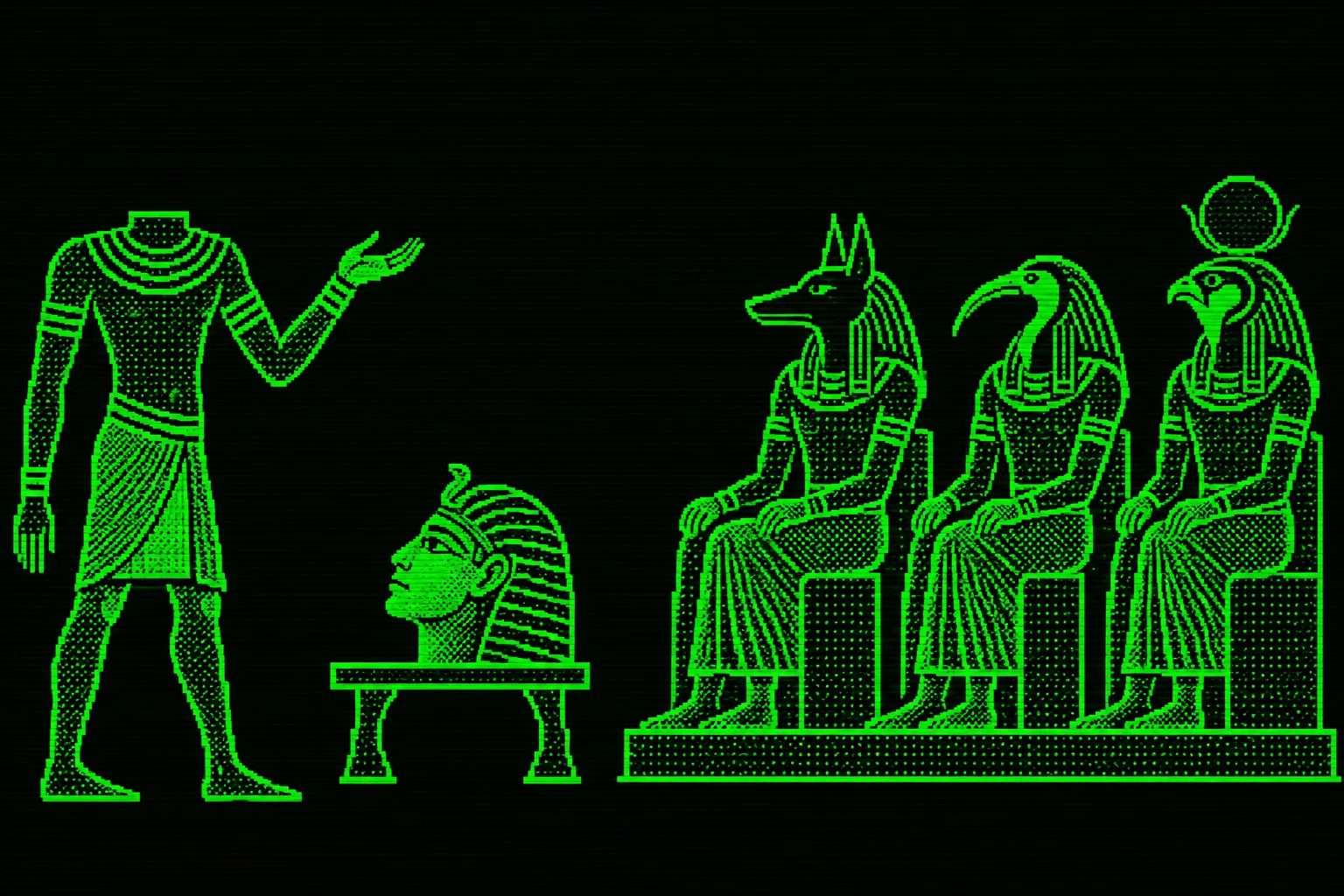
The Dispute Between Head and Body: Have Them Call Me Head!
- Date
- Copied in the 20th Dynasty (1190–1077 BC) in hieratic on a wooden writing board
- Found
- Bought in Egypt by Bernardino Drovetti, findspot unrecorded; in the Museo Egizio, Turin, since 1824 (Cat. 6238, CGT 58004)
- Language
- Late Egyptian · Hieratic
- 1
wpw.t ẖ,t ḥnꜥ dp r wḥꜥ j:jri̯ =w
Body and Head went to law to settle their dispute
- 2
sḏd q[ꜣ] =w m-bꜣḥ 30,yt 〈pw-tr〉 pꜣy =sn dp mtw =tw s⸢ḥꜣi̯⸣ pꜣ ꜥḏꜣ,jw
and have their standing declared before the Court of Thirty: which of them was head? The one in the wrong was exposed.
Note · Line 2
The Thirty sit as judges. “Head” is both a part of the body and the title the two are claiming. - 3
jr,t.ṱ =f (ḥr) ⸮jwm? 〈⸮r-mn(-m)?〉 j:jri̯ =tw mꜣꜥ,t{,pl} n pꜣ nṯr
His eye wept until justice was done for the god,
- 4
b(w,t).ṱ =f sp.y.pl ꜥḏꜣ,jw
who abhors acts of injustice.
- 5
ḏd ẖ,t
Body said
- 6
sn,nw,t =⸢st⸣ dp
that Head was second to her.
Note · Line 6
Body is feminine in Egyptian; Head is masculine. - 7
[sbḥ]j rʾ =st (r-)jqr
Her mouth gave a piercing cry:
- 8
jr jnk jnk tꜣ sꜣ,pl n pꜣ pr ḏr =f sbw.y sꜣ,y nḥb.w sꜣ,pl
“As for me, I am the beam that bears the whole house.
I lead the beams and harness the beams. - 9
ꜥ,t nb.t (ḥr) r[hn] ḥr =j wnfj jw ⸮ḥꜣ,t(j)? wnfj jw ⸮ꜥ,t(.pl)? sꜣr{.t}.tw jw nḥb,w smn ẖrj dp
Every limb leans gladly on me;
the heart is glad, the limbs are wise,
and the neck stands firm beneath the head. - 10
jr,t =j (ḥr) gmḥ m wꜣj
My eye ranges far as it looks.
Note · Line 10
Body claims even the organs of the head as her own. - 11
šr[,jw] (ḥr) srq (ḥr) jtḥ ṯꜣw
My nose breathes and draws in air.
- 12
〈m〉sḏr,t wn{n} (ḥr) sḏm{.pl}
My ear is open and listening.
- 13
rʾ (ḥr) nꜣ~gꜣ~j (ḥr) gmi̯ wšbwj.ṱ =f
My mouth cries out and finds its answer.
- 14
ꜥ.du ={fj}〈j〉 (ḥr) sꜣr.t (ḥr) bꜣk
My two arms have sense and do their work.
- 15
j:šmi̯ z jw =f (ḥr) {w}ḏr jw ḥꜣ,t(j) =f ṯsi̯.y jw ptrj =f bw~wꜣ{j} mj šꜣ~wꜣ~{j} jw =j mḥ.kwj m mꜣꜥ[,t]
A man goes about keeping others at a distance,
his heart held high; he sees a nobleman as a pauper,
while I am full of justice. - 16
[jꜣd,t] jm =f ⸢ḥr-r⸣ =⸢j⸣
The evil in him weighs on me.
- 17
m sft
Do not cut me to pieces.
- 18
m qn[j].ṱ =⸮j?
Do not crush me!
- 19
ꜥ,t(.pl) nb.(w)t (ḥr) bꜣk m-sp{.pl}.y.pl
All the limbs work together.
- 20
jnk tꜣy =w ḥn,wt
I am their mistress.
- 21
jnk tꜣ dp(,t) (n) nꜣy =st sn,nw.y[.pl] ⸢r⸣ [...]
I am the head of their fellows …
- 22
[ꜥḏꜣ,jw] (w)sj pꜣ ḏd n =f dp 〈r〉 rʾ
How wrong the one they call Head is to say
- 23
bn sw m ḏꜣjw ={f}
he is not in the wrong!
- 24
jmm ḏd =tw n =j tꜣ dp(,t)
Have them call me Head!
- 25
jnk sꜥnḫ{.pl} ⸮mtn? [...]
I am the one who sustains life and allots …”