~/sacred-texts/ramesside-royal-inscriptions
Coptos Stela of Ramesses II: The Second Hittite Marriage
- Date
- Carved on a stone stela in the 19th Dynasty, during the reign of Ramesses II (1279–1213 BC)
- Found
- Coptos (Qift), Upper Egypt
- Language
- Late Egyptian · Hieroglyphic
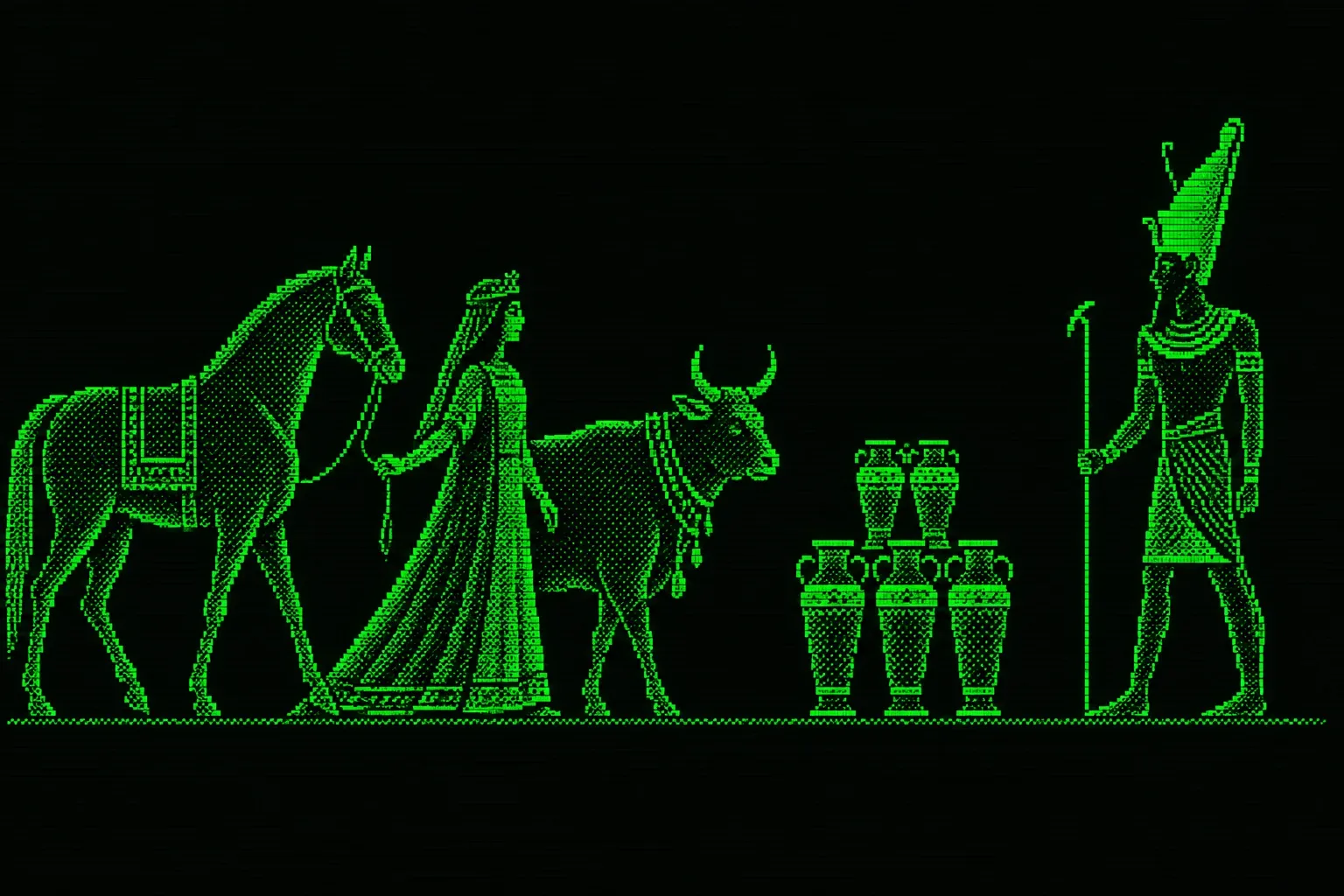
Some years after his first Hittite marriage, Ramesses II married a second daughter of the Hittite king, and this stela from Coptos celebrates the gifts that came with her. The gods of Egypt and of every foreign land, it says, made the great princes carry their own tribute: vast spoils from Hatti, gold, silver and malachite, herds of horses, bulls and goats. No dignitary went to fetch them, no army went to fetch them. The story of the first marriage, read from four copies, is on its own page.
- 1
[⸮ꜥnḫ?] Ḥr,w Kꜣ-nḫt-mri̯.y-Mꜣꜥ,t-nb-ḥb.pl-sd-mj-jtj≡f-Ptḥ-Tꜣ-ṯnn nswt-bj,tj Wsr-Mꜣꜥ,t-Rꜥw-stp.n-Rꜥw [sꜣ-Rꜥw] [Rꜥw-msi̯-sw-mri̯.y-Jmn] [di] [ꜥnḫ] [Nb,tj] Mki̯-Km,t-wꜥf-ḫꜣs,t.pl-Rꜥw-msi̯-nṯr.pl-grg-Tꜣ.du Ḥr,w-nbw Wsr-rnp,t.pl-ꜥꜣ-[nḫt,w] [...] [nswt-bj,tj] Wsr-Mꜣꜥ,t-Rꜥw-stp.n-Rꜥw sꜣ-Rꜥw Rꜥw-msi̯-sw-mri̯.y-Jmn di ꜥnḫ
Long live the Horus, Strong Bull, Beloved of Maat, Lord of Jubilees like his father Ptah-Tatenen; the King of Upper and Lower Egypt, Usermaatre Setepenre; the Son of Ra, Ramesses Meryamun, given life; the Two Ladies, Protector of Egypt, Subduer of Foreign Lands, Ra Who Gave Birth to the Gods and Founded the Two Lands; the Golden Horus, Mighty in Years, Great in Victories …; the King of Upper and Lower Egypt, Usermaatre Setepenre; the Son of Ra, Ramesses Meryamun, given life.
Note · Line 1
These are all names of one king. The Two Ladies are the vulture and cobra goddesses who guard Upper and Lower Egypt. The jubilees are Sed festivals, rites that renewed the king’s power to rule. - 2
wḏ ḥm =f rdi̯.t jri̯.y =[tw] [...] [bj]ꜣ,t.pl ꜥꜣ.y j:di.w Ptḥ-Tꜣ-ṯnn jtj-nṯr.pl Ptḥ rs,j-jnb≡f nb-ꜥnḫ-Tꜣ.du Jtm,w nb-Tꜣ.du-Jwn,[w] [Rꜥw]-⸢Ḥ⸣r,w-ꜣḫ,tj [J]⸢mn⸣-[Rꜥw] nb-ns,t.pl-Tꜣ.du Jn-ḥr,t-Šw sꜣ Gb jtj-nṯr.pl Ḥr,w-sꜣ-ꜣs,t n nswt-bj,tj Wsr-Mꜣꜥ,t-Rꜥw-stp.n-Rꜥw sꜣ-Rꜥw Rꜥw-msi̯-sw-mri̯.y-Jmn mj Rꜥw [pꜣ]y =sn šrj nfr ḥr pꜣ di.t j:jri̯ nꜣ nṯr.pl n pꜣ tꜣ n Km,t nꜣ wr.pl-ꜥꜣ.yw n ḫꜣs,t nb ḥr fꜣi̯ jn,w =sn [n] [nswt]-bj,tj Wsr-Mꜣꜥ,t-Rꜥw-stp.n-Rꜥw sꜣ-Rꜥw Rꜥw-msi̯-sw-mri̯.y-Jmn di ꜥnḫ pꜣy =sn šrj nfr m nbw qn,w m ḥḏ qn,w m ꜥꜣ,t nb šps,j
His Majesty commanded that … be made. The great wonders that Ptah-Tatenen, father of the gods; Ptah South of His Wall, lord of Ankhtawy; Atum, lord of the Two Lands and of Heliopolis; Ra-Horakhty; Amun-Ra, lord of the thrones of the Two Lands; Onuris-Shu, son of Geb, father of the gods; and Horus, son of Isis, granted to the King of Upper and Lower Egypt, Usermaatre Setepenre, the Son of Ra, Ramesses Meryamun, like Ra, their perfect son: for the gods of the land of Egypt made the great princes of every foreign land bear their tribute to the King of Upper and Lower Egypt, Usermaatre Setepenre, the Son of Ra, Ramesses Meryamun, given life, their perfect son—gold in abundance, silver in abundance, and every kind of splendid gemstone.
Note · Line 2
Ankhtawy was a name for the burial ground at Giza. - 3
jw pꜣ wr-ꜥꜣ-n-Ḫt ḥr di jni̯.tw ḥꜣq,t qn,w-ꜥšꜣ n Ḫt ḥꜣq,t qn,w-ꜥšꜣ n Kškš ḥꜣq,t qn,w-ꜥšꜣ n J~r~ṯw ḥꜣq,t qn,w-ꜥšꜣ n Qdj jw bw{t} rḫ =〈t〉w m sẖꜣ.w n nswt-bj,tj Wsr-Mꜣꜥ,t-Rꜥw-stp.n-Rꜥw sꜣ-Rꜥw Rꜥw-msi̯-sw-mri̯.y-Jmn m-mjt,t jdr.pl qn,w n ḥtr.pl jdr.pl qn,w n kꜣ.pl jdr.pl qn,w n ꜥnḫ.pl jdr.pl qn,w n ꜥw,t r-ḥꜣ,t tꜣy =f k,t šrj,t rdi̯.n =f jni̯ n nswt-bj,tj Wsr-Mꜣꜥ,t-Rꜥw-stp.n-Rꜥw sꜣ-Rꜥw Rꜥw-msi̯-sw-mri̯.y-Jmn di ꜥnḫ r Km,t m pꜣ n,tj sp sn,nw jw bn m mšꜥ j:jrr jni̯.ṱ =w jw bn [...] j:jrr jni̯.ṱ =w
And the great prince of Hatti had vast spoils from Hatti, vast spoils from Keshkesh, vast spoils from Arzawa, vast spoils from Qadi—spoils such as no one knew from any written record—brought to the King of Upper and Lower Egypt, Usermaatre Setepenre, the Son of Ra, Ramesses Meryamun. Likewise he sent many herds of horses, many herds of bulls, many herds of he-goats, many flocks of small livestock, under the charge of his other daughter, whom on this second occasion he had brought to Egypt for the King of Upper and Lower Egypt, Usermaatre Setepenre, the Son of Ra, Ramesses Meryamun, given life. It was not the army that brought them; it was not … who brought them.
Note · Line 3
The “great prince” is the Hittite king. He had already sent one daughter to marry Ramesses. What the inscription calls spoils came with a second royal bride, not with a victorious army. - 4
qn.y nꜣ nṯr.pl n pꜣ tꜣ n Km,t nṯr.pl n ḫꜣs,t nb jw =w ḥr rdi̯.t nꜣ wr.pl-ꜥꜣ.pl n ḫꜣs,t nb r fꜣi̯ [...] [⸮_?] =w ḏs =w sp-2 n nswt-bj,tj Wsr-Mꜣꜥ,t-Rꜥw-stp.n-Rꜥw sꜣ-Rꜥw Rꜥw-msi̯-sw-mri̯.y-Jmn di ꜥnḫ
Such was the might of the gods of the land of Egypt and the gods of every foreign land: they made the great princes of every foreign land carry their … in person to the King of Upper and Lower Egypt, Usermaatre Setepenre, the Son of Ra, Ramesses Meryamun, given life.
- 5
[...] r fꜣi̯ nꜣy =sn nbw r fꜣi̯ nꜣy =sn ḥḏ r fꜣi̯ nꜣy =sn ḥn.pl n wꜣḏ [...] ⸢sꜣ⸣-Rꜥw Rꜥw-msi̯-sw-mri̯.y-Jmn di ꜥnḫ r jni̯.t nꜣy =sn jdr.pl n ḥtr.pl r jni̯.t nꜣy =sn jdr.pl [...] [nꜣ]y =sn jdr.pl n ꜥnḫ.pl r jni̯.t nꜣy =sn jdr.pl n ꜥw,t
… to carry their gold, to carry their silver, to carry their jars of malachite … the Son of Ra, Ramesses Meryamun, given life; to bring their herds of horses, to bring their herds … their herds of he-goats, to bring their flocks of small livestock.
- 6
m nꜣ ms,w.pl wr.pl-ꜥꜣi̯.ypl n pꜣ tꜣ n Ḫt [...] ẖr =sn ḏs =w sp-2 r-šꜣꜥ-n tš.pl n nꜣ tꜣ.pl n nswt-bj,tj Wsr-Mꜣꜥ,t-Rꜥw-stp.n-Rꜥw sꜣ-Rꜥw Rꜥw-msi̯-sw-mri̯.y-Jmn di ꜥnḫ
It was the children of the great princes of the land of Hatti who themselves … their shares all the way to the borders of the lands of the King of Upper and Lower Egypt, Usermaatre Setepenre, the Son of Ra, Ramesses Meryamun, given life.
- 7
jwi̯ =w ḏs =w sp-2 jw bn m sr j:šmi̯ r jni̯.ṱ =w jw bn m mšꜥ j:šmi̯ r jni̯.ṱ =w jw bn n,ṯt-ḥtr.pl j:šmi̯ r jni̯.ṱ =w jw bn ṯꜣ,y-sry,t.pl j:šmi̯ r jni̯.ṱ =w
They did come in person. No dignitary went to fetch them, no army went to fetch them, no chariot warriors went to fetch them, no standard-bearers went to fetch them.
- 8
jn Ptḥ-Tꜣ-ṯnn jtj-nṯr.pl di tꜣ.pl nb.w.pl ḫꜣs,t.pl nb.pl ẖr rd.du n nṯr-nfr pn ḏ,t sp-2
It was Ptah-Tatenen, father of the gods, who set all lands and all foreign lands beneath the two feet of this perfect god, forever and ever.
Note · Line 8
“This perfect god” is Ramesses himself.