~/sacred-texts/papyrus-chester-beatty-viii-british-museum-ea-10688
Papyrus Chester Beatty VIII: The Snake Shall Not Roam
- Text
- Papyrus Chester Beatty VIII (British Museum EA 10688), Verso 13,2–15,10 and recto 5,4–6
- Date
- Recto written at the end of the 19th Dynasty (about 1200 BC); verso added by a later scribe in the 20th Dynasty (about 1190–1077 BC), at Deir el-Medina
- Found
- Found at Deir el-Medina, the workmen's village on the west bank of Thebes; now in the British Museum, London (EA 10688)
- Language
- Egyptian · Hieratic
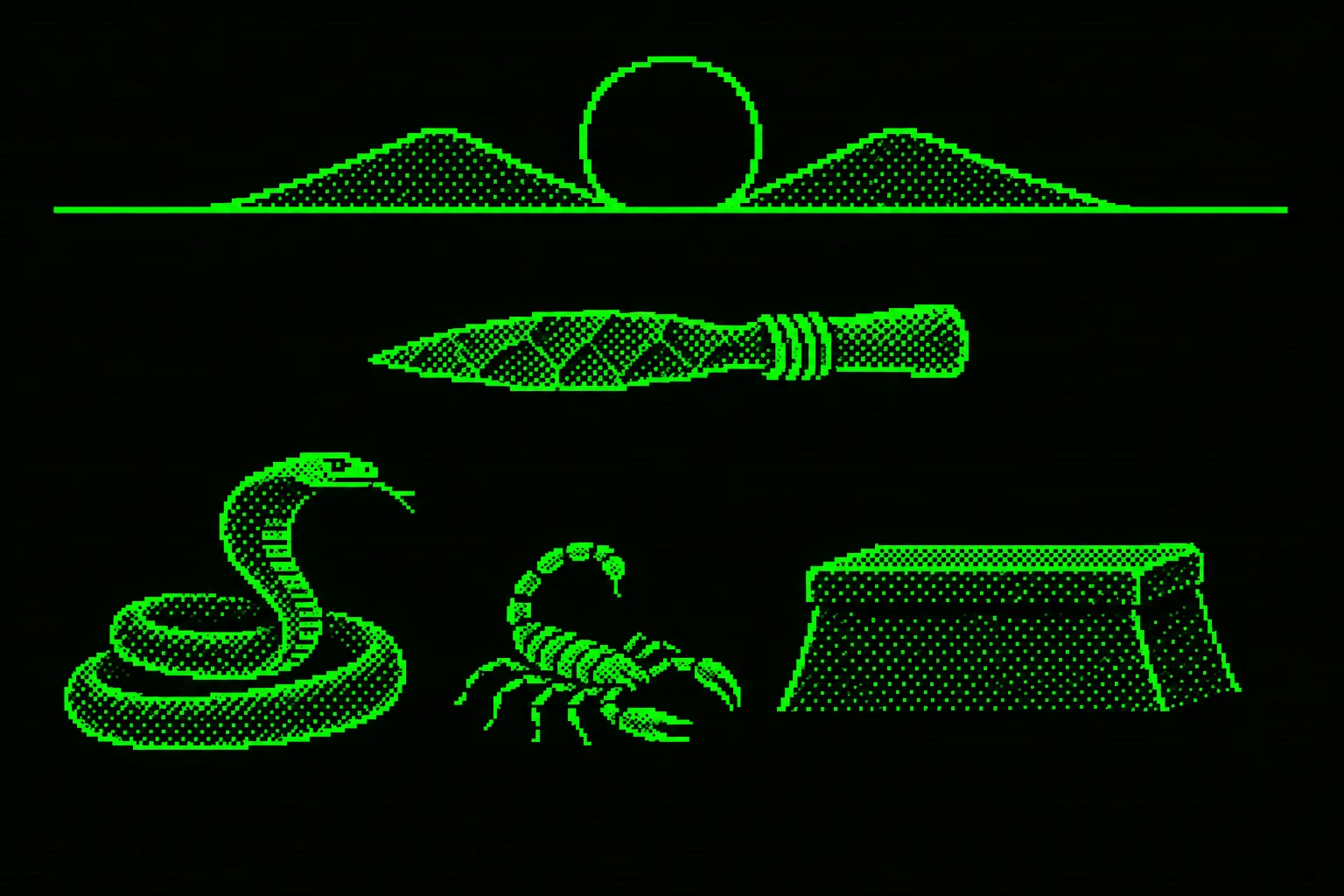
Two texts from one magician’s roll. On the back, a healer calls the sun god at dawn: come to me, lord of food, Come to me in your hour. He names himself the one who pours water for those in the coffin, then binds the enemies: The snake shall not roam. The scorpion shall not stretch itself out. The ghost inside the patient is told Dead man, dead woman, may you be destroyed! and Your venom will not … in the belly of So-and-so.
On the front, the Book of the Daytime calls Ra, Atum, Ptah, Thoth, Osiris and Horus by title after title: O Thoth, who sprang from the crown of the head!
Spells against Snake, Scorpion and the Dead (verso 13,2–15,10)
- 1
𓇯 𓅓𓂝𓇋𓂻 𓈖 𓀀 𓎟𓅆𓏶𓅓𓏲𓀁 … 𓎢 … 𓅓 𓎢 𓏲𓃀𓈖𓇳𓅆 𓎢 … 𓄲𓂋𓂻 𓎢 𓁷𓏤𓁶𓏤 𓇼𓄿𓇋𓇋𓏏𓇳 … 𓎢 … 𓎢 𓎢
[__] ⸮p,t? mj n =j nb-wnm [...] ⸢=k⸣ [...] [___] m [_] =k [⸮ḫft?] wbn =k [...] pẖr =k ḥr-tp dwꜣ,yt [...] [sti̯].n =k štꜣ [...] nb[j].pl =k [___] =k
… of the sky, come to me, lord of food, … your … in your … when you rise …
You make your rounds at first light … you have shone on the secret place … your flames … your … - 2
𓎢 … 𓇼𓄿𓇋𓇋𓏏𓇳𓏫 … 𓏏𓏲 … 𓁹𓂋 𓋴𓏏𓏥 …
j[w] =k [...] [ḥr]-⸢tp⸣ dwꜣ,yt [_]k[_] [...] [t]wrj tw j[__] [...] jrr =st [...]
You … at first light …
… pay you reverence … they do … - 3
𓏇𓏏𓏏𓏛 𓊪𓏲 … 𓎢
mj,t(j)t pw ⸢k⸣[__] [...] [ḥ]ꜥ,w =⸮k?
It is the same: … your body.
- 4
𓉐𓂋𓇋𓇋𓂻 𓎢 … 𓏇𓇋𓈖𓏏𓏏 𓎢 … 𓁷𓏤 …
pri̯.y =k [...] [__] mj-n,t(j).t ⸢=k⸣ [...] ḥr [...]
May you come forth … as if you … upon …
- 5
𓁹 𓎢 𓇓𓏲 𓎢 … 𓅯𓄿 𓇾𓏤𓈇 𓂋𓇥𓂋𓏹 𓆑
jri̯ =k sw [⸮_?] ⸮=k? [...] pꜣ tꜣ r-ḏr =f
May you do it … you … the whole land.
- 6
… 𓁨𓏤𓏫 … 𓁹 𓊃 …
[...] ⸮[n]n-n? ḥḥ.pl [...] jri̯ =s [...]
… these millions … she does …
- 7
𓎢𓇋𓇋 …
⸢ky⸣ [...]
Another …
Note · Line 7
This is the heading of a new spell. - 8
… 𓏲𓇋𓄿𓊛 … 𓆑 … 𓎢 𓁷𓏤 … 𓎢 …
[...] [__] [...] wjꜣ [...] ⸮=f? [...] [__].pl.ṱ =k ⸢ḥr⸣ [...] ⸮=k? [...]
… the barque … his … your … upon … your …
- 9
𓇋𓏲 𓈖 𓎢 … 𓐍𓆑𓏏𓁷𓏤 𓎢 …
j⸢w⸣ n ⸢=k⸣ [...] ḫft-⸢ḥr⸣ ⸢=k⸣ [...]
Yours is … before you …
- 10
𓈖𓏏𓎢 𓊪𓊃𓂧𓇯 𓎢 … 𓎢 𓉻𓂝𓄿𓏛 𓂻𓏏𓏤 𓎢𓅆 … 𓌻𓂋𓂋𓀁 𓎢 𓇋𓂝𓈗𓀜 𓎢 𓄣𓏤 𓎢 …
ntk psd =k [...] [__] =k ꜥꜣ nmt,t =k [...] mrr =k jꜥi̯ =k jb =k [...]
It is you who will shine … you will …
Long is your stride … as you wish.
You will refresh your heart …Note · Line 10
The Egyptian speaks of washing the heart: an image of delight. - 11
… 𓈖 𓏴𓏛𓊮 … 𓋴𓏏 𓈙𓂝𓂧𓄧𓌪𓂡𓏏𓏲 𓆑
[...] n sḏ,t [...] =st šꜥd.tw =f
… of the flame … it … so that he is cut to pieces.
- 12
𓋴𓈖𓏥 𓈖 𓁹𓏏𓏤 𓎟 𓇾𓍃𓅓𓀀𓁐𓏥 𓁷𓏤 …
[⸮nn?] [s]wnu̯ =sn n jr,t nb tꜣ-tm,w ḥr [...]
They will not suffer from any eye, all the people upon …
- 13
𓆼𓄿𓃀𓏲𓂢𓂡 𓋴 𓈖 𓅢𓏤𓏛𓏥 𓎢
ḫꜣb =s n bꜣ,w =k [J]mn-Rꜥw-Ḥr,w-ꜣḫ,tj
She will bow in awe of your power, Amun-Ra-Horakhty.
Note · Line 13
The name joins Amun and Ra with Horus of the Two Horizons, the horizons of sunrise and sunset. - 14
𓇋𓀁 𓊹𓅆 𓊪𓏲 𓎟𓁨𓏤𓏫 𓈖𓏏𓏭 … 𓆑 𓁨𓏤𓏫 𓈖 𓎔𓂝𓏤 𓅓 𓎟
j nṯr pw nb-ḥḥ.pl n,tj [...] [___] =f ḥḥ.pl n mḥ m kk,wj [___] nb
O god, lord of millions, who … his …
millions of cubits in the dark, in every …Note · Line 14
A cubit was a measure of length based on the distance from elbow to fingertip. - 15
𓅓𓂝𓇋𓂻 𓈖 𓀀 𓅓 𓃹𓈖𓏌𓏏𓇼𓇳 𓎢 𓅓 𓎢
mj n =j m wnw,t ⸢=k⸣ m t[__] =k
Come to me in your hour, in your …
- 16
nḥ[m] [=k] [...]
May you save …
- 17
𓈗 𓈖 𓈖𓄿 𓈖𓏏𓏭 𓅓 𓌥𓃀𓏏𓉐 … 𓇋𓅓 … 𓈖 𓃀𓈖𓏌𓏲𓅯𓅆 𓅯𓄿 …
jnk sti̯.y mw n nꜣ n,tj m ḏbꜣ,t [...] [__]⸢⸮w?⸣tj jm [...] [___] n bn,w pꜣ n,t[j] [__] j[__] [⸮m?] ḥw,t-brbr [...]
I am the one who pours water for those in the coffin … there …
… of the Bennu, the one who … in the House of the Benben …Note · Line 17
Pouring water was an offering to the dead. The Bennu was the sacred heron of Heliopolis; the benben was the sacred stone there associated with the first land to rise from the waters of creation. - 18
… 𓎢 𓐍𓆑𓏏 𓇳𓅆 𓊵𓏏𓊪𓏛 𓆑 𓅓 𓋹𓈖𓐍
[...] ⸢sḫm⸣ [...] [___] ⸢=k⸣ ⸮ḏsr[,t]? ḫft Rꜥw ḥtp =f m ꜥnḫ
… wield power … your … the sacred place … when Ra sets, still living.
Note · Line 18
At sunset Ra enters the realm of the dead. His journey continues through the night. - 19
𓅧𓈎𓂻 𓐍𓏏𓅓𓋩 𓎢 … 𓅓 𓁷𓏤𓁶𓏤 𓇾𓏤𓈇
ꜥq ḫtm ⸢=k⸣ [...] ⸢m⸣ jsj[.pl] ⸢ḫm⸣[⸮.yw?] ḥr-tp tꜣ
Enter! May you seal … from the tombs, the ignorant on earth.
- 20
𓅡𓏤 𓅧𓈎𓂻 𓏏𓊪𓎛𓏏𓉐 …
bꜣ ⸢ꜥq⸣ [r] t⸢pḥ⸣.t =sn [...] [ꜥꜣp]⸢p⸣
Ba who entered their cave … Apophis.
Note · Line 20
A ba is a form in which a god or a dead person can move and act. Apophis is the serpent who threatens the sun god on his nightly journey. - 21
𓂜 𓋴𓐪𓂧𓂧𓂻
n sqdd [ḥfꜣ,w]
The snake shall not roam.
- 22
𓂜
n [d]wn ḏꜣ~nw~rw~[y]
The scorpion shall not stretch itself out.
- 23
𓃀𓏲𓏏𓆞𓏛 … 𓐍𓂋𓀒𓂡𓏱 𓂋 𓂋 … 𓆑
[j]w bw,t [...] ḫr r ḫb[,t] [__]~nw~ḏꜣ~⸢y⸣ [___] r nmj [...] [r]⸢d⸣.du =f
The abomination … lies fallen at the place of execution … to the slaughter block … his two feet.
- 24
… 𓆑 … 𓈖𓌰𓅓𓏲𓆞 𓂋 … 𓋴𓆼𓄿𓀁𓏹𓏹𓏱 𓆑
wn [...] =f [...] nm,w r [__] ⸮600? [...] sḫꜣ =f
May his … be … at … six hundred … the memory of him.
- 25
𓂜𓈖 𓂝𓏏𓄹𓏫 𓎟 𓈖 𓏯𓈖
nn [⸮ꜥq?] [⸮=k?] [m] ꜥ,t.pl nb n [mn] msi̯.n mn,t
You will not enter a single limb of So-and-so, whom So-and-so bore.
Note · Line 25
The speaker is to give the patient’s name first, then his mother’s. - 26
𓂜𓈖 𓆣𓂋𓏲 𓄿𓉔𓏴𓅪 𓎢 𓇋𓅓 𓆑
nn ḫpr ꜣh =k jm =f
No pain of yours will arise in him.
- 27
… 𓇳𓅆 𓁹𓏲 𓇥𓂋𓇋𓏲𓀜𓏱 𓎢 𓅡𓏤𓏱 𓎢 … 𓊄𓃀𓂻𓍘𓇋 … 𓊨𓏭𓂝𓏤𓅪 𓎢
[...] Rꜥw jri̯.w ḏrjw =k ⸢s⸣[ḥ]tm bꜣ =k [...] zbi̯.tj ⸢ḏbꜣ⸣[,t] [...] s,t-ꜥ =k
… of Ra. An end has been made of you; your ba has been destroyed.
… you have gone from the coffin … your power to harm. - 28
𓅓𓏏𓏱 𓅓𓏏𓏏𓏱 𓋴𓎛𓊨𓅓𓏏𓅯𓅪𓏫 𓇋𓂋 𓎢
m(w)t m(w)t,t sḥtm.t(j) jr =k
Dead man, dead woman, may you be destroyed!
- 29
𓇋𓏲 𓎢 …
jw =k ⸢sḥtm⸣.tw s[__] [...]
You are destroyed …
- 30
𓂜𓈖 …
⸢nn⸣ [...]
Not …
- 31
𓌂𓅓𓀜 𓎢 𓎛𓂝𓏏𓄹𓏫 𓎟𓏏 𓇯
[nn] sḫm =k [m] ḥꜥ,w nb{t} [mn] [msi̯.n] ⸢mn,t⸣
You will have no power over any part of the body of So-and-so, born of So-and-so.
Note · Line 31
The person reciting the spell gives the patient’s name first, then the patient’s mother’s name. - 32
𓋴𓁷𓂋𓇋𓁄 … 𓁷𓏤𓂝𓏤
sḥri̯ [...] ⸮ḥr-ꜥ(,wj)?
Be gone … at once!
- 33
𓆑 𓇋𓂋 𓎢
g[__] =f j⸢r⸣ =k
He will … against you.
- 34
𓅓𓈖𓏏𓆑 𓇋𓋴 𓉻𓏛 𓎢 … 𓎢 𓆑
mntf js ⸢ḫw⸣ ꜥꜣ [__] ⸮=k? [...] ⸮=k? ⸮[_]t[_]? =f
For he is the great Protector. … you … you … his …
- 35
𓂋 𓆑
⸮m(w)t? [⸮m(w)t,t?] [s]ḥri̯ r =f
Dead man, dead woman, be gone from him!
Note · Line 35
The command is addressed to the spirit afflicting the patient, whether it is the ghost of a man or of a woman. - 36
𓇋𓏲 𓎢 𓂋 𓌩 𓏏𓈖
jw =k ḫr[.tj] r nm,t tn
You have fallen on this slaughter block.
- 37
𓎛𓋴𓈎𓌪 𓅡𓏤𓏱 𓎢
ḥsq bꜣ =k [__]
Your ba has been cut off …
- 38
𓎢
ẖꜣ[,t] ⸢=k⸣ sḥtm
Your corpse is destroyed.
- 39
𓂜𓈖 𓈍𓂝𓏛𓏱 𓎢
nn ḫꜥi̯ =k
You will not rise in splendor.
- 40
𓂜𓈖 𓃀𓋴𓆟 𓎢
nn bsi̯ ⸢=k⸣
You will not well up.
- 41
𓂜𓈖 𓎢 𓅓 𓄡𓏏𓏤𓄹 𓈖 𓏠𓈖𓏛𓀀
nn [___] [⸮mtw,t?] =k m ẖ,t n mn [msi̯.n] [mn,t]
Your venom will not … in the belly of So-and-so, born of So-and-so.
Note · Line 41
The Egyptian word for venom also means semen. - 42
𓂜𓈖 𓎢 …
nn s[ḥtm] ⸢=k⸣ [...]
You will not destroy …
- 43
𓎛𓆰𓈖𓎛𓆰𓈖𓂽𓏱 𓎢 … 𓎢 …
[nn] ḥnḥn =k mn[⸮_?] [...] ⸢⸮=k?⸣ [...]
You will not draw back … you …
- 44
𓂜𓈖 𓎢
nn ⸮t?[__] =k ḥty[,t] [⸮=f?]
You will not … his throat.
- 45
𓋴𓏏𓈖𓌰𓅓𓂽 𓎢 𓄓𓏤𓄹 𓆑
[nn] stnm =k ns =f
You will not lead his tongue astray.
- 46
𓂜𓈖 …
nn [...]
Not …
- 47
𓂜𓈖 𓌥𓃀𓏲𓏛 𓎢 … 𓈖 𓎢 𓅓 𓄡𓏏𓏤𓄹 𓏏𓈖
nn ḏbꜣ =k ḥq[_] [...] ⸮⸢n⸣? ⸢⸮=k?⸣ m ẖ,t ⸢⸮tn?⸣
You will not equip … for yourself in this body.
- 48
… 𓆑 … 𓎢 𓎢
⸮n[n]? ⸢⸮ẖnm?⸣ [⸮=k?] m-⸢bꜣḥ⸣ [...] [___].pl =f [...] b⸢ꜣbꜣ⸣ ⸢⸮=k?⸣ ⸢tjms⸣ [___] =k
You will not unite in the presence of … his … your hiding place; your … is red.
Note · Line 48
Red could mark something as hostile or dangerous. - 49
𓂜𓈖 𓎢 …
nn pri̯[.y] ⸢=k⸣ [...]
You will not come out …
Book of the Daytime: Invocations to the Gods (recto 5,4–6)
- 50
𓏛𓏏𓏤𓍼𓏤𓈖𓏏𓉔𓂋𓏲𓇳𓏤𓅨𓂋𓈙𓏲𓇳𓏤
mḏꜣ,t-n,t-hrw-wrš
Book of the Daytime:
- 51
𓂋𓂝𓇳𓅆 𓅓 𓆑
[j] Rꜥw m ꜣḫ,tj.du =f
O Ra in his two horizons!
Note · Line 51
The two horizons mark the places where the sun rises and sets. - 52
𓇋𓀁 𓇳𓅆 𓆣𓂋𓏲𓆓𓊃𓆑
j Rꜥw ḫpr-ḏs≡f
O Ra, who came into being of himself!
- 53
𓇋𓀁 𓇳𓅆 𓎟𓈖𓏌𓏲𓊖
j Rꜥw nb-Ḫmn,w
O Ra, lord of Hermopolis!
- 54
𓇋𓀁 𓇳𓅆 𓈎𓌳𓄿𓅓𓏲𓅯𓏛 𓊪𓃹𓈖𓏏𓈉
j Rꜥw qmꜣ Pwn[,t]
O Ra, maker of Punt!
Note · Line 54
Punt was a land on the southern Red Sea from which the Egyptians brought incense and other prized goods. - 55
𓇋𓀁 𓇳𓅆𓆣𓂋𓇋𓀾𓅆
j Rꜥw-Ḫpr,j
O Ra-Khepri!
Note · Line 55
Khepri is the rising sun in the form of a scarab beetle. His name echoes the Egyptian for “come into being.” - 56
𓇋𓀁 𓇳𓅆
j Rꜥw nb-nṯr,w
O Ra, lord of the gods!
- 57
𓇳𓅆 𓋴𓋹𓈖𓐍
j Rꜥw sꜥnḫ nṯr.pl
O Ra, who gives life to the gods!
- 58
𓇋𓀁 𓇳𓅆
j Rꜥw ḥr[,j]-nṯr,w
O Ra, chief among the gods!
- 59
𓇋𓀁 𓏏𓍃𓐝𓏲𓅆 𓎟𓊹𓅆𓏫
j Tm,w nb-nṯr,w
O Atum, lord of the gods!
- 60
𓇋𓀁 𓏏𓍃𓐝𓏲𓅆 𓁷𓂋𓏭𓁶𓏤𓅆
j Tm.w ḥr,j-tp Jwn,w
O Atum, chief of Heliopolis!
Note · Line 60
Heliopolis was the ancient center of Atum’s worship. - 61
𓇋𓀁 𓊪𓏏𓎛𓅆 𓄤𓆑𓂋𓁷𓏤𓅆
j Ptḥ nfr-ḥr
O Ptah, fair of face!
- 62
𓇋𓀁 𓊪𓏏𓎛𓅆 𓎟𓌷𓂝𓏏𓆄𓏛
j Ptḥ nb-⸢mꜣꜥ⸣,t
O Ptah, lord of Maat!
Note · Line 62
Maat is truth, justice, and the right order of the world, personified as a goddess. - 63
𓇋𓀁 𓊪𓏏𓎛𓅆 𓊹𓅆𓏫
j Ptḥ s⸢ḫpr⸣ nṯr.pl
O Ptah, who brought the gods into being!
- 64
𓇋𓀁 𓁷𓂋𓏭𓇯𓊨𓏏𓉐𓅨𓂋𓏏𓉐
j [Pt]ḥ ḥr,j-s,t-wr,t
O Ptah upon the Great Throne!
- 65
𓇋𓀁 𓊪𓏏𓎛𓅆 𓁹 𓊹𓅆𓏫
j Ptḥ jri̯ nṯr.pl
O Ptah, maker of the gods!
- 66
𓇋𓀁 𓊪𓏏𓎛𓅆𓏤 X1_𓏐𓈀𓏥𓇑𓇑𓈖𓈖𓅆
j Ptḥ [ḫnt,j] Tʾ~nn
O Ptah, foremost in Tanen!
Note · Line 66
Tanen was a sanctuary at Memphis, Ptah’s city. - 67
𓇋𓀁 𓊪𓏏𓎛𓅆 𓌨𓂋𓏭𓏛𓃀𓈎𓆭𓏛𓆑
j Ptḥ ẖr,j-b(ꜣ)q≡f
O Ptah beneath his moringa tree!
- 68
𓇋𓀁 𓅝𓅆
j Ḏḥw,tj nb-mdw(,w)-nṯr
O Thoth, lord of divine words!
Note · Line 68
“Divine words” was also the Egyptian name for hieroglyphs. Thoth was the god of writing. - 69
𓇋𓀁 𓅞𓅆
j Ḏḥw,tj [nb]-Ḫmn,w
O Thoth, lord of Hermopolis!
- 70
𓇋𓀁 𓅝𓅆 𓁹𓏲 𓋴𓋴𓋴 𓆑𓏭
j Ḏḥw,tj jri̯ 〈m〉 ḏbꜥ.pl =fj
O Thoth, who works with his fingers!
- 71
𓇋𓀁 𓅝𓅆 𓅱𓆓𓂝𓌙𓄑𓀁
j Ḏḥw,tj wḏꜥ 〈mꜣꜥ,t〉
O Thoth, judge of truth!
- 72
𓂋𓏤𓎛𓎛𓏲𓏭𓊖
〈j〉 〈Ḏḥw,tj〉 〈wp〉-rḥ.wj
O Thoth, who parted the Two Rivals!
Note · Line 72
The rivals are Horus and Seth, who contended for the throne of Osiris. - 73
𓇋𓀁 𓅝𓅆 𓉐𓂋𓏭𓂻 𓅓 𓄋𓊪𓏤𓄹
j Ḏḥw,tj pri̯ m wp,t
O Thoth, who sprang from the crown of the head!
Note · Line 73
In one account of his birth, Thoth emerged from Seth’s head. The Egyptian words for “part” and “crown of the head” sound alike. - 74
𓇋𓀁 𓅝𓅆
j Ḏḥw,tj jꜥḥ [m] p[,t]
O Thoth, moon in the sky!
- 75
𓅝𓅆 𓏲𓆓𓂝𓌙𓄑𓀁 𓇴𓂧𓊹𓅆𓏫
[j] Ḏḥw,tj wḏꜥ psḏ,t
O Thoth, judge of the Ennead!
Note · Line 75
The Ennead is a company of nine gods. - 76
𓇋𓀁 𓅝𓅆 𓉔𓂋𓏏𓏛 𓄣𓏤 𓁷𓏤
j Ḏḥw,tj hru̯ jb ḥr mꜣꜥ[,t]
O Thoth, whose heart delights in truth!
- 77
𓇋𓀁 𓅝𓅆 𓏃𓈖𓏏𓏭𓂊𓎛𓋴𓂋𓏏𓊖
j Ḏḥw,tj ḫnt,j-Ḥsr,t
O Thoth, foremost in Hesret!
Note · Line 77
Hesret was a sacred place of Thoth at Hermopolis. - 78
𓇋𓀁 𓅝𓅆 𓅓 𓉐𓏤𓏛𓏏𓏤𓍼𓏤
j Ḏḥw,tj m pr-mḏꜣ,t
O Thoth in the House of Books!
- 79
𓇋𓀁
j Wsjr [ḥqꜣ-jmn,t(j)t]
O Osiris, ruler of the West!
Note · Line 79
The West, where the sun sets, was the realm of the dead. - 80
𓇋𓀁 𓊨𓁻𓅆𓃹𓈖𓈖𓄤𓆑𓂋𓅆
j Wsjr-Wnn-nfr
O Osiris Wenennefer!
Note · Line 80
Wenennefer means “he who endures in perfection.” The invocation calls on Osiris, then Horus, name by name. - 81
𓇋𓀁 𓊨𓇳𓅆 𓁷𓂋𓏭𓄣𓏤 𓊽𓊽𓂧𓏲𓊖
j Wsjr ḥr,j-jb Ḏd,w
O Osiris in the heart of Busiris!
Note · Line 81
Busiris, in the Nile Delta, was a center of Osiris’s worship. - 82
𓊨𓁻𓅆 𓎟 𓊪𓏏𓎛𓅆𓉗𓏏𓉐𓂓𓏤𓏏𓊖
j Wsjr nb Ḥw,t-kꜣ-Ptḥ
O Osiris, lord of Memphis!
Note · Line 82
The name used here for Memphis means “House of the Ka of Ptah.” The ka is the life force; Ptah was the city’s chief god. - 83
𓇋𓀁 𓊨𓇳𓅆 𓃀𓅱𓏏𓆜𓏏𓏲 𓆑
j Wsjr bw.ṱ ⸢=f⸣ [jsf,t]
O Osiris, who abhors wrongdoing!
Note · Line 83
The Egyptian word for wrongdoing, isfet, also embraces the disorder that threatens the world. - 84
𓅓 𓉗𓏏𓉐𓅃𓅆𓎟𓁣𓅆𓎟
[j] Wsjr m Ḥw,t-Nb.wj
O Osiris in Hut-nebui!
Note · Line 84
The place name means “House of the Two Lords”: Horus and Seth. - 85
𓇋𓀁 𓊨𓁻𓅆 𓏃𓈖𓏏𓏭𓂊𓏛 𓉗𓏏𓉐𓏏𓏲 𓆑
j Wsjr ḫnt,j ḥw,ṱ =f
O Osiris, foremost in his house!
- 86
𓐩𓏌𓐩𓏌𓀁 𓇋𓏏𓆑𓅆
j [Ḥr,w] nḏnḏ jtj
O Horus, defender of his father!
Note · Line 86
Horus stands up for his father Osiris against Seth, who killed him. - 87
𓇋𓀁 𓅃𓅆𓏃𓈖𓏏𓏭𓂊𓏛𓁹𓁹𓏲𓏭𓅆𓅆
j Ḥr,w-Ḫnt,j-jr,tj.wj
O Horus Khenty-irty!
Note · Line 87
Khenty-irty is a name of Horus at Letopolis that refers to his two eyes. - 88
𓇋𓀁
j [Ḥr,w] [ḫnt,j-Ḫm]
O Horus, foremost in Letopolis!
- 89
𓅃𓅆 𓁷𓂋𓏭𓇯𓈙𓆑𓇋𓇋𓏏𓏯𓅆
[j] Ḥr,w Ḥr,j-{šf,yt}〈š≡f〉
O Horus Heryshef!
Note · Line 89
Heryshef, “he who is over his lake,” is a ram god, here identified with Horus. - 90
𓇋𓀁 𓅃𓅆 𓏶𓅓𓏭 𓈖𓈖𓏌𓏲𓊖
⸢j⸣ ⸢Ḥr,w⸣ jm,j Ḫmn,w
O Horus who dwells in Hermopolis!
- 91
[j] [Ḥr,w] [...]
O Horus …!