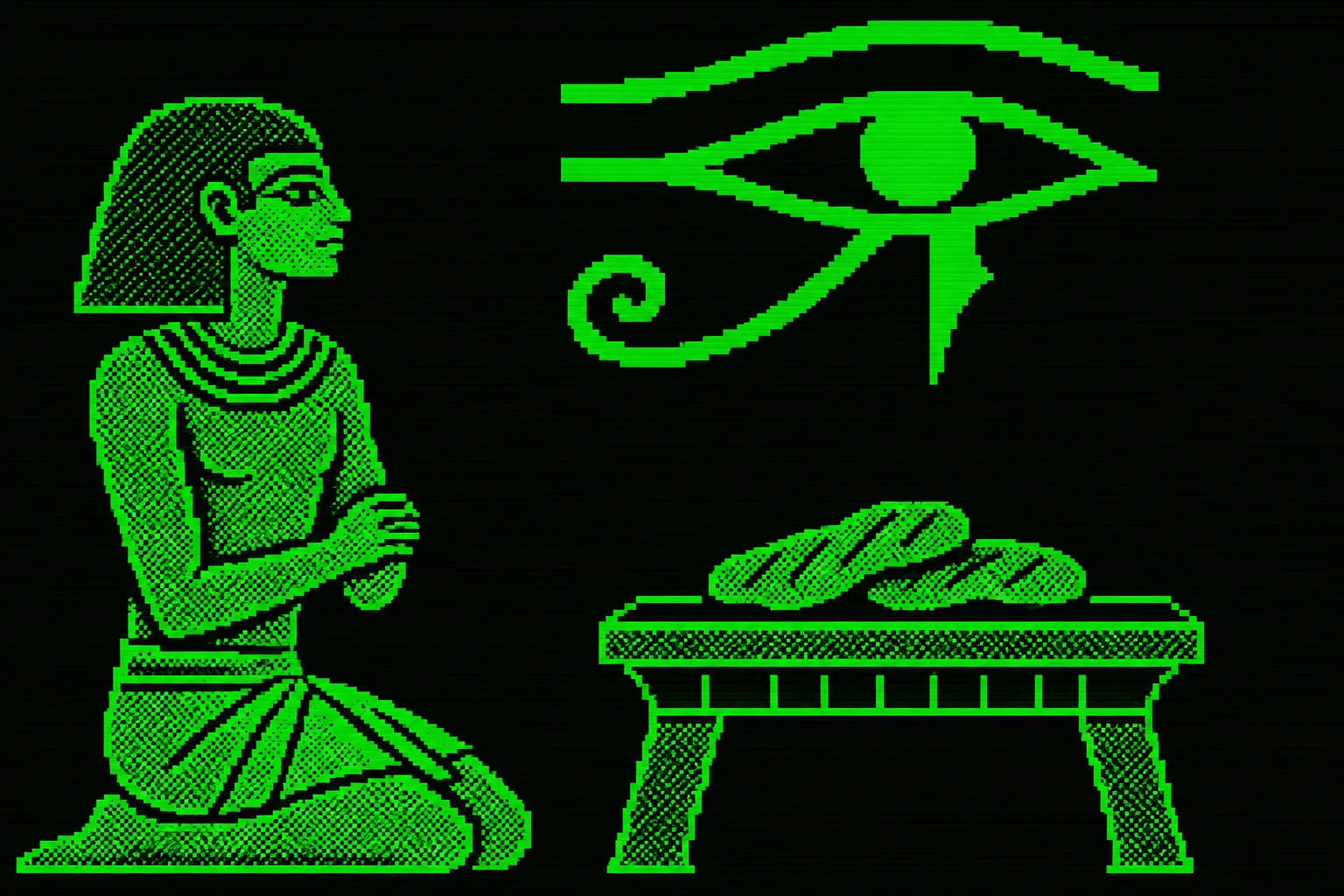
~/sacred-texts/egyptian-magical-spells
Clasp Your Left Hand With Your Right: Chester Beatty V Spells
- Text
- Egyptian magical spells, pChester Beatty V verso (BM EA 10685), spells against the hꜣqꜣ disease
- Date
- Copied in the New Kingdom, 19th Dynasty (about 1295–1186 BC)
- Found
- Deir el-Medina, Thebes; now in the British Museum, London (EA 10685)
- Language
- Late Egyptian · Hieratic
Spells (verso 6,5–8,12)
- 1
𓄂𓂝𓅓 𓉔𓄿𓈎𓄿𓂐𓀁𓏫
ḥꜣ,t-ꜥ-m šn,t [n.t] ⸢h⸣ꜣqꜣ
Beginning of an incantation against the hꜣqꜣ disease.
Note · Line 1
The name hꜣqꜣ survives, but the symptoms are too poorly described to identify the illness with certainty. - 2
𓈙𓊪𓂐 𓎢 𓉐𓂋𓂻 𓅓 𓌷𓂝𓄹 …
šp =k pri̯ m mꜣꜥ jꜣb[,j] [...]
You shall flow out and come forth from the left temple …!
Note · Line 2
The speaker addresses the illness itself as something that can hear a command and leave the patient’s body. The temple here is the side of the head beside the eye. - 3
𓇋𓈖 𓅓 𓅱𓂧𓏏𓏴𓀜 … 𓂞𓏏 𓅯𓄿𓇋𓇋 𓎢 𓍯𓄿𓏲𓏲𓈐𓂻 …
jn [j]w jyj[.n] =[k] m wdi̯.t [...] ḏi̯.t pꜣy =k ḥsꜣ[_] wꜣww ḏi̯[.t] [...]
Have you come laying down …, giving your far-off …, giving …?
- 4
𓆓𓂧𓌃𓏤𓏫 𓊗 𓇋𓏲 𓎔𓏛 𓂧𓏏𓏤 𓎢 𓅓 𓋀𓅓𓏭𓂢 𓎢
⸢ḏd⸣-mdw ⸢zp⸣ ⸢7⸣ jw mḥ =〈k〉 ḏr,t =k jꜣb[,j] m wnm,j =k
Recite seven times after clasping your left hand with your right.
Note · Line 4
Here “you” means the person performing the cure. The hand gesture belongs to the same rite as the spoken words. - 5
𓂋𓏤𓏥
rʾ.pl 7
Seven spells.
- 6
𓍴𓏏𓏛𓀁𓏫 𓈖𓏏
k⸢y⸣ šn,t n.t hꜣqꜣ
Another incantation against the hꜣqꜣ disease.
- 7
𓐍𓂋𓀒𓂡 𓄣𓏤 𓈐𓅆 𓏠𓂝𓍖𓏛 𓁷𓏤 𓈋𓈋𓅆
ḫr jb [n] Ḥr,w mn ḥr [__]ww ⸮⸢ḏw,du⸣?
Horus’s heart fell as he rested on … the Two Mountains.
- 8
𓆓𓂧𓌃𓏤𓏫 𓊗 𓇋𓏲 𓎔𓏛 𓎢 𓂧𓏏𓏤 𓎢 𓋀𓃀𓏭𓂢
ḏd-mdw zp 7 j⸢w⸣ ⸢mḥ⸣ =k ḏr,t =k jꜣb,j [m] [wnm,j] =[k]
Recite seven times after clasping your left hand with your right.
- 9
𓂋𓏤𓏥
rʾ.pl 7
Seven spells.
- 10
𓎢𓏏 𓈖𓏏
k.t [šn],t n.t 〈hꜣqꜣ〉
Another incantation against the hꜣqꜣ disease.
- 11
… 𓆷𓄿𓅷𓏤𓍯𓄿𓈖𓄿𓁻𓏱 𓈖𓏏𓏭 … 𓏲𓍑𓄿𓂀 𓁷𓂋𓀜 … 𓅓𓄚𓈖𓏌𓏲𓉐 𓋴𓏏
šp [...] ⸢šꜣ~ṯꜣ⸣~wꜣ~nꜣ n,tj [...] wḏꜣ,t ḥr [...] m-ẖnw =st
Flow out … šṯwn, which is … the Wedjat eye, ready … within her.
Note · Line 11
The Wedjat is the eye of Horus, restored after an injury. Its return to wholeness made it a symbol of healing. - 12
𓇋𓂋 𓅃𓅆 𓅓 𓈖𓐍𓈖𓏌𓏲𓅆 𓎛 𓊨𓏏𓆇𓅆 𓎟𓏏 … 𓊪𓊃𓈙𓏏𓏴𓀜 … 𓁷𓏤 𓁷𓂋𓏤 𓂋𓂝 𓈖 𓆑 𓅓 𓇋𓆮𓆮𓆮𓏏𓊖 𓌡𓂝𓏤 𓅓 𓈖𓆓𓆑 𓌡𓂝𓏤 𓅓 𓌡𓂝𓏲 𓅓 𓍱𓊃𓍘𓇋𓊖 𓌡𓂝𓏤 𓅓 𓌡𓂝𓏤 𓅓 𓅓 𓇓𓏏𓈖𓀔𓈖𓈖𓊖
⸢jr⸣ Ḥr,w m nḫn,w ⸮{ḥ}? ⸮〈ḥr〉? ꜥ[⸮.wj?].du ꜣs,t nb,t [...] psš.t [...] ⸢⸮ḥr?⸣ ḥr rḏi̯ n =f m wꜥ [m] Jmꜣw,t wꜥ m Nḏf wꜥ m [___] wꜥw m ⸢⸮Šs?⸣,tj wꜥ m ⸮[ꜣb]d,w? wꜥ m ⸮[Ḥw,t]?-nsw ⸢wꜥ⸣ m Nn-nsw
When Horus was a child in the two arms of Isis, Lady of Chemmis, there was a sharing out …, a giving to him: one in Imu, one in Nedjef, one in …, one in Shesti, one in Abydos, one in Hut-nesu, one in Heracleopolis.
Note · Line 12
Chemmis was the marsh refuge where Isis hid her infant son Horus from his uncle Seth. - 13
… 𓄿𓈙𓂋𓄹𓏥 𓈖 𓈘𓈇𓋴𓏏𓄹 𓈖 𓋹𓈖𓐍
ḏd-mdw [...] 7 ꜣšr.pl n mjs,t ⸢n⸣ ꜥnḫ
Recite … seven grilled pieces of a he-goat’s liver.
Note · Line 13
The seven pieces of liver match the seven places in the preceding spell. The instruction to name the provinces suggests that each piece stood for one place. - 14
𓂞𓏲 𓂋𓈖𓀀𓏫 𓐖𓏏𓏤𓈇 𓎟 𓇋𓅓 𓋴𓈖𓏥 𓅓 𓎛𓏏𓏐𓄿𓄿𓇋𓇋𓊮 𓈖 𓇆 𓅓
ḏi̯ rn.pl spꜣ,t _ nb jm =sn kꜣ~hꜣ[__] m ḥtꜣ~ꜣ,y n wꜣḏ [___]r[_] ⸢m⸣ jr[,t].w.pl
Let the names of the provinces, every one of them, be given … in the smoke of green plants … in the eyes.
- 15
𓂞𓏲 𓆑 𓇋𓈖 𓊃𓀀𓏤 𓎛𓏏𓂋𓇋𓆵𓏛 𓆑 … 𓁹𓏏𓏤𓄹 𓆑 𓎛𓈖𓂝 … 𓈖𓄿 𓅓𓏏𓏲 𓎢 𓏏𓎢𓈖𓂻 𓆑 𓂋 𓃀𓏲 𓂋𓐍𓏛 𓆑 𓅓𓏏𓏲 𓎢 … 𓂋
ḏi̯.w r [⸮dp?] =f jn s ḥtrj =f šs[__] [...] jr,t =f ḥnꜥ [...] ⸢⸮nꜣ?⸣ nꜣ~[___].pl mtw =k tkn =f r _ [j]⸢w⸣ bw rḫ =f mtw =k r[___] [...] [___]rw ḫꜣꜥ r _
Let it be placed against his head by a man as he supplies linen … his eye with … the … ingredients. Then bring him close to … without his knowing it, and then you are to … thrown into …
- 16
𓁹𓂋𓏲 𓈖 𓊃
[⸮ky?] {r}〈pẖ〉[r],t jri̯.w n =s
Another remedy made for it.
- 17
⸢snṯrj⸣ [...] [p]ꜣ šmꜥ [...]
Incense … the … …
- 18
… 𓈖 𓅬𓃀𓅆 𓊨𓇳𓅆 …
[...] n Gb Wsjr [...] ⸢ꜣbḏ,w⸣ [...] Ḏ[d,w]
… for Geb and Osiris … Abydos … Busiris.
Note · Line 18
Geb was the earth god and the father of Osiris. Abydos and Busiris were both centers of the worship of Osiris. - 19
𓇋𓐩𓏌 𓁷𓏤 𓁹𓏏𓏤𓄹 𓋀𓅓𓏭𓂢 𓈖
⸢j⸣:nḏ ḥr jr,t wnm,j n Rꜥ jꜣb[,j] [n] -GN-
Hail, right eye of Ra, left eye of …!
Note · Line 19
The Eye of Ra could appear as a goddess who wielded the sun god’s power. The next line addresses her by a name that joins two goddesses, Sekhmet and Bastet. - 20
𓇋𓐩𓏌 𓁷𓏤 𓇍𓇋𓇋𓏏𓂻𓍘𓇋 𓈖 𓇳𓅆 𓉔𓄿𓇋𓇋𓂻 𓂋 𓊵𓏏𓊪𓏛𓈖 𓇳𓅆 𓂋 𓊵𓏏𓊪𓏛𓈖 𓎟𓏲𓏥𓉺𓏌𓊖𓅆 𓁷𓏤 … 𓏇𓇋 𓊵𓏏𓊪𓏛𓈖 𓁷𓏤
j:nḏ ḥr Sḫm,t-Bꜣ[s,t] ⸢jy⸣.t.tj ⸢zp-2⸣ ⸢ḥtp⸣.tj [m]-⸢ḥt⸣p,w n 〈mn〉 ms[i̯] [n] [mn,t] [mj] [ḥtp.n] Rꜥ hꜣy ⸮{r}? ⸮〈m〉? p[,t] [mj] ḥtp.n Rꜥ [h]ꜣy r ⸢tꜣ⸣ ⸢mj⸣ ḥtp.n nb,w,pl-Jwn,w ḥr [...] mj ḥtp.n ꜣḫ[.w.pl] ḥr ⸢snṯr⸣[j]
Hail, Sekhmet-Bastet!
Welcome, welcome!
May you rest in peace for So-and-so, born of So-and-so,
as Ra came to rest, descending from the sky,
as Ra came to rest, descending to earth,
as the lords of Heliopolis came to rest through …,
as the akh-spirits came to rest through the burning of incense.Note · Line 20
The person reciting the spell would supply the patient’s name and the name of the patient’s mother for the two instances of “So-and-so.” The akh-spirits were the dead who had been transformed into powerful beings after death. - 21
… 𓍑𓄿𓇋𓇋𓏱 𓍑𓄿𓇋𓇋𓏏𓏱 𓅓 …
[...] ḏꜣy ḏꜣy,t n[,tj] ⸢m⸣ [...] [__]jꜣ[__] [...]
… the male foe and the female foe who are in … … …
A spell (verso 3,3–5)
- 22
𓇋𓅱 𓎢 𓏲𓈙𓂝𓇋𓀁 𓋴𓇼𓄿𓏹𓏹𓀜 𓍑𓄿𓈖𓏭𓈖𓏭𓏴𓂡
jw =k (r) wš⸮ꜥj? sbꜣ ḏꜣ~nj~nj
You shall chew on an agonizing punishment.
- 23
𓇋𓏲 𓀀 𓁹𓏹𓏹𓏹 𓏇𓏹𓏹𓏛𓏹𓏹 𓈖𓍇𓏹 𓅓𓏹𓏹𓏹 𓀀 𓂞𓏏 𓏞𓏹𓏹 𓏏𓄿𓇋𓇋 𓀀 …
jw =j (r) jri̯ ⸮mj,tw? ⸮nw[__]? mtw =j ⸮ḏi̯.t? ⸮zẖꜣ? ⸮tꜣy? =⸮j? [...]
I shall do the same … and have my … written down.