~/sacred-texts/stelae-from-the-fortress-of-buhen
Buhen Stele of Ka: An Egyptian Serving the King of Kush
- Date
- Carved in the Second Intermediate Period (about 1650–1550 BC), when the Egyptian fortress of Buhen was under the rule of Kush
- Found
- Found at the fortress of Buhen in Lower Nubia; now in the Sudan National Museum, Khartoum
- Language
- Middle Egyptian · Hieroglyphic
- 1
[...] ḥtp-di̯-nswt Wsjr nb-Ḏdw nṯr-ꜥꜣ nb-ꜣbḏw Ḥr nb ḫꜣs,t
… An offering the king gives to Osiris, lord of Busiris, the great god, lord of Abydos, and to Horus, lord of the foreign land:
Note · Line 1
In this funeral rite, the king presents the offering to the gods, who are asked to give it in turn to the dead man. - 2
di̯ =s〈n〉 pr,t-ḫrw tʾ ḥnq,t kꜣ.pl ꜣpd.pl (j)ḫ,t.pl nb.t nfr(.t) wꜥb(.t) ꜥnḫ(.t) nṯr (j)m qmꜣ(.t) p,t jri̯.t{t} tꜣ jnn(.t) Ḥꜥpj m ḥtp =f nfr n kꜣ n(,j) sr Kꜣ
May they give an offering at the spoken call: bread and beer, bulls and birds, and every good and pure thing a god lives on—what the sky creates, what the earth makes, what Hapi brings as his good offering—for the ka of the official Ka.
Note · Line 2
Hapi is the Nile flood in divine form. The ka is a person’s life force, which receives offerings after death. Here Ka is also the man’s name. - 3
jn zꜣ zꜣ,t =f sꜥnḫ rn =f sr pw Jꜥḥ-wsr ḏd =f
It is his daughter’s son, the official Useriah, who keeps his name alive. He says:
Note · Line 3
By naming his grandfather on the stone, Useriah gives later readers a way to speak Ka’s name. - 4
jnk bꜣk qn n(,j) ḥqꜣ n(,j) Kšj
“I am a valiant servant of the ruler of Kush.
Note · Line 4
Kush was a kingdom in Nubia, south of Egypt. - 5
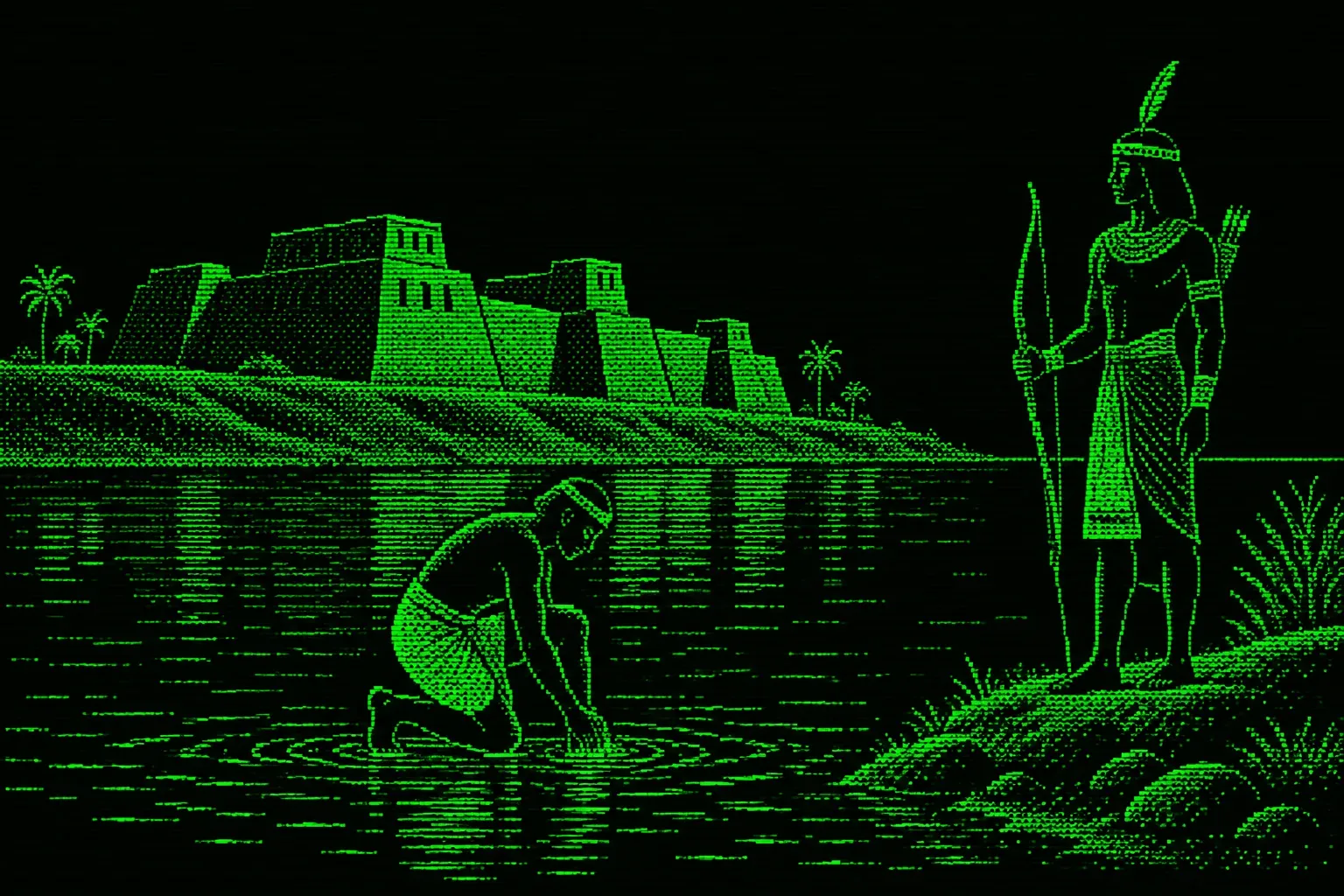
jw jꜥi̯ =(j) rd.dupl =(j) ḥr mw n.w Kšwj ḥr šms,w pꜣ ḥqꜣ Nḏḥ
I washed both my feet in the waters of Kush, in the retinue of the ruler Nedjeh.
- 6
jw =j jy.kw[j] ꜥd〈.kwj〉 wḏꜣ.kwj 〈n〉 ẖrw =(j) [...] ẖr rmṯ.pl =(j)
I came back safe and sound to my household … with my people.”