~/sacred-texts/ramesside-royal-inscriptions
Buhen Stela of Seti I: Offerings, Priests, and War Slaves
- Date
- Carved in the 19th Dynasty, regnal year 1 of Seti I (c. 1294–1290 BC), on a sandstone stela erected at Buhen in Nubia
- Found
- Found at Buhen, Nubia; British Museum, London (EA 1189)
- Language
- Middle Egyptian · Hieroglyphic
- 1
rnp,t-zp 1 ꜣbd 4 šm,w sw 30
Regnal year 1, fourth month of the Harvest season, day 30.
Note · Line 1
This was the last day of the twelve regular months of the Egyptian year. Five more days followed before the new year began. - 2
ꜥnḫ Ḥr,w Kꜣ-nḫt-sꜥnḫ-⸢tꜣ,wj⸣ [nb,tj] [Wḥm-msw,t-sḫm-ḫpš-dr-pḏ,wt-9] ⸢Ḥr,w-nbw⸣ Wḥm-ḫꜥ,w-wsr-pḏ,wt-m-tꜣ,w-nb,w nswt-bj,tj nb-Tꜣ,du nb-[jr(,t)-jḫ,t] [Mn]-⸢Mꜣꜥ,t⸣-[Rꜥw] zꜣ-Rꜥw n ẖ,t =f mry =f nb n ḫꜣs,t nb⸢.t⸣ Stẖ,y-mr-n-Ptḥ ḏi̯ ꜥnḫ mry ⸢Jmn-Rꜥw⸣ nb-ns,t.pl-tꜣ,du mry Mnw zꜣ ꜣs,t ḫꜥi̯(.w) ḥr s,t Ḥr,w n,t ꜥnḫ,w.pl mj jtj =f Rꜥw rꜥw-nb
Long live Horus, the Mighty Bull who gives life to the Two Lands; he of the Two Ladies, who renews births, strong of arm, who drives back the Nine Bows; the Golden Horus, who appears in glory again and again, mighty with the bow in every land; the King of Upper and Lower Egypt, lord of the Two Lands, master of ritual, Menmaatre; the Son of Ra, born of his body, whom he loves, lord of every foreign land, Seti Merenptah, given life, beloved of Amun-Ra, lord of the thrones of the Two Lands, beloved of Min, son of Isis. He appears on the throne of Horus among the living, as his father Ra does each day.
Note · Line 2
These are the five royal names of Seti I. The Two Ladies are the vulture and cobra goddesses who protect Upper and Lower Egypt; the Nine Bows stand for Egypt’s traditional enemies. - 3
jst ḥm =f ⸢m⸣ ⸢d⸣mj n ⸢Ḥw,t-kꜣ-Ptḥ⸣ ḥr jri̯.t ḥss jtj =f Rꜥw-Ḥr,w-ꜣḫ,tj Ptḥ ꜥꜣ rs,j-jnb≡f nb-ꜥnḫ-tꜣ,wj jwn,w [nṯr.pl] ⸢nb.w.pl⸣ Tꜣ-mrj mj r⸢ḏi̯⸣ =sn ⸢n⸣ ⸢=f⸣ qn,t nḫt ⸢tꜣ.pl⸣ nb.w.pl dmḏ m jb wꜥ ẖr ṯbw,t.wi =k mj-qd ḏ,t =k nb
Now His Majesty was in the city of Memphis, doing what his father Ra-Horakhty praises, as do Ptah the Great, south of his wall, lord of Ankh-tawy, the Heliopolitan, and all the gods of Egypt. As they grant him valor and strength, all lands are united in one heart beneath your two sandals, like all your servants.
Note · Line 3
The inscription turns from speaking of the king to addressing him. Foreign peoples were sometimes pictured on royal sandals, literally beneath the king’s feet. - 4
[jw] [wḏ.n] [ḥm] [=f] [ꜥnḫ-wḏꜣ-s(nb)] ⸢wꜣḥ⸣ [ḥtp-nṯr] ⸢n⸣ [jtj] =[f] Mnw-Jmn ḥr,j-jb Bhn
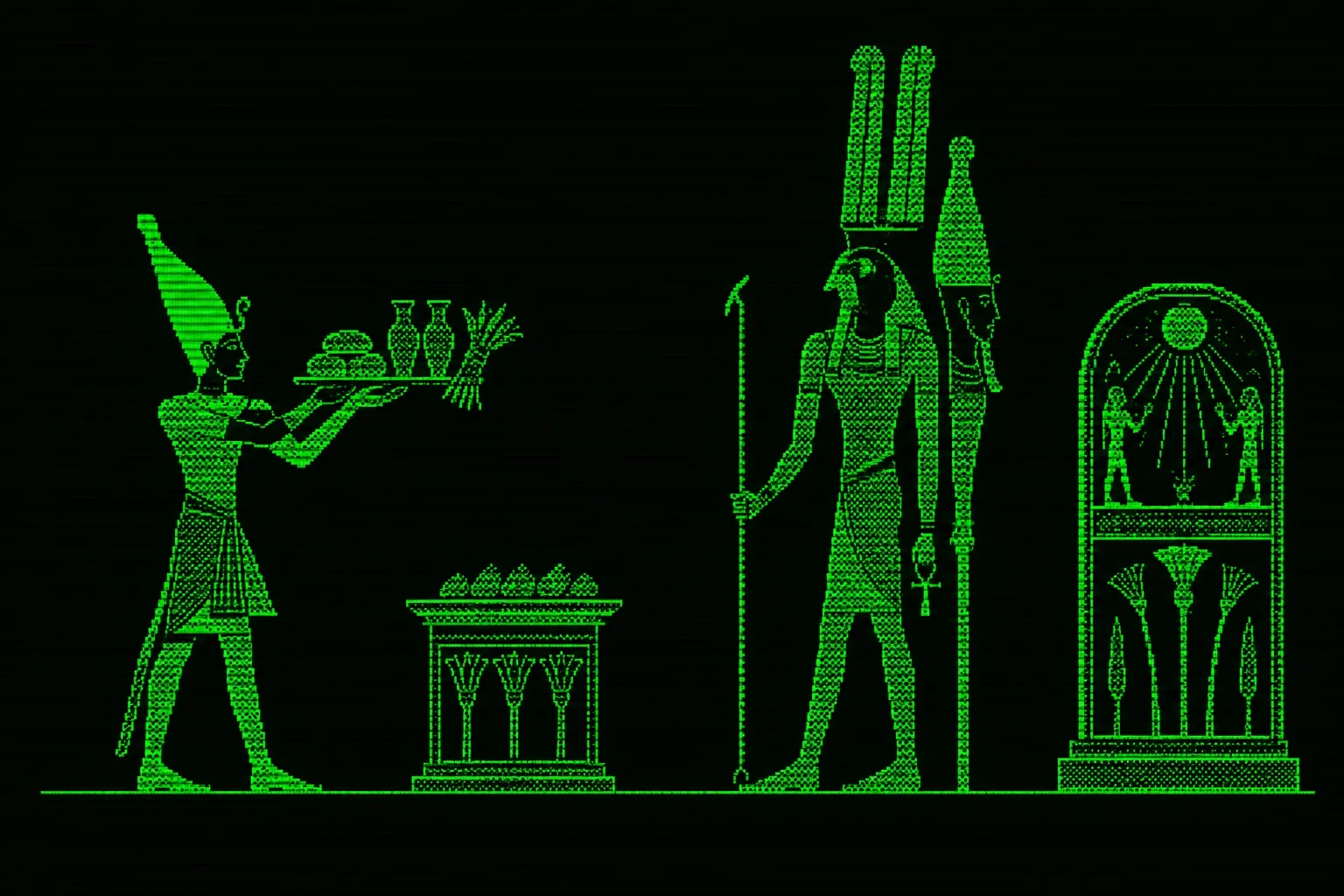
His Majesty—life, prosperity, health!—commanded that a divine offering be laid before his father Min-Amun, who dwells in Buhen.
Note · Line 4
Buhen was an Egyptian stronghold on the Nile in Nubia. Min-Amun combines the gods Min and Amun in a single divine figure. - 5
tp n wꜣḥ =f m ḥw,t-nṯr =f pzn 12 [bj,t] [100] [ḥnq,t] [dz] [4] [sm,w] [ḫrš] [10]
Reckoning of what he laid in his temple: 12 pesen-loaves, 100 bit-loaves, 4 jars of beer and 10 bunches of greens.
- 6
[m-mj],tt mḥ ⸢rʾ⸣-pr p⸢n⸣ m ḥm-nṯr.pl ẖr,j-ḥꜣb,t.pl wꜥb.pl mḥ šnꜥ,w =f m ⸢ḥm.pl⸣ ḥm,t.pl m ḥꜣq(,w) ⸢ḥm⸣ =f ꜥnḫ-wḏꜣ-⸢s(nb)⸣ [nswt-bj,tj] ⸢Mn⸣-Mꜣꜥ,t-Rꜥw ḏi̯ ꜥnḫ mj Rꜥw ḏ,t
He likewise commanded that this temple be filled with priests, lector priests and wab-priests, and that its storehouse be filled with male and female slaves from the spoils of His Majesty—life, prosperity, health!—the King of Upper and Lower Egypt, Menmaatre, given life like Ra forever.
Note · Line 6
Lector priests recited the ritual texts. Wab means “pure”; ritual purity qualified these priests for temple service. - 7
jst ḥm =f ḥr ḥjḥj ꜣḫ,w.pl r jri̯ =w n jtj ⸢=f⸣ Mnw-Jmn [...] ḥr,j-jb Bhn 〈ḥr〉 ⸢jri̯⸣ n =f m ⸢ꜥḥꜥ⸣ ꜥꜣ špss m ⸢j⸣nr-n-nfr n rwḏ,t ⸢r⸣ s,t-[ḥtp] [n] [jtj] [=f] Jmn r m[s]ḫn,t nfr.t n psḏ,t s,t ⸢ḫꜥ,w⸣ ⸢n⸣ ⸢nb⸣-nṯr,pl
Now His Majesty sought good works to do for his father Min-Amun … who dwells in Buhen. For him he raised a great and splendid stela of fine sandstone at the resting place of his father Amun, the fair abode of the Ennead, where the lord of the gods appears in glory.
Note · Line 7
The Ennead is a company of nine gods. - 8
nswt-bj,tj [nb-tꜣ,du] [Mn-Mꜣꜥ,t-Rꜥw] ⸢zꜣ-Rꜥw⸣ [n] [ẖ,t] [=f] ⸢mry⸣ ⸢=f⸣ nb-ḫꜥ,⸢pl⸣ jṯ-Nfr-ḥḏ,t [Stẖ,y]-mr-[n]-Ptḥ [ḏi̯] [ꜥnḫ] mj Rꜥw [ḏ,t]
The King of Upper and Lower Egypt, lord of the Two Lands, Menmaatre; the Son of Ra, born of his body, whom he loves, lord of crowns, who takes up the White Crown, Seti Merenptah, given life like Ra forever.
Note · Line 8
The White Crown is the crown of Upper Egypt.