~/sacred-texts/papyrus-brooklyn-47.218.84
Papyrus Brooklyn 47.218.84: The God's Hand and Delta Myths
First English translation the whole papyrus; the only earlier translations are Meeks's French (MIFAO 125, 2006) and the TLA German
Translated by AI straight from the Late Middle Egyptian, not from a modern translation, then checked against the editions and studies listed below. How we translate
- Text
- Papyrus Brooklyn 47.218.84, The whole papyrus as far as it survives: columns x+1 to x+17 and two fragments
- Date
- c. 600 BC (26th Dynasty)
- Found
- Wilbour collection; now Brooklyn Museum 47.218.84
- Language
- Late Middle Egyptian · Hieratic
Papyrus Brooklyn 47.218.84 is a priests’ handbook of the Delta, copied around 600 BC. It goes from town to town listing each place’s gods, relics, taboos and feasts, and the myths that explain them. Its opening is lost, so its columns are numbered from the first one that survives, “x”. This page gives the whole of what the Berlin edition has: seventeen columns and two loose fragments, in the papyrus’s order, with a heading for each town or myth.
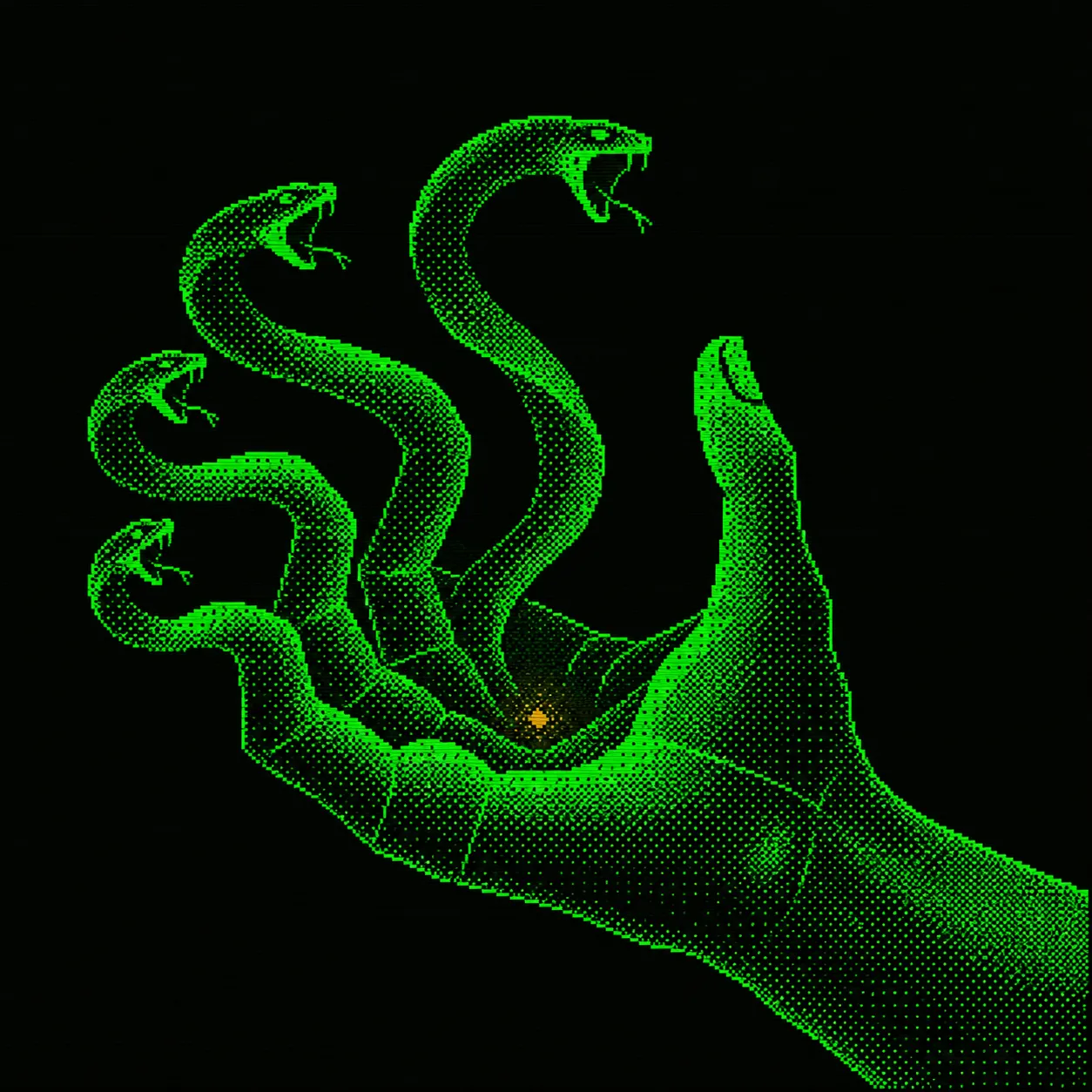
Its most famous passage belongs to Hotpet, a shrine of Hathor near Heliopolis. Re, the creator, closes his two hands into a vulva and ejaculates through it, and the first gods, Shu and Tefnut, are born of it. The hand is his daughter Hathor, the God’s Hand. She becomes pregnant, becomes a beautiful woman and is given the name “the Male”. Then the god’s four fingers turn into serpents, the Children of the Powerless, the brood of Apophis, and attack her. Every year Hotpet beat the four serpent-fingers and guarded the thumb.
Around it the manual tells the other myths of the Delta in the same plain voice. The Living Ba of Osiris is a snake coiled round his head; four snakes ring his burning chamber, each with its tail in the next one’s mouth. Isis and Nephthys rouse the donkey that carries his body with their semen. Osiris gets his daughter Horit pregnant, and a lioness eats the child. Isis takes the dead god’s phallus into her flesh; Seth rapes the goddess, and the child is Thoth; Geb fucks his mother and is speared between the thighs, so the women of Sebennytos refuse their men. At Mendes the ram is the Fucking Ba, and a phallus and a metal vulva are set on the Djed pillar.
No English translation of this papyrus has been published. The English here is made from the Egyptian of the Berlin edition and checked against its German. The last column and the fragments are badly broken, and many lines elsewhere have gaps, marked [ … ]. For the serpent and the creator in Egyptian myth as a whole, see Within the Coiled One.
Each numbered line gives the Late Middle Egyptian first: the original script, then the same words in Latin letters. Our English is underneath. Tap a dotted word for its meaning, and Note for our comment on the line; our comments are in the right margin.
Column x+1: the burning chamber of Osiris
- 1x+1,6
𓁷𓏤 𓆑
[…] ḥr =f
[ … ] on him.
Note on line 1
The opening of the papyrus is lost; the first surviving column, called x+1, begins damaged at its sixth line. - 2x+1,7
𓌨𓂋𓏛 𓆑 Z115 𓆄
[…] ẖr =f ḏd the Djed pillar · TLA šw
[ … ] under him, saying [ … ]
- 3x+1,8
𓈖𓏏
[…] n,t ssn,wj.[du.pl]
[ … ] of the two [ … ].
- 4x+1,9
𓆷𓂝𓏛
[…] šꜣꜥ […]
[ … ] until [ … ].
- 5x+1,10
𓁷𓏤 𓂋𓂝𓏤
[…] ḥr rʾ-ꜥ […]
[ … ] at the edge of [ … ].
- 6x+1,11
𓂝𓂝𓈖𓏭𓄛 𓏤 𓏤 𓃀𓋴Q7A 𓈖𓏏 𓏴𓏏Q7A 𓏤 𓌴𓂝𓏛𓄏𓈇𓏤 𓎔𓏏𓏏𓈇𓏤 𓋴 𓏇𓏏𓏏𓏛
[…] [jw] [jri̯] [n] [nṯr] [rs.j] [1] [mḥ,tt] [1] [jmn,tt] [1] [jꜣb,tt] [1] jꜥnꜥ baboon · TLA 1 zꜣ-tꜣ “son of the earth”, a kind of snake · TLA 1 bs n,t sḏ,t 1 mꜣꜥ mḥ,tt mj,tt […] […] =s mj,tt
[ … This is done for each god: one in the south, one in the north, one in the west, one in the east]; one baboon, one [Sa-ta snake] and one burning torch; the northern side the same [ … ] her [ … ] the same.
Note on line 6
The bracketed opening is restored from the next sentence, which repeats the scheme by fours. - 7x+2,1
𓇋𓏲 𓁹 𓈖 𓊹𓅆 𓇔𓈇𓏤 𓏤𓏤𓏤𓏤 𓎔𓏏𓏏𓈇𓏤 𓏤𓏤𓏤𓏤 𓋀𓏏𓏏𓈉 𓏤𓏤𓏤𓏤 𓋁𓃀𓏏𓏏𓈉 𓅭𓇾I80A 𓏤𓏤𓏤𓏤
jw jri̯ n nṯr rs,j 4 mḥ,tt 4 jmn,tt 4 jꜣb,[tt] [4] jꜥnꜥ baboon · TLA 4 zꜣ-tꜣ “son of the earth”, a kind of snake · TLA 4
This is done for each god: four in the south, four in the north, four in the west, [four] in the east; four [baboons], four zꜣ-tꜣ: “son of the earth”, a kind of snake.
Note on line 7
Zꜣ-tꜣ, “son of the earth”, is a name for a snake. - 8x+2,2
𓇋𓏲 𓏤𓏤𓏤𓏤 𓃀𓋴Q7A 𓈖 𓏴𓏏Q7A 𓌡 𓎟 𓁷𓏤 𓋴𓂧𓄢 𓈖 𓌡𓂝𓏤 𓅓 𓂋𓏤 𓈖 𓏮𓏌 𓆑 𓅓 𓇑𓇑𓈖𓈖 𓅭𓇾I80A𓏫
jw 4 bs n sḏ,t wꜥ nb ḥr qꜥ[ḥ] […] sd tail · TLA n wꜥ m rʾ mouth · TLA n sn,nw =f m nn zꜣ-tꜣ “son of the earth”, a kind of snake · TLA
And four burning torches, each one in a corner of [ … ]: the sd: tail of one is in the rʾ: mouth of the next, among these Sa-ta snakes.
Note on line 8
Literally “in the mouth of its second”. The four snakes make a ring, each biting the tail of the one in front: an ouroboros of four round the chamber of Osiris. The oldest drawn ouroboros, on the second gilded shrine of Tutankhamun, likewise rings a mummy-shaped god. - 9x+2,2
𓃹𓈖𓈖 𓈖𓏏 𓅓 𓉔𓉔Q7A 𓈖𓏏 𓏴𓏏Q7A 𓅓𓁷𓂋𓄣𓏤 𓋴𓏏
wnn Wsjr Osiris · TLA [m] […] n,t nw.w Nun, the primeval water · TLA m hh n,t sḏ,t m-ḥr,(j)-jb =st
Wsjr: Osiris is [in the … ] of the [Nun?], as the hot breath of fire in its midst.
- 10x+2,3
𓂜𓈖 𓏠𓈖𓏠𓈖𓂻 𓈖𓈙 𓊃 𓂜𓈖 𓊃𓈖𓏕𓂻 𓂋𓏏𓀀𓏥𓎟 𓅓𓂝𓈎𓄿𓂭𓂭𓈇𓏤 𓋴𓏏
nn mnmn nš[ni̯] [nb] [r] [ꜥq] =s nn sni̯ r(m)t-nb m-ꜥqꜣ =st
No [raging one] can come near to [enter] it, and no one at all can pass by it.
The Living Ba: a snake coiled on the head
- 11x+2,3
𓇋𓂋 𓅓 𓉗𓏏𓉐𓀙𓇋𓅆 𓂋𓈋𓏲𓏲𓐏𓏥 𓊪𓏲 𓉐𓂋𓂻 𓅓 𓁶𓏤 𓀼𓋴𓏛 𓈖 𓏃𓈖𓏏𓏭𓂉𓋀𓏏𓏭𓅂𓀽 𓊪𓏲 𓐍𓂋 𓏲𓏏 𓂋 𓆑 𓅓 𓋄𓃀𓈋𓊖
jr pꜣ bꜣ-ꜥnḫ the Living Ba · TLA [n,tj] m Ḥw,t-Sr rḏw efflux, the fluids that run from the god's body · TLA pw pri̯ m tp šps n Wsjr Osiris · TLA [nṯr-ꜥꜣ] ḫnt.j-jmn.tjw “Foremost of the Westerners”, Osiris as lord of the dead · TLA pw ḫr =tw r =f m ꜣbḏ,w
As for the [Living] bꜣ-ꜥnḫ: the Living Ba who is in Hut-ser: it is the rḏw: efflux, the fluids that run from the god's body that came out of the noble head of Osiris, [the great god]; it is ḫnt.j-jmn.tjw: “Foremost of the Westerners”, Osiris as lord of the dead, as they call him in Abydos.
Note on line 11
Hut-ser, “the Mansion of the Prince”, was the tomb of Osiris at Heliopolis. The rḏw are the fluids that ran from the god’s corpse; the papyrus treats them again and again as living matter from which gods are made. - 12x+2,4
𓆑𓈖𓏏𓏭I80A 𓁶𓏤 𓐍𓈖𓐍𓈖𓅬𓂻𓈖 𓆑 𓂋 𓊨𓏏𓉐 𓎟 𓈖 𓋁𓃀𓃀𓀁 𓄣𓏤𓅆 𓆑 𓂜 𓂂𓂂 𓂜 𓄔 𓅓 𓊹
fnṯ worm, snake · TLA [pw] [db]n m tp ḫnḫn.n =f r s,t nb n ꜣbb jb =f jw,tj mꜣꜣ jw,tj sḏm m nṯr […]
It is a fnṯ: worm, snake [coiled] round the head. It goes to any place its heart desires, unseen and unheard, as the god's [ … ]
Note on line 12
Fnṯ, “worm”, is written with the horned viper and ends with a snake sign. So the god’s Living Ba, made from what flowed out of his head, is a snake wound round that head, free to go wherever it likes, unseen. This is the living self of the dead god in serpent form; compare the uraeus that coils on the brow of gods and kings. - 13x+2,5
𓆣𓂋𓏛𓈖 𓆑 𓊪𓏲 𓅓 𓋄𓃀𓂧𓈉𓊖 𓉐𓂋𓂻𓈖 𓆑 𓁷𓏤 𓈋𓏤𓊌 𓈙𓇾𓍔𓏛 𓂋 𓂋 𓈋𓏤𓊌 𓈖 𓁷𓂋𓏏𓈉𓏠𓈖𓂧𓂑𓈉 𓁹 𓆑 𓊨𓏏𓉐 𓆑 𓂋𓐝𓏤 K4A𓏏𓏤𓐎𓅆 𓆑
ḫpr.n =f pw m ꜣbḏ,w pri̯.n =f ḥr ḏw štꜣ r [sni̯] r ḏw n Ḥr,t-mnd jri̯ =f s,t =f r-gs ẖꜣ,t =f
He is the one who came into being in Abydos and went out over the secret mountain, to [pass] to the mountain of the necropolis of Ment, and took his place beside his corpse.
Note on line 13
The snake-ba comes into being at Abydos and travels north to lie beside the body of Osiris. The Berlin edition places the necropolis of Ment at the Gebel el-Ahmar, near Heliopolis. Sepa: the shoulder-blade of Osiris
- 14x+2,6
𓇋𓂋 𓋴𓊪F37B𓏯𓅆𓀼𓋴𓅢𓏤𓅆𓏫𓉺𓏌𓊖 𓊹𓎛𓂝𓄹𓏥 𓈖𓏏 𓊨𓁹𓅆 𓅓𓂝𓄡𓂝𓈎F119 𓐍𓂋 𓏲𓏏 𓂋 𓆑 𓊹𓎛𓂝𓄹𓏥 𓋹𓈖𓐍𓏛 𓆓𓊃 𓆑 𓂜 Y24Y24 𓂜 𓄔
jr Zpꜣ-šps.j-bꜣ.w-Jwn.w the noble Sepa of the Bas of Heliopolis; Sepa is the centipede god of Heliopolis · TLA ḥꜥ.w-nṯr “god's body”: a relic, a piece of the god's corpse · TLA n,t Wsjr Osiris · TLA mẖꜥq.t shoulder-blade · TLA ḫru̯ =tw r =f ḥꜥ.w-nṯr “god's body”: a relic, a piece of the god's corpse · TLA ꜥnḫ ḏs =f jw,tj mꜣꜣ jw,tj sḏm
As for the Zpꜣ-šps.j-bꜣ.w-Jwn.w: the noble Sepa of the Bas of Heliopolis; Sepa is the centipede god of Heliopolis, the ḥꜥ.w-nṯr: “god's body”: a relic, a piece of the god's corpse of Osiris: “the Shoulder-blade” they call it. It is the god's body living there by itself, unseen and unheard.
Note on line 14
Sepa, the centipede, was a protector against snakes and scorpions. Here he is a relic of Osiris, his shoulder-blade, that lives on its own. - 15x+2,7
𓁹 𓏏𓏲 𓅓𓂝𓎡𓏏𓏛𓏥 𓆑 𓅓 𓇋𓀁𓇋𓇋𓏏𓉐𓊖 𓎛𓃀𓎳𓏏𓏲𓈖 𓆑 𓇋𓈖 𓈟𓏏𓁐𓏥 𓊨𓏏𓏏𓁐 𓉠𓏏𓏏𓁐 𓅃𓏏𓁐
jri̯ =tw mk,t =f m Jy,t ḥꜣbi̯ to mourn · TLA =f jn ḥm.t woman · TLA Ꜣs.t Isis · TLA Nb.t-ḥw.t Nephthys · TLA Ḥr.wt Horit, the female Horus · TLA
His protection is made in Iyt, for he was ḥꜣbi̯: to mourn there by the women: Ꜣs.t: Isis, Nb.t-ḥw.t: Nephthys and Ḥr.wt: Horit, the female Horus.
- 16x+2,7
𓃹𓈖𓇋𓇋 𓋴𓈖𓏥 𓁷𓏤 𓂋𓂝𓏏 𓊹𓎛𓂝𓄹𓏥 𓈖𓏏 𓊨𓁹𓅆 𓅠𓅓𓈖𓏏𓏲 𓆑 𓅓 𓊃𓐍𓅓𓂜𓉐𓊖 𓁷𓏤 𓊪𓊃𓂧F37B 𓈖 𓂋𓐍𓇋𓇋𓄛
wn.jn =sn ḥr rdi̯.t ḥꜥ.w-nṯr “god's body”: a relic, a piece of the god's corpse · TLA n,t Wsjr Osiris · TLA gmi̯.n.tw =f m Ḫm Letopolis · TLA ḥr psḏ spine, back · TLA n rry
They put the god's body of Osiris, when it had been found in Ḫm: Letopolis, on the back of a [sow].
Note on line 16
The animal’s sign is damaged and restored as a sow; the pig was Seth’s beast. Mnevis: the Great One with the Bundle
- 17x+2,8
𓇋𓂋 𓉕𓅨𓂋𓃒 𓅨𓂋𓉕𓃒 𓐍𓂋 𓏲𓏏 𓂋 𓆑
jr Mr-wr Mnevis, the sacred bull of Heliopolis · TLA wr-mr ḫru̯ =tw r =f
As for Mr-wr: Mnevis, the sacred bull of Heliopolis: “Great One of the Bundle” they call him.
Note on line 17
A pun drives the name: Mr-wr, Mnevis, becomes wr-mr, “Great One of the Bundle”. - 18x+2,8
𓅨𓂋𓆓𓀉𓄣𓏤𓅆 𓎛𓂝𓄹𓏥 𓆑 𓅓𓄚𓈖𓏏𓉐 𓆑 𓏲𓏏𓏏𓀾𓏛𓏥 𓏲𓏫 𓅓 𓆎𓊾𓃒𓊖 𓂋 𓉺𓏌𓊖
wrḏ.w-jb the Weary-Hearted: Osiris · TLA ḥꜥ.w limb, body part · TLA =f m-ẖnw =f twt =w m Km-wr Athribis, “the Great Black”, the 10th nome of Lower Egypt · TLA r Jwn,w
The limbs of the wrḏ.w-jb: the Weary-Hearted: Osiris are inside him; they were gathered in Km-wr: Athribis, “the Great Black”, the 10th nome of Lower Egypt to go to Heliopolis.
- 19x+2,9
𓊢𓂝𓈖 𓂝𓂋𓆑𓎤 𓏲𓏏 𓊹𓎛𓂝𓄹𓏥 𓈖𓏏 𓊨𓁹𓅆 𓅓 𓆤𓏏𓏰𓄛 𓐍𓈖𓋴𓄛𓄛 𓇆𓏛 𓊕𓏭 𓅓 𓃹𓈖𓈖 𓋴𓈖𓏥 𓅓 I206𓃒𓊖
ꜥḥꜥ.n ꜥrf =tw ḥꜥ.w-nṯr “god's body”: a relic, a piece of the god's corpse · TLA n,t Wsjr Osiris · TLA m ꜣbj.t leopard skin · TLA ḫns.du wꜣḏ green stone · TLA sp-2 m wnn =sn m Km-wr Athribis, “the Great Black”, the 10th nome of Lower Egypt · TLA
Then the god's body of Osiris was wrapped in a ꜣbj.t: leopard skin and in the fresh, fresh hide of the Khenes bull, while they were still in Athribis.
- 20x+2,9
𓂋𓈖𓈖 𓋴𓈖𓏥 𓇋𓂋𓏥 𓇋𓐝𓊃𓍘𓇋𓇋𓅆 𓈘𓈇𓋴𓏏𓄹 𓐑𓊪𓇋𓇋𓏰𓅆 𓅱𓆑𓄹 𓇼𓅓𓏏𓏏𓆑𓅆 𓂜𓈙𓅓𓄹 W15A𓌢𓀀𓏥𓆑𓅆 𓏶𓅓𓏭𓄡𓏏𓏤𓄹 𓋬𓂧𓏛 𓊹 𓏤𓏤𓏤𓏤
rnn =sn jr,j Jms,ty mjz.t liver · TLA Ḥp,y wfꜣ lung · TLA Dwꜣ-mw,t≡f nnšm spleen · TLA Qbḥ-sn.pl≡f mẖt.w intestines · TLA dmd nṯr 4
Their names accordingly: Imsety the mjz.t: liver, Hapy the wfꜣ: lung, Duamutef the nnšm: spleen, Qebehsenuf the mẖt.w: intestines; four gods in all.
Note on line 20
The four Sons of Horus, who guard the organs taken out of a mummy. In this papyrus the bull carries the dead god’s organs in a bundle. - 21x+2,10
𓊢𓂝𓈖 𓂋𓂝 𓏏 𓈝𓅓𓂻𓈖 𓆑 𓌨𓂋 𓋴𓈖𓏥 𓅓 𓂓𓏤𓂸𓃒𓋬𓂧𓏛𓅆 𓄭𓂋𓏲𓂻𓈖 𓆑 𓂋 𓉺𓏌𓊖𓅆 𓌨𓂋𓏛 𓆑 𓌻𓂋𓂷𓂡𓏲𓏏 𓂋 𓆑
ꜥḥꜥ.n rḏi̯ =tw šmi̯ =f ẖr =sn m kꜣ-dmḏ sprw.n =f r Jwn,w ẖr =f mr.ṱ r =f
Then he was sent off with them as the Bull Who Gathered, and he reached Heliopolis with it bound on him.
- 22x+2,11
𓆓𓂧 𓏲𓏏 𓂋 𓆑 𓅨𓂋𓉕𓃒
ḏd the Djed pillar · TLA =tw r =f wr-mr
So they call him “Great One of the Bundle”.
Atum at Heliopolis
- 23x+2,11
𓇋𓂋 𓇋𓏏𓅓𓅆 𓇳𓅆 𓊪𓏲 𓇋𓏲 𓆑 𓁹𓂋 𓆑 𓆣𓂋𓏲𓀾 𓆑 𓅓𓆱𓐍𓏏𓂻 𓂋𓈎𓂋𓈎𓂢𓂻 𓅓 N76A𓃒𓈗 𓂋 P81𓊖𓅪
jr Jtm.w Atum, the creator · TLA Rꜥw Re, the sun god and creator · TLA pw jw =f jri̯ =f ḫpr,w =f […] m-ḫt rqrq m Ḫꜣsw.w Xois, in the central Delta · TLA r H̱r.j-ꜥḥꜣ Kher-aha, “the Battlefield”, at Old Cairo · TLA
As for Jtm.w: Atum, the creator, that is Re: he made his transformations [ … ] after setting out from Ḫꜣsw.w: Xois, in the central Delta for H̱r.j-ꜥḥꜣ: Kher-aha, “the Battlefield”, at Old Cairo.
- 24x+3,1
𓋴𓂝𓂋𓈐𓂻 𓐍𓏏𓏛𓏥𓏲𓏏 𓆑 𓈖 𓃀𓈖𓃀𓈖𓅬𓉐𓅆 𓅓 𓈙𓏏𓊭𓉐 𓈖 𓉺𓏌𓊖
sꜥr jḫ.t thing; here a sacred relic · TLA =f n Ḫmn.yw the Eight, the primeval gods of Hermopolis · TLA [ḥr] rʾ mouth · TLA [n] Bnbn the Benben, the sacred stone of Heliopolis · TLA m šṯy.t rectum · TLA n Jwn,w
His relics were handed over to the Ḫmn.yw: the Eight, the primeval gods of Hermopolis [at the entrance of] the Bnbn: the Benben, the sacred stone of Heliopolis in the crypt of Heliopolis.
Note on line 24
The Eight are the four couples of the primeval waters, darkness, boundlessness and hiddenness, who were there before the sun. - 25x+3,1
𓊢𓂝𓈖 𓄭𓂋𓏲𓂻𓈖 𓆑 𓂋 𓉺𓏌𓊖𓅆 A52A 𓀗𓏲𓅆
ꜥḥꜥ.n sprw.n =f r Jwn,w m […] šps wr
So he reached Heliopolis as a noble, great [ … ].
- 26x+3,2
𓆣𓂋𓏛 𓊹𓅆 𓊪𓈖 𓅓 𓁹𓏲𓀾𓏛𓏥 𓆑 𓅓 𓆑 𓊪𓏲 𓈖 𓅘𓎛𓇳𓎛 𓅓 𓉻𓏏𓏯𓊌 𓆓𓏏𓇾
ḫpr nṯr pn m jr,w =f m s,t [tn] [ḫpr,w] =f pw n nḥḥ eternity, the time that keeps coming back · TLA m ꜥꜣ,t ḏ.t phallus · TLA
This god took on his form in [this] place; it is his [form] for eternity, in everlasting stone.
The All-Hearing: the Eye, the thumb, the hand and the ear
- 27x+3,2
𓇋𓂋 𓄔𓎟𓏏𓏏𓁐 𓐍𓂋 𓏲𓏏 𓂋 𓊃
jr sḏm.t-nb.t “she who hears all” · TLA sḏm.t [(j)ḫ,t-nb.t] ḫru̯ =tw r =s
As for the sḏm.t-nb.t: “she who hears all”: “She Who Hears [Everything]” they call her.
- 28x+3,3
𓊹𓎛𓂝𓄹𓄹𓄹𓏫 𓇋𓋴 𓅓 𓅱𓍑𓄿𓏏𓂂𓂀𓅆 𓅓 𓈖𓏏 𓅃𓅆𓀗𓅆
ḥꜥ.w-nṯr “god's body”: a relic, a piece of the god's corpse · TLA js m wḏꜣ.t the Udjat, the healed Eye of Horus · TLA m jr,t [jꜣb,(j)t] n,t Ḥr.w-wr Horus the Elder · TLA
The god's body, though, is the wḏꜣ.t: the Udjat, the healed Eye of Horus, the [left] eye of Ḥr.w-wr: Horus the Elder.
- 29x+3,3
𓇋𓏲 𓋴𓏏 𓅓 𓊨𓏏𓉐𓏲𓍑𓄿𓏏𓂀𓅆 𓅓𓆱𓐍𓏏𓂻 𓋴𓏏
jw =st m S,t-wḏꜣ,t m-ḫt nkn =st
It has been in the Place of the Udjat Eye since it was injured.
- 30x+3,4
𓇋𓂋 𓈖𓏏𓏏 𓅓𓏌𓉐𓈖 𓇥𓂋𓏲 𓏲𓏛𓏥 𓁹𓁹 𓈖 𓅃𓅆 𓂧𓏏𓏤 𓈖𓏏 𓅃𓅆𓀗𓅆 𓂈𓏤 𓏇𓏏𓏏𓏛 𓈖𓏏 𓅃𓈃𓅆𓅆
jr n,tt m-ẖnw =s ḏrw =w jr,t.du n Ḥr,w ꜥn.t thumb · TLA [n,t] Jtm.w Atum, the creator · TLA ḏr.t hand · TLA n,t Ḥr.w-wr Horus the Elder · TLA msḏr ear · TLA mj,tt n,t Ḥr.w-ꜣḫ.tj Harakhty, Horus of the Horizon: the sun · TLA
As for what is inside it, all of it: the two eyes of Horus, the ꜥn.t: thumb of Atum, the ḏr.t: hand of Haroeris and the msḏr: ear of Harakhty as well.
Note on line 30
Atum’s thumb is kept here as a relic; compare line 66, where the thumb of the Hand at Hotpet is protected and kept “to this day”. - 31x+3,4
𓇋𓏲 𓋴𓈖𓏥 𓋴𓏏 𓇥𓂋𓏲 𓏲𓏛𓏥 𓐍𓆑𓏏 𓏎𓈖 𓋴𓏏𓏥 𓉠𓏏𓏏𓁐 𓈖𓈟𓅓𓏛𓀜 𓋴𓈖𓏥 𓅓𓂝 𓋴𓏏𓏥
jw =sn m-ẖnw =st ḏrw =w ḫft jni̯ st Nb.t-ḥw.t Nephthys · TLA r nḥm =sn m-ꜥ qn st
They are all inside it, since Nephthys brought them away to save them from the one who had harmed them.
- 32x+3,5
𓏎𓈖 𓋴 𓏎𓈖𓋴𓌽𓌽𓈒𓈒 𓅓 𓇋𓐝𓅓𓌉𓏏𓇳𓊖 𓁷𓏤 𓊃𓊪𓊗 𓌂𓅓𓏛𓀜 𓃀𓅆 𓇋𓅓 𓋴𓈖𓏥
jni̯ =s jni̯≡s.du m Jmḥḏ,t ḥr sp sḫm B Be, a name of Seth · TLA jm =sn
She fetched the two Fetched Ones from Imhedjet, for fear that B: Be, a name of Seth would seize them.
- 33x+3,6
𓇋𓂋 𓂓𓏏𓏯𓏛𓏥 𓁹𓂋𓏏𓏥 𓈖 𓋴𓈖𓏥 𓈎𓌴𓄿𓌙𓅬𓏛 𓊹𓎛𓂝𓄹𓏥 𓅓 𓋴𓇋𓆛𓐎𓈇𓏤 𓃂𓈗 𓅓 𓂧𓏏𓏤 𓅓 𓂀 𓅓 𓂈 𓅓 𓂝𓈖𓏏𓂷 𓆑 𓋴𓆑𓇋𓇋𓈗𓀜 𓅓 𓐎𓏥 𓈖𓏏 𓈖𓐍𓃀𓏲𓄛 𓈎𓌴𓄿𓅓𓌙𓅬𓏛 𓏲𓍑𓄿𓏏𓂀𓅆 𓅓 𓇋𓁹𓀾𓏛𓏥 𓋴 𓊵𓏏𓊪𓏛 𓋴 𓅓 𓏌𓏌𓏌𓇯𓈗𓈘𓈇
jr kꜣ.t vulva; written with the sign of a phallus ejaculating · TLA jri̯.t.pl n =sn qmꜣ to create, to beget · TLA ḥꜥ.w-nṯr “god's body”: a relic, a piece of the god's corpse · TLA m sjn wꜥb m ḏr.t hand · TLA m wḏꜣ.t the Udjat, the healed Eye of Horus · TLA m msḏr ear · TLA m ꜥn.t thumb · TLA =f sfy m ḥs n,t nḫbw qmꜣ to create, to beget · TLA wḏꜣ.t the Udjat, the healed Eye of Horus · TLA m jr,w =s ḥtp =s m nw.w Nun, the primeval water · TLA
As for the works done for them: shapes of the god's bodies in pure clay, namely the hand, the Udjat, the ear and his thumb, mixed with the dung of a young bull; and shapes of the Udjat in its form when it rested in the nw.w: Nun, the primeval water.
- 34x+3,7
𓎛𓂝𓄹𓏥 𓊪𓈖 𓂋𓂝𓏏 𓁷𓏤 𓂋𓏤 𓈖 𓃀𓈖𓃀𓈖𓅬𓉐
ḥꜥ.w limb, body part · TLA pn rdi̯ ḥr rʾ mouth · TLA n Bnbn the Benben, the sacred stone of Heliopolis · TLA
This body lies at the entrance of the Benben.
Hotpet: the God’s Hand and the serpent fingers
- 35x+3,8
𓊵𓏏𓊪𓈟𓊖 𓆱𓐍𓏏𓊍𓋞𓏏𓏏𓁐 𓅓 𓇋𓁹𓂋𓏲𓀾 𓋴 𓄋𓊪𓏴𓏲𓏏 𓅓 𓂓𓏤 𓋴 𓅃𓏏𓁐 𓅓 𓉗𓏏𓁷𓂋𓁐 𓎟𓏏𓊵𓊪𓈟𓏏𓁐 𓊹𓂧𓏏𓏤𓁐 𓈖 𓇳𓅆 𓊪𓏲 𓅓 𓇋𓆇𓀾 𓋴 𓈖 𓊹𓆓𓏏𓏤 𓅓 𓈖𓉔𓏏𓆮 𓅓 𓊨𓏏𓉐𓐍𓈖𓈖𓅬𓂻
Ḥtp.t Hotpet, a shrine of Hathor near Heliopolis · TLA Ḫt.w-nbw.t the Terrace of the Golden One, Hathor · TLA m jr,w =s wpi̯.ṱ m kꜣ =s Ḥr.wt Horit, the female Horus · TLA m Ḥw.t-Ḥr.w Hathor · TLA Nb,t-ḥtp,t ḏr.t-nṯr God's Hand: the creator's hand as a goddess · TLA n Rꜥw Re, the sun god and creator · TLA pw m jr,w =s n ḏ,t-nṯr m nh.t sycamore · TLA m S,t-ḫnn
Ḥtp.t: Hotpet, a shrine of Hathor near Heliopolis is the Ḫt.w-nbw.t: the Terrace of the Golden One, Hathor in her form, which is called by her name Horit, as Ḥw.t-Ḥr.w: Hathor, Lady of Hotpet. She is the ḏr.t-nṯr: God's Hand: the creator's hand as a goddess of Re, in her form of the god's body, as a nh.t: sycamore in Set-khenet.
Note on line 35
The God’s Hand section begins here. The sycamore is Hathor’s tree. - 36x+3,9
𓏲𓂧𓏴𓀜 𓃹𓈖𓈖𓏏𓏛𓏫 𓅓𓂺𓏛 𓇳𓅆 𓋴𓏲𓂋𓂧𓌗𓏛𓈖 𓆑 𓈖𓉔𓏏𓆮𓏫 𓇋𓅓 𓐍𓆑𓏏 𓏠𓈖𓏠𓈖𓂢𓂻 𓊹𓅆 𓂋 𓊵𓏏𓊪 𓅓 𓉺𓏌𓊖 N30A𓈇𓏤𓈖𓏏𓉐𓏤𓃀𓐍𓐍Q7A𓉐𓊖 𓊨𓏏𓉐 D34S𓄿𓏲𓀜 𓈖 G139E147𓅆𓅆 D34S𓄿𓅱𓀜 𓁹𓈖 𓅃𓅆 𓎛𓈖𓂝 𓃫 𓁷𓏤 𓇋𓏏𓆑𓅆𓅆 𓆑
wdi̯ to shoot out, to put forth; to ejaculate · TLA wnn.t what exists, being; here the god's seed · TLA m-bꜣḥ Rꜥw Re, the sun god and creator · TLA swrd.n =f nh.t sycamore · TLA jm ḫft mnmn nṯr r ḥtp m Jwn,w m Jꜣ,t-n,t-Pr-bḫḫ s,t ꜥḥꜣ n nb.wj the Two Lords, Horus and Seth · TLA ꜥḥꜣ pw jri̯.n Ḥr,w ḥnꜥ Stẖ Seth · TLA ḥr jtj father · TLA =f
wnn.t: what exists, being; here the god's seed was wdi̯: to shoot out; to ejaculate before Re, and he made sycamores grow there, after the god had been brought to rest in Heliopolis, 〈in〉 the Mound of Per-bekhekh, the place of the fight of the Two Lords: 〈it is〉 the fight Horus fought with Seth over his father.
Note on line 36
The Two Lords are Horus and Seth. The papyrus first says that What-Exists was ejaculated, then, in the next line, how. - 37x+3,10
𓄿𓅓𓂬 𓂧𓂧𓏲𓏭 𓇋𓋴 𓁷𓏤 𓁹𓂋𓏏 𓂓𓏏𓄹𓂺𓈟
ꜣmm to close the hand, to grasp; here, to fold the hands into a vulva · TLA Rꜥw Re, the sun god and creator · TLA ḏr.t hand · TLA js ḥr jri̯.t kꜣ.t vulva; written with the sign of a phallus ejaculating · TLA
Re ꜣmm: to close the hand, to fold his two ḏr.t: hand together to make a kꜣ.t: vulva.
Note on line 37
Kꜣ.t is the ordinary word for the vulva. The scribe wrote it with the sign of a phallus ejaculating and the sign for a well or opening. The verb ꜣmm is the closing of a hand round something; the Berlin dictionary of Egyptian glosses it here “to fold the hands to make a vulva”. The two lines before this call Hotpet the Terrace of the Golden One and say that What-Exists was ejaculated before Re. - 38x+3,11
𓏲𓂧𓏴𓀜𓈖 𓆑 𓃹𓈖𓈖𓏏𓏛𓏥 𓆑 𓇋𓅓 𓆅𓏲𓅆 𓏏𓆑𓏌𓏏𓂉𓆗 𓇋𓅓
wdi̯ to shoot out, to put forth; to ejaculate · TLA =f wnn.t what exists, being; here the god's seed · TLA =f jm qmꜣ to create, to beget · TLA Šw Shu, god of air, the first-born son · TLA Tfn.t Tefnut, goddess of moisture, Shu's twin sister · TLA jm
He wdi̯: to shoot out; to ejaculate his wnn.t: what exists; here his seed through it, and by it Šw: god of air and Tfn.t: goddess of moisture were qmꜣ: to create, to beget.
Note on line 38
Wnn.t, “what exists”, is the god’s seed here; at line 211 the papyrus uses the same word for the phallus set on the Djed pillar. Shu and Tefnut are the first couple, brother and sister, from whom every other god descends. - 39x+3,11
𓆓𓂧 𓈖 𓀀 𓊹𓅆 𓊪𓈖 𓆑 𓊹𓂧𓏏𓏤 𓊪𓏲 𓈖 𓎟𓇾𓇥𓂋𓇋𓅆
ḏd the Djed pillar · TLA n =j nṯr pn ḥr zꜣ.t daughter · TLA =f ḏr.t-nṯr God's Hand: the creator's hand as a goddess · TLA pw n nb-n-tꜣ-r-ḏr=f Lord of the Whole Land, Lord of All: the creator · TLA
This god said to me about his zꜣ.t: daughter: “She is the ḏr.t-nṯr: the creator's hand as a goddess of the nb-n-tꜣ-r-ḏr=f: the creator.”
Note on line 39
The hand that made the vulva is the god’s daughter. The writer speaks in the first person, as a priest who had the story from the god. God’s Hand was also a title of the Theban priestess married to Amun, the God’s Wife. - 40x+4,1
𓁹𓈖 𓆑 𓇓𓏲 𓅓 𓊹𓂧𓏏𓏤 𓋴 𓅓 𓇋𓁹𓀾 𓋴 𓐍𓆑𓏏 𓆼𓂝𓂻 𓂧𓏏𓏤 𓈖 𓇳𓅆 𓐍𓆑𓏏 𓋴𓏲𓂋𓂧𓇝 𓅓 𓈖𓉔𓏏𓆮𓏫
jri̯.n =f sw m kꜣ.t vulva; written with the sign of a phallus ejaculating · TLA [ḏr,t-nṯr]-wr,t ḏr.t-nṯr God's Hand: the creator's hand as a goddess · TLA =s m jr,w =s ḫft ḫꜣꜥ to throw away, to cast off · TLA ḏr.t hand · TLA n Rꜥw Re, the sun god and creator · TLA ḫft […] […] =[s]t [m] S,t-mnṯꜣm swrd m nh.t sycamore · TLA
He had made it into a vulva. As God's Hand in her final form she is [Great] God's Hand, after Re's ḏr.t: hand was ḫꜣꜥ: to throw away, after [ … ] her, in Set-mentjam, planted with sycamores.
Note on line 40
The line is damaged and its middle is hard. The Berlin edition reads it as we do: the vulva-hand takes her lasting form as a goddess once Re has cast the hand off. Set-mentjam, “Place of Mentjam”, is a place planted with sycamores; the sycamore is Hathor’s tree. - 41x+4,2
𓀗𓏲𓀀𓏥 𓅓 𓇳𓅆 S123 𓂧𓏏𓏤𓁐
Wr.w the Great Ones, the Elders · TLA sms[w.pl] [pri̯] m Rꜥw Re, the sun god and creator · TLA sšmi̯ ḏr.t hand · TLA
The Wr.w: the Great Ones, the Elders and the Eldest [came forth] from Rꜥw: the sun god, who guided the ḏr.t: the Hand, Hathor.
Note on line 41
Lines 61 to 65 show that the Great Ones are the serpents made from the fingers. So the rebels already come out of Re here. - 42x+4,2
𓃹𓈖𓈖 𓉗𓏏𓁷𓂋𓁐 𓅓𓏇𓏏𓏏𓏛𓊪𓏲 𓅓 𓁹𓈖 𓂜 𓂜 𓄔
wnn Ḥw.t-Ḥr.w Hathor · TLA m-mj.tt-pw m Ḥr.wt Horit, the female Horus · TLA ḏr,t-[n,t-Rꜥw] jri̯.n =[f] jw,tj mꜣꜣ jw,tj sḏm
And Ḥw.t-Ḥr.w: Hathor is likewise Ḥr.wt: the female Horus, [the Hand of Re], whom [he] made unseen and unheard.
Note on line 42
Horit, “the female Horus”, is another name of the Hand goddess. At line 168 Osiris mounts his own daughter Horit, at her first time, and gets her pregnant. “Unseen and unheard”: he made her in secret, with no witness. - 43x+4,3
𓇋𓈖 𓇋𓂋 𓆑 𓊨𓁹𓅆 𓏲𓍑𓄿𓂻 𓈖 𓆑 𓂋 𓊠𓇾𓊖
jn jr =f Wsjr Osiris · TLA wḏꜣ n =f r Wḥꜥ-tꜣ Uha-ta, a sacred mound; the Berlin edition reads the name “laid in the earth” · TLA
It was Wsjr: Osiris, though, who went off to Wḥꜥ-tꜣ: a sacred mound.
Note on line 43
Here the writer turns to a second myth of the same place: the dead Osiris and the mound of Uha-ta, which stood at Hotpet. - 44x+4,3
𓐍𓆑𓏏 𓇋𓅓 𓅓 𓇥𓂋𓏲𓏲𓈐𓏥 𓁷𓂋𓏤 𓋴𓏏 𓋴𓏲𓍑𓄿𓏛 𓋴 𓌢𓌢𓏏𓏭𓁐𓁐 𓅓 𓆑
ḫft jr =f [wnn] =[f] [m-rrw,tj] jm m ḏr,ww ḥr =s swḏꜣ s(w) sn.tj the Two Sisters, Isis and Nephthys · TLA m sꜥḥ =f [ḥr] [jwḥ] =f m-wḥm
While he was [outside] it, in the area in front of it, the sn.tj: Isis and Nephthys kept him whole in his mummy, [mourning] him again.
Note on line 44
The Two Sisters are Isis and Nephthys, who mourn and guard the corpse of Osiris. The verb for their mourning is damaged and partly restored. - 45x+4,4
𓏲𓍑𓄿𓂻 𓋾𓈎𓅆 𓋴 𓏶𓅓 𓋴 𓅓 𓃹𓈖𓈖 𓆑 𓅓𓂋𓂋𓏏𓏲𓏭𓉪 𓋴𓏏
wḏꜣ ḥqꜣ =s jm,j =s m wnn =f m-rrw,tj =st
Its ruler, who is inside it, is whole, though he was outside it.
- 46x+4,4
𓆓𓂧 𓏲𓏏 𓈖 𓆑 𓂋𓏠𓈖𓏛 𓇳𓏤 𓊪𓈖
ḏd the Djed pillar · TLA =tw n =f [wḥꜥ-tꜣ] r-mn hrw pn
He is called [Uha-ta] to this day.
Note on line 46
The name of the mound is given to the god in it. The Berlin edition renders it “the one laid in the earth” in its translation and “the one who founded the earth” in its dictionary; the meaning is not certain. - 47x+4,4
𓇺 𓏤 𓈙𓈗𓇳 𓃹𓈖𓈖 𓋞𓏏𓏏𓁐 𓊹𓂧𓏏𓏤 𓈖𓏏 𓇳𓅆 𓆅𓏲𓅆 𓏏𓆑𓏌𓏏𓂉𓁐 𓋴𓆣𓂋𓈖 𓋴𓈖𓏥 𓅓 𓇺𓇳𓏤 𓊪𓈖
ꜣbd 1 šm,w wnn nbw.t the Golden One: Hathor · TLA ḏr.t-nṯr God's Hand: the creator's hand as a goddess · TLA n,t Rꜥw Re, the sun god and creator · TLA bkꜣ to be pregnant · TLA [m] Šw Shu, god of air, the first-born son · TLA Tfn.t Tefnut, goddess of moisture, Shu's twin sister · TLA sḫpr =sn m ꜣbd pn
First month of Shemu: the nbw.t: Hathor, Re's God's Hand, was bkꜣ: to be pregnant with Shu and Tefnut; they were made in this month.
Note on line 47
Back to the Hand. The Golden One is Hathor. Shemu is the harvest season, and its first month fell in early summer. The hand that took the god’s semen carries his children, so the daughter is the mother of the first couple. - 48x+4,5
𓃹𓈖𓇋𓈖 𓂭𓂭𓂭𓏫 𓈖𓏏 𓊹𓅆 𓊪𓈖 𓆣𓂋𓏛 𓂋 𓊃𓈖𓏥 𓅓 𓄟𓋴𓏲𓏏𓏯𓏥𓃀𓂧𓈙I80A𓏥 𓅓 𓇏𓏏𓈇𓏫𓅭𓈖𓈟𓅓𓇋𓇋𓅭𓏫 𓈖𓏏𓏏 𓈖 𓊵𓏏𓊪𓈟𓏏𓊖
wn.jn ḏbꜥ finger · TLA n,t nṯr pn ḫpr (j)r =sn m Ms.w-Bdš.t Children of the Powerless: the brood of Apophis, serpents and rebels against Re · TLA m Sḫ.t-znḥm.w Field of Locusts, near Hotpet · TLA n,tt rs,j n Ḥtp.t Hotpet, a shrine of Hathor near Heliopolis · TLA
Then the ḏbꜥ: finger of this god became the Ms.w-Bdš.t: the brood of Apophis in the Sḫ.t-znḥm.w: a field near Hotpet, which is south of Ḥtp.t: a shrine of Hathor near Heliopolis.
Note on line 48
“Children of the Powerless” is the usual name of the allies of Apophis, the great serpent who attacks the sun. “The Powerless” is Apophis himself, the one who is beaten every night. Hotpet was a shrine of Hathor near Heliopolis. - 49x+4,6
𓐍𓉐𓏛 𓋴𓈖𓏥 𓅓 𓎛𓆑𓏏I80A𓏥 𓁹𓂋𓏤 𓋴𓃀𓇋𓏲𓌙𓏱𓏥 𓂋 𓎟𓅆 𓏲𓏥 𓅓 𓇺𓇳𓏤 𓊪𓈖
ḫpr =sn m ḥfꜣ.wt snake, serpent · TLA jri̯ sbj.w rebellion · TLA r nb =w m ꜣbd pn
And they became ḥfꜣ.wt: snake, serpent that made sbj.w: rebellion against their lord in this month.
Note on line 49
The fingers of the hand that made the vulva become serpents and rise against the god who made them. - 50x+4,6
𓋴𓇍𓇋𓂻𓏲𓏏 𓈖𓄿 𓀗𓏲𓏲𓀀𓏥 𓁷𓏤 𓇑𓇑𓈖𓈖 𓈎𓈖𓅪𓏥 𓋴𓈖𓏥 𓈖 𓎟𓅆 𓋴𓈖𓏥 𓅓 𓎛𓃀𓎳𓂧𓏏𓏤 𓐍𓏏𓆑 𓎛𓃀𓎱𓇳𓐍𓈖𓇓𓅆
sjwi̯.tw nꜣ Wr.w the Great Ones, the Elders · TLA ḥr nn qnj.w crime, misdeed · TLA =sn n nb =sn m Ḥꜣb-ḏr.t Feast of the Hand · TLA ḫft ḥ(ꜣ)b-Ḫnsw
The Great Ones were denounced to their lord for these qnj.w: crime, misdeed of theirs at the Ḥꜣb-ḏr.t: Feast of the Hand, during the Feast of Khonsu.
Note on line 50
The month of the Feast of Khonsu is the first month of Shemu; its later name, Pakhons, means “the one of Khonsu”. - 51x+4,7
𓇋𓏲 𓁹 𓏏𓏲 𓃀𓂧T53A 𓅓 𓎱𓇳 𓊪𓈖 𓅓𓆓𓂧 𓂧𓏏𓏤 𓊪𓏲 𓄿𓅓𓏛𓏲𓏏 𓁷𓏤 𓂸𓏏𓏲𓏏𓂐𓏥 𓏤𓊹
jw jri̯ =tw bḏꜣ clay mould, the pot bread was baked in · TLA m ḥꜣb turquoise · TLA pn m-ḏd ḏr.t hand · TLA pw ꜣmm to close the hand, to grasp; here, to fold the hands into a vulva · TLA ḥr mtw.t semen · TLA nṯr
A bḏꜣ: clay mould for baking bread is made at this feast, and one says: “It is the Hand, ꜣmm: to close the hand over the god's mtw.t: semen.”
Note on line 51
A bḏꜣ is the clay pot bread was baked in. The rite makes the hand closed over the seed into a thing that can be handled, a loaf baked in the mould. - 52x+4,7
𓋴𓎛𓃀𓎱𓇳 𓏲𓏏 𓋞𓏏𓏏𓁐 𓅓 𓂝𓅓𓂝𓆱𓏥 𓅓𓆓𓂧 𓂧𓏏𓏤 𓊪𓏲 𓏇𓏏𓏏𓏛
sḥ(ꜣ)bi̯ =tw nbw.t the Golden One: Hathor · TLA m ꜥmꜥꜣ.t clapper, a hand-shaped percussion stick · TLA m-ḏd ḏr.t hand · TLA pw mj,tt
The Golden One is feasted with ꜥmꜥꜣ.t: clapper, and one says: “It is the Hand, too.”
Note on line 52
Egyptian clappers were often carved as hands, and Hathor’s cult used them. The rite says outright what the shape means. - 53x+4,7
𓃹𓈖𓇋𓈖 𓏏𓏲 𓁷𓏤 𓊃𓅭𓄿𓈎𓏛𓀜 𓐍𓏏𓏛𓏥 𓊪𓈖 𓎛𓈖𓂝 𓂋𓂝𓏏 𓂋 𓈗
wn.jn =tw ḥr sꜣq jḫ.t thing; here a sacred relic · TLA pn ḥnꜥ rdi̯.t r mw
Then one puts this jḫ.t: thing; here a sacred relic together and sets it in the water.
- 54x+4,8
𓇋𓂋 𓇋𓁹𓂋𓏲𓀾𓎱𓇳 𓁹𓏏𓏲𓏥 𓅓 𓊵𓏏𓊪𓈟𓏏𓊖 𓅓 𓎛𓃀𓎱𓇳 𓇺 𓏤 𓈙𓈗𓇳 𓐍𓆑𓏏 𓎛𓃀𓎱𓇳𓂧𓏏𓏤 𓃹𓈖𓈖 𓂭𓂭𓂭𓂭 𓈖𓏏 𓅃𓈃𓅆𓅆 𓆣𓂋𓏛 𓋴𓈖𓏥 𓅓 𓄟𓋴𓏯𓏥𓃀𓂧𓈙I80A𓏥
jr jr,w.pl jri̯.ṱ.pl m Ḥtp.t Hotpet, a shrine of Hathor near Heliopolis · TLA m ḥꜣb turquoise · TLA ꜣbd 1 šm,w ḫft Ḥꜣb-ḏr.t Feast of the Hand · TLA wnn ḏbꜥ finger · TLA (4) n,t Ḥr.w-ꜣḫ.tj Harakhty, Horus of the Horizon: the sun · TLA ḫpr =sn m Ms.w-Bdš.t Children of the Powerless: the brood of Apophis, serpents and rebels against Re · TLA
As for the rites done in Hotpet at the feast of the first month of Shemu, during the Feast of the Hand: the four fingers of Ḥr.w-ꜣḫ.tj: Horus of the Horizon, the sun had become the Children of the Powerless.
Note on line 54
Harakhty, “Horus of the Horizon”, is the rising sun and a form of Re. The fingers are counted now: four, the thumb left out. - 55x+4,9
𓃹𓈖𓈖 𓋴𓈖𓏥 𓁷𓏤 𓇍𓇋𓂻 𓂋 𓋴 𓅓 𓃀𓏤 𓌡𓂝𓏤 𓐍𓆑𓏏 𓐍𓉐𓏛 𓋴𓈖𓏥 𓅓 𓄟𓋴𓏯𓏥𓃀𓂧𓈙𓏱I80A𓏥 𓇋𓏲 𓊹𓂧𓏏𓏤𓆗 𓏏𓈖 𓆣𓂋𓏛𓍘 𓅓 𓊃𓏏𓁐 𓄤𓆑𓂋𓏏𓁐 𓂝𓈖𓁻 𓅓 𓂧𓎼𓁻
wnn =sn ḥr jji̯ r =s m bw wꜥ ḫft ḫpr =sn m Ms.w-Bdš.t Children of the Powerless: the brood of Apophis, serpents and rebels against Re · TLA jw ḏr.t-nṯr God's Hand: the creator's hand as a goddess · TLA tn ḫpr.ṱ m z.t woman · TLA nfr.t ꜥni̯ m dgi̯
They came against her all together, once they had become the Children of the Powerless, when this God's Hand had become a z.t: woman, lovely to look at.
Note on line 55
Literally “in one place”: all at once. The serpents turn on the Hand at the moment she becomes a woman. The Berlin edition reads it the same way. - 56x+4,10
𓇋𓏲 𓁹 𓏏𓏲 𓈖𓄿 𓀗𓏲𓏲𓀀𓏥 𓅓 𓊵𓏏𓊪𓈟𓏏𓊖 𓌨𓂋𓊨𓏏𓉐𓁷𓏤𓏯𓈖 𓂭𓂭𓂭𓂭 𓊪𓈖
jw jri̯ =tw nꜣ Wr.w the Great Ones, the Elders · TLA m Ḥtp.t Hotpet, a shrine of Hathor near Heliopolis · TLA ẖr-s,t-ḥr-n ḏbꜥ finger · TLA (4) pn
In Hotpet the Great Ones are made, under the charge of these four fingers.
Note on line 56
These are figures of the Great Ones made for the feast, each answering to one finger. The verb jri̯ means both “make” and “beget”, so making them is also begetting them. - 57x+4,10
𓇋𓏲 𓁹 𓏏𓏲 𓈖 𓊃𓈖𓏥 𓎱𓇳𓂧𓏏𓏤𓅆 𓏲𓐍𓂋𓏴𓂡𓏲𓏏𓏫 𓅓 𓎛𓏏𓋴𓋩 𓎛𓃀𓎱𓇳
jw jri̯ =tw n =sn Ḥꜣb-ḏr.t Feast of the Hand · TLA wḫr.ṱ.pl m ḥts ḥꜣb turquoise · TLA
The Feast of the Hand is held for them, and they are tended during the closing rites of the feast.
- 58x+4,10
𓇋𓏲 𓊄𓃀𓂻 𓏏𓏲 𓍘𓂋𓏏𓆮𓏫 𓅓 𓂝𓂋𓈎𓍼𓏛 𓋴𓈖𓏥 𓂧𓅓𓏏𓌫 𓋴𓈖𓏥 𓇥𓂋 𓈎𓈖𓅪𓏴𓏫 𓋴𓈖𓏥
jw sbi̯ =tw ṯr.t willow · TLA m ꜥrq =sn dm.wt wound · TLA =sn ḏr qnj.w crime, misdeed · TLA =sn
ṯr.t: willow branches are brought when they have got over their dm.wt: wound from their crime.
Note on line 58
The wounds are the blows of line 66. The willow belongs to Osiris. Their crime is their own rebellion, which earned them the blows. - 59x+4,11
𓇋𓏲 𓎛𓎿𓋴𓀁 𓏏𓏲 𓈖 𓋞𓏏𓏏𓁐 𓅓 𓂝𓅓𓂝𓆱𓏥 𓅓 𓂧𓂧𓏫 𓂧𓏏𓏤𓏫 𓊹𓅆 𓊪𓏲 𓋞𓏏𓏏𓁐
jw ḥsi̯ =tw n nbw.t the Golden One: Hathor · TLA m ꜥmꜥꜣ.t clapper, a hand-shaped percussion stick · TLA m ḏr.t hand · TLA ḏr.t hand · TLA nṯr pw nbw.t the Golden One: Hathor · TLA
One sings for the Golden One with clappers and with hands, for the Golden One is the god's hands.
Note on line 59
The Berlin edition reads the last clause “they are the god’s hands of the Golden One”. The Egyptian sentence pattern (X pw Y) more naturally means “Y is X”: Hathor herself is the god’s hands. - 60x+4,11
𓆓𓂧 𓏲𓏏 𓅷𓄿𓂺𓅆 𓅓 𓂋𓈖 𓈖 𓋞𓏏𓏏𓁐 𓏏𓈖 𓊹𓂧𓏏𓏤𓅆 𓈖 𓅃𓈃𓅆𓅆
ḏd the Djed pillar · TLA =tw ṯꜣ.y the Male; written with the phallus sign · TLA m rn n nbw.t the Golden One: Hathor · TLA tn ḏr.t-nṯr God's Hand: the creator's hand as a goddess · TLA n Ḥr.w-ꜣḫ.tj Harakhty, Horus of the Horizon: the sun · TLA
One says “ṯꜣ.y: the Male” as the name of this Golden One, the God's Hand of Harakhty.
Note on line 60
Ṯꜣy is the common word for a man, a male. The scribe wrote it with the phallus sign and the divine falcon. The beautiful woman who is the god’s hand carries a male name: the creator’s partner is still part of him. - 61x+5,1
𓃹𓈖𓈖 𓂭𓂭𓂭𓂭 𓋴 𓆣𓂋𓏛 𓎡𓄿𓀁 𓏲𓏏 𓂋 𓊃𓈖𓏥
wnn ḏbꜥ finger · TLA =s (4) ḫpr m ḥfꜣ.wt snake, serpent · TLA Ms.w-Bdš.t Children of the Powerless: the brood of Apophis, serpents and rebels against Re · TLA kꜣ =tw r =sn
Her four fingers have become [snakes]; “Children of the Powerless”, they are called.
Note on line 61
Now the fingers are hers. The serpents grew out of the woman’s own hand, as well as the god’s. - 62x+5,1
𓌳𓄿𓏲𓏏𓎶𓀁 𓇳𓅆 𓆑 𓇋𓋴 𓅓 𓄟𓋴𓏯𓏥𓃀𓂧𓈙I80A𓏫
mꜣwṯ to think over, to brood on · TLA Rꜥw Re, the sun god and creator · TLA nb […] [r] qmꜣ to create, to beget · TLA =f js m Ms.w-Bdš.t Children of the Powerless: the brood of Apophis, serpents and rebels against Re · TLA
Re, lord of [ … ], mꜣwṯ: to think over what he had created, the Children of the Powerless.
- 63x+5,2
𓉐𓂋𓂻 𓋴𓈖𓏥 𓇋𓅓 𓆑 𓋴𓈖𓏥 𓅓 𓇏𓏏𓈇𓏫𓅭𓈖𓈟𓅓𓇋𓇋𓅭𓏥
pri̯ =sn jm =f kꜣy ḫpr =sn m Sḫ.t-znḥm.w Field of Locusts, near Hotpet · TLA
They had come out of him, and then they took shape in the Field of Locusts.
Note on line 63
The rebels come out of the creator himself, not out of the primeval water. - 64x+5,2
𓃹𓈖𓇋𓇋 𓋴𓈖𓏥 𓇋𓂋𓏥 𓂋𓐝𓏤 𓊨𓏏𓉐 𓋴𓈖𓏥 𓂋 𓐝𓏤 𓇔𓈇𓏤 𓂧𓏏𓏤𓁐
wn.y =sn jr,j.pl r-gs Ḥtp.t Hotpet, a shrine of Hathor near Heliopolis · TLA s,t =sn r gs rs,j ḏr.t hand · TLA
They are all beside [Hotpet]; their place is on the south side of the Hand.
Note on line 64
The Hand here is Hathor at her place at Hotpet. The serpents’ place lies just south of it. - 65x+5,3
𓋴𓎛𓃀𓎱𓇳 𓏏𓏲 𓈖 𓋴𓈖𓏥 𓅓 𓇺 𓏤 𓈙𓈗𓇳 𓁷𓏤𓁷𓂋𓏤 𓋴𓈖𓏥
sḥ(ꜣ)bi̯ =tw n =sn m ꜣbd 1 šm,w ḏd the Djed pillar · TLA =[tw] Wr.w the Great Ones, the Elders · TLA ḥrḥr =sn
They are feasted in the first month of Shemu, and they are called the Great Ones.
- 66x+5,3
𓎛𓀜𓏷𓀜 𓏏𓏲 𓂋 𓊹 𓏤𓏤𓏤𓏤 𓆓𓂧 𓏤𓏤𓏤𓏤 𓂭𓂭𓂭𓂭 𓌡𓂝𓏏𓏤 𓆓𓂧 𓂝𓈖𓏏𓂷𓄹 𓈖 𓋞𓏏𓏏𓁐 𓏏𓈖 𓂧𓏏𓏤 𓈖 𓎟𓇾𓇥𓂋𓇋𓅆
ḥwi̯ to strike, to beat · TLA =tw r nṯr 4 ḏd 4 ḏbꜥ finger · TLA ḫwi̯ to protect, to guard · TLA =[tw] wꜥ ḏd ꜥn.t thumb · TLA n nbw.t the Golden One: Hathor · TLA tn ḏr.t hand · TLA n nb-n-tꜣ-r-ḏr=f Lord of the Whole Land, Lord of All: the creator · TLA
One ḥwi̯: to strike the four gods, that is, the four fingers; one ḫwi̯: to protect the one, that is, the ꜥn.t: thumb of this Golden One, the Hand of the Lord of All.
Note on line 66
A pun drives the rite: ḥwi̯, “strike”, and ḫwi̯, “protect”, differ by one sound. Every year the four serpent-fingers were beaten, and the thumb, which did not become a serpent, was kept safe. - 67x+5,4
𓇋𓏲 𓋴 𓇋𓅓 𓂋𓏠𓈖𓏛 𓉔𓂋𓏲𓇳𓏤 𓊪𓈖
jw =s jm r-mn hrw pn
It is there to this day.
Note on line 67
“It” is the thumb, kept at Hotpet as a relic. The Egyptian pronoun is feminine and could also mean the Hand herself. Osiris-Sepa and the donkey
- 68x+5,4
𓇋𓂋 𓂓𓏏𓏯𓏛𓏥 𓁹𓂋𓏏𓏥 𓈖 𓊨𓁹𓅆𓋴𓊪F37B𓀭 𓅓 𓇺 𓏤 𓈙𓈗𓇳 𓎎𓏫𓏫 𓎛𓈖𓂝 𓇺 𓏤𓏤 𓉐𓂋𓏏𓇳 𓇷𓈖𓏏𓏯 𓎱𓇳𓏎𓈖𓇓𓏲
jr kꜣ.t vulva; written with the sign of a phallus ejaculating · TLA jri̯.t.pl n Wsjr-Spꜣ Osiris-Sepa: Osiris merged with Sepa, the centipede god of Heliopolis · TLA m ꜣbd 1 šm,w 16 ḥnꜥ ꜣbd 2 pr,t psḏn,tjw Jni̯≡s
As for the works done for Wsjr-Spꜣ: Osiris merged with the centipede god Sepa in the first month of Shemu, day 16, and in the second month of Peret, on the new-moon day, the feast called “She Is Fetched”:
Note on line 68
This line opens the next section, on Osiris-Sepa. Sepa was the centipede god of Heliopolis, a protector against snakes. “She Is Fetched” is a feast of the returning goddess, the sun’s Eye. - 69x+5,5
𓇋𓂋 𓋴𓊪F37B𓀭 𓊨𓁹𓅆 𓊪𓏲 𓊃𓊪𓇋𓇋𓏏𓏛𓅆 𓐍𓂋 𓏲𓏏 𓂋 𓆑
jr Zpꜣ Sepa, the centipede god · TLA Wsjr Osiris · TLA pw zpy what is left over · TLA ḫru̯ =tw r =f
As for Zpꜣ: Sepa, the centipede god: that is Osiris, and “zpy: what is left over” they call him.
Note on line 69
A pun: Spꜣ, Sepa, and spy.t, “what is left”: the relic is what remains of the dismembered god. - 70x+5,5
𓂋𓂝𓇋𓈖𓏏𓏲 𓆑 𓁷𓏤 𓊪𓊃𓂧F37B 𓈖 𓉻𓂸𓏯𓄛 𓄡𓊃𓅪 𓆑 𓌨𓂋𓏲𓏛 𓆑 𓋴𓇥𓂋𓁀𓂡 𓆑 𓁷𓏤 𓇾𓏤𓈇
rdi̯.jn.tw =f ḥr psḏ spine, back · TLA n jꜥꜣ donkey · TLA ẖsi̯ =f ẖrw =f sḏr =f ḥr tꜣ
He was put on the back of a jꜥꜣ: donkey; it grew weak under him and lay down on the ground.
- 71x+5,6
𓃹𓈖𓇋𓈖 𓊨𓏏𓏏𓁐 𓉠𓏏𓏏𓁐 𓁷𓏤 𓂞𓏏 𓂸𓏏𓏲𓏏𓂐 𓊹 𓂋 𓂉𓏤 𓆑
wn.jn Ꜣs.t Isis · TLA Nb.t-ḥw.t Nephthys · TLA ḥr di̯.t mtw.t semen · TLA nṯr r fnḏ nose · TLA =f
Then Isis and Nephthys put the god's mtw.t: semen into its fnḏ: nose.
- 72x+5,6
𓊢𓂝𓈖 𓂧𓃹𓈖𓏌𓏲𓂻 𓆑 𓇓𓏲 𓌨𓂋𓏛𓏲 𓆑 𓈝𓅓𓂻 𓆑 𓁷𓂋𓏤𓂝𓏤𓏲𓏭
ꜥḥꜥ.n dwn to stretch out; of thighs, to spread · TLA =f sw ẖrw =f šmi̯ =f ḥr-ꜥ.wj
Then it stood up with him and ran off at once.
- 73x+5,6
𓃹𓈖 𓈖𓄿 R8A𓅆𓏫 𓁷𓏤 𓆌 𓂋𓈋𓏲𓏲𓐏𓏥 𓊪𓈖 𓅓 𓊹𓎛𓂝𓄹𓏥 𓈖 𓊨𓁹𓅆
wn nꜣ nṯr.pl ḥr sꜣq rḏw efflux, the fluids that run from the god's body · TLA pn m ḥꜥ.w-nṯr “god's body”: a relic, a piece of the god's corpse · TLA n Wsjr Osiris · TLA
The gods had gathered these rḏw: efflux, the fluids that run from the god's body from the god's body of Osiris.
- 74x+5,7
𓊨𓏏𓏏𓁐 𓉠𓏏𓏏𓁐 𓏏𓆑𓏌𓏏𓂉𓁐 𓅓 𓌙𓅓𓏛 𓋴𓈖𓏥 𓅓 𓊃𓐍𓅓𓂜𓉐𓊖 𓇋𓏠𓈖𓏌𓏲𓀄 𓅓 𓇋𓄿𓇋𓇋𓏏𓆮𓏫 𓂜 𓂂𓂂 𓂜 𓄔
Ꜣs.t Isis · TLA Nb.t-ḥw.t Nephthys · TLA Tfn.t Tefnut, goddess of moisture, Shu's twin sister · TLA m gmi̯ =sn m Ḫm Letopolis · TLA jmn m jꜣ.t a kind of tree · TLA jw,tj mꜣꜣ jw,tj sḏm
Isis, Nephthys and Tefnut were the ones who found them in Letopolis, hidden in a jꜣ.t: a kind of tree, unseen and unheard.
- 75x+5,7
𓏎𓈖𓏏𓏲 𓆑 𓂋 𓇋𓐝𓅓𓎛𓉐 𓅓 𓏲𓂝𓂋𓏏𓂾𓉐𓊖 𓅓 𓊪𓏤𓎛𓂝𓊪𓈘𓈗𓊖
jni̯.n.tw =f r jmḥ.t tomb-cave · TLA m wꜥr,t m Pr-Ḥꜥpj
He was brought to the jmḥ.t: tomb-cave on the desert plateau in Per-Hapi.
- 76x+5,8
𓃹𓈖 𓈖𓄿 𓈟𓏏𓁐𓏥 𓁷𓏤 𓏲𓏏𓏭𓍱𓀜 𓏏𓄿 𓅓𓂝𓄡𓂝𓈎𓏏F119 𓎛𓈖𓂝 𓅯𓄿 𓊃𓆓𓎛𓏲𓌟𓄹 𓁹𓈖 𓋴𓈖𓏥 𓅓 𓊃𓂝𓎛𓏲𓋩A52A 𓇋𓅓 𓐍𓂋 𓏲𓏏 𓂋 𓆑 𓊨𓁹𓅆𓂋𓂝𓏏𓁷𓏤𓊪𓊃𓂧F37B𓈖𓉻𓂸𓏯𓄛
wn nꜣ ḥm.t woman · TLA ḥr wtj tꜣ mẖꜥq.t shoulder-blade · TLA ḥnꜥ pꜣ sḏḥ shin · TLA jri̯.n =sn m sꜥḥw jm ḫru̯ =tw r =f Wsjr-rdi̯-ḥr-psd-n-(j)ꜥꜣ
The women wrapped the mẖꜥq.t: shoulder-blade and the sḏḥ: shin after they had made a mummy of them there, and they call it “Osiris Put on the Donkey's Back”.
- 77x+5,9
𓁹 𓏏𓏲 𓂝𓂋𓂝𓂋𓏛𓀜 𓆑 𓁷𓏤 𓐠𓏤F37B 𓆑 𓄿𓏏𓊪𓀋 𓊪𓈖𓂝𓊜𓀜 𓆑 𓇓𓏲 𓌨𓂋𓏲𓏛 𓆑 𓂞 𓂋 𓇾𓏤𓈇 𓄡𓊃𓅪 𓆑 𓌨𓂋𓏛 𓆑 𓅨𓂋𓂧A7A𓅪 𓎛𓂝𓄹𓏥 𓆑
jri̯ =tw ꜥrꜥr =f ḥr sꜣ =f ꜣtp pnꜥ =f sw ẖrw =f di̯ r tꜣ ẖsi̯ =f ẖr =f wrd ḥꜥ.w limb, body part · TLA =f
He was made to mount its back; loaded with him, it bent under him and went down to the ground, for it grew weak under him and its body was tired.
- 78x+5,10
𓃹𓈖𓇋𓈖 𓊨𓏏𓏏𓁐 𓉠𓏏𓏏𓁐 𓂋𓂝𓏏 𓂸𓏏𓏲𓏏𓂐𓏥 𓋴𓈖𓏥 𓂋 𓄡𓅓𓅓𓏏𓏭𓂉𓂉 𓆑
wn.jn Ꜣs.t Isis · TLA Nb.t-ḥw.t Nephthys · TLA rdi̯.t mtw.t semen · TLA =sn r ẖnm.tj the two nostrils · TLA =f
Then Isis and Nephthys put mtw.t: semen; written with the phallus into its ẖnm.tj: the two nostrils.
Note on line 78
“Their semen”: the goddesses’ own. The word is mtw.t, written as always with the phallus sign, with the suffix “their”. At line 71 the semen was the god’s; here it is the women’s, and the next line names it as their wetness. - 79x+5,10
𓊢𓂝𓈖 𓋴𓋴𓈖𓂉 𓆑 𓋴𓈖𓏥 𓂧𓃹𓂻 𓊪𓏲 𓁹𓈖 𓆑 𓅓𓐠𓏤 𓃀𓈖𓃀𓈖𓂺
ꜥḥꜥ.n ssn =f mw.yt wetness; the female sexual fluid · TLA =sn dwn to stretch out; of thighs, to spread · TLA pw jri̯.n =f m-sꜣ bnbn to be erect, to have an erection · TLA
Then it smelled their [mw.yt: wetness; the female sexual fluid], and it stood up with an bnbn: to be erect, to have an erection.
Note on line 79
Mw.yt is restored in a gap; the Berlin edition glosses it as the female genital fluid. Bnbn, written with the phallus, is “to be erect”. The donkey smells the goddesses’ fluid and gets an erection, and so it can stand and carry the god. - 80x+5,11
𓂋𓂝𓈖𓏏𓏲 𓐍𓅓𓂜𓄹 𓁷𓏤 𓐠𓏤 𓆑 𓐍𓂋 𓏏𓏲 𓂋 𓈖𓐍𓐍𓌅
rdi̯.n.tw ḫm the Khem relic of Letopolis · TLA ḥr sꜣ =f ḫru̯ =tw r =f nḫꜣḫꜣ flail · TLA
The ḫm: the Khem relic of Letopolis was put on its back; they call it “the nḫꜣḫꜣ: flail” too.
- 81x+5,11
𓃹𓈖𓈖 𓆑 𓋴𓈎𓂋𓈎𓂋𓂢𓂻 𓁷𓏤 𓇾𓏤𓈇 𓊪𓈖𓂝𓊜𓀜 𓆑 𓌨𓂋𓏛 𓆑 𓂞 𓂋 𓇾𓏤𓈇
wnn =f sqrqr ḥr tꜣ pnꜥ =f [sw] ẖr =f di̯ r tꜣ
It rolled about on the ground, for it had bent under its load and gone down to the ground.
- 82x+6,1
𓏠𓈖𓏏𓂾𓂾 𓋴𓈖𓏥 𓂧𓃹𓈖𓂻 𓋴𓈖𓏥 𓋴𓈖𓏥 𓁷𓏤 𓂉𓏤 𓆑
mn.t thigh · TLA =sn dwn to stretch out; of thighs, to spread · TLA =sn [st] [m-ḥr] =[f] gḏm =sn ḥr fnḏ nose · TLA =f
Their mn.t: thigh, they dwn: to stretch out; of thighs, to spread [them before it], and they laid hands on its nose.
Note on line 82
Isis and Nephthys spread their thighs in front of the fallen donkey and take hold of its nose, to make it smell them. The verb dwn is the one used for its standing up in lines 72 and 79. The Berlin edition reads it the same way. The Denit feast
- 83x+6,1
𓇋𓂋 𓂧𓈖𓎱𓇳 𓅓 𓈖 𓂝𓈎𓂻 𓁹𓈖 𓁹𓇳𓅆 𓂋 𓈌𓏏𓉐𓅆 𓈖𓏏 𓏏𓇯 𓇋𓅓 𓆑
jr Dn m Jwn,w [sp] [t]p,y n ꜥq pw jri̯.n jr.t-Rꜥw the Eye of Re · TLA r ꜣḫ,t n,t p,t jm =f
As for the Denit feast in Heliopolis: 〈it is〉 the first [time] of the entering that the jr.t-Rꜥw: the Eye of Re made into the horizon of the sky.
- 84x+6,2
𓆓𓂧 𓏲𓏏 𓈖 𓊃 𓂝𓊪𓏲𓂻 𓈖 𓌨𓂋𓄂𓏏𓏤 𓁷𓏤 𓊃𓊪𓊗 𓈖 𓋴𓂝𓂋𓈐𓂻 𓋴𓃀𓇋𓏲𓌙𓏱𓏫 𓋴
ḏd the Djed pillar · TLA =tw n =s ꜥp,w n sbj rebel, enemy · TLA ẖr-ḥꜣ,t ḥr sp n sꜥr sbj rebel, enemy · TLA =s
It is also called “First Coming of the [Rebels]”, because of the rising of its rebels.
Hebes-tep: the stolen eyes of Horus
- 85x+6,2
𓇋𓂋 𓅓 𓉺𓏌𓊖 𓁷𓏤 𓇳 𓏥 𓈖 𓇸𓈖𓏏𓏯𓎱𓇳 𓃫 𓎁𓏏𓀜𓈖 𓆑 𓁹𓈐𓅆
jr Ḥbs-[tp,j] m Jwn,w ḥr hrw 3 n psḏn,tjw Stẖ Seth · TLA jti̯.n =f jr.t-Ḥr.w the Eye of Horus · TLA
As for Hebes-[tep] in Heliopolis, on the third day of the new moon: Stẖ: Seth had taken the jr.t-Ḥr.w: the Eye of Horus.
- 86x+6,3
𓅃𓅆 𓅓 𓉐𓏤 𓆑 𓈙𓊪𓏲𓏏𓆝𓅪 𓇋D313𓏯𓀁𓈖 𓆑 𓁷𓏤 𓂂𓂂𓏲𓏭 𓆑𓏭 𓈖𓅪𓏏𓏯 𓄖𓏏𓏭𓀜 𓆑
ḥm[si̯] Ḥr,w m pr =f špṱ jkb.n =f ḥr jr.du.wj =fj nḏs pḥ,tj =f
Horus [sat] angry in his house and mourned for his two eyes; his strength had grown small.
- 87x+6,3
𓊃 𓊨𓏏𓏏𓁐 𓂞𓏏𓈖 𓊃 𓅓𓏌𓉐𓈖 𓅐𓏏𓏏𓁐 𓋴 𓏌𓏏𓇯𓏏𓆇𓁐
ꜥḥꜥ.[n] [jti̯].n s(w) Ꜣs.t Isis · TLA di̯.n =s sw m-ẖnw mw.t mother · TLA =s Nw.t Nut, the sky goddess · TLA
Then Isis [took] him away and put 〈him〉 inside her mother Nw.t: Nut, the sky goddess.
- 88x+6,4
𓊶𓊪𓏛𓀜 𓋴 𓂝𓂝𓏤𓏲𓏭 𓋴 𓁷𓂋𓏤𓏯 𓆑 𓈟𓅓𓋴𓀉 𓋴𓅓𓀀 𓅓 𓉐𓏤 𓆑 𓂜𓈖 𓉐𓂋𓂻 𓆑 𓂋𓇉𓄿𓁶𓏤𓉐 𓁷𓂋𓏤 𓋴𓏏
k(ꜣ)p =s ꜥ.du.wj =s ḥr =f ḥmsi̯ sm the Sem priest; here Horus · TLA m pr =f nn pri̯ =f r-ḥꜣ ḥr =st
She held her arms over him, and the sm: the Sem priest; here Horus sat in his house; he would not come out because of it.
- 89x+6,4
𓊢𓂝𓈖 𓎁𓏏𓀜 𓋴 𓏌𓏏𓇯𓏏𓆇𓁐 𓈖 𓅬𓃀𓅆
ꜥḥꜥ.n jti̯ s(w) Nw.t Nut, the sky goddess · TLA n Gbb Geb, the earth god · TLA
Then Nut took him to Gbb: Geb, the earth god.
- 90x+6,4
𓊢𓂝𓈖 𓈖𓈟𓅓𓏛𓀜 𓅬𓃀𓅆 𓁹𓁹 𓆑𓏭 𓅓𓂝 𓃫 𓂞𓈖 𓆑 𓇓𓏲 𓈖 𓅃𓅆
ꜥḥꜥ.n nḥm Gbb Geb, the earth god · TLA jr,t.du =fj m-ꜥ Stẖ Seth · TLA di̯.n =f sw n Ḥr,w
Then Geb took his two eyes back from Seth and gave them to Horus.
- 91x+6,5
𓃹𓈖𓉿𓂡 𓅃𓅆 𓁹𓁹 𓆑 𓌳𓁹𓄿𓄿 𓆑 𓇋𓅓 𓋴
wn Ḥr,w jr,t.du =f mꜣꜣ =f jm =s(n)
Horus opened his two eyes, and he could see with them.
- 92x+6,5
𓎸𓅓𓏏𓏛 𓅃𓅆 𓌂𓅓𓏛𓀜 𓅓 𓄫𓏲𓏏𓄣𓏛𓏥 𓉻𓂝𓏛 𓄖𓏏𓏭𓀜 𓆑
ẖnm Ḥr,w sḫm m ꜣw,t-jb ꜥꜣi̯ pḥ,tj =f
Horus took power in joy, and his strength grew great.
- 93x+6,5
𓉐𓂋𓂻𓐍𓂋 𓆑 𓅓 𓌉𓆓𓇳𓇾𓏤𓈇 𓉐𓂋𓂻𓋴𓅓𓀀 𓐍𓂋 𓏲𓏏 𓂋 𓆑 𓁷𓏤 𓇳 𓏤𓏤𓏤𓏤 𓈖 𓇸𓈖𓏏𓏯𓎱𓇳 𓎟
pri̯.ḫr =f m ḥḏ-tꜣ pri̯.t-sm ḫru̯ =tw r =f ḥr hrw 4 n psḏn,tjw nb
He came out at dawn, and “The Coming Out of the Sem” they call it, on the fourth day of every new moon.
The pig that swallowed the Eye
- 94x+6,6
𓎡𓇋𓇋 𓃹𓈖𓇋𓈖 𓆷𓄿𓇋𓏲𓄛𓄑𓏯 𓈖𓎡𓈖𓂿𓅪𓈖 𓆑 𓅓 𓁹𓇳𓅆 𓊃𓈖𓈖𓌱𓅓𓅭𓄑𓀁𓈖 𓆑 𓐍𓏏𓏛𓏥 𓅓 𓂋𓈋𓏲𓏲𓐏𓏥 𓋴
ky wn.jn šꜣj pig · TLA nkn.n =f m jr.t-Rꜥw the Eye of Re · TLA snm to eat, to feed · TLA =f jḫ.t thing; here a sacred relic · TLA m rḏw efflux, the fluids that run from the god's body · TLA =s
Another version: there was the šꜣj: pig. It had harmed the Eye of Re and snm: to eat, to feed some of its effluxes.
- 95x+6,7
𓊢𓂝𓈖 𓐩𓏌𓏏𓏭𓀁𓈖 𓏏𓏲 𓋴 𓅓𓂝 𓆑 𓆓𓂧 𓆑 𓂜𓈖 𓂝𓌳𓄿𓄈𓀁 𓀀 𓋴𓏏
ꜥḥꜥ.n ntj.n =tw s(w) m-ꜥ =f ḏd the Djed pillar · TLA =f nn ꜥm to swallow · TLA =j st
Then it was questioned about it, and it said: “〈I〉 have not ꜥm: to swallow it.”
- 96x+6,7
𓊢𓂝𓈖 𓉐𓂋𓂻𓈖 𓊃 𓅓 𓇋𓏲𓆑𓄹𓏥 𓆑 𓅓 𓍎𓏏𓏤𓎃𓏤𓐎
ꜥḥꜥ.n pri̯.n =s m jwf flesh · TLA =f m ḥmw,t-sꜣ
Then it came out of its jwf: flesh as a blight on the skin.
Note on line 96
The swallowed Eye bursts out through the pig’s skin. The same denial, “I have not swallowed it”, comes again at line 279. - 97x+6,8
𓈖𓈟𓅓𓏛𓀜𓏲𓏏 𓋴 𓅓𓂝 𓆑 𓇋𓈖 G192𓏏𓏭𓅆 𓋴𓊵𓏏𓊪𓏛 𓆑 𓇓𓏲 𓂞 𓆑 𓇓𓏲 𓅓 𓈌𓏏𓏏𓉐𓅆
nḥm.tw =s m-ꜥ =f jn Ḏḥw.tj Thoth · TLA sḥtp =f sw di̯ =f sw m ꜣḫ,t
It was taken from it by Ḏḥw.tj: Thoth; he calmed it and set it in the horizon.
- 98x+6,8
𓇋𓂋 𓂻𓏲 𓉔𓂋𓏲𓇳𓏤 𓂜𓈖 𓌳𓁹𓄿𓄿 𓏲𓏏 𓋴𓏏 𓐍𓆑𓏏 𓄖𓂻 𓋴𓋴𓋴𓏲𓇳𓏤 𓇋𓂋𓏥 𓈖 𓈎𓈖𓅪𓏏𓏲 𓋴 𓌉𓆓𓇳 𓋴 𓅓 𓏏𓂋𓆳𓇳 𓈖 𓋴𓇛𓅓𓏛 𓋴
jr jwi̯ hrw nn mꜣꜣ =tw st ḫft pḥ sw jr,j n qn,ṱ =s ḥḏ =s m tr n snḏm =s
When the day comes that it is not seen, because the time of its injury has come, it shines at the time of its healing.
Note on line 98
The Eye here is the moon: it is swallowed and goes dark, and it is found and shines again. - 99x+6,9
𓎛𓊨𓅓𓏏𓅭𓅪𓈖 𓊃 𓐍𓆑𓏏 𓂝𓌳𓄿𓅓𓄈𓀁𓏲𓏏 𓋴 𓋴𓊏𓊪𓇳𓈖 𓊃 𓐍𓆑𓏏 𓅠𓅓𓏛
ḥtm.n =s ḫft ꜥm to swallow · TLA =s sšp.n =s ḫft gm.tw =s
Swallowed, it had vanished; found, it began to shine again.
Hut-aat: Geb as a boar
- 100x+6,9
𓇋𓂋 𓉟𓏏𓉐 𓇋𓎡𓈖𓏌𓏲𓐎𓉐 𓈖 𓇋𓊪𓎛𓏲𓄛 𓐍𓂋 𓏲𓏏 𓂋 𓊃
jr Ḥw.t-ꜥꜣ.t “the Great Mansion” · TLA jkn n jpḥ boar · TLA ḫru̯ =tw r =s
As for Ḥw.t-ꜥꜣ.t: “the Great Mansion”: “The Wallow of the jpḥ: boar” they call it.
- 101x+6,9
𓁹 𓏏𓏲 𓆱𓏏𓏤 𓁷𓏤 𓂋𓏤 𓋴
jri̯ =tw ḫt ḏꜣ ḥr rʾ mouth · TLA =s
A wooden torch is set over its opening.
- 102x+6,10
𓉗𓏏𓉐𓇋𓃀𓃚𓏏𓏭𓌦𓈖𓏏𓅬𓃀𓅆 𓐍𓆑𓏏 𓂋𓂝𓏏 𓊃𓈖𓈖𓌱𓅓𓄓𓄑𓀁 𓆑 𓏲𓋴𓆷𓄿𓏏𓐎 𓇋𓈖 R8A𓅆𓏫 𓅓𓆱𓐍𓏏𓂻 𓁹𓈖 𓆑 𓆣𓂋𓏲𓀾 𓆑 𓈖 𓇋𓊪𓎛𓏲𓄛
ḏd the Djed pillar · TLA =tw n =s Ḥw,t-jbtj-n,t-Gb ḫft rdi̯.t snm to eat, to feed · TLA =f wzš.t urine · TLA jn nṯr.pl m-ḫt jri̯.n =f ḫpr,w =f n jpḥ boar · TLA
〈It is called〉 “House of the Trap for Geb”, because the gods made him drink wzš.t: urine, after he had taken the form of a boar.
- 103x+6,10
𓇋𓏲 𓁹 𓏏𓏲 𓈖 𓆑 𓅓𓏇𓏏𓏏𓏛 𓁷𓏤 𓈎𓈖𓏴𓅪 𓁹𓈖 𓆑 𓈖 𓇋𓏏𓆑𓅆 𓆑 𓆅𓏲𓅆
jw jri̯ =tw n =f m-mj,tt ḥr qnj.w crime, misdeed · TLA jri̯.n =f n jtj father · TLA =f Šw Shu, god of air, the first-born son · TLA
This was done to him for the qnj.w: crime, misdeed he had committed against his father Šw: Shu, god of air.
Note on line 103
The crime is told at line 222: Geb fucked his mother. - 104x+6,11
𓇋𓂋 𓅯𓄿 𓅯𓄿 𓊹𓅆𓉻𓂝𓏛𓅓𓊃𓊪𓊗𓁶𓊪 𓆅𓏲𓅆 𓊪𓏲 𓅓 𓆣𓂋𓏲𓀾 𓆑 𓁹𓈖 𓆑 𓇥𓂋 𓆑 𓄂𓏏𓏤
jr pꜣ nṯr-ꜥꜣ-šps-n-Ḥw,t-ꜥꜣ.t pꜣ nṯr-ꜥꜣ-m-zp-tp(,j) Šw Shu, god of air, the first-born son · TLA pw m ḫpr,w =f jri̯.n =f ḏr twꜣ.n =f p,t
As for the great noble god of Hut-aat, the great god of the First Time: it is Shu in the form he took when he lifted up 〈the sky〉.
- 105x+7,1
𓅭𓏤 𓆑 𓅬𓃀𓅆 𓊪𓐍𓂧𓀒 𓁷𓂋𓏤 𓆑 𓂋𓌨𓂋𓏲𓏛
sꜣ =f Gbb Geb, the earth god · TLA wnn =[f] sḏr pḫd ḥr =f r-ẖr,w
His son Geb lies stretched out, face down.
- 106x+7,1
𓅠𓅓𓈖𓏏𓏲 𓆑 𓇋𓅓 𓁷𓏤 𓇆𓇆𓐎 𓅓 𓎛𓂝𓄹𓏥 𓆑 𓏇𓇋𓇋 𓆛𓈖𓏌D3A 𓈖 𓅓𓂝𓆑𓂓𓏤𓈒𓏥
gmi̯.n.tw =f sḏr [mj] [qrs] jm ḥr wꜣḏwꜣḏ m ḥꜥ.w limb, body part · TLA =f mj jn n mfkꜣ.t turquoise · TLA
He was found lying there [like one buried], while he turns green from his body, like the colour of mfkꜣ.t: turquoise.
- 107x+7,2
𓃹𓈖𓈖 𓆑 𓇋𓂝𓂋𓂝𓏏I44𓏫 𓅓 𓏴𓏲𓏲𓈖𓏏𓈇𓏤𓏥 𓆑 𓎛𓈖𓂝
wnn [sḏ,t] [m] [q]d =f jꜥr.t uraeus, the rearing cobra · TLA m sww =f ḥnꜥ nrj[.pl]
[Fire] is [round] him; jꜥr.t: uraeus, the rearing cobra are about him, and vultures.
Note on line 107
The fallen Geb, the earth, lies face down and green, with fire, cobras and vultures round him. - 108x+7,2
𓃹𓈖𓈖 𓈗𓏥 𓆑 𓁷𓏤 𓏲𓂧𓏴𓀜 𓌨𓂋 𓌗𓏛 𓎡𓎡𓏲𓆰𓏫 𓁷𓂋𓏤𓏯 𓆑
wnn mw =f ḥr wdi̯ to shoot out, to put forth; to ejaculate · TLA ẖr =f rd kkw.pl ḥr =f
His water wells up from under 〈him〉, and plants grow on him.
The fish in the cartouche: Re at Kher-aha
- 109x+7,3
𓇋𓂋 𓂋𓂋𓅓𓆝𓏤 𓈖𓏏𓏏𓏲 𓏏𓏲 𓁹𓂋 𓆑 𓂋 𓂋𓈖 𓈖 𓌨𓂋𓂚𓄿𓏲𓊖 𓇳𓂋𓂝𓅆 𓂧𓎼𓄿𓀅
jr rm fish · TLA n,tj [m] mnš cartouche · TLA n,t(j) (t)w≡tw jri̯ =f r rn n H̱r.j-ꜥḥꜣ Kher-aha, “the Battlefield”, at Old Cairo · TLA Rꜥw Re, the sun god and creator · TLA pw dgꜣ =f [m] n,t
As for the rm: fish that is [in the] mnš: cartouche, which was made into the name of Kher-aha: 〈it is〉 Re, when he hid [in] the water.
- 110x+7,3
𓋁𓃀𓐍𓏴𓈖 𓆑 D34S𓄿𓏲𓀜 𓂋𓎛𓈖𓂝 𓅭𓏤 𓆑 𓏲𓈙𓂝𓄑𓀁 𓇋𓋴 𓅓 𓏇𓇋𓇋𓄛 𓂺 𓐍𓃀𓈖𓏏𓏭𓅂𓏱𓏥 𓁷𓏤 𓁷𓂋𓏏𓈉𓏠𓈖𓂧𓂑𓏏𓈉
ꜣbḫ.n =f ꜥḥꜣw r-ḥnꜥ sꜣ =f wšꜥ js m mjw cat; with ṯꜣ.y, “male”, a tomcat · TLA ṯꜣ.y the Male; written with the phallus sign · TLA ḫbn,tjw.pl ḥr Ḥr,t-mnd,t
He had taken up the fight together with his son, tearing the criminals apart as a tommjw: cat; with ṯꜣ.y, “male”, a tomcat in the necropolis of Ment.
Note on line 110
In the Book of the Dead, spell 17, Re as the Great Tomcat of Heliopolis cuts up the serpent Apophis beside the persea tree. - 111x+7,4
𓎛𓋴𓈎𓌫𓂡 𓆑 𓋴𓏏𓏥 𓅓 𓄝𓏏𓏭𓈉 𓁷𓂋𓏏𓈉 𓅓 𓇋𓊪𓏏𓏛 𓈖 𓂋𓐍𓏏𓏛 𓇋𓂋𓏥
ḥsq =f st m Sṯ.t Asia, the lands to the east · TLA ḥr,(j)t m jp.t Ipet, the hippopotamus goddess · TLA n rḫt jr,j
He cut them up in upper Sṯ.t: Asia, the lands to the east at the reckoning of their number.
- 112x+7,4
Per-Hapi is also called “Desert Plateau of the Tomb-Cave”.
The Temple of the Battle
- 113x+7,5
𓁹 𓏏𓏲 𓂓𓏏𓏯𓏛𓏥 𓈖 𓋴𓊪F37B𓅆 𓅓𓏌𓉐𓈖 𓉗𓏏𓉐D34S𓄿𓏲𓊖 D34S𓄿𓏲𓀜 𓇳𓅆 𓂋𓏶𓅓𓏲𓏏 𓅭𓏤𓏥 𓆑
jri̯ =tw kꜣ.t vulva; written with the sign of a phallus ejaculating · TLA n Zpꜣ Sepa, the centipede god · TLA m-ẖnw Ḥw.t-ꜥḥꜣ “Temple of the Battle” · TLA ꜥḥꜣw Rꜥw Re, the sun god and creator · TLA jm r-jm,ṱ sꜣ.pl =f
The works for Sepa are done inside the Ḥw.t-ꜥḥꜣ: “Temple of the Battle”, for Re fought 〈there〉 among his sons.
- 114x+7,5
𓅓𓂝𓎡 𓋴𓏏𓏥 𓅓 N30A𓈇𓏤𓌨𓂋D34S𓄿𓏲𓊖 𓅓 𓃀𓂝𓈖𓃫 𓁷𓂋𓏤 𓆑 𓏏𓍃𓅓𓅆 𓅓𓁷𓏤𓁶𓏤 𓊪𓊪𓇋𓇋𓏏𓆱 𓆑 𓅓 D34S𓄿𓏲𓀜 𓂋𓎛𓈖𓂝 𓋴𓈖𓏥
m≡k st m Jꜣ,t-H̱r,j-ꜥḥꜣw m bꜥn ḥr =f Jtm.w Atum, the creator · TLA ḥr-tp ppy,t =f m ꜥḥꜣw r-ḥnꜥ =sn
Look, they were on the Island of Kher-aha, waging war on it, and Atum on his standard fought together with them.
- 115x+7,6
𓏲𓂧𓏴𓀜𓈖 𓆑 𓇋𓋴 𓌳𓄿𓄫𓏲𓏏𓌟𓌠 𓆑 𓍘𓏲𓏏𓏛 𓇓𓏲 𓅓𓁶𓏤 𓉔𓄿𓃀𓉔𓄿𓃀𓈉 𓎛𓄹𓄹𓄹 𓆑 𓊪𓏲 𓅓 𓇋𓏲𓆑𓄛
wdi̯ to shoot out, to put forth; to ejaculate · TLA =f js mꜣw.t spear · TLA =f ṱ sw m-tp Hꜣbhꜣb ḥꜥ.w limb, body part · TLA =f pw m Jwf an ape, as a form of Atum · TLA
For he hurled his two-pronged mꜣw.t: spear, while he was on Habhab, and his body was that of an Jwf: an ape, as a form of Atum.
- 116x+7,7
𓌢𓌢𓏛𓈖 𓆑 𓇋𓄿𓎡𓄛 𓆣𓏤𓈖 𓅓 𓇋𓌳𓐍𓄪𓏛𓀗𓅆 𓊄𓃀𓂻 𓆳𓆳𓆳𓏏𓏥
snsn to unite; to copulate; written with the phallus · TLA =f jꜣk ḫpr m jmꜣḫ sbi̯ rnp,t.pl
He had grown old, for he had become a revered one who had passed through the years.
- 117x+7,7
𓁹𓇋𓇋 𓆑 𓇓𓏏𓈖𓇋𓇋𓏏𓏛𓏫 𓉻𓏏𓏛 𓅓 𓆼𓆼𓆼𓆼𓆼𓆼𓆼𓏲𓏏𓏲𓏭𓈗 𓄭𓂋𓏲𓂻𓈖 𓆑 𓂋 𓌨𓂋D34S𓄿𓏲𓊖 𓅓𓆱𓐍𓏏𓂻 V87V87𓀗
jri̯.y =f nsw,yt ꜥꜣ.t m Ḫꜣsw.w Xois, in the central Delta · TLA spr.n =f r H̱r.j-ꜥḥꜣ Kher-aha, “the Battlefield”, at Old Cairo · TLA m-ḫt kḥkḥ
He had reigned long as king in Xois, and he came to Kher-aha once he had grown old.
- 118x+7,8
𓊏𓊪𓀜𓈖𓏏𓏲 𓋀𓅓𓏏𓂀 𓆑 𓁷𓏤 I31A𓏲𓏭𓊌𓏥 𓈙𓇾𓏴𓏛 𓌳𓄿𓂧𓂧𓏲𓏭𓄹𓄹 𓋴𓈖𓏥 𓅓 𓎸𓅓𓏏𓏛 𓇓𓏲 𓂞𓂞𓏛 𓋴𓋴𓈖𓏌𓏲𓅆𓅆𓏫 𓂝𓂝𓏤𓏲𓏭 𓋴𓈖𓏥 𓂋 𓎛𓊪𓏏D192𓂡 𓆑
šsp.n.tw wnm.t the right eye · TLA =f ḥr ṯn,wj.pl štꜣ.pl mꜣddwj.du =sn m ẖnmt sw dd Ḫmn.yw the Eight, the primeval gods of Hermopolis · TLA ꜥ.du.wj =sn r ḥpt =f
When his wnm.t: the right eye was received over the secret banks, their arms embraced him: the Eight stretch out their arms to embrace it.
- 119x+7,9
𓎛𓎛𓏲𓅆 𓎛𓎛𓏏𓁐 𓎡𓄿𓀁 𓏲𓏏 𓂋𓂋𓏤 𓋴𓈖𓏥
Ḥḥ.w Heh, the boundless · TLA Ḥḥ.wt Hauhet, his female pair · TLA kꜣ =tw r-rʾ =sn
Ḥḥ.w: Heh, the boundless and Ḥḥ.wt: Hauhet, his female pair, they are called.
- 120x+7,9
𓊏𓊪𓀜 𓋴𓈖𓏥 𓇓𓏲 𓅓 𓋴𓊵𓏏𓊪𓈖𓊃𓏏𓆇
šsp =sn sw m sḥtp.n≡s
They receive it at “She Has Satisfied”.
Note on line 120
“She Has Satisfied” is the name of an hour of the night; the Berlin edition takes it as the ninth. - 121x+7,9
𓂋𓂝𓏏𓈖𓏏𓏲 𓆑 𓂋 𓈋𓏤𓊌 𓈙𓇾𓏴𓏛 𓆣𓂋𓏛 𓇾𓆊𓈒𓏥 𓅓 𓊨𓏏𓉐 𓁹 𓈖 𓆑 𓇋𓈖 𓂝𓐍𓅓𓏏𓈗Q7A 𓈖𓏏 𓋴𓃀𓈎𓏏𓂀𓅆
rḏi̯.n.tw =f r ḏw štꜣ ḫpr ṯḥn.t faience, glaze · TLA m s,t jri̯ n =f jn ꜥḫmt n,t sbq,t
When it was given to the secret mountain, ṯḥn.t: faience, glaze came into being in that place, made for it by the soothing of the Shining One.
- 122x+7,10
𓂋𓏤𓍬𓏏𓏏𓊖 𓐍𓉐𓏛𓇋𓈖 𓇅𓏤𓈒𓏥 𓅓 𓂋𓈋𓏲𓏲𓐏𓏥 𓊹 𓅓 𓆓𓆑𓆓𓂂 𓈖𓏏 𓏲𓍑𓄿𓏏𓂀
Rʾ-sṯꜣ.w Rosetau, the necropolis of Giza and gate of the netherworld · TLA ḫpr.jn wꜣḏ green stone · TLA m rḏw efflux, the fluids that run from the god's body · TLA nṯr m ḏfḏ n,t wḏꜣ.t the Udjat, the healed Eye of Horus · TLA
Rʾ-sṯꜣ.w: Rosetau, the necropolis of Giza and gate of the netherworld: there wꜣḏ: green stone came into being from the god's efflux, from the pupil of the Udjat Eye.
- 123x+7,10
𓎸𓅓𓏏𓏛 𓈖 𓊃 𓄤𓏏𓍃𓅓𓅆 𓅓 𓁶𓏤 𓆑 𓅓 𓊹𓅆𓉻𓂝𓏛 𓋹𓈖𓐍𓇋𓇋𓅆
ẖnm n =s Nfr-tm Nefertem, the lotus god · TLA m tp =f m nṯr-ꜥꜣ Ꜥnḫ.y the living one · TLA
Nfr-tm: Nefertem, the lotus god set it on his head as Great God and Living One.
The House of Sekhmet: Nephthys and the lamp
- 124x+7,11
𓉐𓏤𓌂𓐍𓏏𓏏𓁐 𓎟𓂋𓏤𓎛𓋴𓏲𓊖 𓆓𓂧 𓂋 𓉐𓏤𓌂𓐍𓏏𓏏𓁐 𓎟𓏏𓅭𓇾𓏲𓏏𓈇𓏤𓏫
Pr-Sḫm.t House of Sekhmet, the lioness goddess · TLA nb,(t)-Rʾ-ḥsw ḫnt,(j)t-Ḫꜣs ḏd the Djed pillar · TLA =tw r =f Pr-Sḫm.t House of Sekhmet, the lioness goddess · TLA nb,t-Sꜣ-tꜣw
The Pr-Sḫm.t: House of Sekhmet, the lioness goddess, Lady of Ro-hesa, Foremost of Khas: it is also called House of Sekhmet, Lady of Sa-taw.
- 125x+7,11
𓇋𓂋 𓊹𓏏𓆇𓆗 𓏏𓈖 𓉠𓏏𓏏𓁐 𓂋𓊪𓏏𓁐 𓊢𓂝𓂻𓏲𓏏 𓅓 𓁷𓂋𓏤𓏯 𓈖 𓄿𓅓𓂬 𓅓 𓊃𓂝𓎛𓋩A52A 𓈖 𓊨𓁹𓅆
jr nṯr,t tn Nb.t-ḥw.t Nephthys · TLA pw rp,t ꜥḥꜥ.ṱ m ḥr n pꜣḫ.t lioness · TLA ꜣmm to close the hand, to grasp; here, to fold the hands into a vulva · TLA m sꜥḥ n Wsjr Osiris · TLA
As for this goddess: it is Nephthys, a standing woman's figure with the face of a pꜣḫ.t: lioness, holding the mummy of Osiris in her arms.
- 126x+8,1
𓇋𓂋 𓅓 𓊖𓏏𓏤 𓏏𓈖 𓉠𓏏𓏏𓁐 𓊪𓏲 𓇋𓏠𓈖𓏌𓏲𓀅𓏛𓈖 𓋴 𓌨𓂋𓄂𓏏𓏤 𓃀𓅆 𓉔𓂋𓊪𓈗 𓅓
jr ḫbs lamp · TLA [bsi̯].ṱ m nʾ,t tn Nb.t-ḥw.t Nephthys · TLA pw jmn.n =s ẖr-ḥꜣ,t B Be, a name of Seth · TLA [jw] =[s] hrp m [tꜣ] wšꜣ,w
As for the ḫbs: lamp that is [lit] in this city: it is Nephthys, when she hid from Be, [she] being plunged in the depth of night.
- 127x+8,2
Then Seth had the ꜣbḏ.w: the abdju fish fetched from the Canal of the Two Fish.
- 128x+8,2
𓆑 𓅓 𓌻𓂋𓎛𓏏𓎯 𓆑 𓅠𓅓𓏛 𓆑 𓇓𓏲 𓁷𓂋𓏤𓏤𓂝𓏲𓏭
[s]ḥḏ.n =f m mrḥ.t oil, fat · TLA =f gmi̯.n =f sw ḥr-ꜥ,wj
He [lit] up with its mrḥ.t: oil, fat and found her at once.
Note on line 128
Seth lights a lamp with the fat of the fish and finds Nephthys in the dark; the lamp of this city is that light. Letopolis: Horus nets the bas and beats his father
- 129x+8,2
𓇋𓂋
jr Ḫrp-ḥw-ꜥ.pl
Concerning “Presenting the Sticks”.
- 130x+8,3
𓇋𓂋 𓈖 𓎛𓃀𓎱𓇳 𓁹𓂋𓏏 𓅓 𓊃𓐍𓅓𓂜𓊖 𓌂𓏛𓎛𓏲𓂝𓆱𓏫 𓂋𓈖 𓆑
jr hrw n ḥꜣb turquoise · TLA jri̯ m Ḫm Letopolis · TLA Ḫrp-ḥw-ꜥ.pl rn =f
As for the day of the feast held in Letopolis: “Presenting the Sticks” is its name.
- 131x+8,3
𓇋𓈖 G139E217𓅆𓅆 D34S𓄿𓏲𓀜 𓋴𓈖𓏥 𓇋𓋴 𓊃𓈖𓏕𓏛 𓇓𓏲 𓊪𓏲 𓂋 𓉐𓂋𓂻𓏤𓂝𓏲𓏱𓏫
jn nb.wj the Two Lords, Horus and Seth · TLA ꜥḥꜣw sn js sni̯ =sw pw r pr-ꜥ.pl
It is the nb.wj: the Two Lords, Horus and Seth who fought here, and it turned into a general brawl.
- 132x+8,3
𓄙𓅓𓏛 𓋴𓈖𓏥 𓇋𓋴 𓁷𓏤 𓂓𓏏𓏯𓏛𓏥 𓅓𓈖𓊃𓊪𓊗 𓁷𓏤 𓇋𓃀𓅓𓂋𓏏𓏭𓌦𓀜 𓅓 𓂝𓂋𓈐𓂻 𓅡𓏤𓅆𓏫 𓋴𓃀𓇋𓏲𓌙𓏱𓏥 𓆑
wḥm =sn js ḥr kꜣ.t vulva; written with the sign of a phallus ejaculating · TLA m-sp ḥr jbṯ bird trap · TLA m ꜥr bꜣ the ba, the self that moves freely, shown as a bird · TLA sbj rebel, enemy · TLA =f
But they took up the work together again, catching with the jbṯ: bird trap, when the bꜣ: the ba, the self that moves freely, shown as a bird of his enemies came near.
- 133x+8,4
𓏎𓈖 𓈖 𓆑 𓅡𓏤𓅆 𓈖 𓅨𓂋𓂧𓀉𓄣𓏤𓅆
jni̯ n =f bꜣ the ba, the self that moves freely, shown as a bird · TLA n wrḏ.w-jb the Weary-Hearted: Osiris · TLA
The bꜣ: the ba, the self that moves freely, shown as a bird of the wrḏ.w-jb: the Weary-Hearted: Osiris was brought to him as well.
- 134x+8,4
𓂝𓂋𓈐𓂻 𓋴𓈖𓏥 𓇋𓋴 𓈖𓄿 𓅡𓏤𓅆𓏫 𓇋𓈎𓂋𓏲𓏛𓏥 𓋴𓐍𓈖𓏌𓏲𓅯𓂻 𓈖 𓆑 𓇋𓋴 𓅓 𓇋𓏏𓆑𓅆 𓆑 𓋴𓐍𓏴𓈖 𓆑 𓇓𓏲 𓇋𓋴 𓂋𓃀𓏤𓅨𓂋 𓈎𓈖𓅪 𓇋𓏏𓆑𓅆 𓆑 𓂜𓈖 𓂋𓐍𓏛𓈖 𓆑 𓇓𓏲
ꜥr =sn js nꜣ bꜣ the ba, the self that moves freely, shown as a bird · TLA jqr.w.pl sḫni̯ to alight on, to embrace; of sex, to mount; written with the phallus · TLA n =f js m jtj father · TLA =f sḫi̯.n =f sw js r-wr qn jtj father · TLA =f nn rḫ to know, to recognize · TLA =f sw
For when they, the potent bas, had come, and had flown down to him with his father, he struck him hard too, and harmed his father without rḫ: to know, to recognize him.
Note on line 134
Horus, hunting the bird-souls of his enemies, beats the ba of his own dead father without knowing him. - 135x+8,5
𓊢𓂝𓈖 𓎼𓂋𓍅𓏛 𓅃𓅆 𓂋𓏤𓄿𓄿𓍱 𓆑 𓂋 𓌦𓐍𓏏𓀜 𓈖𓄿 𓅡𓏤𓅆𓏫 𓎡𓊃 𓈖𓄿 𓋴𓃀𓇋𓏲𓌙𓏱𓏥 𓅓 𓇋𓐝𓊃𓍘𓇋𓇋𓅆 𓐑𓊪𓇋𓇋𓅆 𓇼𓅓𓏏𓏏𓆑𓅆 W15A𓈗𓌢𓀀𓏥𓆑𓅆 𓐍𓆑𓏏 𓉔𓄿𓇋𓇋𓂻 𓋴𓈖𓏥 𓅓 𓅯𓄿𓏲𓏏𓇋𓇋𓅯𓏥 𓐍𓈖𓈖𓅯𓂻 𓁷𓏤 𓈙𓂝𓇋𓇋𓈒𓏥 𓈖 𓇾𓏤𓈇 𓈖 𓊃𓐍𓅓𓂜𓊖
ꜥḥꜥ.n grg Ḥr,w rʾ-jꜣꜣ.t clap-net for birds · TLA =f r sḫt nꜣ bꜣ the ba, the self that moves freely, shown as a bird · TLA ky-ḏd nꜣ sbj rebel, enemy · TLA m Jms,ty Ḥp,y Dwꜣ-mw,t≡f Qbḥ-sn.pl≡f ḫft hꜣi̯.y =sn m pꜣṱy.pl ḫnn ḥr šꜥy n tꜣ n Ḫm Letopolis · TLA
Then Horus set up his rʾ-jꜣꜣ.t: clap-net for birds to catch the bas (another version: the rebels), with Imsety, Hapy, Duamutef and Qebehsenuf, when they came down as birds that settle on the sand of the land of Letopolis.
- 136x+8,6
𓉔𓄿𓂻 𓊪𓏲 𓁹𓈖 𓅡𓏤𓅆 𓈖 𓅨𓂋𓂧𓀉𓄣𓏤𓅆 𓅓𓂝 𓋴𓈖𓏥
hꜣi̯ pw jri̯.n bꜣ the ba, the self that moves freely, shown as a bird · TLA n wrḏ.w-jb the Weary-Hearted: Osiris · TLA m-ꜥ =sn
And the ba of the Weary-Hearted came down with them.
- 137x+8,7
𓊢𓂝𓈖 𓎝𓎛𓏛𓈖 𓅃𓅆 𓊃𓈖𓎛𓏏𓍱 𓆑 𓁷𓏤 𓇾𓏤𓈇 𓂋 𓌦𓐍𓏏𓀜 𓈖𓄿 𓅡𓏤𓅆𓏫 𓂋 𓋴𓈟𓅓𓂻 𓎡𓄿𓇋𓇋𓏱𓏥 𓆑
ꜥḥꜥ.n wꜣḥ garland · TLA Ḥr,w snḥ,t =f ḥr tꜣ r sḫt nꜣ bꜣ the ba, the self that moves freely, shown as a bird · TLA r sḥmi̯ kꜣy.pl =f
Then Horus laid his trap-rope on the ground to catch the bas and keep off his foes.
- 138x+8,7
𓇍𓂻 𓊪𓏲 𓁹𓈖 𓈖𓄿 𓅡𓏤𓅆𓏫 R8A𓅆𓏫 𓊪𓈖 𓉔𓄿𓇋𓇋𓂻 𓋴𓈖𓏥 𓁷𓏤 𓂋𓏤𓄿𓄿𓏏𓍱
jji̯ pw jri̯.n nꜣ bꜣ the ba, the self that moves freely, shown as a bird · TLA nṯr.pl (j)pn hꜣi̯.y =sn ḥr rʾ-jꜣꜣ.t clap-net for birds · TLA
The bas of these gods came, and they fell into the net.
- 139x+8,8
𓍯𓄿𓏲𓈐 𓂋 𓋴𓐍𓏴𓀜 𓈖 𓅡𓏤𓅆 𓈖 𓇋𓏏𓆑𓅆𓅆 𓆑 𓂜𓈖 𓐍𓊪𓏱 𓆑 𓁷𓂋𓏤𓏤𓂝𓏲𓏭
wꜣi̯ =tw r sḫi̯ n bꜣ the ba, the self that moves freely, shown as a bird · TLA n jtj father · TLA =f nn ḫpi̯ =f ḥr-ꜥ,wj
When 〈one〉 began to strike the ba of his father, it did not die at once.
- 140x+8,8
𓃹𓈖𓇋𓈖 G192𓏏𓏭𓅆 𓁷𓏤 𓁹𓂋𓏏 𓂓𓏏𓏯𓏛𓏥𓉐𓂋𓂝𓏤 𓎛𓈖𓂝 𓅃𓅆 𓁷𓏤 𓎛𓀜𓏷𓀜𓏲𓏏 𓆑 𓅓 𓊃𓊪𓊗𓏫 𓆈𓏏𓏫
wn.jn Ḏḥw.tj Thoth · TLA ḥr jri̯ kꜣ,t-pr-ꜥ ḥnꜥ Ḥr,w ḥr ḥwi̯ to strike, to beat · TLA =f m sp.pl ꜥšꜣ.pl
Then Thoth worked hard with Horus, ḥwi̯: to strike it many times.
- 141x+8,9
𓂋𓂝𓏏𓇋𓈖 G192𓏏𓏭𓅆 𓏲𓏏𓏭𓐎𓍱𓀜𓏲𓏏 𓆑 𓁹𓂋𓏏 𓂦𓂋𓏲𓏛𓏥 𓆑 𓅓 𓋴𓏲𓂋𓐍𓐎𓏛 𓇋𓂋𓏥 𓅓 𓉗𓋞𓏏𓉐 𓁹𓂋𓏲 𓅱𓐎𓏏𓏭𓋳 𓆑
rdi̯.jn Ḏḥw.tj Thoth · TLA wtj.ṱ =f jri̯ ḏsr,w =f m srwḫ jr,j m ḥw.t-nbw House of Gold, the workshop where statues and mummies were finished · TLA jr.w wtj =f jm
Then Thoth had it wrapped and its consecration done, with the treatment that goes with it, in the ḥw.t-nbw: House of Gold, the workshop where statues and mummies were finished, where its wrappings had been made.
- 142x+8,10
𓏇𓇋 𓉐𓂋𓂻 𓆑 𓇓𓏲 𓂋𓂝𓇋𓈖 𓆑 𓇓𓏲 𓂋 𓎟𓋹𓈖𓐍𓆱 𓅓 𓄿𓎛𓏏𓈇𓏫
mj pri̯ =f sw rḏi̯.jn =f sw r nb-ꜥnḫ m ꜣḥ,t
When it came out, he took it to the Lord of Life in the field.
Note on line 142
“Lord of Life” is a name of the coffin. - 143x+8,10
𓃹𓈖𓈖 𓆑 𓇋𓅓 𓂋𓏠𓈖𓏛 𓇳𓏤 𓊪𓈖 𓅓 𓋴𓂋𓐍𓊁 𓈖𓏏 𓎟𓊃𓐍𓅓𓂜𓊖
wnn =f jm r-mn hrw pn m srḫ serekh, a shrine or relic box · TLA n,t nb-Sḫm
It is there to this day in the srḫ: serekh, a shrine or relic box of the Lord of Letopolis.
- 144x+8,10
V49A𓍘𓇋𓇋𓏏𓁐 𓍋𓅓𓂋𓐍𓏏Q7A𓋴𓁐 𓅓 𓂦𓂋𓏲𓏛𓏥 𓆑 𓇋𓏲 𓅭𓏤 𓆑 𓅃𓅆 𓅓 𓋴𓁷𓂋𓇋𓏲𓁄𓏛𓀜 𓁷𓂋𓏤 𓆑
šntꜣy.t the Widow: Isis · TLA Mr-ḫ,t≡s m ḏsr,w =f jw sꜣ =f Ḥr,w m sḥrjw sbj rebel, enemy · TLA ḥr =f
The šntꜣy.t: the Widow: Isis and Her Flame Is Pain are at its consecration, while its son Horus keeps 〈the rebels〉 away from it.
Note on line 144
“Her Flame Is Pain” is a name of Nephthys, paired with the Widow, Isis. - 145x+8,11
𓃹𓈖𓇋𓈖 𓎛𓂝𓄹𓏥 𓊹 𓅓 F158A𓊖 𓎛𓈖𓂝 𓆑 𓏇𓏏𓏏𓏛𓇋𓂋𓏥
wn.jn ḥꜥ.w limb, body part · TLA nṯr m Ḫm Letopolis · TLA ḥnꜥ =f mj,tt-jr,j
So the god's limbs are with it in Khem as well.
- 146x+8,11
𓅃𓅆𓅨𓂋 𓅓 𓏎𓈖𓈐𓅆 𓎛𓋴𓈎𓌫𓂡𓈖 𓆑 𓊃𓏏𓁐 𓈖 𓏏𓆑𓏌𓏏𓂉𓁐 𓅓𓅷𓄿𓂺 𓇓𓏲 𓅬𓃀𓅆 𓁷𓂋𓏤𓏰 𓆑
wn.jn Ḥr.w-wr Horus the Elder · TLA m Jn-ḥr.t Onuris, “He who brought back the Distant One” · TLA ḥsq.n =f z.t woman · TLA n Tfn.t Tefnut, goddess of moisture, Shu's twin sister · TLA mṯꜣ phallus · TLA sw Gbb Geb, the earth god · TLA ḥr =f
And Haroeris is Jn-ḥr.t: Onuris, “He who brought back the Distant One”: when he had cut off the head of the woman Tfn.t: Tefnut, goddess of moisture, Geb covered his face.
Note on line 146
The verb ḥsq is “to cut off the head”. Onuris is the hunter who brought the angry Eye goddess back from the south; here he beheads her. - 147x+9,1
𓃹𓈖𓈖 𓆑 𓅓 𓁷𓂋𓇯 𓋴𓂋𓐍𓊁 𓆑 𓅓𓂝𓄡𓈎𓏏F119 𓌨𓂋 𓁹𓁹𓏲𓏭 𓈖𓏏 𓅃𓅆 𓈎𓈖𓅪 𓏏𓏲 𓁷𓂋𓏤 𓋴𓈖𓏥 𓅓 𓊃𓐍𓅓𓂜𓊖 𓊪𓈖
wnn =f m [ꜥẖm] ḥr,(j) srḫ serekh, a shrine or relic box · TLA =f mẖꜥq.t shoulder-blade · TLA ẖr =f [ḥ]nꜥ jr.du,wj n,t Ḥr,w qn =tw ḥr =sn m Ḫm Letopolis · TLA pn
He is a [falcon] on his serekh, with the shoulder-blade beneath him and the two eyes of Horus, which had been harmed in this Letopolis.
Bubastis: Bastet and the Eye in the ointment jar
- 148x+9,2
𓃀𓅡𓋴𓎰𓊖 𓇋𓂋 𓃀𓅡𓋴𓎰𓁐 𓈖𓏏𓏏 𓅓 𓃀𓅡𓋴𓊨𓊖 𓂋𓈋𓏲𓏲𓐏𓏥 𓊪𓏲 𓉐𓂋𓂻𓈖 𓊃 𓅓 𓅃𓏏𓁐 𓁷𓂋𓏤 𓈋𓏤𓊌 𓋁𓃀𓏏𓏏𓈉 𓈖 𓉺𓏌𓊖
Bꜣs jr Bꜣs.tjt Bastet · TLA n,tt m Bꜣs,t rḏw efflux, the fluids that run from the god's body · TLA pw pri̯.n =sn m Ḥr.wt Horit, the female Horus · TLA ḥr ḏw jꜣb,tt n Jwn,w
Bubastis. As for Bꜣs.tjt: Bastet who is in Bubastis: she is the rḏw: efflux, the fluids that run from the god's body that came out of Horit on the eastern mountain of Heliopolis.
- 149x+9,2
𓏏𓏲𓂋𓏞𓂐𓏥 𓉐𓂋𓂻𓈖 𓆑 𓇋𓅓 𓋴 𓆣𓂋𓏛𓈖 𓆑 𓅓 𓎛𓃀𓎱𓇳𓈒𓏥
ṯr.w red; blood · TLA pri̯.n =f jm =s ḫpr.n =f m ḥꜣb turquoise · TLA
And the ṯr.w: red; blood that came out of her turned into ḥꜣb: turquoise.
- 150x+9,3
𓇋𓏲 𓋴 𓅓 𓂋𓊪𓏏𓁐 𓅓 𓁷𓂋𓏤𓏯 𓈖 𓊪𓐍𓆼𓄿𓏏𓁐
jw =s m rp,t m ḥr n pꜣḫ.t lioness · TLA
She is a woman's figure with the face of a lioness.
- 151x+9,3
𓇋𓏲 𓋴 𓅨𓂋𓂧𓀉𓏲𓏏 𓋴𓃀𓈎𓏏𓏭𓂾𓂾 𓋴𓏏 𓌨𓂋 𓋴𓏏
jw =s wrd.ṱ sbq,tj.du =st ẖr =st
She kneels, with her legs folded under her.
- 152x+9,3
𓇋𓏲 𓋴 𓁷𓏤 𓐍𓈖𓂧𓊍 𓈖𓏏 𓂧𓐍𓀒 𓐍𓂋𓇋𓇋A13A𓏫 𓃀𓇋𓏲𓎡𓅃 𓁷𓏤 𓐍𓂤𓏲𓏛𓏏𓏲 𓋴 𓇋𓊪𓏏𓄛𓄛 𓁷𓏤 𓄴𓈖𓂻 𓊃 𓏲𓏏𓏏𓀾𓏥 𓈖 𓎨𓈗𓈘𓈇 𓅓 𓐪𓂧𓂻 𓋴 𓎟 𓄫𓏲𓏛 𓇋𓂋𓏥 𓅓 𓎆𓎆𓎆𓎆𓎆𓎆𓎆𓎆𓏤𓏤𓏤𓏤𓏤𓏤𓏤 𓎆𓎆𓎆𓎆𓏤𓏤
jw =s ḥr ḫnd n,t dḫ ḫry.pl bjwk ḥr ḫwi̯ to protect, to guard · TLA =s jp.t Ipet, the hippopotamus goddess · TLA ḥr dbn =s twt n ḥn m qd =s nb ꜣw jr,j m 87 wsḫ 42
She is on the stepped dais of Felling the Enemies; a falcon protects her, two jp.t: Ipet, the hippopotamus goddess hippopotami surround her, and a canal runs all round her, 87 [cubits] long and 〈42 broad〉.
- 153x+9,5
𓇋𓏲 𓃹𓈖𓏲 𓎡𓏏 𓀼𓋴𓏏𓁐 𓈖𓁷𓏤 𓃀𓋴𓎰𓊖 𓂀𓈖𓇳𓅆 𓈖𓏏𓏏 𓅓𓄚𓈖𓏌𓏲𓉐 𓆑
jw wn k.t šps,t ḥr bꜣs ointment jar · TLA wḏꜣ,t-n-Rꜥw n,tt m-ẖnw =f
There is another statue of a noble lady holding an bꜣs: ointment jar, and the Udjat Eye of Re is what is inside it.
Note on line 153
The jar, bꜣs, gives Bastet and Bubastis their name: a pun the text makes by setting the word beside them. - 154x+9,5
𓇋𓏲 𓆓𓂧 𓏲𓏏 𓂋 𓊃 𓏏𓆑𓏌𓏏𓂉𓁐 𓅭𓏏𓏏𓁐 𓆑 𓅃𓏏𓁐 𓅓 𓎟𓇾𓇾𓈇𓈇𓁐
jw ḏd the Djed pillar · TLA =tw r =s Tfn.t Tefnut, goddess of moisture, Shu's twin sister · TLA zꜣ.t daughter · TLA =f pw Ḥr.wt Horit, the female Horus · TLA m nb-tꜣ.du
It is called Tfn.t: Tefnut: 〈it is〉 his daughter, Horit as Lady of the Two Lands.
- 155x+9,5
𓇋𓏲 𓃀𓏲𓏏𓆟𓏲𓏏 𓈖 𓊃 𓄖𓇋𓇋𓏏𓄹 𓇥𓂋 𓏲𓃀𓈖𓐎 𓈙𓏏𓏏𓄹 𓋴 𓅓𓂋𓂋𓏲𓏏𓏭O16C
jw bw.t abomination, taboo · TLA n =s pḥ.wyt anus · TLA ḏr wbn šṯy.t rectum · TLA =s m-rrw,tj
The pḥ.wyt: anus is taboo to her, because her šṯy.t: rectum came out.
Note on line 155
Literally “because her rectum came out to the outside”. The taboo of the goddess is explained by her own prolapse. - 156x+9,6
𓇋𓏲 𓂙𓏌𓏲𓊛𓀜𓏲𓏏 𓋴 𓅓 𓌳𓄿𓇋𓏲𓄛𓌉𓏯 𓅓 𓇋𓈙𓂋𓅱𓏲𓈗Q7A 𓅓 𓏏𓂋𓆳𓇳 𓈖 𓈖𓈟𓅓𓏛𓀜 𓋴 𓅓𓂝 𓆑
jw ẖni̯.tw =s m mꜣ-ḥḏ the white oryx · TLA m jšr,w m tr n nḥm =s m-ꜥ =f
She was rowed in the white mꜣ-ḥḏ: the white oryx on the Isheru at the time she was saved from him.
- 157x+9,7
𓁹𓈖 𓃫 𓇋𓁹𓂋𓀾 𓆑 𓈖 𓌳𓄿𓇋𓏲𓄛𓌉𓏯 𓁷𓏤 𓐍𓈖𓊪𓀜 𓂀 𓅓 𓎔𓂝𓎛𓏏𓈉𓊖
jri̯.n Stẖ Seth · TLA jr,w =f n mꜣ-ḥḏ the white oryx · TLA ḥr ḫnp wḏꜣ.t the Udjat, the healed Eye of Horus · TLA m Mḥ
For Seth had taken the form of the white oryx to rob the Udjat Eye in Mekh.
- 158x+9,7
𓇍𓇋𓂻𓈖 𓆑 𓂋 𓃀𓋴𓎰𓊖 𓌨𓂋 𓐍𓏏𓏛𓏥 𓂝𓌳𓄿𓅓𓄈𓀁𓈖 𓆑 𓈖𓈟𓅓𓏛𓀜 𓅃𓏏𓁐 𓂀 𓇋𓏏𓆑𓅆 𓋴𓏏
jji̯.n =f r Bꜣs ẖr jḫ.t thing; here a sacred relic · TLA ꜥm to swallow · TLA =f nḥm Ḥr.wt Horit, the female Horus · TLA wḏꜣ.t the Udjat, the healed Eye of Horus · TLA jtj father · TLA =st
When he came to Bubastis with the relic he had ꜥm: to swallow, Horit saved the Udjat Eye of her father.
Horus-hekenu and the five sons of Horit
- 159x+9,8
𓇋𓂋 𓅃𓅆𓊹𓇏𓏏𓈇𓏤𓏫 𓈖𓏏𓏏 𓅓 𓃀𓅡𓋴𓎰𓊖 𓅃𓅆𓎛𓎡𓈖𓏌𓏲𓅆 𓐍𓂋 𓏲𓏏 𓂋 𓆑
jr Ḥr,w-m-Sḫ,t-nṯr n,tt m Bꜣs Ḥr,w-ḥkn ḫru̯ =tw r =f
As for Horus 〈in〉 the God's Field, who is in Bubastis: “Horus-hekenu” they call him.
- 160x+9,8
𓊹𓎛𓂝𓄹𓏥 𓊪𓏲 𓈖𓏏 𓅃𓅆 𓅭𓏤 𓊪𓏲 𓄟𓋴𓁑𓏲𓏏 𓆑 𓇋𓈖 𓅐𓏏𓏏𓁐 𓆑 𓅃𓏏𓁐 𓈖 𓇋𓏏𓆑𓅆 𓆑𓋴 𓊨𓁹𓅆
ḥꜥ.w-nṯr “god's body”: a relic, a piece of the god's corpse · TLA pw n,t Ḥr,w sꜣ pw msi̯.tw =f jn mw.t mother · TLA =f Ḥr.wt Horit, the female Horus · TLA n jtj father · TLA =s Wsjr Osiris · TLA
He is a god's body of Horus, and he is the son whom his mother Horit bore to her father Osiris.
Note on line 160
Horit’s son is her father’s son. The next column tells how Osiris got her pregnant. - 161x+9,9
𓊢𓂝𓈖 𓄟𓋴𓏯𓇋𓈖 𓊹𓏏𓆇𓁐 𓏏𓈖 𓅭𓏤 𓏤𓏤𓏤𓏤𓏤 𓎛𓏲𓎔𓈖𓅆 𓅭𓏤𓏯𓎟𓏯𓎟𓅆𓅆 𓅯𓄿𓄡𓂋𓂧𓀔𓅆𓈖𓏏𓏏𓅓T215𓊖 𓅃𓅆𓊪𓈖𓈖𓏏𓏏𓅓𓀖𓂉𓊖 𓅃𓅆𓅯𓄿𓀔𓊨𓏏𓏏𓁐 𓈖𓏏𓏏 𓅓 𓇘 𓇇 𓅓 𓇓𓏏𓈖𓅆 𓅓 𓉥𓂝𓉐 𓅓 𓋴𓇑𓇑𓈖𓈖𓀾 𓆑
ꜥḥꜥ.n msi̯.n nṯr,t tn sꜣ 5 Ḥw-mḥn sꜣ-nb.du pꜣ-ẖrd-n,tt-m-Mdnj,t Ḥr,w-pn-n,tt-m-Jm,t-ḫnt,j Ḥr,w-pꜣ-šrj-ꜣs,t n,tt m Šmꜥ,w Mḥ,w m n(j)swt m ꜥḥ m snn =f
Then this goddess bore five sons: Hu-mehen; the Son of the Two Lords; the Child Who Is in Medenit; This Horus Who Is in Imet-khentit; and Horus the Son of Isis, who is in Upper and Lower Egypt as king in the palace, in his likeness.
- 162x+9,10
𓈖𓏏𓆑 𓊪𓏲 𓈖𓏏𓏏 𓅓 S123A𓅓𓅆 𓆑 𓅓 𓂋𓏥𓏤𓉐𓏤𓊖𓏥 𓎟𓏲𓏥 𓆷𓂝𓏛 𓋁𓃀𓎶𓈉𓊖 𓂋 𓇇𓇋𓇋𓆰𓊖
ntf pw n,tt m sšm =f m rʾ.pl-pr.pl nb.w.pl šꜣꜥ ꜣb r mḥ.t feather · TLA
It is he who is in his cult image in all the temples from Elephantine to the marshes of the Delta.
- 163x+9,11
It is he who protected his father Osiris from his enemies.
- 164x+9,11
𓈖𓏏𓆑 𓎛𓎛𓂻 𓎛𓂝𓄹𓏥 𓆑 𓅓 𓈈𓏏𓏤𓏫 𓅓 𓈖𓎡𓈖𓂿𓅪𓈖 𓁹𓈖 𓃫 𓁷𓂋𓏤 𓋴𓈖𓏥 𓇋𓅓 𓆑 𓂋𓂝𓏏 𓋴𓈖𓏥 𓂋 𓋴𓈖𓏥
ntf ḥḥ ḥꜥ.w limb, body part · TLA =f m spꜣ,t.pl m nkn jri̯.n Stẖ Seth · TLA ḥr =sn jm =f rdi̯ sn r s,t =sn
It is he who searched for his limbs through the nomes, because of the harm Seth had done them, and put them back in their places.
- 165x+9,11a
𓇼𓇳
dwꜣ
Morning.
Note on line 165
A single word written between the lines. - 166x+9,11a
𓇋𓏲 𓆑 𓁹𓂋 𓊪𓎛𓏏𓏭𓏴𓏛𓏫 𓅓 𓊹𓌡𓂝𓏤𓅆 𓎛𓈖𓂝 G192𓏏𓏭𓅆 𓎛𓈖𓂝 𓅃𓅆𓉻𓂝𓏛 𓎛𓈖𓂝 𓊨𓏏𓏏𓁐 𓉠𓏏𓏏𓁐 𓎛𓈖𓂝 R8A𓅆𓏫 𓏶𓅓𓏭𓏰𓏥𓆱𓐍𓏏𓂻 𓋴𓈖𓏥
jw =f jri̯ pḥ,tj m nṯr-wꜥ the one god, the only god · TLA ḥnꜥ Ḏḥw.tj Thoth · TLA ḥnꜥ Ḥr,w-ꜥꜣ ḥnꜥ Ꜣs.t Isis · TLA Nb.t-ḥw.t Nephthys · TLA ḥnꜥ nṯr.pl jm,j.pl-ḫt =sn
For he has strength as the nṯr-wꜥ: the one god, the only god, together with Thoth, with Horus the Great, with Isis and Nephthys, and with the gods in their following.
- 167x+9,11a
𓆓𓂧 𓌡𓂝𓏤 𓅓 𓂋𓈖 𓆑
ḏd the Djed pillar · TLA =tw wꜥ m rn =f
“The One” is said as his name.
Hu-mehen: Osiris and his daughter Horit
- 168x+10,2
𓇋𓂋 𓎛𓏲𓎔𓈖𓅆 𓊢𓂝𓈖 𓋴𓐍𓈖𓅯𓂻𓂺 𓊨𓁹𓅆 𓁷𓏤 𓅭𓏏𓏏𓁐 𓆑 𓅃𓏏𓁐 𓅓 𓊃𓊪𓊗𓁶𓊪 𓋴 𓊢𓂝𓂻𓈖 𓊃 𓅓 𓃛𓏲𓅨𓂋𓁑
jr Ḥw-mḥn ꜥḥꜥ.n sḫni̯ to alight on, to embrace; of sex, to mount; written with the phallus · TLA Wsjr Osiris · TLA ḥr zꜣ.t daughter · TLA =f Ḥr.wt Horit, the female Horus · TLA m zp-tp.j the first time · TLA =s ꜥḥꜥ.n =s m jwr to conceive, to be pregnant · TLA
As for Hu-mehen: now Wsjr: Osiris had sḫni̯: to alight on, to embrace; of sex, to mount; written with the phallus his zꜣ.t: daughter Horit at her zp-tp.j: the first time, and she became jwr: to conceive, to be pregnant.
Note on line 168
Sḫni̯ ḥr, “to alight on”, is the word for a bird landing and for a man mounting a woman; the scribe wrote it with the phallus. Zp-tp.j, “first time”, marks it as her first. The father is the dead Osiris, and the daughter is the Horit who is also the Hand of Re (line 42). - 169x+10,2
𓊢𓂝𓈖 𓈟𓈖𓋴𓀉 𓋴 𓁷𓏤 𓌳𓄿𓄫𓏲𓄣𓀁
ꜥḥꜥ.n ḥmsi̯ =s ḥr mꜣwṯ to think over, to brood on · TLA
Then she sat down and grieved.
- 170x+10,3
𓃹𓈖𓇋𓈖 𓋴 𓁷𓏤 𓄭𓂋𓏲𓂻 𓂋 𓐍𓏏𓏛𓏥 𓁷 𓈖 𓂋𓂝𓏏 𓋴𓉻𓂝𓅪 𓊃 𓏇𓇋 𓁹𓂋𓏏𓏫 𓌨𓂋𓄂𓏏𓏤 𓈖 𓏏𓆑𓏌𓏏𓏃𓁐
wn.jn =s ḥr spr r jḫ.t thing; here a sacred relic · TLA … n rdi̯.t sꜥꜣ the sac with the foetus in it; here a miscarriage · TLA =s mj jri̯.t ẖr-ḥꜣ,t n Tfn.t Tefnut, goddess of moisture, Shu's twin sister · TLA
Then she came to a decision: to give up her sꜥꜣ: the sac with the foetus in it; here a miscarriage, as Tefnut had done before.
Note on line 170
She gets rid of the pregnancy. Tefnut, the first goddess, had done the same; that story is not in what survives. - 171x+10,3
𓊢𓂝𓈖 𓋴𓉻𓂝𓅪 𓊃 𓂋𓂝𓏏 𓈖 𓆑 𓈐𓏏𓏤 𓂋 𓇆𓅨𓂋𓈗𓈘𓈇𓋀𓏏𓏏𓈉
ꜥḥꜥ.n sꜥꜣ the sac with the foetus in it; here a miscarriage · TLA =s rdi̯.t n =f wꜣ,t r Wꜣḏ-wr-jmn.tj “the Great Green of the West”, the water of the western Delta · TLA
Then her foetus took the road to the Wꜣḏ-wr-jmn.tj: “the Great Green of the West”, the water of the western Delta.
- 172x+10,3
𓋴𓐍𓈖𓏌𓏲𓅯𓂻𓂺𓈖 𓆑 𓎛𓈖𓂝 𓋴𓏏 𓅓𓄙𓅓𓏛𓊃𓊪𓊗 𓋴𓊢𓂝𓂻𓈖 𓊃 𓅓 𓃛𓏲𓅨𓂋𓁑 𓈖 𓎡𓇋𓇋 𓊃𓊪𓊗
sḫni̯ to alight on, to embrace; of sex, to mount; written with the phallus · TLA =f ḥnꜥ =st m-wḥm-zp ꜥḥꜥ.n =s m jwr to conceive, to be pregnant · TLA n ky sp
He mounted her again, and she became pregnant a second time.
- 173x+10,4
𓄟𓋴𓏯𓈖 𓊃 𓅭𓏤 𓋴𓏏 𓅓 𓇋𓐝𓅓𓀖𓂉𓊖
msi̯.n =s sꜣ =st m Jm-ḫnt,j
She bore her son in Imet-khentit.
- 174x+10,4
𓇍𓇋𓂻 𓊪𓏲 𓁹𓈖𓈖 𓌳𓄿𓇋𓏲𓏏𓄛 𓐍𓈖𓊪𓇋𓂉𓀜𓈖 𓊃 𓈖𓐍𓈖𓀔 𓊪𓈖 𓂋𓌨𓂋𓏛 𓃀𓅡𓄿𓏏𓆰𓏫 𓈖𓏏𓏏 𓅓 𓇏𓏏𓈇𓏫 𓏏𓈖
jji̯ pw jri̯.n mꜣj.t lioness · TLA ḫnpj.n =s nḫn.w child, baby · TLA pn r-ẖr bꜣ,t n,tt m sḫ,t tn
Then a mꜣj.t: lioness came and carried this child off under a bush in this marshland.
- 175x+10,5
𓊢𓂝𓈖 𓎡𓈖𓎡𓈖𓄓𓄑𓀁𓈖 𓊃 𓇋𓅓 𓆑
ꜥḥꜥ.n wnm to eat · TLA =s jm =f
Then she wnm: to eat of him.
Note on line 175
The lioness eats part of the newborn. The verb, knkn, is glossed “eat” by the Berlin edition. - 176x+10,5
𓃹𓈖𓇋𓈖 𓅐𓏏𓁐 𓆑 𓁷𓏤 𓎛𓎛𓂻 𓆑 𓅓𓆓𓏏𓏤𓆑𓄡𓏏𓏤𓆑 𓅓 𓇏𓏏𓈇𓏫 𓏏𓈖
wn.jn mw.t mother · TLA =f ḥr ḥḥ =f m-ḏ,t≡f-ẖ,t≡f m sḫ,t tn
His mother searched for him day and night in this marshland.
- 177x+10,6
𓊢𓂝𓈖 𓅠𓅓𓈖𓏏𓏲 𓆑 𓅓 N30A𓏏𓏤 𓃀𓅡𓋴𓎰𓊖 𓅓 𓅱𓋴𓈐𓉐𓈖𓏏𓇯𓊖 𓇋𓏲 𓍱𓊃𓂋I80A 𓉻𓂝𓏛𓄖𓏏𓏯𓏯𓀜I80A𓅆 𓅓 𓀸𓄿𓏲𓀜 𓆑
ꜥḥꜥ.n gmi̯.n.tw =f m jꜣ.t a kind of tree · TLA Bꜣs m Ws(j)-n-p,t jw Šsr.y “He of the Arrow”, a guardian demon, written with a snake · TLA ꜥꜣ-pḥ,tj m sꜣ,w =f
Then he was found on a mound of Bubastis in the Window of the Sky, and Šsr.y: “He of the Arrow”, a guardian demon, written with a snake, Great of Strength, was his guard.
Note on line 177
The guardian’s name and title are both written with a serpent sign. A snake guards the half-eaten child. - 178x+10,6
𓃹𓈖𓈖 G192𓏏𓏭𓅆 𓎛𓈖𓂝 𓉠𓏏𓏏𓁐 𓁷𓏤 𓄡𓏏𓌫𓂡 𓏏𓄿 𓏇𓇋𓇋𓏏𓄛 𓇋𓏲 𓋴𓈖𓏥 𓂝𓂋𓆑𓎤 𓀔 𓊪𓈖 𓅓 𓄚𓈖𓏏𓄛 𓋴 𓂋𓂝𓏏 𓅓 𓉔𓈖𓊬 𓅐𓏏𓏏 𓊗𓏭
wnn Ḏḥw.tj Thoth · TLA ḥnꜥ Nb.t-ḥw.t Nephthys · TLA ḥr ẖti̯ to cut, to flay · TLA tꜣ mjw.t cat · TLA jw =sn ꜥrf nḫn.w child, baby · TLA pn m ẖn,t =s rdi̯ m hn mw.t mother · TLA sp-2
Thoth and Nephthys ẖti̯: to cut, to flay the mjw.t: cat and wrapped this child in its skin, so that it lay as in its mother's womb.
- 179x+10,7
𓅃𓅆𓎛𓎡𓈖𓏌𓏲𓏛𓅆 𓐍𓂋 𓏲𓏏 𓂋 𓆑 𓁹 𓏏𓏲 𓅓𓂝𓎡𓏏𓏛𓏥 𓆑 𓅓 𓎛𓎿𓋴𓀉𓅆
Ḥr,w-ḥkn ḫru̯ =tw r =f jri̯ =tw mk,t =f m ḥz.y the praised one, a blessed dead person · TLA
“Horus-hekenu” they call him, and his protection is made as one of the ḥz.y: the praised one, a blessed dead person.
- 180x+10,7
𓊢𓂝𓈖 𓋴𓐍𓈖𓏌𓏲𓅯𓂺 𓇋𓏏𓆑𓅆 𓋴𓏏 𓁷𓏤 𓋴𓏏 𓅓𓄙𓅓𓏛𓂝𓏤 𓁷𓏤𓐠𓏤 𓐍𓂸𓏏 𓇺𓏥𓏏 𓊢𓂝𓈖 𓋴 𓅓 𓃛𓏲𓅨𓂋𓁑 𓉻𓂝𓏛
ꜥḥꜥ.n sḫni̯ to alight on, to embrace; of sex, to mount; written with the phallus · TLA jtj father · TLA =st ḥr =st m-wḥm-ꜥ ḥr-sꜣ ḫmt ꜣbd.pl ꜥḥꜥ.n =s m jwr to conceive, to be pregnant · TLA ꜥꜣ
Then her jtj: father mounted her once more, after three months, and she became greatly pregnant.
- 181x+10,8
𓄟𓋴𓏯 𓋴 𓅃𓅆𓌪𓊾𓏏𓊖 𓂋𓈖 𓆑 𓏠𓈖𓐍𓍊𓏛 𓂜𓈖𓏇𓏏𓏛𓏏𓆑𓅓𓅓𓂝R8A𓅆𓏫
msi̯ =s Ḥr.w-Mdnj.t Horus of Medenit, the 22nd Upper Egyptian nome · TLA rn =f mnḫ nn-mj,tt≡f-m-m-nṯr.pl
She bore Ḥr.w-Mdnj.t: Horus of Medenit, the 22nd Upper Egyptian nome, his name being “the Excellent”, “Who Has No Equal Among the Gods”.
- 182x+10,8
𓇋𓏲 𓇋𓏏𓆑𓅆𓅆 𓆑 𓏁𓈗𓅆 𓂋 𓇾𓂦𓏏𓈉 𓊢𓂝𓈖𓅓𓂝 𓆑 D34S𓄿𓏲𓀜 𓎛𓈖𓂝 𓈖𓏏 𓈖𓃀𓂧D3A𓏱 𓊪𓆑𓏭𓈐
jw jtj father · TLA =f qbḥ r tꜣ-ḏsr the Sacred Land, the necropolis · TLA … = m-ꜥ ꜥḥꜣw … n,t nbd pfj
His father had gone to the tꜣ-ḏsr: the Sacred Land, the necropolis by the attack of that Evil One.
Note on line 182
The Evil One is Seth, the killer of Osiris. - 183x+10,9
𓊢𓂝𓈖 𓃛𓏲𓅨𓂋𓁑𓏲𓏏 𓇋𓅓 𓆑 𓇋𓈖 𓅐𓏏𓅆 𓆑 𓅃𓏏𓁐 𓅓 𓇺 𓏤𓏤𓏤𓏤 𓈙𓈗𓇳 𓄟𓋴𓏯𓈖𓏏𓏲 𓆑 𓅓 𓇺 𓏤𓏤𓏤𓏤 𓉐𓂋𓏏𓇳 𓎆𓎆𓏤𓏤𓏤𓏤𓏤𓏤𓏤𓏤
ꜥḥꜥ.n jwr to conceive, to be pregnant · TLA jm =f jn mw.t mother · TLA =f Ḥr.wt Horit, the female Horus · TLA m ꜣbd 4 šm,w msi̯.n.tw =f m ꜣbd 4 pr,t 28
Then his mother Horit had conceived him in the fourth month of Shemu, and he was born in the fourth month of Peret, day 28.
- 184x+10,10
𓊢𓂝𓈖 𓋴𓂧𓎼𓄿𓇋𓇋𓀅 𓋴 𓅓 𓇇𓇋𓇋𓏏𓆰𓏫 𓎛𓈖𓂝 𓆑 𓋴𓅨𓂋 𓋴 𓏇𓇋 𓇋𓏏𓆑𓅆𓅆 𓋴𓏏 𓄤𓆑𓂋 𓇓𓏲 𓅓 𓎛𓂝𓄹𓏥 𓆑 𓂋 𓐍𓏏𓏛𓏥𓎟
ꜥḥꜥ.n sdgꜣ.y =s s(j) m mḥ.t feather · TLA ḥnꜥ =f swr =s sw m mj,tj jtj father · TLA =st nfr sw m ḥꜥ.w limb, body part · TLA =f r (j)ḫ,t-nb
Then she hid herself with him in the marshes of the Delta and raised 〈him as〉 the likeness of her father, and he was more beautiful of body than anything.
- 185x+10,10
𓃹𓈖𓈖 𓆑 𓁷𓏤 𓐩𓏌𓏏𓏭𓀜 𓇋𓏏𓆑𓅆𓅆 𓆑 𓁷𓏤 𓂧𓂋𓀜 𓂋𓈎𓇋𓇋𓏱𓏥 𓆑 𓁷𓏤 𓆌 𓂋𓈋𓏲𓏲𓐏𓏥𓅆 𓆑 𓁷𓏤 𓈖𓎟𓈖𓎟𓀜 𓇾𓏤𓈇 𓊪𓈖 𓁷𓏤 𓂧𓂋𓀜 V49A𓈖𓈖𓅪𓏥 𓆑
wnn =f ḥr ntj jtj father · TLA =f ḥr dr rq,y.pl =f ḥr sꜣq rḏw efflux, the fluids that run from the god's body · TLA =f ḥr nbnb tꜣ pn ḥr dr šnn =f
He protects his father, drives off his opponents, gathers his rḏw: efflux, the fluids that run from the god's body, keeps this land in order and drives away his pain.
- 186x+10,11
𓂧𓂋𓀜𓈖 𓆑 𓏇𓇋𓇋𓏲𓏏𓀁𓏫 𓅓 𓄣𓏤 𓈖 V49A𓍘𓇋𓇋𓏏𓁐 𓎛𓎛𓂻𓈖 𓆑 𓐍𓏏𓏛𓏥 𓃹𓈖𓏲 𓊄𓃀𓂻
dr.n =f mjw.t cat · TLA m jb n šntꜣy.t the Widow: Isis · TLA ḥḥ.n =f jḫ.t thing; here a sacred relic · TLA wn.w sbi̯
He has driven grief from the heart of the šntꜣy.t: the Widow: Isis and searched for the relics that were scattered.
- 187x+10,11
𓁹𓈖 𓆑 𓊪𓎛𓏏𓏭𓏴𓏴𓏫 𓅓 𓊹𓌡𓂝𓏤𓅆 𓋴𓊵𓏏𓊪𓏛 𓆑 𓇋𓏏𓆑𓅆𓅆 𓆑 𓅓
jri̯.n =f pḥ,tj m nṯr-wꜥ the one god, the only god · TLA sḥtp =f jtj father · TLA =f m Wḥꜥ-tꜣ Uha-ta, a sacred mound; the Berlin edition reads the name “laid in the earth” · TLA
For he had strength as the One God, so that he could lay his father to rest in [Uha]-ta.
Mendes: Isis and the dead god’s phallus
- 188x+11,1
𓃹𓈖𓇋𓈖 𓊨𓏏𓏏𓁐 𓁷𓏤 𓋴𓈎𓆌 𓂋𓈋𓏲𓏲𓐏𓏥 𓅓 T215𓊖 𓆞
wn.jn Ꜣs.t Isis · TLA ḥr sꜣq rḏw efflux, the fluids that run from the god's body · TLA m … Ḥꜣ.t-mḥ.yt the nome of Mendes, the 16th of Lower Egypt · TLA
Then Isis gathered the effluxes in the nome of Ḥꜣ.t-mḥ.yt: the nome of Mendes, the 16th of Lower Egypt.
- 189x+11,1
𓋴𓇋𓏠𓈖𓀅𓏛𓈖 𓋴𓏏 𓆓𓏏𓏤 𓊹𓅆 𓅓 𓇋𓏲𓆑F51D 𓋴 𓈙𓈖𓈙𓈖𓂺 𓆑 𓇋𓅓 𓋴 𓏇𓇋 𓃹𓈖 𓆑
jmn.n =st ḏ.t phallus · TLA nṯr m jwf flesh · TLA =s snsn to unite; to copulate; written with the phallus · TLA =f jm =s mj wn =f
She had hidden the god's ḏ.t: phallus in her jwf: “flesh”: the vulva, and he snsn: to unite; to copulate; written with the phallus with her as if he were alive.
Note on line 189
Ḏ.t is the phallus. Jwf, “flesh”, is the word for the vulva, as the Berlin edition glosses it here. Isis puts the dead god’s phallus inside herself, and the corpse fucks her as if alive. - 190x+11,2
𓏲𓂧𓏴𓀜𓈖 𓂸𓏏𓏲𓏏𓂐𓏥 𓆑 𓍉𓂐 𓂋 𓆤𓂧𓏏𓄹 𓋴𓏏
wdi̯ to shoot out, to put forth; to ejaculate · TLA mtw.t semen · TLA =f stp r bt.t womb · TLA =st
His mtw.t: semen spurted and ran into her bt.t: womb.
- 191x+11,2
𓄟𓋴𓏯 𓋴 𓅃𓅆 𓅓𓏌𓉐𓈖 𓊽𓊽𓏏𓊖 𓉔𓂋𓏲𓇳𓏤 𓆑 𓁷𓏤 𓁶𓏤𓇾 𓅓 𓎆𓏤𓏤𓏤𓏤 𓈖 𓋴𓏲𓂋𓐍𓐎𓏛 𓇋𓂋𓏥 𓅓 𓂓𓏏𓏯𓏛𓏥 𓏲𓏏𓏭𓐎𓀀 𓀫 𓅓 𓊨 𓏏𓈖
msi̯ =s Ḥr,w m-ẖnw Ḏd.t Djedet, Mendes · TLA hrw =f ḥr tp-tꜣ m 14 n swrḫ jr,j m kꜣ.t vulva; written with the sign of a phallus ejaculating · TLA wt,j qrs m s,t tn
She bore Horus in Mendes, but his days on earth were the fourteen of the treatment that goes with it, the work of the embalmer, and he is buried in this place.
Note on line 191
The child of the corpse lived only as long as an embalming takes. Seth rapes the goddess: Thoth from the forehead
- 192x+11,3
𓃹𓈖𓇋𓈖 𓋴𓏏𓈙 𓁷𓏤 𓏲𓂧𓏴𓀜 𓈎𓈖𓅪 𓂋 𓊹𓏏𓆇𓁐 𓏏𓈖 𓅓 𓇋𓐝𓅓𓀖𓄖𓏏𓊖
wn.jn Stẖ Seth · TLA ḥr wdi̯ to shoot out, to put forth; to ejaculate · TLA qnj.w crime, misdeed · TLA r nṯr,t tn m Jm-pḥ,(wj)t
Then Seth committed an outrage against this goddess in Imet-pehut.
- 193x+11,3
𓃹𓈖𓈖 𓆑 𓁷𓏤 𓂧𓄿𓇋𓂺 𓋴 𓅓 𓎛𓏲𓏏𓆑𓏴𓀜 𓋴𓊢𓂝𓂻𓈖 𓊃 𓅓 𓃀𓅡𓂓𓁑 𓈖 𓂸𓏏𓏲𓏏𓂐𓏥 𓆑
wnn =f ḥr dꜣ to copulate, to fuck; written with the phallus; with m ḥwtf, “by robbery”, to rape · TLA =s m ḥwtf to rob, to take by force · TLA ꜥḥꜥ.n =s m bkꜣ to be pregnant · TLA n mtw.t semen · TLA =f
He was dꜣ: to copulate, to fuck; written with the phallus; with m ḥwtf, “by robbery”, to rape her ḥwtf: to rob, to take by force, and she became bkꜣ: to be pregnant by his mtw.t: semen.
Note on line 193
Dꜣ m ḥwtf, “to fuck by robbery”, is the Egyptian for rape. The Berlin edition translates “he raped her”. - 194x+11,4
𓆣𓂋𓈖 𓆑 𓅓 𓏏𓅝𓏭𓅆𓉐𓂋𓂻𓅓𓄋𓏏𓏤
ḫpr.n =f m Ḏḥw,tj-pri̯-m-wp,t
He had become Thoth Who Came Out of the Forehead.
Note on line 194
The child of the rape is Thoth. In the Late Egyptian Contendings of Horus and Seth Thoth comes out of Seth’s forehead as a golden disc, after Seth ate Horus’s semen on lettuce. - 195x+11,4
𓊢𓂝𓈖 𓄭𓂋𓏲𓂻𓈖 𓋴 𓂋 𓐍𓏏𓏛𓏥 𓂜𓈖 𓆎𓅓𓏛𓈖 𓋴 𓋬𓂧𓇋𓇋𓏏𓇳 𓋴 𓏏𓈖 𓊃𓂝𓅪 𓊃 𓂋𓂝𓏏 𓂋 𓈗𓈘𓈇
ꜥḥꜥ.n spr.n =s r jḫ.t thing; here a sacred relic · TLA nn km =s dmd,yt =s tn sꜥꜣ the sac with the foetus in it; here a miscarriage · TLA =s rdi̯ r mw
Then she came to a decision: she would not complete this term of hers, and her sꜥꜣ: the sac with the foetus in it; here a miscarriage was given to the water.
- 196x+11,5
The black gm.t: the black ibis found it in the water as a jꜥnꜥ: baboon.
Note on line 196
The ibis and the baboon are the two animals of Thoth. - 197x+11,5
𓂜𓈖 𓀨𓇋𓏲𓏛𓀜𓈖𓏏𓏲 𓆑 𓏶𓅓𓏭𓏲𓏏 𓂋𓈋𓏲𓏲𓐏𓏥 𓆟 𓅓𓂝𓎡𓏏𓏛𓏥 𓆑
nn qdjw.n.tw =f jm,jṱ rḏw efflux, the fluids that run from the god's body · TLA m mk,t =f
It had not been fully formed amid the fluids 〈for〉 its protection.
- 198x+11,5
𓃹𓈖𓈖 𓆑 𓅓 𓄡𓏏𓏤 𓈖𓏏 𓊃𓂝𓅪 𓊃 𓇋𓅓 𓋴
wnn =f m ẖ,t n,t sꜥꜣ the sac with the foetus in it; here a miscarriage · TLA =s jm =s
For it had been in the body of its sac inside her.
- 199x+11,5
𓂜𓈖 𓄟𓋴𓏯𓏏𓏲 𓆑 𓏇𓇋 R8A𓅆𓏫
nn msi̯.tw =f mj nṯr.pl
So he was not born like the gods.
- 200x+11,6
𓃹𓈖𓇋𓈖 𓅭𓏤 𓋴𓏏 𓅃𓅆T215𓏏𓊖 𓈖𓎟𓈖𓎟𓀜 𓅐𓏏𓅆 𓆑 𓁷𓏤 𓐩𓏌𓏏𓏭𓀜 𓇋𓏏𓆑𓅆 𓆑 𓁷𓏤 𓏎𓈖 𓄖𓂻 𓈖 𓊤𓏲𓇋𓇋𓏱𓏥
wn.jn sꜣ =st Ḥr.w-Mdnj.t Horus of Medenit, the 22nd Upper Egyptian nome · TLA nbnb mw.t mother · TLA =f ḥr ntj jtj father · TLA =f ḥr jni̯ pḥ n ḫrw,y.pl
Her son Horus of Medenit guards his mother, protects his father and brings his enemies to an end.
- 201x+11,6
𓇋𓂋 𓅓𓆱𓐍𓏏𓂻 𓇋𓂋𓆑 𓁷𓏤𓐠𓏤 𓇑𓇑𓈖𓈖𓏫 𓃹𓈖𓈖 𓋴𓈖𓏥 𓁷𓏤 D34S𓄿𓏲𓀜 𓅓 𓊃𓊪𓊗 𓆈𓏏𓏫
jr m-ḫt jr≡f ḥr-sꜣ nn wnn =sn ḥr ꜥḥꜣw m sp.pl ꜥšꜣ
Afterwards, though, they fought many times.
- 202x+11,7
𓊢𓂝𓈖 𓆣𓂋𓏛 𓊃𓊪𓊗 𓈖 𓈎𓈖𓏴𓀜 𓈖 𓅃𓅆T215𓏏𓊖 𓃹𓈖𓊪𓏴𓀜𓈖 𓆑 𓃫 𓅓 𓊃𓈖𓎛𓎛A13A
ꜥḥꜥ.n ḫpr sp n qn n Ḥr.w-Mdnj.t Horus of Medenit, the 22nd Upper Egyptian nome · TLA wnp.n =f Stẖ Seth · TLA m snḥḥ
Then the victory fell to Horus of Medenit, and he bound Seth as a captive.
- 203x+11,7
𓂋𓂝𓏏 𓈖 𓆑 𓈐𓏏𓏤 𓇋𓈖 𓊹𓏏𓆇𓆗 𓏏𓈖
rdi̯ n =f wꜣ,t jn nṯr,t tn
But this goddess let him go.
- 204x+11,8
𓃹𓈖𓇋𓈖 𓆑 𓏲𓂧𓏴𓀜 𓈎𓈖𓅪 𓁷𓏤 𓋴 𓊃𓊪𓊗 𓈋𓏲𓅪 𓊪𓆑𓏭 𓈐 𓂋 𓆣𓂋𓏏 𓅓 𓁶𓏤 𓋴𓏏
wn.jn =f wdi̯ to shoot out, to put forth; to ejaculate · TLA qnj.w crime, misdeed · TLA ḥr =s sp ḏw pfj wꜣi̯ r ḫpr m tp =st
Then he committed an outrage against her: that evil thing that befell her head.
Note on line 204
The Berlin edition names Horus of Medenit as the one who does it. Compare the Contendings of Horus and Seth, where Horus cuts off his mother’s head for setting Seth free; in Plutarch (On Isis and Osiris 19) he tears the crown from her head. - 205x+11,8
𓃹𓈖𓇋𓈖 𓂞𓂞𓃹𓈖𓅆 𓂋𓂝𓏏 𓂝𓊪𓏲𓂻 𓆑 𓂋 𓇯 𓁹 𓏏𓏲 𓂋 𓆑 𓏇𓏏𓏏𓏛
wn.jn Ddwn Dedun, a god of Nubia · TLA rdi̯ ꜥpw =f r p,t jri̯ =tw r =f mj,tt
Then Ddwn: Dedun, a god of Nubia made him go up to the sky, and they did the same to him.
Mendes: the Fucking Ba and the Djed with its vulva
- 206x+11,9
𓂝𓈖𓊪𓍉𓊖 𓐍𓂋 𓏏𓏲 𓂋 𓊽𓊽𓊖 𓊨𓏏𓉐𓅜𓐍𓏲𓏛𓏥 𓈖 𓅨𓂋𓂧𓀉𓄣𓏤𓅆
ꜥnp ḫru̯ =tw r Ḏd.t Djedet, Mendes · TLA s,t-ꜣḫw n wrḏ.w-jb the Weary-Hearted: Osiris · TLA
“Anpi” they call Ḏd.t: Djedet, Mendes, a blessed place of the Weary-Hearted.
- 207x+11,9
𓄙𓅓𓏛𓋹𓐍𓄹𓈖𓏏𓌙𓍑𓌙𓅆 𓂝𓊪𓏲𓂻𓈖 𓆑 𓅓 G250𓏤𓅆 𓂋 𓊽𓂧𓏲𓊖
wḥm-ꜥnḫ-n,t-rs-wḏꜣ ꜥpi̯.n =f m bꜣ the ba, the self that moves freely, shown as a bird · TLA r Ḏd.w Djedu, Busiris · TLA
He Who Renews the Life of the One Who Wakes Whole had gone as a ba to Ḏd.w: Djedu, Busiris.
- 208x+11,9
𓋭𓊃𓏛𓀜𓏲𓏏𓄋𓏏𓏤 𓌱𓅓𓏏𓏭O5U𓂻𓈖 𓆑 𓇋𓋴 𓊪𓏲 𓎛𓏲𓄑𓏛𓀭 𓋷𓄿𓄿𓀭 𓊪𓏲 𓅓 𓌞𓋴𓏲𓂻𓏥 𓆑
ṯ(ꜣ)s.ṱ-wp,t nmt.n =f js pw Ḥw Hu, the creative word · TLA Sjꜣ Sia, perception · TLA pw m šms,w =f
For he is He Whose Horns Are Fastened On, when he set out, and Ḥw: Hu, the creative word and Sjꜣ: Sia, perception are in his following.
- 209x+11,10
𓇋𓏲 𓆓𓂧 𓏏𓏲 𓂋 𓊹𓅆 𓊪𓈖 𓏠𓈖𓉔𓊪𓂺𓅆𓈖𓏏𓊹𓅆𓉻𓂝 𓇋𓍿𓊃𓂺𓈖 𓆑 𓇋𓋴 𓅓 G250𓏤𓅆𓈖𓎡𓂺
jw ḏd the Djed pillar · TLA =tw r nṯr pn mnhp-n-nṯr-ꜥꜣ genitals of the great god · TLA ṯꜣz to copulate · TLA =f js m Bꜣ-nk the ba who fucks · TLA
This god is called “mnhp-n-nṯr-ꜥꜣ: genitals of the great god”, for he ṯꜣz: to copulate as the Bꜣ-nk: the ba who fucks.
Note on line 209
Nk is the blunt verb for sex, the one used in curses (“may a donkey fuck him”); both verbs here carry the phallus sign. The Fucking Ba is the ram of Mendes, the living ba of Osiris. - 210x+11,11
𓇋𓏲 𓆓𓂧 𓏏𓏲 𓂋 𓄹𓄹𓄹𓏥 𓊹𓅆 𓋹𓈖𓐍𓇋𓇋 𓂋 𓆓𓏏𓏤 𓁷𓏤 𓊪𓊃𓂧F37F
jw ḏd the Djed pillar · TLA =tw r ḥꜥ.w limb, body part · TLA nṯr Ꜥnḫ.y the living one · TLA r ḏ.t phallus · TLA ḥr psḏ spine, back · TLA
The god's ḥꜥ.w: limb, body part are called “the Ꜥnḫ.y: the living one”, with regard to the ḏ.t: phallus and the psḏ: spine, back.
- 211x+11,11
𓏲𓂧𓏴𓀜 𓃹𓈖𓈖𓏏𓏛𓏫𓅆 𓁷𓏤 𓊽𓏤 𓂓𓏏𓄹 𓅓 𓃀𓇋𓄿𓎺𓄑𓈒𓏥 𓂋𓐝𓏤 𓆑 𓇥𓂋𓈖𓏏𓏏 𓌢𓌢𓏏𓏏𓁐𓁐 𓈟𓏏𓁐𓏥 𓅓 𓂦𓂋𓏛 𓏠𓈖𓅷𓏤𓂺𓅆
wdi̯ to shoot out, to put forth; to ejaculate · TLA wnn.t what exists, being; here the god's seed · TLA ḥr ḏd the Djed pillar · TLA kꜣ.t vulva; written with the sign of a phallus ejaculating · TLA m bjꜣ metal, iron · TLA r-gs =f ḏr-n,tt sn.tj the Two Sisters, Isis and Nephthys · TLA ḥm.t woman · TLA m ḏsr mṯꜣ phallus · TLA
wnn.t: what exists, being; here the phallus is set on the ḏd: the Djed pillar, with a kꜣ.t: vulva of bjꜣ: metal, iron beside it, while the sn.tj: the two sisters, Isis and Nephthys, the women, attend the consecration of the mṯꜣ: phallus.
Note on line 211
The Djed pillar is the spine of Osiris. On it sits What-Exists, the word the papyrus used for the creator’s seed at line 38, here the phallus; beside it is a metal vulva. The rite pairs the Djed with a phallus and a vulva. - 212x+12,1
V49A𓍘𓇋𓇋𓁐 𓍋𓅓𓂋𓅪𓐍𓏏Q7A𓋴𓏏𓁐 𓐍𓂋 𓏲𓏏 𓅓 𓀸𓄿𓄿𓀜 𓆑
šntꜣy.t the Widow: Isis · TLA Mr-ḫ,t≡st ḫru̯ =tw m sꜣꜣ =f
For the Widow and Her Flame Is Pain, they say, are his protection.
- 213x+12,1
𓊢𓂝𓏲𓇳𓏤 𓆑 𓊪𓏲 𓂋 𓈖𓅘𓎛𓇳𓎛 𓐍𓈖𓈖𓅯𓂻 𓆑 𓂋 𓆓𓏏𓇾
ꜥḥꜥ,w =f pw r nḥḥ eternity, the time that keeps coming back · TLA ḫnn =f r ḏ.t phallus · TLA
His lifetime is to nḥḥ: eternity, the time that keeps coming back, and he abides to ḏ.t: eternity, the time that stands still.
Note on line 213
Ḏ.t, “everlasting”, sounds and is spelled like ḏ.t, “phallus”, in line 210: both with the cobra sign for ḏ. The pun makes the phallus the god’s everlastingness. Bah: Horus and Seth judged apart
- 214x+12,2
𓃀𓂝𓎛𓅤𓈗𓊖 𓅓 𓄋𓂋𓎛𓎛𓏲𓏭𓅆𓅆𓊖 𓅓 𓅱𓏲𓈇𓏤𓅃𓊖 𓉐G192𓏏𓏭𓅆𓊖 𓐍𓂋 𓏲𓏏 𓂋 𓆑
Bꜥḥ m Wp-rḥḥ,wj.du m Ww-Ḥr,w Pr-Ḏḥw,tj ḫru̯ =tw r =f
Bah, He Who Separated the Two Rivals, District of Horus, House of Thoth: so they call it.
- 215x+12,2
𓇋𓏲 𓄋𓊪𓏲𓀁 𓏲𓏏 𓅃𓅆 𓃫 𓇋𓅓𓅓 𓅓 N30A𓈇𓏤𓂋𓏤𓎛𓎛𓏲𓏭𓅆𓅆𓊖 𓅓 𓊨 𓏏𓈖
jw wpw =tw Ḥr,w Stẖ Seth · TLA jm m Jꜣ,t-rḥḥ,wj.du m s,t tn
Horus and Seth were judged apart there, on the Mound of the Two Rivals in this place.
- 216x+12,3
𓇋𓏲 𓂋𓂝𓈖𓏏𓏲 𓅃𓅆 𓅓 𓋔 𓃫 𓅓 𓌉𓏏𓋑 𓁹𓈖 𓏏𓅝𓏭𓅆 𓄋𓊪𓏏𓅂𓅆 𓇋𓈖 𓇑𓇑𓈖𓈖 𓅓 𓇋𓁹𓂋𓏲𓀾 𓆑 𓈖 𓉪𓃥𓀀𓇋𓌳𓐍𓄪𓏛𓀽
jw rdi̯.n.tw Ḥr,w m dšr.t the Red Crown · TLA Stẖ Seth · TLA m ḥḏ.t the White Crown · TLA jri̯.n Ḏḥw.tj Thoth · TLA wp,tjw n nn m jr,w =f n tꜣ.tj-zꜣb-jmꜣḫ the revered vizier · TLA
Horus was given the dšr.t: the Red Crown, Seth the ḥḏ.t: the White Crown, and Thoth acted as their judge in his form of the tꜣ.tj-zꜣb-jmꜣḫ: the revered vizier.
- 217x+12,4
𓂋𓂝𓇋𓈖 𓆑 𓊪𓊃𓈙𓏴𓏴𓏛𓏥 𓈖 G139𓅆E21E𓅆𓅆 𓈖 𓅃𓅆 𓋬𓂧𓏛𓏏𓏲 𓈖 𓐩𓏌𓏏𓏭𓀁𓇋𓏏𓆑𓅆𓆑
rdi̯.jn =f psš.du.pl n nb.wj the Two Lords, Horus and Seth · TLA n Ḥr,w dmd.ṱ n ntj-jt(j)≡f
Then he gave both shares of the Two Lords to Horus, united for the Protector of His Father.
Sebennytos: the rebels rape one another; Geb fucks his mother
- 218x+12,5
𓆓𓂧 𓏲𓏏 𓏲𓏲𓈇𓏤𓈖𓅷𓄿𓎅𓊖 𓂋 E315𓈈𓊖
ḏd the Djed pillar · TLA =tw Ww-n-ṯꜣr r Ṯb-nṯr Sebennytos, the 12th nome of Lower Egypt · TLA
They call Ṯb-nṯr: Sebennytos, the 12th nome of Lower Egypt “District of Tjar”.
- 219x+12,5
𓊹𓍿𓃀𓏲𓊖 𓐍𓂋 𓏲𓏏 𓁷𓏤 𓊨𓏏𓉐 𓈖𓏏 𓋴𓃀𓇋𓏲𓌙𓏱𓏫 𓅓 𓊨 𓏏𓈖 𓅓 𓂧𓄿𓂧𓄿𓇋𓏲𓂺 𓇋𓂋𓏥 𓅓 𓎛𓏲𓏏𓆑𓏴𓀜
Ṯb-nṯr Sebennytos, the 12th nome of Lower Egypt · TLA ḫru̯ =tw ḥr s,t n,t sbj rebel, enemy · TLA m s,t tn m dꜣ to copulate, to fuck; written with the phallus; with m ḥwtf, “by robbery”, to rape · TLA jr,j.pl m ḥwtf to rob, to take by force · TLA
“Tjeb-netjer” they say with regard to the dwelling of the sbj: rebel, enemy in this place, and their dꜣ: to copulate, to fuck; written with the phallus; with m ḥwtf, “by robbery”, to rape one another ḥwtf: to rob, to take by force.
Note on line 219
The phrase of line 193, with a reduplicated spelling of the same verb (dꜣdꜣ): the rebels rape one another. The Berlin edition: “ihr gegenseitiges Vergewaltigen”. - 220x+12,6
𓆓𓂧 𓏲𓏏 𓎟𓎆𓎆𓎆𓏤𓈔 𓂋 𓏎𓈖𓈐𓅆 𓅓 𓊨 𓏏𓈖
ḏd the Djed pillar · TLA =tw nb-mꜥbꜣ Lord of the Spear · TLA r Jn-ḥr.t Onuris, “He who brought back the Distant One” · TLA m s,t tn
They call Onuris “nb-mꜥbꜣ: Lord of the Spear” in this place.
- 221x+12,6
𓋴𓁷𓂋𓇋𓏲𓁄𓏛𓀜 𓃀𓏲𓏏𓆟𓏥 𓆑 𓁷𓏤 𓐩𓏌𓏏𓏭𓀜 𓇋𓏏𓆑𓅆 𓆑 𓈖𓅓𓅓𓏏𓏭𓆟𓏏𓏲 𓂝𓏤𓈔𓈖𓆄𓏲𓅆𓋴𓅓𓋴𓀗𓅆 𓇋𓃀E8S𓏏𓏭𓆱 𓈖 𓊹𓅑𓏏𓅆
sḥrjw bw.t abomination, taboo · TLA =f ḥr ntj jtj father · TLA =f nmtj.ṱ ꜥ-n-Šw-sms(w) jbtj n mw.t-nṯr the God's Mother · TLA
His bw.t: abomination, taboo is kept away for the protection of his father, who shunned the spear of Shu the Elder and the bird trap of the God's Mother.
- 222x+12,7
𓅬𓃀𓅆 𓋴𓍋𓅓𓂋𓅪𓈖 𓆑 𓇋𓏏𓆑𓅆 𓆑 𓐍𓆑𓏏 𓃀𓈖𓃀𓈖𓂺 𓅐𓏏𓏏𓁐𓅆 𓆑 𓂋𓂝𓏏 𓈖 𓆑 𓎆𓎆𓎆𓏤𓇋𓇋𓈔 𓅓 𓇋𓎛𓏏𓏭𓂾𓂾 𓆑 𓏏𓆑𓏌𓏏𓂉𓁐 𓅓 𓃀𓅡𓄿𓎼𓄿𓐠𓏤𓏏𓏭𓃫𓊖
Gbb Geb, the earth god · TLA smr.n =f jtj father · TLA =f ḫft bnbn to be erect, to have an erection · TLA mw.t mother · TLA =f rdi̯ n =f mꜥbꜣ spear · TLA m jḥ.tj thigh · TLA =f Tfn.t Tefnut, goddess of moisture, Shu's twin sister · TLA m Bꜣ~gꜣ~Sꜣ~tj
Gbb: Geb, the earth god: he had offended his father by bnbn: to copulate; to be erect; written with the phallus his mw.t: mother, and the mꜥbꜣ: spear was thrust between his jḥ.tj: thigh, while Tefnut was in Powerlessness-of-Seth.
Note on line 222
Geb’s mother is Tefnut, the wife of his father Shu. Bnbn is the verb used for the donkey’s erection at line 79. The spear between his thighs is a spear in his genitals. - 223x+12,8
𓋴𓍋𓅓𓂋𓅪𓈖 𓆑 𓇋𓋴 𓈎𓈖𓅪𓏥 𓁷𓏤 𓆅𓏲𓅆 𓎛𓃀𓀜𓀠𓇯𓈖 𓆑 𓇓𓏲 𓁷𓏤 𓇋𓄞𓂧𓆮𓏫 𓅓 𓉺𓏌𓊖 𓎡Z115 𓊅𓌉𓊖
smr.n =f js qnj.w crime, misdeed · TLA ḥr Šw Shu, god of air, the first-born son · TLA ḥꜣbi̯ to mourn · TLA =f sw ḥr jšd.t the ished tree, the sacred persea · TLA m Jwn,w ky-ḏd Jnb-ḥḏ
Since he had so badly offended Shu, he lamented at the jšd.t: the ished tree, the sacred persea in Heliopolis (another version: Memphis).
- 224x+12,8
𓈖𓅓𓅓𓏏𓏭O5U𓅪𓏥𓆟 𓈟𓏏𓁐𓏥 𓂧𓄿𓇋𓏲𓂺 𓂋 𓅷𓄿𓂺𓀀𓏥 𓋴𓈖𓏥 𓐍𓆑𓏏 𓄥𓏛𓂺 𓅬𓃀𓅆 𓅓 𓅓𓏏𓅆 𓆑
nmtj ḥm.t woman · TLA dꜣ to copulate, to fuck; written with the phallus; with m ḥwtf, “by robbery”, to rape · TLA r ṯꜣ.y the Male; written with the phallus sign · TLA =sn ḫft zmꜣ to unite; to copulate; written with the phallus · TLA Gbb Geb, the earth god · TLA m mw.t mother · TLA =f
So the ḥm.t: woman here shun dꜣ: to copulate, to fuck; written with the phallus their ṯꜣ.y: man, male; written with the phallus, because Geb zmꜣ: to unite; to copulate; written with the phallus his mother.
Note on line 224
A local sex taboo for the women of the nome, grounded in a god’s incest with his mother and his spearing. - 225x+12,9
𓁷𓂋𓏤𓏯 𓆑 𓊪𓏲 𓁹𓂋𓏏 𓅓 𓄊𓄊𓄹𓄹𓄹𓏥 𓏇𓇋 𓎀𓊃𓅓𓏏𓄛𓏫 𓏶𓅓𓏭𓏲𓏥𓆱𓐍𓏏𓂻𓏥𓅆 𓆑 𓏠𓈖𓈙𓍷 𓆑 𓇋𓋴 𓃹𓈖 𓁷𓏤 𓂝𓂝𓏤𓏲𓏭 𓆑
ḥr =f pw jri̯ m wsr.t the dog-headed sceptre · TLA mj ṯzm hound · TLA jm,jw.pl-ḫt.pl =f mnš cartouche · TLA =f js wn ḥr ꜥ.du.wj =f
His face is made of two wsr.t: the dog-headed sceptre, like the ṯzm: hound in his following, and his cartouche is on his arms.
- 226x+12,10
𓅷𓄿𓅭𓆱𓏥 𓂋𓂝𓏏 𓅓 𓉐𓏤 𓆑
ṯꜣ.pl rdi̯ m pr =f
Wooden poles are set up in his house.
- 227x+12,10
𓁹𓂋𓏏 𓁶𓏤 𓆑 𓅓 𓈖𓃀𓂧D3A 𓄡𓂝𓈎𓍜D3A 𓍑𓄿𓈎𓄿𓌳𓁹𓄿𓄿D3A𓏥 𓐍𓂋 𓏲𓏏 𓂋𓂋𓏤 𓋴𓈖𓏥
jri̯ tp =f m nbd ẖꜥq ḏꜣ~qꜣ~mꜣꜣ ḫru̯ =tw r-r =sn
His head is made with a lock of hair and is otherwise shaven: “Djaqama” they call it.
- 228x+12,11
𓅷𓄿𓂷𓂡 𓏏𓃀𓋸𓋸 𓆑 𓅓 𓄚𓈖𓏏𓄛 𓄡𓏏T30A 𓏏𓏲 𓏏𓌳𓄿𓅓𓏏𓌗 𓆑 𓅓 𓈖𓏏𓏏𓍢 𓆑
ṯꜣi̯ =f ṯbw.t sandal · TLA = m ẖn,t ẖti̯ to cut, to flay · TLA =tw tmꜣ,t =f m ntt =f
He wears ṯbw.t: sandal of hide, and his garment was cut from his own skin.
- 229x+12,11
𓊪𓏏𓎛𓅆𓌸𓏏𓁐𓈖𓏏𓏏𓅓𓊅𓌉𓏏𓊖 𓅃𓏏𓁐𓏏𓅨𓂋𓈖𓈖𓊨𓁹𓅆
mr,t-Ptḥ-n,tt-m-Jnb,w-ḥḏ Ḥr,wt-wr.t-n-Wsjr
The Beloved of Ptah who is in Memphis is the Great Horit of Osiris.
- 230x+13,1
𓇋𓈖 𓌂𓐍𓏏𓏏𓁐𓏌𓏤𓊹𓃛𓏲𓊖 𓐍𓂋 𓏲𓏏 𓂋 𓊃
jn Sḫm,t-n-Ṯbw-nṯr sꜣ,t-Rꜥw ḫru̯ =tw r =s
It is Sekhmet of Sebennytos; “Daughter of Re” they call her.
- 231x+13,1
𓈎𓈖𓅪 𓅭𓏤 𓋴 𓁹𓈖 𓆑 𓂋 𓇋𓏏𓆑𓅆𓅆 𓆑
qn sꜣ =s jri̯.n =f r jtj father · TLA =f
Her son was harmed because he had acted against his father.
Note on line 231
The son is Geb, and the mother is Sekhmet in the role of Tefnut. - 232x+13,1
𓅓𓂝𓈖𓐍𓏏Aa20B 𓅓 𓀹𓏛 𓐍𓐍𓄈𓄹 𓆑 𓆣𓂋𓏛𓆓𓊃𓊃 𓏇𓇋 𓈖𓏏𓏏𓅓𓇶𓏌𓏲𓊖
mꜥnḫ.t menkhet, a tasselled neck ornament · TLA m jr,j ḫḫ =f smnḫ.t ḫpr-ḏs≡s mj n,tt-m-Wbn
The mꜥnḫ.t: menkhet, a tasselled neck ornament is his neck ornament, the Beneficent One, She Who Came Into Being by Herself, like She Who Is in Uben.
- 233x+13,2
𓅨𓂋𓌂𓍍𓀀 𓈖𓏏𓏏 𓅓 𓊨𓏏𓏭𓉐𓉐𓅬𓃀𓅆 𓋴𓅓𓀀 𓅓 𓊨𓏏𓉐 𓉺𓅐𓏏𓆑𓅆
wr-ḫrp-ḥmw,t n,tt m s,tj-Gb sm the Sem priest; here Horus · TLA m s,t jwn-mw,t≡f
The Greatest of the Directors of Craftsmen is the Deputy of Geb, and the Sem is in the place of Iunmutef.
Note on line 233
The Greatest of the Directors of Craftsmen is the high priest of Memphis. Iunmutef, “Pillar of His Mother”, is a form of Horus. - 234x+13,2
𓁹 𓏏𓏲 𓍅𓏏𓏤𓌫 𓅓 𓆓𓏏𓏤 𓈖 𓅬𓃀𓅆 𓋴𓅓𓀀 𓅓 𓎙𓂧𓏛 𓏲𓍑𓄿𓏛
jri̯ =tw grg.t something cut off · TLA m ḏ.t phallus · TLA n Gbb Geb, the earth god · TLA sm the Sem priest; here Horus · TLA m ꜥd wḏꜣ
A grg.t: something cut off is made from the ḏ.t: phallus of Geb; the Sem remains safe and whole.
Note on line 234
Geb’s phallus is cut off and made into a relic; compare the spear between his thighs at line 222. - 235x+13,3
𓆑𓄿𓀋𓏛𓈖𓏏𓏲 𓆑 𓅓 𓈎𓈖𓇋𓏲D192𓂡 𓐍𓆑𓏏 𓇋𓆛𓈖𓂧𓅪 𓆑 𓍯𓄿𓈖𓂋𓏤𓏲𓆰𓏫 𓆑 𓅓 𓇏𓏏𓈇𓏫 𓋴𓂋𓈎𓏛𓄈𓄹
fꜣi̯.n.tw =f m qnjw ḫft jnd =f wꜣnr =f m sḫ,t srq-ḥty,t
He was carried in arms, because he was sad: his girdle was in the field of the One Who Lets the Throat Breathe.
Note on line 235
“She who lets the throat breathe”, srq.t-ḥty.t, is the full name of the scorpion goddess Serqet; the Berlin edition takes it here as a name of Onuris-Shu. - 236x+13,3
𓊪𓎛𓏏𓏭𓏴𓏴𓏫 𓇋𓅓 𓆑 𓅓 𓁶𓏤𓏫𓂝𓏏𓄹𓏥 𓆑 𓂋
pḥ,tj jm =f m tp.pl-ꜥ,t.pl =f r ṯbw.pl
Strength is in him from his limbs to the soles of his feet.
- 237x+13,3
𓄡𓏏𓍘𓇋𓇋𓌪 𓈖 𓆑 𓃅𓏲𓄹𓏥 𓆑 𓇋𓈖 𓅬𓃀𓅆
ẖti̯ to cut, to flay · TLA n =f sꜣḥ toe · TLA =f jn Gbb Geb, the earth god · TLA
His sꜣḥ: toe were torn off by Geb.
- 238x+13,4
𓈖𓎡𓈖𓂿𓅪𓏏𓏲 𓃅𓏲𓄹𓏥 𓆑 𓁷𓏤 N30A𓈇𓏤𓈖𓏏𓌀𓃀𓌀𓊖
nkn.tw sꜣḥ toe · TLA =f ḥr jꜣ,t-n,t-Wꜣb,wj
So his toes were harmed on the Mound of Oxyrhynchus.
- 239x+13,4
𓂋𓂝𓏏𓈖 𓆑 𓅃𓏏𓁐 𓂋 𓇋𓏏𓎛𓂉𓉐 𓅓 𓊹𓃛𓏲𓊖 𓅭𓏤 𓋴 𓏎𓈖𓈐𓅆 𓆑 𓁷𓏤 𓃀𓏲𓏏𓆟𓈖 𓇋𓏏𓆑𓅆𓅆 𓆑 𓁹𓈖 𓃫 𓈖 𓅐𓏏𓅆 𓆑
rdi̯.n =f Ḥr.wt Horit, the female Horus · TLA r jtḥ prison · TLA m Ṯb-nṯr Sebennytos, the 12th nome of Lower Egypt · TLA sꜣ =s Jn-ḥr.t Onuris, “He who brought back the Distant One” · TLA [s]ḥri̯.n =f ḥr bwt.n jtj father · TLA =f jri̯.n Stẖ Seth · TLA n mw.t mother · TLA =f
He put Horit in jtḥ: prison in Sebennytos; her son Onuris kept away from what his father abhors and from what Seth had done to his mother.
Behbeit: the goddess in prison, the women stripped
- 240x+13,6
𓉐𓏤𓎛𓃀𓇋𓇋𓌦𓊖 𓅓 𓊨𓏏𓉐𓎝𓎛𓏛𓐍𓏏𓏛𓏥 𓅯𓄿𓈎𓂋𓏤𓇋𓇋𓊖𓅆 𓅓 𓂦𓂋𓏲𓏛𓏥 𓆑 𓃀𓏲𓏏𓆟𓏥 𓆑 𓊪𓏲 𓐍𓊃𓐠𓄿𓇋𓇋F37F𓏏𓆰𓏫
Pr-ḥby m S,t-wꜣḥ-(j)ḫ,t.pl Pꜣ-qry m ḏsr,w =f bw.t abomination, taboo · TLA =f pw ḫzꜣ.w the khesay plant · TLA
Per-hebyt is the Place of Laying Down Offerings, Pa-qeri is its sacred precinct, and its taboo is the ḫzꜣ.w: the khesay plant.
- 241x+13,6
𓆓𓂧 𓏲𓏏 𓇋𓊪𓏛𓊪𓏛𓁐𓎱𓇳 𓂋 𓇺 𓏥 𓈙𓈗𓇳 𓁷𓂋𓏤 𓋴𓏏 𓉻𓂝𓏛𓈖 𓊹𓏏𓆇𓁐 𓏏𓈖 𓅓 𓇋𓁹𓂋𓏲𓀾 𓋴𓏏 𓅓𓆱𓐍𓏏𓂻 𓇋𓏏𓎛𓂉𓉐
ḏd the Djed pillar · TLA =tw jp(j)p r ꜣbd 3 šm,w ḥr =st ꜥꜣi̯.n nṯr,t tn m jr,w =st m-ḫt jtḥ prison · TLA
They call the third month of Shemu “Epep” because of this: this goddess had grown old in her own form after the prison.
- 242x+13,7
𓇓𓏲𓏭 𓎀𓏏𓏏𓏴𓀜𓍘 𓐍𓂋 𓏲𓏏 𓅓𓂞𓂞 𓈐𓏏𓏤 𓋴 𓈖𓄓𓊃𓂋𓏏Q7A 𓏲𓏏 𓅓 𓐍𓊃𓐠𓄿𓇋𓇋F37F𓆰𓏫
swj ṯt.tj ḫru̯ =tw m-dd wꜣ,t =s nsr.t =tw m ḫzꜣ.w the khesay plant · TLA
When she was let out, they said: “Do not open her way until the khesay plant has been burned!”
- 243x+13,8
𓆓𓂧 𓏲𓏏 𓎛𓃀𓎳𓍛𓏏𓋴𓁐 𓂋 𓇺 𓏥 𓈙𓈗𓇳
ḏd the Djed pillar · TLA =tw Ḥ(ꜣ)b-ḥm,t≡s r ꜣbd 3 šm,w
They also call the third month of Shemu “Feast of Her Majesty”.
- 244x+13,8
𓇉𓄿𓏲𓏲𓋳𓏛𓀜 𓈟𓏏𓁐𓏥 𓃛𓏲𓎛𓂝𓈗𓏛𓀜 𓅓 𓈎𓃀𓃀𓏁𓈗𓏏𓈇𓏤 𓁹𓂋 𓄐𓈗 𓋴 𓃂𓈗 𓊹𓏏𓆇𓁐 𓏏𓈖 𓐍𓂋𓋴𓎝𓏛𓀜 𓈋𓏲𓏭𓅪𓏥 𓎟
ḥꜣi̯ to uncover, to bare oneself · TLA ḥm.t woman · TLA jwḥ m qbb,t jri̯ ꜥb,w =s(t) wꜥb nṯr,t tn ḫsr ḏwj nb
The ḥm.t: woman ḥꜣi̯: to uncover, to bare oneself and sprinkle themselves with cool water, to do their purification, to purify this goddess and to drive off every evil.
Note on line 244
The women of the town strip naked for the goddess’s feast. - 245x+13,9
𓊢𓂝𓈖 𓃛𓏲𓋴𓏏𓈖𓏌𓏲𓄛𓅆 𓐍𓂤𓏲𓋴𓀧𓈖 𓆑 𓊃𓂝𓎛𓏲𓋩𓀰 𓅓 𓉔𓂋𓏲𓇳𓏤 𓈖 𓎱𓇳𓆓𓏏𓇾𓁐 𓁹𓏏𓏲 𓅓 𓄿𓎛𓏏𓈇𓏤𓏫 𓅓 𓋴𓇋𓆛𓈖𓐎𓏏𓈇 𓃂𓈗
ꜥḥꜥ.n Jsdn Isden, a form of Thoth · TLA ḫwsi̯.n =f sꜥḥw m hrw n Ḥ(ꜣ)b-ḏ,t jri̯.ṱ m ꜣḥ,t m sjn wꜥb
Then Jsdn: Isden, a form of Thoth shaped a mummy on the day of the Feast of Eternity, made of field earth and pure clay.
- 246x+13,10
𓅯𓄿 𓀘𓇋𓅆𓀗𓏲𓅆𓈖A466A𓈗𓈘𓈇 𓆣𓂋𓏛𓆓𓊃𓆑 𓅓 𓃀𓇋𓏲𓎡𓅃𓊹𓏏𓂋𓆳𓏛𓅆 𓄊𓏏𓏤𓄹 𓎙𓂧𓏛𓍘 𓂋 𓊨𓏏𓉐 𓋴𓏏 𓁶𓏤𓅆 𓀼𓋴𓏛𓅆 𓏠𓈖U32B 𓁷𓏤 𓆑
pꜣ sr-wr-n-ꜥnḏ,tj ḫpr-ḏs≡f m bjwk-nṯr wsr.t the dog-headed sceptre · TLA ꜥḏ.tj r s,t =st tp šps mn ḥr ṯꜣs,t =f
The Great Prince of Andjety, He Who Came Into Being by Himself, is a divine falcon; his neck is whole in its place, and his noble head sits firm on his spine.
- 247x+13,11
V49A𓍘𓇋𓇋𓏏𓁐 𓅓 𓀸𓄿𓏲𓏛𓀜 𓆑 𓋴𓏲𓂋𓂧𓌗 𓁷𓂋𓏤 𓆑 𓅓 𓋴𓐠𓄿𓄿𓅭𓅆 𓊹𓉻𓏏𓏯𓈒𓏥 𓅓 𓀸𓏛 𓆑 𓃀𓏲𓏏𓆟𓏥 𓆑 𓂦𓂋F37F𓆰
šntꜣy.t the Widow: Isis · TLA m sꜣ,w =f srwḏ ḥr =f m sꜣꜣ ꜥꜣ,t-nṯr m sꜣ =f bw.t abomination, taboo · TLA =f ḏsr p[w]
The šntꜣy.t: the Widow: Isis is his guard, who makes his face flourish as the Sia falcon; divine stone is his protection, and his taboo is the djeser plant.
Seth and the God’s Mother under the Hebait tree
- 248x+14,1
𓏏𓄿 𓊹𓅐𓏏𓁐 𓍯𓄿𓏲𓈐𓂻 𓂋 𓋴𓃀𓈎𓏏𓏭𓂾𓂾 𓋴𓏏 𓇋𓈖 𓃫 𓋁𓃀𓀁𓈖 𓆑 𓇛𓅓𓇛𓅓𓂺 𓌨𓂋 𓈖𓉔𓏏𓆮 𓈖𓏏 𓄑𓏛𓅡𓏤𓇋𓇋𓏲𓏏𓏐𓏒𓏥𓆰𓏫
tꜣ mw.t-nṯr the God's Mother · TLA wꜣw r wnp sbq,tj.du =st jn Stẖ Seth · TLA ꜣbi̯.n =f nḏmnḏm to have sex, to take sexual pleasure; written with the phallus · TLA ẖr nh.t sycamore · TLA n,t ḥbꜣy.t the Hebait, sacred tree of Sebennytos · TLA
The mw.t-nṯr: the God's Mother had been tied by her legs by Seth, for he wanted to nḏmnḏm: to have sex, to take sexual pleasure; written with the phallus under the ḥbꜣy.t: the Hebait, sacred tree of Sebennytos.
Note on line 248
Nḏmnḏm, “to be sweet-sweet”, is sex, and the scribe wrote it with the phallus. Seth ties the goddess’s legs to rape her. - 249x+14,1
𓈖𓏏𓏏𓍢 𓆑 𓂝𓂝𓏤𓏲𓏭 𓋴 𓂋𓏠𓈖𓏛 𓇋𓎛𓏏𓏭𓂾𓂾 𓋴𓏏 𓅨𓂋 𓊗 𓐍𓆑𓂝𓂬 𓋴𓏏 𓇓𓏲
ntt =f ꜥ.du.wj =s r-mn jḥ.tj thigh · TLA =st wr sp-2 ḫfꜥ to grasp in the fist, to have in one's grip · TLA =st sw
He tied her hands fast to her thighs, very tight, but she ḫfꜥ: to grasp in the fist, to have in one's grip.
Note on line 249
Ḫfꜥ, “to grasp”, is written with the arm and the closed fist. She grasped him (sw); the Egyptian does not say by what. - 250x+14,2
𓁹 𓏏𓏲 𓎛𓃀𓎱𓇳𓉐 𓊹𓅆 𓌨𓂋 𓇋𓃀𓃚𓈖𓐍𓈖𓉐𓆮𓏫 𓎝𓎛𓏛 𓐍𓏏𓏛𓏥 𓅓 𓊨 𓏏𓈖 𓇋𓈖 𓉗𓁷𓂋𓏏𓁐 𓇘𓂝𓏏𓏯𓁐𓈖𓉐𓏤𓈎𓄿𓀠𓉐
jri̯ =tw ḥ(ꜣ)b(y,t) nṯr ẖr Jb-nḫn wꜣḥ garland · TLA jḫ.t thing; here a sacred relic · TLA m s,t tn jn Ḥw.t-Ḥr.w Hathor · TLA šmꜥ,t-n-Pr-qꜣ
A divine festival pavilion is set up under the Ib-nekhen grove, and offerings are laid down in this place by Hathor, Singer of the High House.
- 251x+14,3
𓋴𓂦𓂋𓏛 𓋴 𓋴𓆑𓀔𓅆𓈖𓍘𓅓𓎛𓏏𓆇 𓊽𓏤𓅆𓀼𓋴𓏛 𓄿𓅓𓅓𓀜𓈖 𓆑 𓊃𓂝𓎛𓋩A52A 𓀛𓅆𓀗𓅆𓅓𓉗𓏏𓉐𓀛𓅆
sḏsr =s sf-n-Tjmḥ,t Ḏd-šps the noble Djed pillar, Osiris · TLA ꜣmm to close the hand, to grasp; here, to fold the hands into a vulva · TLA =f sꜥḥ sr-wr-m-Ḥw,t-sr
She consecrated the Child of the Libyan Woman, and the noble Ḏd-šps: the noble Djed pillar, Osiris ꜣmm: to close the hand on; to embrace the mummy of the Great Prince in the Mansion of the Prince.
Note on line 251
Ꜣmm is the verb used at line 37 for Re closing his hands to make a vulva. - 252x+14,3
𓁹 𓏏𓏲 𓎱𓇳𓏥 𓆑 𓆱𓐍𓏏𓂻 𓋀𓏏𓏭𓅂𓅆𓏫 𓅓 𓎱𓇳𓏥 𓈖 𓅢𓏤𓅆𓏫𓉺𓏌𓊖
jri̯ =tw ḥꜣb turquoise · TLA =f ḫt jmn,tw.pl m ḥꜣb turquoise · TLA n Bꜣ.pl-Jwn,w
His feasts are held among the Westerners at the feasts of the Bas of Heliopolis.
- 253x+14,3
𓇋𓏲 𓄣𓏤 𓈖 𓅭𓏤 𓆑 𓈐 𓂋 𓈋𓏲𓅪 𓂜𓈖 𓇋𓂋 𓆑 𓂧𓎼𓄿𓁻 𓆑 𓇋𓏏𓆑𓅆𓅆 𓆑
jw jb n sꜣ =f wꜣi̯ r ḏwi̯ nn jr =f dgꜣ =f jtj father · TLA =f
The heart of his son grew sad, for he did not see his father.
- 254x+14,4
𓄭𓂋𓏲𓂻𓈖 G192𓏏𓏭𓅆 𓂋 𓏲𓏲𓈇𓏤 𓈖 𓊹𓃛𓏲𓊖 𓐍𓂤𓏲𓋴𓀧𓈖 𓆑 𓊃𓂝𓎛𓏲𓋩A52A 𓅓 𓇾𓏤𓈇 𓅓 𓇋𓁹𓀾 𓆑 𓂋𓂝𓏏 𓌳𓁹𓄿𓄿 𓋴 𓅭𓏤 𓆑 𓅃𓅆
sprw.n Ḏḥw.tj Thoth · TLA r ww n Ṯb-nṯr Sebennytos, the 12th nome of Lower Egypt · TLA ḫwsi̯.n =f sꜥḥw m tꜣ m jr =f rdi̯ mꜣꜣ s(w) sꜣ =f Ḥr,w
Thoth came to the district of Sebennytos, shaped a mummy of earth in his likeness and let his son Horus see it.
- 255x+14,5
𓈖𓉔𓏏𓆮 𓏏𓐍𓏲𓆰𓏫 𓃹𓈖𓏲 𓅓 𓊨 𓏏𓈖 𓊃𓈖𓈖𓌱𓅓𓅭𓄑𓀁 𓏲𓏏 𓐍𓏏𓏛𓏥 𓌨𓂋 𓋴𓏏
nh.t sycamore · TLA tḫ.w the tekhu tree · TLA wnw m s,t tn snm to eat, to feed · TLA =tw jḫ.t thing; here a sacred relic · TLA ẖr =st
The tḫ.w: the tekhu tree that is in this place: the offering meal is eaten under it.
- 256x+14,5
𓇋𓏲 𓋴𓊢𓂝𓂻 𓏲𓏏 𓃹𓈖𓄤𓏤𓅆 𓅓 𓇋𓁹𓂋𓏲𓀾𓏛 𓆑 𓅓 𓉔𓂋𓏲𓇳𓏤 𓈖 𓎀𓊃𓍞𓅓𓂝𓈎𓄿𓊢𓏏𓆱𓎱𓇳
jw sꜥḥꜥ =tw Wnn-nfr Wennefer, “the one who is good”: Osiris · TLA m jr,w =f m hrw n Ṯsi̯-mꜣq,t
Wnn-nfr: Wennefer, “the one who is good”: Osiris is raised up in his form on the day of Setting Up the Ladder.
- 257x+14,5
𓇋𓏲 𓋟𓇋𓏲𓀢 𓏲𓏏 𓈎𓄿𓀾 𓆑 𓅓 𓄿𓎛𓏏𓈇𓏤𓏫 𓅓 𓉔𓂋𓏲𓇳𓏤 𓈖 𓋭𓊃𓏛𓀜𓎃𓏤𓏛𓏥𓅓𓊨𓏏𓉐𓎱
jw nbi̯ =tw qꜣ =f m ꜣḥ,t m hrw n Ṯ(ꜣ)s-sꜣ.pl-m-s,t-ḥꜣb
His image is cast in field earth on the day of Tying the Amulets on the Festival Place.
- 258x+14,6
𓇋𓏲 𓋴𓂧𓎼𓄿𓀅 𓏲𓏏 𓐍𓆑𓂝𓂬 𓈖𓏏 𓅨𓂋𓂧𓀉𓄣𓏤𓅆 𓅓 𓉔𓂋𓏲𓇳𓏤 𓈖 𓂧𓊃𓂋𓏏𓂦𓈙𓇾𓍔𓄿𓏴𓏛𓏫
jw sdgꜣ =tw ḫfꜥ to grasp in the fist, to have in one's grip · TLA n,t wrḏ.w-jb the Weary-Hearted: Osiris · TLA m hrw n Ḏsr-štꜣ
And the ḫfꜥ: fist of the Weary-Hearted is hidden on the day of Making the Secret Holy.
- 259x+14,6
𓇋𓏲 𓋴𓅱𓍑𓏛 𓏏𓏲 𓇋𓍯𓄿𓏏𓄹 𓈖𓏏 𓊹𓅆𓉻𓂝𓏛 𓅓 𓉔𓂋𓏲𓇳𓏤 𓈖 𓎛𓃀𓎱𓇳 𓅓𓂝𓎡𓏏𓏛𓏫𓐍𓆑𓂝𓂬 𓈙𓇾𓏏𓏛𓏫 𓊗𓏭 𓂜𓈖 𓌳𓁹𓄿𓄿𓈖 𓏏𓏲 𓋴 𓋴𓈎𓂦𓌫 𓏏𓏲 𓏠𓈖𓏛𓅆 𓁷𓏤 V49A𓍂𓂝𓏤𓄹 𓆑
jw swḏꜣ =tw jwꜣ,t n,t nṯr-ꜥꜣ m hrw n ḥꜣb turquoise · TLA Mk,t-ḫfꜥ štꜣ sp-2 nn mꜣꜣ =tw s(w) sq =tw mn ḥr šnꜥ =f
The throat of the great god is protected on the day of the feast of Guarding the Fist, which is very secret: it may not be seen, and “Someone” is engraved on his breast.
Note on line 259
“Someone”, mn, is the Egyptian for “so-and-so”, a name left blank. Osiris’s fist is hidden and guarded in two secret rites. - 260x+14,7
𓉐𓂋𓏏𓏯𓈒𓏥𓉗𓏏𓁷𓂋𓏏𓆇𓆰𓏫 𓈖𓏏𓏏 𓅓 𓊨 𓏏𓈖 𓈎𓂋𓇋𓋴𓊭𓍱𓀜𓈖𓏏𓏲 𓅜𓐍𓏏𓃒 𓌨𓂋 𓋴 𓏏𓄿 𓈖𓉔𓏏𓆮𓄑𓏛 𓅡𓏤𓇋𓇋𓏲𓏏𓏐X4F𓏥𓆰𓏫 𓐍𓂋 𓏲𓏏 𓂋 𓊃
pr,t-Ḥw,t-ḥr n,tt m s,t tn qrjs.n.tw ꜣḫ,t ẖr =s tꜣ nh.t sycamore · TLA ḥbꜣy.t the Hebait, sacred tree of Sebennytos · TLA ḫru̯ =tw r =s
The Sprout of Hathor that is in this place: under it the Shining One was buried; “the Hebait tree” they call it.
The West: Ha, the falcon and the ostrich
- 261x+14,9
𓊹𓉗𓏏𓉐 N76A𓅆 𓈖𓏏𓏏 𓅓 𓋀𓏏𓏏𓈉 𓏲𓎀𓊃𓍞𓂻𓈖 𓊃 𓅐𓏏𓁐 𓆑 𓂋 𓌳𓁹𓄿𓄿 𓁹𓈖 𓆑
ḥw,t-nṯr Ḥꜣ Ha, god of the western desert · TLA n,tt m Jmn,tt wṯs.n =s mw.t mother · TLA =f r mꜣꜣ jri̯.n =f
The temple of Ḥꜣ: Ha, god of the western desert which is in the West: it raised up his mother to see what he had done.
Note on line 261
The suffix is feminine, so the temple, not the god, raised her up. - 262x+14,9
𓋴𓏏𓍔𓄿𓏲V46𓈖 𓆑 𓊹𓅆 𓁷𓏤 𓄟𓋴𓊪𓂋𓏤𓏏𓍃𓅓𓏏𓆱 𓅓 𓇳𓏤 𓈖 𓊵𓏏𓊪 𓅓 𓄿𓂝𓂝𓉴
sṯꜣ.n =f nṯr ḥr msṯp,t m hrw n ḥtp m ꜣꜥꜥ
He dragged the god on the sledge on the day of going to rest in the tomb.
- 263x+14,9
𓈖𓄓𓊃𓏛𓇓𓏲 𓈖𓄿 𓇩𓏏𓏤𓅆𓏫 𓈖𓏏 𓈎𓄿𓀠𓏛𓊗𓏭 𓅓 𓄡𓏏𓏤 𓈖 𓅓𓏏𓏏𓅆 𓆑 𓈖𓊖𓈖𓇯𓏏𓆇𓁐
n,j-sw nꜣ js,t.pl n,t qꜣ-sp-2 m ẖ,t n mw.t mother · TLA =f nn.t Naunet, the sky beneath the earth · TLA
He belongs to the crews of the Twice Exalted One in the body of his mother nn.t: Naunet, the sky beneath the earth.
- 264x+14,10
𓍘𓇓𓏲𓀉 𓐠𓄿𓏲𓅭𓅆 𓁷𓏤𓁶𓏤 𓈋𓏤𓊌 𓆑 𓇋𓈖 𓅃𓅆 𓎟𓋀𓏏𓏏𓈉
tjsw sꜣw ḥr-tp ḏw =f jn Ḥr,w nb-jmn,tt
A falcon sits on top of his mountain: that is Horus, Lord of the West.
- 265x+14,10
𓊏𓊪𓀜𓈖 𓆑 𓎔𓎛𓏏𓆃 𓋴𓂧𓄢 𓆑 𓅓 𓈙𓇾𓏏𓉐 𓏌𓏲𓏌 𓆑 𓌨𓂋 𓂋𓈋𓏲𓏲𓐏𓏥
šsp.n =f mḥ.t feather · TLA sd tail · TLA =f m štꜣ,t nw =f ẖr rḏw efflux, the fluids that run from the god's body · TLA
He has taken the mḥ.t: feather; his sd: tail is in the Secret Place, and his jar holds the rḏw: efflux, the fluids that run from the god's body.
- 266x+14,11
𓁹 𓁹 𓇋𓈖 𓏏𓈖𓌙𓀗𓆃𓈖𓈖𓄿𓀗𓏲𓏲𓀀𓏥𓋀𓏏𓏏𓈉
jri̯ jr(,w) jn tn-n-nꜣ-wr.ww.pl-jmn,tt
What was to be done was done by the Eldest of the Great Ones of the West.
- 267x+14,11
𓁹𓈐𓅆 𓇋𓅓 𓋴𓏏 𓅓 𓋼𓏏𓏤 𓋴𓏏
jr.t-Ḥr.w the Eye of Horus · TLA jm =st m šw.t shadow, shade; a part of the self · TLA =st
The Eye of Horus is there, in her šw.t: shadow, shade; a part of the self.
- 268x+14,11
𓁹 𓏏𓏲 𓏶𓅓𓆅𓏲𓏭𓆃𓏥 𓈖 𓌥𓃀𓏲𓏭𓏏𓏲 𓈖 𓁹𓁹𓏲𓏭 𓈖 R118𓀭 𓁷𓂋𓄣𓏤𓉗𓏏𓉐𓈖𓏏𓈙𓂝𓇋𓇋𓈒𓏥
jri̯ =tw jm,j-šwj.pl n ḏbwj n jr.du,wj n Mnw Min, the ithyphallic god · TLA ḥr,j-jb-Ḥw,t-n,t-šꜥy
The One in the Double Feather was made as a replacement for the eyes of Mnw: Min, the ithyphallic god who resides in the Temple of the Sand.
- 269x+14,11
𓇋𓈖 𓃫 𓇋𓁹𓂋𓏲𓀾 𓆑 𓈖 𓈖𓂢𓄫𓏲𓅭 𓆄𓏏𓏤𓆃 𓆑 𓁹𓈐𓅆 𓊪𓏲
jn Stẖ Seth · TLA jr,w =f n njw ostrich · TLA šw.t shadow, shade; a part of the self · TLA =f jr.t-Ḥr.w the Eye of Horus · TLA pw
It is Seth whose form is that of an njw: ostrich, and his šw.t: feather: that is the Eye of Horus.
Note on line 269
Šw.t, “feather”, sounds the same as šw.t, “shadow”, two lines up. We hear the pun: the Eye of Horus is in the shadow, and the Eye is Seth’s feather. - 270x+14,12
𓇋𓂝𓎛U104𓅆𓀗 𓐍𓊃𓂋𓎝𓀜𓈖 𓆑 𓄝𓏏𓇳 𓅓 𓇋𓁹𓂋𓏲𓀾 𓆑 𓈖 𓇋𓏏𓈖𓏌𓏲𓇳 𓆑
jꜥḥ-wr the full moon · TLA ḫsr.n =f snk,t m jr,w =f n jtn =f
The jꜥḥ-wr: the full moon has driven off the darkness in the form of its disc.
- 271x+14,12
𓆑 𓋴𓃀𓈎𓏏𓂀 𓊏𓊪𓀜𓈖 𓆑 𓇓𓏲 𓁷𓏤 𓄣𓏤 𓆑
sdm.n =f sbq,t šsp.n =f sw ḥr jb =f
It has painted the Shining Eye and taken it to its heart.
- 272x+15,1
𓂧𓃹𓈖𓂻 𓆓𓏏𓏤 𓆑 𓅓 𓉺𓏤𓈖𓇯𓅆
dwn to stretch out; of thighs, to spread · TLA ḏ.t phallus · TLA =f m jwn-n-p.t Pillar of the Sky · TLA
Then its body rose as the jwn-n-p.t: Pillar of the Sky.
Hesebu: Maga, who ate the arm of Osiris
- 273x+15,1
E201𓈈𓊖 𓃹𓈖𓏲 𓁷𓏤 𓄖𓏲𓏭 𓊽𓂧𓏏𓊖 𓄖𓏲𓏲 𓊪𓏲 𓈖 N76A𓅆
Ḥsb,w wnw ḥr pḥ,wj Ḏd.w Djedu, Busiris · TLA pḥ,ww pw n Ḫꜣsw.w Xois, in the central Delta · TLA
Hesebu lies at the border of Busiris; it is the far end of Xois.
- 274x+15,1
𓂋𓅓𓂋𓅓𓀉𓈗 𓇋𓅓 𓂋 𓆷𓄿𓂝𓏛 𓊹𓄹𓄹𓄹𓏥
rmrm jm r šꜣꜥ ḥꜥ.w-nṯr “god's body”: a relic, a piece of the god's corpse · TLA
There is remrem earth there for beginning the god's body.
- 275x+15,1
𓏎𓈖 𓏏𓏲 𓈖 𓊃 𓎼𓂋𓎛𓂢𓏛 𓅓𓂝𓎼𓄿𓆊 𓇋𓅓 𓎛𓋴𓈎𓌪𓈖 𓆑 𓂦𓂋𓏏𓄹 𓊹𓄹𓄹𓄹𓏫 𓈖𓏏 𓅨𓂋𓂧𓀉𓄣𓏤𓅆
jni̯ =tw n =s grḥ Mgꜣ Maga, a god of the place · TLA jm ḥsq.n =f ḏsr,t ḥꜥ.w-nṯr “god's body”: a relic, a piece of the god's corpse · TLA n,t wrḏ.w-jb the Weary-Hearted: Osiris · TLA
There an end was put to Mgꜣ: Maga, a god of the place, because he had torn off the Holy One, the left arm, of the god's body of the Weary-Hearted.
- 276x+15,2
𓅃𓏲𓏭𓈗𓈘𓈇 𓐍𓂋 𓏏𓏲 𓂋 𓃀𓏤 𓁹 𓆑 𓇋𓅓
Nṯr,wj ḫru̯ =tw r bw jri̯ =f jm
“Canal of the Two Gods” they call the place where he did it.
- 277x+15,2
𓃀𓏲𓏏𓆟 𓏏𓏲 𓊖𓏏𓏤 𓏏𓈖 𓁷𓂋𓏤 𓆑 𓎛𓋴𓃀𓐎𓏛 𓏏𓏲 𓈖 𓆑 𓈎𓈖𓐎𓅪 𓈟𓂋𓐎
bwt =tw nʾ,t tn ḥr =f ḥsb =tw n =f qnj.w crime, misdeed · TLA ḥmw,t-rʾ
This city was abhorred because of him, and he was called to account for the crime, and so on.
Note on line 277
“And so on”: the scribe cut the story short. - 278x+15,3
𓁹 𓏏𓏲 𓂋𓈖𓏤 𓋴𓏏 𓅓 𓊖𓏏𓏤 𓏏𓈖 𓅭𓏤𓅆𓊨𓁹𓅆 𓐩𓏌𓏏𓏭𓀜𓈖 𓆑 𓇋𓏏𓆑𓅆𓅆 𓆑 𓎛𓎛𓂻𓈖 𓆑 𓃹𓈖𓏲 𓊄𓃀𓅪
jri̯ =tw rn =st m nʾ,t tn sꜣ-Wsjr ntj.n =f jtj father · TLA =f ḥḥ.n =f wn.w sbi̯
Its name in this city was made “Son of Osiris”, because he protected his father and searched for what had been carried off.
- 279x+15,3
𓐍𓐍𓄈𓈖𓏏𓆇𓆊 𓊃𓈖𓈖𓌱𓅓𓅭𓄑𓀁𓈖 𓆑 𓂝𓏤𓄹 𓆓𓂧𓈖 𓆑 𓂜𓈖 𓂝𓌳𓄿𓅓𓄈𓀁 𓀀 𓇓𓏲
ḫḫ-N(j),t snm to eat, to feed · TLA =f ꜥ ḏd the Djed pillar · TLA =f nn ꜥm to swallow · TLA =j sw
The Throat of Neith had eaten the arm, and he said: “I have not ꜥm: to swallow it.”
Note on line 279
“Throat of Neith” is a name of Maga. The denial is the pig’s at line 95. Tjaru: the scarab from the god’s head
- 280x+15,4
𓏅𓈖𓏏𓏏𓂉𓋁𓃀𓏏𓏏𓈉𓊖 𓐍𓂋 𓏏𓏲 𓂋 𓅷𓏤E23A𓏤𓌙𓈉𓊖
Ḫnt,t-jꜣb,tt ḫru̯ =tw r Ṯꜣr.w Tjaru, Sile, on the eastern frontier · TLA
“Foremost of the East” they call Ṯꜣr.w: Tjaru, Sile, on the eastern frontier.
- 281x+15,4
𓃛𓏲𓈖𓈖𓏏𓉐 𓈖𓏏 𓊹𓅆 𓅓 𓉺𓏌𓊖 𓋁𓃀𓃀𓀁𓈖 𓄣𓏤 𓆑 𓈖 𓆑 𓈎𓂝𓎛𓏲𓂢𓏛 𓁷𓏤 𓌳𓁹𓄿𓄿 𓆑 𓅓 𓊖𓏏𓏤 𓎟𓏏
jwnn n,t nṯr m Jwn,w ꜣbb.n jb =f n =f qꜥḥ.w ḥr mꜣꜣ =f m nʾ,t nb.t
It is the shrine of the god from Heliopolis that his heart desired, for he settled there to be seen in every city.
- 282x+15,5
𓄭𓂋𓏲𓂻𓈖 𓆑 𓇋𓋴 𓂋 𓏅𓈖𓏏𓏏𓂉𓋁𓃀𓏏𓏏𓈉𓊖 𓂝𓃀𓃀𓅭 𓊪𓏲 𓊹𓏏𓂋𓆳𓏛 𓅓 𓆓𓏏𓏤 𓆑 𓆣𓂋𓂋𓅭𓅆 𓉐𓂋𓂻𓅓𓁶𓏤𓊹𓅆 𓂉𓋀𓏏𓅂𓅆𓈖𓊨𓁹𓅆
spr.n =f js r Ḫnt,t-jꜣb,tt ꜥbb pw nṯri̯ m ḏ.t phallus · TLA =f Ḫprr scarab · TLA pri̯-m-tp-nṯr ḫnt,j-jmn,tjw-n-Wsjr
So he came to Foremost of the East: he is the Winged One, divine in his body, the Ḫprr: scarab, Who Came Out of the God's Head, the Khentamentiu of Osiris.
Imet: Seth, Horit and the fish
- 283x+15,6
𓆓𓂧 𓏲𓏏 𓇋𓐝𓅓𓀖𓊖 𓈖 𓄞𓂧𓀜𓋴𓇅𓏤𓋴𓊖 𓈖 𓉗𓁷𓂋𓁐𓅨𓏏𓂋 𓎟𓏏𓂃𓂃𓊖 𓇯𓇅𓏤𓋴 𓐍𓂡𓏲𓋴𓏛𓅭𓏤𓅆𓋴𓏏 𓄞𓂧𓂧𓏛𓀜𓊹𓅆𓅓𓇇𓇋𓇋𓏏𓆰𓏫
ḏd the Djed pillar · TLA =tw Jm n Šdi̯≡s-wꜣḏ≡s n Ḥw,t-ḥr-wr,t nb,t-Jm,t ḥr,j(t)-wꜣḏ≡s ḫwi̯-sꜣ≡s šdd-nṯr-m-mḥy,t
They call “She Raised Her Papyrus Child” Imet, of Hathor the Great, Lady of Imet, She on Her Papyrus Column, She Who Protects Her Son, She Who Raised the God in the Marsh.
- 284x+15,6
𓋴𓐍𓈖𓅯𓂻 𓃀𓅆 𓁷𓏤 𓅃𓏏𓁐 𓐍𓆑𓏏 𓈝𓅓𓂻 𓅓 𓋴𓍑𓄿𓅓𓂺 𓋴
sḫni̯ to alight on, to embrace; of sex, to mount; written with the phallus · TLA B Be, a name of Seth · TLA ḥr Ḥr.wt Horit, the female Horus · TLA ḫft šmi̯ =f m sḏꜣm to unite sexually with a woman; written with the phallus · TLA =s
B: Be, a name of Seth sḫni̯: to alight on, to embrace; of sex, to mount; written with the phallus Horit, after 〈he〉 had set out to sḏꜣm: to unite sexually with a woman; written with the phallus her.
- 285x+15,7
𓍘 𓇓𓏲 𓈖𓄡𓋴A372 𓅓 𓍏𓃀𓅡𓄿𓏛 𓂝𓂝𓇋𓂺 𓈖𓎡𓎡𓂺 𓏇𓇋 𓁹𓈖 𓋴
tj sw nẖs to go stiff · TLA m wbꜣ to spurt semen · TLA ꜥꜣꜥ semen; written with the phallus · TLA nk to fuck · TLA mj jri̯.n =s
But she went nẖs: to go stiff at the wbꜣ: to spurt semen of ꜥꜣꜥ: semen; written with the phallus while she was being nk: to fuck, as she had done before.
Note on line 285
Nk is the blunt verb, as in the Fucking Ba at line 209. “As she had done before”: she would not take Seth’s seed. - 286x+15,7
𓊏𓊪𓀜𓈖𓏏𓏲 𓐍𓏏𓏛𓏥 𓋴 𓅓𓏌𓉐𓈖 𓇋𓁹𓂋𓀾 𓈖𓊃 𓄿𓅓𓏛𓀜𓏲𓏏 𓆑 𓐍𓆑𓏏 𓆟𓆟𓆟𓈒𓏥 𓇋𓏲 𓂋𓂝𓏏𓈖𓏏𓏲 𓂸𓏏𓏲𓏏𓂐𓏥 𓆑 𓁷𓏤 𓈗
n šsp.n.tw jḫ.t thing; here a sacred relic · TLA =s m-ẖnw jr,w =s ꜣmm to close the hand, to grasp; here, to fold the hands into a vulva · TLA =f ḫft rm fish · TLA jw rdi̯.n.tw mtw.t semen · TLA =f ḥr mw
Her thing was 〈not〉 received inside her body: it was taken up by rm: fish, for his mtw.t: semen had been put on the water.
- 287x+15,8
𓍘 𓇓𓏲 𓅓 𓈎𓂋𓈎𓂋𓏏𓈒𓏥 𓈖 𓂙𓈖𓈖𓈒𓏥 𓀸𓄿𓏲𓏛𓀜 𓇓𓏲 𓈖𓍇𓏌𓏲𓇋𓇋𓏏𓈗 𓊏𓊪𓀜 𓋴 𓎔𓎛𓇋𓇋𓆟𓏥 𓆓𓂧 𓏲𓏏 𓈖 𓆑 𓏶𓅓𓈒 𓈖 𓐣𓏤𓈒𓏥
tj sw m qrqr,t.pl n ẖnn sꜣu̯ sw nw,yt šsp s(w) mḥ,y.pl ḏd the Djed pillar · TLA =tw n =f jm(,j) n wḏꜥ,yt
It was like little pellets of dust; the river carried it off, the fish took it up, and it is called “What Is in a Mussel”.
Note on line 287
The Berlin edition takes the last clause as “for they thought it was the inside of a mussel”. - 288x+15,9
𓋴𓂋𓐍𓂺𓈖 𓆑 𓇋𓋴 𓅓 𓅷𓄿𓂺 𓏶𓏲𓏥𓈗𓆟𓏥 𓐍𓆑𓏏 𓏶𓅓𓏲𓏏 𓂋𓈋𓏲𓏲𓐏𓏥𓆟
rḫ to know, to recognize · TLA =f js m ṯꜣ.y the Male; written with the phallus sign · TLA jm.j-mw “the one in the water”, a water creature · TLA ḫft jm,wt(j) rḏw efflux, the fluids that run from the god's body · TLA
So he rḫ: to know; to know sexually; written with the phallus as a ṯꜣ.y: male; written with the phallus of the jm.j-mw: “the one in the water”, a water creature does, through what is in the rḏw: efflux; here the fish's milt.
Note on line 288
“Know” here is sex, and the scribe wrote it with the phallus, as in Truth and Falsehood and the Two Brothers. Seth fertilizes like a male fish, whose milt is spilled on the water. Hebrew uses the same verb in Genesis 4:1: “Adam knew Eve his wife”. - 289x+15,9
𓁹 𓏏𓏲 𓎝𓎛𓏲𓏏𓁸𓏥 𓈖 𓇅𓏏𓆗 𓎟𓏏𓂃𓂃𓊖 𓃂𓈗𓏏𓂐𓁐 𓅓 𓂦𓂋𓏛 𓋴
jri̯ =tw wꜣḥ garland · TLA n Wꜣḏ.t Wadjet, the cobra goddess · TLA nb,t-Jm,t wꜥb,t m ḏsr =s
A wꜣḥ: garland is made for Wꜣḏ.t: Wadjet, the cobra goddess, Lady of Imet, and a priestess is at its consecration.
- 290x+15,10
𓂝𓂋𓇋𓇋𓊌𓏥 𓋴 𓊪𓏲 𓈖𓏏𓏏 𓅓 𓁶𓏤 𓋴𓏏 𓏇𓇋𓋴𓐍𓂋𓏲𓏛𓏥𓈖 𓏏𓄿 𓈖𓏏𓏏 𓅓 I206𓃒𓊖
ꜥry.pl = pw n,tt m tp =st mj-sḫr,w-n tꜣ n,tt m Km-wr Athribis, “the Great Black”, the 10th nome of Lower Egypt · TLA
Rushes are what is on her head, just as on the one who is in Athribis.
- 291x+15,10
𓅭𓏏𓏏𓁐𓊨𓁹𓅆 𓐍𓂋 𓏏𓏲 𓂋 𓎟𓏏𓇋𓐝𓅓𓀖𓏏𓊖 𓅓 𓂻𓏲 𓎰𓏏𓊖
sꜣ,t-Wsjr ḫru̯ =tw r nb,t-Jm,t m jwi̯ =s [r] Bꜣs,t
“Daughter of Osiris” they called the Lady of Imet when she came [to] Bubastis.
- 292x+15,11
𓐍𓈖𓌱𓅓𓅂𓂻𓁐 𓂋𓂋𓂻 𓊃 𓈐𓏏𓏥 𓂧𓐍𓈖𓏭𓀒 𓇋𓏠𓈖𓀅 𓂜𓈖 𓌳𓁹𓄿𓄿 𓏲𓏏
ḫnm,tjw pẖr =s wꜣ,t.pl dḫn jmn nn mꜣꜣ =tw s(w)
The Nurse went by hidden, secret ways, so that she should not be seen.
- 293x+15,11
𓁹 𓊃 𓊨𓏏𓉐 𓋴𓏏 𓅓 N30A𓈇𓏤 𓂧𓊪𓏏𓄓𓊖 𓁷𓏤 𓎔𓏏𓏯𓈇𓏤 𓈖 𓇇𓆤𓆰𓊖
jri̯ =s s,t =st m jꜣ.t a kind of tree · TLA Dp ḥr mḥ,t n w Ꜣḫ-bj.t Khemmis, the marsh where Horus was hidden · TLA
She made her seat on the Mound of Dep, north of the district of Ꜣḫ-bj.t: Khemmis, the marsh where Horus was hidden.
- 294x+15,12
𓇇𓇋𓇋𓏏𓆰𓏫 𓋴𓏏 𓂋𓏤𓅡𓏤𓈖𓄿𓍘𓇋𓏏𓈇𓏤𓏥 𓈖 𓏌𓏌𓏌𓀕 𓈖𓄓𓊃𓂋𓏏Q7A 𓃀𓅆 𓅓 𓈖𓐍𓈖𓀔
mḥy,t =s rʾ~bꜣ~nꜣ~tj n nw,w nsr B Be, a name of Seth · TLA m jḥy.pl nḫn.w child, baby · TLA
Her papyrus thicket is the hiding place of the child, where Be set fire to the marsh plants of the nḫn.w: child, baby.
- 295x+15,12
𓇋𓈖 𓂃𓂃𓊖 𓅓 𓂋𓈖 𓈖 𓈈𓏏𓏤 𓏏𓈖 𓋴𓅓𓂧𓏏𓏯𓂃𓂃𓏥 𓈖 𓅨𓂋𓂧𓀉𓄣𓏤𓅆
jn Jm,t m rn n spꜣ,t tn smd eyebrow · TLA n wrḏ.w-jb the Weary-Hearted: Osiris · TLA
Imet is the name of this nome, and the smd: eyebrow of the Weary-Hearted.
Note on line 295
The relic of Imet is Osiris’s eyebrows. Khaset-ha: the burials of Osiris and Horus
- 296x+16,1
𓆓𓂧 𓏲𓏏 𓇾𓂦𓏏𓈉 𓂋 𓈉𓏏𓏤𓎛𓂝𓏏𓏏𓈉 𓊨𓏏𓉐 𓎛𓏏𓋴𓋩 𓅯𓄿𓏲𓏏𓅂𓏖𓏒𓁶𓊪 𓋴𓃀𓇋𓏲𓌙𓏱𓈟𓅓𓂽 𓊃𓂝𓎛𓋩𓀽𓏫𓏌𓏤𓏠𓈖𓂧𓂑𓏥𓈉
ḏd the Djed pillar · TLA =tw tꜣ-ḏsr the Sacred Land, the necropolis · TLA r Ḫꜣs,t-ḥꜥ s,t ḥts pꜣw,tj-tp(,j) sbjw-ḥm sꜥḥ.pl-n,w-Mnd
They call Khaset-ha “Sacred Land”, the burial place of the First Primeval One, of the Driven-Back Rebel, and of the Mummies of Ment.
- 297x+16,2
𓄋𓊪𓏴 𓉺𓏌𓊖 𓇋𓐝𓅓𓀖𓊖 𓆷𓂝𓏛 𓏲𓏏 𓈎𓂋𓇋𓋴𓊭𓀜 𓊨𓁹𓅆 𓅓 𓉺𓏌𓊖 𓇳𓅆𓀗 𓊪𓏲 𓏲𓏏 𓅃𓅆 𓅓 𓏏𓈖
wpi̯ Jwn,w (r) Jm(,t) šꜣꜥ =tw qrjs Wsjr Osiris · TLA m Jwn,w Rꜥw-sms,w pw ẖr(,j)-ḥꜣ,t ḥts =tw Ḥr,w m Jm(,t) tn
Heliopolis differs from Imet: Osiris was buried first in Heliopolis, that is Re the Elder, the Primeval One, and Horus was laid out here in Imet.
- 298x+16,2
𓂜𓈖 𓆑 𓈖 𓆑 𓂋𓂝𓏏 𓂋 𓅷𓏤𓅐𓏏𓈉
nn mnmn.[n] =f n =f rdi̯.t r Ṯꜣ-mw,t
He does not move from there, except for the Going to Tja-mut.
- 299x+16,3
𓄖𓂻𓈖 𓆑 𓇋𓂋 𓆑 𓁷𓏤 𓁶𓏤 𓋴𓏲𓇳 𓎝𓎛𓏛 𓈖 𓆑 𓅓 𓊨𓏏𓉐 𓇋𓂋𓏥
pḥ.n =f jr =f ḥr tp sw (10) wꜣḥ garland · TLA n =f jḫ.t thing; here a sacred relic · TLA m s,t jr,j
He goes there at the start of a ten-day week, when offerings are laid down for him in the proper place.
- 300x+16,3
𓋴𓈎𓆌 𓎛𓂝𓄹𓏫 𓆑 𓏅𓈖𓏏𓏏𓂉𓊛𓂻 𓊃𓂝𓎛𓏲𓋩𓀽 𓆑
s(ꜣ)q ḥꜥ.w limb, body part · TLA =f ḫntt sꜥḥw =f ḥnꜥ Šms.w-Ḥr.w the Followers of Horus · TLA
When his body had been put together, his mummy sailed upstream with the Šms.w-Ḥr.w: the Followers of Horus.
- 301x+16,4
𓂋𓈎𓂋𓈎𓂢𓂻 𓋴𓏏F37F𓅓𓀾 𓆑 𓅓 𓊖𓏏𓏤 𓂋 𓎡𓏏 𓏇𓇋 𓁹𓂋𓏏𓏥 𓈖 𓉔𓂋𓇳𓏤 𓊪𓈖 𓌞𓋴𓂻𓏥𓅃𓅆 𓎛𓎛𓂻 𓋴𓈖𓏥 𓎟𓅆 𓋴𓈖𓏥 𓋴𓏅𓈖𓏏𓏏𓂉𓊛𓂻 𓋴𓈖𓏥 𓆑 𓋴𓊵𓏏𓊪 𓋴𓈖𓏥 𓅓 𓃀𓏤 𓇥𓂋 𓄣𓏤 𓆑
rqrq sm the Sem priest; here Horus · TLA =f m nʾ,t r kj.t mj jri̯.t.pl n hr(w) pn Šms.w-Ḥr.w the Followers of Horus · TLA ḥḥ =sn nb =sn sḫntt =sn sꜥḥ =f šps sḥtp =sn sw m bw ḏr jb =f
His image travels from one city to another, as was done on that day of the Followers of Horus, when they sought their lord, took his noble mummy upstream and laid 〈him〉 to rest wherever his heart wished.
- 302x+16,5
𓊨𓏏𓊪 D34S𓄿𓏲𓀜 𓁹𓈖 𓆑 𓂋𓏤 𓁷𓂋𓏤 𓆑 𓂋 𓈉𓏏𓏥 𓂉𓏏𓏭𓅂𓊹𓈉𓏥 𓈎𓂝𓂐𓂡 𓋴𓈖𓏥 𓄓𓏏𓏤𓄹 𓁷𓏤 𓇋𓏏𓆑𓅆 𓆑 𓈉𓏏𓏤 𓏏𓈖 𓂋𓂝𓏏 𓈖𓎡𓈖𓂿 𓁷𓂋𓏤 𓆑 𓈖𓏏 𓋴𓈖𓏥
s,t ꜥḥꜣw jri̯.n =f m hrw n wdi̯ to shoot out, to put forth; to ejaculate · TLA rʾ mouth · TLA ḥr =f r ḫꜣs,t ḫnt,jw.pl qꜥ =sn ns tongue · TLA ḥr jtj father · TLA =f ḫꜣs,t tn pw rdi̯ nkn ḥr =f n,t sn
The place of the fight that he fought, on the day of the insult against him, against the desert of the Foremost Ones, when they stuck out their ns: tongue at his father: it is this desert, where he was harmed by them.
- 303x+16,6
𓂝𓊪𓏲𓂻 𓆑 𓂋 𓏏𓇯 𓐍𓂋𓀒𓂡 𓇋𓏏𓏲𓂋𓈗𓈘𓈇 𓇋𓈖 𓈎𓈖𓅪 𓇓𓏲 𓁷𓏤 𓎔𓎛𓈗𓂻 𓂋
ꜥpw =f r p,t ḫr r jtr,w jn qn sw ḥr mḥi̯ r Jm,t tn
He flew up to the sky, after he had been thrown 〈into〉 the river by the one who harmed him, and floated as far as this Imet.
Goshen and Per-Sopdu: the Christ’s-thorn tree
- 304x+16,7
𓆓𓂧 𓏲𓏏 𓉗𓏏𓉐𓈖𓃀𓋴𓆮𓏫𓊖 𓅓 𓂋𓈖 𓈖 𓍱𓊃𓅓𓊖 𓐍𓂋 𓏲𓏏 𓂋 𓆑
ḏd the Djed pillar · TLA =tw Ḥw.t-nbs Temple of the nebes, the Christ's-thorn tree · TLA m rn n Gsm Gesem, Goshen, in the eastern Delta · TLA Wrš-šn ḫru̯ =tw r =f
They call Gsm: Gesem, Goshen, in the eastern Delta “Ḥw.t-nbs: Temple of the nebes, the Christ's-thorn tree”; “Watch of Shen” they call it too.
- 305x+16,7
Q19𓅃𓊖𓄝𓏏𓏭𓈉𓊖 𓅓𓏇𓏏𓏏𓏛 𓎡𓄿𓀁 𓏲𓏏 𓂋 𓂋𓈖 𓈖 𓉐𓏤𓇮𓏤𓅆
Mkw,t-Stj m-mj,tt kꜣ =tw r rn n Pr-Spd.w the House of Sopdu, Saft el-Henna · TLA
“Bulwark against Asia” is likewise the name of Pr-Spd.w: the House of Sopdu, Saft el-Henna.
- 306x+16,7
𓇋𓏲 𓅓 G250𓏤𓅆𓈖𓆅𓏲𓅆 𓅓N55 𓇋𓏠𓈖𓀅𓆣𓂋𓏲𓀾𓊖
jw jm,j-[jꜣb,t] m Bꜣ-n-Šw m-ẖnw Jmn-ḫpr,w
He Who Is in [the East] is the Ba of Shu inside Hidden of Forms.
- 307x+16,8
𓅠𓅓𓎛𓏲𓇓𓏲𓅭𓅆 𓈖𓎟𓌷𓋴𓆄𓊤𓊖 𓋴𓅓𓋴𓀗𓄝𓏏𓏏𓈉 𓋴𓅓𓋴𓂋𓏤𓆅𓏲𓅆 𓊪𓏲 𓎡𓄿 𓂋 𓆑
gmḥs.w the gemehsu falcon · TLA pri̯-m-ḥꜥ,w-nṯr-m-nṯr nb-mꜣꜥ-ḫrw sms(,w)-St,t Smsr-Šw pw kꜣ =tw r =f
The gmḥs.w: the gemehsu falcon, Who Came Out of the God's Body as a God, Lord of Triumph, Eldest of Asia: it is Semseru-Shu, they call him.
- 308x+16,8
𓊹𓆤𓏏𓏭𓅂𓄛 𓅓 𓊣𓏏𓏤𓉴𓅆 𓋴𓊪𓂧𓇮𓈙𓇾𓏴𓏛𓏥 𓈖 𓏶𓅓𓄛 𓈖 𓐍𓂋 𓏲𓏏 𓅓𓏌𓉐𓈖 𓆑
ꜣb,tj-nṯr m (m)ꜥḥꜥ,t spd-štꜣ pw n gmḥs.w the gemehsu falcon · TLA jm n Qbḥ-sn,w≡f ḫru̯ =tw m-ẖnw =f
The divine form in the tomb shrine 〈is〉 the Secret Point of the gemehsu falcon; the skin of Qebeh〈senuf〉, they say, is inside it.
- 309x+16,9
𓇓𓏲 𓇥𓂋𓇋𓏲𓀜𓈖𓏏𓏲 𓆑 𓂞 𓂋 𓊢𓏤𓉴 𓂋𓂝𓏏 𓐍𓆑𓏏𓁷𓂋𓏤𓈖 𓌙𓅓𓎛𓋴𓅭𓅆
jw sw mḏꜣjw-smy ḏrjw.n.tw =f di̯ r (m)ꜥḥꜥ,t rdi̯ ḫft-ḥr-n gmḥs.w the gemehsu falcon · TLA
The Medjay of the Desert cut it off; it was made firm, put in the tomb shrine and set opposite the gemehsu falcon.
- 310x+16,10
𓏏𓏲 𓂋 𓏶𓅓𓍱𓊃𓅓𓏏𓏏𓈉𓅆
bꜣ-n-jm,j-rʾ-ꜣḥ,t ḫru̯ =tw r jm,j-Šsm,t
“Ba of the Overseer of Fields” they call Him Who Is in Shesmet.
- 311x+16,10
𓉐𓂋𓂻𓈖 𓆑 𓅓 𓊹𓄹𓄹𓄹𓏥 𓂜𓈖 𓃹𓈖𓊪𓏛𓀜𓊪𓏲 𓊹𓅆 𓅓 𓆑
pri̯.n =f m ḥꜥ.w-nṯr “god's body”: a relic, a piece of the god's corpse · TLA nn wnp.ttw nṯr m j[…] =f
He came out of the god's body without a god being pierced by his [ … ].
- 312x+16,10
𓂜𓈖 𓂝𓐍𓏲A121C𓈖𓏏 𓆑 𓅓 𓈖𓃀𓋴𓆮𓏫 𓂜𓈖 𓆼𓂝𓂻 𓄡𓊃𓐠𓄿𓏲D3A 𓆑 𓁷𓏤
nn ꜥḫi̯ to hang up · TLA =f m nbs nn ḫꜣꜥ to throw away, to cast off · TLA ẖsꜣ a wig or lock of hair · TLA =f ḥr nbs
He was not ꜥḫi̯: to hang up on the Christ's-thorn, nor was his ẖsꜣ: a wig or lock of hair laid on the Christ's-thorn.
- 313x+16,11
𓏏𓏲 𓈖 𓊃 𓐍𓈖𓋴𓏏D3A𓁐
[jw] ḏd the Djed pillar · TLA =tw n =s Ḫns,t
[And] they call her Khenset.
- 314x+16,11
𓇋𓏲 𓂋𓂝𓈖𓏏𓏲 𓋴 𓅓 𓇋𓅓 𓅓 𓇋𓎛𓏏𓃒𓂉𓍱𓍱𓋴𓊖
jw rḏi̯.n.tw =s m Ꜣs.t Isis · TLA jm m Jḥ,t-ḫnt,j-Gsj m-ẖnw […]
She had been brought there as [Isis] in the Cow Foremost of Qus, into [ … ].
- 315x+16,11
𓂜𓈖 𓎛𓆑𓄿A32H𓂻 𓅓 𓈖𓃀𓋴𓆮𓏫 𓂜𓈖 𓈖𓏏𓏏𓍢 𓆑 𓅓 V49A𓈖D3A𓏥 𓆑
nn ḥfꜣ =f m nbs nn ntt =f m šn =f
There is no homage 〈to him〉 at the Christ's-thorn, and no tying of him by his hair.
- 316x+16,12
𓇋𓂋 𓊃𓊪𓊗 𓏏𓏲 𓂋 𓌳𓁹𓄿𓄿 𓆑 𓂜𓈖 𓈎𓈖𓅪 𓅓 𓊹𓏏𓆇𓁐 𓏏𓈖
jr sp s[…] […] =tw r mꜣꜣ =f nn qn m nṯr,t tn
As for the case of [ … ], one [ … ] so that he would see that no harm had been done to this goddess.
- 317x+16,12
𓂜𓈖 𓂋𓐍𓏛𓈖 𓆑 𓇑𓇑𓈖𓈖 𓃹𓈖 𓌻𓂋𓏏𓏭𓁹𓁹 𓆑𓏭 𓆑 𓅓
nn rḫ to know, to recognize · TLA =f nn wn ḥḥ.[n] =f mr,tj.du =fj [m] jr,w =f m Jm.j-ḫnt-n-jr.tj Mekhenti-en-irti, the Horus of Letopolis, who loses his eyes and has them again · TLA
For he had not known it, while he was searching for his two eyes [in] his form of Jm.j-ḫnt-n-jr.tj: Mekhenti-en-irti, the Horus of Letopolis, who loses his eyes and has them again.
Column x+17: the end, damaged
- 318x+17,1
𓅭𓏏𓏏𓏤 𓆑 𓂋
[…] zꜣ.t daughter · TLA =f r sꜣw […]
[ … ] his daughter, to guard [ … ].
- 319x+17,2
𓇋𓏲 𓊏𓊪𓀜𓈖 𓆑 𓇋𓋴 𓁷𓂋𓏲𓈐 𓇥𓂋 𓂋𓂝
jw šsp.n =f js […] m ḥrw ḏr rdi̯ B Be, a name of Seth · TLA [sw] n nbs […]
But he took [ … ] on the way, when [Be?] brought [him] to the Christ's-thorn [ … ].
- 320x+17,3
𓄡𓊃𓐠𓄿𓏲D3A𓏥
ẖsꜣ a wig or lock of hair · TLA =f
[ … ] his khesau.
- 321x+17,3
𓂋 𓂋𓈖 𓈖
[kꜣ] =[tw] Šꜣjs-ḥtp r rn n ŠꜢ […]
[They call] Shas-〈hotep〉 the name of Sha [ … ].
- 322x+17,4
𓈖 𓊹𓅆 𓏶𓅓𓏲𓏏 𓐍𓂋𓏱 𓅓 𓂋𓈖 𓈖
n nṯr jm,ṱ […] ḫr m rn n ḫꜣꜥ to throw away, to cast off · TLA […] Sṯ.t Asia, the lands to the east · TLA […]
[ … ] of the god who is in [ … ]; “[ … ] of the Felled One” is the name of the one who [left] [ … ] Asia [ … ].
- 323x+17,5
𓆑 𓅓 𓋴𓅓𓋴𓀗𓅆 𓅓 𓅓
[…].n =f m jr,w =[f] [n] Šw Shu, god of air, the first-born son · TLA sms m nb […] m jꜣ,t-k(ꜣ)k(ꜣ) […]
[ … ] he [ … ] in [his] form [of] Shu the Elder, as Lord of [ … ] on the Mound of Kek [ … ].
- 324x+17,6
𓆑 𓂋 𓇥𓂋𓏲
šsp.n =f [sw] mri̯.[n] =f r ꜥḥꜣw [ḥnꜥ] =f ḏr tḫb =[f] [m] […]
He had seized [him?], for he wished to fight [with] him, since [he] had dived [into] [ … ].
- 325x+17,7
𓎡𓄿𓀁 𓆑 𓁹𓈖 𓆑 𓅓 𓊃𓏤𓀀
kꜣ =f ꜥḥ[ꜥ] =[f] [m] […] jri̯.n =f m s […]
Then he stood [in] [ … ] that he had made as a man [ … ].
- 326x+17,8
𓋋𓏏𓏏𓁐 𓂋 𓐍𓆑𓏏𓅂𓏱𓏥 𓁷𓏤 V49A𓈖D3A𓏥 𓆑
Nj.t Neith · TLA wbꜣ to spurt semen · TLA =[s] [wꜣ,t.pl] ḥwi̯ to strike, to beat · TLA =[t]w r ḫft,jw.pl […] ḥr šn =f […]
Nj.t: Neith opened [the ways, so that] the enemies [might be struck] [ … ] on his hair [ … ].
- 327x+17,9
𓅓 𓊨𓏏𓉐 𓆓𓂧 𓈖 𓆑 𓇋𓈖 R8A𓅆𓏫
m s,t msw,t [n] […] ḏd the Djed pillar · TLA n =f jn nṯr.pl jm[,j.pl] […] [s]pd.tj
[ … ] in the place of birth [of] [ … ]; so it was said to him by the gods who are in [ … ], the pointed one.
- 328x+17,9
𓇳𓅆
Rꜥw Re, the sun god and creator · TLA ḫpr [m] […]
And Re had become [ … ].
- 329x+17,9
𓂋𓈖 𓈖
[…] rn n […]
[ … ] is the name of [ … ].
- 330x+17,10
𓆓𓂧𓇋𓈖 𓍛𓏤𓅆 𓆑
ḏd the Djed pillar · TLA ḥm =f nḏ.[tw] =[sn]
Then His Majesty said: “[Let them be] punished!”
- 331x+17,10
𓆑 𓆣𓏛 𓆑 𓅓
ꜥḥꜥ.n =f ḫpr =f m […]
Then he became [ … ].
- 332x+17,11
ḥwi̯ to strike, to beat · TLA pꜥ,t
[ … ] to strike the [pat?].
- 333x+17,11
𓋴𓅓𓋴𓀗𓅆 𓃹𓈖
sms wn =[f] jtj father · TLA [rḫ,yt] tmꜣ,[t] =[sn] […]
The Eldest was [the father of the rekhyt], and [their] mother [ … ].
- 334x+17,12
𓆓𓂧 𓏲𓏏 𓉐𓏤𓆎𓅓𓆎𓅓𓏏𓊖
ḏd the Djed pillar · TLA =tw […] [r] Pr-kmkm
They call [ … ] Per-kemkem.
- 335x+17,12
𓏏𓏲 𓂋 𓋴 𓊨𓏏𓉐
s,t […] ḫru̯ =tw r =s s,t p[w] […]
“Place of [ … ]” they call it, for it is the place [ … ].
Note on line 335
The last surviving line of the main roll. Loose fragments
- 336x+1
𓐍𓈖𓊪𓇋𓂉𓀜𓈖 𓆑
[…] ḫnpj.n =f šnbb […]
[ … ] he had breathed [ … ].
Note on line 336
Two small fragments whose place in the roll is unknown. Each counts its own lines from x+1. - 337x+2
𓂓𓏤𓂸𓃒 𓈖𓏏𓏏𓏏𓏲𓏭𓍱𓀜𓈖 𓏏𓏲
[…] kꜣ nttwtj.n =tw […]
[ … ] a bull that had been tied [ … ].
- 338x+3
𓈎𓂋𓇋𓋴𓊭𓀜𓈖 𓏏𓏲 𓂞𓂞𓃹𓈖𓅆 𓅓
[…] qrjs.n =tw Ddwn Dedun, a god of Nubia · TLA m […]
[ … ] Dedun was buried in [ … ].
- 339x+4
𓌡𓂝𓏤 𓁷𓏤 𓇋𓏲
[…] wꜥ ḥr jr,[j] =[f] jw ḏd the Djed pillar · TLA […]
[ … ] one after the other [ … ] says [ … ].
- 340x+5
𓅓𓂉𓏛
[…] […] m-ḫnt […]
[ … ] in front of [ … ].
- 341x+6
[…] rʾ mouth · TLA sfj […]
[ … ] the mouth of [the boy?] [ … ].
A second fragment
- 342x+1
𓃹𓈖𓈖 𓋴𓏏
[…] […] wnn =st […]
[ … ] she is [ … ].
- 343x+2
𓇋𓅓 𓆑 𓁹 𓏏𓏲 𓈖 𓆑
[…] jm =f jri̯ =tw n =f […]
[ … ] there, and one makes for him [ … ].
- 344x+3
I206𓃒𓊖
[…] Km-wr Athribis, “the Great Black”, the 10th nome of Lower Egypt · TLA […]
[ … ] Athribis [ … ].