~/sacred-texts/papyrus-schmitt-pberlin-p-3057
Ritual of Bringing Out Sokar: A Mooring Stake in Seth’s Throat
- Date
- Copied in hieratic in the early Ptolemaic period (about 332–246 BC) on Papyrus Schmitt, a funerary ritual book of Osiris liturgies
- Found
- Find-spot unknown; now in the Ägyptisches Museum und Papyrussammlung, Berlin (P 3057)
- Language
- Egyptian · Hieratic
A reciter calls Sokar, the Memphite god of the dead fused with Osiris, out of his Shetayt sanctuary under forty-two names, from O you who came forth crowned from the womb! to O image of the Weary One, come to your Shetayt sanctuary! Then Isis speaks: A cry of joy rings out on the river! She welcomes Hathor under name after name, and The conspirators’ heads are cut off in this name of hers: Lady of Tep-ih.
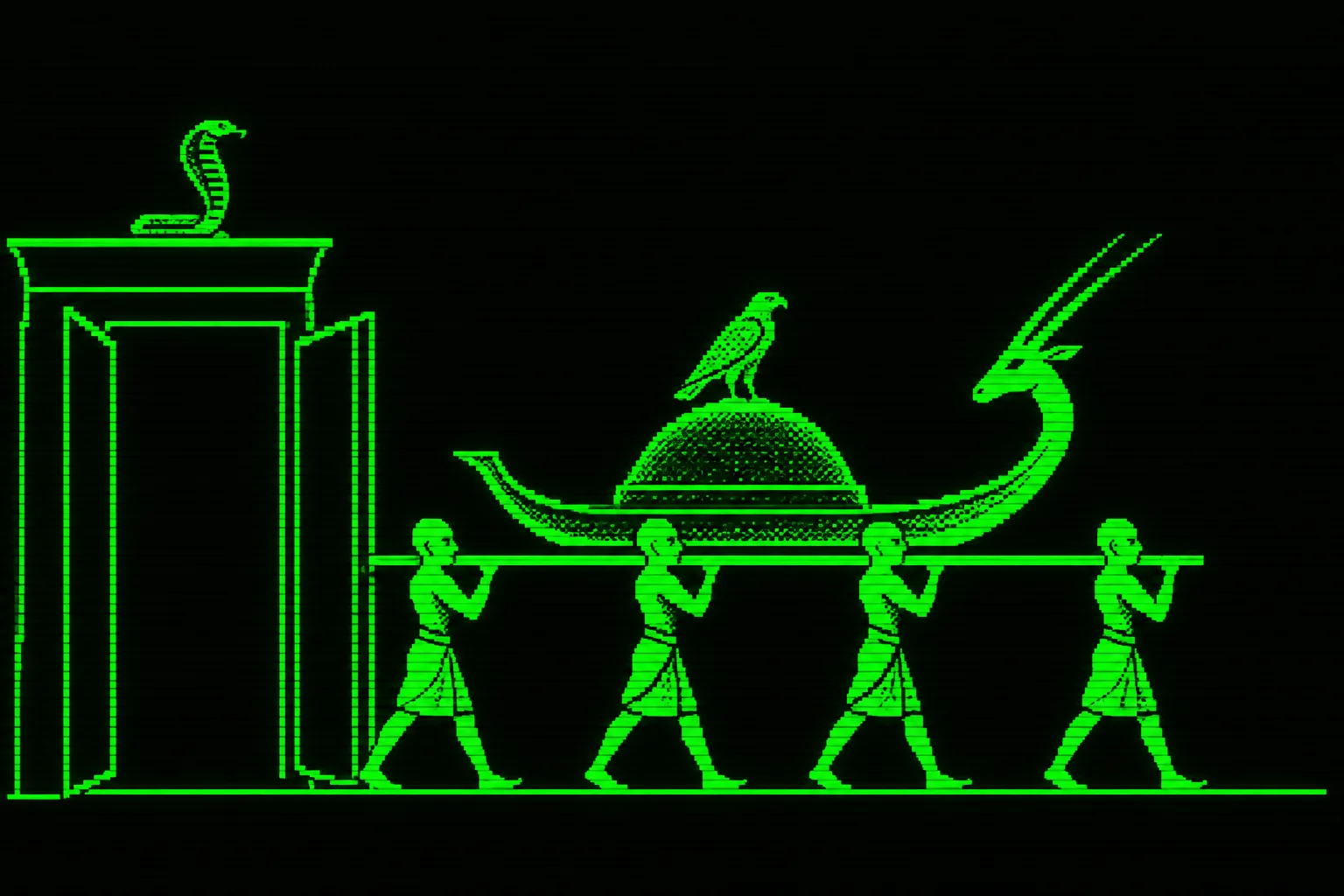
Nine bearers lift the god: Come, Nine Companions, with both arms beneath your father Sokar-Osiris! The priest speaks as Pharaoh, Seth is staked, and the chorus chants sixteen times: Heaven’s double doors open, and the god comes forth!
- 1
𓈖 𓏎𓈖 𓊃𓎡𓂋𓅆 𓂋𓈐𓂻𓏫 𓈙𓇾𓍔𓊭𓏏𓉐 Z115𓌃𓏤𓏫
⸢n,t-ꜥ⸣ n jni̯ Skr r-bnr n štꜣ,t ḏd-mdw
Ritual for bringing Sokar out of the Shetayt sanctuary. Words to be spoken:
Note · Line 1
Sokar is a funerary god of Memphis, closely identified with Osiris. In the rite, it is the god’s image that is carried out of his sanctuary. - 2
𓀞
j sdni̯-pri̯-m-ẖ,t
O you who came forth crowned from the womb!
- 3
𓀞 𓅭𓏤𓀀𓋴𓅓𓋴𓀗𓀀𓏌𓏤𓅯𓄿𓏲𓏏𓅂𓏖𓏖𓅆𓁶𓊪𓏭
j sꜣ-sms(,w)-n-pꜣwtj-tp,y
O eldest son of the first of the primeval gods!
- 4
𓀞 𓎟𓁷𓏤𓏯𓏥 𓆈𓏏𓏥𓆣𓂋𓏲𓀾𓅆𓏥
j nb-ḥr.pl ꜥšꜣ-ḫpr.pl
O lord of faces, whose forms are many!
- 5
𓀞 𓄴𓂋𓈒𓏥𓈖𓋞𓈒𓏥𓅓𓐝𓏤𓏥𓉐𓏤𓊖𓏥
j pẖr-n-nbw-m-gs.pl-pr.pl
O you whom gold surrounds in the temples!
- 6
𓀞 𓎟𓏏𓊢𓂝𓏤𓇳 𓈋𓆳𓆳𓆳𓂞𓂞
j nb-ꜥḥꜥ,w {{ḏw}}((dd))-rnp,t.pl
O lord of the span of life, giver of years!
- 7
𓀞 𓎟𓏏𓋹𓈖𓐍𓏛𓂋𓅘𓎛𓇳𓎛
j nb-ꜥnḫ-r-(n)ḥḥ
O lord of life for all eternity!
- 8
𓀞 𓎟𓏏𓁨𓏤𓏫 𓆈𓏏𓏥𓄖𓏥
j nb-ḥḥ ꜥšꜣ-ḥfn.pl
O lord of millions, rich in hundreds of thousands!
- 9
𓀞 𓊪𓊃𓂧𓇳𓁷𓏤𓏲𓃀𓈖𓇳𓀀𓊵𓏏𓊪
j psd-ḥr-wbn-ḥtp
O you who shine at your rising and your setting!
- 10
𓀞 𓋴𓌱𓅓𓈖𓆑𓇋𓎛𓏏𓏭𓄈𓄹
j snḏm-n≡f-jḥty
O you whose throat has been refreshed!
- 11
𓀞 𓎟𓏏𓋴𓈖𓂧𓏏𓏰𓀁 𓉻𓂝𓏭𓏛𓊃𓅭𓄿𓂧𓂧
j nb-snd ꜥꜣ-sdd
O lord of dread, mighty in making others tremble!
- 12
𓀞 𓎟𓏏𓁷𓏤𓏯𓏥 𓆈𓏏𓏥𓇋𓂝𓂋𓂝𓏏𓆇𓆗𓆗
j nb-ḥr.pl ꜥšꜣ-jꜥrꜥ,t.du
O lord of faces, rich in pairs of rearing cobras!
Note · Line 12
The rearing cobra, or uraeus, is the emblem worn on the brow of a god or king to ward off danger. - 13
𓀞 𓈍𓂝𓅓𓌉𓏏𓏮𓋑 𓎟𓏏𓅨𓂋𓂋𓏏𓏯𓆗
j ḫꜥi̯-m-ḥḏ,ty nb-wrr,t
O you who appear in the White Crown, lord of the Wereret crown!
Note · Line 13
The White Crown marks the ruler of Upper Egypt; Wereret, “the Great One,” is a title of the crown. - 14
𓀞 𓅯𓄿 𓋴𓆑𓏭𓇋𓇋𓀔𓀹𓀼𓋴𓅆𓏌𓏤𓅃𓅆𓎛𓎡𓈖𓏌𓏲𓅆
j pꜣ sfy-šps-nw-Ḥr,w-ḥkn,w
O noble child of Horus-Hekenu!
- 15
𓀞 𓅡𓏤𓅆𓈖𓇳𓅆𓅓𓏲𓇋𓄿𓊛𓈖𓁨𓏤𓏫
j Bꜣ-n-Rꜥw-m-wjꜣ-n-ḥḥ
O ba of Ra in the Barque of Millions!
Note · Line 15
A ba is a form in which a god or a dead person can move about and act. Here Sokar is hailed as the ba of the sun god Ra aboard his boat. - 16
𓀞 𓂹𓅓𓅆𓎼𓄿𓎛𓏲𓀉𓅆 𓅓𓂝𓇋𓂻 𓂋 𓈙𓇾𓏏𓍔𓄿𓏲𓏏𓉐 𓎡
j sšm-gꜣḥ mj r štꜣw =k
O image of the Weary One, come to your Shetayt sanctuary!
Note · Line 16
The Weary One is Osiris in death. The calls to come address him as one who can rise and move again. - 17
𓀞 𓎟𓏏𓋴𓈖𓂧𓏏𓏰𓀁 𓆣𓂋𓏛𓆓𓊃𓆑
j nb-snd ḫpr-ḏs≡f
O lord of dread, who came into being of yourself!
- 18
𓀞 𓅨𓂋𓂧𓏲𓀉𓄣𓏤𓅆 𓅓𓂝𓇋𓂻 𓂋 𓊖𓏏𓏤𓏛 𓎡
j wrd,w-jb mj r nʾ,t =k
O weary of heart, come to your city!
- 19
𓀞 𓁹𓂋𓏭𓉔𓄿𓇋𓇋𓀁 𓅓𓂝𓇋𓂻 𓂋 𓊖𓏏𓏤 𓎡
j jri̯-hꜣy mj r nʾ,t =k
O you who raise a shout of joy, come to your city!
- 20
𓀞 𓅯𓄿 𓌻𓂋𓇋𓇋𓏏𓏭𓅆𓈖𓈖𓄿𓊹𓅆𓏫𓊹𓏏𓆇𓅆𓏫
j pꜣ mry,ty-n-nꜣ-nṯr.pl-nṯr,t.pl
O beloved of the gods and goddesses!
- 21
𓀞 𓂜𓎔𓎛𓈗𓊛𓆑 𓅓𓂝𓇋𓂻 𓂋 𓊨𓏏𓉐 𓎡
j n-mḥi̯≡f mj r s,t =k
O you who did not drown, come to your place!
- 22
𓀞 𓏶𓅓𓏭𓇼𓄿𓏲𓏏𓉐𓀭 𓅓𓂝𓇋𓂻 𓂋 𓂝𓃀𓏏𓇎𓏛𓏥 𓎡
j jm,y-dꜣw mj r ꜥb,t.pl =k
O you who dwell in the underworld, come to your offerings!
- 23
𓀞 𓅓𓂝𓎡𓏏𓏛𓇓𓏲 𓅓𓂝𓇋𓂻 𓂋 𓉗𓉗𓉗𓉐𓉐𓉐𓏥 𓎡
j mki̯-sw mj r ḥw,t.pl =k
O you who guard yourself, come to your temples!
- 24
𓀞 𓂋𓏲𓂧𓌗𓎡𓈖𓎡𓈖𓅓𓏏𓏭𓇼𓇼𓇼𓂋𓊏𓊪𓇳𓇋𓏏𓈖𓇳𓅆
j 〈s〉rwd-knknm,ty.pl-r-sšp-jtn
O you who hold the Kenemet stars fast until the sun disk shines!
- 25
𓀞 𓎡𓎡𓏲𓏭𓆰𓏫𓀼𓋴𓅆𓏌𓏤𓉗𓉻𓏏𓉐𓅆
j kkwy.pl-šps-n,w-ḥw,t-ꜥꜣ.t
O venerable Keke plants of the Great House!
- 26
𓀞 𓈖𓂝𓇋𓇋𓂻𓈖𓍇𓏌𓏲𓎛𓏲𓏌𓏤𓋴𓎝𓎡𓏏𓏭𓊛𓅆
j nꜥy-nwḥ-nw-(m)skty
O helmsman at the steering rope of the Mesektet barque!
Note · Line 26
The Mesektet is the boat in which the sun god travels through the night. - 27
𓀞 𓎟𓏏𓎛𓆰𓈖𓏌𓏲𓅆𓆳𓏲𓏏𓅓𓈙𓇾𓏏𓍔𓄿𓏏𓉐𓅆
j nb-ḥnw-rnpi̯.ṱ-m-štꜣ,t
O lord of the Henu barque, made young again in the Shetayt sanctuary!
Note · Line 27
The Henu is Sokar’s ceremonial boat. In procession it was drawn on a sledge. - 28
𓀞 𓈖𓄿 𓅡𓅆𓏫𓇋𓈎𓂋𓏛𓏥𓈖𓏏𓏭𓅓𓊹𓌨𓂋𓏏𓏏𓈉
j nꜣ Bꜣ.pl-jqr.pl-n,tj-m-ẖr,t-nṯr
O mighty bas who dwell in the necropolis!
- 29
𓀞 𓅯𓄿 𓋴𓇋𓊪𓏛𓍼𓏥𓀼𓏤𓋴𓅆𓏌𓏤𓇘𓇇𓊖𓊖
j pꜣ sjp-šps-nw-šmꜥ,w-mḥ,w
O revered inspector of Upper and Lower Egypt!
- 30
𓀞 𓅯𓄿 𓇋𓏠𓈖𓀅𓂜𓈖𓂋𓐍𓏭𓋴𓂋𓐍𓏭𓇋𓇋𓅛𓀀𓏥
j pꜣ jmn-nn-rḫ-s(w)-rḫy
O hidden one whom the common people do not know!
- 31
𓀞 𓈖𓉔𓇋𓋴𓁻𓊪𓈖𓏏𓏭𓅓𓇼𓄿𓏲𓏏𓉐𓅆𓂋𓌳𓂂𓂂𓅯𓄿𓇋𓏏𓈖𓇳𓅆
j nhjs-pꜣ-n,tj-m-dꜣw-r-mꜣꜣ-pꜣ-jtn
O you who keep watch in the underworld to see the sun disk!
Note · Line 31
These invocations accompany the bringing of Sokar, a god of the dead, out of his sanctuary. - 32
𓀞 𓎟𓏏𓇋𓄿𓏏𓆑𓋚𓅆𓅨𓂋𓅓𓇓𓏏𓈖𓉗𓏏𓉐𓀔𓈖𓈖𓊖
j nb-jꜣtf-wr-m-Ḥw,t-nn-n(j)swt
O lord of the great Atef crown in Heracleopolis!
Note · Line 32
The Atef is the tall crown flanked by feathers that Osiris wears. - 33
𓀞 𓉻𓂝𓈙𓆑𓏭𓇋𓇋𓏏𓏥𓅆𓂉𓆭𓊖
j ꜥꜣ-šfy-ḫnt,j-Nꜥr,t
O you of great renown, foremost in Naret!
Note · Line 33
Naret was a district of Upper Egypt. - 34
𓀞 𓃹𓈖𓈖𓌀𓏏𓊖𓅆 𓈖 𓄿𓐍𓄿𓐍𓇇𓆰𓏥𓂋𓎛𓎛𓇳
j wn-n-Wꜣs,t n ꜣḫꜣḫ-r-nḥḥ
O you who dwell in Thebes as the one who blooms forever!
- 35
𓀞 𓇋𓏠𓈖𓅆𓇳𓅆 𓇓𓏏𓈖𓅆𓊹𓅆𓏫 𓂋𓏲𓂧𓌗𓄻𓄻𓄻𓏥𓆑𓅓𓏲𓃀𓈖𓇳𓅆𓊵𓏏𓊪
j Jmn-Rꜥw nswt-nṯr.pl srwd-ḥꜥ,w≡f-m-wbn-ḥtp
O Amun-Ra, king of the gods, who strengthen your body as you rise and set!
- 36
𓀞 𓈎𓃀𓂋𓏱𓀅𓏛𓏥𓊵𓏏𓊪𓏛𓏥𓈖𓂋𓏤𓍬𓏏𓏏𓈉𓏥
j q(ꜣ)b-mn.w.pl-ḥtp.pl-m-Rʾ-sṯꜣ
O you who multiply the endowments and the offerings in Rosetau!
Note · Line 36
The endowments provided for a continuing supply of offerings. Rosetau was a burial ground associated with Sokar and with entry into the underworld. - 37
𓀞 𓏙𓂝𓂋𓂝𓏏𓆇𓆗𓁷𓏤𓁶𓏤𓈖𓎟𓅆𓋴
j ḏi̯-ꜥrꜥ,t-ḥr-tp-n-nb≡s
O you who set the uraeus on her lord’s head!
Note · Line 37
The uraeus is the rearing cobra worn on the king’s brow to protect him. - 38
𓀞 𓋴𓏠𓈖𓍖𓇾𓏤𓈇𓂋𓊨𓏏𓉐𓆑
j smn-tꜣ-〈ḥ〉r-s,t≡f
O you who hold the land firm in its place!
- 39
𓀞 𓃹𓈖𓉿𓂡𓂋𓏤𓈖𓅯𓄿𓏤𓏤𓏤𓏤𓅡𓏤𓅆𓏫𓉻𓂝𓏥𓈖𓏏𓏭𓅓𓊹𓌨𓂋𓏏𓏏𓈉
j wn-rʾ-n-pꜣ-4-bꜣ.pl-ꜥꜣ.w.pl-n,tj-m-ẖr,t-nṯr
O you who open the mouth of the four great bas in the necropolis!
Note · Line 39
Opening the mouth is a rite that restores the power to breathe, speak and eat. - 40
𓀞 𓅡𓅆𓋹𓈖𓐍𓏛𓈖𓊨𓇳𓅆𓈍𓂝𓆑𓈖U104𓅆
j Bꜣ-ꜥnḫ-n-Wsjr-ḫꜥi̯≡f-n-Jꜥḥ
O living ba of Osiris when he appears as the moon!
- 41
𓀞
j jmn-ḏ,t≡f-m-štꜣ-⸢ꜥꜣ.t⸣-m-Jwn,w
O you who hide your body in the great sanctuary in Heliopolis!
- 42
𓀞 𓊹𓏏𓂋𓇋𓅆𓇋𓏠𓈖𓀅𓊨𓇳𓅆𓅓𓊹𓌨𓂋𓏏𓏏𓈉
j ntr(,j)-jmn-Wsjr-m-ẖr,t-nṯr
O hidden, divine one, Osiris in the necropolis!
- 43
𓀞 𓊵𓏏𓊪𓅡𓅆𓆑𓈖𓏏𓇯𓅆𓂋𓐍𓆑𓏏𓏱𓏥𓆑𓐍𓂋𓍼𓂻
j ḥtp-bꜣ≡f-n-p,t-r-ḫft.pl≡f-ḫr
O you whose ba comes to rest in the sky as your enemies lie fallen!
- 44
𓆓𓂧 𓈖 𓎡 𓊤𓏲𓀁 𓉔𓄿𓇋𓇋𓀁 𓅓
ḏd n =k ꜣs,t-nṯr,(j)t ḫrw hꜣy m ⸢jtr,w⸣
Isis the Divine says to you:
“A cry of joy rings out on the river! - 45
𓋁𓃀𓂧𓆟𓃂𓈗 𓅓𓄂𓏏𓏤 𓏲𓇋𓄿𓊛 𓈖 𓇳𓅆
pḫꜣjw ꜣbd-wꜥb m-ḥꜣ,t wjꜣ n Rꜥw
The sacred abedju fish cleaves the water ahead of Ra’s barque.
Note · Line 45
In Egyptian accounts of the sun’s voyage, this fish swims ahead of the boat and warns of danger. - 46
𓎟𓏏𓄋𓏏𓏤 𓆣𓂋𓏛 𓅓 𓎀𓎛𓎛𓏲𓏭𓀁 𓋴𓏲𓎛𓏏𓆇 𓆣𓂋𓏛 𓅓 𓎛𓆰𓈖𓎨𓈗𓈘𓈇
nb,t-wp,t ḫpr m ṯḥḥwy swḥ,t ḫpr m ḥn
The Lady of the Horns breaks into shouts of joy:
the egg has come into being in the water.Note · Line 46
The Lady of the Horns is Hathor, often shown wearing cow’s horns. - 47
𓎛𓋴𓈎 𓁶𓏤𓄹 𓈖 𓆞𓎡𓄣𓏤𓏱𓏥 𓅓 𓂋𓈖 𓋴 𓊪𓏲𓇋𓇋𓏛 𓈖 𓎟𓏏𓁶𓏤𓃒𓊖
ḥsq tp〈.pl〉 n〈,w〉 ẖꜣk-jb.pl m rn =s pwy n nb,t-Tp-jḥ
The conspirators’ heads are cut off in this name of hers: Lady of Tep-ih.
Note · Line 47
The first part of the place name Tep-ih is also the Egyptian word for “head.” - 48
𓇍𓇋𓂻𓏏𓏲 𓅓𓄂𓏏𓏤𓏤𓏤𓏤𓏤𓏤𓏤𓏤𓏏𓄹𓄹𓄹 𓅓 𓂋𓈖 𓊃 𓊪𓆑𓏮 𓈖 𓉗𓏏𓁷𓂋𓏏𓆇𓅆 𓎟𓏏𓅓𓂝𓆑𓎡𓏰𓈒𓏫
nb,t-wp,t jji̯.ṱ m-ḥtp m rn =s pfy n Ḥw,t-Ḥr nb,t-Mfk
The Lady of the Horns has come in peace in that name of hers: Hathor, Lady of Mefkat.
Note · Line 48
To say that someone has come in peace is also to bid them welcome. Here Hathor is welcomed under the names she bears in different sanctuaries. - 49
𓇍𓇋𓂻𓏏𓏲 𓅓𓊵𓏏𓊪 𓅓 𓋴 𓊪𓏲𓇋𓇋𓏭 𓈖 𓉗𓏏𓁷𓂋𓏏𓆇𓅆 𓎟𓏏𓌀𓏏𓊖𓅆
nb,t-Wꜣs,t jji̯.ṱ m-ḥtp m rn =s pwy n Ḥw,t-Ḥr nb,t-Wꜣs,t
The Lady of Thebes has come in peace in this name of hers: Hathor, Lady of Thebes.
- 50
𓇍𓇋𓂻𓏏𓏲 𓅓𓊵𓏏𓊪 𓍔𓄿𓏏𓆇𓅆 𓅓 𓋴 𓊪𓏲𓇋𓇋𓏭 𓈖 𓋞𓊵𓏏𓊪𓏏𓅆𓁐 𓇍𓇋𓂻𓏏𓏲 𓅓𓄂𓏏𓏤 𓂋 𓋴𓐍𓂋𓍼𓂻 𓌙𓏱𓏥 𓅓 𓂋𓈖 𓊃 𓊪𓆑𓏮 𓈖 𓉗𓏏𓁷𓂋𓏏𓆇𓁗 𓎟𓏏𓇓𓏏𓈖𓅆𓉗𓀔𓈖𓈖𓇳
jji̯.ṱ m-ḥtp Tꜣ,t m rn =s pwy n Nb,t-Ḥtp,t jji̯.ṱ m-ḥꜣ,t r sḫr sbjw.pl m rn =s pfy n Ḥw,t-Ḥr nb,t-Ḥw,t-nn-n(j)swt
Tait has come in peace in this name of hers: Lady of Hetepet.
She has come forward to strike down the rebels in that name of hers: Hathor, Lady of Heracleopolis.Note · Line 50
Tait is the goddess of weaving and linen. The name Hetepet echoes the Egyptian word for “peace.” - 51
𓋞𓏏𓆇𓁐 𓇍𓇋𓂻𓏏𓏲 𓅓𓊵𓏏𓊪 𓅓 𓂋𓈖 𓋴 𓊪𓆑𓏮 𓈖 𓉗𓏏𓁷𓂋𓏏𓆇𓅆 𓎟𓏏𓇋𓆛𓈖𓃀𓊅𓏏𓈇𓏪𓊖
Nbw,t jji̯.ṱ m-ḥtp m rn =s pfy n Ḥw,t-Ḥr nb,t-Jnb
The Golden One has come in peace in that name of hers: Hathor, Lady of Ineb.
- 52
𓃹𓈖𓈖 𓏏 𓊵𓏏𓊪𓏲𓏏 𓂋𓐞𓏤 𓎟𓂋𓇥𓅆 𓅓 𓂋𓈖 𓏏 𓊪𓆑𓏮 𓈖 𓉗𓏏𓁷𓂋𓏏𓆇𓁗 𓎟𓏏𓈙𓈇𓏤𓈗𓅟
wnn =t ḥtp.ṱ r-gs Nb-r-ḏr m rn =t pfy n Ḥw,t-Ḥr nb,t-š-dšr
You will rest beside the Lord of All in that name of yours: Hathor, Lady of the Red Lake.
- 53
𓏲𓃀𓈖𓇳𓅆 𓋞𓏏 𓂋𓐞𓏤 𓇋𓏏𓆑𓅆 𓋴 𓅓 𓂋𓈖 𓋴 𓊪𓆑𓏭 𓈖 𓎰𓏏𓆇𓅆
wbn Nbw,t r-gs jt(j) =s m rn =s pfy n Bꜣs,t
The Golden One rises beside her father in that name of hers: Bastet.
Note · Line 53
Her father is Ra, the sun god. - 54
𓈝𓅓𓂻𓏏𓅓𓁷𓂋𓇯𓏲𓏥𓂋𓐝𓏤𓉐𓅨𓂋𓉐 𓅓 𓂋𓈖 𓋴 𓊪𓏲𓇋𓇋𓏭 𓈖 𓋫𓏏𓆇𓁗
šmi̯.t-m-ḥr(,j)w.pl-r-gs-pr-wr m rn =s pwy n Šsm,t
She who walks with the dwellers of heaven beside the Per-wer shrine, in this name of hers: Shesemtet.
Note · Line 54
Per-wer means “Great House,” the traditional name of the shrine of Upper Egypt. - 55
𓇆𓏏𓏛𓇾𓇾𓈇𓏤𓈇𓏫 𓂹𓅓𓂻𓏏𓏤𓊹𓏤𓊹𓏤𓊹 𓅓 𓂋𓈖 𓋴 𓊪𓆑𓏭 𓈖 𓇆𓏏𓆇𓅆
wꜣḏ.t-tꜣ.du.pl sšm.t-nṯr.pl m rn =s pfy n Wꜣḏ,t
She who makes the Two Lands green, who guides the gods, in that name of hers: Wadjet.
Note · Line 55
The Two Lands are Upper and Lower Egypt. Wadjet’s name echoes the word for “green.” - 56
𓌂𓅓𓏏𓀜 𓉗𓏏𓁷𓂋𓏏𓆇𓅆 𓅓 𓋴𓃀𓇋𓏲𓌙𓏱𓏥 𓈖 𓇋𓏏𓆑𓅆 𓋴 𓅓 𓂋𓈖 𓋴 𓊪𓆑𓏭 𓈖 𓌂𓐍𓏏𓆇𓅆
sḫm Ḥw,t-Ḥr m sbjw.pl n jt(j) =s m rn =s pfy n Sḫm,t
Hathor has power over those who rebel against her father in that name of hers: Sekhmet.
Note · Line 56
Sekhmet means “the Powerful One.” - 57
𓌂𓅓𓏏𓂻 𓄤𓏏𓏛 𓅓 𓄤𓆑𓂋𓇋𓇋𓏛𓏥 𓅓 𓂋𓈖 𓋴 𓊪𓏲𓇋𓇋𓏭 𓈖 𓎟𓏏𓆭𓆭𓆭𓅓𓊖
sḫm nfr,t m nfr,y m rn =s pwy n nb,t-Jmꜣ,w
The Beautiful One has power over beauty in this name of hers: Lady of Imau.
- 58
𓂝𓈖𓏏𓏭𓏌𓈒𓏥 𓅓𓁶 𓄥𓏤𓏏𓆑 𓋴 𓅓 𓂋𓈖 𓋴 𓊪𓆑𓏭𓏛 𓈖 𓋋𓏏𓆇𓁗
ꜥnty m-tp smꜣ 〈n〉 〈šnw〉 =s m rn =s pfy n N(j),t
Myrrh lies on the parting of her hair in that name of hers: Neith.
- 59
𓇋𓐩𓏌 𓁷𓏤𓏰 𓏏𓁗 𓉗𓏏𓁷𓂋𓏏𓆇𓅆 𓎟𓏏𓌀𓏏𓊖 𓊹𓅆𓏫 𓁷𓏤 𓅓𓂝𓎡𓏏𓏛𓏤𓏥 𓆑
j:nḏ ḥr =t Ḥw,t-Ḥr nb,t-Wꜣs,t nṯr.pl ḥr mki̯ =f
Hail to you, Hathor, Lady of Thebes!
The gods are guarding him.Note · Line 59
The god under their protection is Sokar. - 60
𓇋𓐩𓏌 𓁷𓏤𓏰 𓏏𓁗 𓉗𓏏𓁷𓂋𓏏𓆇𓅆 𓎟𓏏𓇓𓏏𓈖𓀔𓈖𓈖𓊖 𓊹𓅆𓏫 𓁷𓏤 𓅓𓂝𓎡𓏏𓏛𓏤𓏥 𓆑
j:nḏ ḥr =t Ḥw,t-Ḥr nb,t-Nn-n(j)swt nṯr.pl ḥr mki̯ =f
Hail to you, Hathor, Lady of Heracleopolis!
The gods are guarding him.” - 61
𓇋𓐩𓏌 𓁷𓏤𓏰 𓏏𓁗 𓉗𓏏𓁷𓂋𓏏𓆇𓅆 𓎟𓏏𓈖𓉔𓆭𓏏𓏛𓁗 𓊹𓅆𓏫 𓁷𓏤 𓅓𓂝𓎡𓏏𓏛𓏤𓏥 𓆑
j:nḏ ḥr =t Ḥw,t-Ḥr nb,t-Nh,t nṯr.pl ḥr mki̯ =f
Hail to you, Hathor, Lady of the Sycamore Shrine!
The gods protect him!Note · Line 61
The shrine was near Memphis. Here and in the refrain that follows, “him” is Sokar, whose image is being brought out of his sanctuary. - 62
𓇋𓐩𓏌 𓁷𓏤𓏰 𓏏𓁗 𓉗𓏏𓁷𓂋𓏏𓆇𓅆 𓎟𓏏𓎛𓋴𓏲𓏭𓊖 𓊹𓅆𓏫 𓁷𓏤 𓅓𓂝𓎡𓏏𓏛𓏤𓏥 𓆑
j:nḏ ḥr =t Ḥw,t-Ḥr nb,t-Rʾ-ḥswy nṯr.pl ḥr mki̯ =f
Hail to you, Hathor, Lady of Ro-Hesa!
The gods protect him! - 63
𓇋𓐩𓏌 𓁷𓏤𓏰 𓏏𓁗 𓉗𓏏𓁷𓂋𓏏𓆇𓅆 𓎟𓏏𓅖𓆑𓎡𓏰𓈒𓏫 𓊹𓅆𓏫 𓁷𓏤 𓅓𓂝𓎡𓏏𓏛𓏤𓏥 𓆑
j:nḏ ḥr =t Ḥw,t-Ḥr nb,t-Mfk nṯr.pl ḥr mki̯ =f
Hail to you, Hathor, Lady of Mefkat!
The gods protect him! - 64
𓇋𓐩𓏌 𓁷𓏤𓏰 𓏏𓁗 𓉗𓏏𓁷𓂋𓏏𓆇𓁗 𓎟𓏏𓇋𓆛𓈖𓃀𓈗𓊈𓊖 𓊹𓅆𓏫 𓁷𓏤 𓅓𓂝𓎡𓏏𓏛𓏤𓏥 𓆑
j:nḏ ḥr =t Ḥw,t-Ḥr nb,t-Jnb nṯr.pl ḥr mki̯ =f
Hail to you, Hathor, Lady of Ineb!
The gods protect him! - 65
𓇋𓐩𓏌 𓁷𓏤𓏰 𓏏𓁗 𓉗𓏏𓁷𓂋𓏏𓆇𓁗 𓎟𓏏𓍯𓄿𓍯𓄿𓏲𓊖 𓊹𓅆𓏫 𓁷𓏤 𓅓𓂝𓎡𓏏𓏛𓏤𓏥 𓆑
j:nḏ ḥr =t Ḥw,t-Ḥr nb,t-Wꜣwꜣw nṯr.pl ḥr mki̯ =f
Hail to you, Hathor, Lady of Wawat!
The gods protect him!Note · Line 65
The Wawat named here is a place in the Nile Delta, not the Nubian region of the same name. - 66
𓇋𓐩𓏌 𓁷𓏤𓏰 𓏏𓁗 𓉗𓏏𓁷𓂋𓏏𓆇𓁗 𓎟𓏏𓆭𓆭𓆭𓏏𓆇𓁗𓊖 𓊹𓅆𓏫 𓁷𓏤 𓅓𓂝𓎡𓏏𓏛𓏤𓏥 𓆑
j:nḏ ḥr =t Ḥw,t-Ḥr nb,t-Jmꜣ,w nṯr.pl ḥr mki̯ =f
Hail to you, Hathor, Lady of Imau!
The gods protect him! - 67
𓇋𓐩𓏌 𓁷𓏤𓏰 𓏏𓁗 𓉗𓏏𓁷𓂋𓏏𓆇𓁗 𓎛𓏌𓏏𓆇𓅆𓎆𓏤𓏤𓏤𓏤𓏤𓏤𓏏𓆇𓁗 𓊹𓅆𓏫 𓁷𓏤 𓅓𓂝𓎡𓏏𓏛𓏤𓏥 𓆑
j:nḏ ḥr =t Ḥw,t-Ḥr ḥn,wt-16 nṯr.pl ḥr mki̯ =f
Hail to you, Hathor, Mistress of the Sixteen!
The gods protect him! - 68
𓇋𓐩𓏌 𓁷𓏤𓏰 𓏏𓁗 𓉗𓏏𓁷𓂋𓏏𓆇𓁗 𓎟𓏏𓄤𓆑𓂋𓏲𓏭𓋴𓊖 𓊹𓅆𓏫 𓁷𓏤 𓅓𓂝𓎡𓏏𓏛𓏤𓏥 𓆑
j:nḏ ḥr =t Ḥw,t-Ḥr nb,t-Nfrwys nṯr.pl ḥr mki̯ =f
Hail to you, Hathor, Lady of Neferusi!
The gods protect him! - 69
𓅯𓄿 𓏤𓏤𓏤𓏤𓏤𓏤𓏤𓏤𓏤𓋴𓍋𓄿𓂋𓀗𓇋𓇋𓅆𓏫 𓅓𓂝𓇋𓂻𓈖𓏥 𓂝𓂝𓏤𓏲𓏭 𓏏𓈖𓏥 𓌨𓂋 𓇋𓏏𓆑𓅆 𓏏𓈖𓏥 𓊃𓎡𓂋𓅆𓊨𓇳𓅆
pꜣ 9-smr.y.pl mj≡n ꜥ.du.wy =tn ẖr jt(j) =tn Skr-Wsjr
Come, Nine Companions,
with both arms beneath your father Sokar-Osiris!Note · Line 69
These are the bearers of Sokar’s sacred boat. They carry the god as their father, here named Sokar-Osiris. - 70
𓇍𓇋𓂻 𓊹𓅆 𓎃𓇾 𓊗 𓏤𓏤𓏤𓏤
jji̯ nṯr sꜣ-tꜣ sp 4
At the coming of the god, recite “Protection of the Earth” four times.
- 71
𓀞 𓋒𓎱𓇳 𓁷𓏤 𓎱𓇳 𓇋𓍘𓇋𓇋𓀛𓅆
j ḥ(ꜣ)bi̯ ḥr ḥꜣbi̯ jty
O Sovereign, exult in your triumph!
- 72
𓀞 𓇛𓇛𓏛𓏲𓏭 𓐍𓈖𓌰𓅓𓏛𓂉𓏛𓏥 𓌻 𓎡
j nḏm.wy ḫnm mri̯ =k
Oh, how sweet the scent you love!
- 73
𓀞 𓋹𓈖𓐍𓏛𓏲𓏏 𓊗 𓏭 𓂋𓎛𓎛𓇳
j ꜥnḫ.ṱ sp 2 r-nḥḥ
Oh, you live, you live forever!
Note · Line 73
The reciter is told to say “you live” twice. - 74
𓀞 𓎛𓃀𓎱𓇳 𓎡 𓈖𓆓𓏏𓇾
j ḥ(ꜣ)bi̯ =k n-ḏ,t
Oh, you will triumph for all time!
- 75
𓀞 𓊃𓈖𓇋𓂉 𓇾𓏤𓈇 𓍏𓃀𓅡𓄿 𓀀 𓈐𓏥
j snj tꜣ wbꜣ ={j} wꜣ,t.pl
Oh, the earth is kissed, the ways are opened!
Note · Line 75
Kissing the ground is an act of homage to the approaching god. - 76
𓀞 𓊽𓊽𓍘 𓅓 𓊽𓊽𓁷𓂋𓏏𓇯
j ḏdi̯.tj m Ḏd-ḥr,(j)t
Oh, you endure in Upper Djedet!
Note · Line 76
Upper Djedet is a place in the divine world. Its name echoes the Egyptian word for “endure,” a sound heard again when the god’s enduring name is invoked. - 77
𓀞 𓊹𓅆 𓄔𓅓𓏛 𓎡 𓎃𓇾 𓉔𓄿𓇋𓇋𓀁 𓄔𓅓𓏛 𓎡 𓎃𓇾 𓅓 𓂋𓏤 𓈖 𓏥𓈖𓊹𓈈𓏏𓏥
j nṯr sḏm =k sꜣ-tꜣ hꜣy sḏm =k sꜣ-tꜣ m rʾ n Nṯr.pl-n-spꜣ,t.pl
O god, may you hear “Protection of the Earth”!
Yes, may you hear “Protection of the Earth” from the lips of the gods of the nomes!Note · Line 77
The nomes were the districts of Egypt, each with its own gods. - 78
𓀞 𓃀𓋴𓆟𓂻𓅓𓁹𓁹𓏲𓏭𓆑 𓅭𓏤𓅆 𓊹𓍛𓏤𓀀
j bsi̯-m-jr{,t.du.wy}〈i̯.t〉≡f sꜣ ḥm-nṯr
Oh, here is one initiated into his duties, the son of a priest!
Note · Line 78
The officiating priest acts in the king’s place and will speak as Pharaoh. - 79
𓀞 𓍉𓎃𓏤𓏏𓉐 𓐍𓆑𓏏 𓆓𓂧𓏛𓏥 𓎡
j stp-sꜣ ḫft ḏd.pl =k
Oh, protection is granted just as you have said!
- 80
𓀞 𓅓𓂝𓎡 𓏲𓀀 𓉐𓉻𓅆 𓋹𓍑𓋴 𓁷𓏤 𓁹𓂋𓏭 𓌻𓂋𓏲𓏏𓀁 𓎡
j m≡k wj Pr-ꜥꜣ ꜥnḫ-(w)ḏꜣ-s(nb) ḥr jri̯ mri̯.wt =k
Oh, see me, Pharaoh—life, prosperity, health!—doing what you love!
Note · Line 80
The threefold wish is a customary blessing after the king’s title. - 81
𓀞 𓅓𓂝𓎡 𓏲𓀀 𓉐𓉻𓅆 𓋹𓍑𓋴 𓁷𓏤 𓁹𓂋𓏭 𓎛𓎿𓋴𓀁𓏥 𓎡
j m≡k wj Pr-ꜥꜣ ꜥnḫ-(w)ḏꜣ-s(nb) ḥr jri̯ ḥsi̯.pl =k
Oh, see me, Pharaoh—life, prosperity, health!—doing the things you praise!
- 82
𓀞 𓈟𓊃𓀉 𓅓𓂝𓇋𓂻 𓂋 𓎡 𓅨𓂋𓂧𓏲𓀉𓄣𓏤𓅆 𓊪𓏲
j ḥmsi̯ mj jr =k wrd,w-jb pw
O seated one, come now, you who are weary of heart!
Note · Line 82
“Weary of Heart” is a title of Osiris in death. - 83
𓀞 𓅭𓏤 𓊹𓍛𓏤𓀀 𓄞𓂧𓀁𓈖 𓆑
j sꜣ ḥm-nṯr šdi̯.n =f ḥ(ꜣ)b
Oh, the son of a priest has recited the festival rite!
- 84
𓀞 𓊽𓊽𓂋𓈖𓏤𓊽𓂧𓏏𓊖
j Ḏdi̯-rn-〈m〉-Ḏd,t-〈ḥr,(j)t〉
O you whose name endures in Upper Djedet!
- 85
𓀞 𓇛𓇛𓏛𓋴𓏏𓏭𓐎𓅓𓊽𓂧𓏏𓊖𓁷𓂋𓏏𓇯
j nḏm-sty-m-Ḏd,t-ḥr,(j)t
O sweet-scented one in Upper Djedet!
- 86
𓀞 𓅓𓂝𓇋𓂻 𓂧𓂋𓀜𓋴𓃀𓇋𓏲𓌙𓏱𓏥
j mj dr-sbjw.pl
O come, you who drive out rebels!
- 87
𓀞 𓅓𓂝𓇋𓂻 𓇼𓄿𓏲𓏛𓈖𓐍𓈖𓀔
j mj sbꜣ,w-nḫn
O come, you who raise the divine child!
- 88
𓀞 𓂞𓏏𓅾𓀁𓆑𓅓𓆞𓎡𓄣𓏤𓏱𓏥
j mj di̯-snḏ≡f-m-ẖꜣk-jb.pl
O come, you who fill conspirators with dread of you!
- 89
𓀞 𓇋𓂋 𓅡𓎡𓇋𓏲𓀜𓀀 𓌞𓋴𓂻 𓎟𓀀𓅆 𓆑 𓂜𓈖 𓌂𓅓𓀜 𓍛𓏤𓅆 𓎰𓏏𓆇𓅆 𓇋𓅓𓏛 𓆑
j jr bꜣkjw šms nb =f nn sḫm ḥm Bꜣs,t jm =f
Oh, the servant who follows his lord—
may the majesty of Bastet have no power over him! - 90
𓀞 𓆞𓎡𓄣𓏤𓏱𓏥 𓄟𓋴𓂧𓅪 𓊹𓉗𓏏𓉐𓅆 𓎛𓀜𓏷𓀜 𓏲𓏏 𓏠𓈖𓇋𓏲𓊧𓆱 𓅓 𓐍𓐍𓄉𓄻 𓆑
j ẖꜣk-jb{.pl} msdi̯ ḥw,t-nṯr ḥwi̯ =tw mnjw m ḫḫw =f
Oh, the conspirator whom the temple loathes—
a mooring stake was driven into his throat!Note · Line 90
The conspirator is Seth, the killer of Osiris. - 91
𓀞 𓇍𓇋𓂻𓈖 𓎟𓀀𓅆 𓂋 𓊽𓂧𓏲𓊖𓁷𓂋𓏏𓇯 𓎛𓀜𓏷𓀜𓈖 𓆑 𓆞𓎡𓄣𓏤𓏱𓏥
j jji̯.n nb r Ḏd,w-ḥr,(j)t ḥwi̯.n =f ẖꜣk-jb.pl
Oh, the lord has come to Upper Djedet,
after striking down the conspirators! - 92
𓆓𓂧𓌃𓏤𓏫 𓊗 𓎆𓏤𓏤𓏤𓏤𓏤𓏤 𓊏𓊪𓀀𓏥𓏏𓐍𓈖𓂢𓀀𓏥 𓃹𓈖𓉿𓂡 𓉿𓉿 𓏏𓇯𓅆 𓉐𓂋𓂻 𓊹𓅆
ḏd-mdw sp 16 šsp.pl-dḫn.pl wn ꜥꜣ.du p,t pri̯ nṯr
To be recited sixteen times by the chorus that marks the beat.
Heaven’s double doors open,
and the god comes forth!Note · Line 92
In the rite, Sokar’s image is carried out of the sanctuary. - 93
𓂻𓏲𓆑𓊪𓏲
jwi̯≡f-pw
The end.