~/sacred-texts/book-of-the-dead
Book of the Dead Spell 167: O Bull, Lord of the Phallus
- Text
- Book of the Dead, Spell 167 (Pleyte), supplementary chapter
- Date
- Copied in hieratic on funerary papyri of the Ptolemaic period (332–30 BC); the spell belongs to the supplementary chapters first added to the Book of the Dead at Thebes in the 21st Dynasty
- Found
- First published by Willem Pleyte in 1881 from papyri in Leiden, the Louvre and the British Museum
- Language
- Egyptian · Hieratic
A heading says Prince Khaemwaset found these writings on a bowl beneath the head of an akh in the western cemetery of Memphis. The speaker calls on Amun, Min and Atum under secret names: O bull, lord of the phallus, Horus who raises his arm, may you save me from every evil. He asks: May you keep my flesh whole!
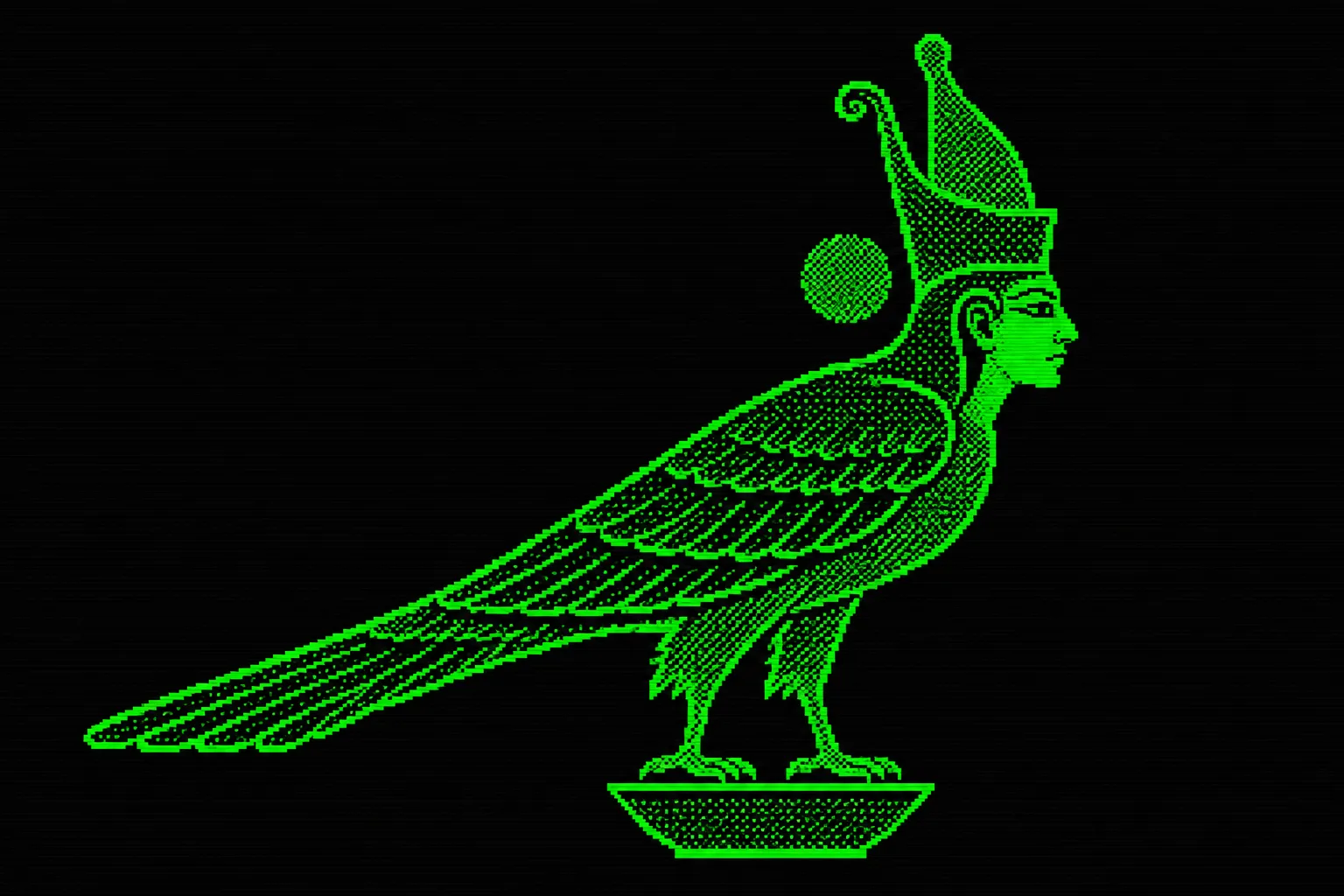
The rubric: A falcon with a human face, bearing the Double Crown, is to be painted on a band of bright red linen from a garment. The scroll hangs at the throat. Then Thoth transfigures the dead: Your body shall never perish, never be destroyed.
- 1
[nꜣ] [zẖꜣ,w] [n] [tꜣ] mḥ,t jw:gmj zꜣ-nsw,t ḥr,j-tp Ḫꜥi̯-m-Wꜣs,t ẖr ḏꜣḏꜣ n wꜥ ꜣḫ n tꜣ jmn,tt n Mn-nfr
The writings on the bowl that Khaemwaset, the king’s eldest son, found beneath the head of an akh in the western cemetery of Memphis.
Note · Line 1
An akh is one of the dead transfigured into a spirit with power to act. - 2
[jw] =[s] nṯri̯ r mḥ,t nb.t n pr-ḥḏ
It is more divine than any bowl in the treasury.
- 3
j[w] =[s] [jri̯] =[s] [m] sbꜣ n ḫ,t r-jwd ꜣḫ.pl mtj.pl r tm ḏi̯.t pḥ =w!! pꜣ pḥ [sw] [...] ḥḥ n zp
It is to be used at the Gate of Fire between the akhs and the dead, to keep them from attacking the one who attacks him. … a million times.
- 4
[tꜣ] [šꜥ,t] štꜣ jrw jw:gmj zẖꜣ,w-nsw,t ḥr,j-tp Jmn-ḥtp zꜣ n Ḥp,w mꜣꜥ-ḫrw jw =f (ḥr) jri̯(.t) n =f mk,t ḥ[ꜥ]
The document of secret form that the chief royal scribe Amenhotep son of Hapu, the vindicated, found and used to protect his own body.
Note · Line 4
“The vindicated” is a title of the dead: their claim to a place in the afterlife has been upheld. - 5
ḏd Šrgt n Nngt zꜣ n Jr〈k〉t
Šrgt says to Nngt, son of Jrkt:
- 6
j Kwršgt [...] j p(ꜣ) kꜣ nb mṯꜣ Ḥr,w f(ꜣi̯)-ꜥ nḥm =k wj m-ꜥ (j)ḫ,t-nb(,t) ḏw wḏ.t m rʾ ḫpr.t m ꜥ.wj n [rmṯ.pl] [nṯr].pl ꜣḫ.pl mtj.pl
O Kwršgt …
O bull, lord of the phallus, Horus who raises his arm,
may you save me from every evil
decreed by the mouth or wrought by the two hands
of humans, gods, akhs and the dead!Note · Line 6
The raised arm and the erect penis are features of Min, who is invoked by name below. - 7
sḥꜣp.n =(j) ḏ,t =k ḫpš štꜣ ḏbꜥ.pl tp ḥꜥ ⸮jꜣk? m sṯj Pwn,t
I have veiled your body, your arm with its hidden fingers,
and perfumed your head and body with the scent of Punt.Note · Line 7
Punt was a source of the aromatic resins prized in Egyptian rites. - 8
mḏꜣ[y] [n]fr jw:ḥwi̯ wꜣ,t.pl wr ḏw.pl štꜣ.pl jw =k mn.tj m s,t =sn
Fair Medjay, who treads the trails,
great one of the hidden mountains,
you stand firm in their place.Note · Line 8
The Medjay were originally desert people from Nubia. Their name came to be used for the men who patrolled the desert roads. - 9
Rkty zp-2 jnk ḏ,t n(.t) Rꜥ,w
Rkty, Rkty! I am the body of Ra!
- 10
Š[ḏ]rpkt pš =k ꜥꜣi̯(.w) wr pwy n Wꜣs,t
Šḏrpkt, great is your share, O great one of Thebes!
- 11
jmꜣ ⸮Kḫnt?
Be gracious, Kḫnt!
- 12
rs zp-2 rw jm,j [Mn,w] Jtm,w Jmn
Awake, awake, lion who dwells in Min, Atum, Amun!
- 13
Nkk rn =k
Nkk is your name.
- 14
⸮pꜥ.pl? rkt zp-2 Šw Gbb nṯr.pl wtṯ zp-2 pꜣ kꜣ zp-2 Jmn [⸮kꜣ?] pwy wr ḫnj,t Jmn pꜣy =n nb qꜣi̯ zp-2 sjꜣ.n =j zp-2 bꜣ bꜣ.pl bꜣ bꜣ[.pl]
The pꜥ, rkt, rkt!
Shu, Geb, gods who beget, who beget!
The bull, the bull! Amun, the bull who mates,
great one of the fortress, Amun our lord,
high, high!
I have recognized, I have recognized
the ba of bas, the ram-god of ram-gods.Note · Line 14
A ba is the power of a being to take form and act. The Egyptian words for “ba” and “sacred ram” sound alike, so the two closing titles are heard as echoes of one another. - 15
[ḫt] tꜣ rn =k m mꜣꜥ-ḫrw
“Staff of the Earth” is your name in vindication.
- 16
Wḏꜣ,t ꜣbd mjw nfr rw zrjw jmm! ḥr =k n =j
Wedjat eye, Abdju fish, handsome tomcat, lion, ram,
turn your face to me!Note · Line 16
The Wedjat is the eye of Horus made whole after injury, an emblem of healing and protection. - 17
m ⸮(n)ḏri̯? {m}wj
Do not seize me!
- 18
〈m〉 ⸮qni̯? wj
Do not overpower me!
- 19
hꜣy zp-2 [nn] [jnk] js ḏd s(j)
Ho! Ho! It is not I who tell it.
- 20
nn jnk js wḥm s(j)
It is not I who repeat it.
- 21
j pꜣ kꜣ nb nbj nꜥš nsr,t sḫm ḏꜥḏꜥ jnr [m] [h]h =f jmn ḫpr,w ḥꜣp sšm ṯnw =f r nṯr.pl nb sdb spd ḥnw,t.j jm sb(ꜣ)q.⸮⸢tw⸣? m-ḫt pḥ p(ꜣ) n,tj p,t ẖr jrw =f dꜣ,t ẖr sštꜣ =f tꜣ ẖr sḫr.w =f nn n,tt =sn ḫpr(.w) m-ḫm,t =f [jmm!] [⸮ḥtp?] n =j
O bull, lord of flame, fierce of fire,
mighty one who splits rock with his burning breath,
whose form is hidden, whose image is veiled,
whose majesty surpasses that of all the gods,
sdb, whose two horns are sharp there,
made radiant upon arrival,
you beneath whose form the sky lies,
beneath whose secret shape the underworld lies,
beneath whose plans the earth lies,
without whose knowledge none of them came to be—
give me an offering! - 22
swḏꜣ =k ḥꜥ =j
May you keep my flesh whole!
- 23
mki̯{,t} =k ⸢ḏ,t⸣ =j
May you guard my body!
- 24
jnk pri̯ jm =k
I am one who came forth from you.
- 25
j mj wḏꜣ pꜣ n,tj ꜣḫ,t =f [m] [sḏ,t] šni̯.n =f sw jm =s r nṯr.pl jmn sw m-ẖnw =s m hrw m jtn,w wr nb(j),t r ḫfti̯.pl =f bꜣ [ꜥꜣ] [ḫꜥy] psḏ wḏꜣ,t.j =f jtn štꜣ ḫpr{.t} r ꜣḫ,t n.t p,t m rn =f n Ḥr,w jrr!.w n(,t)-ꜥ (n)ḥḥ zp-2
O likeness of wholeness, you whose radiant eye is fire,
who has ringed himself with it against the gods,
who hides within it by day as the sun disk,
whose flame is great against his enemies;
ba glorious in his rising, whose two Wedjat eyes shine;
hidden sun disk who comes into being at the horizon of heaven
in his name of Horus,
who performs the prescribed rite forever and forever! - 26
bjk m ḥr n pꜥy,t jṯi̯ m sḫm,ty zẖꜣ.w ḥr sšd n jnsi̯ n {j}mn{rꜥ}ḫ,t ḥnꜥ zẖꜣ.w n =f ḥr šw n-mꜣw(,t) jrr! =f m mḏꜣ,t rḏi̯.t r ḫḫ =f
A falcon with a human face, bearing the Double Crown, is to be painted on a band of bright red linen from a garment. It is also to be painted for him on a fresh sheet of blank papyrus, which he is to make into a scroll. The scroll is to be placed at his throat.
Note · Line 26
The Double Crown joins the crowns of Upper and Lower Egypt. - 27
jrr! =f mḏꜣ,t tn r z m qsn ḏw jw nn mꜣꜣ nn sḏm{.t} ⸮jr-r(w),t?du wp(w)-ḥr =k ḏs =k
Let him prepare this scroll for a man in grievous distress. No one outside is to see or hear it, no one but you yourself.
- 28
jw ḏd.tw =s jw nn zp ḏw ḫr dndn nṯr r =f
When it is recited, no harm will come to him through the god’s anger.
- 29
hꜣy Wsjr [...] wn n =k jmḥ,t sbꜣ.pl =s
Ho, Osiris …! Imehet opens her gates to you.
Note · Line 29
The dead person is addressed as Osiris. Imehet is a region of the underworld. - 30
smn =tw n =k ḥtp ḥr wdḥ,w n nb-(n)ḥḥ
An offering is set out for you on the offering stand of the Lord of Eternity.
- 31
pri̯ =k ꜥq =k nn šnꜥ.tw =k ḥr sbꜣ.pl n.w ẖr,t-nṯr
You go out and you go in; no one turns you back at the gates of the realm of the dead.
- 32
sṯꜣ.tw =k n [...] ḥ(ꜣ)b Zkr [njs].tw m-bꜣḥ nṯr-ꜥꜣ Wsjr [...]
You are led to … at the feast of Sokar and summoned before the great god, O Osiris …!
- 33
ḏd-mdw
Words to be spoken:
- 34
hꜣy Wsjr [...] ṯzi̯ tw =k
O Osiris …, rise!
- 35
Jnp(,w) tp(,j)-ḏw≡f r-ḥnꜥ =f!!
Anubis, who is upon his mountain, is with him.
Note · Line 35
Anubis guards the burial ground and presides over embalming. - 36
srwḏ =f wt.pl =k
He makes your wrappings fast.
- 37
jn Ptḥ-Zkr ḥr rḏi̯.t n =k ꜥ =f m-⸢dj⸣ [ẖkr].pl =f n.w ḥw,t-nṯr
It is Ptah-Sokar who holds out his hand to you, along with his temple ornaments.
- 38
⸮(w)?ḏ⸮(ꜣ)? n =k Ḏḥwtj ḏs =f ẖr mḏꜣ,t ꜥꜣ.t mdw-nṯr
Thoth himself comes to you bearing the great scroll of divine words.
Note · Line 38
Thoth is the scribe of the gods. “Divine words” is also an Egyptian term for hieroglyphs. - 39
sꜣḫ =f tw =k
He transfigures you.
Note · Line 39
To be transfigured is to become an akh, a spirit with the power to act after death. - 40
jri̯ =f md[,t] [ḏ,t]
He utters the word of eternity.
- 41
ḏi̯ =f n =k ꜥ =k!! r ꜣḫ,t r b(w) nb r:mri̯ bꜣ =k jm mj jrj Ḥr,w n jti̯ =f Wsjr
He gives you your own arm to reach the horizon and every place your ba wishes to be, as Horus did for his father Osiris.
- 42
hꜣy Wsjr [...] ꜥḥꜥ bꜣ =k m-ꜥ ⸢nṯr.pl⸣
O Osiris …, your ba stands among the gods!
- 43
snḏ =k pw r ḥ(ꜣ),tj =sn
It is dread of you that lies upon their hearts.
- 44
rḫ rn =k ḥr-tp tꜣ
Your name is known on earth.
- 45
nn s{ẖꜣn}〈ki̯〉(.t) nn ḥtm n ḏ,t =〈k〉 ḏ,t
Your body shall never perish, never be destroyed.
Note · Line 45
The Egyptian ends by setting “your body” beside “forever”: the words for “body” and “forever” have the same consonants.