~/sacred-texts/book-of-the-dead
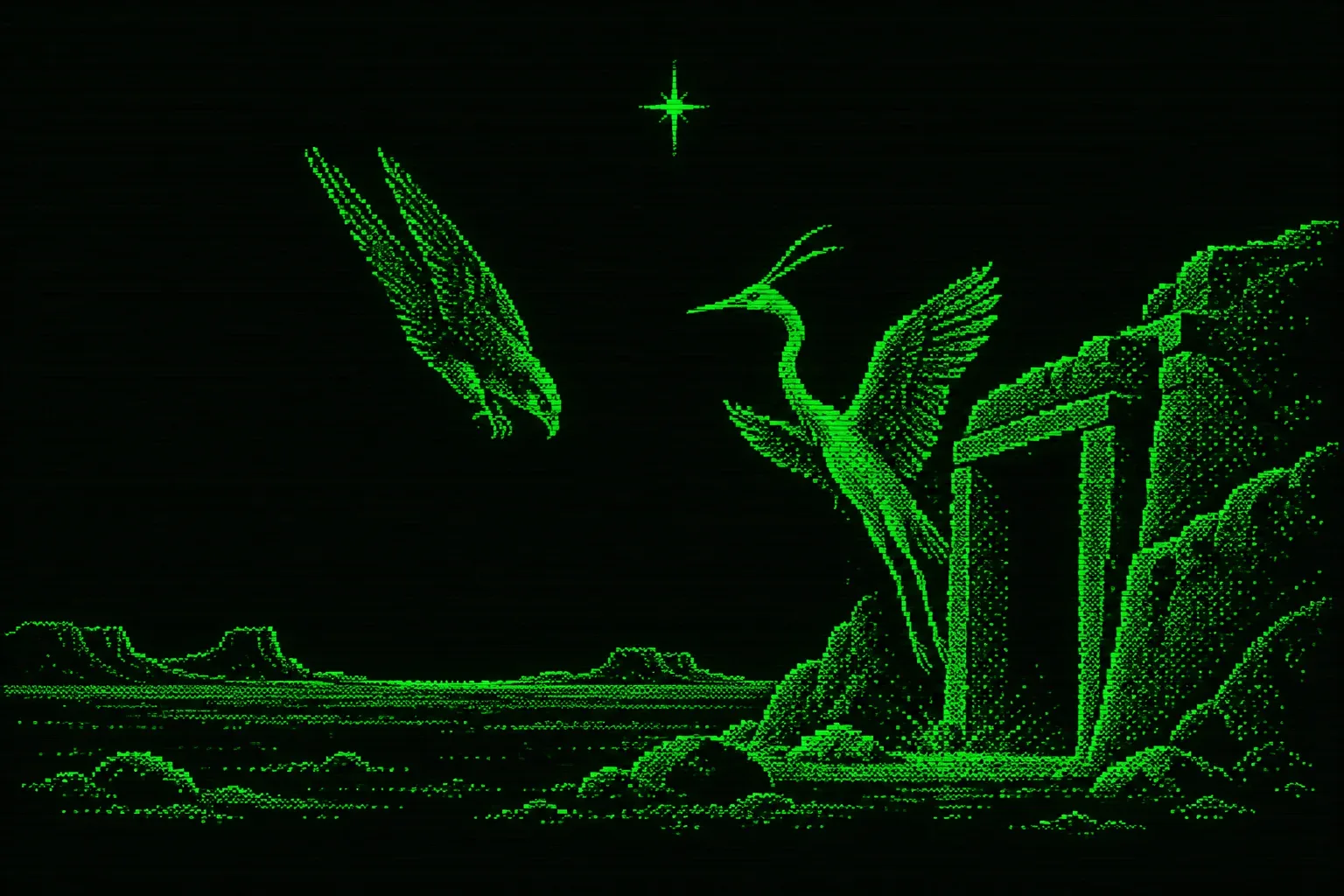
Book of the Dead Spells 13 and 121: Falcon In, Heron Out
- Text
- Book of the Dead, Spells 13 and 121
- Date
- Copied in Book of the Dead manuscripts from the Third Intermediate Period to the Roman period (c. 1070 BC–AD 100)
- Language
- Middle Egyptian · Hieratic
Book of the Dead Spell 13
- 1
rʾ n ꜥq m-ḫt pri̯(.t) jn Wsjr [...] mꜣꜥ-ḫrw ḏd-mdw
Spell for the Osiris …, true of voice, to go in after coming out. Recite:
Note · Line 1
The deceased takes the title “Osiris,” followed by a name now lost. “True of voice” means that the deceased has been vindicated in judgment. - 2
ꜥq.n =j m bjk
I have gone in as a falcon.
- 3
pri̯.n =j m bn,w
I have come out as the Bennu.
Note · Line 3
The Bennu is a sacred heron associated with the sun’s renewal. - 4
nṯr-dwꜣ,w jri̯ n =j wꜣ,t
Morning Star, make way for me!
- 5
dwꜣ =j Rꜥ,w m jmn,tt nfr.t
May I worship Ra in the Beautiful West!
Note · Line 5
The west, where the sun sets, is the realm of the dead. - 6
n wš n Wsjr nw ṯzm.pl Ḥr,w jri̯ n =j wꜣ,t
You who comb the hair of Osiris, you who hunt with the hounds of Horus, make way for me!
- 7
dwꜣ =j Wsjr
May I worship Osiris!
- 8
ḏd-mdw ḥr bnn n ꜥnḫ-jm,j rḏi̯{.t} m msḏr wnmi̯ n {j}ꜣḫ{,w} ḥnꜥ k(y){.t} bnn m sšd n p(ꜣ){g}〈q〉(,t) jri̯{.t} rn n Wsjr [...] mꜣꜥ-ḫrw ḥr =f m hrw q{r}js
Recite over a pellet of henna placed in the right ear of the transfigured one, and over a second pellet in a band of the finest linen. On the day of burial the band is inscribed with the name of the Osiris …, true of voice.
Note · Line 8
The “transfigured one” is the deceased as an akh, a spirit able to act after death. Book of the Dead Spell 121 (a parallel version)
- 9
rʾ n ꜥq m-ḫt pri̯(.t)
Spell for going in after coming out.
- 10
ḏd-mdw jn Wsjr [...] mꜣꜥ-ḫrw
Words spoken by the Osiris …, true of voice:
Note · Line 10
The dead person speaks. To call the deceased “Osiris” is to identify them with the god who rose from death; “true of voice” means they have been found true in judgment. - 11
ꜥq =j m bjk
May I go in as a falcon.
- 12
pri̯ =j m bn,w
May I come out as the Bennu.
- 13
nṯr-dwꜣ,w jri̯ n =j wꜣ,t
God of the dawn, open the way for me,
Note · Line 13
The god of the dawn is the morning star. In Egyptian, “dawn” echoes the word for “worship” in the next line. - 14
dwꜣ =j Rꜥ,w m jmn,tt nfr.t
that I may worship Ra in the Beautiful West.
Note · Line 14
The Beautiful West is the realm of the dead, where the sun goes at its setting. - 15
nš šnj n Wsjr nwi̯ ṯzm.pl Ḥr,w jri̯ n =j wꜣ,t
You who comb the hair of Osiris and tend the hounds of Horus, open the way for me,
- 16
dwꜣ =j Wsjr
that I may worship Osiris.
- 17
ḏd-md,t ḥr bnn n ꜥnḫ-jm,j rḏi̯.tw m msḏr wnmi̯ n ꜣḫ{.w} ḥnꜥ k.t bnn rḏi̯(.w) m sšd n pg wꜥb jrr! rn{n} n Wsjr [...] mꜣꜥ-ḫrw ḥr =s m hrw q{r}js
Recite these words over a pellet of henna placed in the right ear of the transfigured spirit, and over a second pellet placed in a band of pure, fine linen on which the name of the Osiris …, true of voice, is written on the day of burial.
Note · Line 17
The deceased is called an akh, a transfigured spirit, even as the instructions speak of the body being prepared for burial.