~/sacred-texts/ramesside-royal-inscriptions
Beth-Shan Stele of Ramesses II: Fighting Alone in Battle
- Date
- Carved in regnal year 18 of Ramesses II (19th Dynasty, 1262–1261 BC) on a basalt stele at Beth-Shan
- Found
- Found at Beth-Shan (Beit She'an, Israel); now in the Penn Museum, Philadelphia
- Language
- Late Egyptian · Hieroglyphic
Dated to year 18 of Ramesses II, this royal eulogy speaks in the third person to proclaim the pharaoh’s mastery over the Levant. After his fivefold titulary, it declares that the peoples of Setjet, Retjenu, and the desert nomads come bowed to Pi-Ramesses because war had become hateful to their hearts, while Ramesses charges alone into combat and heaps the fallen in a pile.
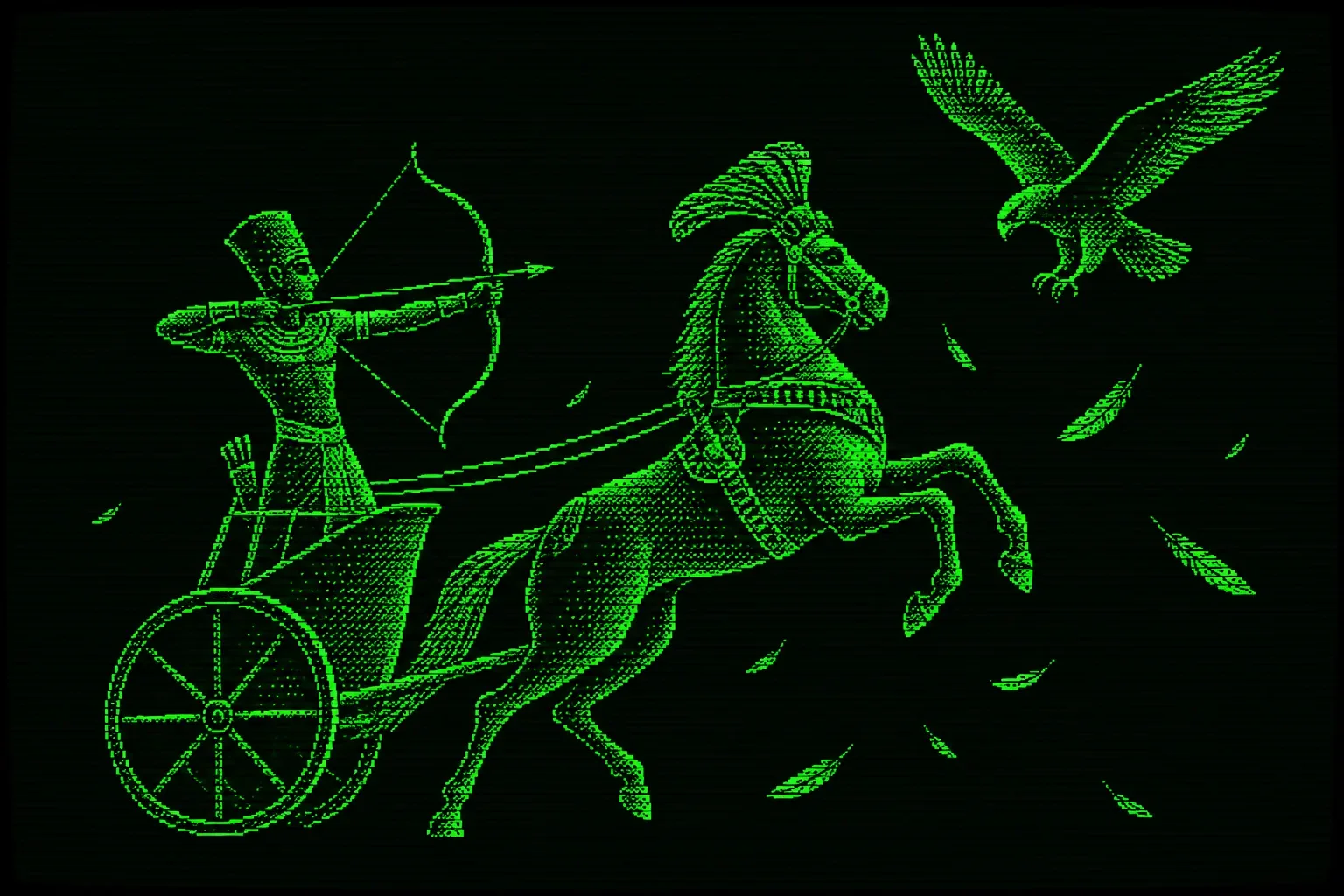
The inscription pairs slaughter with protection. Standing all alone, he rescues his charioteers, acts as a husband to the widow, a protector of the orphan, and charges by chariot like a fierce lion and fire until his enemies scatter like birds’ feathers before the wind.
- 1
rnp,t-sp 18 ꜣbd 4 pr,t sw 1
Regnal year 18, fourth month of Peret, day 1.
Note · Line 1
Peret was the season when the fields emerged from the Nile flood and the crops began to grow. - 2
ꜥnḫ Ḥr,w Kꜣ-nḫt-mri̯.y-Mꜣꜥ,t Nb,tj mki̯-Km,t-wꜥf-ḫꜣs,t.pl Ḥr,w-nbw Wsr-rnp,t.pl-ꜥꜣ-[nḫt,]w ⸢nswt-bj,tj⸣ jṯi̯ tꜣ.pl nb.w.pl Wsr-Mꜣꜥ,t-Rꜥw-stp.n-Rꜥw sꜣ-Rꜥw n ẖ,t =f mri̯ =f nb-ḫꜥ,w.pl Rꜥw-msi̯-s(w)-mri̯-Jmn mri̯ Jmn-Rꜥw nswt-nṯr.pl Rꜥw-Ḥr,w-ꜣḫ,tj Stẖ [ꜥꜣ]-pḥ,tj ⸢Wꜣḏy,t⸣ wp-Tꜣ.du mj rdi̯.n =sn [n] =f qni̯ nḫt r tꜣ.pl nb.wj mj Rꜥw ḏ,t
Long live Horus: Strong Bull, Beloved of Maat;
Two Ladies: Guardian of Egypt, Subduer of Foreign Lands;
Golden Horus: Mighty in Years, Great in Victories;
King of Upper and Lower Egypt, who seizes all lands, Usermaatre-Setepenre;
Son of Ra, of his own body, whom he loves, Lord of Crowns, Ramesses-Meriamun,
beloved of Amun-Ra, king of the gods, of Ra-Horakhty, of Seth, great in strength, and of Wadjet, who judges between the Two Lands,
even as they have given him valor and victory over all lands, like Ra, forever.Note · Line 2
The first three names present the king as Horus, under the protection of the Two Ladies (the goddesses Nekhbet and Wadjet), and as the Golden Horus. The Two Lands are Upper and Lower Egypt. - 3
ꜥnḫ nṯr-nfr mj,tt Rꜥw ity jṯi̯ tꜣ.pl nb m ḫpš =f sḥ,j rs-tp mnḫ sḫr.pl pḥtj sḫr rqy.pl =f jni̯ pḥ,wj tꜣ ḥr ḥḥi̯ ꜥḥꜣ
Long live the perfect god, the very likeness of Ra,
the sovereign who seized all lands with his sickle-sword,
the watchful counselor whose plans are sound,
the mighty one who struck down his foes,
who reached the far end of the earth in search of battle - 4
nn gm.n =f ḥsi̯.t(j) =f ḥr j:m =f
yet found no one willing to meet him face to face.
- 5
Sṯ,tj.pl Nmj-šꜥ.pl ḥr ẖnẖn r rd.du ḥm =f mj mrj.pl =f n Tꜣ-mrj [...]
The people of Setjet and the Sand-runners come to the feet of His Majesty like his own bondsmen in Egypt …
Note · Line 5
Setjet was an Egyptian name for territory to Egypt’s northeast. The Sand-runners were desert nomads. - 6
j⸮w? ⸮ḫr,w.pl? Rṯn.w jwi̯.n =s(n) k〈s〉i̯.w m ḥtp.pl sḫm.n šꜥd.pl =f j:m =sn
The foes from Retjenu have come bowed down in peace, for his swords have mastered them.
Note · Line 6
Retjenu was the Egyptian name for a region of the Levant embracing much of present-day Palestine and Syria. - 7
bꜣ.pl =f wsr ḥr tꜣ.pl nb.pl
His divine might is strong over all lands.
- 8
ḥr,yt =f sdi̯ jb.pl =sn ꜥq wꜥi̯.w m wmt.pl sky.pl jri̯ st m ḥdb,yt ḏd m rʾ =f jri̯ m ꜥ.du =f
Dread of him sets their hearts trembling.
He goes alone into the thick of the fighting and heaps the fallen in a pile.
What he says with his mouth he does with his two arms. - 9
ḥḏ-tꜣ šꜣ.n =f ḫpr
By daybreak what he decreed has come to pass.
- 10
di =f ḫty.pl ꜥꜣm.w.pl ⸮m? ḥtp
He made the Asiatics fall back in peace,
- 11
rʾ-ꜥḥꜣ ḫpr.w m bw,t.pl n.t jb.pl =sn
for war had become hateful to their hearts.
- 12
jwi̯ =sn n =f twt m wꜣḥ tp r ꜥḥ =f n ꜥnḫ wꜣs pr-Rꜥw-msi̯-sw-mri̯-Jmn-ꜥꜣ-nḫt,w.pl
They came to him together, heads bowed, to his palace of life and well-being: the House of Ramesses-Meriamun, Great in Victories.
Note · Line 12
This was Pi-Ramesses, the royal residence in the eastern Nile Delta. - 13
nswt-bj,tj Wsr-Mꜣꜥ,t-Rꜥw-stp.n-Rꜥw sꜣ-Rꜥw Rꜥw-msi̯-sw-mri̯-Jmn wr nḫt,w.pl ḥr ḫꜣs,t.pl nb mj jtj jtj.pl =f Stẖ ꜥꜣ-pḥ,tj ḥ(wi̯) ḫꜣs,t.pl
The King of Upper and Lower Egypt, Usermaatre-Setepenre, the Son of Ra, Ramesses-Meriamun, great in his victories over all foreign lands like the father of his fathers, Seth, great in strength, struck down the foreign lands
- 14
nṯr.pl m-ḥs =f ꜥšꜣ qn ḥr ḫꜣs,t nb swsḫ tꜣš.pl =f r mri̯.n =f nḥm mšꜥ =f šd n-ḥtr.w =f
with the gods before him. Mighty over every foreign land, he extended his borders as far as he wished. He saved his army and rescued his charioteers
- 15
jw ḫꜣs,t.pl nb nšn.tj jri̯ s m tm wn
when all the foreign lands were in uproar. He made those lands cease to be,
- 16
(j)⸢w⸣ =⸢f⸣ wꜥi̯.w ḥr tp =f
though he stood all alone,
- 17
nn ky ḥnꜥ =f ꜥḥꜣ qni̯ pr-ꜥ.du
with no one else beside him. A valiant fighter, a champion:
- 18
nn ḫpr mj,tt =f m tꜣ nb jmꜣ,wtj sḫr,y n whi̯.n sḫr =f jyi̯ n ꜥš n =f nḥm snḏ šdi̯ bꜣg hy n ḫꜣr,t nḏ ḥr nmḥ,w
his like shall not arise in any land.
Gracious is he, a counselor whose counsel never failed.
He comes to those who call to him;
he saves the fearful and rescues the weary,
a husband to the widow, a protector of the orphan. - 19
wšb pw n ngꜣ.w mnj,w qni̯ m sꜥnḫ tm,w
He speaks for those in want, a shepherd skilled in keeping humankind alive.
- 20
sbtj pw mnḫ n Km,t jkm n ḥḥ.pl mki̯ ꜥšꜣ.t
He is a stout rampart for Egypt, a shield for millions, a guardian of the multitude.
- 21
nḥm.n =f Km,t ḥwtf.tj wꜣi̯ r ꜥꜣm.pl r dr =s
He rescued Egypt when she lay plundered, marching against the Asiatics to drive them out.
- 22
di =f wn tꜣ.pl nb.pl ẖr rd.du =f nswt-bj,tj Wsr-Mꜣꜥ,t-Rꜥw-stp.n-Rꜥw sꜣ-Rꜥw Rꜥw-msi̯-sw-mri̯-Jmn ṯꜣi̯ pḏ,t =f ḥr ḥtr
He set all lands beneath his feet, the King of Upper and Lower Egypt, Usermaatre-Setepenre, the Son of Ra, Ramesses-Meriamun. On his chariot he took up his bow
- 23
ḫfꜥ =f šsr =f jw =f mj sbꜣ sšd m ḥr-jb ꜥšꜣ,t m nḫt ꜥwn sqr.y.pl n.w pḥ.ww tꜣ
and gripped his arrow. Like a star he flashed in triumph into the midst of the throng. He plundered captives from the ends of the earth
- 24
sḫr.n =f wr.pl =sn ḥnꜥ mšꜥ =w
after he had felled their chiefs and their army.
- 25
jw ḥm =f m-sꜣ =sn mj kꜣ Nbw,tj mj bjk m ẖ,t-p,t n ꜣpd.w mj mꜣj ḥsꜣ m jh,y n ꜥw,tj mj ḫ,t mḥ.n =s m qmꜣ nḥꜣ.pl ḏꜥw khw m-sꜣ =sn ḥr spd nbw
His Majesty was at their heels like the bull of Ombos,
like a falcon in a flock of birds,
like a fierce lion in a pen of sheep and goats,
like fire that has fed its fill on wild rushes,
a storm raging at their heels and fanning the flame.Note · Line 25
The bull of Ombos is Seth, whose cult had its home there. - 26
jw =w mj šw,t.pl ꜣpd.w r-ḥꜣ,t ṯꜢw
They were like birds’ feathers before the wind.
- 27
nn jri̯ jri̯.n =f ḥr ḫꜣs,t.pl nb nswt-bj,tj tj,t-Jmn
No one has done what he did in all the foreign lands: the King of Upper and Lower Egypt, the image of Amun,
- 28
pḥ,tj Mnṯ,w ḫni̯.tj ḥr =f Wsr-Mꜣꜥ,t-Rꜥw-⸢stp.n⸣-[Rꜥw] sꜣ-Rꜥw Rꜥw-msi̯-s(w)-mri̯-Jmn jri̯.n n =f ḫpš =f rn r nḥḥ ḫft-ḥr ḫꜣs,t.pl nb.t
on whom the might of Montu has alighted, Usermaatre-Setepenre, the Son of Ra, Ramesses-Meriamun. His own strong arm has made him a name that will endure forever before all foreign lands.
Note · Line 28
Montu was a god of war, often shown with a falcon’s head. - 29
nn ḏd m-ꜥbꜥ
It is no boast to say:
- 30
pꜣ sꜣ-Rꜥw Rꜥw-msi̯-[s(w)]-mri̯-Jmn bw mnḫ n mšꜥ =f hrw ḫr
“This Son of Ra, Ramesses-Meriamun, is a sure refuge for his army on the day men fall.”
- 31
nswt-bj,tj Wsr-MꜢꜥ,t-Rꜥw-stp.n-Rꜥw sꜣ-Rꜥw mri̯ =f nb-ḫꜥ.pl Rꜥw-msi̯-s(w)-mri̯-Jmn di ꜥnḫ [mj] [Rꜥw]
The King of Upper and Lower Egypt, Usermaatre-setepenre, the Son of Ra, whom Ra loves, the Lord of Crowns, Ramesses-Meryamun, given life like Ra.
Note · Line 31
The two names belong to Ramesses II. His throne name means “Powerful is the justice of Ra, chosen by Ra”; his birth name means “Ra has begotten him,” and Meryamun means “beloved of Amun.”