~/sacred-texts/historical-inscriptions-of-the-third-intermediate-period
The Banishment Stela: Will You Seize Him? Will You Kill Him?
- Date
- Carved at Thebes under Menkheperre, high priest of Amun, in the 21st Dynasty, about 1050–1040 BC
- Found
- Found at Luxor about 1860 by Henri Maunier; in the Louvre, Paris, since 1884 (C 256)
- Language
- Egyptian (hieroglyphic) · Hieroglyphic
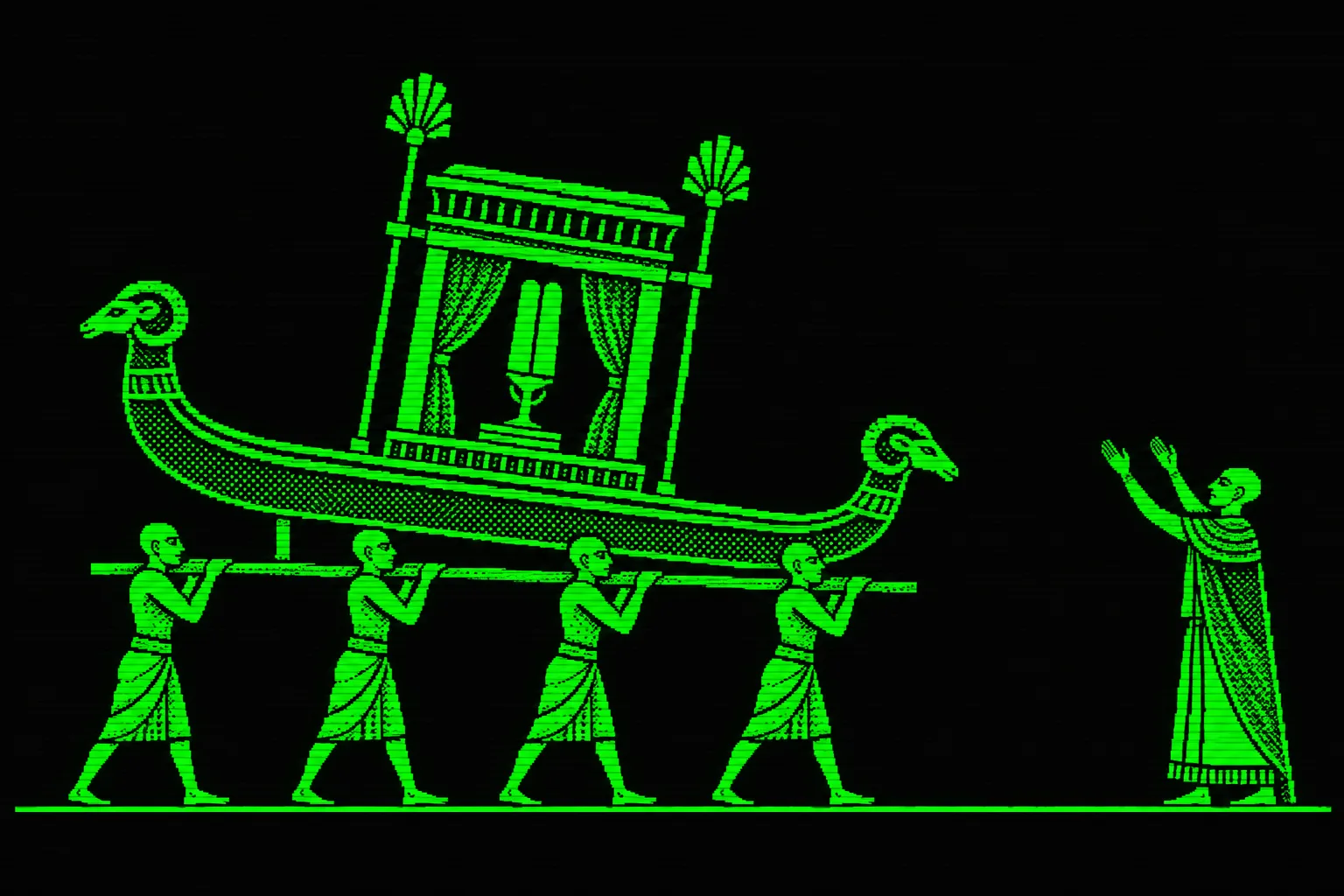
Thebes, year 25. Menkheperre, high priest of Amun and commander-in-chief, has taken the south by force of arms. At the New Year feast the god’s barque is carried out and halts before him, and he puts his questions. Is it the matter of the rebellious servants with whom you are angry, those who are in the oasis where people are sent into exile? Each time, the great god gave a vigorous nod of assent.
The exiles are to come home, no one is to be sent down the road to the Oasis again, and the decree is to stand on a stela. The last question: If anyone repeats before you the words “Kill the living!” will you seize him? Will you kill him? The god nods.
- 1
𓆳𓏏𓊗 𓎆𓎆 𓇹 𓏤𓏤𓏤 𓈙𓏏𓇳 𓋴𓏲𓇳 𓎆𓎆𓏤𓏤𓏤𓏤𓏤𓏤𓏤𓏤𓏤 𓐍𓆑𓏏 𓎛𓎱𓇳𓃀 𓇋𓏠𓈖𓇳𓏤 𓇓𓏏𓏤𓏤𓏤𓊹 𓐝 𓎱 𓆑
rnp,t-zp 25 ꜣbd 3 šm,w.t sw 29 ḫft ḥꜣb Jmn-Rꜥw nzw-nṯr m ḥꜣb =f [nfr] [n,(j)] [jpjp]
Regnal year 25, third month of Harvest, day 29, at the feast of Amun-Ra, king of the gods, on his beautiful feast of Epiphi.
Note · Line 1
Harvest was the last of the Egyptian year’s three seasons. Epiphi was a lunar month. - 2
… 𓄓𓁷𓂋𓇯𓀀 𓅓𓈎𓃀𓄲𓏛 𓊃𓈖𓏪 𓇋𓂋𓏭
[...] N,j-sw-Ḥr,w m-qꜣb =sn jr,j
… Neshor was among them.
- 3
𓃹𓈖𓇋𓈖 𓍛𓏤 𓈖 𓊹 𓊪𓈖 𓀼𓋴𓇋 … 𓌀𓏏𓊖
wn.jn ḥm n,(j) nṯr pn šps.j [...] Wꜣs,t
Then the Majesty of this august god appeared … in Thebes.
- 4
𓊢𓂝𓂻 𓁹𓈖 𓆑 𓈐𓏏𓏤 𓂋 𓋔𓄿𓏤𓏤𓏤 𓏞𓏪 𓂋𓂧𓌗𓏪 𓂋𓍿𓀀𓁐𓈓 …
ꜥḥꜥ jri̯.n =f wꜣ,t r nꜣ zẖꜣ,w.pl rwd.pl r(m)ṯ.pl [...]
Then he made his way to the scribes, the inspectors and the people …
- 5
𓆳𓏏𓊗 𓎆𓎆 𓌐 𓍛𓏤𓀭 𓀻𓋴 𓎟𓎼𓎼𓎼𓇿𓇿 …
rnp,t-zp 25 tp,j ⸢ꜣḫ,t⸣ [sw] ⸢4⸣ [ꜣb].y ⸢ḥm⸣ [n,(j)] [nṯr] [pn] ⸢šps.j⸣ ⸢Jmn-Rꜥw⸣ ⸢nb⸣-ns,t.pl-tꜣ.du [...]
Regnal year 25, first month of Inundation, day 4. The wish of the Majesty of this august god, Amun-Ra, lord of the thrones of the Two Lands …
Note · Line 5
The Two Lands are Upper and Lower Egypt. - 6
… 𓄣𓏤 𓏠 … 𓆈𓏏𓏤𓏤𓏤 𓊃𓈖𓏤𓏤𓏤 … 𓄓𓀎𓏬𓅨𓂋 𓇳𓏠𓈖𓆣 𓐙𓊤 𓆇𓏤𓇓 𓏠𓈖𓌸𓇋𓅮𓇛 …
[...] jb =⸮⸢sn⸣? mn [...] ꜥšꜣ =sn [...] [ḥm-nṯr]-⸢tp,j⸣-Jmn-Rꜥw-nzw-⸢nṯr⸣ ⸢jm,j-rʾ-mšꜥ-wr⸣ Mn-ḫpr-[Rꜥw] mꜣꜥ-ḫrw zꜣ-nzw Pꜣ-nḏm-mri̯-Jmn [__]ꜥ [...]
… their hearts were steadfast … they were many … the high priest of Amun-Ra, king of the gods, and commander-in-chief, Menkheperre, justified, son of King Pinedjem, beloved of Amun …
Note · Line 6
“Justified” is an honorific declaring that its bearer has been found to be in the right. - 7
… 𓐝 𓆰𓏤 𓆑 … 𓇋𓂋𓀸𓂾𓂾 𓆑
[...] m ⸮ḥn? =f [...] jr,j-rd.du =f
… on his orders … his attendants.
- 8
𓄣𓏤 𓊃𓈖𓏤𓏤𓏤 𓎛𓂝𓏲𓏭𓀠 𓈖 𓌸𓂋 𓆑 𓇍𓇋𓂻𓈖 𓆑 𓂋𓇑𓂋𓈅𓏤 𓅓 𓈎𓈖𓏭𓂡 𓈖𓆱𓐍𓏏𓂡 𓂋 𓋴𓉔𓂋𓄣𓏤 𓇿𓏤𓈅 𓂧𓂋𓏴𓂡 𓂋𓈎𓇋𓇋𓀑 𓆑
jb =sn ḥꜥ.wj n mr =f jṯi̯.n =f rs,j m qn nḫt r shru̯ tꜣ dr rq,y =f
Their hearts rejoiced for love of him when he took the south by force of arms, to bring the land peace and drive out his foe.
- 9
𓂋𓂞 𓆑 𓃹𓈖𓈖 … 𓃹𓈖𓈖 𓊃𓈖𓏥 𓊃 𓂋𓎡𓇳 𓇳𓏤𓀭
rḏi̯ =f wnn [__]r [...] wnn =sn m rk Rꜥw
He caused … to be … as they had been in the days of Ra.
Note · Line 9
The days of Ra are the time when the sun god himself was said to have ruled Egypt. - 10
𓇹𓂋𓏲𓂻𓈖 𓆑 𓂋 𓊖𓏏𓏤 𓐝 𓄣𓏤 𓉔𓂋𓏛𓄣𓏤
spr.n =f r nʾ,t m jb hru̯
He reached the City with his heart at peace.
Note · Line 10
“The City” here means Thebes. - 11
𓊏𓊪𓂡𓈖 𓇓𓅱 𓍑𓄿𓐝𓏲𓀔𓏤𓏤𓏤 𓏌𓏤 𓌀𓏏𓊖 𓁷𓏤 𓈖𓉔𓐝𓀁 𓄋𓊪𓏴𓀀𓁐𓏬 𓌨𓄂𓏏𓏤 𓆑
šzp.n sw ḏꜣm.w.pl n.w Wꜣs,t ḥr nhm wp ẖr-ḥꜣ,t =f
The young men of Thebes welcomed him with shouts of joy, and a company of women stood before him.
- 12
𓋴𓈍𓂝𓏛 𓍛𓏤𓀭 𓈖 𓊹 𓊪𓈖 𓀼𓋴 𓎟𓊹𓊹𓊹 𓇋𓏠𓈖𓇳𓏤 𓅓 …
sḫꜥi̯ ḥm n,(j) nṯr pn špsi̯ nb-nṯr.pl Jmn-Rꜥw [nb]-⸢ns,t.pl⸣-tꜣ-du ⸢m⸣ [...]
The Majesty of this august god, lord of the gods, Amun-Ra, lord of the thrones of the Two Lands, appeared in …
- 13
𓎛𓆰𓈖 𓆑 𓇓𓅱 𓂋 𓅨𓂋 𓊕𓏤𓏤
ḥn =f sw r wr zp-2
The god endowed him richly indeed.
- 14
𓋴𓏠𓈖𓍖𓏛 𓆑 𓇓𓅱 𓂋 𓊨𓏏𓉐 𓇋𓏏𓆑 𓆑 𓐝 𓊹𓍛𓁶𓊪𓈖𓇋𓏠𓈖𓇳𓏤𓇓𓏏𓏤𓏤𓏤𓊹 𓄓𓀎𓈓𓅨𓂋𓏌𓏤M207𓎔𓇇
smn =f sw r s,t jt(j) =〈〈f〉〉 m ḥm-nṯr-tp,j-n-Jmn-Rꜥw-nzw-nṯr.pl jm,j-rʾ-mšꜥ-wr-n.w-Šmꜥ,w-Mḥ,w
He installed him in his father’s place as high priest of Amun-Ra, king of the gods, and commander-in-chief of Upper and Lower Egypt.
- 15
𓋴𓂋𓃱𓈖 𓆑 𓈖 𓆑 𓍄𓏏𓏤𓏤𓏤 𓈎𓈖𓏌𓏤𓏤𓏤 𓄤𓆑𓂋𓏤𓏤𓏤 𓈖 𓅮𓄿 𓏏𓏲 𓌵𓏲𓏤𓏤𓏤 𓇥𓂋𓂸
sr.n =f n =f bjꜣ,t qn,w.pl nfr.pl n pꜣu̯ =tw mꜣꜣ ḏr-bꜣḥ
He pronounced many favorable oracles for him, the like of which no one had ever seen.
- 16
… 𓇹 𓏤𓏤𓏤𓏤 𓈙𓏏𓇳 𓇳 𓏤𓏤𓏤𓏤𓏤 𓇯 𓄟𓋴𓊨𓏏𓆇 𓐍𓆑𓏏 𓎛𓎱𓇳𓃀 𓇋𓏠𓈖 𓐝 𓄍
ḫr-j[r] [...] ꜣbd 4 šm,w.t hrw 5 ḥr,(w)-〈rnp,t〉 ms-ꜣs,t ḫft ḥꜣb Jmn m wp-rnp,t
Then … in the fourth month of Harvest, in the five days beyond the year, on the birthday of Isis, at the feast of Amun on New Year’s Day:
Note · Line 16
The civil calendar added five days after its twelve thirty-day months. The fourth of those five was celebrated as the birthday of Isis. - 17
𓋴𓈍𓂝𓏛 𓈖 𓍛𓏤𓀭 𓊹 𓊪𓈖 𓀻𓋴 𓎟𓊹𓊹𓊹 𓇋𓏠𓈖𓇳𓏤 𓇓𓏏𓏤𓏤𓏤𓊹
sḫꜥ n,(j) ḥm nṯr pn špsi̯ nb-nṯr.pl Jmn-Rꜥw nzw-ntr.pl
Procession of the Majesty of this august god, lord of the gods, Amun-Ra, king of the gods:
- 18
𓈖𓂝𓇋𓇋𓏭𓂻 𓂋 𓋔𓄿𓏤𓏤𓏤 𓅱𓋴𓐍𓎺𓉐𓏪 𓉻𓂝𓏛𓈓 𓈖 𓇋𓏠𓈖𓉐𓏤
nꜥi̯.y r nꜣ.pl wsḫ ꜥꜣ n,(j) pr-Jmn
passage to the great courts of the temple of Amun;
- 19
𓊵𓏏𓊪 𓐝𓂺𓏛 𓅮 𓍑𓍑𓏲𓏭𓉐 𓈖 𓇋𓏠𓈖
ḥtp m-bꜣḥ pꜣ ḏꜣḏꜣ n,(j) Jmn
a halt before Amun’s barque station.
Note · Line 19
The god’s image was carried in a shrine shaped like a boat. A barque station was a place where the bearers could set it down. - 20
𓋴𓍬𓂻𓈖 𓆑 𓄓𓀎𓏬𓅨𓂋 𓇳𓏠𓆣 𓐙𓊤
sṯꜣ.n =f ⸢r⸣ [ḥm]-⸢nṯr⸣-[tp,j]-n-Jmn-Rꜥw-nzw-nṯr.pl jm,j-rʾ-mšꜥ-wr Mn-ḫpr-Rꜥw mꜣꜥ-ḫrw
The god drew near to the high priest of Amun-Ra, king of the gods, and commander-in-chief, Menkheperre, justified.
- 21
𓏲𓄞𓂧𓀢 𓆑 𓇓𓅱 𓂋 𓅨𓂋 𓊕𓏭 𓐝 𓊪𓊗𓏥 𓆈𓏏𓏥 𓎝𓎛𓏛 𓈖 𓆑 𓆑 𓐝 𓄤𓏏
wšd =f sw r wr zp-2 m zp.pl ꜥšꜣ.t.pl wꜣḥ n =f m[ẖ]r =f m (j)[ḫ],t nfr.t
He greeted him most warmly, time and again, after the good things he needed had been set before him.
- 22
𓊢𓂝𓈖 𓄙𓐝𓏛𓈖 𓆑 𓊹𓍛𓁶𓊪𓈖𓇋𓏠𓈖 𓇳𓏠𓆣 𓐙𓊤 𓅓𓆓𓂧
ꜥḥꜥ.n wḥm.n =f ḥm-nṯr-tp,j-n-Jmn Mn-ḫpr-Rꜥw mꜣꜥ-ḫrw m-ḏd
Then the high priest of Amun, Menkheperre, justified, spoke again:
- 23
𓅮𓇋𓇋 𓀀 𓎟 𓄤 𓃹𓈖𓈖 𓌃𓂧𓀁 𓇋𓅱 𓇋𓏲 𓏏𓏲 𓄙𓐝𓏛 𓊃 𓐝𓂺𓏛
pꜣy =j nb nfr wnn mdw jw jw =tw wḥm =s ⸢m-bꜣḥ⸣
“My good lord, is there a matter to be reported before you?”
- 24
𓊢𓂝𓈖 𓅮 𓊹 𓉻 𓉔𓈖𓂢 𓂋 𓅨𓂋 𓊕𓏭
ꜥḥꜥ.n pꜣ nṯr ꜥꜣ hn r wr zp-2
Then the great god gave a deep nod of assent.
Note · Line 24
A movement of the barque in its bearers’ hands conveyed the god’s answer. - 25
𓊢𓂝𓈖 𓄙𓏛𓈖 𓆑 𓇹𓂋𓂻 𓂋 𓅮 𓊹 𓉻 𓐝𓆓𓂧
ꜥḥꜥ.n wḥm.n =f spr r pꜣ nṯr ꜥꜣ m-ḏd
Then he turned again to the great god and said:
- 26
𓅮𓇋𓇋 𓀀 𓎟 𓄤 𓏏𓄿 𓌃𓂧𓀁 𓈖𓄿𓏥 𓅡𓎡𓏥 𓍿𓏏𓏲𓀁 𓇋𓀁𓈎𓈖𓂧𓃸 𓎡 𓂋𓂋 𓊃𓈖𓈓 𓈖𓏏𓏭 𓐝 𓐎𓏏𓈅𓈉𓌙 𓏏𓄿 𓈖𓏏𓏭 𓋴𓏠𓈖𓍖𓏛 𓏏𓏲 𓂋 𓊃
pꜣy =j nb nfr tꜣ mdw nꜣ.pl bꜣk.pl ṯt.w j:qnd =k r =sn n,tj m wḥꜣ,t tꜣ n,tj smn =tw r =s
“My good lord, is it the matter of the rebellious servants with whom you are angry, those who are in the oasis where people are sent into exile?”
- 27
𓊢𓂝𓈖 𓅮 𓊹 𓉻 𓉔𓈖𓂢 𓂋 𓅨𓂋 𓊗𓏤𓏤
ꜥḥꜥ.n pꜣ nṯr ꜥꜣ hn r wr zp-2
Then the great god gave a deep nod of assent.
- 28
𓇋𓋴𓎡 𓄓𓀎𓏬 𓊪𓈖 𓂝𓂝𓏲𓏭 𓆑 𓅓 𓇋𓀢 𓁷𓏤 𓇼𓏏𓀃 𓎟𓏤 𓆑 𓏇𓇋 𓏏𓀭 𓁷𓏤 𓄙𓐝𓏛 𓈖 𓇳𓏤𓀭 𓆓𓊃 𓆑
jsk jm,j-rʾ-mšꜥ pn ꜥ.wj.pl =f m jꜣ,w ḥr dwꜣ.t nb =f mj Ḏḥw,tj ḥr wḥm n Rꜥw ḏs =f
Now this commander, both arms raised in praise, adored his lord as Thoth makes his report to Ra himself:
Note · Line 28
Thoth was the scribe of the gods. - 29
𓇋𓐩 𓁷𓏤 𓎡 𓁹 𓈖𓏏𓏭𓎟 𓈎𓌳𓌙 𓃹𓈖𓈖𓏏𓏥𓎟 𓇋𓏏𓆑 𓊹𓊹𓊹 𓄟𓋴 𓈖𓄿𓏥 𓊹𓏏𓂋𓏏𓆇𓏪 𓎼𓂋𓍅𓏛 𓊃𓏏𓏥 𓐝 𓊖𓏏𓏤𓏥 𓐖𓏏𓊖𓏥 𓏲𓏏𓏏𓂺 𓅷𓇋𓇋𓂺𓏥 𓄟𓋴 𓈞𓏏𓁐𓏥 𓁹 𓋹𓈖𓐍 𓈖 𓁷𓏤𓎟𓏥
j:nḏ ḥr =k jri̯ n,tj-nb qmꜣ wnn,t.pl-nb jt(j) nṯr.pl msi̯ nꜣ.pl nṯr,t.pl grg s,t.pl m nʾ,t.pl spꜣ,t.pl wtt ṯꜣ,y.pl msi̯ ḥm,t.pl jri̯ ꜥnḫ n ḥr-nb.pl
“Hail to you, who made all that is,
who fashioned all that exists,
father of the gods, who bore the goddesses,
who founded shrines in towns and provinces,
who begot men and bore women,
who made life for everyone! - 30
𓎸𓁠 𓊪𓏲 𓀨 𓂋 𓏠𓈖𓐍𓏏𓏪 𓊡𓏲𓏥 𓈖 𓋹𓈖𓐍 𓋴 𓈖 𓅨𓂋 𓋹𓈖𓐍 𓏏𓏲 𓐝 𓂓𓏤𓈀 𓆑 𓁹 𓌨𓂋𓏛 𓊹𓊹𓊹 𓂋𓍿𓀀𓁐𓈓 𓆄𓏲𓇶 𓈖 𓉔𓂋𓇳𓏤 𓇋𓎛 𓐝𓈙𓂋𓇳𓏤 𓊛 𓇯 𓂜𓏏𓏤𓏤 𓅨𓂋𓂧𓀉𓈖 𓆑 𓅨𓂋 𓅢𓏥 𓌂𓅓𓂡 𓇓𓅱 𓂋 𓌂𓐍𓏏 𓏇 𓐍𓏏𓊮 𓐝 𓆓𓂝𓊡𓏲𓏥 𓈎𓀠 𓊵𓏏𓊪𓇋𓇋 𓎛𓆰𓈖 𓊃𓈖 𓂉𓀃 𓇓𓅱 𓂝𓈖𓂽 𓇓𓅱 𓂋 𓋴𓄤𓆑𓂋𓏛 𓏠𓈖𓅪𓈖 𓊪𓏏𓂋𓇋𓆶𓁻
H̱nm,w pw qd r mnḫ.t ṯꜣw n,(j) ꜥnḫ s[ṯj] [n,(j)] mḥ,yt ḥꜥp[j] wr ꜥnḫ =tw m kꜣ =f jri̯ ẖr,(t) nṯr.pl r(m)ṯ.pl šw n,(j) hrw jḥ mšr ḏꜣi̯ p,t jw,tj wrd.n =f wr bꜣ.pl sḫm sw r Sḫm,t mj ḫ,t m ḏꜥ qꜣi̯ ḥtp.y ⸢ḥn⸣ [sn] tꜣ sw ꜥn sw r snfr mn n ptr =[f] r(m)[ṯ].pl
He is Khnum, who shapes to perfection,
the breath of life, the scent of the north wind,
the great Nile flood, on whose bounty people live,
who provides what gods and mortals need;
the light of day, the moon at dusk,
who crosses the sky and never tires.
Great in his manifestations, he is mightier than Sekhmet,
like fire in a storm.
Great in mercy, he gives fresh life to whoever kisses the ground before him.
He turns to make the sufferer whole,
for he sees humankind.”Note · Line 30
Khnum fashions living beings on a potter’s wheel. Sekhmet’s name means “the Mighty One”: the god is mightier even than she. - 31
𓂜𓈖 𓐝𓐍 𓆑 𓁷𓏤𓎟 𓐍𓂋 𓄔𓐝 𓆑 𓈖 𓊃𓀀 𓁨𓏥 𓐝𓇋𓅓 𓊃𓈖𓏥
nn ḫm =f ḥr-nb ḫr sḏm =f n z ḥḥ.pl jm =sn
There is no one he does not know, for he gives ear to a million of them.
Note · Line 31
The speaker is Menkheperre, high priest of Amun at Thebes. He speaks first of the god, then to him. - 32
𓇋𓋔 𓈖𓏭𓐝𓂝𓀁 𓏏𓍔𓇋𓇋𓀢 𓆑 𓈙𓊪𓏏𓏭𓅪 𓎡 𓇋𓋴 𓂧𓂋 … 𓅢 𓎡
jn njm tꜣy =f špt =k js dr [...] bꜣ.pl =k
Who can withstand your anger or dispel the … of your bas?
Note · Line 32
A god’s bas are the forms in which his power makes itself felt. - 33
𓇋𓅱 𓎡 𓄔𓐝𓏛 𓈖 𓊤𓏲𓀁 𓀀 𓐝 𓅮 𓉔𓂋𓇳𓏤 𓐝𓏏 𓎡 𓂋 𓈖𓄿𓏥 𓅡𓎡𓀀𓁐𓏬 𓍿𓏏𓏲𓀁 𓇋𓀁𓆼𓄿𓂝𓂻 𓎡 𓂋 𓐎𓏏𓏤𓈉 𓐝𓏏𓏲 𓏏𓏲 𓏎𓈖 𓏏𓏲𓈓 𓂋 𓆎𓐝𓏏𓊖
jw =k sḏm n ḫrw =j m pꜣ hrw mt(w) =k ḥtp r nꜣ.pl bꜣk.pl ṯt.w j:ḫꜣꜥ =k r wḥꜣ,t mtw =tw jni̯ =tw r Km,t
Will you hear my voice today and show favor to the rebellious servants you banished to the Oasis? And shall they be brought back to Egypt?
Note · Line 33
Here the return to Egypt means a return from the desert oasis to the Nile Valley. - 34
𓊢𓂝𓈖 𓅮 𓊹 𓉻 𓉔𓈖𓂢 𓂋 𓅨𓂋 𓊕𓏭
ꜥḥꜥ.n pꜣ nṯr ꜥꜣ hn r wr zp-2
Then the great god gave a vigorous nod of assent.
Note · Line 34
This is an oracle: the movement of Amun’s image, carried by priests, gives the god’s answer. - 35
𓊢𓂝𓈖 𓄙𓐝𓏛𓈖 𓆑 𓐝𓆓𓂧
ꜥḥꜥ.n wḥm.n =f m-ḏd
Then he spoke again:
- 36
𓅮𓇋𓇋 𓀀 𓎟 𓄤 𓇋𓂋 𓅮 𓈖𓏏𓏭 𓎟 𓂋𓎘𓅱𓀀 𓎡 𓂋 𓏎𓋔 𓆑 𓏏𓅱𓏏𓅱 𓆓𓂧 𓊵 𓂋
pꜣy =j nb nfr jr pꜣ n,tj nb r:wḏ =k r jni̯ =f tw=tw ḏd ḥtp [=k] [r] =[f] r [ḏ,t]
My good lord, is it to be said of anyone you order brought back that he has your favor forever?
- 37
𓊢𓂝𓈖 𓅮 𓊹 𓉻 𓉔𓈖𓂢 𓂋 𓅨𓂋 𓊕𓏭
ꜥḥꜥ.n pꜣ nṯr ꜥꜣ hn r wr zp-2
Then the great god gave a vigorous nod of assent.
- 38
𓊢𓂝𓈖 𓄙𓐝𓏛𓈖 𓆑 𓇹𓂋𓂻 𓂋 𓅮 𓊹 𓉻 𓐝𓆓𓂧
ꜥḥꜥ.n wḥm.n =f spr r pꜣ nṯr ꜥꜣ m-ḏd
Then he approached the great god again and said:
- 39
𓅮𓇋𓇋 𓀀 𓎟 𓄤 𓇋𓅱 𓎡 𓁹 𓎘𓅱𓏛𓍼𓏏 𓉻𓏏 𓁷𓏤 𓂋𓈖𓍷 𓎡 𓂋 𓏏𓍃𓐝 𓏙𓏏 𓎟 𓈖 𓅮 𓇿𓏤𓈅 𓂋 𓏏𓄿 𓈐𓂻 𓈖 𓐎𓏏𓈅𓈉𓌙 𓂋 𓏏𓍃𓐝 … 𓆷𓂝𓏛 𓐝 𓅮 𓎛𓂋𓇳𓏤 𓂋𓁷𓂋𓇯
pꜣy =j nb nfr jw =k jri̯ wḏ,t ꜥꜣ.t ḥr rn =k r tm ḏi̯.t ⸢jni̯⸣ =t[w] r(m)[ṯ].pl nb n,(j) pꜣ tꜣ r tꜣ wꜣ,t n,(j) wḥꜣ,t r tm [ḏi̯.t] [...] šꜣꜥ m pꜣ hrw r-ḥr
My good lord, will you issue a great decree in your name forbidding anyone in this land to be sent down the road to the Oasis, and forbidding … from this day forward?
- 40
𓊢𓂝𓈖 𓅮 𓊹 𓉻 𓎛𓈖𓂢 𓂋 𓅨𓂋 𓊕𓏭
ꜥḥꜥ.n pꜣ nṯr ꜥꜣ hn r wr zp-2
Then the great god gave a vigorous nod of assent.
- 41
𓊢𓂝𓈖 𓄙𓐝𓏛𓈖 𓆑 𓅓𓆓𓂧
ꜥḥꜥ.n wḥm.n =f m-ḏd
Then he spoke again:
- 42
𓏏𓏲𓎡 𓆓𓂧 𓁹 𓊃 𓐝 𓎘𓅱𓏛𓍼𓏏 𓁷𓏤 𓊢𓇋𓇋𓊌 … 𓋴𓏠𓈖𓍖𓏛 𓐝 𓊖𓏏𓏤 𓎡 𓏠𓈖𓏛 𓎝𓎛𓏛
tw=k ḏd jri̯ =s m wḏ,t ḥr ꜥḥꜥ.y [...] smn m nʾ,t =k mn wꜣḥ ⸢ḏ,t⸣
Will you order this to be inscribed as a decree on a stela of …, set up in your city to stand and endure forever?
- 43
𓅮 𓂋
⸢ꜥḥꜥ.n⸣ pꜣ [nṯr] [ꜥꜣ] ⸢hn⸣ r [wr] [zp]-2
Then the great god gave a vigorous nod of assent.
- 44
𓊢𓂝𓈖 𓄙𓐝𓏛𓈖 𓆑 𓍛𓊹𓁶𓊪𓈖𓇋𓏠𓈖 𓇳𓏠𓆣 𓐙𓊤 𓐝𓆓𓂧
ꜥḥꜥ.n wḥm.n =f ḥm-nṯr-tp,j-n-Jmn Mn-ḫpr-Rꜥw mꜣꜥ-ḫrw m-ḏd
Then the high priest of Amun, Menkheperre, justified, spoke again:
- 45
𓅮𓇋𓇋 𓀀 𓎟 𓄤 𓐍𓂋 𓅮𓇋𓇋𓀀 𓎡 𓎘𓆓𓏛 𓂋 𓁨𓏥 𓈖 𓊃𓊪𓊕 𓐍𓂋 𓅮 𓎘𓆓𓏛 𓈖 𓏏𓆑𓀀 𓏏𓅐𓀀 𓐝𓉔𓄿𓏲𓀀𓏏𓁐𓏲 𓎟
pꜣy =j nb nfr ḫr pꜣy =k wḏ r ḥḥ.pl n,(j) zp ḫr pꜣ wḏ n (j)t(j) mw,t mhꜣw nb
My good lord, your decree, then, holds for millions of cases. It is a decree for father, mother and every family.
- 46
𓇋𓅱 𓌃𓂧 𓀀 𓈖 𓉔𓂋𓏛 𓄣𓏤 𓐝𓂺𓏤𓏛
jw mdw =j n hru̯ jb m-bꜣḥ =〈k〉
My words before you are meant to set the heart at ease.
- 47
𓇋𓏌𓎡 𓍛𓀀 𓎡 𓈖 𓐙𓌳𓂝𓐙𓏏 𓅜𓐍𓏏 𓈖 𓂔 𓎡
jnk ḥm =k n,(j) mꜣꜥ,t ꜣḫ.t n kꜣ =k
I am your servant of truth, of service to your ka.
Note · Line 47
The ka is the vital power of a god or a person, sustained by offerings of food and drink. - 48
𓇋𓎛𓃹𓈖𓏌𓏲𓀔 𓀀 𓈖 𓊖𓏏𓏤 𓎡
j:ḥwn =j n nʾ,t =k
I grew up in your city.
- 49
𓋴𓆣𓂋 𓀀 𓅓 𓆓𓆑𓅰𓈀𓏥 𓎡 𓊃𓅨𓂋 𓎡
sḫpr =j m ḏfꜣ.pl =k zwr =k
I was raised on your food and your drink.
- 50
𓇋𓅱 𓀀 𓅓 𓄡𓏏𓏤 𓀨 𓎡 𓅓 𓋴𓎛𓆇𓅱 𓎘 𓎡 𓅱𓀀 𓁹 A137𓏛 𓈖 𓂋𓍿𓀀𓁐𓏬 𓎡
jw =j m ẖ,t qd =k 〈wj〉 m swḥ wḏ =k wj jri̯ ḥꜥ n r(m)ṯ.pl =k
While I was in the womb, you shaped me into an egg and charged me to bring joy to your people.
- 51
𓇋𓅓𓐝𓂝 𓏏𓏲 𓁹𓇋𓇋 𓀀 𓊢𓂝𓇳𓏤 𓄤𓆑𓂋 𓅓 𓌞𓋴𓏭𓂻 𓂔𓏏𓏤 𓎡 𓃂𓏏𓏲 𓅱𓍑𓏛𓏏𓏲 𓂋 𓐍𓈖𓏌𓏲𓅯𓅪 𓎡 𓎟
jmi̯ tw jri̯.y =j ꜥḥꜥ nfr m šms kꜣ.t =k wꜥb.tw wḏꜣ.tw r ḫn.w =k nb
Grant that I may spend a good lifetime in the retinue of your ka, pure and untouched by all you abhor.
- 52
𓇋𓐝𓐝𓂝 𓂋𓂧𓂾𓂾 𓀀 𓁷𓏤 𓐝𓂝𓏏𓈖𓈐 𓎡
jmi̯ rd.du =j ḥr mtn =k
Set my two feet on your path.
- 53
𓋴𓂝𓈎𓌙𓌙 𓏲𓀀 𓁷𓏤 𓈐 𓎡
sꜥq wj ḥr wꜣ,t =k
Lead me onto your road.
- 54
𓇋𓀁𓎝𓎛𓏛 𓄣𓏤 𓀀 𓁷𓏤 𓐝𓂝𓎡𓉐 𓆑 𓂋 𓁹𓂋 … 𓎡
j:wꜣḥ jb =j ḥr mk =f r jri̯ [...] =k
Set my heart in its proper place, that I may do your …
- 55
𓇋𓅓𓐝𓂝 𓁹𓇋𓇋 𓀀 𓄪𓐍𓏲𓐍𓂋𓇋𓇋 𓄤𓆑𓂋 𓅓 𓊵𓏏𓊪 𓇋𓅱 𓀀 𓎝𓎛𓏛𓏏𓅱 𓋹𓈖𓐍𓏏𓅱 𓅓 𓉐𓏤 𓎡 𓀼𓋴 𓏇𓇋 𓎿𓇋𓇋 𓎟 𓁹 𓅓𓐪𓏌𓏲
jmi̯ jri̯.y =j (j)mꜣḫ.w{ḫr}.y nfr m ḥtp jw =j wꜣḥ.tw ꜥnḫ.tw m pr =k špsi̯ mj ḥz,y nb jri̯ m-qd
Grant that I may enjoy full honor in peace and live on in your noble house, like every favored one who has done likewise.
- 56
𓊢𓂝𓈖 𓊹𓍛𓁶𓊪𓈖𓇋𓏠𓈖 𓇳𓏠𓆣 𓐙𓊤 𓇹𓂋𓂻 𓂋 𓅮 𓊹 𓉻 𓅓𓆓𓂧
ꜥḥꜥ.n ḥm-nṯr-tp,j-n-Jmn Mn-ḫpr-Rꜥw mꜣꜥ-ḫrw spr r pꜣ nṯr ꜥꜣ m-ḏd
Then the high priest of Amun, Menkheperre, justified, approached the great god and said:
- 57
𓇋𓂋𓏤𓏤 𓂋𓍿𓀀𓁐𓏬 𓎟 𓈖𓏏𓏭 𓇋𓅱 𓏥 𓄙𓀁 𓐝𓂺𓏤 𓎡 𓂋𓆓𓂧 𓋴𓅁𓌪 𓂋𓀀𓁐𓏬 𓇋𓅱 𓎡 𓐍𓆑𓏛 𓆑 𓇋𓅱 𓎡 𓄡D312𓏲𓌪𓂡 𓆑
jr r(m)ṯ.pl nb n,tj jw =w wḥm m-bꜣḥ =k r-ḏd smꜣ r(mṯ).pl ꜥnḫ jw =k ḫf =f jw =k ẖdb =f
If anyone repeats before you the words “Kill the living!” will you seize him? Will you kill him?
- 58
𓊢𓂝𓈖 𓅮 𓊹 𓉻 𓎛𓈖𓂢 𓁶𓏤 𓂋 𓅨𓂋 𓊕𓏭
ꜥḥꜥ.n pꜣ nṯr ꜥꜣ hn tp r wr zp-2
Then the great god nodded his head vigorously in assent.