~/sacred-texts/block-statue-of-bakenkhonsu
Bakenkhonsu Block Statue: Schoolboy to High Priest of Amun
- Date
- Carved in the 19th Dynasty, in the reign of Ramesses II (1279–1213 BC), on the back pillar of the block statue of Bakenkhonsu
- Found
- From Thebes; now in the State Museum of Egyptian Art, Munich (Gl. WAF 38)
- Language
- Egyptian · Hieroglyphic
- 1
𓂋𓊪𓂝 𓄂𓂝 𓊹𓍛𓌐𓈖𓇋𓏠𓈖 𓐙𓊤 𓆓𓂧 𓆑
(j)r(,j)-pꜥ(,t) ḥꜣ.t(j)-ꜥ ḥm-nṯr-tp-n(,j)-Jmn Bꜣk-n(,j)-Ḫnsw mꜣꜥ-ḫrw ḏd =f
The hereditary prince and count, the High Priest of Amun, Bakenkhonsu, true of voice, says:
Note · Line 1
“True of voice” is said of the dead who have been vindicated in the judgment after death. - 2
𓏌𓎡𓀀 𓂸𓌙𓌙 𓆄𓏏 𓅜𓐍𓏲 𓈖 𓎟𓏤 𓆑 𓏏𓂋𓇋𓆵𓀢 𓋴𓂋𓐍𓏛 𓊹𓀭 𓆑 𓈝𓐝𓂻 𓁷 𓐝𓂝𓏏𓈖𓏌𓏲𓈐 𓆑 𓁹 𓊃𓊪𓊕𓏥 𓈖 𓅜𓐍𓏥 𓐝𓄚𓈖𓏌𓉐 𓊹𓉗 𓆑 𓇋𓏲 𓀀 𓐝 𓎔𓄣𓏤 𓈖 𓎟𓏤 𓆑
jnk mtr Mꜣꜥ,t ꜣḫ,w n nb =f tr sḫr nṯr =f šm ḥr mtn,w =f jr zp.pl n(,j) ꜣḫ(,w) m-ẖnw ḥw,t-nṯr =f jw =j 〈m〉 jm,j-rʾ-kꜣ.t-wr〈,t〉-m-pr-Jmn m mḥ-jb mnḫ n(,j) nb =f
I am one who bore witness to Maat, who served his lord well, who honored his god’s counsel, walked in his paths and did good works within his temple. I did so as overseer of great works in the House of Amun, a man worthy of his lord’s trust.
Note · Line 2
Maat is both the right order of the world and the goddess who embodies it. - 3
𓇋𓀞 𓂋𓍿𓀀𓁐𓏥𓎟 𓇋𓊪𓏛𓏥 𓐝 𓄣𓏤 𓊃𓈖𓏥 𓃹𓈖𓈖𓇋𓇋𓏛𓏪 𓈖𓏏𓏭 𓁶𓏤 𓇾 𓇍𓇋𓏭𓂻𓏥 𓁷𓏤𓐠𓏤 𓀀 𓋔 𓁨𓏤 𓋔 𓁨𓏤𓏥 𓐝𓆱𓏏𓏤 𓇋𓀗 𓎡𓎛𓎡𓎛𓀗 𓊃𓈖𓏥 𓂝𓂋𓈎𓍼𓏥 𓐝 𓌵 𓅜𓐍𓏥
j r(m)ṯ.pl-nb jp.pl m jb =sn wnn,y.pl n.tj tp tꜣ jj.pl ḥr-sꜣ =j n ḥḥ n ḥḥ.pl m-ḫt jꜣw kḥkḥ n.[t]j [jb] =sn ꜥrq m mꜣ ꜣḫ.pl
O all you people who weigh things in your hearts, you who live upon the earth, you who will come after me for a million million years when my long old age is past, you whose hearts are practiced in seeing the transfigured dead,
Note · Line 3
The transfigured dead were spirits believed to have power to act among the living. - 4
𓂞 𓀀 𓂋𓐍𓏛 𓏏𓈖𓏥 𓀀 𓃹𓈖 𓁶𓏤 𓇾 𓐝 𓎟 𓁹𓋔 𓀀 𓈖𓇥𓂋 𓄟𓇋𓇋𓁒 𓀀
ḏ =j rḫ =tn [qj] =j wn tp tꜣ m [jꜣw,t] nb jr.(t)n =j n-ḏr msy(,t) =j
I would have you know what I was like on earth in every office I held from my birth onward.
- 5
𓁹𓇋𓇋 𓀀 𓏤𓏤𓏤𓏤 𓆳𓏏 𓅓 𓈖𓆓𓊃𓅪 𓇋𓈎𓂋𓏛
jr.y =j 4 rnp,t m nḏs jqr
I spent four years as an able schoolboy.
- 6
𓁹𓇋𓇋 𓀀 𓎆𓏤 𓈖 𓆳𓏏𓏤 𓅓 𓎛𓇬𓈖𓀔 𓀀 𓐝 𓇯𓇋𓉐𓎛 𓈖 𓋴𓆣𓂋 𓈖 𓇓𓏏𓈖
jr.y =j 11 n(,j) rnp,t m ḥwn jw =j m ḥr(,j)-jḥ n s:ḫpr n(,j) nsw Mn[-mꜣꜥ,t-rꜥ]
I spent eleven years as a youth, serving as master of the stables that supplied King Menmaatre.
Note · Line 6
Menmaatre was the throne name of Seti I. - 7
𓁹𓇋𓇋 𓀀 𓈖𓇋𓏠𓈖 𓐝 𓏤𓏤𓏤𓏤 𓆳
jr.y =j wꜥb-n(,j)-Jmn m 4 rnp,t
I served four years as a wab-priest of Amun.
Note · Line 7
A wab was a priest whose duties required ritual purity; the title means “pure one.” - 8
𓁹𓇋𓇋 𓀀 𓊹𓇋𓏏𓆑𓈖𓇋𓏠𓈖 𓐝 𓎆𓏤𓏤 𓈖 𓆳
jr.y =j jt-nṯr-n(,j)-Jmn m 12 n(,j) rnp,t
I served twelve years as God’s Father of Amun.
Note · Line 8
“God’s Father” was a priestly rank, not a claim of kinship. - 9
𓁹𓇋𓇋 𓀀 𓊹𓍛𓏥𓏌𓈖𓇋𓏠𓈖 𓐝 𓎆𓏤𓏤𓏤𓏤𓏤 𓈖 𓆳
jr.y =j ḥm-nṯr-3.nw-n(,j)-Jmn m 15 n(,j) rnp,t
I served fifteen years as Third Priest of Amun.
- 10
𓁹𓇋𓇋 𓀀 𓊹𓍛𓏤𓏤𓏌𓈖𓇋𓏠𓈖𓐝 𓎆𓏤𓏤
jr.y =j ḥm-nṯr-2.nw-n(,j)-Jmn 12 〈rnp,t〉
I served twelve years as Second Priest of Amun.
- 11
𓎛𓎿𓇋𓇋 𓆑 𓅱𓀀 𓋷𓄿𓏲𓀁 𓆑 𓅱𓀀 𓁷𓏤 𓃀𓇋𓄿𓏏𓎺𓄑𓀁 𓀀
ḥz.y =f wj sjꜣ.w =f wj ḥr bjꜣ,t =j
He praised me; he knew me for my character.
- 12
𓂞 𓆑 𓅱𓀀 𓂋 𓊹𓍛𓌐𓈖𓇋𓏠𓈖 𓐝 𓈖 𓆳 𓇋𓅱 𓏤 𓐝 𓇋𓏏𓆑 𓄤 𓈖 𓊃𓐝𓂧𓀀𓁐𓏥 𓀀 𓁷𓏤 𓋴𓆣𓂋 𓍑𓐝𓂝𓀔 𓋴𓈖𓏥 𓁷𓏤 𓂞𓏏 𓂧𓏏𓏤 𓀀 𓈖𓏏𓏭 𓉔𓄿𓏲𓅪𓏥 𓁷𓏤 𓋴𓋹 𓈖𓏏𓏭 𓐝 𓎡𓏏𓅪𓏥 𓁷𓏤 𓅜𓐍𓏥 𓐝 𓂋𓏤𓉐𓏤 𓆑 𓇋𓏲 𓀀 𓄓𓂓𓏏𓀋𓅨𓂋𓃿𓏏𓉐𓋆 𓈖 𓅭𓏤 𓆑 𓉐𓂋𓂻 𓐝 𓎛𓂝𓄻𓄻𓄻 𓆑 𓇓𓏏𓆤𓏏 𓇳𓄊𓁧𓍉𓇳𓈖 𓅭𓇳 𓁛𓁩𓈘𓄟𓋴𓇓 𓏙 𓋹 𓁹 𓏠𓏌𓏌𓏌 𓈖 𓏏𓆑 𓇋𓏠𓈖 𓂞 𓇓 𓁷 𓏏𓎼𓉐 𓆑 𓁹 𓌨𓂝 𓊹𓍛𓌐𓈖𓇋𓏠𓈖 𓅡𓎡𓈖𓐍𓈖𓇓𓀽 𓐙𓊤 𓆓𓂧 𓆑 𓈖𓏏𓏭
ḏ =f wj r ḥm-nṯr-tp-n(,j)-Jmn m 27 n(,j) rnp,t jw =j m jt nfr n smd.pl =j ḥr s:ḫpr ḏꜣm =sn ḥr (r)ḏ.t dr,t =j n.tj 〈m〉 hꜣw ḥr s:ꜥnḫ n.tj m kt,t ḥr [jr.t] ꜣḫ(,w) m rʾ-pr =f jw =j jm,j-rʾ-kꜣ.t-wr-ḫnt-Wꜣs,t n zꜣ =f pr m ḥꜥ(,w) =f nswt-bj.tj Wsr-mꜣꜥ,t-Rꜥ-stp-n(,j)-Rꜥ zꜣ-Rꜥ Rꜥ-ms-sw-mr-Jmn ḏ(,j) ꜥnḫ jr mnw.pl n jt (=f) Jmn (r)ḏ sw ḥr ns,t =f jr ẖr-ꜥ ḥm-nṯr-tp-n(,j)-Jmn Bꜣk-n(,j)-Ḫnsw mꜣꜥ-ḫrw ḏd =f n.tj
He made me High Priest of Amun, an office I held for twenty-seven years. I was a good father to those who served under me: I reared their children, gave my hand to those in distress, sustained those who had little, and did good work in his temple. I was chief overseer of works in Thebes for Amun’s son, sprung from his own body, the King of Upper and Lower Egypt, Usermaatre Setepenre, the Son of Ra, Ramesses Meryamun, may he be given life. The king built monuments for his father Amun, who set him on his throne. These were built under the direction of the High Priest of Amun, Bakenkhonsu, true of voice, who says:
Note · Line 12
The king is Ramesses II. He is named first by his throne name, then by his birth name. - 13
𓁹𓇋𓇋 𓀀 𓅜𓐍𓏥 𓐝 𓇋𓏠𓈖𓉐𓏤 𓇋𓏲 𓀀 𓄓𓂓𓏏𓀁 𓈖 𓎟𓀭 𓀀
jr.y =j ꜣḫ(,w) m pr-Jmn jw =j 〈m〉 jm,j-rʾ-kꜣ.t n(,j) nb =j
I did good work in the House of Amun as my lord’s overseer of works.
- 14
𓁹𓇋𓇋 𓀀 𓈖 𓆑 𓊹𓉱 𓁛𓁩𓈘𓄟𓋴𓇓𓄔𓅘𓎛𓏏𓏴𓀁 𓐝 𓅮 𓊀 𓁷𓂋𓇯 𓈖 𓇋𓏠𓈖𓉐𓏤
jr.y =j n =f ḥw,t-nṯr Rꜥ-ms-sw-mr-Jmn-sḏm-nḥ,t m pꜣ ꜥꜣ ḥr(,j) n(,j) pr-Jmn
I built for him the temple “Ramesses, Beloved of Amun, Who Hears Petitions” at the upper gate of the House of Amun.
- 15
𓋴𓊢𓈖 𓀀 𓉶𓉶𓉶 𓇋𓐝 𓊃 𓐝 𓇋𓈖𓊌 𓈖 𓌴𓏏𓎶 𓄤𓄤𓄤 𓊃𓈖𓏥 𓁷𓏤 𓏏𓎡𓈖𓂻 𓁷𓂋𓏏𓇯
s:ꜥḥꜥ.n =j tḫn.pl jm =s m jn(r) n(,j) mꜣṯ nfr.pl =sn ḥr tkn ḥr,t
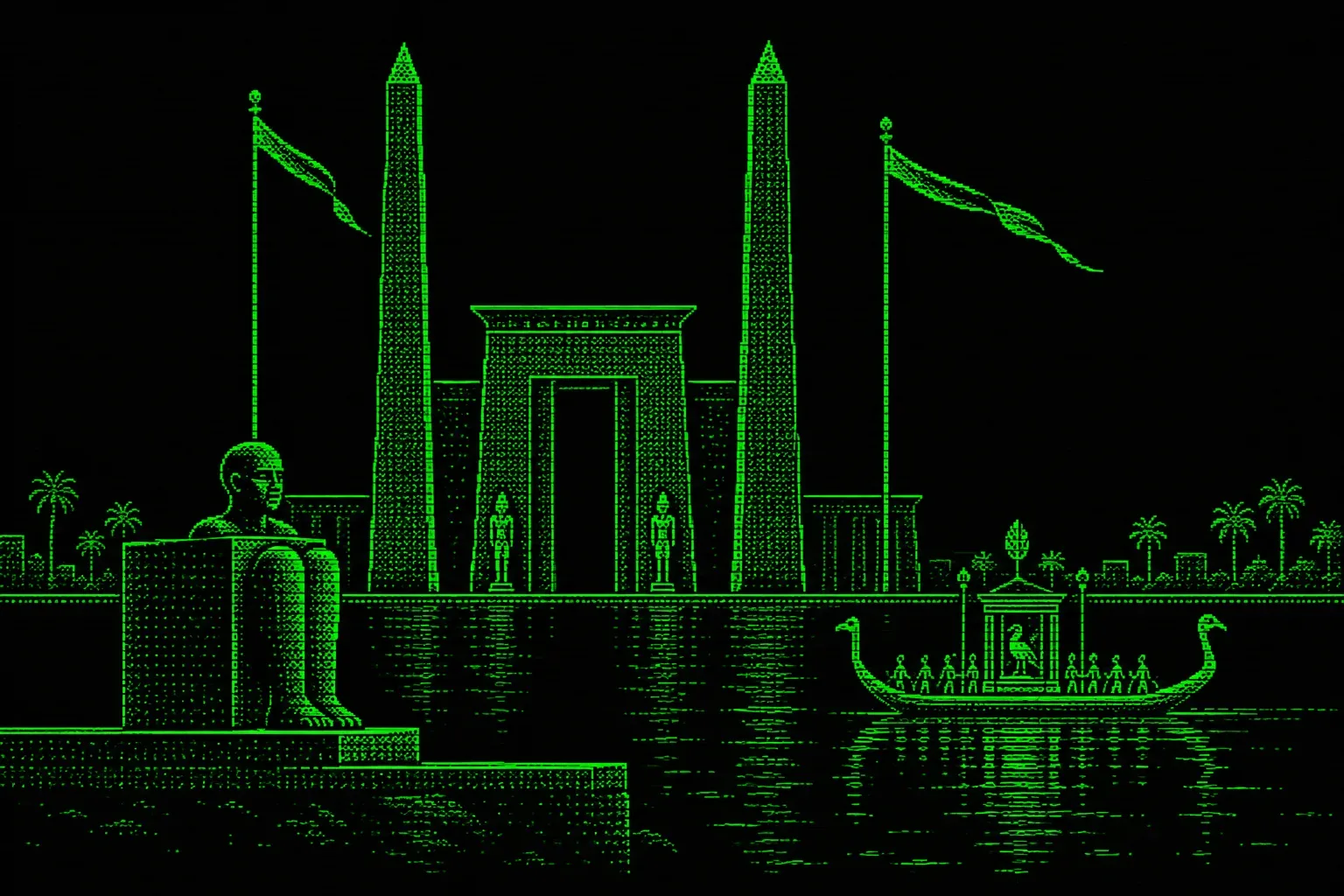
Within it I raised obelisks of granite, their tips reaching toward the sky.
- 16
𓍑𓄿𓍑𓄿𓏲𓉐 𓐝𓂸 𓊃 𓐝 𓇋𓈖𓊌 𓋆
ḏꜣḏꜣ m-bꜣḥ =s m jnr m-ḫf〈t〉-ḥr-n(,j) Wꜣs,t
Before it, facing Thebes, stands a stone barque shrine.
Note · Line 16
During a procession, the bearers could set down the sacred boat carrying the god’s image at a shrine like this. - 17
𓏥 𓂓𓐝𓏲𓏥 𓋴𓂋𓂧𓇝 𓅓 𓍲𓈖𓏌𓆭𓏲𓏥
bꜥḥ.pl kꜣm.w.pl rd(.w) m šn.w.pl.
The irrigated fields and vineyards are planted with trees.
- 18
𓁹𓇋𓇋 𓀀 𓍘𓏭𓂋𓊀𓏥 𓉻𓏥 𓅨 𓅨 𓐝 𓋠𓈓 𓄤𓄤𓄤 𓊃𓈖𓏥 𓁷𓏤 𓎸 𓇯
jr.y =j trj.pl ꜥꜣ.pl wr wr m nbw-ḥḏ nfr(,w) =sn ḥr ẖnm p,t
I made immense doors of electrum, their upper edges meeting the sky.
Note · Line 18
Electrum is an alloy of gold and silver. - 19
𓋜𓎛𓂡 𓀀 𓌢𓌢𓌢 𓉻𓏥 𓅨 𓅨
mḏḥ =j sn.pl ꜥꜣ.pl wr wr
I fashioned flagstaffs of immense size.
- 20
𓋴𓊢 𓀀 𓊃𓈖𓏥 𓐝 𓍍𓅡𓏤𓁺𓉐 𓀼 𓐝𓐍𓆑𓁷𓏤𓋔 𓊹𓉗 𓆑
s:ꜥḥꜥ =j sn m wbꜣ špss m-ḫf〈t〉-ḥr-n(,j) ḥw,t-nṯr =f
I raised them in the splendid forecourt facing his temple.
- 21
𓋜𓎛𓂡 𓀀 𓏥 𓉻𓏥 𓈖𓁶𓏤 𓇋𓂋𓏲𓈘 𓈖 𓇋𓏠𓈖 𓅑𓏏 𓐍𓈖𓇓 𓇋𓈖 𓂋𓊪𓂝 𓄂𓂝 𓊹𓍛𓌐𓁩𓈖 𓅡𓎡𓈖𓐍𓈖𓇓
mḏḥ =j wjꜣ.pl ꜥꜣ.pl n-tp jtr,w n Jmn Mw,t Ḫns jn (j)r(,j)-pꜥ(,t) ḥꜣ.t(j)-ꜥ ḥm-nṯr-tp-n(,j)-Jmn Bꜣk-n(,j)-Ḫnsw
I fashioned great processional barques for Amun, Mut and Khonsu to sail on the river. Thus speaks the hereditary prince and count, the High Priest of Amun, Bakenkhonsu.
Note · Line 21
Amun, Mut and their son Khonsu were worshipped together at Thebes.