~/sacred-texts/late-period-historical-and-biographical-inscriptions
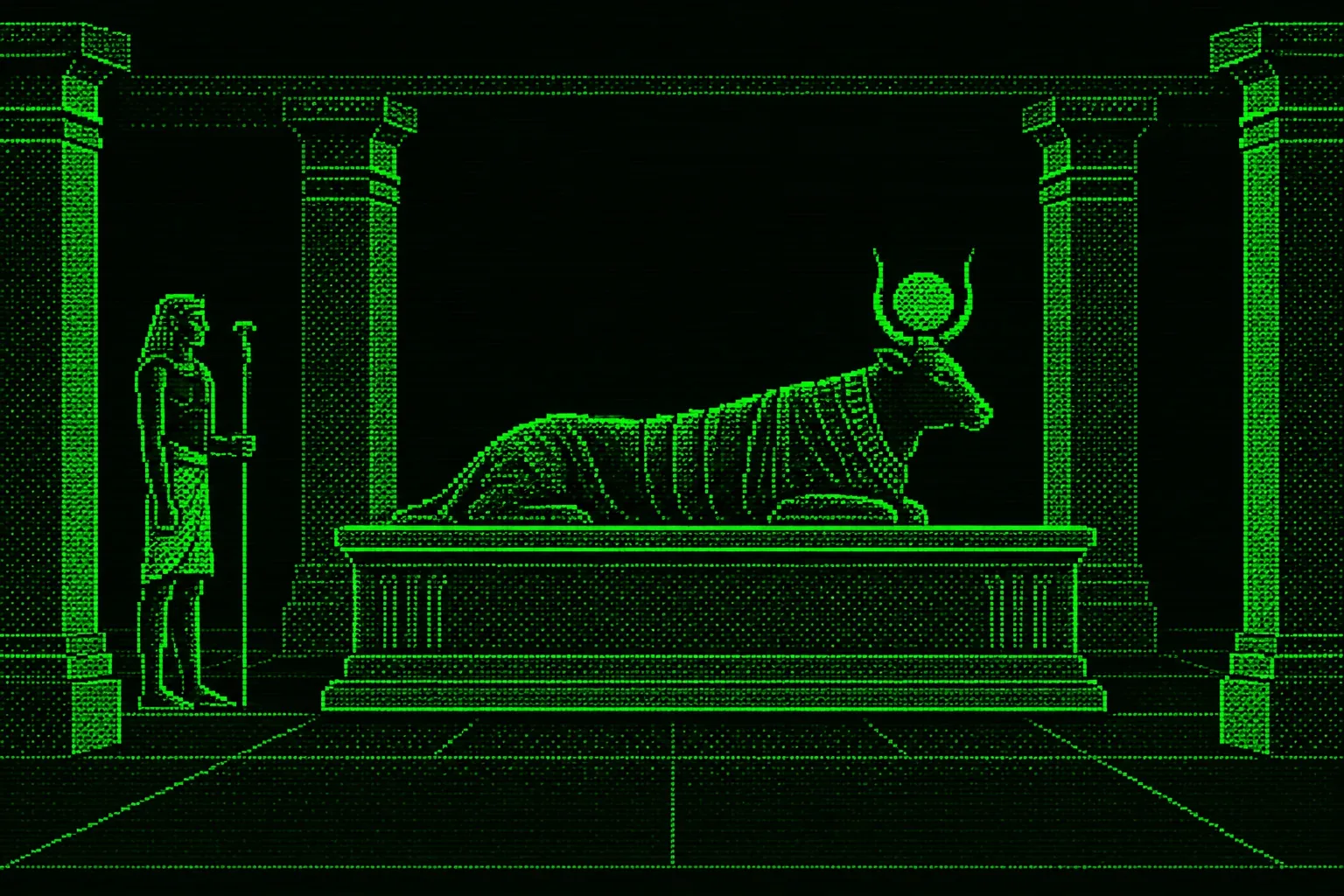
Ankhhor Inscription: An Embalming House for the Apis Bull
- Date
- Carved in the 26th Dynasty (664–525 BC) for Ankhhor, called Wahibre, overseer of the Menfat troops
- Found
- Egyptian Museum, Cairo (JE 43204). The text names the temple of Apis at Memphis.
- Language
- Egyptian · Hieroglyphic
- 1
jmꜣḫ(,w) ḫr Ḥp-Wsjr (j)r(,j)-pꜥ(,t) ḥꜣ,tj-ꜥ ḫtm(,w)-bj,tj smr-wꜥ,tj (j)m(,j)-rʾ-mnfꜣ,t.pl ꜥnḫ-Ḥr rn =f nfr Wꜣḥ-jb-Rꜥ zꜣ Pqn ms.n nb(,t)-pr Tꜣ-ḏ-Wsjr ḏd =f
Honored before Apis-Osiris, Prince and Count, Seal-bearer of the King of Lower Egypt, Sole Companion, Overseer of the Menfat troops, Ankhhor, whose good name is Wahibre, son of Peqen, born of the lady of the house Tadiusir. He says:
Note · Line 1
Apis-Osiris is the dead Apis bull, the sacred bull of Memphis, merged with Osiris, lord of the dead. - 2
j ḥm.pl-nṯr wꜥb.pl ꜥq(.tj) =sn r ḥw,t-nṯr n(,j) Ḥp-Wsjr mn rn =tn m ḥw,t-nṯr {ṯ}tn ḏd =tn n kꜣ n(,j) jmꜣḫ(,w) n(,j) Ḥp-Wsjr Ꜥnḫ-Ḥr rn =f nfr Wꜣḥ-jb-Rꜥ zꜢ Pnq ms.n nb(,t)-pr Tꜣ-ḏ-Wsjr
O priests and wab-priests who shall enter the temple of Apis-Osiris! Your names shall endure in this temple if you speak to the ka of one honored by Apis-Osiris, Ankhhor, whose good name is Wahibre, son of Peqen, born of the lady of the house Tadiusir.
Note · Line 2
The wab-priests (“pure ones”) were the lower order of priests who did the ritual handling. - 3
jnk ꜣḫ jr n =f
For I am an akh who acts for the one who does so.
Note · Line 3
An akh is a dead person transfigured into an effective spirit, able to act in the world of the living. - 4
jnk jmꜣḫ(,w) n(,j) Ptḥ-Wsjr
I am one honored by Ptah-Osiris.
Note · Line 4
Ptah was the chief god of Memphis, and the Apis bull was held to be his living manifestation. That is why Ptah-Osiris and Apis-Osiris can stand side by side for the same divine lord. - 5
jr.n =j wꜥb,t n nb =j Ptḥ-Wsjr m ḥw,t-nṯr
I built the embalming house for my lord Ptah-Osiris in the temple.
Note · Line 5
The word for “embalming house” means literally “the pure place”. It was the workshop where each dead Apis bull was mummified before burial in the vast catacombs at Saqqara. - 6
nn šm =j r bw nb jw =j m wꜥb,t nn smr nb ḥnꜥ =j
I would go nowhere while I was in the embalming house, and no courtier was with me.
Note · Line 6
He means that he oversaw the work in person and without pause, with no grandees beside him to share or take the credit. - 7
ꜥrq.n =j wꜥb,t n nb =j Ḥp-Wsjr jw nn bꜣ.pl nb(.w) jm =j nn-wn mj,tjt n ḥz(w,t) n(,j) nb Ḥp-Wsjr
I completed the embalming house for my lord Apis-Osiris, and no glory at all was mine. There is nothing to equal the favor of the lord Apis-Osiris.
Note · Line 7
He gives the glory not to himself but to the god whose favor he enjoys. - 8
jr mn rn (=j) m-bꜣḥ Ḥp-Wsjr jw =f mn r nḥḥ nn sk ḏ,t
As for my name enduring before Apis-Osiris, it shall endure for ever and ever, never to perish.
Note · Line 8
Egyptian has two words for eternity, neheh and djet, roughly endless recurring time and unchanging permanence. Pairing them means “forever” in the fullest sense. - 9
jr sk nn jw =f n šꜥd (j)n nb =j Ḥp-Wsjr ḫb(ꜣ) =f rn =f ḥr(,j)-tp tꜣ
As for whoever makes this perish, he shall be cut down by my lord Apis-Osiris, who will hack his name from the earth.
Note · Line 9
The same verb, “perish”, appears in the line before.