~/sacred-texts/amarna-tomb-inscriptions
Amarna Hymn to the Setting Sun: A Wish to Walk in His Garden
- Date
- Inscribed in the reign of Akhenaten (c. 1346–1336 BC) in the rock-cut tomb of an official at Amarna
- Found
- A rock-cut tomb of an official at Amarna (Akhetaten), Middle Egypt
- Language
- Egyptian (Amarna period) · Hieroglyphic
- 1
𓀢 𓈖 𓆓𓏏 𓎛𓎛
⸢rḏi̯.t⸣ jꜣ,w n ⸢Rꜥw-Ḥr,w-ꜣḫ,tj-ḥꜥi̯-m-ꜣḫ,t⸣ ⸢M-rn≡f-m-šw-n,tj-m-Jtn⸣ ḏi̯ ꜥnḫ ḏ,t nḥḥ
Praise to Ra-Horakhty, who rejoices in the horizon in his name of Light-that-is-in-the-Aten, given life for ever and ever.
Note · Line 1
This is the formal name of the Aten, the sun disc that Akhenaten made the sole object of worship. - 2
⸢jy,wj⸣ [nb-ḏ,t]
Welcome, Lord of Eternity!
- 3
𓇋𓄿𓅱𓀢 𓈖 𓎡 𓂋𓂝𓁛
jꜣ,w n =k Rꜥw nb-ꜣḫ,t
Praise to you, Ra, lord of the horizon!
- 4
𓎡 𓁷𓏤𓎟𓀀𓁐𓏥 𓁷𓂋 𓎡 𓂜𓈖 𓐝 𓏇 𓇳𓏤
ḏꜣi̯ =k p,t ḥr-nb ḥr =k nn ⸢ꜣb⸣ m grḥ mj hrw
When you cross the sky, every face is turned to you, without ceasing, by night as by day.
Note · Line 4
The Egyptian for “everyone” is literally “every face” (ḥr-nb), and the preposition “to/upon” (ḥr) has the same sound. So the line turns every face toward the god in sound as well as sense. - 5
𓅱𓃀𓈖𓇶𓈖 𓐝 𓈌𓏏𓉐 𓋁𓏏𓏏𓃀𓈉 𓐝 𓈌𓏏𓉐 𓋀𓏏𓏏𓈉
wbn{n} =〈k〉 m ꜣḫ,t jꜣb,t.t ⸢ḥtp⸣ =〈k〉 m ꜣḫ,t jmn,t.t
You rise in the eastern horizon, you set in the western horizon.
- 6
𓊵𓏏𓊪 𓎡 𓅓 𓋹𓈖𓐍 𓐝
ḥtp =k m ꜥnḫ m ꜣw,t-jb
You go to your rest alive and in joy.
Note · Line 6
The verb ḥtp means both “to set” (of the sun) and “to be at rest, at peace”. The sun goes down not as one who dies but as one content and still living. - 7
𓁹𓏏𓏤 𓀀𓁐𓏥 𓎟 𓐝 𓇋𓉔𓉔𓇋𓇋𓀁𓏪 𓎼𓂋𓎛𓇰 𓊃𓈖𓏥 𓐝𓆱𓐍𓏏𓂻 𓊵𓏏𓊪 𓎡 𓅓𓎸𓈖 𓎡 𓐝
jr,t rmṯ nb m jhhy grḥ =sn m-ḫt ḥtp =k ẖnm.n =k m [ꜣḫ,t]
The eyes of all people are full of rejoicing, but they fall still once you have set and joined the horizon.
Note · Line 7
“Fall still” renders grḥ, “to cease”. It sounds the same as grḥ, “night” (in line 4), so the eyes go quiet with the coming of night. - 8
𓌵𓄿𓈖 𓁹𓏏𓏤 𓏮𓏌𓏏 𓊃
[nn] mꜣ.n jr,t sn,nw.t =s
No eye can see its fellow.
- 9
𓆓𓂧𓆑𓏏𓆙 𓎟 𓇿𓏤𓈅 𓊃𓈖𓏥
ḏdf,t nb ḥr-⸢sꜣ⸣ tꜣ ⸢sḏr⸣ =sn
Every creeping thing upon the earth, they sleep.
- 10
𓁹𓂋 𓊃𓈖 𓊏𓊪𓇳𓁻 𓂋 𓆣𓂋 𓊪𓊃𓂧𓄩𓇶 𓎡
jri̯ =sn šp r ḫpr psd =k
They are blind until you shine.
- 11
𓈖𓉔𓋴𓍟𓁻 𓊃𓈖 𓂋 𓌵𓄿𓄿 𓄤𓏥 𓎡
(s)nhsi̯ =sn r mꜣꜣ nfr,pl =k
They wake to see your beauty.
- 12
𓈍𓂝𓂝 𓂧𓎼𓎼𓁻 𓊃𓈖𓏥
ḫꜥꜥ =[k] ⸢dgg⸣ =sn
When you appear, they can see.
- 13
𓋷𓄿𓀁 𓊃𓈖𓏥 𓇋𓐝 𓂞 𓎡 𓋫𓏏𓅱𓏏𓇳𓏥 𓎡 𓈖
sjꜣ =sn jm =⸢sn⸣ ⸢ḏi̯⸣ =k ⸢stw,t⸣ =k n =⸢sn⸣
They know one another when you give them your rays.
- 14
𓂞 𓎡 𓊵𓏏𓊪 𓀀 𓐝 𓊨𓏏𓉐 𓀀 𓈖𓏏 𓎛𓎛
ḏi̯ =k ḥtp =j m s,t =j n.t nḥḥ
May you let me rest in my place of eternity,
Note · Line 14
The tomb owner now speaks in his own voice and asks the sun for a lasting afterlife. - 15
𓅓𓎸 𓀀 𓈖𓏏 𓆓𓏏𓇿
ẖnm =j tpḥ,t n.t ḏ,t
that I may join the cavern of everlastingness,
Note · Line 15
The “cavern” is the burial shaft and chamber cut into the rock beneath the tomb. - 16
𓉐𓂋𓂻 𓀀 𓂝𓈎𓂻 𓀀 𓐝𓄚𓈖𓏌𓉐 𓉞 𓀀 𓂜𓈖 𓐍𓈖𓇋𓍕𓂡 𓊸𓅡𓏤 𓐝 𓌻𓂋𓂋𓏏 𓆑
pri̯ =j ꜥq =j m-ẖnw ḥw,t =j nn ḫnj bꜣ =(j) m mrr.t =f
that I may go out and go in within my house, my ba never barred from what it desires,
Note · Line 16
The “house” is the tomb itself. - 17
𓋴𓏏𓅱𓏏𓂾𓂻𓏤 𓂋 𓂞𓂞 𓄣 𓀀 𓐝 𓁹𓈖 𓁶𓏤 𓇿
swt(w)t =(j) r ḏḏ jb =j m mn,w.pl jri̯.n =(j) tp tꜣ
that I may stroll as my heart desires among the groves I made on earth,
Note · Line 17
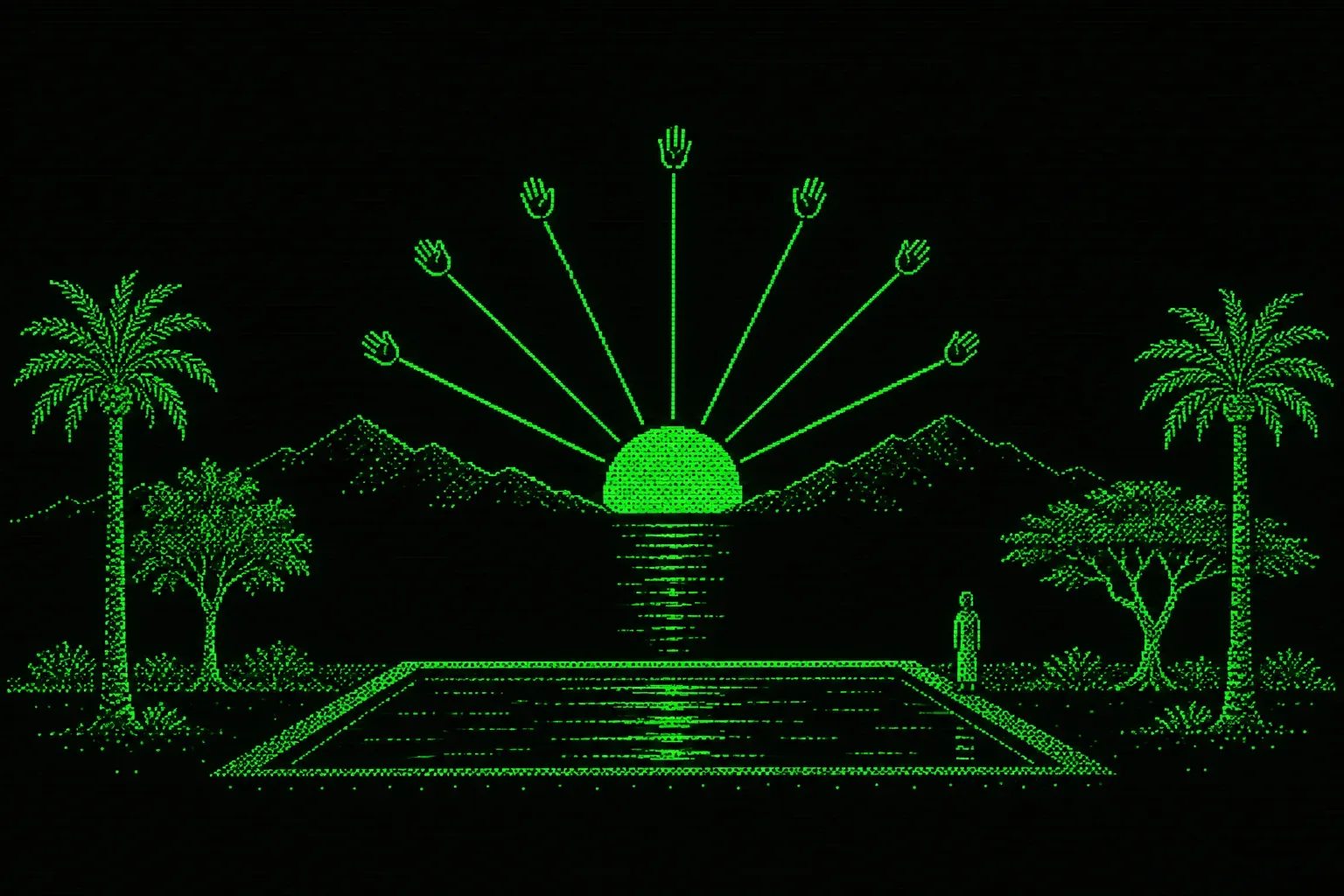
The tomb owner is voicing his wishes for the afterlife: he hopes to go on enjoying, after death, the garden he planted while alive. - 18
𓋴𓅨𓂋𓇋𓈗 𓀀 𓈗 𓁷𓏤 𓌶𓂝𓈅𓏤 𓈖 𓈙𓈅𓏤 𓀀 𓇳𓏤𓎟 𓂜𓈖
swj =j mw ḥr mꜣꜥ n š =j ⸢rꜥw⸣-nb nn ꜣb.w
and drink water at the edge of my pool every day, without ceasing.