~/sacred-texts/amarna-inscriptions
Amarna Prayer to the Aten: Endless Reign for Akhenaten
- Date
- Inscribed under Akhenaten in the 18th Dynasty (c. 1348–1336 BC) at his new capital Akhetaten (Amarna)
- Found
- Amarna (ancient Akhetaten), Middle Egypt
- Language
- Egyptian (New Kingdom) · Hieroglyphic
- 1
… 𓎡 𓐝 …
[...] ⸢ḫꜥꜥ⸣ =k m ⸢ꜣḫ,t⸣ [...]
… you rise in the horizon …
Note · Line 1
The opening is lost. - 2
𓊵𓏏𓊪 𓎡
[nmꜥ] =[sn] [ḫft] ḥtp =k
They sleep when you set.
Note · Line 2
“They” are all living creatures, which lie still through the sunless night. - 3
𓂞 𓎡 𓅭𓏤 𓎟𓇿𓇿 𓇋𓅱 𓋹 …
ḏi̯ =k zꜣ ꜥnḫ-m-Mꜣꜥ,t nb-Tꜣ.du ⸢Nfr-ḫpr,pl⸣-Rꜥw-[wꜥ-n-Rꜥw] jw =⸢f⸣ ⸢ꜥnḫ⸣ [...]
May you grant that the son who lives by Maat, Lord of the Two Lands, Neferkheperure-Waenre, while he lives …
Note · Line 3
Maat is the right order of the world: truth, justice and balance. - 4
[jm] [n] =[f] [ꜥnḫ] [wḏꜣ] [snb] [nḏm-jb] ṯḥḥw,t
Give him life, prosperity, health, gladness of heart and jubilation.
- 5
𓋴𓏏 𓈖 𓂓𓏤 𓎡
[šnn.n] =[k] [nb] ⸢ẖr-s,t⸣-ḥr =⸢f⸣ ⸢ḫrp⸣ =w st n kꜣ =k
All that you encircle lies under his charge, and it is brought to your ka.
Note · Line 5
The sun’s daily circuit marks out the whole world, and all of it is placed under the king’s command. - 6
pꜣy =[k] [šrj] [...]
Your son …
- 7
𓋀𓈅𓏤 𓋁𓃀𓏏𓏭𓈅𓏤 𓇆𓅨 𓉔𓈖𓏌𓅱𓀊𓏪 𓈖 𓂓𓏤 𓆑
[rs,j] [mj] [mḥ,tt] jmn,tj jꜣb,tj jw.pl [ḥr,j]-jb wꜣḏ-wr ⸢m⸣ hn,w n kꜣ =f
South and north, west and east, and the islands in the midst of the Great Green are in jubilation for his ka.
Note · Line 7
The “Great Green” is the sea, usually the Mediterranean. Its islands stand for the farthest northern edge of the known world. - 8
𓆑 …
⸢tꜣš⸣ =f ⸢rs,j⸣ [...]
His southern border …
- 9
… 𓋴𓃀𓂧𓈙𓀉𓅪 𓈖 𓅢𓅱𓏥 𓆑
[...] sbdš n bꜣ,w =f
… bowed down before his might.
- 10
𓅮𓄿 𓂓𓏤 𓄤𓆑𓂋 𓋴𓎛𓃀𓎱𓇳 𓇿𓇿𓈅𓈅 𓁹 𓌨𓂋𓏏𓏛 𓇿𓏤𓈅 𓏇𓇋𓐪𓂧𓏌
⸢pꜣ⸣ kꜣ nfr sḥbi̯ tꜣ,du jri̯ ẖr,t tꜣ mj-qd =⸢f⸣
O goodly ka, who makes the Two Lands festive and provides for the needs of the whole land!
- 11
… 𓅨𓂋𓏏 𓐝 𓊵𓏏𓊪𓅱𓏥
[...] [jm] [n] =[f] ḥꜣb.pl-sd ⸢ꜥšꜣ.w⸣ wr,t m ⸢rnp,t.pl⸣ ḥtp,w
… Give him jubilees in great number, in years of peace.
Note · Line 11
A jubilee, or Sed festival, was a rite of royal renewal. A king traditionally first celebrated it after thirty years of rule. To wish him many jubilees is to wish him a very long reign. - 12
𓆑 𓌻𓂋𓏏𓀁 𓄣𓏤 𓎡 𓏇𓇋 𓂝𓈚𓏲𓏥𓈚𓏭𓈓 𓏌𓏤 𓇅𓃀𓅱𓄲𓏯𓏤 𓏇𓇋 …
jm n =f m mri̯.t jb =k mj šꜥy n.w wḏb.w mj ⸢šnf,t⸣ [n] ⸢rm.w⸣ [...] nꜣ-n jḥ.pl
Give him, as your heart desires, as many as the sand of the riverbanks, as the scales of the fish … the cattle …
- 13
𓂧𓏮𓈐 𓂋 𓆎 𓂋 𓌌𓇳 𓊃𓄤𓆑𓂋𓏲𓅨 𓂋 𓐝 𓌞𓋴𓏭𓂻 𓎟𓇿𓇿
[jm] ⸢sw⸣ dy r km nḫn,t r ḥḏ snfr,w r ꜥḥꜥ.t ⸢ḏw.w⸣ [r] [šmi̯.t] [r] [ḫnt] [mtr] ⸢jw⸣ =⸢j⸣ ⸢m⸣ šms nb-Tꜣ.du
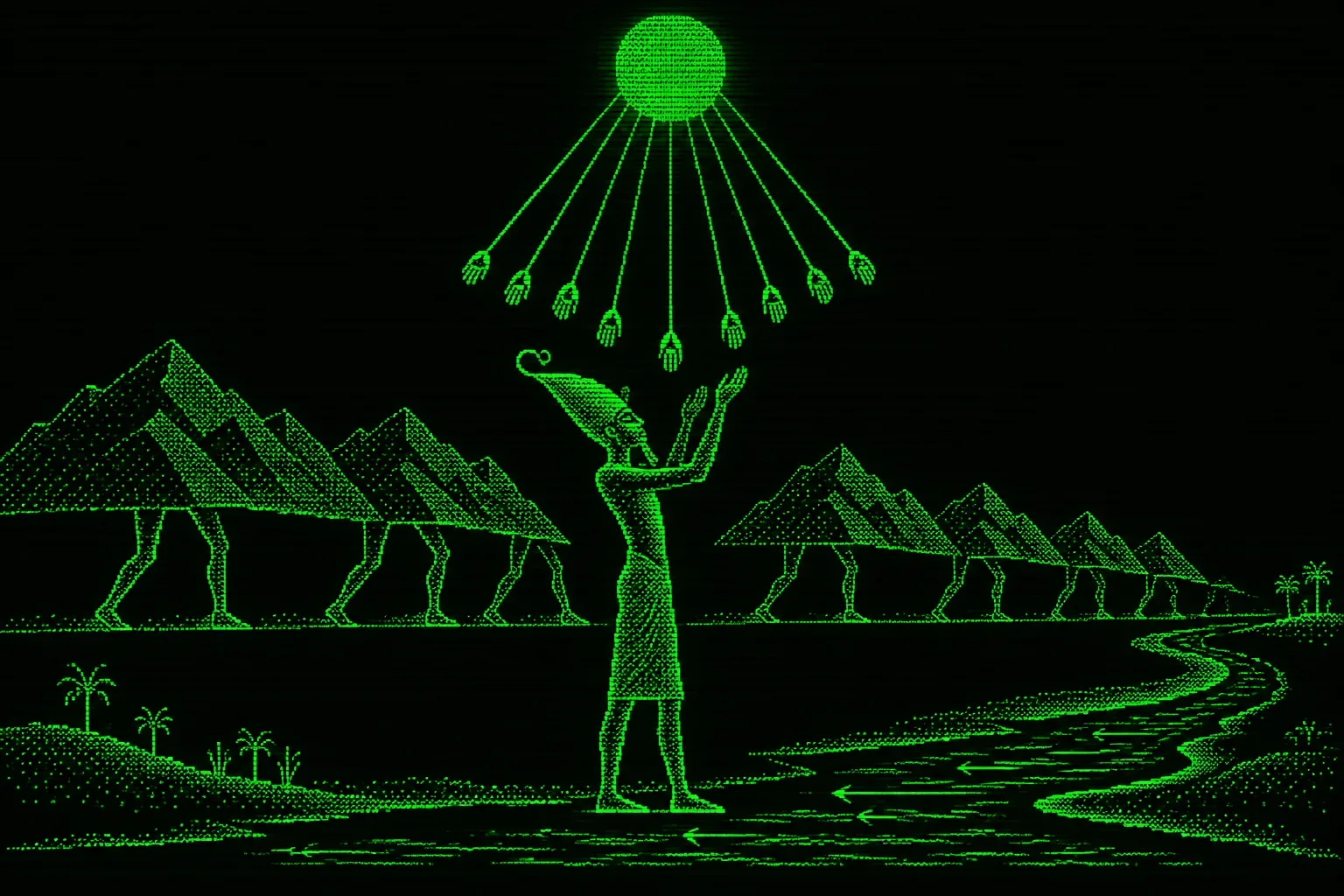
Let him be here until the nekhenet-bird turns black and the seneferu-bird turns white, until the mountains rise up to walk away, until the flood runs upstream, and I in the following of the Lord of the Two Lands.
Note · Line 13
The two birds, the nekhenet and the seneferu, cannot be identified with certainty; the wish implies that one is naturally pale and the other dark. Each wish names something that never happens: a bird changing colour, mountains walking off, the flood running upstream against the northward-flowing Nile. So the king is to reign for ever, and the speaker hopes to stay in his following.