~/sacred-texts/manichaean-cosmogony
Adam's Awakening: The Manichaean Making of Adam
Translated by AI straight from the Syriac and Middle Persian, not from a modern translation, then checked against the editions and studies listed below. How we translate
- Text
- Manichaean cosmogony, Theodore bar Konai, Book of Scholia XI (Pognon 1898, Syriac pp. 130–131); Middle Persian M 7980–7984 (Boyce, Reader, text y §§ 38–41, 43, 48)
- Date
- Mani's teaching, 3rd century AD; Theodore bar Konai's Syriac, about 791/2 AD; the Middle Persian manuscript from Turfan
- Found
- Theodore wrote in southern Iraq; the Middle Persian fragments were found at Turfan, Xinjiang, China
- Language
- Syriac and Middle Persian · Syriac (Estrangela, as printed by Pognon); Middle Persian in Boyce's transliteration of the Manichaean script
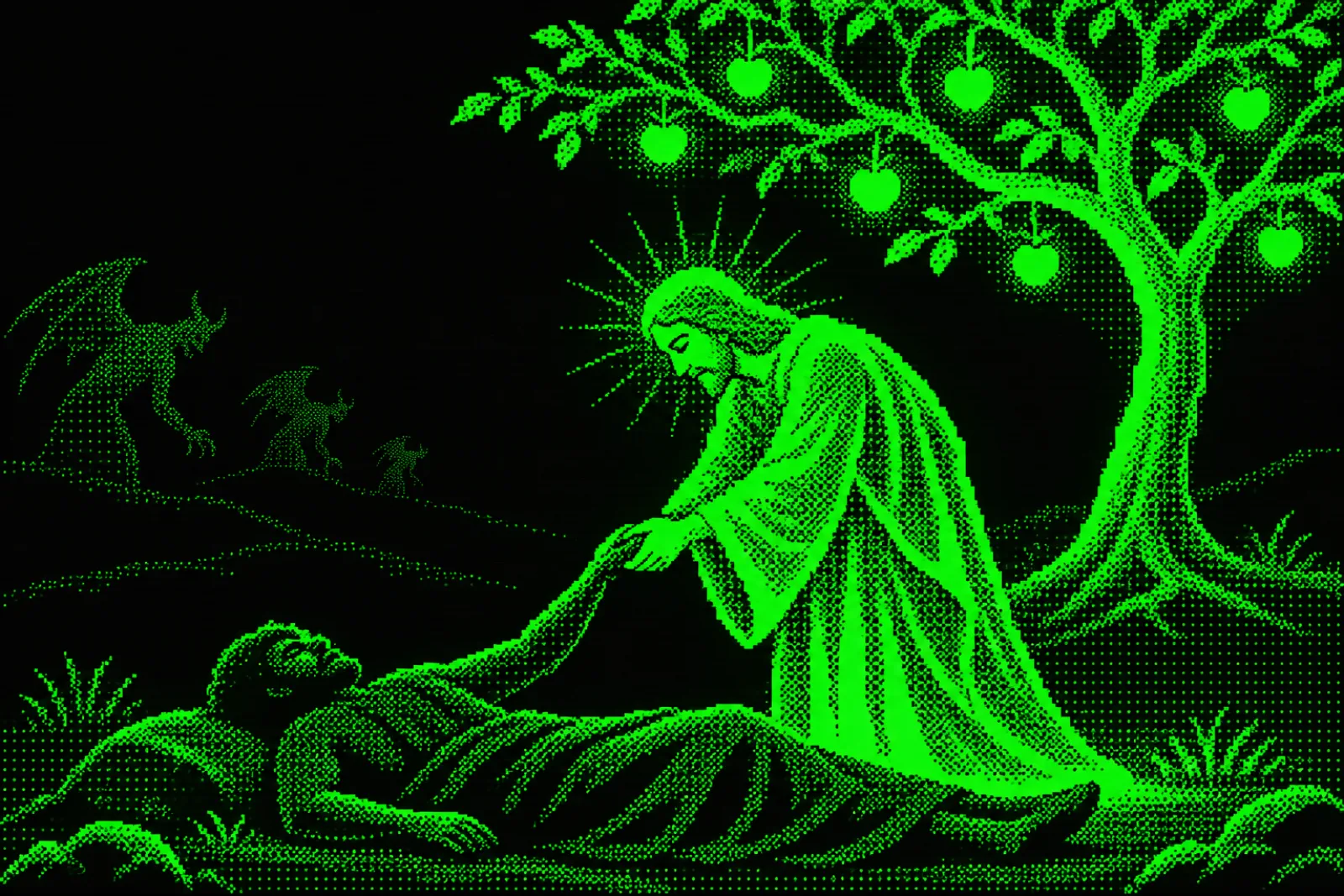
Theodore bar Konai was an East Syrian teacher in southern Iraq who wrote his Book of Scholia about 791/2. Its eleventh book is a catalogue of heresies, and for the Manichaeans he does not summarize: he copies, sentence after sentence, from a Manichaean book, several of them starting “And he says”. Pognon, who first printed the Syriac, thought the passage might come from Mani’s own writings. The part given here is the end of that cosmogony. The she-demons fixed in the sky miscarry at the sight of a god, their aborted young fall to earth and eat the trees, and the demon Ashaqlun, son of the King of Darkness, eats their sons and begets Adam and Eve on his mate Namrael. Then Jesus the Splendour comes down and wakes Adam.
The Syriac is read from Pognon’s printed text, made from four manuscripts (p. 130 l. 11 to p. 131 l. 7). Addai Scher’s later edition (1910–1912) uses other manuscripts and was not at hand; where the Berlin manuscript reads differently, the notes give its readings as Jackson reports them. The names have other forms in other sources: the Greek and Latin writers against Mani call the pair Saklas and Nebroel, and a Parthian hymn names Pēsūs, whom Boyce glosses as “the she-beast who bears the first human pair”: she is Namrael’s counterpart.
The second section is the Middle Persian account from the Turfan fragments M 7980–7984, in Mary Boyce’s transliteration. In it the maker is Āz, Greed, working through two lion-shaped demons. It gives in full what Theodore’s extract leaves short, how the eaten light becomes Adam’s soul, but its awakening scene is lost. On what such myths say about the first self-aware humans, see Gnostics and the Eve Theory of Consciousness.
Each numbered line gives the Syriac and Middle Persian first: the original script, then the same words in Latin letters. Our English is underneath. Tap a dotted word for its meaning, and Note for our comment on the line; our comments are in the right margin.
Theodore bar Konai, Book of Scholia XI: the Manichaeans
- 1130,11–12
ܘܐܡܪ ܕܗܠܝܢ ܒܢܬ ܚܫܘܟܐ darkness; in Manichaean myth the realm of Darkness and its king ܒܛܢ to conceive, to be pregnant ܗܘ̈ܝ ܡܢ ܩܕܝܡ ܒܟܝܢܗܝܢ.
And he says that these daughters of ܚܫܘܟܐ: darkness; the realm of Darkness ܒܛܢ: to conceive, to be pregnant already, by their own nature.
Note on line 1
“He” is Mani: Theodore is copying, sentence by sentence, from a Manichaean book. The daughters of Darkness are the female Archons, the she-demons fixed in the sky (Jackson n. 113). The god called the Messenger has just shown himself to the Archons in a female form and a male one, and the males lusted after the female form and the females after the male (Pognon, p. 190). - 2130,13–14
ܘܡܫܘܦܪܐ ܕܨܘܪ̈ܬܗ ܐܝܙܓܕܐ messenger, envoy; here the Third Messenger, the god who showed his beauty to the Archons ܕܚܙ̈ܝ ܢܚܬ to come down; Pael, to bring down ܥܘܠܐ fetus, unborn young; a suckling ܢܦܠ to fall ܥܠ ܐܪܥܐ ܘܐܟܠܘ ܒܘܩܠܐ a rare word; Pognon renders 'buds'. We connect it with ܒܩܠܐ, green herb, shoot ܕܐܝ̈ܠܢܐ.
And at the beauty of the forms of the ܐܝܙܓܕܐ: messenger, envoy; the Third Messenger that they saw, their ܥܘܠܐ: fetus, unborn young ܢܚܬ: to come down; Pael, to bring down, and they ܢܦܠ: to fall on the earth and ate the ܒܘܩܠܐ: rare; Pognon 'bourgeons', buds; we connect it with ܒܩܠܐ, green herb, shoot of the trees.
Note on line 2
The sight of the god makes the pregnant she-demons miscarry. Jackson (p. 248 n. 114) reports a misprint in Pognon’s verb here and reads either “aborted” or “dropped”, with the fetuses as subject; Pognon and Cumont make the mothers the subject, “elles avortèrent”. Either way the Syriac says it outright: the unborn were expelled, fell to earth, and ate. Augustine tells the same story of the female demons miscarrying (Contra Faustum 6.8; Jackson n. 115). - 3130,14–16
ܐܬܡܠܟ to take counsel, to consult together ܢܦܠܐ a miscarriage, an aborted fetus; from ܢܦܠ, to fall ܥܡ ܚܕ̈ܐ ܘܐܬܕܟܪܘܗ̇ ܠܨܘܪܬܗ ܐܝܙܓܕܐ messenger, envoy; here the Third Messenger, the god who showed his beauty to the Archons ܕܚܙܘ. ܘܐܡܪܝܢ ܐܝܟܐ ܗܝ ܨܘܪܬܐ ܕܚܙܝܢ.
And the ܢܦܠܐ: a miscarriage, an aborted fetus; from ܢܦܠ, to fall ܐܬܡܠܟ: to take counsel together with one another, and remembered the form of the Messenger that they had seen, and said: “Where is that form that we saw?”
Note on line 3
The aborted brood are called nephlē, literally “fallen ones”, from the verb “to fall” used of them in line 2. The Nephilim of Genesis 6:4 come from the same root, and Mani’s Book of Giants turned the Genesis story into a myth of demons and their offspring; Theodore’s word carries that echo. The abortions want the beautiful form back: the first human body is made to satisfy that craving. - 4130,16–18
ܘܐܡܪ ܐܫܩܠܘܢ Ashaqlun, son of the King of Darkness; Saklas in the Greek and Latin sources ܒܪܗ ܡܠܟܐ king ܕܚܫܘܟܐ ܢܦܠܐ a miscarriage, an aborted fetus; from ܢܦܠ, to fall ܗܒ ܠܝ ܒ̈ܢܝܟܘܢ ܘܒ̈ܢܬܟܘܢ ܘܐܢܐ ܥܒܕ ܐܢܐ ܠܟܘܢ ܨܘܪܬܐ ܐܝܟ ܗܝ ܕܚܙܝܬܘܢ.
And ܐܫܩܠܘܢ: Ashaqlun, son of the King of Darkness; the Saklas of the Greek and Latin sources, son of the ܡܠܟܐ: king of Darkness, said to the abortions: “Give me your sons and your daughters, and I will make you a form like the one you saw.”
Note on line 4
Jackson (p. 249 n. 117), after Cumont, vocalizes the name Ashaqlun and ties it to Saklas, the name the Greek and Latin heresiologists give Mani’s demon; Pognon writes Achqaloun. Here he is the son of the King of Darkness, and his price for the new form is the abortions’ own children. - 5130,18–20
ܘܐܝܬܝܘ ܘܝܗܒܘ ܠܗ. ܕܕܟܪ̈ܐ ܕܝܢ ܐܟܠ to eat, to devour ܗܘܐ ܘܢܩܒ̈ܬܐ ܝܗܒ ܢܡܪܐܝܠ Namrael, the she-demon, Ashaqlun's mate; Nebroel in the Greek and Latin sources ܒܪܬ ܙܘܓܐ yoke, pair; ܒܪܬ ܙܘܓܐ, 'daughter of the yoke', a mate or consort
And they brought them and gave them to him. The males he ܐܟܠ: to eat, to devour, and the females he gave to ܢܡܪܐܝܠ: Namrael, Ashaqlun's mate; Nebroel in the Greek and Latin sources, his ܙܘܓܐ: yoke, pair; ܒܪܬ ܙܘܓܐ, 'daughter of the yoke', a mate.
Note on line 5
Ashaqlun eats the sons and gives the daughters to Namrael. In the Middle Persian below the brood is eaten by Āz inside her two lion-shaped demons, and the light it had eaten becomes Adam’s soul. Pognon’s French has “Akbael” at this first mention, though his Syriac prints the same name, Namrael, both times. Jackson (n. 118) and Cumont prefer Nebroel, the form in the Church Fathers. - 6130,20–22
ܐܬܕܒܩ to cleave, to cling, to be joined together ܢܡܪܐܝܠ Namrael, the she-demon, Ashaqlun's mate; Nebroel in the Greek and Latin sources ܐܫܩܠܘܢ Ashaqlun, son of the King of Darkness; Saklas in the Greek and Latin sources ܥܡ ܚܕ̈ܐ ܘܒܛܢܬ ܘܝܠܕܬ ܡܢܗ ܒܪܐ ܘܩܪܬ ܫܡܗ ܐܕܡ. ܘܒܛܢܬ ܘܝܠܕܬ ܒܪܬܐ ܘܩܪܬ ܫܡܗ̇ ܚܘܐ.
And Namrael and Ashaqlun ܐܬܕܒܩ: to cleave, to cling, to be joined together with each other, and she conceived and bore him a son and called his name Adam. And she ܒܛܢ: to conceive, to be pregnant and bore a daughter and called her name Eve.
Note on line 6
Adam and Eve are the children of the demon who has just eaten the abortions’ sons, conceived after that meal; they are the “form like the one you saw” that Ashaqlun promised, copies of the god the abortions saw in the sky. Jackson has “united together”; the Syriac verb is “to cleave, to cling”, of two bodies joined in sex. - 7130,22–24
ܘܐܡܪ ܕܐܬܩܪܒ ܝܫܘܥ Jesus ܢܘܗܪܐ light, brightness, splendour ܠܘܬ ܐܕܡ ܬܡܝܡܐ whole, simple, guileless, innocent ܐܥܝܪ to wake someone up (causative of ܥܘܪ, to be awake) ܡܢ ܫܢܬܐ sleep ܕܡܘܬܐ ܐܝܟ ܐܬܦܪܩ to be delivered, to be saved, to be redeemed ܡܢ ܪܘܚܐ spirit, wind, breath ܣܓܝܐ much, many; great
And he says that ܝܫܘܥ: Jesus the ܢܘܗܪܐ: light, brightness; Pognon and Jackson 'the Luminous'; we use the Manichaean title, Jesus the Splendour drew near to Adam the ܬܡܝܡܐ: whole, simple, guileless, innocent and ܐܥܝܪ: to wake someone up from the ܫܢܬܐ: sleep of death, so that he might be ܐܬܦܪܩ: to be delivered, to be redeemed from the great ܪܘܚܐ: spirit, wind, breath.
Note on line 7
Adam is tammīmā: in Syriac “whole, simple, guileless”. Jackson has “Adam the Innocent”; Pognon renders “stupid”, taking the word in its Mandaic sense, “ignorant, foolish” (his n. 1, p. 192). “Simple” holds both senses. “The great spirit” is singular in all of Pognon’s manuscripts; Pognon would read “many spirits”, and Jackson “the (two) great spirits”, the male demon and the she-Archon who guard Adam in the Fihrist. The same word, ܣܓܝܐܬܐ, “great, much”, qualifies the sleep and the host of Archons below, and means “great” in all three places, as Jackson also has it (n. 123). - 8130,25–27
ܘܐܝܟ ܐܢܫ ܙܕܝܩܐ righteous, just ܘܢܫܟܚ ܐܢܫ ܕܐܝܬ ܠܗ ܕܝܘܐ demon (from Persian dew) ܬܩܝܦܐ ܫܠܝ Pael, to quiet, to calm ܐܘܡܢܘܬܐ craft, skill, art ܗܟܢܐ ܗܘܐ ܐܦ ܐܕܡ ܒܕ ܐܫܟܚܗ ܗܘ ܚܒܝܒܐ beloved; friend ܟܕ ܪܡܐ to throw, to cast; passive participle, lying, cast down ܫܢܬܐ sleep ܣܓܝܐ much, many; great
And as a ܙܕܝܩܐ: righteous, just man finds a man who has a mighty ܕܝܘܐ: demon and ܫܠܝ: to quiet, to calm him by his ܐܘܡܢܘܬܐ: craft, skill, art, so it was with Adam too, for that ܚܒܝܒܐ: beloved; friend found him ܪܡܐ: cast down, lying in a great sleep.
Note on line 8
The simile makes the awakening an exorcism: Adam’s sleep is a possession. We note that “who has a demon” is the Syriac Gospels’ phrase for the possessed. Pognon’s text has ܒܕ, “for”, which Jackson keeps (n. 128). “The Beloved” or “the Friend” is Jesus, as in the Middle Persian “Jesus the Friend” (Jackson n. 129). - 9130,28–29
ܐܥܝܪ to wake someone up (causative of ܥܘܪ, to be awake) ܐܢܝܕ to move, to shake (causative of ܢܘܕ) ܪܕܕ rare in this sense; Pognon 'to wake', after Mandaic; Jackson 'to shake' ܪܕܦ to chase, to drive away ܡܢܗ ܕܝܘܐ demon (from Persian dew) ܡܛܥܝܢܐ one who leads astray, deceiver ܐܣܪ to bind, to tie, to imprison ܡܢܗ ܐܪܟܘܢܛܘܬܐ the archontate: the Archons as a body (from Greek archon, ruler) ܣܓܝܐ much, many; great
And he woke him, and ܐܢܝܕ: to move, to shake, and ܪܕܕ: rare in this sense; Pognon 'to wake', Jackson 'to shake', and ܪܕܦ: to chase, to drive away away from him the ܡܛܥܝܢܐ: one who leads astray, deceiver, and ܐܣܪ: to bind away from him the great ܐܪܟܘܢܛܘܬܐ: the Archons as a body.
Note on line 9
Four verbs of rousing in a row. Pognon has “le réveilla, le mit en mouvement, le tira du sommeil”, taking the third verb, ܪܕܕ, as Mandaic “to wake” (his n. 3); Jackson has “took hold of him and shook him”. Pognon’s manuscripts read archontūthā, the Archons as one body; the Berlin manuscript reads archontā, “the great female Archon”, which Cumont and Jackson prefer (Jackson n. 135). Either way the one who misled Adam is a demon, and it is driven out. - 10130,29–30
ܗܝܕܝܢ ܒܨܐ to search, to examine, to inquire into ܐܕܡ ܢܦܫܐ soul, self, life; with a suffix, 'himself' ܝܕܥ to know ܕܡܢܘ.
Then Adam ܒܨܐ: to search, to examine ܢܦܫܐ: soul, self; with a suffix, 'himself' and ܝܕܥ: to know who he was.
Note on line 10
The centre of the text. Nafsheh is “his soul” and also simply “himself”: the line can be read “Adam searched his own soul”. We note that self-knowledge comes here, after the waking and the casting out of the demon and before the fruit. - 11130,30–31
ܘܚܘܝܗ ܐܒܐ father ܪܘܡܐ height; the world on high ܘܥܠ ܢܦܫܐ soul, self, life; with a suffix, 'himself' ܕܒܟܠ ܪܡܐ to throw, to cast; passive participle, lying, cast down ܥܠ ܫܢ̈ܝ ܢܡܪܐ leopard, panther ܘܥܠ ܫܢ̈ܝ ܦܝܠܐ elephant
And he showed him the ܐܒܐ: father of the ܪܘܡܐ: height; the world on high, and his own ܢܦܫܐ: soul, self, ܪܡܐ: to throw, to cast into everything: into the teeth of the ܢܡܪܐ: leopard, panther and the teeth of the ܦܝܠܐ: elephant,
Note on line 11
Whose self? Jackson capitalizes it, “His own self”: Jesus’s, the Suffering Jesus of Manichaean doctrine, the light hung on every tree. The Syriac “his” can as well be Adam’s, and we keep it open: Adam’s soul is made of the same light particles (Jackson nn. 137, 140). The ܥܠ before “his self” marks the object, as often in Mandaic (Pognon n. 5). The Berlin manuscript has plural leopards and elephants (Jackson n. 140). - 12131,1–3
ܒܠܥ to swallow ܒܠܘܥܐ swallower, glutton ܣܪܦ to sip, to gulp, to suck down ܣܪܦ to sip, to gulp, to suck down ܐܟܠ to eat, to devour ܟܠܒܐ dog ܚܠܛ to mix, to mingle ܚܒܫ to shut in, to imprison ܒܟܠ ܕܗܘܐ ܐܣܪ to bind, to tie, to imprison ܣܘܪܚܢܐ stench, rot, corruption ܕܚܫܘܟܐ.
ܒܠܥ: to swallow by the ܒܠܘܥܐ: swallower, glutton and ܣܪܦ: to sip, to gulp, to suck down by the gulpers, eaten by the ܟܠܒܐ: dog, ܚܠܛ: to mix, to mingle and ܚܒܫ: to shut in, to imprison in all that is, and bound in the ܣܘܪܚܢܐ: stench, rot, corruption of Darkness.
Note on line 12
Pognon’s word for the gulpers is not in the dictionaries; he proposes reading ܡܣܪ̈ܦܐ, and the Berlin manuscript confirms it (his n. 6; Jackson n. 141). We note that the participles are feminine, as Jackson shows for “thrown” (n. 139), agreeing with nafsheh, the self: it is the self that is chewed, swallowed, eaten and penned in. This is the Manichaean doctrine that the light is in everything that eats and is eaten. - 13131,3–4
ܘܐܡܪ ܐܩܝܡ to make stand, to raise up (causative of ܩܘܡ) ܐܛܥܡ to make taste, to feed (causative of ܛܥܡ, to taste) ܡܢ ܐܝܠܢܐ tree ܚܝܐ life
And he says that he ܐܩܝܡ: to make stand, to raise up and ܐܛܥܡ: to make taste, to feed of the ܐܝܠܢܐ: tree of ܚܝܐ: life.
Note on line 13
In Genesis the serpent offers the fruit of the tree of knowledge and the god bars the way to the Tree of Life; here the saviour stands Adam on his feet and feeds him from the Tree of Life himself. Theodore’s account has no serpent; we read Jesus as holding the serpent’s place, the bringer of the fruit and of knowledge. - 14131,4–5
ܘܗܝܕܝܢ ܚܪ to look, to gaze ܒܟܐ to weep ܐܕܡ ܘܐܪܝܡ ܩܠܗ ܬܩܝܦܐܝܬ ܐܝܟ ܐܪܝܐ lion ܢܗܡ to roar, to growl ܡܪܛ to tear; to pluck out (hair) ܫܪܐ hair; the printed ܫܪܐ stands for ܣܥܪܐ, the usual word, as Nöldeke saw ܫܩܦ to strike, to knock; in Mandaic (SQP) used of beating the breast ܘܐܡܪ
And then Adam ܚܪ: to look, to gaze and ܒܟܐ: to weep, and raised his voice mightily like a ܐܪܝܐ: lion that ܢܗܡ: to roar, and ܡܪܛ: to tear; to pluck out hair ܫܪܐ: hair, for ܣܥܪܐ, as Nöldeke saw, and ܫܩܦ: to strike; in Mandaic, to beat the breast, and said:
Note on line 14
The printed text has ܘܡܪܛ ܫܪܐ. Pognon takes ܡܪܛ alone as “tore his hair” and ܫܪܐ as an otherwise unknown verb “cried (?)” (his n. 1, p. 193); Nöldeke, followed by Cumont, emends ܫܪܐ to ܣܥܪܐ, “hair”, giving the usual Syriac phrase “tore out his hair”, which is the sense here; Jackson keeps ܫܪܐ, “loosened (his bosom)”, and joins ܡܪܛ to the lion, “roars and ravens”. ܫܩܦ means “to strike”; Pognon shows from the Mandaic Ginza that it is used of beating the breast. Schaeder emends “looked” to “cried out” (Jackson n. 145). - 15131,6–7
ܐܘܝ woe! ܐܘܝ woe! ܥܠ ܓܒܘܠܐ one who moulds or forms (from ܓܒܠ, to knead, to form clay) ܦܓܪܐ body; corpse ܘܥܠ ܐܣܘܪܐ one who binds, binder ܢܦܫܐ soul, self, life; with a suffix, 'himself' ܘܥܠ ܡܪܘܕܐ rebel ܫܥܒܕ to subject, to enslave
“ܐܘܝ: woe!, woe to the ܓܒܘܠܐ: one who moulds or forms, from ܓܒܠ, to knead clay of my ܦܓܪܐ: body; corpse, and to the ܐܣܘܪܐ: one who binds of my soul, and to the ܡܪܘܕܐ: rebel who ܫܥܒܕ: to subject, to enslave me!”
Note on line 15
The awakened man’s first words are a curse on his maker. The shaper of his body is Ashaqlun, who ate the abortions’ sons and fathered Adam on Namrael; gabbōlā, from ܓܒܠ, to knead or mould clay, is the word Syriac uses for God as Fashioner and Creator (Payne Smith). With this cry Theodore’s extract ends. Middle Persian: the making of the first pair (M 7980–7984)
- y38y 38
ps hʾn ʾʾz ʾz hmʾg hʾn zhg ʿy dywʾn, ky ʾc ʾsmʾn ʾw zmyg qpt hynd, hʾn ʾsryštʾr ʿy nr ʾwd ʾsryštʾr ʿy mʾyg, *ʿy šgr-qyrbnd, ʾxšwz ʾwd xyšmyn, bzg ʾwd ʾpr ʾnʾnd, ʾwyšʾn pymwxt, ʾwš xwyyš nyyʾm ʾwd pymwg qyrd hynd, ʾwšʾn ʾndr ʾxšwzyhyst.
Then that ʾʾz: Āz, greed; the demon Greed, out of all that brood of the demons which had fallen from the sky to the earth, put on that male āsrēštār and that female āsrēštār, šgr-qyrbnd: šagr-kirbānd, of lion form, lustful and wrathful, sinful and ʾpr: appar, predatory, thievish: she made them her own nyyʾm: niyām, sheath and garment, and lusted inside them.
Note on line y38
Boyce, Reader, text y § 38 (Andreas–Henning, Mitteliranische Manichaica I). In this Middle Persian version the maker is Āz, Greed, and the two demons are her clothing. Boyce’s transliteration of the Manichaean script is kept, with ʾ for aleph and ʿ for ayin. The Parthian hymn M 741 (Boyce text ap) names “the evil-doer Pēsūs the dark”; Boyce’s Word-List gives Pēsūs as the name of “the she-beast who bears the first human pair”. - y39ay 39
ʾwd ʾʾwn cʾwn ʾc nxwst ʾʾz xwd ʾndr hʾn tm dwšwx, dwʾryyšn ʿy xwyš, dywʾn ʾwd prygʾn, xyšmʾn, mznʾn ʾwd ʾsryštʾrʾn, nrʾn ʾwd mʾygʾn, ʾwzmʾ ʾwd mrzyyšn hmwxt hynd,
And just as in the beginning Āz herself, in that darkness of hell, her own dwʾryyšn: abode of evil creatures, had hmwxt: hammōxt, taught the demons and prygʾn: parīgān, she-devils, the wrath-demons, the mznʾn: mazanān, monsters, giants and the āsrēštārs, males and females, ʾwzmʾ: lewdness, lust and mrzyyšn: marzišn, from marz-, to mate, to cohabit,
Note on line y39a
Āz first taught sex to the demons in hell; now she teaches it again to the demons that fell to earth. Boyce glosses marz- “mate, co-habit”. - y39by 39
ʾʾwn psʾc dwdy nwyst ʾʾz ʾwyn mznʾn ʾwd ʾsryštʾrʾn ʾbʾrygʾn, nrʾn ʾwd mʾygʾn, ky ʾz ʾsmʾn ʾw zmyg qpt hynd, ʾwyšʾnz hmgwng ʾwzmʾh ʾwd mrzʿyyšn hmwwcʾʾn, kw ʾwzmʾhʾnd ʾwd mrzʾnd, ʾwd ʾgnyn hʾʾmhnʾm gwmyxsʾnd, ʾwd ʾwzdhʾg zhg ʾzyš zʾyʾnd, ʾwd ʾʾz hʾn zhg ʿstʾnʾd ʾwd xwrʾd, ʾwš dʾm dw, yk myrd ʾwd yk zn, ʾcyyš dysʾd.
so afterwards Āz began a second time to teach those other monsters and āsrēštārs, males and females, who had fallen from the sky to the earth, lewdness and coupling in the same way: that they should lust and mrzʾnd: marzānd, they should mate, and mix together hʾʾmhnʾm: hamhanām, with conjoined bodies, and bear from it a ʾwzdhʾg: uzdahāg, dragon-brood; and that Āz should take that brood and xwrʾd: xwarād, should eat it, and dysʾd: dēsād, should shape, fashion from it two creatures, one man and one woman.
Note on line y39b
The plan is spelled out: the demons copulate, Āz eats their offspring, and out of what she has eaten she shapes the first man and woman. Boyce’s Word-List glosses uzdahāg “dragon”: the brood that is bred to be eaten is a dragon-brood. - y40ay 40
ps ʾwy mzn ʾwd ʾsryštʾr, nr ʾwd mʾyg, ʾw hrwyspʾn ʾwzmʾ ʾwd mrzyšn hmwxt; ʾwd ʾgnyn hʾm-hnʾm ʾmyxt hynd. ʾwšʾn zhg *zʾd hynd, ʾwd prwrd hynd. ʾwšʾn xwyš zhg ʾwyšʾn dwnʾn ʾsryštʾrʾʾn, nr ʾwd mʾyg, šgr-qyrbndʾn, ʿyg ʾʾzpymwgʾn ʾwd ʾwrzwgynʾn, dʾd hynd.
Then she taught those monsters and āsrēštārs, male and female, every lewdness and coupling, and they mixed with one another, body with body. Offspring were born to them and were reared. And they gave their own offspring to those two āsrēštārs, the male and the female, the lion-shaped, who were Āz's garment and ʾwrzwgynʾn: awarzōgēn, lustful.
Note on line y40a
The demons hand over their own young, as the abortions hand theirs to Ashaqlun in the Syriac. Zʾd hynd is Andreas and Henning’s restoration; the manuscript has zʾyʾnd (Boyce). - y40by 40
ʾwd ʾʾz hʾn zhg xwrd, ʾwd ʾwyšʾn dwnʾn mznʾn, nr ʾwd mʾyg, ʾwzmʾhyd ʾwd mrzynyd hynd, ʾwd ʾgnyn hʾmhnʾm gwmyxt hynd. ʾwd hʾn dyswys ʿyšʾn pymwxt ʾnʾd ʾc hʾn zhg ʿy mznʾn ʾwd ʾsryštʾrʾn ʿyš xwrd, hʾn pd xwyš ʾxšwzyh wymyhyd, ʾwš kyrd tn ʿyw nrdys, pd ʾstg, pyy, pyt, rg ʾwd crm.
And Āz ate that brood; and those two monsters, male and female, were made to lust and to mate, and they mixed together, body with body. And that [stuff], which they had put on from the brood of the monsters and āsrēštārs that she had eaten, she wymyhyd: shaped, formed with her own lust, and made of it a body of nrdys: nardēs, of male form, with ʾstg: astag, bone, pyy: pay, sinew, pyt: pid, flesh, rg: rag, vein and crm: čarm, skin.
Note on line y40b
Āz, inside the lion-demons, eats the young and then works the eaten substance into Adam’s body. Dyswys is a word we cannot place; we write “stuff”. Boyce explains the grammar: “which had been put on by them … which had been eaten by her”. - y41y 41
ʾwd ʾc hʾn rwšnyy ʾwd xwšn ʿyg yzdʾn, ʿy ʾc bʾr ʾwd ʾywʾʾr hʾn zhg ʿy mznʾn ʾmyxt bwd, hʾn pd ʾwy tn gyʾn ʾndr bst.
And of that rwšnyy: rōšnīh, light and xwšn: xwašan, goodness, beauty of the gods which, through the fruit and the ʾywʾʾr: ēwār, buds, had been mixed into that brood of the monsters, she bst: bast, bound the gyʾn: gyān, soul inside that body.
Note on line y41
The light the brood had eaten in the trees ends up in Adam as his soul, bound there by Greed. The Syriac shows the same chain: the abortions eat the shoots, Ashaqlun eats the abortions’ sons, and the pair beget Adam. Boyce: “which through the fruits had been mixed (with) that progeny”. The rest of § 41 lists the vices Āz packs in with the soul. - y43y 43
ʾwd hʾn nr cyhr ʿyg yzdʾʾn, ʿyš ʾc rh dyd, hʾncyš pdyš phyqymʾd ʾwd dysyd. ʾwš ʾc ʾbrc, ʾz ʾsmʾn, ʾc mznʾn ʾwd ʾsryštʾrʾn ʾwd ʾxtrʾn ʾwd ʾbʾxtrʾn, nwnyšn ʾwd pywn ʾwyš pywst, kwš ʾc mznʾn ʾwd ʾxtrʾn xyyšm, ʾwrzwg ʾwd bzgyh ʾbr wʾrʾd, ʾwš mnwhmyd phyknʾd, kw ʾprdr ʾwd mzndr, ʾʾzygr ʾwd ʾwrzwgyn bwʾd. ʾwd kʾ hʾn nr dʾm zʾd, ʾygyš nwxwyr nʾm nyysʾd, ʿy xwd gyhmwrd.
And that male cyhr: form, shape, nature of the gods which she had seen from the chariot: exactly after it he was moulded and shaped. And from above, from the sky, from the monsters and āsrēštārs and the signs of the zodiac and the planets, she joined to him a nwnyšn: niwannišn, binding, tie and a pywn: paywann, connection, tie, so that wrath, lust and sin should rain down on him from the monsters and the signs, and fill his mind, so that he should be more predatory and more monstrous, greedier and more lustful. And when that male creature was born, she gave him the name nwxwyr: Nōxwīr, the first man, Adam, that is, gyhmwrd: Gēhmurd, Gayōmard, the first man.
Note on line y43
As in the Syriac, the body is a copy of the god seen in the sky; Boyce: “exactly according to it was he (Adam) formed and made”. The ties link the new man to the demons fixed in the sky (Boyce, after Henning, BSOAS 12, 1948, p. 313). Gēhmurd is the Zoroastrian first man, Gayōmard. - y48y 48
ps kʾ hʾn mʾyg dʾm zʾd, ʾygyšʾn prhʾnsryygr nʾm qyrd, ʿy xwd mwrdyʾng.
Then, when that female creature was born, they gave her the name prhʾnsryygr: 'the Female of the Glories (?)', Boyce's Word-List, that is, mwrdyʾng: Murdiyānag, the first woman, Eve.
Note on line y48
Paragraphs 44–47 make Eve the same way, from the same eaten brood, after the female form of the gods. The manuscript breaks off at § 51; Boyce notes that the sending of Jesus to wake Adam is lost from this Middle Persian text. Boyce’s Word-List reads the name Farrahān-srīgar, “the Female of the Glories (?)”.