~/sacred-texts
Sacred Texts
Old texts about the serpent, translated from the original languages and published whole: each line in the original, then in English, with the key words explained and our reading of what each text means. Many have never had a complete English translation, and some English translations leave out the serpent. How we translate.
 Baal's Cup: A Spell Against the Samanu Demon
A New Kingdom spell from the Egyptian: snake-killers stop the breath of the snakes' mother, and the demon must drink Baal's cup dry.
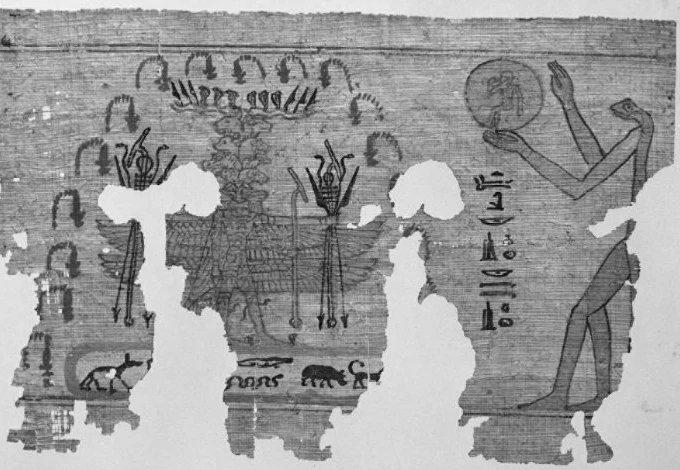 Brooklyn Magical Papyrus: Spell to the Nine-Faced Bes
A Late Period spell in English from the Egyptian: Bes with nine faces, cobra toes and a snake on each knee kills any snake that sees him.
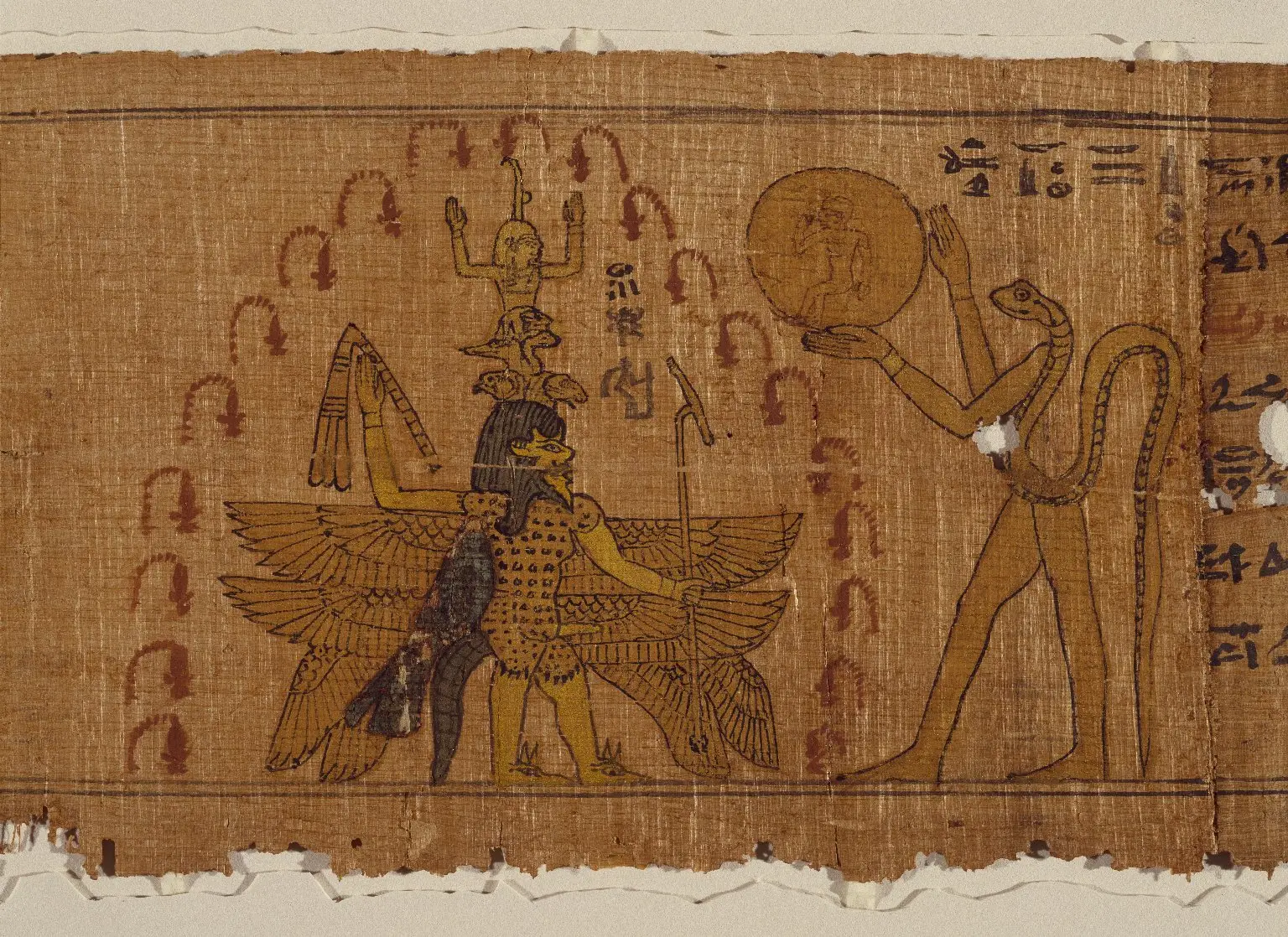 Brooklyn Magical Papyrus: Spell to the Seven-Faced Bes
A Late Period spell in English from the Egyptian: a giant Bes with seven faces, his cock erect, guards a man from demons who come to rape him.
 Come to Your House: An Osiris Litany for Nes-ba-neb-djed
An early Ptolemaic hymn in English from the Egyptian: the dead priest is called home as Osiris, his body bronze, his flesh gold, his bones silver.
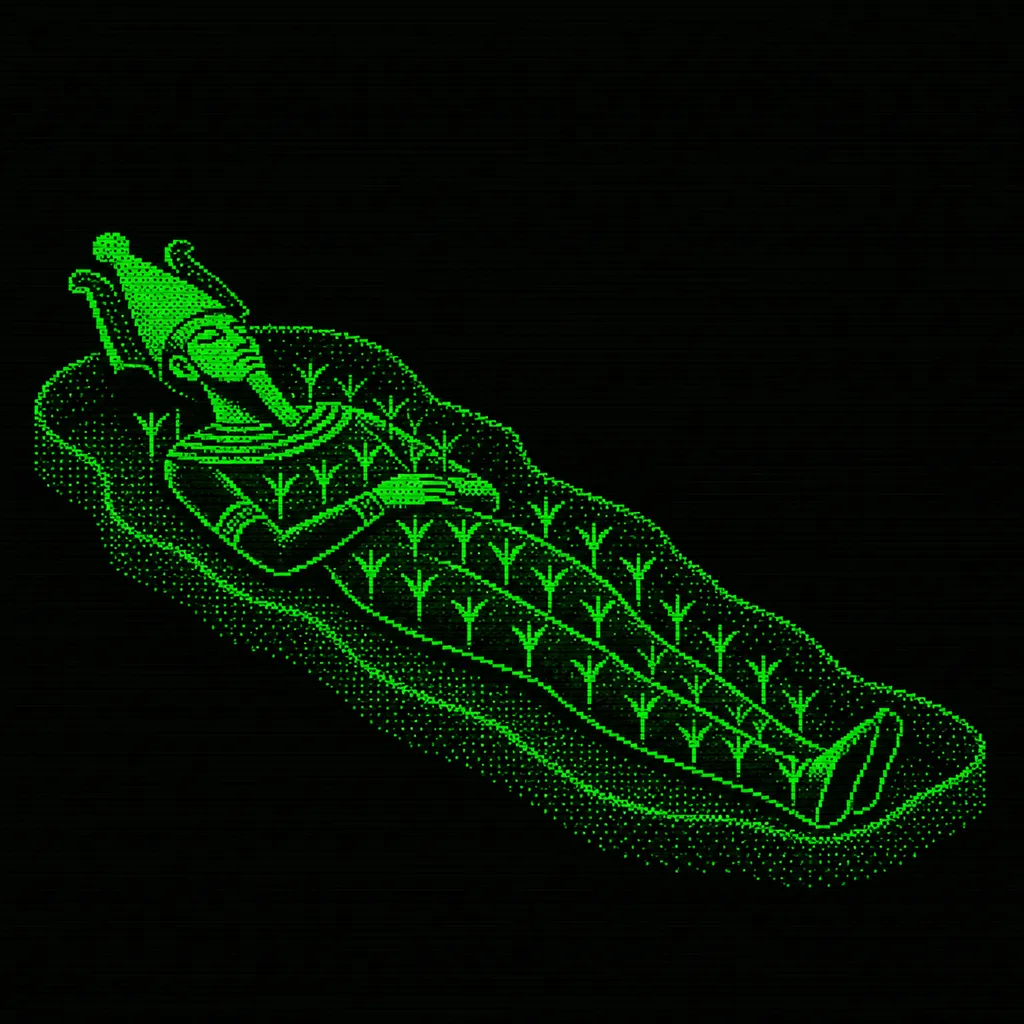 Dendera Khoiak Text: Making Osiris of Grain and Cake
The Dendera Osiris-chapel inscription for the month of Khoiak, in English from Loret's French (1881–1884): Osiris moulded of grain, watered, bound, buried.
 Fall on Your Face: Cursing Seth Over a Wax Figure
An Egyptian execration of Seth: knives, nets and fish-traps for the god's murderer, then his red wax figure burned. Re is justified against Apophis.
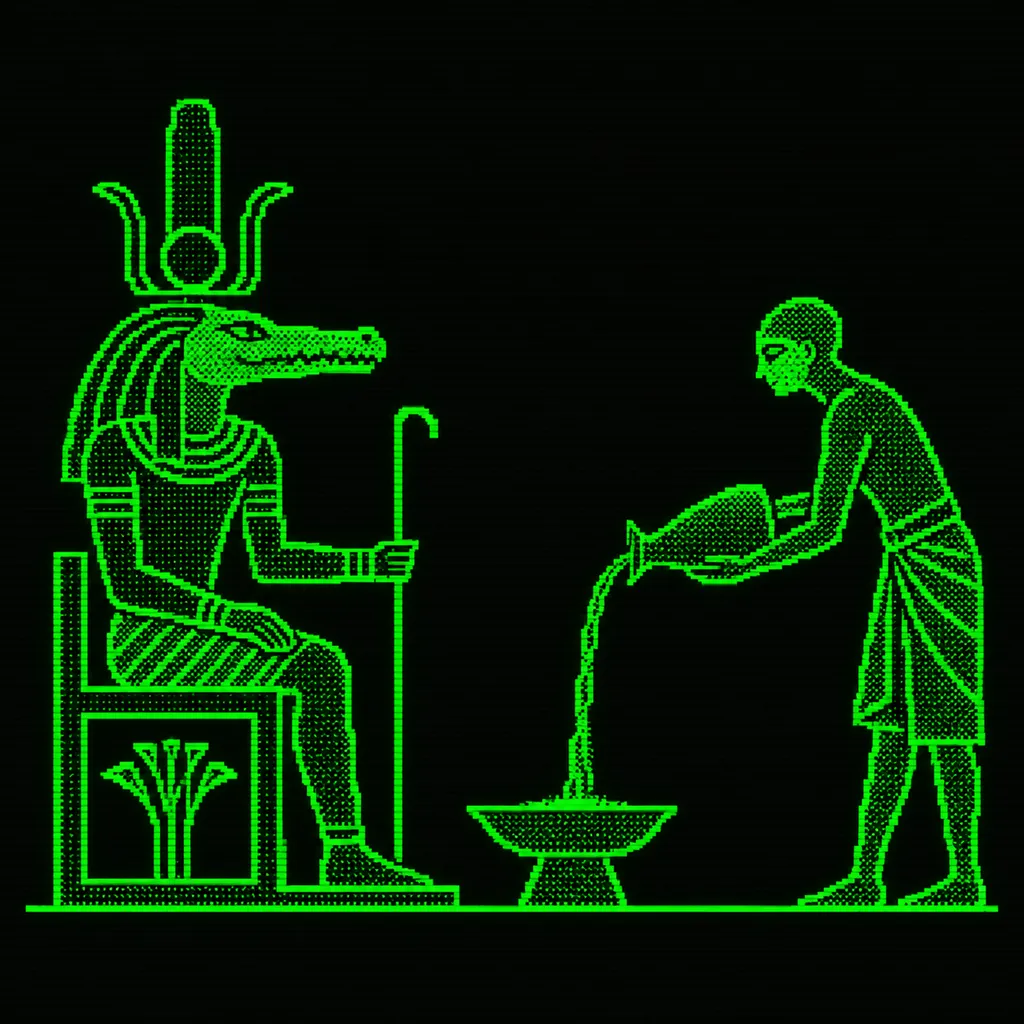 Heads Cut Off: The Daily Ritual of Sobek
The crocodile god's daily rite from the Egyptian: heads cut off and hearts cut out, Seth's testicles returned, the flood of Nun poured.
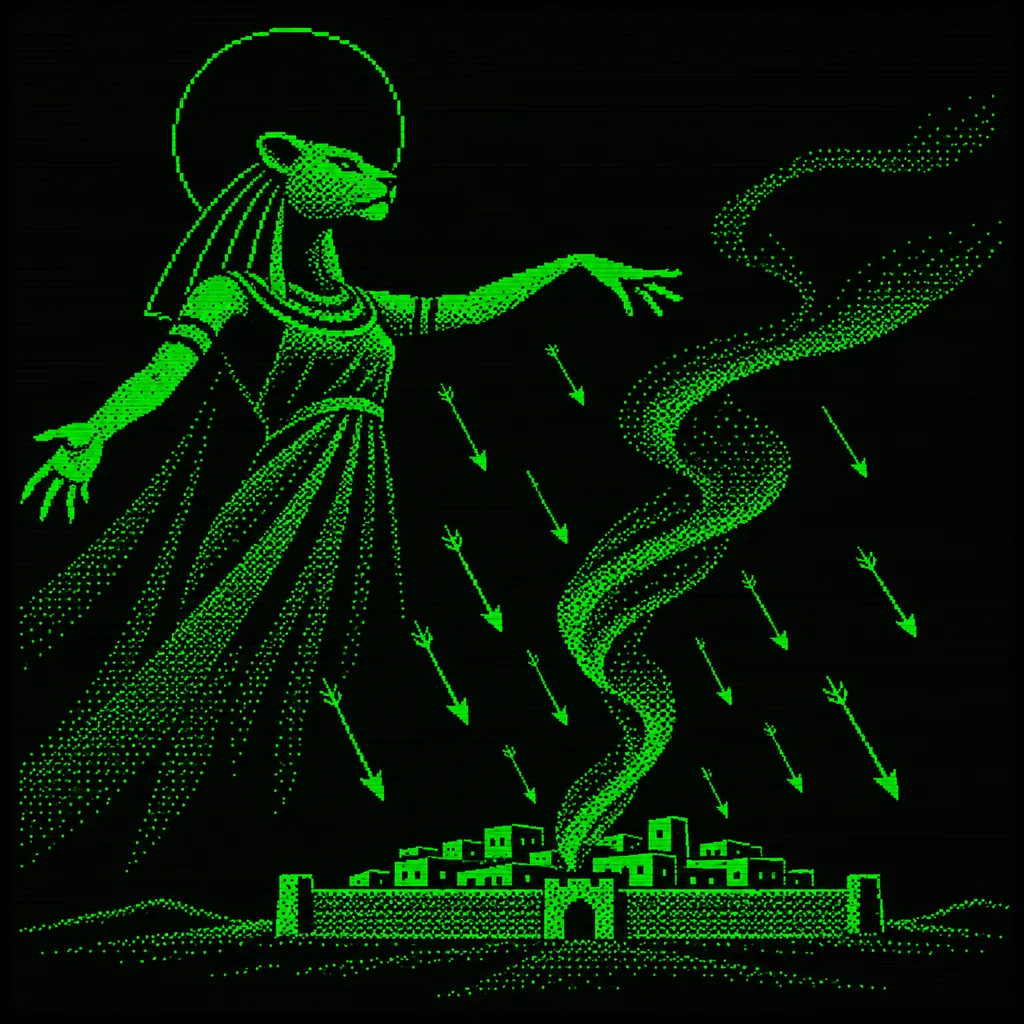 Him Whom Sakhmet Has Castrated: The Plague Priest's Signs
The plague priest's signs from the Egyptian: the man Sakhmet has castrated, eyes like a flame at night, breath glowing like a kiln.
 In the Birth House: Spells Against the Dead
Saite birth spells in English from the Egyptian: the dead man stripped and beheaded, Isis at the mother's lap, a roaring hippo goddess.
 Like a Felled Tree: Isis Over the Corpse
An Osiris lament from the Egyptian: Isis over the corpse lying like a felled tree, eaten by the qai-worm, and Seth fallen on his face.
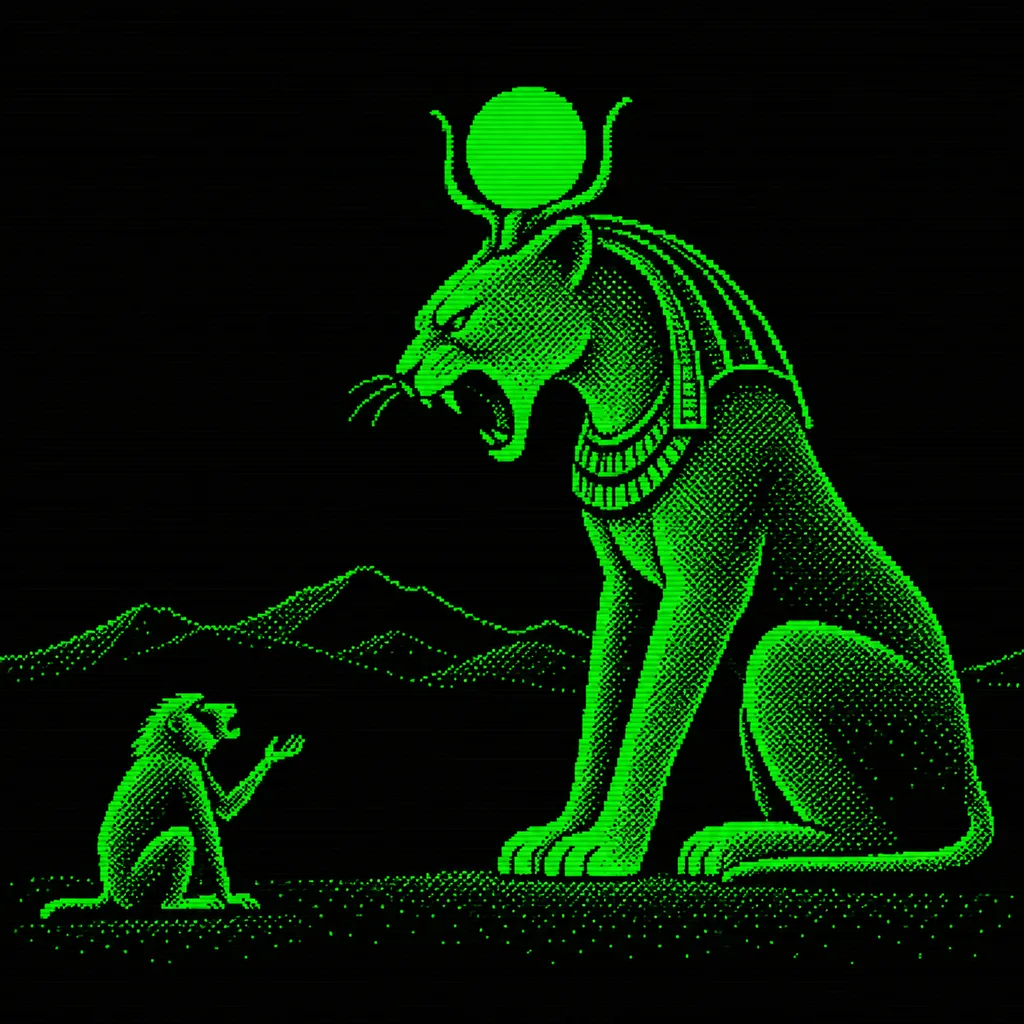 Myth of the Sun's Eye: The Ape Lures the Cat-Goddess Home
The Demotic Myth of the Sun's Eye (Leiden I 384) in English from Spiegelberg's German: Thoth as a dog-ape talks the raging cat Tefnut home with fables.
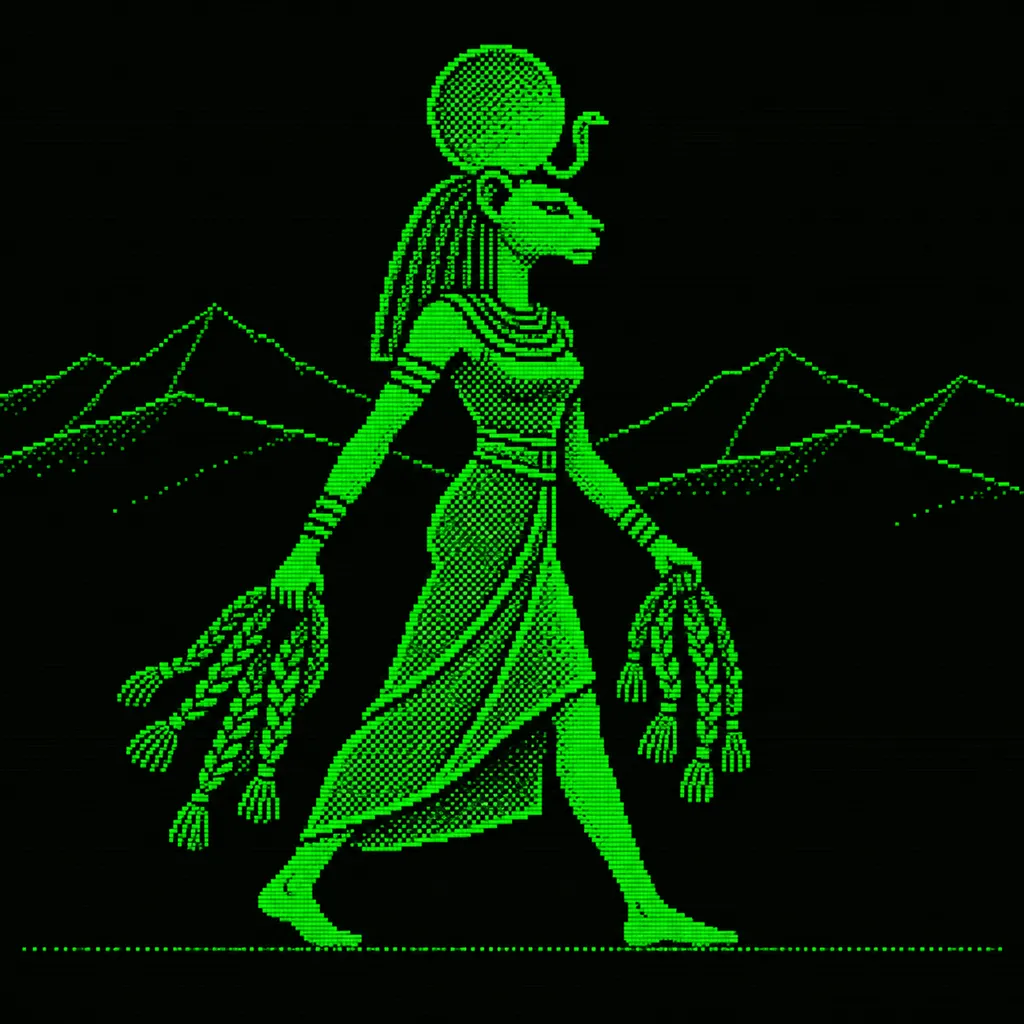 Sakhmet Comes from Asia: Anointing Spells for the King
A Ptolemaic royal rite in English from the Egyptian: jars of ointment make the plague goddess Sakhmet and the cobra Wadjet the king's armour.
 Spill Your Love Into My Body: The Great Decree
An Osiris liturgy from the Egyptian: Nephthys begs the dead god to spill his love into her body; seven gates kept by venomous demons.
 The Animals Heard It and Died: A Spell for a Mother
A Saite spell in English from the Egyptian: the dead kill a woman's children, and the gods' own animals die until the land is empty of gods.
 The Dead Ones of the Gods: Spells From Deir el-Medina
A Ramesside healer's spells from the Egyptian: possession by the dead ones of the gods, a breath like snake venom, fire-spitting cobras.
 The Four Balls of Clay: A Ritual Against Seth
A Ptolemaic rite in English from the Egyptian: four clay balls thrown to the four quarters, and Seth blinded, beheaded and burned to keep him from Osiris.
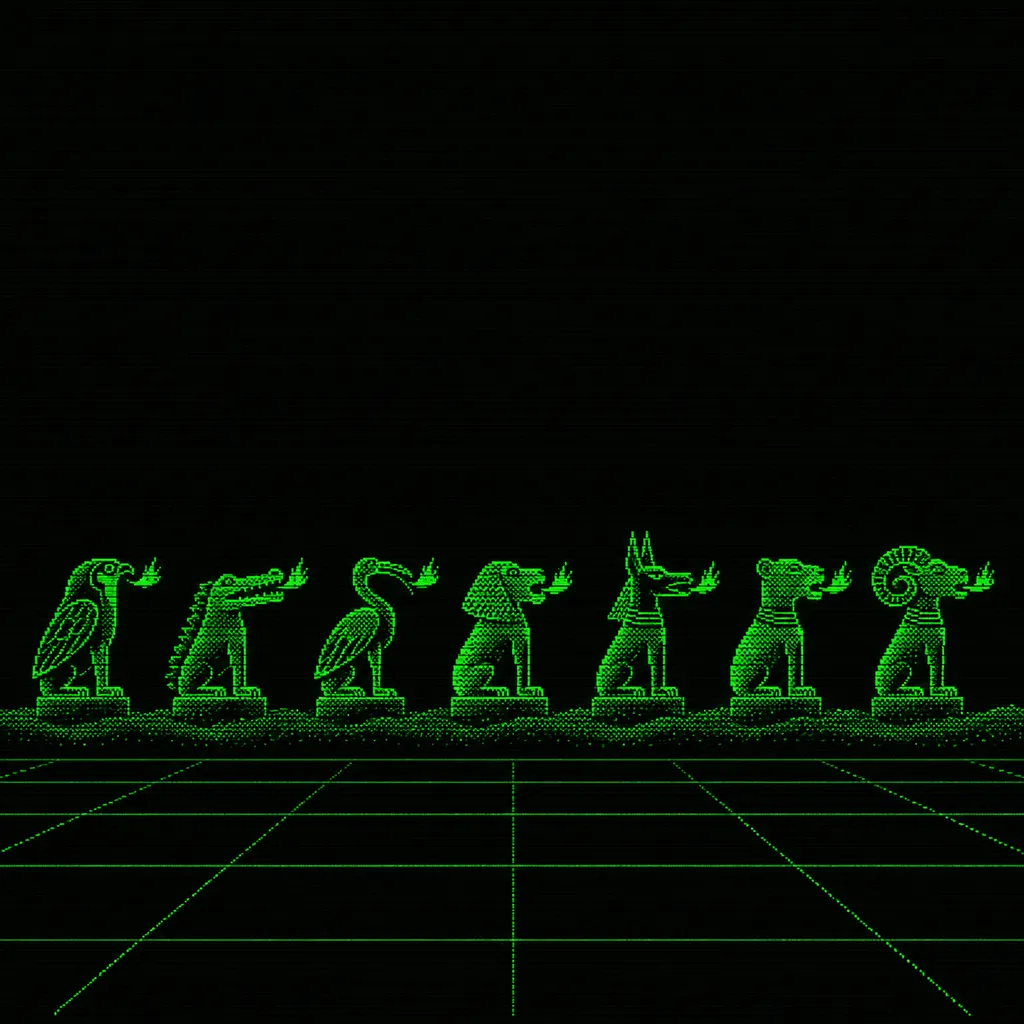 The King Eats His Office: A New Year Rite
A Ptolemaic royal rite in English from the Egyptian: the king's office is drawn in myrrh and spit, made of chewed bread, and eaten by the king.
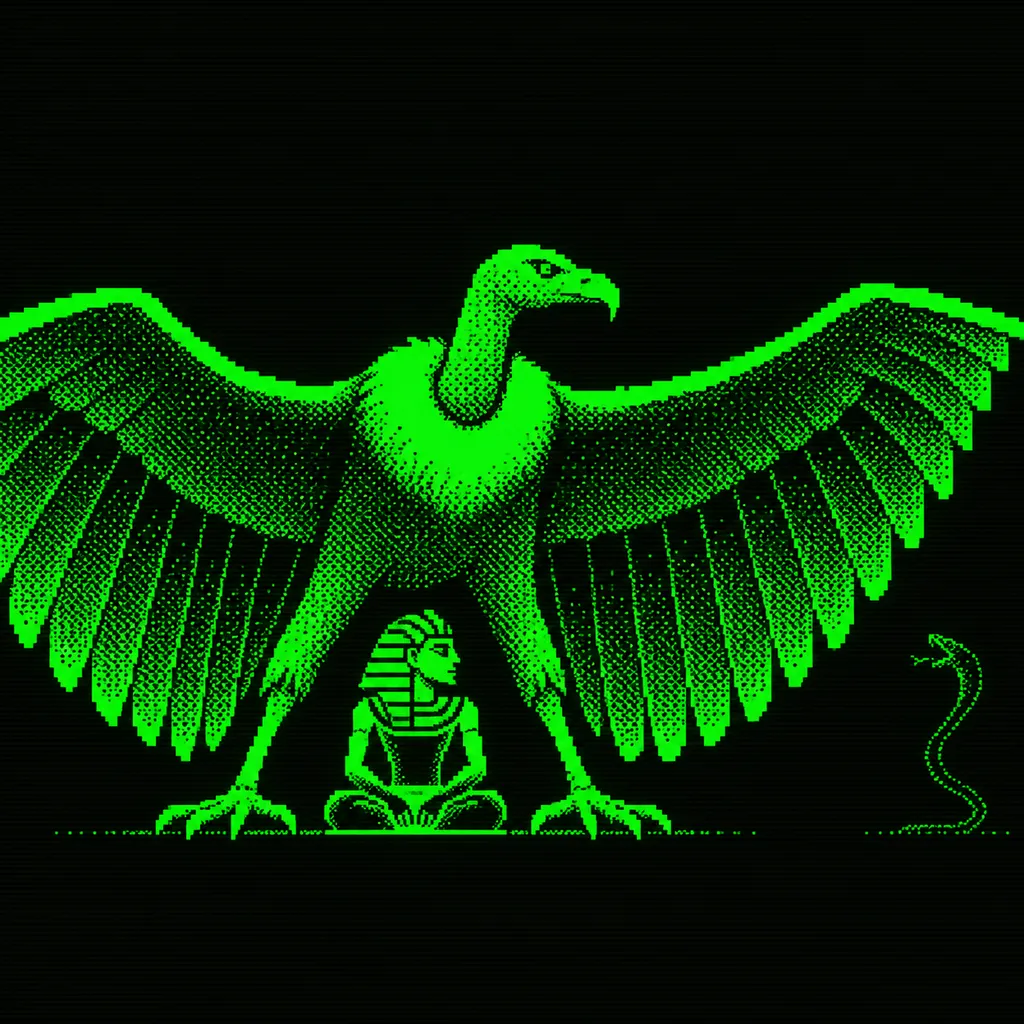 The Living Birds: A New Year Rite for the King
A Ptolemaic royal rite in English from the Egyptian: living birds are anointed and spread their wings over the king to shield him for the year.
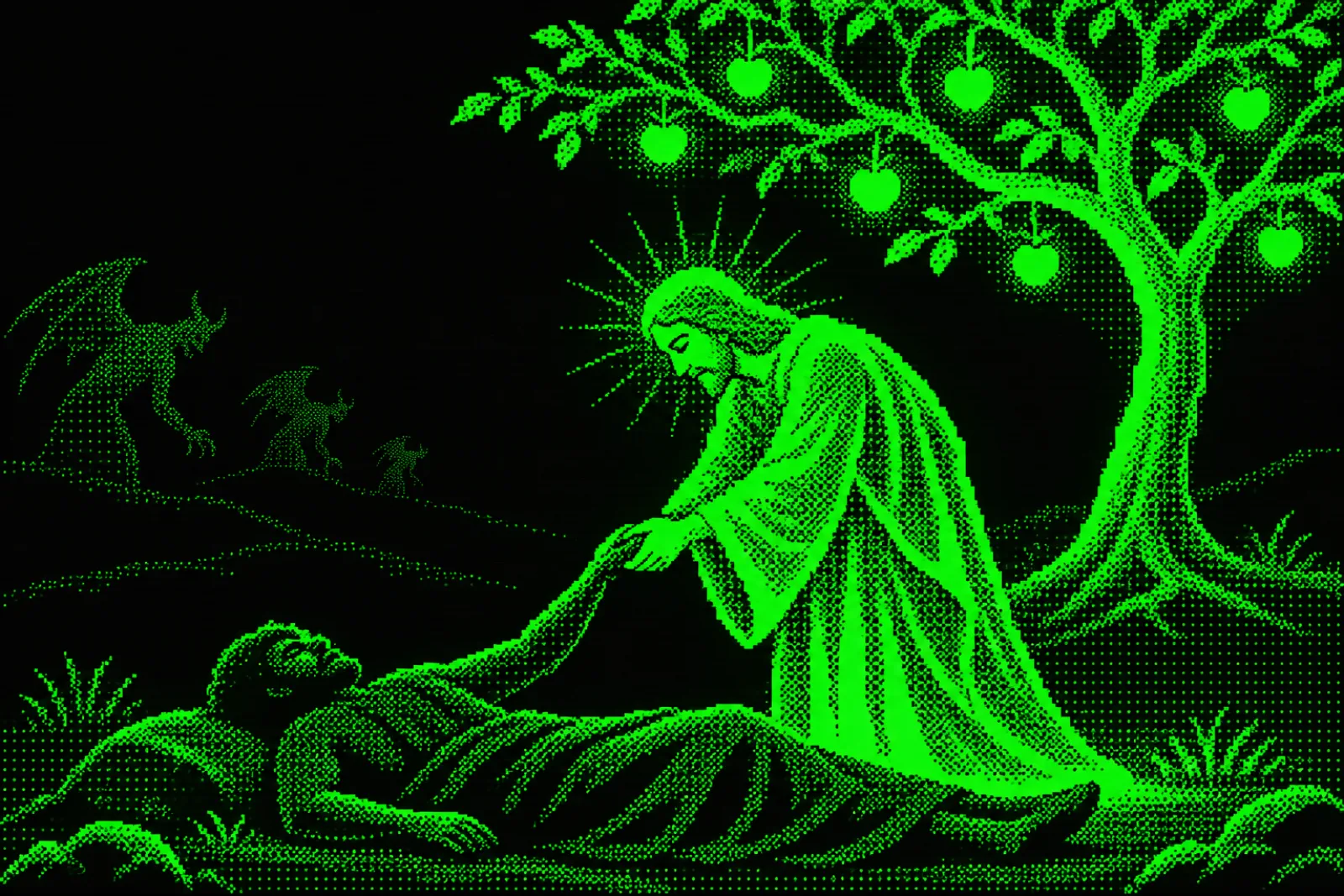 Adam's Awakening: The Manichaean Making of Adam
Mani's Adam in English from the Syriac and Middle Persian: begotten by a demon who ate the young, woken by Jesus the Splendour, he curses his maker.
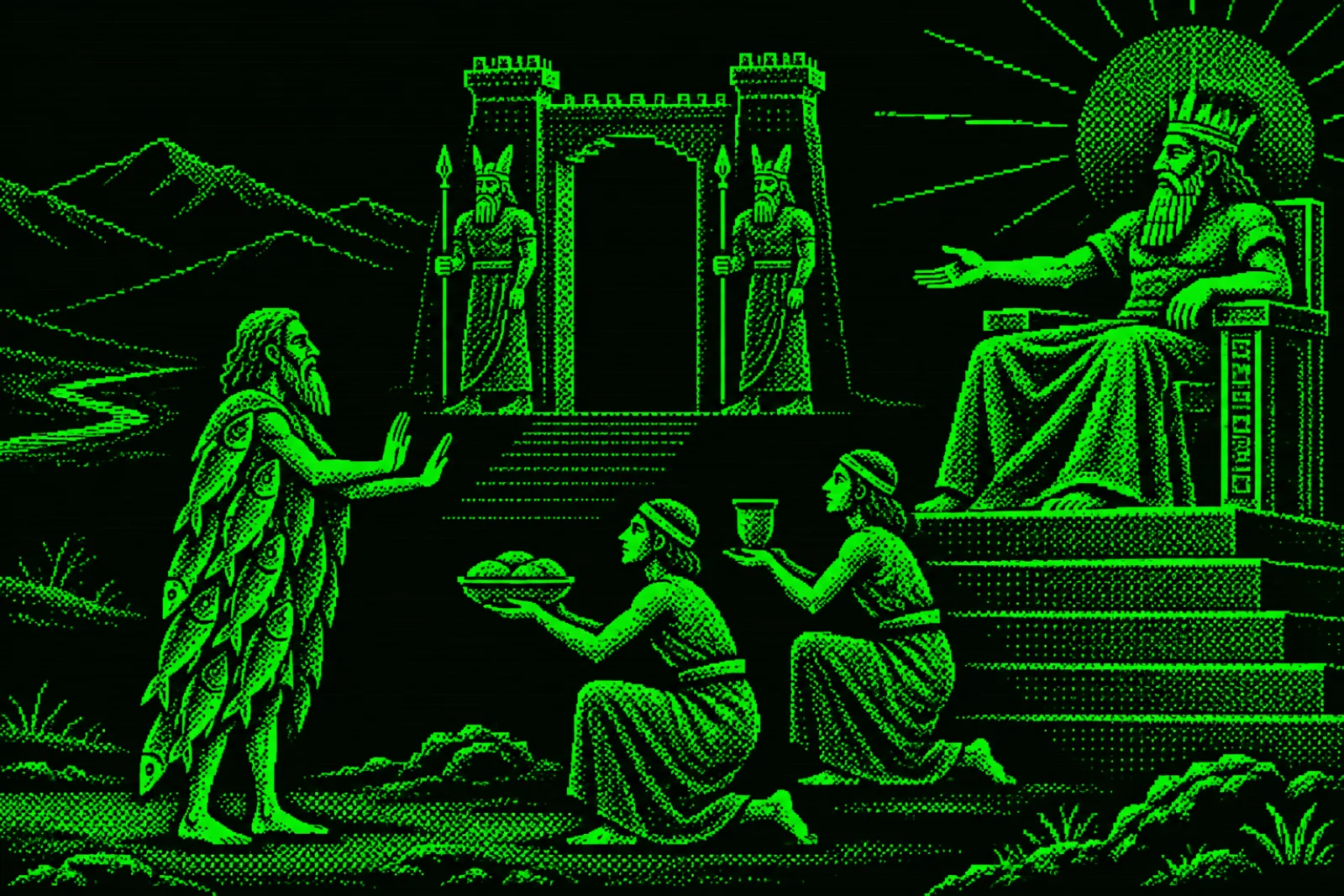 Adapa: The Sage Who Refused the Bread of Life
The Akkadian myth of Adapa in English, line by line from the Akkadian: wisdom given, the bread and water of life refused.
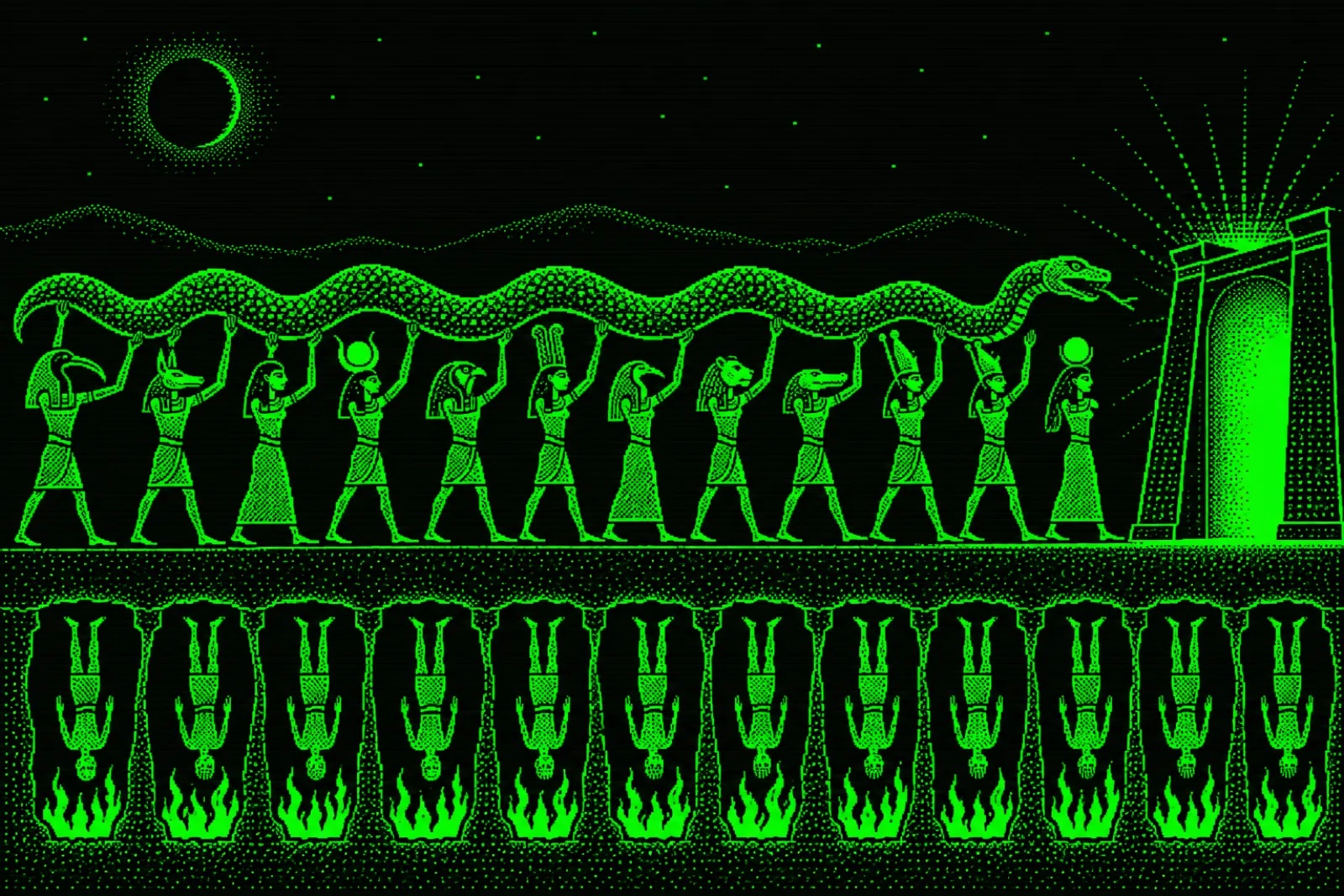 Amduat, Eleventh Hour: Mehen Carried, the Damned Burned
The Eleventh Hour of the Amduat in English, line by line from the Egyptian: twelve gods carry Mehen to the dawn while the damned burn in pits.
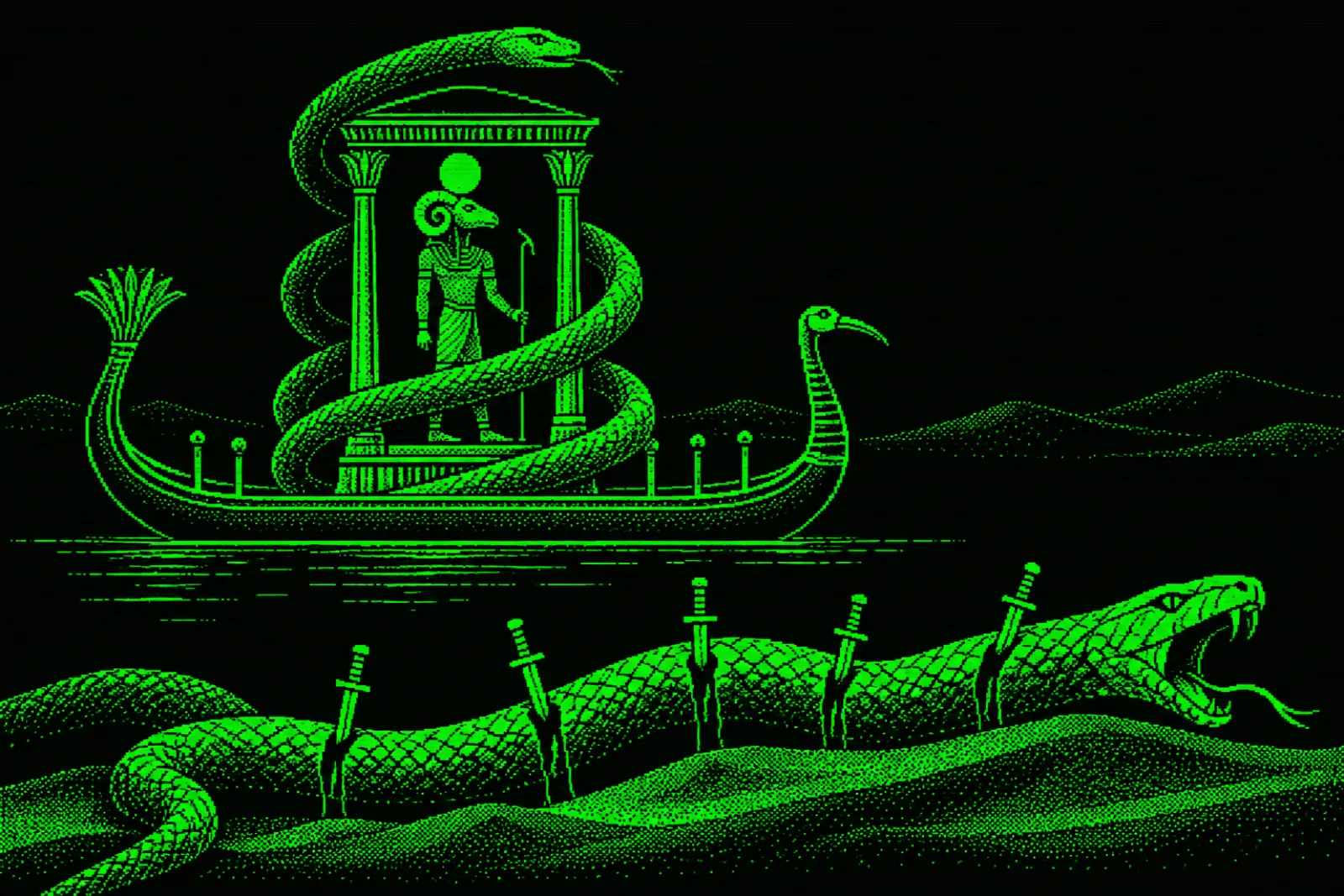 Amduat, Seventh Hour: Apophis Cut Down, Re in Mehen's Coils
The Seventh Hour of the Amduat in English, line by line from the Egyptian: Apophis spellbound and slaughtered, the sun god sailing inside Mehen's coils.
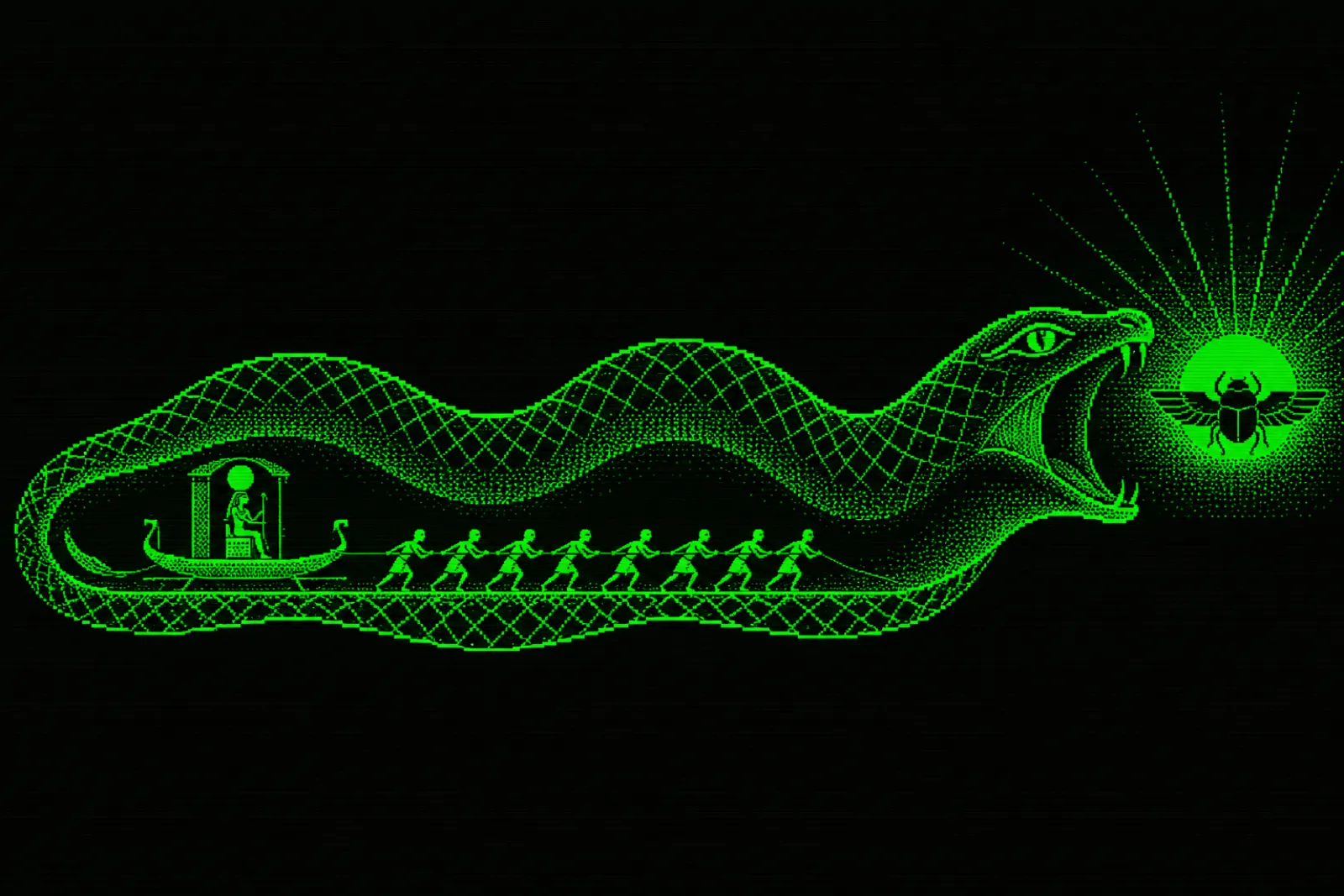 Amduat, Twelfth Hour: Reborn Through the Serpent
The Twelfth Hour of the Amduat in English, line by line from the Egyptian: the sun god towed into a serpent's tail and born from its mouth as Khepri.
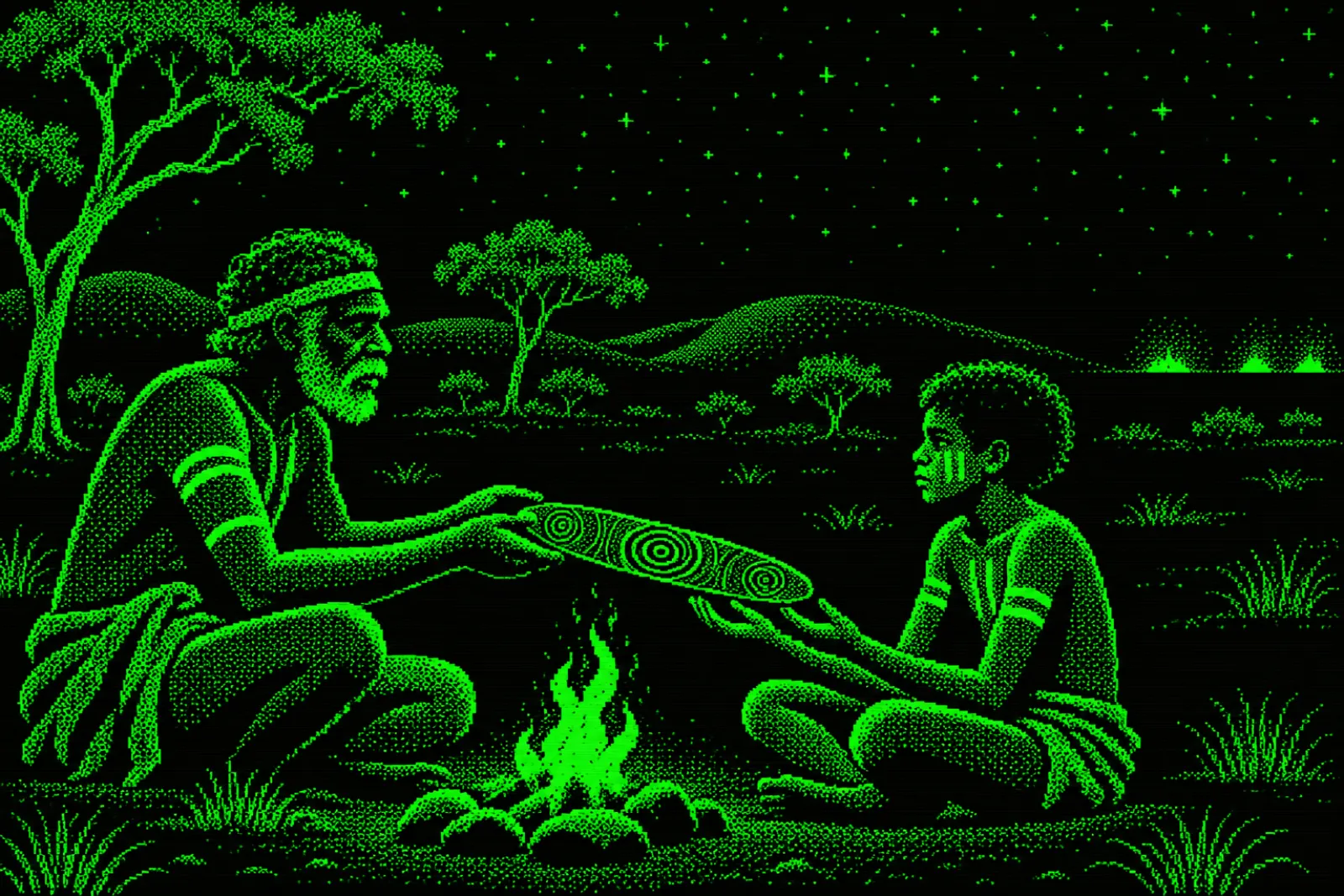 Aranda Initiation: Strehlow's Secret 'I' and the Bullroarer
Carl Strehlow's 1913 account of Aranda initiation in English, from his German and Aranda: making ashamed, the bullroarer revealed, the secret word for I.
 Aranda Myths: Altjira, the First Bullroarer, the Snakes
Carl Strehlow's 1907 Aranda myths in English: the sky god Altjira, the cutting-apart of the first humans, the first bullroarer and the snake ancestors.
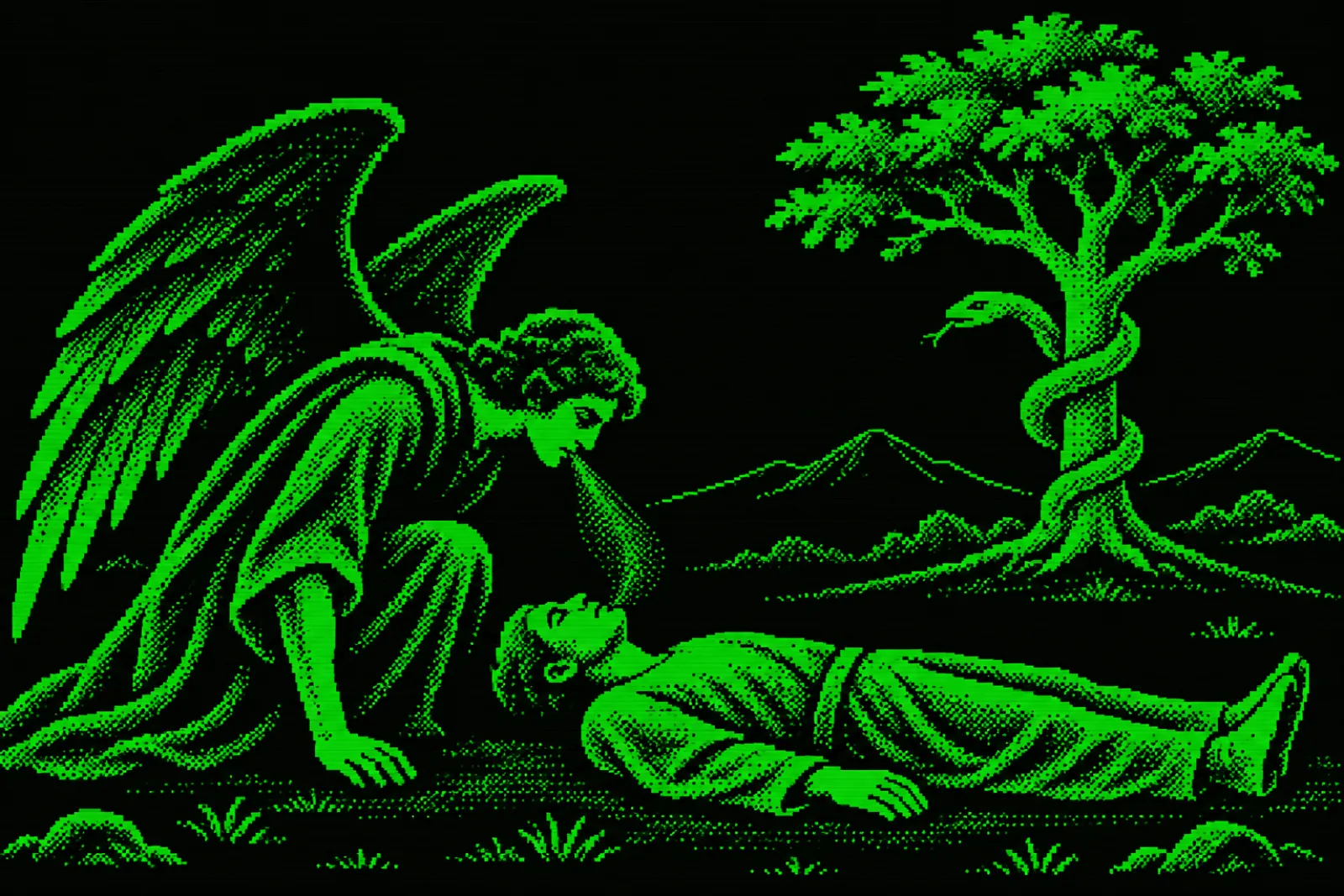 Bogomil Legends of Adam: Satan Makes the Body
The dualist legends of Adam in English from Latin and Slavonic: Satan shapes the clay, riddles it with holes, and has Eve through the serpent.
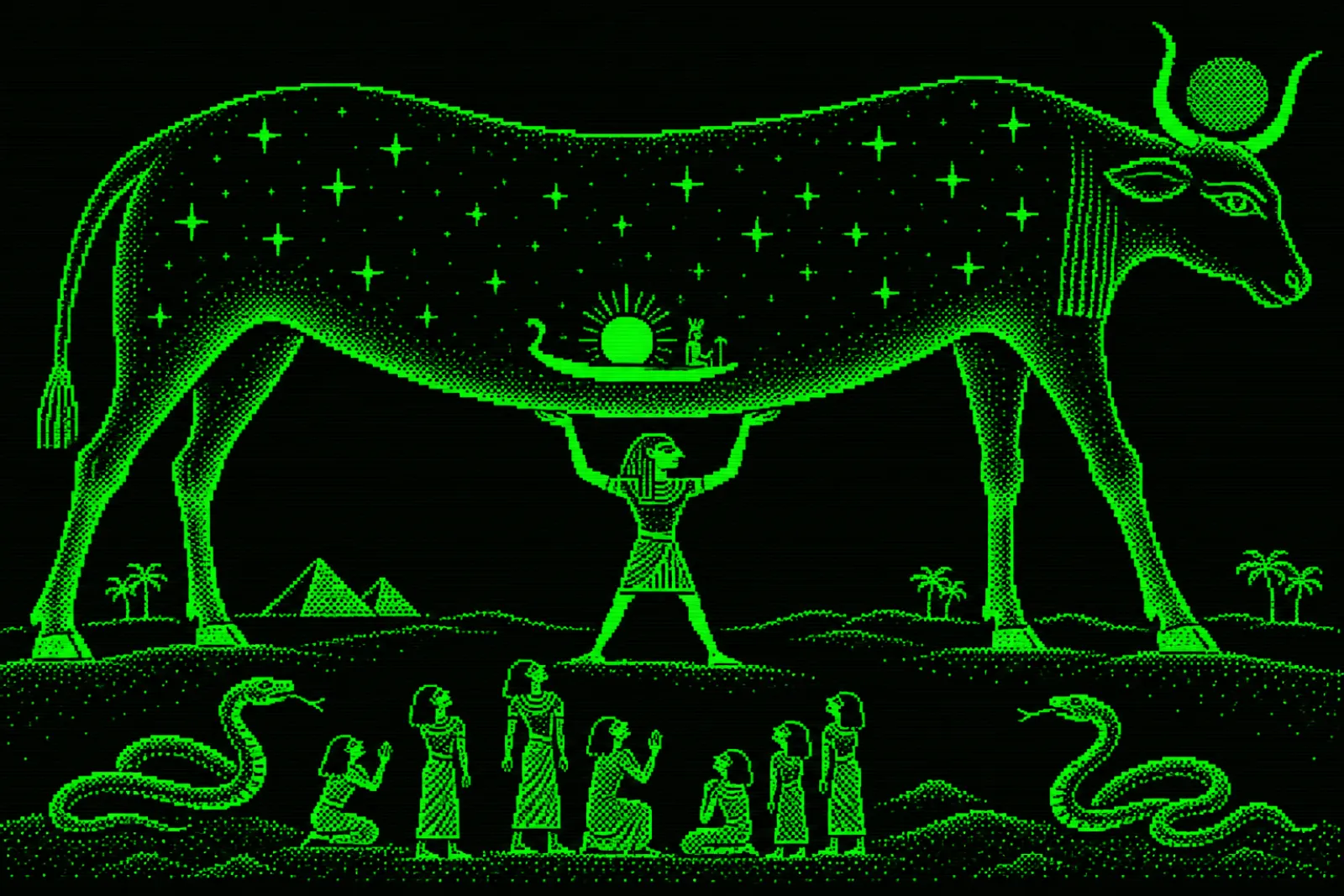 Book of the Heavenly Cow: Re Leaves, the Snakes Stay
The Book of the Heavenly Cow in English, line by line from the Egyptian: mankind slaughtered, the red beer, Re's ascent, the snakes of the earth.
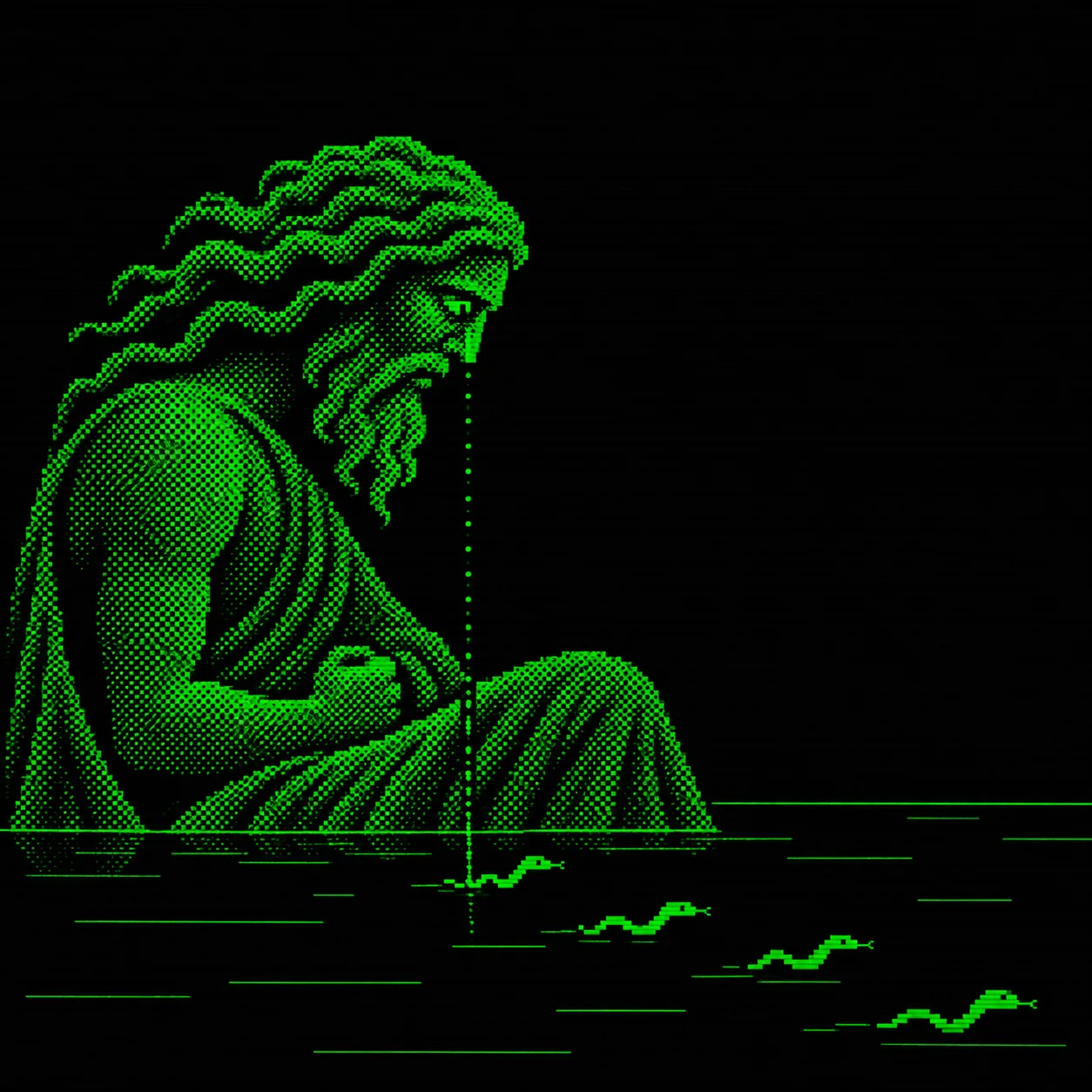 Bremner-Rhind Creation Myth: The Lord of All Begets Himself
An Egyptian creation myth, line by line from the original: the creator masturbates, spits out Shu and Tefnut, and makes people and snakes.
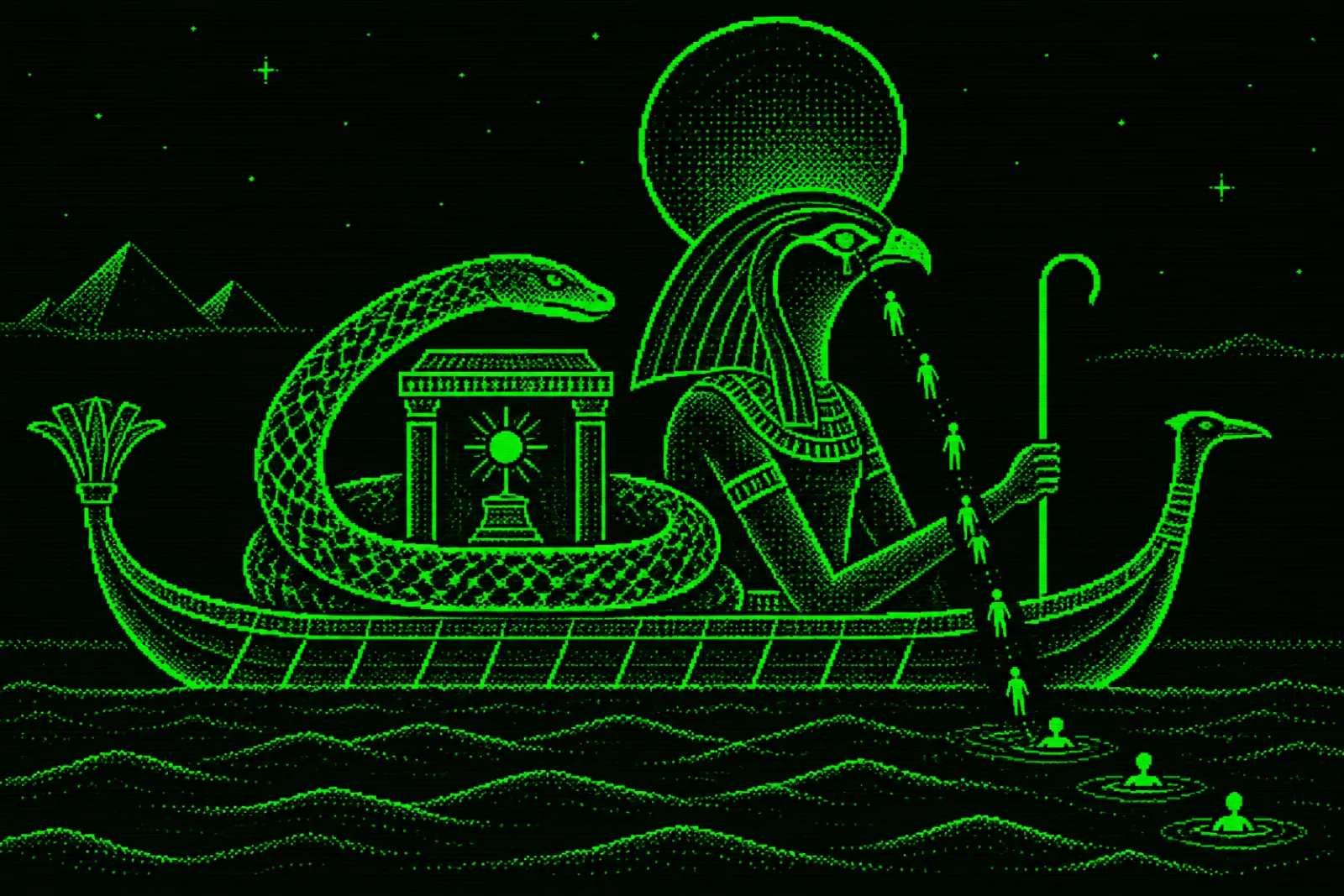 Coffin Texts of the Coiled One: The Creator's Four Deeds
Two Coffin Texts spells in English, line by line from the Egyptian: the creator speaks from inside the Coiled One, and the dead call the serpent brother.
 CUSAS 32, 2: The Black Snake of the Abzu
One of the oldest snake spells, c. 2600 BC, and its Ebla twin, in English line by line from the Sumerian: the venom brought out, the mouth bound.
 Demotic Dream Book for Women: Dreams of Sex with Animals
The women's section of the Demotic dream book (P. Carlsberg 13), line by line from the Demotic: what it means if a snake, a goat or a lion fucks her.
 Dumuzid's Dream: Gazelle's Hands or Snake's Hands
Dumuzid's Dream, whole, line by line from the Sumerian: the shepherd's death-dream, the sister who reads it, the galla demons and Old Woman Belili.
 Enki and Ninhursag: Dilmun, Incest and the Lady of the Rib
The Sumerian paradise myth, line by line from the Sumerian: Enki's semen, four generations of incest, the eaten plants, the Lady of the Rib.
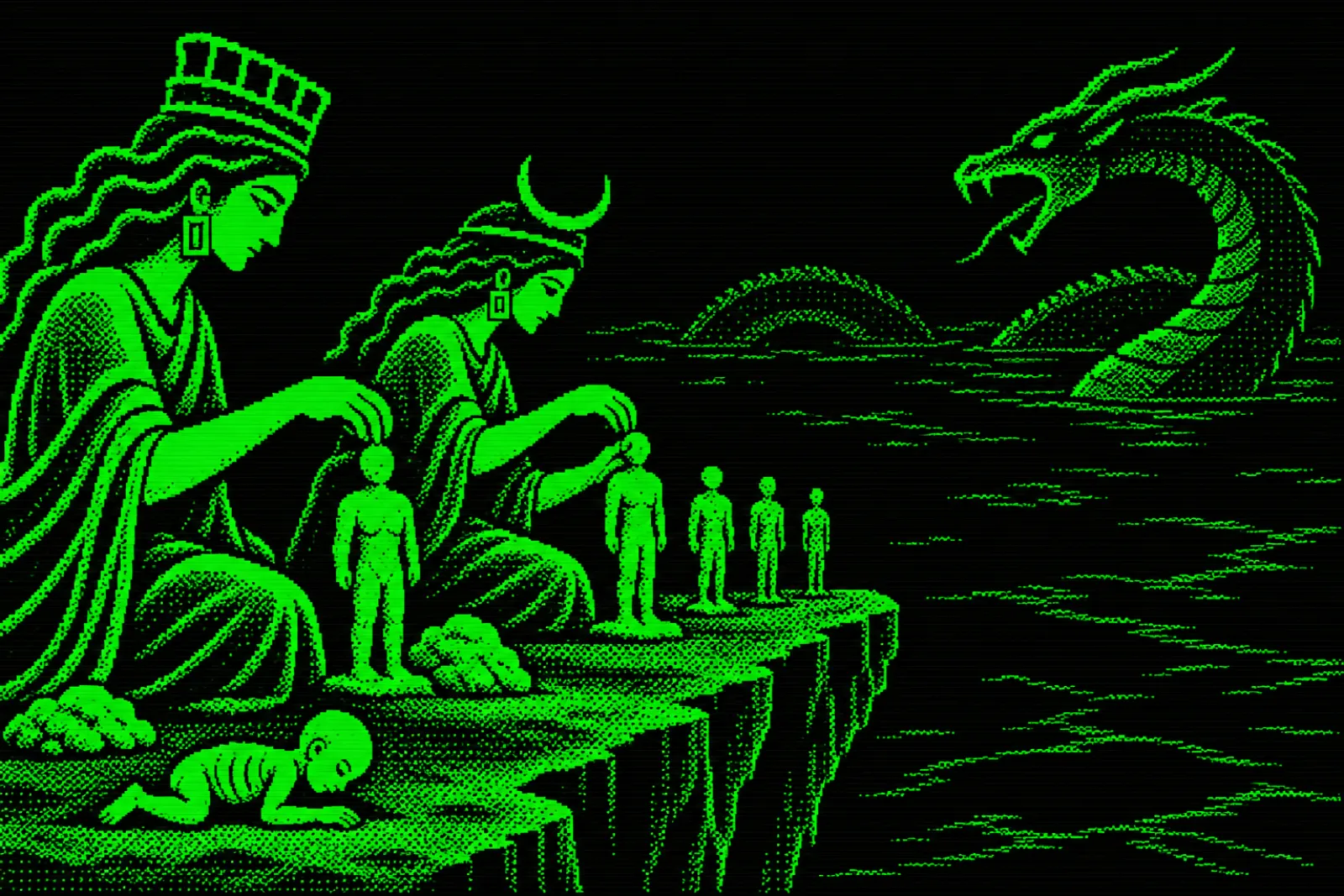 Enki and Ninmah: Man from Clay, and the Child Who Cannot Speak
Enki and Ninmah, whole, line by line from the Sumerian: man made from clay for the gods' basket, a contest over beer, Enki's child born of semen.
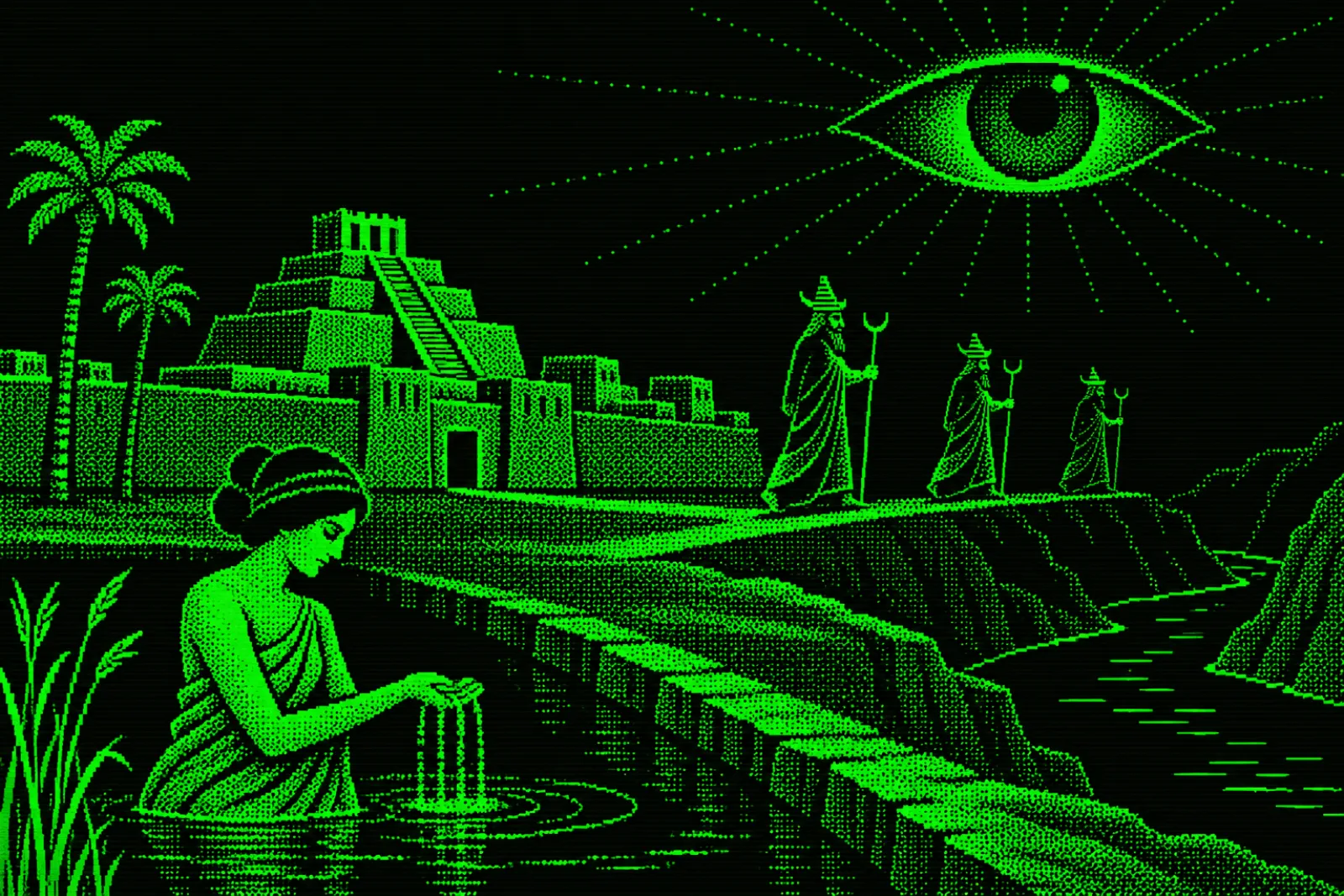 Enlil and Ninlil: the Rape, the Banishment, the Three Disguises
Enlil and Ninlil, whole, line by line from the Sumerian: the mother's warning, the rape by the river, the god banished as impure, four sons conceived.
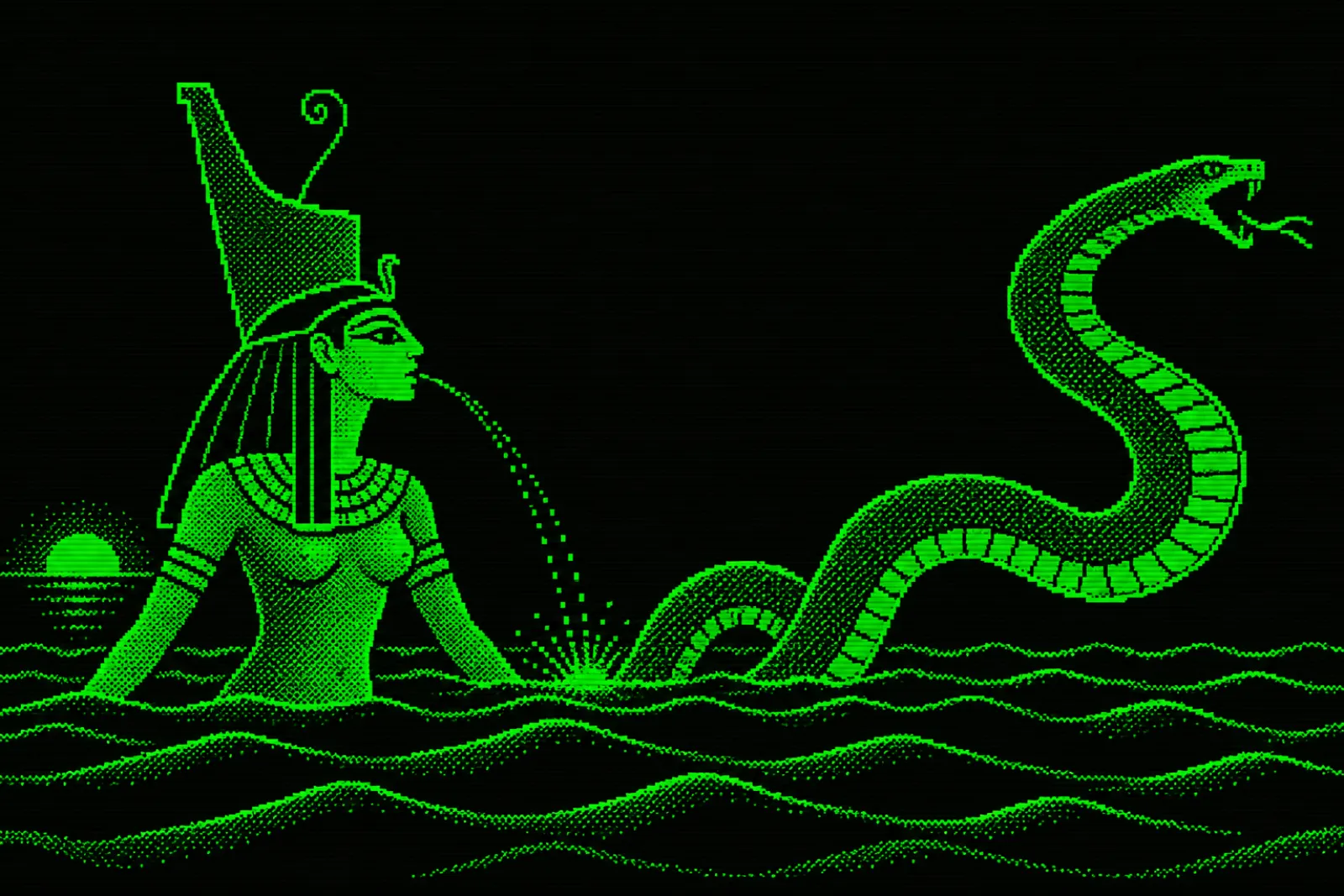 Esna Cosmogony of Neith: The Goddess, Re and Apophis
Neith's creation of the world, from the temple of Esna, in English line by line from the Egyptian: a goddess names the gods, and Apophis comes from her.
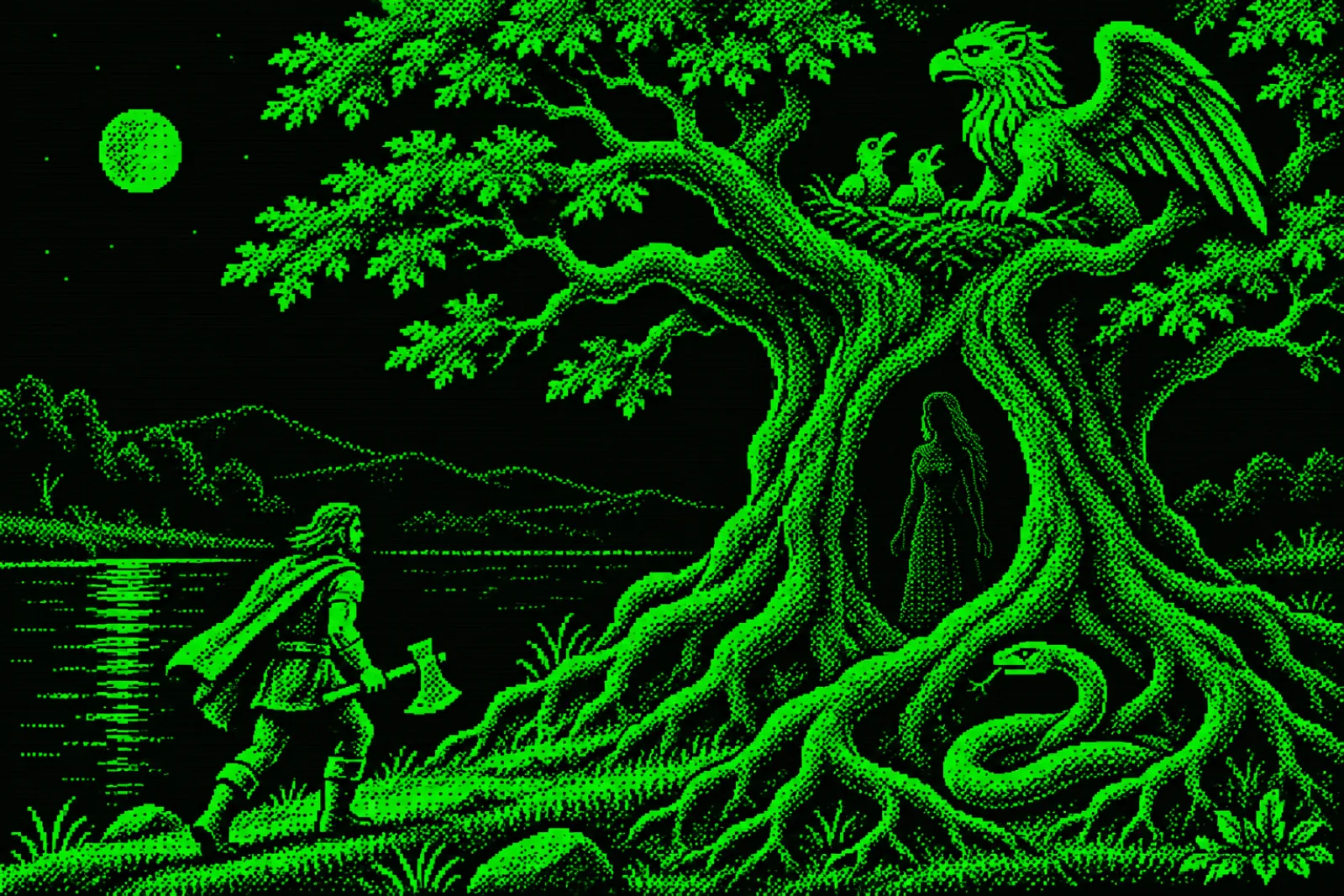 Gilgamesh, Enkidu and the Netherworld: the Huluppu Tree
The snake in the roots of Inana's tree, the wind-demon in its trunk, and the fates of the dead, in English line by line from the Sumerian.
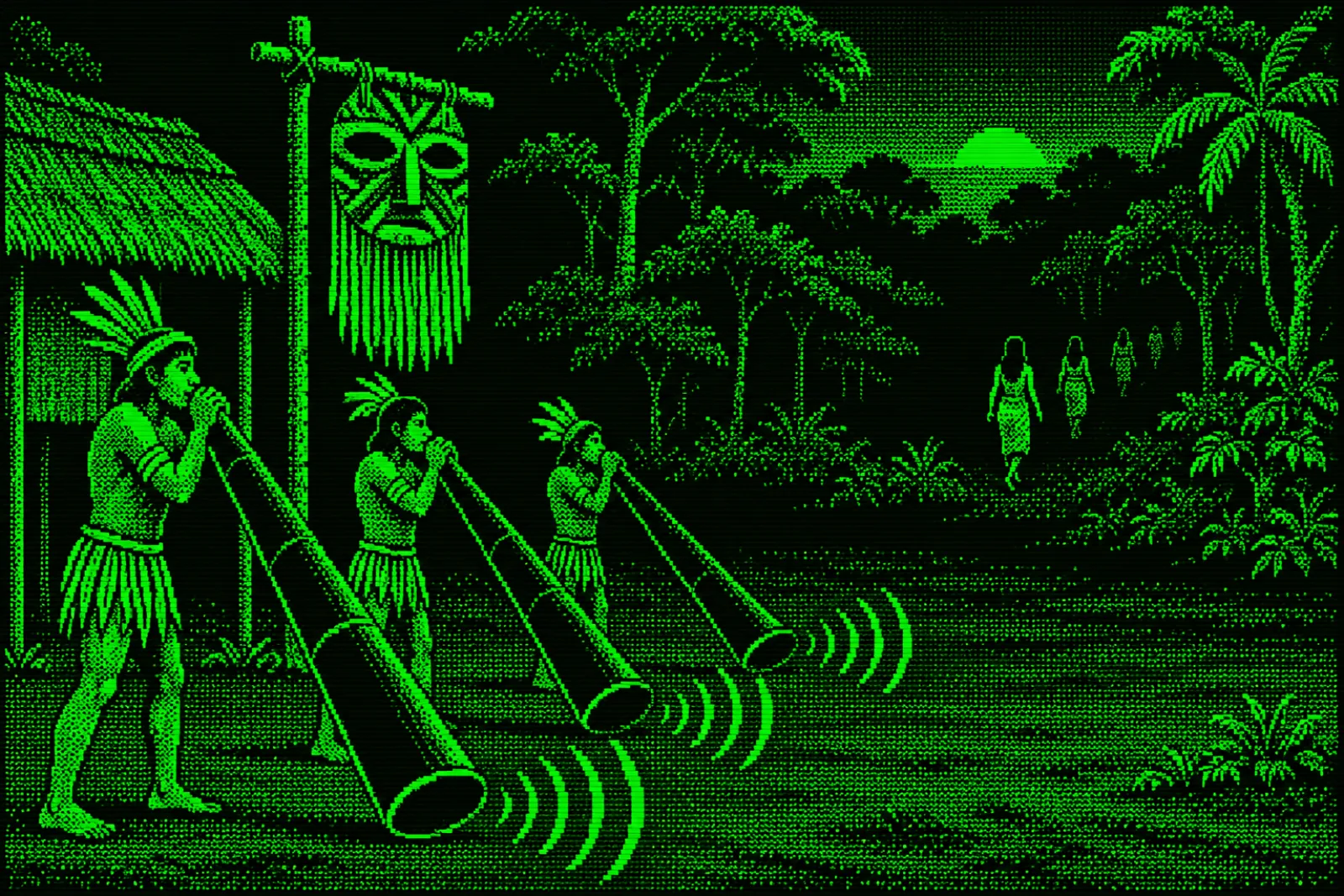 Jurupari Cult: Coudreau on the Uaupés Mask and Trumpets
Henri Coudreau's 1887 account of the Uaupés Jurupari religion in English: the sacred mask and trumpets, women poisoned for seeing them, the dabucuri.
 Klu 'bum: The Serpent Queen Whose Body Became the World
The Bon Klu 'bum cosmogony in English, line by line from the Tibetan: a serpent queen's body becomes the sky, sun, oceans, gods and peoples.
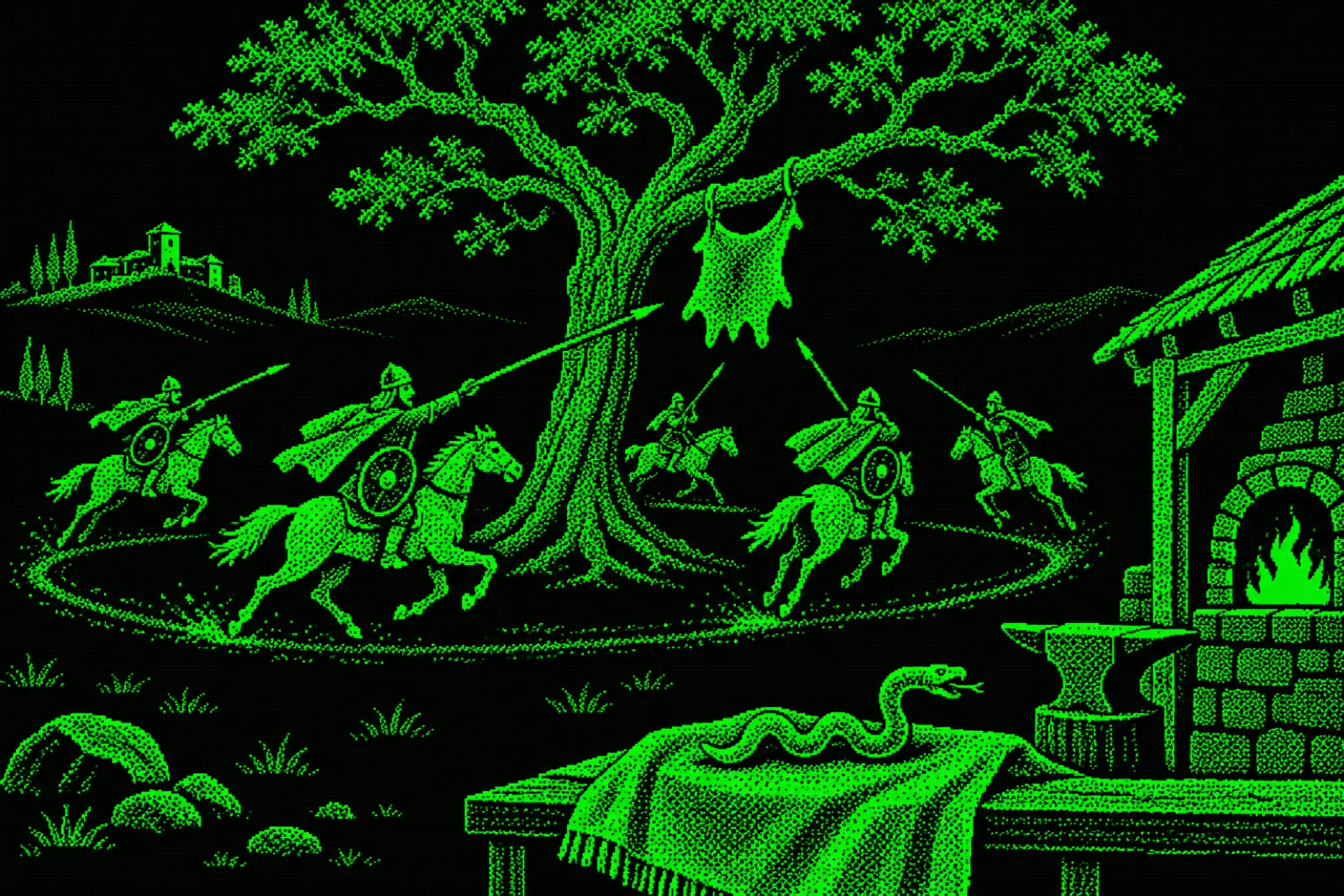 Life of Barbatus: The Lombards' Viper and Sacred Tree
The Life of St Barbatus of Benevento in English from the Latin: Lombards who bowed to a viper image and ate from a hide speared at a holy tree.
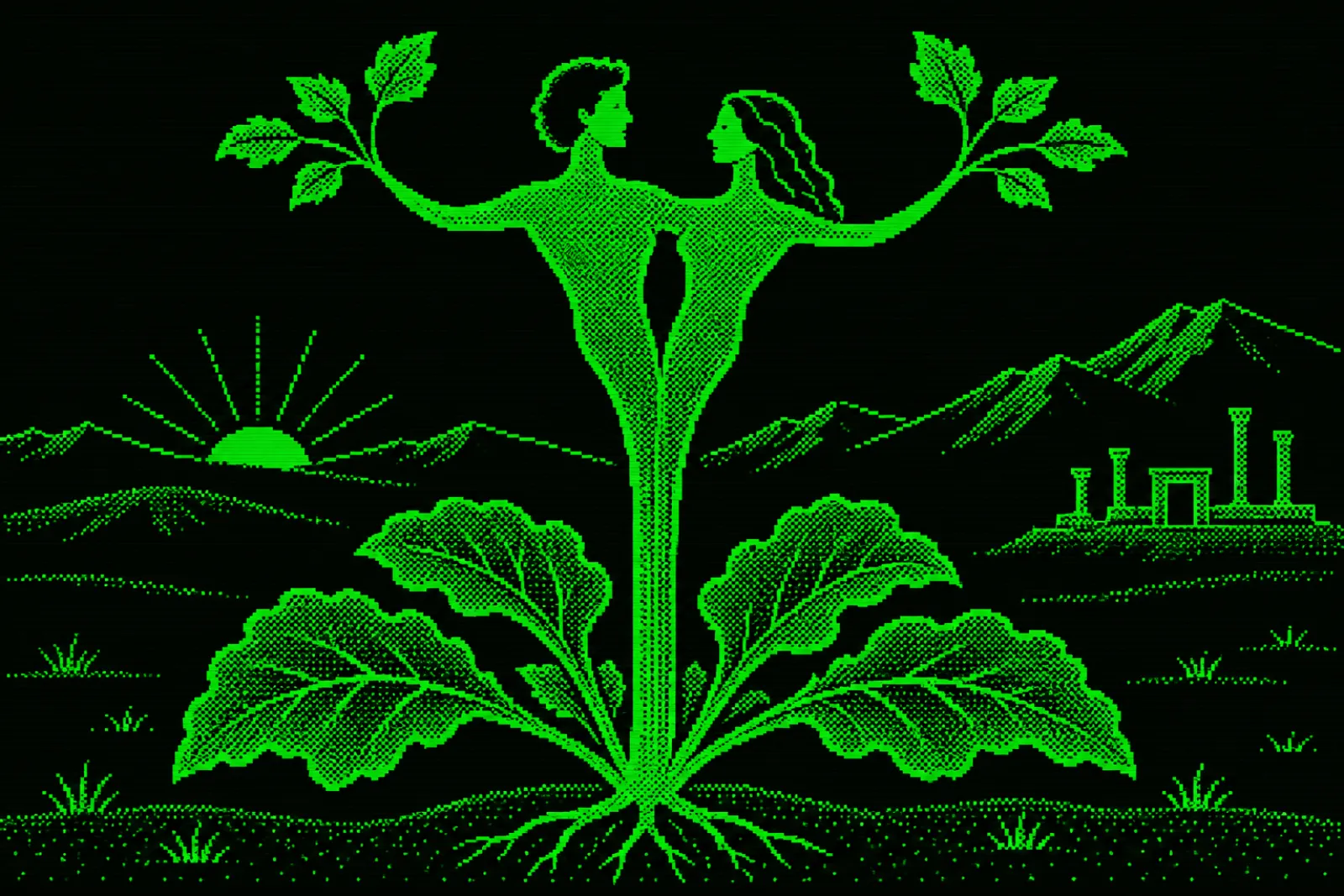 Mashya and Mashyane: The Zoroastrian First Couple
Mašya and Mašyānē in English, line by line from the Pahlavi Bundahišn and Zādspram: the rhubarb twins, the Lie, the food, the skins, the eaten children.
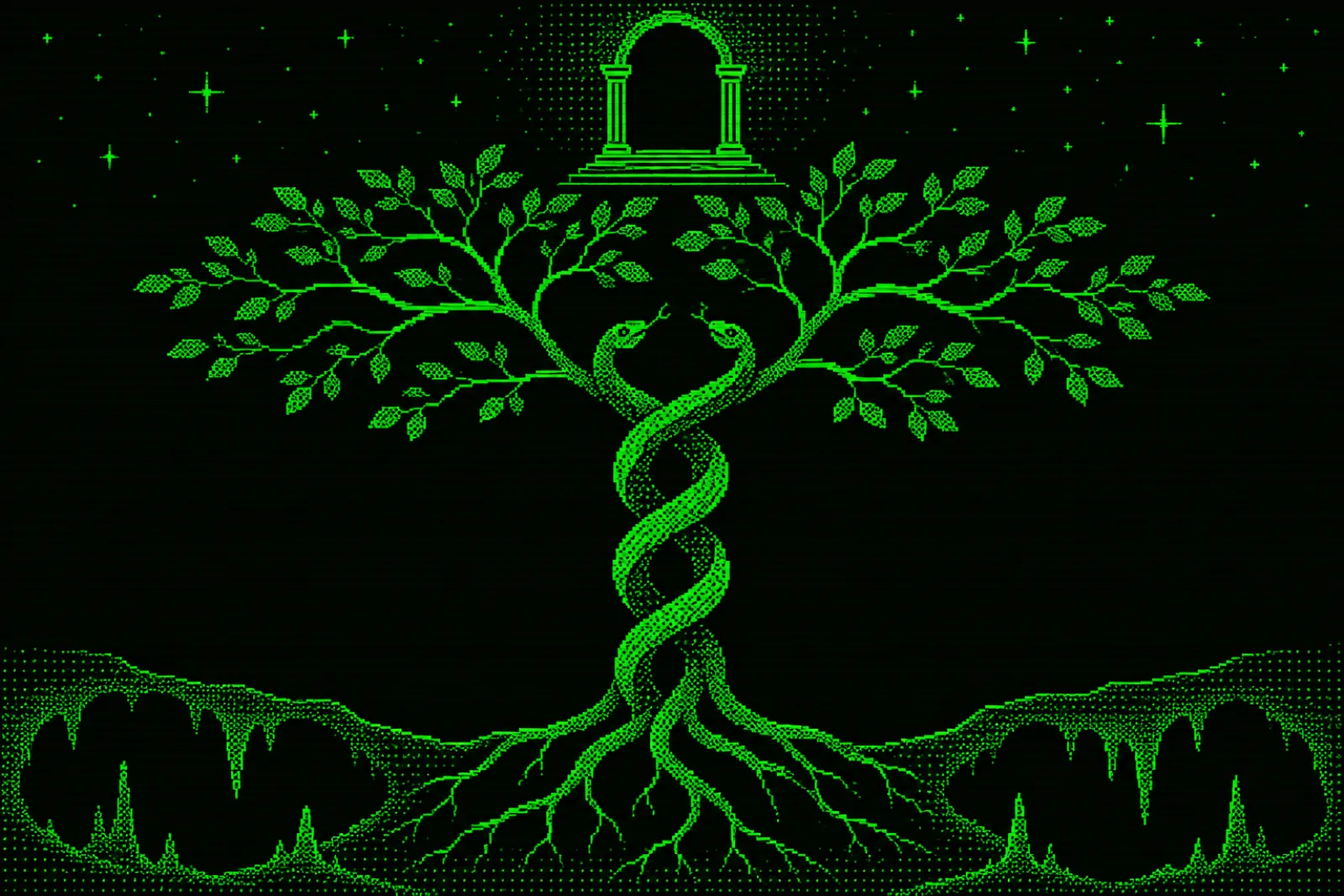 Ningišzida, Serpent Lord of the Tree: Hymns and Myth
The Sumerian hymns and netherworld myth of Ningišzida, the serpent god of the true tree, in English line by line from the Sumerian.
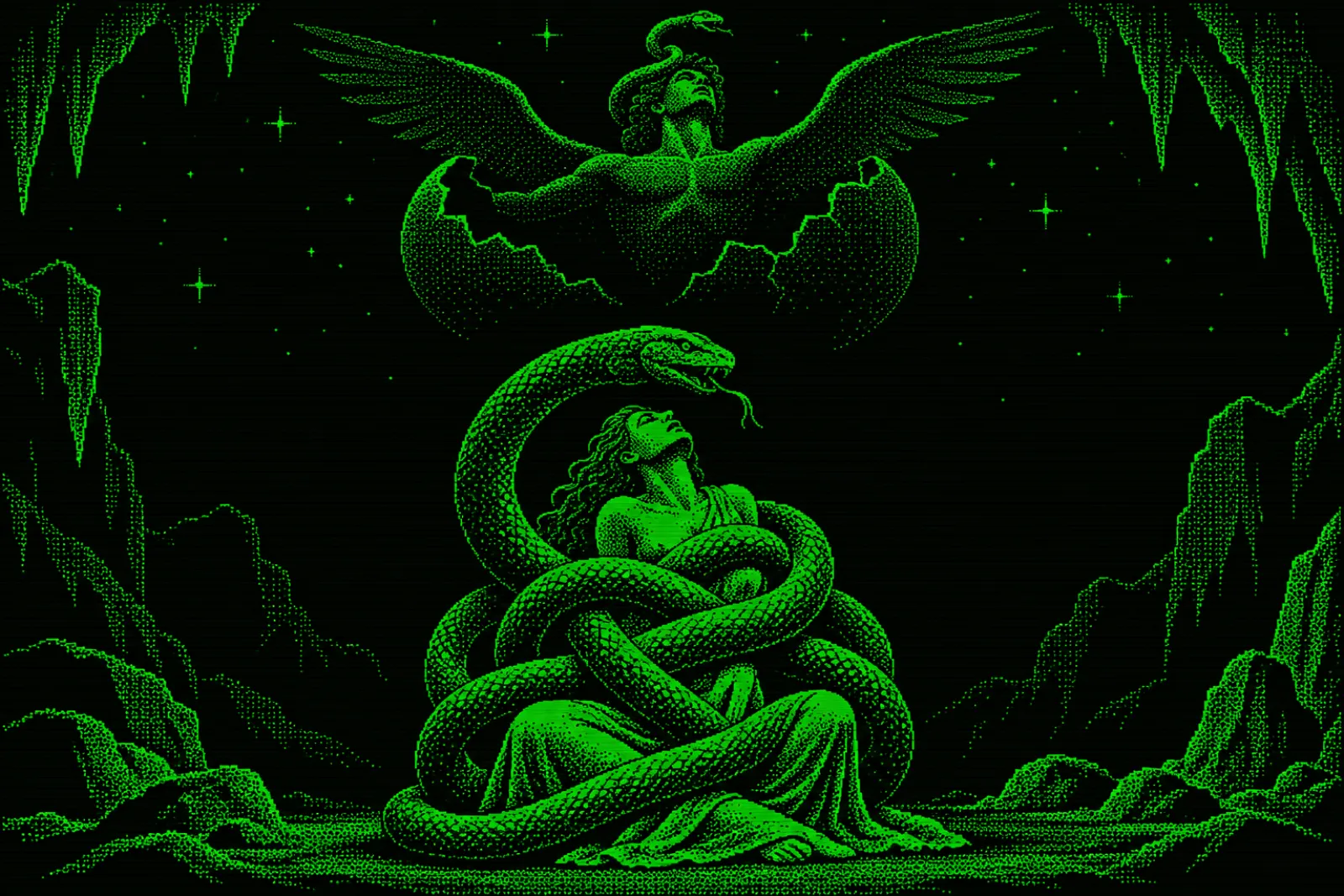 Orphic Fragments: Zeus the Serpent, Rhea and Persephone
The Orphic serpent fragments in English from the Greek: Zeus as a snake rapes his mother Rhea and his daughter Persephone, who bears Dionysus.
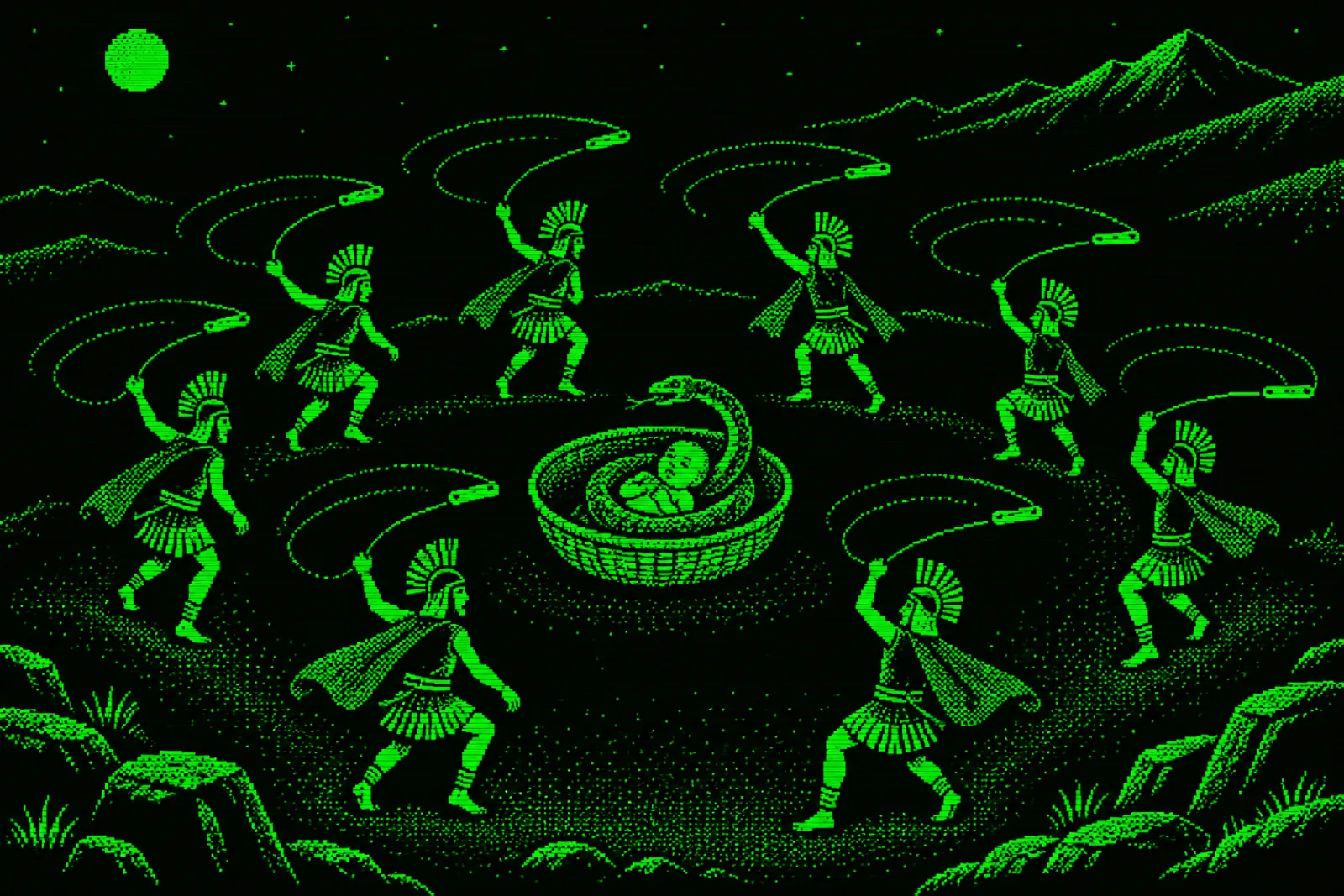 Orphic Hymns: The Serpent and the Bullroarer
Thirteen Orphic Hymns in English, line by line from the Greek: the rhombos-whirling Kouretes, the whirring First-born, the she-serpent, Sabazios.
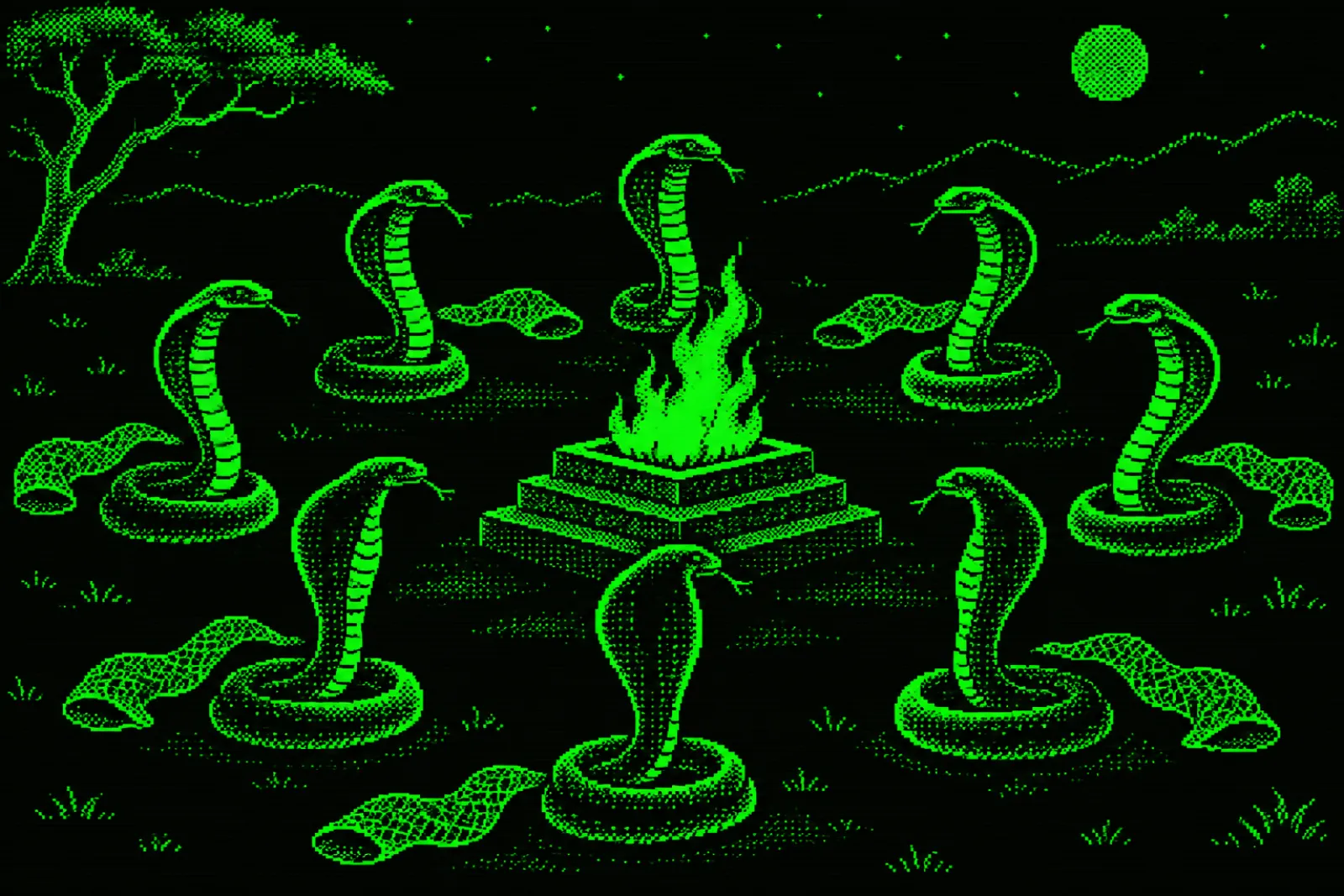 Pañcaviṃśa Brāhmaṇa 25.15: The Serpents' Session
Pañcaviṃśa Brāhmaṇa 25.15 in English, line by line from the Sanskrit: the serpents hold a year-long rite, conquer death and shed their skins.
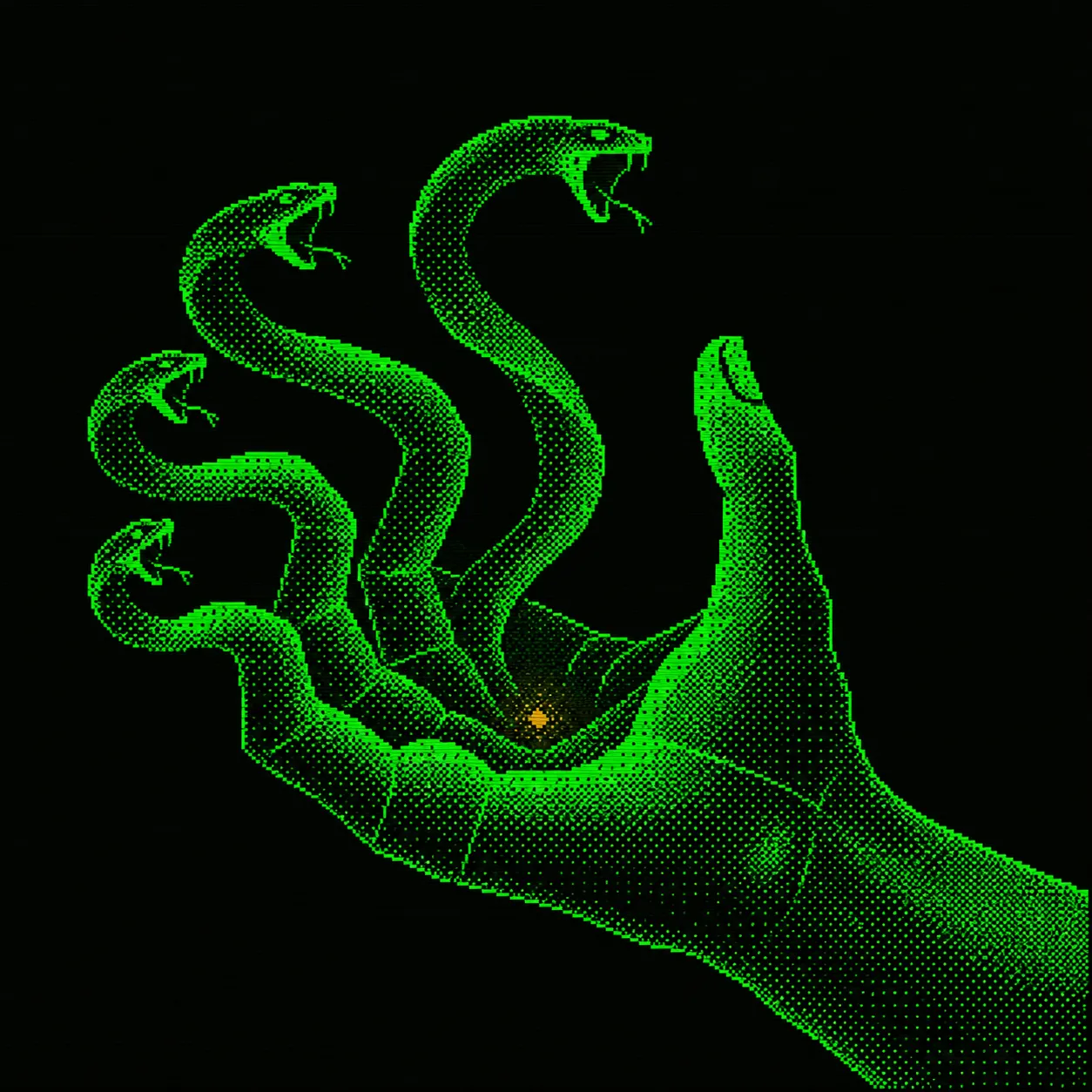 Papyrus Brooklyn 47.218.84: The God's Hand and Delta Myths
First English translation
The whole Delta myth papyrus in English from the Egyptian: Re's hand-vulva and serpent fingers, Osiris's incest, Seth's rapes and the Fucking Ba.
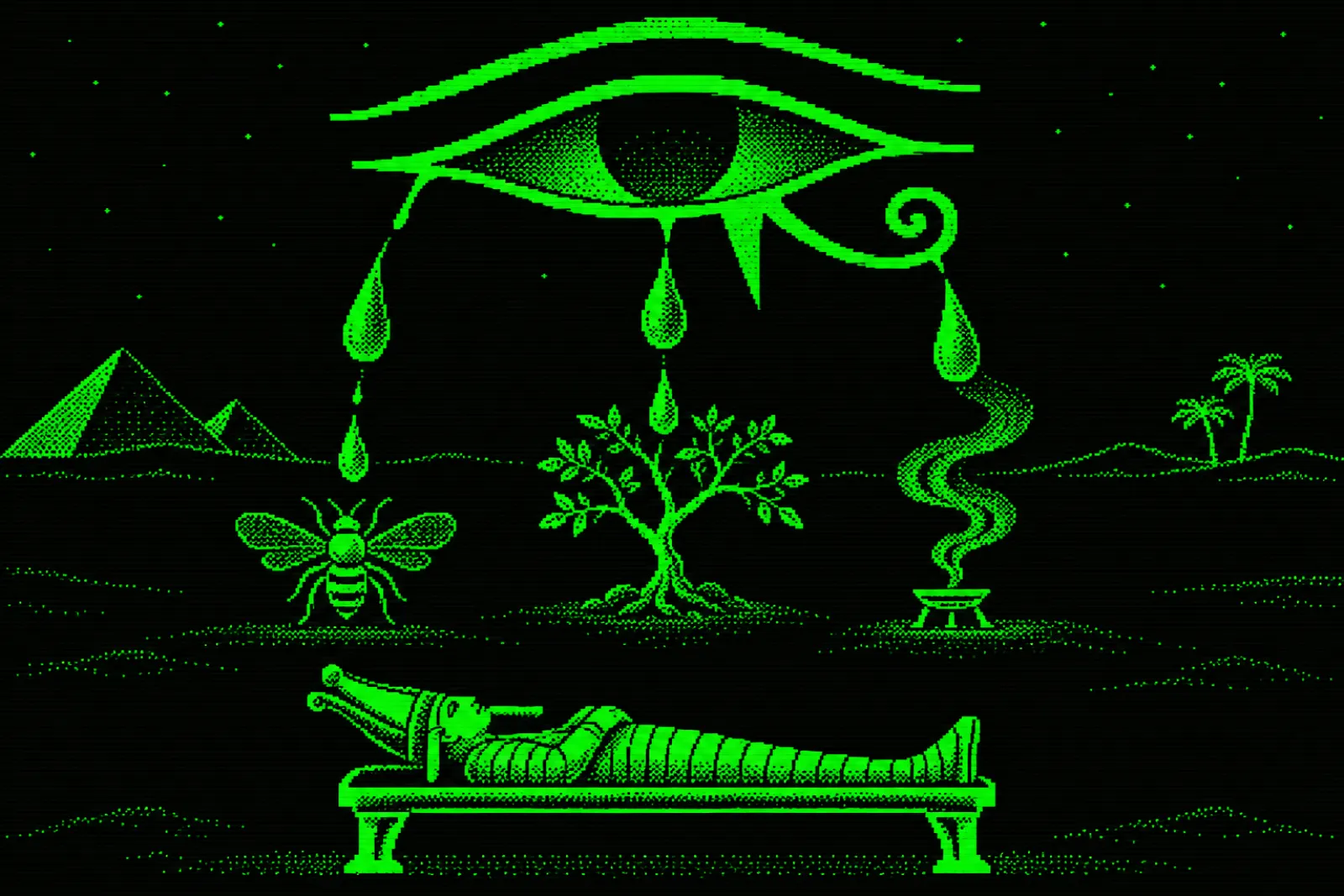 Papyrus Salt 825: Osiris, the Gods' Tears and the House of Life
Papyrus Salt 825 in English, line by line from the Egyptian: Osiris killed, the bee and incense born of the gods' tears, the secret House of Life.
 Pyramid Text 230: The Oldest Serpent Charm
Pyramid Text 230 in English, line by line from the Egyptian: Unas's serpent charm, c. 2350 BC, where the bite makes one and the look makes two.
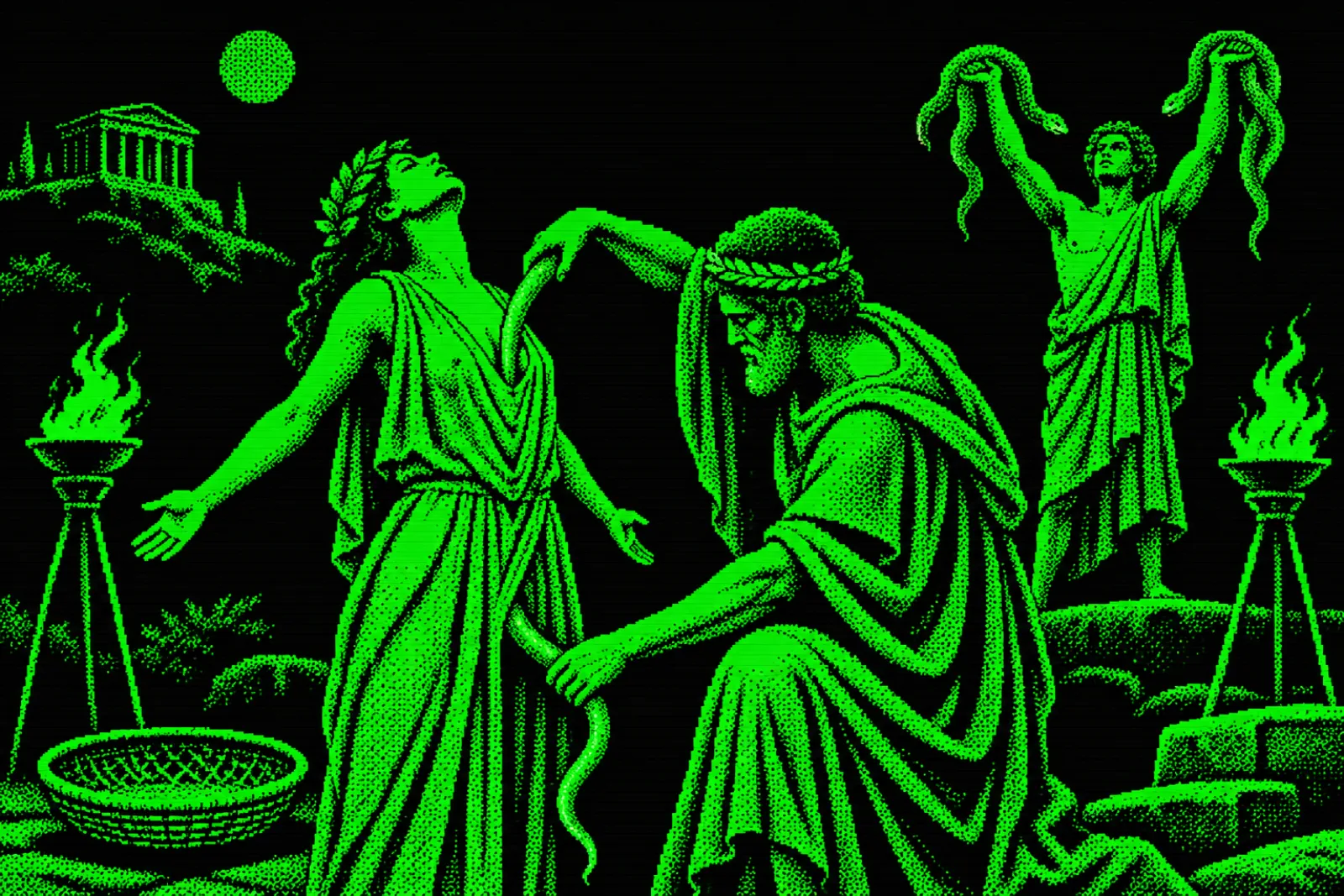 Sabazios Dossier: The God Through the Lap
The ancient witnesses to the Sabazian rite, in English from Greek and Latin: snakes swung overhead, the bull-serpent password, the snake through the lap.
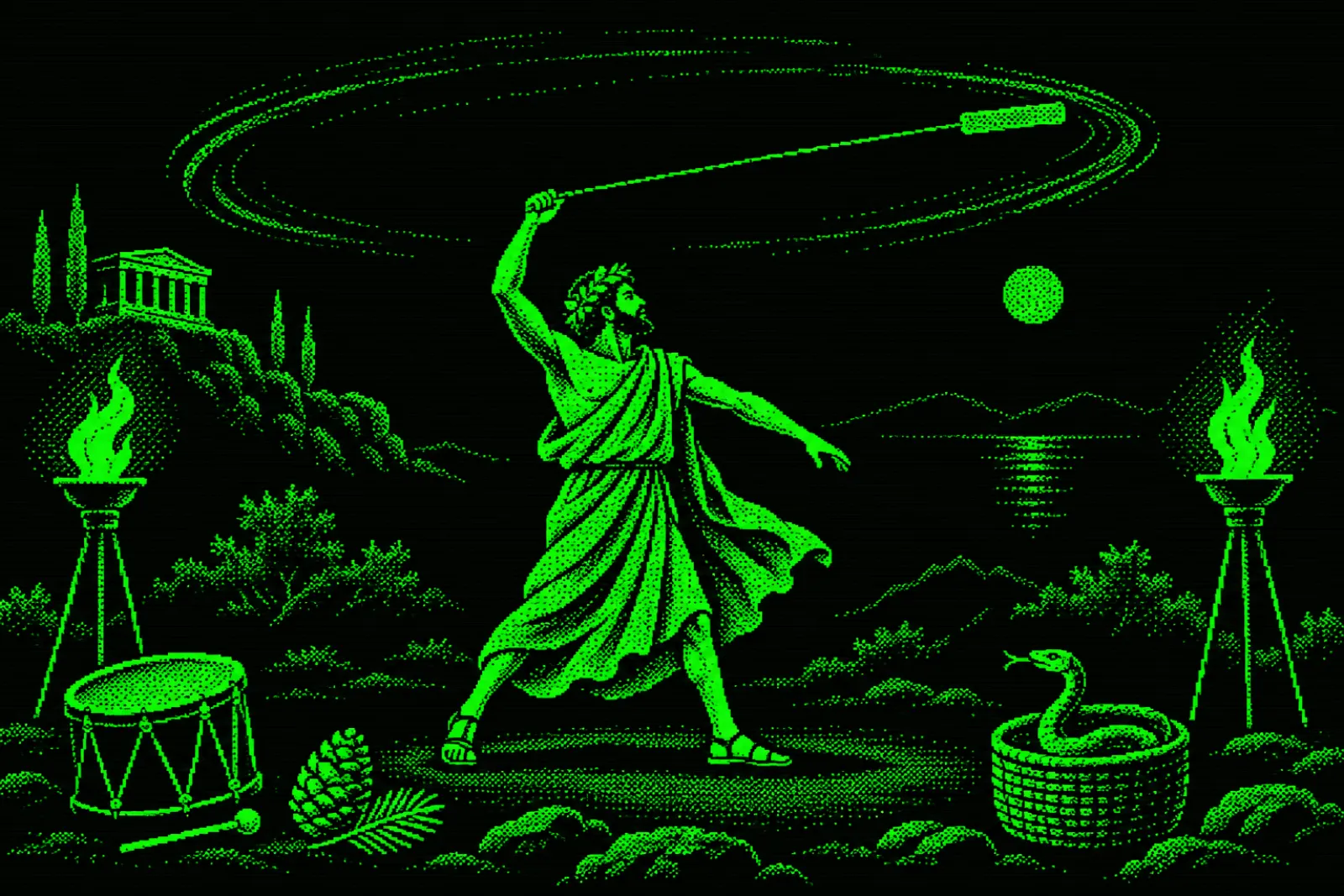 Scholia on Clement: The Mysteries Glossed
The Byzantine scholia on Clement's attack on the Greek mysteries, in English from the Greek: the whirled bullroarer, the phallus, Attis, Baubo.
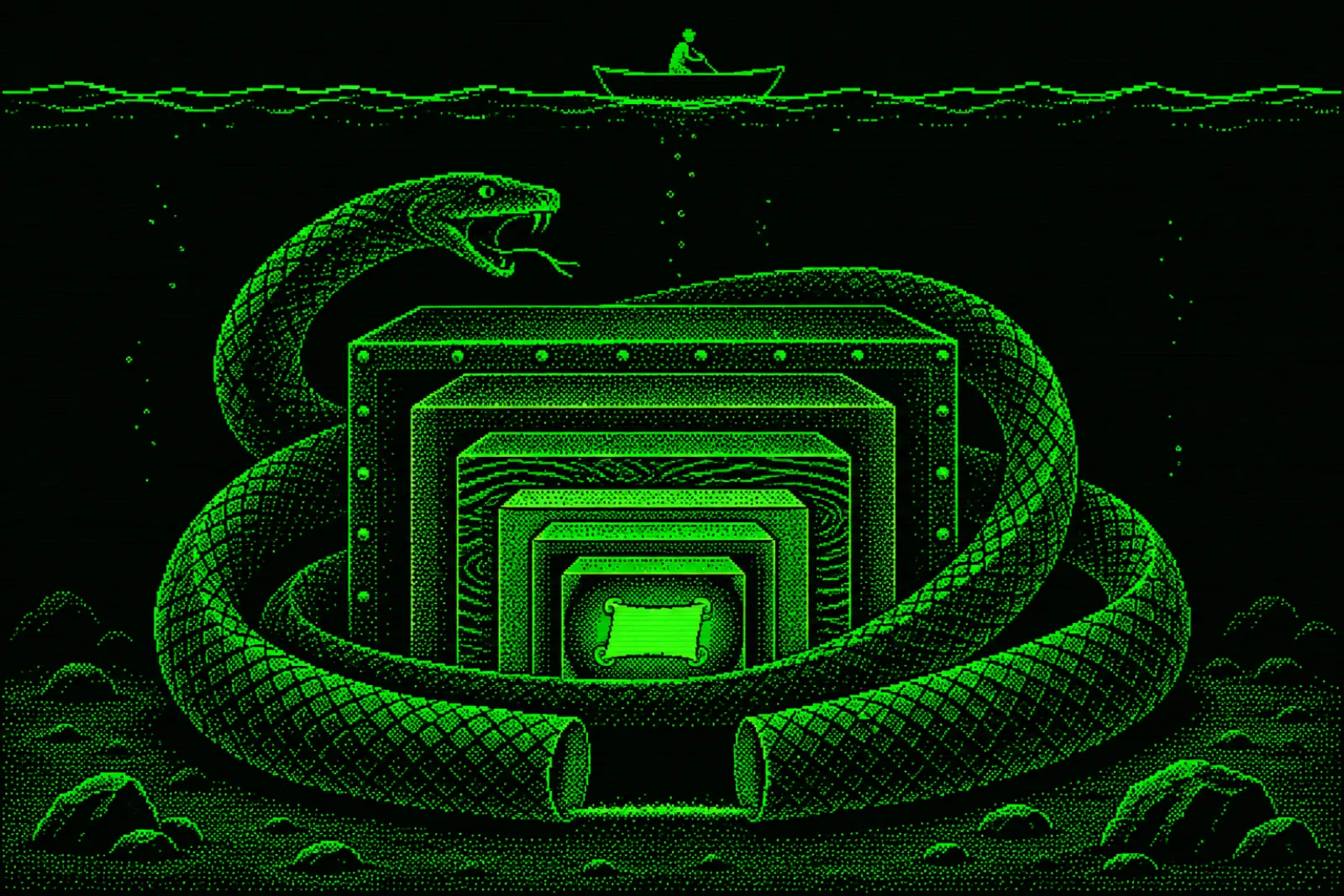 Setne Khamwas I: The Deathless Serpent and the Book of Thoth
The serpent episode of the Demotic tale of Setne, line by line from the original: the Book of Thoth, the serpent that will not stay dead, the drownings.
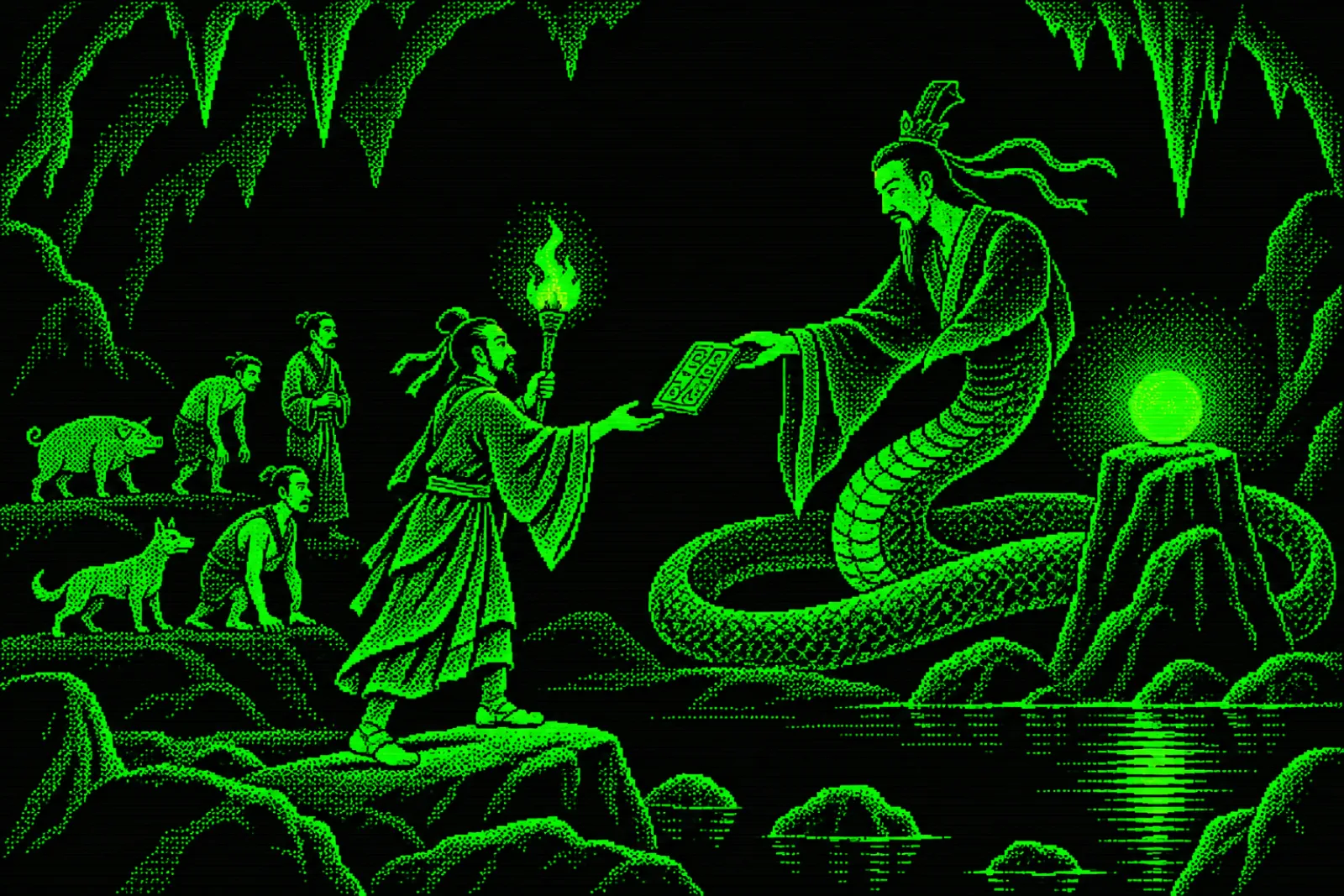 Shiyi ji, Books 1–2: Yu Meets the Snake-Bodied Fuxi
Wang Jia's Shiyi ji, books 1–2, in English line by line from the Chinese: Fuxi born of a rainbow, Yu the Great meeting the snake-bodied Fuxi in a cave.
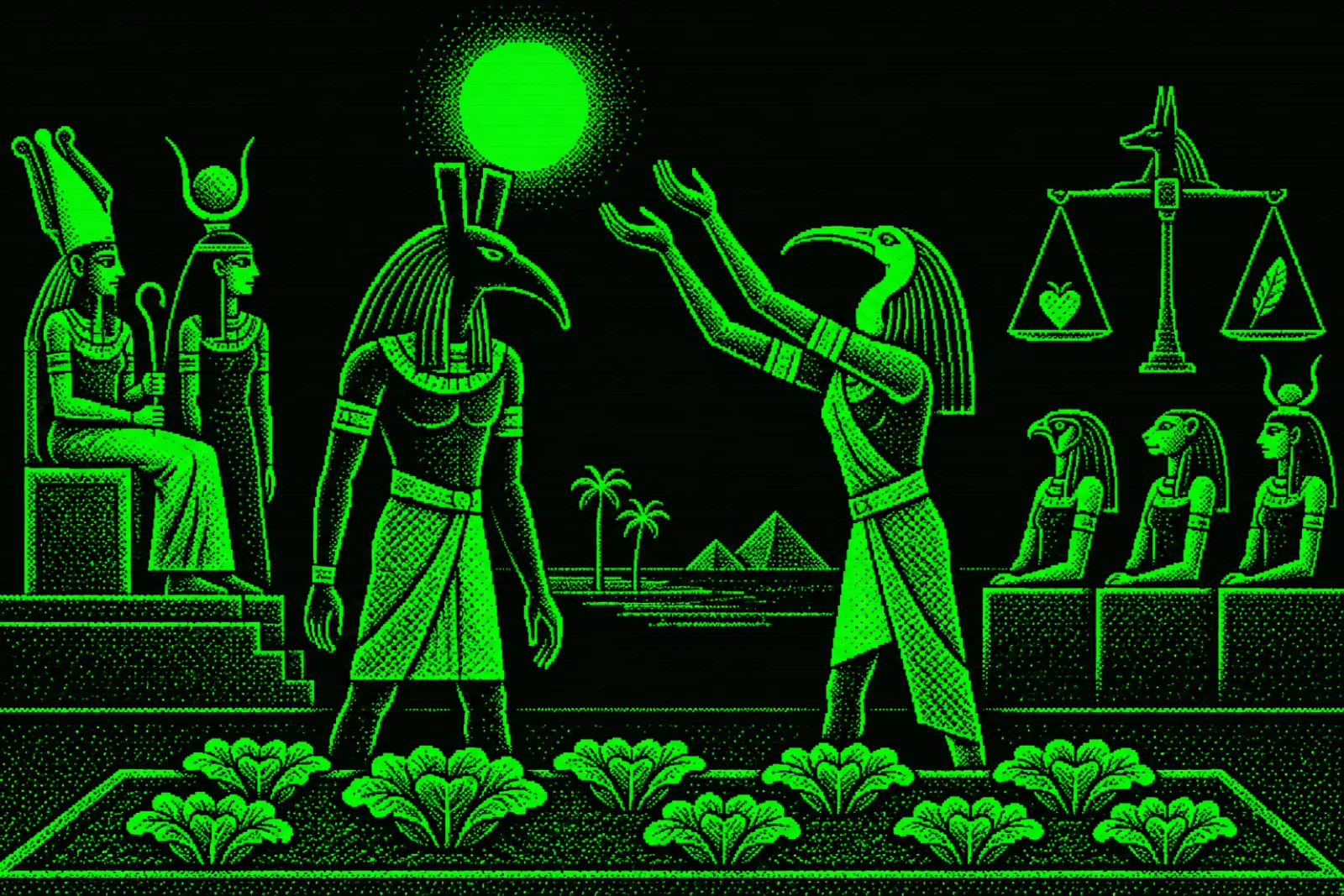 The Contendings of Horus and Seth: The Trial for the Throne of Osiris
The Contendings of Horus and Seth, line by line from the Egyptian: Hathor's vulva, the semen in Horus's hands, the lettuce, the disc on Seth's head.
 The Hipponion Gold Tablet: The Lake of Memory
The Hipponion gold tablet in English, line by line from the Greek: c. 400 BC, a guide for the dead to the lake of Memory and the road of the bacchoi.
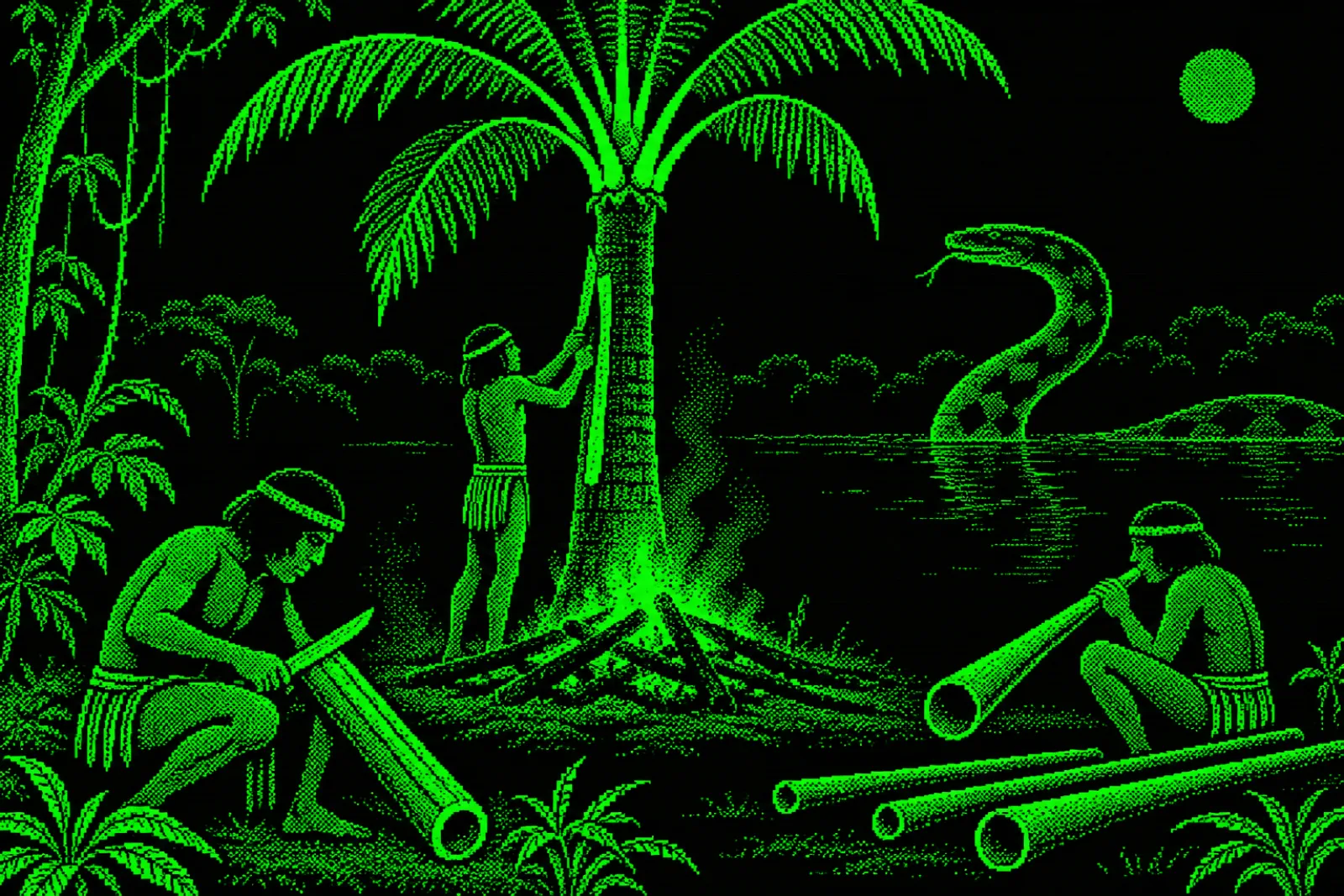 The Legend of Jurupary: The Flutes Women Must Never See
Stradelli's 1890 legend of Jurupary from the Vaupés, in English: women ruled first, a virgin conceived by a fruit, and flutes no woman may see and live.
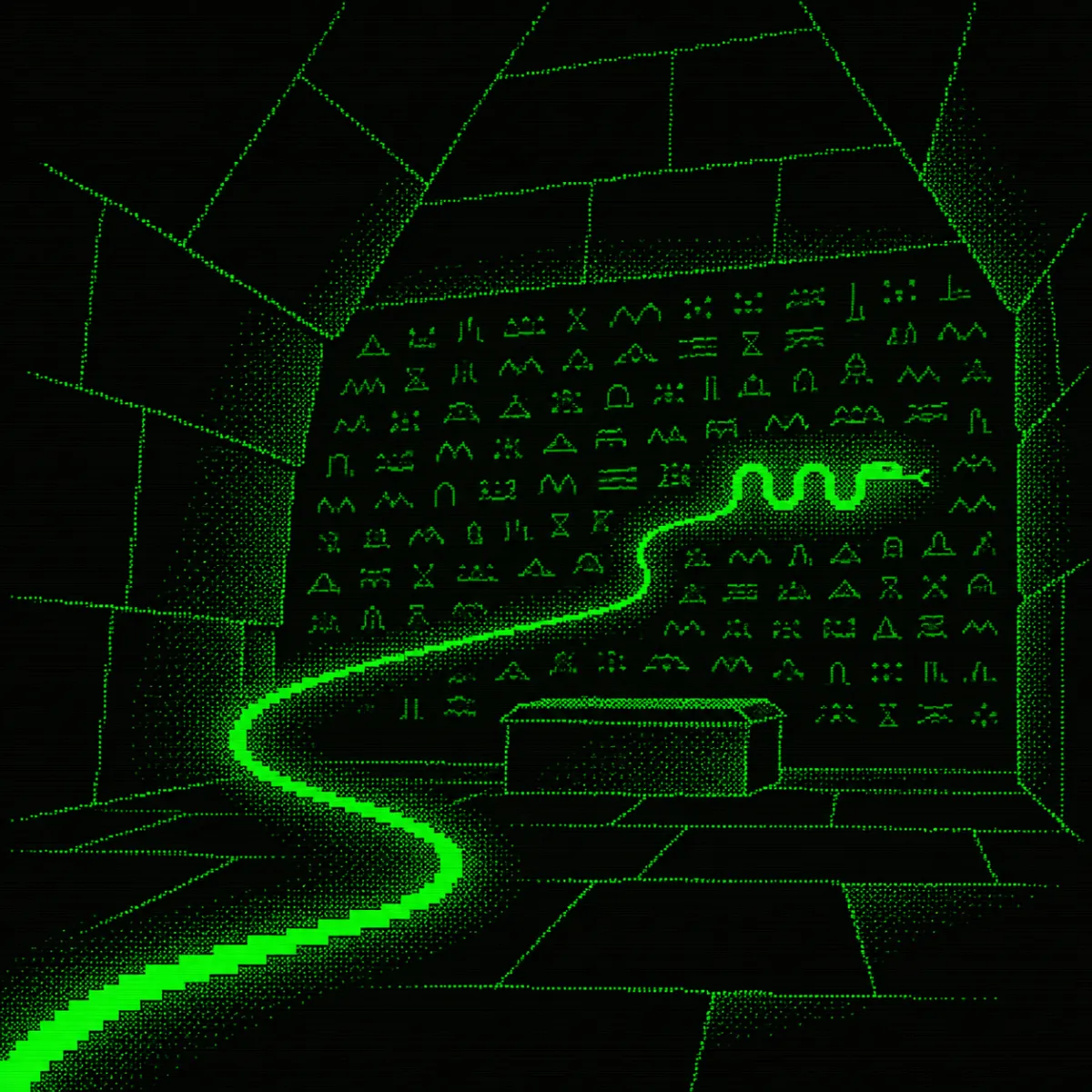 The Mother Snake Spells: Semitic in the Pyramid Texts
The Semitic serpent spells of Unas, c. 2350 BC, line by line: Mother Snake Rīr-Rīr, whose name is venom, speaks, takes a lover, and enters the king.
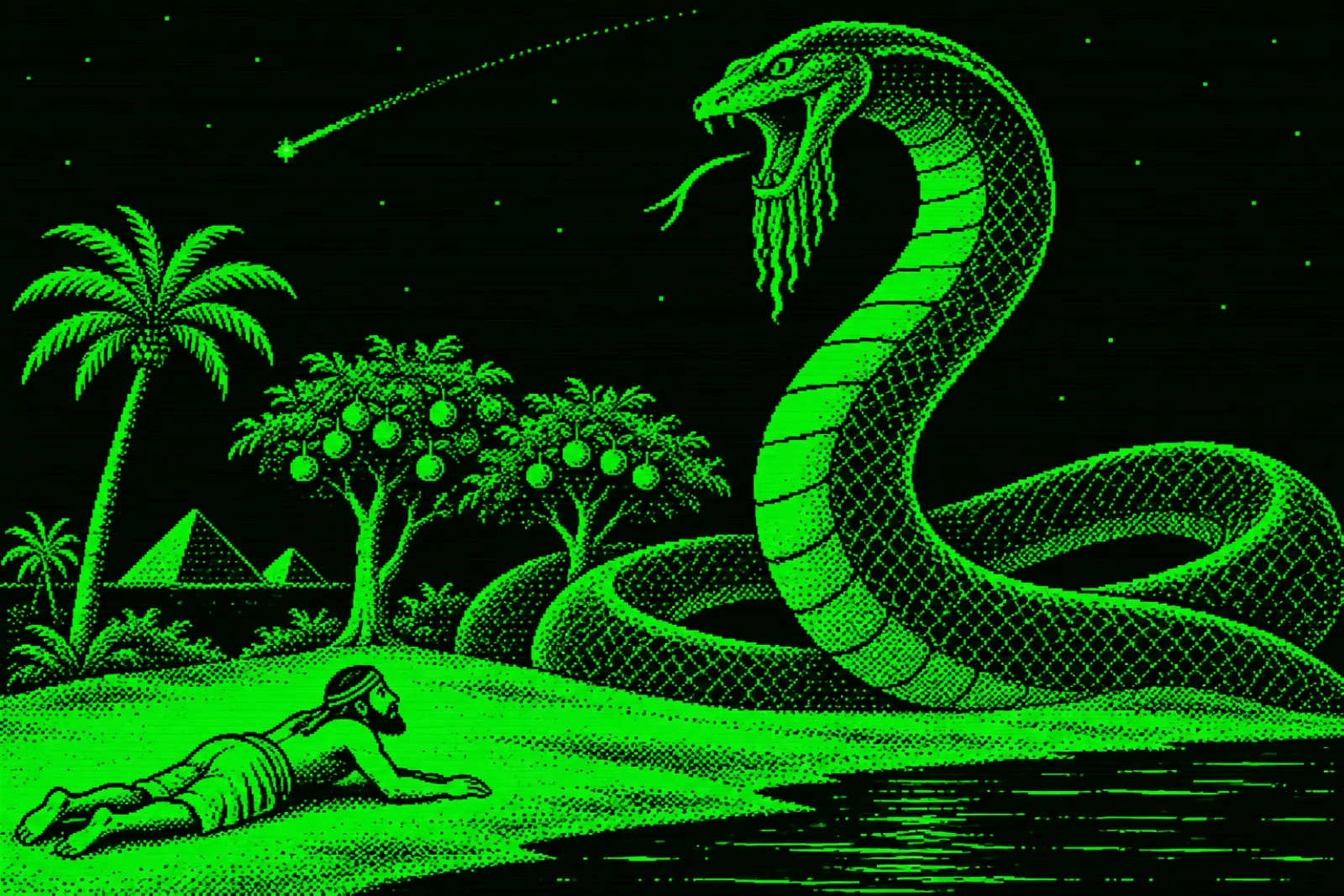 The Shipwrecked Sailor: The Serpent of the Island of the Ka
The Tale of the Shipwrecked Sailor in English, line by line from the Egyptian: the golden serpent, “know yourself”, the falling star, the island of the ka.
 The Tale of the Two Brothers: Anubis, Bata and the Heart on the Tree
The Egyptian Tale of the Two Brothers in English, line by line from the Late Egyptian: the seduction, the castration, the heart on the tree, the bull.
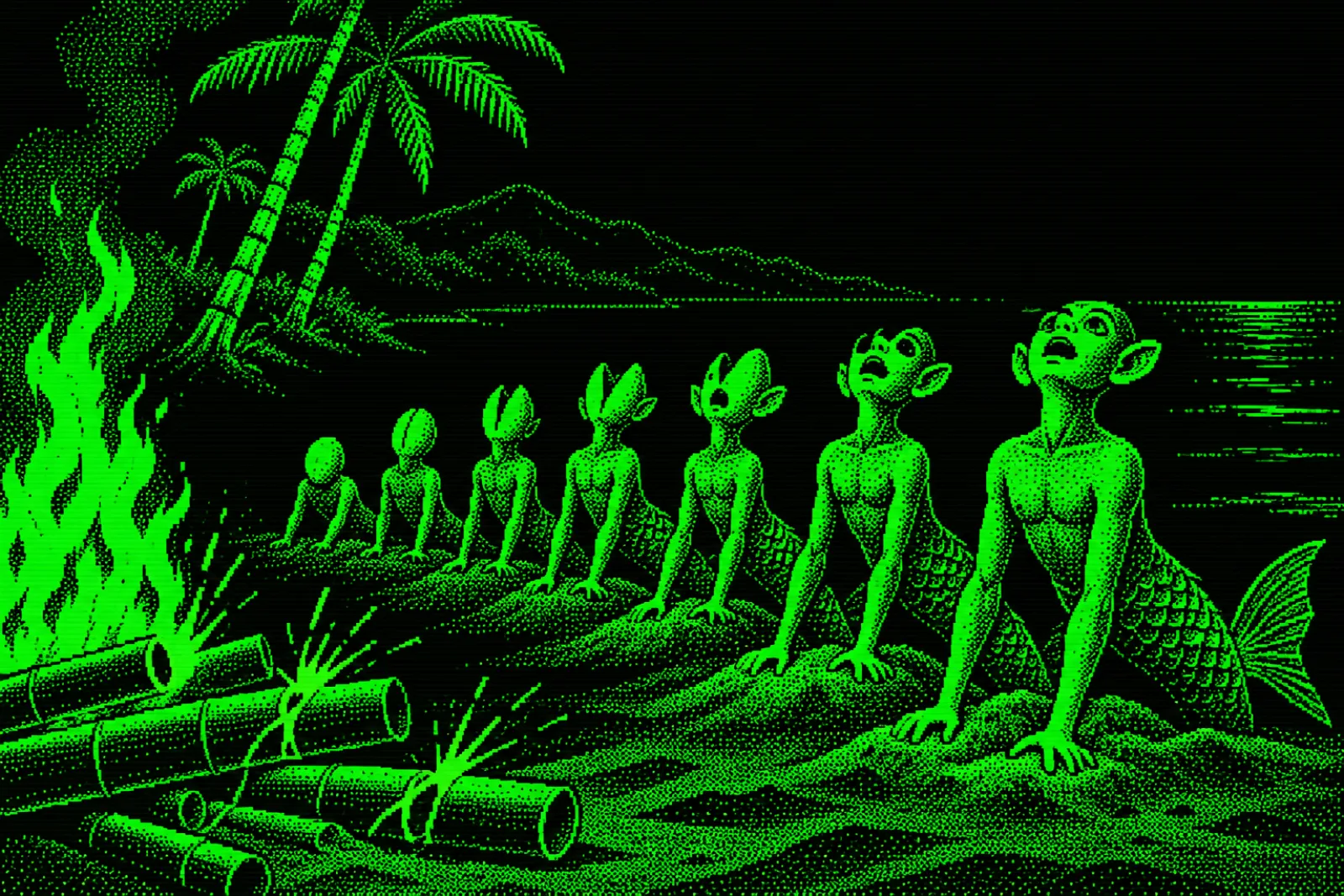 Wirz, Marind-anim Dema Myths: The First People Opened
Paul Wirz's 1922 Marind-anim dema myths in English: the Kondo emergence, senses opened by bursting bamboo, fire from copulation, Sóbra.