Edfu Building Texts: The Primeval Island of the Falcon
The Edfu temple’s record of the first island, in English line by line from the hieroglyphs: the Shebtiw, the reed perch of the falcon and the Ka.
~/topics/creation-myths
Browse all tags · Search articles
The Edfu temple’s record of the first island, in English line by line from the hieroglyphs: the Shebtiw, the reed perch of the falcon and the Ka.
Mašya and Mašyānē in English, line by line from the Pahlavi Bundahišn and Zādspram: the rhubarb twins, the Lie, the food, the skins, the eaten children.
Neith’s creation of the world, from the temple of Esna, in English line by line from the Egyptian: a goddess names the gods, and Apophis comes from her.
Enlil and Ninlil, whole, line by line from the Sumerian: the mother’s warning, the rape by the river, the god banished as impure, four sons conceived.
Enki and Ninmah, whole, line by line from the Sumerian: man made from clay for the gods’ basket, a contest over beer, Enki’s child born of semen.
The Sumerian paradise myth, line by line from the Sumerian: Enki’s semen, four generations of incest, the eaten plants, the Lady of the Rib.
Two Coffin Texts spells in English, line by line from the Egyptian: the creator speaks from inside the Coiled One, and the dead call the serpent brother.
An Egyptian creation myth, line by line from the original: the creator masturbates, spits out Shu and Tefnut, and makes people and snakes.
The Book of the Heavenly Cow in English, line by line from the Egyptian: mankind slaughtered, the red beer, Re’s ascent, the snakes of the earth.
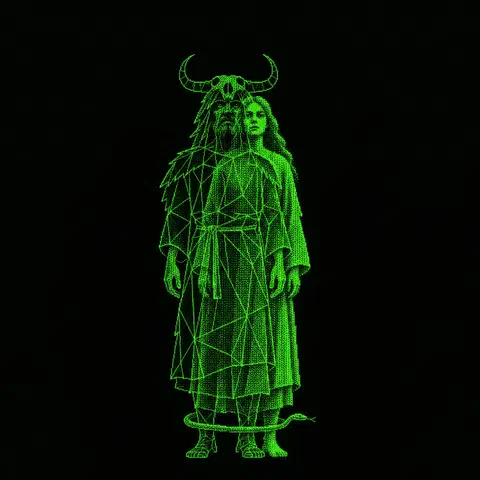
The dualist legends of Adam in English from Latin and Slavonic: Satan shapes the clay, riddles it with holes, and has Eve through the serpent.
Mani’s Adam in English from the Syriac and Middle Persian: begotten by a demon who ate the young, woken by Jesus the Splendour, he curses his maker.
Witzel’s Origins of the World’s Mythologies posits one inventor whose story spread worldwide. Make the shaman a woman and the date later: Memetic Eve.
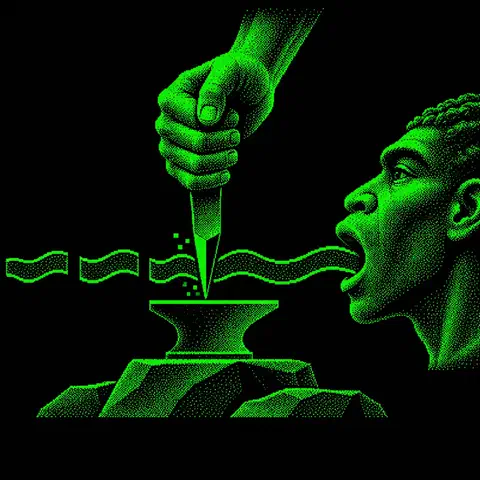
Myths of mute first humans, from the Luiseño and the Yi to Horace and the Dogon: the first people could not speak, and speech was given, taught or shocked loose.
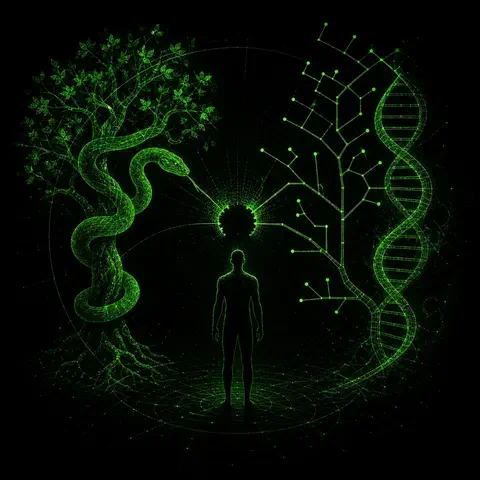
Modernity has genealogy but no creation myth. EToC reunites Darwinian continuity with the mythic birth of the reflective human self.
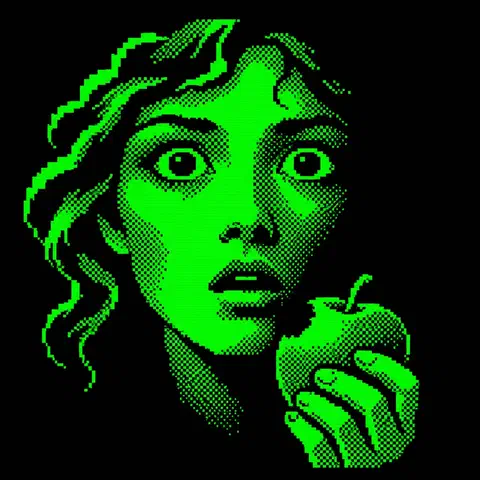
A companion to Eve Theory of Consciousness: reading seven mythic women as convergent cultural memory of the first self-aware rupture—knowledge, shame, death, and world-making.
A deep reading of the Hopi emergence myth—Spider Grandmother, Masau’u, the sipapu—mapped to the Eve Theory of Consciousness, with primary-source quotes and correspondence tables.
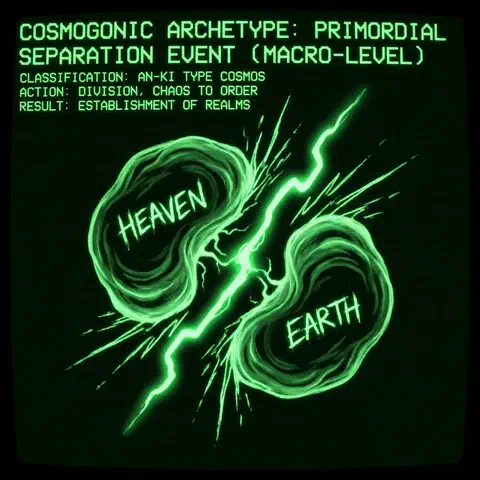
A comprehensive exploration of the mythic motif of Heaven and Earth being severed or separated, as seen in ancient Hurro-Hittite epics and other world creation myths.
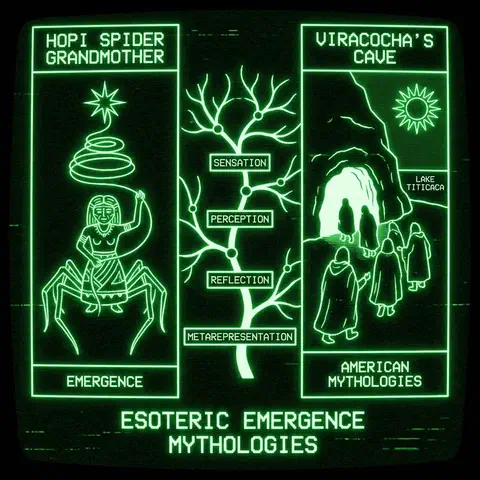
From Hopi sipapus to Andean caves, New‑World creation stories mirror the moment ‘Eve’ first looked back at herself.
A philological and comparative deep dive into the famous opening of the Babylonian Enūma Eliš and its theology of naming.
Comparative analysis of Eurasian ‘fall from grace’ myths suggesting a common proto-myth originating in the Paleolithic or early Holocene.