Hercules Before the Greeks
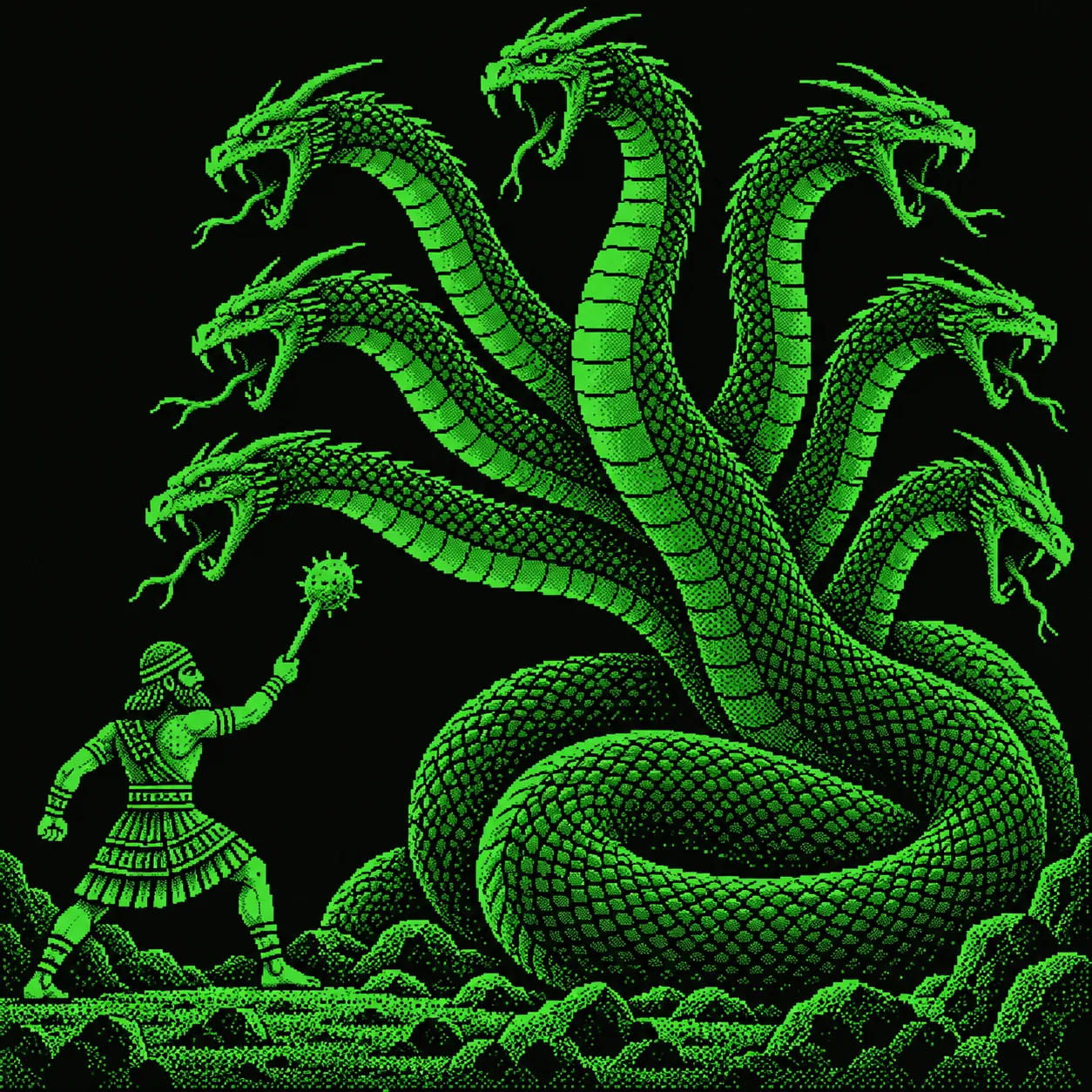
Hercules had older Near Eastern counterparts. Ninurta, a seven-headed serpent, and Phoenician Melqart reveal how a Greek hero acquired his inheritance.
~/topics/comparative-mythology
Browse all tags · Search articles
Hercules had older Near Eastern counterparts. Ninurta, a seven-headed serpent, and Phoenician Melqart reveal how a Greek hero acquired his inheritance.
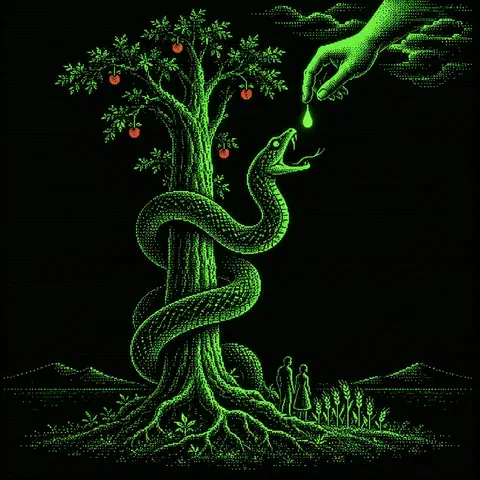
In a Bassar Eden, God gives the snake medicine. Nearby Tim serpent shrines join first fruits, fertility, initiation and pearl-millet farming.
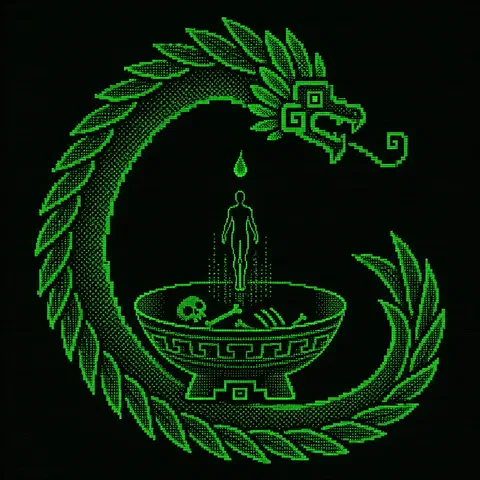
Quetzalcoatl’s descent, revival, and blood offering preserve an initiatory account of humanity: bodies become people through the Snake Cult’s ritual of death and rebirth.
Serpent founders from China to Cambodia, Mesoamerica, Africa, Greece, and Australia connect ancestry, marriage, ritual law, and sovereignty.
An interactive myth lab. Change the model, move the root, and explore what comparative mythology can—and cannot—tell us about origins.
Why Eve Theory of Consciousness better explains recursive selfhood, myth, ritual, and gene–culture evolution than Julian Jaynes.
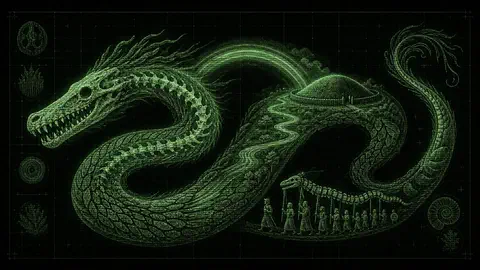
Fifteen dragon-origin theories—from giant snakes and ritual dances to rainbows, fossils, and predator fear—tested against their sources.
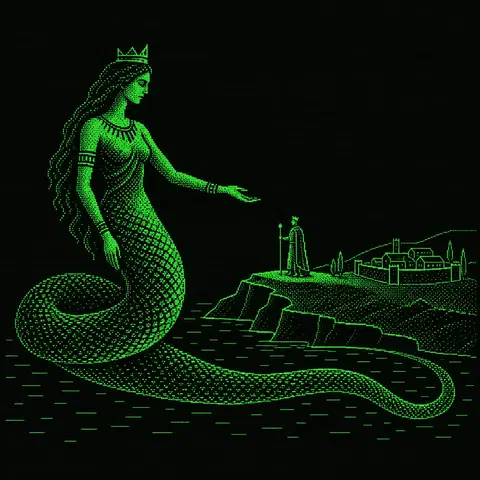
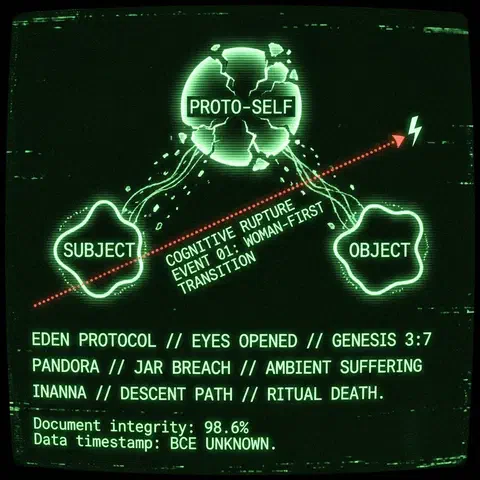
A companion to Eve Theory of Consciousness: reading seven mythic women as convergent cultural memory of the first self-aware rupture—knowledge, shame, death, and world-making.
A deep reading of the Hopi emergence myth—Spider Grandmother, Masau’u, the sipapu—mapped to the Eve Theory of Consciousness, with primary-source quotes and correspondence tables.
Exploring the hypothesis that the Chinese mother goddess Nüwa preserves a cultural memory of end-Ice Age floods and the dawn of self-aware human consciousness.
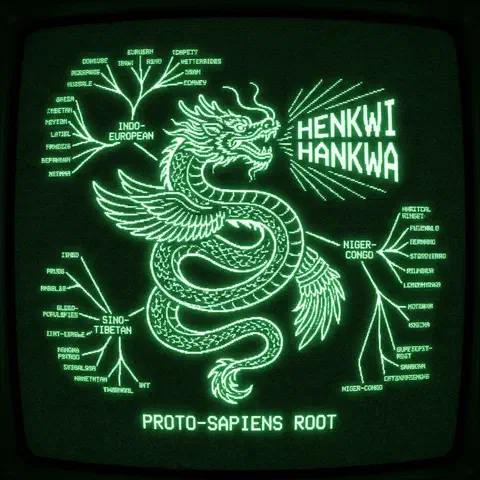
Commentary on Nicolas Bruneteau’s Proto-Sapiens glossary, focusing on the globally persistent roots hankwa (breath, life) and henkwi (snake, dragon).