Global Archaeological Appearances and Theoretical Explanations of the Swastika
Survey of the swastika's ancient global presence and theories (diffusion vs. independent invention) explaining its origins and spread.
Browse all tags · Search articles
Survey of the swastika's ancient global presence and theories (diffusion vs. independent invention) explaining its origins and spread.
A comprehensive analysis of the Sapient Paradox, synthesizing archaeological findings (tools, art, burials) with paleogenetics (brain-related gene sweeps, population bottlenecks) to evaluate theories for the delayed emergence of behavioral …
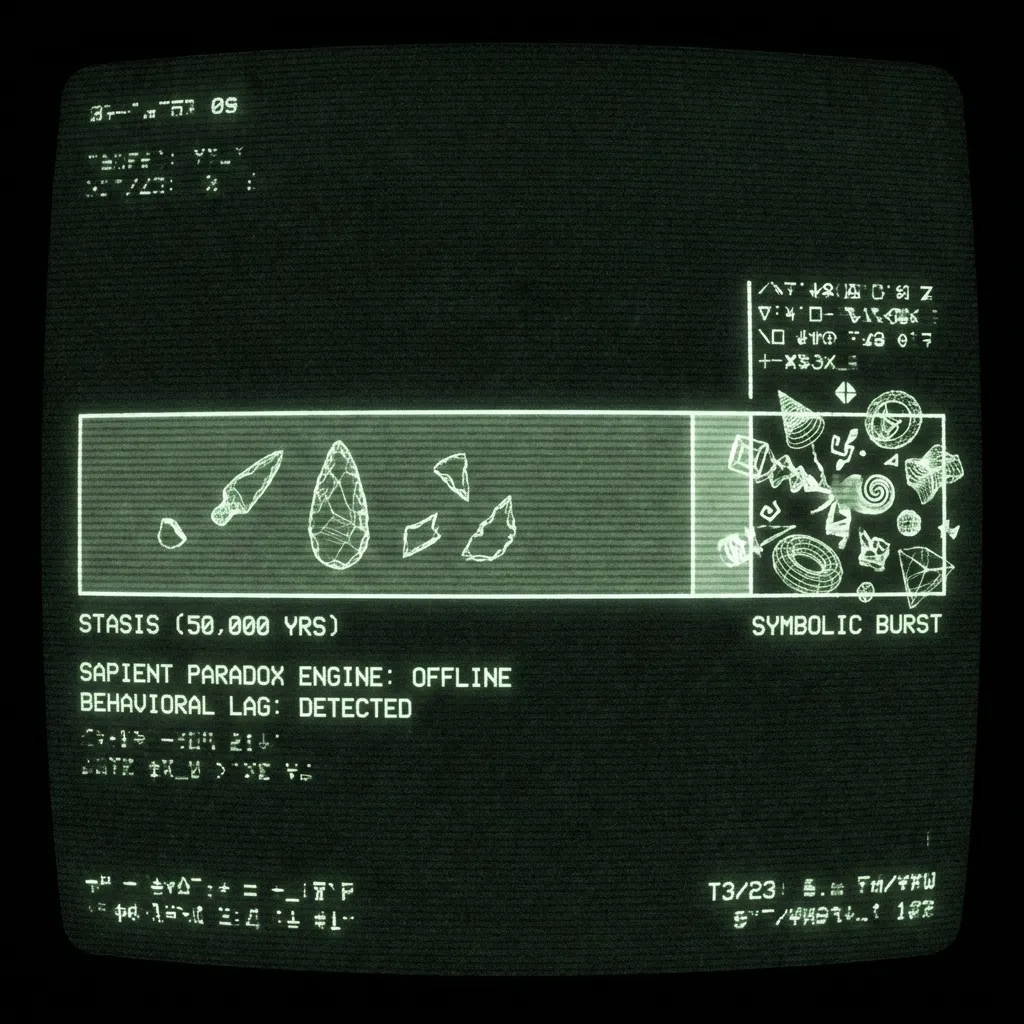
A concise overview of the Sapient Paradox – the puzzling gap between when anatomically modern humans appeared and when behaviorally modern traits (like art, complex tools, symbolism) emerged.
Comparison of the early Holocene emergence of the Aboriginal Dreamtime symbolic system with the Near East's Neolithic 'revolution of symbols,' examining Australian rock art, technology, exchange networks, language diffusion, and cognitive …
Examining the archaeological record of Australia (Sahul) – early colonization, persistent simple technologies, late emergence of complex art – as a key case study supporting the Sapient Paradox and the late development of behavioral …
A comprehensive analysis of evidence and scholarly debate surrounding pre-Columbian trans-oceanic contact between the Americas and Old World civilizations.
A comprehensive survey of the earliest complex tools made by early humans, from hafted axes and spears to bows, woodworking implements, and symbolic artifacts, examining archaeological evidence and scholarly debates.
A stricter audit of the archaeological record that only counts true symbols-ritual burial and figurative art-and shunts beads, ochre crayon-shavings, and doodles to the kiddie table.