African Pearl Millet Was Not an Independent Invention
Munson named the pearl millet diffusion route in 1976. The oldest domesticated grain turned up there in 2011, weakening the independent-invention case.
Browse all tags · Search articles
Munson named the pearl millet diffusion route in 1976. The oldest domesticated grain turned up there in 2011, weakening the independent-invention case.
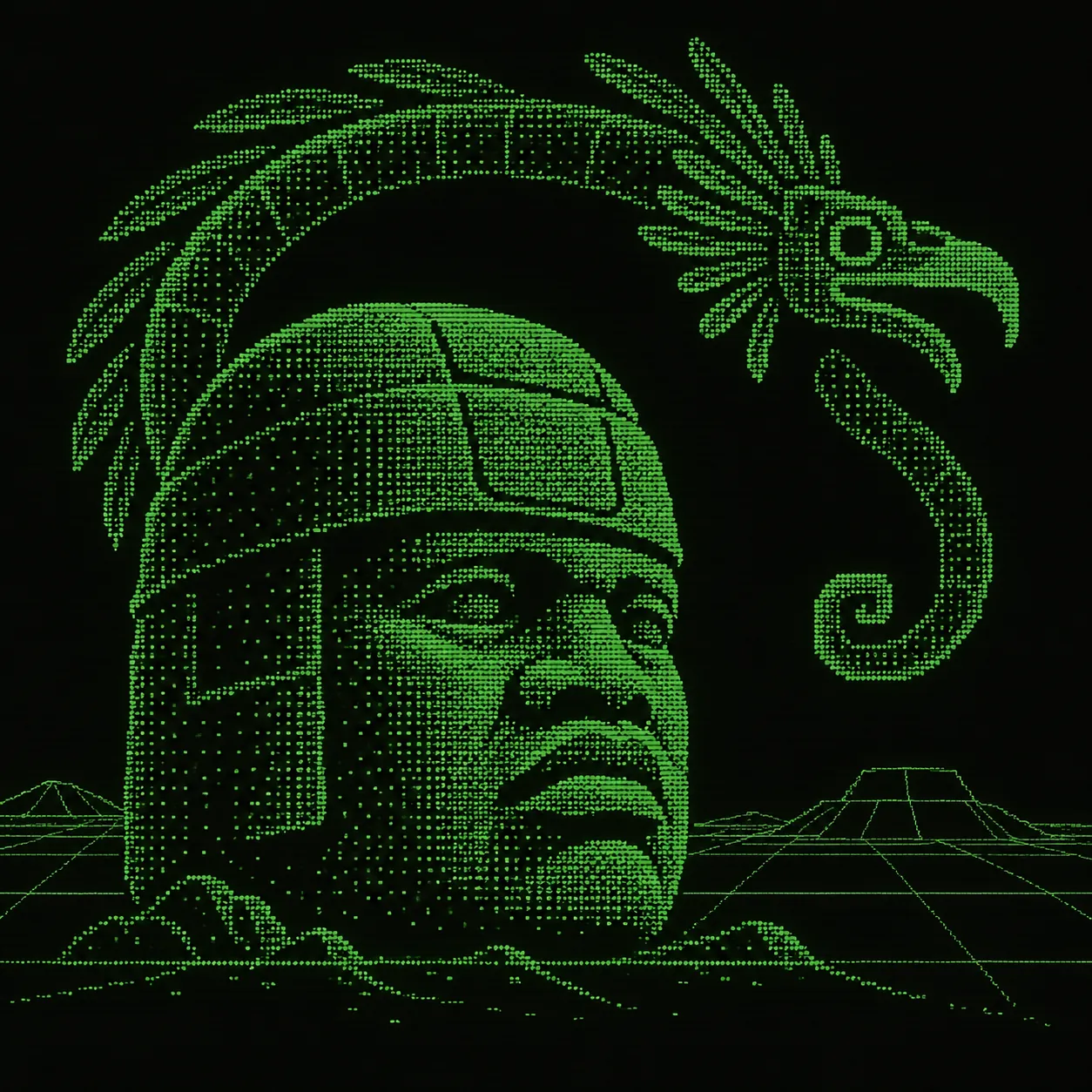
What remains mysterious about the Olmecs, and why their bird-serpent is probably an ancestor of the later Quetzalcoatl tradition.
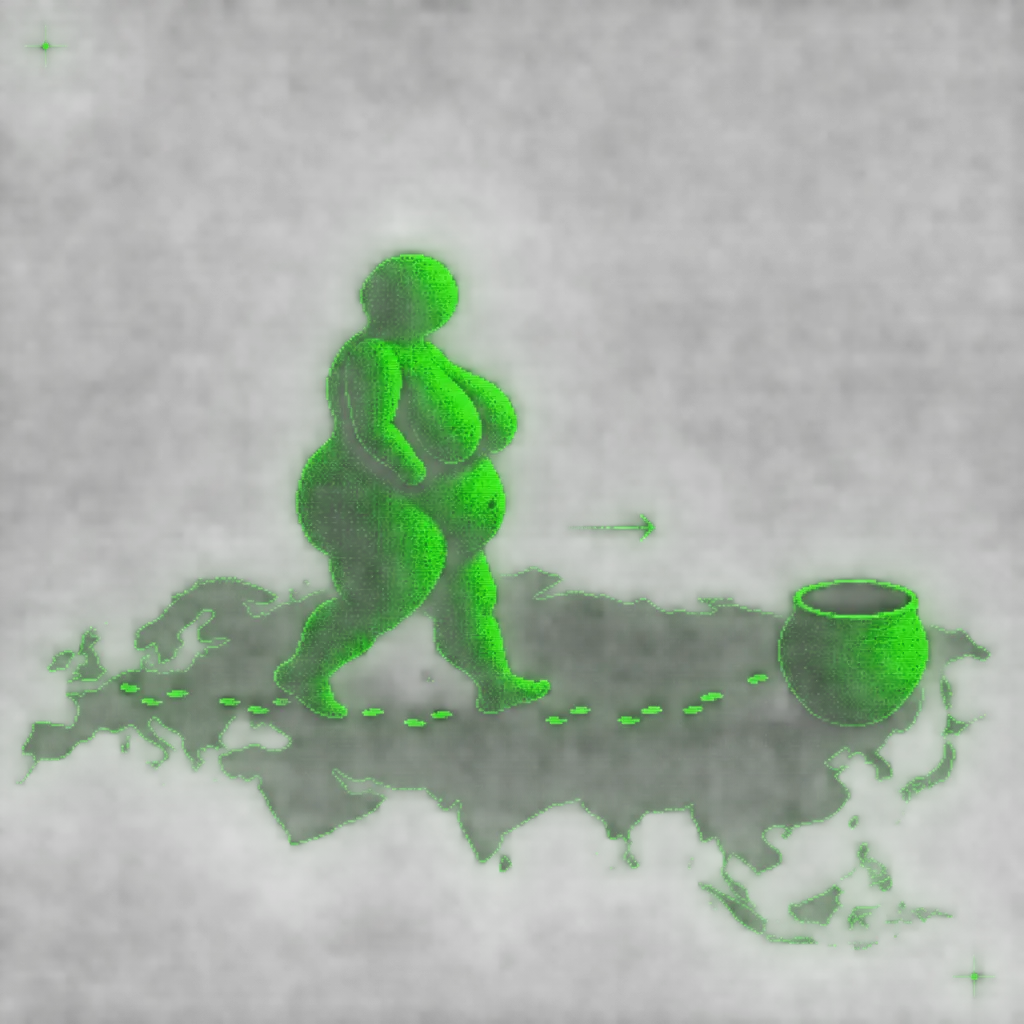
Venus figurines and East Asian pottery share a deeper history: clay, fire, and the transmission of a craft that learned to make bodies before bowls.
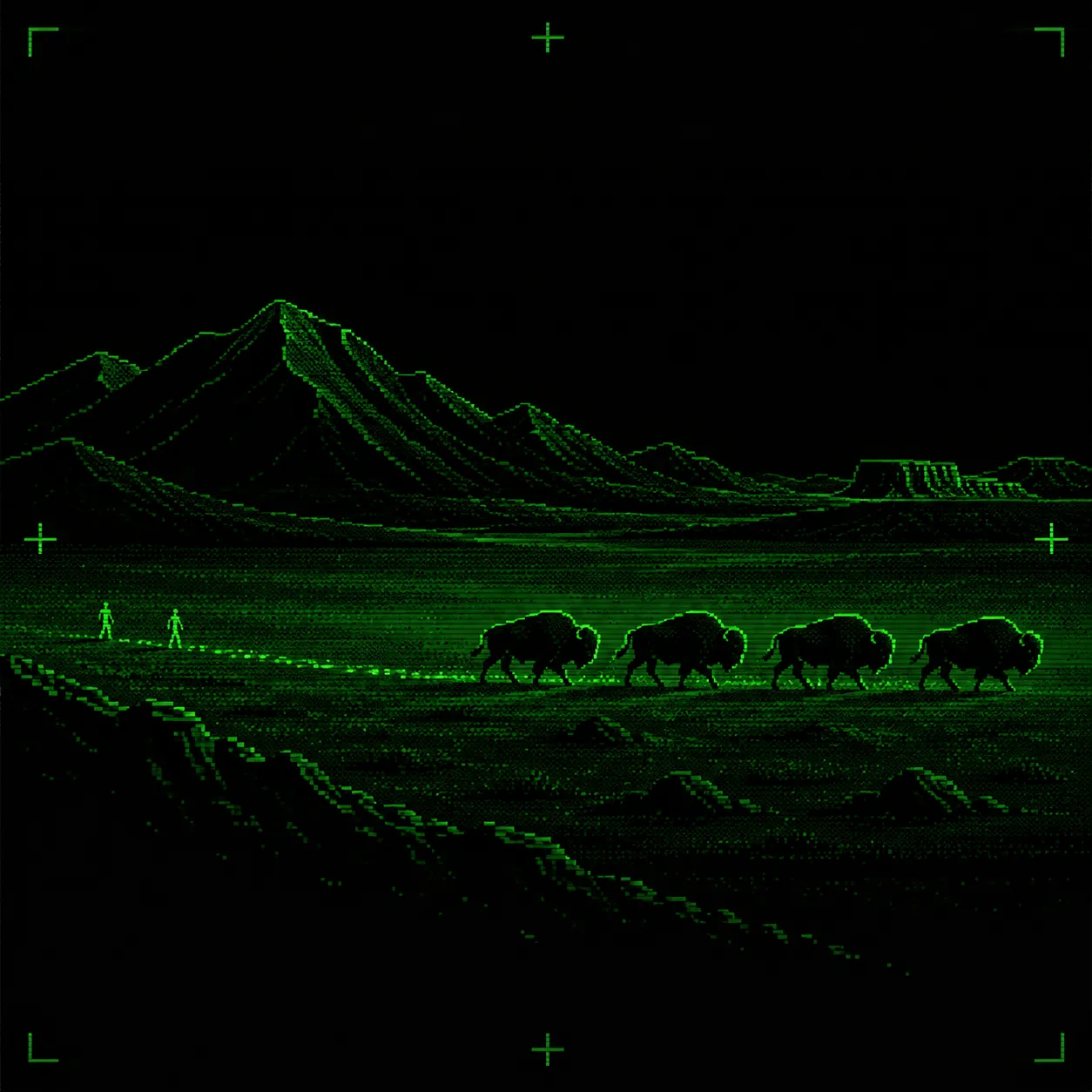
Pre-sapient humans in America: the case for sparse, technologically simple hominin arrivals long before Clovis and the faint traces they might have left.
The Hamitic hypothesis as cultural diffusion: how imported livelihoods, scriptures, and learned traditions became foundations of African cultures.
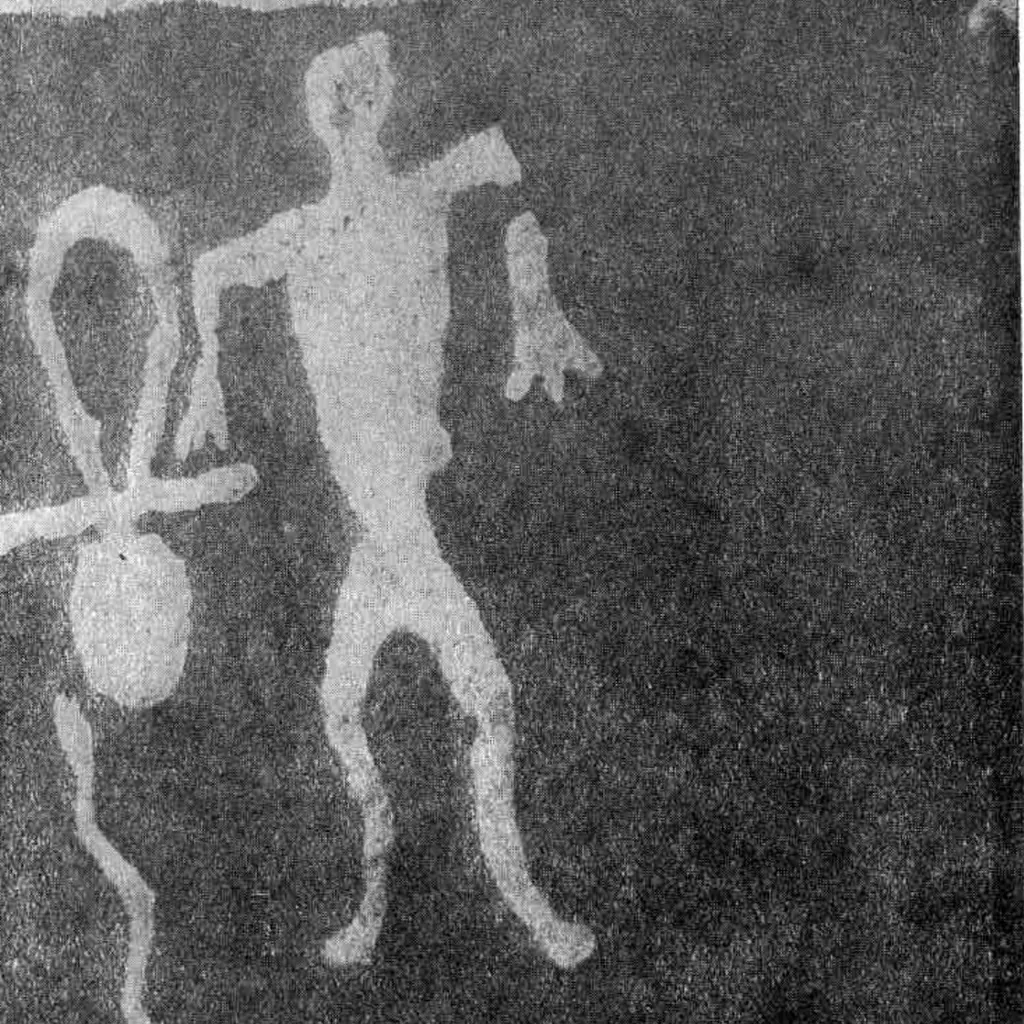
A Neolithic White Sea petroglyph looks uncannily like an Egyptian ankh, and the archaeologist who published it in 1938 noticed the resemblance.
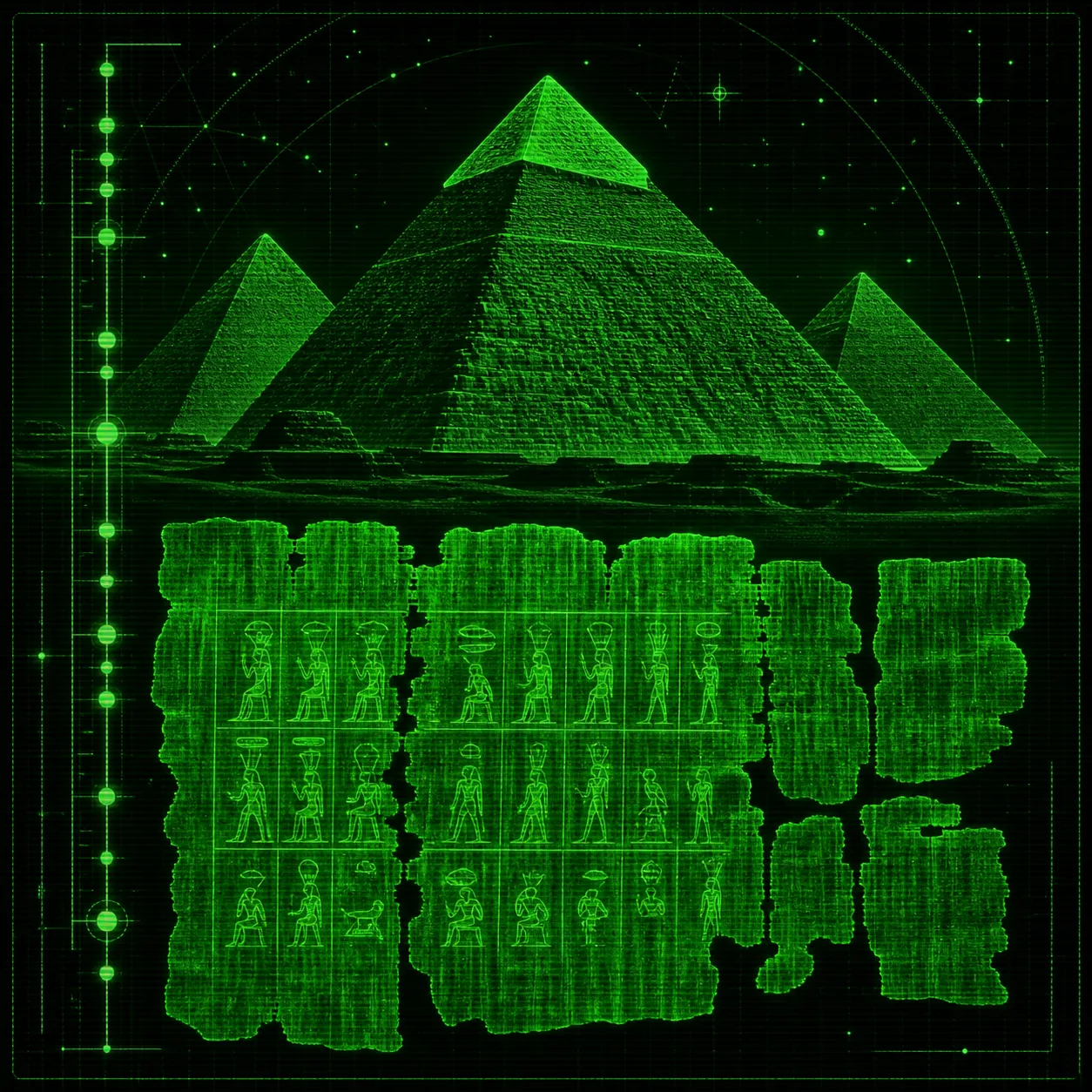
An Egyptian king list from the divine dynasties through Menes to Cleopatra VII, with Manetho's and Turin's pre-Menic reign totals dated under stated assumptions.
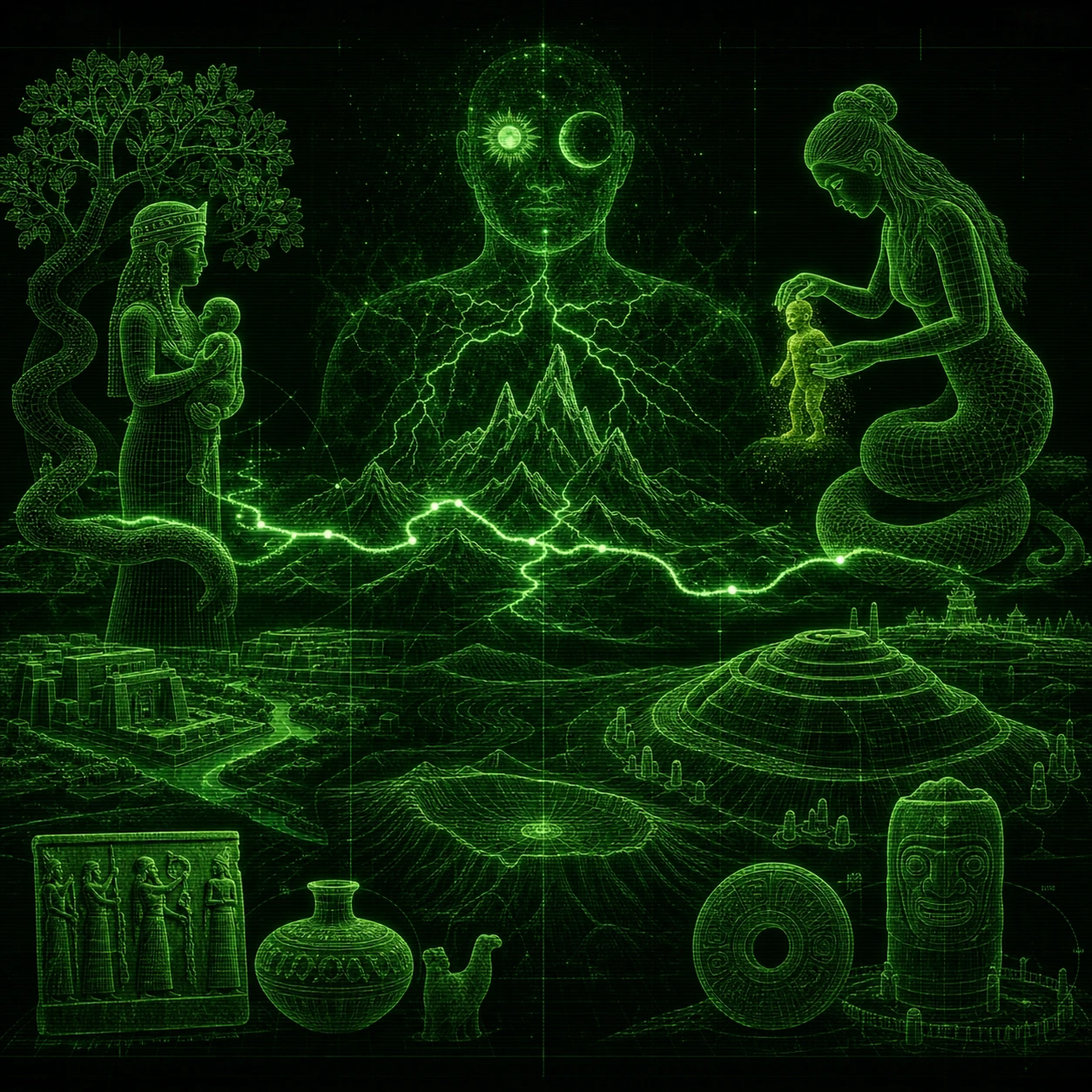
Nüwa, Eve, Pangu, and Purusha preserve a creation package that moved east through the same Eurasian roads as wheat, chariots, metals, and glass.
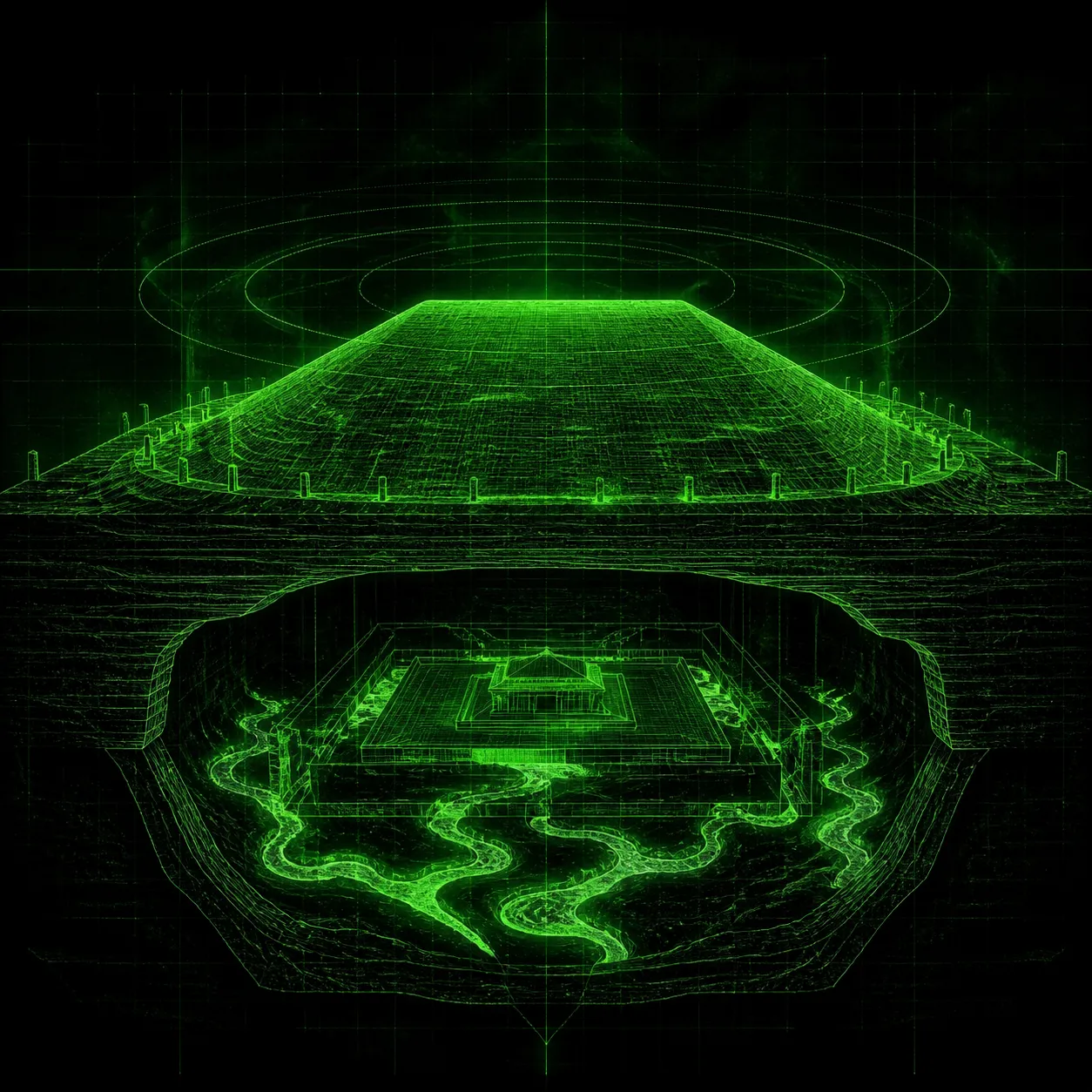
Mercury vapor over the First Emperor's mound points to a sealed chamber, and Qin's painted warriors show how fast exposure could destroy what survives inside.
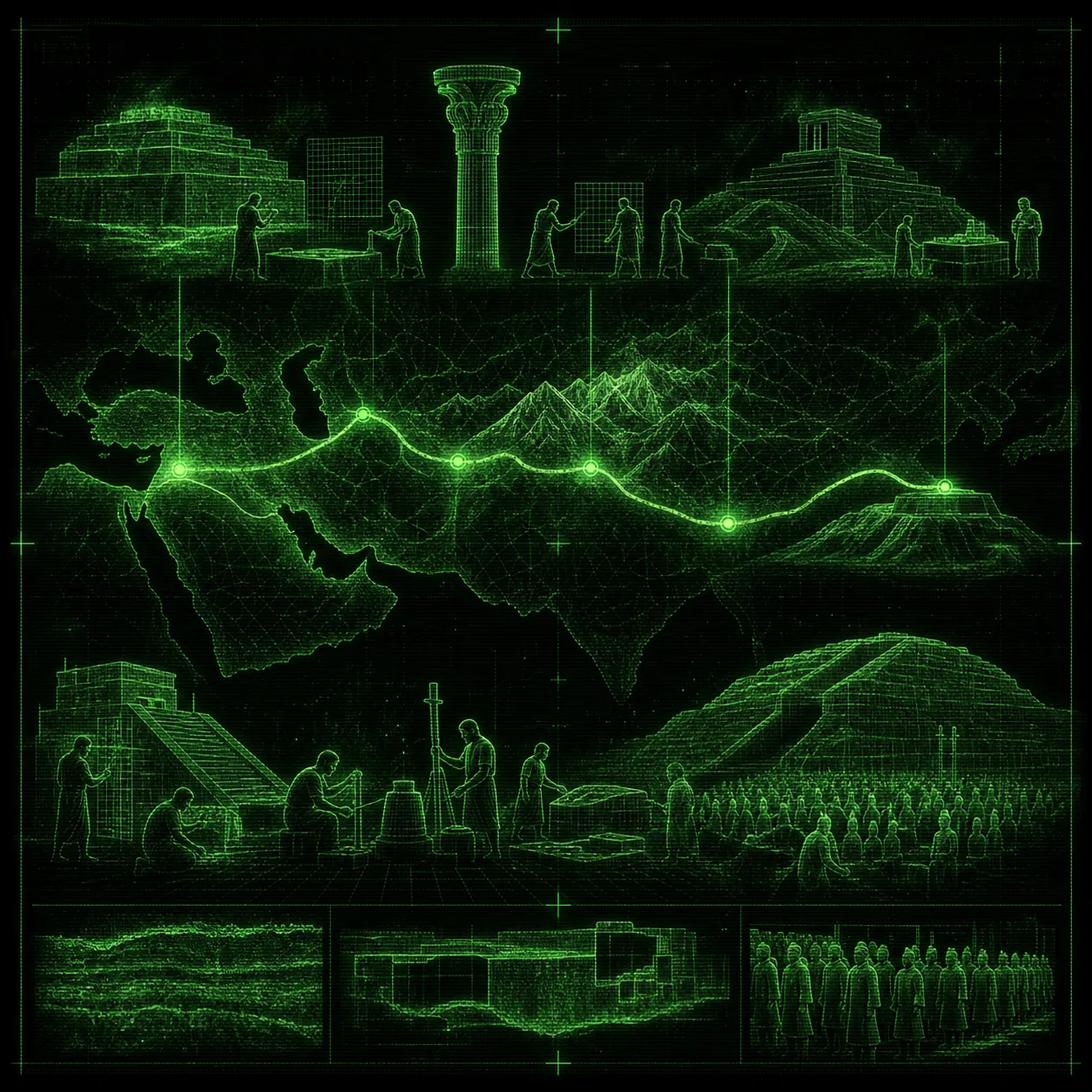
The Terracotta Army's giants trace a western royal tradition from Sumer and Egypt through Persia and Central Asia into Qin China.
Niuheliang's Goddess Temple and stepped earth-and-stone altar mound are the best candidate for the Neolithic cult behind Nüwa, China's ancestral mother and creator.
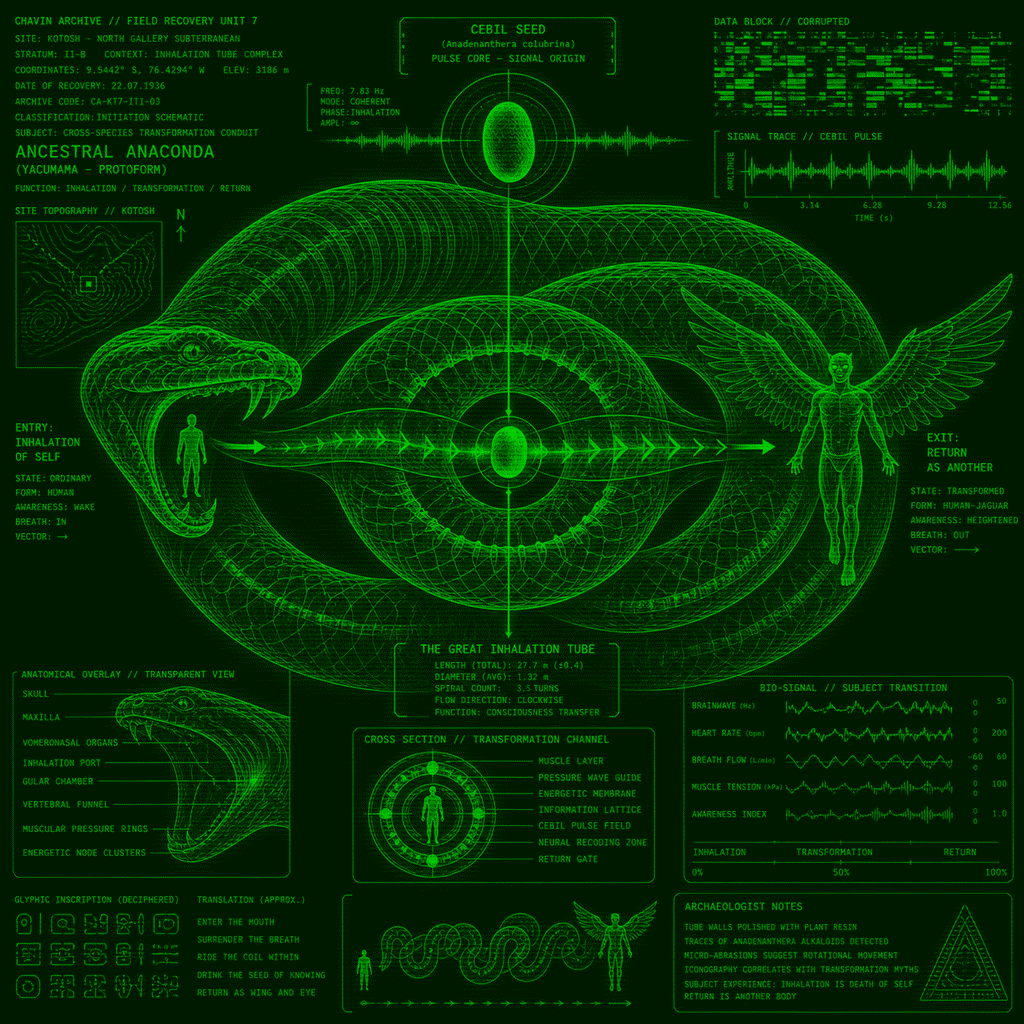
How cebil and yopo became linked to serpents, jaguars, and shamanic transformation across the ancient Andes and Amazon.
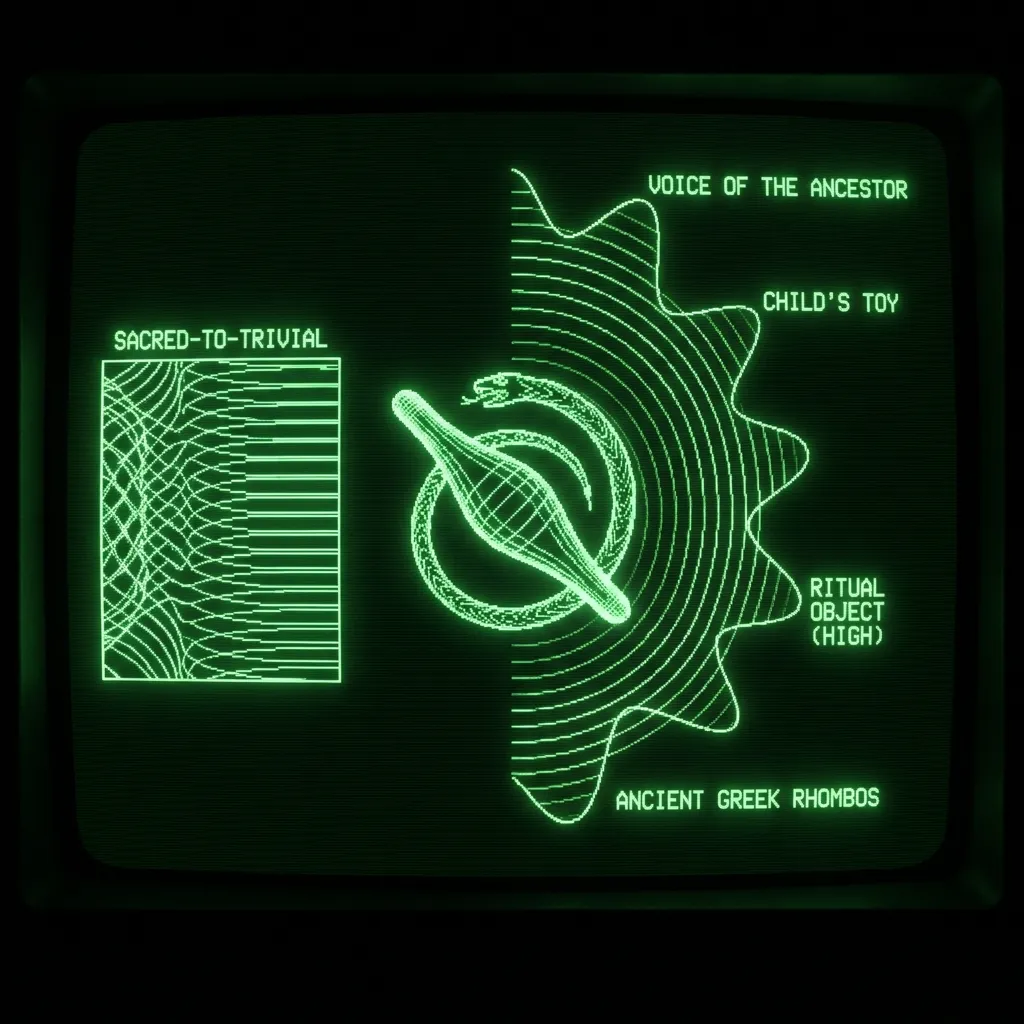
An interactive world atlas of 1,200+ bullroarer records reveals a sacred-to-toy gradient, a thin post-Ice Age archaeological record, and a snake where the wood survives.
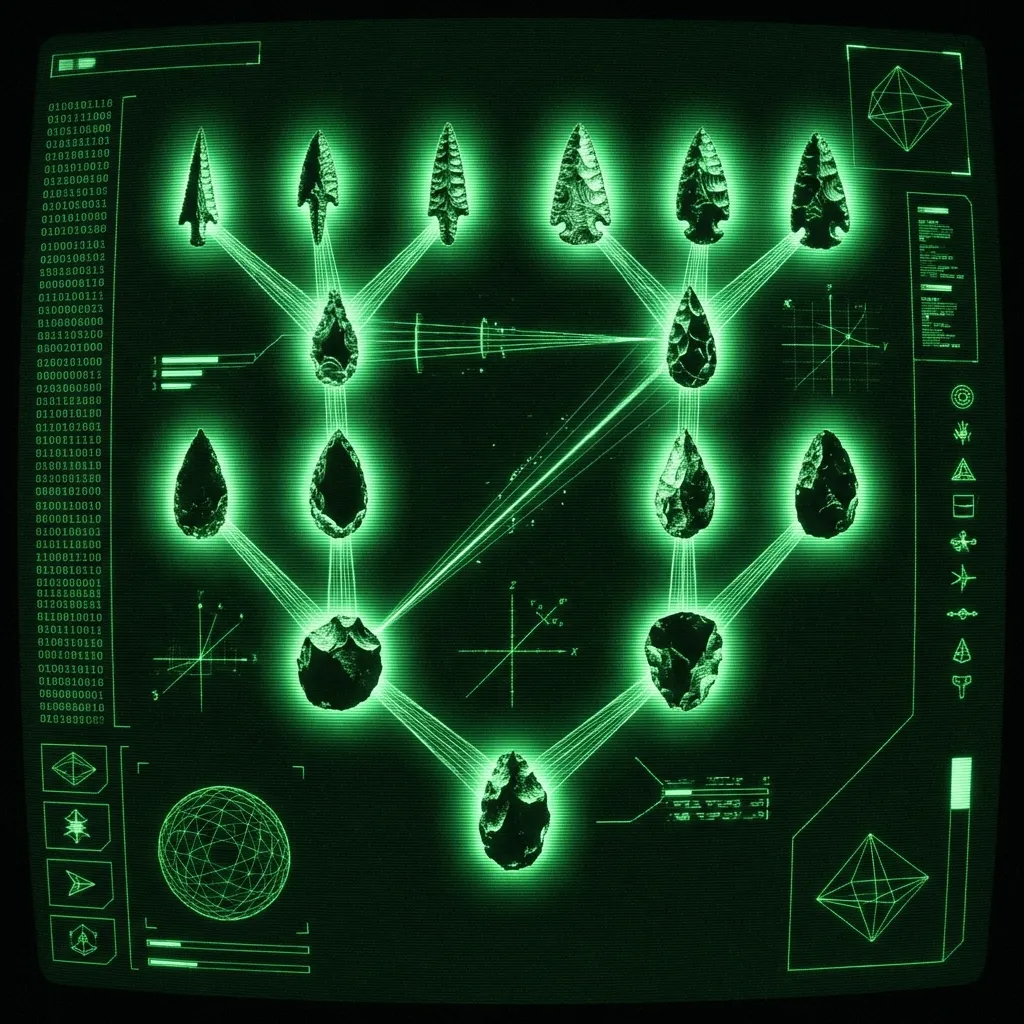
A site-by-site, table-heavy guide to Paleolithic technologies and cultural signals across North & South America, mapped to Old World lithic “modes” and traditions.
A systematic look at how archaeology, genetics, linguistics, and disease ecology would all have to fail for substantial Old World settlement in pre-Columbian America to be real.
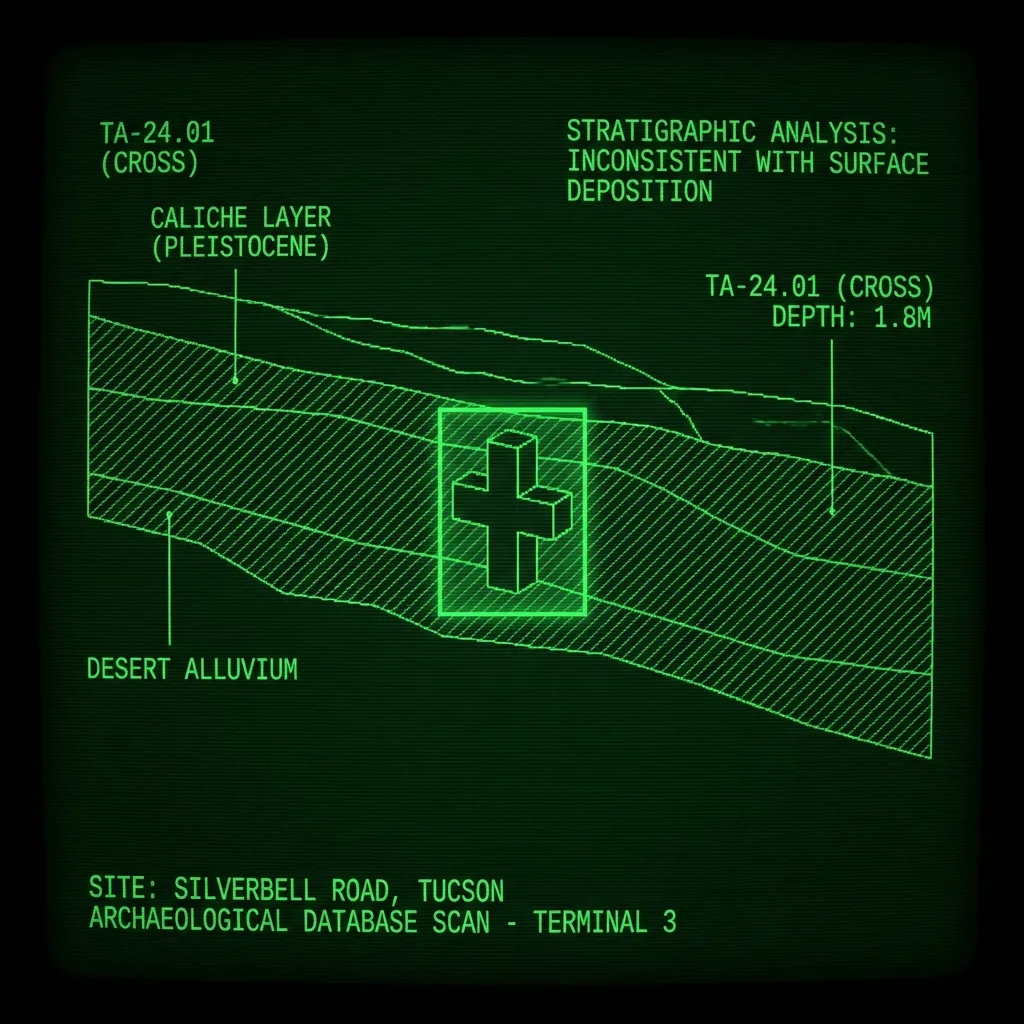
A critical but sympathetic reconstruction of the strongest case for the Tucson lead crosses as evidence of a medieval Old World colony in Arizona.
A counterfactual: what would change if even one ‘hoax’ artifact like the Bat Creek Stone or Newark Decalogue were proven genuinely Old World and pre-Columbian?
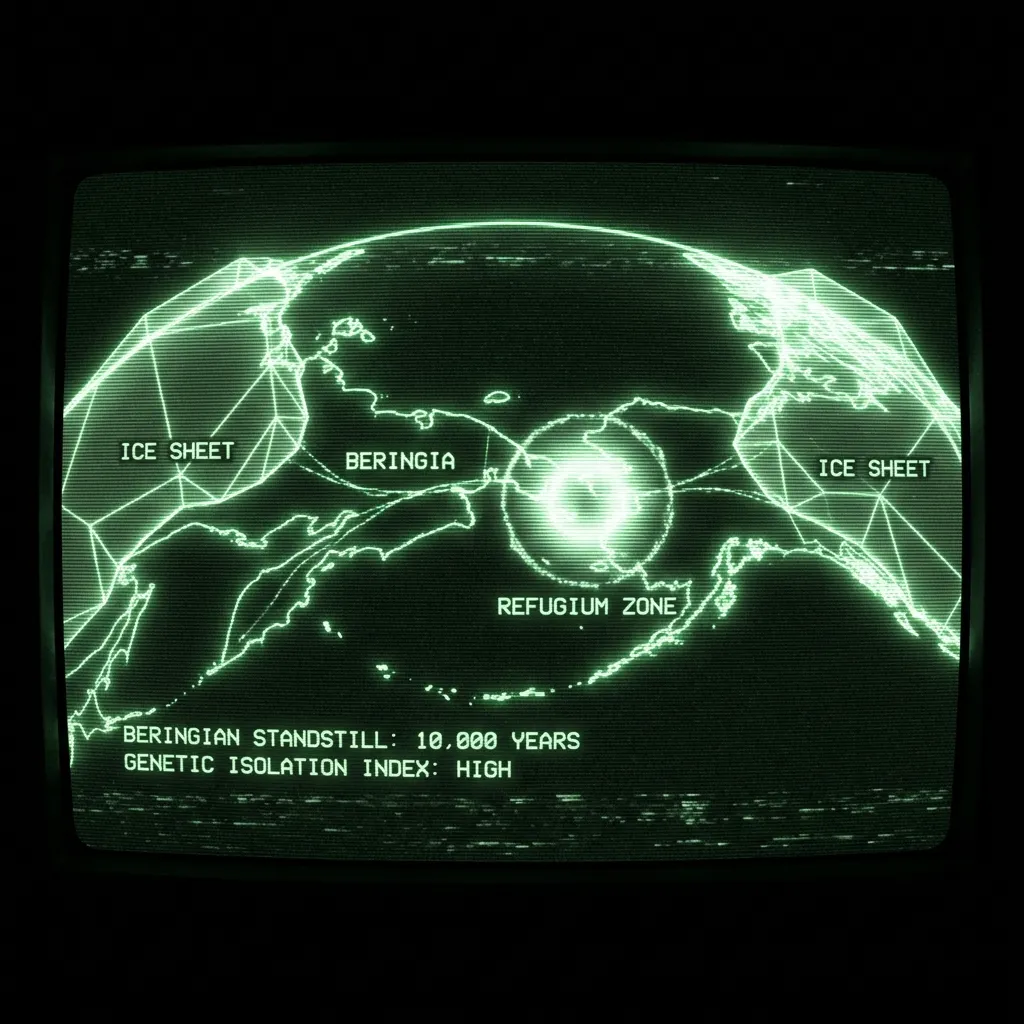
What Beringian toolkits and genomes reveal about two-way movements between Siberia and the Americas—from Dyuktai microblades to toggling harpoons and back-migrations.
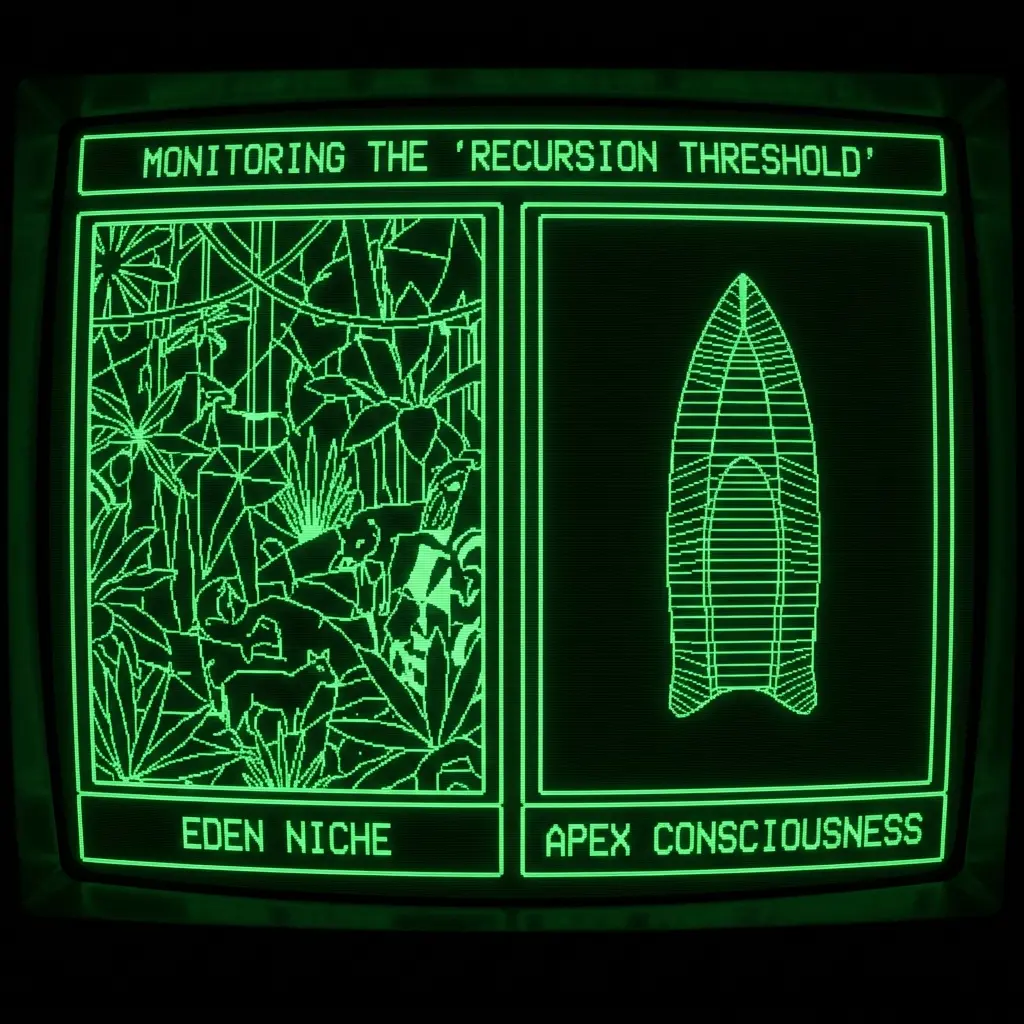
Argues—within the Eve & Snake Cult theories—that Pirahã culture preserves a pre-Holocene mode of mind; contrasts with Clovis-era ‘apex’ consciousness; weighs genetics, ritual, and myth.
Ancient North Eurasians: who they were, what their Ice Age culture looked like, and how far their genes and cultural innovations reach today.